Daniel Weinand: Shopify Co-Founder tells the Untold Story of the $200B+ Giant
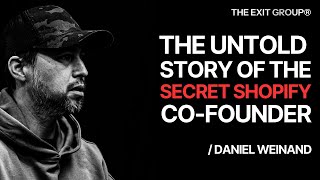
A long-form interview (podcast-style YouTube video) in which Adrian Salamunovic interviews Daniel Weinand — Shopify co‑founder. Weinand recounts Shopify's origin (joining Toby and Scott Lake, moving from Germany to Canada, dropping out of university), early team and office stories, his hybrid roles as Chief Design Officer and Chief Culture Officer, and challenges of scaling (rapid office moves, recruiting, facilities, workplace design). He describes the IPO experience (NYSE/TSX bell), how going public affected communication and culture, his decision to leave the company (loss of passion, transition planning), and post‑exit activities: launching a studio (Blue Pacific Studios), an NFT/crypto game project (which lost money — he estimates a personal loss of about $800k), GP role in a fund focused on critical infrastructure/defense, angel investing philosophy (only invest where he can add value), and creative pursuits (photography, DJing, house design). The tone is reflective, practical, and candid about failures and reinvention.
Chapters
You're one of the most secretive guys I know.
Daniel Winant, co founder of e commerce giant Shopify, a designer, builder of culture and one of the most quietly influential creatives in tech. When we talked about this, we figured out during the phone call, this is going to be the holy grail. His story goes far beyond Shopify, and today he opens up about what comes.
After a huge exit. This is the exit with Adrian Solomonovich.
Brought to you by the Exit Group and Morgan Stanley.
You're one of the most secretive guys I know. You founded one of the biggest companies, the biggest company in Canada, built Shopify from the ground up and, like, you're stealth mode. We've been friends for over a decade, but I want to get the audience to get to know you better. And maybe we'll start off just. Let's go right to the beginning. 2006, Shopify is kind of coming off the ground. Yeah, why don't we start there? Can you tell us how you started Shopify?
Well, Toby, good friend of mine, we go way back in Germany. We used to be roommates, and he moved to Canada. And then I got a call from him and he said, look, I have this idea. We have the snowboard store, but need to pivot into something else because they're not going to sell snowboards during the summer. And then he told me about this online store software that he had already created because there were no competitive. There were no viable solutions at the time. So then he said, well, I have this thing, but I want to turn it into something that's, you know, anyone can use. And he basically, when. When we talked about this, we figured out during the phone call, this is going to be the holy grail of. Of commerce, of E commerce. And he said, well, I, you know, know I need help. Like, would you consider coming over and help me build this? And I said, well, what are you building it with? What programming language you use? And he said, I'm using Ruby. And then part of the team of Ruby on Rails, which is like a framework for Ruby, and said, I never heard about this. So let me take a look. I didn't know the language, so. And at the time I was studying computer science and music in Germany.
Got it.
And so I took a look and I immediately fell in love with Ruby. I loved it so much. And I sent a little bit of code back to Toby and ask him, hey, what do you think? And he's like, oh, I love it. Like, do you want to come over and, like, help me? And I said, well, I'm still doing my masters at the University of Dortmund and I was about between one and two semesters away from finishing my degree. And he said, well, we don't have the time. It's got to be now. So I said, okay, fine, I'm going to drop out.
You dropped? I didn't know that.
I dropped out of university, moved countries, came to Canada. And then, yeah, him and I, we got a third person, Scott Lake, who he had on board for the, for the original snowball business.
Yeah.
Who was the, the first CEO of Shopify. Actually, Shopify didn't have a name yet. Scott came up with the name Shopify.
Oh, okay.
Yeah. And yeah, then we just started building it and it was just. That's pretty crazy because we didn't have an office. Right. So we'd be like working from every coffee shop on Elgin street. Working from the restaurant that we had lunch in from his parents place.
And then you guys got that really cool office on McLaren. Yeah.
Yes. That was the first office.
It was a really cool first.
That was above the, the first bridge.
Yeah.
On Elgin and McLaren. 500 square feet, very small. We did the renders ourselves. We picked a horrible paint because we had no idea what we were doing. So we painted it ourselves. We sawed off one of the walls to make it a half wall to make it feel more open.
Yeah.
Yeah. This was all us, like varying was do it yourself. And we squeezed in, I think seven people. And it was very tight with four or seven people, I remember it. And we had to move.
That's really cool. And so it was an origin story. I didn't realize that you'd come specifically to create Shopify. I thought you guys were already over here. So that's before we met. But it must have been really cool just with your friends, small group, hacking away, working crazy hours developing this tool. And then I want to get to the point because a lot of founders that are watching this will have different founders sometimes have to separate. The Scott Lake story, he was one third owner of Shopify at one point. Right.
I will never say anything bad about him. He's a great guy. It was, it was just not the, the right person to scale the company. The person that the company needed, you know, and. And he felt the same. So we mutually parted ways at some point. What that meant is we were then before the CEO. Right. And like Toby and I, we were on the hunt for a new CEO and we interviewed a few people and some were okay, but none of them felt like this is a home Run. This is exactly the guy we needed. And keep in mind, I mean, as, as a bootstrapped startup, we don't have money, we don't have any street cred. Like getting someone really, really good as a CEO is next to impossible. Right. Because someone has to really buy into the idea. So then after a while we said, you know what, like, let's just, let's just put you in the co chair. Toby's.
And it worked out.
I mean, Toby sacrificed himself to, to do that and you know, thank God because he ended up being really good at it. But it is a sacrifice and not many people see that because the thing that he loves the most is to get his hands dirty in weeds and like program and code and like make shit. Right?
Yeah.
To go from there to then. Now all of a. Suddenly you are the CEO and yeah, you can at the beginning, you can still program, but at some point you just don't have time for that anymore.
He had to let go of his craft and start becoming a CEO.
Yeah. Now you have to do all this. You know, in my mind, in his mind too. Like this is the annoying thing that no one wants to deal with. Right? And I agree, I agree. He stepped up to, to the plate and say, okay, I'm gonna do it. And you know, equally, I stepped up to when, whenever we needed a role to be filled. Right. And I, I understood when we didn't have a designer anymore. We had this one guy that we had as a contractor who for reasons that would take too long to explain, we were left without someone on the design front. So then I said, well, you know what? I'm going to do it because no one else was going to do it. And I'm not taught. I never went to design school, but I, you know, taught myself and I learned CSS and I learned how to, how to do websites.
So rare, right? So rare to be able to be a developer at that time. You know, working on Rails and then becoming the chief design officer. Chief platform. Not. Sorry, chief design officer of the company. Right. Which is a really, let's be honest, pretty dope title. Right?
It is cool. It kind of, it was, it was a somewhat slow transition, I would say because you can go from developing from, you know, I do a lot of backend Rails and. But then I do front end developing. Right. And then you have JavaScript and you go from front end developing to CSS and then so you've kind of keep learning more and more. It's kind of like a land crab of knowledge.
Yeah.
Right. So then once you know css, you know how to lay out a page, you know how to, like, align things. Now you go into, well, how can I make things look a certain way now? I need to learn Photoshop. Yeah. Right. So, yeah, then I went into I really need to learn Photoshop. And I spent thousands of hours, like, literally. And when I say thousands of hours, I spend thousands of hours in Photoshop, which, you know, funnily enough, is kind of becoming obsolete knowledge now with AI. But I'm still glad that I, you know, I know my way around and it served me well in the future for other things.
I think it's cool. I think it's cool. You seem to. We're going to get into this a little bit. You seem to be somebody that loves to learn and then apply that, especially in creative, where math and creativity kind of collide.
Exactly.
Very rare that way. Okay. The early days, you guys are scaling up. You know, you're 100 employees and you're 200 employees. Can we talk about, like, that experience of just seeing, like, when it was all. When one people in one room. I remember 35 people. Right. It was the sort of the. I was like, this is getting so big to go to, like, talk about that growth. How. What was that like to be in that?
You have several thresholds and stages where you always have that feeling like, oh, my God, this is getting so big. Right. Because in the beginning, and I think a lot of people that are watching this, they. They may be working in a company of like seven to ten people.
Right.
Something like that. And you go for lunch and you know everyone and you sit at one or two tables. And then when you're 30 people now, you're filling like half a restaurant.
Yeah.
Like, where do you go for lunch? That fits everyone.
Yeah. Christmas parties are 60 people. Like, you know, things are getting serious, you know? Yeah.
And then so you go from that to there, and then you go into a bigger office and sudden, before you know it, you're 70 people. Right?
Yeah.
And now it feels like, oh, this feels like it's like proper company now. We have, like, people with titles. We have, like, managers.
Yeah. What stage did you like the most? What stage did you just feel like was the optimal number?
Like, oh, man, that's a good question. And I will. It sounds like a cop out, but I will say I liked almost every stage equally for different reasons. I thoroughly enjoyed when we had a lot of momentum and a bigger company and I had tools that I could do exactly what I wanted.
Yeah.
Where I felt like the limit is just my creativity.
Yeah.
So when we were, let's say a few hundred people, right. And we had to move offices so, so quickly and so often.
That was a fun part. Probably designing. I mean, you did. This was such crazy stuff.
This was the craziest part about being in the company of hyper growth and being responsible for the company that experiences hypergrowth. Because keep in mind that my title was not only the Chief Design officers, also the Chief Culture Officer, which sounds like a fluffy title, but what that entailed was everything related to hr, everything related to facilities, to the internal growth. So I was the product manager for Shopify as a company. Right. So that was my responsibility, making sure we grow healthy, we have a good recruitment in place, etc. Etc. We have a team of coaches.
That was cool. The coaches was wild. The fact you guys had the world class coaches and that was. Even I got a chance to meet with those coaches. I mean that's. That was some. That was your. One of your concepts.
That was one of my initiatives. We were homeless for like almost half.
A year between York and.
Between York and. Between Elgin Street.
So that's when virtual people started working remotely. Right.
So we had to come up with a program of how are we going to deal with the situation where the next office isn't ready yet? Because it's going to take takes a couple years to construct. But before a couple years you can't really commit to it because you don't have the money yet and you don't know if the growth sustains, etc. Right. So there's big challenges. So we had to come up with a program how we make this remote work. And we did a really good job. We had these outposts sprinkled across the city where my house was one. Like people could come and go whenever they wanted. I had Wi Fi. You know, we hanging off with like a dozen people every day.
Different people, little satellite.
Yeah, yeah. People's houses. We had, you know, we had a chef at this time already. So they would be thinking about let's get a food truck and let's set up at a different spot in the city every day, post the location every day. So if people wanted to come, you know, they go to the food truck and if you're a Shopify employee, you get food for free. But we try to like have something to look forward to through all this chaos.
That's really cool.
The good thing about growing fast and the good thing about changing offices so rapidly is that we learned A lot. Right. And I, again, I have no background or degree in interior design or architecture or, you know, when it comes to designing an office, how to make it the most efficient. This is all based on my own experience and learnings and seeing what other people are doing.
I want to talk about. You're in now eight years, right? I remember coming to visit you in the office. I remember we were just having lunch, like grabbing lunch, and a bunch of people swarmed at the office. And I go, oh, who's that? And exactly to your point, you were like, I wish I knew. I have no idea who they are. And I'm like, wow, that's what even for me realized. The headcount was probably in the thousands at that.
Right?
Yeah, right. And I could kind of tell you're like, you're happy, but you were also kind of like, this thing's gotten so bad, so, so big. Right? So, so big.
Right.
At what point did you, as a founder? That's why I want to ask you, you know, you're happy at each stage, but what point did you, how do you know as a, as a founder, if it's time to, to begin thinking about Exit or like, what were the. What did you feel? How did you approach the exit?
Probably less than everyone else, right? I don't really, I didn't really think about the exit that much. And I'm not the kind of person that's driven by money. I think that's what most people associate with Exit. Some people associate it with this is big milestone, this is a success. To me, it's the day to day that's the most important. When the idea of exit was approached by the executive team and it was discussed and we talked about it, I was not opposed to it, but I wanted to make sure that we do it properly. And I think there is a trap with saying the word exit and saying that when we are going public that people think this is the end goal. The biggest threat I see to that kind of messaging is that when you reach a goal now everything feels deflated and you lose motivation because now you've reached it. So what's left to do?
Right? You hit the pinnacle of the mountain.
Exactly. So that was a big challenge and it was a big exercise for us to think about, well, what do we do in order to avoid the situation where we have all these motivated, hard working, really smart people and we don't want them to feel deflate, we don't want them to feel like we've done it right. We want them to Feel we want them hungry.
How did you feel when you rang that bell? I remember you were. You were on the stage right there with the. With the. I guess most. With the founding team and a couple of the folks for the part of the team. How did that feel? What was that like for you? Was it surreal? Was it just another day?
It was surreal. It was definitely a cool moment and it was surreal. But I wouldn't say it's like, you know, one of my top life experiences, right. Just because I'm not a cfo. I think if I was to see if all. It would be like, this is the thing I always dreamt about doing. I don't know. To me, it's like, this is kind of cool. Like, I got a little coin from the New York exchange.
The only time I've ever seen you wear a tie, by the way. Oh, yeah, me, like in hoodie mode. But like. Yeah, you were in a suit and then you had the coin and what was that like? Maybe just for people, because a lot of people do think about going, it's.
Pretty cool being on the trade floor of the New York Stock Exchange. It's really cool. And, you know, like, being on a podium and I guess everyone's looking at you and someone's ringing the bell and like, that's it. And then. And it gets really loud because everyone's trading, right? And then we went to the TSX in Toronto and I got to push the button to. And it's. It's kind of weird because it's a touch screen. So in New York, they have an actual bell, right? And there they have a touchscreen.
Not even a button, just a digital screen.
My deep expertise is user experience, user interfaces.
You must have hated it.
I hated it. And not only was it a touchscreen, it was also. There was no. The affordance was bad and there was no feedback on when you touched it. So I pushed my finger.
Bastards.
Like, nothing happened. I was like, pushing. I don't know. Do I need to push it again? There was a lag. There was like. It didn't immediately do something, anything. It didn't give me a tactile response, didn't give me an auditory response. It was just like, did I do it right? Do I have to push it again? That.
Is it bad if I push it again?
Is it very close to tsx if I push it?
No, to tsx. We're going to. We're going to tweet this at them. They're going to. They're going to have to fix that.
This is the problem. Now if you get into anything too deep, right. You go into user interface design. Now everywhere you look you see bad interface design.
We're the same that way. Like I look at this mic stand. Could it be better we suffer, I think for the same. Like just building houses and stuff and personal projects. You're even more obsessed than me. I've seen your hinges like you, you're very detail. Talk about that. Actually, I'm really interested in that as well. Like how has your obsession with design affected your building of a company? Was it, did it slow things down at times or is it what helped project Shopify to where it is?
Oh, I think it helped for sure. Right. Like design is such a broad term that you can. Most people, when they think about, when they hear the word design, they think like, oh, colors and texture and yeah, sure, that's a big part of it. But what's more important, I think with design is the functional aspect of design. Right. And when we design a office layout, super crucial to the success of a company, I think, right. The way how people work together, I think you can get a kick ass team together and you can have all these amazing people and then you set them up for failure because you put them all in a big room with 50 people and then no one can focus or they have to put headphones on because they get distracted all the time.
Especially with engineers. Right. They think very different than marketing people. And creatives need different environments.
Yeah, you have to think about, well, you think about the flow inside a company, right? The different departments, how they work together. Where are the intersections? Right. Where people are colliding, where are the meeting points? How many meeting rooms do you have? Do we have too many meeting rooms that are being abused? Do we have too few meeting rooms? Right. Is the company not working fully because we are missing something? Let's say we have 20 people on phones, but there's only one phone booth. Like how are they supposed to make phone calls? You have to think about all these things, have to make sense. And then you talk about the design. And when you talk about design, yes, colors and blah, blah. I know my way around it. I think it's really important. But the most important thing about design is light. And it's also something that is not appreciated enough. How light affects us in big ways. Right. It's not just the amount of light, it's where's the light? What's the color temperature? Right. Different color temperatures will make you feel more awake or make you feel more relaxed sometimes. You want one or the other. You don't want, you know, you don't want the one thing all the time. You don't want to. You want to have the high beams on, like, everywhere you go. A. I didn't want it to feel like Disneyland. This was really important to me. I didn't want it to feel like a Google office where we have, like, fake streets and whatnot. And I wanted to feel like it's. This is part of one office. This is not a abomination of, you know, 30 different things. And it's. It's important to have the wayfinding as anyone who's dealt with, like, big office space designs. No part of why cubicle health have that bad rep. I mean, I don't like cubicles, but is what has been shown to an extreme in these liminal spaces, right. Where everything looks the same and you can or you cannot orient yourself. That's what. That's what makes liminal spaces so, so creepy and eerie, is that, you know, you don't really know where you are. It's all the same. And you keep going and you keep going. And a good office, you have landmarks in a way, where my mission was, okay, well, we have eight or nine floors.
Yeah.
You can't be dropped off blindly anywhere.
And it's a different floor.
If you look around, you have to immediately know where you are. Yeah, that was very important.
You did an amazing job with that. And I also remember digital signage. Like a lot of using digital.
Yes.
With information on a useful way. Not just yes. I mean, the offices were truly a magic environment. Like, people would look for excuses to come. I used to look for excuses to come visit you.
Yeah.
So I loved hanging out there. The slide. You remember the slide? That was. Was that your idea?
No, I was against the slide.
Okay. That's.
I hated the slide.
The slide. I. I could see that being a liability, but it was. It was cool back then. You know, you were like, no, slide.
No. The thing I didn't like about the slide is that if you put a slide in a place, that's what everybody talks about.
It's true.
Case. My case in point, I think, was on Pinterest.
More. Yeah. You couldn't go anywhere without seeing the Shopify slide. It did get copied a lot. It was gimmicky. But at the time, we were kind of, you know, you evolved. The design of that place from those offices just kept getting crazier and crazier.
I just got tired because my title was Chief Culture Officer. People associated the I want to say fun things like a slide.
Yes.
With. This is the culture of the place.
That must have been Daniel.
And I was. I frankly, I was just tired of answering these questions in interviews where everyone's like, oh, your culture is so cool. You have a slide, you have free food. And like, that's not what culture means.
Right.
That's just. Yeah, those are bad questions.
Don't bring up the slide again.
No, no, no. I actually know it's good that you brought up the slide because it lets me talk about how those things are not culture. Right. And there are things that. That matter, truly. And then there are things that get talked about. And as much as I personally didn't like the slide, I think it was a net positive because it got people talking about us. Right. And then you can spin it as maybe it's a little piece of recruiting power that it gives you.
For sure, actually for sure. Your fingerprints are all over Shopify and will be there forever.
Right.
What would you say going back to the exit? So we went public, you're on the belt. The next day, everything's the same. Right. Or what happened after you went public? Did the company begin to change? What was good, what was positive about going public?
Well, what was good about going public is before going public, most people did not know Shopify. Right. When I told them, hey, I'm from Shopify, and meet someone at a conference or trying to recruit someone high profile, they were like, never heard of it. I don't know. Right. Once you go public now, you become a household name.
True.
More and more people know about you, and that's super helpful to open doors. Really, really helpful to open doors. I think that was. Personally, I thought that was the biggest benefit that we had.
So brand visibility, not just with customers, but also recruiting, with acquiring companies. I know you guys started. Now you guys started buying more and more companies. Right. Because you have the capital, the liquid capital to be able to purchase.
Exactly.
And so the company culturally, because that was one of your big roles, keeping the culture as those companies expanding more offices worldwide. Overall, things were great. Was there anything that. What changed at Shopify as a founder? Was there any moments where you're like, okay, I'm ready to leave this, or was it more just like, how did that. Because I want people listening to understand, like, how to hear their own signals, to understand the right timing and the right way to leave and how to leave, you know, if that's in the cart.
So a thing that no one has told me before going public is that going Public is a very serious thing. Right. You have the sec, you are a reporting officer, because as a reporting officer you have to be. Have tightly sealed lips about almost everything that's going on. And when in doubt, you just don't talk about it. Right?
Yeah.
So that was a big change. I would say that's probably the biggest change that I could see.
And then, so when you, when you exited, how did you, how did you do it? Like, did you, did you meet the board and say, look, I'm ready to move on? Were you kind of slowly do it? Like, how was that process and talk about the transition? Like, was it something official? Because you were talking back there, but we never got into it. Like, I'm just curious how that, how that, how that went down.
That was a really tough point in my life. I think it was very. Because at this point, I mean, I've been at Shopify for 12 years and this was, I don't want to use the words consume me, but I did spend, you know, for the first 10 or so years, easily 80 hours plus a week. Like, I didn't really have any vacations, I didn't really do anything. I did a few things on the side, but it was, Shopify was my life for, you know, a very long time. And it's kind of like realizing when you like break up with someone in a long term relationship. I suddenly realized that, you know, I was still trying to keep up with everything and reading the news and learning about commerce and. And I had this epiphany that like, I'm doing this because I have to. I'm not doing this anymore because I want to. I love to do this. I just feel like, okay, this is now, this is no longer my passion or this, this whole area of commerce as well AS Tech and SaaS companies. I don't feel passionate about this anymore. I think I'm pretty good at what I'm doing, but at the same time, this was my heart. And then so from, from knowing this to talking to Toby about it was less than 24 hours.
Wow.
I wanted to sleep on it one night. And then when I, you know, the next day, I still felt the same. I was like, you know what? I walked in his office and I said, this is how I feel. I can probably not tell you this and I can coast for another few years and no one would know. I would do not as good of a job. It wouldn't be good for the company, it wouldn't be good for me, for my sanity. I would get a big Paycheck, I would vest all my options because I had a ton of options. Right. I left a lot of money on the table and I talked to him and I, you know, obviously he didn't want me to leave. And I can't blame him because I, at the time, I think I had five bigger departments that like, what was it, like 180 people or so? So the transition would have been somewhat challenging. And so I talked to him about, okay, well, I'm obviously staying around to train up people and like, make sure that I'm not going to leave a hole.
Ye. So.
But then I ended up getting replaced by five people or so.
Right. Toby, how did he take it? He just understood because you guys are friends. I mean. Right.
It's tough if you work with a friend. Right. Because as a friend, yes, he understood. As a CEO, he didn't want it to be true. So. And I think that's. It's also. It's. I think it's really challenging because I was the one person that's been there from the beginning.
Yes.
Right. Losing that and him staying behind. I can see how that feels.
Yeah. Heartbreaking for him, for sure.
Yeah. 100. Yeah.
And it's like, we're going all the way to the moon with this. But for you, would you say you were burned out? Would you say you're burned out or more like less. Just not passionate about it anymore. As passionate.
I want to be careful about using the word burnout.
Yeah.
It may have been. I really don't know. I never. I didn't get it diagnosed.
Yeah.
You know, it could have been mix between burnout and a small depression and a midlife crisis. And what happens?
It happens a lot.
It's a lot of.
We never use the word burnout.
I don't know. Right. It's the same with, like, you got to be careful. Like, if it's not diagnosed, I. I don't want to say, like, I had a. You know, I was depressed at the time. I don't know if I was right.
A billion, multi. Billion dollar company. You're doing whatever you want. But part of the toll it was.
But it no longer felt. I was excited to get up out of bed and rushing to the company and being excited to work on all these challenges, which we had plenty of. Right.
And it's hard if you don't have that mental energy. It's. Yeah. I don't know what it's called, but I understand. I've seen it a million times. But the good news is you had the courage to speak to yourself, to speak to your business partner, to communicate and to resolve it.
You have to.
And now you have to do it. Now you're taking everything you've done, your legacy, and you're in an incredible position. Young. What are you doing now? So, yeah, you're out of shot. Okay, well, first let's talk about that. You took some time off, right? Like, you get out. You're like, I have to do this for myself. You had a hard talk with yourself, hard talk with Toby. What do you do? Do you take a month off? Do you take a year off? Like, how did you, during that transition, share with us? Like, what did you do? What did you actually do?
Well, so it was kind of a blur, right? So I was still working at Shopify for a few more months. I was training people. I was preparing my. My own departure. So this was the same time you actually introduced me to who has become now one of my best friends and also happens to be the godfather of my son, Mike Janke.
Janky.
And Mike and I, you know, we chatted about, hey, why don't we do something crazy? And he had this idea of producing OTT content in Los Angeles. Get a studio.
Yeah.
I was like, perfect, I guess I'm free.
You're a photographer, right? You didn't tell me was you're a photographer, right? You love lighting. It's OTT digital.
I love storytelling. Yes.
Mike Janke, ex Navy, by the way. Mike Janke, great guy. Navy seal, you know, straight out of. He's Iron man, kind of. Right? I need.
He's Chuck Norris.
Yeah, he's Chuck. He is exactly. He looks like Chuck Norris. He is Chuck Norris. He is Chuck Norris's. And then so I met Janky. I'm like, I have a friend I think you should connect with. And you guys are very opposite. Very the same, right?
He's the best. Yeah.
And then you guys ended up making Japanese swords together. Traveling, buying land.
We did a lot of things.
I was jealous I didn't get invited. Now I connected you guys. But no, but I. That is cool. And I love that because part of the exiting thing and that's what I'm passionate about is like connecting people. I think you know that, right?
Well, you're probably the best person that I know at connecting people.
I just love doing it, you know, I love. I love seeing friendships and then businesses get created. And so that's why we're creating the exit group. You know, it's not a plug, but that's why we want to do the exit group for. To make more of this kind of stuff happen.
I will say there's an art to it. Right. Because I know a lot of connectors.
Yes.
And I know, like, one of my friends. He is crazy connected. He knows everybody and he connects a few friends. He also connects everybody. But I also. Sometimes I have to say, Phil, that didn't make sense. I don't know why you put me in this guy.
No, but it's. Yeah.
No, he's a good. He's a good. He's a good guy.
He's doing that of good intent. The thing is, you can't be gaining anything in the middle. It has to be done like. Has to be done out of pure. Like, you are gonna love this person. I don't know what's gonna happen.
Right.
But you gotta make sure that the two people. I will never introduce you to somebody that I don't think will change your life or that you'll change their lives. And you'll both win. Right. You gotta create those both win situations.
Exactly.
So Mike Janke was that. I'm glad. I'm so happy for that. So you met Mike Janke because you did a bunch of awesome projects. Right? Keep going with that. That's interesting.
Well, we had a studio in Los Angeles, El Segundo, Blue Pacific Studios. I don't know if you want to bleep the name out because it ended up up being a failed company, unfortunately. The concept was good in some ways. We were ahead of our time. We had some strong concepts that we came up with. We filmed. They ended up not being successful. They ended up. Those concepts ended up being successful for someone else that wasn't us, unfortunately. My mistake was I was too hands off because I think I would have caught it much sooner if I got more involved, more closely. I didn't do that because I trusted someone's credentials too much. Right. And that's. It's kind of a rookie mistake. And it's something that shouldn't really happen to someone like me. But when you exit, there is a lot of things that suddenly come at you and all of them seem very attractive.
Yes.
Namely investing. Angel investing.
Yes.
Everyone and their mom is going to show you their deck and they all want you to invest. And at first, when you're inexperienced in investing, so many things make sense.
Here. Quarter million.
You all see the hockey stick graphs and it's like, oh, I can turn, you know, 100,000 into 10 million, easy.
Yes.
But that's not the way it goes.
So what's your word of warning there? Let's talk about that, because we've all experienced that on the exit. How do you say no to people? Do you have a protection? Do you have a.
Yes. Okay, so I have a very good philosophy myself. So first of all, I will say that angel investing, if you look at the entire landscape, first of all, it's a gamble.
Yeah.
It's legalized gambling, roulette. Second of all, you're most likely going to lose. Right. And now that I have a little bit of experience as a vc, I will also say that this is just the nature of things, that you have some really strong horses that pull the weight of everyone else.
Do you have a family office or do you just rely on your. As a. Being a partner in these VC firms to sort of shield you from, like, you have to have, I guess, somebody to go, hey, talk to my guy. Like, I'm not making the decision. Or do you still. Nobody should pitch Daniel after this podcast, by the way. But the idea being, how do you protect your time from. From.
Okay, spd. So. So this is somewhat, somewhat straightforward now because I will look at a company and if I feel like no matter how good that sounds, if I don't understand what they're working on and I cannot provide any value, it's a no for me.
I love that one.
And that's that one. It's very black and white. It's very easy for me to figure out within five minutes or sometimes 10. But if. I know, I mean, sorry, maybe. Yeah, maybe you guys are talent. Maybe you have a good product and sure, you can promise me the sky, but it just goes against my philosophy of personal investing.
I love that one.
Right. So that's pretty easy to figure out. There are very few companies that match these criteria. If they do match the criteria, then I dive deeper.
What kind of things getting you excited right now? When you look out in general, what's got you really pumped these days?
In terms of investing?
Yeah, in terms of investing and just businesses in general. Like, what do you. So I, we don't talk a lot about.
So I, I came. So one of my, my good friends, Steve Aoki, famous dj, he said, yeah, the dj, he said, I'm. I'm going to start this fund. You know, he talked to me about it in passing and he's like, oh, do you. You know, like, he was almost too shy to ask me if I want to put money in.
Sure.
I'm like, gosh, sign me up. I'm in. Like, I don't know. Sounds like a fun idea.
Yeah.
And so I didn't even know much about the fund. I just know it's. He's a. He's the hardest working person that I know, which says a lot. I know.
Not musician person, person.
I know a lot of people. No one works harder than him. He. And then I don't think enough people give him credit. How cool.
He's a smart guy, right?
He's very.
He's super smart.
Yeah.
But he himself is a business guy, right?
Right.
He's a business guy and he's hard working.
He's super smart. He's so. He works harder than. He works harder than I. That I worked and I work really hard and I don't know, he gets the energy, but he's big into biohacking. I. Anyway, so I like that one. I digress.
So biohacking guy, you excited or Steve Aoki's guy?
So he said, well, we're talking about funds, right. And investments I'm excited about. And he, he said, well, you know, mentioned his fund and, and I, I said, yeah, sure, this sounds like fun. I want to be part of this. Just based on what you tell me about the fund, which is a lot of the fund focuses on longevity and on better well being and whatnot.
Great space, I love that stuff.
But so now he's like, show me all these products. And like, oh, you have a pop. You have a piece of this. Because our fund invested in this. Oh. And then we invested in this company. And like. And I'm excited because. So I went to this place, I had this, you know, I had this drink. I forgot the name of the drink, unfortunately, but I was like, this is really good. He's like, yeah, you're part owner of this. And there's like this company called Neuro. Neurogum.
Oh, yeah, Neurogum.
Yeah, yeah.
So la. Out of la.
Yeah. So I'm an owner of Neurogum.
Oh, I didn't know that.
And they're doing, they're doing really good.
Yeah, it actually tastes good too.
Earlier I said, I'm only going to invest in stuff where I can, like, have a. An impact.
Yes.
This is an exception, right? Being part of a fund. This is because I wanted to have fun and I wanted to be part of his journey. And he does the same with, like, the stuff that I'm doing. For instance, my wife's company, Nutcase.
Yes. Shout out to Nutcase. It's actually delicious.
Great product.
Andrea loves Nutcase. She goes crazy.
She goes nuts for cashew chocolate. Milk in cans, shelf stable. Only good ingredients. No. No artificial sugar added. It's.
It's a great product and it's cool. It's different. It's like, reminds me of Nick's company. Nick Reichenbach is from Ottawa Flow. Amazing product. They differentiate it in a really busy category. Yeah, well, Nutcase has its own category. I mean, name three other Cashew. You can't. Right. It's kind of unique product, cool packaging. That kind of stuff is really a lot of fun. So you're always helping.
So. And he's. Now he's part of that. Right. Because it's fun for him. And so. So it's kind of just so I don't confuse whoever is, like watching this, that. Yeah. Me investing in a fund is not the same as me angel investing. I just want to clarify.
Okay. Sometimes when you're investing in the fund, it's fun. Your funds are for fun. But also you get to work with people and do brands without being micromanaging the investment. Right, exactly. And in your individual angel funds, anybody who invests in angel, as an angel, you want to understand the business or right away you're out.
Right, Exactly.
I like that. I really like that. And it sounds like you're having more fun than ever. Like, honestly, you're always a kind of cool guy, but you became extra cool when you exited. Like, I really saw you become like you. You know, not that you weren't you before, but there was this new kind of 2.0 version of you. Am I the only one that told you that? Like, you just seem.
I think you're the only one that told me that. Yeah, yeah, yeah.
To me, I just saw you, like, leaning more into creative stuff. Leaning more into your photography, leaning in more into just cool stuff, you know? And you moved out. You moved to Vegas, right? You're moving to.
I'm moving to Vegas.
Vegas, yeah. And you're building something pretty cool out there.
Yeah, I'm building very. Again, this is a house. My Ottawa house is awesome. And we spent. Excuse me. We spent five years designing and building the Ottawa house. And it's a very specific design direction. It's Japanese slash Victorian inspired. But the house in Vegas, because Vegas is in a desert and where we're building is right next to Red Rock. It needed to fit this location. Right. So we're building a desert house. Very different house. But I'm super excited about what this can do. And personally, when I think about spaces where you live in, and I know I'm fortunate that I have the luxury of designing the place exactly how I want it to be. Not everyone does. But since I can do it, I want it to be a place of serenity. Right. And you need to. I'm very introvert. I need a place to recharge. I truly enjoy my, my alone time. I, I love video games.
Yeah, you're a secretive guy.
That's how I, that's how I recharge. And. But then, you know, then I can go out and I can go to festivals and parties and do other things and meet people. So Shopify opens some doors for me. Right. Just by me being who I am. And I can, you know, tell them this is my background. It is infinitely easier. Right. For me to get a foot in the door.
Yes. Which is a great gift. Right.
Which is amazing.
Meet with anybody you want.
But I will also say that that's not necessarily the only way of getting to meet great people. Right. Because people will say like, oh, he can only do this because of his money, because of his, you know, name, or because of like what he's done. People sometimes give, they, they, they feel like nothing is achievable unless you have money, unless you have fame, unless you have blah, blah, blah. Right?
It helps.
I think it's a lot of it is a mindset. It helps for sure. It helps.
Right? People sense energy, right?
Right.
I believe the exact same thing. I believe you can do anything you set your mind to, but you have to really, truly believe it. Yeah, right, Right. We're just a couple guys from Germany, Ottawa, whatever, but like, look what you've achieved with Shopify, right. At one point it was in your brain and then it became reality. So if you can do that, you can certainly meet with any DJ celebrity. You know, it starts in the mind, right? And you're proof of that. You are actual proof of that. We both agree.
Going back to my wife's company, Nutcase, so she's partnered with a guy that many will know as Ninja the Twitch streamer. So I was hanging out with his manager, Andre, and Andre was saying, oh, we gonna, we're gonna go to this nightclub now because we're considering this as a venue for something. So do you want to come along? I'm like, sure, why not? Love to see Vegas. So we go to this nightclub, pretty big, well known nightclub. And then my wife was there too and she was joking, oh, you should play a set here during the event. He said, that's a great idea. And I was like, haha, yeah, funny. And they're like, no, no, like seriously you want to do it? And I said, well, I need a day to think about this, because, you know, I've never touched a DJ deck in my life before. Right. So I thought about it, and then I slept on it. And the next day I said, okay, I'm gonna do it.
Love that.
It's terrifying for me to be in front of thousands of people and, like, do something that I have no idea if I can do it.
And you're a perfectionist, in a sense, so you're like, I got to do it, right? Yeah.
And so I got me. Got me some CDJ3000s, and I started practicing every day, like, I was doing this.
You ended up doing this.
So sorry.
Remember the nightclub?
So the nightclub thing, the party didn't happen. The event got canceled, however.
Okay.
Because. Well, first of all, I will say to anyone who is producing electronic music.
Yes.
If you are not DJing or don't have the experience of DJing, you have to start doing it. Because I learned so much about what I like, what I don't like about tracks, What. What makes tracks really good, what makes them easy to mix. Where do you. Where do they leave space? Right. So anyway, it came. I told the story to a few friends, right? And then one. One friend was like, oh, there's this, like, big nightclub that, you know, I'll set you up. Yeah. Sat there. I'm like. I get. You know, like, I'm not. I'm not good, right?
I. I'm in your mind.
And this other guy is like, there's a. Hey, you want to play at this festival next year? And I'm not going to say which festival. Yeah, but it's a big. It's a really big festival.
Are you doing it?
It's. I'm doing it. Yeah.
I can't wait.
It's a huge deal.
See, I love that you said something. I'm not comfortable doing this podcast, you know, But I just did it. Right. And this is a whole other level for you. You're going to this festival. I love that you're leaning into your fear. You're back to White Belt. You're back to when you're launching Shopify. But new.
Talk about. So let me talk about fear, right?
I'd love to hear.
This is the only thing that. Well, no, Now I have a son. My son makes me very vulnerable. But other than my son, music is the one thing that I feel extremely vulnerable because that's the one thing that I'm truly, truly passionate about. And people can criticize anything of What I do. Right. It's not that I don't give a shit, but it doesn't touch me as much as it would other people. I think I'm very good at receiving criticism.
Yeah. I love that you're leaning into your fear that you're keeping your dreams going. You thought big from the beginning. You took huge risks. You applied your vision and created a hundred billion dollar company. How many people can say that? But more than the money, you're a guy that's has a vision, is able to execute it.
We do all start companies and companies fail. And even if you know what you're doing.
Yep.
And you're successful, you can still have another company that's a failure. I had a gaming company.
Yes. Neil Cartridge. Right.
Amazing. Yeah. Amazing game, Amazing concept. The artwork.
Can we talk about, can we get into those a little bit? That's what I want to know. Like what can we. Because I think failure. There's no such thing as failure. Right. We're. I'm launching X Group. We're doing like. Everything's just an experiment.
Oh, exactly. Yeah. Yeah. This pretty much was it.
Let's talk about those experiments. So can we talk about that?
This was a good. This is a good one. Yeah, yeah. I mean, so we had a. We had a game. Right. We had a really strong concept, amazing artwork. I love the artwork. Probably one of the best pixel art that is around today. A fully fledged out combat system. And my co founder and IV agreed on taking the game that was originally supposed to be a Steam game, returning it into a crypto game.
Oh, interesting.
This was some while ago, right?
During the nft. Sort of. Exactly.
So. And. And the thinking was because we were doing a creature Collector similar to Pokemon.
Yeah.
And we had about 100 different ones. We created Chinese. We created different color variations, colorways. This is perfect for NFTs. Right. This is exactly an actual application. We need an. Because at the time, you know, we were looking at crypto games and all the crypto games suck.
Yeah.
They're just not fun. They're like, you play them to make money, but none of them you're looking forward to actually play them.
Right, right.
So we thought like this could be the one. This could be the first game that uses NFTs in a way. How it's intended to be, how, you know, and. And do like a Pokemon derivative, but better.
Fully digital, fully nft. Right. Backed by crypto. Talk to, but talk to us about like for all of us that are launching these cool experiments, how do you do it? In like time, efficiently. Because I know you're about efficiency. Did you just, did you test it out in the market first? Like, what happened with that? Like, how did you go through the cycle on that?
Well, I mean, so in terms of testing, we tested it internally, but the. So what led to the downfall of this entire project was the validity of crypto. And there are things that are kind of out of your hands. When we originally wanted to launch, we. We had to postpone it for a reason. And then we, when we finally launched, this was the exact same day as the paper coin, the meme coin launched. I think it was like May 1, 2022. Yeah. Yes. And this is something we couldn't have known, but because papercon launched the same day, the gas prices were sky high. In order to mint one of our fifteen twenty dollar NFTs, you have to pay 150 in gas. No one would be doing that, right?
No.
So everyone said, like, oh, we'll come back when the gas prices are low. The gas prices never went low.
Weeks, you got one chance with those types of things almost.
And when, and then when they did go low, right after like, let's say two months, people moved on.
Yeah.
Like, yeah, like the launch is over. Right.
Did you put a lot of money into that or was it more of a passion project?
I personally lost maybe $800,000.
Okay.
So it was a significant amount. But we also wanted to make good with the community.
Yeah.
With regards to whatever. We still had the money that we did collect during the Mint.
Yes.
We try to give it back. We put a buy order on Blur once, once we knew, you know, this is a failure, unfortunately.
Very rare. Very rare.
We use whatever we have in, in our eth and we buy, you know, we have that buy order so people can sell their tokens. And myself and, and some of friends, some friends said like, I'm never gonna sell these because I love these. I'm like, okay. I mean that's. You just know, just so you know.
Like, you're always very honest with people. Right.
They're not gonna be.
They may not go up in value, but they're not.
They're not going to go up in value, but they're cool. I mean, they look really cool. Right.
Talking about funds, there's one. I, you know, I know we're limited. What. We can talk about this one, but the, the military, Military fund that you invested into.
The one.
Yeah. Can you talk a little bit about that?
Well, I'm a GP in a fund. I'm also. Yeah. So Glenn, who's the other GP friend of mine, we would always walk our dogs together. We talk about stuff. He ran some business questions by me, you know, and then one day he's like, hey, why don't we do a fund? And like that sounds fun.
Yeah.
So we started the fund, and the fund is predominantly focused on critical infrastructure, security, defense. And, you know, there's so many good Canadian and American portfolio companies. Like, of course, we want to limit the exposure to kind of like the five eyes based on like what those companies are and who we can sell it to. In terms of what he can do is we're taking American companies, we can open them to kind of the Canadian government, which is.
And vice versa. Right.
It's a win. Win in my eyes because not only is it good for the company. Right. But also it's good for the government. Yeah, right. Because now we are introducing the Canadian government to some tech that they haven't seen. Seen before.
Are you doing it the other way too? Canadian tech, obviously. And bringing it over to the CIA or to the US Military.
I mean, we, we would if there was the appropriate Canadian tech. There was one company, we were close almost. Yeah. We were about to do it, but it's a little bit. The landscape is not as rich in Canada on that front. If I can say it that way. Then it is in the U.S. yeah.
No, I know that spending is a whole level in the U.S. right.
Well, there's some great innovation in Canada.
Yes.
But then usually people like business acumen or they like something else. There seems to be often a reason for why we can't invest in a Canadian company.
There's a company called Med Eng here in town. One of my angel investors, Richard Labbed, should introduce. Love this guy. He invented, you know, the Hurt Locker. You ever see the green astronaut suits? The bomb suits?
Oh, yes, right.
He invented that out of here, out of Canada and brought it to the States.
Amazing. It's. I mean, it also opened my eyes. I was very oblivious to how slow the government procurement works. And, you know, without trash talking to government too much, it. There are a lot of things that can be improved. A lot of things.
I, I agree.
And it's, it's kind of sad because if someone that, that does pay a lot of taxes, I, you know, I wish I could just have, you know, maybe I could have an ear from, from someone that makes those decisions and I can tell them, like, just, this is what I think. This is what can. Can be improved. But there's just too much red Tape. We are way below the NATO spending.
Yeah.
Right. We are not anywhere close to 2% that we are supposed to be. And people see it as a waste of money. And it's not. It's not that it's a waste of money. It's that it takes away any leverage we have, any credibility. You know, obviously, we don't want Canada to get kicked out of NATO.
No.
And the Arctic is, you know, it's a very important place to watch.
So when you talk about the Arctic, you mean just from an ecological perspective and just from a global ecological perspective. Have you been to the Arctic?
I have not, no.
That'd be a cool trip. So that actually. Interesting bucket list. Right. Let's talk about Arctic. I don't know if you'd want to go there. Is there anything on your bucket list that you haven't done that you want to do?
It's just one thing I think, right now that I can think of, which is meet Keanu Reeves.
You just want to make Keanu Reeves. I met Keanu Reeves.
Nice. Yeah.
He's Canadian. You know that, right?
That.
Did you know that?
I didn't know that.
And he's a big UFC fan.
Okay.
Anyways, I'm not going to make the story about myself, but I think we can make that happen.
Yeah.
Yeah. Anything's possible, right?
That's. That's. That's the only thing I can. On top of my head.
Easy. Okay.
Yeah.
Well, I think. I mean, you have such a. Honestly, man, you're such a humble guy, and you are the most secretive guy I know.
And I, by the way, I don't get. I don't get starstruck.
Yeah. I don't see you getting starstruck. I never.
But I think he's just.
He seems like such a nice guy.
Really cool guy.
Genuinely nice guy. We both know anything is possible, and you're at the next stage now where truly anything is possible. I'm pumped to see what you're gonna do, man. Like, I'm, you know, I can't wait to see what you do with music and other ventures. And I think what you've proven is that the exit is just the beginning of doing things that you love to do. And it never ends. Right.
Exactly.
Yeah.
Yeah.
I love that.
Yeah.
You know that when you find out something and you go, man, why didn't somebody tell me this before?
Right.
What's a piece of advice that you've been given or that you've given that is a game changer that you could think of? I know it's hard to think about that, but like, what is that idea that has changed the way you operate?
I would say one of the things that it's not business related, but it just makes your life better, is to not get hung up on things that don't matter. And if you meet people that have seen a lot or if you've seen a lot yourself, you can, if you can put things into perspective, right. And you don't lose touch, then you know that, you know what, my car broke down. Okay, so what? It's not the end of the world, right? We're still alive.
Yes.
Right. And being a dad now, having a kid, it really puts things into perspective because at the end of the day it's like, you know, my son is healthy. That's the most important thing. And like if someone, some bad thing happened. Right. Like I don't know what it could be.
Yeah.
But compared to the health of my kid, it's irrelevant, right?
Yeah, it's.
Cosmically, it's irrelevant.
Yes.
And that's how that kind of. I, I don't want to say, like you don't you stop caring about things. I still care about a lot of things, but I don't get hung up on them. And don't. They don't make me as mad as the they used to because I got mad at everything. Right. And I would, I would, I would lose sleep over it. Right. I would like carry it in my heart.
I'm saying at work. Right. Things related to the startup world.
Yeah, there are stuff there, things I got into heated arguments, right. With Toby, with other people, with like Toby would call me like in the evening and like we had an argument about something because during the, during the, when we were going ipo, right. During the road trip, the road show, I changed the logo under his feet and he got mad. I know. Rightfully so. I mean, he got mad, but at the same time the logo needed to get changed.
So was this a shopping bag? You went for the shopping bag.
You went from a 3D kind of a shaded bag into a flat.
Okay.
Logo. Which is still a logo today.
Yeah.
Still the right decision.
You're right.
I, I just hate waiting. Right. You know me, like, I. Yeah. We could have waited till after. But then think about it, right? If you waited till after, we would have ipoed with the wrong logo.
Yes.
And so I needed to change it.
Now, I didn't know that. That's an interesting little.
Anyway, he got mad. I understand why he got mad. Yeah, we had an argument Those things, it's like, you know, they sit. They sit in you. Like they just. At the time, anyway, like, it bothered me, right? Like, why are we fighting over this? Right? Same if you have arguments of other people, right?
Y.
Now. Now these days, I'm just like, you know what?
Like, who cares? Just move on.
Don't get so worked up over everything. Right? And I think that is an attitude shift that. That helped me. That served me very well. Right? And just my. My personal balance and just, you know, taking things as they are, understanding that, you know, to talk about the DJ thing, right? When I started to learn how to dj, right? Like, I. In there are all these like, help. Now. Now it's very easy, right?
Yeah.
I. I've been watching this video of Grimes doing a set, and she completely messed up the set, right? And everything was like a double speed or quadruple speed or whatever happened, she couldn't figure out how to fix it, Right. I was like, whatever I do, I don't want to be the person like her standing there in front of like 5,000 people and like, not know what I do. This was the most important thing to me. And then I thought, well, even if something bad happens, if I'm not super famous, like, no one's gonna remember.
That's. That's liberating. Right. Kind of allowing yourself to fail.
Yeah.
And at the end of the day, nobody really gives a. Probably people didn't even notice. I don't know how bad the Grimes thing, but people.
That was really bad. Yeah.
Oh, it was that bad.
But. But okay, it was pretty bad.
Like, the reality is everybody should cheering for you. And even if they're not, screw them. You're happy. You're doing your art, you're creating. And most people don't care. Most people don't notice. They have an amazing time. I'm really excited for you. The music stuff. I'm gonna be there supporting you. All your friends will be. And at the end of the day, it's gonna be awesome. And I, you know, I got excited for you right away when you told me, like, you wanted to lean more in especially.
Yeah. No pressure, right?
Yeah, yeah, no pressure. They're really. They're literally. Is no pressure. Yeah, literally. No, there's pressure, but it's liberate. But there's. It's right. I know you. You're gonna kick ass. And it's gonna be awesome.
If anything creative in music too, right? It's. Are you doing something to please other people where you think like, oh, this people are gonna like this or are you doing something that you yourself like, right? And if you are creating and you listen to the Same damn song 500 times and you don't like it, it's pretty miserable. I'm gonna say that.
It's part of the art, man. Making mistakes, reiterating, and just doing it right. I think that's the big conclusion from this discussion I've gotten anyways, is just move forward, do it, do it to your best ability. Take pride in what you're doing, and then always be reinventing yourself as you have. So I'm proud of your friend and I want to thank you also for just. You didn't have to come to this podcast and share your thoughts with our audience. It's invaluable. I appreciate you so much, brother.
You're one of three people, now that I think about it, that could have convinced me to do this. So for anyone out there that is thinking about asking me, please don't, because I won't.
Fair. We'll make sure of it, man.
More from Adrian
Don't make this mistake when hiring executives or you'll pay dearly for it - Jack Newton