Founder Fitness: How I Lost 60 lbs. in 90 Days
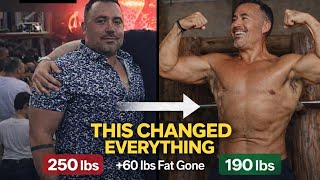
YouTube interview (Exit with Adrian Salamunovich) featuring founder Adrian and coach Greg Newland. Adrian describes a personal transformation (from ~250 lb to ~190 lb) using Greg’s founder-focused coaching: simple, sustainable systems (daily weight checks, calorie tracking—often via photo+ChatGPT prompt—step targets/walking, 2–3 resistance sessions/week, protein prioritization ~1 g/lb, sleep hygiene, time-blocking workouts, accountability, and 80/20 moderation). Mindset hacks (public deadlines like a photo shoot) and caloric budgeting are discussed; extreme programs often fail because they are unsustainable. Practical, founder-oriented advice targeted at consistency under pressure.
Chapters
We're talking about founders. You are being judged. Books are judged by their cover. So if you're leading a company or you're a father or you're a leader of any kind and you're a overweight, puffed up looking slob, people are going to notice. VCs are noticing, investors are noticing, your employees are noticing. And that's hard to hear. I don't know if I was gaslighting myself into thinking that I'm fine, I'm just a little thick. You know, it's cool when I exit or when I get this level, then I'll get into shape. Greg Newlands helped me lose over £50. Not with gimmicks, but with structure that actually works for founders. Founders don't need motivation. We need systems that work under pressure. The weight loss was real. The mindset shift was bigger. In this episode we talk about founder fitness hacks, why most founders overcomplicate getting in shape.
This is the Exit with Adrian Salamonovich brought to you by the Exit group and Morgan Stanley.
Hey everybody. I'm super pumped about today's episode because I have my very good friend Greg Newland who's also my personal trainer. He's an absolute stud and he's been amazing for my life. He's helped me go from where at one point I was at 250 pounds. And through his mindset, coaching, his fitness coaching, his advice and his guidance, he's allowed me to transform and, and get my body weight to the lowest it's been in 20 years. I'm now £190 in the best shape of my life and I've got Greg to, to thank for that. So I'm proud to introduce Greg Newland. How are you buddy?
Good man.
Good to have you here, man. Really good to have you here. For the people watching, why don't you give us a quick intro your, your background, where you're from, all that stuff.
Well, from my accent you can tell that I'm from the uk. I came to Mexico four years ago. My background always in fitness. So I got into training myself when I was 17. I was a skinny kid and I wanted to build muscle, feel confident and good. So always trained since I was 17, all my life during that, you know. Then I got into coaching people. Early 20s when I was 25. I then set up my own company. Initially that was fitness classes in the UK. So helping men and women lose 30 pounds in eight to 12 weeks, that was our offer at the time. Built that up, had four different locations Then the pandemic happened. So I came to Mexico over the winter for a couple of months for a vacation, fell in love with the weather and the lifestyle here, and at that point decided to transition my business online. And then when I made that transition to moving online, that was when I decided I wanted to work with founders and high performers, essentially people who had the same mindset as me, focused, goal driven, motivated, that wanted to not just look good, but be elite in how they looked. So their, Their fitness. So their fitness and their business was, you know, both operate at a high level. So that's where my past and where at now.
That's right. And the way that we met was kind of. Kind of interesting. Here in Tulum, Mexico, I saw this ripped guy walking into the beach and I said, man, I want to look like that guy. And you know, I didn't. I thought maybe it'd be like just my initial impression was like, this guy's probably a jerk, right? But you're the nicest guy I ever met. And right away we started becoming friends. And the advice that you gave me is all based on first principles and your experience. I really started to see some changes right away. So tell us a little bit about your founder fitness program that you've developed. Yeah, tell us a little bit about that.
As you said, it's first principles, how my mind works. I see fitness and making it just simple. There's so much noise online now as we know, many just conflicting information. And I want to make it very simple for founders. I want to just for them to focus on just a few habits that actually matter, which we can talk into on this podcast and, and do it in a way that suits their life. That's simple, that's easy. So it's aligned to their psychology or to align to the like atomic habits. So but essentially that's what we do. We, we take a founder, we opt, we look at their current lifestyle and we give them a plan that suits their life and it just focuses on the few things that actually matter. Then we. We're in communication with them on a daily basis so we can navigate any challenges, keep them consistent and consistency over time as we know gets results.
That's right. And I think, I think founder and why founder fitness is a little different than any other kind of fitness is founders are often working tons of hours, they're getting poor sleep. They're so in founder mode and focused on the one thing which is building their companies that often fitness and both mental. The mental game and the physical game is the first thing to go. And if you're not fit, you can't run a company. And so from, in my experience, if I could go back, what I did is I put it all onto the business and eventually I burned out. And I think one of the best ways to avoid burnout is to reverse that. Invest in yourself first so that you can play the marathon game. Tell us like if there's one place to start for a founder, right, you're feeling burned out, you're not in optimal shape, you know it, you're self aware. What is sort of the first, first thing that you tell founders that they.
Should focus, start focusing on, focusing on the basics. As you know, when you started with us, it's literally monitor your weight every day, track your food intake and, and move. So if, if you're, if you're tracking your weight, you're controlling your calories and you're moving a little bit more. Nothing extreme, but just moving more. That means you're going to be in a calorie deficit and then your weight should reflect that. This is the physic, this is the science for fat loss. It's, are you move, are you burning more calories than what you're eating? So if we are tracking our calories, we are moving slightly more. We're going to be in a calorie deficit and then that will show on the scale. And then that's why you track your weight so you've got clear data on what you're doing. The reason we do that is because it's simple. We can all move slightly more. If someone's doing 5,000 steps, now do 7,000. Nothing extreme. Keep it consistent and easy. If someone's tracking their food, you don't have to do a fad diet, you don't have to go extreme, you don't have to cut out alcohol or things that you enjoy. Just have eat the right amount of calories and you can enjoy food within that as well. Like you have.
Yeah. And I think, I think one of the, one of the challenges with founders specifically is we're all in, right? So if we get a challenge, say I want to lose, like, I've seen this a million times, like, I want to lose 30 pounds and I'm going to do it in 30 days. I've had, literally people think like that and that sometimes can work in a startup, right? When you're like, I'm going all in, I'm setting big goals. But I found the opposite to be truth. Fitness is to start slow, meet people where they are and that's what I liked. You met me where I was, you didn't give me anything extreme. And I remember thinking to myself, greg, give me more, man. I can do handle more. And you said, just trust the process, trust the math. So that's one thing I really liked about this is I guess the best workout, the best fitness regime is the one that you can stick to, Right? That you can stick to. And so let's talk about those non negotiables like when we, when we started.
Yeah. Something that came to mind, what you said there is founders go all in with their business. And what we have to remember is founders are, this is something they excel at their business, right. This is why they've achieved success and they're enthusiastic and it's something that they're really good at when it comes to their fitness. It's something that they haven't mastered yet. When they don't get the success that they want. It's, it's not them, it's not them not working hard enough or it's not the piece of thought they're not good enough. It's actually because the strategy wasn't right. And this is why we have to optimize for ease, for simplicity, for enjoyment, which is the, backed up by atomic habits, which I know most people listening to this will have what read because then we can be consistent with those things. So it's just about making life simple and easy, which we did for you. And the non negotiables were moving more. So we tracked your steps, locking your food, doing your workouts and then hitting your protein target. So just four things. We knew that if you were in a, if you were moving more, if you were logging your food, you were in a calorie deficit. So fat loss was therefore going to be guaranteed because it's, it's science, it's physics. And then with you eat, increasing your protein intake and resistance training, you were going to maintain muscle mass, which meant your metabolic rate would have stayed, stayed high.
Yeah.
And you, as you were chipping away at the body fat, you had that muscle and that shape and definition underneath. So it's just four things that we, we focused on with you when we focus on with all founders and it's really just keeping it simple. And there's focus on that because founders have, as you know, have got attention and focus on so many of the.
Things got to keep it simple, right?
Simple.
And I think that from a founder perspective, there's two things that we generally love. Right. It's checklists Right. The dopamine of checking things off and also data. And so from the checkoff perspective, one of the things that I valued a lot working with you was that you gave me just a daily things to work, work on. Like you said, the steps get on the scale, drink water. Right. And then track what you're eating. And we simplified the process using a bunch of very easy to use tools, including ChatGPT and Just Easy input. So at the end of each day, as long as I check those boxes off and I could do that consistently week after week, the results started happening. Not right away. Right. Like everything, it took a few weeks and I started seeing results and that was really powerful for me. And so the data is the other thing. It was really interesting to see the correlation between input and output and very encouraging at times. But also sometimes we see these spikes. Right. And I think that if I didn't have the accountability factor, if I was just using ChatGPT or My Fitness, fitness pal or, or just trying to DIY it like I've done for years with, with mixed results and with no consistency, I wouldn't have gotten the results that I've gotten today and that I'm maintaining today. And so talk to me a little bit about the accountability factor that you bring to the table. How does that, how does that work with your other clients?
Yeah, we have daily accountability in the sense of everyone's got to log their weight and log their daily to do list, taking it off. And we then see that because as we just said, if, if we know that it's science, if you're in a calorie deficit, you lose fat. We've just got to make sure that clients are consistently doing that every single day. And if we know that progressive resistance training builds muscle, then we just need to see that done daily. Okay? So we know that we're human beings. You've had days where you've gone out the weekend or you've been on vacation for four months, but you didn't go too far off the path because we were communicating on a daily bas so we could keep you moving forwards. And that's really what it comes to. It's keeping you moving forwards. And if you do go off path, recorrecting after a day or two and not letting that turn into a week, a month or a year, that's when you don't do all that progress that.
Would happen to me historically is I'd be seeing progress and then I would, you know, maybe have a extra fun weekend. Right. Let some steam off and then Monday would roll around and I would see the spike. And historically I remember getting frustrated over that and that would be often reason I would kind of just stop doing what I'm doing. I think was really helpful having you on board and saying, this is why this is happening, this is actually water weight, it's not real weight gain. Give it three days before you give up and let's see what happens. And sure enough, it would happen. So it's super empowering when you have sort of a, a guiding voice, somebody to look at the data and, and then you're kind of teaming up and you're seeing what input creates a certain output. And that, at least from a founder perspective is super powerful, is when you feel in control and doing things in a sustainable way. So I, I really appreciated that from you and it's, it's served me to this day.
So powerful. Well, we, we've seen your weight go up four or five pounds in a spike.
Yeah.
I mean, what comes to mind when it was your birthday, when you were in Europe this summer and your weight spiked four or five pounds round about your birthday celebrations. But because we were tracking the right data, we were tracking your weight, we knew your steps, we knew what your training was and your intake of food was, we knew that that was water. So we, as we, we said and spoke about, keep calm, it's going to come down. And literally as soon as you had a few clean days of eating, your weight came right back down. Whereas many, many clients listening to many, many families listening to this, or even yourself prior to joining me in that situation, might have panicked, lost your head and then just spiraled and started eating or drinking more food and then got off track.
Yeah.
So it's, as you say, it's so powerful just having that voice to reassure, to just keep moving forwards.
Yeah. And I think what I've heard a lot, I've referred a whole bunch of people to you and I've watched the results, is super impressive. But I've heard this over and over, including for myself, like, hey, look, I'm an entrepreneur, I can build companies. Right. I can raise venture capital, I can do all this stuff. Surely I can DIY my own training. There's chat, GPT, there's all these apps and I've done all of those and only by sort of surrendering a little bit of control and saying, and maybe even being a little bit humble and putting my ego aside and saying I need to approach another person to get some guidance that I was able to get that last 5%, which was really 100% because either you're in shape or you're not is the way I look at it. And that, that last 5% of having that human accountability, that coaching from you is what made it sustainable for me. And so that's something I hear a lot is like people are very, very hesitant. They'll try everything and anything except for actually hiring a coach. Yet every high performing CEO that I know has a coach. So it's the same thing with fitness, right?
Yeah. And athletes as well.
Yeah.
You look at all the best athletes, all the best sports teams, all have 100% because our performance will dip slightly if we don't have that accountability in that, that person there. I read a great quote before on, I saw it on Instagram and it was, if we don't get a coach for a goal that we want to achieve, that's really important to us and we're wasting time and making mistakes. He was saying it's called ignorance tax. Right. That we're paying that tax because we're being ignorant and just not getting that coach. How, how my mind works, it's if I want to achieve this goal, it's really important, then I'm willing to pay. I don't want to waste time and make mistakes. I want to get that, that result. So, yeah, it was great to see you take the action and get the result that was really important to you that you'd really wanted and get in the best shape that you've ever been in and see. To see you go for that transformation has been awesome as well.
Let's talk about that. Let's talk about some hacks that we discovered together. And then these may be applicable to other founders. They might not be, but for me, one really powerful thing was creating and this is a bit, a bit cheesy, but you remember I was like, I need a deadline. Because as a founder, I'm used to working under pressure. And so what we decided to do is do a photo shoot at the gym, which, which is kind of cringy. But I was like, on May 15th, if I'm a big fat pasty guy, we're doing a photo shoot. And if I'm tanned and ripped, we're doing the photo shoot. So no matter what, we're going to do a photo shoot. I was really uncomfortable with that idea, but I was committed. And so that, that really helped me visualize that day as a success met as a success milestone and put the pressure on. Can you talk a little bit about the mindset Because a lot of this is about like, tricks like that, any, any other sort of levers like that that you, you could share, that you could think of that are useful for founders.
Yeah. Having. Yeah. Make you made yourself publicly accountable because we posted it on Instagram that you're going to do that photo shoot whether you're, whether you're in sh. And basically with you, we, we worked out what your, what your drivers were. And for you, that was a big driver. So for founders, it's, it's understanding what's, what's going to move you, what's really going to motivate you. Is it a vacation? Is it a photo shoot? Is it making yourself publicly accountable like you did? Those things are powerful. And what's also powerful that I've seen from helping many founders is just being at a point where they're not feeling good, whether they look in the mirror or they're not in the shape they've always been in. Maybe it's after a difficult time order or a divorce, something along those lines. And it's really getting away from that feeling. So I always say if you're in a situation where you're not feeling good, that's the best time to take action because you've got so much internal drive to make yourself feel better. So there's that. And then when you're in a situation you're in now where you've got in good shape, now you're needing those, those other goals where you're going to feel good or do a photo shoot or lead your retreat that's coming up, or lead the retreat or doing like looking like a leader. Right.
Whatever benchmark that you need to set.
Things that, to move towards because essentially you're not in that place anymore where you're, you're looking in the mirror, feeling terrible. You, you've, you've moved past that, you've made progress. And now you need things that are going to excite you to drive you to move forwards.
Let's talk about that. So you said something, you hit on something really important feeling. And so rather than. There's two types of, of, of anchor points or visualizations that I like to visual. So what will I look like? Can I imagine what I'm going to look like? Let's talk about that. But also how I'm going to feel, which is not something I used to do. So it's like I remember early on you asked me, how will you being in shape make you feel? And for me it was, I want to be more confident I want to be more energetic, and I visualized feeling more confident and more energetic, and that was my motivator to get into shape. And the other thing that we did, which is another kind of cringy thing that we experimented with, was taking AI and sort of visualizing what I might look like if I was 20 pounds lighter or if I increase my muscle mass by X. And I remember putting that visual on my. On my phone. Maybe we'll share a screenshot of that, as cringy as it is. But I was able to visualize myself for weeks, and that made it that much more real, Right? So those are the powerful tools that as a visual person, it really helped me kind of latch into my. To my mission to get in the best shape of my life.
And what I like about when you. What I like about you putting that on your phone screen, the story behind that is some of your friends were taking, like, taking, like saying, taking a.
Piss, taking the piss about that.
But then now, three months on, they saw you achieving that, doing the gym photo shoot, celebrating your success, and then asking you, how did you do that? And this is what happened to me. And when I was a pro bodybuilder, I'd have friends give me, like, give me take the piss why you're not drinking or why are you eating this? Blah, blah, blah. And then six months after, wow, help me get in shape. Right?
That is the best feeling, right? When they first, they kind of laugh at you, and then when you get the results, they're like, amen. Can you show me how he did it? And that's my honor, right? When people approach me and people approach you all the time. It's such an honor to be able to just, like, help people transform their lives. That's probably one of the best feelings in the world. And you talked about you just hit on something. Alcohol. Can you drink alcohol and still get in the best shape of your life?
Technically, yes, you can still drink alcohol and get in the best shape of your life. I don't drink anymore. Well, I drink very limited. I know you've limited it. I mean, if we're looking at the science, if we burn more calories than what we consume from food and alcohol, we lose body fat. Right? It's physics. So we have many clients that are drinking alcohol still in a small amount. Maybe it's a glass of wine every couple of days, and they're still in a calorie deficit. So they're still enjoying themselves with the wine, but losing body fat. Win, win for them. But we have other clients that say, you know what? I don't want to drink alcohol. I'm. I want to feel energized. I know it's a poison to my body. I don't feel as sharp when I wake up the next day. So for those guys, they're just no more. For me, I. I don't really drink alcohol often. It's not because of the calories. It's more what that does to my testosterone, my hormones. I just see myself. My body is a high performance car. So I want to optimize it and look after it. And that means good food, looking after my sleep, exercising. And of course, you know me. I. We've had pancakes. This is my thing, right? Sweet stuff. So we can have things that we enjoy in our diet, whether it's alcohol or sugar or these types of foods, but it's in moderation, smaller amount. Right. The rule that we have with you and other clients, it's 80% healthy, 20% fun, foods every week.
80, 20 rule. And I think if you go extreme, it'll last for a bit. Like, anybody can go on an extreme diet for 30 days, 60 days, but eventually you're gonna break. I mean, the humans, especially if you're building a company, you're under high amounts of pressure. We only have so much discipline, and I actually have a very limited discipline meter. So I think part of the battle for, for me anyways, was limiting the amount of discipline that I had to exercise. Right. So in other words, making things automatic, simple, fun, easy, sustainable. And we were able to do that to the point where it doesn't feel like effort anymore, which is how you can do. I always think to myself, can I do this for 10 years? If the answer is yes, then I'll do it. Right? There's a whole bunch of things like that. Little hacks and maybe we can talk about. For me, walking was the easiest one. So to me, walking is probably the most underrated fitness thing you can possibly do. If I had to pick just one, why, we all can walk, we could walk anywhere in the world. Walk, no matter what the weather is. You can multitask when you walk, right? I use it for listening to podcasts that are building up or audiobooks, or I'll take a client call, or I will just use that time to kind of walk and meditate, think about ideas and whatever. So you're actually multitasking. You're burning calories, you're getting in content, or you're connecting with people. It's an hour a day. And I don't care who you are, what you're doing, what stage your business is at. You have one hour either in the morning or in the evening, or do half an hour in the morning, half an hour in the evening, and then get those 10,000 steps in just that alone. If you had do nothing else, you're going to improve your fitness, right? Yep. Well, I think we both agree on that.
Yeah. As you said, walking is, it's so powerful, it's so many benefits, and it's so efficient. If you're walking, you're burning calories, which helps lose body fat. But at the same time, as you said, you could be learning from a podcast. You could be dictating notes for a presentation or for work, or you could just be using it, as I do sometimes at the end of the day or middle of the day to just relax from work, refresh. So then when I go back into another work block, I'm feeling productive again. So it's hyper, hyper efficient use of our time for building a business and for staying fit.
Speaking of levers, talk, let's talk about macros a bit. I never tracked macros my entire life. I only started tracking macros with you. Why is tracking macros so important? And which macros should we be tracking? Tell us a little bit about that.
Such a good question. And this is something that we did with you because most people are eating healthy, but they have no data on their macros. They don't know what the calorie intake is, and they don't know what their protein intake is. These are the two that we focus on. Calorie intake detects fat loss. If we're in a calorie deficit, we lose body fat. So we, we monitor calorie intake.
Right.
When it comes to protein, protein helps us build muscle, helps us recover from exercise. It also has been proven that a higher protein intake correlate easier to burn body fat.
So protein burns. Just the act of eating protein helps you burn more calories.
Yeah, Period.
Just the eating. It takes more caloric burn to digest, to digest protein. So that's one, one major reason.
Yeah. So when, when we look at a hierarchy of importance, when the goal is to shred body fat, we want to know how many calories are we eating. Right. So we have to track calorie intake. Then after that, what's important, it's protein. Lead with protein, lead with protein. And this comes back to when founders have got so many things to think about. If I'm, if I said to you on day One. Right. Adrian, you've got to track your calories, you've got to eat this amount of protein, you've got to eat this amount of carbs and this amount of fat and fiber. It's very overwhelming. You've already got enough on your plate. We want to make it super simple. It's track your calories and then hit this much protein.
How much protein should the. You always hear these different rules. How do we keep this simple for founders, how much protein should a, you know, 40 year old business owner male be. Be consuming?
So one gram of protein per pound of body weight. So if I'm 200 pounds, which I am 200 grams of protein, which for most people is more than they're currently eating. And this is why with you, I remember when you started it was around 60 grams and now it's around 160. We've increased that in a gradual way.
Yeah.
Why? Because it's simple for to do it in a gradual way. I didn't want to overwhelm or over face you. So I remember when we first started working together, you had two meals, you had your breakfast and your dinner and we increased the portion of your eggs for your breakfast and then we increased the size of your chicken for your lunch. And then we added in a protein shake. Two scoops.
Yeah. It was all like these tiny tweaks week by week. So it wasn't anything extreme. And then again it gets fun. You're like, okay, seeing it's working. What if, what if I add one extra egg? What if I add an extra scoop to my smoothie and you start to see the results. It's all very slow. And I think unfortunately a lot of us are trained for like instant results. Right. Everybody wants to take the pill, press the button, get the results. It takes a little bit of time, but once it gets going, that's where the real magic happens. Right.
It's all small tweaks and what you went on. So the, the magic. If we look at your situation, went on vacation and well, you went to Canada, then you went to Europe, then he went back to Canada, you were out of Mexico for four months, out of your environment, out of your routine, away from your circle of friends that are into fitness, that influence and you maintained your weight because you've done these. You would. Because essentially we'd put in place the foundations in a gradual way so then you could just continue that consistency. Whereas if you were doing something that was unsustainable from the start, when you went on vacation away from your Normal routine that would have fallen apart, you would have broken. Yeah, because it wouldn't be, it would have been difficult, unsustainable, not simple, not fun. So this is why we optimize. And this is the work of Atomic Habits, which my whole methodology is built upon. It's doing things in a simple, easy, enjoyable, sustainable way.
Yeah. Big shout out to Atomic Habits, James Clear. I mean that was how when I was first starting to do this, I would do two things at once. I did my 10,000 steps while listening to the audiobook from James Clear, Atomic Habits. And those two, just those two things together were a great start. But with your coaching on top of it all, it was a lock. And that was like really the beginning of my fitness journey. And this is pretty, pretty powerful stuff. So that's, that's a really good one. Let's talk about more like just hacks because sometimes like people just want to get started and get like a quick tip something, something that they can start doing tomorrow. Maybe it's around hydration, like rule of thumb around drinking water, jumping on the scale. Like, let's talk about like some, any hacks out there. One thing that a founder could do and, and, and, and really that would sort of set them in the, you.
Know, when I go, I go to highest leverage the first principles. I always say, get a coach, put yourself around someone who is in elite shape because it's going to influence you when it comes to further down hacks that are simple, just reduce anything unhealthy in your diet. Day one, whether that's alcohol, whether that's sugar, whether it's cheese, whatever it is that people enjoy that's taking your calories higher. Just reduce that stuff. One, it's going to reduce calories. Two, you're going to feel better.
Okay. Yeah.
So you don't have to go, you don't have to go extreme. You don't have to, you don't have to cut it all out if you don't want. If that's unrealistic or it's not fun to do that, but at least reduce it. It's the best, best thing you can do because you're going to see results and you're going to feel so much better from that.
One thing I did try, and let's talk about this before I met you, but which I think set me up to be able to be ready to work with somebody like you, was I tried hard 75 for, for those of you that are not familiar with Hard 75, it's a 75 day program. There's like five non negotiables. It's like you got to do two workouts a day, you got to read 10 pages of a nonfiction book, you've got to drink X number of liters of water, and you got to stick to a diet. Did I miss any? Those are the main ones, right? It's pretty extreme. And if you screw up on day 13, you got to reset back to zero. It's extreme, but entrepreneurs are extreme, folks. I found hard 75 did one thing for me. It held me accountable to myself. It was extreme, not sustainable. This is not a forever solution. But what. But it helped me. What are your, what are your thoughts on hard75?
I feel like doing things that are extreme. It depends on our, our mindset. It depends on what works well for us. If, like, in your situation, you went for and it gave you a good platform, you made some progress, you lost some weight, you got into the flow of doing things. So that was good in your situation for other people, maybe they'd fail doing that and then feel disheartened, and then that would have a negative effect. So there's, there's two ways to look at it in your situation, it worked well. My opinion is I don't like doing extremes because I'm setting myself essential for failure.
Yeah.
With clients, what we want is, with all the clients we work with, is to set them up for success from day one. We talked about this earlier. Start the podcast. But people don't fail because they're not trying or they're not. They don't desire the goal enough. That's not, it's not what. It's the strategy. When we look at what strategies most people do, it's extremes. It's restriction with food, cutting out things. People love food or alcohol or social. So it's not enjoyable. It's not sustainable. It's not.
It's.
It's not part of their current routine. When people do 75 hard, that's nowhere near their current routine of life. So it's almost like these things are a temporary thing and that means they make people make progress. But if it's temporary, when people go back to doing what they were doing before, what happens? Weight is regained, and then they feel terrible from that, feel like they've failed. So this is why everything we do is. It's built in on the atomic habits. Everything is simple, everything is fun, everything is built to someone's life and it's enjoyable. And then people can be consistent with that. What happens with that? Well, the start to see results, start to feel motivated, start to feel good, and then they want more and more and more. So it's easier to then sustain those habits. So this is how we set our clients up for success from day one, using the methodology of atomic habits and just focusing on the few habits that actually matter. So it's not simple and not complex. That's our methodology.
Brian Johnson, famously from the Netflix documentary Don't Die, I was in a sort of a conference with him and he said his number one thing was sleep. Sleep, Right. Which is something a lot of us founders struggle with. Right. What are your thoughts around sleep and what are any tips that you often talk to your clients really important.
And we were on a coaching call recently with clients and one of them said that her workout sets the tone for his day by that if he wakes up and he works out first thing, then he feels energized, he feels fit for the rest of the day, and his choices with food are impacted in a positive way if he works out on the morning. And then I said to him, well, if you wake up tired, do you do that workout? And he said, no, sometimes I miss the workout. So I said, well, actually your sleep on the night sets the tone for the following day. Because if you get good sleep and you wake up well rested and you're feeling energized, then the rest of the day flaws, you work out, and then your food choices are good. So sleep is so important for, for consistency. Also, it helps you recover from exercise. And also it's. If you wake up tired, you'll know that you feel more hungry. So if you're trying to maintain your calories at a certain amount and you're feeling hungry, and that's coming because you were tired the night before, from the night before, you're making life harder for yourself. If you just get good sleep, It's. It has a positive impact on so many things. My sleep hacks are, I aim to get in bed for 10:30, knowing that I'll be talking to my girlfriend and all that stuff, and then aim to sleep for 11.
I set up an alarm. Yeah, a lot of people set up an alarm to wake up. I don't need an alarm to wake up. I wake up super early every day at the exact same minute. Consistency. I set an alarm to go to sleep. So at 10:30, my little alarm goes off. I'm like, time to go to bed. Right? That's size a big one. It's going to. So you go to bed at 10:30, what else what?
Other types of things, Other things that I do. No phone, no television nor computer. An hour before bed, if sometimes even longer.
Do you sleep with your phone in your room?
No, I've actually started, yes, because of my alarm, but I set it away from me on the other side of the room because I use it for my alarm. But there's been lots of studies proving now that if you have a phone close to your head when you sleep, it's actually impacts your quality of sleep. So for that reason, it's the other side of the room. No television or anything before bed. I also wear a mask on my eyes, so it's pitch black. Yeah, we do have blackout blinds, but I just, I like. We've got the aircon, so you see that I just want it.
And with aircon, I keep hearing like about temperature. What's, what's the, what's the thing around temperature?
Everyone's different. We said I was at 23 degrees, our aircon, so that's where I'm at. But yeah, if I'm too warm, I can't sleep. So those are the, the things that I do religiously without fail. And I make sure that I don't eat too close to bed because then if I'm going to bed on a full stomach or if I'm eating at a restaurant and I have sugar and these types of things, desserts, that impacts my quality of sleep as well. I really feel that. So those are the simple things. You know, getting in bed with a, with a timer like you said, wearing a mask, having it pitch black, making sure the room temperature is cold, and then no blue light before bed so you can relax.
Perfect. Yeah. Okay, let's get into some, some inbound questions that we got here. These are always fun. So we had some people submit, submit some questions and we'll just like answer these in short and sweet. Okay. First one's like, how do I say consistent when my schedule is chaos.
Accountability is a big one.
Also.
Keeping it super simple. Super simple. If you've got a crazy busy schedule, two or three workouts a week, get your steps in as well. People think, People often think that they have to do lots and lots of exercise to be in great shape. You don't. You can train three times a week with weights like you do, and then walk through the days.
Yeah. And I'll add one more thing to this. I think it's very important for founders, and this is critical is time blocking. If you don't schedule, it doesn't get done right. This is Truly universal across all founders. Right. We live and die by our calendar. And so one of the things that I didn't do before is I would try to schedule my workouts around my life, and that just does not work. So I decided to do the opposite and commit a certain hour every morning. In my case, it's 10 to 11am it's sacred time. It's across the calendar. You will not be able to reach me between 10 and 11. I'm in the gym, I'm training in the gym, or I'm on my, on my, you know, 10,000 steps, in which case I can call out, I can check my message, I can listen to podcasts, but I lock and block that time. And I think for every founder listening, if you don't do time blocking, it's not going to get done. I think that's one of the most critical, critical ones around that one.
And to add to that, you trade on the morning, right?
Yeah.
And for, for most of the founders that we work with, they all train on a morning knowing that it's going to get done if they leave it to later in the day. Maybe a meeting comes in, maybe they've got children, something comes up, an emergency, whether if you train first thing on the morning, it's done.
Yeah. Get it done early and then you have the rest of the day. Every is different. Yeah. But for sure, I used to be an evening, a person that would train in the evenings, and I never thought I'd become a morning person, but I would say the training early in the morning is a huge hack too, for most people.
And like we said, when you train on the morning, then you're more likely to eat healthy the rest of the day because you've done that workout. And it's almost like, what's the point in eating healthy after I've just done a workout? You've just put yourself through that workout, tried your hardest. You're less likely mentally to then want to have unhealthy food.
Founders have all have different eating habits. Right. For me, for example, I cut out early morning breakfast and I cut my life to two meals, lunch, which really my breakfast and dinner, two meals. So I removed an entire meal off of, off of my plate, which is huge, huge benefit as far as like reducing calories, but at the same time reducing my eating window. But around eating habits, like, some people get hungry at night, some people are super hungry in the morning. Like, what are some general rules of thumb? Where's a custom for everybody around eating habits, specifically morning and night?
Again, it comes down to everyone's unique. And this is the benefit of working with clients like we do on a deep level, because we want to keep their, their eating habits similar to what they're doing so they can be consistent with that. For me, I like to stop eating at eight on a night. So then I go to bed, I'm not feeling too full, and I get a fast until the next morning when I usually about 10 or 11 after the gym. So that's me. And I'm similar to you. I eat two times in the day with two snacks, one midday, one snack after my dinner. So that's what works for me. And that means I can be consistent with that. And that's the key. That's easy and simple for me. If people are trying to change their way of eating too much. This just happened with. My girlfriend started working with a coach. The coach gave her completely different meals, completely different meal timings. After four days, my girlfriend was overwhelmed because she was already busy with her own business. So this is what nice me. It doesn't. This is what really annoys me. We have to keep things in line with what someone's already doing.
You gotta, you say, you've told me you gotta meet people where they are.
Meet people where they're at. Yeah.
So work from there.
Yeah. With you it was okay. Adrian, you're eating two meals. We need to make sure that your calories are correct and we need to make sure you're eating more protein. So let's increase the protein in your two current meals first, which we did. Then after that it was, let's add a protein shake. We had two scoops. That's 50 grams of protein. From doing that, we increased your protein by 100 grams. Super simple. In line with how you already eat. Meaning that you didn't need lots of bandwidth to do that.
Some people get really hungry at night, you know, like after 8:00pm I mean, I had to slowly get used to just stop eating at 8. Drink water, drink chamomile tea or something. But don't, whatever you do, don't eat after eight. What if somebody just can't go to sleep? Like some people will say, I can't sleep if I'm hungry. How do you deal with that? Do you have to readjust the behavior or is there something that they can do to sort of mitigate media, sorry, fix that? Really?
We like to keep it, to keep them doing what they're already doing. So we would, what we would do in that situation is with that person, you can still Eat before you go to bed if that's going to optimize your sleep. Because why stop doing that if you feel good doing that?
So one thing at a time, don't overwork.
Yeah. Well, it's like if, if that person does that and their sleep is good and better from doing that and we take away that food out, well, that then causes a problem for them. All we need to do to ensure that they're losing body fat is make sure their calories over the day and over the seven day average is where it needs to be. So we can remove calories essentially from earlier in the day. Yeah, so they can still eat that meal before bed.
That's a huge one. That's a huge one that you and I worked on. Because I could think of things from a financial perspective as a business person. We called it calorie budgeting. Right. Which was, which is a fascinating concept where for example, if I knew I had a big dinner, a big group dinner tomorrow, I don't want to hold back, I want to have everything I want to eat. I know it's going to be this huge 4000 calorie day. All we would do is day before or maybe two days before, reduce the calories slightly so I'd have some carryover that I could use on Saturday to have that meal. And it worked like a beautifully talk to talk about caloric budgeting and how you've seen it work for other, other clients.
This is one of the, the things that's the most important and the biggest misconception one of them in the fitness space, people thinking or founders thinking that they have to eat really strict or like a bodybuilder to, to look good and it's not the case. Like you've just explained, you still had, you've eaten out the weekends, you've eaten out through the week, you've still enjoyed food because you've been at the right calorie intake. So we can have food you enjoy within that. So what we did with you that worked really well was your weekends would always be more calories. So on the Monday we went with a 24 hour fast so no food or we had the one meal and we're still doing this now with you. So that means that the extra calories at the weekend have been balanced out on that Monday because we're looking at your calorie intake across the seven day average.
Yeah.
Not just one day. So that means that if you have more calories today, you don't need to beat yourself up and get disheartened and think that you're going to fail or gain lots of weight, you just need to then budget on another day. Freezing math. If your calories went over today by 500, then tomorrow, all over the next couple of days, just eat slightly less. That equates to a 500 calorie amount and that's then you balanced out.
So yeah, I think, I think that's, that's a really big one. Is, is not. Stop obsessing on daily. I mean, measure it, look at what you're doing. But look at things as a week in a hole or a month in a hole or in. And that's how you start to see the, the, the advantages over the long term is by not micromanaging each day, but rather looking at a, a caloric intake and performance over an entire week week, which is really interesting to see when you start tracking the data. Speaking of tracking data, let's talk about AI a little bit and how we used AI with some simple chat GPT prompts. Yeah. What are your thoughts, first of all on using AI? Do you recommend it? And then is there anything that. Because a lot of founders are into, obviously into chat GPT and AI. How can founders use AI?
Yeah, it's, it's making getting in elite shape easier than ever and more simple than ever. And before we had to use apps like My Fitness Pal to track calories. And we do have clients still using that because it is the most accurate tool. However, it's clunky, it's slow. If they're eating out with dinners or they're with clients for dinners or family or friends at the weekend, it meant that tracking may not have got done. Okay, so now with ChatGPT, yourself and many of our other clients are taking photos or writing in what they're eating. And it means that they're being consistent with tracking their calories now. So it's, it's making tracking calories easier and more simple than ever. And that's leading to consistency with tracking calories, which is leading to predictable fat loss. Because it's, as we talk about, it's just physics, it's just numbers and we're getting the numbers correct now. Then we've got technology with watches for sleep, for steps that pulls in automatic. So now we've got information with ease on what someone's eating and how much we're moving, which is calories in and calories out. So we can make sure that we're in a calorie deficit. So a guarantee losing fat. So it's Just making the whole process of getting elite shape more simple and more easy, in my opinion. Yes, there are coaches that will say, don't use ChatGPT. It's not, it's not as accurate as MyFitnessPal. The way I see it is if you're not going to track because you don't like MyFitnessPal, that's not effective. Whereas if you are going to use my ChatGPT, okay, might not be as accurate, but it's going to get done.
100. Getting something tracked is better than not tracking anything at all. And I think just the act of consciously inputting each meal, that alone is a massive psychological hack because you have to think about what you put in your mouth before you do it. And for us, we were just doing a simple photo into a chatgpt prompt. Give pretty darn accurate macros, makes it easy. So I would do it every day. Why don't we do this? Why don't you include the ChatGPT prompt? I'll include your link in the comments in this podcast episode and if anybody wants that ChatGPT prompt, they can reach out to you straight on LinkedIn and get that prompt because I found that extremely useful.
That was game changing for you.
Absolutely.
And many of the clients that I know that the first week we said, okay, try MyFitnessPal, I could see there was friction to it.
Yeah, I hated using it.
And if we look at what does friction do, it's not simple, it's not fun, it's not enjoyable for someone, it's not easy. That means they're not going to be consistent. So we switch to ChatGPT like we have with you and then you've been consistent with it since and you've got in the best shape of your life. So yeah, I'll give you the prompt and you put that in the comments, in the description.
Awesome. Yeah. Here's another one. This is a question I get more from a lot of my founder friends offline. A lot of them do running, they run all the time, but they're not getting any results. They're doing 5K, 6Ks are running on the weekend, they're doing 10Ks. What are your, what are your thoughts on. On running versus walking versus not running? Like talk to us about running as a way of, of getting in, into elite shape.
So if we want to get in elite shape, that's essentially the stereotypical abs or visible abs or six pack and definition. Okay. Fit, toned, muscularish body. Right. Athletic looking body. How do we need to do that? Well, we need to have a base of resistance training. And this is a big mistake that founders make is that they're doing lots of exercise, lots of cardio, but they're not doing resistance training or they're not doing it in an optimized way. So what happens is they end up losing body fat, getting light on the scales, but they're never left with that, that fit looking body that they want. So running is fine, any form of cardio is fine. Cycling, whatever people enjoy is fine. But that must be a base of progressive resistance training, weights, weight training, if they want to have that fit, athletic looking body that they want. So with you, it started off with two weight training sessions with me in the gym, and then now it's moved to three. And with all of our founders that we work with, they'll either start with two and move up to three, or some of them will start our program maybe doing four or five. If, and if that's already a consistent routine of theirs, we'll keep it at that. But for most founders, two or three weight training sessions is the base that they need. And anything else on top of that, running, cycling, swimming is just fun. It's additional movement.
I see it all the time. They're putting in tons of hours a week on all these cardio, not doing anything, or they're getting skinny fat. And I did that myself. I was like, well, I'm cycling 100km a week, why am I not losing weight? It was only once I started increasing my protein and just doing those two to three easy, kind of fun workouts in the gym that I actually started to see real, real progress. And so I had it backwards for like a decade. And that was a, a big one. Lead with protein. Put in 45, 50 minutes in the gym, lift some weights, and then, and then the added benefit, and this is the real motivator for me is the more muscle mass I put on, the more I can eat every day without gaining weight. So it's like a, it's like a triple threat. Right.
It's as you said, it's so powerful when we do weights, it's one, we look good. Yeah. All right. But second, it's. We're burning calories in the moment.
Yeah.
And third, when we have more muscle on our body, then we've got a bigger metabolic, then we've got a higher metabolic rate, so we burn more calories in 24 hours. It's just a super efficient and effective way to exercise with having a base of resistance training and then everything else on top of that is fun. I personally don't like to run because I for my cardio or my movement. I like to walk because I'm relaxing from work. I can dictate notes or I can totally podcast.
Walking is.
That's what works.
Yeah, we agree. Walking is. I guess we're were to say to a founder watching this, what's one thing you could do tomorrow? Just start walking and track those steps and then do 10,000. Start there, then increase it to 11,000, next week 12,000 and just keep increasing the walking and make it productive and slot it in and lock it into your schedule the same time every day or whenever it works for you. But lock it in and use that time productively to either do meetings, listen to podcasts, or listen out those audiobooks that are stacking up that you want to, that you want to learn from. It's that easy. That's a good place to start. It says here, Greg, for founders listening right now who are training and trying to and feeling stuck, what's the one thing you want them to understand about getting real results? And that's Daniel from Miami, that it's.
Much simpler than you think. You just need to track your food and be in a calorie deficit. It you need to do three resistance training sessions a week to build muscle. If you do those two things, you are going to lose body fat, you're going to build muscle and you're going to look and feel good. You do not have to go extreme. You do not have to cut all the food out you enjoy. You just need to track your food and be in a calorie deficit. Food you enjoy can be within that calorie deficit and you can do what exercise you enjoy. But there must be a base of resistance training. If you are more of a beginner, go and get a pt so you actually know what to do in the gym.
Just.
But those are the two things.
Like we've all seen the memes online. Jeff. Jeff Bezos ripped, shredded, Mark Zuckerberg doing MMA now, looking fitter than ever. Are they on? Let's look at Jeff Bezos case. Are they on trt? Are they using peptides? We don't know for a fact. But what are your thoughts on that type of transformation? Are they natural? Maybe, maybe not. And then also, what are some supplements that you think can get people to look like that or that you do recommend versus those that are maybe overhyped right now?
Yeah, the ones that I take that we recommend to clients is creatine and protein for both the Physical benefits of training. Also, creatine has been shown to have great benefits for the mind. Productivity, focus. Those are two that I take and recommend to clients and for other people when it comes to trt, these types of treatments. If you go to your doctor and you've got low testosterone and they advise trt, if I was that situation, I would take it because it's something that's in our body anyway. It's naturally decreases as we age. Testosterone is so powerful for how we look, how we feel, for our cognitive function as well. So hugely beneficial for. For life. So I would say if anyone's in that situation and they go to the doctor and they recommended it, I would. In my. That. That was me. When I look at Zuckerberg and Jeff Bezos, they're older, I don't know their testosterone levels, but they are in elite shape. So they've clearly doing everything right in terms of the foundations, the training and the nutrition. I would imagine they've got coaches to help them get in that shape and potentially they're taking. Could be taking trt. They may have naturally high testosterone. I don't know. It's hard to say whether they are or not. Pet tides are getting really popular now. I've not taken any myself, but I'm starting to research into this because now clients are asking about this and wanting to know more. So there's lots of strong information on them and what they do and the different benefits and stuff. So it's really interesting time, I think.
Where it kind of gets a little convoluted, a little bit confusing. So you see people are like in bad shape and they're worrying about which peptides to take and which TRT and which. Which protein smooth, you know, what kind of protein issues in their smoothie. What are your thoughts on that? I mean, is that putting the horse before the carriage? I mean, shouldn't you work on the foundations before you're trying to find a magic pill or a magic peptide to take?
Yeah, exactly.
If.
If someone. Most people who want to get in elite shape and that means shredding body fat. So they might take a peptide or a protein powder, but they're still eating too many calories, so they're never going to lose body fat.
That's right.
So we have to get the basics right first and that's calorie deficit for fat loss. And yes, they might be taking a peptide, but if the training sucks, they're not going to build muscle.
Yeah.
So we have to get those base two things there first. Sleep as well, and protein intake help accelerate that process of elite shape. So those are the four things to focus on as a foundation. Calorie deficit resistant training, weight training two or three times a week as a base, protein intake and good sleep. If you nail those things and you'd be consistent with that, then you could add in the peptides or TRT or other supplements and it will enhance things. But you need that base first. Just like in business. Right. Most founders listen to this, know the, the basics they've got in place and then any other new things are on top of that. Right? They need the base first.
Yeah, I think, I think we're talking about founders. You are being judged. Books are judged by their cover, whether we want to accept that or not. So if you're leading a company or you're a father, or you're a leader of any kind and you're a overweight, puffed up looking slob, people are going to notice. VCs are noticing, investors are noticing, your employees are noticing. And that's hard to hear and hard to experience. I experienced it myself. People are going to judge you. I think that makes exercise probably one of the most valuable levers you can put in as a founder. Right. As a founder, if you invest into yourself, into your health, you're going to have more energy, you're going to have more focus, you're going to look better. By looking better, you're going to attract more good things into your life, whether it's the right partner, the right investors, the right employees, because you are being judged. And it's hard to hear that and it's hard to say that to people, but I think that's a love. When you tell somebody, like, listen, get in great shape, your life's going to change for the better.
Yeah, it's true, man. Well, if you look at your situation, you're now in the best shape of your life doing this podcast, feeling really good. If you were doing this with me now and you were £240 like you were before, how would your energy and your internal feeling be?
No, I remember watching videos of me and I didn't, like, I would watch a video and be like, who is that guy? Like, in my own mind, I was able to, like, I don't know if I was gaslighting myself into thinking, I'm fine, I'm just a little thick, you know, it's cool when I exit or when I get this level, then I'll get into shape, which I did do. But looking back to any young founders out there, I would say don't wait for the exit or for the some future thing. Make working out part of your daily routine. Not only will you live longer, you'll live with better energy. You'll be more focused. There's no downside whatsoever into investing 45 minutes a day into yourself to become a limitless founder. So train.
Yeah. Waking up every day to, to quote. Well, to talk about your experience and getting into the best shape. You're now waking up earlier with more energy, doing deep work, doing your workout, coming back, doing more work, feeling good, hosting these podcasts, feeling really good.
It's a flywheel.
Everything is, is a ripple effect from it. And I, we've had so many clients of ours that have said, from when I was out of shape to when I'm in shape now, I feel and see how people respond to me differently. And I see it for myself how much people respect me in. People who I meet naturally in business or just life have respect for me because they know I'm disciplined, hard working. You can't buy a body. Right. You can't buy fitness has to be earned. So people have respect for that. And if I see two successful founders and I see that one at a beach club, for example, and I see you, you're in shape and you're hyper successful, and I see another founder who's successful but out of shape, straight away, I just resonate with you and I have more respect for you because I know that you're elite in all areas and that's. I just, I know that takes work and commitment, so I really respect that.
Dan Martell and I were talking the other day when we were in, in Europe and he kind of said there are more millionaires in North America than there are men with visible abs. So it's actually more rare to have visible abs. I think at the age over the age of 35 or something, there are more millionaires than there are guys with abs. But if you can combine wealth and abs, then you're in the 1% of the 1%, which a great goal for anybody to try to reach. Right?
Yeah, just elite across the board.
But health is wealth. Ultimately, what I want everybody to take out of this podcast is like, invest in yourself as a founder first so you can be a better founder. Health is wealth. It doesn't have to be difficult, it can be easy. And don't be afraid to go out and ask for help. Just like you go out and hire advisors or work with coaches. The same thing in your fitness. Start with your fitness. You will never regret it.
It's true.
Through.
Yeah, I. Yeah. Leave that powerful.
Okay, good. It was awesome to have you, man. It's an absolute pleasure, and thank you so much for the impact you've had in my life, and hopefully people reach out to you and. And get. Get your help to become the, you know, the best version of themselves. I really appreciate you, brother.
Thank you, man.
Thanks, brother.
Just really proud of the. The work you've put in and what you've achieved, and it's been great to see that transformation, and I know it's going to get. Going to get more and more and more and more, so well done, man.
Thanks for you. Thank you.
More from Adrian
Don't make this mistake when hiring executives or you'll pay dearly for it - Jack Newton