Growth Through Publicity (Not Paid Ads) with Adrian Salamunovic @ CanvasPop
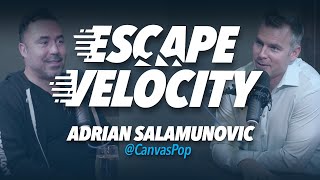
A recorded interview (YouTube) of Adrian Salamunovic and Dan Martell about growth through publicity and earned media (March 2021). Adrian—serial founder (DNA11, CanvasPop) and co‑author of Free PR—shares practical PR tactics for founders: storytelling/angles (e.g., underdog/‘slay the dragon’), teach-first pitching, using lookalike companies to find journalists, targeting review roundup pages (SEO/link value), leveraging HARO, using podcast appearances, and bringing PR in‑house once scale (~$1.0–1.2M ARR) justifies it. Concrete examples: DNA11 started with $1,200 price point, cut to $600 (average later ~$500) and did ~$1M revenue in ~14 months; CanvasPop spun out of DNA11 ~8–9 years earlier. Emphasis on multi‑channel strategy (earned + content + paid), PR flywheel/category creation, and founder focus/long‑term obsession.
Questions this video answers
Started at $1,200; reduced to $600 (later average price ~ $500).
About $1,000,000 in ≈14 months.
About eight to nine years prior to the interview.
Around $1.0–1.2 million in revenue.
Peter Shankman.
Think long term, Stay laser focused, Solve a problem. Right. And be obsessed with solving that one thing, and it's just a matter of time for success. Three, two, one.
Adrian. What's up, man? Dude, this is so good. Literally one of my good buddies on the show. So really excited to have you here. Author of Free pr, Cameron Herold, co authored with you, Adrian Solomonovich. That's a cool way to say it. I know. It's whatever you were like. You don't sound like the guy that would say that. And I mean, the people you got to endorse your book. I mean, just incredible people like Verne Harnish, Peter Shankman, Richard Karlgaard, and Dan Martell. Look at that.
You're on there.
That was fun, man. I appreciate that. So obviously you're a PR guy, or you wouldn't have written a book on it.
That's right.
But for those that might not be familiar with your work background, serial entrepreneur, give us the quick 60 seconds.
Yeah, actually, I'm not. I don't consider myself a PR guy. I'm a founder like you that had to teach myself PR in order to get my message out. Because I bootstrapped a lot of companies. And, yeah, I'm serial entrepreneur. I like to start companies, build companies, work with entrepreneurs. I started a company called Canvas Pop, just exited. So that's good.
Congrats, man. I'm a customer. I love it. I use it for all my canvases. Every Christmas, we buy a bunch of stuff put all around our house. And you also did. You guys did the. The pillows, right?
Yeah, we did.
Well, some of those GM pillows, man.
We did those just for you. We did a couple of. I'm wearing my Martel skills.
Always be branding. I appre. I'm. Yeah. If anybody knows and you know this, if you see somebody with my logo, it's because I gave them that you can't buy it. People are like, where's your merch store? I'm like, it doesn't work like that in my world. It's a gift. Now I want to keep gifting. You were like, give me. So I got some yeti mugs coming for you. Awesome. Some hats. But in regards to pr, because Cameron has always been known, you know, that's one of his things he likes to talk about. What did you guys learn at Canvas Pop? Is it Canvas Pop, the company that. You kind of really figured that out?
Well, I'll tell you the story. It started with DNA 11, a company that makes art from your DNA.
This is true.
I remember that 12 years ago.
Yeah.
And like anything, it was just an idea, something fun to do. We were taking DNA samples. Just to remind you, take a DNA sample, take a photo of it and turn it into a piece of art. Right. Wasn't supposed to be a company.
What would that. Back in the day, what did that cost?
It's. Well, that's funny. We started them at 1200 bucks and sold like two. And then I said, well, we got a pricing problem. So said, let's split it in half and do it for 600 bucks. And it went. Started selling like crazy. So the average price is around 500. 500. So it's designed for the mainstream markets. This is before 23andMe. So we were doing one of the first consumer genomics companies. Actually.
That's what I'm saying is like, there was real costs in doing this DNA test.
There was. And we were one of the first companies to do consumer genomics as E commerce. Like where you would order a kit, get the kit. This is before 23andMe. So we had to figure out a lot of stuff. And it wasn't supposed to be a business, but it turned out doing over a million in revenue in about 14 months. So, you know, a lot of SaaS companies have a hard time scaling up to a million bucks in 14 months. And we did it without any funding. Zero funding was before Kickstarter. Facebook was just kind of starting then. And so we had to figure it out. We had to. We had to figure out how to get the word out. Well, DNA 11, it's a pretty remarkable company, right? I mean, people will talk.
Good story.
It's a good story.
Yeah.
So then when we started Canvas Pop, which we spun out of DNA 11, that's almost eight years ago, nine years ago. Wanted to see if we could do it again. Can we do it with something that's much more ordinary? Printing photos, an online photo printing company. And we did. We got even more pr. And what I learned is if you know how to tell a story, if you know how to tell your story, whether it's to investors, whether it's. Whether it's to your employees, stakeholders, journalists, you're a more powerful company. And if you can learn how to make anything remarkable by using angles, like understanding how to tell your story properly, then people will pay attention and then people will spread the word for you. And that's all earned. Media and PR is.
How does somebody take a boring thing and turn it into a powerful story? What's the elements of a powerful story from your perspective?
I think anything can be interesting. So an example is my co author, Cameron Herold, was the COO for almost a decade at 1-800-got junk. It's a junk removal service. There's anything less interesting, in my opinion, than a junk removal? I don't know. Find it. Right. It's pretty unsexy, but they were able to get a ton of press by creating the story behind the brand, by doing charity events, by doing stunts. So even if the thing that you're selling isn't that interesting, you could make it interesting by telling the stories of the founders, the story behind how you started the company. You could talk about your company call. You can talk about other things that are going on in society. Like right now, we're on a podcast. Right. You don't keep telling a Dan Martell story over and over. You invite interesting people onto your podcast.
So there's always a way to make something interesting.
Always.
And what about, like, the folks that don't consider themselves good storytellers? Like, what are the elements of a good story that you feel the media is gonna pick up on?
Yeah, I think there's a few things. I mean, in the book, we talk about the five different types of angles or stories that you can come up with, but one of the more popular is the idea of the slaying the dragon, as they say. You know, the person that has David and Goliath.
Sorry, like the David and Goliath?
Exactly, the David and Goliath.
The underdog.
The underdog. You know, I.
We actually had Toby on a few episodes ago, and his. His thing was we're gonna arm the rebels.
Oh, interesting.
Against Amazon.
Oh, right. So you have the enemy.
Yeah, Amazon, the animal. Arm the rebels. Cause they're taking over this whole E commerce and they're squeezing the margins. We want to bring it back to the small people. And when he said that, it was like, oh, that's. That's a good.
Perfect.
Same thing, right?
Yeah. And Shopify are great storytellers, Harley. Also great at sort of identifying that angle and then, you know, telling.
Amplify it.
Amplifying world class. That's right. So we're all good storytellers, I think we tell ourselves, oh, I'm an introvert or I'm not good at storytelling.
Oh, interesting. You think every. If you're human, you're communicating your storytelling.
Absolutely. That's what humanity is based on. Right. Humanity has existed on a series of stories being told over generations. And that's what books are about. That's what movies are about that's what all entertainment's based on. At the end of the day, we're all humans, and we all relate to each other through storytelling.
It's almost like stories are the glue of the learnings. Cause really, if you think about back in the day with whatever tribes they had to teach the next generation to, don't eat this mushroom. Don't do this. And it was almost like story was the thing that we could remember to pass along those lessons.
That's right.
How does that translate into pr?
Great question. That's a great transition right there. Because, in fact, you just hit the nail on the head. If you want to get a lot of pr, what you want to do is not say, look what I'm saying.
Look how cool we are.
Look how cool we are. Look at how much we've raised. Or you can get PR for those things. But really, the ultimate way to get PR is to teach people something. Right. You're going to get on more podcasts if you say, look, I know how to get. I know how to help you raise money. If you tune into the podcast, you're going to learn something. Right. And so what I always tell people is when you're. If you want to be very, very successful in PR and storytelling, always think what's in it for the audience. Right. Don't think about what you want to show off. Think about what information you might have, what kind of value you have that you can pass on to others. And that's how you're going to get into Inc. Magazine. That's how you're going to get on podcasts. Like this is you want to help others. Right. And that's a number. And you know that very well. But that's the one big idea I want to share with everybody, is when you're pitching the media, think of the knowledge that you have that you can bring value to.
To their reader, their audience, their viewer.
Yeah. And talk about it.
I remember, I think it was Mike McDermott a few episodes ago from FreshBooks. He said. Cause I asked him, I said, why do you. Why do you. You know, he went on this, like, workshop tour. He speaks at all events, and he gave credit to SO37 signals about the idea. He said, you know, when we started, we realized we could either outspend or we could out teach.
Yep.
And it was through that, you know, education is just such a critical thing. And I guess what you're saying is we all have something that we know. If we built a company, we probably know how to do a thing in our company.
Exactly.
There's some, you know, it's either getting press or, you know, productivity, whatever your thing is. And if you could align with the outlet that has that audience interested in that topic and then you just wrap your business into that narrative, that's how.
You get, that's how you get outside audiences. Now what's really popular now and has been for the last few years is content marketing. Right? You develop the content and then you.
You propagate, you build your own media outlet almost.
That's right. You're really great at that, right? You have your YouTube channel, you have your medium that you, you're always posting information. And that is really great to have that home base. What this book and what we're about really is doing. Do that for sure, do that. But at the beginning, you can use other outlets that already have huge audiences and leverage those audiences to bring them into you. Right? So that's what we're about. We're about big outlets going where your audience is getting in. The TechCrunches, the INCS, the fortunes, the Forbes, et cetera, teaching you how to do that, to drive that traffic back to you. And so you gotta do both. You gotta do the external stuff and the internal stuff.
I mean, Adrian, in the world of less people reading newspapers and maybe watching the news, what do you think are the future of media?
Yeah, I think the future.
How should people think about media? Because I know you have a paid versus earned and this whole strategy around.
That model, it's really multi channel and so you can't rely on one thing anymore. Right? When we actually started this company, if you got on Good Morning America with a consumer product or Today show, your sales would Spike. You'd do $100,000 in a day. Right.
If you're an author, you get on Oprah.
Boom. Yeah, it's over. Right? And so it was a good thing because I was really good at getting on those top tier things. But it was a bottleneck. So it meant only a few people got to get that level of exposure today, even 10 years, if you look 10 years ahead. Now, any of us can be our own radio station, our own TV station, our own newspaper, our own. We can all create our own content. So I do think the future is definitely continuing to create your own brand and your own content. But there are still mediums and there are still trusted publications that are impartial and third party that people trust. If you think of the New York Times or you think of PCMag, I mean, you want to read a Review on software or something like that, or a new piece of hardware. You're going to trust PCMAG over some random blogger. Right. And so I still believe the big logos, the big media outlets have an intrinsic value, credibility, credibility and third party credibility that they can bring to you. But you gotta go multi strategy. You can't just do that, just PR and you can't just do content and you can't just do paid or else you'll blow your entire budget. So you need to combine these things and it's about omnichannel marketing. I think that's the future.
How do you sell a founder on the cost of time or money to do this stuff?
Yeah, well it's gotta be done. I mean almost every industry there's exceptions need to do some form of earned media. Right. Some form of pr. And so it's a simple equation of you either hire an agency like Everybody else does, nine out of 10 times, you spend a bunch of money, you get very little results usually with most PR firms and the cycle continues. Right. Or you can break the madness and say I'm doing something wrong, I've got a great story. Why am I not, why are my competitors getting press and we're not? Well, the key in our position, Cameron and I, is what we teach companies to do is bring it in house. I mean you bring your, your content writing probably in house. You probably have in house marketing team, you probably have an in house graphic designer. Like when you're at that level you.
Should consider bring like a million plus in revenue kind of level.
I think so. I think around a million, a million 100 k. Mr. If you're SaaS, around 1, 1.2 million, you should be starting to really think about owning your entire marketing stack on the core competency side. Right. And that includes communications, pr, content and probably even paid for Some people at that level you want to start bringing that in house. But I believe in owning, creating an internal mini agency. Because you know Dan, if you have, and you know this like you, you've built a team and so when you have people that are dedicated to you, they think about you 24 7, they're.
Working for you, they're seeing those opportunities too.
That's right, right.
Like it's hard for an agency to see what's happening on a week to week basis to go like oh that's newsworthy. Thank goodness we saw that, we gotta cue that release up.
Exactly. And by having that team next to you, they're breathing, eating, sleeping, your culture so they know they have an intrinsic radar for opportunity and PR and earned media often happens when you don't expect it. Right.
So it's a creative process.
It's a creative process also a spontaneous process, reactive. And having somebody thinking about you that's part of your team is going to get you so many results in the long term. I do think a lot of founders want the quick pill. Right. They say, well, I just want to get some press and I want to move on. But nothing is, you want to pay.
Their 10 grand magic, get me on TechCrunch Inc. Blah, blah, blah.
Doesn't work.
And nor does it actually like for in today's world, I feel like drive a lot of, you know, sales. Right. Like it's really this, this ongoing process and it's not. It's not even about me. I mean, you talk tactically in the book about how to do this in regards to like a few strategies we can leave listeners with. What are those things? If somebody wants to get more press and do it themselves, are there strategies, tools, outlets?
I like when I talk about pr, I like to drive roi. Right. I really do. Like, and by ROI I mean strictly revenue driving, real traffic that can convert. And so on that note, I think one of the things I really like to encourage most, your audience is mostly SaaS founders. And so let's just say you have a SaaS product and you know who your. So first of all, know your audience. I'm assuming you have market fit and I'm assuming you know who your audience is.
Yeah.
Providing you have those two, you're ready to do some pr. And one of the things that we've seen work really well is going out and essentially finding your lookalike, finding the company that's closest to you but isn't a direct competitor. Right. So I've got a company that I advise called Hive age. They're a FreshBooks competitor type of idea. And Hive Ages look like might be Expensify. Right. The company that does expense tracking, corporate expenses.
Yeah.
So let me. I'll kind of walk you through this real quick.
Yeah, for sure.
The idea is find your lookalike. Your lookalike's a company that looks like you, is an aspirational version of your company. They're getting a lot of press and they're in a similar industry. The idea being that if a journalist wrote about Expensify, they're likely to be interested in Hyde.
That industry. Yeah.
Or that industry, whatever it is. So you find your lookalike, you go to Google News and You search for your lookalike and see who's writing about your look alike.
Do you use a domain like their domain or their, their name or their, their brand name?
So if you know who your lookalike is, Expensify. You go to Google News, type in Expensify, and you find the last six to 12 months of journalists that have written about Expensify. You make sure they're positive articles. And then you just literally go journalist by journalist and pitch them and say, hey, you wrote about Expensify. You're probably interested in my accounting software because they're similar. Here's how we're different or better or whatever. You have to have your unique differentiator. You do that 100 times, you're gonna get six or seven stories.
Whoa.
It's a lot of effort.
Yeah, but I mean, six or seven stories, again, what's powerful, I think, Adrian, is the fact that you get to leverage somebody else's audience.
That's right.
I mean, that's like whatever outlet is. Even if they get 20,000 uniques a month, you get eyes on you and the link juice.
So you get the SEO authority, you get the traffic you can plug in. Now, speaking of plugging in existing traffic, similar strategy. We've talked about this before is sort of the idea of leveraging reviews. And I think reviews are the most powerful editorial that you can get. Because let's be honest, when people are reading reviews, they're interested in purchasing.
The purchase intent is very high intent.
For reviews, very high intent.
So you got the G2 crowds, the get apps, the all these different review sites. Now in the B2B SaaS space.
CAPTERRAS.
CAPTERRAS, exactly right.
But in the consumer space, you've got all these top ten sites. Listicle sites. Yeah. I mean, and here's how you find them. It's really simple. You take your product category, let's say again, it's accounting software and top accounting software. Best accounting software or accounting software reviews. Right. And you just go find positions editorial. Of course, you don't want it to be your competitors, but your editorials, position one, three and five are editorial. You click on those, you pitch them, and you say, I've noticed you're reviewing accounting software. We don't see our platform.
You're saying reviews, not review sites. You're talking about reviews of your competitors, of your competitors.
Roundups. Right. There'll be five or six or seven software platforms reviewed on one page. Why don't you get in there and be number one or Number even number nine.
Like beyond the list.
That's right. So you're interjecting on an existing. First of all, that page has high, high link authority because it showed up.
On the first search.
Showed up. It's getting tens of thousands of views per month for your category with people with a high buy intent. If you could just slide in there.
If you can convince yourself people update old Post Office.
They do.
See, I think that would be a limiting belief that people would probably have that would stop them from doing this.
They're like, well, they love keeping it fresh. That's how it stays.
Keep it fresh.
Yeah, they want to keep those review pages fresh. And if you can slide one of your competitors out and get in that, say they only have 10 slots, you do it by bribing them, essentially. And what I mean by bribe is I mean giving them free product, giving them free access to your software. And that's a way that you kind of get them to review it, build a relationship too.
I mean, they may not even know who the other founders are of those products.
Correct. And here's the other thing. If you get in there, let's just.
Say they update that slide into the list.
You're sliding in. You're just sliding in. But the other thing is, let's just say they can't update that page. Maybe they'll write a feature review on just you because they want to do. You know, so you don't know until you ask. And I think the misconceptions, and this is the real idea that I want to kind of get across to your audience, is that PR is difficult or has to be done by an agency. No one is better telling the story than the founder or the founding team or a member of your own marketing team. So that's a myth. PR is super easy.
If you know how they think it's about relationships, it isn't.
The relationship does almost nothing for you. For getting pr, you gotta be able to tell a good story. So I believe that any company can do their own pr. I think they can do it more closely, cost effectively, and get better results long term by bringing it in house. And that's what the book and the course is all about, really. It's that simple of an idea. You do your own marketing in house. You should be doing your own PR in house as well. And it's something you could do all year.
So are there sites? Again, I'm asking you questions. We've talked about this at length off air, because you're one of my good buddies. But sites that people could use, like Haro, other tools, just Reach out or other. Like, what are the tools that people could look at to help them with this?
Yeah, I mean, there is just Reach Out. It's a cool platform. So just Reach out is a platform that allows you to scan for opportunities and manage PR opportunities. So it's a platform.
One of my coaching clients, Full disclosure.
That's right.
But that's why I know that good.
Guy, great guy and a very interesting product. Haro is free. Help a reporter out is worth signing up for.
Is it still worth. I don't know, like, the quality is gone.
Peter Shankman is actually the founder of Haro. Wrote our forward for the book.
He wrote the forward.
He wrote the forward. It was written by Peter. I think what's happened with Haro is the Cision Bottom, which is a large PR database company. And the quality of the leads are not going to be all like inks and Fortune and Wired magazine. But occasionally they do come through. So what I usually do is I only pitch the publications like say somebody's looking for an opportunity. I look for tier ones. Right. They often disclose who the company, who the publication is. So I only pitch tier 1 now at this point. But if you, you know, invest five minutes a day to scan those Haro emails, you go to Haro, help a reporter out or subscribe. Subscribe. It's worth doing.
Yeah.
Often what I'll do is I'll get a junior marketing associate, my company, or the person in charge of pr. If you have that person just, just scan those.
Or even your virtual assistant. I mean, somebody, somebody, somebody go pay attention.
And it's easy. Right. And one hit in Ink or Fortune or Tech, sometimes tech run. I mean, it's occasional. But you want to look for these opportunities and no matter what, you're going to get link, link juice from these opportunities. So harrow still relevant. Yeah, I think there's just a lot of tools out there. We like Muck Rack for email list manager. Great, great product. I think though that the industry, this industry of sort of PR management and outreach has to be disrupted. There hasn't been a major.
I also coach Presley. I know they do like online media kits.
Yeah, yeah. They're more of a. They started like that and now they're doing for really large companies like Shimano and others manage their press rooms. More or less. Right?
Yeah.
And great, that's a great company. But that's not an outreach solution.
Yeah, but they're just. Even the pr back in the day When I did, at scale, like, there weren't really tools.
Nope. No.
You just like spreadsheets, emails.
That's right.
And you made it work.
And you know what? That still works.
Yeah. To be honest, like, you don't need to buy stuff if you want to. Just put in the time.
You don't. If you have the time. Yeah, it's totally worth doing. And I tell a lot of founders, like, building media lists seems like a waste of time, but if you're under a million in revenue and you're spending an hour in the evening building a media list, what you're doing is research. Right.
You're out there researching your own market. Like, you should know this stuff.
That's right.
Like, if you can't tell me the top 10, 10 books for your category, it's amateur hour.
That's right.
Like, I mean, you should know. What are the top blogs? What are the top online Facebook groups? What are the top.
Correct.
You know, thought leaders and YouTube channels.
Many don't.
They don't know.
They don't know where their audience.
I coach them, and I'm like, hey, like, if you can't tell me this, and how do you truly know your customer?
That's right. And so doing media research, going out there and researching the review sites we.
Just talked about, it's just.
It's just market research.
Yeah. It's called foundational marketing.
Should be doing it every evening.
And, I mean, one of the ways I suggest is they could just ask their customers if they're like, well, how do I find that out? It's like, send a survey. Correct. What events do they go to?
Common sense.
Yeah. What are your thoughts on podcasts?
Podcasts are great. I love podcasts. I think. I think this year is the year of the podcast.
It's crazy.
It's huge.
It's been forever. And it was like, is it ever going to be a thing? But there's something in the water now where podcasts are getting. I think it's probably Spotify's distribution. Like, there's a lot of distribution now.
Yes.
For audio. And it's the intimacy level of it. Like, people having. That's why I wanted to do this podcast and make sure that the audio quality was great, you know, like. Yeah, it's neat.
Great investment because, I mean, for a few thousand dollars, you can set up a podcast. Right. Get your own audience. So. So both doing podcasts and hosting podcasts, I'm a huge fan of.
I'm curious about your thoughts on being on podcasts.
Well, I'm here, right? Yeah.
For founders.
For founders, absolutely. It's great. I mean, first of all, usually, you know, we've cameras here today, but usually you don't even have to comb your hair. Right. It's easy to do. You can do it from anywhere. Yeah. I have, you know, a yeti mic in my office. I plug it in. I. I sketch. I do. I do podcasts every week.
Yeah.
And it's because it doesn't take a lot of preparation. It's conversational. It's evergreen. You can keep reusing it even if 20 people are listening. Practice your storytelling and your pitch.
Yeah.
Which is what we cover in the book as well, is making sure you can.
You can actually bridge to a pitch or. Yeah.
And even if 20 people are listening, here's the thing. If they're listening to that podcast with you speaking on it, you've got a level of engagement you can't get with any other medium.
It is the most engaged medium, hands down.
Absolutely. Right. So I think podcasts, look, I'm sticking to this. I think this is the year of the podcast. I think the next few years are going to be the year of the podcast. So we're going to see more programmatic advertising in podcasts and we're going to see more crazy.
It hasn't really come out at scale.
It's insane.
Yeah, no, it's still a manual process of like, what are people's rates and negotiating.
It's crazy.
Like, where's the adwords of podcasts?
I don't know. And I don't know why that doesn't exist yet. I mean, companies like, you know, Stitcher and others should be figuring this out. Maybe they are. Spotify makes it really easy to purchase advertising. Apparently, it's super cost effective. Apparently it's super cost effective.
You might hear some Dan Martell ads coming across your podcast soon.
You should run an exclusive experiment. Matt Whitaker, no notes.com ascent compliance and no Notes has been testing it, saying it's getting great conversion on Spotify. But yeah, that's another thing that's got to be disrupted. I mean, somebody needs to create for you as a podcaster, be able to monetize your old content. The click of a button. But also, like, as a brand that wanted to sell stuff, I would love to advertise in those in between slots.
Super niche. Yeah.
Super focused and super targeted. But I'm sure somebody's working on it. But the fact that we don't know who that is means there's nothing at scale. There's nothing at scale yet. Right.
Huh. What do you. Obviously I think you've moved on from Canvas Pop.
Yeah.
What do you think's next for you?
Well, I mean, we've, we've talked about this often.
Not that you haven't been keeping busy writing books and all that fun stuff.
No, I mean, I, I needed. So I got really burnt out at Canvas Pop. Just a decade of, of working on something I was passionate about and stopped being passionate about. So I was super burnt out, to be honest. Like really burnt out. And so I've taken the last year and a bit off. Take another year off, you know, and just when I say off, I mean network, go to conferences, spend some me.
Time, commit to one thing, just.
Yeah, just advisory.
Right.
And I think what's, you know, what I'm, what I'm thinking about is becoming a very proactive investor. So somebody that brings a lot of value to the table. Because the idea of just cutting checks and having to say no to 99% of people coming to me doesn't excite me. I want to create a platform that brings value and then in turn the end of the funnel is investment. Right. We can get people money invest. So I see some form of high leverage, high value investing. What form that's going to take, whether it's a venture debt company or private equity company or early stage incubator, I don't know yet. But I know I want to work with entrepreneurs. I love working with guys like yourself and collaborating with guys like you and all of our friends that we, that we work with. You know, it's great to bring them together and help create new entities and new value in the marketplace and then get paid at the end. Right. With the founders when and if there's a huge exit. So that excites me. But as a builder, as a company builder, I do struggle with the idea of being on the sidelines and not getting to play the game. So we'll figure it out.
When you mentioned you got burnt out, for those listening that might feel that way, what could you have done differently that would have changed that?
If anything, I think that's a really insightful kind of question and I haven't spent enough time thinking about it. But what I would say is play the long game. I think the biggest mistake we can make as founders is thinking the exit's just around the corner. Right. And then when you're playing for the exit, you're gonna get burnt out because it could be a tunnel, a very long tunnel. Right. So you just Gotta enjoy what you're doing. Make sure you're satisfied from month to month, day to day, year to year. Right. Work on the short term, making sure you're happy, you're exercising, you're doing the things you enjoy doing, you're hiring the right team. And then also think long.
Long view.
Yeah. Say I never want to.
The way I think about it, as you say this, it feels like kind of like riding your clutch.
Interesting. Because.
Yeah. Because you're like starting and going. Starting like.
Yeah.
Right, right. You're not. Because if you're in gear.
Yes.
And you're going, there's no, there's no friction on the clutch. But if you're like looking at the short term, if something doesn't happen, you get disappointed. Yeah. And then you got to go back to the long game again, which is, means you're in gear. And then you, you gotta change, you know what I mean?
And you lose that momentum.
Yeah.
And that's exactly, I think what we were doing. We bootstrapped, we were having a great time, our founder salaries were terrible, we weren't making any money, but we were super happy because we're challenged and we're growing like crazy and things got comfortable. Right. We started paying ourselves six figure salaries. We started, you know, you know, just getting more and more comfortable. And I think comfort is not a great thing. When you're building a startup, you want to be hungry and you want to be constantly building. Right. So I think lessons learned for me are play the long game. Do not get distracted by shiny objects. That's the biggest thing I've noticed between when I look at the pattern recognition of all my friends that have built hundred million dollar plus companies is they were obsessively focused on the one thing. Right. What we did at Canvaspot, we got a little board of printing photos. We said, oh, we should build a technology platform, we should build an API, we should build a marketplace. We should create an app that has nothing to do with our industry. That Popkey, the GIF app.
Yeah, yeah. We had like a whole like labs thing going on.
Yeah. We wanted to become Beta Works. The problem was we wanted to become Xbot or Beta Works or something like that. And the idea was, wait, we didn't exit this company, what business still have an active entity. Right. So I'm just being real here Is my number one piece of advice to anyone out there listening to this, you know, is even if you're feeling a little, find the innovation within the thing that you're doing. Just don't start doing four or five different things or breaking things in an agency and a product. Sometimes you have to do two things at once at the beginning to get the engine going. But once you found your groove, stay at the same time.
That was one thing Toby mentioned when we chatted. It was this singular question that is a recursive question that continues to drive his decision making, which was, how do we make it easier for people to build an online business?
Exactly.
And like that's it. And anywhere there was a friction along that journey, his, his question to himself and the team was, how do we smooth that bump out?
Yep.
And you know, distribution centers. Right. Like, you know, like just whenever, whenever it comes to that. And I feel like that's an interesting way to kind of like ask yourself what is, what's the wrong you want to. Right in the world?
Yeah.
And is that, is that interesting enough to keep you focused for the long term?
That's it. So long think, think long term. Stay laser focused. Solve a problem. Right. And be obsessed with solving that one thing. And it's just a matter of time for success. I think some founders think, you know, if I can cast a wider net, if I can open up the market.
You're worried you're missing an opportunity if you don't at least go explore.
And you've seen this over and over. I mean, the most successful entrepreneurs are laser.
Yes. Yeah. I mean, pretty much you can point to any of the people you admire from Elon, etc. I mean, he's a bit of a weird one because he does run a couple billion dollar companies.
Richard Branson has like a hundred companies.
Yeah.
He's not running 100 companies.
No. And he's laser focused on a brand.
That's right.
That's like they. Underneath the hood, there is a principle. And it looks like that, look, if.
You'Re worth a billion dollars, okay. You get to a billion, you're not.
Allowed to do that.
Go ahead, go ahead and diversify.
A few companies get a little distracted.
But until then I stay focused. Like I just. So I do think Ellen's not a good example. Richard Branson's not a good example. These guys have built billion dollar companies and then spread their wings.
Yeah. Oh, you're right. They had a win before that.
It was, you know, one thing. And so, no, I think, I think laser focus is the one thing I've seen 100% of the time.
And when it comes to back to the pr, if you do get clear on the mission and the wrong you want to Write and that singular focus, then it feels like a snowball could happen. Like it's going to inevitably happen over time because you know the writers, you know the space, you know, you know what I mean?
You become the go to information source. Oh, right. So that's exactly what. So we call it the, we call it the flow. The PR flywheel, if you remember that. Yeah, yeah, yeah. So the or snowball effect, same thing.
Yeah, the PR flywheel. Break that, break that down for people.
So, so I mean, when you start off, you're, you're starting from zero. You're not an expert, right? So you got to tell people you're an expert. Eventually the journalists will come to you and say, well, you've been pitching us. Okay, fine, we'll let you either write an article for us or we'll write about you. And that's the beginning of the flywheel. Right. And then the next one's a little easier because now you have an article you can point to and say, hey, look, Inc wrote an article about our software. We're credible. So then you're more likely to get more press. So the idea is that getting PR creates more pr, which creates more pr. And before you know it, you're the go to person in that.
You're the thought leader.
You're the thought leader. Nobody remembers why or how, but it's because you pushed the flywheel. You got it going by self promoting. I think a lot of brilliant people have a hard time self promoting everybody.
Yeah, right. I'm in the same bucket.
But if you don't do it, no one's. If Dan is.
It could be the best kept secret. If you're still a secret, it doesn't serve the business.
It's selfish. It's selfish. You're scared to tell people what you're doing. I think it's selfish to not tell the world how great you are if you can bring value to the world. And so doing it with the media, you're just doing it with a bigger speaker. Right? So you have an obligation, if you have a great product or a great message, you have an obligation to go out in the media and use the media and work with the media to get the message out to a larger audience. And that's how I like to look at it. You're creating value. You're not self promoting, you're creating value. And to talk about the flywheel is once that message is out there, before you know it, people. You know, Dan Martell, if you want to talk about SaaS, anything to do with SaaS and building a SaaS company. Dan Martell. You want to talk about social media, it's Gary Vaynerchuk. You want to talk about pr, it's Adrian. Right. So you got to create a category and become the expert.
How important is it? When you look at what I've seen, but I think for me, the first time I saw the example is crowdflower. They wanted to own the word crowdfunding or crowd sourcing. Crowdsourcing. And then I think HubSpot with inbound. More recently, Drift with conversational marketing. I don't know what even that. Is that a category creation?
Yes.
How important is that? Is that?
Very.
Okay, but do you need that or can you latch onto somebody else's? You need to create your own word.
You want to be the category king? If you want to be the category king, the best way to do is to create the category, write the rules. Right? Write the rules, create the new category. And those are all good examples. Drift Salesforce with CRM and the cloud based CRM, they created the cloud, right? Did they invent the cloud? No, but they.
They called it the cloud.
They called it the cloud.
Yeah.
And forever it's called the Internet. But they, but they're remarkable at saying, no, no, we created. We invented this. And so it's often there's a great book and a great guy named Christopher Locket. He is a fellow Canadian, former CMO of Adobe, Christopher Lockheed. Shout out to Christopher. Great guy. He has a book, two books actually, that are really great. Niche down is his latest book.
Great book. Yeah.
But the best book, one of the best books I've ever read is Play Bigger. Right. It's about becoming a category king. How to create a category, even if it already exists, renaming it and making it your own category. And then people will pay attention to you because they're like, I haven't heard of that. What is that?
Well, I had Wes Bush on recently and he was talking about product LED growth, and I'm like, it sounds like, just try. Like it doesn't. It's like, but it is and it isn't. And that was kind of the joke is like, now there's this thing called product LED growth, which is just free trial or freemium.
Yes. It's huge. Yeah.
But you just got to give it a name.
Yes.
Sometimes we think it's a thing, but as soon as we give it a name, it becomes a handle that people can now talk. Others use the Lean Startup.
Correct.
Now is a thing.
Yes. Yes. And that's one of the first things you told me is like if you're going to create a thing, you need, you need to name this search or you need to, you need to give it your techniques, a name. And you do that for every.
I create a lot of frameworks. Yeah. Because to me it's, it's, it's. Without it again goes back to that handle. If your goal in education is to have somebody not only learn, but retain. And the key. This is like my ultimate goal. If I know if I've done it right that they can explain it to somebody else and get it 80% right, then I know that I've taught it well. And one of the fundamentals is that it's got a, it's a name. It's got to have, you know, like the PR flywheel. Like now, now, you know, I remember seeing the diagram and all the different. Yeah.
Funny, right, how our brains work. If you create a, a tag or a story, it'll stick and if you don't, it gets forgotten.
Yeah, well, it's almost like there's, it's. I mean it's, it's funny, but it's probably why we all have names.
You know what? Yeah. Otherwise you'd be forgotten. You'd be.
There's just nothing. Our brain needs to take everything about the thing and put it into some placeholder, like a little envelope in your brain.
You're right.
You gotta write a name on it. And that could just be like the thing. And everybody should read those books because no matter what category they're in, there are probably some low hanging fruit, something around them that they could be like, you know what there's. And I guess this is what. When I look at inbound conversational marketing, it's self serving. But there also needs to be a trend. Like there needs to be. It's almost like you want to attach yourself to a rocket ship, not an anchor. You know what I mean? Like it's got to have forward movement. So maybe is there look at the search term volume around some of this stuff to see what's. You know what I mean? Like, is there value in like when bitcoin's getting big?
Talk about. Have you noticed that none of these movements have had any search before? In fact, like inbound wasn't a thing, right?
No, they create. It was. It was just called SEO.
It was. Yeah. So they created content market.
It was actually called content marketing.
It was just content marketing. They rebranded it, rebranded it as something that in fact it's. The less search volume there is. For that term, the better.
In other words, you want to create.
The category so that when people type in inbound, you own it. You add inbound.org it's your sure thing. Right now you own it. And now there's a movement built around.
See, that's the key is the movement.
Yeah.
It's almost like you want to own the word and then give it away as much as you can and you hope somebody grabs it. Is like, I like that product led growth idea. Let me go, you know, talk about it myself.
Exactly, exactly. So I would say the opposite. I don't think you want to latch onto an existing because it's going to be too hard when you latch onto. Unless it's some sort of niche that has a ton of search traffic but not a lot of relevant relevancy. But in most. I mean, if you look at almost all these examples. Right. Conversational marketing, inbound, et cetera, et cetera, there's lots of examples. They created that niche. They created that, that search, the search line.
But the key is they created a movement.
They created a movement.
They didn't say, I need to own this, I'm going to empower it. And if other people want to run with it, become consultants around it, write books around it, I should almost support it.
Yes.
That's fascinating.
Totally like the guy from Brand Story. I mean, that's actually one of the most. When people buy free pr, they buy the book Brand Story for whatever it makes sense. It makes sense. The most purchased.
Yeah. Want to learn how to tell stories.
They have created an entire license platform.
A brown brand story.
Brown Brand Story. And then they have consultants that can sign on, become Brand Story certified. I mean, how powerful is that? Right. And so authors can do it with creating platforms around their books. Brands can do it by creating conferences, by creating movements. Right. Drift. Amazing company for that. You know, they've created books.
I was just impressed how quick they executed.
Yes. Like came out of nowhere.
Yeah. And it's just like they got the books hyper growth. They got, you know, conversational marketing. I think it was one of the top books this year. You know, like they did the conference, like literally they. But again, David and the team there, they're all incredible marketers. It's like they've done this before, so. But it's just like it was really impressive watching just how quick they were able to execute. I know. I believe you worked with Cameron as a business coach during the canvas Pop. When you look back over that journey, let's call it 10 years, you know, From a personal growth point of view, who did you need to become, Adrian, to be the person to create that business?
Yeah. I mean, there's really a difference between being the creator, the craftsman, the artist, and the operator. Right. And so I thought I had to become the operator to become a great business person. I thought, okay, I hate accounting. I'm not big into, you know, finance, and I'm not into that side of the business. So I'm gonna force myself to be a better manager. I'm gonna force myself to become a better finance person. I think it's not. It's more. It's more. Less about who you need to become as to who you need to partner with. Right. And so my belief now, looking back over 10 years, is coaches are great at helping you identify your strengths and your weaknesses and giving you some been there, done that type advice to help accelerate your growth. But one of the things I've learned, and I'm going to do this, if I want to do it again five.
Times fast, this is the way we're doing it.
The way I'm going to do it is absolutely be self aware. Know where your weaknesses are, know thyself and find the best people to complement your weaknesses. Right. Don't just partner with a friend because you want to help them out or you want to work like them. Like, you don't find anyone like you. You don't even have to. You have to like them, but you don't have to be best friends with them. In fact, try not to be best friends with them and try to just find the people that complement your skill set the best. So find your void, hire them so you can focus on what you're naturally, what comes to you effortlessly and what you're really incredible at. And you focus on your swimming lane and get other people in their swimming lanes, and that's how you're going to get, you know, drift like growth, shopify like growth right by everyone focusing. And that's the big lesson learned. Don't try to force yourself to do stuff you're not good at. Like, that's it. That's the bottom line for the next startup.
Adrian, one of the things I, you know, love about you is your energy's infectious, man. You're an ideas guy. You're always, you're. And you're always challenging and pushing and you see the bigger picture. Many times when we sit down, you know, I'm like, doing this thing and you're like, but what about this and what about that? And you're so generous man like you came spoke at my event continuously are one of my biggest fans. I just want to tell you how much I appreciate it.
Hey man, it's mutual. I love you and keep bringing a great value and teaching entrepreneurs what you do. I always get great feedback from everyone that works with you or comes around you. I highly recommend what you do to everyone I know in the SaaS space, so the respect is definitely mutual.
Brother Adrian, Appreciate you man.
Amen.
Thanks for coming on. Thanks thanks for watching this episode of Escape Velocity. Be sure to like and subscribe and leave a comment with your biggest insight from our conversation. Be sure to check out the next episode.
More from Adrian
Don't make this mistake when hiring executives or you'll pay dearly for it - Jack Newton