How Solon Built, Sold, and Is Re-Inventing the Future of Fintech and Accounting - The Exit Podcast
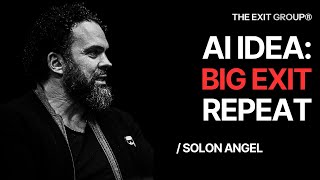
Solon left Solink after seeing DeepMind's 2014 AI presentation and founded Mindbridge with $300K raised and $1M verbally committed. He grew it to over $30M in revenue before stepping back for family reasons and professional management, and is now building Taxpay to simplify tax payments with AI.
Questions this video answers
$300,000 (plus about $1,000,000 verbally committed).
> $30 million revenue.
2014.
Because I know what is a successful. I run everything in the barrier and to me, my differential startup is 80 hours a week. If you're telling me you're doing a startup and you're not pouring it, heart, soul, blood, sweat and tears, you are not in it to eat.
So how did it feel like being in that zone, being on fire again?
I love it. I'm in my zone. I'm like fish in the water.
Where do you get that energy from?
Okay, so if you have never felt hunger and see your mom skipping meals at the end of the month, you don't know what is a hard day. If you haven't lost your best friend shot by a gang leader in school, you haven't seen what is a bad day. If you haven't seen people killing each other and teenagers because there's not enough food in the neighborhood where you live, you don't know what it is to not have economic opportunity. I know how to fix that. I know how to create jobs. I know how to give opportunity. That's it.
I love that. This is the exit with Adrian Salamonovich, brought to you by the exit group and Morgan Stanley. You're not scared of AI?
No, I, I, I love it.
You think it's like a fractal or like a natural element that's going to propel him.
It was needed because we're achieving an incredible amount of. So I don't know how to describe it in one word, but there's a moment where humans are limited. Our brains are exceeding our physical constraints. So I'll give you an example of that. If you were in the Middle Ages and you were a king who had to tell his soldiers, defend that border, to send that message to someone that's trusted, you had to have a piece of paper with a seal, send it on someone on a horse or a pigeon later on. And they had to cross France for seven days.
Sure.
Took five to seven days to arrive there. So the speed of doing trade and commerce was also limited by that physical distance problem. Yeah. And then you look for 400 years until the trains, it was always limited. It took days by horse to go somewhere.
It wasn't that. Yeah, there wasn't that much progress.
Yeah. And then all of a sudden trains arrive and it takes a couple dozens of hours to do that. And all of a sudden there's an explosion of commerce and there's a growth of GPD then from trains, trains until the beginning of the 20th century where the dominant factor boats and trains. And then at the beginning of the 20th century, they start playing with planes. But until 1945, 1950, there was no jet engines flying everywhere. You couldn't do New York, Miami in two or three hours. It still took days or dozens of hours. All of a sudden you see an explosion of GPD when commerce and even movement is shortened to hours. And until 2020 it was hours. The speed of trust and the speed of goods being moved were limited to ours.
Not talking about digital goods, you're talking about physical goods. We're talking about Amazon. We're talking about supply chain and just doing business.
I used to fundraise. I used to have to travel around the Bay area, shake hands. People would not do term sheets are meeting in person. Exactly. And now we're godlike. You go on that zoom call in a split second, the trust between humans is accepted.
Yeah.
So we've. If I would have told you in middle age, I would transform my voice and speak from sorcery, witchcraft. Now we're living in witchcraft world every day.
That's interesting. We look at it. We are.
Yeah, right. So you can like right now, boom, boom. You take transport your trust your brain into another device. But we're still so technology like the ego made us be instant trust to do deals now to do sales and everything more and more and more and accelerating. Right. And now. Okay, what's the next thing? Well, we're limited. If we're not limited in distance, we're limited in time. Like we're limited in. We only have so many hours in the day. Yes, we only work so many hours. I might walk a few hours more per day than others. We all have those physical constraints. But what does AI gives us there? Well, let's think about this now. With loom, people can record calls. And I don't have to sit one hour somewhere. I can sit the transcript at 9pm 8 hour synchronously and play. I play a lot of my loom videos 1.6 because I have English speakers that's better than me. And then I can boom, boom, boom. And then all of a sudden time disappears. I'm a magician now. The next thing with that is avatars. So I was just talking with Aiden from Fellow. I said, dude, you have all the recordings of me. I want a grayed out version of song that someone can pull in any meeting and answer 97% of the questions and participate like me, which AI can do now. We are passing the Turing test every day.
So then when do we become obsolete?
We are not. We're becoming godlike.
So you look at the AI to be clear, as a magnifier, as a almost becoming like a bionic man or woman and magnifying. I tend to agree with you. I do tend to agree with you. Think it's the end of humanity. I do like your position. I do like your positivity into AI, which transitions into like. Let's talk about what you've created. Right? Let's talk about. You were at Soullink. You worked with Terry and Matthews. Maybe we'll start there. I don't want to spoil the story, but let's go into that real quick and then let's talk about your next venture and the exit, because this show is about exiting. But I think all this background is really important to understand how your brain works.
Well, I think we need to go even before at kswear out of Toronto, which is a bootstrap business to over $100 million revenue. And I arrived there to turn around the division. I was promoted several times and then I started launching products inside and I learned everything about account, about auditing and analytics there. And I operated in a scenario of high trust with my mentor and my friend and which was my boss and became my colleague. And I really felt. It's funny, it's silly talking about it, but I thought I'd be there for a lifetime. Really. You know when you have a team.
That you trust and you came in from. You came in from Europe in that case, right?
No, from California.
From California. So you moved Canada to join that company?
No, I was doing a startup in California. Did not go the way I wanted. Yes. I was young. I worked like 90 hours a week. And then it worked. It's still there, it's doing good. But I walked away with like 300 in my pocket. Sure. I arrived in Canada heartbroken and disappointed because of a woman that was living in Ottawa and essentially. And she became, you know, the mother of my two lovely kids. But so I came there and Kisra was one of my clients and it was a. I thought it would be a six month contract, come here, help them deploy the system, move on. But then at the end I started opening my mouth, which I do sometimes, and I say, you're doing this wrong, you're doing this wrong. This guy's an idiot, this guy's lazy. And the boss called me up and say, well, great, here, why don't you fix it?
So your opinionatedness, your ability to give value because you were trying to get value right.
And we were just being fun. I felt sad for them. I Was real friends tell friends that.
Have spinach in their teeth. And you did. Most people don't. So you did that. And that was seen as value. They're like, come join us. And you were doing surprise sales, right?
No, when I came, I was. I was just doing. I was doing process mapping for customer success. I set up the professional services team and I was supposed to move on. And they said, well, come and help us do more of that. And then I started. While I was in customer success and setting up ISO and all, process mapping, customer success and this, I started talking to the customer and I'm like, why are you guys selling this $2,000 pop when you're selling to the number two of the CFO of Bank of America? That makes no sense. The value is much greater if you repackage it to put it there. And they're like, it's never going to work. They never want it. And we end up doing a sale without a product. So I just sold. I just said, I know this will work. Just let them try it. So I saw. I said, guys, this money back. If it doesn't work, you can fire me and they'll. You give the money back.
That's the real man. You come in and create value. You know how to sell you straight line and get that.
I don't quite say. I was just solving problems. Just like here. Yeah. Like. And so what I realized there and I learned is that when you're entrepreneurial and you like to solve things, there's only so many things you can solve until you stop on someone's toe in the business. Right. So then I had to leave. I didn't want to leave. I was so stressed. I have my first kid and then I had a mortgage and you know, I was like, oh my God. I was. I went back and they were so patient with me. Bob, thank you very much for the patience and grateful. I know he was very gracious on the way out. And essentially I quit. And then I went back home and I stressed the next morning I said, can't have my job back. And then I quit.
We regretted it. But then you quit again.
And then I quit again. And I was so stressed. So I'll make it easier for you. Here's a few tens of thousand dollars. Goodbye, you need to get your own toy. And very grateful of that. And then everyone says. And like everyone said, we're surprised you lasted that long. I'm like, what do you mean you're surprised I lasted long? I. We all friends. We like each other. We like you soon but like you can do better than that.
You're very entrepreneurial. So you moved now you moved to Ottawa, you joined.
Yeah, that, that time I was in Otawa and then I. I basically first because I. I felt I was old at 25 years old.
That crazy then.
So anybody listening to this for kids?
29 years old and you are a kid.
Yeah. I thought I was too old to do startups because startups for me.
Yeah.
Because I know what is a successful. I run everything in the barrier.
Yeah.
And to me my differential startup is 80 hours a week. If you're telling me you're doing a startup and you're not pouring it hard soul, blood, sweat and tears. You are not in it to.
It's a hustle mentality. Right. That we all grew up with.
And it's not even hustle is that focus, obsession, dedication is the basics. And you still might fail. So to me at 29 was like a newborn and thing I was like oh maybe I can't do it. And actually it was a very insightful moment. Like and then I knew by the way that the churches I ended up divorced given that the person I was with was not him. You know this.
Yes.
Like will not work out well. Hi. But I was like I have to do it because otherwise I cannot look at my children and say I am a true person, true to myself.
That's so important.
So then I run into a friend called John O'Reilly who I by that. By that time I started the OTAW Product Management Association. Then I was working at starting Product Hunt. I got involved at Thresholders, remember that? And then I was just networking and trying to hire people. The truth is I was just trying to hire people to replace my job. And then I started showing him how to do Silicon Valley style product management. They didn't know what they were doing on backlog grooming. And then he ended up introducing me to Terry Matthews and to Magmata. And those guys convinced me to join to do a turnaround to fix up Solink which was struggling a bit. And then there was no sales for three quarter people were demotivated. Mike was frustrated. He was working hard, but it was not supported properly. The tech was not where it needs to be. The part runners were screaming at them.
It was a mess.
It was a mess. And I said I sit everyone down, people want to quit. After another I said look, Mike was just by the way he's a CEO now. He was so frustrated because he saw the money, but he had never done a startup before. And there was a moral and alignment problem. So then we solved that. And he comes to me and I said, guys, I sit on everyone. I said, Tim, Matthew is a billionaire. He has a lot of real estate and he's telling us do what he needs to do to succeed. So nobody talks about failure here, please. Let's talk about how successful do we want to be. And when you put that statement on the table, you see who's truly there to collect a paycheck or who's trying to do something. And it was two pricks. Sorry for the. It was two people in there that were not there to help create something. And that's not fair. When you have guys of 24 years old, 27, that put two years of their life, that's not fair. That's not right. So I had a two sit down heart to heart with strokes. You know, at the time, Mike leadership style was not what Mike is probably used today. And he's not perfect. No one's perfect. And they were blaming him all the time. Was the only guy trying to do sales. And they were constantly blaming him for trying to make things something happen. So I said, guys, just as simple, he's trying. What are you doing here? Oh, I need to go. You know, there was a guy who showed up in the office and he's like, I haven't had my donut yet. Like, get the fuck out. Right.
So not everybody was running at the same pace. And there was an alignment in culture. And so what did you do? Did you stick around and see what would happen or.
So I.
What was the move?
The move for me was let me first help. I always like to be helpful first and I'm not worrying too much about what's in it for me because I know that I know how to put bread and dough on the table. And when there's tons of bread on table, there's more bread than mouth to feed. Some will come to my mouth. So that's my philosophy in life. Yeah. Basically there were several things to be fixed right at Sollint. But to me what was most important is who's trying and who's not. And then I'm not worried about Safemoon. But then when I felt that in the construct of something that was started seven years before, there was a lot of people hands on that honey pot, I didn't feel that they would look at after me for the level of value that I'm bringing here after. You know, I helped them close the largest seven, six digit deal that they ever did after Three quarters was no sale. You know, Mike was very, very focused on certain things and I didn't care for it. I just wanted to make something happen here. But I had that thing in my head of what I used to call advanced statistics that I wanted to apply at solink, which actually now they end up doing. Because now AI is everywhere. Right. And it's accessible.
Yes.
And so right away I could see that they needed to focus on the core use case. We had identified altogether that they were a bit dissipated. But. And then I could see that the industry of CCTV needed more infrastructure work, which they did successfully. That's why they are where they are.
Yes.
And the analytics and the intelligence will be a second thing later for them. And me. I wanted to go there right away.
Yes.
And I looked back where I came from, which is caseway and all auditing and financials, and I didn't see anyone doing anything with that idea of advanced statistics applied to financial data analysis.
Interesting. So that was the moment when you were already. We were already looking at the world through a lens of AI. At that point with the CTV closed circuit camera technology, you're like, what other.
Industries are missing out on exception based reporting. So there's exception based reporting is a technique where you find it with analytics and exception.
Yes.
And then you report on that. Right. And it used to be done old school SQL queries. And my whole thing is to flip the process of that to right away have machine learning surface the issues right away without having to wait a rule on SQL to be written.
Got it.
And so to me, when I saw in 2014 in Paris DeepMind present what was happening with reinforced networks, deep learning and a few techniques that were happening there, I was like, holy shit, that's the holy Grail. And then 2014 and people did not understand for years people argued that's just machine learning. That's just guys, it's neural networks. We're limited by computing capacity today. We're limited by knowing how far we can push it. But those models and those things are literally going to change the game. It was very hard in 2015. So I quit Solink and then I started going. And then again, remember I was at the time with someone that was not the most comfortable. I don't know. She was supportive, but she never had entrepreneurs in her family.
Yes.
She was an accountant in the government. It's a very different mindset than a risk taking, growth oriented entrepreneurs. And she was stressed as anyone. I mean, people say I'm downplaying the compatibility was not There for this type of career. And so there was a lot of hesitation. And to me I was like, there was no hesitation, like, I have to do this. No one is doing it. But there was some constraints. Okay, well, let's try not to do it. So I tried to not start my own bridge, which was the business in AI, the first AI venture I did. I was involved in other things, but at Mindbridge, basically I tried everything I could do for six months to not start Mindbridge. I gave the blueprint for free to the largest associations that I knew that were involved in that I called my former employer. Remember you were my neighbor at the time. I was like, you know, I had many other things to worry about. And actually you challenged me. And I don't know if you remember that night where we were going back and forth and you told me, so what the fuck are you doing? You've launched businesses before. You just need. And you're smoking like a, like cigar. A cigar.
For the record, it was a cigar.
Yeah. Minus 22 guys talking for hours. Drink, garbage and smoking.
And what did I tell you?
You told me like, don't worry about everything. Just can you get five customers pre signing something and then we'll help from the rest of that at freshman lawyers. Like you can get everything once you get. I said, and I replied to him, was like, I can't get 50. Like in my head.
I was like, but you came back.
Yeah.
And the number was three. I said three loi. Yes.
Yeah.
And you came back.
Oh, I was. And then you. No, you didn't just do that. You did one thing that nobody should ever do. You pissed me off. You actually said, well, Europe, I won't say the world but like say what's going on with you? You're getting slow. Like, are you afraid? Like, it's not that hard. You've done it before. What are you afraid of? And I was like, that night I was, I had all the plans and things. I was trying to not do it, give it to people. And that night, went home, put the kids to bed, sent something like 600 invites on LinkedIn. 100 people responded. I just, it just triggered me.
It's great. I love that. I love, I love that that was your reaction though, right? You, you fear is such a powerful. Can be both ways, right? Fear of failure can be really powerful and fear of success can equally be powerful. I think what you, you have a fear. You like to prove yourself.
Oh, I like, just tell me it can't be done and you do it.
And I knew that and I quite. I did know that. And you know, and you could have not come back with three lies, but you came back with three lies. So then what did we do? What did we say at that point? What did you think? Well, we have a business, right?
No, what are we going to do? You have three.
Lois, I needed a business partner.
No, not even. I was like, my first thought was, I need to test this. Smart. So I took two consulting gigs to pay the bills, the mortgage, all this stuff.
Yes.
And then I started reaching out to investors and clients at the same time.
Right.
And I started interviewing executives to run this thing with me. And I didn't know where it will land. And people, I remember people were so critical in the start of me. Like, they're like, he has nothing going on. He has no revenue, he has no employee, he has no customers. You know, and I was, I was literally interviewing for full team of 15 people. And they don't understand that. Like, if you delay, if you wait for your venture, it takes time to hire, it takes time to find people.
Just got to do it. Right.
If you start having early signs, that is a potential new technology or something to introduce, you can't do one thing serially after another. You have to do everything at the same time. You have to seek capital, seek people and seek customers. Because those are the three things that fuel a business. Right.
So what are the three things? You said the three things not all.
Customers and then employees.
Yeah, three things. Keep it simple.
Yeah.
And you went ahead and got the customers.
Well, I went ahead and got all three at the same time. Like, I basically had people working part time or evenings and weekends while I was searching.
As an investor, you were actually at a job. You were an RSM overlap. You were building. So let me ask you this. Now that you've done it, this is advice to people listening on this. I like to use the analogy of a boat right in the middle of the ocean. It's stormy, you're in a nice comfortable yacht. Maybe do you jump over into the water and just have some logs and build the raft in the water or do you build the raft first?
Yeah, I don't believe in that. I believe in. I believe you put a little plank of wood. You see, first of all, if the plank of wood is catching fire because it's an oil ocean full of fire.
Throw it out in the water, drill.
Our see fish clothes. I say I would even go further than that before even building the raft. I'll throw in the water a piece of Red meat to see if there's sharks in the ship.
There's going to be sharks. I guarantee there's going to be sharks.
You know what I mean? But it's competition, right? Or if it's the bloody water, why are you even going there? Right. It's like I like to even take time. I took a long time before I incorporated. I was four years writing down ideas, thinking deep, monitoring, wondering. And then the reason why I didn't move forward is because I was looking hard. The tech was at the time and I didn't see how I could create that vision with the tech. So that's why it clicked like that when I saw DeepMind. Because it was three years behind of thought processes. So, yeah, you've just been cooking your brain. Yeah, yeah. For a long time.
You connected all the dots, you got the capital, the customers. You did all three of these once. Then what happened?
Then basically what happens is that at some point you have to have a raft built enough that you can put your foot on it, test it and try to stand on it. And so at some point I started having a bit of capital, some early signs of customers.
How much did you raise?
The very first one was 300,000 plus a million verbally committed. But there was 300,000 in the bank and there was another million verbally committed. And when I had the first $300,000 committed and in the bank, I basically stopped any consulting. And then I just.
So that was it. You're jumping ship now, you're jumping in the water, your raft's holding and you're solo at this point or.
No, no, I'm alone with two or three full time people. Funny. A Brazilian engineer. So it's funny like one of the best engineer at Solink was Brazilian guy. First full stack engineer at my bridge was Brazilian guy. One of the best engineer we have right now at TechSpace. A Brazilian guy. It's very funny. But like. So we basically. I basically went solo and I had two to three people soon. Six, six to seven part time and full time. And I just was going at it. And then along the way, I didn't want to be the CEO. I knew my value. I wanted to go full throttle. Yeah. And I came from that industry. So if I had to be the indoor cat and outdoor cat, I would be delaying everything. I would not be. And so my train of thought was as follow. And also because I was not. The situation at home was not the best. Yeah, I needed to have a partner. I wanted to have several partners. I wanted to have many people capable of showing up when I was not there. And I wanted to be able to focus on customers because that's where I had a lot of connections.
So you knew enough to know you don't want to be the CEO?
Well, I, I, I've started. I had a test like in Silicon Valley. I was very close from the CEO of NeoCates. We walked, I was before employee number one.
Yes.
And I saw his life and I was like, wow, if I'm going to do that, be the CEO of a scale up or early stage startup, guaranteed divorce. Like in my head I was like, guarantee did your scheme anyway, three years after for other reasons but like I was fearing that it will really impede too much on my personal life and I thought I could, you know, buffer that. But that's a fallacy. Like there's no buffering. When you do a mind bridge from 0 to 200 million enterprise value and going on, there's no way that you can contain and especially when you're passionate about it, there's no way you can contain that. Like when you do something like that.
Yeah. It's meant to be. And the energy of the universe and.
The market pulls you in. Yeah. Pulls you. The universe decided this is going to happen and you're just a country.
Okay.
You know what I mean?
And, and so you found a co founder.
Several.
Several co founders. Talk to us a little bit about that and then I want to talk about the path to exit. Sure. So.
Well, the first one that is probably the least talked about and I wish I had more presence on the cap table, but she came too late was Chrissy Bridge. She was a UX person. She was at Product Hunt, running Product Hunt with Gustavo Sanchez, which became head of demand gen at Shopify. And now he's at Box. And then they were the Moonlight Crew. They basically started doing the first designs, first summer outreach and things like that. And then we had five people and then essentially I said, okay, I need someone that knows how to do startups. Right. I started going out there and then I ran into Adin Aiden became the first investor, started talking.
We're going to have him on the pod next.
Yeah, cool. And then the other thing and then I run it and I had a guy, Ellie, which was, you know, the, I call it the Yoda of fresh founders. Right. He was the oldest guy around there that everyone asked for advice. Right. He's always available for advice.
Super good for that.
And then one thing to another, I was like, hey, like it's picking up I have like investors line up in my. In my head. Simple. There was a thing. The moment I have a million dollar of investment or a million dollar of customer, I didn't know which one will come first.
Sure.
I can't be the CEO, then it's time to really assemble something.
You have the self consciousness as like.
I cannot be the CEO. And then we need to really quickly grab customers. I need an operator.
You wanted to be in your lane. You knew that you're the best at sales. And I agree. And you don't want to be in the helm. The CEO roles.
Yeah, I couldn't. And you remember it's before COVID Right. So, yeah, everything is in person. I cannot build a team in an office, which at the time was all in office. Yeah. And be on the forefront of the business. I can be in the front office, in the back office. So I needed an operator that could come there and really. And even be even better than me at building a business. Right. So. And Eddie gave good. Out of all the people I asked advice for things, he gave most of the time, best advice. And then I had three CEOs. It was not Eddie. I had three CEOs in mind. I had Peter Strom, ever plush, and another guy, Mike from Toronto that I was talking to since day one. And I thought that one of those three would be interested to come early enough, but none of them could. One was at SAP, the other one was growing something else and the other one was too hesitant. And. And then all of a sudden I came back from the Bay Area and things are getting to pick up. Really. And basically I thought Eddie was retired. And then I told him, look, you need to help me find a CEO. I said, let's meet for coffee at McDonald's.
Startup budget.
Yeah. And you know how Startup Budget Eddie is. We arrive at McDonald's, remember this guy had an exit, right. And he comes to me and I knew there was something off when he basically ordered a coffee, then asked for hot water and got their coffee. But long story short, I said, look at. He's like. He's like, I know, I'm looking for someone a bit like you like it, but not as old. So I insulted him and that triggered the same reaction. And when you insulted. What do you mean?
I'll show you all that. And he drives right back in his trap. You guys go and go on to build a mine bridge.
Well then after they steal, there's another co founder. After that, it's basically. We didn't have a technology leader that could Build this. So there was Dan and then there was Robin that came in the picture. And those guys know how to run large scale building product, global security, blah blah, blah. Former IBM, former entrepreneur too. And then there was Jim also who walked his ass off. Who was like the glue between all of us. And there was. And if you look at there was like some. You can't say that Mindbridge was just one person that start. But this team, what I call the Otawa champion, was not what made Mindbridge the global success that it is. There was two or three management team that came after that that really contributed to its success.
So I mean I watched the, the, the growth. Anybody who's interested in the growth can look up Mindbridge and see the. You know, there's a really, a lot of growth there. There's a lot of, you know, up and down. But you got leftover again. Right. And at what point, like where did, what point did you exit? At what point? What made you exit? Because we never really got into the details.
I haven't had an egg. It's not an exit where I'm completely off of the. And then I'm completely. So there was the two exits. There was. I always took secondaries. Like I have a presentation.
You took a secondary.
Several like you. What we do is high risk ventures. That asset class is one of the riskiest. Almost like crypto. Luke will tell you it's the worst asset class he had, which is investing in startups maybe except my bridge resize. And then, and then essentially. So to me, every time someone came to me to offer me a check, I'll take it. Yeah. That's my principle. Okay, so I'm. So am I exited? No, I haven't had like the complete exit and things like that, but it was the exit metal.
You were allowed to individually sell your shares.
Yeah, yeah. Structured.
There was no like ride along kind of stuff. There was a ride along, but you could, you were allowed to. Okay, let's go back. That's interesting. Some founders can learn from this, right?
They should.
A lot of people. What's the tip? What's the tip?
There's several tips that I give on private calls with you on it. There's severalty. But it all comes down to the foundation of the shareholder accredit.
Having the proper shareholder agreement that allows for liquidity 100%.
You have to set the precedent. So any investors that come after you need to understand that's the rule of the game. Because I'm not CEO, you guys can kick me out at any Time. So when there's liquidity, you cannot hold me to the same level of severity than a CEO.
So you're saying you'd have different liquidation pros for the CEO versus the.
No, it's just that if there is someone that is willing to take me out a little bit, then someone else needs to match me or let me take it.
If they don't match it, then I take it and they gotta ride it or no ride along. Can they get also like the way you have.
Right.
So it's okay. That's great because. Because it is a real problem. You get into the. You know, we all know startups take 10, 15 years to build and it can get tiring. So any mechanism I'm a big fan of any mechanisms that allow for partial liquidity.
Founders ease. Yeah, it's just to give some. And also it makes the founders more focused. Yeah, it's very important.
Okay.
So that.
That's really interesting.
And that's a supportive board to do that as well.
Yeah, that's another thing. Right. But okay, so that's interesting. And then you build. You build it up. You didn't really exit what time? What. At what point did you. Did you say I'm. Did you just start reducing your time or did you do this slowly?
So there's several things that happen. First of all, I don't wish anyone to go through a divorce. Yeah.
Happens a lot.
Yeah. And I don't. You don't wish anyone to go through a divorce with your own company that you started at some point you arrive in the office and to me, my definition. I achieved my definition of success with my bridge. My definition of success with my bridge was very specific by the way. Everyone should have an agreement with themselves to not get cocky, to not get distracted. To make a deal with your future self and your present self needs to make a deal. Success is when this and this and this is happening. People tend to get greedy and forget where they were and lack humility in our industry. My definition of success was my Bridger. It's a globally recognized brand. I even told him when he joined and others will be recognized with the World Economic Forum. We had nothing and we ended up becoming recognized by the economic forum.
Where did you grow it to? Where did we get last check? Where is my bridge?
Oh, it's. I can just clue it. The last time they reported publicly is over $30 million revenue. And then. And basically to me in my head is simple. I wanted 10% of that. I said, I know I'm in this business it's starting to be a real business when it will be 3 to 5 million dollars revenue annually. I want it to be a recognized brand. I wanted specific customers to validate that they use it every day and they like it. And then the last and important thing that made me exit mentally, even though I was still there working. Yes, to be professionally managed. I wanted to be an asset that really fixed the world's financials. And to do that mission will take 20 years. And I didn't want to be 20 years there. So I needed to have a class of management team that run things very professional, better than any business I've been in before. And they've achieved that in less than five years. After ab, there was another CEO. And so that resilience, that organizational resilience, to be very professional, very corporate, best in class in governance, best in class in professionalism, means you have suits and suits. And an entrepreneur doesn't always get along together.
Sure.
So the moment when you arrive in the office and people start being annoyed by you, because I'm trying to start a new product, I'm trying to go new market, I want to go to that country, I want to do. And then I started. Intention, like, it's simple. You have to remember yourself. Take that piece of email you write to yourself five years before and you say, yeah, yeah, yeah, yeah. Okay, what am I doing here?
That's a good tip. So what you're saying is go in the time machine.
Yeah.
Into the future and make a little note to yourself saying, when these things happen, I'm going to do X and Y. So it takes the emotion out of it. And you're like a little reminder.
It's a commitment to yourself. And so what ended up happening at the same time was those things happened. I went for a divorce at the same time, those things happen. I started realizing there's many other ideas I have. Yeah. And basically I called the board member and I said, hey, I want to leave. And they're like, they freaked out. Like this guy freaked out. He was like, what are you talking about? And he basically sat me down and he went through the last 10 deals and seven were leads that I brought into the business. Right. So he says, what are you talking about? You want the shares to be worth something? And that was a problem. And then the head of sales that we hired that became the third CEO, gave me shit to stop bringing so many leads. He said, so I need the team to pull their weight. So I call you at the end of the quarter if I'm Short on deals and leads. But you need to slow down and we slow down. I'm already like holding back half of my time. I'm only working 8 to 5 and say your 8 to 5. So it's not everyone else's 8 to 5. And you're frustrated by Wednesday morning that we didn't act on Monday.
Yeah.
And I have 110 people to.
You're still like in startup mode in the sense of hustle mode. And the company was so, so you were like, I'm out.
Well, I was like, I can't do this me to. So I had started discussion on how and when I can leave and then literally when I got the guess that I could leave, it was like end of February 2020 and I'm in New York, tried to do a few last year and they're like, hey, you have to fly back to Canada. I was thinking to move to New York at the time I had another idea, the business with a co founder there. And they called me back, say the world is shutting down, could have to come back. And Covid started and then like it was our hands on deck, shit went down. I couldn't leave the.
So you came back. You were one foot out the door, almost out the door. Did they come back and kind of pitch in and help and help. And then. So how long did that go for?
2, 3 years. And then on top of that, we had people trying to acquire.
So you would have left two or three years before that, but you're kind of like in it to win it. You decided to come back in Grin and bear. Was it sort of a Grin and Barrett type thing or were you.
No, I was, I was, I was there. I was doing the work. But on Wednesday morning I was done with the thing they were asking me to do and I couldn't push because I, I, you know, I couldn't push a management, whole management team and seal to do only what I wanted to do with the business. So I was starting to help other startup, getting more involved in the community. I was bored out of my brains and basically out of that. I started the accounting finance tech club ON Clubhouse number one. Went to 25,000 subscribers, 200 listeners weekly. Then I started investing because I had some secondaries. I invested. I found Project Recapture, which became Pay Shepherd. I coached the CEO on the weekly basis, was on the board as an observer. We went from 100k to 3 million ar. Then I started helping Iwin, which used to be called Anduin. It's funny, like startups that keep Rebranding are. Those are the best exits of Frankfurt. Interesting. And then I ended up working two to three days a week on I Win. You know, they were starting less than 100k. I came with a customer for them and a check to invest. And then I started helping them hiring.
And so this was a form, a new form of you throwing the, the wood over the side of the boat and testing the waters to see what, what spaces are you're interested in, what gets you lit up. You're kind of playing VC a little bit.
Yes, I was. So that's when also I took over Fresh Founders and basically created it as a, you know, capital called first fund, let's call it of $2 million. We invested $2 million which is what, 5 now. And. And this is when me playing helping the other founders, I don't call vc. I call it investor at Growth Advisor. I don't like if I put a check. I'm rolling up the sleeves and making the success happen with you if you want me to. Right? Yeah. And I always try to get out.
So an active investor. As active as you need to be. Right.
Just a founder friend, you know, fresh founder.
But. But that wasn't enough for you. You're playing with it and what would happen?
Yeah.
So most people would just be like I'm going to invest, I'm going to move to the jungle or in an island maybe for a bit. Right. And I'll just be in a semi active investor. But not you. What did you do?
Well, I started helping right here and there and then, and then opportunities came by my desk and at some point there's one that kept coming back as something interesting and I don't know, I just like as soon as I could get completely out of my rage. Right. Not anymore. Two, three days a week. Not anymore. Helping poking around. What happened is. And when we did the deal with the minority sell to private equity, which is we could do a whole podcast on that. But private equity is an incredible force for professionalization of startups. Making startups corporate and really drive it well and yeah beautiful systems and things and their process. I learned so much from their process.
And who was that?
Who would put in the Providence Equity Partners PSG out of Boston and then Rick and his team are just world class. I was not even part of the core team involved on all of that. The management team did all of the work almost. But seeing them go through the motion was such a masterclass on how acquisitions are being done and how to do due diligence and all that. That I look at all of this, and I learned from that. And I started doing that on another idea. A startup, a technology that was built inside of an accounting firm in which the founding team, there was no employee. And they're like, do you think that has potential?
So this was an idea that came.
From an accounting firm.
An accounting firm that came up with the idea but didn't have the technology.
They did started building a prototype.
Oh, they already had a prototype.
They had a prototype patch and, you know, with bubblegum and some good kind of some tape people doing minor things behind it was more scripted.
The idea was there. Okay?
They had like a couple of dozens of users on it, and they were using it internally. And they told me, sono, do you want to help? Can you help us commercialize if there's commercial potential? And I look at it, I make. We with an analyst and me, we called hundred. We called hundred CPA firms at coast to coast. Everyone was drooling over that. I'm like, oh, there's no one else doing that? No. I'm like, oh, something there.
They already had customers?
No, not really. They had one customer, another accounting firm in town. And they said, someone, can you help us? I don't know. I look at the valuation. It was more liability than assets in it, to be honest. Like, there's a lot of work to do. I said, look, here's the price I'll take for it, but if I help you, I need to own it. You can stay and play up to a certain level, but I need to drive it hard. We need to build a team. It's not easy. We need to commercialize it. We need to expand it. We need to put soc to type to all this stuff. I want to go at it. And so when. I don't know why, like, something clicked in my head. Like, I saw a problem. I know how to create solutions. And I basically went on seven days a week, like six days a week. I basically stopped the investing. Others ask everyone to get off of it as fast I saw you.
So how did it feel like being in that zone, being on fire again? Does it make you happy?
I love it. I'm in my zone. I'm like fish in the water. It doesn't feel like work. I look, you see that? I'm like, I lost the weight again. I'm light up. I look like Zeus. I'm just. I just. More, more, more. I just like, I'm. I'm just.
Where do you get that energy from, man?
I don't know. Right Like I, I tell you one thing, like, okay, so if you have never felt hunger and see your mom skipping meals at the end of the, the months, you don't know what is a hard day.
Yeah.
If you haven't lost your best friend shot by a gang leader in school, you haven't seen what is a bad day. If you haven't seen people killing each other and teenagers because there's not enough food in the neighborhood where you live, you don't know what it is to not have economic opportunity. I know how to fix that. I know how to create jobs and ought to give opportunity. That's it.
I love that you're driven by purpose. And I'll tell you something else, out of everyone we've ever had on this podcast or that I've ever met, tell me if you agree with this or not. Went through hard times, had some sort of friction and that pain from that pain comes purpose and comes real passion. Right. Very, very few people I've seen succeed come with a, from a place of privilege. So I think there's superpower is that, you know, you didn't come from here, you came here. You're willing to put in the work to learn speaking English, which you're still work in progress. But that rehearsing, that energy I just saw now is the reason that I think you have that superpower. I've never seen anything like it. Your ability to close sales and make things happen out of nothing is insane. And I think it comes from that. Right? It comes from that pain. So that's what I love. I love to see that energy transfer to something positive. And so a lot of people exit, they get lost, they lose a sense of purpose and they try to do other stuff. But this is in you, right?
I actually get triggered when I say that because if you are a man of power and influence and network, you're wasting it.
Right.
It's almost like a civic duty, except if you went through a hardship, you went through a physical condition, or you just had. If you are unable man and woman and you live in 2024 and with a lift of a finger, you can create opportunity for people that might not have it. It's like a civic duty to me. If you are someone that has gone to one time creating one job and you know the process and how hard it is to create something out of nothing, you should at least try to help others, which is what I did for a while. If you're not still with energy and time and, and to me, I have access to network to capital, to talent. It's like I cannot not be creating things with it. I will not look at myself, say I'm doing my share in society. I don't mind paying taxes. In fact, my venture is about collecting taxes faster. Sure, Taxpay and Remitia are all about that. To pay the tax on time, you should all pay your tax on time. It helps the government and you don't get penalized. Right, but that's by the way, if you want to, you know, five free licenses, contact me. We'll put that on the skin. But. But it's so hard when you come to places where you have poor construct. Not even poor places, but places was a poor mental construct. Some countries are stupid with that. And you're in North America and there's nothing that is preventing you from creating. You should do it.
You have a civic responsibility to use your powers.
See, builders have to build because none of us know how to do it. And if you hesitant, you told it now. There was YouTube, man, when we started Fresh Founders there was no so much education online. There's no reason for someone not to try to start a business. Most people I would say should at least go through the process themselves. Even if they end up being corporate folks to understand how business run. That's the new business school.
That's great, I think. And with Taxpay speaking of taxes. So you could have just retired, you could have just taken off, but you built Taxpay, you're building it again. What's your plan with Taxpay? What do you. What's the vision for taxpayer?
So. So to me taxpayer is very simple. Like I didn't know the whole capital gain raise of tax question was going to happen when I got involved. I just know one thing is I've heard horror stories and I've experienced one myself where the f the funds are misplaced by the tax collection agencies and you spend months going after it. I've heard of accountants committing suicide, being stressed beyond any means. Tax season for them is like training for dynamics. These accountants that do meal prep before because they have no time. It's insane. And at the end of all that work, the last mile of the service delivery is that people just have to take their freaking instructions and pay on time. And the rack account and people seemingly not first broke.
It's a bottleneck.
Yeah, it's before COVID people would drop by the office, drop checks, whatever will covet happen. Everything went digital. States and federal tax puts, you know, portals are not good. So there's so Much friction there. I'm like this is stupid man. I hate. I went through it a few times. Like I hate paying taxes already. Please don't read it. It's like I'm human. You have to go to the dentist every year and you don't have painkillers. How does that feel? Yeah, yeah, that's stupid.
So you're using AI and your knowledge of flow and developing streamlined systems and just use AI to make taxpaying actually let's not say fun but easy and.
Automating remove the pain out of it just at these create that experience. We're not a technology company. I said we're an experienced company. When you go to the dentist and you're a kid and you're afraid the dentist is going to smart to you give you little candy toy, whatever put you sedate you with a needle there so you don't feel the pain and you're not having the best time of your life. But at least the experience has been bearable, right? Yeah.
So you're making tax bearable. We're adding technology technology and able to make accountants lives easier. But in turn the end users and in the end the government gets and.
Right now look, we spent like drunken cereal during COVID with reef programs in the western world. The coffers blame whatever politician you want. It's not very fair to them. Sometimes the coffers are empty. They have to refill the coffers, they have to collect more and then if we help them collect faster a medieval ease them or not collecting too much. If you can buy them, join them. Look at me, very vocal that on LinkedIn at least.
Yeah, but I think, I think it's good. I think it's a noble civic duty to. Paying taxes are civic duty and if you can make that easier for people. It's an amazing vision. I want to get some gold from you and you've given a lot of gold by the way so far. But I think you have so much wisdom and advice especially for founders. So let me just ask a couple lightning round questions. So do you build companies to sell them? No, don't build it to sell.
No.
Okay.
You think about selling them. You think about creating optionality and exit path. But I don't be able to sell. I'm built to build a great business.
Great. Will you ever retire? No. You don't see it.
The doctor will have to be there after retire. I'm too old. My team has to be. I'm senile or some shit like that. Yeah.
And I know These are all cliche questions I have to ask. Was it like the best advice you've.
Ever got gotten what's your definition of success?
That's the best advice that you got.
To make me think about. You know the best advice I got it is like what are you waking up for in the morning? Like it's what's your differential success like? You know, I would sit down as I guess I'm like, I don't think I was, I was a wrecking ball of energy in my 20s and my manager says so I don't think you thought through. What is your personal definition of success?
What is your personal definition of success? Us.
Hands clean, head up high. No dirty business. Proud of what you've accomplished in any situation. Personal, at home, with kids, with, you know, business. Just there's no price for a good conscious like when you go to bed, you've done the right thing. Yeah, sure, I'm stubborn, I make mistakes. You know, like for example, people tell me someone you should have not done the fun insulation and they were right. And then I have to strip it out and I get stubborn, I get obsessive and everything. But at the end of the day I acted the best I could in my good consciousness. And basically with prior to what you've accomplished was worthwhile. Like you live a worthwhile life, right? And that's the thing. And to do that the two guiding the North Pole and South Pole is make the eight version of yourself. And people see that all the time. The 8 years old version of yourself proud and the 80 years old version of yourself, not regret, right? So that's north and South Pole, right? And along the way on that journey, hands clean, head up high, that's it. Whether you're in a favela in Brazil, you'll be respected by that. Okay, I've seen guys are scoundrels like they're dealing drugs, they're killing people, whatever, but because when you do a deal, you shunk the head, you know, he's not going to kill you. They're respected, they're. You know what I mean? And they leave a. I'm a killer and I told you I'll kill you. Right? What they expect at least. But it's dirty business. But you know, they have integrity in the wrong ways, right? But to me, I'm not a kid, I'm not a thief and everything to me having hands clean and have be proud of what I do at all time, right? And having hands clean at all times, then nobody can tell me you took a dollar for me that I was not fair. You treated me unfairly. Like, to me, those are very important things.
I love that.
That comes from my daddy. He basically, you know, he says he had shit jobs sometimes, and he came home, he says, sono, the police would never knock on my door saying I did something wrong. And nobody says I was an asshole towards them.
It's awesome. Solon, it was an absolute honor to have you on this show. I'm proud to call you a friend, and I think the best is even ahead of us, especially for you. You're an absolute legend, man.
Thank you, man. Thanks. Having me.
More from Adrian
Don't make this mistake when hiring executives or you'll pay dearly for it - Jack Newton