Jack Newton: The Multi-Billion Dollar Founder Transforming Law with Clio
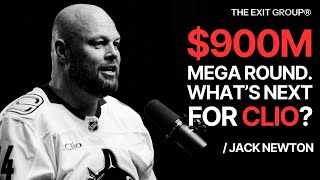
Jack Newton built Clio from a two-person startup in 2008 into a 1,300-person company with $250M in annual recurring revenue, serving customers in 130+ countries. He raised a $900M Series F and is using AI to address the fact that 77% of legal issues go unresolved by lawyers.
Questions this video answers
2008.
About 1,300 employees and north of $250 million annual recurring revenue.
Series F, about $900 million USD.
Lexicata (acquisition announced/closed in 2019).
Started taking liquidity at Series D in 2019; first meaningful cash-off was about USD 1 million (approx.).
Chapters
$900 million USD round. Yeah, the largest round I think in Canadian history.
Yeah, that's right. He's the scrappy Canadian founder transforming the legal world. Jack Newton took Cleo from a two man startup in 2008 and turned it into a multi billion dollar tech movement. Our ambition initially was to build a company that would throw off a couple hundred thousand dollars a year that we could split up and call a day. But if a venture funded competitor comes into your space, they can take you out, they'll eat your lunch. So why not swing for the fences? Let's go for it. Let's, let's go raise a multi million dollar round. Let's go try to build something really scaled. Thankfully, that big swing panned out. This is the exit with Adrian Salamonovich brought to you by the Exit group and Morgan Stanley.
I want to jump into the Clio origin story, like where it started. Tell us, how did Clio start 18 years ago?
A lot of people incorrectly assume I'm a lawyer and my background's actually in technology. Did a computer science degree at the University of Alberta in Edmonton, ended up doing my master's degree in machine learning. And the first big fork in the road for me was actually when I wrapped up my master's degree whether I wanted to go into academia and pursue a PhD or go into industry. And, and this was back in the early 2000s. And what was interesting at the time was if you got a PhD in machine learning, you basically were on an academic track. And I was actually this close to going to the University of Toronto just to do a PhD under Jeff Hinton, who's now the godfather of AI and probably the most famous machine learning researcher in the world. And even in 2003 when I was considering what direction to go, he was really well known, had done a bunch of really foundational work on neural networks and the foundations for what have now become large language models. So I obviously took the industry path because I wasn't sure academia was for me. Went into industry via a University of Alberta spinoff company called Canomics and they were a life sciences company. And I was hired as software developer number one to build this really cool medical diagnostic software. Worked there for five years, went through the whole process of developing a product, going through the customer discovery process, raising money, going down to the Valley for the first time and kind of getting totally captivated by the, the energy and the vibe of, of the Valley. And I would say in those five years at Canomics, I, I really caught the startup bug and, and Ended at the end of those five years really deciding that I love building startups, but I wanted to, to do my own thing. And while I saw a great growth journey at Konomics and went from software developer number one to basically the number two person to the CEO and running product and a big part of the company, I wanted to branch out and do my own thing. And that takes us to about 2007. And what I saw in 2007 was the cloud was going to change every industry, transform every industry. And for me, it really became a question of what industry is the right one to focus on. And I phoned up my childhood best friend, a guy named Ryan Govreau, a guy I've known since I was eight years old. We met in grade three in elementary school in Edmonton, became best friends and had a number of business ventures and ideas and forays in our childhood. And I phoned up Ryan and said, look, this cloud thing is going to be huge. Where do we think we could apply this? And he at the time was working as the IT manager at a large Canadian firm called Gowlings and said, look, these guys don't know how to use technology. These lawyers don't leverage technology at all. The technology they do have sucks, to be really blunt about it, that the user interfaces were atrocious. I looked at the software at the time and thought, no wonder lawyers don't use this. It's just awful software. And we realized when we dug into the next layer in this legal market opportunity that the vast majority of lawyers are solos in small firms. So even though we think about lawyers, I think people outside the legal industry like me at the time, think every lawyer is like a Harvey Specter in suits practicing at a big fancy downtown firm. The reality is that 80% of lawyers practice in firms of 10 lawyers or less and a full half of all lawyers practice as solos. So it's a very SMB, very entrepreneurial space. Which further underscored our conviction around the cloud being a really disruptive and high opportunity model to go into that segment with. So that was basically the light bulb moment in a nutshell that led to us building Clio. We rolled up our sleeves for the next 10 months or so, built the first version of Clio, released it in 2008, and at the time we launched the company, it was just the two of us that were doing everything. And cut to 18 years later and we're a 1300 person company doing north of 250 million annual recurring revenue.
It's an incredible, incredible story. And if you go to the beginning. So it's two guys. I presume you're doing the coding and product. And what was your business partner doing? Was he, was he out there doing the sales? Like, how did you guys divide?
And yeah, in the very beginning, it was really, you know, as equal as possible division of, of everything. We would, we would both code, we would both do technical support, we would both interview customers, we would both be involved in, you know, business strategy and development. And again, I think it was the benefit of being friends for, you know, the better part of two decades. When we founded the company, we just were able to rely on each other and just innately knew which our respective strengths and weaknesses were. And as the company evolved and as we started going down the fundraising journey and as we started seeing a need to specialize our skills a little bit more, we decided, hey, I would be a bit more the frontman and the CEO and more product and engineering focused because that was my technical training. And Ryan, my co founder, was, he'd come out of an MBA program, was also technical, knew how to code and was, was, was great at that. But we decided Ryan would specialize more on the customer support, customer success dimension of the business and really help make sure that the product was being adopted by our customers and that we were getting feedback from our customers. And really at the time, I remember, were really inspired by Zappos and their philosophy of customer delight. And we saw again the way every legacy legal software company treated their customers and thought, what if we tried to do this Tony Hsieh thing of delighting and leaving customers spreading word of mouth of Clio because they had such a wonderful support experience with us. So that was the kind of mandate that Ryan had to go build out a world class, world class customer success customer support org and I became the frontman, the CEO.
That's really, really cool. Is Ryan still involved in the business?
Ryan exited an operational role about five years ago and is still on the board and still we're still best friends. But what we found in the scaling journey, and I think this is something talking to founders of all stripes, people end up finding there's a certain stage of the business where it's not as fun or it's not as good a fit for their skill set and they want to go back to kind of like the earlier, more scrappy time. So Ryan's working on a number of new startups, advising a number of new startups and involved in a bunch of early stage stuff. And I'm still having a great time at the stage and scale that clio's heading to and where we've been over the course of the last few years. So I think my story is kind of the exception to the rule where I've been able to scale with the business through these big revenue and scale milestones and who knows how long that will continue. But at some point I imagine I'll probably realize that, hey, I want to pass the baton to somebody that's seen whatever that next stage of growth looks like.
Yeah, you're definitely a rare cat in that sense. I mean, the only other friend I could think of is Toby Luque, who was able to be there from the beginning and very hesitantly became the CEO of Shopify. Right? Yeah.
And now running just an incredibly scaled business. Yeah, but, but those stories, when, when they happen, you see how positive it is for the DNA of the company. I really think that founder led businesses are better businesses in, in general. But as a founder, you need to be really deliberate about surrounding yourself with either the people or the knowledge resources, which could be, you know, books or podcasts or whatever to, to level up your knowledge. Because the way I always look at it is I'm, I'm doing the biggest job I've ever done every quarter. And that's what's kept the Clio journey so exciting and motivating for me is, you know, you might look at and say, hey, you've been doing this for 16, 17 years. Aren't you bored? And I'm not. Because it's been a dramatically different job every, every year, every quarter of that, of that journey. But it's also been a, a huge learning pressure. Like, how can I make sure that I'm keeping up with what's coming around the corner next? How can I make sure that I'm leveling up both myself and bringing people into the business that can tackle that next stage of growth, you know, and.
That, that brings me up to a whole other line of thought. It's. Where do you, you're, you've got to reinvent yourself every, every year, a couple years as the company continues to grow and continues to raise money. How, where do you go to get advice or mentorship like you must have. Do you have a circle of, of, of advisors that you've created? Do you have some sort, are you part of some communities? Yeah. Where do you go when you have these really rare, there's not a lot of people are going through the stage of growth that you are at.
Yeah.
So where do you go? Where do you go to go?
I mean, to be totally honest, it's a bit of a challenge just because as, as you get to the stage and scale that Clio's at, there is a vanishingly small number of people, especially in the local community. If you're considering Vancouver is local, even if you expand the aperture to Canada, there's, you know, a tiny handful of people, Toby's one of them, that have seen this stage of growth in the scale growth. So I think it's one of the things when you, when you hear, you know, CEOs, the, the loneliest job there there is. I, I do think that's the thing because there's just not a tight mentorship group. I've got a group of great friends that are CEOs of different sized businesses. And you know, in most cases though, they're, they're, they're much smaller scale businesses. So talking to people about what's next, like what's the next chapter of growth look like is challenging. And that, that's where I found, you know, the resource of. One of the more valuable resources I've found in our investors is investors that have portfolio companies that are at that next stage of growth that I can learn from. So even if I think back to our earliest investment round, a guy named Christoph Jans led our first investment round, or really was our first external investor in Clio. And his first angel investment prior to Clio was in what he called at the time a little company out of Denmark called Zendesk. So he invested in Zendesk when it was four guys in a cafe in Copenhagen. And what was great though is that that investment and the knowledge Christoph gained from it and the, the relationship I was able to build with Mikhail Svein, the CEO of Zendesk at the time, was that they were kind of two or three turns of the revenue crank ahead of Clio. So we were $50 million, they were $100 million of ARR. And I was able to learn a ton about just, you know, the fundamentals of how to think about SAS economics. This again, this is kind of 2010, 2012, like very early in the SaaS evolutionary journey, there was no Jason Lemkin, no David Skok writing about this stuff. It was really almost an oral tradition of shared knowledge and that was immensely valuable. When JMI first invested in Clio, one of the founders they connected me with in their portfolio was Mike Wessinger of Point Click Care. And Point Click Care is this incredible. I think they're north of 700 million ARR today. This incredible Canadian success story that at the time I'd never heard of. I was like, oh, these guys have some real scar tissue. They've seen it. They know what the scaling journey looks like. They know what the scaling journey looks like in Canada and with nea. They've just invested in us and they're opening up a set of new portfolio companies and new founder relationships for me to connect to. Tcv, when they came on board, was likewise able to connect me with a bunch of valuable founders, CEOs that had seen the next chapter, the next stage of the story. So I think that's actually been the most valuable resource for me to tap into. Next would be, you know, the, the friends that know what it's like to operate a company, friends that are founders CEOs. And I think regardless of stage and scale, you've got a common set of challenges. And then, you know, the, the, the next layer of not so much learning, but just a source of energy and, and renewal is my family. My wife's been a huge supporter over 20 plus years of building Clio. My kids, which I initially resisted having by the way, when we were just setting out on the journey of Clio. My, my wife wanted to start a family. I said like, oh, it's not the right time. I kind of.
The right time.
I kind of. Well, that's exactly what she said. It's never going to feel like the right time. But what I ended up realizing, and I think at the time I'd kind of bought in a little bit to the hustle culture kind of mindset. Like you gotta, you know, work 247 on your startup, you don't have time for anything else. And I thought, you know, I needed to forego having a family at least for some period of time. My wife thankfully convinced me otherwise. But what I realized was, man, like those kids just recharged me. Like they, you know, you come home to your 1 year old at the end of the day and he doesn't care what you shipped or, you know, what investor you talk to. Like, they just want to play with dad. And that was hugely re energizing for me as well. So I think those three things are what have gotten me, you know, through the journey and helped me learn at a fast enough rate. I can, you know, cling onto the side of this, this rocket ship that is Clio.
What keeps you going? Like you've been at this. We're entering year 18 actually for Clio. We're around F. Right, which is. I didn't know the Alphabet went that high.
Yeah, yeah.
So you've been, you're a marathon runner. Yeah, we'll get into that too. You're a runner as well, but, you know, you're figuratively. You're a marathon runner in this space. What keeps you going?
I think it's the mission. Like we, we have a really audacious mission which we articulate as being to, to transform the legal experience for all. And that mission is really deliberately audacious and ambitious. And what we see is illegal. The last major industry to be fundamentally transformed by technology and an industry that is foundationally important to our society. And I think that's more apparent today than it's ever been. Right. Like, we need the rule of law, we need lawyers. We need the, you know, when you, when you look at it, whether it's, you know, property rights or individual rights or property or employment rights, the legal system forms the foundation and fabric of our society. And the, the travesty is that it is inaccessible to most people today.
The.
There's a stat from the World justice project that 77% of legal issues go unresolved by lawyers, meaning that 77% of the demand for legal does not get solved by lawyers today. And the legal market is a massive market. It's a trillion dollar market per year of spend, but that spends only on the 23% of legal demand that's actually addressed by lawyers. So I look at this and the irony, by the way, is most lawyers tell us the number one thing they need to grow their firm is more clients. So you look at this like an economist will look at this and say, there's a huge amount of unmet demand, there's a huge amount of supply looking for more demand to feed. Like, what's going on here? What's broken? And I believe fundamentally what is broken is there's too much friction in the process of finding and hiring and working with a lawyer. And it's an arcane system, you know, and still, like you look at how most people choose a lawyer, find a lawyer, they talk to a friend, you know, hey, I need a divorce. Who have you worked with? Do you know anyone good? I'm founding a company. Have you worked with a business lawyer? That, that's good. The, the discovery process is totally broken. Lawyers are trained how to be lawyers, but unfortunately not trained how to be good business people. They're not good at follow up, they're not good at business development, they're not good at pricing and packaging their services. Even if you look at something like the billable hour model, this is a fundamental, fundamentally high friction model that most consumers are very averse to and rightfully so. So we see ultimately the transformation we want to drive is one where we help lawyers move from bricks and mortar and on premise kind of ways of working to a cloud Internet based delivery model. One where lawyers can work wherever they want. They don't need to be paying million dollar leases for fancy AAA downtown office spaces. They can be working from home, they can be working from a wework. Their clients don't want to commute to downtown to meet with them in their million dollar office space either.
Right.
Clients want to be meeting with them from their home over a zoom call or from their smartphone. And so we want to help drive this broader shift to Internet based legal service delivery. We want to drive a shift where thanks to leveraging technology, and now even more so leveraging AI in particular, lawyers will be able to deliver legal services at an order of magnitude less cost than they are today. And to your question around what keeps me ticking? This is just an audacious mission. I talk about to our team. We just had our team day kickoff in Toronto where it's kind of our annual revenue kickoff for the year. And I said this is a multi decade mission. This is not something we're going to bang out in a year or two. Really achieving this mission is going to be something that takes us years to do. But we all need to have this mindset that we're approaching a marathon, not a sprint. And I'm just really energized by that feel like even though we're entering our 18th year of building this, this company, we're, we're just getting started on what the broader opportunity looks like.
No, what you're hinting at is potentially massive. Right. You've built this what I would call an operating system for legal firms, but now you have their trust of these highly fragmented market. Right. And now you're solving the problem on hey, I need a lawyer to solve X. And that's going to start with AI now. Right. More and more people are just going.
Exactly, right, exactly.
To ask the question. They can only take them so far. Exactly how you can connect the two bridges, creating a whole other business.
And I, you know, a big part of that 77% of legal demand that's not met is people not realizing they have a legal issue that can be resolved by a lawyer. So a great example of that might be landlord tenant stuff where you're getting evicted and you don't even know you've got rights as a, as a tenant that your landlord can't step on and you have legal rights that a lawyer could help you defend. And, and the world we're in right now is a lot of people just end up getting evicted. I think the world we're entering is where somebody jump on ChatGPT and say, I'm getting evicted. What can I do? And ChatGPT will be smart enough to, to say, hey, you live in Vancouver, bc. Here's your rights as a tenant. If your landlord is trying to evict you, you've got these rights. You can, you can, you can step up and apply and a, a lawyer can help you. Do you want to be connected with a lawyer? And I see Cleo being part of that system where, you know, again, for, hey, for $500, this lawyer can step in and help help you draft a letter to your landlord asserting your, your rights as a tenant.
No, this is, to use a Canadian analogy, you're, you're skating to where the hockey puck is going, right? And if, and if we look at where ChatGPT and other search engines are going, what's their most natural marketing model? What, you know, Google is doing with AdWords, they're going to do go one step ahead of that and connect people. And if Clio can be that bridge, you haven't even hit 2% of what you can, of what 100%.
It's. And to your point, we've spent 16 years now building this, this huge foundation where We've got over 50,000 law firms, 150,000 legal professionals on our platform. We're the most widely used legal technology platform in the world. And now we've got this. I mean, it feels like the cloud all over again to me, this disruptive wave of innovation around AI. And our customers are looking to us saying, tell me how I leverage AI in my practice. Our customers tell us that we're in this incredibly privileged position where our customers tell us, like, all I want to do is buy more from Clio. The only application I want to use throughout the day is Clio. So it puts us just in this incredible position, position as a partner to the law firm to help them figure out how they should be best leveraging technology and how to translate that into value for their clients in turn.
Brilliant. No, it's absolutely brilliant. So let's talk about the journey from the beginning. We'll go back to the beginning. I mean, you're a scrappy family.
Well, we founded the company in 2008, so by definition, we had to be scrappy. And some of Your listeners are probably too young to remember this, but 2008 was the depths of the global financial crisis. People were literally worried that the financial system as we knew it was collapsing around us. And so when Ryan and I went out and started pitching investors, and by the way, we weren't pitching like a big VC round, we were pitching angels, hoping to kind of get a bit of fuel to help continue bootstrapping the company. Really, at the time, I had really bought into 37signals and David Hanemar Hansen and Jason Friedman, their manifesto around basically rejecting VC money, you know, they were very pro bootstrapping, had seen a lot of success with Basecamp and Hipchat and their various ventures with more bootstrapping model. And Ryan and I kind of embraced that. We were like, yeah, who needs VCs? Let's, let's just bootstrap this thing. And, you know, as it turns out, we had an extremely hard time even raising angel money in 2008. Got this extremely frustrating feedback that investors loved our pitch, loved our the deck. They were like, this is just incredible. You guys seem like you're positioned for a lot of success, but we're just not writing checks right now, you know, and again, there's just fear, fear about what was coming. I remember walking through the airport on the way to one of these pitch meetings, and the COVID of the Economist at the time had every major bank's logo circling a drain. And it was like bear Stearns and J.P. morgan and Chase. And the headline was, when will it end? And I remember thinking like, oh, what a great time to be trying to raise money. And we ended up, by the way, getting this cold inbound email from Christoph Jans, who I mentioned earlier, who ended up becoming our first real angel investor. But what Christoph helped convince us as we were going through the fundraising process with him was, look, the bootstrapping model can work really well, and it works really well in a lot of businesses. But in SaaS, it's challenging because all of your customer acquisition costs are front loaded. All of your customer acquisition costs are costs you need to lay out in acquiring that customer. So say you spend $1,000 acquiring a customer. You might make $1,500 or $2,000 over the lifetime of that customer. But in that first, that first year, for example, you've burned $1,000 and you've only earned a few hundred dollars from that total lifetime value. And the paradox of SaaS is the faster you're growing, the faster you're going to be burning cash because of that front loaded customer acquisition cost and that just inherently limits how fast you can grow with a bootstrapping model. And he helped convince us that look, if you're really trying to build something other than a lifestyle business, which originally that's all Ryan and I wanted to build, like our, our ambitions initially were very humble, which again is, is surprising. You know, some people see the success Clio has had and assumes we must have founded the company with this ambition of building, building a multi billion dollar company. Our ambition initially was to build a company that would throw off a couple hundred thousand dollars a year that we could split up and call a day, you know, and, and that maybe we needed two or three people working for us to, to help support the business and run support and stuff like that. But we, we had very humble ambitions initially for Clio and, and Christoph helped us reframe that and, and become a bit more ambitious or maybe a lot more ambitious as the case might be in terms of what we wanted to build. And he just said, look guys, if you, you might be able to build this great bootstrapped lifestyle business, but if a venture funded competitor comes into your.
Space, they could take you out.
They'll eat your lunch, they'll take you out. And while you might think you have this nice little corner of the market for yourself and this nice little lifestyle business, that venture funded competitor could easily pave over you guys and leave you with nothing. So why not swing for the fences? Why not take a big swing with this and raise some VC and try to build a really big business? And he helped change our minds, really. And Ryan and I said like okay, let's, let's go for it. Let's, let's go raise a multimillion dollar round. Let's go try to build something really scaled. And thankfully that big swing panned out.
And what's remarkable is your last round were around f $900 million USD round. Yeah, the largest round I think in Canadian history.
Yep, that's right.
Rounds are getting massive now with the advent of AI companies, Databricks, ChatGPT or OpenAI and others. But that incredibly huge number. Where do we go from here? What's next for, for Clio? I know. What's the exit path in your mind?
Yeah, well, I, I think about the path to an IPO being, you know, more of a milestone marker than a destination. And I, I, I think that's something that a lot of founders, CEOs actually get wrong. You know, they start talking about an IPO internally as a destination, employees start anchoring to that and thinking about it as a finish line for the company. And then the IPO happens and you see a huge amount of attrition and or worse, the IPO doesn't happen. You see a huge amount of attrition because that's what everyone's kind of hanging around for. So I, I think about really orienting our team around the mission and the idea that we're building a 100 year enduring company here and we're focused on our customers, we're focused on transforming the business and there's going to be milestone markers along the way. But if we do have an IPO and we're reaching a scale, I mean even the Series F was larger than most IPOs in terms of the amount of money raised. Typical IPOs, 150 million, 200 million in that ballpark. So we're obviously 4 or 5x that from a size perspective. I think the private markets have really transformed in the last five years and you can achieve a lot in the private markets that you used to be able to achieve only in the public markets. Like that amount of liquidity, you know, creating a huge amount of liquidity for both shareholders and employees is what we're trying to achieve over the course of our journey. And an IPO is not the only way of doing that. However, when I think about ultimately where, where does the company end up with the right kind of ownership structure, what sets us up to be that generational long term company? I do think the public markets would be a great home for Clio, but I see that more as a green flag than a checkered flag. That would just be the start of a new journey for us and a new chapter. But I really think with the Series F we reset the clock, so to speak. We created liquidity for some of our investors that were timing out on funds and so on. Brought on new capital from NEA, 6th Street, Goldman, Tidemark and Google as part of that investment round and feel very well positioned for the next chapter, which I think less about as an exit and I think more, you know, now we're on this journey from 250 million of ARR to a billion dollars of ARR. And what does that journey look like and what do we need to execute on to achieve that? And that, you know, at a macro level is continuing our journey from going from single product to multi product executing on the AI opportunity, which is obviously massive. Continuing to build out our financial services business. We have what's called Clio Payments layered on top of our core SaaS business. And that Business has just been exploding and we're expanding internationally. We've got about 90% of our revenue in the US today, but our international revenue is exploding and we have customers in over 130 countries around the world. So it's really a global product. And frankly, we've been under invested in really maxing maximizing that opportunity and we're going to be leaning into that pretty aggressively as well. So how, that's how I think about the next five years as a chapter.
It is just the tip of the iceberg, isn't it? I mean, there's so much under the surface when you start to dig a little deeper that you're truly just, yeah, there's so much more growth potential for this company. You're going to be, you're going to be busy for a long time building more and more stuff.
And that's what our, you know, the incoming investors saw. They were kind of remarkable to look at, at a company that's 17 years into his journey. But to look at Clio and say, like, look like they're hugely successful, they've achieved a lot, but they're just getting started is I think, the common sentiment our investors have.
The other thing I want to talk to you about, because a lot of the people that watch this are founders like us, they're in different sets of the different stages of the journey. Talk about personal liquidity. Like with each round, how should a founder think about taking money off the table? And did you take money off the table with each of these rounds? And what was your mindset around that?
Yeah, yeah, so I've taken a bit of money off the table at every round, starting with the Series D that we did in 2019. And you know, I, I think there used to be, I would say, stigma almost around founders taking money off the table and something that historically a lot of venture capital investors didn't allow. They wanted to make the survival and success of the company feel, I think, almost existential to the founder. Right. And we're going to get the most out of the founder if they've got everything on the line with the company. And, you know, I remember even just taking the first bit of liquidity off the table, which was about a million dollars, so enough to feel a lot more secure. Not necessarily I don't need to work ever again, money, but real money. And certainly what felt like a bit of a nest egg to say, hey, hey, even if things don't work out, if I get fired tomorrow, the company collapses, something horrible happens, you're not going.
To be living in your car.
I'm not living in my car. That was just a huge, huge relief. And I think it's great because I think in the last five or 10 years there's been a real shift in mentality in VCS and especially growth equity firms where creating liquidity for founders and early employees is something they actually embrace and really deliberately try to drive in a transaction. And I think it's a net positive because the reality is I don't think you actually make the best decisions if everything's on the line. I think if you're trying to encourage founders to swing a little bit higher and go for that home run versus the line drive, like I, I do think that having a bit of a security blanket and knowing that you can fail is what, what sets you up to actually take those higher risk swings. So I, I really, you know, I've, I've leaned into that mentality. I think like, look, I need to create some certainty and liquidity for my family and myself as chapters along the way and, and again, in place of an IPO where you might have more liquid stock and you'd be able to, to sell down, I think the private markets have helped create a real opportunity for founders to create liquidity for themselves and investors and employees along the way.
You probably made more than a few millionaires as a result of your work and the value creation.
That's hugely rewarding to see. And you know, employees shared with me all sorts of outcomes from their series F share sale where they, they bought houses, they paid down mortgages, they even, you know, one shared a story of being able to get a fertility treatment they wouldn't have otherwise been able to afford. And, and to think there's a baby walking this earth thanks to a financial transaction. You kind of lose sight of some of those real world impacts when you're in the trenches. And it's just really rewarding to see. And again, to know that I've got that just mental well being and peace of mind that goes along with knowing like, okay, I'm taken care of, my family's taken care of, and now I can just go focus on building the absolute biggest business I can without any fear of failure is, is really empowering.
That's very cool. One, one thing I want to talk to you about is you've been, you've acquired a bunch of companies.
Yeah, right.
I want to hear your thoughts about your strategy around acquisitions in general. When you approach acquisitions, do you, do you, do you identify the targets as your, does your business development team, identify them, how do they, and then how do you. What's your approach when it comes to acquiring companies?
Yeah, yeah. So our first acquisition was in 2019, just before we did our Series D. And it was a company called Lexicata. And they had built a really complementary product to Clio, what is now called Clio Manage. But at that point we were only one product and that product was called Clio. And Clio really helps run your law firm. It helps once you've brought a client on board, helps you manage their case, keep on top of your to do list, manage your documents, track time, calendar, bill them, get paid, all of that. But what Lexicata did was really solve for the funnel leading into someone becoming a client. It was really a CRM that helped, really complemented the core functionality that Clio had. So if you think about almost the client journey, all the way from marketing, doing Google AdWords, deploying your marketing spend to getting a lead and then converting that lead to a client is what Lexicata did. And then Clio Manage would basically handle the next stage of the journey once that person had really become a client. So 2019 was before we had any kind of corp dev team. We didn't have dedicated people on corp dev. So really our corp dev strategy was me. I built a relationship with the founder of Lexicata and we had lots of conversations over the course of a couple of years really about what a great fit Lexicata would be eventually for Clio. And eventually they got to a revenue scale and we saw an opportunity and we had the funds to acquire them and crazily enough acquired them 30 days before our annual user conference called Clio Con. And I remember telling our lawyers and our, our CFO hard deadline that we were getting this transaction done in, in basically three weeks.
Yeah.
And they told me it couldn't be done. But I'm convinced that, you know, every legal transaction has a flavor of Parkinson's Law at play and it'll just expand or contract to the time allotted to it. And I said, guys, like, just figure it out. Three weeks. And there was heroics and lots of late nights. And I'm sure I shaved, you know, at least a couple years off my CFO's expected lifetime, but, but we got it done and it was a hugely successful acquisition. And we've used that same template, not necessarily the three week deadline, but that template of being very product oriented in our M and A strategy over the course of the last, you know, now five years since we did that first acquisition. We've done on average an acquisition a year over the course of the last five years. And those have all been very product led acquisitions. And what I mean by that is we're not looking at an acquisition saying, oh, this is financially accretive and you know, the spreadsheet jockeys in FP and A get excited about the value it'll create to shareholders. We really instead look through a product lens and say, is this on our product roadmap? Is this something we can pull ahead on our product roadmap by a year, two years, maybe even three years? And if so, that's really pretty compelling. And that's exactly what Lexicata was. You know, the conversation I had with the founder at Lexicata was, look like we're either going to acquire you or we're going to compete with you. We'd love for you to join forces with us. And that's a form of leverage, of course, when you're negotiating, but I think you want that level of conviction. You're not just becoming a holding company to a bunch of random parts, which is actually something a lot of our competitors have done. A lot of our competitors are part of broader private equity roll ups. And I see how that ends up paralyzing them from a product development perspective. They just can't innovate, they can't invest in R and D. They're maintaining five disparate platforms and it's just a nightmare, it's a mess.
You know, you're a product driven guy, so naturally you, these are strategic acquisitions for you. And then if you get the financial benefits and acquire more customers, that's just a bonus in your exact mind. Right. That's a lot more. Your long term thinking that's clearly baked into your DNA. Right, Right.
Really foundational to our approach is we, we want one platform. Yeah. And we want one platform that manages all practice areas, that manages all firm sizes. It can really scale from small to large and not a platform of 10 different products to achieve that.
So let's talk about what we call gold mines and landmines. Right. So as a founder, what are some of those gold mines, those tips that you could share with founders that are maybe a couple of years behind where you are now that you could share that would help them in the future. Any examples of gold mines that come to mind?
I think the two gold mines I would highlight are in the same vein. And that is when you're either bringing on investors or hiring new executives. Look for people that have seen that next stage of growth from where you're at, but that overlaps with the current stage you're in and goes to the next stage. And if I look back at the mistakes I've made with either investors or senior executive hires, it's been hiring people that are too far ahead and then they can't actually relate to the stage you're at and they can't roll up their sleeves and actually really help you with the place you're at in your business, that, that would be one, one gold mine. If I could go back and give myself some, some advice on, on hiring, I think I was late to hire really great executive talent. I think really as a founder, you know, the, the founder paradox, you know, wanting to do everything, but feeling also that you can't give your work away to anyone else. The earlier you can go through the pain of bringing on somebody to help you build the business, even if you need to watch them stumble for a little bit before they find their groove, you need to find ways of delegating and bringing on great external talent. And again, that hopefully has seen that next part of the growth journey. And for me, as I mentioned earlier, this is the biggest company I've ever run. I don't have a playbook to refer to. I'm learning on the job and I can do that. I'm a fast learner. But the more I can surround myself with experienced executives that have seen that next stage of growth, the few errors, the fewer errors we're going to make, and the happier I'll be because I'm just not feeling stretched and underwater.
And what about now if we talk about landmines, A couple of things you stepped on along the way that you wish you could go back and change or you want to warn other founders that could be coming in the future. What do you see as some of the top landmines?
I see one really significant landmine that doesn't get talked about enough is everyone focuses on fundraising and raising that first set of funds, whether it's your seed or series A round. And that's a hard round to raise. And I always say the first million's the hardest. But what gets talked about way too little is what happens when your investors start reaching the end of their fund lifetime. And start, whether they're explicit about it or not, start thinking about liquidity and start driving for liquidity so they can return funds to their LPs. Right? And this, this DPI push is a place that I think can rapidly put your interests out of alignment with your investors and you could Just walk into a board meeting one day and without it really being a, a progression of a conversation, all of a sudden feel like, oh, why are we talking about selling the company? Why are we talking about all these things that seem to have just changed overnight? So I think being very aware of when are you potentially getting out of alignment with your investors interests and just getting that on the table and having a really explicit conversation about it, I think is, is one landmine that doesn't get discussed a lot. And it's something that only happens maybe seven or eight or nine years into the journey. But if you're coming up to that kind of timeframe with your investors, I think being proactive and being really deliberate about what you want that end game to look like would be one landmine I would highlight. I think the other harder lesson for me, and I think this is something a lot of founders, CEOs talk about, is if you make a senior executive higher, you should see a real impact from that executive in one or two quarters. And if you're not seeing that impact, you need to let them go because you just as a CEO, founder, you don't have time to coach and upskill people. Like, you need people in seat that are able to hit the COVID off the ball. Like on day one and a quarter or two, you should be able to step back and say, here's the material impact this person's had and I've been guilty of seeing that impacts not having. And just not having the conversation soon enough, you know, and not not thinking it's going to get better, think it's going to turn around. Just so much pain to replace an executive. But every time I've deferred that decision and hoped it would get better, you know, number one, it never got better. And number two, I always felt like I was making the decision too late when I finally made it. So I think, I think trusting that gut and trusting, you know, it's a sinking feeling when you have that feeling. But just tearing the band aid off as soon as you can is. Is another piece of advice. I don't know if that's a landmine or gold mine. Maybe it's both. Yeah.
And we can all relate to as founders, we don't really. We didn't sign up for this to fire people. Right. It's not fun to have to let go.
Exactly.
And get the people off the bus. And at each stage, you've seen so many stages of growth that I'm sure it's, it's part of the growth journey. Right.
Yeah. And it's so important to get right. Like, I really love Reed Hastings and his, his framing of, you know, we're building a team, not a family. And you just, you owe it to the rest of the team to get the highest performers and the best performers in every role. And that's kind of your number one job as CEO, I think. And you're letting the rest of the team down if you're not doing that. And I think just holding yourself to a very high standard. And inevitably, every time this has happened, it's painful at the time, but the team gets in a better place. The person you let go gets in a better place because they know they're failing and they're not having fun failing. They end up in a better place.
They often know it's coming.
They have to know it's coming. You just need to, you know, be compassionate in how you do it and have an honest and direct conversation about it. But again, I think it's emphatically the right thing to do.
As we wrap up, I wanted to talk to you about how you see your role as the, as the CEO and co founder of this business today. Do you see yourself as a coach, a product driven guy? A bit of both. Like, how do you, what's your ethos within your own company? How do you see yourself?
Yeah, I, I see my role increasingly as setting long term vision, inspiring the team, communicating a vision that motivates the team. And I'm still very much a product guy. Like, I, my roots are in product. I, I built the first versions of Clio along with Ryan out of nothing. And so my heart is really still deeply in product. And we're a very product centric company. I, I think about an investment in product as a, as an investment that pays dividends to every part of the company. Right. If we make the product better, if we have the product that is clearly leading the market, it just makes everyone's job so much easier. So that's really where I like to spend my time and attention. And we spend a lot of energy on thought leadership as well, just helping talk to the industry about where things are going. And again, that pays indirect dividends for us from a company perspective. But we're really focused on how do we build this brand around Clio, that if you're a modern law firm, you're using Clio because it's not just a product, it's not just a technology, it's a vision of what the future of legal could look like. And so we invest a lot in that. And I see my role of crafting that vision and articulating it as a big part of what CEO means at Clio.
Yeah. Well, you're a deeply passionate guy on both the side of product and building great companies. You're definitely a marathon runner. I mean, I, I see, I haven't.
Actually run a marathon. I've run a few halves though, so I'll, I'll take that though. But running is a passion for sure.
Yeah. And running, let's talk about that for just a second. I started running. It's almost meditation for guys like us.
Yeah.
It's a chance to turn the phone off.
Yeah. I mean, it's funny. Like, I, I decided I wanted to start a streak without knowing necessarily how long it would last, but I, I, I said I wanted to start a streak. Streak on running. When I was about 20 years old, I can't remember the exact time I started, but when I was about 20, I, I started a streak of running every day without missing a day. And I'm in Vancouver.
That's a big deal, right?
Earned 47 last week, so. Well, Vancouver is one thing. I, I grew up in Edmonton, so a good chunk of that snow that running was in snow, like days running out in minus 30, minus 40, so, so yeah, I find it to be really like a meditative practice. When we were talking about like what keeps you ticking, what helps you recharge.
Yeah.
I found it to be a really effective part of my day to day practice and just something that helps me keep my energy up.
Well, the analogies of running a company. Right. Whether you're having a good day or a bad day, you have to get up, keep going, put one foot in front of the other. And it's done repeatedly over and over and over and over.
Exactly.
It's an infinite game. Right.
Whether you're having a good day or a bad day, whether it's bright and sunny or cold and rainy, you're getting out of bed and you're doing it. And I think that's just, just emblematic of the mindset that you need to, to build a successful company.
You know, I could do this for another hour, but I know you've.
Well, let's do a part two something. Yeah, we're gonna do a part. Thank you.
No, I really enjoyed this, man. Big admiration for you. It's awesome. Really cool story.
More from Adrian
Don't make this mistake when hiring executives or you'll pay dearly for it - Jack Newton