Marc Lafleur: From Rock Bottom to Multimillion Dollar Exit
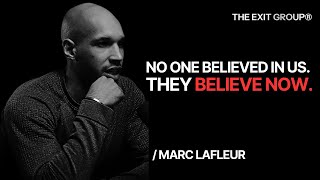
Interview with Marc (Mark) LaFleur describing his rise from poor school performance to founding True Local (an online meat subscription), pivoting its value proposition toward local sourcing and B2B fulfillment, and selling the business for about $16.7–16.8M at the end of 2020. He recounts early failed app attempts, bootstrapping and angel raises (~$940k total), a Dragon's Den appearance and deal, the 10-month due diligence/exclusivity period during acquisition, peak revenue (~$21M during COVID-19) and his post-exit focus on a venture studio (DB8), writing a book, and personal pursuits (racing, running).
Questions this video answers
About $16.7–$16.8 million (sale closed end of 2020/New Year's Eve 2020).
Founded February 2016 (idea pitched December 2015; quit prior job January 2016).
Approximately $21 million in 2020 (Marc expected normalization to $14–16M).
About $940,000 total (initial ~$30K, then $100K, then additional angel rounds totalling ~$250–$350K).
About 10 months (longer exclusivity/negotiation period mentioned).
Love me or hate me, I want to get to a point where nobody will ever bet against me. From failing high school classes to selling a meat subscription business for $16.8 million, Marc LaFleur's story is anything but conventional. If you would listen to any conventional wisdom, any just odds of success were so against this that most people would never have started True Local, but then we wouldn't have sold it for $16.7 million. A published author and public speaker, he is the unfiltered and unapologetic founder behind True Local. From the pits of the Dragon's den to the racetrack, Mark shares his inspiring entrepreneurial roller coaster with the Exit. I'm going to forget everything else. I don't care about being cool. I don't care about having friends. I don't care about anything other than making this business successful. The people that talk about work, life balance do not live a life that.
I want to live.
This is the Exit with Adrian Solomonovich, brought to you by the Exit group and Morgan Stanley. Probably like most entrepreneurs, I was just like a horrible student. Seriously. Like I, I failed out almost all my classes in grade nine and 10. And I think like that kind of is where all of that founder, some of those, some of those founder attributes came in was just that like I didn't really fit well into the mold of what you were supposed to learn in school. And of course, you know, at that time, you know, if you didn't fit into that very specific bucket of this is what success looks like and anything on the outside of that, you're considered a failure and you pretty much get neglected. It kind of gave me this chip on my shoulder.
Did you know that you wanted to be an entrepreneur in high school or did that come later on?
It came later on. I didn't know really at all what I wanted to do in high school. All I cared about was getting into university to play football. I never even thought about a career outside of that. And then once again, year one was, oh, maybe a dentist. They make good money. Let me try that. Yeah, had horrible grades, realized that wasn't going to happen. And then it was just the secondary thought. I didn't realize that business was an opportunity until about second year university. That's where I started understanding that, you know, there's this entire tech ecosystem and I say tech because I'm non technical. Like I can't code, I can't, I can't do anything in that world. But as any founder does, they want to kind of lump themselves into that tech category. And just like, what it would have been 2012, like, that was the hype at the University of Waterloo. You know, like, at that time, Kitchener and Waterloo were considered the Silicon Valley of the north, and companies were getting funded left, right, and center. I started hearing about people at the university, you know, kick came out of there and a couple other buddies that were, you know, talking about millions. And I always kind of joke about it, and that's kind of where the Snapchat story comes in. But it's like when you hear a buddy, when you're just a kid that just wants to get, like, $2 and 50 cents to go to the bar for the weekend, and you start hearing somebody else talk about how they're trying to raise a million dollars, like, you kind of start connecting dots to be like, there's a something else going on here, Right? Then when I heard that there was this, you know, concept of entrepreneurship and, you know, that these apps that I thought were just toys were actually businesses, that's kind of what opened up the floodgates. And then, once again, the naivety of just not knowing what I didn't know. I was like, okay, like, let's go try to build an app.
Okay, so what was the first app like? Walk us maybe through your first couple iterations or kicks at the can with. With apps and entrepreneurship.
When we were in, I guess would have been 2012, second or third year, Snapchat was just coming out. And this is. Right. So it was in between the time that Snapchat was taking off and before. But before Tinder came out. I remember, I just. I hated Snapchat. I still, to this day hate Snapchat. I respect it for what it is, but I don't like using Snapchat. And the biggest thing that bothered me the most was the login. I always remember that. That drove me insane. And I was like, why do I have to log in and create an account for every single thing? And, you know, password managers weren't a normal thing back then. It was just such a headache. And we started realizing that story is essentially that, you know, Facebook turned down, or Snapchat turned down a $3 billion offer from Facebook. And at the time, we didn't know what money was. We didn't know what business was. We were impressed when we heard a million. We didn't know a billion existed. So to kind of put the dots together that this toy that we didn't like at the time was worth $3 billion, it was just kind of like, okay, there's something going on here. Like, we got to pay attention to it. So then we started kind of going down this, like, superficial rabbit hole of, okay, apps equal big dollars. Like, these are businesses. And then we started thinking, okay, well, how can we make a sick app? And at the time, it really revolved around this idea that Snapchat was doing the video thing really well and the image thing really well. So we're like, why don't we do the text thing? So, you know, we don't want to reinvent the wheel here. If these guys are worth $3 billion, we can take our OSAT money, which is our student loan money, pool that together and be millionaires by the summer. Like, why don't we go and try and do that? So once again, not knowing what you don't know is a great thing. And the angle was, yep, we're going to go ahead and do it. With texting, we were going to add this idea that of a deadline feature. So essentially, if it's 11 o' clock at night and you set your deadline for four hours, well, send the message. And then after four hours, if the message isn't opened, it'll get deleted. So of course we would market it as like, oh my God, it's this great thing for like event planning for specific events. But most people in university were sending it for booty call text. Right, so same with Snapchat. Exactly right. So it was getting traction, it was going well. But just the one interesting part that I look back on now is this whole idea of solving a problem for yourself. I've never had that for any of my other businesses, but this one, once again, you just kind of learn it. And now always looking back, I can kind of say like, well, I had a little bit of an experience with this cliche that people say, there's so many business cliches. This part of it where it's like, build an app for yourself. Well, I hated logging in and I forget exactly how we had done it, but we had kind of gone through this like single sign on thing early on and that was like, hey, you can just essentially get a code sent to your phone and it allows you to log in. So we did that and the deadline feature. So we did that for about a year and we had no experience. Me and my three buddies, we split the business 25, 25, 25, 25. None of us were developers, none of us were marketers, none of us were accounting people, none of us were anything. We were just friends. And we ran that for about a year and then the long story short, I deleted all of our users accidentally. Oh, damn. So, yeah, just, you know, I was just a little kid who thought he knew better and wanted to have his fingers into all of it. And we had hired this like super sketchy developer to build the app for us. Took like maybe like four or five months, filled with security holes, filled with problems, but it worked and we launched it. And of course one day I felt the need to just see the database. And just to be clear, I'm non technical. You should never let someone who's non technical have access to any of the sensitive information. And I wanted to delete something and I ended up deleting the entire like, literally. And of course everyone's like, well, what about the backups? We did not have any of that in place. So that was the end of tell. But that was like my first kind of foray into once again, like so many people to, you know, we're just talking about this, like all these ideas that, you know, get left dead with founders that they don't bring them out, they don't get started at least. The one thing that we did really well is we had an idea and like within the weekend we were starting to make phone calls trying to bring it to life.
You launched it quickly. Did you guys raise money for that one?
No, we tried and we got turned down. As we should. We're calling some like big time investors and just being like, hey, listen, like, here's my one pager. It's like, give me $50,000 and we'll build an app. Like we had idea what we were talking about. In fact, I think our whole pitch was that like, we were like, we were like outsiders. We're like, hey, the reason we're going to win is because we're not from the tech space, so you shouldn't invest in us. And that sounds really good if you've got like business experience or if you've done it. But like, we weren't even coming at it from the right angle. It was like the, the worst thing. And yeah, so we got turned down from all the investors, but we got investor meetings. We actually got featured in Beta Kit, same story. If you read the article, it's still up there now. And it's like, you know, Mark LeFleur and John McCrackis are sitting on the 401 right now talking about this app they're building and they're going to win because they're not from the tech space. And they made some joke about how like, you know, anybody can get into, you know, the tech space. So anyway, we did that, and like I said, I was 22 at the time, so that was like, step one. But I always say that if you got that far on your first go, even if it failed, like, what's your second gonna look like? What's your third go going to look like? And. And it's just a kind of a testament to. We didn't know how bad we messed up. So when that one failed, I think it was like, three months before I started another one. Yeah, I was like, okay, cool. Like, just mess that one up. Let's just go on to the next one. And that goes into True Local as well. Because I always make a joke where I'm like, listen, you know, True Local, we had a lot of success with it. It was an online meat subscription company. We worked with local farmers, local producers, and butchers, and people could go online, mix and match their box, whatever products they want. We would ship it out in the mail. That is a horrible business idea. Like, that is the worst business you could ever start. Like, you talk about, you want to take all of the problems of E commerce. So we didn't use Shopify. We built our own site. We had six engineers by the time the company was done. But we just essentially, if someone would look at it, it looked like a subscription box. You want to deal with all the problems of food and not just any food. You want to deal with frozen food, so you have cold chain issues. You want to deal with all the problems of customer service because you have, you know, it's a volume game. You have tens of thousands of customers. You want to deal with all the problems of warehousing. You got to deal with all the problems of last mileage logistics. Like, it's the worst possible. And lower margins, low margins. You know, I talk to people all the time. You know, our margins. If we were happy around 24, 25, like, I talked to people who are doing software, and they're complaining that, like, oh, my margin went from 80 to 75.
Yeah.
I'm like, totally different game. Like, let's scale the out of that.
When you launched that, I think it was. What year was that?
25Th. End of 2015.
So at that time, I think subscription boxes were starting to take off. Like, Groupon and Fab were taking off. Right. And companies like Blue Apron, correct me if I'm wrong, IPO'd around that time, maybe a few years later. So you're. You're. I think, part of. Correct me if I'm Wrong. One of the things that you like to do is see what is what, what's trending as far as venture caps, where investment is going and you like, do you, is that true? Would you say you like to follow where the investments are starting to move?
Honestly, that wasn't what it was back then. Like with the whole Snapchat thing, it was the first time that we heard money.
Yeah.
So it was like, logically, let's go after that with true local. While I was in university, I was doing door to door meat sales.
Okay.
So like literally I had this like super weird skill set where if you were in the tech space and you're this like high flying, super talented, trendy founder, you're not touching meat. And on the flip side, if you're in the meat space, you're not touching, you're not touching tech.
Right.
So when I was in the meat space, I was considered technical. I was considered like, whoa, this guy knows about how apps work and all that type of stuff. And then on the actual startup side of things, I was like a meat expert, even though I was an expert in neither of these. But when you put the Venn diagram over it, I kind of had this, you know, weird skill set that lended really well. So true local. It just so happened. And you know, I think Jeff Bezos is the one who says this. You know, you can't really follow the wave. You got to kind of position yourself in front of it through sheer luck. That's what happened. It wasn't so much about following the wave. I think the one company that inspired us a little bit was Chef's Plate because they had just raised. They, they hadn't done their 10 million dollar round yet, but they'd raised like a couple million bucks a year before we started. So that kind of gave us this like idea of, hey, there's something here. But I swear, like it was literally just the company I was working for four years. I brought this idea to them and I was like, hey, we have to get online. You know, you can't just keep going door to door and not have a website and not have social.
So you went to the company you're already working for and said, let, okay, so how did that, how did that work out? Were you like, I'm going to create a new division and it's going to be, we're going to own it, you're going to own a piece of it or how did that work?
Yeah, well, like I've learned a lot of my management style from how I was treated at that company, to be honest. So essentially when I came into that company, let's say, like, I don't even know, maybe, maybe 2012. Actually, like around that time, I was working on tele and dash task while I was working for this door to door meet company and they like look mean with open arms. I was like one of the only kids. I was one of the only people there under the age of like 40. So for me, I came in and I just had a lot of success early on. So then the owner and, and the VP got really close with me and they gave me all the opportunities that I could ever have wanted there up until about year three. So I was the top sales rep. I started going around training other people to open up offices for the company, which is amazing. Like, I was making like $200,000 a year at 22, living in London, Ontario.
Incredible.
And. But then the ceiling came and it was like, hey, I've maxed all this out. I can keep making more money for you guys, but we gotta expand. So I'm like, give me more branches or let me go do this. I don't even want a handout. Like, let me go work for it. It started being very clear that they were kind of trying to pull me back down and that was fine. If they didn't want to give me more opportunities, I figured I would make my own. So I'm like, hey, listen, why don't we do an entire new thing here? I'll run the whole thing.
New cap table, completely.
No, I didn't even know what that. I wouldn't even know what that really meant at the time. I was just like, hey, you don't want to give me more opportunity to expand the way you guys are expanding? Sure, let's expand in a completely different way, which is this idea of going online. Let's look at subscription box, let's do all that. And it was just a hard no. In fact, I got laughed out of the room. I brought the whole thing. I was like, hey, listen, you know, we should go online. We should do small monthly packages. And they're like, it'll never work and you're going to fail if you do it. So of course, you know, I took that personally. So I think we had that meeting in December of, let's say, 2015. Yeah. So we quit January 2015 or 2016 and started True Local in February 2016. So yeah, that's when it would have been quick turnaround.
Right?
Once again, don't know what you don't know Right. Like it's just go do it. We didn't know the risk. It would have made way more sense. We're making so much money. I easily could have just hung around for six more months and saved up more money to have more of a safety net. I just bought a house so I had like no cash and I just. It was. And so many people try to frame my story. Like it was like this wise. I had it all figured out. I had no idea what the hell I was doing at all. And I don't even recommend people do it the way that we did it because it was so dangerous. It's just you didn't know what you didn't know. And we ended up turning into a good story. So this idea of True Local being a horrible idea. The reason I always say that is because if you look back on that business model and someone pitched it to me today, I wouldn't touch that with a ten foot pole. I went in and touched it with a 10 foot pole back then. The chances of success in this business are so small. Not only all the things I just highlighted, but by the time we started Blue Apron and then we're starting to tank.
Yeah.
So the VC had moved away. Like the whole VC industry was moving away from these subscription boxes for obvious reasons is becoming hyper competitive. It was low margin. Everything we talked about, everything we talked about. So that's why I always tell people though, I'm like listen. If you would listen to any conventional wisdom, any advisor, any just odds of success were so against this that most people would never have started True Local. But then we wouldn't have sold it for $16.7 million.
A lot of impatient entrepreneurs I've seen it would have pivoted at that point. Oh, the VCs are doing this. The next thing is, I don't know, discount, like a Groupon type thing. Let's become just a Groupon for food or whatever. Pivot you. But you guys stuck to the same path. Right. And you just kept going.
We pivoted the company. I wouldn't say pivoted too strong of a word, but we did, I guess reimagine our value prop a lot. Like it was obvious to see the way the tides were going and we had to make adjustments. So like I would use the example of when True Local started. It was like, let's be like an online butcher shop. Let's sell meat online. That was exclusively what we were trying to do. But then about a year, a year and a half into it, we started talking to our customers and really understanding why they were shopping with us. And it had less to do about ordering meat online and had much more to do with ordering meat locally. So that started becoming a lot of it. And it helped sort of re create a new identity for the business. It actually went from true local, live local, eat natural to true local, connecting you to the source.
That's great.
And that was like year. So year one was live local, eat natural, Year two was connecting you to the source. Year two, year three. But then we started seeing a lot of competition. Everything was local, right? So now everyone's claiming everything's local, no matter how deep we would go. Like, we could go to the producer level and be like, hey, this is where it's coming from. Other people would do the same or they wouldn't do the same and just say that we're doing the same.
There wasn't enough of a moat around the local.
There wasn't. And even though we did it legitimately in the sense that our. Our warehouses were in each province, that's the stupidest way to do it. Same thing. Investors hated that. Like, you know, we could service all of Canada, essentially out of Alberta and out of Ontario, but no, we had to open up a warehouse in Ontario, Alberta, bc, Quebec, you know, because we wanted to serve those provinces locally. So we went and did all that. But then it became really clear once again, like, you can see the tides. Like, this is not enough of a moat, how we become more of a moat. And that's where I. And on top of that, what we started seeing was that a lot of our own producers and butcher shops wanted to start selling their own products online. Now, how hypocritical are we if we go and say, hey, we've gone from just selling meat to we want to connect people to the source, like, we want to connect them to producers. We're middlemanning it, but we're going to give you the story of these people, we're going to give you the products, all that type of stuff. Well, logic would dictate that a lot of our producers and suppliers are going to start being like, hey, I can sell my own stuff online. We made a really good job of making sure they saw the value prop, which was you can only sell within your region 100 kilometers maybe. And that was really what they struggled with because they were never going to start shipping. So the thing that still gave value for our producers was that we can get you all across the province. And it worked. However, I could see that that was only Going to last for a certain amount of time. So the next thing just logically became, okay, well why don't we provide them with the web services? So if they are going to start selling, I cannot in good conscious sit across from them and be like, hey, are we competitors now? Because A, I don't want to have that talk 100 times, B, I'm a piece of. If I do that and see, I'm not going to win that argument anyway. So once again, this whole idea of like, don't fight it, go with it. We're like, okay, if you're going to do it anyway, we'll give you the websites makes sense.
Why not becoming the Shopify of this category? More like the Amazon of the one category that Amazon probably wasn't in at the time. Right?
Yeah, well, exactly. And, and so then take it. So those are kind of the steps. So online butcher shop. Okay, that, that's dead. Now we're all about connecting to the source. K. That's working, but everyone's doing it. Okay, well now we can actually help producers sell the product. So let's get a little bit more into the tech side of things. The next iteration on that was eventually becoming even more intense where we started seeing more competitors pop up. So now it wasn't just the producers, which we're. We always. That was. It wasn't even that much of a conflict because it actually worked out really well because we were still kind of like the mothership, like we were what enabled a lot of this. But still, once again, we'll give them the tools to make it happen. But then just straight up competitor competitors, like straight up other businesses that were trying to do exactly what we were doing. And this was such a no brainer to me, but this was happening at the end of True Local. I would say True local was 2015 to 2020 when we sold. That's a whole different company now. Like our saga ended in, in the end of 2020 and we were right on the cusp and I actually said this to the company that acquired us. I'm like, listen, I'm telling you right now, if you guys want to survive and you want to keep watching this thrive, you better make a dramatic change in what's happening. Because case in point, you can kind of see the way the tides are going.
So our sales plateauing, dropping at this point.
Weird time pandemic. So we shot up, you know, during the pandemic, the company sold December 30, 2030 first. So New Year's Day or sorry, New year's Eve of 2020. So that whole year, 2020, we were just like rocking and rolling. We were in essential service. We had our warehouses locked down. We were doing well. Perfect timing. So we, like, skyrocketed to like 21 million in revenue. I wanted to normalize that around 15 to 16 million. So I was predicting that, hey, listen, we've skyrocketed here. This is not going to last forever. There's a scenario where, you know, you'll probably start to see a normalizing of like, let's say, you know, 14 to 16 million dollars. Of course we're trying to grow that, and I have a way in which we can grow that. So if the business stays the same way that it is now, I think the revenue that you're going to pull in from the E commerce side of what we're doing, 14 to 16 million. However, I think the next way to, if you want to take this to, I, I truly unbiased. I think True Local could have been like $100 million brand. I think we were really on point. I think the customers loved us. I think there was something there. I think what would have had to happen is that you would have had to evolve into what I was calling fbtl, which, if you look at Amazon, so Fulfilled by Amazon.
Yeah.
So all the third parties are now using Amazon for their fulfillment. Even if they compete with them.
I don't think Amazon would have just decimated it with, with just being able to take losses in that space.
They're not dealing with the cold chain side of things.
Okay, so they're sourcing to a third part. They. They're working with partners like you guys to provide the fulfillment.
Amazon. Amazon's not selling frozen food in the mail.
Okay.
Outside of, like, Whole Foods delivery, at least not when we were doing it at the time. So, like, the unique thing that we had is that we had the cold chain. So just to be clear, like fb. So fba. Yeah, that's normal. Fulfilled by Amazon. Ours. The thing that we want to do and call it fulfilled by True Local was because it was specifically for frozen. We wouldn't touch. We wouldn't even touch fresh. It was specifically for frozen. So we never looked at ourselves as competing with Amazon at all. What we saw was that a lot of more companies were going to come in and start trying to sell frozen products. We should be the ones because it's an amazing service. Everyone. Anytime I do consulting now or I talk to someone in the food space, the first, first thing they asked me, hey, do you know anybody doing cold chain 3pl? It's the biggest barrier. It's one of the hard.
There's still a gap in the market for ice cream and meats and all these things that are.
I think it's still.
Still to this day.
I think that's still there.
So.
Yeah, but unless Amazon's doing it today, once again, I'm like, pretty far out of food now. But I. From the last I've seen, I don't remember ordering anything frozen.
I assume they're already in there.
I think just in general, one of the greatest, you know, value per square foot is cold storage.
Really?
Yeah. If you get a warehouse, retrofit it for cold storage, it's so lucrative because the problem in the space is that, okay, going super deep here, but just. The only thing you understand is that there's federal facilities and there are provincial facilities. And the federal guys are like, Conestoga Cold Storage. They're like doing Cold chain for Walmart. Like, these are the giant buildings down the 401. No windows, no nothing.
And they're huge 18 wheelers, right?
Oh, like 118 wheelers.
Right.
But as a small company, you can't work with them because they will only store your stuff by the pallet.
Right.
So you work with the small provincial guys. The provincial ones. There are not many of them and they're all full. Well, if you already had, you know, $20 million in revenue, a volume of product going out the door, and that was your own business that's gonna subsidize all of this because it's a cost of True Local. Like the entirety of FBTL was subsidized by True by yourself.
So you had us all mapped out.
Yeah.
So. So let. And I assume you're having this.
I've always done the paperwork. Now with the.
Well, it's interesting here. Let's take a step back then and talk about two questions. When you built True Local, was acquisition even on your mind? That's one question. The second question is tell us a little bit about how that went down. Like, did they come to you? Did you go to them?
Yeah, I was always. It was always on my mind. So every business that I had started at the time was exclusively for the purpose of being acquired. I like building businesses for acquisition. It's just what works for me. I'm sure it'll change as time goes on, but I like the big bag. Like, I'm cool with not making any money. I'm cool with taking on all the risk, but I Like that big fat check at the end, like, that's cool. I, I prefer that to the cash flow thing. And I totally agree that there are so many reasons as why a lot of people want to do cash flow, and it's probably smarter, but I think I'm just built for like, acquisition. So true local was really this sort of outcome that came from being turned down in the previous businesses so many times nobody would invest in me. And justly so I'm not, I wouldn't have invested in me at that time either. But I realized I'm like, look, I can't spend half or even 25% of my founder hours chasing checks. Right. This is a competitive enough space as it is. I'm giving 99 of my brain power towards solving these problems within the business, trying to, you know, shield myself from external threats. I can't be literally, you know, you know, that process. Like, you can't do that if it's a necessity. You do do it. But it is a huge competitive advantage to not have to worry about that. So I just got to a point where I was like, hey, listen, I want to fund my own businesses. And so it was this idea of like, hey, you know, at 22. And I, I do think that this is a, a necessary, flawed trait in Canadian entrepreneurs. I wouldn't change it. I don't know how to change it, and I wouldn't necessarily recommend anybody change it. But I think it's a bug rather than a feature in the sense that, you know, we can only really think five years. Like, if you're a young founder, let's say, like, let's say young, you're 16 to 28, okay, you're single. And you can just obsess over your business. Like, you're just financially driven. And you can admit it, you're not one of those people that's so scared to say that you want to make money and you're just like, I'm going to forget everything else. I don't care about being cool. I don't care about having friends. I don't care about. I don't care about anything other than making this business successful.
Yeah. Founder mode.
Founder Mode. It's hard to think past five years. Yep, it really is. And if you're a visionary, which once again, most founders, like, most of us aren't visionaries. Okay, Maybe to people that we spend a lot of our time with, we seem like visionaries, but in the grand scheme of visionaries, you can't. You compare, like, building true local to, like, Building Apple. Right. There are a completely different tier of individuals and I like this world of improving on indesign. You know, we're not making anything new.
Solving one problem. Find one problem, solve it.
Yeah.
Build it to sell.
Exactly. Well, it's just like there are very few people who are building something that is objectively new and that are going to change the world. 99% of successful founders are finding a way to make money and improving on design, making things more convenient, more efficient, faster, better, cheaper, cheaper. So if you're going through that phase, it's very difficult to think past five years once again because your goal is usually, you know, motivated financially because the finances give you freedom and success. All of the businesses I've always looked at, especially with True Local, had a five year timeline. And it just so happened that like we spoke it into existence. Like it's so funny because I always imagined five years. And what ended up happening is I made a Facebook post on January 4, 2025, I suppose, or sorry, January 4, 2016, I guess what it was, what it would have been, whatever the five year mark would have been saying, I quit my job and I'm starting this company. And then January 4th, five years exactly to the day is when I made the Facebook post saying that we sold for 16.8 million.
So you set that benchmark from day one. You wanted to sell it in five years. And to be clear, the company already had some momentum from previous history. You came in and webified it, right? Is that, is that correct? I wanted to understand that.
No, True Local. We started from scratch.
True started from scratch when we were selling meat door to door. That was which a whole different.
No, that was a whole different company.
That was a whole different company. And that company did not participate investing part.
Oh, I tried.
You went and started from scratch. I wanted to be clear on that. So, okay, so then you started the company. Did you raise money? Because I remember vaguely see you guys were on Dragon's Den, our equivalent of Shark Tank here in Canada, right?
Yeah.
What happened there? Maybe tell us really quickly about that.
Yeah, great experience. So we went the first full year with no money. Me and my business partner Greg, we did the whole thing.
So you bootstrapped it?
Yeah, yeah. Well, Greg brought 30, about $30,000. And so we used that for the entire first year. Didn't pay ourselves anything. I always, you know, make the joke. I'm like, when True Local soil is making $50,000 a year, and that was up $20,000 from the previous four years.
You'Re eating ramen noodles.
Yeah, we had whole. We. We literally had a hole in our ceiling that we just didn't fix. It was like, leaking water. We have like an actual bucket that. This. This hole in our ceiling that grew for like two years. Like a mold hole. It was because our shower upstairs was leaking, and for years it was just filing this hole. And then one day just all. And we were like. It was like. Another example I always tell people is that, you know, we were doing, I guess, probably $14 million, but we were make. Like, we make no money. And the first time that I ever. Me and my girlfriend at the time of. Of nine years. So me, my girlfriend of nine years at the time went on our first date about three months before the company sold. So we were together for four years. And then I started True Local on probably like our four year mark. She became our first employee at the company. So then she helped me grow it for the next five years and three. During that time, it was like eight months into due diligence, maybe seven months into due diligence when we're like, ooh, we might sell this company. That we actually went on, like, a legitimate date. No word of a lie. Like, during that entire five year period, we. I couldn't even imagine having, like, yo, let's, like, put our phones down and let's go on a date. So looking back, do you wish you raised money?
Do you think you could have. Do you think raising money would have gotten you a better or worse valuation?
Well, looking at it. So we did. We raised 640,000, or, sorry, $940,000 in total. So the first year we did. So we had that 30,000 that we started with. We then raised $100,000. And then I used that to hire our first two employees, which was Irma, so my wife, and then her brother Alan. So that was like essentially the founding team. Like, really when you look at it. Greg and I were the co founders. Irma and Alan came in as the first two employees. And then we started kind of going from there. And then after that, we raised. I want to say it was either $250,000 or $350,000 after that.
Angel.
Angel, yeah, it was all angel checks. Yeah. And then we hired Jen and Alicia, who were friends. And what ended up happening is right after we had raised, we had this opportunity to go on Dragon's Den.
Got it.
So we're like, all right, like, like, why wouldn't we? And I'm a big fan of Dragon's Den almost exclusively because pitching on Dragon's Den is the easiest problem you're ever gonna have as a founder. It's difficult, it's very intimidating, and it absolutely has the chance to make or break your business. Like, if you go on Dragon's Den and get roasted, like, that's a hard thing to come back from. So the risk is high. Whereas if you, if you knock it out of the park, you know, it's a million dollars worth of advertising in one go. Sure. So I'm a huge believer that, like, it's almost like the, the best rite of passage for a Canadian founder. Even if you want the money or not, or whether you want a deal or not, go on there just so you can walk the walk. You know, it's important just to be like, if you can't pitch under pressure, you know, in that sort of setting, you're probably going to struggle, to be quite honest. It's not to say that you have to be on Dragon's Den or go through something like that to be successful, but it is a good sort of trial by fire. So we did that, and that was an amazing experience. You know, we ended up doing a deal with Michelle, who's awesome. And I always, I could go off on Michelle for a lot of different things, but people probably already have a relationship with her by seeing her online. But she was amazing. She was amazing to work with. And that worked out really well for us because at the time, people were really weirded out by what we were doing. Selling meat in the mail was not normal. The meal kits were normal. Yeah, just from the perception, you know, like the, the, the jury of public opinion is very important and people were used to getting food in the mail, but as soon as it was getting meat in the mail and you'll say, well, what's the difference? Trust me, I was trying to understand the guys. What's the difference? You're getting your chicken from chef's plate. Why is it weird to get it from us? But it was, it was just people had this really bad conception about getting it and then airing on Dragon's Den, essentially, almost like overnight, that was no longer a problem.
So you close the deal with Michelle directly. The terms were kept as they were. Were did things.
The terms always change. The terms always change.
Normal. Right.
It's the normal.
But it was valuable to get the are.
Yeah.
So you saw sales come in and just to take the lesson out of this is if, even if you can't get on Shark Tank or Dragon's den, which is 0.001% just maybe just pitch it to local investors just to get your, your story right. Right. That you're saying that's a bit of a hack. It's just like even if you're not going to raise, you're suggesting that founders take some time to just pitch it to people, right?
Yeah, I think like depending, you know, I talk about it a lot. It's like decide what type of founder you want to be and what type of business you're making. There's no right or wrong answer, but there are in my opinion, three different types of businesses. You've got your sort of mom PA slash lifestyle business. I don't know why there's like a negative connotation around mom PA or lifestyle businesses, but whenever you say that people like, oh, I don't want to do that. And I'm like, those are some of the sickest businesses out there. You know, you can pull a decent six figures out of there doing minimal work. You know, you can have a really cool business doing a mompa lifestyle, but you're not going to go raise money to do that. You're going to grow organically. You're probably not going to look to scale. So the decisions that are conducive to a mom PA lifestyle business are very different than let's say a venture back type of business, which are very different than let's say like a legacy style business. So it's important to kind of know where you are in there. So the thing that I always look at with Dragons down is that at minimum it really actually frustrates me because I think it gives founders a bad name, the amount of people that go there unprepared, shared.
Right.
Like if you can't talk about your numbers, the basics of your numbers, and that's everything from revenue to margin to cost per acquisition to your supplier. Like if you can't do that, like you don't actually deserve to be successful.
Right.
So whether it's a Dragon's Den or a different investor, you should just get in front of people because it helps you refine your business. Yeah. And once again, like, I think a lot of founders are kind of this whole like jump off the cliff and build the plane on the way down. By going through these sort of go through your first 10 meetings expecting to crash and burn because then you start getting better on the 11th, on the 12th and the 13th on that one.
It's a great tip. So you raise the money, you come out of Dragons and no doubt this created more visibility for you. At what point did the, Was there multiple acquisition offers come in or was it something you were already working with? Tell us a little bit about that part.
Yeah, so. So, yeah, going through that whole thing, we were always, you know, we're always trying to have conversations, but we didn't know how any of that worked. We thought we did. You know, I think a lot of founders have this idea that, okay, I am going to, I can already imagine the top five buyers. They're all competitors, and I'm going to one day be interesting enough to have a meeting with them and I'm going to talk about how if they don't buy us, then, or they. All of the reasons as to why they need us. And that like, very seldomly works out. It wasn't until we started working with M and A advisors and I'm like, okay, well these are like the five, here's maybe 10 companies in my bias. They're like, oh, that's cute. Here's the 400 private equity firms that we think are probably more interesting, which is a huge relief because the idea that any of these people are probably going to buy you is so small. And if your goal is acquisition. I didn't even know what private equity really was at the time, right. So what happened was true. Local was starting to become a thing. You know, we were across the country. We're probably around that $15 million range and we were like the players in the space. So we were having conversations with a lot of different people. Some of the meal kits were having conversations with that was attractive for certain reasons. Some of, like the more old school, like meat companies were interested as well for, you know, a variety of reasons. And then we eventually kind of settled on this, this one that we ended up doing. Loi and Neville ended up buying just because, you know, it was the most serious offer and it made a lot of sense for what we wanted to do long term with the company. I think a lot of founders also have this idea and this, this like, fantasy of, I saw my company, I signed the papers and I'm like, see you later. Of course, as with anything, as it becomes more real, the details become more important. And one of the worst things for founders, I hear it all the time. Early founders are always like, well, no, no, I'm, I'm, I'll stick around for maybe six months. That's it. I'm not sticking around for, you know, three, four, five years. Which is, of course what an acquirer usually wants to see is, hey, you're on here for two or three years. And founders shoot that down right away and that's a huge wake up call. And it's a big red flag to acquirers. And it became very real because I was like that too. I was like, oh yeah, we'll sell. And then in six months will be gone until you get the offer to be gone in six months. And then you're thinking about all the initiatives you currently have on the go. And you know, at $50 million, 60 employees, your national company, like your, your initiatives are like, you know, six, six to eight month initiatives. Like we're starting today, what's going to manifest in six months? And so you're starting to be like, whoa, like we have all these things in motion and like what's going to happen with the team? And you know, we've got all these other deals that we're trying to close and like six months becomes a very short period of time. You couldn't possibly imagine transitioning out in six months.
They wanted to close the deal in six months.
One of the meal kits did actually. Okay, yeah, no, well, they wanted not to close the deal in six months, but they wanted to assume management in six months and then we would be gone in six months.
And so were you running a process with the M and A advisors at this point? And did you approach the M advisors and they went out and brought back a bunch of deals or did a deal come in? Then you're like, we better get an M and A advisor. How that, that moment that you went, what made you call the M and A adviser?
Yeah, I would definitely recommend M and A advisors. However, you better, you got a hardball, a deal. Because they're all going to come to you and say that they want a retainer.
Right.
And that makes, I still to this day would never do that. It makes no sense. You're essentially paying them to not do the work. And I know that every M and A advisor right now is gonna be like, no, it's not true. What are you talking about? We want to sell the company.
So you didn't pay a retainer?
We didn't pay a retainer. I will happily pay you a bigger kicker at the end, but I'm not paying you a retainer. I'm literally incentivizing you to take your time.
Right.
It makes no sense.
It's an interesting point. Yeah.
And they all want to go for it. And I just, I don't know why we ended up getting this deal. But it just, it worked out. They were out of the U.S. i like them a lot But I think I was just had a good compelling argument and I still to this moment don't know why an M and A advisory firm would say no unless they sucked. Like it's, hey, listen, I will give you more percent at the end.
How do, how did that look? What kind of percentage?
I want to say at the end of the day it was like something around 5% but it was scaling. It was like for the first few million we get X percent and then for the next few million we get, you know, X percent and it ended up averaging just under 5%.
That's actually a really.
I pay that any standard. Someone brings me an acquirer, I'll give you 5% all day.
Yeah.
I don't care if it's an individual or if it's an M. And it's.
Really is important to run a process. Right. You don't want to be just one on one with whoever buys you. So you guys ran a process.
Yeah.
And I assume it started with a handful and then narrowed down.
Yeah.
Can you talk to us? Because this show is really going after founders who are a couple years away from exit. So they really want to understand the devil's details in this process.
Yeah. And I think I was like your, your typical founder. So once again I thought I was going to have my own. I thought I was going to bring them to the table. I thought I was going to negotiate them ourselves and I thought it was going to be an acquisition. But the reality that happened was we ran a process. So we put together a confidential information memorandum, a sim, and we put together a data room or data center and we uploaded all of our information. One thing, I had a absolutely fantastic operations coordinator. You know, she was an absolute rock star. She ended up going off to be operations director and she might be COO now, but Jen, who just was like on top of everything, she was like the antithesis.
She was like the complete super organized on your end, she worked for.
Yeah, yeah, yeah. So she had, when it was like time to put the data center together, I actually didn't have to touch it. It was. And like for me, my brain doesn't work in that way. Like I'm, you know, I, I have a lot of flaws and that's one of them. So once the room's together, I can easily go through it and figure out what's missing and how to make it better. But it made that process a lot simpler. Which actually was part of the reason I think that it was EAS this retainer deal taken off the table. Because I was like, look, we can do the data center ourselves. So we put all that together. And then essentially it was like about a year, you know, they were working in the backgrounds for about a year. And we had calls. Maybe one, maybe one call a month. Like, you know, one call a month, four calls, a quarter type thing. Potential acquirers that were vetted. So they would bring them to us, we would then have a call with them and you know, you know how it is. Like, you get the, they handle the first call. So I get an email saying, hey, we're going to talk to this person. If it was someone I was like particularly interested in, I'm like, I want to be in on that first call. But most of the time I never.
Heard, let them do the job, let them kind of vet it a little bit. And then. So in the end, was there a handful or was it just four?
Okay, three serious ones.
Four.
The fourth dropped off when it came time for LOI Time. So for founders that are listening, the way it goes is essentially the reason you want to run a process is because you want to have a organized. You want to have an organized delivery of your Lois. Like that's really what the entirety of kind of having a process is for. Because it allows you to lay on pressure without coming off desperate. Yeah. If you go to some acquirer and say, hey, I need an LOI by this date and there's no process and there's nothing going on, then they're just like, there's. What's the reasoning? Whereas if it's like, hey, listen all of you people that are kind of circling the rim. Yeah, look, here's where we require. Otherwise, by this date, if you don't have an LOI in, then we're not entertaining it and you know, so on and so forth. So that's one of the benefits of running the process. And so we had three come back and like I said, one of them was actually worth more than the deal that we took. But they wanted to wipe the team in six months. And that was the hardest thing, learning as a founder. And I caution, pure asset sale there.
Said, we're just buying your company.
Yeah, but they were just a billion dollar company that already knew how and what they wanted to do with it. And they already had management that they could drop right into it and do it their way. Which is the craziest thing because that would have been everything I would have wanted in year three. Just not knowing. Right. But then when it's in front of you, and that's the thing, the worst thing about selling your company, if you don't know, and this is what a lot of founders are going through, is that you're selling your team. And at True Local, I know everybody says this, but finally with the acquisition and having won, like, we did it, we did the thing right. I can honestly say that, you know, True Local succeeded exclusively off being like weird. Like we weren't part of the VC crew. We were told no by every vc. We didn't follow the best practices practices in that world. We did everything our own way and it, it ended up paying off. But it's because we had such an amazing team and it was a team that really cared. And you can't take that company and plug it in to like spreadsheet guys because what works on a spreadsheet does not work on a company like this. So that's one thing that's like really interesting to look at. And number two is like your team's gone after that, right? Like it's, it's tough. And you know, you hand pick these individuals, you work with them in the trenches. And True Local has so many near death moments where the only reason we survived was the team. So that's one of the things to really keep in mind. So I thought two years, we were on a deal for two years. That seemed like a healthy, that was a good amount of time that I could live with because it took all the pressure off. You got money off the table and then it kind of made things just a lot easier to swallow for two years. And two years to me is like, okay, I can help place team members that want to leave. You know, I can help kind of shepherd off into, you know, the next chapter of the business. So I would do two year deals all the time from the sense that I didn't know that that was going to be a thing to consider when we started the company. So the way the company was built, I wouldn't want to do a six month deal. Yeah, I would. A two year deal is, is good.
You stuck around for two years. So let's talk about the moment. You, you, the, you pick the winner or the winner. You know, I guess it was a mutual thing. The deal comes through. Where were you? Do you remember the moment, how it came down? And how can you talk to us about that experience? It's a very unique experience.
Yeah, honestly, the process was kind of a nightmare as I think most due diligence is for most founders. I'm a huge believer, like, I think that, you know, life is is a story. You know, I think Elon says it really well. Right? Like the most. The most probable outcome is the most ironic. I'm a huge believer that. Let's just use this scenario here. You're going to face your most difficult battle right before you get everything you've ever wanted. Or if you rephrase that, get, you know, the. The path to get everything you've ever wanted is right after the most difficult challenge you'll ever face. Another way you can look at that is that you know your. Your challenges are going to match your ambition. You want to be a billionaire. Okay, well, you're the boss battle that you're going to face at that finish line is worthy of becoming a billionaire. Right. And that alone not understanding that is what will wipe out most people to even try. But then a lot of people that do try and understand that just get defeated by that boss battle. And that's why you get the point.00% of whatever that actually make it to that level. And I've seen that time after time after time again. I think if you watch any movie of any hero and see that time after time after time again. But the most, I think, dramatic expression of that was true local. So we went through like hell for five years trying to build this incredibly difficult business. And then the most difficult part of it was 10 months of due diligence. But it's crazy because actually we're coming up on the same amount of time out of the business as we were in the business. And now it feels quick. But I'll tell you, year three with the hole in the roof and the.
Side that makes time go a little slower. Yeah.
But the craziest thing though is that 10 months, it took everything out of me. Every part of who I thought I was got tested in so many different ways. But what I realized is that if I hadn't gone through those four years, there is no way I would have been prepared to handle that 10 months. That four years is what forged the required skills and mindset to handle that 10 months. And if I had skipped any of those steps along the way, we was gotten eaten up during that process. And I look back on that with such appreciation, like it was the most difficult, darkest time of my life for. For a prolonged period of time.
The sell. The selling process, the process of the due diligence you're talking about, that was very difficult. Is that. What. And what. What was it about the process that made it so difficult? And what lessons can you draw and share with with our listeners?
It had nothing to do with the literal technical aspects of due diligence. It had everything to do with the uncertainty and, and how you react. You know that in business it's always a game of chess. There's. There's always. Whether it's relationship building or understanding the leverage points or trying to find alignment, like, you know, the, the art of conversation as part of the deal making process is extreme. And it's an art, not a science. There's something to be said if you just imagine this picture where you're struggling, like you're dying, like you're on your last penny. You know, things are rough. You know you've been waiting for this moment forever and someone dangles the hope in front of you. You're like, wow, we're having real acquisition talks. And now you're starting to get your hope up.
So that dragged on for two years.
Cool part the when they said, hey.
We'Re interested, they're dangling 10 months. 10 months.
10 months since we signed. Okay. So the process, so due diligence itself, so we signed the loi. So we're like, holy, this is happening. I'm like, like, you sign an LOI usually due diligence, a long due diligence process is like 90 days.
Right.
You know, you get it done in the fastest 30.
Yeah.
So you're like, when you sign that LOI, like you're really getting a lot of false hope. Like you're really like, holy. Like, not only do we bring the buyers to the table. We got Lois. Oh my God, we got Lois. We signed an loi. Wow, this is happening. Ten months of that uncertainty where all of it could get ripped away from you in a second. You're right back to where you started. Knowing that if you even wanted to restart that process again, you're back. Back to another year. Yeah. And not knowing if you are going to survive that much longer. Is your business going to survive? Are you going to survive? Like that is really difficult to put into words. But any founder going through it right now will understand it. Like when you're at the end of your rope and then the only reason you can keep going is because you have this thing that you're holding on to, which is the sale of the company. And for that to supposed to take 90 days. But then every day that goes on past that is a day where you're becoming more and more uncertain as to whether or not it's going to happen. And then you still have to operate your company, you still have to perform, because of course if you start declining, well, then that's going to be. Throw a huge wrench in the. In the negotiations.
You don't want to be. You don't want to be dipping too much.
No.
You can't want to be growing, even if it's a little bit. Right.
Yeah, of course. Because when you sign the loi, you're in this exclusivity period where you can't shop the deal. Yeah. And of course, all of the leverage then goes to the acquirer, because at any point in time, they can say, hey, listen, we want to slash that valuation.
How long was that period? Period of access? That's far too long.
Well, no, here, but. No, here. Get this, get this. No, no. What happened was. So this is what made it all crazy. We were. I think. I want to say it was like June. I think we had a sick. We gave them 90 days, I want to say.
Yeah.
Of the exclusivity period.
Yes.
We. It was a little bit longer than the 90 days. I want to say it was maybe like four months, maybe 120 days of exclusivity. And, of course, what ended up happening is that when the exclusivity went up, up, everything got contentious after that because they're like, well, we need to resign exclusivity. I'm like, well, I'm never going to do that. Why would I ever resign exclusivity? All you've done all due diligence already. We can go right back to the buyers that were at the table. But of course, we wanted to do the deal in good faith. We were actually growing like crazy during that period because of COVID But I wanted to honor the deal. It was like, hey, look, we. We did this. I don't need to milk. And I've always said this, like, this is kind of a big lesson, especially when you're choosing partners, you know, never work with someone who's trying to milk every last penny out of a deal. My opinion on that is that if someone's trying to milk every last penny out of a deal or is nickel and diming you, it's because they believe that this is their only chance to make money and they can never do it again. I've always been of the mind that, like, I don't care. Like, I'm gonna make money no matter what. I'm gonna do more and more businesses. I would much rather have a great relationship so we can keep doing business over the long term rather than, like, have to be the winner on this one deal.
So.
And anybody who's ever worked with me. You know, you can look at the track record of that. I could have easily gone back and been like, hey, we need to raise the valuation. We've literally, you know, increased our revenues by 30%. Our margins have gone through the roof.
Absolutely.
I didn't want to deal with any of that, but so we wanted the deal to happen. We're going through this period. Even when it was. It was light, like things were going well, it's still weighing on your head. You're like, you know, trying not to get excited, but you're like, wow, this thing might be happening. But then now you're starting to see that the deal is probably not even closed prior to exclusivity. And you don't know, like, hey, listen, are these guys going to come through or not? And they're asking you to resign exclusivity. What are you gonna do, lay over and say, hey, yeah, no problem. Let's go ahead and do this? You're gonna push back a little bit, risk the deal, but have a chance somewhere else. Like, the decision on how to deal with that is so difficult on its own. It's easy to have a conversation, oh, you should have done this, you should have done that. But this is what I'm saying is, during that time, the mind games, like, the literal times, I would just sit in the room staring at a wall, trying to figure out what to do. Not only what to do. Like, on the macro, do you resign? Do you not? But how to just deal with the emails coming in about, hey, what are we doing? Or the phone calls he had set, like, and then trying to stay emotionally calm so that you're not looking like you're rattled.
Who are you talking to about this?
During this process, we'll do their CFO, CEO, our M& A advisor.
But I mean, on your end. So you just had these.
That was a tough part. Like, I didn't have that.
You didn't have a lot of people. Truth.
You know, Irma.
Yeah. She's in the business, so it helps a bit. But it's a little close to home. Right.
It was more just that she would let me wallow in. I wasn't like a big venter. I just needed to be alone. I just needed to, like, stare at a wall. Honestly, like, I would literally just, like, for, like, months. Like, there was nothing, no one, no one could understand and nobody could help because when you say it to someone, they oversimplify it because it's hard to articulate what you're going through. So People would be like, oh, you should just do this. And it's like, you have no idea the implications. You miss. You say one thing to blow up. Once in a meeting, deal could be off. You, you know, don't push hard enough. Once in a meeting, you lose a million bucks.
There's a lot at stake.
There's so much at stake. And I. And here's a. Here's a. Here's an example. I've always told people and I've always believed, take the deal. If it's your first one, take the deal. And you can kind of see where it builds on top of up. You don't need to maximize. This is unrelated to working with people, but just in general. Look, if you've got the ability, and this is what it was, to make $16 million or $20 million. Yeah. You'll have some that come down and tell you, oh, my God, an extra $4 million. You left money on the table.
Okay.
But you risked the deal for it. Yeah, take the 16. You're gonna do it.
Especially when you're younger. Yeah, when you're younger.
So I've told myself that all through that process. I'm like, I'm gonna take whatever deal.
Not.
Not whatever deal, but I'm gonna take a fair deal. I'm happy with that. I don't need to maximize it. I will take less money to increase the probability of becoming a millionaire, period. So I can go do it again. And I. I've lived and I've breathed that. I've spoken on it on podcasts. I've talked to my friends who were kind of coming up about that. Like, hey, take the deal. Don't be greedy. And I like to think of a pretty. Like, I'm a pretty. If I say it, like, I live and breathe it. Like, I'll say whatever I need to say and I'll stand behind it. And I'll never forget, this wasn't even at the resigning of exclusivity, but the loi. And I couldn't figure out what to do and if I should turn down this deal to shop it because I can make more. And I found myself sitting here being like, what the devil temptation, like, is telling me, hey, hey, no, you can get more. You can get more. And I remember, like, almost leaning in that direction for a while where I'm like, we can make more on this. And I remember this other side. I'm like, I've been telling myself my entire, like, career in business that when a deal comes across, that's fair and Makes sense. Do not get greedy because you'll blow the whole damn thing up and you have no leverage. It's not like you have millions in the bank. And if this one goes wrong, you can go ahead and do it. Like, you need to do this. And I found myself being like, wow. Like, this is this example of what I said. Like, you had to go through the four years of just life training and maturation and, and wisdom to get to this point. To say, hey, I am deviating. I've done everything I said I was going to do, and I've lived a life the way I said I was going to do it. And now the universe is giving me exactly what I asked for. If you retrade that and now you become a different person because of temptation, the universe is gonna be like, oh, fuck yourself.
Straight has happened. I've seen it to a lot of people. Got greedy, could have sold at X, held on too long and, and got nothing. Right. And now, I mean, you're financially independent, right? So, I mean, that gives you so much more freedom to be able to choose who you work with, when you work and what you do. Early 30s, you got so much Runway ahead of you now. You don't have the pressure. So I, I like the way you played it out.
This is everything I ever asked for.
Yeah.
Like, every single thing I ever asked for. The good with the bad. True Local struggling a lot right now. I've been with the company for almost three years now, and people tell me all the time, like, is this sad to see True Local struggling? And I'm like, honestly, yeah, of course it's sad. But I dwell. I don't dwell on it at all because what did I. I got exactly what I asked for with this. You know, as soon as True Local traded hands, that was the end of the True Local chapter. That team, that brand, that feel, that relationship we built, that community that's done in 2020, you know, everything past that was no longer True Local. It was the parent company.
So you shut the door, but you stay in the company for two years. Two years in the inside. Make sure the baby's okay.
Yeah.
Then when you left, did you already. Did you start. What are some of the things for Exit founders that you did that maybe they could consider? Like, I know you wrote a book and you got into. Can we talk a little bit about Mark Post Exit and when that, when you started thinking about it and how you started thinking about your Post Exit life.
I think the thing you need to do once you, you Exit is Like, take stock of who you really are. Because who you are when you're broke and struggling and haven't hit that goal. Because, like, when you sell a company, if it's like with most founders, Once again, people don't want to admit this nowadays, but it's everything. Like, to come from nothing and have holes in your shoes to selling a company and becoming a millionaire. It's not even just the money. It's that you are exactly who you said you are. Like, living up to that, you got to sit with that for a little bit and see if you see yourself differently. Now, some people do, some don't. Doesn't matter. But the reason I'm saying this is that you probably had all these plans for life that you thought you were going to do once you made it, but once you make it, everything's different. You're now a different person, and you should retake stock to see. Do the things that I cared about when I. I thought this is what it was going to be like after I made it still matter to me. But I. Because what happens is a lot of people stick to those things, even if it's a year before, oh, here's what I'm going to do. Once I make it, then they make it, and they stick to these things, even though now they just feel different. Now they're like, I don't want to do that anymore, and I want to do something different. So for me, yeah, I. I struggle with that a lot. I kind of let that hit me. I. I almost. I knew before that I wanted to. I'm going to do this all over again. But I absolutely let a lot of, you know, just the typical pressures, and a lot of people, you know, oh, my God, you should, you know, be happy with what you got, you know, like, you're gonna retire now. Just take it easy. You don't need to go after it anymore. And I let that sink in for probably, like, three, four months where I was like, whoa, maybe I should just chill. And I was the weirdest version of myself I'd ever been. Yeah. I was like. So I just. My confidence was gone. Like, it was just like. And I didn't even know what it was coming from. And it was just because I'm like, All I really want to tell people is like. Like, yo, that was Patty cakes. Like, wait till I'm see what I'm gonna do now.
Yeah.
But I felt weird saying that to people, and I wanted. Once I got over that, you know, it really kind of went into turbo mode. And, and what? So the reason I'm saying that is because for me, the next thing was that I did the five year thing and the twenty million dollar thing. I really would like to do like the ten year thing now, like something that I can work on for a longer period of time. Because that's the one that's more atypical.
I mean, that is more atypical what we've seen, right? 10 years.
Yeah, that's, and that's what I want. But for me, it's actually, ironically, it's about the team. I, I, when I look back on this, I was like, hey, if I'm going to go back into business again, what is the thing that I care most about? Yeah. And honestly, I just want to put a really badass team together. And I like working with cool people. I love, there's nothing I love more than like coming into the room or I guess nowadays turning on Zoom and you're like, you're a badass, you're a badass, you're a badass. I better be a badass today. Otherwise, you know, what are we doing?
Right?
So I like being around people that inspire me, me. But I also thrive off inspiring people. Like, you know, and it's okay to say that, like, there's nothing better than when someone can look at what you've accomplished and say, hey, I would love to learn from you. And in the meanwhile, while you're teaching that person, you're getting inspired by them because you're like, whoa, like, you're learning this way faster than I did. I just want to do that all day, every day. That's all I want. And I would love to be the maestro in that. I enjoy being that. So I enjoy being a founder. I wouldn't say I'm a CEO. I'm a better founder than I am a CEO. I think I'll probably become a better CEO as I go on, but I'm a better founder. So I like being the maestro. And I imagine that the thing that I care most about, or at the time I was imagining the thing I care most about is like, I want to be able to put an amazing team together. But I also have to layer on this other aspect that I like acquisitions. I want to build things for acquisitions. So how do I marry those two things? And that's where, you know, DB8 and this whole idea of a venture studio came in. So once again, the reason I'm saying this is that what's important to think about after the sale is that I was able to now start thinking, okay, post acquisition, I want to do something long. I don't have to think about the money because the money will come with the length.
Okay, so you said, I'm, I'm willing to do something for 10 years. What am I willing to do every day for 10 years? Yeah, that's your first frame. Then what was the second thing you thought about?
The thing that's the most important that would make me want to do something for 10 years isn't actually the problem. I don't give a shit about what problem we're solving.
Okay.
I want to work with badass people.
Okay, so you want a great team and you want to hand pick each of them, specifically the first 10.
Yeah, 20. I don't really want to go past the whole thing. Okay, right now.
So that's the other criteria. You want a small, nimble Navy SEAL like, dude, let's just say, right? So now you got that criteria. What's the third criteria?
So the one thing that's important though on this, I think it is this asterisk of take stock of who you are. Because I didn't get to even move on to this point of starting to work backwards from what I want until I admitted who I was and what I was after I achieved everything I wanted to achieve. So if I just jumped directly into this and didn't go through that phase, for some people it's going to be a day. For some people it'll be two years trying to figure that out. But I think it's is really important just to be like, truly now that you are who you say you are, now that you know what you have. Because for a lot of people, you know, we're filling a hole. I got a chip on my shoulder, right? And selling the company was partly about the financial freedom, but partly about, you know, giving the middle finger to everybody that ever counted me out.
Sure, you had a bit of a chip on your shoulder. That's one of the super weapons of entrepreneurs.
Early stage, 100%. So you got to take. And that's. That was mine. But some people have way deeper, darker things, or some people have more positive things. But is that now no longer on the table because you've accomplished it? And if it is now no longer on the table, you got to think, do you still want the same thing? So I just think that that self reflection as a founder, we thought that it was going to be. I thought we went to Bora Bora the day after we sold the company. Okay, interesting. And I was like, oh yeah, you know, nine days in Bora Bora. I'm gonna figure out my entire life after that. Like, yeah, that didn't happen. So anyway, yes, I just think that's important. So. Okay, so look, the things that matter most to me was I want to do something for a long period of time. And the thing what I want to do, I don't know what problem to solve today. And then quite frankly, I don't think going all in on a problem in 2024, going into 2025 is the right idea. I think I came up in a world 2015-2020 where the only way to do business was hyper extreme focus. It was go all in on one specific problem and obsess over it. And that is how you succeed. I think that is the worst business model in 2024, 2025. I think it's the most dangerous thing you could ever do. I think with the rate at which technology is moving and technology has always moved fast. But we saw it with, you know, crypto and blockchain and all the distributed ledger stuff of like 2019 to 2022, that stuff moved real quick. And things that were the hottest thing ever are literally not talked about anymore. And that was over like a three year. So like a 36 month period. Look, we've been playing with AI since November 2022 and how many businesses are raising hundreds of millions of dollars and the next thing you know, Sam Altman comes on and says, hey, let me introduce you to GPT, you know, 03. And now next thing you know, your business is completely obsolete. And that's happening like every four months now. And then, God forbid, oh great, Sam Altman said something. Now Google's got to go one up them and now, you know, like you're getting put out of business immediately. So you could have the best idea ever. I like to use Humane the pen. There's also Rabbit. So wearable AI. AI devices were so hot. Like it was the best thing. And you know, what was it? I think it was four. Oh, so one four zero came out and you could use your phone as voice.
With AI, all those businesses gone immediately evaporated. That's because those are feature companies as opposed to solving. They lean too much on the feature as opposed to the problem that it's solving.
Right, I agree with that. But if you think about a wearable pen from the Apple guys, like I would have bet on that. I seem like a complete. Like if you think about, hey, okay, back when they came out early 2023, AI is the thing, you know, it's all on your desktop, whatever. Let's build this beautiful, sleek wearable. It's gonna beat the glasses and it'll take the new tech and it's from the Apple guys. You probably didn't get behind that. So. So all I'm saying with this is that I agree. The feature versus product thing, we can talk a lot about that with AI, specifically agents. But the thing is that it doesn't really matter what it is right now. Things are moving so goddamn quick that if you go all in on a problem today, there's a good chance that one of these foundational companies is going to put you out of business completely.
So you're saying cast the wide net, at least initially. Be open to kind of using agents or whatever you're doing to find a problem. But then once you find the problem, do you then go all in on that problem or do you just keep it?
I think you should develop the skills people like. The, the sexy thing to say right now is, you know, build the pickaxes and the shovel.
Right.
For people that want to go mining for gold, it's not, you can't do that. Right. What are you going to start spinning up GPU servers?
Right. Video and other companies have that.
Exactly. And to say that to a founder is just like, it's just such a nice cliche. But what I will say is like, so once again, we're in the space. So I'm non technical. I am not an expert in anything. I think I'm just a fairly good problem solver and we can think of any problem. I don't think we're going to win in that particular space if it's a broad space. Because I don't know where this technology is going. I can make assumptions, but everything's moving way faster than people think it is.
Right.
And to imagine what OpenAI is going to do next, you know, when the GPT store came out, there you go. There's a whole other entire cohort of AI businesses that went under. So here's the answer. In my opinion, I looked at it where I was like, okay, it's the team. I care a lot about the team. I want to work with badasses over a long period of time.
Time.
I don't care what discipline these badasses are in. I just want badasses, you know, Like, I don't care if you're specifically in AI or E commerce or a marketer or whatever. It's like if you're a badass, we're gonna figure out what we need to do. And I love the idea of being like, yo, throw us at a problem. Like, we'll figure that out. We don't need to be the number one winner in the space, but give.
Us an existing problem, solve it using.
Say, give us an opportunity. And, you know, I always loved it. I've always said one of the things that I personally want to kind of, from a career standpoint, love me or hate me, I want to get to a point where nobody will ever bet against me, truly. And, like, for me, if you talk about the chip of my shoulder, that's what matters the most. It doesn't matter what you think about me. It's just a scenario where if you ever had to place your bets, you could look at me and say, I hate that he's done this. I hate that this. And I don't agree with that. But when you have to come down and put your chips on the table and you have to put everything you've got on either red or black, Mark being black, and red being the other guy, you say whatever you want. You're going to put the chips on black. I'd love to be at that point one day. And I just want a resume to go with it. I like the same thing with the lab, so I want the same thing with my team where it's like, oh, man, the last thing you want to have happen is, like, these guys are now trying to tackle this problem, and it's massively ambitious. Like, that's a huge statement to make, and we're not there yet, and it'll take years to get there. But, like, I like that, and I do think with AI as assistance to us, I think we can make that happen, because you can become a subject matter expert in a very short period of time. And if I can't be a subject matter expert, we can absolutely use a model that is. Is. So the whole thing where I'm going with this is that, okay, we put an amazing team together, and I think that going all in on a problem today is a very dangerous proposition. What I would rather do is go all in on the skills required to use the new technology that's coming out. So if I think AI is not going anywhere, okay, I don't need to figure out exactly what to build with it, but we want to get really, really good at building with it. A perfect example is when the App Store came out. So the App Store gets announced, and you've got two types of successful founders. You've got One group of founders who are like, holy shit, I know exactly what I'm going to build with this and they're going to go off and be incredibly successful. You've got another group of founders who are like, oh my God, I have no idea what people are going to build with it. But we're going to get really, really good at building these apps because then they're going to come to us. I like to look at it in that sense where I think that before going all in on something, the dust should settle a little bit. Let's figure out how strong these models are going to get. Let's figure out what the limitations are. Like, is it a. Are we living in a world with an. This idea of AGI, it's kind of this one model to rule them all, or are we going to live in a world of very small models where it really does become that every large business has their own model, they're training their own models, they're doing their own pre training on everything. And that's the way that the world is going. And the real value comes in connecting all these in interesting ways. I don't know, but I would like to let that settle a little bit. And then if that takes two years, well, why don't we just develop the skills so once again, when we get good at building the apps so that way we can test to see what these models are actually doing. We're not just theory guys, we're not just over here writing up YouTube videos and how you can do XYZ. Like we're building this. So, you know, you see so many AI coaches, you see so many people that are teaching this and they've never done anything with AI. No, no, we'll come out here and build the product. But instead of going all in on a very broad market, I just want to go and build hyper niche products. So that way, the only way, in my opinion, to defend yourself from next week's announcement, let's call it. What's next week's announcement? Well, it might put you out of business, is to go hyper niche. And the beautiful thing about going hyper niche is that it is not difficult to build a $15 million company in a niche. When you start looking at your business and having to build $100 million or a $500 million, a billion dollar company. The venture model, the venture backed model. Right. If you look at that, you have to be a major player in a big space. That's very difficult and it requires a long period of time, which means that every Single day that goes by, there's a chance that one of the big foundational models come and puts you out of business. There's a lot of time you're spending there. Whereas if you imagine being a small player in a big space or a medium sized player in a small space, you know, easy it is to build a 15 million dollar company, especially today.
With a very narrow, narrow model. Yeah, I think that totally makes sense. And I think we're going to see a lot of acquisitions of these very, very specialized agents.
Yeah.
And we're going to see huge roll up of these agents. So I think we're really aligned. Which, which maybe we should take a step back and just tell talk about DB8 because how would you describe DBA, your new startup? Someone would ask you in an elevator, like, hey Mark, what's DB8?
Yeah, so DB8, we're a venture studio. So essentially my goal over the next three years to build three $15 million companies valuation. $15 million. And we're going to do that ideally using AI. It's not exclusively to say that they have to be AI products, but I want to keep the team under 10. And I think that we can accomplish what a 50 person team is doing with just 10 of us, like really highly skilled individuals. My goal is to be the CEO of none of those companies. I want to. My job is to find the best of the best. Like my job is to find kids that, you know, have tons of potential. They were going to be millionaires anyway and I just want to give them a platform to get there quicker.
Great.
And if this could be like a starter business for them. So for example, you know, DB8 as a lab is the parent company. We're going to work on a variety of different products. As a product starts to get legs, we spin it off into its own corporation. We've found a founder, they get equity in the business. This is a great risk free way for them to come in and learn what it's like to actually build a company, get equity in it and become a millionaire themselves and get their first first.
I love that for you for a second chapter. I mean it just ties in everything you've learned in a new space of AI. It's gonna be a lot of fun to run these experiments and I think you've got the right mindset to build a startup studio like that. Let's switch gears really quick to with the time that we have left. Another cool thing is you wrote a book, right? Tell us a little bit about that book. Like when did you start it and what's the book about? How can we find it?
Yeah, so true founder. What no one has the guts to teach you about building your first company, you get on my website. So Mark lafleur.com or you can get it on Amazon, essentially, case in point. You know, from 2019 till 2023, the world became a very soft place. And we like to lie to founders and entrepreneurs and say that work life balance is a, is something that you require to be successful. And you know, if you work too hard, you know you're a toxic individual and you shouldn't focus on money and ambition is bad. Like that's really been the world for the past four years and that was starting to creep in in 2020 and I've just not experienced any of that in my life. AKA I have not seen a first time founder who can prioritize work life balance and be successful. I certainly didn't get to do that. That's not what got me to where I'm at. And I just, it sucks because I see these founders who just want to like pound their chest and yell at the moon because of how excited and ambitious they are and they just want to say, like, I want the money, like, I had no money. I want money, I want, want the freedom. I want all that. But they feel like if they do that, they'll be shunned. And then all of their friends and you know, their parents and teachers are telling them that, hey, you work too hard. You know, like if you're that type of chess pounder, you want to work 80 hours a week. Like you want to. Like, it's not the work, it's not the hours that kill us. Like, it's not the issue. We're built to work. But then now they're being told, hey, hey, just, you know, you're being weird. Take, take your foot off the gas and you don't have to work that hard. And you know, this is toxic and all that type of stuff and I think is doing a huge disservice to founders. So I just, you know, had this opportunity to write a book and I just got to share my story on it. So once again, like, this is, it's my views and I can only speak from experience, but I think that's saying more than most people who are talking about work life balance. Because the people that talk about work life balance do not live a life that I want to live.
Right.
I'll tell you right now, you know, when you look at the people preaching this type of stuff, A lot of times they're miserable. A lot of times they're pointing the fingers as to why the world is such a horrible place. A lot of times they themselves have failed. Therefore they are trying to say that when they see somebody working harder than they did to chase their dreams that it's the wrong way of doing it because it didn't work for them. And I like to think that in a lot of ways I'm like you're kind of typical standard founder but in a lot of ways I'm also not like I'm, you know, didn't come from a lot, had a chip on my shoulder. That's very standard. A lot of founders make it doing that. But I didn't fit into the start to the startup world or the venture back world or any of that go to type of stuff. So I just like to kind of speak it from my perspective. So the book, it's 16 chapters essentially breaking down my views on business. So everything on how to choose a co founder, how to raise money, where to find the difference between angels and venture capital and private equity. I this thing called, I call the conversations which is how to negotiate with your co founder putting together a shareholders agreement, you know, whether you should hire friends or whether you should hire for skill or experience working with agencies. These are just all things that like literally I lived and it was all fresh. So I like it. I was, it was honestly I think it was a really great book and it's online now and yeah I probably got a couple more in me. I think at some point.
Yeah, writing a book is a great way to leave a legacy behind. And also when people call you and ask you for advice, you can just point into the book. So definitely check out Mark's book. It sounds like a perfect book for anybody that's either starting the their first company or maybe on their second one and they want to absorb some valuable lessons from you.
I would say, actually I always say it's, I would say it's for first time founders and the way I, I say a first time founder is that if you haven't had your first big win.
Yeah.
So if you've like done three failed businesses and you're on your fourth, you this book is still for you. Like you're still going to get benefit out of this. It's just really first time founder could be anybody who's just still chasing that first win. So if you're still on that road and your business is under 20 million because I hate giving advice to people who have Gone past what I've done. Yeah. Then you're. You'll probably benefit from.
That's a great. That's a great book. The second thing is like, let's talk about balance. I mean, yeah, you're right. It's when you're. Especially when you're doing a startup, balance can be very, very hard to achieve with anything when you're going big. Right. But you have to have time for fun. So what do you do for fun? Like, what is your sort of. What gets you out of that zone, even if it's just for a day. Like, what's. What type of stuff do you do?
I've, like picked up certain hobbies. So I was driving race cars for a while. I did 18 semi pro races in a BMW E46. And then I did 4 professional races in a Mercedes AMG GT4. So that got 0 to 100 real quick, I guess. No pun intended. But yeah, no, I just, you know, never had a car growing up and, you know, what do you do when you make a few million bucks? Go and drive race cars.
Yeah, it's pretty popular, right? A lot of. Why do you think that is? What do you think? Founders kind of are so big in the automotive space, whether it's Formula one or in my case, I do Baja truck racing and stuff like that for fun. Like what? What?
Like, it's just. Honestly, if you're that type of. It's just the coolest thing you can do. Like. Like there's nothing. Like, if you think about it as, even as a kid, like, as a kid, you want to get behind the wheel of those little like, RC cars. Like, this is a intense piece of machine that's loud and hot and noisy, and you're telling me I can go as fast as I want around a closed track and then I can race other people. It's like the ultimate play if you're that type of person. And I just think that founders have a certain personality trait. And then when you just imagine, you know, the funnest thing, like, what if we had. If we could get into jet fighters, we probably want to do that too, you know, like.
Yeah, I get it. And you know, one thing I think is as founders, we're always in the zone. So we have a million things in our minds. I think if you ask me, the reason so many people get in the race cars or anything like that, that downhill, mountain biking, whatever it is, because for that moment, the only thing you can focus on is what's in front of you. Yeah. And it's almost like meditation. As for sure. That is. Right. So you have to focus on one thing instead of thinking about 100 things. So. Yeah.
Yeah. I find myself in that situation a lot. Like, I'm really bad. I'm never present. It's something I got to work on. And I think as I get older, it'll become more important and I'll probably have more regrets as to how I haven't been more present. I think it's just a skill that you have to develop.
Yeah.
I'm always thinking about something else.
Yeah.
And always, like, even if a hard time.
With vacation, for example, I'll enjoy.
Yeah, yeah. I enjoy vacation for sure. You know, I enjoy it, but I'm still thinking about what I could be doing. In fact, I find myself as. As with most I got. I just don't. I don't let myself get upset if I go on vacation and work. If I'll do what I want to do at that given time, you know. So if I'm on vacation and I open my laptop and send emails, I'm going to do it. Is it the purpose of the vacation? No. Should I just chill and be present? Yes. Guess once again, something to work on. But I picked up hiking for a while and that was enough to get me unplugged. But that's that I love hiking more than anything. I love spending time out there. But it's. It, it. It has not. It's not strong enough anymore, I don't think, to pull me away from it. To your point. And that's a perfect example. You know, you're taking a corner at 200km an hour. You actually cannot be focused on anything else. And you're right, they're checking the email. You're not even thinking about it. You're not blanking. You know, it is a beautiful side of it. But I've also found that, like, I do running now. Like a lot of running. I think I just, I enjoy. And the stuff sounds like it really does sound so cliche. And this used to bother me a lot back in the day because it's the most cliche stuff ever. But like I. The running I like, I like to do where I have to try really hard.
Yeah.
Like that's life.
Yeah.
To me.
Yeah.
It's like we don't live in the jungle anymore. We live in this really safe society where we don't get to push ourselves to our limits. Limits. And it's not about that. Like, it's not about this. Oh, I want to struggle. It's just I want to try really hard. Like, I want to play all the time and I want to play at a high level all the time. Business is one way of doing it where the risks are super high. But I don't care what, like, I just want to see how good I can get at something. I like to try hard. So racing was cool because I had no background in it whatsoever and it just so happened to also be fun. I remember someone asked me the other day, like, you know, fun for me, like isn't actually the enjoyment of the thing, it's the pursuit of getting good at it. That's what's fun. So like this being stressed during it is actually fun to me because like, if you're doing something really hard, you don't know if you're going to succeed. You don't know if your training's been enough. That's fun. Which I don't know if that's weird or not, but that's kind of the way I look at it. So now with running, it's the same thing. It just requires this insane dedication which is completely measurable. And not only do you have to then strategize, you know, how are you going to get to a certain level of performance over the course of, you know, I'm trying to qualify for Boston and I run like a 2 hour and 49 minute marathon because every year the time comes down, it's like impossible. So I got to think over the next like 24 months, what kind of training do I have to do to achieve that? And then you have to stick with it. So that's hard. And I have to now realize, will I live up to it from a mentality standpoint? First of all, logically, did my training plan make sense then? Am I disciplined enough to go through and do that whole thing? But then I do enjoy that, all of that training, it's not just that you do it and you guarantee it, you then have to lay it all down in that one moment in the race. I think it's sick. Like I, I think that's fun. Like that to me is fun. So those are the things that once again, I don't think there's a difference between racing marathons or running ultras or driving race cars and business. It's all the same. Like we're just wired in a way where we just want to, whatever we are going to do, we go crazy at it. It's probably the same reason that most founders can watch YouTube videos for an entire night on a specific topic. And now they could tell you why the rings of Saturn are a weird color. It's because once you get hooked on something, you're just like, oh, I want to go really deep on this for whatever reason. So that's what I've been doing for fun lately. And I just think that the work life, balance thing, when your business is everything, right, you can only have that intense layer of focus on the one thing because it's. Your life is at stake on it and you're putting all of that skill and all of that obsession towards it. I think once you've made it and you've now earned the privilege to move that focus to something else for a moment, that's balance to me. Like that is. It's still the same skills. I'm still firing in that same way. I'm just now channeling it to this because it, like, lets this side breathe a little bit. Rightfully said, you know?
Yeah, I get it, man. You're wired different, but you're definitely wired for what you do. And I. I think you're going to be successful in every single venture you do. I'm looking forward to having you on the show, on the Next exit, which I have a feeling will be sooner than later. The way you work, how can people find you?
Yeah. On Instagram. Dark Mark. So D A R K M A R C Underscore. You catch my website? So Mark lafleur.com my book, True Founder. So you can get truefounderbook.com or just go to my website.
Great.
And then if you want to check out the lab and what we're up to, just DB8. So the letter D, the letter B and the number 8 dot com.
Awesome.
And nice and short.
Okay, we'll definitely be connecting. Thanks a lot, man. Really, really enjoyed that time.
Glad we finally got connected.
It was awesome.
More from Adrian
Don't make this mistake when hiring executives or you'll pay dearly for it - Jack Newton