Mark Macleod: Ex-Shopify CFO: The Exit Strategy Every Founder Should Hear
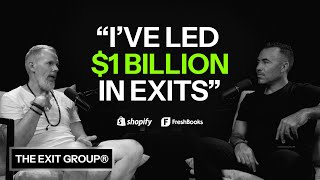
Mark Macleod, ex-Shopify CFO turned CEO coach, breaks down what founders actually need to know about selling. Alignment with the buyer matters more than the headline price. Earnouts rarely pay out. Most founders aren't ready for who they become after the exit.
Questions this video answers
Since 1999.
14 years.
About $550 million of deals.
$110 million.
3%.
You've done literally over 100 exits. What are some of the things that you've seen founders make? The biggest mistakes that exiting founders have made.
Oh, man. Mark McLeod, former CFO of tech giants like Shopify and FreshBooks, and veteran in the venture backed startup world since 1999. Along with being a deep house DJ and yoga enthusiast, he now coaches some of the world's top founders and has personally facilitated over a billion dollars in ex.
Mark McLeod, great to have you here in the studio. Super proud to have you here. For those of you that are not familiar with with you, Mark, can you tell us a little bit about your background?
Yeah, sure. I'll go from the beginning, but I'll go quickly. And first of all, pleasure to be here, especially in person. That's a rare treat. Yeah. So I've been in the venture backed startup world since 1999. Spent 14 years as CFO for a number of companies including Shopify and FreshBooks. As one of the original GPs in real ventures, which for a decade was Canada's largest seed stage venture fund. Founded and ran a boutique investment bank called Surepath Capital Partners, which was just crazy. Successful offices in Toronto and San Francisco. And now in my sixth year, I guess, of being a coach to some of the most ambitious CEOs in the world.
Yeah, you have a super impressive background. And what's really unique about you, Mark, is that you're on both ends of the equation. You've been on the operator side, but also you've seen dozens and dozens of exits through your career.
Correct.
So I'd love to lean in a little bit on your experience with dealing with exited founders and really start off with, we love to uncover the gold mines, the landmines in the process. And in your experience, what are some of the things that you've seen founders make? The biggest mistakes that exiting founders have made that you've seen.
Oh man, this could be like a series of podcasts, right? Like, there's so many. Like, first of all, there's no right decision on when to sell. Like, the example I always bring up is Facebook. So many, many years ago, Yahoo offered to buy Facebook for a billion dollars. It would have returned the fund for Excel. Zuckerberg would have been a hero. Like, it would have been a great decision. And if that's what happened, the history books would have said he had a great early exit to Facebook. But instead he polled all of his management team members and was like, should we sell? Should we not? And anyone who said that he should sell, he fired them and Fast forward whatever many years and obviously that was the right call. But you don't know. You can't a b test it. Right? So that's the biggest thing is sometimes you don't know what to do. And it's, it's a subjective decision at the end of the day. And a big part of why I became a coach is so much of my exit practice. I've personally done over a billion in exits. So much of that was less about the technical finance and more about the human psychology and thinking through what is an inherently emotional decision. So we could spend a lot of time there. But another big mistake is less about the execution of the exit but more the fundamental assumption behind it, which is, well, I'm going to sell this thing because this is a good deal and I'm such a better operator. It's going to be so much easier next time. And I have many former clients back from when I was an investment banker who regret selling because that assumption that it was going to be easier the next time around was just flat out wrong. So that's the thing, right? Lucky timing.
Right. Lucky.
Humble enough to admit that that's a huge part of every outcome I've ever had on any side of the table. And that's 100% out of my control.
Yeah. And I think we've seen this. It's like 50, 50. Right. 50% of acquisitions might go quote, unquote wrong or were successful. The other 50 are successful.
Right.
On the successful side, what do you think are the things that make for a successful acquisition?
That's a great question. I think first of all, the acquisitions are tough. Like running your own business is tough. And now you're trying to integrate this other thing and there's different, you know, sometimes it's fully integrated, sometimes it's just a thing that you have that now you cross sell. Like there's different ways to create value, but I think it takes a while to be good as an acquirer. So there are some companies, like my investment bank SurePath, dealt in the SMB SaaS space. And so there were some companies like Intuit as an example, Serial acquirer knew what they were doing. They had a playbook, they had a really experienced team, they knew how to integrate. So it was a well oiled machine. Whereas others might be much less experienced, just don't have the playbook. And so that's a thing like it's sort of like venture, like when I was a venture capitalist, like you don't go to venture capital school. It's an Apprentice thing, you kind of figure it out as you go. So that's a big thing. Having very strong executive sponsorship. So a champion on the buyer side who can make sure that this team has the resources they need and the visibility in the company and the support, financial, political, depending on the dynamics inside the buyer, that's very much a thing. The biggest thing is alignment. Like truly what the target is doing aligns with the direction of the acquirer. Now sometimes that changes, like priorities change. And so sometimes you get the rug pulled out from under you, the circumstances under which you did the deal change. And that's why I always, not to get into the technicalities, but why I always try to avoid earnouts. And so for folks who are listening or not familiar on earn out, like, I don't know, I sell my company, my company's worth a hundred dollars, just keep it super simple. But I'm going to get $60 today and based on future performance, I can get up to 40 more. So that's the concept of an earn out and that sounds great, but then you're not in control of all the inputs as to whether you can achieve that additional 40. Right.
So should they look at the earn out almost like a bonus in their mind if they want it to be.
Successful or I would argue they look at it as zero. Are you happy doing the deal assuming no earn out? In my experience, an earnout is just a disagreement on valuation that we're postponing. They actually think to stay on this very simple example, the buyer actually thinks the business is worth 60.
Yeah.
You think it's worth 100. You agree to disagree and we're like, well, if you achieve these amazing targets, fine, we'll pay you another 40.
I've had situation myself personally where the earn out was contested like after the honeymoon, that's a year later.
Right.
And we did end up getting what we're legally deserving and required.
Right.
But it was a little bit of, there was a moment there where we're like, we weren't sure whether we would get that earn out. So it can cause tension and you better believe it. I think that's a very interesting approach to just think of it as non existent and if you get it, that's great. That's. That's an interesting shift in mindset.
Mm.
Speaking of mindset, I mean this is probably the thing I've seen people are least prepared for is post exit. Right. What are some of the, I guess the errors you've seen or the pattern you've seen A lot of different deals. Are founders prepared for the psychological aspects of selling their company and what have you seen over and over?
Yeah, probably generally not. I think that shows up in two ways. First of all, in terms of their experience working for the acquirer, because there's typically some sort of period where you're retained. And it's funny, even though they had board of directors who are technically the CEOs boss, most of the CEOs I've worked with are not great at having a boss and feel like caged animals inside a bigger company.
See it over and over.
Right.
They want you can't wait to get out a year later.
Yeah, yeah, most, even though it was worth their while to stick around, most of them didn't, you know, stay through their whole kind of holdback period. So that's a thing. And then, you know, for better or worse, especially founder CEOs, like their identity is completely wrapped up in their baby and they give everything to it. And then maybe they chill out a little bit, step off the gas pedal once they're acquired, but when they step away, unless they've already been working on something, they're kind of just wandering in the forest. They're kind of just lost for a while until they find the next thing. Like they're not really good at doing nothing, they're really bad at doing nothing. They need purpose, need direction, and so that's a thing. And then of course, once they do work on that thing, then kind of what I was saying before, that fundamental assumption that it's going to be so much easier because of all the experience I had on the Last thing is just totally wrong.
Yeah, I think I've seen that over and over. And are people rushing into the next thing? Barely a month later, they're already ready to launch their next startup. How much time should a founder take off? Is there in your mind, is there a certain amount of time that's sort of optimal?
It's hard to generalize. I think going back to this notion of the startup being all encompassing, the. My biggest concern is that there's healing that needs to happen, like physical healing. Person's just been burning both ends for years and we're human, so I kind of need to recover from that. So before you sign up for another seven to ten year journey, like, make sure you're in good shape and reset.
Because burnout's so real. I mean, I've experienced it. Have you experienced burnout? So you know what it's like. And it's hard to explain to anybody that hasn't gone through burnout, what burnout feels like, but I don't wish it on anybody. Right. And so some of. Some of us, as exited founders, are burned out, don't even know they're burned out.
Yeah.
Yeah.
You just assume it's normal.
It's ignored. This is the way life is. And so reshifting for that's got to be. I mean, for me, it took me years to completely reset the way I work, the way I live, the way I. I'm present. One thing you really talk a lot about is being present wherever you are.
Right.
Were you always like this? No.
Oh, God, no. Absolutely not. No. Yeah. For years. When I was a CFO, I had a young family. My kids are 372 days apart. And I would. Even though I was the CFO and not the CEO, I always. It was my responsibility to raise the money. I. I took it on personally. And when I felt the Runway and all the pressure that came with that, and. And so I was stressed often, and I would come home, and I might be physically home, but I wasn't mentally home. I was either destroyed from the day that I just had or thinking about tomorrow like I was anything but present. I started doing yoga in my 20s, and then it got more and more serious over time. And actually in the peak of.
I.
Guess, my CFO days, and then when I was running my investment bank, that's when I got really serious about that, and that is when all of the present stuff really started to happen.
And that, you feel, made you a better operator, better family member, better friend across the board.
Yeah. Better human. Yeah. The biggest gift you can give someone is your attention. Right.
And what about meditation and things like that? Have you. Do you meditate? Do you recommend that? If the CEOs that are listening this, the founder CEOs are listening to this, what's sort of the stack for mindfulness and being present and actually having to be able to. I know there's no such thing as perfect balance, especially when you're a startup environment, but to be more balanced, what are some of the things that you've seen work for your clients, for the people you coach?
Yeah. So first of all, recognize the expectations that are on your shoulders. Right. So I only coach CEOs that have raised either venture capital or private equity. Many of my clients have raised hundreds of millions of dollars. And so I tell them, like, you're like a professional athlete. Right. You know, you've got the same expectations on your shoulders. Like, look at LeBron James, like, whatever. LeBron needs to be peak. LeBron. He's got it. Someone's cooking him like the perfect macro balanced meals. He's got physiotherapist, he's got sports psychologist, you know, the whatever, whatever therapy, whatever modality, whatever support he needs, he's got it. Yeah. And so if you're running a company that's raised $100 million, well you're. That's the same thing. Right. You're the baseline case is the investors that have invested 100 want 300 back. And so if they own half of your company, that's minimum, $600 million exit, like minimum. Yeah. And that's actually very rare. So your performance expectations are super high. So I always remind my CEOs you're an athlete which actually means like the foundation of your performance as a CEO is your physical health. And so, so many CEOs would be like, I don't have time to exercise.
I'm like, you better find the time.
You better fucking find the time. I don't know if I can swear on this but you better find the time. And I can tell you, even when I was running my investment bank, doing six deals at a time office in San Francisco, offices in Toronto, clients in Europe, if I was awake, I was working. I still went to CrossFit five days a week. And I found that doing that. And we do some batshit crazy stuff in CrossFit. Handstand push ups, these crazy 1 rep max deadlifts, there's gymnastic movements. And it helped me break through limits that I either legitimately had or just thought I had. And then I'd show up to work and be like I'm going to crush today, like I'm ready to rock. And then as you start getting serious about that was just the thing that I chose. But as you start to get serious about that, you're like, well now I'm going to dial in my nutrition and I'm going to eat real whole food.
Yep.
Food that exists in nature. I'm going to start prioritizing sleep. Right. I'm going to try and drink less. You know, there's many CEOs who, you know, drink is a way that they try and de stress even though it actually causes more stress.
Super common, right? Yeah. And messes up your sleep.
Absolutely. Yeah. So very long winded answer to your question. But like the stack starts with physical health.
100 I agree with you. 100 and that's one of my biggest regrets when I was going through a 14 year exit journey is I only Discovered fitness. It was something I always pushed to later. I was like, when I sell the business, business, and I have time totally deferring at all times, and I know I wouldn't have burned out or I feel the chances of burnout would have been halved if I just invested even 40 minutes a morning just to getting that movement and taming the mind. And it begins with fitness because you can't do anything else if you're, if you're, if you're feeling inflamed, you're feeling sick.
Right?
And it, and it also. I think one of the most important traits of us as entrepreneurs is resistance. Right. And learning to power through stuff and creating that, that force, resistance with working out only makes you mentally stronger as well. So I think it's just, there's no downside to adding in movement at least five times a week. So I love that as a tip for people.
And so people say they don't have the energy, but the working out will give you the energy. It's chicken and egg. Yeah, Right. And then, so that's the physical side. And that, if you get serious about that, that's transformational to your life 100%. The mental side is obviously a thing. Very often when CEOs show up to get coached, it's because they can't keep up. And I look at their calendars and it's like eight or ten hours of zoom meetings, like back to back to back to back. And like your brain literally can't do that. Right. And then, you know, they pound email and slack messages at night. And as a result of this schedule that has no boundaries, they have no time or make no time per fitness. Don't make time for the other roles. Right. Like when you're, you know, like, well, I'll take myself. So I, when I was running my bank, I'm a banker, but I'm also a husband, I'm a dad, I'm a brother, I'm a son, I'm a friend. You have to actually carve out time for those different identities to have a rich, balanced life. And so, so many CEOs obviously don't. Right. And as a result, their brains are just fried and they're living in this fight or flight state all the time. Yeah, right. That they think, oh, this is just, this is just life. This is just how it is. But it's not right. And so, so a big part of my work is helping to create boundaries, helping them realize that it's actually okay. It's not a sign of defeat. And especially if you think about a CEO, your job is to make decisions. You make decisions every day. Some are big, some are small, but when you look back on a year, there's a handful of decisions that move the needle. And you want maximum clarity, maximum presence for those decisions. And if you're just completely fried, and this is just one more thing that you're trying to fit in on those key moments, you're not going to fully show up, you know. So, yeah, it's a huge part as well. And so I, to, to, to your point on meditation, I deeply believe that all CEOs should meditate. I meditate every day. And that allows me the ability to be fully present. It's much more easy for me to focus and, but more, more powerfully it allows me because meditation creates space and it creates comfort with space in your mind versus like this go, go, go thing. And when you create space, you allow your intuition to go to work. And your intuition is far more powerful than your rational mind. And so that's a big reprogramming that I, I try and help my CEOs go through.
I think the, the aspect of what you do is so valuable. The coaching component. And I do remember one thing about Shopify in the early days was everybody had their own executive coach.
Yeah.
Harley had his own coach, Toby had his own coach. I'll actually separate coaches.
Toby had two coaches at one point, two coaches.
So that shows that.
And they were one of them. They brought in to set up what they call it talent acceleration, that department.
I remember. And then what was his name, do you remember?
Stephen something, I think.
And then he brought in. So they had a whole coaching program.
Right.
And I thought it was overkill. But looking back, I think that was using your analogy of a sports athlete.
It. You.
Absolutely everybody needs a coach. And I think what you're doing is extremely, extremely valuable. And I'm seeing, I'm seeing that as a trend. A lot more in the, in the venture backed companies is the coaching.
Yeah, yeah. I actually bought my first book on coaching in 2002. I was somehow intuitively drawn to it. And back then if somebody said your board members like, you know, I think Adrian, you should get a coach. You're like, what's wrong with me? Right. It's like a negative.
Right.
It's like now it's like, no, it's empowering, it's great.
And do you think that on the aspect of coaching, I think one challenge a lot of entrepreneurs have is that the coaches don't always have Operational experience. Right. They're coaches who coach kind of idea. I mean what makes you unique is you've been in the trenches operating alongside Right. On the right hand of, of these high performance CEOs. So you, you know what you're talking about on both ends of the equation. Do you think it's necessary for a coach to have, in order to get the respect from certain founders, some operational experience or have you seen coaches that have no operational experience who are highly effective?
I have. I mean Jerry Colonna, who was an inspiration for me to become a coach, he was Fred Wilson's partner in Flatiron back in the day before Union Square Ventures. Like, so he'd been a vc, but he didn't really have operating experience, but he had the venture background to draw on, albeit from a very long time ago. So you can, but I can tell you 100% of my clients we know value the fact that I've operated for sure.
And I worked with Cameron Herald From a former CEO of 1,800 Got Junk. He may not have been a entrepreneur traditionally at that time, but he understood what it was like to be in the trenches and that context meant a lot to me for sure. So yeah, I absolutely agree. Coaching a hundred percent.
And I'll also say, by the way, like startups are not normal, especially venture backed startups. Right. Like every business out there needs to make more than it spends or it dies.
Yeah.
And then venture capital is like, oh, let's just take a million bucks and set it on fire every month and see what happens. Right. So like if you don't come from that world as a coach, your instincts are just all wrong.
Yeah, that's a good point. And the stress is no less. In fact it can be magnified with, with a, with a venture backed company.
Absolutely.
Because you can be fired by your board. The expectations you have to return 10x on that investment. Yeah. It's a different type of pressure cooker.
Right.
Whether you're bootstrapped or venture back, just a different type of pressure. Right. And so getting to that finish line and then selling the business, I mean who, who do you think's done it right? Do you have examples in all your store? Because you've done literally over 100 exits, you've been front row for these. Who, who did it? Right.
As a seller.
As a seller, yeah.
Again. But again, it's hard to, it's, it's hard to ab test and say like I was CFO for a company called Terrascale many, many years ago and it was Scalable storage software. And we were, as Facebook was starting to take off and this company called Network Appliance was providing all of the server kind of scaling for Facebook. We were providing the storage back end and we were in the process of raising a series B and this public company named Rackable Systems that's no longer around came swooped in and long story short, they bought us and the founder moved to Miami and was racing cars. So you could argue like he had a great life, but what if he didn't sell? Would they have just kept going? Would they be a billion dollar company today? You know, who knows? Like, it's the same thing with, with Zuckerberg and Facebook. Right? So that's the thing. Like you just don't know whether it was the right decision. You know, I, I mean, generally speaking, just because you can't a b test it, I, I've actually done, even though I shut down my bank in 2020, I've done 550 million of deals since then. Just as like a coach.
Just a half a billion. Yeah. No big deal. Yeah.
And I worked with this guy Ben on a company called Privy. It's email marketing for Shopify merchants.
Okay.
And all of this is public information, so I can talk about it. But he came to me and was like, I think I'm running out of buyers in my space. Like, Shopify had just launched their own email marketing thing. Klaviyo had a solution. Long story short, he was like, this is musical chairs. I'm going to be the last person left dancing. Like, I need to find a buyer. And we sold this company for 110 million bucks. And I think based on that assessment of the environment, actually that was the right call. And then by the way, we sold it in 2021, shortly before multiples contracted pretty massively. So that was a life changing outcome for him.
And in that particular example, was it a strategic or was it a.
It was a company called Attentive Mobile.
So is a strategic acquisition and your preference? And you've done many different exits. Do you prefer a financial buyer dealing? A strategic buyer? Is there or is. Is it whoever pays the most for the deal?
No, no, no. It's definitely not who pays the most. I've never argued for that. Mike, the former CEO of FreshBooks, always used to tell me there's two things you need to succeed in. Life and business alignment and shared values. If you've got that, you can figure out the rest. Right. And so in fundraising, I've always counseled CEOs to choose first of all, the cleanest set of terms, because whatever terms you give on this round will be the floor of terms for the next round. And to choose the investor, I call the Tokyo test. Like, first of all, like someone you would fly. I live in Toronto. From Toronto to Tokyo, that's far away. And not cringe like, oh, I'm going to be beside this person for the next 14 hours. Like, do you like them?
Okay.
And then also like, do they share your vision for the company? So are you aligned? So that's on the fundraising and then similarly on the exit side, like the same set of criteria. Do you like them? You're going to be locked up for a while.
Yeah.
And are you aligned? You know, is your vision to go right, but they want you to go left? Well, that's going to be just brain death. Right. Like, it's going to suck. So, yeah, shooting for alignment is a.
Big thing and I think sometimes you can have great alignment during the honeymoon phase when they're, when the venture capitalists are trying to, you know, get on board and then. Well, the reality of a lot of venture funds is that they're on. They're dealing with a five year window often. Right. Or maybe a ten year window max. And so that's. Is that when you typically start to see heads collide, is sort of within that, that period?
No, it's only when performance goes bad that the, you see the elbows go out. Like there are almost infinite layers to the private capital markets. And so, you know, I've got a client that I coach now, revenue in the hundreds, millions of dollars. It's going to be a fund returner for the VCS that backed it. They would like to exit. He's not going to sell the business. He's going to go and recap it.
Yeah.
So we're going to go to private equity and buy them out. Consolidate. The cap table would just be the, the founder, the employees, the pe. And then he's got a brand new clock. He's back at day one. Yeah. And it's like, let's operate for a while.
It's not a hard problem to fix if the value is there. Right.
Yeah. The performance is there.
Interesting. Okay. Yeah. I want to just go back into mindset because, you know, technically you're the best in the game. You know, everything there's about tables, technology, all that stuff. But the mindset, I think is, is probably the most critical component both during and after the exit. Right. What are some of the things that founders get wrong pre exit? Like maybe from the beginning. Is there some. Like, for me, I think of looking at starting a company as an ultra marathon. Not even a marathon, but an ultra marathon rather than a sprint.
Right.
Because a lot of founders think, you know, I'll build this thing, a couple years will go by, the acquisition offers will come in, and I'll flip it and. Right. That's one that I think of that. That I tell younger founders to look at. But what are some things like that that you want to advise founders on early on?
Yeah, it's having the right motivation to start in the first place. Right. You know, tend to be three sources of motivation. One is, like, there's a big. I think there's money to be made. There's a big market. Second is, like, I built this really cool thing. I'm in love with my product. I want to evangelize and share my product with the world. Third is, I'm in love with this problem. I'm just fascinated by it. So that first source of motivation, there's a big market. Like, what I have found is money is not an enduring source of motivation. Like, back when, I don't know, when you had a job and you got a pay raise, felt great for a day, and then you just got back on with the rest of your life, you've had exits and, like, okay, great, now you can do things, but, you know, are you fundamentally happier? I don't know, but maybe, maybe not. Like, I can tell you, like, I own a lot of Shopify shares, and there was a period, not last year, but the year before, where my net worth went down by a considerable amount every single day.
Yeah.
I wasn't any less happy. Now, you could say that's a statement of privilege because, you know, I'm not putting food on the table with those shares. I'm just holding them. But, like, when it was riding up, and I also wasn't any happier. Like, money's not an enduring source of motivation. The problem with being in love with your product, like, it sounds positive, but it creates a fixed mindset. Look at my widget. Oh. Don't you understand? Oh, I haven't explained it. Let me explain. Like, you're just, like, evangelizing this thing, and therefore, you're not open to feedback.
You've got blinders on.
Right.
Your product focus. 100 products. Interesting.
So the. The most enduring source of motivation is I'm in love with the problem. Right. So you and I both know Toby from Shopify. Toby is obviously, doesn't need to work. He's a billionaire. He could buy an island beside Richard Branson. He could just race cars. But he works harder than ever because he has a mission, which is to make commerce simpler for everyone. And he's not done. Right. He's endlessly fascinated by this problem.
Right.
So that's why 20 plus years later, he's still going.
That's a huge insight right there. Just being in love with solving the problem, not the product. The product sounds great, it's good. And definitely not with the money, because the money, you know, it's a roller coaster. And if you're just tied into the TAM or the market size and the market starts to drop, you're going to be demotivated. And frankly, I think the best companies in the world solve big problems and then rally people to do that. So that's a. Money is rarely the, the top motivator for great leaders. So that's some really, really great insights on that. Going back to the actual process of beginning to think about exiting. Right. This might be a little biased because you were an I banker, but should founders work with I bankers? And if so, and what's the best way to work with an I banker? And third part of it is, is there sort of a rule as to the size of the deal before you should consider working with an ibanker or not working with an ibanker?
Yeah. You know, so Paul Graham, founder of Y Combinator, has very famously said that companies are bought, not sold. And that is not untrue, but it's too simplistic. Right. And it is true. Like on the big outcomes, which is the ones that he's shooting for, a buyer is not waiting for a banker to come and give them an idea. All right. And that's actually true at any stage. Right. Like when I was a banker and companies would come to me and like, I want to sell, I got six months of cash left. Like, let's go. I'd be like, great. Tell me about your strategic landscape. What kind of relationships do you have and what, what discussions are you having and what's. Where are they? Like, what's the status? If they didn't have an existing set of discussions and if there weren't some inbounds, I'd be like, guys, like, the chances that somebody is going to just react to, like the materials that we send them and pay a strategic multiple, like, that's really impossible. Really improbable. Yeah, Right. In reality, like when something is strategic to a buyer, they will do a thing called a market map. Right. Where they will go and look at every player in that category, map them out, figure which ones align with them, pick one and try and get a deal done. And so if someone's really serious about making a deal in the short term, you know about it because they're in touch with you. Right. So that's a huge thing. And so what that brings up is the fact that strangers rarely marry. Right. You got to build relationships in advance. Back when I was a vc, I encouraged my CEO and I was at seed stage by the way, so super early, I encouraged my CEOs to spend 10% of their time at all times building relationships.
So half a day, a week with your competitors even. Right? For sure, for sure. Often like 50% of the time or higher, it's a competitor that ends up acquiring you or you end up merging with a competitor. Oh yeah, that's interesting. That 10% of your time just. And is it. Call up the other CEOs and founders, the business, the corporate development people.
Yeah. With the big ones, you start with corp dev.
Yeah.
And corporate development don't. They're not decision makers, they're not sponsors of a deal, but they are hugely important in getting the deal done and getting the right people assembled. And so they're the entry point. And so it's a one way dialogue to start. Hey, I'm Mark, this is my company. Just want to tell you kind of what we're doing and keep you informed and see how we may collaborate over time. And eventually that becomes a two way dialogue. And you will choose to integrate with some companies, you can't do it with everyone because you're small, they're big. You know, you just, you can't spread yourself too thin. But you know, like I tell my CEOs all the time, like if I buy shares of Shopify today, I could change my mind tomorrow and sell them. Maybe a gain, maybe a loss, doesn't. But I, they're liquid. If I buy your startup, I'm stuck. Right. So I am buying or you're selling trust. And so the more data points, the better. Do we have joint customers? Do we have an integration? Do we see the world the same way? Like it just takes time to amass that evidence. Right.
And that alignment that you talked about. Right, Getting that alignment. I, Yeah. I can't tell you how many times I've seen this play out. It ends up being a CEO that you met three and a half, four years ago. You end up striking up a friendship with them. Even though there, you know, could be technically a competitor. They end up Becoming allies or partners and then acquisition. And so that's. That's a really, really important point that you brought up. Anything else along those lines? Like other.
Yeah. I mean, you asked about whether to hire a banker.
Yes.
Like, I think on the really big outcomes, it doesn't always happen. But if a banker does. If the only thing a banker does is to create the perception of competition, they will pay for themselves. Right. You think about a banker, they're going to take two to three and a half points, depending on the deal. Like their presence and creating, like I said, if nothing else, the illusion of competition, but also just forcing pacing. Right. Time is the enemy of all deals. So just like having that data room. Everything's ready, let's go. Do I think that's going to move the price by three and a half percent? Absolutely.
Certainly.
Right. So it's going to pay for itself.
Yeah. And running that process, too, just as a founder or a major shareholder, it gives you that peace of mind that knowing that you're. You're getting the best price you can. And there's. If there's one way to not get the best price you can, it's by creating the impression of the opposite, that there's no one else at the altar, no one else at the table.
That's right.
And so that's a really, really powerful reason to use an I banker. And I would add one more. It's the selling a business is very emotional. Right. It's you're selling your baby. Right. And so I often tell people, whether you're selling a villa, your villa, or you're selling your business, it's probably better to remove yourself at least one step from the process in order to allow those professionals to do what they do.
Correct.
But I also think it's on us as entrepreneurs and founders to begin the networking, the process that you talked about, and understanding who your buyer landscape is and not waiting for an I banker to put together a chart for you, you already know who can buy you.
That's right.
And it is interesting. Right. I mean, there's. I often tell founders this. There's like eight people in the entire world that can probably change your life if you're looking to exit. I get to know those eight people.
And that brings up a really important thing. Like, I often saw that boards, when we would prepare presentations for boards before we would go and launch a deal process, they would take this false comfort from having this large pipeline of names. And I would tell them, like, okay, I can make a big pipeline, but in reality, It's a small handful of companies that are going to buy this or not. Right. So let's just call a spade a spade and like do we know these companies? Right. So because sometimes when we were pitching for business they wanted to see like all of these names. I was like, that's just not how it's going to play out.
Well, that's interesting. So looking at from a marketer's perspective, is there an advantage in signaling out to your. Like is there a strategic way to signal out to companies that you want to be on their radar? Like is there just be a great company and they'll find you or is there, is there some things that you've seen work in the past where it's get on the right radar?
I guess as a base level building relationship with corp dev, ideally with a product or line of business owner. Eventually I've had some CEOs just reach out directly to a CEO. So you got to build a relationship. But beyond that, like it's helpful to scare the shit out of comp. Especially if it's a competitive buyer. Right. So timing kind of product announcements, big press, like things that just like oh my God, I better like snap this thing up or someone else is going to do it.
Yeah.
I've literally timed PR and then worked with an ad agency to like make sure that that was retargeted and that PR showed up. We literally had the email address of like this everyone who was a sponsor and every potential buyer and made sure like when they were on social media they were seeing.
It's like following them. They're like what's going on?
Yeah, like everywhere where they go, they're seeing that story.
That is brilliant. I really do like that. And we used to do that with press releases as well on purpose. Name our competitors.
Yeah.
So like we were in the art printing business. We were. So art.com was a competitor. I would make sure to have all of our competitors listed in, in a positive way. I wasn't ever trying to just saying other competitors include or other players in the space. So those press releases would get on the radar of the corporate development folks just through their, through their Google searches. Right. And sure enough it was one of those companies ended up acquiring us in our case. So yeah, that's really, really strategic. And some, some stuff that people don't talk about is the, the signaling components. Speaking of landmines, because those are the ones I like to get people to avoid. What are other landmines that founders can avoid by, by, by planning a little Bit ahead on their, their exit path.
Yeah. So going back to this notion of your selling trust like your back office is actually really strategic. You need clean numbers. Any as a buyer, if I ask for an analysis and you don't have it right away.
Yeah.
You can't tell me that you're in market with a bunch of players because someone else would have asked for it. So like your data room needs to be robust, needs to be ready. Needs like canonical, like every possible way to look at your business. You've done it. And that way when I ask for way number five here, it's ready to go.
You're not slowing the process down.
And so yeah, the back office is super important like that. That's a thing needing to sell.
Oh yes.
So I got six months of cash. That's a thing. I sold a lot of companies for strong multiples of revenue, but the companies had raised too much capital relative to the revenue that they achieved and so the common shares were worthless. So, you know, that's kind of a thing. But I guess the practical takeaway there in those situations like where you're just, it's damage control is you don't share the cap table with the buyer in advance of them giving you a price.
Okay.
Because they will go and look at the institutional ownership and just figure what's the minimum price I can give? Because they know the institutions are in the driver's seat. Yeah. So they will reverse engineer the price ceiling and not in your favor.
So. So one of the big mistakes that founders make is over raise, dilute themselves where they're almost in a position where they can't sell the number where it's good for them.
Right.
And so yeah, that can be. We've seen the vast.
You know, you read TechCrunch and you think that giant exits happen all the time, but they're actually super rare.
Yeah.
The vast majority of acquisitions are too small to be reported.
Yeah.
And what that actually means is like a meaningful number. Maybe 90% or sub 50 million, like and a whole bunch of sub 10 million.
Yeah.
And so you need to bear that in mind every time you raise capital. And what I've found in particular the Series B investment decision is a turning point. If you raise a B, you have made a deliberate decision to forego where most of the exit activity happens.
Yeah. And I mean people talk about IPOs that they're fairly common, but they're not.
3% of venture funded companies go public.
Go public. And once you're past B, you're probably heading either to IPO or a very improbable exit.
Yeah.
Very important for a lot of founders that raising B can be that it could be like, we're either going to raise this B or we're selling. And you can use that as an impetus to sort of have those discussions with like, if you don't buy us, we're raising, we're moving forward on it. So do you see is that when you typically see the inbound offers as the companies are sort of shopping.
Yeah. Sometimes they don't always know that you're raising a B. A thing that I did a bunch as a banker was approach companies like, we're going to raise a B. We're very clear on where we're headed. We would love to have you on the cap table as a strategic investor because we're clear.
Yeah.
Like some in the early stage, you don't want a strategic investor because you're going to move around.
Yeah.
But hopefully by series B, you're very clear in your direction and so you can make a durable decision about who is strategic. And I've seen more than once where that strategic partner digs in. They're excited and they're like, well, it. Why don't we just own the whole thing? Right. And why are we dicking around here with owning a few points?
Well, we're gonna have to much higher number later on. And it's like, might as well grab them right now. That is another interesting thing. On the, on the flip side, we've seen it. You know, people raise money from a strategic way too early and then you're locked in.
That's right.
You can really get locked in and, and block yourself from. From the best outcome.
Correct.
So that's on the flip side. Super interesting. And so you've seen every type of exit, it's fair to say. I mean, almost every type of deal for yourself now. You know, you went from I banker, workaholic. Fair to say. I don't want to put words. I think you were a workaholic. And to. Now we're in tulum. Actually, we'll discuss. I've watched you transform over the last decade, right?
Yeah.
What's driving you now? What's, what's sort of the, the, the mark of the last few years? You know, mindfulness and.
Yeah. Yeah. I mean, first of all, I'd say my purpose has always been to sit at the right hand of CEOs to help them succeed. I've just done it in different capacities. Right. Like if I was a CFO acting as literally a right hand, a VC trying to help founders become CEOs. A banker trying to help CEOs achieve big outcomes. Now a coach trying to help CEOs grow faster than their business. Like, I think that's why I'm on the planet is to do that. I will say without getting too woo woo on you and your, your viewers. I think the older we get, the more spiritual we get. My beard is a lot wider than yours. If it grew in. I'm older than you, I'm trying to get there. And so I'm very much on the spiritual path and carving out a lot of time for that. A lot of time for practice, for meditation, for gratitude, reflection. Thinking about my clients, just thinking about life, you know, I recognize that they're grinding and so I'm there to offer them another perspective. Right. That they may not be able to appreciate now while they're kind of in the trenches. Right.
And are you seeing them adjust? Like, do they let. Because I know I used to hear this from people, but when you're in the trenches, you're at war. It's difficult. Right. Have you seen your clients listening and applying and then thanking you?
Yes and no. Yes and no. I mean a big job of a coach is to shine a mirror and be like, hey, this is what I'm seeing. And it's so it's not to be a cheerleader, it's not out of boys. So sometimes you got to tell clients things that they don't want to hear. Right. Which includes like, dude, like all of the things that you're coming to me complaining about. I wouldn't use this terminology, but like you created them, right? This issue is that schedule, like you've, these circumstances that are weighing you down, you've created them self imposed. Yeah, yeah, yeah. So let's just accept that reality first and then let's deal with it. And then, you know, on the fitness thing, as an example, like I remind people, like, I don't know, a healthy person has 100 priorities and a sick person has one.
Correct.
Which is to be healthy.
I feel like it's a non negotiable, to be honest. I don't think there's any exception to that rule where, okay, you know, spend three more years getting that heart attack or that burnout, or that there's no amount of money or outcome that's worth risking your health in your life because you're no good to anybody as a leader. And so for me, I'm inspired by seeing some of our mutual friends like you know, racing. Although one could argue that racing cars is probably not the. The healthiest decision. But it's cool to see founders kind of this sort of bro culture, burnout culture, hustle culture kind of teething off a little bit post Covid. Right. So you're seeing founders kind of living their life while they're still running their company, right? Doing the yoga while they're running the company, meditating while they're running a company, racing cars while they're still running a company. So I hope this trend continues, because that's how you create infinite games, right? Is by not deferring your life and living your best life now.
Well, it's either Warren Buffett or Charlie Munger who said that the most powerful force in the universe is compound interest. Right? And so just keeping going, just putting one foot in front of the other, not burning out, might lead to building like just a fundamentally massive company. Right? And so it's only by having a sustainable life that you can do that.
So create a life now that you. Or a business for that sake that you never want to exit from would be the ideal, even though we're called the exit group. And then there's the Exit podcast. I couldn't agree with you more. If you, you know, you've created a very. A great company when you never want to sell it, and ironically, that's probably the best way to get the best value is to not want to sell it.
Exactly. Right.
That's awesome. Mark. I really enjoy this conversation. You combine wisdom, expertise, and just a sense of. Of understanding from the founder level. Right. To the technical level. I mean, I think you're probably the ultimate exit coach, ultimate startup coach coach, ultimate CEO coach. And I totally understand why you're doing what you're doing, man. It's an absolute pleasure. Appreciate it, really is honor. Thanks, man.
My pleasure.
More from Adrian

Don't make this mistake when hiring executives or you'll pay dearly for it - Jack Newton