Neil Patel: From Zero to Millions - The Untold Story of a Digital Marketing Empire
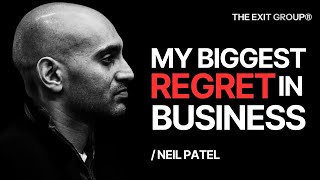
Transcript of an Exit podcast interview (host Adrian Salamunovic) with Neil Patel covering his entrepreneurial journey from a teen-run job board (circa 2000–2001) to building products and agencies (Crazy Egg, Kissmetrics, NP Digital). Topics include founder lessons, product spin-outs and acquisitions, company structure and ownership, work–life balance and family priorities, and practical advice for early-stage founders.
Questions this video answers
Around 2000–2001, at about age 15½–16.
Neil Patel and family: 80.3%; co‑founder: 19.7% (combined = 100%).
Call it 'a thousand plus' employees (Patel says they stopped counting precisely).
About $500,000 (around a half a million dollars).
£/USD 8.6 million (Patel stated 'we lended 8.6 million to it').
I just want to keep going because I love it and I'm addicted to it like it's a drug. Grew up with hunger because I didn't have it. So I always wanted to make money and do better because I wanted to live a rich life. Named a top digital marketing expert by Forbes, Neil Patel has helped giants like Amazon, NBC and HP generate billions. From building empires to becoming a household name. He joins the Exit to share untold stories of triumph and hope heartbreak. My kids are having mental health issues at 3 and 5. Wow. So my baby girl was just like, daddy, why do you always work and travel? Do you not love me? Like, you have to keep in mind kids don't understand this stuff, right? Daddy has to work to buy stuff, pay bills. Don't you want a pink room and all this in the new house? I was like, these toys cost money. I'm like, I'm so sorry. I'm going to try to cut back next year. So then she and my son start picking up the stuff from the room, bring it to me. And they're like, let's go return our toys. We don't need our toys. We need Daddy.
This is the Exit with Adrian Salamonovich, brought to you by the Exit Group and Morgan Stanley. Neil Patel, welcome to the podcast. You're basically a household name in the marketing world. I've looked at everyone you've worked with. I've been following you for 10 years. But I think the story coming from you will be much more interesting. Take us back to the beginning. 2015 and Neil Patel. The beginning of the entrepreneurial journey. I'd love to hear how it all started.
You're talking about when I started my very first business. Right. So I started 2001, maybe 2000 or 2000 or 2001. I started when I was 16, 15 and a half, 16 somewhere around there. And my first business was job board because I was trying to find a job online. Couldn't find one. But all the job websites were making a killing because some were publicly traded so you could see their financials. So I created a job board, but then when I launched it, I had the chicken or the egg problem. You need job listings, but you also need people looking for a job. And without both, you're kind of screwed.
The marketplace dilemma, right?
Yes.
It was a wild west, and you jumped in and you got started. You just took a risk, built it, and saw what happened. So what did you learn from doing that? And then what? What was next? Like, walk us through the evolution from there.
That business Failed. But I got good at marketing and driving traffic, not driving revenue. Right. Two very different things. You can get traffic, but if you can't convert them, you're still screwed. But I was really good at the traffic portion.
Okay.
So then I decided to. I'm just going to go to college and graduate early and then go get a job like at a Microsoft or something like that. Right. And I started doing college classes while I was in high school because you can take community college classes at nighttime. My first one was speech 101. Gave a talk on how Google's algorithm work because I was driving traffic to my job board at the time. It failed, but had something to talk about and wanted something complex to talk about, which would make it harder for the teacher to judge grade me. And I gave that talk and someone in the class was like, hey, we're looking for someone like you at this company I work at called ELPAC Power Supplies or ELPAC Electronics. I was like, okay. Introduced me to an engineer at their company and he's like, yeah, we're trying to do this marketing thing. Can we hire you? And they were paying me a few hundred bucks an hour somewhere around there. I forgot the exact hourly amount, but.
It was more at the time.
It felt a lot of money. And really quickly it turned into engagement. That was just a retainer at five grand a month. Right. But we're driving them 25 million ish in sales a year.
Damn.
So at that point I realized that, huh, I'm onto something. And I was driving them the leads. The sales teams were closing the leads. But at that point I realized, like, I'm onto something. And then the owner of that company, his son owned an ad agency and he introduced me to Countrywide, Blue Cross and ING Direct, so then had four clients at five grand a month each, which was 20 grand. He wanted the same deal that his dad had. And that's how my career started.
And you went after the most expensive vertical to convert. Right? Insurance, financial services. And then you probably started realizing how much value knowledge was, even if you only had a little bit more knowledge.
Correct.
That knowledge was worth a lot of money in the early days, right?
Exactly. And you nailed it. Because it was the early days and there wasn't blog articles and tons of stuff online that would teach people how to do it effectively. Yes, there's a lot of content, but a lot of it was inaccurate. And people didn't know what to trust or what not to say too early.
And you. And you were making bank then, but little did you Know that you're providing exponential value. Right. So they loved you for that. Right. And so. So you took that knowledge. Let's fast forward a little bit to Crazy Egg, right? One of the first heat map companies I ever saw on the Internet. Nobody was even. Google didn't have heat maps back then. How did that. How did that happen? How did you transition from services to creating your first software company?
So the goal was not to create Crazy Egg. The goal was to create an analytics company called SiteBlimp. And we were just like. Because we're doing marketing for all these companies and we're like, man, all these businesses aren't looking at their data and tracking things effectively to optimize for revenue. And there's a lot of waste in marketing. So we're creating a product called SiteBlimp. Crazy Egg was a feature of SiteBlim and that we're gonna release for free to really get more word of mouth to siteblim. And we released Crazy Egg first. But before we could release SiteBlimp, Google bought Urchin analytics and released Urchin. Change it to Google Analytics and released it for free. Yeah. So then we did not release siteblim because we're like, oh, this is gonna be tough. Now there's. Someone beat us to the punch.
So it started off as a feature. The feature was gonna be a lead magnet. But then you're like, there's value in this. So we created Crazy. But then you're okay. So then you're like, we got out featured by. It's hard to compete against free.
It is.
And so what did you end up doing with Crazy Egg still around? It's still existing.
Still exists, still growing.
And it creates leads. And do you control it or did it. Did somebody else take that?
My sister runs the whole business. No way. She has been running it for many.
Years still in the family.
She has really well with it.
I did not know that. So that's. I was going to ask you.
So she's making it grow and everything. And I don't know how long she's been running it for, but my guess, seven to 10 years. I had a guess somewhere around there.
Okay, so became part of the family. It's still operating. It's still creating value. You didn't exit. The show is about exiting. Right. But you got out of it and kept the value in the family, which is a form of an exit. Right. It's an interesting succession plan. Right. You gave it to. Gave it to a family member more.
So we. So when we're Running crazy. We tried raising money and we had this pitch of what we're turning Crazy Egg into. Yep. The investors at the time says we don't really see Crazy Egg as a business. We see it like as a oil change type of business. You get a tune up for your website and you stop using.
Right.
They were wrong, but that was the feedback. And I don't mean they're wrong in a negative way. It's hard to predict a lot of this stuff. We didn't realize either, but we thought they were right. So at the time they're like, well, this other idea that you have kissmetrics, which was the name of the company we eventually created, it spun out of Crazy Egg and that was a company my co founder and I spent all our time on and we raised venture capital for.
Okay. So now we get into the kissmetrics era and another spin off. It's her spinning it out of Crazy Egg as a specific feature set. Talk to us a little bit about it.
Business line focus on, you know, retention and tracking, things like churn and lifetime value of the customer and even doing mobile because remember mobile was at hot at the time, but it was starting to grow and starting to get traction. We raised quite a bit of money for that. I don't know the exact amount, but I guess it was multiple rounds. If I had to guess, 16 to 20 million bucks somewhere in that range.
Incredible.
I'm guessing I could be a little bit off. I wasn't there the whole time and almost had an exit. Facebook was looking at us, Microsoft was looking at us. I believe we could have sold to one of those two. I have no proof because the transaction didn't happen. But early into the process we had a class action lawsuit over data rights and privacy. We won the FT and we also had a FTC investigation. Most publicly traded companies don't want to buy and take on all this liability. So we were able to pass the FTC investigation with flying colors. They didn't find that we did anything wrong with, with the class action lawsuit in the US I learned that there's insurance, which we had and it's a lot of times cheaper to settle than it is to fight things in court. Yeah. And I don't know what we were spending on legal but if I had a guess, somewhere around 20, 30 grand a month. And I remember the insurance company said we'll help. We'll settle for half a million bucks with them. With they were willing to take or they want actually 550 if you put, if we KissMetrics put in $50,000. We're like, wait, we're admitting we're losing? We're settling in theory. You're not going to court. Our lawyers said if we take this court, we can win this. Yeah, but they're like, your legal fees would balloon up to a million plus just to fight this in court. So, like, so you're telling me I can just settle and get this done for $50,000 because the insurance company will provide them 500,000. Like, yeah. So I took a settlement and moved along. During the interim, investors put in a CEO. Yeah, the CEO didn't work out. Then they put in another CEO and learned horror stories of like hiring your girlfriend and paying her $50,000 to change a logo. Right. That was one of the executives or CEOs that came in where they were burning money more. And I'm not saying there was a right or wrong call. It was just usually there's not ROI on that kind of stuff. And the business started struggling. Eventually it sold, but it didn't sell for a surplus. But I knew they were struggling at a certain point. And the website was getting millions of visitors a month. Million plus. Not millions, but over a million. It was my ideal audience because they're interested in marketing. I bought the domain and the blog from, I believe it was for around a half a million bucks, which gave them a lot of Runway.
So you gave them some capital. You took over kissmetrics.com and redirected over to neilpatel.com is that right?
Correct. All the content, the traffic. And then they bought the domain. KissMetrics HQ, I believe it was. And yeah, it worked out well for me. It generated me a lot of revenue. I made back my money extremely fast.
So that, that is a really interesting chess. Chess game move. Right. I want to zoom in backwards. When you created kissmetrics, what was that like? Because it sounds like you're very high level at kissmetrics. Did you come up with the idea and then.
No, those are my co founder. I'm not the most innovative person. I'm more of a executor, specifically on marketing.
And you're a great promoter. Right. So they knew that. They said, look, if we can get Neil Patel involved in this and get him in, we can get, we can collaborate. And that's. So you gave your, really your knowledge, your brand, your potential traffic to them and they were building the technology and you stayed, you stayed high level. Is that, is that right?
Well, my co founder was running all product and engineering. Yes, I was in charge of marketing and sales. Eventually we hired a VP of sales, would help with the sales. I worked with them and my job was traffic and revenue. Co founder's job was product.
Okay, so you're creating the demand for it. And were you operational in case, like, were you going in every day? VP of marketing. If it was a title like operational or VP of marketing, you were in charge of creating demand generation.
Who had a team, managed, you know, was there day to day and then.
You had an equity position in there, Correct?
My co founder and I started with 50.
50, 50, 50. And as you added more team members, we got diluted.
And added more investors. We got diluted. I believe by the time I left, I owned around 20%, plus or minus, but somewhere in that range.
Okay, and were you part of the fundraising for that or did you let the. Okay, so you were in with the VCs pitching?
No. So I went to one of my buddies who had a great relationship with, who was an angel investor, and he gave me a term sheet, I believe, for $600,000. And then we, my co founder took the term sheet. He was based in Silicon Valley, I was based in Seattle at the time. He took it, shopped it, and got a term sheet for a million dollars.
Amazing. And so you were, you were kind of letting the team do its thing though, while you focus on your strength, which was the market, which is, which is brilliant. And so it's a close exit. What did you learn, what did you learn from KISS Metrics? If we start forwarding now and like there was hello Bar, which was another feature based company, many of us that.
I don't think we paid more than like a half a million bucks.
No way. So you acquired, so you acquired hello Bar, is that, is that right?
Correct. That didn't work out too well. Didn't lose money though, so that was good, you know. And over the years I've had opportunities to exit. And some of the businesses, like KissMetrics had a software serving tool called Kiss Insights. It got sold, I don't know for how much, maybe a few million bucks. It wasn't much if that. Maybe less, maybe more. You know, it was either in the hundreds of thousands or low millions. It was one or the other, if I had to guess, maybe high hundreds of thousands. So a long time ago. And it gave us more Runway. But we sold that to a guy named Sean Ellis. And over the years, I haven't had too many exit opportunities. You know, 7ish years ago, I created an ad agency called NP Digital.
Yes.
And we've gotten heading up a lot from private equity. We have a decent amount of headcount. Call it a thousand plus. I don't. We stopped counting a while ago. Someone counts. HR does.
That's crazy statement. You don't even know how many people you have working with you. Which is a nice metric, right? Somewhere in the. Somewhere over a thousand.
It's somewhere over a thousand. And it was funny because I was giving a speech in Kansas City the other month and I was meeting people in the room and someone comes up like, hey, this is great. I'm like, yeah, great to meet you. What's your name? And they're like, oh, so. So, like, what do you do? She's like, I work for you. And I was like, oh, my bad. You know, when'd you start? What do you do? She's like, I've been working for you for three years. I was like, my bad. I felt. I felt like crap. And I deeply apologize. And I got to know her more. But it's tough because when you have offices in so many different countries and locations, I can't be everywhere. Just realistically like being super transparent. And she's doing an amazing job. But that company, that business, we've had quite a bit of offers and we even had during the last boom when the stock market was booming in 2021ish, we had people trying to pitch us to go public. Right. We're talking to Goldman at the time, talk to J.P. morgan, and we also talked to a few people that were running SPACs that were trying to do a deal. And we decided not to.
That was a good move.
Yeah. We got hit up by a lot of private equity firms. Had a lot of LOIs and term sheets, whatever you want to end up calling them or letter of intents. We even had IOIs. I forgot what the IOIs are, but they were for one stage earlier than the Lois, I believe it is. And I decided not to transact because I met with a guy named Michael Delaney and he's with this private equity fund called Court Square. And they do majority acquisitions. So 51%. So I'd lose control. So they flew to Vegas. At the time I was living in Las Vegas. My co founder and I did dinner with Michael Delaney and his colleague Brian. I don't know Brian's last name. Great private equity fund. He started private equity at Citibank or Citigroup, one of those banks that starts with Citi back in the day by roughly when I was born. So you're talking about. He was one of the OGs of private equity. Right. Guys easily made over a billion bucks if I had a guess. What you don't see on the Forbes list doesn't mean someone doesn't have money. There's. As you're entrepreneur for a long time and you network, you'll realize there's a ton of people with a ton of cash.
They're not on Forbes, they're not on that list.
Like I know people who sell things like light posts and they make 300 million a year in profit, not revenue profit. With no investors never see them on.
No one knows who they are.
No one knows who they are. Like if you're making $300 million a year and you've been doing this for a long time.
Correct.
You are a multi, multi billionaire. Especially when you own tons of real estate and you're just investing your money in stocks in the S and P and it compounds at 10% a year. Like you make a lot of money over time and especially when you haven't been doing it for 10 years, but you've been doing it for like 30, 40 years, right? It really adds up. And when I was meeting with Michael Delaney, he said something at the dinner table that really changed how I look at exits. I was interested in exiting to him until he told me something at the dinner table. And he's just like, when I started in private equity, it was the heyday and I was like, what do you mean? Now you raise money from LPs, you buy companies and you have a time, a cycle of your fund and you got to sell these businesses and give cash back to the LPs and then raise more funds and usually the same LPs put in and then go invest it, deploy it, fix the business cycle.
Five to 10 years.
And he's like, when I was at Citi, we had all this money from people's deposits, right? So Citi created a private equity fund because they had all these deposits and they were a small percentage of it. They would allocate to business. So one of the businesses he bought back in the day was AmerisourceBergen, which is a Fortune 10 company, right. Turned the name changed to Sensora. I don't know how much revenue it does a year, but it's in the. I think over $100 billion on an annual basis is $293 billion in revenue. It's a low margin business, but 293 billion, that's a lot of cash.
A lot of cash.
And he's just like When I was in private equity, when I started in the 80s, because it was a heyday because we would buy these businesses and fix them, grow them, and we never had to sell them. He's like, now we're forced on selling him. He's just like, why would I ever want to sell a business that already did all the hard work to fix and it's growing. He's like, the best returns are actually keeping a business. It's not actually buying, fixing and then selling.
They're not flipping.
Yeah. He's like, you just want to keep fixing them, growing them and just keep buying more. He's like, those are the heydays. That's the best form use of money. So a light bulb went off. He's telling me that's the best way to operate a business, not actually flipping.
And control it.
And control it. And we have no investors. And I was like, huh? We cash flow positive. We're at scale. I would consider a scale at this point, not just in employee count, but regional reach and revenue. I was like, well, if I'm at scale, why the heck would I want to sell it?
Right?
Little to no debt on the books. I have more now than I did then. I say little to no now, but back then it was even less than now. Back then, when I had the options to sell, like very little of debt, I could have paid it off with the cash in the bank account. Funny enough, I can actually pay off our cash. I can pay off our debt today.
Just with the cash.
With the cash we have.
And you own it 100%? No.
So I own 80.3% of the company. My co founder owns 19.7% of the company. Right. I know. Those are really random, odd numbers.
Yeah. That is. Why is. Why is. How did that number come about when.
I was transferring assets into the company. Assets are worth something. We needed assets for my name and likeness and stuff like that to be transferred into the ad agency for it to work. Because when someone comes to neilpatel.com if it's owned by Neil Patel and not NP Digital, you can't just transfer a lead from one business to another business.
Oh, interesting, right?
It creates a lot of legalities and legal issues depending on what markets and regions and countries you're collecting, data, storing, et cetera. So it needed to be all owned by the same company.
Got it.
So when you're merging stuff over, it creates dilution and it was minimal dilution to my co founder.
Got it.
But my family and I. When I say my family and I, my kids and I own 80.3%. So even though my co founder and I combined own 100%, we do give our employees a version of equity. That's phantom. That is roughly. Or it is equivalent to 10%.
So it's like an ESOP. Ghost shares, basically.
Right.
Or Phantom shares, as you're calling them, not an esop.
Right. It could be looked as that, but like if they leave, it's gone. Yeah, we have an exit. They get paid out and on a quarterly basis we distribute out the profits and they take their percentage of the profits and it goes into their bank account.
Brilliant. I think that's an amazing way to structure a employee incentive. Let's call our program. Yeah, you got your Phantom or Ghost shares. And they also get profit sharing on a sort of almost like a dividend basis off. Right. Keeps everybody incentified. They feel like they own a part of the business, but they're not on the cap table. So you've got a really clean, simple flows through tracks.
Efficient.
I love it. I think you're a great architect of creating the. So it's neilpatel.com is that the umbrella or is NP Digital the umbrella?
NP Digital's umbrella.
And then Neil Patel is just one.com is one piece of that. And then. And you have Uber Suggest, which I'd love to talk to you about also.
Which is one of our SaaS companies and then another one called Answer the Public. But we have tons of corporations underneath. Not for tax efficiencies or trying to do anything funky. When you just operate in a lot of different countries, you have to set up an entity in that country and start running payroll and HR and all these kind of things and stuff. I didn't realize when I only had 20, 30, 50 employees. But once you start growing to a few hundred and then five hundred and then you start getting a thousand and then you start even adding more, you start learning all these things. And then you had to deal with taxes between different countries and how do you repatriate money and do it legally and efficiently without breaking any rules? Because some countries charge you a tax based on revenue, some countries tax charge you a tax based on profit. Like it really varies. And then we buy companies. So then when we buy some of these companies, like we buy ads to the public in the uk, like, all right, we take our American entity, lend money to our UK entity, NP Digital uk. I don't know what it's called, but let's just go with. I know it's called NP Digital I don't know, you know, in the US we do Inc or, you know, S Corp or llc. I don't know what the version in the UK is, but let's call it Ltd or something like that.
Yeah.
We lended 8.6 million to it and then it went out and bought Answer the Public, which is now owned by our UK entity, which is now owned, but which is owned by our US entity.
They're all so complex, but at the same time super well thought out.
Yeah.
And do you, do you architect this or do you have a wizard cfo? How do you, who helped you build the architecture of this overall plan?
We have amazing CFO Paul, one of the best people I worked with. He was the CFO at a publicly traded company that was quite large as a competing ad agency, one of the big four. And he worked at a division there that he was a CFO for. But you know, I don't know what the whole holding company did maybe 15 billion or something. It was a large company. I don't know what his entity did that. He was in charge of maybe a few hundred million or a half a billion or something like that. So he has a team. I don't know how big our finance team is. Somewhere between 20 and 30 if I had a guess. And then we use consultants to help us out. So whether it's RSM or bdo, we use some of the big accounting shops and then we hire localized tax attorneys and consultants to help us streamline things and make things more efficient.
So you've got this really interesting model of you're an agency. You admit you're an agency.
Yeah, right. We're not a software company, we're pure agency.
You build these feature rich, very specific tool sets like ubersuggest, like Answer the Public. Are they more lead magnets for you?
Is that a combo? They generate a good amount of revenue.
Yes.
They generate good profit and yeah, they kick off leads. We look at us as a tech enabled agency.
Interesting. So it's a hybrid. It's a hybrid tech enabled agency we're using. And HubSpot did a lot of similar things. Right. They've developed, well, initially had one tool set they're really good at. They actually entered in SEO at first. A lot of people don't realize that's how HubSpot started and then they expanded from there. You're just doing it with a core digital agency at the. At the middle of it, right?
Yes.
And, and so I'm interested in Answer the Public and Uber suggests they essentially do the similar things, right, they're keyword suggestion tools are both very powerful. Did you do that on purpose? Are you going to integrate the two? Are you doing it so that maybe you can sell one of them in the future or do you have no interest in that?
No interest. We just keep them separate because they each have brand loyalty and they have a little bit of a different customer type. So we let them focus on their ideal customer profile and yeah, we just keep them. When we buy most things we do change the name. Like we bought an agency in Southeast Asia called Search Gurus and they had our Search Guru without the S. I believe they have, you know, good brands like Domino Signia, the health insurance company, like Reebok, you know, Grab, which is like a uber alternative for Asia. And they have a lot of big corporations like Haya, etc. The list goes on and on. Working with them or like, you know, l' Oreal or whatever it may be. But they have great, amazing accounts. And it's called SearchGroup. We bought it, I think in June of 2024. So this year and within a year more, there's no way the name is going to stay the same. We'll integrate everything, the people, the back office. A lot of the back office has already been starting to get integrated, but literally within a year there will be no more searchguru. I'm not saying the people will be gone or anything. I'm saying the brand, the brand and it'll just be integrated. And when someone goes to SearchGuru, it'll be like, Search Guru got acquired by NP Digital and it'll be a landing page.
And then so you're doing a lot of acquisitions, you're on the other side. I mean, you're going out finding great companies to purchase and you're integrating them into NP Digital. 70, 80% of M& A work fails.
Right?
How? What's your philosophy on making that work? Being on the other side of an acquirer. As an acquirer, how do you make these cultures possible?
If you got to really look at culture, you got to look at their client base, you got to look at cross sell opportunities, you got to look at Churn and you got to make sure they're doing something you really need that you can't do well and the founders and the people who are the DNA of the business are willing to stay. And a lot of M and A fails. We have a little bit of a different strategy. We tend not to acquire a ton of businesses for their revenue and scale the companies, of course, that we're buying make millions and millions of dollars, but we're not buying stuff that does like 30, 40 million in revenue. Right. So there's lower risk. We have a huge base and an audience, but we're buying stuff that is big enough. But we can then scale it up by selling our audience onto their products. And it helps with the returns on our end, and it helps do it in a way that's very efficient on cash flow, where we don't really have to use much debt, and we can add in debt as well. But we try to avoid buying the businesses where someone's just like, I make 20 million a year in profit. Well, that's a very expensive business to buy.
Yes.
Right.
Yeah. But the multiples on that, you're looking at over 100 million. Right?
Way over 100 million. You're looking at hundreds of hundreds of millions.
Because these are SaaS companies, not agencies. Right. You're mostly buying.
Well, whether it's agencies or SaaS, you're still looking at hundreds of millions of dollars. Right. Someone's doing 20 a year in profit. And the issue that you end up having is there. Those acquisitions aren't as risky. They're expensive. And then I would have to start getting private equity partners. There's only so many of those I can do and actually can't do a lot of them. But on the flip side, buying, you know, a company that's doing a million, 2, 3 million, 5 million in profit is very affordable and tangible for us at our size and scale. And then we can tuck it in and grow it more.
Are you looking forward to doing more acquisitions? Do you have some sort of number in your mind over the next. Like, if people are listening to this and a lot of people own agencies and tech companies, they'd be interested to know, what's your plan moving forward? Do you have a certain pace that you want to keep?
We don't have necessarily a pace. Most of our growth has come organic, and we're good at figuring out organic growth. And as long as we can keep getting organic growth, we'll do it. And we have M and a team that just focuses on tucking things in. They bring us anything that they find interesting.
That's awesome. Are you enjoying this journey? We've been in the game almost two decades now. Right. Are you having fun? Are you having fun running?
I'm having fun. And that's why I don't look at things like selling or anything. And I'm just like, just have fun. And who cares about whatever happens?
You're on a marathon. And you might be in the middle of it, you might be at the beginning of it. You're just on a forever journey to keep building up your brand, creating a great company, acquiring the right assets. And I guess that's the key. If you're really enjoying what you're doing, you're having fun at it, then why stop? Why sell it? Right. Why cash out?
And that's what I don't get. Because, let's say, I'm not saying this is our growth or this is or is not. I'm just throwing out a random number. Let's say someone's growing at 20% a year. If your profit's growing at 20% a year, you're not going to get that from the S and P. Might as well just keep going.
Correct.
It's great returns. People would love for that. Right. Especially at scale, when something's really tiny. I was talking to someone before this SAS company. Like, we're at 80% growth. Well, when you're generating $3 million a year in revenue, 80% growth is great, but it doesn't really move the needle. Go, go. Try deploying 100 million, 500 million a billion dollars and then get 80% growth a year. You're not going to get 80% growth a year without crazy risk.
That's right.
It's just unlikely.
That's right.
And then people like, oh, I could have invested in Nvidia. Dude, you can't time that. That is too hard. And anyone who says they give time is just a spongebob.
Correct.
You get lucky.
Yep.
It's just like Trump won election and then crypto. Boom. You got a 50, 50 shop, it's a coin flip. And then crypto would have went down because Harris probably would have been more aggressive on crypto regulation. I don't have any proof of this, but that's what it looked like going into.
We can predict it.
Yeah.
Cannot predict it.
These are coin flips. But s and P, 10% returns a year, 9% somewhere in there. That's what it averaged out on somewhere around there. Good.
Passive on the side.
Yeah. And you can do that at scale with not crazy risks. But if I'm generating more than that, I'm getting the return, I'm getting the cash flow, and my enterprise value is growing. Why would I want to go and sell?
Yeah. It's a golden goose, right? You've got a golden goose. You enjoy it. Selling it doesn't make sense right now. What would it take to get in the mindset in the future, at some point. Every company has some sort of beginning and end, whether it's an ipo. We talked about an ipo, which is a lot of people say friends don't let friends ipo, but I think the.
IPO is the worst thing ever. I talked to a few buddies that did IPOs and they told me, dude, don't do it. So I'm open to a transaction eventually and I will do something eventually to make the team happy. But for me, I want to control the business from being the majority even in the future. It's not about the money because we cash flow. Well, how many homes do I need or cars do I need? I look at it as purpose. I feel like I have purpose in life. I'm not talking about purpose as a Neil Patel. We're at an event right now where you're recording this. I'm not talking about purpose as Neil Patel of me getting on a stage and speaking to people and them, you know, clapping or saying thank you. We like this speech. I appreciate the kind words. But when I say purpose as in something to wake up and look forward to, that I love doing, creating content, trying to grow a business, trying to solve problems, putting out fires. Some may look at this as like a terrible thing, a headache. I enjoy it. It's your sport. It's your sport and I don't want to let that go and I can start another business. This business is about Neil Patel. The name change eventually from Neil Patel Digital to NP Digital. It's really not that reliant on me as most people actually think. I drive way less than 10% of the revenue. Yes, there would be effect if I wasn't there tomorrow, but the business would survive and still grow.
Right?
But I really look at it as like, why would I want to start something all over again and have to grow? And I've done this enough times. That is the hardest part about business. It is easier to buy and just fix what other people messed up on. And I enjoy it.
Wise words. And I think having passion and having that to look forward to us as founders is so critical. I can't tell you how many founders I've talked to that sold their companies and had eight, even nine figure exits. And then they feel depression almost right away. Even though they have more capital, more money in the bank than they've ever had. They're not waking up. They're not dealing with the fires. They're not dealing with what they thought were headaches. They need this to stay active, to stay excited. We need friction as human beings. Right. And so you're leaning into that, embracing it and accepting it. Because running any business is going to be pain. Right? A lot of pain every day. But that pain is what keeps us going.
It does. And then people like, if I had to exit, I have all this money and I can do all of this. Well, it's like, what are you going to end up doing? I have, I live in a three bedroom condo. Right. And at the same time, we're renovating a house down the street and someone that is close by us, three houses away is building a hundred million dollar home. No joke, $100 million home. All right? And when I say $100 million home, that's their cost. I'm not saying it's worth that. I'm just saying they're spending a hundred million dollars.
Right.
And I look at it and I'm like, oh, what are they going to do with all this money and this big of a house? I'm happy with the three bedroom condo and I'm dreading moving into the home eventually once it gets done. It keeps getting delayed, but all right, I'll take another year. Like, cool, I can stay in the condo longer. Like, I don't need all this stuff.
More bedrooms does not equal more happiness. More properties does not equal more happiness.
Like, oh, you got a four car garage. Well, I don't need four car garage. I drive a Honda Odyssey. Well, what am I going to do with extra stalls?
Like, right. Cars don't motivate you. Right. Big houses don't motivate you. What does motivate you? Like what? As you move forward, what's motivating you moving forward? What keeps you going? We, we talked a little bit about building a business.
Yeah. And growing it. Family is another thing. My kids are having what I would call mental health issues at 3 and 5.
Wow.
And what I mean by that is like, dad, you're always traveling, you're never home. And you know my daughter the other day she comes to me, why are you always working? And she's crying because I'm always on the road. Like, no joke. A few weeks ago to now you're talking about Dubai. Went to Dubai, came back home the next day, went to Hong Kong from LA. That's a long flight. Was there for less than 24 hours or around 26 hours, somewhere around there. 24 to 26 hours or 23, somewhere around there. Flew back. So from a Monday to Wednesday, you know, I was gone and I came back from Dubai the day before and then the next day, I left to Utah, came back, few days home, went to Frankfurt. From Frankfurt, I went to Saudi. Saudi. I went to La. La. Was there for maybe 12 hours, flew to Ottawa. I'm here, go back home for a few days. I head over to Milan. So my baby girl was just like, daddy, why do you always work and travel? Do you not love me? Like, you have to keep in mind kids don't understand this stuff. Then I was like, daddy has to work to buy stuff, pay bills. Don't you want a pink room and all this and the new house? And I was like, these toys cost money. I'm like, I'm so sorry. I'm gonna try to cut back next year. So then she and my son start picking up the stuff from the room, bring it to me, and they're like, let's go return our toys. We don't need our toys. We need Daddy. You can't return used toys like that. But just the thought was so loving and sad at the same time. Right on how much I mean to them. But next year, I'm gonna drastically cut back on my travel. I've already cut off all my Brazil trips, gonna cut off all my Asia trips. And what I'm gonna do is focus on creating content and doing stuff at home. So what's funny is this. I never cared for a home. Now I was telling the decorators for hard work, and I'm like, make a really sick office. And they're like, why? They're like, do you work in your office? I was like, no, I don't work in office. I work with a laptop on my lap while I watch tv. No joke. That's how I actually work on a daily basis. When I'm at home on the road, I work in bed with a laptop, with the TV on, or in meetings. And in the office, I was like, oh, cool. Just make it really sick so I can just record more videos and content. And I believe I can make up the delta of not going to events by just creating way more content and being there for my family and spending more time and I enjoy in life, no joke. What makes me happy. Homes or cars. Never had a Ferrari or a sports car. I could buy one. But, like, don't give a crap for any of that.
Priority for you.
Love the Honda school. What makes me really happy. Yeah, as a family going home and we all, as a groom, wife, kids, everyone, we go to like a grocery store and buy food, and wife and kids start cooking and we eat as a family, get tons of joy from that. And people believe, oh, work hard when your kids are young and then be there when they're older. Well, the problem is when they're young they want you and when they're older they don't want to hang out with you. So might as well hang out with them while they're young and then go and travel and do all this stuff when they're older because they're not going to want me when they're older. And I know that sounds bad, but it's true. Yeah.
And we have to. Those moments come and go and you can never get them back. Yes, but you've created the systems, the wealth to be able to have the luxury on a Tuesday if you want to, to go to the theme park with your daughter and hang out. I think that's the real power of creating wealth early.
Driving them to school and then having conversations and picking them up for school. I love doing those things. My assistant does not schedule calls when I'm home around kids pickup times.
So sounds like Neil Patel in 2025. Moving forward is going to be more balanced, more time with the family, more digital content, less physical, maybe for a bit.
Still working a lot of hours. Yeah, but working a lot of hours.
And being in the home creating content is okay.
My family has no issues with me working. They just miss me because I'm not around them. And for me, money and all this is great and I'm not saying I don't need it. And I do appreciate where I am at life, but it's depressing to be on the road sometimes the whole month, minus three days. Only being home three days.
Yeah.
And barely seeing anyone. And it's just like this just isn't the way I want to live my life. And it's not about the money. I'd rather make less money and have a really healthy family. And I'm not having issues where people are like, oh, I don't, you know, if you don't change life, you're going to be in trouble. People actually support me and my family and they're like, do whatever it takes. We support you. But I just don't want it. I'm not happy doing it. I'd rather just be home.
So I love where this is going because a lot of the reasons that we forget where we create businesses to create freedom, to create choices, to be.
Able to create optionality and that's why people exit. But almost everyone I've talked to who's exited after a year of exiting, they get bored and they don't know what to do and they don't have purpose in life. Almost everyone definitely after three years because sometimes people have an earn out and they have to stick around three years and sometimes if it's three years then they have a year break and then they're just like dude, I miss having my business. Almost every founder who sold their company comes to me with that same issue. And what I believe is if you have something that's growing and it's doing.
Well, don't take it for granted. Yeah, I've seen the same thing. Even in my case, we sold our company Canvas Pop to private equity. HIG Capital acquired was a moment of celebration. The zeros landed in the account and then like what's next? Right.
Yeah.
What do you do next? You miss the friction, you miss the challenges and you miss the purpose. It doesn't matter how much money you have if you and the money in.
The bank accounts useless.
Yeah, it doesn't do a thing.
We spend our time donating and looking at philanthropy stuff and don't get me wrong, that's a great thing. My wife can go and do that. And I'm not saying people shouldn't do that. It's not fulfilling for me. I'm happy to help other people out and I want to do more of it, but I don't want to spend my time doing that. I enjoy spending my time being in the game. Yeah, right. And there's a place for everyone and I'm not saying my place is better or worse. I just want to keep going because I love it and I'm addicted to it like it's a drug.
You love the game. I love the game. You show up every day for the game and how you're doing it under your own rules though because you have the capital, you can choose.
I have no outside investors and if I ever took capital, I don't think I would take private equity. I would take family office money or sovereign wealth fund money. Maybe give them 10% of the business to liquidate the team or something like that.
A couple chips off the table.
I probably wouldn't take chips off the table.
Really?
Yeah.
So you have as much money as you think you need or want at this point. I'm not even 48. You're just under 40. You have everything you need.
And I'm not saying I'm well off or anything like that, but what am I going to do with more money?
Would you get a private jet?
I've thought about that.
Would you get the NP digital jet? Would you do that?
I looked at that, dude. So when I used to live in Vegas, there was an air show, and I always wanted a Global 7500. So I went down there. I was talking to the.
What's the real deal? You can go around the world.
You can go around the world. Because I most my trips are international family travel with me, right? There's actually a bed in there, a shower. I was like, oh, this would be really good for the family. And wife was like, at that time, you know, this is not the way to raise kids. And I remember we were coming back from Hawaii and G650ER, which is a Gulfstream 650. I'm not saying I'm well off or anything like that. I'm just saying that's just what the plane type happened to be. And we're coming back in it, and my daughter points out the window and says, daddy, look at that plane. I want to fly on that. And that was a Southwest Airlines Boeing 737, which isn't as nice of a plane. And if you go into that plane, it's tons of seats, as everyone knows, it's crammed in. And as my daughter, I was like, okay, we'll go to the airport next time you're going to have to sit next to someone. She's like, no more room for my toys and for me to play and sleep. And she's not realizing that those planes, you have to actually go through an airport. And she, she. My daughter doesn't know what that's like, where is my son yet? And that was our last family trip in a plane. At least we haven't tested out the airport yet with the kids. I'm too scared to do that.
340. Yeah.
Yeah, right. Like, this is a lot of work. And she's five now, but we never set foot on a private plane after that. I didn't either.
Interesting.
And I'm like, this is not how I want to raise them. So my wife, you don't want to.
Bring them on the road. You want to go out and come back or better yet, stay at home, build NP digital studio.
I'm okay taking him on the road.
Yeah.
I don't want him to grow up thinking that is life.
Yeah.
For a kid at five, she was younger at the time. At that time, she was about to turn 4. She was 3. For a kid to think it's normal and they should have a bigger plane, something is wrong. The way I'm raising up. And we made changes drastically in our life. At that point we got rid of a lot of staff.
Yes.
We started doing more things ourselves. You know, we have help with nannies and stuff. Weekends, there are no nannies. And I'm not saying we're not privileged or lucky, but weekends we spend our own time with our kids. Cleaning, taking care of them, doing the dishes. We tend to cook. Or we'll go out and get food multiple times a week. But kids start seeing it, oh, you took off your clothes, put them in the dirty hamper, make your own bed. Someone doesn't need to make your bed every single day. And just learning. Walking down the street, you see homeless people. This is life. If we have money, we help them out for food or whatever it may be. You're lucky, you have tons of toys. It was your birthday, you got all these. Do you really need all of these? What can we donate to other people who don't have it? Kid will be like, oh, let's donate some of my other toys. Well, no, those are used toys. How about we give them some of the new toys? You want new toys? Why don't they deserve new toys as well? Versus hand me downs. So just trying to be more grounded, we think is very important. Hopefully it'll give them hunger as well. But even if they don't have the hunger, more importantly, I think it's important for people to just grow up being good human beings. I'm not going to grow up. You know, where I grew up, my first job was picking up trash and cleaning toilets. I'm not going to go back to that kind of lifestyle. And I'm not saying my parents struggled or anything. My parents were middle class. I gotta have to pick up trash or anything.
Let's talk about when you're a kid because I mean, almost every one of the founders that I talked to today who have a billion dollar companies or even 100 million or $10 million businesses, they struggled as kids. There was a. They weren't.
Maybe parents struggled. I did not struggle.
Also, you saw your parents struggle. So let's talk about that. How did you grow up?
So when we immigrated into the states, my mom couldn't get a job as a teacher. She walked to school miles with my sister and I taught for free. They were. My sister and I were able to go to the school for free. Because you're talking about in the states, right?
Private school.
Not private school, preschool. Preschools usually charges money, Right? Elementary is free. My mom walked to school, taught for free in exchange for us being able to go there. And she did that for six months until they were willing to give her a job. A paid job.
Right. Smart.
And I remember we loved Taco Bell at the time. She would collect the pennies when she walked to school and back and she would push us on a stroller every day both ways because we couldn't afford two cars. And she picked up the pennies or dimes or nickels. And when she added in enough, she would get us, you know, tacos from Taco Bell.
For you. Not even for herself.
Correct.
She just gave up everything for you.
In India you're used to living multiple people in a room. We Aldo came from London, but same thing. A lot of people packed in together and did the same thing here. You know, grew up in low income apartment complexes. Figured it out. Eventually they were able to buy a home and it was a crazy interest rate above 11%.
Yeah, it was back then.
Yeah. And then eventually figured it out and they saved up enough to be middle class.
Incredible.
And I had a grant to go to college because of my parents income wasn't the highest. So government helped us out. I really appreciate that. I hope other people have the same opportunity.
Don't worry, you've paid them back already with tax.
I always think I can do more though. I wish the government didn't have as much inefficient spending. But I do believe it would be good if we paid more taxes and it went to the right places versus just got burned away. It's like if someone said, hey, you got to pay 5% more taxes.
Yeah.
But no one had to worry about health care that people that didn't have money. I'll be like, okay, sounds good. But yeah, grew up with hunger because I didn't have it. So I always wanted to make money and do better because I wanted to live a rich life, whatever that meant.
Which you are. I mean Neil, it's impressive what you've built from. From the beginning. From pre crazy egg up to crazy egg to kiss metrics to you know, all these different divisions, the way you've structured your company. I mean in a sense you've created something you never want to exit from, which is in itself an incredible feat.
And if I had to give a really important takeaway, I have a lot of friends who I met that have billions of dollars in the. On the Forbes list. A lot of them are not happy. And what I've learned that success is because you can only do so much with money. What are you going to do? Buy a sports team? You know what I've seen people who are the happiest or the most content with their life is people have success in three aspects. Their career, whether it's doing something that they love or making tons of money or feeling like they've accomplished a lot, doesn't mean you have to make billions or millions. Make enough where you're content.
Yes.
The second bucket is your health. If you have terrible health, what's the point? You can have all the money in the world. You can't do anything right. And the third bucket is family and friends. If you have great health and you have a lot of resources, but no one's willing to hang out with you or talk to you, life becomes really lonely. And I think success encompasses all three. And if you can find some sort of balance with all that, you're in a great space in life. Like, I know people who are really high up in the Forbes list. I'm not talking about like a billion or 2 or 5 billion. I'm talking about a lot more money and, like, issues at home, kids that never want to talk to them. Depression. And I'm not saying depression is anything to joke about. I'm not trying to poke holes at it. Obesity, overweight, in and out of hospitals because they get sick often. It's not a great way to live. What are you gonna do with all that money? Buy a sports team? Not gonna be able to go to it. You're in and out of hospital. And if you can go to your games, no one wants to celebrate you. Oh, you go and find other people to date because no one wants to hang out with you anymore. Those people are dating you for money. How's that a great way to live?
Either way, I've seen it.
Yeah.
I've seen the people. A private jet and own a private jet, but they're miserable.
Yeah.
And so we're all told one day we'll have the money. One day I'll be happy. That one day. It's not a one day thing. It's about gratitude. Every day. Right. And so having that. Speaking of, do you have any rituals that you do? Meditation or journaling? Is there anything a lot of people write about this?
Not like that kind of stuff. More so. Wake up early in the morning, work out. I try to walk 10,000 steps a day, exercise, eat healthy. I try to avoid the fried food and the junk food. If I have nothing, I'll eat some junk food. Like if I'm in a hotel, like starving and can't get uber eats.
Yeah. 80, 20 rule, right? Try to be good. 80 of the time.
And I'm usually probably good like 95% of my meals. So it's just like I'm good overall good and that's it. Those are my rituals.
Keep it simple, right? Keep it simple, sustainable, easy to follow.
And have KPIs like my North Star is make sure more people know our company name with our qualified audience and we generate more leads and sales like that's it. I focus on the metrics I can control and let the team deal with the rest.
I like that. I think you've done an amazing job of building your companies, creating the right teams and having the right mentality. I think there's a ton that a lot of our listeners are trying to exit or at least building a company and thinking of an exit path. And it seems like you've figured out the formula to build teams, live a balanced life through trial and error. You've had some close sales, but selling isn't even your future isn't even why you're doing this. You're building companies to build companies, not to sell them.
Yes.
And if an exit happens, maybe it will happen in the future. Right.
I think the most likely outcome is minority one day to keep the people on the team happy. But I don't really see me selling 100% the company anytime soon.
I wanted to get. While I have your mind here in this room, I wanted to get because I think you have a ton of wisdom. And for the younger founder, I mean, you're not even 40 yet, so you're not even halfway through this game, which is incredible, what you've achieved in a short amount of time. But for the founder that's coming up, maybe they're tired, they're building this company, they're in the 0 to 5 million or 5 to $10 million range. What's some advice that your top three pieces of best advice that you'd like to share with founders that are creating.
Companies that are starting off.
Yeah, in the early stages. Let's just say let's start with the early stage. So the zero to a million. What's. What's three? It doesn't have to be three. What are some advice that you'd give them?
Pick a big tam. If it's not a big market, it's hard to make money. Okay, so TAM stands for total addressable market. The second is, is focus. Don't try to do 10 things at once. And the third thing is, is you better have passion, love what you're doing. If you don't, you'll put won't put in the hours that you need to succeed. It's not hard to put in seven day out working seven days a week and working on Christmas and during the holidays if you love what you're doing it is actually hard to do that if you hate what you're doing and I think those three things are very important for founders in the early stages.
And shout out to hustle the bestseller New York Times bestseller you wrote that book.
Thank you.
I think anybody that should pick up that book if in the early stages I think that's a great book to read to inspire the hustle mentality for the early stages. Neil Patel that is an incredible amount of knowledge. Thanks for being so generous with your time because you've done something incredible and you have so much knowledge to share. I really enjoyed this interview a lot man it's an honor to interview you.
Thanks for having me.
I hope we get to talk again soon.
Thanks.
All right man this is really great.
Same.
More from Adrian
Don't make this mistake when hiring executives or you'll pay dearly for it - Jack Newton