Tara Bosch: Why I Chose to Sell SmartSweets
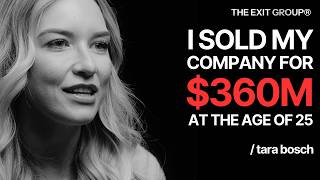
In this episode of "The Exit with Adrian Salamunovic," founder Tara Bosch recounts how she turned a lifelong love of candy and a personal health awakening into SmartSweets, a low‑sugar candy brand that grew from a basement experiment to a $125 M revenue company and a $360 M partial exit in just four years. She describes the early product‑development phase, the difficulty of convincing traditional candy manufacturers to produce a sugar‑free product, and the strategic vision she reverse‑engineered from day one, including leveraging tech‑startup mentalities, social‑media community building, and unconventional retail partners (Bed Bath & Beyond, Popeyes Supplements, Whole Foods). Tara shares the rapid scaling metrics (from $2 M to $125 M, $1.1 M revenue per employee, ~85 staff), the values‑driven acquisition process with a female‑led private‑equity firm that respected gender parity, and her personal transition out of day‑to‑day operations due to health, pregnancy, and a desire to focus on family. Post‑exit, she founded Bold Beginnings, an intimate, grant‑based accelerator for women founders that operates without taking equity. Throughout, she reflects on imposter syndrome, the importance of clarity of vision, filtering mentorship, and protecting relationships after sudden wealth.
Chapters
How did Tara Bosch build towards a $360 million exit in just 4 years at an age where most are barely out of college? Within a few short years, she built SmartSuites into a category-defining brand and achieved a monumental exit by the age of 25. But the real story isn't the valuation, it's what it takes to build something that big, that fast, and at that age.
On this episode, Tara Bosch shares her story about building from scratch, scaling, selling, and redefining herself after her exit. This is The Exit with Adrian Salamunovic, brought to you by The Exit Group and Morgan Stanley. Tara Bosch, so good to have you here. I'm more pumped for this episode than any other episode we've filmed to date. I mean that. First of all, I'm a huge fan of SmartSweets. Incredible product. I want to hear that story, the origin story, for those that don't know about SmartSweets. Like, how did you come up with this? Like, how did this start?
Yeah, sure. I know. I feel like I want to ask you so many questions too, but— We can go back and forth. Yeah, okay. Sounds good. So SmartSweets, I was obsessed with candy, like, my whole life. It was my thing. You know, like, I don't know if you watched Extreme Home— Extreme Makeover Home Edition.
Yeah, all the time.
But I would always like be on the couch being like, oh, a candy bedroom would be my dream. Like, I just had such a connection to it. And my grandma, who I called my oma, who was my best friend in the world, her and I had candy all the time together. But then, you know, you grow up. So in my teen years, I like realized the impacts of sugar and eating so much candy made me feel bad about myself. And I had body image and self-esteem issues. So stopped eating candy. And then years and years later, it wasn't until I learned that it's not about giving up the foods that you love, it's just about finding smarter choices. And I had a conversation with my grandmother in that time period, my oma, and she had shared with me that she regretted having so much sugar over the years, especially from candy, because of how it impacted her life.
Yeah.
So for me it was a moment where I was like, that's so weird. Like you can go through your whole life feeling bad about yourself because of what you're putting in your body. I thought adults just like figure it out. Like you wake up one day and you just love the synergistic relationship. Everything is just like all figured out in life. Yeah. So it was this like weird moment where I was like, oh my gosh. Like she went through her whole life struggling with her self-image because of what she was putting in her body and Candy we loved so much together. Um, and so that put me down the rabbit hole of learning about excess sugar consumption and how it's like this silent epidemic and how intentional it is in North America with manufacturers putting what's called like the bliss point, which is like the ideal amount of fat, sugar, and salt to make foods as addictive as possible and then marketing them to the kids. And so I was just shocked. I was like, how is this, this thing, excess sugar consumption, that's as bad for you as smoking or doing cocaine. They did like a study where the rats were choosing the liquid sugar over the liquid cocaine, and yet it's so accessible and intentionally shoveled into us as much as possible.
Yeah.
So that started my passion about kicking sugar. And then at the same time, I was like, well, why can't you feel good about having candy? So I went down the rabbit hole to see if there was a candy that existed that you could enjoy that was low sugar. And I was shocked that there wasn't. And so it was just like a visceral thing where I was like, I just feel like a sense of purpose I've never felt in my life to creating this candy.
And you, you like, you did it yourself, right? Like you started experimenting and pouring it in your own, like almost like a lab, right?
Yeah, I was just in my basement suite with like candy has a really high cook temp. So like my landlord thought I was making illicit materials and they'd come in everywhere. So all this steam would go up and I'd be making these gummy bears. But I mean, the blessing of Google then and now, ChatGPT is even crazier. I think about for founders in their basements, like the access to information, it's insane. Yeah, it's nuts.
But you figured it out. You were like Googling stuff, making molds. I can just picture it, right? Mixing stuff up, screwing stuff up, burning stuff until you came up with something that was Well, let's be honest, as good if not better than the high sugar ones. And this is what— do you have a science background or anything like that?
No. I mean, but that's the blessing of at Google is like I was able to access all these food science journals. And, you know, like the— when you have the vision in your mind, I think I spent just as much time in that time period as recipe testing as I did working on like my mindset because I was like so paralyzed with fear every day and imposter syndrome, being like, who am I to do this? Like, did that voice in my head that was just constantly belittling myself, that I had to spend as much time working on that and reading the books and the cheesy motivational tracks and Oprah's Super Soul Sunday to be able to get out of bed every day and like visualize myself as being capable of acting on the idea. So that was like just as much as the doing the recipe testing.
It's wild. I mean, even for anybody to just be like, I'm going to start making candy and doing it, it's such a cool mindset that you got into and the product speaks for itself, right? It's amazing. The story of it is as cool as the product. And so like, okay, so you make some candy, right? And people are loving it, getting feedback. How do you take it from idea, you know, experiment, you know, prototyping. How did you get it to the next, like, sale? Like, where did you start selling it?
Yeah, so for me, I was like, in my mind, what I like started doing was I was like, okay, I'm gonna visualize SmartSweets 10 years from now. And so in my mind, from like day one, I was like, okay, SmartSweets is the global leader in revolutionizing candy. We have done this. And it's just a matter of reverse executing it. So I was just like, felt like I was peeling back the onion where I was like, okay, if we're the global leader 10 years from now, what does that mean? Okay, we need to be the leader in North America in 5 years. Okay, what does that mean? That means we need to have nationwide accessibility to where people are crossing in their daily paths. And at the time I was in an accelerator program that a lot of tech companies in, it was Ryan Holmes out of Hootsuite. Oh, great.
Yeah, Ryan's awesome.
Yeah, he's great. And, and so I was seeing a lot of companies in like doing things in the tech vertical and beauty. And I was seeing that food companies weren't thinking the way that those kinds of companies were. Beauty were, were building communities around brands. And in tech there was that whole like fail fast, you know, MVP type thing. And so for me, I was like, okay, there's this tool of social media now. Traditionally in a food business, you kind of like build it chain by chain by chain. And so I was like, I want to find one nationwide partner that I can launch with and then be nationwide overnight and then use social to push people indoors.
Okay, brilliant. So that partner, was that a co-packer manufacturer partner or was that a distributor and distribution? Like, did you get both in one? Is that what you did?
It was— well, I— that was a retail partner. Yeah, sorry, retail partner. So for distribution to like live on the shelves.
Yeah.
The manufacturing, I like got it to a place in my kitchen and I took it to a manufacturer. And the tricky thing with candy manufacturers, and I feel like often when you're like innovating something new that hasn't been done, was that historically in order to make candy, it is 99% sugar. So to go to someone and say, I want to make this without sugar was kind of an oxymoron. 'Cause they're like, well, what are you going to put in the product? You know, our machines are family generational made with sugar. And so, it was really about finding a manufacturer that got the vision and my conviction on the vision to give us a chance and an opportunity, yeah.
[Speaker] And so, you had to do that first, right? You had to have the ability, the manufacturer had to believe in you first so that, or did you go to, did you create the demand for, like when you went to your retail partner, did you pre, like get them to commit and then find the big manufacturer? 'Cause that's a big bit of a loop, right? If you don't have the manufacturer, you can't do the distribution. But if you don't have the distribution, there's no point in having them. So what sequence did you go in?
I feel like it's like, yeah, it's like the chicken or the egg, but I don't know if you felt this way as well, but I feel like in the early days it's like so much about like projecting confidence. Even though in your head you're like, ah, don't have this together, ah, don't have this together, but like you just have the belief that you can. And so I was going out to like the retail partners saying like, this is our launch month when I didn't have the manufacturer secured and all that with the confidence that I would, then I'd go to the manufacturer and be like, launching nationwide in March. Like, you can be the partner, like, with us. This is the vision. We'll grow together. That sort of thing. And then, you know, like the roller coaster as it does in startup life, the original manufacturing partner ended up taking the recipe and doing it themselves.
And then because there's no way to really protect it at that point.
No, there wasn't. Yeah. At that, at that point.
Well, you can't— you know what, the brand itself is a huge asset on this, right? Just the the way the colors, the way the brand's presented. And you can't duplicate you either, right? They can try to copy your formula or the— it's not the idea is fantastic, but the execution was done great.
Totally. An idea is just an idea. Yeah. Without execution, that like insert all the cheesy quotes for sure. The name was originally not SmartSweets. It was Stevie Sweets.
Oh, because Stevia. I guess you're using Stevia. Is that?
Yeah. Yeah. And it only came from one of those moments where it was actually the moment when the original manufacturer took the recipe. I was like, oh my God, I don't have any debt financing left. I'm going to have to try and raise from investors. So I was like LinkedIn people like a day before Christmas. Luckily some replied, but nobody was interested in trying the product because Stevie Sweets and at the time Stevia had a negative connotation. Okay, so it's a blessing in disguise because that's what made me sit and be like, huh? This can't be the name. And then evolved it to Smart Sweets. So yeah, everything I feel like is just, you know, that opportunity hidden in disguise, the like hardest moments. You're like, they all do serve a purpose in hindsight.
Yeah.
When you look back and you're like, oh, that had to happen. Otherwise it'd be named Stevie Sweets and it wouldn't have landed. You know?
You know what's funny? It's like those, that's what makes great stories, right? Those speed bumps and those challenges. At the time will break a lot of people, founders find a way, right? Founders find a way. And that first distribution partner, who was it? Who was the brand? Like, what was that moment where you're like, they're taking a risk on me? Was it like a Canadian company? Was it— did you go to the US right away? How did that roll out?
Yeah, for me, my like mindset was finding a partner with retail was for me, it was like just as much about finding a nationwide partner as it was about finding someone who'd go deep with us. And so I didn't want just someone who said yes to putting us on shelves. Yeah, but I wanted someone that would be able to like get the vision, lean in with us, um, and be somewhere our consumer is shopping at least occasionally. And super randomly for us, that in Canada, it ended up being two partners. One was Bed Bath Beyond.
Oh yeah.
And then the other was Popeyes Supplements. Oh wow, okay.
Yeah, unlike, like, I wouldn't have guessed that combo, right?
It's like not the natural, but what made them such amazing partners was because I was able to push out from a brand awareness perspective to anyone from Nova Scotia to BC and be like, go to your local store, so, and get Smart Sweets, and they could. And those partners were like Bed Bath Beyond put us on like the cash registers, they were giving us like 4 feet.
And no competition, right? Who's— no one else is putting candies in Bed Bath Beyond, right? You weren't, you weren't going to Shoppers Drug Mart at first because you wanted to be— you wanted Zig while they're zagged, right? He must have one of the few candies in Bed Bath and Beyond, right?
There's another tongue twister. Yeah, another tongue twister. Yeah, yeah, they were full sugar ones for sure. But it was mainly just from like, you know, startup scrappiness, like shoppers, all the big, all the big players. There's a lot of money that's involved in getting listed there and then you just sit on shelf. And so like being able to get the off shelves, get the support, able to like push out in creative ways, that was where going with nontraditional partners was really supportive. Yeah.
Did they take equity in the business instead, or did they— were they just like charging more? Like, were you paying them more margin? They became actual partners, right?
They had equity. Oh, not equity. No, no, no, no. Yeah, they know. Just— they just had the regular retail margin. I think like it's so powerful. I mean, when someone believes in you and your vision and I think like when someone speaks with such conviction and you have that moment where you're like, oh shoot, like this girl's going to do the thing. Yeah. You know, or like this guy's gonna do the thing. Yeah. Like there's something that sparks excitement in you where you're like, whoa, I wanna like be part of this. Like I wanna get involved. And focusing on the what's in it for them. I was like always made sure to be like from an honoring relationships perspective with Bed Bath Beyond, it's like what's in it for them? Okay. Yes, of course it's about making money at the end of the day. So for them, they were making way more money per ring than traditional candy because we are premium price point. So really like being clear on the, you know, like what's in it for them, I feel is so important too.
Yeah. It's like leading with value or leading with what's in it for them is an awesome way to live your life. Right. Because everyone's like, okay, yeah, that's, that's a great, that's a really great philosophy. And so sales, I mean, I saw the numbers and I was like, what? But can you share with us like first year, second year, like how you grew like the company, how did it look year one to where you exited?
Yeah, it was honestly like being the whole like scale and speed that we moved at was really informed from that larger vision from day one where I was like, okay, we're gonna be the global leader and peeling back the onion 'cause that really informed my belief that someone's going to own this space and we need to run like hell in order to be the ones to do it. So that informed the speed and the context because I was able to like pour my whole heart and soul into it and know that like, this is— it's not going to be this way forever, but like, how grateful and lucky are we to have this opportunity to execute on this and make this impact? So it was, it was a 4-year period and our first year was 2. Yeah. And then it was like to 16, 60, 125 exponential. And then, and that was the year we partnered, which was kind of a funny year because it was in COVID, so nobody was meeting. So like we didn't even meet our partner that we exited with in person, which was a funny experience.
What? Okay. So, and, and then, so while this thing is going like this, right? What are you, focusing on continuing to build product and brand or like, what's the secret? I want to know. I'm sure people— because a lot of founders are watching this. What was the— because that's not normal, like to see those types of retail growth. What caused that? Was it— was the pandemic part of it? People were snacking more. They wanted better-for-you snacks. Was it signing a specific Walmart? Like, what caused this? What caused—
was it all of the above? I know, but I think that's the thing is like You know, I mean, from the outside always it's like when you hear these stories, you're like, there must have been something. Yeah. Whereas I feel like at least in the case of SmartSuite and building, it was really just like for me it came down to like two things. It was like the filters that I always had were like, are we outexceeding the value proposition to the consumer? And it's kind of like Peter Thiel's book, such a good one, like Zero to One, where it's like you— we weren't just beating the value by a little bit. We weren't just kicking a little bit of sugar. It was such a different value proposition for the consumer where they could eat candy every day instead of a moderately enjoyed snack now. Yeah. And then the second was really like create the filter was how can we create a customer experience that can't be replicated? And so it really came down to like we treated our consumers like our friends. So our KPIs for things like social were like We would be like 7 days a week, 24 hours responding within like 4 hours. Yeah. And like not just responding, but if someone posted with like pink nails and we liked their nails, it'd be like, we love your nails and like, thanks for being part of the mission. And that sounds like such a like minuscule thing. Mm-hmm. But the intentionality of those two filters and what that looked like as we scaled, we would have like 6 consumer, like customer experience reps when other companies that size would have 2. Yeah. So we could, and, and so there were those, there were those moments, the silver bullet moments that expedited our growth. One of them was when we launched nationwide in the States, super randomly, like Fox Business, we were really early, reached out and they were like, hey, do you want to come do a feature on Smart Switch in New York? And you know, when you do the thing and I was like, yeah, I'll be there anyways next week for sure. No problem. Like just playing it cool. Yeah. The, and then 3 minutes after that aired, it was just myself and our our first employee, and the global candy buyer from Whole Foods emailed me and was like, would you be interested in a global launch? And I was like laughing with my teammate. I was like, oh, this sucks that this is spam, because like that'd be so amazing, like for that just to drop in your lap. Yeah. And then 10 months later, we were launching globally with Whole Foods. That's huge. Um, and so that was a silver bullet, like where the serendipity of— and then the buyer, his name was Jason, he like later admitted he did Fox Business and like never watched and was just flipping through the channels. So that's major, like perfect example of like the serendipity moments intervening.
But yeah, that's wild. See, and it's like the power of the media still, right? Being able to go out there and put yourself out in the States and then that creates— so each step created the next step, the next step, which then— and Whole Foods must have been— that must have been just a gigantic revenue jump for you guys, right? For sure. And then direct to consumer, like, do you guys Let me ask you another question. So to get everybody up to speed, the exit was a partial exit, right? Yeah. $360 million. Did I get that right? Unbelievable, right? You're not even blinking. Like, yeah, it happened. You know, that is wild, right? That is a fantastic outcome for anywhere, for any category, even for software. Like, it's huge, right? Take us up to that moment. I'm curious, like, Did you see it coming? Was it— tell us. I purposely didn't do a ton of research into the mechanics of it because I want to hear it from you. Like, what— how did this—
tell us a story of that, how that came across. Yeah, for sure. Yeah, it'd be interesting to hear yours as well, Vy. So, basically, like, for me with SmartSuite, from the beginning, I— it was like, for me, it was a moment. I don't know if you felt this way in starting your company too, but it was, a moment for me when the idea came from the conversation with my grandmother where like my whole life I was like kind of the person that was written off. Like I wasn't athletic, I wasn't academic. Like I just never— I always felt like I was just taking up space in the world and that like I didn't really matter. And when I had the idea for Smart Suits, it was like truly the first time in my life where I had this visceral pull where I was like, oh my gosh, like I'm meant to do something. Like I can have a purpose in this world. And, and the impact in helping people kick sugar. And the, like, thought was like, if we could do it successfully in the candy aisle, which is the most sugar-packed aisle in the whole grocery store, then that makes a much larger statement about why is there so much added sugar in our foods. So from day one, I was like, okay, this is happening. We are the global leader. We have moved the needle. And then I was also like very intentional from the beginning being like, so filled with gratitude that being like this— I'm like, this I want to be like, to be my everything. Um, and also knowing from the beginning that at some point I always knew I wanted to partner with a multinational, and that at some point it would help us to expedite the vision with like the more sophisticated distribution and manufacturing channels. And also for me in life, I was 21 at the time And I was like, I know that— I know my life can't look like this forever. Like family, friends, anything outside of SmartSuite to me, really, I had my blinders up. And my Oma, who was the reason I started the company, fast forward 4 years later, COVID is kind of starting to happen. We crossed that $100 million threshold and it was the first point in the company where I was like, I gut feeling-wise can't see around the bend anymore. And so I felt like, you know, whether we have a partner or not, bringing on a CEO makes sense for me to move into where I can still see around the bend to serve the mission. And then also my oma was beginning to enter her end of life. And so for me, I was like, you know, what's the point of everything if I can't show up for my oma like she showed up for me my whole life? So those kind of two things combined, I was like, it makes sense to, to find a partner now. And also I was at the point where like my adrenals and everything, I was pretty taxed. Like I remember I would have 7 cups of coffee a day. I'd feel nothing, still be exhausted. And so that was really the catalyst and from a timing perspective that it felt like the right time.
And, and so, At this point, when you're about to exit, you're $100 million. That's a significant company. How big is the company? Like, what's the headcount like? Um, like, I assume headquarters here in Vancouver. Yeah. So you're like 100, like 100. How many employees?
I imagine that. Yeah, just, yeah, yeah, super close. But there was like 84 of us, 85. Yeah.
Well, it's really good revenue per employee.
That's like $1.1 million per employee. Yeah. We were pretty scrappy. Like, our office was this, like, always this scrappy office. We never like got office space really until year 3 when Ryan was finally like, okay, you guys are gonna have to— um, he was so gracious to give us office space so long. Um, but yeah, we kept things really scrappy and just through the lens of like not having fluff. Yeah. And just focusing on executing on what matters to the consumer.
That's cool. And then so the Tell me about the exit, like the actual thing. Did it come in like, was there a process to it? Did they just, did they just, did, did your, was it a known acquirer that came to you or was it just like, how did that happen?
Can you talk about that story a little bit? Yeah, I know it's always such like a mystical thing. Yeah. But to what you guys were saying before where it's just like it's this mystical thing that's not really talked about. So for us what that looked like, I had a mentor that I'd gotten to know over the years. Her name's Janica Lane. With Piper Joffrey. She's an investment banker. Um, yeah, and so began working with Janica, um, who's amazing. Um, and then it was kind of just like dating, honestly. There were like 30 companies, and then there were like a smaller group, and then it got, um, and, and there were a couple filters. I mean, one of them being, uh, we, our team was, and our senior team was, we had gender parity across the board on our team and on our board. And there were different things there from like a gender equity perspective that I really valued. Yeah. And the private equity firm, it was a female partner leading the deal. And so that, that played a big role as well. And just the values alignment and they got the dance of like understanding our values and that sort of thing and not wanting to come in and feel like they know so much more than us and overtake kind of what had been working in, in the magic of team and stuff.
Yeah. Yeah. And so once the acquisition came on, did you say, I'm gonna stay on board, I'm gonna be the CEO, or did you move? Did, did somebody come in and take over and then you're like, I get to move over here? Did you leave the company entirely? How did you deal with that trans—
that transition? Feel like that, that journey for me was the universe had, had its plans and it all unfolded. So I was originally meant to stay like out of, in kind of like a full-time capacity. The, um, uh, not necessarily be like firefighting all the fires. We'd bring on a CEO, but I'd still be heavily involved in like day-to-day operations. Um, and then one week after I signed the paper, slowly my health just started declining like pretty rapidly.
Was it from the stress of Was it directly from the stress of just going through this exit process?
That's what I thought. Yeah. Like, I had moved to Whistler, which is like this kind of more remote mountain town, and was just going to, like, exist in the world and, like, learn things like skiing for the first time in my life.
You're 21 when you started. Like, you've— all you've been doing is working.
You want to, like, learn to ski, right? Yeah. Like, exist as a human. And then just as a human. But yeah, but so I, so I had like a naturopath. I'd been to the hospital and it was just like, they just thought it was adrenal fatigue. And then 7 months later I woke up one day and found out that it wasn't adrenal fatigue, but I was gonna have a baby in 2 months. Oh, you were pregnant though? Yeah. The whole time. Yeah. I was like so disconnected from myself. Oh my God. That I didn't even know I was like literally pregnant. So I, in my mind that day, I had my flippers packed. I was supposed to go on like the first trip I'd ever really gone on since I was like a young teenager. Um, I was, and I had a one-way ticket to the Maldives booked. Um, and then that day I found out that I was not going to the Maldives and I was gonna have a baby in 2 months. And so I dove into like a completely different bucket, but the intensity being very similar. To startup life. Um, and so it was like a whole nother intensity that I jumped to right away. And so because of that journey, I dipped from the company like pretty immediately. I was, um, on the board and showing up in that way, but other than that, I was just like Googling how to be a mom.
Wow, that's so intense. Like, I feel this needs to be a book. Is it a book yet?
Are you working on one? I haven't written one like you yet.
Well, we got to get a book. I mean, that's the next thing We're going to talk. We got to get— no, this has got to be a book, like, in my opinion, or a documentary. You know, that's wild. So you went from startup, built this up, got a huge exit, don't even get to, like, take a holiday out to the Maldives, go into being a mom. Wow. And then now today, so you're mom, right? Amazing. Congratulations. And but are you still involved with SmartSuite? Are you more advisory role on the board? How active are you? Like, how much time do you spend on it?
Per week, let's just say, like, not, I'm really not involved operationally anymore. I'm on the board. Yeah. And I don't know if you felt this way or you do feel this way, but I still feel like SmartSuite is my baby. Like, I still feel like, like if I, if something was happening executionally that didn't align with me, like I would still 100% any day of the week be up to like dive back in. But the, the, they've, done such a great job with the team and all the things that like it really is in the most amazing hands. Um, and so now I think I serve in the most meaningful way that I can on the board, but it's not my like day-to-day or taking up like weekly hours really.
Yeah, that's a dream though, right? You've got this awesome brand, it's well taken care of, so now you've got all this free time, right? Well, you don't really, you're a mom, but where'd you take all this energy after the exit? You're, you seem like the kind of person that has to be bringing value or doing something cool. Being a mom is pretty cool, but you didn't just stop, right? You created a, a not-for-profit, an organization that you're very passionate about.
Can you talk to us about that? Yeah, absolutely. Yeah. Once I kind of came out of like the haze of like postpartum and like newborn life, then one of the things that I became really passionate about during building was supporting other women, but also just what I was building. I had so much the entire time, insecurity and self-doubt and imposter syndrome. And to me, like at the time when I was building, I thought that I was like the only one that struggled with these things to the degree I did, which is not true at all. But you know, whether I was like in my kitchen day one or I was hopping on a team meeting with our, our over 80 squad members. In my mind, I remember there was like a Zoom where right before I'd hop on, I'd be like, what do I have to add to these people? They're all amazing.
Like, who am I? You know, imposter syndrome is so real at every stage, right? It's so wild because the thing about it, there's nothing imposter about somebody who builds a company. Like, you're like, you're up here, right? But it doesn't matter. It's like in the mind we all get it, even when I'm doing this podcast, I'm like, why am I, why do I have a podcast? What am I doing? Right. But we're, it's wild that, um, you were able to get over that. And then, and a lot of people would be like, okay, I'm, I'm moving to Hawaii. I'm outta here. I'm totally done. But you decided to create this not-for-profit, um, organization, which is wild, which I actually, I want to let you continue to talk about. Well, tell us about it. Tell us a little bit more about like how it works, what you guys are doing.
I find it fascinating anyway. So, yeah. No, totally. It's so true. Like with imposter syndrome, it's, it's this thing where it's like, it's talked about, but still not to the, not to the place I think where it's totally normalized and to the degree also where it's like the, like the paralyzing feeling of, um, it and, and how it can really get in your head. Um, but, um, yeah, so Bold Beginnings. And so that really came from wanting to, A, empower women with big ideas to know they're infinitely capable, and B, can be a contributor to normalizing the conversation around imposter syndrome and fear and just all the things, um, and to be able to show up for women in that way. So yeah, Bold Beginnings is designed— it's a super intimate accelerator program. There's a $25K, like, strings-free attached grant component of it, but more importantly than that, it's just meant to feel like you are like with a group of girlfriends that you've known for your whole life that are just like able and ready to show up for you when you need them to. Um, um, cuz sometimes that's what you need in those moments. And you're, when you're in the pit of despair, you just need to be able to text someone to be like, and know you're not alone. And sometimes to have someone around the bend be able to tell you like, you're gonna, it's, it's all gonna be fine, you know?
And so, huge. Yeah, huge. Especially, yeah. Don't you wish there was something like that when you were starting off SmartSuite? Like, it would have been awesome if you had that. So you kind of created probably what you wish you had had when you were starting off the company, right?
Yeah, it makes the world of a difference. I didn't have that for a long time and then had the fortune of meeting a woman. Her name's Judy Brooks, about 2 years into my journey. And then I had that throughout the rest of my journey in her. So it kind of like reflected back to me just the power of like in those moments when you don't believe in yourself, having someone else see your greatness and see that in you and how that can pull you out. Because sometimes I remember, like, to get out of the feelings of fear and doubt, sometimes I would just be in my mind like, well, Judy believes I can do it, so she must be right. That's— yeah. So, and just the power that lies in having someone believe in you. Yeah. Um, and authentically want nothing from you. She was an investor in the company and on our board, but she would say to me all the time like, hey Tara, either way this goes, like, I love you.
These are Special people, aren't they? Those people that come into your life, like almost like— well, I guess the reason they call them angel investors is they just want to help you. And it's like their purpose is to help you. It's so special when you meet those people, to cherish them. But what's cool about you is you're, you, you're paying it forward. Like you're creating this cool organization that's leaning in to what, what really matters to you. It's totally purpose-driven. Um, how many, like, how many people have gone through the program? Are there any like brands you're really excited about that you're— that— are you active in it, or do you kind of create the and let them kind of run it? Like, how are you so very hands-on with that, with that organization?
Yeah, I'm like, I kept it super scrappy because I wanted it to feel so intimate. So it's like just me, my EA, and then a group of the core early SmartSuite squad members that have really been involved in it and now a few additional supporters. But it's like, it's, it's just a lot of it is just it's all us. And so it's like completely intimate, everything from like Um, the, like, coordinating the decorations for the Bold Beginnings house, like, that's, that's me on Etsy, like, finding all the things. Like, I wanted to keep it so scrappy. Yeah, that's for the women too. It's, like, meant to feel really intimate. So we've had 2 cohorts now. In each cohort, there's been about 10 companies, um, some solo founders, some co-founders, and the goal is for them to be able to have access where like on a— whenever they need it, they know that if they send me a text, like I will show up for them and the mentors will show up for them. So it's meant to be just like really chill, really intimate, and just show up for them and how they need on their journey.
It's so cool. It's like Y Combinator, but for like direct-to-consumer women-run companies, right? Like it's like you're incubating them, you're helping them, you're mentoring them. Do you take equity positions in these companies or is it just the $25K And then if they get to the next level, they actually get investment.
Is it, is it that type of thing or? No, there's, there's like, there's like no equity. Like a big part of it that I really wanted to like bake into the foundation of it was I really wanted the woman to know that like, I don't want anything from you other than just to see you be all that you are and for your vision to come to life. Yeah. And so the grant perspective is like just a grant. There's, there's nothing. Yeah. And then yeah, there's no equity component, anything like that.
Yeah, that's why. That's so cool. That's unbelievably cool. I love it. I love it. You're chasing your purpose through that. What's next? Yeah, like book, maybe documentary. We should probably film what's going on in this, in this incubator. And it sounds so cool what you're doing. Where do you want to go? Like, it's— you're so young. When you look at, you know, the next, I don't know, 10 years, what's in— what are you thinking?
What gets you excited? Yeah, I mean, oh my gosh, I can ask you the same question. I mean, I truly just want to like serve in the way that I can most meaningfully. I feel like so infinitely grateful that somehow I was fortunate enough to have the journey that I did with SmartSuite and to be able to show up for other women. And so I honestly like, I think, and also in hindsight, and I don't know if you feel this way as well, but When you're building, people say to you, you know, enjoy this time. It's so, and sometimes you're just in the hardness. It's so hard that you're just like, it, I, I'm so grateful and it'll be so nice to just be able to breathe. And now I recognize truly how special that is, having the right idea at the right time and the right team and like all the magic of those things combined. And so like it would be a dream to build again. If the universe and like the idea was one that like could serve and create impact in the world. And yeah, I don't know. I think I also just want to just help as many women know how infinitely capable they are, like in whatever container that is. Yeah, I just want to serve with like a purpose.
I love it. I don't know. It could— I mean, my mind's going in 20 different directions for you. It could be It could be a media company that just like distributes information. It could be a community, right? Like, like Exit Group, but for women. Yeah. It's just fun. Right. And then it exponentially grows kind of like the community becomes the growth mechanism. I mean, you're, you're on that track and now you can do it without worrying about, you know, where's, who's going to pay for rent next month or you could just do it out of pure Purity and because of purpose. And that's probably the biggest form of wealth there is, is being able to do something with pure purpose instead of chasing a dollar. What are some— let's start with the landmines. Like, what are the most common landmines that you experience or that you've seen others experience that you like to talk about?
Yeah, totally. Landmines, you know, A few come to mind. I think one of the biggest things I feel like that it's like, there's a cheesy quote that comes to mind, but it's like so true. I think it's the Oprah quote actually. It was the essence of it was she was like, it's not that it's actually that hard to get to where you wanna go, it's that most people don't know where they're going. And so I feel like just having like such clarity of vision and like, like such clarity to the point where like you can in your mind and body like fully visualize a world where it's already happened. Yes. Because I feel like so many people have a vision, but the disconnect is like they don't actually have like the full belief that it's possible. And like if your body and mind doesn't feel like it's possible subconsciously, you're not gonna take the conscious actions. And so I feel like having that clarity Um, is one that comes to mind. Another one honestly that comes to mind, I feel like, and like I got, I did this like so much in the early days, I would get like so excited and was just so honored when anyone I looked up to would give me their time. And I would take everything they're telling me as like the Bible, like, and I wouldn't consider like what of this applies to my journey and what me? What golden nuggets do I toss away? And so just like really having that gut check of just knowing that, like discerning that you are the founder, like you have that gut on your company and vision better than anyone. So just like filtering what applies to you and what doesn't. I love that. Yeah, yeah. And the other one, I guess the landmine that comes to mind is just like, and this I think both male and female, but I think also there's like a lot of women founder dynamics where you run in, or I ran into a lot of situations where I wasn't taken seriously, um, or I was underestimated. Um, and I found that, that to be such a gift because it allowed me to discard the thoughts and opinions of others. And by the time they took me seriously, it was too late for them to catch up. And the people who didn't take me seriously, whether it was investors or that sort of thing, values-wise, those weren't the people who would've panned out anyways. Those would've been the people that held us up. Yep. As we've got down the path. And so just really realizing and acknowledging that, like, if someone doesn't take you seriously, it's because they're not meant to be on your journey. It doesn't mean anything about you.
Yeah. It's not a reflection on you. It's they've created biases or, yeah. And I'm, I'm sure a lot of people regret The ones that maybe didn't take you seriously probably look back and go, boy, was I wrong. That's got to feel good, I guess, to like—
for sure, there's like a little, a little, what's that called, vindication.
Yeah, little vindication. Like, for me, it's all my teachers that were like— not all of them, some of them saw when you were a kid, and some of them were like, you're going to be a garbage man. I'm like, well, if I'm a garbage man, I'll be a great garbage man, you know. They always say, like, when you make a lot of money that, you know, people start coming around. And, and yeah, that does happen, sort of the people want borrow money and stuff. How's that been? I'm really curious for you. Like, did you start hearing from like cousins you haven't— you didn't even know were in your family and like crazy inbound stuff? Or did you find a— like, how do you protect your energy, your circle? Do you have old friends from way before? And just like, talk to me about that post-exit.
Yeah, I feel like to your point, having like a diverse group— I went through— I think I went through a couple experiences, um, uh, where it like really opened up my eyes to— because for me, money has always felt like, even like before the exit, whatever, it's always felt like kind of a trivial— and at the end of the day, in terms of like, why would you ever compromise integrity, honoring relationships, how you treat a human with respect and kindness in order to access that? And I've had enough experiences now Um, where it's like really opened my eyes to like that, like some people do operate in the world where if they see a path to access that, they throw everything else out the window. Mm-hmm. And so it's helped me to like be more discerning and not just be like in my place of rainbow and butterflies and unicorns that I live in where I'm like, we're all just doing the best we can. We're, you know, cuz we are, but there are also some people who just are opportunistic or not acting out of a place of good intention. And so, um, I don't know, how have you found that? I've— I have found that to be at times tricky to navigate.
Another thing is, like, I'm sure it's happened, like, yes, your grandma, your mom, whatever, like, you got to take care of them at post-exit, like, just out of your own heart. Like, they've— they, you know, that's what I did. Yeah. But It's how do you deal with friends coming to you and either wanting to invest in like, maybe you're not in, maybe it's not a thing you would normally invest into. Like what is your internal policy or how do you deal with people wanting to borrow money off you or wanting to want things from you? Everybody wants a donation from you and you wanna say yes, I guess. But how do you, how do you deal with that?
How do you protect yourself from them? Yeah. It'd be interesting how you guys, I mean, I, I don't, I don't know that I always do. I mean, I think just like, Now I feel like— I don't know if you guys feel the same way, but like, I feel like I'm getting better at like having conversations that like used to feel awkward, where like now if like a family member, for example, asks for something and I know if I sit with myself and I'm like, if I do this, am I doing this out of giving or will I have feelings about this? And so now I'll just say to them like, you know, to protect— like, what's most important to me is honoring and protecting our relationship. And I know that like giving on this right now, like, I actually I'm going to have some feelings about it, and what's most important to me is protecting our relationship.
Oh, that's a nice way to kind of authentically say, like, I value this more than us doing this. It flips it. It's like you're not just saying, no, I don't want to do it. You're saying, I don't feel— I feel like this could ruin our friendship, and I value our friendship too much.
Is that sort of— yeah, totally. And yeah, I don't know. And I feel like— I don't know if you feel like feel this way too, but I feel like anyone like authentic in your life that like truly values a relationship above all else, like they will— like they respect that because they're like total— like, and they don't have— I don't know, like whenever you feel expectation on you, that's when it feels more icky to me. When I'm like— when I feel there's expectation versus just like organic, right?
The, the— what we talked about. No, that's really interesting thing. It's And I think also not both ways, right? Not going around and having expect— like when you, I don't wanna say lower your expectations cuz we don't wanna lower, but like going into things without any expectation, whether it's a project or like having a high standard but not having an expectation is a nice way to avoid disappointment. For sure. Also in a similar vein. So these are all philosophies and frameworks that you've created to protect yourself, but it's, yeah, it's, it's really super, super, like super interesting.
Right. No, did I mean, and I also, I don't know if you guys feel this way, but like from a values perspective and also just like doing your own healing work, I feel like, like I went through a big period where I was like, oh my gosh, I am living out my childhood and who is in my life. Yes. And so like, and, and so it wasn't until like I actually like started healing and I feel like that's like an infinite process. Sometimes I like talk to my therapist and I'm like, so when do you like feel healed?
Like, She said like, you have a full-time therapist? You have like a— you have an at-home therapist, like full-time? Honestly, maybe that's the key. That's a great idea.
Yeah, it's a bit— but like, the more I feel like I like, like, like, the more I feel like I like, um, healed like patterns and how I was showing up and who I was attracting into my life. That was like the biggest thing for me that allowed me to like— I don't know if you feel this way, but And that's like, that was the biggest thing for me where I was like, I just like slowly started to like attract different people with like the same values and that were in integrity. And, um, but it's like you, I feel like we act so much of our conscious time out of our subconscious.
Yep. And it's from trauma.
It's usually from some sort of trauma. Yes, absolutely. I feel like so much of my identity was the company. And I think that's where a lot of my struggle came from because I felt such a strong sense of identity and like so clear in that identity as a founder building my company that all of a sudden when like that wasn't there, I, that was for me like the part of the, the biggest part of it was just being like that sense of loss. Yes. As just being like, well, Who am I? Is that going to be the, the most impactful thing I do in my whole life? Like, because people often would say too, with positive intent, but they'd be like, you know, that's, you're so lucky you had that journey. Like that happens only once in a life often. And then I, so I was like, it's kind of depressing. Cause I'd be like, oh my gosh, like is this the most impactful thing I'm gonna do my whole life? It was like, it really was depressing. Yeah.
No, I, I, I, it's like, and it is statistically, think what the statistics of, of like launching a business and making it that successful. It's like winning a lottery. Right. But it's not about repeating another, oh, now I'm going to go a billion dollars next. I think it's more like now that I don't have the pressure, like maybe I write a book, maybe I create a documentary, maybe create a movie, maybe create a media thing where there's no more money. Like you're already doing it with, with your not-for-profit. You're literally helping others get to where you are. I think that's arguably more impactful. The candy thing is awesome. But that you're gonna create maybe dozens of new companies and thousands of new jobs through the women that you're mentoring right now.
For sure.
You're like residual impact. I think you've had it more figured out than most people I talk to. So, uh, uh, so like you're doing cool stuff. Yeah. This, this probably I discovered through serendipity. We're using the word serendipity a lot today. I found this in Venice Beach, California. I never imagined it was a Canadian root product. I didn't. I got addicted to it in a good way. Like, I would eat it and it's like not only better for you, but it's like good for you, right?
It's—
and I love it. One of my favorite products now, one of my favorite founder stories. It is so awesome to have you on the pod. I think we're going to be doing more of these, I hope. Yeah. So fun. Congratulations on your life.
What else can I say? Oh my gosh. Ditto. No. We're all just figuring it out.
Yep. Every single day.
It's true.
It is true. Yeah. Thank you so much for coming on board.
Yeah.
Thank you. That was an awesome episode. It's an honor. Thank you.
It was so great. So great. Yeah.
So good.
So good. Thanks so much.
More from Adrian
Don't make this mistake when hiring executives or you'll pay dearly for it - Jack Newton