This content was created by Adrienne Barker, MAS. This content was uploaded by Adrienne Barker, MAS. This is a YouTube video titled "70 Years of TV Leadership" (created 2025-11-16; last edited 2026-03-31). The excerpt is a single-speaker presentation/monologue (labelled SPEAKER A) that surveys leadership lessons drawn from television across seven decades. The presenter uses specific show examples—I Love Lucy, Star Trek (original), MASH, Cheers, Friends, The Office, Parks and Recreation, and Ted Lasso—to illustrate evolving leadership themes (creativity vs. structure, complementary teams, compassion under pressure, community/belonging, ensemble leadership, human-centered leadership, purpose-driven leadership, and kindness as a strategy). The speaker also cites additional insights from business strategist Adrian Barker. The format and context indicate an explanatory/talk-style piece rather than a diarized multi-person conversation.
Chapters
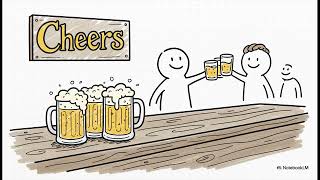
You know, what if I told you that one of the best classrooms for leadership has been right in your living room this whole time? Yeah, today we're gonna dig into this really fascinating and honestly kind of hidden connection between the TV shows we all love and the leaders we could become. All right, let me just throw this out there. Seriously, what can a black and white sitcom from, you know, the 1950s teach you about leading in today's crazy, complex world? Well, the answer? A lot. Way more than you'd probably think. See, the lessons have been there the whole time, just kinda hidden in plain sight. So, let's do this. We're gonna take a little trip back in time, and with some amazing insights from business strategist Adrian Barker, we're gonna see just how our favorite TV shows have secretly been teaching us about being great leaders all along. Okay, first up, we're diving into the era that basically built television as we know it. We're talking the 1950s through the '70s. This is where those foundational ideas of leadership—you know, vision, grit, collaboration—were really being hammered out, one episode at a time. And really, where else could we possibly start but with the absolute icon of the 1950s, the pure, wonderful chaos that is I Love Lucy? I mean, think about it—their whole dynamic is like a perfect leadership case study. You've got Lucy, right? She's all about boundless creativity, taking huge risks, always trying something new. But then you have Ricky, and he's the one who brings that crucial balance. He's got the discipline, the direction, that entrepreneurial grit that actually keeps the whole thing from falling apart, especially, you know, when the chocolate conveyor belt gets a little too fast. So, the big lesson from the Ricardos? It's that you need both. You need that big, creative vision, but you also need structure. It's all about dreaming big and then being ready to improvise with everything you've got when things go sideways. Alright, from a New York apartment to the final frontier! Let's beam ourselves up to the 1960s and land on the bridge of the Starship Enterprise. We're talking original Star Trek. The command crew on the Enterprise is just a masterclass in teamwork. You've got Kirk, right? He's the guy for bold, decisive action—just go! But he's balanced perfectly by Spock, who's all logic, providing that essential check on pure emotion. And of course, you can't forget Uhura, who shows us just how critical clear communication is and the incredible power of representation. The takeaway here is so, so clear: the best leaders, they don't try to do it all themselves. No way! They build a crew with different complementary skills, and they find the courage to explore those new frontiers together. Okay, our journey keeps going, but now we're landing somewhere totally different. We're in a mobile Army surgical hospital in the middle of the Korean War. We've hit the 1970s, and we're watching M*A*S*H. And in this incredibly high-pressure world of M*A*S*H, we get maybe one of the most profound lessons of all: that grace and grit can and absolutely should coexist. They're not opposites; they're partners. I mean, Hawkeye's defiant compassion leads the way, and the whole team just shows us that real strength is about holding on to your humanity, your sense of humor, your empathy—especially when things are at their absolute worst. Alright, let's jump forward again. As we get into the '80s and '90s, you start to see a real shift in what leadership looks like on TV. It becomes less about that top-down, command-and-control style and way more about building connections and a real sense of community. And our first stop in this new era? Well, it's that place where everybody knows your name—we're pulling up a stool at the bar from Cheers! You know, Sam Malone might not look like your typical leader, but his real genius? It was creating this incredible sense of belonging. And the lesson there is— well, it's simple, but it's huge. If you build a community where people actually feel seen and valued, they'll stick around. They'll be loyal. And that whole idea of a chosen family being your team, that really carries into the '90s. So let's grab a coffee and get comfortable on that famous orange couch with the gang from Friends. Friends is just the perfect example of ensemble leadership, right? Nobody was the boss; their strength was in how all their different skills came together. You had Monica bringing the structure, Ross with the expertise, Rachel was all about reinvention, Phoebe brought that fearless authenticity, and Joey? Joey was the loyal heart of the whole group. So, what's the big takeaway? It's crucial: don't try to build a team of clones. The strongest teams are more like a mosaic, made up of all these different skills and personalities that actually fit together and make each other better. Okay, for our final leg of the journey, we are heading straight into the modern workplace, as seen through the eyes of some of the most beloved comedies of the 21st century. Yeah, our last few stops are gonna take us from the cubicles of Dunder Mifflin in The Office, over to the passionate town halls of Pawnee in Parks and Rec, and then all the way across the pond to a British football pitch with Ted Lasso. And here, we get two really powerful but different philosophies. First, you have The Office. Through Michael Scott's, let's call them chaotic but heartfelt methods, we learned that leadership is really, truly about humanity. He showed us that connecting with people, even if it's awkward, matters way more than a job title. And then, on the flip side, you've got Parks and Rec, where Leslie Knope was just this unstoppable force of purpose and positivity, who showed us that you can get an entire community to believe in making things better. And that leads us to the most recent evolution, with Ted Lasso. This show just completely redefined modern leadership. It took the idea of kindness and said, hey, this isn't a weakness, it's not some soft skill. No, it's a core strategy. A powerful, intentional way to build trust, resilience, and yeah, to actually win. So, okay. We've just traveled through 70 years of television. What does it all mean for you right now? Let's pull it all together. When you see it all laid out like this, it really puts the whole journey in perspective, doesn't it? I mean, we went from the raw entrepreneurial grit of the '50s to the power of collaborative teams in the '90s, all the way to the purpose-driven energy of the 2010s and the strategic kindness we're seeing today. It's so clear that our idea of what makes a great leader has been changing and growing, right there on our TV screens. And that really brings us to the big idea behind all of this: leadership lessons are literally everywhere. And ultimately, the kind of leader you turn out to be It's shaped by the stories and the characters that you decide to pay attention to. So I'll just leave you with this one question. After seeing all these different styles from Kirk to Nope to Lasso, what story are you going to let shape your leadership journey?