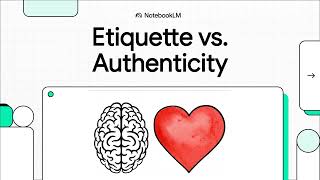
Should professionals share their politics and religion, or keep those private? One approach protects your reputation through broad appeal and risk avoidance. The other builds a passionate niche audience by being boldly yourself. Neither is universally right. It depends whether you want stability or visibility.
Chapters
Alright, let's talk about something I think pretty much everyone has struggled with: how do you present yourself professionally? You've probably felt that tension, that central question of personal branding. Do you play it safe, or do you put your real self out there? Today, we're gonna break down this huge battle between etiquette and authenticity. Yeah, it really all boils down to this, doesn't it? Are you trying to build a brand that's a polished, respected professional, or are you aiming for a passionate, or maybe even a little messy, authentic personality. Look, there's no single right answer here, but the path you choose, it's gonna define your entire strategy. Okay, let's get right into the thick of it. First up, we're gonna look at the two core philosophies for building your public image. So, think of these as two completely different mindsets. On one hand, you've got the "Etiquette First" approach. This is your classic long game. It's all about building trust and avoiding risk by prioritizing respect and stability. But then, the "authenticity-first" approach just flips that whole idea on its head. It argues that you need boldness and transparency to really stand out and build a truly loyal following. First up, let's make the case for etiquette. You know, you can almost think of this philosophy as your brand's insurance policy. It's a really strategic way to protect everything you've worked so hard to build. This quote really gets to the absolute heart of the etiquette argument: Your number one job is to protect your reputation. So from this point of view, controversy? It's not some opportunity. It's a massive threat that can just shatter the trust you've spent years building. So how does this actually work in the real world? Well, the playbook is crystal clear: you protect that reputation above everything else. That means steering clear of those hot-button topics, you know, like politics and religion. And why? Because consistency is the absolute backbone of a brand that people trust. Now, the goal isn't to be silent. It's about being strategic. You can still talk about positive values like kindness and inclusion; you just do it without wading into those political minefields. It's all about long-term stability. But what if playing it safe is actually the biggest risk of all? And that brings us to the case for authenticity. This side argues that today, being real is way more powerful than being perfect. And here it is, the direct challenge to the school of etiquette: audiences today are incredibly savvy. They can spot a sanitized corporate-speak facade from a mile away. This philosophy argues that a true connection doesn't come from a perfectly polished brand, but from seeing the real, actual person behind it all. So the playbook for authenticity is, you guessed it, a whole lot bolder. It's about sharing your true self, even if you know it's going to polarize people. In this world, controversy isn't a risk to be avoided; it's a tool you use to generate attention. The goal isn't to make everybody happy; it's to build a smaller, more passionate tribe of super fans. Because, let's be honest, in a sea of safe, boring voices, sometimes speaking your truth is the only way you're gonna get heard. Okay, so we've seen the two playbooks. Now, let's really put them in the ring together. Let's look at where these two philosophies truly collide on the biggest issues out there: reputation, risk, and, of course, reward. First up, controversy. The etiquette camp sees it as, like, a destructive fire that just burns trust to the ground. It's dangerous. But the authenticity camp? They see it as rocket fuel. It's a powerful and maybe even necessary tool to get noticed in this crazy attention economy we live in, where just being seen is a huge win. Next, how do they think about the audience? This is a total clash between breadth and depth. The etiquette approach? It wants to go wide. It's aiming for broad appeal, trying to be respected by as many people as possible, by not alienating anyone. The authenticity approach is completely different. It's not trying to please the whole world. Nope, it's focused on finding the right people and building a deep, almost unshakable connection with them. So, what about being consistent? For the etiquette camp, this is totally non-negotiable. It is the absolute foundation of a trustworthy, long-term brand. But, the authenticity camp fires right back. They argue that consistency without a real personality is just— Well, it's bland. And in today's market, being bland is pretty much the same thing as being invisible. And finally, the big one: managing risk. The etiquette-first view is super cautious. It sees online outrage as this uncontrollable wildfire and argues that stability is the most important thing for long-term health. But the authenticity advocate, they push back hard. They'd say, "What one person calls reckless, another calls revolutionary." And if you're only worried about what might go wrong, you're never gonna innovate or make a real impact. So, we've heard all the arguments. We've seen the clashes. It's time for the final word from each side as we ask ourselves, what is the true foundation of a brand that really lasts? Okay, the closing argument for Team Etiquette really comes down to one thing: endurance. They'd argued that sure, controversy gives you a quick hit of attention, but the trust you earn through professionalism and respect? That's what builds a brand that can stand the test of time. At the end of the day, trust is the only currency that really matters. And in response, Team Authenticity's closing argument is basically a wake-up call. They're saying that in a world just drowning in content, playing it safe is the same thing as being invisible. It's the bold, the transparent, the real voices that actually cut through all that noise and get remembered. Look, at the end of the day, neither path is without its risks. It's a game of trade-offs. If you go with etiquette, you're shooting for that long-term trust, but you seriously risk being forgettable. If you go with authenticity, you're aiming for that deep, passionate connection, but you absolutely risk alienating a huge chunk of your potential audience. So the question becomes, which currency is more valuable to you? Stability or visibility? And that brings it all right back to you. There's no single right answer here. There's no magic formula. The only question that really matters is, what is your path? Are you gonna build your brand on that unshakable foundation of stability and trust, or are you gonna bet on the magnetic power of unapologetic transparency? The choice is yours.