Business Etiquette with Adrienne Barker
In this comprehensive workshop, Adrienne Barker of Professional Global Etiquette explains why business etiquette is essential for building productive, long‑term relationships with coworkers, clients, suppliers and investors. She outlines practical guidelines for a wide range of professional situations: making effective introductions, projecting the three C’s (confidence, competence, credibility), reducing networking anxiety, handshake technique, and the four levels of conversation. Barker then moves to dining etiquette, covering place‑setting basics, utensil usage, hosting duties, handling spills, dietary restrictions, ordering, paying the bill, and tipping norms. The session continues with digital communication etiquette, detailing proper email structure, use of To/CC/BCC, tone, grammar, attachments, and when to avoid email in favor of face‑to‑face interaction. Cell‑phone etiquette in meetings and public spaces is also covered. Finally, she discusses thank‑you notes, formal letter formats, dress‑code classifications, and the importance of cross‑cultural awareness, urging participants to research local customs, respect hierarchy, and err on the side of conservatism when uncertain. Throughout, Barker emphasizes professionalism, respect, and the tangible business benefits—brand credibility, customer loyalty, employee engagement, and team synergy—that stem from consistent etiquette practice.
Chapters
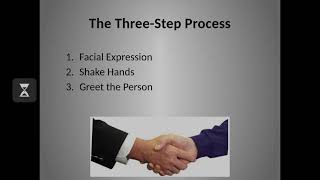
Welcome to the Business Etiquette Workshop. My name is Adrienne Barker with Professional Global Etiquette. Success in any industry relies on relationships, whether with coworkers, clients, suppliers, or investors. When you're well-mannered and considerate in dealing with others, you create engaging, productive, and long-term business relationships. As such, it's important to learn not just the technical side of a business, but how to conduct oneself in the company of others. And that is where business etiquette comes in. I look forward to introducing you, or even reminding you, of business etiquette, as well as providing you guidelines for the practice of business etiquette across different situations. [No speech]Joey Roberts, author of Business Etiquette: Your Questions and Answers, defines etiquette as conventional rules of polite behavior. They are guidelines on how to behave befitting good manners while in the company of other people. They show sensitivity to the needs and feelings of the person or people that you are with. Etiquette covers most aspects of social interactions, including self-presentation, communication, courtesy, and hospitality. Business etiquette in particular covers expectations in the interaction between coworkers the company, their clients, as well as the company and their stakeholders. Etiquette guidelines are many and can be quite complicated. In this workshop, we will focus on basic etiquette guidelines for situations typically found in most business settings. Did you know that etiquette can help businesses improve in the following areas. Branding. Everything we do will reflect on our company and our products. By acting professionally, we send the message that our business is credible and trustworthy. Personalized care may very well be your edge against your competition. Customer care. The best way to show customers that their patronage is valued is to treat them with respect and consideration, and this in turn can inspire customer loyalty and positive feedback. Employee engagement: good manners will help improve morale and confidence between employees and team members. Team synergy: good manners will help establish smooth working relationships within a team which contributes to greater productivity. And as a leader, you want to be the role model to those that you are leading and managing. So business etiquette is important for you to know and to live while you are at work and your employees see and watch you. There are 3 steps to introducing yourself effectively. First of all, make sure that you stand up straight and you relax and you establish eye contact when you first meet someone. Then you state your first and your last name, and depending on the situation, You can also state your affiliation or your position in the company. And when the other person has given their name, repeat it in acknowledgment. And I always ask, "How do you spell your name?" Whether their name is Chris or John or Kelly or Amy, so many names have a different way of spelling it. And even if I know how to spell it, I always ask because it allows me to concentrate on their name and allows me to remember their name. When you're networking, it's not just about presenting yourself. You may also find yourself introducing two strangers to one another. Here are some guidelines to introducing others. First of all, take note of the pecking order. In business, introductions are made based on a person's seniority in a company. This is in regardless of age and gender. When you make an introduction, present a person with a lesser status to the person with the higher status. Example: Caroline Daniels, I would like you to meet President Anthony. Caroline is the head of the public relations department. When you're introducing strangers, you introduce the strangers first. So if you're introducing two persons of equal, equal rank to one another, start with the person that you do not know. That way you can introduce the, to the other person, and that will make the newcomer feel welcome. When you're asking for a business card, really look at it. Take a minute. Make conversation around the card. That will also help you to remember the other person's name, and everyone loves to talk about themselves. If you want to make a good impression, know that you need to project 3 C's. First is confidence. Having a straight but relaxed posture. Hold your head high and steady. Don't slouch or slump. Moving in a natural, unaffected manner. Maintaining eye contact with the people you're talking to. For competence, exhibiting knowledge of your craft, know your way around the agenda, being prepared for the meeting, bring supportive materials to emphasize your points, answer questions in a clear and professional manner, avoiding the use of slang or technical jargon, and asking relevant questions. And of course, credibility, arriving on time, being presentable, well-groomed, mindful of dress codes, and keeping true to your word. That's how you make a first great impression. Meeting people can be anxiety-provoking. The need to impress another person can be a lot of pressure. Here are some ways to minimize nervousness while in a social situation. First of all, be informed. If possible, take the time to research about the people you're going to meet, their work, their values, their preferences. Knowing what is expected from you can prepare you adequately. Nervousness is amplified by going into a situation blind. Oh, practice, practice, practice. Networking is a skill, which means that you could develop it with practice. Practice your introduction in front of a mirror and note what you need to improve. You can also practice with peers. Get feedback from others about the kind of impression you give. Try to meet as many people as you can. The more you do, the easier it gets. I like practicing on an elevator. Learn relaxation techniques. There are many activities that can help relax a nervous person, and these include meditation, self-talk, visualization, breathing, listening to music. Identifying your triggers. If nervousness is a real problem for you, it's recommended that you identify what triggers your nervousness. Is it a lack of confidence? Is it a fear of, of authoritative people? Awareness can help you catch yourself in time and respond accordingly. Believe in what you have to offer. It's easy to get intimidated by how successful or famous the other person is. Remember, they're people just like you. A handshake is a part of many social interactions. It's a way to introduce oneself, to offer congratulations, and even a way to conclude a business deal. A handshake is a gesture of goodwill. Here is a 3-step process to a handshake. First, your facial expression. Start nonverbals that show openness and sincerity. Maintain eye contact and smile. Your handshake gives an impression. If you grab and it's too lax, you send the message that you're hesitant and possibly indecisive. If your grip is too tight, you might come across as too brash, even intimidating. So you go for a grip that's in between. It sends the message that you're confident. For most occasions, 2 or 3 pumps of the hand are appropriate. Longer handshakes can make most people feel uncomfortable. But there are some people who do prefer longer handshakes. If uncertain, go with the flow. Follow the lead of the other person. If you feel that it's time to let go, just relax your hand to signal the other person. And greet the other person. Talk to the person whose hands you're shaking. A simple hello or how do you do, it's great to meet you is appropriate. The real art of conversation is not only to say the right thing at the right time, but to leave unsaid the wrong thing at a tempting moment. It requires sensitivity at this stage of a relationship. The context of the conversation and the comfort level of the person you're talking to depend on it. There are 4 levels of conversation based on the degree and amount of personal disclosure, and they are: Small talk, commonly referred to as the exchange of pleasantries. In this level, you talk only about generic topics, subjects that almost everyone is comfortable discussing: weather, the location you're in, current events— not political. The small talk stage establishes rapport. It makes a person feel at ease with you. It's also a safe and neutral avenue for people to size up one another, explore if it's a conversation or relationship that they'd want to invest in. If the small talk goes well, you can proceed into the next level: fact disclosure. In this stage, you tell the other person some facts about you, such as your job, your area of residence, your interests. This is the getting-to-know stage, and it aims to see if you have something in common with the other person. It's also a signal that you're opening up a little bit to the other person while still staying on neutral topics. If the fact-to-close stage goes well, you can proceed to share viewpoints and opinions—never political, never religion. When you go into the viewpoints and opinions, In this stage of the conversation, you can offer what you think about various topics: new business model, the latest blockbuster, what's happening in the news. It really does help to read and be curious about many things, even entertainment. Sharing a viewpoint and opinions requiring the buffering effect of the first two stages for two reasons. First, you need to build that rapport with another person. Second, sharing viewpoints and opinions opens a person to the scrutiny of others, and this requires that there's some level of safety and trust in a relationship. The controversial and therefore potentially offensive nature of an opinion exists in a range. Make sure that you remain within the safe zone in the early stages of your relationship. That is why I feel politics, especially in this day and age, should be off the table. Personal feelings. The fourth stage is disclosure and acknowledgement of personal feelings. For instance, you could share your excitement about the new project, your worry about your son's upcoming piano recital. Depending on the context and the level of the friendship, you could disclose more personal subjects. This stage requires trust, rapport, even a genuine friendship because of the intimate nature of the subject. Different people have different comfort levels when it comes to disclosing feelings, and there are cases when you need several conversations before they would trust you enough to even open themselves. And in some cases, you never get to this stage. Just make sure to be sensitive and test the other person's readiness before opening an intimate topic. Listening. It is so vital in all stages of the conversation, but especially in the fourth stage. Listen with empathy, understanding, acknowledge what you've heard, and just keep listening. I was never comfortable dining in business It soon came to light that I absolutely needed to get some help. I needed to understand the table. I needed to understand the rules of engagement during dining. It makes for a more casual atmosphere compared to offices and other places, but on the other hand, dining can be very stressful. So let's go to the next slide so I can share some tips with you. Take a minute to look at this slide, and if you would like a copy of this, please let me know. It's so important to understand your place settings. Not everyone understands it. I like to call SLUR solids on the left, liquids on the right. When you're sitting at a networking event, often people make a mistake and they will grab the wrong glass. Let's make sure that that doesn't happen to you. By the way, place settings differ depending on the menu and the formality of the dining event. The more informal you tend your meal to be, the less stressful and less rigid you have to adhere to the rules of a place setting. But let's just say you're eating at a very fancy restaurant and you have cotton placemats, nice I mean cotton napkins. Here are a few basics to remember. Plates are always placed on the left. Your glasses are on the upper right. This guide that I have can help you. Forks are on the left, knives and spoons are on the right. In general, forks are placed on the left of the plate with the exception of the oyster fork, which is placed on the right. If I see an oyster fork, I'm always excited. Work your way inwards with the utensils. The rule for utensils is work inwards towards your plate as the meal progresses. Place settings are organized so that with each new course presented, the guests can use the outermost utensil. For instance, the salad fork could be left before the dinner fork, as a salad comes before the main course. Other countries that may differ. Follow the rules of 3. If you're hosting a dinner, don't clutter the table with too many implements. Set at most 3 of anything— 3 glasses, 3 forks. If more than 3 would be used, then allow the additional implements to come with a new meal. And if you are having a 5 or 6-course meal, please call me at 386-631-4577. I would love to attend. At the dinner table, sticky solutions always find me. I'm the one that will put something in my mouth that doesn't agree with me. What I do, I ask the waiter for a paper napkin and then I discreetly spit the food out. You crumble the napkin, you place it under the side of your plate, and then keep the food you had spit out away from the other's view. Let's just say you accidentally spilled food or drinks on a guest. Don't panic. Apologize sincerely first. Use a cloth napkin and water to gently wipe the spill. You may also ask them to guide them to the restroom. A guest commits a faux pas. If you notice that a colleague is using the wrong utensil, the best way to let them know is by using the right one yourself. Don't correct them, it would just cause embarrassment. Let's just say you've noticed a bug in your food. Ah! Discreetly send it out to the server. You don't have to tell everyone as it might ruin their appetite. You have to be very discreet. Let's say you drop your napkin. Don't pick it up, just let the server know and they will make sure that you have a clean napkin. Now let's just say you have dietary limitations. If you cannot eat a certain type of food or have special needs, don't be shy, tell your host several days before the dinner party. This can help avoid the awkward situations like not being able to eat what was served because of a health issue or religious conviction. Often people say, "I'll find something at the table to eat," but that's not always correct. Let the host know that's the best thing that you could do. Eating out. It was always an issue for me. First of all, I love to eat. I eat very quickly. I love to talk. So I was doomed from the beginning. I needed education on how properly to eat out. So here we're going to look at etiquette guidelines relating to dining and style. Now we're talking about my favorite subject, ordering in a restaurant. First of all, if I say to you, "John, I would love to take you to lunch," that means, "John, I'm paying for lunch." I'm going to take John to a restaurant that will fit my budget, but I know that he will love. I will also be asking John if he has any dietary needs or restrictions, so I know that in advance. I'm going to show my proper manners. And John's going to follow me as the host, so he'll probably wait for me to sit down, probably wait for me to put the napkin on, and wait for me to look and order or instruct him to order first. Always ask your server any questions that you have. Do not make that something that you're worried about. It is okay, and let the server know if you have any dietary guidelines. I'm not a big drinker, but that doesn't mean that I wasn't at one time, could drink a lot, or drink even one or two of a $15 margarita or martini. That may not be something that the host would like to actually have you do, so limit it to one or two glasses. A toast may be in order, so know how to toast. Certain cultures utilize alcoholic beverages and take your cue from others, but don't be the one at the table that has 5 drinks in front of them. Be concerned, be wary of yourself, and that drinking may go to your head. So be careful. Important. I think we all think we know, but then you start drinking 1 and it becomes 2 and then it becomes 3 and then you're in trouble. What I like to do as the host is actually let the server know beforehand that I'm going to be paying the bill, and I give them the credit card. This way I could signal when the meal is over, "Thank you everyone for coming. I'm very glad to get to know each of you," and I could stand up and everyone will know that it's time to leave. And I don't even have to see the bill. When everyone leaves, I go over to the register and I pay. Never fight over a bill though, if someone offers to pay. Tipping is important. I have here the standard is 15%. Most restaurants, 6 or more, will go for 18%, and 20% for excellent service. Be mindful of your server. Look around. If the restaurant's really busy, don't take that into account when you're giving a tip. Make sure that you give a nice tip, thank the server, especially if you're hosting a bigger meal for, with many people. Note that tipping is different all around the world and review the standards for your area. Let's take care of our servers, and if you have a complaint, don't post it on social media, discuss it quietly with the manager and not in front of your guests. Let's take care of all of our servers. Many of us in business, we know how to use our emails, but remember, we have many people that are just starting in business and may not realize it. Also, I understand often with the use of cell phones, it's easy sometimes to hit reply to all, but we need to be more careful. I also know that some people hit reply to all in order to help to advertise their company, but remember, people will remember you for doing something that is not quite email etiquette. So here's just a really basic guideline in addressing an email. You really have to know when to use a to, the CC, which means carbon copy, and the BCC, blind copy— blind carbon copy. So the To field is used when sending a direct message to someone, okay? And you can send the same email to multiple addresses using the To field and do so when your email is meant to be addressed directly to all recipients, as in the case of a manager directing an email to his team. Note, though, that when you use a To field, all email addresses can be viewed by all recipients. So if you put your multiple addresses in the To field and it's okay with everyone, they're all on your team, that is fine. But if you're sending it from people that may not want you to share their email, be very careful. On the CC field, you're sending a copy of the email to the person who is not meant— it's not the direct. So your To would be to me, and then maybe you're carbon copying my boss. And in the BCC, which we really should try to always use, it's when you are sending an email blind to other recipients' email addresses. You're having a party and you want to invite everyone, but you don't want everyone to know. You're having a committee meeting, and in this case, the committee has said, please don't give everyone our email. Just be conscious of you giving someone away their email. Often I'll receive emails and I receive them with a CC and I'll see everyone else's email. Some people may take that and start soliciting to them. Don't be the person that does that either. That's not good business etiquette. But always, always teach a new employee. Make sure that they actually know and understand the rules of email. They may not have learned that in school if they're a new employee. My rule on grammar and acronyms: always stay professional. Never, ever, ever sway from that. Be professional. Don't use acronyms. Review your emails. Don't use LOL. And keep the emojis out of any email. Maintain professionalism at all times. And I'm serious. It's serious. I have made so many mistakes when I was younger and with emails, and here's what I've learned. There are some things that are better done face-to-face rather than through the email system and through the internet. An example of this is delivering negative feedback. You can't keep the tone out of things. Emails, people read it, they're going to read it in their own tone. So don't use technology when a personal approach is much more appropriate and desirable. And always reread your letters. Some statements don't come across well when written. An ironic joke, if people can't see the twinkle in your eye, it ends up sounding insulting. Read everything twice before you send it. And then think security. Do not assume privacy when communicating online. Do not use emails to discuss confidential and speculative information. Think of your recipient's convenience. Since reading from a screen is more difficult than reading from the paper, the structure and layout is very important for an email message. Use short paragraphs, blank lines between each paragraph. When making points, number them or mark each point with a bullet. Also, don't attach lengthy documents in your email. Forcing your client to read a long document through a screen is insensitive, not to mention the time it would cost them to download bulk files. If a hard copy is possible, then send a hard copy instead. And skip it if it's not necessary. Remember that most emails now go into people's cell phone, so before sending a message in the late hours, ask yourself, how will they react to sending a text message? Be careful. And by the way, one other tip: when you're sending an email with an attachment, take the time to name the attachment. Don't just forward attachments with a variety of numbers that are generated by your computer or your system. Take the moment to change it so that they can see exactly what's attached, and then they could save it in their computer. That's professionalism. Oh, hmm. Now let's talk cell phones, do's and don'ts. First of all, a couple things. Obviously, don't take a call in the middle of a business meeting or a conversation with another person. And yes, people are doing that actually all the time. I see it. Now, if you are like expecting an emergency, your, your child is walking to school and you want to make sure they get there, you have another child that's in the hospital, whatever that is, then right from the beginning say, "I apologize, I am gonna have my phone on me because I am expecting an emergency. Thank you." That's all. Don't use your phone for notes. I have been in that situation where I've seen someone and then after I'm like, "You paid no attention." And they said, "No, I was taking notes all along." If you are gonna use your phone for notes, let everyone know. I want you to know that I can multitask and I'm actually gonna be taking notes, but I am listening. That way you kind of avoid everyone thinking that you have no care at all about the company or the meeting. Never talk in intimate settings or places where silence is imperative. I know when I get a call and honestly anywhere, elevator, restaurant, I don't like talking in public. I don't want people necessarily to hear and I don't like when it's done to me, so I wouldn't do it. I was at the gym last week, I do go to the gym, and The woman was just on the bike blabbing away with no speakers, nothing. I could hear both conversations. Absolutely rude. Now, if you have to take a call in public, I try to step out. I try to go to an area where it's quieter so that I could take the call. Now, I don't necessarily agree with keeping business calls within the business hours for someone calling me. I personally will not call you. Outside of business hours unless you have told me that it's okay. But for me, I let people know they can call me. I'm totally fine with that. With my SCORE clients and with my regular clients, I want to be available, but that's me. And always, before you end a call, ask if there are additional questions. It was so lovely calling you, talking with you today. Have I answered all your questions? Great. Okay, so we're going to talk next week? I look forward to it. Have a great day. Expressing appreciation is always a good idea, whether it's for a gift or an act of kindness or business courtesy. You could do this by sending a thank you note. The formality of your thank-you note depends on your relationship with the person you're sending the note to. A thank-you note to a senior who gave you a promotion would definitely be more formal than a thank-you note to a longtime client for hosting your lunch. Formal ones can be written on the company letterhead, and non-formal ones can simply be a handwritten letter on a piece of stationery. A thank-you note need not be a long letter. Most thank-you letters mention your thanks, what you're thanking them for, and what their gesture, gift, or action meant to you or their company. You'll stand out in the crowd by sending a thank-you note. Formal letters. Formal style is recommended for most business correspondence. It shows courtesy, professionalism, knowledge of protocol, and as a rule, use formal style unless invited otherwise or you have already established a relationship with the person you're writing to. And here are some basic rules when composing a formal letter. Stationery: formal letters are written in plain white or shades of white like cream, 8.5 by 11-inch paper. Stationery that bears the company letterhead may also be used. Content: A formal letter usually contains the following sections: sender's full name and address, the addressee's full name and address, the date the letter is sent or assumed to fall into the hands of the receiver, formal greeting, "Dear," plus the formal address, a subject heading regarding job opening, The letter of the body, the formal closure, then would also say "Respectfully yours" or "Sincerely yours." And there are two commonly used layouts for a formal letter: the block and the semi-block. In the block format, all text is aligned to the left margin, and the paragraph is not indented. In the semi-block, all text is aligned to the left margin, but the paragraphs are indented. Both formats are considered appropriate for business correspondence. Formal letters are formal in tone. Words are spelled out. Sentences follow grammatical correct sentence structure. Comments are organized in a clear and concise manner and avoid unnecessary information. Avoid slang at all costs. Oh, so many of us get confused when it comes to interpreting common dress codes. So let's talk about this. Dressy casual, that means your dressed-up version of casual looks. For men, it could be neatly pressed slacks and a sports coat, and for women, slacks but also skirts and dresses. This can be matched with solid color t-shirts, mock turtleneck polo shirt, collared button-down shirt or blouses. Casual means anything goes, but in the business setting, casual is recommended to be interpreted as dressy casual. We should know semi-formal, that means a medium between formal and informal. For men, semi-formal can translate to neatly pressed dress pants, slacks, button shirts and ties. Jackets are optional but preferred. And for ladies, it would mean an evening dress, a dinner dress, knee-length, or some pantsuits. Formal means tuxedos, dark suits and ties for men, or for ladies, it's cocktail to floor-length dresses, nylons, and dress shoes. And we all know what black tie is— men wearing a black tuxedo, women wearing ball gowns. Be careful if you're going to a fundraiser. Let's just say you're going to a political fundraiser. And you love the candidate. Be careful, woman, of how you dress. You want to be careful you're not showing too much cleavage. Often photos will not be taken of you with the candidate if you are showing too much cleavage. That is a hint, and you really want to keep that in mind. Etiquette is heavily influenced by culture, and what may be good manners in one country or to one nation may not be good manners in another. And as most businesses today, we're operating with a global mindset, it pays to always keep international etiquette in mind. Always take the time to research cross-cultural etiquette when dealing with a foreign client or when conducting business in a foreign country. It's best to always be aware of your local etiquette guidelines. Areas you need to look at: religion, dress codes, social hierarchy, the rules on meeting and greeting, the use of titles and forms of address, the exchange of business cards, the valuing of time. Physical space and dealing with embarrassment. And when you're uncertain, you err on the side of what you presume is conservatism. And be observant. Check if people are becoming uncomfortable. Etiquette mishaps in international settings can range from merely embarrassing to potentially insulting to the other person. And when you realize that you committed a faux pas, apologize immediately and ask how you can make up for it. Never want to lose business due to your not understanding international etiquette and protocol. When you're traveling abroad, you definitely need to be prepared. Keep the open mind, read up, and find an expert. There's a lot of information on the internet. You may not find everything you meet— you may need, and you may also not be able to understand a lot of the information. We all have different styles of learning. If you are traveling abroad and need some help, please contact me. I will help navigate the— all the areas of international protocol and etiquette, and I will teach you in a way that you like learning.










