Candid Conversation Host Adrienne Barker, MAS
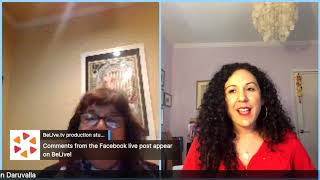
In this candid, informal interview, host Adrienne Barker, MAS, talks with a guest (Speaker B) about her professional journey from a 22‑year hospitality and meeting‑planning career to becoming a certified high‑performance coach and entrepreneur. The conversation covers the launch of her new website BeProductiveCoaching.com, the creation of a free weekly COVID‑19 mental‑health support group (FACE Everything in Rice), and her role on the El Portal council. They discuss personal challenges during the pandemic, including anxiety, family dynamics, teenage social‑media safety, and coping strategies like mindfulness, rest, and structured routines. The guest also shares plans for a free LinkedIn optimization class to help displaced hospitality professionals, and both participants exchange advice on work‑life balance, cooking, and the importance of taking rest days. The dialogue is supportive, reflective, and aimed at providing practical mental‑health and career‑development resources for listeners.
Chapters
I haven't seen you in years. It feels like 3, 4 years. No, 4 or 5.
When? It was before you went to China.
It was before I went to China. And I have to say, so I loved— I love serving on the MPI board. I love the board. But you, you would do—
you were really—
you were so good because I'm getting to know you, right? So I would sit there and I would watch you, and you were consistent. You would listen And then when you had something to say, it was like brilliance would come out of your mouth. So you would, you would just turn to someone and you would say like 2 or 3 sentences. And I was like, okay, I'm blown away. And you were doing that consistently. But were you coaching too? Were you coaching at the time or you were in the event industry?
I was not coaching professionally at the time. I was at that point when I was in the board I think, I'm trying to think if I was still in hospitality or if I had already gone into meeting planning, but either way, you know, I've been coaching for over, what I tell people is I've been coaching for over 20 years because as a leader I was, you know, constantly coaching and mentoring my teams, so You know, it's— I guess it was natural.
It was because I remember you always— I always felt that you were coaching us, you know, in a nice way so that we could be the best leadership board possible.
That was definitely on my mind.
It was a great opportunity. I loved every minute of serving on the board and I learned a lot and I am just so grateful for all the opportunities that I had while serving on the board and being in the event industry. But tell me more about like, so what exactly, so when you say coaching, what does that mean? What does that look like? You were just doing a support group, what is that?
Okay, so what today I was doing, now for COVID-19, what came to me was immediately when this first thing happened and we had to stay home, it came to me that I should start a support group. And I didn't know what that was gonna be like, I've never started a support group, So this was completely something that just came to me. And so I didn't feel I was ready immediately because I was still trying to figure out what was happening, like what was going to be our new normal. And so I waited a good 2 weeks before I decided to move forward with it. And so what really pushed me to move forward with it was basically that now we're having— I was here with my husband 24/7. And I came to realize that we're both handling this completely different. And so I figured, okay, well, if this is happening in our household, how many households are handling this differently, right? So then that's what made me move forward with it. The support group is every Wednesday from 12 to 1 PM, and it's free. It's free to everyone. No, you know, you just have to sign up because I'm trying to keep it safe so that we don't have trolls on it. So you can sign up on Eventbrite for it. It's called FACE Everything in Rice. And if you take the letters of the acronym, it's really fear. And so it's a support group for mental health and to help us with our worry, our fear, our anxieties that we're all coping with during this time. And it's been great. We were, we had our third one this week today, and it was every week we've had repeat people. Actually, Gilbert has been to two of my sessions. So Gilbert from MPI, he's attended two weeks in a row, and I've had just people from Texas, Miami.
Wow.
Fort Lauderdale. Yeah, it's, it's been great. The maximum right now of attendees has been 7, but it's been great and I have it open so that we can, you know, be as many as possible. So yeah, that's what I did this morning. It has nothing to do really with the type of coaching that I've been practicing, but as a coach we all, you know, my coaching is focused on high-performance coaching with professionals and leadership because that's always been my strength. And in the last 2 years, I've niched out into helping individuals with career strategy and helping them transition their careers into the next venture, whatever that is, whether it's a promotion or a completely new transition into a different industry. And so actually I'm launching my website today. So this is fun.
Oh really?
Yeah. So my new website, I had a website, um, but my new website is launching today. It's live now at beproductivecoaching.com. Ooh, I love it. Thank you. So Be Productive Coaching, the website that was on there before was something that I just put together quickly in 2014 when I first got certified as a coach. Um, but at that time I didn't have a niche. And so it didn't really speak to exactly what I'm doing today. And that's one of the reasons why I wanted to rebrand. I have a new logo, I have new colors, and I have a new website.
I, you know, I have to say, you know, I wrote a book on what, you know, being in the business and consistently I was told that nobody liked me. Nobody wanted to work with me. Up through actually even last year. And actually, after my father passed away, actually, my dad's secretary would continue to say things like that. My team can't work with you. Nobody likes you. But I wish if I could go back in my life, and when this started, I would have— I know a coach would have been the thing that would have been— would have helped me. And yet, back in, you know, probably talking about Back around, it was— it got really bad around 2000 to 2006. It felt like it was the toughest because then I, I got a chance to go to Celebration, Florida and kind of get away from it, though it still continued, um, verbally on the phone. But I, I, you know, in my mind, I never really— we didn't have coaches back then, so I have to say, and I'm just kind of doing a shout out, because when you are going through something like that and you have a family member who is just consistently saying words to you that are just so hurtful like that, because you can't reply. There's nothing, you know. I remember saying the first time, I said, yeah, they do like me. And then it was like, no, they don't, they're just telling you they like you. And it was like, then I'm like, not gonna go around saying, do you like me? Do you respect me? It was weird, right? And so, but I would say to people now, when you're dealing with something like this, that you really— a coach is so important to be. And I, and I feel like I would have, I would have been able to stay in the family business and, and, and had the reap the awards that would have been coming from staying in the family business instead of my having to say I can't take it anymore and I'm not gonna be treated like this and, and walk away.
You know, and I remember I think we roommate at some conference or something, um, one time And I remember you talking to me a little bit about what you were going through. And that was before I officially became a coach. But prior to me getting certified, I didn't know what a coach was either. So what led to that was that in 2013, actually 2012, I was asked to I was recruited by a hotel company to be the director of sales and marketing at their hotel. And so, you know, I had a great reputation in the industry and they came after me, and it wasn't a hotel that I was used to because most— I spent most of my time in luxury and in resorts, and this was not neither. So for me to go there, it meant that I was going to try something new, but I was willing to do that because I was at a place where I had been for 7 years. I was no longer challenged, and although I was very well respected with my old company and I had a great corner office, everything was great, I wasn't challenged. And for me, that was enough to get me to accept this opportunity. And so I accepted that opportunity. They gave me a great salary and I was making great money. Soon enough, I knew exactly why they agreed to give me what they gave me. I had to— that's when the entrepreneur in me completely came out because I needed to become really resourceful. I had no resources or support, and so I was there for a year, and it was a very tough year, and it was my last hotel. And when we, when we parted ways, because we parted ways, I I was just like, you know, I don't think I could do this again. I don't think I want to do this again. Like, been there, done that. Every hotel's the same. I think I've outgrown this. And, you know, I had spent— at that time, I was— it was 22 years that I spent in hospitality. And I grew up in the industry. My dad was a general manager for hotels. So you know, really it was like 30 years that I had been in the industry, right? And so, yeah, and so, you know, between living with my dad and then, you know, in hotels and then working for 22 years. And so, you know, I, I had the opportunity to take the last quarter of the year, um, that year to really think about what I wanted to do. And at that point is when Something led to another, someone was recommended to me to plan their meeting, and I told them that I was independent and that I would be more than happy to be their meeting planner. And that came really like just organically. I didn't, I didn't have a company yet or anything, but that's how I decided to go into the entrepreneur world, and that's when I became a meeting planner. And then, you know, when I do something, I do it 100% or 150%. And so that's when I decided to sign up. I had time and I decided to sign up to become a CMM, so Certified Meeting Professional. And I went to Cancun, Mexico, and I got my CMM. And I think that's when I went, got on the board with MPI. And so I got on the board with MPI and I started to promote myself as a meeting planner to my old clients. And so that's where Be Productive Meetings and Events was born. And it was going really well. I was blessed that I had clients that I worked with when I was in hotels that gave me opportunities, but I still wasn't fulfilled and I didn't know why. And so I started to do some work inside And I thought, well, maybe a trainer, maybe I could become a trainer because, you know, I loved mentoring, but I didn't know what coaching was at the time. So I thought training was the only avenue that I knew about. And so I started to look into it and then I went to— I did Tony Robbins UPW, Unleash the Power Within, and I did that and they give you a free coaching session if you want to sign up for it. So I signed up for the free coaching session and when they called me, I had my free coaching session and then I decided to hire a coach through them because I thought, you know, I'm on my own now, I have my company, I could use some guidance and some accountability and at the same time maybe this person can help me figure out why I'm not fulfilled with the meeting planning and what else I can do. And so I hired a coach and they paired me with a wonderful coach and we started to work first on my business, on Be Productive Meetings, because that's really what was where I was getting, you know, paid from. I was also doing some consulting with hotels and so between the meeting planning and the consulting work that I was doing with hotels, that was my bread and butter. And so in working with the coach after a few months and feeling comfortable, I said, you know, I have, I have this curiosity for coaching. And, um, and he's like, well, what do you mean? And so I explained how I was curious for to become a coach. And, um, and we spoke about it. And to make the long story short, he's the one that helped me get certified. And so, and that was in 2014. So I got certified in 2014 as a coach. But at the time, I was afraid to tell anyone. So I was forced to tell people once I need— you need to do hours in order to get certified. And so I needed to do— I did some free coaching and I reached out to some people that I knew and, you know, I coached them and I was like, wow, this— I'm really liking this, but how do I transition from being a meeting planner and hospitality to now being a coach? And, and that took me a while, so I didn't really transition until 2017, 2018.
Oh wow.
And when I'm— that's when I made the decision to go full-time with the coaching. And so, and still today, I'm gonna be launching the website today, but I have to introduce myself to all of my friends and family on Facebook because not everybody knows what I've been doing. So it's, it's been a journey because I didn't know what a coach did ever. Now there's coaches everywhere, you know, but, you know, I still hire coaches because I think that, you know, just because I'm a coach doesn't mean that I don't need to have one. I think that at different times in your life, you You can utilize different types of coaches depending on what's going on.
I love that. As I said, I really think that that is so important. And I hear that a lot, that coaches have coaches. But you're right, it's easy for someone to say, oh, it's just a line of baloney and who needs a coach? But I know it would have changed my whole life. I feel like it would have made such a difference. For me. And I probably still really, with, with having to deal with a lot of what I was told, which by the way, so when you went to— did you go to Cancun with MPI?
So when I went to Cancun, it was to do my CMM because back then, um, the CMM program is a little bit different. It's changed. Um, I think we were like the last class or the, the class before the last class to do it the way it was, like a really heavy process. You had to be accepted into it, you had to be 10 years or more in the industry, and so they would pick a location, a remote location, and you would have to do— you were there for one week basically studying, it was a class, and then taking your test, and then you flew back and there were more— you had to write an essay, do a business plan and everything. So I went to Cancun for that. I went to— that's actually where I met Marianne Schmithofer, uh, because she was doing her CMM at the same time with me.
Oh wow, I was just trying to remember her name. She was really lovely. You guys made a great team together.
We did. Yeah, yeah, we still work together. We have, um, we have one program that she helps me with every July, um, and so yeah, so I loved Marianne and she actually lives less than 5 minutes away from my house. Oh, that's—
she's lovely.
Yeah, but we met in Cancun.
Oh, that's so funny. I love that. All right, I want to go back to the support group. First of all, is it personal to ask you, like you had mentioned, your husband and you, and you're kind of looking at it differently with what's taking, uh, place? And, and I'll tell you that right now, like, I don't think my husband is, is following the, the rule. Like, I know he went to a store today, okay? When he goes to work, I make him— I stop him. He's gotta, um, you know, strip down and do all this stuff and put his clothes. But he does understand. Like, he went to— I don't even know where he went today. Called him and something about a battery, so he must have been in a place. But he— I don't see that he changes clothes or have done anything to keep us safe. And so I'm like, I'm not sure if he really understands that he needs to really consistently keep us safe. That would be an issue. That, that's kind of like thinking differently, right?
Absolutely. Yeah. So here's the thing, um, we're all different, we're all individuals, um, we grew up differently, we have different belief systems, we deal with things differently. And so during these times of uncertainty and crisis, you tend to see the differences a lot because of the different behaviors or the lack of, or, you know, in my case, it's— I mean, we're both very cautious, but in my case, it was that my husband has some anxiety, and so he has been glued to the television and to the news and watching everything. And so especially at the beginning, at the beginning it was, you know, he— it took me a while to realize the first week or so we were bickering. It's like anything that we were, you know, trying to communicate with each other, he had a, you know, a short temper and I wasn't responding correctly. And so we weren't really getting along. And I had to step back. So the coach, the coach in me kicked in and I stepped back and I said, okay, what's going on? Because this is like every day. So what's happening? And so I observed the situation from the outside and I realized that his anxiety levels were kicked, were like, you know, up and that he was reacting. It wasn't him, it was his anxiety that was reacting. And so, you know, one of the symptoms of anxiety is that you just, you know, you lose your temper very quickly. And so when I realized that, I said, okay, well then what could I do to help this situation? And so that meant that I needed to shift and become more compassionate and that I needed to approach him differently and speak differently and spend time with him and maybe tell him, let's watch a movie and so that he's not watching TV and watching the media and watching the news. So it really took from me shifting in order for that shift for both of us to happen. And so then when I started to be more compassionate and spend time with him, he then started to not react the way he was reacting, and so our communication became a lot better. And so, you know, in your case, yeah, your husband is, you know, probably— it's not that he's not taking it seriously, it's just that he is handling it the way he knows how to, and you would handle it differently. So you would take off your clothes, go shower, do, you know, all these things, whereas for him, maybe that's not as important, but it doesn't mean that he's not taking it seriously. It's just that he's handling it the way he knows how to.
You're right. I wrote to you. I remember writing to you to say— I, I— and you said to me, you said, you're, you're okay, your husband has anxiety and he's watching TV. And I was like, me too. Now, now I just feel tired from Ari. I just feel this sense of like exhaustion. Like, I feel like, I feel like if I don't do the things I need to do during the day. Like, I'm taking tangible things out of Harvard University, a free class on museums, so I can, you know, understand my dad's museum better. Or now it will be launching the Four Children. So, you know, I'm doing that, and I try to every day, you know, keep up and doing the conversations and, you know, doing my social media and, and talking to people about masks and protection and doing all of that. But I am actually, the last few days I feel— and if I say I feel tired, maybe that is a little, little down, a little bit like I'm not sure what's going on. I'm concerned, you know, is everything going to go back to— are we going to open up and I'll be just too tired to open up? And, and I don't give myself a chance to just— like, if I start watching TV, I feel guilty, so I'll watch it at nighttime. But then I want to see what Chris Cuomo's doing on CNN, and so I'm like I want to watch the news too, so I feel like— or I want to read my Facebook news messages. And so I actually think I'm going through— I think I'm going to be on your support group because I feel like I am tired.
So here's the thing, we're all experiencing what you're experiencing, um, and that's me included. So, you know, and this is what happens when there's uncertainty. Like, our lives are not the same. So I'll give you an example. This, um, so Easter weekend, you know, we, we had a great weekend. It was wonderful. But then I found out that my grandfather and his wife both tested positive for COVID-19. And so even though I tend to handle things pretty well, You know, my subconscious, subconsciously, that news has affected me. And so, you know, I don't worry, and I go to, you know, I'm a very, I'm a person of faith, so I go to prayer and I meditate and I ask, I'm not shy to ask for prayers, and I've done all of that. And so all of that helps me. However, I noticed that, so Monday, Sunday night, Sunday night, I had a terrible night's sleep. I mean, if I slept 2 hours, that was a lot. I mean, it was crazy. So, and that normally doesn't happen. Now I have to say that since this started, COVID-19, I have not been sleeping well. Like it's, it hasn't been the same. So Monday I woke up and I decided to wake up at the same time I did. I watched on Face— uh, on Facebook. I watched a Mass, I prayed, I meditated, I did my yoga in the morning, and I did everything. But by the end, like by 4 o'clock, my brain was not working because I didn't have any sleep, right? And so at that point, I decided to like log off. And, you know, I might as— I spent some time with my husband. We watched a movie or something to unwind and really, you know, get things out of my mind. And then I went to sleep at about maybe 11 or midnight after watching the movie. But yesterday, Adrian, I didn't wake up till 3 PM in the afternoon.
Wow.
Okay, I went to sleep around midnight. I didn't wake up till 3 PM. Now I woke up at around 8 o'clock in the morning, and I just— my body, I couldn't get it out of bed. So I decided, okay, I'm gonna sleep in. And then around, I think, 11, my husband came in and said, are you feeling okay? And I said, I just feel— I don't know, I'm like exhausted. He's like, okay, sleep, sleep. So I— that was the— I could— I didn't remember anything else until 3 o'clock that I like was dreaming about the things that I needed to do. And then I was like and I woke up. And so at first I started to feel guilty. I was just like, oh my God, I've got so much that I have to do, but it's 3 o'clock. And my husband's like, your body needed it. That's what you needed. And so, and he's right. And that's what I would tell my clients, you know, we need to listen. Um, somebody brought that up in our session last week at our support session, is she's been listening to her body. And I said, absolutely, we have to listen to our bodies. And we have to, you know, if we're tired, then we just take it easy because there's a lot that our brains and our hearts are handling right now. So we need to listen to our bodies and really give ourselves permission to slack off, to rest, and to do what we feel is needed. You know, my company's called Be Productive Coaching And before that it was Be Productive Meetings. And it's always be productive because that's what I'm all about. I wake up and, okay, what could I do to be productive today? But what I learned in the 7 years that I've had my companies is that in order for me to be productive, I have to take care of myself. So that means listening to my body, listening to how I feel. So, The fact that you're saying that you are tired, it's normal because I think that we're all feeling that.
Oh yeah, thank you for sharing that story. I feel like, I feel like I could, I could, I could do that because you're right, because it like when I go to sleep at night and I practice gratitude and then I think of all the things that I've done so I could feel accomplished, and yet that I, I do need to take a break from that feeling that I I have to feel accomplished or that I did something that— yeah. Oh my gosh, thank you. I'm going to go on. Right. That is really— I would really enjoy the support group. That's— and I don't know how the kids are doing it. Oh, Mari, so last night I am— so I got upset last night at one of my daughter's friends on Instagram, and I'm normally not like that. And I kind of, you know, she had put something about my daughter and I right away was like on the attack, and that is so not me. And, you know, kids these days aren't very respectful. And, uh, but that also just kind of like, it just made me feel, feel sad, like that I, I just didn't keep my cool like I should have. But the phone, this Instagram, and, and how these kids can just talk to each other and say things and, and I'm glad I'm home with my daughter, and that's the thing. And I— but I also will have to say, I see a lot of Alana— my daughter's Alana— a lot of her friends are home now during the pandemic with no— both parents are working, and they're at the age of 14 and 15, so they're just chatting away with boys from all over that they think are boys and having belief. And it's, and it's, it's, it's so creepy, and it's scaring me. And that's another thing that's like driving me a little depression, like I don't know how to help them. And 'Cause you could tell them a million times, you know, you don't know who you're talking to. And then sure enough, they continue.
Mm-hmm. I mean, I don't have children, but I could tell you that I would, I mean, I have a sister that's 13 years younger than I, and I moved from New York to Miami just so that I could be here for her when she was a teenager. And because I know how it was when I was a teenager, and so, you know, I didn't want— I was— I guess I didn't want her to make the same mistakes that I made, right? And this is before social media, so, you know, I would go through her book bag. I would like, you know, research things. Like, just— she had no privacy with me because I wanted to know what she was up to, you know. That's like you checking her Instagram because you want to know what she's up to, you know. So I think that's normal, you know, like I think that that fear— now social media, we know, has, you know, just taken things to a whole different level. And, you know, and you are her mom, and until she is under your roof, you have every right to to worry. And I mean, you'll never stop worrying because my mom still worries for me and I'm 43, going on 43. Um, but you have every right to check, check it. And you know, someone in our support group, um, talked about her son, and he— she's got a 15-year-old, and, um, how she has to really manage the time that he has on his, on his phone. So she's taking his phone away and, you know, um you're not alone in that. You know, it's, it's, it is a tough time. And if these kids don't have their parents at home, they're not being supervised, um, her friends or, you know. But guess what? She's being supervised.
So I actually have it on my phone. I don't, I don't have to take her phone. I have her accounts on my phone.
Oh good. Yeah. And you just have to, you know, I think at that age You just have to speak to her like an adult and explain, hey, listen, this is what could happen. And, you know, this person could pretend to be a boy, and, you know, it's— and talk about the realities of what happens, you know, because you're doing it for her own good. She won't understand it now. I mean, I'm sure you remember your parents saying, 'You'll remember this when you grow older,' you know. Yeah, we all have to make our mistakes. We're all going to make our own mistakes. But if you can help her by, um, I guess communication, because it's like with any relationship, communicating. Um, and if she gets mad, she gets mad. So what? She'll get over it.
Yeah, and she would— a lot of my daughter thought that I was the best because I am actually like kind of fighting with her friend who Then I found out was 15 and pregnant. So I was like, oh boy, um, you know, that's so—
that's—
and, and that even, like, oh my God, like, I thought that was kind of over, young girls getting pregnant, because it seems, you know, nowadays— I was 21 when I had my first child, but I see more, more women wanting to wait till they're 30, 35, 40, like, waiting till their life. So 15 is like a baby, you know.
I—
that just seems crazy. And so, but anyways, I, I lost my control. I apologize. Um, it did depress me though. I feel like I now I'm questioning myself. And yeah, I feel like in the dumpster today. Dumpster Adrian.
No, I mean, I think we're all on edge, right? And so we're all on edge. There's so much going on. There's so many uncertainties. We don't know what's going to happen, and that's going to push us over a little bit. And, and not— we're not— every day we're going to feel differently. I mean, yesterday I felt after I woke up at 3 o'clock, I was groggy. I was, I couldn't think. I was just, I, we got new phones because we switched, um, to Xfinity, um, mobile because I'm trying to cut back on bills to try to save some money. And, um, so first of all, I had separation anxiety because I've had T-Mobile for like, I don't know, 10 years and I've never ever been tied to any type of anything, and this is the first time that I'm actually like— I had separation anxiety literally yesterday when I was disconnecting my T-Mobile and moving it over to Xfinity.
Funny.
Yeah, and I'm pretty sure that that's because of everything else. It has nothing to do with T-Mobile as a company, it's just everything else, right? Um, so That's the only thing I did yesterday, and then I, I checked some things on my new website, and that was it. But I gave myself permission to just, you know, okay, today I feel foggy. And then this morning I did my yoga, I felt great, I woke up early, I picked my word for the day, and my word for the day is energetic. And I feel energetic today, you know, but I don't know how I'm going to feel tomorrow, so I think that that's okay.
Thank you. I really needed to hear that. You really— thank you for helping me. I hope whoever's listening is also helped because it is— you need that approval. And, and it's— and I don't know if we're coming to the end of the quarantine or if we're still in the middle. And so I think that you're right, like, we, we want to know, we plan our lives, and so the uncertainty is definitely— at the time, what— like, so you're in Miami. Wait, where are you exactly?
Are you in So I'm in, um, it's called El Portal. El Portal. El Portal is E-L.
You're a commissioner or on the council?
Council, yeah.
Oh my God, good for you! I think that's amazing. You must take such good care of your residents. I think that's great.
I try. I only laugh because This is— I've learned so much. I just— let's just leave it that way. I've learned so much, and you can't make everybody happy. So, but yes, um, I've, uh, been on the commission. This is my second term. Nice. It's going to, um, so it's, uh, I'm going on my fourth year in November. It's two-year terms, uh, so I'm up for election again in November, and You know, it's been quite interesting coming from the private sector over to— I've never worked in government, I've never, you know, been in government, and coming from the private sector into public office has been quite interesting. It's been a huge learning curve. I understand a lot of things that I didn't understand before. You know, I did it not because I— I never wanted to be a politician. That's not I used to actually joke around and say, because you know how I am, I say it how it is. I'm very straightforward. And so I used to joke around and say, well, I don't play politics. I don't play politics. And I used to say that for 22 years of my career. Right. Well, little did I know In 2016, I would be running for office. So, and, you know, I did it because I was very, I was a very engaged citizen, resident in the community, and I loved my community. And, you know, I saw some things that were happening on the council that I didn't quite agree with. And I thought, you know, and the way that it works is that if someone, for instance, let's say that I decide to, you know, continue and run for office in November, if there's no opposition, then I just get on the council and I don't need to campaign or anything. And so at that time, there was someone like that that was going to come back into the council without having to campaign because he did not have any opposition. And I didn't think that, I thought he needed to work harder. And I thought, you know, so I put in my name at the last minute and I said, you know, if he's gonna come back, he needs to work for it and work for it. And then I won. And so it really, I didn't have a plan, you know, I work on my goals annually, and that was not one of my goals. So it just happened, and I think it was meant to be, and I'm glad that it did happen, and I'm glad that it's— that I've had this opportunity. I've never taken it for granted, and, you know, and I do— back to what your comment was— I try to do the best for my community, and whether or not sometimes it's not something I would do personally, you know, I look at the bigger picture because I'm serving, you know, a larger audience than just my household. So it's taught me a lot and yes, it's a small community, so it's not like being in a big city or town. You know, we only have like 600, 600 homes or something like that.
Nice.
Yeah, it's a really small community. But we have, especially in the last few years, we have new development coming along. So for the first time ever, and so, you know, we are facing some challenges and some situations. That a normal, a larger city would face. So, you know, just because we're small doesn't mean that we're just, we don't do anything, you know? So there's a lot that's being done and I'm proud to be a part of it and I'm proud to be a part of the El Portal history.
I love it. So I should be calling you councilwoman, right? You're, that's, and then do you have a mayor? Is there, are you, do you have a mayor?
Yes, we are.
Does the mayor win on votes, or does the mayor run separately, or does the mayor run with the other council?
So we have 5 seats, and each seat, um, has to run separately. So as a council person, you choose what seat you want to run for, and then the mayor chooses to run for mayor.
That's so interesting. You know, um, what was it? Oh, Dania Beach is different. Dania Beach The council people, they run, and then the one that gets the most votes becomes mayor and then vice mayor, and then they take their seats. Did you know that?
So that's common. Miami Shores, which is our neighbor here, they do that also. So whoever gets the highest votes during the election gets to be mayor. And then, uh, yeah. And then, uh, I think vice mayor goes the same way. So with us, we pick our vice mayor during our first meeting. So, um, right after election, we come to our first meeting. And then during that meeting, if someone wants to be the vice mayor, they raise their hand and they tell us why. And then we vote, we make a vote. The commission, the council votes for it.
That is so interesting. And then, so now right now in your community, are you, um, do you have to wear masks? What rules do you have in place now? Are you following all of South Florida?
So we follow Miami-Dade, um, and so everything that's being done by Miami-Dade is what we follow. Um, yes, we do have to wear masks when we're outdoors and when we're, you know, shopping, et cetera. Yes.
Okay, very interesting. We're in Volusia County. They haven't made a decision yet on that. So when you go out, it's not, you know, I would wear a mask only because I'm, I just would never want to ever. Oh my God. That's enough stress right there. The thought that you could be a carrier is so scary. And what was, there was a word that the Governor Cuomo had said, and I was like, oh my gosh, like a share. I don't know what it was, but it just reminded me. 'Cause I used to watch all of the scary movies. So I watched all of the Night of the Living Dead and all the zombie movies and shows. So to me, I'm like, it kind of feels like a little bit of a zombie attack, apocalyptic, you know, it's like you can either be the person. So whatever, I'm like, I'm gonna cover. So I bought some masks for all of us. But I'm surprised how many people I see are not wearing a mask. And when you walk beside someone, I'm always like, I don't know, I just, I'll get out of the way and I'll just try to make sure that, you know, I need to really measure 6 feet because 6 feet is, you know, it's a large person. A tall person is 6 feet. So when I think of that, I— go ahead.
Yeah, so we went out. We haven't— we've gone out, um, I've gone out once since this whole happened. Since March 16th, I've only gone out once shopping. Went to Costco and Publix and then My husband went out twice. So he went out really quickly because I needed something urgently and he went out for us because he didn't want me to go. And then the second time we went together and we went to Costco and we had our mask and we had our gloves and everything. And it was surreal. It was, I felt dirty. I felt, I was concerned because at that time not everybody was wearing masks and people weren't keeping 6 feet. Like, they were like walking right next to me and I was just like, why are you walking next to me? And it was just like— and I didn't know if to like grab something with a clean hand or keep my glove on. Like, I was confused and I was just like, oh my god, this is so stressful. Stressful. So we got back after— I mean, it took us, you know, we had to wait in line at Costco, then we were there, then, you know, the whole— what everybody's having to do. And we actually went to Publix because we didn't— Costco didn't have toilet paper. And so we went to two different Publixes that didn't have toilet paper. So, and we still had toilet paper because I buy at Costco in bulk. So I I had toilet paper from before this whole thing came about, thankfully, and we had plenty. It's only 2 of us. So my husband bought at Publix some wipes. He's like, well, you know, we can't find toilet paper, at least we have these wipes. Exactly. But the whole process was just— it's just, yeah, it's just not, you know, it's not anything that we would have ever imagined. And, you know, I don't watch those type of movies, but my husband does. And he made me watch, like, the first or second week, he made me watch this movie with, um, oh my God, it was— it's a good movie, but it's about, um, I think he was a scientist and, um, they had to leave New York because of the same thing. There was like this um, and they would become zombies at night. They could only come out at night. So he, during the day, he would go out and get his food and get everything. Oh, it was with Will Smith.
Yeah, I know what you're talking about. Yep, yep.
So he made me watch that movie and I'm like, no, why are you making me watch this? And so I watched the movie and then we went shopping after. So when we went shopping, all I could think of was that damn movie.
It's like, that is so true. That is so true. You know that? Yeah, the thing that, the thing that is hard for me is I'm not a chef. I'm not a cook. I am the world's worst cook. So that every— I just put a chicken pot pie in that I— we got at Publix because I had to go shopping again because I'm— I just not— I don't even like the kitchen. I could really have this whole area closed up. I don't love being in the kitchen. I don't like the work. I, I don't like cooking. I don't like planning. I just— and so, and I'm sure I'm not the only one, though I could be, but I think that that really adds another level of stress because every single night you got to figure out what you're gonna eat. And, you know, going out is not so easy anymore. Obviously there's places that will deliver, but even then I'm still nervous with that. So I— we went to, uh, we went to Publix. I was saying I don't understand why the man that's making the sushi doesn't wear a mask because he's like right over the sushi.
He should have a mask on.
I know, and it doesn't make sense. I should call just to ask the question. I, I think to myself, I probably— we probably won't be able to eat sushi for like months now just because I thought Publix was requiring all of their employees to wear masks. I was there yesterday morning, he was not wearing a mask, and I was there like 2 weeks ago And that was before the mask, but Volusia County has not said. But either way, he's literally like that. He's what, like 12, 14 inches from the sushi being made?
Yeah. No, he should definitely— You should call them. And you should tell them.
I will call. I will call. And I'll send a little email. I'll send a little message on this, what happened. But it just adds a little stress. You know what? I made a pea soup that wasn't that great. It didn't even look that good either. Actually, kind of both. It didn't taste— it's— yeah, my— and Alan's so sweet, he'll be like, oh no, don't throw it out, I love it. But then I'm like, it's there for like a week and I have no choice but now to throw it out. And my freezer's filled. But I don't know, it is— it's not so easy. So it's another add when you're not a great chef. You both cook together? How do you guys work at it?
So I mean, we, we both like to cook. Um, him, he likes to cook a lot more than I do.
Nice. I love—
and we were both foodies and we love to eat. So, you know, because we— I've been working from home for 7 years, you know, I'm used to eating all my meals here, here. And, you know, we would order out only once in a blue moon before. We weren't never really, you know, takeout people. So, you know, we've been— I've been playing— we've been actually having fun with the kitchen. So like we've been cooking things that we never cooked before, and I mean, we just follow recipes. So, you know, and then we put in our own little twist with whatever, you know, flavor we want. But yeah, we had this wonderful— I'm gluten-free and my husband is dairy, he's lactose, so at home we're both gluten-free gluten-free and dairy-free. So we wanted to have a chicken Alfredo, and so we made it from scratch and we used coconut milk and we had the chicken and we had some gluten-free noodles here. So we had— that's what we had for dinner last night and we had it for lunch today. So it was good. Oh, it was delicious. Yeah.
So that's nice.
Yeah, we We've been having fun with the eating and we know we cook enough so that we can have it. We're not cooking every single meal. We have left—
Oh, that's, yes, that's brilliant. So eating the leftovers, you cook enough so you can have that. Yeah, maybe that's what I really need to do is make sure that— Yeah, good idea. Good idea.
You know, we cook and I mean, sometimes we have 2 meals out of the whatever we cook or we have 3 meals. Um, and, and we try to have like 2 or 3 different options in the refrigerator already so that we can pick and decide what we're gonna eat so it doesn't feel like we're eating the same thing every day.
That is really smart. Yeah, Lana, like, all of a sudden she doesn't want hamburger, she doesn't want meat. I don't want pork now because reading all the pork news kind of makes me freaked out. And, uh, and when you— yeah, it's just the best. I love talking to you. You look beautiful. I hope to get a chance to come down to South Florida and and see you. I think, I think my dad, um, so my parents are— have a beautiful mausoleum in Hollywood. Okay, so they were nervous about being buried, so we got to go for the unveiling of my father's, which we've already passed, but we'll go. So I will be down there once this is over and we can— we figure out the day. And so I would love to connect with you, and thank you. And I'm gonna definitely— so it's okay, so I'm gonna find your— is it— are you okay if I— when I find an Eventbrite your, um, support group that—
can I— may I share it? If you go to— share it, absolutely. So go— if you go to my Facebook for Be Productive Coaching, so, okay, facebook.com/BeProductiveCoaching, um, on my Be Productive Coaching for Facebook, you'll see the link to Eventbrite.
Excellent. I'll find it.
Yeah, I've been promoting it there, and I've also been promoting it on Instagram. Um, so both of those have it.
And if anyone is doing any, anything for children, I think it would be really good to— I haven't seen that coming through my feed, but I think if there's someone that is doing something for teenagers, that 13 to 17, good age, amazing too.
So if you happen to know anyone, please, if I hear of anything, um, because I do belong to several, um groups of coaches. And so I'll look to see if anyone on that, um, in those groups that I belong to, um, is having anything for those— that age range.
Yeah, thank you. I think that's really important. All right, I'd love talking to you. Thank you so much. Thank you, thank you, thank you.
You're welcome. Thank you for having me. Oh, and before I forget, I am going to start a, um, a free LinkedIn class And it's gonna be a little challenge, so it'll be probably 3 days, and it'll— I'll teach you on how to update your LinkedIn so that you can come up in searches for, you know, if someone's looking for professionals like you. And, and then I'll make sure that you have time to update it, and then I'll come back the next day stay and give you feedback on your LinkedIn. So it's going to be a free class that I want to do. There's a lot of people, especially in the hospitality industry, that unfortunately have been laid off or furloughed. And so I want to do as much as possible to give back. And, you know, a lot of people don't know how to update their LinkedIn. And so I figured that would be something great to do at this time. And so I'll, I'll send it to you when I decide to launch it. And so that you have it and then you can share it and it's open to anybody.
That's awesome. It's actually, so I have been getting some consulting jobs in the industry from a few larger companies because I, because they say they find my LinkedIn and I do write articles. So I try to keep myself together. I'd love for someone to actually look at it and see, and I still, there's so much to learn. I don't, You know, I don't think, oh my gosh, but it does work. And then also Upwork, which is great program too. So I've been getting some business through Upwork. So I try to do that too, because so I just keep, keep my, you know, my fingers because, and I score mentor. So I do, I'm a certified score mentor, and then the marketing for Flagler Volusia. So I love that. And I, and I love helping someone with their businesses. We don't, we're not a coach, we're just literally a mentor. So we listen, we help guide, we don't do homework, you know, but, but that keeps me busy too. So I do love all of that, but I think I need to add in a day of like quietness and just not consistently trying to, um, because even on the weekends when you're home, right, you're still working on something. And, and yeah, I need a break. I do. I need like a day break.
I gotta take it and I'm gonna think of Yeah, I don't do anything on Sundays. Sundays, my husband and I do not work. We do not— I mean, we literally do nothing. We watch TV, we sleep, we read. Um, Sundays I don't even basically pick up the phone to talk to anyone. I mean, it's just Sundays are our day to do that. So everybody needs that. I recommend it. Brilliant.
That is really brilliant. I love you. Thank you. Thank you.
Love you. Thank you for having me. We'll talk soon.
Thank you. Now I just click the button and it stops streaming.










