Candid Conversation with Adrienne Barker, MAS
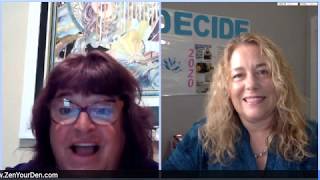
In this candid interview, Adrienne Barker, MAS, chats with virtual organizer and productivity coach Barbara Trapp. Barbara shares her unconventional career path—from music and veterinary interests to a leisure studies degree that sparked her love for filing systems—leading to roles in audiovisual tech, training, and eventually organizing. She explains how she transitioned to virtual organizing during COVID‑19, offering practical tools like password‑management checklists, file‑naming protocols, and digital decluttering. The conversation delves into her certification in DiSC assessments, habit‑stacking techniques, and the integration of organizing with productivity coaching. They discuss personality styles (innies vs. outies), hoarding as a mental‑health issue, environmental benefits of organized decluttering, and the importance of servant leadership and lifelong learning. Throughout, both hosts reflect on personal struggles with forward‑thinking, being perceived as a “10th man,” and the value of coaching for younger generations. The interview ends with plans for future workshops and mutual encouragement.
Chapters
Oh, hello everyone. I'm so excited. I'm Adrienne Barker at PromoIndustry.Guru, having a candid conversation today with Barbara Trapp, a virtual organizer, life and productivity coach. I put this on the bottom, Zen Your Den. Hi, how are you, Barbara?
Wow, I'm a guest superstar. I love that trailer. That's cool. I love it. I'm definitely sharing it now.
Oh, thank you. I love what you do. I think that organization is something that's discussed a lot, but I really actually haven't been seeing a workshop on it. And the only thing I know is Maria Kondo, I think, from the TV series that talked about organizing your home. And I want to hear what is interesting to me. What so intrigued me is that you knew— well, you didn't know, know, but what— when you were younger, So without my talking, tell us about how you knew where you were gonna go in your life and growing up.
Well, again, I didn't really know. I mean, I thought I was gonna be a singer and actress. That's what a lot of little girls wanna be. And actually, I did start performing, singing in public at the age of 40 with my ex-husband, who is a musician, and we started playing gigs. So kind of one thing accomplished, and I majored in music at Florida State, but from middle school on, I thought I was going to be a veterinarian. I mean, it really went all sorts of directions. I worked at animal shelters, and— but I was thinking back when I started my business a few years ago, some of the signs, like when my parents went out of town or a long day trip or something during the day, I'm like, I rearranged the furniture. So I kept it that way. I was like, no, this needs to go here, that needs to go there. And so yeah, and a lot of times my mom was a little frustrated, but you know, as long as I didn't mess with their room, she was okay. And then later in college, I was trying to decide a new major because I knew I was going to switch, and I saw somebody's filing system, and I was so impressed because that was a requirement of that major. So, and it was actually Recreation Management, which back then was called Leisure Services and Studies. So I graduated from Florida State with a BS in Leisure. Nobody else has a degree like that. Yeah, BS in Leisure. But the last, the final project was to actually show our filing systems of how we'd organized all of our work. So I realized that I picked a major just based on the filing system. So I was making filing systems during my internship and wherever I was. Yeah. So I love that story. And it worked for you.
I have to tell you, I've experienced something interesting. My daughter, when COVID-19 hit us, my daughter asked me to come into her room and she rearranged the whole room. And my first thought was, I am a horrible decorator. I— how did I not know to put the furniture how she had it, which made 100% sense and made my— what I had done for her before look like silly and outdated and didn't make sense to me. And so my daughter has an eye, so she will have to watch this because we've been talking about her actually having that skill and what she could do with it. So then, so graduate with this degree. Yeah. And then what do you do? Tell me a little bit more. So keep going.
I went to—
I did my—
yeah, I did a recreation internship because that was basically what it was at Amelia Island Plantation. And then when I was nearing the end of my internship, my family, my parents, my brother had moved from Tallahassee to Pennsylvania, so I had no reason to go back to Tallahassee. So I was like wanting to find a job, and they were asking me, what do you want to do? I'm like, I want to work in the banquet department. Why? Well, because they make the most money. I'd never waited tables, so that didn't fly. But they said, hey, we've got a job. We need an audiovisual technician. Somebody— we know you're a good organizer, so we need somebody just to organize the cords and the equipment. So that is what I did for 7 months. I untangled cords for like the first month, plugged everything in, figured things out. And was crawling under risers to hook up mic systems. And, um, yeah. Huh?
Did you like it? Did you enjoy the work?
Um, it was really kind of cool. Anytime you can start something from scratch is great. But I knew at the 7-month mark when they said, okay, we can send you to Disney to really learn this, because all the technology was changing, or you could be an assistant manager at the conference center. I'm like, I'm going to do that. So I was eventually over managing 7 departments, including the one they wouldn't let me work in, banquets, which I'd never— because I'd never waited tables. And eventually I got into training and I love training and development. And that was my last 10 years of work there. And I got to create training plans and work on customer service. And I taught time management. Processes. And yeah, so I really got into organizing teams and I love that. So yeah.
And so you learned, which I love, is that you were kind of like self-taught and you learned while doing.
Yeah. In fact, I, I was, I'm going to be writing a post about this, but because everybody can learn no matter what stage you are with technology. I bought my first home computer off the Home Shopping Network when I was married, and I was so terrified of it, I left it covered for a year. That's when they came with dust covers because people, you know, they thought nobody would use them so much. And it was a year later I finally started tapping away. But 3 years later, I was teaching technology classes. I was teaching Microsoft classes at my, at my work as part of my job. So I think, I feel like everything I've done has kind of built up to this. I take skills or new things I've done, like being a webmaster, designing websites, creating communities on social media for a big community association, and it just kind of all, you know, this has just wrapped everything up nice and neatly. So I can do a lot with that. Organizing people from the inside out, or outside in really, And that's kind of what I'm doing now.
I love that. Have you taken any of the programs like Strength Finders, like the personality where you kind of figure out where your brain is? And does that then when you read the description of it make sense for what you're doing? And can you share that with us?
I've done a bunch of those and you know what, those things are accurate. They never change. I mean, really, you kind of stay the same and if it changes a little bit, it's really about more how you're adapting to your environment. So I actually got certified in DiSC training, so I can do assessments for individuals and teams, and I felt that was a really good combination to go with productivity coaching especially. So people could understand themselves, their motivators and what drives and motivates people, and then they can also understand what drives and motivates the people that they're communicating with, which is really important.
So, so, Barbara, I have to tell you, I, I wish that I could have been born in a time where I could have worked with someone with you. So growing up in a family business, what happened for me is— and now that I know it, so to tell you what I am, I am a strategic forward thinker. So I try to cut through the clutter. And so the way my brain, my way my brain works, and growing up in the family business, not— and Honestly, I don't— there weren't a lot of forward thinkers. I used to call myself the 10th man because I had watched, uh, one of World War Z and realized, oh, okay, there was a little section where he, um— oh, I can't even think his name— uh, Brad Pitt picks up a man and says— and the man says, well, I'm the 10th man. I'm the person that you would have around the board when everyone agrees with someone. I'm the one that comes in to kind of do the what-ifs. And I'm like, that's me.
That's me.
I found out about World War Z. Not even like— it's just when you were talking. And the thing is, is that I was perceived that nobody liked me. Like, I was told, you know, nobody can work with you, nobody likes you, nobody respects you. They couldn't work with me. And it was only— I just graduated from the Florida Institute of Public Leadership. Lifelong learner, always having to learn, just like you said. Same here. No, and age doesn't make a difference. And I took another test and it came out again. And I'm like, this is— if I imagine if I was in my 30s being who I am, because a lot of it too is that you almost perceive— for 2 weeks ago, I knew I was planning on going up to Connecticut. All of a sudden it hit me in the middle of the night. I woke up. A lot of things come in the middle of the night. I woke up and I said, we're not going to be allowed to come into Connecticut. And I called my son and my girlfriend, and I'm like, nobody's talking about it right now, but in a few weeks, we're not— Connecticut's going to say, yeah, we don't want Floridians because you guys are really bringing the diseases up. And I just had a feeling, and sure enough, they announced it yesterday. But one of the things too is, oh, you can go, you just can't— yeah, I could go, but I'm not going to quarantine for 2 weeks. But the thing is, yeah, you do, like, when you're like this way, you— it's frustrating too because you know something and you want to You're so passionate about getting that information out, and then someone else is like, they just talk you out of it. And then, and I don't know about you, but I'm not, I'm not a told you so person. Maybe I was in the beginning of my life, but I don't do told you so. So if I could just— so what I want to try to say in my long-winded way of speaking is that, no, get with Barbara and get to know, use a DISC training. It's called the DISC Strength, whatever it's called. Use it because it will help you to understand. And if you are younger, If you're in your 20s and 30s, I think it's really important. No, now, because it really affected me. And now I'm looking at, I'm realizing, you know what, maybe they couldn't work with me. Maybe I am difficult to work with. I'm always saying what if. And another thing too, I worked in events for over 10 years. When you're in events and you're a forward thinker, even when your event is completed, you're still looking at ways that you can, you can make it better. So it's like, you know, I, I didn't care about the balloons at an event. Anything little never bothered me, but what are the steps I could take? So I was always searching for that next step, and that's annoying to people too. And we're also seen as negative. Do you get that a lot? Like, you're like negative?
That— yeah. And I used— I taught a different format of this, but it was still 4 different types. And, uh, it was all— I taught it to over 700 people in this company over gosh, 8 years, I think. And again, people don't change, but the thing is we need all 4 of those. We need them all. And we may be thought of as like negative or fence-sitters or whatever, but I have a certified— I'm a certified associate in project management because I'm also a lifelong learner. And one of the things is risk management. So really, that's what we're doing. We're thinking— it's not negative thinking. It's like, okay, what if this happens? What can we do to prevent that or fix it? Or make things go our way. And that's really, that's part of it. Then we're not sticking our heads in the sand, we're preparing. So it's kind of like, you know, like a roundtable. What could happen? Disaster plan.
Exactly. But how frustrating when nobody listens to you and you just irritate everyone who says and looks at you. Maybe I'm the baby of the family, maybe they didn't think that I could have a brain this way, maybe they weren't thinking that way, but I grew up— just imagine the struggle. And it's so nice to be able to say to you, like a doctor, you Here's a struggle I had, and it's only at 58 that I can now say, oh, this is, this is what it was. And I'm not going to apologize for the way I am. And actually, it's kind of sad that they didn't take me up on a lot of the advice of what I was offering, because as a SCORE mentor, it's what makes me good because I can talk to someone and I can think. I'm often told when I'm mentoring someone, nobody else really shared that with me, or that's a different way of looking at something. Yeah, so are you doing it now? Are you offering the DISC training now? Yes, yes.
And so it's part of my productivity coaching, and I have several different packages. So if somebody wants to connect with me on that, they can go to my website, ZenYourDen.com, and there's a link to set up a complimentary discovery session, just a phone call to to talk about it, whatever it is, whether it's organizing or productivity. And I have to say one, just one thing, I can make a balloon arch. I was in event decorating. We are, we're sisters or something. Something's going on here. So can you see the word behind me?
Decide.
Yes. So I've been doing, I was doing vision board workshops at the beginning of the year, and I'm working on a a 4-week program right now. It's going to be values and needs, goal setting, culminating with vision board workshops. And I don't know about you, but none of this crap was on my vision board for 2020. So I figured that July is a great time to kind of re-envision things. And my word for the year is decide, because I had trouble deciding on my word for the year, and I realized that's always been my thing. So I have to analyze things to death. So that is my award for the year.
I love that. I love that. I'm not even sure I really understand what productivity coaching means. Like, what would you be doing for someone? How are you helping them?
Well, life coaching is a really popular term, but I'm trying to get down a little bit more into the minutiae of it. For instance, if you're trying to get from point A to point B and you're stuck stuck for whatever reason, then that's what I'm going to help you with through accountability, you know, goal setting, accountability, figuring out the right tools or techniques, what's slowing you down. And the coaching part is awareness, and just kind of discovery. Coaching is very powerful because it is— it's not me telling you what to do. That's what I do as an organizer, as an expert. But I'm— we're working together and we're partnering together to just make some discoveries along the way, and then you try things. So in between our sessions, you take some actions, and it's really kind of trying things out and seeing how they worked and learning from them. But we're moving forward.
Another thing— another, um, I could jump around with you because you are amazing. Another thing I noticed with my, my personality is that I— my belief system. And so I'm very responsible, and you kind of think everyone else is responsible, and You know, when it comes to ethics, business ethics has always been important to me. My own moral compass has always been strong, and I've always felt like, like, what is— like, what is wrong with me that, like, I, I wouldn't walk by someone that was whatever they were for any reason on the ground, you know, hopeless and helpless? I wouldn't just walk by them. Like, there's things in my life that I just can't do, and I'm just now realizing that, that That combined with being a servant leader. And I have to share this story with you. I came to Daytona Beach to open up my father's fifth art gallery, and I had hired a woman to be my art director. I didn't really know much about the art business. My father had it for over 20 years, and I was relying on his staff. And, you know, of course I'm going to pick up a book and, you know, do everything I can to learn about animation art. But we were getting ready to hire a young man from the University of Florida, and I said to her, You know, he's at a great age and we can mentor him, and I'm really hoping that the two of us, you and I, can really help and mentor him and have him grow. And she said to me, are you f— stupid? Why would I want to mentor him?
He—
I, I work for you, Adrian. I'm not your person to mentor. He will work. I'll teach him. I'll train him. But I'm not here to help him grow. And what is wrong with you that you think that you're here to watch someone grow? And I, Barbara, a whole year, this is why someone like you is so important. A whole year I'm thinking to myself, what is wrong with me? Until I started reading, I'm gonna be doing a servant leadership program on the Volusia Hispanic. As I'm reading it, I'm like, this is exactly what I always thought was wrong with me. But this is so what's right with me is that I am a servant leader. I would rather— and so even in the family business and how I've always wanted to just, you know, if you're an employee, I'm wanting to help you and help you succeed was always more important to me. Did the title fit? Like, whatever it was, that was always my goal. You know, even more so than like, are you producing and making a ton of sales today? You know, how are you feeling making the sales? And, you know, what's success feel like? So I, I have to really implore people, and especially for the younger generations that's coming in, have them meet someone like Barbara. Because if, if someone gave me Barbara when I was in my 30s, it would have changed my direction. I wouldn't even be— luckily I'm strong enough.
Part of that, like me, I know that's true.
That's funny, coaches always say that. But I do think that as we get older, we're able to really I always felt I was a self-reflector, but I'd be able to look and really see where I've become. But I worry about people because for years too, I, I just was so lost. Like, I always felt like I was treading water. Like, I felt like I knew I was right, but then I wasn't sure. It's not a great place to be. So spend the money, spend the time to really get to know yourself. Have an expert do it. When you, when you do these yourself, they really, they don't give you that insight. So I really, really 100% believe in what you do. And, and what people— people when they see organizing, are they thinking that you're coming in and like organizing their junk drawers for them?
You know, it's a combination of things. It's— and I've been virtual since March 13th. That was the last day that I stepped into somebody's home on site anywhere. So I've converted my current clients to virtual organizing and they thought, how's this going to work? So I've I've done presentations on it to explain, but one of the clients said, you know, I think I like this better. And part of it is because I only see what they want me to see. We're very laser-focused, so if somebody gets distracted, could be ADHD, could be undiagnosed or whatever, we are laser-focused. I can tell if they get distracted and go somewhere because they're off camera. But I've helped people organize their closets. They set me in a shoe, or I've been in a shoe pouch, so I can look at the hangers and stuff. I've helped, I've taught people how to fold things just, you know, from right here and help with organizing their drawers, and I have them set out boxes and bins and bags so they can get rid of stuff. I've helped them by setting up donation pickups and keeping track of when those places reopened to do the pickups, and the big thing lately is filing systems. So I'm and body doubling. I'm sitting next to them while they're going through paperwork and helping them set up this filing system. A particular one I love that is, it's like evergreen. They'll never have to set another one up again. So, and it's working really, really well. So did you, hey, I gotta ask, did you ever hire the student? I did.
And we're very good friends. And what happened was she ended up about 2 months later, saying something not very nice, something, you know what, and something I would never recommend doing if you're in your 50s. He was— he had been climbing up and down the stairs, the stairs all day, and he said he was going to go home, his legs were a little tired, and she made a comment like, oh, look at you, you're 37 and I got 20 years over you and I'm healthy, or whatever she was saying. It wasn't nice. I don't have the greatest back, so I was like, I don't want to say it to me. So the next day I called her and I said that's really not like giving a lot of really good, um, not lifting.
That's not a collaboration.
It's not working together. You're bringing down the morale of the office. Like, could you not do that? And within 2 hours later, she quit. Like, I don't even— it was weird because she, she didn't want to take my—
that's called firing yourself. I mean, sometimes you fire— people fire themselves. And I was told by an attorney once, because I spent a lot of time in HR and doing, uh, college recruitment as a matter of fact, and he said, you know, do you have unhappy, unproductive employees who are just, you know, they just leave mad? Well, if they've been, you know, underperforming for a long time, you should have let them go, not just wait until they get frustrated because that brings the team down too. So, you know, sometimes there's lots of reasons for people not to be producing or productive, and that's one of the things I kind help teams with before. And I think productivity coaching kind of falls into that too, helps people kind of get their mojo back. But I'm especially— it's really, you know, hiring and recruiting young folks is really close to my heart because I was an internship coordinator during the same time I was teaching technology classes, and I recruited and hired, onboarded, and helped house over 500 college students from around the country and overseas. And I just, it was one of the most rewarding things I ever did. It just, I tell them when they graduate from college and they're excited, I say, congratulations on your degree. Now welcome to the beginning of your education because now you're gonna apply it towards working with people. And it was awesome.
Just loved it. [Speaker] I love that. Yeah, we are kindred sisters. I have a question for you. So my daughter will come in and she'll take my drawers apart and she'll organize them. And I feel bad because I do mess them up right after. And I know it frustrates her. But I say to myself, I just can't do it. Like, is it— am I wrong in thinking I don't? Because she has such a skill. I don't— I get— and I grew up in a family that was always kind of sloppy. Like, you know, my parents, my dad's office was a mess. It was always part of the thing. So I'm not sure. I think I may do it. Am I already saying I'm a failure before I even start to try to do it?
But, you know, everybody needs their own system. And I don't cram a system down anybody. As much as I love what Marie Kondo has done for the whole organizing industry, that's been great. I've had people call me and say, now I'm kind of afraid. Now, are you going to make me pile all my clothes on the bed and then leave me alone? Like, no, no, no, I'll help you with that. But now, I mean, you know, if, if that particular folding technique or whatever isn't working for you, I'll say, hey, why don't you hang all your shirts if you got any room in your closet? I love hanging. There's no ironing, there's no wrinkles, it's quicker. You know, or maybe you roll stuff or you do a different folding technique or whatever. And sometimes it just has to do with having less, because the less stuff you have, the less you have to mess with, which, you know, makes things easier. So we reevaluate if something, if something went back to the way it was and it wasn't working, let's find something that does work.
So interesting. I have a girlfriend whose, um, whose sister likes to get rid of things, and so she's the opposite of— I have my husband's a hoarder, and we were talking, my girlfriend and I, and I said, you know what, I wonder if there's like a term for this. And so I Googled it, and sure enough, part of the OCD, the obsessive compulsive, but when someone cannot stand, they have this pen so it's easier for them to throw it away, which is so interesting. To me because I, I'm like on that cusp. I don't like a little nothing. Yes, it's so interesting. All right, I'm going to switch gears right now because I have another question. I'm full of questions. Sure. Can someone become a lifelong learner? We say ourselves we're lifelong learners. Can someone watch us and say, you know, I want to wake up tomorrow and I want to be a lifelong learner too? I'm, I'm confused with that.
Um, absolutely. Um, because I remember when I was actually starting my job and it was called special events, it was at this large resort, when resorts had tons of money to do stuff, we did like $35,000 theme parties, Arabian nights, I mean everything. And I remember my boss saying, hey, we're gonna go do XYZ, we're gonna go and listen to this, or hey, we're gonna learn a new technique or something, and I was just in the office at the time and just, don't you wanna learn? Don't you wanna learn more? And I'm like, I'm exhausted, I'm busy, I'm a new mom. I mean, where's all this energy come from? At the time, it just, it was like learning is work. And I had, you know, I learned before, but I was kind of overwhelmed. But this is, it's all changed over the past, I don't know, 10, 12 years or so at least, and I know that in the last 4 years I've read more than I have my entire life previous to that. So that's what actually helped me find this business. And, you know, I think, I think reading inspires you, whether you listen or you read a Kindle or hold a book or whatever, webinars and stuff. I think anything to just motivate you and get you going is good, but I firmly believe everybody can You can be a lifelong learner at any age, starting wherever. So I love that.
So giving hope. All right. I cannot, I need to read better than watching video. Like if it's a news or certain things, if I could read a transcript faster than the video, I will go for reading. And often sometimes when I'm reading, I just will space out. Is there, What is wrong with me?
Nothing's wrong with you, but you know you can speed up videos. So I actually, I looked at one of yours online and I went to the settings and I sped it up because I didn't have much time, but I wanted to get the gist, and I sped it up to almost, I think, 1.75. So I mean, you can do that in Audible too, listening to books. Some narrators are faster than others, some are slower, some I have to slow slow down, and I love that feature. So, but I also know that if I want to really grasp it, I might be listening while I'm doing something mindless, like sweeping, cleaning, or making the bed, or whatever. But if it's something that I need to pay attention to, I probably need to like sit or something, and then maybe occasionally make a note. But just play around with it. See which one works for you. I kind of alternate, but I really am more about I'm more about audio.
So interesting, interesting. I also don't know if I just get annoyed with a 12 or 14-second video, the ad in the beginning.
Oh yeah, just tune that out and skip it as soon as you can. But yeah, you can go to settings, bottom right, it's a little gear shift and look at the speed. Yes. So, and you're fun to listen to it like 2.0.
Oh my God, I can imagine. Wow.
I had to turn it back down a little bit. Not that you talk too fast, but again, I was trying to get the gist in a short amount of time.
I love that. So COVID-19 hits for you in March, and then you almost— were you doing any virtuals before that?
No. And it's funny because one of my 2020 goals, and I'm like, I need to be careful what I wish for, because one of them was, okay, I did more traveling last week. A lot of it was my father passed away. Just getting the hospice. I drove to and from Pennsylvania at least 4 times last year alone. Took one trip out, 2 trips out west just for kind of fun and, or just, you know, in the area. And I thought, okay, I can't go anywhere now. I got to buckle down. This is my year. And I want to go 30 to 50% virtual by the end of the year. So nothing like hitting your goal in the first quarter. So I'm not traveling and I immediately had to pivot and think, okay, how exactly is virtual gonna work long-term? So I've got a great little cheat sheet that I, it's a checklist, prep checklist that I give to my new clients and it tells them, you know, what to prepare for, to put your phone on, you know, charge it up, have a long cord ready, friends and family know what's going on, turn off notifications, lots of stuff like that, even how to prop up your phone with homemade gadgets or other cheap fixes. So, and like if I'm helping somebody with digital organizing, find your passwords, or we're going to help you set up a password management system because that, that is what usually happens when we start working on digital organizing is I don't know what's my password.
Digital organizing Like not 100 windows open and 100 desktop icons? Is that normal?
Well, that, yeah, that, but also like when you save something, where's it going? Is it really saved? Is it backed up? Are they sorted so you can quickly find them? Because that's the key is finding something quickly. And also, you know, also knowing where to put it. So actually one of my last blog posts was on password management systems. So, um, you can see that on my website as well.
I don't have the same, uh, because I'm the worst with passwords. Wait, I want to go back to something. I don't understand what I— I'm going to call this person out. When I was working in my family's business, um, my dad's secretary consistently send me like invoices and copies, and she would never change the, the name. So she would send me— so I get 1Z23456789XYZ And I'm like, so I'd have to open it up, and then of course I'm having to change it, and I'm thinking, why is she not changing it when she's saving it in the first place? So I think that's an important thing. So for me, if I'm going to send someone something, I'm not going to just send them a blank file. I'm going to give them a title to it because now they've got the work to do. So I don't— in business, that's like almost like a no-no because it shows like a total lack of like really not caring if I'm just going to send you invoices and I send you 10 of them and not one of them have anything but a random set of numbers. How is that helpful?
Yeah, that's, that's confusing. At least having dates on them or something. So file naming protocols is something to help people with too, because, you know, really the number of spaces used or hyphens or whatever, you got to be really careful with those and make it simple but clear so that they sort when you— the way you need them to.
So I'm not doing it, but she would have made a— it would have been a huge, huge deal for me to just have done it. Someone had to do it. So, you know, some of the things like, um, that you— that I know myself, that I've learned growing up, like, um, in business— I say growing up, but I mean like business growing up— is I don't always have to have the last word. And I don't have to be the— I used to when I was younger, I— everyone would go into a meeting and And I thought to myself, oh, if I go in 10 minutes late, then everyone would say, oh, she's busy. Like, I really— and another reason I didn't have a coach, because the coach would have said, that's so stupid, Adrienne, like, get in there first. And then, and then it hit me though, like, I have to say I'm proud of myself. In my 30s, it really hit me, like, that is the silliest way to think. I want to be there first to show everyone respect and be the person that I want to be and wear myself proudly and be the example, not the bad example. So any other bad examples that you see that you, that you can help correct?
Think about it. Well, you know, habit building, we discussed. Well, yeah, I had a client who we organized, we worked on organizing her home first, totally even went to the, as far as like the trunk of her car because she was in sales at the time and drove around a lot. So, but afterwards she said, okay, now I want to hire you as a coach so you can help me keep this this way. So we were working on habits, like, okay, now that she has it all cleaned up, what habits is she going to develop? And one of them was cleaning all the dishes before she went to bed at night. So when she gets up in the morning, Who did this for me? It's, I call it like night me and morning me. So what did night me do for me this morning? Oh, look at that, how nice. And then morning me makes the bed, which I think is an important way to start the day. So then at nighttime, like, oh, look at this, it looks so nice. But we also worked on things like, okay, 10-minute tidy in the morning worked for her sometimes more than anything. She also wanted to start meditating. So we kind of worked on some of these habits, but really the first thing we ever did was just, where are you going to hang your keys every day? And she got a hook by the door and just practiced one new habit at a time. And eventually you start linking together. I'm like, okay, when I hang my key up here, I'm going to put my purse over here. So now we've stacked or connected those habits, and it's always easier to add a new habit if you can add it on to another one that you've already got fully brain. So it's all about getting rid of bad habits, replacing with new, better ones.
So regarding the dishes at night, I don't— you don't have a 14-year-old in your house, do you?
No, I gotta say, I don't have any, no kids in the house now. I have a wonderful daughter, she's 26, out of the house, and so yeah, free.
So I got pregnant at 44. As my gift. So I have a 30-year-old, 37-year-old son, 30-year-old son in Shanghai, 25-year-old boy son, amazing, and 2 sons. And I got pregnant at 44, so I'm 50, gonna be 58 with a 14-year-old. It's crazy because I love my sink clean, and then all of a sudden, like, I wake up in the morning, I go to bed, it's always clean. I'll wake up in the morning and like she'll have made herself eggs or steak and the mess is right there. And I'm like, oh, I'm gonna tell her after she watches this that morning mom is never happy. Morning mom and nighttime mom clash because I'm like, what's going on here? And even though it only takes a few minutes to really clean when you keep it up, I was at someone's house when they cook all the time and then they leave such a mess and go to bed. And I'm not even like Miss Clean, but like, to me, I can't do that. I, I, I need everything organized. And Alana and I and my husband, we've, we've moved a few times, so I don't have a real sense of love. I love the artwork behind me, you know. I love certain things. I love— I don't like— I don't need a lot of things. And, uh, we moved to China in 2018 and we got rid of everything, so I know what it's like to get rid of everything. And honestly, there was nothing I really missed. And now as we kind of rebuild, just, you know, things that are more collectibles that, you know, come from my parents. I lost both my parents. Now I'm, I'm an orphan. But no, no, they lived till like 90, so it was amazing. I like that, but I literally could just pick up and move and like have a couple of clothes that I like and, and that's it. It's weird.
I don't have, um, there's real freedom to that.
There really is.
And not everybody wants to go totally minimalist, but just to have what they want and need and nothing more. Um, and getting to that point, if you're going to move, always organizing before the move. It's so much better on the front end than the back end. When you're opening up all these random boxes and then having to make decisions and put everything away, it, you know, it definitely makes it a little bit harder. So one thing I've been doing also is virtually again is I've got a client, a couple clients who've dealt with parents who passed away and then have estates that they've got to clean up. So to help them with that, I've been working on, working with them to create a plan for when they go to that place, what are they going to do, researching all the contractors they need for, you know, housekeepers, carpet, upholstery cleaners, window washers, gutter cleaners, landscapers, all this stuff. Give them several people to call for each, do a lot of research on their ratings and stuff. And then at least they have a plan and we kind of map out what's going to happen that week that they're there doing all that so they can, you know, feel that they're fairly organized or know what to do. To, even down to, you know, finding a place that will pick up their discards or whatever. So, but hey, I've got a personal question to ask you.
Yeah.
Are you an innie or an outie?
My belly?
No, I'm kidding. This is a question I ask people when we're doing an intake. And really what it means is some people like to have things inside drawers, inside closets, in desk cabinets, others need things out where they can see them and be inspired.
So are you married to an outie? I'm an innie married to an outie and it's like—
Exactly, a little stressful, isn't it? So yes, there is conflict when innies and outies share spaces together, but if you're already recognizing it, I mean, that's a style, and also some people are, you can be hypersensitive visually to clutter, meaning you can't stand it, drives you nuts, or you might be hyposensitive, which means you don't even notice it. So there's some people who don't see clutter. It's not that they're meaning to be messy or anything, it just, they just don't see it. It's just, you know, just the way it is. So if you recognize that in some people, it might get made a little, might help you have some awareness and be a little bit more understanding. And some people just need things pointed out.
So I'm gonna tell you a secret, and hopefully nobody's listening, but the fact is, so I— so my husband is a hoarder, so it really kills my daughter and I. On the other hand, what you're teaching people what to do actually does save the environment. So who would think when you do your elevator speech and your credibility speech, you could say, I saved the environment? And the reason why is that We live in, you know, a resort-style apartment living. So it's, you know, it's lovely and it's really, really beautiful. And there's a dumpster here, and then next to the dumpster is like the garbage area where people, they don't want to throw it away, but they're a little too lazy to take it to. Or maybe nowadays it's hard to bring it over to Salvation Army. But my husband for years has been, um, kind of like recycling. So he'll take items, so even clothes, much to my like, I can't take it. He'll come home, he'll wash it all, he'll put it back in a bag, and then he'll deliver it to a recycling place, Salvation Army or whatever. But what we notice is because people are not organized right before they go to move, they didn't spend— they don't have the time to actually do something with it. So they will leave it or they'll throw it in the dumpster. And that really is a problem. We started this—
we started it.
I don't really get involved in it, but I can understand where his heart is. And he is a hoarder too, but the other part is he hates seeing someone just throw away good things when other people need them. So he'll do what he can, which is washing it and then delivering it. But that wouldn't happen if you were organized, right?
Well, I mean, it just, I don't know, I wouldn't put a name on it so much. I have had people call me and say, well, I'm a hoarder or I'm not a hoarder. And actually hoarding is a mental health issue. Health issue. It's added to the diagnosis, the DSM-5, I can't remember the exact name, but it's actually recognized as a mental health diagnosis. So, and there is actually a hoarding scale. People wonder about that, they can go on to the Institute for Challenging Disorganization, ICD, and they actually have a hoarding scale that you can look at, and there's actually different levels. I think from 1 to 10, could even be, you know, somewhere in the middle is where the organic hoarding or dirt can start. So I never call, you know, when somebody says they're a hoarder or something, I said I don't believe people being hoarders, but maybe having a hoarding issue, or having an issue with hoarding, or they're doing hoarding, but I try not to say you're a hoarder or you're not. I don't work with extreme hoarding because really, and especially working virtually now, that if it's a severe issue, it really does take working together with a mental health professional. Otherwise, it just really, it's hard to be successful in changing that without changing the mind. And when I'm working as an organizer, I'm coaching along the way anyway, but it really does need a team of people to work with when it's a true hoarding issue.
I appreciate that. I'm gonna actually look that up because I'm not 100% sure if it's true.
True.
Like, for instance, I, I laugh at him because he's got like 12 pairs of shoes and boots, and I've got like 2 pairs plus like 3 sandals. I just bought a new pair of sandals. Like, I don't have as much. I'm happy with what I have for my clothing, but if he could get more, he'll get more. If, you know, if he— I want shirts, he'll buy more than he really needs. So I'm, you know, if he needs pens, like, he does have that drawer that just has a ton of pencils and tapes. But then my daughter will come in, she's like, I need a crayon or pencil, and he'll be like, he'll get it out, and then he'll look at me and say, see, aren't you glad that I collect this stuff? I guess he'd call himself a collector, but I'm not even sure. You do have two different sides to it, so you learn after 20 years that it's okay. And I often sneak into his drawers anyways and grab— I'm like, oh, I'm really glad that he does have that. So I don't like to complain. I mean, I'd love this so I could really look and we could do it together to see if he really is or if I kind of like just tease him about being a hoarder.
And some people can be messy, but they may appear to be messy, but they're really organized. They know where everything is. Or they could be, appear to be organized, but really be messy. I've walked into some homes where these probably scare me most when I've gone in and it looks like it's ready for showing for sale. I'm like, this is gonna be hard. What am I gonna do? And there's like a stack of mail in the foyer, and I'm so sorry, it's a huge mess. And what I find is it's usually behind the scenes, like in cabinets, in drawers. They are, they're innies, they want things in. One case I found, I think 2 or 3 bins, big bins full of paper, and it was a doctor who wanted me to help him get organized and switch his office and his game room. And I ordered furniture and got things set up. And as I was switching things, I found those bins and it turned out it was just all paper. Half of it was mail, a lot of it was unopened. So I always say, you know, part of the paper management is first thing we do is we open the mail. It can lead to money issues when you don't know what's in there. Bad things can happen when you don't open your mail. So I spent a week just opening mail and processing and organizing and stacks and getting a system going. So anyway, I kind of went off on a tangent here, but I just had to say that. Great.
Because, you know, things—
it's somewhere. It's somewhere.
But it's kind of hereditary.
My mom—
I didn't realize that my mom was an innie until she did fall and had a stroke. And then after she had passed, and I was like, whoa, she had more junk. Like, I grew up with a junk drawer, but I didn't know she had like 3 or 4 of them. And then I realized, because yeah, and actually, if we both should have learned together, that would have been a fun mother-daughter thing to learn.
It's a different generation with, uh, I mean, my, my father passed away at 94, and, uh, my mother is in her 80s. She'll kill me if I tell exactly, so I won't. Hi, Mom. But you know, those generations, they grew up, you know, saving things and, and reusing. I mean, I know somewhere in my mom's house there's a sock darner. You know, it looks like a mushroom, it's a wooden thing. I mean, you know, and used to iron everything and darn socks. And I'm never gonna darn a sock. Be lucky to sew on a button. That's—
oh, I'm the worst too. It's funny that we have the same— I don't sew, but my husband does though. He'll sew the buttons. He owns a sewing kit. Uh, he irons. I don't even— I don't understand why anyone would iron when you could actually spray your clothes with Wrinkle Release, shake them, hang them, and they look better than if I iron. I'll burn it, so I don't. But that's so funny. I love that. So you really get to the bottom of what someone— you're all— you're very well-rounded, Zen Your Den. You've got like a perfect— you've got enough, really.
I—
what you're doing is great.
Oh, thank you. There's a lot of variety. I'm never bored.
I'm sure. And you're in this, and the, the relief that someone feels, you really could say that you, you allow someone to become stress-free because there really is something to having a house that's, you know, picked up and you can find things. That is a lot of the stress. A lot of people during COVID-19 were doing it themselves. Were you busier then even doing it virtually than you were actually live?
Um, not So much. I mean, it would have been an awesome opportunity to jump in, but I was still figuring out some of the logistics, technology, and taking care of my current clients as well, and then spreading the word about virtual and just, you know, trying to get more information out there. But I was, I was not ready at the time to put together a humongous group to get going. But I did I want to say that one reason that some people say, so what, pick organizing or productivity, which one, you're supposed to have a niche. But they work really well together because I found, and that's why I say really organizing from the outside in, when people are surrounded with a disordered, you know, exterior environment, it's hard to focus on a passion. And I know I've had a lot of clients who like, had something they wanted to accomplish, but they weren't going to let them do it. They couldn't do it until they took care of their piles or, you know, whatever it is, or finally got their guest room emptied out. And I have a whole other set of opinions on guest rooms. But, but once they get that done, then they allow themselves to pursue a passion. So one client where we downsized her house, moved her into a new place. Place. She also had to downsize a parent's estate, do all the taxes, communicate with attorneys and accountants on all the paperwork. But once all that was done, she's halfway through writing a book, and that was one of her passions. And another one who wanted to build those habits, and she wanted to find a new job, she wanted to build a career in real estate. So I coached her through the process of getting through the real estate exam and just buckling down on the, on the book and the learning. And, you know, that worked really well. So she's a realtor now. So good.
Well, procrastination is a course all in itself too.
Oh yeah, I think I practice productive procrastination pretty frequently myself. I get lots done when I have something else looming. But I've also found that when I set a hard date that, you know, I get things done. So that's why sometimes I'll set a presentation date and I know, well, I'm going to have it ready or tweaked by then.
So yeah, there's nothing like a good feeling of accomplishment. I think accomplishment's like a delicious cup of coffee. You can really enjoy it after the work is done. I have a— I give myself— I love this new show called Politician on Netflix. I love it. And that's like, okay, so when everything is done, then that's So I try not to, uh, watch TV. Alana, come here, I want you to meet someone. I want my daughter to meet you. I think she'll get a kick out of it. So, you know, I, um, I, I'm very excited. I'm speaking at an event called Elevate in Daytona Beach, so I have rehearsal. Alana, come here, honey.
That's cool.
Come here. I want— Alana, I'm talking to—
she's 14—
I'm talking to this beautiful woman. Her name is Barbara Trapp. And come say hello.
Just come.
No, I bet she doesn't see you, honey.
Nothing like being put on the spot, right?
And every single time nothing changes. The, the definition of insanity, right? I've consistently tried to get her on, and, um, but anyway, thank you so much for your time.
I love this.
Let's talk about doing a SCORE workshop. You are amazing. And this is conversation people would like. And I think that I just— I'm glad that you and I are on the same page for the next generation, because we really do want to help them. There's so much that I know for myself that would have changed me. And we're never too old. So— and I really took a lot out of this. This is a really great— thank you for your 48 minutes. No, I'll tell you, 49:42. You're awesome.
Oh, hey, I used a SCORE mentor too. I benefited from that when I was first starting my business because I didn't think I'd ever start my own business and it was really helpful. So it pointed me in the right direction.
So thank you. I love that. That is a great testimonial too. Yay. All right. So we'll talk later and have a great rest of the day. And thank you so much. This is live on Facebook. Oh, thank you. For, um, thank you for, for liking me on Facebook. I look forward to hopefully meeting you. You're so— you're just a short skip and a jump in Jacksonville. That's nothing, right? Are you still in Jacksonville?
I know it's not. Yeah, it's not far at all.
Not far at all. So I hope to meet you, especially when COVID-19's out and maybe there's an event or something that I could do. But otherwise, you and I will talk virtually on the workshop. And have a great rest of the day. Thank you so much.
Thank you. You're welcome. Thank you.










