Candid Conversation with Adrienne Barker, MAS
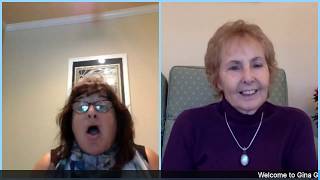
In this 45‑minute YouTube interview, host Adrienne Barker (MAS) talks with leadership coach, former school principal, and author Gina Gardner. The conversation opens with a brief update on COVID‑19 restrictions in the UK and the community’s response, highlighting shop closures, school shutdowns, and the role of the NHS. Gardner then shares her personal story, beginning with a rapid rise in education leadership, a severe skiing accident in 1983 that caused a concussion, neck injury, and long‑term disability, followed by multiple spinal surgeries and chronic health issues. She describes how these challenges led her to develop resilience, transition from school leadership to corporate coaching, and author several books—including Kickstart Your Career, Manage Your Staff More Effectively, Chariots on Fire, and Thriving Not Surviving. Gardner explains how stress‑related eczema in her youth signaled the link between emotional health and physical symptoms. She outlines her coaching philosophy, emphasizing radical responsibility, the distinction between blind optimism, true optimism, and pessimism, and the importance of caring for staff. Real‑world client examples illustrate her approach during the pandemic, such as supporting a trauma survivor with OCD and a hotel owner navigating business closure. The dialogue also touches on family‑business dynamics, forward‑thinking versus perceived negativity, and the impact of personal integrity. Gardner promotes her online platforms—Genuinely You, Enlightened Leadership, and associated social media pages—as resources for individuals and businesses seeking leadership development during the crisis. The interview concludes with mutual appreciation and logistical details about staying connected via LinkedIn and Facebook.
Chapters
First with Gina Gardner out of— Gina, are you— where are you right now?
I'm based in Colchester in the UK. So it's the oldest town in the UK. It's about 90 miles northeast of London. Wow.
Oh my God, can you give us an update right now on what's taking place with COVID-19 in the UK and in your community?
So unless you're a shop selling food or you're a pharmacy, then all of the shops are closed. The schools are closed. Businesses, unless they're part of the health service or their emergency repair service type thing, then they're all either working from home or on furlough. Beginning to plateau, and they're talking about perhaps some of the restrictions being raised, but not for another 3 weeks. But morale is good, we're very pleased. I mean, the support for the NHS has been just magnificent, um, and they're doing the best that they can in the given circumstances.
So what is the NHS?
The National Health Service.
Oh, okay. Would that be like our CDC?
If you're a UK, um, citizen, you don't pay for health at all. Everybody does. So anybody who is poorly, you can go to your GP, your, your doctor, or you can go to the hospital, and there is no cost, no further cost. So it doesn't matter what the situation is. You can go privately and go to a private hospital, but everybody has access to the NHS.
Are you able to go out? What is the restrictions for going grocery shopping or just going out to take a drive?
Right, you can't just go out to take a drive. So you can go out to buy groceries. People are allowed to go out for a walk each day, but they're not allowed to congregate. So the beaches are closed, and, but you can go— they encourage anybody who's over 70 or in one of the health— that they are in the high-risk groups. They've been asked to stay at home. They're being supported by people in the community. They get preferential treatment from online shopping. They've been encouraged to stay at home. I've been out twice in the last 5 weeks. Wow.
That's nothing. That's beautiful. And then who's home with the guy?
There's been a lot of that going on, which is lovely.
Now, and now for a living, what you do is motivation. So I really want to hear your story. And then how you're even able to use what you're teaching other people. Now you almost have to use it on yourself, I would assume, 'cause it's not twice in 5 weeks. So would you share your story? I read it and it's fascinating.
I became a teacher and for the first time I found who I was. I was good at it, I loved it, and I was promoted very quickly. I became the deputy principal of the largest, I think in the US it would be the equivalent of junior high, school at age 28, be the catalyst for change. I was the youngest bar two on the staff, and for the first few months, the principal and I set to work out a program of bringing things into the modern era. Most of the staff had been there forever, and it was very old-fashioned. Got to— in February, in the Easter holiday, and I was very relieved to get there, and I went off to to go skiing, and I love to ski, I was a professional skier, but in those days it was the fashion to have the longest skis possible. And I'd gone off, I'd bought some new skis for Christmas, went to buy the skis that were an extra 10 centimetres longer than the ones I was used to, spent the whole of the week wrapping those 10 centimetres around the neck, to be quite honest, And on the Thursday of the week, I had a bad fall. And so I said to my friends, "Well, I'm not going to join you tomorrow. I'm going to go off and—" And there was a particular run in St Anton, about 5 kilometers. "I'm going to go and do that. I'll meet you for lunch." Met them for lunch, and they said, "We found this fabulous new run. Come with us." So off we went. Beautiful day. The sun was shining. The mountains just looked magnificent. Glistening in the sunshine, and off we went on the chairlift, and they went round a corner and then it became pretty evident that this isn't what they expected. And instead of being on this beautiful red run that they had found in the morning, we were at the top of the Schindlergratz, which is the most difficult black run in St. Anton. Now, those who are listening who are familiar with moguls, where the snow has been carved out by the weather, And you can have moguls that are like little cobbles, you know, an inch or two deep, and that can give you a very bumpy ride. But these were 6-foot monsters, very, very steep. So the only way to ski was to ski, and then took me about 20 minutes to retrieve my ski and ski down to where my friends were sitting, each of them sitting on a mogul rather like a an elf sitting on a toadstool. And we were sitting there having a chat, just stunningly beautiful, sun very warm. The top of my noggin goes black and I found myself falling, but there was nowhere with enough depth for me to fall, so I just bounced. I knocked myself out and I came to some, I'm told, 150-200 feet further down. Now, I got back in the ambulance, and one of the good things about it is with the two boys and the ski on the other side of the boards, I was not that far from the bottom of the run. So with their help, I made my way back to the hotel, and we were traveling home the next day. It was a pretty grim journey, and as soon as I got home, they had a look at me, and I was taken off to hospital. In an emergency, and I was told that I got a bad concussion and that I had tapped a nerve in my neck. So it took me 2 or 3 weeks to get back to school, and I was due to be the deputy leader on the borough scheme, some school children to Switzerland. I was still having some problems with tingling in my hands, and I was wearing a collar But I was told I could go because we were taking a medic with us. So off we went to Morgiane in Switzerland, and as the week went on, I became more and more like a crazy maiden. I was struggling, but I managed everything until we got to the end of the week. It was the Friday as we were traveling home, it was Saturday, it was tea time, and I just said to one of my colleagues, I'm really just going to have to go and lie down. I've got to be I can't, I'm sorry, I've got to go and lie down. I was lying down and then I realised something was very wrong and I found that I was paralysed down my side. I couldn't move and I didn't want to shout and frighten the children, but I have to say it was the longest— I don't know how long it was, but it felt like forever. Until somebody— then all hell broke loose and I was carted off to the local hospital and then to Geneva Hospital. They all flew home, I was left behind with lots and lots of tests. Incidentally, my colleague packed for me and she packed 3 novels, a toothbrush, no toothpaste, and no loo roll, and then straight into the local hospital. And it took me till May to get back to school. I wasn't right, but I was— I could manage the day at school, came home, went straight to bed. And I was really, really relieved to get to the end of the summer term. We break up partway through July. I've now got 6 weeks I can really focus on recovering. I can rest and I can get myself sorted out. 10 days or so into the holiday, I had a phone call very early in the morning, and it was my principal's wife. She was hysterical. She just found her husband dead in bed. He'd had the most— So instead of having a rest that holiday, I helped her manage the funeral. I had to contact all the staff, the parents, the local authority. I was acting head, and I had to get ready for September. So September, at the autumn term, or semester I think we call it, I was acting head and I was appointed to be the— Now, over the next few years, next 5 years, my mobility deteriorated and I was struggling to get around school. I started to use a wheelchair to get from classroom to the bathroom or from the office to the hall, but didn't use the wheelchair. And then in 1996— so the accident was 1983, I started to use a wheelchair actually in 1987/8— and 1996, there's something about the summer holiday because it was the day before the summer holiday, I felt something go in my back, and to cut a long story short, it turns out that I had completely burst a disc in my back. I had surgery, but when I came to and they tried to get me up, as soon as I put my left foot to the floor, then I fainted. And it turns out that I've got something they call failed back surgery syndrome. It took me 18 months to walk to the bottom of my very little garden. 3 months later, last day of term again, I was sick and I ruptured another disc. And after that surgery, again failed surgery syndrome, I was completely— now the gift in all of this, and there was several huge gifts in this, is I couldn't physically get into my classrooms, so I had to find a way of ensuring that my staff gave the best quality— 100 schools in England list, not once but twice during my tenure. We had several other accolades and kite marks, and it was because of the leadership program that I developed for school. But in 2002, I was given an ultimatum by the neurologist. Doing a lot of work for the government as an advisor, I worked for the National College of Leadership as a training facilitator, but then at the London Institute. And those roles were all done at the same time, but they brought a much-needed income into school because we have such a poor budget. And kept the school academy, but I was given an alternating 5 and a half days a week, and I didn't feel I could do the job properly. So I took a very difficult decision to leave and then thought, what now? I'm not ready for daytime television, certainly that doesn't do it for me. I looked at my skill set. I was a qualified coach and mentor I've got— I've been developing and delivering leadership programs for 20-odd years, and I believe that the issues facing leaders in industry were exactly the same as they were in school. So I set off to do a research project, and having done the research project, it just confirmed my belief that, you know, what whichever your situation, whichever your industry, leadership issues are the same. You're an emerging leader or you're a senior leader. And so I started initially working in the corporates doing coaching, facilitation, training until the recession in 2009 when all of my contracts went in a week. But by that time I was doing some work as a business lecturer for Essex University Business School. Wow. And they would commission me out to companies. I'd go and solve a problem, I'd go and do some training, and then I'd come away again. And then a few months later, the same companies were inviting me back. So I set up the model that I still use now, which is I work on retainer with companies for a period of time. All of the companies that I've worked with for more than 9 months have become more productive, more profitable, better relationships, better work-life balance. And that's all of the stuff that I've learned as a principal and the work that I've done across a wide range of industries has become the basis of the Enlightened Leadership programme. But I got a greater, more and more sense that I was not fulfilling my purpose, that there were so many stressed, unhappy people. And so 2 years ago, I set up Genuine You, which is online. There's lots of programs there, um, and the jewel in the crown is the Enlightened Leadership Program, which has taken me a couple of years to, to create. Um, but it was— it's for me, it's about making a positive difference. My life is about service and I wanted to make a difference. And so my mission is to positively impact 1 million people in the next 5 years through the development of Enlightening. So that was a bit of a long answer, sorry about that.
I love every minute of it. I loved every minute of it. I was reading about that you had eczema, and then that was— where did that come in, uh, in your story?
Um, I moved schools several times when I child because of my father's job. And when I moved from Hertfordshire to Essex, I was very, very unhappy. I was bullied at school. I developed eczema because I was stressed. I comfort ate. I put a lot of weight on. The eczema got worse and worse. And so by the time I was 18, I was hospitalized with it. I'd lost my nose. It was off my face. I was in a bit of a state. And I had to wear white cotton gloves for school. You can imagine how that went down with the bullies. And it wasn't until I started teaching that I discovered who I was and I started to have belief in myself. And for me, I think that was such a motivator that I wanted the pupils in my care and the staff and the parents to develop self-confidence, to know that they were powerful beings. And power was not about making somebody else feel small. If you're in your genuine power, then you're giving permission to other people to be in theirs, that you recognize potential and you nurture it. And so I think that whilst it was not comfortable It gave me such insights, and I think part of the drive to make a positive difference came from those years when I was so unhappy.
And then the eczema just like went away because it was stress-induced?
As soon as I made a good relationship with myself. The only two occasions it's come back is when my mum died and when my dad died. And it came back for a short period of time.
I didn't realize that eczema actually was like stress and that it comes out that way. That's, that's, that's new for me to understand that. It's, it's not the only reason.
I was very allergic to all sorts of things as well, but stress— look, your, your skin is your biggest organ, and if you've got skin problems, then you have to look at what's going on emotionally. You know, there is, there is definitely, um, a genetic factor. I also get hay fever, and there's a lot of hay fever, eczema, and asthma in my family. So there's obviously a genetic predisposition, but I didn't develop it until I was 14, and that's when I started at the school where things Wow.
And then you wrote a book. So what, what year was it that you wrote and published your book?
Or I should say, I've written several books. So the first two came when I started, when I left school, and I wanted something that gave me credibility in the corporate world, uh, because at that time, particularly even though I employed 100 people and my budget was £1.75 million, which is probably about $2.5 million in dollars, I needed some credibility that I knew what I was talking about. So I wrote Kickstart Your Career for people leaving the world of education and going into work. That's how to be the professional grown-up. And then Manage Your Staff More Effectively, which is a distillation of the strategies that I'd used in school, stripped the education jargon out of it, but the principles and strategies were there. So those are the first two. And then when the recession hit in 2009, I've always practiced what I preach, so I've always got a coach on the go, even though I'm a very experienced coach. I've been coaching for 30 years now, and I was talking to my coach and saying, you know, Here we go again, I've got to reinvent myself for the third time professionally. And she said, well, you don't use your unique identifier. And I said, what's that? And she laughed and she said, you know, the only time you talk about disability— bearing in mind I was still in the wheelchair, it's taken me— I can now walk short distances, but I still use the wheelchair to go into town or go on holiday. Progress has been incredibly slow. So at that time, 2009, I could manage. I still used a wheelchair in the house, but not all the time. And she said, the only time you talk about your disability is to use it as a metaphor for life and say, you know, I— everybody who has a limiting belief has a disability, a dis- ability, but you can go away in your wheelchair. That's what I would use to say, you know, if you have a limiting belief, you take that with you. My limitation is my capacity to walk, but I can get into my wheelchair, my chariot on fire, and I can whizz away because I only ever do anything on full speed. And she said, but you— it's the elephant in the room. You don't talk about it. You don't— you don't in any way I think that it would be useful for people. And so I wrote Chariots on Fire, and Chariots on Fire is an allusion to my wheelchair. And what was published was the third iteration. So the first one, I just wrote my story and everything that had gone wrong, and you know how, because you know, I've spent 2 equivalent of 2 years in hospital over the years. And I haven't been in hospital for 7 years, so, you know, there were big chunks of time. And then I read it and thought, what use is this to anybody else? I found it very cathartic, but I can't think it's going to be of any use to anybody. So the second time I wrote it, cut down my story and started to to share the strategies. And then the third time I wrote it, I cut down my story even more to what was useful and more strategies. So that was book number 3. And then when I started with Genuinely You, I realized that my thinking had moved on. I had another 10 years' experience, well, 8 years' experience I've learned a lot here, and I want— I recognize that whether people came to me for personal coaching or business coaching or leadership coaching, we covered the same 5 things no matter which route they came in. So beliefs, relationships, people's mindset around success, how they dealt with change and transition and the choices they made, and what was their true purpose and how did they feel fulfilled. And so I wrote Thriving Not Surviving: The 5 Secret Pathways to Happiness, Success, and Fulfillment, which covered those 5 things. And lots of people criticized me and said, you know, why aren't you doing— it's too broad. But I stuck to my guns because my view is that if you just look at happiness, or you just look at success, you've not got the whole picture. And you focus on one and the others start to slip away and get forgotten. And for me, it's so important that actually we deal with ourselves as physical, mental, emotional, spiritual, intellectual human beings. And you need to deal with all of those in order to have a balanced life and to be happy.
That's so interesting. You know, growing up, I grew up in a family business, and I remember growing up and always saying to myself, you know, I would reflect back on my day and like how I acted and what I did right and what I did wrong and what I didn't understand. And I could have used a coach during these times. And but I— but it sounds like that's what you're really saying. So now with COVID-19 in place, Are people coming to you? Because now any beliefs that you have are— it's easier to rise to the top. Like, if you're, you know, teachers are able to continue teaching, but I think there's a lot more of, you know, am I really able to do this? And, you know, I, I like, I like to freelance, so I find I go on to Upwork and I'll, I'll do some, you know, freelancing. But even that, I question myself. And I, I find even with my friends that there's a lot more negative things going on in our mind right now. So what are people asking you for?
Like, what kind of questions and then what kind of advice? It's really interesting because it's very, very different depending on who you're speaking to. So let me give you a few examples. I have a client who experienced very significant abuse as a child who then developed OCD. And I've been working with her and she's doing fantastically. She's forgiven her abuser, she's not condoned it or let it go, but she's forgiven him. Her OCD has been non-existent, but with COVID-19, she saw the return of a level of anxiety that she'd not experienced for some time. So with her, it was about putting it into the perspective of what the likely risk was, and that if she did put everything into place and she used her strategies, that actually she could cope with that very well. And so she had a couple of sessions and she's now back on track and she's doing really, really well. I've had a client this afternoon whose business is closed, it's a hotel business, and we've been talking about how he can keep in touch with his staff and his client base, but also starting to make plans for when things go back to— I don't know they'll ever go back to the normal, but a normal. And I think, you know, if people are listening to this, it's really important that is that now you focus on what you're going to do, how you can invest in yourself, how you can grow your skill base, your confidence, how you can have creative ideas, because those are the people who will thrive. And those who think, oh well, there's nothing I can do, you know, my business is closed, there isn't anything I can do, they're going to be at a huge disadvantage when this all finishes. There are more millionaires made at the height of crisis than there ever are in boom. Wow! Okay, that's the reality. And if you look at, for example, the Great Depression in the 1920s in America, certain companies like Coca-Cola did incredibly well. Why? Because they were strategic about continuing to market, about getting their plans in place. And I would say anybody who's listening to this, if you are a business owner, get in touch with me because there are things that we can do to help you prime the pump so that you can fly out of the gates and you can do well. Invest in yourself in terms of you as a leader, invest in your staff, use this time on. Because ultimately, those who see possibilities will succeed. Those who only see the negative won't. They'll go, they'll go to the wall, um, and with them they'll take the livelihood of many people. So why not to us?
How, like, how do you know that you are that creative? Like, when I think about this, I love what you said And then you, how do you manage the days that you have, the off days and the positive days? Like, honestly, I woke up today, I woke up hard, like 9:30, and I feel like, oh, I already slept the day away. And then I was 10 minutes late to a board meeting, which, you know, and I was mad at myself. And I don't know, how do you keep yourself motivated too? And then also, what have you seen some leaders do This is kind of personal and an interesting question, but what kind of mistakes have you seen leaders do right now during COVID-19 that you would suggest?
So for me, the things that are really important in terms of leadership is one, that you take radical responsibility for everything you say and do, how and when you say it, or if you say it at all. And there are lots of leaders and managers who are blaming everybody else. This isn't happening because, I can't do this because, rather than focusing on what they can do, okay? And I'd like to come back to that focusing on what I can do, and I'd like to share a story with you in a moment. Those who are, for me, lack integrity. Who don't model the behaviours that they want from others, who are very good at saying things but don't follow through, or say one thing and do another. Those who are in it for themselves and don't have compassion for their staff. Your staff are absolutely your treasure, and if you nurture them and grow them they will see you. But if you discard them, if you don't look after them, then there's no— goodwill is something you have to earn, respect is something you have to earn. I also think that I'm not into blind optimism, all right? It's not helpful. There is a continuum, and at one end is blind optimism, and at the other end is being a pessimist. And both of them have an emotional charge to them. So if you're a pessimist, you always look at what's not gone right, and your cup's half empty. And pessimists, we know, there's a huge amount of research, they're not as healthy, they're not as happy, they're not as successful in life. So if you're a pessimist, get some help, because you can train yourself to be optimistic. Interesting. Optimists, not blind optimists, but optimists, all right, look for the goal. They look for the opportunities, all right. They understand the threat, they look at the data, and they take note of it. And what they do is they have strategic plans. If the worst happens, that's what I'll do. If the 'If the bad happens, that's what I'll do. If the best happens, that's what I'll do.' They have a very clear strategy, and even though they maybe need to change it, and they're quite flexible about that, they've got an underpinning structure from which to work that's based on the best information possible. Now, if it fails, pessimists will turn around and say to you, I told you so, I told you it wouldn't work, and the next time they're even more entrenched in not trying. The blind optimists will go off and they'll just go off half-cocked and try something else, and they'll have failure after failure after failure, but they don't learn from it. But the true optimists will have taken note of what's gone on, what information is available, They will adjust as they go in the light of new information, and if it fails, what they will say is, "What can I learn? How can I take the learning forward? Because I am going to go forward. I know I will succeed." Don't necessarily know how, right, but they've got a strong sense of why, a strong sense of purpose, and they are determined to make it work. And those are the people who succeed. Succeed well in life.
How does the strong optimist work with a pessimist? Like, how does, how does that work together, especially if the pessimist himself is above the optimist?
If they're— if you're working with a boss who is a pessimist, okay, I think you have to understand. It's very easy to dismiss people, but I think you've got to understand what's going on. And usually pessimism is based in fear. They're fearful of stepping out of their comfort zone. If you don't try, you don't fail. They're fearful that things will go wrong. Perhaps life has dealt them some difficult blows. But if I was an optimist, and I had worked for a couple of pessimists, I have to say, for me it was— so it would be to say, how can I help you make this work? What is it I can do that will help you feel more comfortable? And so you manage them up. When something works well, you make sure that they are engaged and they get some of the credit for it going well. When it— you take radical responsibility for, you know, for what happens, whatever happens. But ultimately, if you're working with somebody who is so entrenched in being a pessimist, and it's affecting you, you have to— if you've tried everything, and there are lots of other strategies, we've just not time to talk about those today, but if you've tried everything, then you have to question, are you in the right job? Because there comes a time when other people's pessimism is grinding you down, and despite— now this is the important thing— despite your best framed and planned efforts, you can't get past that barrier, all right, then it's time to consider looking for something else. But not to do it in temper or to do it in a fit of frustration, but to do it in a very planned way.
Wow. Okay. Okay. Wow.
Yeah. Yeah.
It's amazing, amazing information. It really is. And one more question, and I hope you have a story to tell. So I was told that I was a forward thinker and that as a forward thinker, I think back on why I did. I actually, I wrote a book, Head Down, Shut Up, regarding my working with my brother in a family business and consistently just being torn down. But one of the things I know is that I would say things that sounded like what you just said, very optimistic. And when I looked at, then it would be I would be like told I was negative. Oh, you're always negative, you're Debbie Downer, you, you know. So if I would try to bring something up as a forward thinker— what, what is a forward thinker to you? Do you have a description of that?
For me, it's some ideas that they would like to, um, put, literally put forward to be considered in terms of the next step or the step after that or the step after that.
Are we usually seen as negative? Because I am that forward thinker, and it was only a couple of years ago I was at an event and someone said, as we were talking, he said, you know who you are? And I'm like, what? He's like, a forward thinker. And then it hit me, is this why I was consistently being told I was negative? Because if I am thinking forward, the pessimist was looking at me going, oh my God, like, why are you trying to like—
There's a lot going on here, and I think it's really important. First and foremost, I've done a lot of work with family businesses. They're a very interesting animal, right? Because you take into the workplace lots of baggage around relationships, around places in the family. First thing, because somebody says it doesn't mean it's true, right? Right. Second thing is everybody has a perspective. So I'm looking at you looking at me Behind my computer, you can't see it, is my courtyard. So my perspective is what I can see. Yours will be your vision of me and then what you've got behind your computer. Okay, we're both on the same call having the same conversation, but our perspectives in terms of what we see, what we hear, what we understand from what we hear is coloured by our beliefs about life and ourselves. Okay, when we have a belief, we look for evidence to back that belief up, and we do it all the time, whether that belief is true or not. That's the challenge, is because if you look for it, you can always find evidence to support anything, even if it's rubbish. Okay, so put yourself into a situation— is your brother younger or older than you? Older. Okay, and if you had to describe his character, um, how you— he thought you were negative, but how would you describe him in terms of immoral?
Immoral, did you say? I did. Someone who— he did something pretty bad, like someone who, um, yeah, uh, uh, you know how they say, say some people have a poor moral compass? So, you know, he lacked integrity. Yes, absolutely.
Yes, yes. So let me put it to you, and I don't know, this is just conjecture, but somebody who lacked integrity, who one, I would suspect that ego was playing a fairly big part, would need to put down anybody who's coming up with great ideas because it might look, make him look bad, might make him look inadequate. Now, if somebody levels something like that at you and says you're always negative, first and foremost, you've got to have an honest look at yourself. Is there any truth in this? Is it the way I'm languaging it? Am I languaging it in a way that makes it sound as if I'm really criticizing what's going on now? And it may be, I don't know, but it may be that the language have been a bit clumsy, although the motive was very positive. So that's one possibility. Another possibility is that every time you came up with an idea for something in the future, he saw that as a criticism of him because he was older than you and he was managing something. So it wasn't about what you were offering, it was much more about that he felt threatened by the fact that you were coming up with new ideas and he wasn't. Or it could be something else. But the thing is, with any relationship, you have to look at it in, in the whole. And if he was prepared to be— to, to act without integrity, you have to ask yourself why. And for me, when people lack integrity, usually it's because they do not believe in themselves as they are. Now, usually feel important, so they'll do anything to make themselves feel important.
So I get a lot of the emails, I get told that I should be looking in the mirror to myself. From him? Yes. Okay. Like, you should look in the mirror, you see yourself, you know, like you're a nice person, everyone else, we all see you differently. And so he— and I, and I have a few emails where he says that to me, and I'm trying to figure out like you know what, because I actually, I actually even as a young kid self-reflected daily, nightly before I go to bed. I, I really, um, I, I don't see myself as being perfect or wonderful or anything. So I'm not sure why that is always the, like, in a sense.
In terms of the relationship, are they just the two of you or are there more than just—
Yeah, there's, uh, 4 children, 4 children.
Where are the 2 of you in the pecking order?
Uh, the oldest and I'm the youngest.
Fairly, yeah. Okay, and were the other two girls or boys?
Uh, one boy, one girl.
Okay, and what was your relationship with your parents like?
Good, good. They were hardworking, uh, in the business. They were, uh, strong.
And as a child, what was your parents—
I probably wasn't Yeah, they worked hard, so I don't know if I really could say I was spoiled. They were, um, they were hardworking, so I was a latchkey kid, would come home, you know.
Yeah, I just wonder, because so often it starts from childhood, whether your brother was jealous, you know, that little girl, youngest, appeared to be favored. It doesn't mean it was the case, but it's about perception, isn't it? Right. His perception was, you know, golden child 'You know, always got the best of things. I always got the, you know, the oldest, I got the brunt of things,' then everything that happened as adults will still be colored by all of that. Unless he was the golden child.
I think he was the one that was the golden child and everything— he couldn't do no wrong. And that seems to be possibly—
and that may be the case, and it may be the case that the pair— your parents firstborn didn't check him. And so when his moral compass didn't get settled, um, in a particular way because he got away with stuff. So what this so shows you is that nothing is ever just surface. You've got to look below the surface to find out what was going on. And ultimately, I mean, are you still in business with him?
No, I walked away because I Well, kind of what you said beforehand, I realized that I, I could not be involved in, in what he was doing. So I decided to take a step and I walked out. I left a very lovely, you know, family business as far as my parents wanted me to be in the business. They wanted the business for all their children. So I had to take a stand. And it actually created change, good change for the business, my leaving did create some good changes that seemed to help, but I had— I, I wouldn't— I, I always felt that my own moral compass would then be if I stayed, I was, I was then saying what he was doing was okay, and I couldn't do that.
And ultimately, you've been true to yourself, and if you hadn't, then I suspect that what would have happened, that that would have eaten away that would have had an impact on your mental health or physical health or emotional health or spiritual health. Because, you know, there are sometimes, as I say, if you've tried everything and it's not worked, then I think there comes a time when you say, actually, it's time to walk away. And it sounds to me as if you've done the right thing. But I think you do have to remember that because your brother says it or writes it, doesn't make it true. It just makes it his opinion.
Thank you. That is, that is really good. That, that— so I mean, that is something that I probably should put in lipstick on my mirror like that. Like, that is really, really so true.
I think the caveat always is you do have to ask yourself the question, is there truth? So let me give you another client example. I was working, um, with a young lady who was going— was in the process of setting up her second business, okay? And she came to me for all sorts of reasons, mainly around relationships. We started talking about work, and she said, you know, my parents are so critical, they don't support me. And I said, do you want to tell me more? And she said, well, you know, I'm starting up my second business, and they keep saying to me, but you never finish anything. Are you really sure? You're asking us to invest in this, you're asking, you know, to do all of this, but are you going to, um, actually, um, are you going—
Oh, we just lost her.
I'm sure she's gonna check right in. I, uh, I'm really, really, really learning a lot. As you can tell, this is a candid conversation, so I am just like anyone else. I have to go through my past and what I've gone through and how I handle it and what's taking place. And so we will give— so good, isn't it? I love this. So given that, I think she probably just, uh, connected. So what I'll do is I am going to tell everyone right now. This is incredible. I think this is the first time talking to Tina, and I'm loving every bit of this. I'm learning something, and this is why getting to know someone— we talk about having one-on-ones and networking and taking the time— and what I'm doing is I don't care about talking about myself. I mean, a little bit, which is lovely, but listen to someone else's stories. It's wonderful. And she's okay, good. And then in the stream, and there you are.
No, beautiful, beautiful.
Uh, where did you get to? Did you hear— I don't know how much because I carried on talking. You just—
oh, her parents said you never, um, that she never finishes anything.
So she was very, very indignant about this, and I said, well, okay, now let's stop. Is there any truth in what they say? Think back to your early 30s. Tell me about your time to that time. It turns out that she, as a child, she wanted to go to horse riding. She gave it up. She wanted to go to choir. And then she was going to university. She gave it up. Then she went to— and so her track record was that she went for the next bright shiny thing, but she didn't follow it through. And so I said to her, you need to take on board that, that what they say is absolutely right, that if you're not going to finish it, don't start it. You know, you're on to the next bright shiny thing and the next and next. And actually, she'd come to me for some relationship work. She was doing the same with the relationships, as soon as soon as anything got a bit tricky, she ended the relationship. So with all of this, we have to first and foremost be honest with ourselves— not brutal, but honest. So if there is any truth in what people are saying, take it on board and do something about it. But also remember that everybody's got their own motive, their own axe to grind, their own perspective, and that it's not always the truth. They will tell it their perception of the truth. It's theirs, it's not necessarily yours. But it is important to be honest with yourself. Wow.
Okay, so we did 45 minutes because you were asking in the beginning this. I could talk to you for a long time, so I, so I'm glad we're following each other now. Do you have, um, if you have any groups? I see you your Facebook. Um, I think I joined your— thank you for accepting me as a friend, and then I joined your— what is the Facebook page that you have?
Genuinely You. People can come and join that, um, and there's lots of posts and things. If you're a business owner, then find me on LinkedIn, and there's an Enlightened Leadership, um, group. There's also— you can find me, I think it comes under Gina Gardner Associates, which was my previous, uh, is my other business. Business. But if people are interested in the leadership, in all of the things that I do, then there's a great website which is genuinely and then a hyphen and then the word you.com. Or if it's leadership, it's enlightenedleadership.co. And there's lots of information, lots of freebies. But if you're interested in, in really developing your leadership whilst all of this is going on, then you do contact me because everything's online, support fully supported by one of the leadership facilitators, interactive group coaching. It's accredited by CPD. It's the ideal time to get involved.
Right, it really is the ideal time. When you say you're so right. Thank you so much for, for spending this time with me. And I— this is fun because this is really— we didn't know each other before. This is truly a candid conversation. Your, um, the ability to be very open with you and Actually, every word that you say is so amazing. I really, really love this 45 minutes. I'm going to re-listen to it too a few times. You definitely said some really key things. I could see it like a little meme where your quotes are great. I love that you said that this is defining leaders. I think that's so important. I like you, Gina. Thank you so much. I wish I could fly to the UK. Then keep us up to date. How do we know How would I know what's happening in your neighborhood? Like when, when they talk about, uh, when you, when you're like the COVID-19 is lifted or when you're able to get back to work, is there— will you post it on Facebook so I could see it?
Or definitely post it on Facebook and on LinkedIn. Are you on LinkedIn as well?
I am on LinkedIn, yes. We've been communicating on LinkedIn.
Of course you were, yes. So I have no doubt it would be all over that like a rash. Um, but if people are interested in being partisans, I'm also looking for affiliates. So if anybody's interested in being an affiliate, let me know.
Oh, I love that too. Okay. Thank you so much. Have a great— what time is it there, by the way? What time are you? It is, uh, quarter past 7.
In the morning?
In the evening. Oh, in the evening. Oh, okay. Oh, okay. So you're not that— all right, perfect. Thank you so much. Have a good dinner and night. Thank you. Bye-bye now. Bye-bye. Bye. That was lovely. Thank you. Amazing. Okay, I just pressed stop this.










