Candid Conversation with Host Adrienne Barker, MAS - sponsored by www.promoindustry.guru
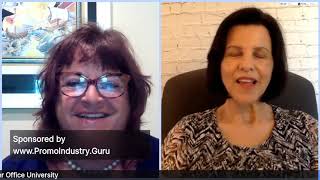
Pat Nauer, founder of Corner Office University, coaches small-business owners on winning government contracts and building relationships at trade shows. He emphasizes connection over giveaways and warns about Zoom security breaches. The conversation covers practical networking strategies, digital security habits like VPNs, and the importance of civility online.
Chapters
Good morning, Pat. How are you? I'm so excited to be with Pat Nauer. Am I pronouncing your last name correctly?
Yes, you are.
Yeah, Corner Office University. Wow. Tell us about, like, so I met you at the Volusia Hispanic Chamber of Commerce, downtown Beach Street, at— what was the name of that restaurant?
Oh, I don't remember, but man, their food is off the charts good, isn't it? It's, um, It is South American, Venezuelan, and it's unbelievably good food.
Oh, I really enjoyed that. That was really nice.
And it was a nice— empanadas. Oh my gosh, they're to die for. My new favorite food.
That was a nice video. Everyone's so lovely. So I'm so happy and proud to be a member now of Volusia Hispanic. And in an hour, I will be talking about etiquette in the new virtual world and We have, you have something really interesting to share about what happened this morning that is something we need to discuss, but I want to hear about Corner Office University first because your vision and your idea, you're working in a hospital doing the marketing and then what happens?
So I, well, it actually started earlier than that. It started in 2002. I was working for an event, well, they were a company that did education events and they were serving federal government agencies working with contractors. And I made the decision at that point, I had a degree as a paralegal and I made the decision to go back to nursing school. So I started a conference and training company to be able to serve the contractors who want to do business with the federal government. And it became federal, state, and local governments. And as I started working with a lot of these smaller businesses, realized very, very quickly that they didn't really understand, number one, how to run a business successfully. And number 2, how to actually get contracts as subcontractors with these larger entities. So I and my husband business partner started working with these companies to teach them how to do, how to run their businesses and how to get contracts. And that's where it all started. I love the whole business coaching side of it, the mentoring side of it. The business was alive for 11 years. We went through a lot of ups and downs through 11 years and learned a lot about business. And eventually I did end up closing it. My husband passed away. And I kept it open for another year after that, but it just got to be too much to do it by myself. Emotionally, I wasn't in the mindset for it, but I kept on coaching and mentoring people and eventually in 2014 switched over from working with IT contractors over to the general public, the general business public out there. And I've worked with doctors' practices, a lot of doctors' practices. I've worked with med spas, and— but I've also worked with handymen, with software developers, with electricians, with lawyers. You know, I've done the— I've done the gambit, and it's just such fun, and it's what I like to do now. And my tagline, what I say out there, is it's Corner Office University, where business owners, executives, and CEOs come to hone their skills.
I love that. So you must have helped a lot of women. Were there a lot of women that were that you were able to show them what a woman's set-aside business and how to apply for that.
And veterans as well. Absolutely.
That's beautiful. And then as far as then, you knowing the niche market. So with your background in public health, you're able to work with the hospitals, doctors' offices, med spas to make sure. I mean, it makes sense to me. As a matter of fact, one of the first things I did when I came to Volusia County was register. Now, besides the licenses and all of that, but to register to be a vendor with the city of Daytona. And it's very confusing. It's absolutely so confusing. The filling of the application is easy, but then understanding your codes to me is fairly easy, but understanding how they work, because all of a sudden there's so many companies now that want— that they— explain this to me so I get it correctly. It seems like they've hooked up with companies that want you to pay for the service of being able to see.
Can you go into that? Yeah, yeah. So it's really interesting because when you look at contracts online, the art, when the RFQs come out and you go to apply to do it, to work with them, filling it all out, there are specific rules. And depending on the state and the agency and whether it's federal government, state, or local, they all have different rules. It would be really nice if everybody played by the same guidelines, but even in the federal government, each agency operates differently. So understanding those little nuances, but yes, there are sometimes pay-to-play, which is illegal, incidentally, but that doesn't mean it doesn't happen. Oh yeah. Yeah. But that doesn't mean it doesn't happen. It does happen, unfortunately. And sometimes you have to look at it and say, is the contract worth it to me or not? Sometimes it is and sometimes it's not. A lot of companies have been really stung out there because they did a pay-to-play. And the contract either never came through or it came through and they had so many vendors that were working with them that particular company didn't get a piece of the pie.
Oh, oh, that's interesting too. I mean, I love the whole process of going to the interview in the beginning, getting all your information, meeting— like, I don't think a lot of people realize that you can meet the people that distribute the purchase orders that work on the POs of Volusia County. They're really warm, loving, and they give you all the information you need. They can't give you the contract because they like you, but you can communicate with them. They're not like behind this like block of ice and they won't talk to you. They're very— and then I like actually the ability to go in and watch when they read. I think that if you're going to be in a bid situation, you're going to learn how to do it. You got to go through every process. Don't just say, well, I don't need to be there when they, when they open it up. You really want to see the whole process. Once you've got that, and then I love There were the reverse trade shows by the local government. Have you— the NICP, I think it was.
Yeah. So they, and they've been around for quite a long time. Um, but yes, reverse trade shows. If you've ever done a trade show, trade shows are a real blast. I mean, seriously, if you've never done one, make sure you do because you will learn so much, not only about giving out stuff and communicating with people and getting contacts and all that stuff, But just the relationships that you build and the process of going through a trade show is worth the money. Anytime you can sponsor, anytime you can do a trade show, if you can afford it, do it. It's so well worth it because the growth will happen. Your business is exponential. Now about the reverse trade shows, that's always a really fun thing too, because they're coming to you rather than you go to them, which is kind of a fun idea, right?
Yeah.
So it's a great way to get visibility and to get people to know what you're really up to. And you know, if you've never worked with any government agency before, start local. You know, so many times a business will say, well, I want to work with the federal government. Well, great. Have you also worked with your local community? You know, have you gone through the process? Because on a smaller level, yes, they're loving, they're caring, they're very helpful. On the federal government level, not so much.
Not so much. Yeah, that's harder. My dad would do a lot of the bidding growing up in the family business. That was his He was so good at it. He really had all the relationships. But when I moved here, I think I came— I opened the gallery in September, and by January I was doing a trade show for the city of Daytona. And I think if your money is tight, what I did is I just teamed up with a supplier. I had Shelley, the, like, the most amazing vendor with me. And so she brought her products and I was able to just display. So just thinking about, you know, if you don't have the money, who else can you team up with, and maybe it's a collaboration or someone from your group or sharing a table. All of that can work. But you're so—
I'm going to give you a little hint, and this is probably the best thing that I've ever done and my clients have ever done. When we go to a trade show, we don't bring stock. We bring information, very small quantities. We have one little table, two chairs, and a couple banners, and that's it. We're there to talk to people, we're there to educate them, we're there to help them. We're not there to hand out pens and paper and tchotchkes. No, we're not there to do that. We're there to make connections, to build business. So when you think about that, you know, do it as simply as possible. And I promise you, you know, you give out handfuls of literature, people go home and throw it away.
As a promotional products person, I would— and this is fun because this is exactly— so you call me up and you say that, and I say, that is very true. My only thought is, especially if you— I never recommend anyone having a basket filled with pens, and of course, exactly, but if you have a special gift that's underneath your, your, your table, and I'm talking to you, Pat, and before you go, I say, Pat, I have something special. You spent 20 minutes with me, you allowed me to speak all 20 minutes, I want to give you something. May I see your key ring? And you show me your key ring, and I throw on your key ring an amazing flashlight that will last forever. Or I give you a pen that writes— the same pen, Fisher Space Pen, that the astronauts actually use up in space. You are going to remember me. And I just put it in your hand or your pocket or in your key ring. And that's, that's where the thing is. And you never— you got to romance it. So this, you know, $10 pen is really a $30 pen, or whatever I'm giving you is something really special. I think that is a place. And I also think that, um, having any trade show booth fun things like the puzzles where people have to come in and they have to find your booth and play the game, or you do a freebie— there is a room for that. But I— but what you're saying makes sense. Don't wait.
Yeah. So what I like doing instead is when I'm talking to people, I get their contact information and then I send them something afterwards.
I love that too.
That way it comes directly from me and it's not just something that everybody takes. That, you know, you wanna give out your promotional stuff to people who really, who you've connected with. And to people who it really matters with. You know, every dollar that you spend in your business is money that's spent. And if you're just giving it away, spraying and praying, it's not worth the money you're putting out there. Because, you know, I've got like a pen here from Hilton. I don't go to Hilton, but I get their pen, but that doesn't mean I'm ever gonna use them. So why would they wanna give me a pen, right? So yeah, so I would rather connect with somebody, have a great conversation with them, get their contact information, and then write a handwritten note and send them something of real value.
I think it's nice. I think also in a trade show, I love doing, I love throwing out tips. Another thing is, don't have all the merchandise and the balls and whatever you're giving away and then step away from your table because you, you ruin it like for everyone else. And I think that's so important. People feel like they're okay, I've got my trade show booth, this is me, I don't have to worry about everyone else. But trade show etiquette dictates that you actually work with everyone else. So first of all, you make friends with everyone around you so you can feel comfortable with them. And then if you have to go to the bathroom, you you know, they'll watch your table for you for a few minutes. But you, and then also you don't leave early and you don't leave early because they tell you not to leave early. You don't leave early because it can hurt all the other people. So I was at a trade show years ago and the person across from me had left early. And then of course, when one person leaves, it's like a little bit of a cancer, everyone leaves. And all of a sudden I noticed that people would be walking, they would look down the aisle a trade show alley, and they would be like, oh, nobody said—
and they would keep going.
So actually, I was like 35. I called the VP and I said the— and I told them the story. And I said, whoever was working your booth is probably going to tell you that they didn't get a lot of business cards, which is probably true. They didn't talk to a lot of people, which I know for a fact is true. And he's like, well, how do you know? I'm like, because I was across. They were on their phone and they left early. And, you know, and it affected me, and that's why I'm calling. And I don't care what you do with your employee, but For me, I just wasted money because nobody was coming down that aisle. And that person— so anyway, so he seemed to really understand that. But a lot of people don't talk about really why you don't leave early, because it hurts everyone else. And you're so right, don't just leave. Don't get a table and leave and think, well, I bought a table, I'm being nice, I'm going to show my support, and I'm going to leave my brochures and a bunch of bouncy balls on the table and walk away.
Right, and you know, the thing is, is that I have heard so many stories and it's happened to me as well where it's, you know, 5 minutes before the trade show ends and the right person walks up to your table. You just never know where or when they're gonna come from, and if you leave early from your trade show, then you've just thrown away money.
You know what, that reminds me of my parents. So growing up in a family business, my mom and dad, I don't know, I don't— maybe they had a camera on me. Honestly, I don't know. But every time I stepped out of the office, I'd get a phone call and they would say— and I said, well, Mom, it's been slow, nobody came in. And they say, Adrienne, doesn't matter, you stay until the clock— you don't just leave because one second you'll leave, someone will come in. And then of course, that's exactly what happened. 5 minutes later, I get a phone call. So I'm like, did my parents actually arrange all of that, or is that like the way I learned that even in the gallery, you just, you know, even when I had to close the door for a minute to go to the bathroom, I would be worried that I would lose one sale because that one sale is what you need. Have you done any of the virtual promo, like trade shows out there?
You know, I haven't yet. There's one that was just, that was just done. It was a big one too with this group that does trade shows all around the country. There's an amazing group and I've done their trade shows in the past, but I didn't just, it just didn't work out to do the virtual with them. But what they do is really kind of cool because when you bought a sponsorship, you got like a booth, like a real booth in their whole program, right? Where people would actually go and they would like log in their information as if they were talking to you. And then they would have breakout rooms where they would have conversations and talks and things like that going on. It looked like it was absolutely amazing. At the time, it didn't work out correctly, but man, that one looked like a really good one.
In our industry because everything is like show, like what you have. So they are, they've been doing it and then they have a bigger one and it's kind of cool. So you, you go in, so they have the booth, who's, uh, who's there at that time, and then you kind of knock on the door. So yeah, and then next thing you know, they're in their home office, garage, I've seen it all, with all the products. And then there's a one-on-one showing the items, talking about it, and then the follow-through. And that is, I mean, I could do, you can do everything but really see and feel, but even getting close up to the camera, you get an idea. And if they describe it well, it's enough to be like, okay, I've seen it. So I think that was just so creative. I love how businesses have pivoted during this time. What do you, so what are some of the things that you've been seeing and what do you think before COVID after COVID, who do you think is going to come far ahead? Who's closing their doors? That real name.
So what's really kind of interesting, I think, is that doing this whole three, the whole virtual thing, I think has worked so well for so many businesses. The meetings that I've been on have been incredible. I look at a group like BNI, you know, BNI has, and that's Business Networking International. It's a group that's around the world and they get all these network meetings and they're usually at 7:30 in the morning, which is really difficult to get to. I don't know about you, but I'm not really the early morning kind of person. But what they've done, and I really like it better than actually going to their actual live meeting, is not only do you see the person's picture and their name, but as they're doing their talk, their 1-minute presentation, their elevator pitch, what happens is they bring up the page with their information on it. So you get to see it, you get to hear it, and you get to really kind of have a physical interaction with it. When you go to the actual live meeting, what happens is there's so much commotion going on in the room, I think it's harder to focus. So I find that I'm actually able to learn what people are actually doing easier by being in the virtual format than I have been in the live format. Now of course live is wonderful because you get, you're able to actually go and talk to people afterwards and that kind of thing. But I think that for most businesses, unless like you're in retail or restaurant, I think that doing it virtually really works pretty well. Unfortunately, sometimes they have these hackers who hop into the calls and things like that, like what happened this morning, which is really bad. I was on a Chamber of Commerce meeting this morning and somebody hacked into it and it was a violent video playing and it was not happy at all. And we had to jump off, we couldn't be on it. But yeah, so other than that, everything I've seen has worked really, really, really well.
So this is interesting with what happened this morning. May I ask you, how far into the Zoom meeting were you? Was it like a networking meeting? Everyone was—
it was a networking meeting, yeah, for a Chamber of Commerce group. And it was probably about half an hour into it. Then all of a sudden this video popped up that was vile. It had a ton of violence in it. And they tried to stop it but said, no, we all have to get this going. And we did because they couldn't stop it. They couldn't kick it off.
Okay, that's interesting. So this was via Zoom?
Via Zoom.
Via Zoom. Okay. And then part of— so in 45 minutes, I'm going to be talking about virtual reality and civility in the workplace and virtually. But this is part of something that you have to think about is protecting the passcode and not having it be open. So as much as you say open Zoom call, I think that it makes sense that you have people register. This is why, even free or not, have people register for it so that you know and you have the control, because I'm sure the host is just still red in the face and upset, and who needs that on a Monday morning?
Yeah, and you know, this host is really good. She sends out emails and all that, but she also puts stuff out on Facebook. Not open on Facebook or anything like that. She sends it through Messenger, but that doesn't mean that somebody can't hack into your Messenger. Happens all the time. So happens all the time. Facebook Messenger, I think, is one of the least secure ways of communicating with anybody. I mean, for the most part, I've pretty much gotten off of Facebook. In fact, it was really interesting. I did a very interesting exercise where I really got off of Facebook for probably about a month. I've got a group that I'm sort of active in, and I would post things in that group. But other than that, on my own page, for the most part, I wasn't really posting anything on it. And what I found happened was before I stopped being on Facebook, what I found was that I was seeing the same people over and over and over again. Where's the rest of my network? You know, I've got thousands of people, where's the rest of my network? And when I got off of Facebook and I got back on, all of a sudden I saw posts from all sorts of people I hadn't seen in years. So the algorithm, you know, threw off the algorithm. So here's another hint. If you're not seeing stuff out there from people that you used to have in your network, get off of it for a while.
Interesting. Daniela from the Daytona Chamber says that to go in, it works where you put the— you want to see them first. So there's a, there's a 3 buttons you put it, and then you say see first so that I get information from the people first. I, I do love Facebook. I've always loved Facebook. If you message me hello and I don't know you, I delete you. I feel bad, right? And if you, you know, if, if you're not the like-minded or, you know, that I am, then I probably am going to just snooze you for 30 days if I don't feel, you know, I don't mind blocking anyone in the community. I probably just snooze because so many things come out and get churned up. But I've always been kind on Facebook because I'm kind in real life. I don't try to tell someone. But also, another thing with Facebook or any social media is that you're not going to really change someone's mind. So it's okay. Like, give— so someone had wrote about the young man in Atlanta, and, you know, oh my gosh, like, he should never have grabbed the taser and ran. And, and I was like, we don't even know, you know, he fell asleep in a Wendy's. He—
we don't—
we can't put ourselves in his shoes. I I don't know what would happen if I got drunk. And maybe he had horrible news. Maybe something happened. Like, how do you judge what someone's going through? And then they're having a decent conversation. All of a sudden, I don't know, if you try to put my hands behind my back, and what if my whole family's there? Like, I don't know how I'm going to act. So how would I try to say how someone else should act? So I go on, but I'm always kind and nice. And I'll just try to give, like, have someone think. But the minute they say, like, you know, that's crap, or whatever you're thinking, Adrienne, is wrong, then I literally just— I just will stop because I'm not here to argue with anyone, right?
This is—
but it's also part of your, um, your reflection of who you are. So if I go through your personal page, there's nothing there that makes me feel like, ooh, I don't really know if I like Pat and what she's thinking about, you know, her, her views on, let's say, equality and justice, her views on what's happening with Mr. Floyd, like any of that. That people are going to judge. So people want to be with people that are like-minded. My feed is all very positive and like-minded and, you know, kindness and a lot of, uh, I belong to a lot of those different groups and I don't have that many things on it, so I use it as a fun way. But my daughter, I just have to tell you this, my daughter got hacked and I got fooled too. So I have my daughter's Instagram on my phone. So she had a boyfriend and then the boyfriend kind of like like broke up with her a little bit, and then he kind of came back and said, oh, let's be— let's go back out again. He's in like 45 minutes away, so it's not like they even go out, but she does know him. He had gone to school with her. And then all of a sudden, like 4 days later after they were communicating, he asked if she would go in the bathroom and take a picture of herself with her bra on. And so I responded because I have her Instagram, so I responded with a tough, like, you know, don't ever ask me again, and blah blah blah And I thought, well, that's weird. But I didn't think maybe it wasn't him. 4 days later, one of her other friends is like, are you guys dating? And Alana's like, no, no, kind of, not really. And then she's like, well, you won't believe what he's done. And she sent messages that he sent to other girls. And then it was like, oh my gosh, Alana, he got hacked. And so she asked him and he's like, yes, he did get hacked. He had no idea that someone was out there using him. This young little 14-year-old to go and ask all the girls that he has on his Instagram account if they would send him pictures, ruining his reputation. So we kind of saved him. So now she's his bestie because she really was the only one that thought enough to say maybe it's not him. So that's another thing too, you really don't know. You could be communicating and all of a sudden you got to ask a few questions.
And I just, I feel like I'm rambling, so I apologize. But, but no, no, no, no, because it brings up a really good point. And last year I was at a seminar or a conference and my phone got hacked into. I had no idea it got hacked into until I got a message from Google saying they shut down my account. I lost everything except my pictures. I lost my calendar, I lost my contacts, I lost everything because I had violated their terms of service. About a week later into this, I got a text from from one of my former clients saying, hey, I want to take advantage of the program you're running. I responded back, what program? She said, oh, the program where you're giving away 42 weeks of coaching for free. Wasn't me. It wasn't me. So she and I worked together and we figured out who it was, where they were from, found the email, found the phone number, sent it to Google. They said, sorry, you violated the terms the terms of service.
Oh my gosh, you found out who it was? Was it someone that just wanted to hurt you?
I didn't even know who the person was.
Oh my gosh, that's— that is— I never even heard of a phone, like an entire phone getting hacked.
Yeah, make sure you get security on your phone. That's all I have to say. Yeah, yeah, I now have VPN on my phone. I also have additional security on it. I mean, nobody's getting through this phone.
My poor mom. So when social media first came out and my parents were So my mom had passed away at 89, so it must have been like a few years back, which if I got like a message from her, I would like have to quiz her. What is the name of your first niece's son? Every time she reached out to me, I was like having to make sure because it was at that point she was older, but I always thought, well, maybe someone else. I would get a response, you're so silly, Adrienne. I, and sometimes I still do the same thing. Text messages are horrible. So you gotta just—
I even use services like DuckDuckGo, where it's a— yeah, not only do I have VPN on my computer, which I use religiously, I also have additional security on my computer, but now I use a program. There are several of them out there. One of them is called DuckDuckGo. And what it is, when you put something in a search browser, it sends it through DuckDuckGo and nobody can tell where it's with the IP. Where you're at. Sorry, what your IP address is.
Wow.
So nobody knows it's coming from your own computer. So in order to have that plus my VPN, where— so nobody can really tell where I'm going from. The only time they can tell who you are is when you actually land on that site and you open it. Then they get access to what it is. But in the actual search, they can't tell who you are.
Wow. All right, so now I have a question for you, and then we have to go because I gotta get ready for the, uh—
I know. Half an hour from now, 36 minutes, you're gonna be on. It's gonna be such good. And if you are not on the Influence, uh, if you're not in the Volusia Hispanic Chamber, you can still get on today. Effective next week, we're going to be doing it differently where only if you're a member of the chamber will you have access to it. But for today, if you're watching this and you would like to hear what Adrian is talking about, um, shoot either Adrian or me some kind of a message either through Facebook or whatever, and we will get you on it.
Oh, beautiful. I appreciate that. I'll put that out. All right, so here's my question. Why, when we all really know that we should mute ourselves, what is—
what is it?
What, what part of our brain says, yeah, you know what, I don't really mind if someone hears my dog in the back or the baby crying or my conversations. And then, and I just want to say, the only thing I could think of when I want to come up with an answer is that for me, when I was in my early 30s, I remember during meetings, I would always want to show up late before I had etiquette training, because in my mind, showing up a little later at a meeting showed that I was actually busy and Oh, I didn't plan my life around the meeting. I'm so busy that I'm going to come to the meeting when I can. And that was like a kind of badge of honor that I'm not honestly sure if that was a family kind of badge of honor or if I just being young didn't realize that. But it kind of makes the same thing in my mind. Like, you know, all of a sudden I realized, my gosh, that's the worst thing in the world. I need to be there early. It's not about how busy I am or what it looks like or what I'm thinking in my brain. I need to be there and present early to show the respect to who's hosting the meeting. But could that be one of the reasons why someone maybe a little younger wouldn't mute themselves?
It's not just young people who don't mute themselves. It's older people too. And I think that people just don't think. I think they're only thinking about themselves and what they want and what they're doing. If they're not thinking about how it affects the greater public. And I've got to tell you, you know, I'm so glad you're doing civilian training today. Oh my heavens. I was on a meeting several weeks ago and it was again, a chamber of commerce meeting, surprisingly enough. Anyway, there was this one guy who got on and he was sitting there on the floor, dirty as can be. I mean, just looking nasty, had not taken a shower that morning in his underwear with his computer in front. And you could see a lot. Let's just put it that way. And I had a conversation with him afterwards because you know what, that just isn't cool. And he just didn't even, he didn't realize it. He just didn't think about that. You were, it was like he didn't see himself on camera to see what he was looking like. He just didn't see it. So I think that some people don't either see or hear what they're doing, you know, when they don't put their camera You know, when they don't turn off their camera when they get up and they're wearing their underwear, they're wearing shorts and they're wearing just a professional shirt on top and shorts on the bottom, or underwear on the bottom, or nothing on the bottom. We've all heard the stories about, you know, somebody going into the bathroom and not realizing they're sounding the cameras on, right? It's like people just aren't even paying attention to it, and you've got to because it is your image and it is the professional. You are a professional out there, you hope. And that all of this does affect your business.
And it's happening every day, every conversation.
Yep.
So, so scary. Okay. So hopefully we don't get hacked. And so I look forward to getting the— I look forward to going on to Zoom. I look forward to sharing these tips. And I always love for everyone to give me their suggestions. So afterwards, it's not just a Q&A, it's a Q-S&A. Questions, suggestions, and answers.
That's awesome.
I love that hashtag QSA.
I love that.
So anyway, so I'll see you in a little bit if you're going to be— are you joining?
I am. I'm looking forward to it. Thank you all. You know, no matter how much you know and how much, how experienced you are, you can always learn something new.
I totally agree with that, and I look forward to learning something new from each of the Chamber members, actually, wait, maybe we could go around the Zoom to have everyone give a tip because I think that that is so important. I learn more from other people. So thank you so much for having me.
This was great.
I'm really glad and very excited to begin and develop our relationship together. And we're like-minded and we're young and we both have a lot of energy and we both don't like to get up in the morning. So that's lovely. And by the way, I, I, I, I I don't belong to BNI now, but I did in Orlando and still have a lot of friends. And I will never have anything negative to say about BNI. It's a great group, a great bunch of people. I love the structure. I love everything. And I think in your life, there's times when you really— and actually the learning and the education and the ability to serve. And I actually would like to do— I was thinking about for the next couple of ones that when we do this for the Monday, Lunch and Learn is servant leadership and what it means to actually serve and why that's important. And I always believe for myself, okay, so I have a lifelong life of serving like you have, but how can you and I develop someone else that's younger and how do we get them to serve on a board that's passionate and that the board to say, I'll take someone on that has no experience on a board, but we'll mentor them. And I think that's what I really— that's what I want to discuss in a couple of weeks is servant leadership.
And how do we get people to actually go out there and serve and not just make money? That it comes from a place of service, not just from a place of business, not just from a place of making money, but really making a difference in somebody's life.
Love it. Love it. Okay, good. So that's on board. All right, I'll see you shortly and I'm going to get us off. So thank you. Thank you so much.










