Candid Conversation with Host Adrienne Barker
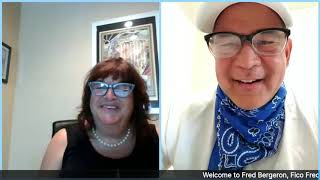
In this informal, one‑on‑one YouTube interview, host Adrienne Barker, MAS, talks with Fred Bergeron about a wide range of personal and professional topics. The conversation opens with COVID‑19 safety habits, then moves into Fred’s family background, the recent loss of his mother, his brother’s sudden death, and his own health reflections. Fred recounts his upbringing on Midway Island, his mixed Filipino‑American heritage, and his service as a Navy Seabee, including deployments to Key West, Jacksonville, and Rota, Spain. He shares a painful period of homelessness after being fired from a well‑paying tire‑factory job, describing how he lived in a car and relied on the Salvation Army. The discussion shifts to his financial turnaround, highlighting his adoption of Dave Ramsey’s Financial Peace University, budgeting practices, and the use of the EveryDollar app. Fred explains his involvement in Toastmasters since 2014, his public‑speaking achievements, and his role as a mentor. He also talks about his diversified income streams—real‑estate sales, credit‑repair services, and real‑estate photography—and his community leadership through Daytona Leadership and other chambers. Throughout, both speakers maintain a conversational, supportive tone, sharing personal anecdotes, advice on health, budgeting, and leadership, and expressing mutual admiration and plans for future collaboration.
Chapters
Yes, you get—
oh, can you hear me? Barely.
I can't hear you.
Are you, uh, click that button that you need to. Fred, I can barely hear you. Oh, there we go, because you know what, it was my headphones. This is what you get when you use your daughter's, like, headphones. Don't use— okay. Hi Fred, what are you doing with a mask and hand sanitizer? What's going on?
Well, Let me just say, yo, Adrian, I am not your father. No, I am at home practicing social distancing, as you can see.
Is that a full bottle of Germ-X? Oh my God, everyone go to Fred's house and get the Germ-X. Seriously, Fred, that's like, that's like shoving it all. Look at what I have. Where'd you get it? How many more bottles do you have?
I got it from the Dollar Tree in Ormond next to KFC.
When?
Last week, right before they started selling out.
Oh my gosh, yeah, it's hard to get right now, really hard. Jeez, you're lucky. So Fred, do you wear a mask in public?
Yes, I do.
Why?
Well, for not just my safety, but the safety of others. A friend of mine did a speech the other day on these are more to protect the public than ourselves. So if I were to sneeze, you know, I don't have all those contaminated airborne products sitting, lingering in the air for far and getting other people sick. So it's more of a consideration type thing. And since all these places are out of masks, I decided to use the one that was given to me at our leadership class.
A yellow. Anyone who knows about Dr Pepper's— oh my God, escape me. What was it called? Oh, or SimCity?
Yes, The Sims class, correct, for leadership. Daytona, correct.
I'm yellow. That was something else. Fred, thank you, because actually, and they actually say when you, when you just speak, you have spit sometimes comes out. It really— I think wearing the mask is separating the people that are selfish from the people that aren't. So most people, if you know that they're wearing a mask and you kind of look at their personalities, it makes sense. They're caring, giving, loving, all those beautiful positive words. And then when you run into someone who's not wearing a mask, you kind of think to yourself, yourself, like, how do you not wear a mask when you know you have an opportunity to protect someone? The thought to make someone else sick, I, I couldn't even live with myself. That I just couldn't. So thank you. What's in your fingers too? I feel like I'm looking at gloves. Yep, that's the way to do it.
They'll keep it all blue.
That's right, the blue, the blue team. So Fred, so you and I are just getting to know each other. I think in the past year we've seen each other at many events, but not really known. And we had never had anyone connect us, which is interesting. And when we get back to the real world, we need to start to connect people together so that, you know, 'cause it's okay to say, hey, blah, blah, blah, meet blah, blah, blah, and boo, you know, get together. But I, so when I got, Leadership Daytona, which I'm really excited about, and I can't wait to get back. I decided that I would go onto LinkedIn and connect with all my fellow classmates. And then it's funny, and then that day that you accepted me, we were sitting across the room from each other and you're like, are you the one that sent me the LinkedIn? So it was really nice and it's nice to get to know everyone. So it's nice to have this time to get to know you and to learn more about you. I don't even know where you were born. I don't even know anything about Frank.
Okay, well, let's start with, I was born in Midway Island, Hawaii.
Really?
Yeah, it's a U.S. territory of Hawaii. My mom was in— was working at the Navy Exchange in Subic Bay in the Philippines because she's Filipino, and my dad's American. He was in the Navy and saw her, but he was too afraid to ask her out, so we had a friend ask her out, and her answer was, before I say yes, tell your friend that if he, if he shaves and gets cleaned up nicely, I'll say yes. So, so he did, and then 2 years later I was born.
That's so sweet. Philippine women are so beautiful. They're just beautiful women.
Yeah, and unfortunately I just lost her in September.
Oh, I'm so sorry. That is really hard. That's very, very tough. Is your dad still alive?
Nope. I'm, um, and here, let me, let me give you a backstory, Adrian. Um, my dad passed away in 2001. My mom just passed away this past September, and my brother passed away suddenly of a heart attack on December of 2019 at 38 years old. So right now I am the only living Bergeron next to my niece and my nephew and my two aunts and my sister-in-law.
Wow, wow. And so your brother had no, um, did he realize that he had anything with his heart? It just came out of nowhere, just snuck up on him. That's scary. And then do they test you to make sure that it won't— that's not hereditary?
Yeah, here's what happened is right after that happened, um, according to his wife, he was going to get checked up earlier but got so busy with his business that he was going to reschedule it. And right after he passed, my sister-in-law and I were talking, and she was getting her kids checked. And this is before I moved back to Florida. She said, do me a favor. She said, I already lost my husband. I don't want to lose any other family members. She said, do yourself a favor and get checked. And I did. And I had just started going to the gym in Georgia for about 3 months And one of my routines was the treadmill. When I found out that happened, I stopped going to the gym for a couple of years, and I want to go back, but I'm taking baby steps to get back because that's still sunk in my head as far as what happened to him. Wow.
So what did the doctor— do they set you up with an EKG and have you do like a stress test?
Yes, and everything was fine. You know, he said there's good cholesterol and bad cholesterol and everything. Was kind of balanced out for me, you know, but he just told me to just keep watching my diet, get exercise. And really what I do for exercise now, especially during this pandemic, is I walk every day. I take a morning walk for about 20 minutes, you know, sometimes longer if, you know, if it's round trip or, you know, I gotta run to 7-Eleven or something like that and come back.
You're funny.
Walk to 7-Eleven, should I say.
I could— Fred, you know what? I could understand that, that fear. Like, nobody could really talk you out of that, that feeling that, like, wow, I'm so sorry. That is— so what have you learned from this then with losing— with actually losing your entire immediate family?
Don't take anything for granted. And, you know, pay attention to any, any slight signs of health issues and, you know, think things of that nature. If it's— and especially now, just find— if, if you got a sneeze and it's consistent, or you're coughing, and, you know, go get, go get yourself checked out. I mean, even if you have to pay a couple bucks to, you know, that little bit of money you pay will pay for itself in the long run.
It's so true.
And so fortunate enough to get VA benefits, so You know, I go to the VA with the exception of now as often as I can.
Wait, so did you serve or is that from your, your, your family? What did you— were you— so, okay, so you're born in Hawaii, but then when did you come to the United States? Did you serve? Where did you live?
What happened was after my parents got married, my dad's family was from Massachusetts. Okay, so they moved there. So that was where my mom got acclimated to. The United States. And from what my grandparents said, she could speak very little English at the time, and I couldn't either. And my only word I could remember was shot. So I'd walk around, I'd walk around pitching everybody in the butt going shot, because that's what I remember getting shot as a kid.
Oh my God.
And my grandfather introduced my mother to snow. She had never seen snow before. And he played a joke on her, gave her a snowball, and she didn't know what to do with it, so she just threw it in the toilet and just let it melt because she had never seen snow, had no idea what it even was she was holding. Wow.
Oh, I love this story. What part of Massachusetts?
The Dalton-Pittsfield area, a very small part of Massachusetts. And if you've ever heard of the Jeff Reardon used to pitch for the Boston Red Sox and briefly for the Braves and the Reds. That's his hometown.
Wow. Oh my gosh. Okay. So then from there, tell me a little bit more. So then when do you— so were you in a service? Were you in the service?
I joined later. I'm what you call a second-generation Navy Seabee. My dad was in the Navy. And for those who don't know what the Seabees are, that's— They're the grunts of the Navy. They're the ground pounders. And I like to say the only time we see water is if it's raining or we're taking a shower.
That's awesome. And what is— so second generation means your dad was it. And then so how old were you?
I was— well, you're making me tell my age, Adrienne. I was just over 19.
Wow. OK, so how many years ago was that? Yeah. Wait, so were you— were you born in like— but were you close to like 1962? Is that close to when you were born? I don't want to know. I don't want to know your age. I'm just wondering if you were born like 1962.
A few years after.
Oh, so I'm older than you. Just remember that I'm older than you. So thank you for your service. That's awesome. That, that is really great. And then where— so where did you serve? Where were you? When you were—
Well, most of my time was reserve time. So most of my time was either in Orlando or Jacksonville. My first duty station of all places was Key West, Florida.
Wow.
So I went there right at the ending of— right at the starting of lobster season. We were coming back right when lobster season was starting out there. I got to scuba dive. 'cause I scuba dive also. So I got to scuba dive out there. And my most memorable place during the Bosnia War was when I got to go to Rota, Spain. I was in Spain for 9 months.
Wow. That, wow. So how long were you in the Navy?
12 and a half years.
Oh my God, Fred, that's really beautiful. Thank you. That is really, see, It's so important to get to know. This is our live one-on-one. So, and then, okay, so now, now were you ever married?
No, ma'am.
Let me call, excuse me, let me just call People's Magazine to say we have someone single here. So very nice. And then what brought you to Volusia County? 'Cause you were in Georgia, you said?
Well, unfortunately my mom and dad got divorced and while we were visiting my grandparents in Massachusetts, she met a guy when she was still in Hawaii, and they got married. And he was from Palm Coast, he was from the Flagler County area, and convinced her to move, to move here. And we were living in Flagler County at that time. And a funny story, Adrian, is I was going to Flagler Palm Coast High School at the time, but which at the time that was the only high school in Flagler County. Now they have, now they have two. And a lot of the people I met were saying, oh, you gotta, you gotta come surfing with us, man. They said the waves we catch around here are like 2 to 4 feet. And I laughed at them. I said, are you serious? I said, I learned to boogie board on 8 to 10 foot waves. That's so funny. So I was like, no, that's like, those aren't even baby steps. I said, those waves are still sucking on a bottle. Oh, that's so funny.
Oh my God, I love that.
Yeah, but what— and then what brought us to Ormond Beach was my mom got a job at Ormond in the Pines at the nursing center there, and she just figured it was easier if we just moved here. So that's what brought us to Ormond Beach, and then I ended up going to school in Georgia. And then when my brother passed away 10 years ago, I decided to move back to support my mom because she, you know, I felt it was the right thing to do. Plus I, plus I had gotten laid off from my government job, so I just figured it was the right thing to do.
That's beautiful. Wait, so growing up in Flagler, that's kind of funny because, so I mean, they call it like the sleepy town, but now like they're finally seeing growth. So I have no idea what Flagler looked like years ago. So when you were growing up, was there even a store? I know it sounds funny.
Well, let's put it this way, I helped, I helped build the McDonald's that's over there in Palm Coast.
Really?
When I was 16. I got hired to work at McDonald's. I trained at the one over by Seabreeze High School to work at that one. So I actually helped start that McDonald's in Palm Coast right off the, right off of the interstate. And I don't know if you know this, but the old exit number was 91C. I don't know what it's called now. We used to live on Farnham Lane, and when we— when I first moved back, my mom and I wanted to take a look at where we used to live. Adrian, we couldn't even recognize it because there's so much shrubbery now and trees. We couldn't, we couldn't recognize our street. We drove right by it 3 times.
Wow, wow. That— I would have thought there was growth. I mean, because it really had— like, it's not the sleepy town anymore, right? There's a lot of businesses coming in. I, I love seeing the Flagler growth. It's also interesting to me because you have Flagler, which, like, the beach side and where you get whole belly clams, because I like whole belly clams. And then the other side by the airport, which is more rural. It's a beautiful place to live. Very quiet, very quiet. So is this area. I mean, when my son was here from Shanghai, he's like, you live in the country. This is very country to him. And so he, uh, he got bored quickly. What— so now tell me, so, so, okay, so now you're, you're here, you're Ormond, And then from that point, where do you live now? Are you still in Ormond?
I'm still in Ormond.
Oh, that's nice. I think you're just down the road from me. Are you— so Ormond on the Pines is off of Flagler by Wells Fargo?
Well, Clyde Morris.
Clyde Morris. Clyde Morris, because I live right down— I live across from Hinson Middle School.
Well, yeah, you're not that far from me. I live in the Trails.
Yeah, I love the Trails. That's really a pretty area. That's, that's a— the shopping center, by the way, is really interesting. Like, and it's funny because I kept thinking to myself, why is Publix there? They're closed. They closed that Publix, right?
They're remodeling it. They're going to be closed for about a year.
Oh, they're okay. Yeah, it never really seemed to fit in. It was— it's an interesting mix of, of stores and restaurants, but I don't know, it just seemed weird. The Publix right there, you wouldn't expect that. Are you— have a little cold right now, or do you just normally have a cough?
No, I'm just scratching my nose, that's all.
Do you smoke? Are you a smoker?
No.
Good, good.
You want to hear a funny story though? I used to Clinton smoke just to blend in, but I never really smoked. I was too afraid to inhale.
Oh, you're so funny. I, you know what, I, I, I could— I am that person that can have a cigarette and like, and then be fine, not have it again. My mom would smoke cigarettes and to have bowel movements. You told me that it actually does work, so maybe it's something in the system, but I haven't had a cigarette in a long time, and definitely not now, obviously. But I, I don't have an addicting personality, so like I can, I can have something but not like be addicted to it. It's weird, I just, I don't know, but I don't get addicted to anything. So tell me a little bit more. So, so I love the Daytona Chamber. So you're FICO Fred, you're known as FICO Fred, you're a realtor, a photographer, send out cards, and FICO Fred. So there's 4 parts of What is the— what's the busiest part of Fred?
The public speaking part.
I love it. Tell me a little bit more about that then.
Well, I started out in Toastmasters back in August of 2014, and I actually found out about it from the Holly Hill Chamber because the director there, Rose, was in Toastmasters at the time, and she knew my story about being homeless. And how I wanted to be a homeless advocate. And she said, if you're going to be a homeless advocate, you definitely need to consider Toastmasters. So I found the club in Ormond, went to one meeting as a guest, went the following week and joined and actually won a contest or actually won something called Table Topics.
I love that. I am— I got my— I got my Competent Communicator. I was the VP of Executive Toastmasters in Tucson, Arizona, and I was going to go to the one over in Emory Riddle, but I really have a hard time finding it on Monday nights.
Where—
which one do you go to? Do you go to the same one that's in Emory Riddle on Monday?
Well, there's, there's actually like 4 clubs that meet on Mondays. There's the one in Emory Riddle, there's one at Advent Health that meets on Monday nights, there is Coastmasters that meets in at the government building in Bunnell, and then there's the one I belong to, Horizons Stars, which is in Orange City.
Oh wow, you go all the way to Orange City. Oh, that's interesting. Okay, very interesting. I just got to get myself to the, uh, to the one over at Embry-Riddle, and that's my goal. That's my goal. All right, can you share the story of being homeless? Would you mind?
No, I don't mind at all. I love sharing my story. How it started out, Adrian, is I had a— I was working at a tire factory, very— had a very good Good paying job. Granted, it has ups and downs, and I was getting turned down for promotions. And one day I got fired out of the blue. Valentine's Day of all days, I got fired. And I just got a brand new car, and a month into it, I get fired. So, and it happened almost all at once. First I lost, first I lost the car, and I had about I had a year left to pay on the car. Then I lost my house and I had about 18 months left to pay on the house. So I had to find another place. I was— I had a cheapie car at the time. I had a Geo Tracker that was also my second home, so to speak. So I was sleeping in and out and I'd also stay at the Salvation Army on occasion. And when I got, you know, when I got fired from that job, I was able to get another job in retail, but for a lot less money. So that's how I ended up homeless, because I just, I just couldn't keep up with a lot of the payments because I went from making over $40,000 a year to $16,000. So I was one of these homeless people who actually had a job, you know, and how often is that? And if you want to see my speech. I spoke at Elevate Daytona. Here's my shirt right here.
What year was that? Last year or the year before?
I, I spoke July of 2018.
Oh, the year. Okay, because I went last year. And, uh, were you, were you signing up to join, to go again? Where did you have another speech?
Yes.
Okay, beautiful. Okay.
As a matter of fact, my audition was supposed to be April 16th, but because of the coronavirus they had postponed it. But yeah, I did sign up again to speak at this one.
Oh, you know what, that's good to know, because if Marie and I have any questions on the PowerPoints, guess who we're going to be asking?
Hey, I'm your guy. I'm not afraid of PowerPoint.
So I really appreciate that. So you really— you know what, what you're saying really makes sense. What year was this that you were, um, you lost a job with a tire and then you were working?
It was, uh, About 2002.
Wow, wow, that's beautiful that you went right to work, but then it's— I'm afraid, are you a little nervous that this could all happen again after the pandemic? What do you think?
Yes, but I got a little bit smarter this time. I mean, because, you know, most of our businesses took a hit, but a friend of mine who's also one of my Toastmasters mentees, Kelly Moore told me about a guy named Dave Ramsey and his Financial Peace program, and she's a coordinator. And I went to a few of her classes and I liked it, and I ended up being a coordinator as well. So just having that Dave Ramsey mentality helped me better with my money.
Dave Ramsey, I have no idea who Dave Ramsey is.
He's a, he's a finance guru and he helps you get out of debt. He has all these steps. Just go to financialpeace.com and you'll find out all about Dave Ramsey. You can look at his podcast. So following a lot of his steps really helped me. And when this happened, thank goodness I was able to set my emergency money aside and pay off a lot of my debt and learn about the debt snowball and all that. Applying that is what really helped me, which I didn't do before. When I became homeless before, I had maybe 3 months ahead of, you know, like emergency money, but I had burned through that so quickly because I wasn't expecting to lose my job, you know, and much less get a much lesser paying job at that because they denied me unemployment too. So I got all kinds of double whammy there. So now it made me smarter. Now, granted, I'm still scared because we're in unpredictable times, but I've got enough of a cushion for probably the next 6 to 8 months, probably. Not that things will probably get better than that. It just made me more aware. And then when my friend turned me on to Financial Peace University, I just hunkered down. And I'm glad I did because nobody was expecting this pandemic. And now I got the money set aside that I need, and I've even separated my accounts between my play money, my business money, my bill money. So, I've done things like that. you know, in my emergency money. So if emergency comes up, I don't have to dip into my, my main account and things like that. So it's, it's got me a little, a lot, um, more money smart.
I am, um, I'm not good with money. And I think, you know, growing up, my parents were, uh, they took care of the kids. They were very generous. They worked hard. But one of the things that was hard for me is that my parents always paid for everything. And so we're always so generous, and I thought that that's what, you know, I'm supposed to do too. So, you know, if you— if we go out to eat, I would pay because I— and that's all I knew is what to do is how to pay. And so somehow— and it's not my parents' fault because my mom would say money burns a hole in your pocket— but speaking to me about that and then what I was actually witnessing and watching, and even though they earned the right to be so generous, they worked hard, it was their money to be generous, it still made me feel like I, I was supposed to do the same thing. So even when I don't have money, I mean, even when I have nothing, I, I feel like I should, I should pay for something. I should pay for the meal or whatever. And actually, that was kind of part of the reason I did go to etiquette, because I wasn't sure— etiquette training— I wasn't even sure how to handle that. So for a while, when I was making very good money in the family business, I mean, if you came to stay with me, or if I would— I paid for everyone's dinners and lunches and meals. I, I Never, I didn't understand another way. And now when I look back, I realize that it was really dumb of me. I blew through so much money and spending on other people than myself. And I'm just being honest right here, you know, probably the first time I've even said it out loud that I am not good with money. And even now, and I think I also have that weird mentality. And I think unfortunately, Fred, I gave it to my children too. It's like, well, let me have that lobster dinner tonight because you know what, maybe I won't have it again. And at least I can have that one lobster dinner while I have the money. Maybe I won't, you know, maybe tomorrow I won't, but at least— and that's such a screwed up way of thinking, isn't it? But yet it is what my head thinks. So if I have money, it does burn a hole in my pocket. I think I'm gonna have to listen to Dave Ramsey.
Dave Ramsey is his name. And the thing with that, if you want to splurge, it's okay to splurge. You just have to put it in your budget because you have to set it. You have to set a budget for food. You have to set a budget for— what do they call it? The, you know, the necessities, you know, food, shelter, you know, clothing, things like that. So you have, you have to budget for all that. So if, if a lobster dinner is within your budget, so say you set like a $500 budget a month for, for food, that is to be included with your budget. So just remember, if you, if you spend $100 on a lobster dinner, You know, you're going to have to really watch your budget from that point forward. You know, are you gonna— are you gonna be eating, you know, frozen dinners, peanut butter and jelly sandwiches from that point, or are you going to try to stick to that budget and, you know, and make it work? And something I found out about budgets that I found out from Dave Ramsey is if you're disciplined enough to do a budget, whether it's by yourself or with a partner or your better half, for about the first 2 or 3 months, it's going to sting. It's, it's, it's, it's— I'm gonna be honest, it's gonna sting the first couple of months. But then from that point forward, you're going to have things figured out. Like, okay, you know, I overspent in the food category, maybe I need to spend less in the entertainment category to, to balance them out. So it's, it's a learning curve probably for you about your first 3 months, you know. So Go ahead.
No, I'm just like, I'm just thinking I really don't even have a budget. I really need to do this. I didn't think that our conversation would actually be making me realize that. I, I think that, and I need to do it for Alana, my 14-year-old, for her too. Thank you. I really, I really need to do that.
There's an app, it's free, that Dave Ramsey put out. It's called EveryDollar.
Okay.
And you can put it on your phone, your tablet, and you can even get it online on your computer. And it, it gives you a breakdown. It's got categories pre-made, and you can make your own categories too. And you just basically, you know, put the incoming and outgoing expenses. It's going to show you, you know, where your budget is for that month. And I can assure you, Adrian, it's going to be in the red. But then you're going to learn how to adapt from there because of how it's broken down. And then when you learn about the debt snowball, that's going to help you budget. That's going to help you budget as well.
All right. And my son too, Alex, if you're watching, I'm going to have my son. Will you be my accountability partner?
If yes, I would definitely love to be your accountability partner.
I need that because I feel like I could easily say, eh, but I really, I'm honestly, this is like real honest. I need it. My son needs it. Maybe my other son needs it. The only one that probably doesn't is my son Sam, who lives in Shanghai. He's pretty strong with his money. And when he was here in September, he was like, he would say, you're not good with money, Mom. Like almost every day when he would watch me go to the store, he's like, you don't shop correctly.
You don't.
You are just horrible with money. You're horrible. And so I have my son watch us so he can hear that.
Adrian, when you set that budget, you— it's going to come to you like, whoa, I spent that much on eating out, or I spent that much at Walmart. And, you know, and you're probably going to realize a lot of the things that you buy were probably unnecessary.
You're right.
You know, over time, I've—
the— you know what, I don't talk about this too much. There's a guilt to it too. There's a shame. So even after, like, if we have— so weirdly enough, being home and being stuck like this where you can't really go out. And yes, we can. I said to my daughter, tomorrow let's find a restaurant that we can, you know, trust, obviously, that I will feel safe at, and we'll get something and we'll bring it home because I know my food. I'm not a good cook at all, but there is a shame. So like after we enjoy something or after I do buy something, then I, I have that buyer's remorse, that kind of like that shame, like, should I have done that? Was that the right thing? So I, it really does play in my head a little bit. I need to, I need to be prouder. I'm not proud of myself and money. I'm really not, so thank you.
And then when this all settles down, I'm going to be coordinating another Financial Peace University class. Once this settles down and I kind of know where things are going, I'm going to post it on Facebook again. And my, my Toastmaster, Bente Kelly Moore, she's currently teaching it right now, and she transferred over to Zoom, obviously, because they can't have it in buildings. So she just kind of picked up where they left off, and having Zoom meetings.
I love that. I love that. Would you post on your— I don't know if you, if you mind, but I would love to see your Elevate, and I know they recorded it. Do you still have copies of yours?
Yeah, I've got, I've got a saved URL for it, and I'll be glad to send it out again, Adrienne.
Yeah, do that. And then I would like that. That is nice. And so you're right, you said to me it's gonna be more than an hour, and you're right. And I really love talking to you, Fred. We'll have to do this again because I want to learn more about And thank you for the card, by the way. I have to say that. SendOutCard— I use SendOutCard for my son's, um, bar mitzvah. It was amazing that I could actually— all those pictures— so I could not only say thank you for their gift, but I had— I gave them like a gift. It was like giving a gift for the gift. I got thank you cards for my thank you card, which was really amazing. So I went to look, I have like $1.72 on my point, so I have to get more. So I'll have to— it was so long ago, but they still keep your account. So I need to talk to you about what to do.
Yeah, a friend of mine from BNI turned me on to that. She's actually a representative of SendOutCards, and I was sending a lot of them out during the holidays to my sphere and to my friends. And the guy that put my website together, I put a card together with him and his wife and their kids. He was blown away. He texted me, he was like, he's like, holy mackerel, dude. He's like, that card was awesome. He said, the first thing my wife said was, you You gotta thank Fred. And I never even met his wife. I've only seen pictures of her.
It is really— okay, so really quickly. So you're a realtor and you also are a photographer.
Real estate photographer.
So wait, you diversified yourself now too. So if, if something happens, so you didn't, instead of having all your eggs in that one basket, you diversified yourself. So now you have different income streams, which is so brilliant.
Yes. That was the exact concept behind it because you get paid one way in real estate, I get paid another way with my credit repair business, and I get paid another way in my photography business. So that's exactly why I did that. Different multiple streams of income but different ways of getting paid as well.
Right, really, really smart, and you're good at what you do too. I love that. That was a nice card you sent. Your business card is nice. It looks like— I call business cards are either they're nice or they're winning raffle prize cards, the ones that are a little thicker. So when someone puts their hand in, it's like, oh, Fred, okay. Yeah, got the winning prize card. I love that. And then, um, and then I love that you're in Daytona Leadership, so you are consistently wanting to learn. Are you looking to run? You would be excellent in politics.
You're the first person that told me that, and I'd have to really think about that because I have my opinion on politics that I'll just leave it that But I also like making a difference, Adrian. And because I'm homeless and I have a story to tell and I help fight to get that shelter on ISB with the faith organization. So in some aspects, I could probably like it, but it's something I'd have to really, really think about because I like making a difference in people's lives and I like making a difference in the community, which is my first step in Daytona leadership. So we'll see. I mean, I'm flattered. It's, and it's something to think about, Adrian. I appreciate that.
We really are all like-minded people. That's the wonderful, that's the beauty of Daytona Leadership. And I, you know, I am also Leadership Osceola, Leadership Orlando, and Leadership Greater Hollywood in Florida. But I only do them because I know there's like a guarantee. You go to Leadership and you get into a Leadership class, there's actually a guarantee that every single person is professional and has a, has a, like, wanting to learn, cares about learning, that they're not stagnant in what they do in their life or happy to be at one place and not, you know, reaching out there. And also, they're, they're, they're, um, I want to come up the words. This is their— you help me, help me, help me with the description. So when you do leadership, you're a lifelong learner, right? You're not shy. You're willing to put yourself out there. Even if you are shy, you're willing to put yourself out there. We all had to walk in that first day and meet each other. And we had to just say hello and talk to each other. And then the experience that we all did together was really fun, SimSoc. And now learning together, each of the groups, and then we have the project to do. So we all get to share and do and make what makes us look really, you know, out there. And this project that we have is kind of crazy with everything going on. So I know we're all kind of letting everything sizzle and see what's going on, but yeah. I would definitely recommend if for anyone listening right now, if you have an opportunity to do a leadership class and it's done by a chamber or group that really knows what they're doing, do it. It's worth every penny. There's sponsorships too to do it, but it's, it's the best. You know what I was able to do? Jim Cameron, who, you know, right, we all love Jim Cameron. He, uh, I did the political leadership, so I did the Public Leadership Institute, Volusia Flagler. It was 40 hours back in the fall. and that was paid for by the sponsors, and that changed my life. I really do want to run for city council.
If I can piggyback off of that, Adrian, is I think anybody needs to do any type of leadership role, whether it's in a leadership class at the chamber, in the military, in Toastmasters. Most of mine developed through Toastmasters, and I just kept moving forward from that point because it's done a lot for me. I've been a successful leader in Toastmasters, and I've passed that on to my mentees as well. They've done a great job as well. But I have two sayings when it comes to leadership, and that's leaders are learners and leaders are readers. So you never stop learning, and you always want to be learning. And a lot of that's done by reading. I mean, some of it's by reading, some of it's learning from other people. So, I mean, I read a lot of John Maxwell books. I go on a lot of his masterminds, you know, and my John Maxwell mentor even said leaders are readers.
Fred, I really— you know what, I just fell in love with you. I, I really didn't get to know you, but now I really— wow, Fred, I can't wait to see you. I cannot wait to see you. Thank you for talking with me today. Could you pass this on? Do it with your friends. So I want to know your friends and meet them. And thank you so much. Have a great rest of the day. You are a wonderful man.
Hey, I'm gonna give you a virtual hug. How about a virtual hug?
I love that.
Okay, thank you. Love you, Adrian. Bye. Thank you.
I'll see you.
Peace out, everybody.
Oh, I love that. Bye. That was amazing.










