Candid Conversation with Host Adrienne Barker
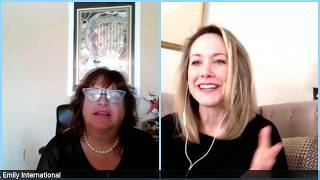
Healing practitioner Emily discusses leaving New York during the pandemic surge, her volunteer work with NYC COVID Care, and her emotional-healing system called The New Self-Empowerment. She explains the Drawing Out Process, a technique she developed after a 2009 crisis, and her book Light Dark Truth, which addresses three inner struggles and three inner powers.
Chapters
And we're live with Emily in Arizona.
Oh my God.
I have— we have so much catching up to do that I just want you to talk. Like, what is going on? And were you in New York during the beginning of the COVID-19? What? OK.
I'm just— yes, please. Catching up. So I've been living in New York since last March, so a year ago. And my husband's still here in Arizona because he has his job and he has his daughters. But I was like, I got to get back to New York. So I've been kind of going back and forth a little bit. But I was in New York pretty much full time. And then as things started to get kind of more and more intense, even though they weren't reporting a lot of cases, I was following a lot of what doctors were saying and how people were walking around asymptomatic. And so I knew that once they started testing people in New York, it was going to explode. And sure enough, it did, and it has. And so really my main thing was, it was on March 13th, that morning I was like, OK, you know what? I think this is going to get really bad. And so I thought, if I get sick, I don't want to get stuck in New York away from my husband for months. And so I just said, you know what? And I got a flight that night. And the plane was like half full. And everybody was like wiped everything down. But yeah, so I've been here since mid-March.
Wow.
And I feel for my friends in New York though who were stuck in their apartments. And I mean, ugh, miserable. I just feel for New York City. I really do. Everybody really, but yeah.
What do you, do you have any friends right now that either have been diagnosed, that are positive or feel that they could be?
I do. I have a physician friend in Seattle who had a fever for like 10 days, if not longer, and her son did too, her 5-year-old son. And so she was dealing with some of the same symptoms. She thinks she had it. She's okay now, thank God. But she got tested, but it was just like such a delay to get the testing back, but she pretty much fit all of it. And then I have other friends who have actually lost friends, lost people. So yeah, it's horrific. But in terms of my own immediate family, we're okay. A lot of them, well, the rest of them, my immediate family is in Texas and we're here. And my husband still sometimes has to go into work and I work from home, so I'm ridiculously blessed. Yeah, but I feel so like, I'm such a— I don't know if you know this, but I was a first responder at 9/11. So I'm just— I'm one of those people where it's like, things like this happen and I just want to jump in. I want to help somehow. And in that case, I happened to be in Manhattan. And so I went down to help. And I was there for a couple of weeks. But in this case, because the people on the front lines are primarily medical workers, it's like, I don't have any medical training. Or I don't work at a grocery store. So I've been volunt— I've signed up to volunteer with something called NYC COVID Care, which is all about mental health professionals being available for free, of course, to help medical professionals and other people who are on the front lines, the essential workers who were traumatized by this. It's horrifically traumatizing.
So what do you even do, Emily? I still get confused. So we met very quickly with the coffee to exchange information and talk about ACS. But then, and then I've been following you and I love following you and I love your newsletter, but I need to put it all in a package. So, and I'm doing this because I want my friends to know my friends. That sounds weird, but I really feel like, I feel like nice people know nice people. And I think that, you know, there's a— I interviewed Tim from, uh, he's a general manager of a new hotel coming into Arizona. I just had Stacy Fowler.
She's lovely.
She, she is Tucson Business Connections. And Abby Sweeney, who I hope you and Abby can meet one day because Abby is just really lovely and, and, you know, the age of— it's my son's age, 25, which I love. So, you know, I just think that we all can help each other. But so, okay, would you just tell me, tell me about— I want to share who you are with everyone.
So I am the creator of an emotional healing system called The New Self-Empowerment, thenewselfempowerment.com. That lays it all out.
And what that—
and as part of that, I created a technique called the Drawing Out Process that came out of my own dark night of the soul back in 2009 when my life fell apart and I was practically suicidal. Anyway, long story shorter, ended up developing this technique to permanently heal those deep wounds, those deep blocks, those triggers that get in the way of us fully being in our power and owning our truth. What I discovered through that is that actually within us we have 3 types of inner struggles, but they're also the sort of distorted versions of our 3 types of powers. I teach people how to honor those powers and heal those inner struggles to fully live their truth. When we live our truth, that's when we're the most lit up. That's when we're the happiest and the most fulfilled and the most empowered and really making the biggest difference. That's all part of the new self-empowerment. I just recently finished my first book. Yay! It's called Light Dark Truth, LightDarkTruth.com. I got websites for everything. I always say what lights me up is helping you light up. What my truth is to teach you how to live your truth or help you discover your truth and live your truth because I find that the more we live our truth, the more lit up we are, the more we light up, the more we light up the world. Clearly, it's funny because I often say that humanity is sick, but I don't really necessarily mean it in a physical way. I usually mean it in an emotional way, but right now, humanity is also physically sick with this global pandemic. But really, I find that when all of us are lit up and we're living our truth, then we heal humanity, and that that's really the biggest problem when we talk about our problems on our planet. It really does start from within. And people having their own inner conflicts or inner demons or struggles or pain or wounds that then get expressed externally. So as long as we are healing ourselves, then we can help heal humanity.
Yeah. I love that. What's happening right now is so scary. And I feel like I have like the first 30 seconds of the morning when I wake up and it's kind of blissful because I forget. And I am going to bed with the news on and I'm waking up to— I don't want to be that person that's like, I'm not going to watch the news or know what's going on. I need to, I've always been a news junkie, but it is, it's, and I've also been the person that would watch every scary movie and saw Pandemic and saw Contagion. And I've seen all of it. And it's, this is insidious the way that you could be, have no symptoms or even the fact that some people are, some people like just how you, it goes from one extreme to the other, then it kind of fades away a little bit and then it picks back up again. So your body, you think you're okay. And I watch Chris Cuomo. The fact that it wants you to lay down and just go to sleep and rest because there's no pain with that, and then— but saving your life means you have to go through the physical pain.
Yeah, processing.
I don't— I need help.
Oh honey, yeah, it is. It's a really intense and emotional time as well as of course the physical strain, you know, just even like, like we don't go to the grocery store that often in fact, but we, we started go— we had— we probably go like once a week, maybe once or every couple of weeks, just because we were trying to do the delivery, but then those were getting all filled up. But whenever I do it, like my husband will sit in the car and I'll go in. He's like in the getaway car, you know? And it's like masked up and gloved up and running through there. But here I am touching my face. I'm touching my face. No, but— touching my face.
Holding my hands.
But the point is, though, is that I even noticed that— this is my work, like emotional work. But even I noticed that it's like, just going in there, just getting the groceries, I come out and I take every precaution, mask, gloves, everything. But when I get home after I've done everything I need to do, I notice that my chest is tight with just this— it's like the strain of that we're up against an invisible enemy and that any of us could be walking around with it. And so the point is, is that as much as this is a physical thing, it is very much an emotional thing. And what I find is really important that we honor wherever we are. No matter where that is. And everybody's gonna be in different places. Some people wanna be dismissive about it and they wanna tell everybody to calm down. Some people wanna say, well, oh, this is a higher purpose. And some people are like, oh my God, I'm freaking out. And so we're all in a different place about it. And I find that really the greatest piece is just honor where you are and honor how you feel. But at the same time, if you're like, going to bed with the news on and waking up with the news on, then you are also kind of filling your consciousness a lot with a lot of heavy stuff. And I'm not saying I don't do the same thing. I mean, I watch the news and everything, but the point is I think we just need to really be very, very, very patient and gentle with ourselves through all of this. All of us, every single one of us really need to just be very patient and compassionate. Yeah, patient and gentle.
My son said, and I was interviewing Tim Haim last night, and he said a lot of leaders will come out of this. So if you are, if you really— because right now I feel like there's a lot of businesses that are not taking it, and, and they're— and employees work all day, they come home, they have to do everything, shower, and they may not be watching the news. So that you have— so when I went to Walmart the other day and the kid put his head in my window and like really was like this far from my face, and I grabbed my mask and I was like kind of scared, and I'm like, oh no. And I'm not rude though, I'm not— so I'm like, oh no, you're not supposed to be so close. I go, I'm surprised you're not wearing a mask. And his first words out of his mouth to me were, I shouldn't even be working here. And I thought to myself, well, that, that is why an employer doesn't want to give an employee a mask, because all of a sudden now the employee is thinking to themselves, oh, wait a minute, maybe I shouldn't be working. But, but still, as a, as an employer, you should still be protecting your clients. Well, like, I went to the grocery store and I was looking at the sushi And he's making the sushi with no mask, and he's over the sushi.
Mm-hmm. Mm-hmm.
And I'm like, I don't even understand it. I literally was, like, shocked. And I looked at it, and he's like, are you interested? I'm like, no, thank you. But I was like, how could that be? Why are we allowing that? Why would that be allowed just on Saturday that someone would be able to do that?
Yeah. Yeah, and I don't think that's OK. And I realize that the way I just expressed myself might have sounded misleading. Like, we should just honor where people are, even if they're just pretending like it doesn't exist. I really mean more like those of us who are dealing with the emotional sort of dealing with it, right? Yeah, it is really extremely hard because, you know, we— like I said, everybody is in a different place, and some people are taking precautions and some are not. And it makes me really upset too because I think to myself, this isn't about me. It's about me, but it's about other people. You know, like when I even flew from New York City, like I said, I wiped everything down and I took every precaution. But literally, we pulled into the garage, and I even told my husband, I was like, "No kissing, no—" You know, I was like, we pulled into the garage, and I stripped naked in the garage so that I wouldn't be bringing my clothes in the house, 'cause I'd just taken 2 planes to get to Tucson. And I literally walked naked to the shower. I was like, "I gotta clean off," because my biggest fear wasn't so much that I would get it, I don't wanna give it to my husband. You know, I don't wanna be bringing it from New York City. So it is really extremely sad when we observe the choices that people make, especially in a situation like this, and that, you know, we have sort of observed where people's priorities are. I will be very honest with you. I am— I personally think it's completely irresponsible to be having large group gatherings right now, like some organizations. I think you know who I'm talking about, and it's nothing against that religion, but for, for, for them to just blatantly decide that they want to do what they want to do without considering that they might even be carrying it and they don't know it. And then they would be responsible because they're choosing to make, you know, they're making that choice. They'd be responsible for that other person getting sick. Or even someone who's not in the group, you know, you get sick and then every— and so it's just one of those things where I think it really does call us to see beyond ourselves and our own personal needs and recognize that, you know, we do have a responsibility for each other. Which is, as I say that, it's funny, I haven't really thought about this, but it is ironic considering how polarized politically our country has been for a while now, and yet here's this challenge that we're faced with, and you have some people who are really stepping up and just in honor of just general humanity, like I don't care if the person next to me supports a different candidate, I don't wanna give that person this disease if I have it, and vice versa. But in other words, we have this challenge that's really calling us to really honor the humanity in each other. And so I know for myself, like you, I mean, you're talking about the sushi worker and other workers and corporations, is that for too long there has been such a really unconscionable lack of valuing humanity. That for so long it's about the bottom line. Well, we got to keep our doors open. We got to keep making money. And it's just, it is, it's crazy. But it's, I don't know, these situations are kind of interesting. Interesting is one word for it when you see how people react. But it's tough. It is tough because other people's recklessness can end up getting us and other people sick.
It's crazy. And that's fairly new that we're learning this. Sammy, my 31-year-old, I have a 31-year-old with a very cool business. So he's in Shanghai and he was telling us what he was going through in January and oddly enough, because it wasn't on the news here as much. I mean, we knew what was happening in China, but it wasn't considered a threat here. I don't recall my thinking, oh, we're going to be next. Like, that wasn't— and I don't know why, because it kind of should have been. That was kind of dumb of me because we really are following the pattern. And, and Sam would tell— I said this in a couple of interviews, but Sam called me one day and we were talking and he said, he said, Mom, I don't have a mask, and so if I go to step outside First of all, he's in a hotel. There's like really very little restaurants are open, a few stores that are open. But he goes, when I step outside, it's akin to my being naked carrying machine guns. Everyone looks at me, they're scared of me. And then he said, and every cough and every sneeze sounds like you duck because you don't want to be— so he said, I can't get a mask. I can't wait in line to get a mask because everyone that's waiting in line to get a mask has a mask already. So he finally did get a mask, and that was great. And he actually ended up traveling to Thailand for a little bit to get away before Thailand— and he's back in Shanghai. And now it's kind of back to business a little bit. Everyone's wearing their masks, which I think— and I think if I read it correctly, there's a fine if you don't wear a mask in China. You have to have a mask. And actually, it's funny. They sell masks, but not to the healthcare industry. A lot of people— Even in the promotional products industry, salespeople like myself are like, oh, so wrong, you shouldn't be selling masks. But I'm like, we still need to have employers take care of their employees. So we still need masks. We're not selling masks that are for the healthcare industry. We're selling covering so you're protecting someone else. But even that, but what I'm trying to think of, what I'm trying to say is on March 13th, that was a Friday. I remember that day. I had my leadership class and it was going to be Alana's first day of school, of vacation. And it's unbelievable that it went from that day to like, like that. By that Monday, we all were understanding it and getting a feeling of it. Why? Yeah, so it kills me that we could have taken some time to really have understood it a little bit more. And but I was told around that time, my friend David, who I— you would like— you and David would be great together. Not great, they were friends. But David said to me, go buy toilet paper. Buy toilet paper, buy as much as you can. But, and so I did, and he was really right about that. That was kind of weird.
But he said, David is the reason why there's no toilet paper. Just kidding. Yeah, I think David did that. He was telling everybody.
Crazy, right? The panic. And there's still no toilet paper. There's still— we were just at the store, there's still— I mean, I'm all good with toilet paper, but there's still like, people don't have toilet paper. And also the Lysol, any kind of wipe. I use melaleuca, so I love that. Oh, yeah. I love that. But, you know, and I have some Spic and Span that's antibacterial. But other than that, you go to the stores, you're really not finding the proper— what you could just use for your own home to kill the virus.
Yeah. Well, and even Spic and Span antibacterial doesn't kill viruses. And that's one of those things, too, right? So it's like, oh, well, this is antibacterial. And it's like, but that's for bacteria. Viruses are a whole other thing. But that's actually one of the great things about the— as weird as this sounds— one of the great things about the fact that it is a virus is the soap and how the soap breaks up the lipid boundary around the virus and takes it apart. I mean, that's why it's great that actually something so simple can fix that. The toilet paper thing has made me laugh. I mean, actually, I posted on Facebook— you might have seen this— when my husband did the census, right? Because we got our little letter, and he's like, I finished the census. And then he walks over to the closet and he does the census on the toilet paper. 11, you know, it's like, oh, that's very— I don't know where we're down to now, but my attitude is, you know what, if it really gets that bad, like, we can use washcloths and just, you know, clean them and sanitize them and then reuse them, you know what I mean? Like, and even in places in India, they don't even use toilet paper. I learned that kind of the hard way actually when I visited India years ago. And I discovered that not only were there no toilets in some bathrooms, but there were no toilet paper. You know, you just had to use your hand, you know, which is totally disgusting to a lot of people who didn't grow up that way. But I mean, again, that's one of those things I think too where it's all a matter of perspective. You know, we're used to our creature comforts. We're used to things being a certain way. But I think what's also fun, and we've seen this, you know, whether it's videos or people inventing things or ways of serving each other, is that people can get very creative and innovative. And resourceful. I personally love that. I always like it when we sort of go, "Okay, maybe after the momentary freakout, oh my God, what are we going to do?" Then you're going to go, "Wait a minute, hold on." It doesn't have to be like a disaster if I run out of toilet paper. It's like I can find other things in the house to use. I could use a leaf in the backyard if I have to. But you know what I mean? So it's one of those— not that I want to. I know I don't think anybody wants to. But it's just one of those things, though, where I think— and that's something I really hope that we all come out of this with is perspective and is recognizing what is it that really does matter. There's a reason why we see, even as we're so physically apart, there's this yearning for connection. Well, because— and I've discovered this in my work, and other people have too— the deepest human desire is connection. That's what we need. Even if we think we don't need each other, we do. Also, in my work, it's all about connection with oneself, that that's actually the deepest healing that you get is when you reconnect with those inner wounds or you reconnect with those little children inside. I find that sometimes the absence of something is really what makes us appreciate it, right? What is it? That rejection is the greatest aphrodisiac? What's that word? Like absence of— absence makes the heart grow fonder? I don't know. But the point being that it's like, it's also, you know, we kind of could step back and go, okay, hold on. Like, we're gonna be okay. You know? But I mean, those of us who are sitting at home, as long as we're being smart, we're gonna be okay. You know? It's just, I feel for all the people who of course have to be on the front lines and everything. But yeah, so it's a weird time. It's a weird time. But I think it's also like, what— but then how can we How can we all learn and grow from this? That's how I look at it, you know. It's like, how can we all learn and grow from this? And maybe there are ways that we can serve that we never expected we could serve, you know, and to make it better.
That's so true. So I, I went into the garage and I was looking, and all of a sudden I found this. It was the weirdest thing. And it was after I had just said, I just said, you know, napkins are so expensive. So I have a few napkins, but you can buy a pile of And then I saw, oh my God, and I'm so grateful because my mother— these are my mom's, and they're beautiful because they, you know, and they just put them in the wash and they come back out and they're— and you know what, and I'm thinking that when my sister probably packed them up for me, she probably thought, Adrian won't use them, or maybe she'll use them on special occasion. And who would know? So I've got like 12 of them. I'm so grateful for it. And it's nice to use recyclable. I love that. So I'm so grateful. Alana and I, my daughter and I, went to China in 2018. So we went to, we went to live in Nanjing. And so we understood the toilet. And, you know, actually, for a long time, we would come home, we would, you know, they never put toilet paper into their system because of course they couldn't handle it. So you throw it into the garbage that's right next to it.
Yeah.
So I would be like, wait, wait, we can actually put in the toilet paper, put it in the toilet.
But I know I was going to say in India, I remember where I get, I get food on the street and they didn't, they didn't use paper cups or bowls. They didn't know. They used actually banana leaves, you know, which are biodegradable, you know, genius. And they worked perfectly well, you know, for single use. They were these wonderful— like, the banana leaves were sort of folded in and they were just— it looked like a bowl. So yeah, it's, it's, you know, again, it's really— we got to stretch our minds here. I'm glad you found— I'm sorry, I'm going to be totally gross here, but you found brown napkins.
I know, perfect. That is so true. I didn't even think of that.
Oh my God, I'm sorry, I just had to say it. They're brown.
That's so true. My mom, my mom's whole house was brown though too, to be honest with you. It's so funny. Yeah, whoever decorated her house, I was like, brown must have been the color. Or my mom loved chocolate. She always had a piece of chocolate, so it made sense. She probably would wipe her mouth with chocolate. I'm the one that had the chocolate. Oh, So funny. Oh my God, I'm kind of glad my parents aren't here to witness this because I think at their age they were— they would have been— they both passed away. My dad was 90, my mom was like 89. But I really feel like it would have been very, very hard. First of all, the worry, like that's what gets me, is the worry of my children. Like at night I think of Alex and Sammy and Rudy and, and Alana, and, and especially my boys, like, because they're older and I— that is what really— my older son, he's— he takes— he works for a company that does the linens and the bedsheets and all of that for a hospital. So he delivers to the field hospitals. Wow. And sometimes the communication is so bad that he could end up being— last week he was on the same floor. Like, he's like, what floor is this? And they're like, this is the COVID-19 floor. So it's like, let me come— and he's got a new baby, so he Same thing goes in the garage, strips down. It's just really— that's what wakes me up. So I just really—
Yeah, there's so much we can't control. It's like there's only so much we can control. So it's almost like you have to sit and kind of go, okay, what can I control? These are the things I can control. I'm going to focus on these things. I don't mean you have to be a control freak about them, but in other words, because there is so much that we can't control. Whenever that's the situation, a lot of times, I mean, no wonder. It's really tough and worrying for other people. For a while there, my dad, my parents are in their 70s and my dad was still going to the office and we were like, "Stop going." They're in Dallas and it was right around the time when all the people were coming back from Europe. It's Dallas-Fort Worth and they were like the streams of people and masses of people trying to get through. The point is, it's Dallas, so you've got all these people who are being exposed. And then, you know, and, and of course, I don't know what the numbers are now, but the point is, you know, that was really tough because we were like, you need to not be going to the office, like, you can work from home, and you can— you know, this kind of thing. But, you know, it's like, again, we can only do so much to protect the people we love. It's really hard to me. That's, that's— again, I'm not worried about me. It's like, it's more about the people I love. Like, I don't, I don't want my husband to get sick. Yeah, it's really rough. I was just going to say when you said that about your son and the sheets, on the news they keep showing that temporary hospital that was the tent that's built in Central Park. That's like a block from where I live in New York. Wow. So it's pretty wild. Yeah, because it's right opposite. When I saw they were first setting it up, I was like, wait a minute, that's my neighborhood. I live in an apartment building that's right in the middle of Mount Sinai. So we actually have a lot of healthcare professionals who live in the building. We also have a lot of diplomats and people coming from foreign countries and stuff. But the point is that they built that, they set that up right across Fifth Avenue from Mount Sinai. And I'm like a block away from there. So it's pretty crazy. But I mean, I'm not there right now.
But when you go back, what is it like living in New York? What do you love about it? And then are you— Are you speaking there a lot? And I want to hear more about your speaking and when you go to the other countries so I can understand.
So, um, I love living in New York. I lived there years ago. I lived there from 2000 to 2006, and then I lived in Dallas for a number of years, which is where I'm from. And then I lived here in Tucson with my husband, which is where you and I met. And, um, but after living here for a while and actually being sick, uh, with some things— I was— it's 9/11-related stuff that for some reason gets kicked up when I'm here in Tucson, although I've been good since I got back. This time. But I just was like, I need to be in New York. My work is in New York. My clients are in New York. I need to be somewhere where people are really doing a lot of work globally because that's what I do. And that's where Tucson is wonderful. I love it. It's a beautiful community and everybody's really friendly. But it's just not where I need to be for my purpose and my work. But anyway, so In terms of that, actually, this past year I worked mostly with clients. I did a little bit of speaking. I spoke in Morocco. I spoke in New York. I'm trying to remember. I think I might have spoken in the UK, I think. But actually, most of last year, aside from working with clients, was like holding up and writing my book. So in terms of like self-isolation, like I already was self-isolating for like all of the fall. I was even telling people like, oh, let's go to dinner. And it was like, this part of me was screaming, "No, you have to finish your book." So I was even like turning it down. I was like, "I'm really sorry, but I really got to finish my book." So yeah, that was most of it. But in terms of my speaking, it's been in, like I said, I mean, I've spoken on, oh God, every continent at this point except Antarctica. Yeah. Because I've spoken, yeah. So yeah. So when I speak about my work and I teach people techniques and really the truth about who they are and what's going on inside because I think a big part of the problem too is this, you know, there's psychology, there are different things that are all about studying, you know, what's going on inside. I like to put it in a very, very simple way, which works really well because it's based on what I've discovered and of like really what's going on inside and just put it very simply and it just makes really quick sense of it. My whole intention is I just really want people to learn that actually what's inside isn't like whether it's an inner demon or an inner struggle, it's not a bad part of you. It's just not. That any part of you is not bad. It's just been wounded or distorted by fear and pain. That's usually what I tend to teach because it's a— again, like I said, my purpose is to heal humanity. I find that a lot of that really is all about just educating people about the truth of who they are, you know, truth of what's going on inside.
What generation is more apt to actually have, you know, open ears to what you have to say?
That's a really good question. It's interesting because when I share my work, well, actually, I've got, well, okay, so here's, without going too deeply into it because people can look on my website, but like I have a postcard. So this shows, Am I doing— there we go. The 3 types of inner struggles. This is all on my website, thenewselfempowerment.com. But like I've shown kids this, just this, like, oh, you have this part of you that's like this and this, and they get it immediately. So in other words, like kids get it immediately. I find though that it kind of skips to, you know, in terms of working with teenagers, I've worked with some but not very many, but a lot of the people with whom I work, at least in my my service work, my pro bono work, is with people who are in their mid-20s to mid-30s who are young leaders running organizations or wanting to make a difference in their respective countries. A lot of times they're from developing countries or what have you, and they just desperately want to make a difference. But often what gets in the way are those insecurities, those fears, those blocks they've learned from their families or society or whatever. We've all done— we've all learned this. Stuff. I find that the ones with whom I work are just like, "Oh my God, thank you. Thank you for making sense, and now I realize that there's nothing wrong with me." There's that. In terms of my clientele, my private clientele, it's mid-30s to 60. Older than that, I've worked with people I think older than that. It's just such an interesting question. I've never been asked that question about generations. I think that sometimes though, and even a brain scientist would tell you that a lot of times what happens is the older you get, the less plastic your brain becomes. So you kind of get in these sort of grooves, literally like neurosynaptic grooves where these neural pathways, they just get kind of set. well, technically, the myelin sheath around them gets stronger. So in other words, it's harder to sort of break out of old patterns or have new ways of thinking. It's not to say it's impossible, but I just find that sometimes once people get to a certain age, they're just not necessarily as open to something like what I offer. But it depends. I don't want to make any big declarative statements about it. Yeah. Well, it definitely makes sense. But it's also about people's just receptivity to really be introspective or if it's if they've got some major thing happening in their lives and maybe they haven't really been that introspective, but something cataclysmic to them like a divorce or something, or they lost their job, or they realize that they really need to change their lives in some way, that a lot of times that can really open up, like break open that opportunity for really incredible growth. And then they'll come to someone like me and I'll be like, "Okay, here we go. Let's do this." and here are the patterns and here's what's going on and here's where that's coming from inside of you. And it's probably coming from when you were like 5 years old and XYZ happened in your home or 8 years old and XYZ happened on the playground. I mean, it's just, you know, a lot of times what we're struggling with really does have its origins in our childhood experiences. So that's where I go. I'm like, I like healing it from the root. I'm not interested in symptoms. I'm like, let's heal it from the root. Let's clear it out so you don't have to struggle with it anymore. And that's what the work I do does. It really heals it fast. Yeah.
So, so, right, I don't want to talk— I don't want to get— I— it's scary because, you know, I, I don't want to get political. I get scared with the whole politics. But right now there is a concern with a lot of things that are being said. And, um, and, you know, and I was talking to Abby earlier And so, you know, being told— when I heard the words, you ought to be ashamed of yourself, it really went down to my soul because I feel like, I feel like my mom, but like not like being that mean, but like maybe she had said that to me, you know, you ought to be ashamed of yourself. It feels like it just, it struck me to the core of— and then I'm thinking of people are hearing this and now are people going home that day after watching the news and being like 'You know, you really should be ashamed of yourself,' like, because we tend to hear things like that and then repeat it. So there is a real, to me, a really big concern about kind of a brainwashing thing. And, and, you know, and, and, and calling something fake news and saying things that, that to me kind of feels like it's meant to— it kind of feels back in World War II, like what was happening. And that again, like that there's this kind of a brainwashing in people. And some people are— they can make okay with it. And then some people like me are more like, oh my gosh, who talks like that? Who says that? And what kind of pleasure could you even get in saying something like that? I always say that I don't get any pleasure being mean to someone. So it's not, you know, I can be tough on my husband, believe me, I'm, I'm tough. That's a different story. I'm just tough on him, you know. I live with him so I can be tough. But people get this pleasure, and, and then, but The other part, just that I want you to answer this, is it's also— I see it as a personality disorder because I, I wrote my book, Head Down, Shut Up, and a very, you know, short book. But the story is, you know, my growing up and being told such things. Like, I look— I'm looking here at myself, I see just fat, you know what I mean? Because joking about my weight was always the big joke. It was always in every part of the conversation, there was always a joke. So You know, I know myself, I have a lot of healing to do, but I also understand that we're working with like an actual personality disorder that's hard to understand. And so any advice you have for me and all the rest of me in the world?
Oh, and all the rest of you in the world. Gosh, okay. So in terms of political, I will say that, and if you see me on Facebook, I am very outspoken politically. Because in this current environment, you know, I really was like, well, should I say anything? Because people will often say like, well, you don't wanna hurt your brand or whatever. You know, in my opinion, this is not about brand. This is not about business. This is about humanity. And you know, as they often say, the only way for evil to prevail is if good people do nothing. And so that's been my attitude is, you know what, I'm gonna be outspoken about this in defense of my fellow human beings. And if I see some human beings treating other human beings badly, I'm absolutely gonna stand up for those other human beings. And so, I mean, you would say that you don't like talking about politics, and it is, it's very anxiety-inducing. There are all kinds of triggers. Oftentimes they say, "Don't talk politics or religion," because they are deeply rooted belief systems. And so, I just wanna say that, I actually, on the other hand, am very political, but as I said, it really does come from a place of caring about humanity. I love that. In terms of people hurting each other or doing and saying things just to hurt someone else, if you're truly at peace with yourself, you have zero desire to hurt anyone else. Anybody who would have the desire to hurt anyone else, whatever their justification may be, clearly is hurting themselves. But that doesn't excuse the behavior. And so that's where I think it's an important distinction where sometimes I used to make the mistake of, prior to the last election, I used to make the mistake of just being like, oh, well, that person's hurting and that's why they're behaving that way. And so I have compassion for them. But then I would let that person abuse me because I kept thinking, not abuse, but not say anything. Who's a psychotherapist, she learned something from part of her training which I thought was wonderful. She said, and this is actually something that they teach children at this program called the Institute for Child Development, it's in Arlington, Texas, and the way the term goes is, "It's okay to be angry. It is not okay to hit." So we are entitled to our feelings, but we are not entitled to hurt anybody just because we feel a certain way. And that's a really important distinction. Unfortunately, what we're seeing a lot of is we see a lot of people in a lot of pain, but then they turn that into attacking and hurting, and even attacking people that have nothing to do with their original pain. And so that, I would say, and there's so much more I could say about that, but in other words, it's okay to be angry, it's not okay to hit, We can have compassion for the wounds that are fueling that behavior and say no. So we can do both, right? I can have compassion for you and I can recognize that what's fueling your behavior is likely wounds and all kinds of terrible things that have happened to you. And at the same time, I could say, "And it is not okay, not okay to behave that way. It is not okay to treat me or anyone else that way." So you hear how both and. And I like to approach most things from both/and anyway because I think we get too stuck in the either/or. Both/and. So in the second part of what you were saying about having been made fun of, and I'm actually— my thing is going to die, so I'm going to take— I have to take you off.
Oh, yeah. Okay. I'm going to brush my hair. I'm charging you. Okay.
There. I'm charging you. Can you hear me? Is the sound okay? You look great.
I can hear you beautifully. Okay, good.
Okay, so in terms of what you brought up, and I really appreciate that you shared so vulnerably about, you know, the way you were treated and the way you were teased, and therefore then that's how you're seeing yourself, is that first of all, I just want to say that it's not okay for anyone to make fun of you for that. And that's not me trying to, you know, attack your family or anything. I personally, from my perspective, it's not okay. Unfortunately, families and people, we do things very unconsciously. Unconsciously. I've actually been dealing with something like that personally in my environment, in my family, where, you know, there's this unconscious behavior, and I'm just like, this is not okay. So I just want to say I'm sorry that you were treated that way. That was not okay. It was not okay. And at the same time, I appreciate that you are making the connection with the fact that, well, and now even to this day you feel very insecure about it. Well, it is. It's because of those early wounds. And that even if— what I find is that sometimes as adults, I don't think you're doing this, but sometimes as adults we can kinda wanna dismiss our own feelings or dismiss our own wounds, because we're like, "Oh, that wasn't such a big deal. I shouldn't be upset about that anymore." It doesn't matter about shoulds. It's how you feel. And it's really important, and it's the most healing thing you can do to honor how you feel and honor those wounds. That doesn't mean that if I'm angry, again, doesn't mean I then go scream at everybody. But it's to be like, "I'm really angry about this," or, "I'm really hurt. That really hurt me. That was not okay that they treated me like that." So, we can actually do that for ourselves, and other people can help us as well by honoring how we feel. And that can then really can massively help shift then how we see ourselves. Because when you heal that wound and you sit with that part of you that's carrying those wounds about having been made made fun of for something that— I mean, you're a kid. Like, what are you supposed to do? Like Weight Watchers or Jane Fonda? You know what I mean? Like, in other words, it's just crazy stuff. You're a kid.
It was like last year too.
Well, or any of that. But even any of that, it's like, you know, sometimes our bodies are made the way that we're made. And also the other part of that too is that shaming ourselves and shaming our bodies doesn't work. Like when you said you should be ashamed, No, it doesn't work. And I say that very practically. This isn't like— from my own work, because one of the things that drove me to my dark night of the soul, to such deep self-loathing, was because I kept, in addition to the emotions I was feeling, I was also shaming myself for how I was feeling. And so, what happened then? It didn't get better, it got worse, and I hated myself more. And so really, it's actually a very practical thing to say, well, that just, that doesn't work. It just doesn't work to shame ourselves for how we feel or to shame ourselves for how we look. And not only that, your body often responds to how you think and feel about it. So then your body's gonna have a reaction too. So really, that answer again, when we were talking in the beginning about being patient and gentle with yourself and being patient and gentle with your wounds and really honoring that, and even if other people they're going to dismiss or be like, oh, come on, we were just kidding. No, again, not okay. There— people can be really cruel under the guise of I'm just kidding, and that is not okay. That is not just—
maybe, you know what, I just had a little breakthrough. I, you know, because I tell people, and I had a lot of like, no way, Adrian, but that when I go, for some reason networking at nighttime, like in bars, are really uncomfortable for me. I don't do really well. And actually, Deb, Deb Rossi, the chair, when we had gone to one of the networking events at a casino and I was— she's like, I don't even recognize you. She's like, you're acting so different from who you normally are. And I was. But you know why I was? Because I actually see myself— because I'm not confident enough. So at nighttime, where everyone's looking pretty and dressed and looking great, and there I am. And I am— and I experienced it this summer. I went to an event and I was talking to my girlfriend Jennifer, and I was like, I really don't even want to go. I'm not comfortable. I'm not comfortable how I look. I just don't feel— and I walked in the door and then I met a lovely woman. I said, can we be friends for like the next hour and a half? And well, I now serve on the board. Maria Davila from Healthy Souls International. She is an amazing woman, and she, she is unbelievable what she's been doing. But I think back on that day, and even now with the Daytona Chamber, with the chamber, they don't really see me in a lot of happy after hours because I— because now I think I can work on this now because I really— that's what it is. And I don't need to just lose weight in order to now go or feel— I just need to, to accept myself for the way I am. Yeah, I really should be looking at— see, right now I see I have my hairbrush here because I'm like my fangs, my cow licked me. I had a cow lick me when I was a baby all over my hair. It's like, I just, I don't, you know, oh, it is really, really hard to take these things away.
Well, the thing is though, what you just had, what was lovely is you made that connection with, oh, that's why I'm so insecure, because it's triggering those old wounds of I'm not pretty enough, I'm too fat, like whatever, no offense, but whatever garbage you were told. And I'm sorry, it was garbage. It's terrible. You should never have been told those things. Now, people say what they say. Again, I'm not trying— but I'm just trying to— my saying that is my honoring the fact that that hurts and that that was not okay. And that's also why it hurt, because it was not okay. Some part of you was like, "This isn't okay. This hurts." And so it's really important to honor that. So what's good though, and that's what's fun actually, the more you start to kind of go, oh, I'm having a reaction to this. And then, and it doesn't always come to the surface right away, but I find it at this point in my work, in my life and my work, is that if I get a reaction to something, I start to go, oh, what's going on here? This must be something deep or something from some experience I had. I mean, I've had clients who like came to me with these major issues, and it turned out that a lot of it was rooted in like a comment some kid made to them on the playground. You know? But that's what then turned into like, "I'm never gonna let anybody humiliate me ever again!" You know? And then they end up like becoming very successful, but then not being able to have a relationship because they're too scared to let anybody in, because they're so sensitive. Or not so sensitive, but their heart was so hurt that their heart is trying to protect them. And actually, there's a specific part of us, the Defender, that's the part that is actually trying to protect— well, both of these are trying to protect this one. Wow. So these two are defensive protective mechanisms. So this is— the inner controllers are like the inner critic. Their whole MO is to try to control things and try to— and sometimes that means suppressing this one. The defender is very much like boundary setter, you know, push back, or sometimes don't let the threat come near. But it's all to protect this part, the wounds. We're all wounded. We're all literally walking wounded. I talk about that in my new book.
Oh crap, oh my God, no, no, I'm just thinking now, you know what I'm thinking? I'm thinking that the way that the, the children— my daughter's 14— the way that they talk to each other on Instagram and the way that they bully each other, and I'm gonna block you and I'm not blocking you, what effect is what's that gonna have on her in another— when she's an adult? I, I'm sorry, just like, I, I have my daughters, I have it on my phone. So any Instagram, I have her accounts on my phone, I could see real. And I'm like, my God, these— there's a— I mean, mean, you need to talk. Yeah, vicious, trying to— she had two friends literally trying to— just awful things that they say. And, and I How— what, what do I—
it's vicious and shaming. Vicious and shaming. It's cruel. There's a lot of cruelty, and, and it is, it's extremely sad. I mean, I, I haven't seen statistics or numbers or like, you know, I don't typically work with like teenagers or whatever, but I can only imagine the damage that that does to young people, um, when, you know, you make one little mistake. I mean, it's like someone once said, it was like I think of all the mistakes I made in high school, and we didn't even have social media. Like, imagine if any of us had social media when we were in high school and we make one little stupid mistake, or, you know, someone videos it and it goes viral, and it's just— it's unforgiving. It's horrific. So yeah, that's deeply damaging. It's— I think it's deeply, deeply damaging. I mean, they had— they do say that kids who spend more time on social media are much less happy. They have found that they're more likely to be depressed. Because also what that does too is think about that, how that reorients their sense of identity, that it's not about whether or not I value myself, it's about whether or not I have enough likes, whether or not, you know, I look pretty in that video or in that photo. And at the same time though, I really appreciate that there are plenty of people, you know, celebrities or Instagram influencers or otherwise, who are trying to say I look like this, but this is really how— here's how I really feel. You know, to try to show what's really underneath that. I mean, I think actually Lady Gaga is pretty good at that. Of course, she's just so— but she's spoken pretty vulnerably about her struggles, and that's what is— I hope that more people do that because it is inhuman to think that everybody looks perfect all the time, that everybody's happy all the time, or that any of us it should be. You know, I've even had people who— I, I am very kind of particular about what I post on my, on my Facebook. Mostly I try to post like educational things, you know, or like sometimes if it's political it'll be like, here are the facts, guys, you know, these are the facts. Or it'll be like inspiring quotes, things like that. But I even had people say to me like, oh, it seems like you have it so together and everything's so perfect. And I'm like, okay, no, no, no, no, no, no. Like, I'm not even trying to put out some kind of perfect, perfect, perfect image. And yet, you know, people will project things. And so I've actively even posted a few times like, okay, you know, no, not everything is perfect and hunky-dory. In fact, even just this last weekend, there were some pretty horrific things that happened that I had to deal with. And, and, you know, it was really painful. But just because I don't put that on Facebook doesn't mean that it's not there. And so I think that's another thing too, is we really again have to have that perspective of like, just because that's what we're seeing— oh, it looks like they're this most perfect couple— and then, you know, 6 months later you find out they're getting a divorce. Oh, but they seem so happy. And it's like, yeah, in an artificial world, you know. And like, on a— when my husband's always calling it, he's like, it's just a message board. That's all it is, you know. Facebook, he's like, that's all it is, just a message board.
Filters are interesting because you know, you see yourself. So my— I had a long conversation. First of all, I'm not gonna tell my daughter anymore, oh, it's just drama, because you know what, it's not. So I thank you because I think I'm gonna change up how I'm interacting with Alana. But I will say to her a lot of times, you're beautiful, you don't need a filter. Sometimes I've said, like, it's weird to see, like, mothers will take pictures of their children and they all have filters on it, and you're like— like, you go through, you're like, oh my God, that one real picture, they're all literally filters of yourself. And that's— that is— so I was very careful with Alana that she, she saw, recognized that she has acne, and that, you know, it's not a filter. That's not, you know, for me, that, you know, I'm not covering up my wrinkles. I am who I am. I think that is important. It is. It's a message board. It's a way of reflecting on— see, you could— that you could change the way you look. It's, it's, it's crazy.
Well, and I always thought— I love what you said about wrinkles, you know, because I'm, I'm going to be 45 this this year. And so it's like, yeah, I got some wrinkles. And, you know, on the one hand I'm like, oh well, no, I wanna— and but my grandmother, um, my grandmother was this— I just remember like she was an example of this to me. And I've seen other older women who, they just own themselves so completely that they radiate. Helen Mirren is a good example of this, the actress, right? She— I don't think she's had any— as far as I know, I don't think she's had any work done And yet you see her on the red carpet and you're like, oh my God, what? Oh, my husband's pointing at his— you too? Me? Oh, I'm sorry, my husband's telling me— he said Helen Mirren had her boobs done. Okay, fine, I can't use it.
Oh, is that like his chest? I'm like, what is that, Access TV or Entertainment Tonight? I know, is that— is that Entertainment Tonight?
Sweetie, or is that— but I guess— but, but so I'm talking about though, like, when I've seen her, she's got wrinkles and all that, and I'm like, but this is a woman who, from at least— again, I don't know her personally, but from my perspective, she seems like she just owns herself so completely that she shines. And I've always found that the women who do that, to me, they're more beautiful. That when they just own themselves and and they just honor themselves. And that's not only like a sort of woo-woo thing. I mean, it really is like, I mean, if you look at people that, it's something about it. It's when you truly honor and love and value yourself, never mind anyone else, never mind. And I've had to learn this the hard way too. It's like, you know what? Screw everybody else. How do I feel about me? And what matters is how I feel about me. And then how I feel about me then it affects how I show up in the world and the light that I shine and how people respond to me and the impact that I can have. I often tell my leadership clients, I say, you know, we lead— it's not just about what you do, it's about who you are. And so if you're showing up and you're shining a light, and that comes from within, and that comes from your own valuing yourself. You can't fake that. You could like throw on some, what, shiny dust on your cheeks if you want to give yourself a special glow. But I think you know what I'm talking about. You can feel it from someone. That's personally, that's who I want to be. And I'm speaking as someone who like, I may look like, oh, like I did my hair for you and I'm wearing lip gloss, but I actually went through years when I talked about the 9/11 illness and how I would get sick here in Tucson. I don't know if you ever saw me this bad. But I went through years since 9/11 of having the most excruciating dark red eczema all over my body, my face and my body. I mean, I was like a raccoon, it was all over everywhere. I was scratching till I bled. My point being, I've been through periods in my life where, I mean, I looked monstrous, horrifying. And so, that for me, it's kinda like we're talking about even in this environment, In that moment and period of my life, it was excruciating! It was extremely painful emotionally, mentally, physically, spiritually. But I also really worked hard to take it as an opportunity to love and value myself anyway, no matter what. And to, even if I looked horrific, I'd go to the grocery store and I'd be like, "Okay, I can still show my face!" You know? And I can still value who I am, and I can still see the beauty inside of me, and I can still heal, and I can heal— those triggers and those wounds that are getting kicked up because of this physical illness. So again, it really is that that light shines, the brightest light we can shine is the light from within. It really is. And so that's what I love teaching people because yeah, that's what it's all about. And when you live your truth, even right now, you're, just from what I know about you, Adrienne, like it's so cute. I think someone else even said this, when they saw that you were doing these interviews. They were like, oh my God, it's perfect for you. And when my husband was like, so what's this interview thing you're doing? And I said, oh, remember when we did that American Cancer Society talent show and I judged it? The woman here, he's like, oh yeah. I'm like, it's Adrienne. I'm like, this is perfect for her. She loves to talk and she loves to connect. You light up when you connect. Unfortunately, you've had, you had experiences growing up that made you feel less than safe, right? Hurt. So true. And you felt like you— you felt like that you showing up as you were wasn't enough, and therefore you weren't safe, entirely safe in that environment. So that really does kind of— it creates those barriers and boundaries, it creates those wounds, you know. It gets— therefore it creates those impediments to your feeling like you can safely connect with everybody. You see, so that's— but it— but all— but, but the way to heal that though is in here, is okay, let's identify the wounds, the parts of you that are hurting, that are carrying that. Let's identify the parts of you that are trying to protect you from more criticism. And there are all kinds of ways that we have parts of us that have ways of doing that too. So, but the, but the reality is that that you— that your truth is so incredibly bright. It's so bright, so bright. There are just things that are kind of in the way from when you were hurt, the parts of you that kind of— that are hurt. And so they kind of fell into some darkness there, you know, because they, they realized that they weren't totally safe. So you're right, you're right.
And I, and I actually— my first husband who that, you know, but he, he was very similar to, you know, if I, if I stood next to him, he would like look at me like I was the grossest thing. It was really hard. Now I'm married to Shallow Hal. My husband is Shallow Hal. He will, will walk by and he'll be like— I, at first I'm like, are you kidding me? Like, I was confused. He's like, that bikini will fit you. And I'm like, that bikini wouldn't fit my finger. Like, really? Like, he would see me, he's like, no, you're great. I'm like, no, how would— but yeah, so now I finally like realizing, okay, like, okay, like he's not like joking around. Like he really, he'll say the nicest thing. So thank God that he's very sweet. He's very sweet. He would actually, I said yes to my husband after I watched the Titanic because I knew in my heart that he would put me on the raft and say, live, Adrian, live. And then I would wake up and he'd be frozen solid. I'd have to let him go down. Bye, Alan. Thank you. I'm gonna live. But like, honestly, I was like, how many people in my life are literally gonna put me on a raft and let me live? And I came home and I'm like, I just saw the Titanic. The answer is yes. And he was like, for what? That's— yeah, so I got my own little shallow hell. I get nervous. I hope he doesn't wake up.
You're beautiful no matter what. You're beautiful to him no matter what. And that's what it's about. And my husband, I mean This is like the first time in several days that I've showered. I've been like disgusting and grimy, and my husband's still like, you're so beautiful, honey, you're so beautiful, honey. I'm like, oh, come on. And he's like, you're always beautiful to me. And I'm thinking to myself, what? Because I don't think I'm always beautiful, right? Because so that's my— right. But, but my husband— and that's what's gorgeous because obviously our connection is beyond just how we look, you know. We really are very heart connected But when you have, you know, you've got your shallow— he sounds wonderful because he sees your light and how beautiful you are no matter what.
I'm confused though. How do you know? How do you know? And I feel— and that's another thing, I grew up, um, with this, you know, my parents, you know, beautiful, beautiful. And but how do you not look at the mirror and just see the beauty that I see? I mean, I agree with your husband, you're absolutely— I could stare at you for days. And there's a lot that, you know, and when women— I— and I'm the first to say, my God, you're so pretty. And I mean, actually, honestly, I have met— I remember meeting Robin Roth. I couldn't even speak to her because all I could say— I couldn't get a breath out because she was so pretty. Like, there's, there's certain— like, there's so— you're so beautiful. Same thing when I sat across from you at this— were we at Starbucks?
Yeah, I think we were at Starbucks.
Yeah, she's so pretty, so beautiful. Yeah, now it's true, it's true. But don't you see that? Like, I would think that— I always thought that women would see that.
But they know, like, I think that I often say, I'm like, I think I clean up good, you know. I think I, um, I, I think that, I mean, you're asking me about my perception of myself. I, I empirically don't think I'm necessarily that attractive, and I mean, I'm like, objectively, um, but I've, I've had enough people reflect back to me that I'm attractive that I'm like, oh, okay, maybe I am, you know, kind of thing. And Also though, because when I was a teenager, I mean, I, you know, I just, I didn't take care of myself. I didn't, you know, and so, but I would also, I didn't like how I looked, and so I would make faces like in pictures, you know, because I didn't like my picture taken because I thought I was so ugly, right? Yeah, I just didn't think I was that attractive. But then I was telling someone the other day, I was like, really? Then I discovered that, you know, if you just smile in a picture, actually you look a lot better. You know, it's like, just smile. No, I think that, um, I don't, I don't know. I, I, you know, I, I admire— I don't know. Yeah, like, I feel like kind of bashful right now. That's funny. Um, I think that, I think that— let's put it this way, let's put it this way. Um, my attitude is that— and again, remember, I went through years of, of really, I mean, awful. Like, if you saw a picture, I've shown When it's been really bad, I've shown people some pictures and they're just like, "Oh my God, I can't even!" Like, it's so bad. It's so bad. And my poor husband is still traumatized from all the years of trying to help me. And I mean, I couldn't— I wouldn't let him touch me because I was in so much pain. But let's put it this way, my attitude is this, and is that if I'm attractive, that's great, because if it can help me achieve achieve my purpose on Earth, then great. Then like, that's what I'll use it for. And I really do mean that, um, because I'm just like, okay, great if it helps people listen to me. Um, okay, great if it helps people get enough attention that I can then help change their lives. So I see it more as a, I'm really grateful for whatever attractiveness I have, but that, but it's not just in and of itself, that's just Oh, I'm just attracted and that's just— no, it's like, okay, then great, then let's use this for good. Really love—
oh, thank you for your time today, Emily. You're amazing. Like, wow, I feel— and maybe that's a good thing, like, you know, this, this, this time that we're able to be, you know, rooted in our home and, and actually— and that's kind of why I did this, because there's so many people I really want to know better. And, you know, it's easy to support on Facebook, and I really do. I, I have the same political mindset as you. I just— and, you know, I, I could block someone, or I'll just snooze them for 30 days, I hope, and then resnooze them. Because I don't want to get into fights, so I usually am like— I don't like the fighting part about it. And I know you can't change someone's mind, so— or maybe you can, I just don't— I get, you know, probably because of my etiquette training. But I do— I'm so glad to like just have this, like, I feel like we're on a living room floor, we're just talking, and it's so nice to get really have this. I feel all chilled, and I'm just— thank you for time and taking the time. And I don't— I got to get rid of the word interview because it's really conversations. I'm not here to interview anyone because I— but, you know, I went to school to be a journalist. I really wanted to be a journalist. That was my goal in life. I just wanted that so badly to, you know, and, you know, while I grew up, everyone said— my brothers would say, you have a face for radio, right? And that was a joke, you know. You, you know, you can't be on TV. I really was. Oh, it was a lot worse than that though, believe me. When you're told that nobody respects you, nobody likes you, nobody wants to work with you, people should get combat pay to work with you, it gets to you.
But I'm like, God, yeah, Adrian, yeah, you're one of the most delightful people I know.
I'm telling you, I—
yeah, you know, it's such to your credit. It's such an expression of your truth, your wisdom, your light that you do shine so brightly in spite of all of that. I really mean that. You know, someone posted this on Facebook the other day, something that I've always felt. I said, you know, the people I admire the most are the ones who face the most adversity and still choose to be who they are, to shine their light, to be a good human being. You know, they don't allow themselves to get corrupted. And I would say that about you. You know, you do. You shine such a sweet light. And you saw this whole situation, right? We're all sitting in our living rooms. It's like, you're like, "Well then, I really wanna connect!" So, because of your truth that's just— you're so much about connecting with people, and you're so much about learning and experiencing and growing. Really just connection is what I keep— connection, I feel like that word doesn't quite encapsulate how I'm feeling about you and about your gifts, your superpower. You have the ability to be friends with anybody. Not everybody has that superpower. In fact, most people kind of look at the rest of the world, they're sort of— a lot of people, they're like, they're suspicious. You know, you can't trust anybody. You're just like, I'm friends with you. You're just right away. And that's wonderful because you're using that gift in this time. You're like, I can still do this. And so you're doing it, and, and, and your light is shining even brighter because of it. And so what you're doing is, again, from my perspective, is like, by you lighting up, you're lighting up the world. And when you light up the world, you help heal humanity. So you're serving a glorious purpose right now by you just honoring your truth and, and letting your light shine.
Thank you. I actually did this too because I feel like I have such great connections and, and, and friends and, and, but nobody knows each other. And how do you get someone to know you so that I feel like selfish, like, oh, I only get to see Emily. How do I get everyone else so I could share here and there? But that's it really. But I'm like, and the same thing for you because nice people have nice friends, right? So all everyone that I'm gonna be friends with is gonna be nice. They're not gonna be nasty and mean. So I'm like, I want everyone to meet each other. I really, I would love one day for you to meet Abby because Abby, you would be a great mentor for her as she's going into her path. And she's, she was about right before you. I spoke to her 4 to 5. She's really lovely girl, lives in Tucson, and I hope you guys connect. Thank you so much. I look forward to sharing more of your posts. And, and thank you. You said some beautiful things, by the way. I've got to go back and write them down. So thank you.
I love your smile. And thank you for giving me the opportunity. Sincerely, thank you. This is such a joy. This brings such light to my heart. This has been so fun. Thank you. Thank you. Oh my God, thank you.
Okay, I'm gonna— this is really a fun thing, and then I just say stop streaming, and then I just stop it, and then










