Candid Conversation with Host Adrienne Barker, MAS
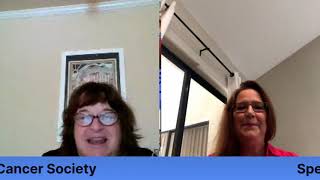
Cheryl, a Senior Development Director at the American Cancer Society, left a 31-year career at AT&T to lead fundraising in Volusia and Flagler counties. She runs the annual Strides Walk, Real Men Wear Pink campaign, and survivor programs, and explains how volunteers train and fundraise through team registration and Facebook integrations.
Chapters
because you are, you know, even if you are employed by American Cancer Society, I know that a lot of your time is really volunteered and that you spend over and beyond daily. So I get that. So I'm so excited to have you. You know my love. I'm so excited to be on the committee. Is your office— so I could throw a stone at your office where I am right now. I'm across from Hinson Middle School. But are you— so you cover Volusia and all of Flagler. What is the actual, like, area for the office?
That is, we cover all of Volusia, Flagler, so Deland, Orange City, down to New Smyrna, all the way up Palm Coast.
So, wow. I want to talk about American Cancer, but I want to talk about you because I want to get to know you a little better. So were you born here? Are you a Volusia resident?
Not Volusia, a Florida native. I was born in Jacksonville. So interesting.
And when did you move?
I moved briefly to Orlando back in '97, I guess it was. And then I worked for many years down Treasure Coast and Brevard area. So my, my territory was anywhere from Titusville all the way down to Stewart.
Wow. Were you with ACS?
No, that was actually my, my first career was with AT&T. Well, Southern Bell, then Bell South, then AT&T. So I retired from there. Gosh, now it's 7 years with 31 years.
Communications. That really is fantastic. Do you feel like what you learned with cell phones back then is— can you still apply it to today, or is it just a completely different animal? I—
okay, I'm really going to age myself, but I remember I started out in a phone center store and you came in and you had to get your service and you had to rent your telephone. You couldn't even own a phone at the time. And most of them were hardwired. We were so excited when we got the plug-ins.
I know we really come a long way. Our kids have no idea. So funny. That is so funny. So then, so then when— what brought you to Volusia County?
When I retired, my daughter around the same time had my first grandbaby, Logan, and was living here. And so I decided to relocate. It was either that or go back to Jacksonville. And so she was just going back to work with my— and so I came here and took care of my grandson for a while.
It's weird thinking that you're retired because you don't look it. You don't— nothing— you don't act retired, but you're, you know, you're still working, you're so active in the community. I think that we all probably just like, wait, she's retired? That's just so— but okay. So, but you had many years of working with a company like that that actually does make sense. So that's beautiful. And then what, what brought you to the American Cancer Society?
Well, there is a huge history of cancer in my family, and my mother was a breast cancer survivor. I had a young cousin, early 20s, who was diagnosed with breast cancer. I'm— my brother has had two different types of cancer, and I myself have had melanoma four times.
So yeah, we were talking when I first met you. You were telling me about the story of the cream and how it really burns.
Oh yeah.
Is that what it is? Because a friend of mine in Tucson had the same thing. So you put it on and then actually can see where you have cancer and then it's just a complete burn and peeling process.
It is. It's basically a chemo cream and it attacks the bad places, the bad cells on the face, and it just continues to peel. Mine was 3 and a half weeks. I mean, I was supposed to go 4 weeks not make it. But, and I shared photos of it on my Facebook page. It really shocked a lot of people. But I, and I was fortunate because I had probably 10 years ago had the laser resurfacing. So I'd already had one total resurfacing and more. It just continues to pull it out and pull it out. So probably a third to a little over a third of my face was just raw.
I don't know if people really always like really actually understand that because I was working for ACS and when she told me, I had to go in and there was like a little paragraph, there wasn't a lot on the American Cancer Society, but I mean, I've heard people having melanoma and they have a biopsy and then they have it removed and the laser, but this cream, that what is it? Was it a 10? Was the pain like absolutely like a 1 to 10 on a scale of a 10?
It's not just the pain. I mean, the pain is bad because as you continue, it just peels and layer after layer after layer, and it's just raw skin, especially around here. I had a lot of damage, but you really can't put anything on it either. Maybe Aquaphor, but you can't— you have to stay— be so careful that you don't have anything with chemicals in it. You're already applying this chemical and you need it to continue working. So, oh man, as soon as I could finally put moisturizer on my face again and start to heal, that was the most wonderful experience.
Oh my God, I know. I could imagine that you were worried about what people were thinking, but they were only probably thinking how painful it is and that you just like—
the—
so what would you advise kids? Like, it's so crazy. Were you the child that like sat out with the iodine?
And I did. Um, I mean, I'm my mother, my father, you know, growing up, they were really— were so fair-skinned and the red hair and everything. So we did not go out without sunscreen. But then, of course, you hit your high school and everything and it's, oh, fry baby oil. And then when they started the tanning bed and at first they told us, oh, they're safe and this is so much better. And as a fair-skinned person, I found that I could go into the tanning bed and get that bottom layer, get a little bit of tan, and it allowed me to go out in the sun. So I would probably say I know that that's 80% of my damage.
What's the age? What's the age here that you can tan? Is there an age? What's the minimum age?
I, you know, I don't even know that. I should know that, but I don't. I really used to keep up with the tanning beds. Now I just tell everybody, don't do it. Period. No matter what your age is, it's still damage. Damage is damage. And do not go out in the sun. And that's why I shared the pictures of my face on my Facebook page, because I wanted people to— especially people with young children. We think that we're sending them out, but you have to apply and apply on, keep coating. And you might not see that damage right now, but it comes down, comes down the line. So, and as I said, mine was after having already been through laser and I've had Mohs surgery on my top lip. I didn't do a combo with that. So—
Hold on, hold on, Cheryl. Hey, Alan, this is Candid. Alan, hi, I have Cheryl on here. We're talking. So thank you for just walking by and just like blurbing at me like I didn't even hear what you had to say. But my husband, I do have a husband, everyone. He's out working today. But really, see, this is live. So Walk away, honey. Walk away, dear.
Yeah, I'm using your car.
No, you're not. Don't use my car. Go ahead. I'm only kidding you.
If my grandson's here, as soon as— he loves to photobomb, and if he saw a video behind here, you'd see this little head poking up.
Oh, my daughter comes in, the dog. It's a whole mess. So, but, so anyways, I do think that if you— if, when— if you have— like, we live here, we have tanning beds where we live, or one tanning bed where you can. That's part of the thing. But I hope that they have to go ask them and make sure that they have an age, because at one point, I don't know what the age is. It was, um, it was fairly young in Arizona, and so they had to fight to bring that down. But anyway, so we know that the sun is bad, we know that tanning beds are bad, we have to be careful. Now, the Strides. So, so when you were hired with American Cancer, was it the Strides?
Was your first—
was that like your event, or you're working in the whole office? What does a senior development director do?
Um, pretty much I have been with Strides my career. I'm— this will be my fifth year as a staff partner. I did volunteer for Strides for 2 years prior to that. So when I first came here, I really didn't know anybody in Daytona, so I decided to volunteer, and that's how that started it to my second career. So, um, this will be my fifth event as a Staff Partner and always been Strides. And then Real Men Wear Pink. This will be the 4th year of Wear Pink.
That is— and I want to say this— being a senior is no easy feat with American Cancer. It's not like, oh, let's hire you and you become a senior. You have to jump like some hoops and, and show the work and meet your budgets and do a lot. So, so congratulations. I know that it's not so easy. Some people may think, oh, it's a title. It's a title that's earned. It's a very earned title. Your cousin that had breast cancer, was that a female or a male?
A female.
Yeah, it was a female. It's interesting that you said that cancer runs in the family too. It does not necessarily run in my family. We don't have family members, but I've had friends, friends, it runs in friends unfortunately. So tell us about the Real Men Wear Pink, 'cause that's something that not a lot of people know. And I think after this, I wanna push this out to some, men in the community. So who would be great to be a real Men Wear Pink? What do they have to do?
Well, we usually try to limit to about 20 people in our area. And these gentlemen, we, we ask them to do a few things. There is a fundraising component and goal is usually $500. But we ask them to wear pink every day in October and we ask them to share their story and really help us spread the message. And that's the most important part is that trying to raise awareness with everything we do. We're trying to raise awareness not only for cancer overall, that cancer not only affects women, it affects men as well. It's growing a little bit. When I first came on, it was 1 in 1,000 men would have breast cancer, and now it's 1 in 830. So, oh, men, men do get breast cancer as well. So we bring in these gentlemen and we try to find gentlemen who just have the connections in the community who are going to help us spread our mission and spread the word. And then they actually compete a little bit in their fundraising. We have the traveling trophy that they get, and they get to have that in their office for a year until they have to pass it on. And then they have that title of Real Man. So it'll be Real Man from 2020. They have a good time with it. They can do their own individual fundraising, or a lot gentlemen over the last few years have started getting together and doing group fundraisers.
That's fun. That is— I think it's a really— it's a fun event. $2,500, is it right? And then you get a page or you're on the page with everyone. I know a lot of offices will have the mayors of the town. So if you're listening and you know someone, nominate them, and then Cheryl can talk with them and see if that is a great fit. And I know like Rotary, so it's in Arizona, we had a lot that would wear pink all month. I think it's just a really beautiful thing to do as a man. It's not a lot of money. $2,500 is not much to raise. Who was the largest fundraiser last year? Clayton Park. Clayton.
So Clayton is our reigning 2019 Real Man. But we've, we've had candidates from all over. We've had Chief Coffin from New Smyrna Beach Police Department. We've had, let's see, our first year was Dr. Mark White with Halifax. Dr. Sabigny with Radiology Associates is a past winner. We have attorneys. I mean, we've had from every area you can imagine. So, Anybody who wants to participate, we just want them to really be committed. And that's the most important criteria.
Committed and have fun. I know my, my Ed Cone was doing a great job. Amazing. I love that. Love, love, love that. So let's talk about the Strides. You, Cheryl, your office is so incredibly lucky. Like, I don't even know. I don't want to say the word lucky, but I know what it's like to have great, great leaders and what it's like to have not the best leaders that are not involved. But between Richard and Jamie, they're both powerhouses. And then you combine them. I think that your office is going to kick every other ACS office because you really are starting with these leads, these chairs, the co-chairs that are so strong. And I love it, Richard. I love him because he's really strong. He's get to business. He's organized. He's committed, he's ready to do the work. Jamie's right beside him. I said yes because really to me it's always about— it's not only just the charity, but who's the leaders at the top. And I know that I could, A, learn from them, and B, that they're so committed that you know you're going to be on a successful event with them. So congratulations, because that's really a winning co-chair team.
Very fortunate. So that would be Richard Durigan and Jamie Gallegos with Akia Solutions. And so Jamie, actually, we connected through the chamber originally, and I asked to meet her and asked her to help me by introducing me to different gentlemen who she thought might be candidates for Real Men. And so that was probably our second year at Real Men Wear Pink, and she was just amazing. So she just evolved into being a chair, and then Rick has actually been one of our candidates for Real Men Wear Pink. He— 2 years. I believe he'll probably do it again this year. But they came on and they've just grown with us. And we were so fortunate. Many of our team members are returning year over year, and we just are going to continue to get better and better and grow our team. And I'm excited, really.
I love it. I love being on the team because I know how it's not easy. I mean, you are really blessed to have them because I have seen some other, you know, they, you know, someone could say yes, you can vet them all you want, and then you're scrambling or you're doing their agenda for them and you're doing all the work. And I've seen it all. I think what you're— I think that I'm so excited. I also— would you mind taking a few minutes to talk about the leadership and development that you do receive as a volunteer? When you volunteer with ACS? So it's not just being part of a committee behind the scenes. ACS has a lot of different abilities to develop yourself, and I would love to hear you talk about that.
So, like, we don't just throw everybody out there and say, go do this. We have online courses through our Volunteer Learning Center. You can go into that, and not only do we— we want everybody to start out by taking some of the classes on learning our mission, learning what we do, where does that money go. And then depending on what committee or subteam they're on, whether it be team development or sponsorship or logistics, there are specific classes that you can take. And it's just a guidebook. There's literally a written toolkit for for every single position to guide you through. Then in addition to that, for instance, we're having some training coming up in June. We do have one-on-one training for our staff so that we just take it again to that next level. And then of course you have a staff partner. So in my case, we are volunteer-driven. We call it a community vet. So you have one staff partner, myself, and the rest of the event, everything is run by our volunteers. So it's volunteer leadership team, volunteers day of, of course, my coworkers who run Relay and all, we all come together and support each other's event. But it is very much run by our volunteers. So we want to make sure that they're comfortable in their position and You're learning great, great tools that you can take anywhere into your business.
This is an amazing committee too. Like looking around the table in my mind, I'm like, whoa, you really have the cream of the crop in the community. Like, you know, we can handpick everyone to say Terry and Clayton and Clayton's wife. I mean, like, this is an amazing I don't know why someone wouldn't want to be involved in it. Oh, I want to ask you, so now our committee is a little different. You have another committee for the survivors, is that how that works?
Well, that is part of your overall committee.
Okay.
Jennifer Pelludat, who is a breast navigator with Halifax, she is, um, our— the lead team lead, so she is our survivor chair. And then each committee will have a committee who works with them. So there is a survivor committee. Jamie Barker, team development chair, but he will have his team— or excuse me, Jamie is sponsorship, then he has a team who all would work. Chris Toews is team development and he has his own team. And then we have Jim Jaworski with the Tortugas. He actually, even though we have the part and have the event at the ballpark, but also lead our logistics team. So there's so many parts that come together to make that whole.
So I think that is so beautiful. I cannot wait. And I had shared the story with you, so I'll just share it out loud about my Strides walk. That was not my— I was distinguished events, but my mom had passed away and I found out the day of the Strides walk, October 22nd. And my 2018, and Dennis in the office, who the overall director said, you want to go? And I'm like, my mom will be mad at me if I went. Like, I just knew it. I'm like, I have to stay. And so they were able to relieve whatever, you know, I was handing out the oranges, I think, at the end. And so they allowed me to high-five everyone on the way back. It was really— it always just was a really beautiful thing. But I, I love, love, love American Cancer Society and everything. That they do in the mission. Did you see when I got your thank you card, did you see the, uh, the little video that I put together? I thought it was really funny. But there were two things really important when I, I left ACS to go to China. And so before I left to go to China, the last day I said to Dennis, I'm gonna be a little bit late, just come in and like finish everything up. Because I had given notice, they let me stay for like another 3 weeks until it was the day before my flight. And so the last thing I had to do was my daughter's HPV vaccination.
Yes.
So that is so important. Do you want to talk about that for a minute?
And it is very important. And a lot of people I know think that's their personal choice, but it's proven to prevent cancer. So it's something, and any, most doctors are going to tell you too, if there's something that you know that you can take advantage of that's proven to prevent cancers, then it's something that you need to do. I certainly encourage everybody, I'm not your physician, I'm not a medical personnel, but you definitely have that conversation, make sure you're comfortable with it. But there's so much information out there too, and this is one of the first Don't start Googling. That's what I tell her. Oh, it's funny. Don't Google anything if you think you're sick and all. Go to a reputable source. And you have cancer.org is out there, and there's so much information on cancer.org. And researchers and physicians who have compiled this information and that it's a reliable source. You can call our 800 number and that's 800-227-2345. They can send you information in the mail, want it in your hand.
They—
we have so much information. So do the research, do it on your own. Don't listen to your friend who's told you. Don't listen to somebody else. Go and know the facts, educate yourself, and then make your decision.
I love that. So I made the decision. I felt that if I could protect Alana from 6— I knew she wasn't going to get penile cancer, but from the other ones I felt comfortable. And then I had filled out the mission about colon colonoscopy. Colonoscopy. Like, I filled that out, and then I would get the message, and I would get the text messages, and I'd be like, yeah, yeah, yeah. But finally, my doctor said, well, you don't really need a colonoscopy, you can use the kit. And so I did come back negative. I was really excited. And I love that they have— they mentioned the American Cancer Society on there. It was very easy, though, you know, I let it sit in the box. They had to send me a second box because I I, I made it harder in my mind than it really was. I had every excuse in the world, so I kind of feel like a little more relief. But I would say— and, and cancer.org website, well, I don't know if a lot of people realize that there's really a lot of community. So there's an area where you can do community resources, and then that is really filled with some great community resources.
It is. I mean, there's a little bit of everything out there. I mean, it's not You can input specific cancers, you can look it up. There are— there's an area where you can go that has nutritional assistance and healthy living. I try to post occasionally recipes on our Facebook site because there's really great healthy recipes, places where you can also get additional cookbooks. It's, it's all about staying healthy. Our main resource is prevention, education, research, and then services. So I love that. Yes, definitely.
Tracelyn— oh, I feel like the thing— Tracelyn in, in Arizona, she called it an onion. So the first onion would be— and I love it— so that you're peeling it back so there's consistency. So doctors have an area, nurses have an area, patient, caregivers, You know, I think— and that number, 24/7, 4 o'clock in the morning, you're not— you're nervous, you call that number. It's an amazing, amazing nonprofit, the number one nonprofit to me. So I think that that's so smart of you to be— you connected with the best nonprofit that we have in the USA. So that's all. I'm so excited to be a part of it. And then, so, and now you— and you're so— I know you're so busy and you're active, and so not that things have changed so much, but what do you see, what is American Cancer Society saying right now for when we get back to business? 'Cause I think it's gonna be soon. Do they want you to have meetings together? Are we providing masks?
We are being very proactive and we stay on top of it as well. We have already made the decision just this past week that we will be having a virtual kickoff this year. What we are seeing, you know, we have really grown our kickoff. So last year, between our volunteers and our attendees, we had about 130 people.
Nice.
And we continue to grow that. And, and of course, our goal this year had been 150. Well, we're seeing that it probably, even though we're going to start going back for a while, it's still going to be smaller groups And we hear everybody saying that 50 people or less. So we could have waited a little bit longer, but we are trying to be proactive and going ahead and moving ahead. So probably we're still forming what that kickoff's going to look like, but it's probably going to be something for the Central Florida area. And, um, but you can still have smaller groups. The team can get together and have a watch party with we can maybe set up some smaller watch parties throughout Volusia and Flagler so we can still get together. It will still be one big kickoff that we can have together. We'll still have our local speakers and local sponsors. So everything is, it's just going to be a little bit different, something we haven't done before. But we're, and the team, our committee, this great group of people we have, they'll be getting together, putting our heads together, and, and making a lot of decisions around that.
At the end of the day, you may actually get people that are homebound that really want to donate or give or be or do what— whatever they have the ability to do. And so it could be— I don't even know, maybe the bandwidth won't be able to take it with, uh, with how many people could actually be on. So I— all right, so I went on and I, I signed up as an individual because I wasn't sure. So can you just explain that too? So with the site, so you can be, you could join the team or you could be an individual, or what was the other? Is there another option?
And that's what kind of confused everybody. When we say making strides and to go and join, you're not just joining if you want to come to the walk that day. Anything that we have, once you have gone in and you've registered, we, then you're invited to kickoff. If we We usually have Survivor Night at the Ballpark, which obviously is on hold right now. Hope to eventually do some type of event like that. And then Walk Day. So you go and register, you're joining everything. So one time and then we can invite you to everything. So you either join and you can form a team or you can go and once you are creating your team, you're actually registering yourself and your team. If you say to join as a team leader or you join as a participant. So, and then as a participant, you can link yourself to the team or you can join the event with no team. So you don't have to be on a team to be— but, and if something happens, you go ahead and you register now and you decide you want to be part of a team, you just call me and we'll get that.
Oh, I love that. So I I did the lip sync contest, which, um, Facebook did not like me going, hands up, check your nails, baby, how you feel? Good as hell. I got that— got that like lasted 10 minutes and they shut me down. They didn't shut down I Have a Hammer by Peter, Paul and Mary because obviously he's too old or something, I don't know. I actually, I actually trained under Peter Yarrow. He taught me— I was— I trained under him too, um, his anti-bullying program. Don't laugh at me. But, uh, but anyways, like, so I was really surprised. And then I was thinking, wait, if I'm shut down, are other people going to be shut down on the lip sync? But I, I noticed that, so I wanted to get a link up there, which is, which is a good thing. So I signed up as an individual, and then I liked it. With one click, it creates a whole, like, Facebook page for you almost.
So we have our website, which is makingstridewalk.org. Luciaflagler. Then once you have registered, you have your own page within that site. So you can go in and personalize, put your own message on there, which I encourage everybody. It has a pre-populated message, but tell your story.
Oh, I will.
Okay. Yeah. And so you can put your own photograph on there. You can set your goal. And then an important one I want to say If you want to share it out on Facebook, a lot of times people go in and they create a Facebook fundraiser from Facebook and say, wait, where are my donations? You have to go from your dashboard, your page on the Make-A-Stride site and create your Facebook fundraiser or link it to Facebook from your dashboard. That makes the funds come back here locally and go to your personal page. So, and again, right, right. Yeah, if you ever need help, that's what I'm here for. Our team, we make sure that the, the team development team, they're well versed in that. And then the 800, as you said, that 800 number is 24/7.
So amazing. I'm so excited to be part of it. I'm glad we have our committee meeting coming up. So I'm excited. So what we're— the Lip Sync challenge. Is that like a local one, or is that actually like bigger than—
That's everywhere. That's— we have people all over ACS who are doing the lip sync challenge. Our vice president for our area, Glenn, he did a great one. He came out with the wig on and the glasses, and I think that he may have even had an issue with copyrighted materials. So we've had a few, but I have to say though, this morning I opened it up and saw you with the, the wig sunglasses on Puff the Magic Dragon.
That was a test. That was a test of the, of the Facebook broadcasting system. They didn't shut that down and they didn't shut down Let It Be. So either I stunk or it might— probably because it didn't actually catch, like, because I don't have good vocals, so it probably didn't. But yeah, because they really— Lizzie, they got Lizzie, man. I should have called her and asked for permission, but anyways, that's fun. I'll have to post it on LinkedIn actually with a link to my, um, to my— I have the— I think I did it right. I did it through the dashboard, made sure. So I'll have to, uh, to post that out. But it's so lovely talking to you. I'm so glad to just be connected, to get to know you too. Like, I think there's, there's so much too when you donate your time. It's not just, you know, there's— you have to look at everything. I tell people there's a lot of, a lot of nonprofits out there and You know, we're all just one person. So when you connect, you want to like your chairs, you want to like your committee members, you want to like the person that's running it, you want to like the whole thing. And then that's what makes it— because you want every month for us to come and be like, I can't wait. And I actually can't wait for May. So I'm really excited.
So we become a family.
I love that.
And I tell you, there is nothing like— I remember my very first event. After the walk had started, just before when we blown the horn and everybody was exiting out through the, the arch. And I stood on the stage and just looked out at everything. And it's like a year of hard work because you work a year to bring that all together and to see and think, wow, we did this, we all did that. And this is so great. And then when we say I see a pink, It literally is a sea of pink on and on and on. And as a matter of fact, I'm going to be posting some footage shortly. I was trying to get Rick and Jamie to assist me with the lead-in, but Johnny from Johnny Nomad Video had done some video of the walk every year out. And so he gave me a link. So I'll be posting that pretty soon on the Volusia Flagler.
Oh.
And it just brings chills. I've got chill bumps down my arms right now just thinking about it. It's such an emotional and fulfilling and just great experience. So I'm looking forward to taking the team up on the stage to watch that this year.
That is so beautiful. Oh, and wait, so one more last thing. So the Hope Lodge— is it the Hope Lodge in Jacksonville— is, is now helping for the first, the healthcare workers?
It is. We have had to temporarily halt some of our services just because, for safety reasons, because again, they're run by volunteers and also have cancer patients coming in. So we had to close our Hope Lodges for our ACS operating purposes. But in areas where there was a hospital close or a healthcare facility close by, we are working with them to hand over the lodge basically for a period of time. So we had one at Mayo Clinic in Jacksonville, and that was handed over to Mayo Clinic. So healthcare workers who either working long hours and need to stay and be on call and can't go home because they may have compromised family members at home, and so they've been exposed and can't go home. So now have a place to stay so that everybody can be as safe as possible. And so, yes, they're, they're in the Hope Lodges throughout, throughout the nation, really nationwide. That's not just here locally. That's everywhere.
Amazing. And I bet you a lot of people are on the Cancer.org site and they may not even realize that they've looked. They, they sent out like a Google search and they're on a site and they're reading it. Look up. You probably are on the Cancer.org site without even knowing it. Because you probably just got directed to a page. It's unbelievable. Well, thank you, Cheryl, so much. I'm so glad to be new in the community, new on the committee, and new to get to know you, but it's wonderful. I just really grateful to have you, and I love these.
I'm watching these every day. I'm learning so much about other people I've been friends with for a while, and— but I'm learning so much about everybody, and I'm just honored. Thank you. Very much.
Oh my gosh, I'm honored to have you. This is amazing. You are really a lovely, beautiful— you're retired though and senior. Oh, Cheryl, come here. Come here, Alana. Okay, hold on. Come, come here. Okay, Alana, over here. Yeah, I know, but come here, honey. Come over here. She's taking a picture of something.
I don't know.
Alana, come over here because Cheryl's got to go. I want to get you to say hello. I have the cutest little girl here. Okay, whatever. Come here, come here, say hello. Oh my God, excuse me. Say come on. Really?
I don't hide, I promise.
Oh my God, come on, say hello. Don't embarrass me, honey. Come on, get up, honey. And oh my God, she's 14 going on 5. Stand up, stand up, please. All right, I'll put you— I'll do it. There she is. I have little— oh, she's way too shy for words. Alana, stop being so shy. Please, Superintendent Fritz, please get school back. Okay, please, please, I can't. Keep picking up after her, cleaning after her, and making her food all day long. Okay, well, I'll take care of his drop. All right.
My two grandsons, he has a 5 and an 8-year-old, Landon and Logan, and they're just— they are not used to being cooped up. They like to go.
Oh, I think— and I don't— you know, I hope things change a little bit. I think we're gonna get back slowly. So, uh, I think we take Alana for a walk right now and get her out of the house, but It'll get me out of the house. Thank you so much for a great, great— I love this. This is great. Thank you so much. I just enjoyed every second of it. Went by too fast for me. All right, I'm gonna just click the button and we will stop streaming. So you want to say goodbye? I'm streaming live. Alana, she's killing me. She's killing me.










