Candid Conversation with Host Adrienne Barker
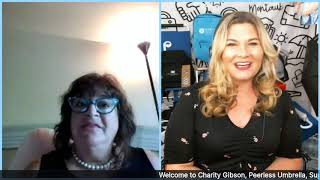
In this informal, candid interview, host Adrienne Barker, MAS, chats with industry veteran Charity Gibson about a wide range of topics that blend personal life, parenting, industry trends, and product knowledge. They begin with light‑hearted compliments and discuss their hometowns (Phoenix, Tucson) and family members, segue into concerns about teen safety on social media platforms like Facebook, Snapchat, and AirDrop, and share anecdotes about monitoring their daughters' online interactions. Charity reveals her unconventional work schedule—rising at 3:30 am and working long, uninterrupted days—while Adrienne reflects on her own routines and the challenges of balancing motherhood with a career in promotional products. The conversation then shifts to the evolution of trade shows, describing how the pandemic spurred virtual booths (PromoShow, Google Meet, Zoom) and how they enable real‑time collaboration among suppliers. Charity gives a live demonstration of Peerless umbrellas, covering the brand’s history (parachutes to umbrellas), product features (lifetime warranty, multi‑point canopy attachment, automatic open, wind‑resistant design), and proper closing technique. They discuss the promotional‑products industry’s multigenerational nature, noting how Charity connects with newcomers, peers, and veterans alike. Charity shares her personal backstory—growing up homeless, a creative father, and a drive to innovate—along with her philanthropic work supporting Wings for Women and Rafa House. The interview also touches on personal milestones such as Charity’s upcoming wedding (11/11/22 beach tacos in Mexico) and future ideas for end‑user virtual events. Throughout, both speakers express admiration, humor, and a shared passion for community, mentorship, and the future of the industry.
Chapters
And I don't even know why, but I do. Look at— I always tell Cherry, she's so beautiful, and every photo is so— it's so true.
My ego is not gonna fit through the door. Good thing we can't go outside. Thank you.
So, you know, your high cheekbones are— it's like just— they just all work so together, so beautiful. So Charity is, uh, Charity's a supplier.
It's—
Charity's really interesting because Charity has a great background story, but also is a supplier. I met Charity when she was in Tucson, Arizona. And now where do you live?
I'm in Phoenix. I moved north. You went all the way out.
When I first went to Phoenix, I remember it was one of the events, one of the event industry shows, and I was like, it's so brown. And I remember my mind saying, oh no, I don't like anything about Phoenix. But then when you're really there, you grow to love the desert and the cactus and the colors, right?
Yeah, there's a lot to do and it is beautiful. Of course, when you get like into the canyons, what I really love is like our boat, for example, is up on Canyon Lake, which is like an hour northeast of Phoenix. So literally 45 minutes, you know, an hour away, and you have these beautiful, just super deep canyons, gorgeous landscape, and it's so different than being in metropolitan Phoenix. But I love Tucson. To me, it was just I don't know, it'll always have a place in my heart, just the mountains and being in the valley there and up in like Oro Valley is where I was and it's just gorgeous and the sunsets and the cactus. So every place has something special.
Tucson actually, so Tucson, I used to, when I first got there, I said, come for the mountains and stay for the people. But Tucson has my heart literally because Rudy is still there, my 25-year-old son, living his life at Earth's Healing. I would like to come back and be a 25-year-old Managing a marijuana dispensary. I think that I like, just like, I want to like play that game where like we just like switch bodies and I get to be Rudy for a couple of days.
I mean, right?
Samples. You get samples. We get samples from the industry, but his samples are, are much higher than ours are.
Literally. Should we bring your mom to work day? Is that—
Oh my God.
Yes.
I love that idea. I'm going to tell him that. That's great. Bring your mom to work.
I think if I could choose to be like anything different, I love promo, so I don't think I'm ever, ever gonna leave. Obviously, we know I wanna be a speaker, but I think it'd be fun to be like a radio DJ. I don't smoke or anything like that. I obviously can't say it, but we're not gonna talk about that. But yeah, like the idea of being like a radio DJ for me or something like where I get to do what you're doing and like talk to people all day long and just play music, that sounds awesome to me. You do that.
First of all, you are a speaker, so you're funny to say you are a speaker and you are able to, to large crowds. You're motivating. I had interviewed Anna Anderson last night. I met her in China and I had seen her speak. She's a beast. She really is. She doesn't eat. She just— every ounce of her energy and how I just— she's just amazing. But you're amazing and your speaking skills. And then you create the webinars. You're really into the social media and marketing. And I hate to tell you this, but you don't have a face for radio. You have a face for TV. I was told you have a face for radio, I think when I was 6 years old. But I know.
Well, we haven't seen me when I'm 6. I can post some pictures. It was bad. I had like the bowl haircut that my mom did for me. It was awesome. And if we go up into like 5th grade, it got even better because I was like 4'9", like 170 pounds, and I had this short hair and my mom decided to perm it because I wanted curly hair. And so she permed it. Of course, when you perm hair, it goes even shorter. And so I looked like a freaking chubby poodle with a bright red face. It was just— I promise you, it was— Uh, not good.
So, Cherry, you and I are kind of going through the same thing. So Alana is 14, and your daughter is 14.
Yeah.
So yesterday— so let me just share this with you. This is tough. Alana has a friend, um, who, who is a little chunky, and not a big deal, but the friend is talking to me. They're talking to me about, like, you know, meeting some kid on Facebook and how they're planning— she says to me, I'm planning on meeting him. Alana and I are going to meet him when we're out of the coronavirus. And I'm like, Alana, you're not meeting anyone. And then as she was talking to me, I'm like, you do know that this may not be a young child, this could be an adult. And then she's like, yeah, I kind of know that, but I see his picture. And I'm like, of course you see— they— this is all planned.
I—
and I did catch, by the way, I did catch one of Alana's friends who was talking to a young kid, sounded like a young kid. It was going back and forth. And then all of a sudden he writes, I was worked all day and I came home and I had to mow the lawn. And I was like, oh, I don't know, a 15-year-old that works all day and comes home to mow his lawn. And so I deleted it. And when I told the mom— I happened to know because Alana— this kid gave Alana the password so she could get into his account, which is really funky anyways. So now we're spying on his conversation with Alana's friend. And when I told the mom, the mom is like— I know, it's crazy— the mom's like, No, I need proof. And I'm like, I don't know what kind of proof you need when I'm telling you.
This whole thing is so scary, the way that the kids interact. And I'm really deep into my daughter's, like, her Snapchat. I am friends with a lot of her friends on Snapchat too. And they call me Mama Gibson, like, so I have a little nickname with them. And so I'm kind of friendly with all of them just because I want them, you know, well, honestly, sometimes they have less trauma than some adults. And so it's easier just to make TikToks all day with them and, and just live a simpler life. They kind of keep me young, I think, in that sense. But yeah, it is, it's scary the way that they add friends and the way that they're finding friends. For me, it was really, I think, eye-opening to see that we were at a restaurant eating dinner and her and her friend were on her phone laughing. They're like, oh, he's over there, he's up there. I'm like, who's over there? She's like, oh, somebody just AirDrop something. Like, what the heck is AirDrop? I don't even know.
I'm not—
I'm an Android user, so I don't— I didn't know what that was. And the whole concept of being able to like send a file out into the wild blue and anybody around you that has an iPhone can just open whatever file this is. And they were meeting people in the restaurant, these teenage boys a few tables over, because they'd AirDropped a file and they sent their Snapchat. I'm like, you guys, no, absolutely not. If you don't know them, you cannot add them to Snapchat. Now I make sure, like I go through her friends list and I make sure that I know who everybody is, that she's met them in person, that at least a friend of a friend knows them personally. Social media is a very cool tool, but it can be kind of scary too. So I mean, even TikTok, like, it's fun, but we all know there's a ton of privacy concerns floating around right now about the location and the access that the app maker has to all of your files and everything. It's just scary. So yeah, social media and teenagers. I was a digital native, and so for me, I'm like, I met one person when I was on MySpace, or no, it was before MySpace. This was like ICQ days, like MIRC, Internet Relay Chat. I was 15, and that was when the internet was very, very first starting. We didn't really have any idea at all. And just to see how far it's come and, um, yeah, just how it's evolved. It's a scary— I mean, it's also really, really cool, but it also can be really scary if it's not managed. And these kids unfortunately don't have The emotional intelligence, I guess, at this age, and the just, you know, obviously the bias to be able to be a little bit more— not fearful, I don't want to say that, but healthy fearful. Just cautious.
Right. Yeah.
How's she doing with school though? She's good.
So actually, so shh, nobody tell, everyone keep this quiet.
On a public Facebook chat.
Nobody's watching. I have And Alana knows this. She loves it. She loves this. I have her Instagram on my Instagram, so I see live. So sometimes she'll come in and she'll be like, did you just see what happened there? And I'm like, no, because I haven't watched. Like, I'm not like focusing on her, but like, then I'll go back and watch. But kind of, it's almost like having a video camera on you when you're working. It's, it's, it's, it's like yucky. But then on the other hand, yeah, so in her mind, she's like, I'm protected. My mom could see things and Her friends will really be like, oh, you tell your mom everything. But she does. But schoolwork is killing me, um, because she wants to— today was the first day she got up early. She was up earlier than me. I was like, whoa, is there a ghost in the house? She needs to get outside. She's like so pale. But she, she was for long— like, this is the first morning. Otherwise she's waking up at 1. But the school says as long as they're getting their work done, it really doesn't matter the time that it is. So she looks right now like everything is is okay, she's handling it well. And how about your daughter?
Same. I think for the most part, it's been a little frustrating that it's like, again, like you said, like noon, 1 o'clock in the afternoon, like, what are you doing with your life? But then again, it's like, what else am I gonna do with my life? You can watch TV. I bought a dartboard. We've got yard games. Luckily we have a small yard that we can use just to go outside and get kind of some sun and some exercise. But, like, yeah, I'm like, I can't really expect her to wake up super early. I mean, I, you know, I get up at like 3, 4 o'clock in the morning, but I can't expect that of her. Or so 7 or 8 in the morning for her. I'm like, just whatever. Finally, yesterday I kind of just said, I don't care, take another week or 2 weeks or whatever. We'll establish a new routine as soon as a new routine is, is worth it. But she has same thing. So they're doing some video calls. She has— she, she broke it out so that she does all of her assignments for the week for each class on a different day. So, you know, like Monday is math, Tuesday is English, Wednesday is theater. Thursday, science Friday, and then she'll do like her music stuff kind of throughout. So, you know, it's working. It's a weird new normal. At least they have the video calls and she's, you know, got some stuff going on and it's not— the biggest part is obviously being able to see her friends. I think I want to take her this weekend and kind of encourage her. One friend came by and dropped everybody off coffee, like left it at the front gates last week. It was so cute. And so I thought it would be cute to maybe put together some cute little packages. I have leftover Valentine's, like mini dinosaurs. I thought maybe we'll go do some drive by love drop offs and, and just kind of share some, some fun.
Okay, so I, so you're a genius. I call you a genius. Just said something that I'm wondering if this is because you're a genius. You do What? What? You said you woke up. What? You wake up. What is it? Wait, I'm confused.
Oh, just by nature I have always been an early riser and so for me usually it's through 3:32 AM that my brain turns on. And I don't set an alarm, I don't anything, I just, I wake up and I start working. And so usually I will, on a normal day, like when Kaylee has school, things like that, I'll usually work from like 3:30 in the morning to 6:50 when I go to take her to school. And then I'll get some coffee and kind of come back home. And I'm back working by 8:00. And I'll go from like 8:00 to 4:30 in the afternoon. Actually working, and then I spend the rest of the time just kind of checking social media, things like that. I'm usually in bed by, I don't know, 9, 10. It just depends on what's going on.
Wow. So wait, so 9, 10, so you're okay with— wait, that's— you're just a human. You're not even human. You're 5 hours? Who does that?
4 or 5 hours usually. Yeah, it's, um, I don't know. And I don't know what causes it. I know everybody's like, it's so unhealthy, sleep is necessary. I'm like, it's not like I'm trying not to sleep. I just, by nature, I'm sure that'll probably change maybe as I get older. I'm not sure. I'm coming up on 40, so maybe that's going to be a thing. I'm not sure. But I love the, the ability that mornings bring to get so much done without interruption. So I'm really grateful. I work quickly anyway and have a lot on my plate as it is. So I'm very fortunate that I have this biological clock and this circadian rhythm that allows me to do that. But I don't know how long that'll last or how long it'll be. But it's been my whole life so far. So far has been I like early mornings. Now try and keep me up late at night. If I'm not doing anything, like, I can't sit and watch TV at all because then I'll crash. So I'm like, I will be out. But as long as I'm up and moving and doing—
maybe that's a deal though. Maybe because, you know what, I love the fact that you actually get out of bed. So you— and you know that your body— you know what, that's a story in itself, Charity, because that is so unusual. I wouldn't necessarily say to you though Oh, that's not healthy. I think it shows not only healthiness, I think it shows brain power. And that is really— and that is why you're really, to me, considered a genius, but the whole industry. And that's why I wanted to show you off, because our industry— I mean, you know, everyone has a pen with an imprint on it, and, and, you know, but we don't really think about behind the scenes. And so—
and who—
this whole— I think it was a group of you that came up with this creative idea to have the trade show. 'Cause I went in and I did Pro Towels booth with Keith, which was really brilliant and fun. And is it still going on so I can come back and go into the—
Yeah, I actually had nothing to do with it. And we've all talked about virtual trade shows for a long time. Obviously the digital space is somewhere that I've lived as long as I've been alive, for the most part since I was 5 years old I've been involved with technology in some way, shape, or form. But yeah, when everything kind of crashed down, Jill Moore at Promo Corner set up promoshow.com and it was, it's based on like Google Hangouts, I think, or Google Meet, and set up just a static page with different dates that can change. And you can enter the booth and then talk to whoever's there. And yeah, so I think there's, I wanna say 70 or 80 suppliers now, the regionals are now getting into it. So the idea that you can jump into a trade show booth is one part of it. But I also love that like with Peerlist, you can jump into a bunch of different people's trade show booths. If you jump in in the morning, usually you're gonna get Dan Edge, and he's still actually going into the office in New Jersey, so he's in our conference room. And then throughout the day, it kind of evolves. So you've got me after that, Annie McIntosh in Tennessee. Right now actually filling in for me is Rod Vaughn out in Ohio. So you kind of get a glimpse into kind of everybody's little world, and all of us do things so differently. So I personally love it because I'm still learning. I'll go into their booths and kind of see how they have it set up and what do they have on display. And more so, I love that just as a, Salesforce before. We were always so busy out on the road going all different places. And so regardless of, I mean, it is helping us connect with our clients, which I absolutely love, but bigger than that, it's helping us connect, one, because we, Damon and I had a big part in helping everybody kind of get up to speed using technology to do presentations, but then to jump in each other's rooms and be able to say hi and see each other. We've talked to each other as a sales team probably more in the last 2 weeks than we have since I've been on in the last 3 years because we usually have our sales meetings and sales calls. It's been so fun, we see each other's animals now, we're talking about what we're eating for breakfast. So just as a sales force, I really, really love it. So yeah, Joel and his team at Promo Corner really did a great job of jumping on that literally overnight, I think over a weekend, and getting everybody together and up and jumped in and dialed into that. So it's a really cool service. I hope it sticks around for a long time. I think even after it goes back to whatever our new normal is, it's gonna be an opportunity for a lot of people just to remote locations, you can't get together or just— The other part that I love too is the idea that I can do a presentation here and then if my rep does go in later, they don't have to spend the same time doing a general product overview. Now when they walk in that front door, it's like, oh, I brought the samples that you requested from what you saw Charity do or what you saw me do online. And now let's sit and actually talk about projects and talk about how we can work together and build programs and things like that. So it takes that whole conversation that used to take, you know, however many visits or anything like the conversations, emails, whatever. Like now it's hyper-focused on how can we actually work together? Not what products do we have. So totally, I think it's going to change the game. I think it always has done that. And I've kind of begged for people to come into the digital space and kind of ride this bike in a sense, and now they're all here, and there's a little bit of training wheels that people need, and we need to work on how to make less noise and more great content, but I think we're bringing people along as we go, so it's nice to see everybody embracing it now too.
Okay, so has there been any talk about having an end-user day where we can invite our clients to come in?
So I don't know about PromoShow just because I'm not really involved with that outside of using it. However, we're doing webinars with our clients now, and we actually have a call coming up with 250 reps, and they're also bringing end users on the call as well. So that is really kind of a cool idea. Obviously that's not through PromoShow, but that's just a Peerless webinar that we set up through one of our larger affiliates that you might be very familiar with.
So yes, so okay, so excited about that, but I'll be there. So let's just say, so someone's watching this right now a friend of mine and they're like, what is behind her? Can you do a few minutes of showing what it would be like to like, what you do and what we sell? Do you mind? Oh, absolutely.
Yeah, this is super cool. Yeah, so welcome to my booth here. Like I got some Vanna White things going on. So just something a little bit about Peerless. Peerless started in 1927 as a family-owned company. We're still family-owned all these years later, but we didn't start out selling umbrellas. We actually started out selling parachutes. So I love to give that little piece of trivia out to people. Isn't that funny? So obviously after World War II, there wasn't a huge need for parachutes. We weren't jumping out of planes as often, unless you're a daredevil, and I think they've got that covered. So we're leaving the parachutes to the parachute people, and we've kind of embraced a new business model, and that is high-quality, retail-inspired umbrellas. So actually, pardon my bending down for a minute. I did a presentation, I threw things on the floor. But we have umbrellas that actually start from about the $6.50 range at a sale price, and they carry a lifetime warranty. And that's what's different about Peerless is that we have a lifetime warranty on our products. You can spend a little less and get a less expensive umbrella, but you're not gonna find the quality that you see here. 'Cause we're not just a company that happens to sell umbrellas, we're an umbrella company. And I think that that really makes a difference in what you get. We're also a manufacturer, so we design our umbrellas to spec, and we do the manufacturing and importing ourselves. So just something to know about Peerless. This inexpensive umbrella, I like to say this is the one, and it's not the Cadillac of umbrellas, but I like to call it the Cadillac of budget umbrellas. So it gives you a one-color imprint on one location, one-day production, and one price for all quantities. But so you can see what you're looking at here, just so that you, everybody watching, when you buy an umbrella and you put your logo on it, the last place you want somebody to see your logo is in a trash can on a broken umbrella. So #NoBrokenUmbrellas. This one here, right? Isn't that important? This one is really cool. How do I get this in front of the camera? Whoop, wrong way. You can actually run your finger up on this ridge here. And the nice thing about that is you're not gonna get metal splinters. So inexpensive umbrellas are typically made out of aluminum instead of stainless steel. If you run your finger up here, you're gonna get little metal shavings that flake off. You're not gonna get that on a Peerless umbrella. The other thing, again, stainless. So it's not, you can break it if you try really hard, But for the most part, I'm pretty strong. This is not bending. It's stainless steel, so you've got good quality there. And then the other thing is, you've seen people walking outside with umbrellas and the wind will blow and it'll rip the canopy off of the frame. In ours, we have multiple points throughout this umbrella where the canopy is attached. You can't see it.
There we go, yeah, yeah.
Multiple points throughout this where this canopy is attached. So even if this one were to break right here, You've got 5 other points where this is connected. And also, if I can show you here, the way that this is connected, it's not just a piece of thread keeping this on, it's actually machine-tipped on here and then the thread is reinforced on there. So just really nice to know that this is, again, our least expensive umbrella, still super budget-friendly, a great way to tell people that you have them covered and spread a little sunshine on a rainy day, but without breaking the budget. And then last but not least, our favorite little Oh man, this is great. Okay, these inexpensive umbrellas typically you'll press on a metal piece and pull that down. Our president of our company designed this and he actually added for a little extra tiny bit of money, like one extra penny I think it cost us, this here thumb glide. So you put your finger on the plastic piece and that's what helps you collapse it down. So super good to know that that is gonna take care of your fingers and have you covered there.
Wait, you have to show this because I went to school for this. How you act, because nobody Everybody knows how to do this. How do you— what is the correct way to close your umbrella?
To close an umbrella. So I'm glad that you asked. So this one's a little different. This is the Revolution. This is our bestseller. So under $10 for this guy, actually under $9, we lowered the price. So you've got this here, automatic open, same thing, the finished ribs up in here. This one actually is a really cool feature. If the wind takes it and flips it inside out, pop it down and pop it back up. Yeah, so for $8.75.
How do you roll it? Like, what is it called? How do you— you don't like— there's a way, like, with a strap, because that is where everyone gets, like, messed up.
Okay, listen, right? So yeah, find where the strap is, right? Kind of straighten out the creases on the top of the umbrella so you're going to make sure that you roll it right. So find where the actual strap is and you are going to hold it where it actually is in the direction in which it would go. And then you simply just hold your hand here at the top of that same one and roll around. This one is not rolling like I want it to for some reason, but you roll around, that closes it up. So now that is going to fit back into its sleeve without a problem. Yeah, I love it.
That's awesome.
This guy here, totally cool, especially for you down in Florida. This is fun. This one is a solar, has that SPF 50 UV coating on it, so that's fantastic. And then the colored interior, which is awesome. Same kind of thing, find your strap, start rolling from the top to the bottom, and as you roll it around, you're done. Nice and compact.
Love that. February 18, 2007 was the day I learned how to roll an umbrella.
Hi, where were you? Were you at a trade show or were you—
did you have a vacation? I was at Celebration. Celebration came in and I was like, I need to— they're like, you really, Adrienne? You don't even know how to do that. I'm like, no, nobody told me that. I need to go to school for it. I love— how fun is it? This is really, really, really cool that I hope that they do an end user. I really could see that being really fun, wild and crazy. How many people could be on the, um in the booth at the same time virtually?
I think it is 300 when you're doing a Google Meet. If you're doing a webinar through Zoom, it's 100, I think. And then free conference call gets you to 75. So there's just a bunch of different, depending on how many people you need to host, a ton of different methods and technologies available for you to do that. But if you wanted to schedule one yourself, if people are watching this and like, we'd like to do a virtual trade show, connect with some of your favorite suppliers. I'd be happy to be there and put one on for you and help you kind of walk people through the booths what that would look like, and it'd be fun to kind of show everybody your wares.
You mean for us to do it like a distributor? Like I could work with you to put it together? Oh my gosh, I would love to do that. Wow, okay, that sounds great. That's— I was talking to Shelley about doing the Shelley Show, but this is even better. I love it. So tell me a little bit personal. So are you— do you have a date for your wedding?
Uh, 11/11/22. Now that you asked, you're invited, and all of your friends watching can all come too. We're gonna do tacos and beer on the beach in Mexico. So get your passports ready.
I love 11/11/22. How smart is that? Holy cow.
I had to make it as difficult as possible for Damon Forget.
So the numbers are really great with that too. I love how it all works out. 22 is my dad's favorite number. That's awesome. I think that's great. He was such a nice guy. I'll never forget meeting Damon with, uh, on the, on the ASI road show on the bus. Such great memories.
Isn't that fun? I love how our industry is so familial. So I met Damon, I mean, I was married, we were literally just friends. And then after I got divorced, it was a good year after I was divorced, which like, hey, there's a concert, you wanna come up? Yeah, great. Hey, there's a thing going on. I'd bring all my friends and we'd come up to Phoenix or he'd come, you know, whatever. Or we'd meet as we were at trade shows like across the country. And then one day we were supposed to go to a Dave Matthews Band concert and I had a bunch of friends invited. He had his friends invited, all of his friends bailed. He's like, hey, are we still going? I'm like, all my friends bailed. You still want to go? I'm like, you know what? Why not? Let's just go. I'll come up. We'll go to the concert. And that concert actually ended up being hilarious because it was monsoon. As you know, in Arizona, monsoon is no joke. The storms roll in and it's like sunny one minute and the next minute it's like torrential downpour, thunder, lightning, the end of the world, apocalyptic conditions. And so that's exactly what happened. It's playing music, everything's fun, drinking beer, we're dancing. And we see it get really still. All of a sudden the planes stop flying, and in Phoenix that's a big deal. If the planes stop, there's a ground stop. That means something big is coming. And all around the Gila River, like, the clouds, just like ominous clouds. So right above us was totally clear, stars and everything, and everywhere around were these big black clouds. And they moved in, thunder, lightning, rain. Dave kept playing, we kept dancing, and then we just never stopped hanging out. So that's kind of where that whole thing came from. And so Dave Matthews has a special place in our Phoenix and the rain and everything. So just kind of a cool thing. And he used to sell— now obviously he works for us here as our IT department— but he used to sell kites. And so I was like, oh, you sell kites? I sell umbrellas. It was like a whole very popular thing.
That is so awesome.
Well, I know we both sell umbrellas, so. I love—
I want to ask you just— and I know we have to go soon— but I love the fact that you are— you make yourself so relevant. In our industry. And I think that it's, it's so important, and you always have the best advice. And sometimes I'll like message you with some different things, which I really appreciate. You're always helping me and giving me the, the truth. And I think that is really amazing to have someone like you. You win a lot of awards. So just because, you know, again, people that know me don't know you, and to understand that you have really made a place for yourself in a very old industry And actually, we are an older industry. Not maybe not so much anymore, but even when I was walking the ASI Orlando show, you could see that we're still an older industry. And yet, so you provide such a really much-needed service for, for us, like my age, you know, 32— no, 57. I'm proud of it. Out of it, 57, because I want to learn from you. And then you have the, the newbies that want to learn from you, and then you have the even older than me, the traditionalists that really want to learn from you too. So don't you think that's interesting that you're appealing to each of the different generation markets in our industry? And did you expect that of yourself?
I never expected that of myself. I don't think anybody grows up and says, oh my gosh, I want to sell promotional products. I'm trying to get my daughter to be like that. She's like, I don't want to sell promotional products when I grow up. So we'll see how that changes. Um, but I think the biggest thing, and I guess I just attribute it to the way that, um, I grew up, you know, it's— I You know my story. I grew up homeless. So I didn't have my mom around. My dad was in jail. And even still, so I say my dad was in jail, and yes, it was a terrible reason why he was there, but that was maybe 5% of who he was. The other 95% is that he was very intelligent. He was super creative. And he actually, I didn't realize it until recently, but how much he had to do with how much I promo. But anytime that I would draw a picture or anything that I would do, he like, thought I could do no wrong in his eyes. I don't know if he was trying to like make up for things he did in his past or whatever, but I would open my mailbox and we were poorest dirt. Like I said, we barely had places to live most of the time. But I'd open the mailbox and there'd be a metal plaque engraved with a drawing I had done. And I have no art skills. Like I can graphic design, but I can't actually draw. I opened up the mailbox one day and I had actually— it's really funny— my good friend, I had taken her nickname. I was like, "Yeah, everybody calls me," and I forget. Whatever, but I was like, "Yeah, everybody calls me this. I've never had a nickname. I didn't have any friends because we moved 21 times in 20 years. I just wanted so badly to be, you know, loved and in that whole cool enough to have a nickname kind of thing." So I made up this thing and I drew this picture with the name in it and like 3 weeks later in my mailbox, I open it up and there's this big, you know, the big old puffy jackets It was bright purple with the goldenrod and white cuffs, and it had a patch on the back with this name, huge. I'm like, oh my gosh, like that was like, um, so there was always something going on. At one point in time, I drew this alien t-shirt. Again, it was terrible, but it was this, it said peekaboo and this alien flipping people off. I was in junior high, so I was like that rebellious teenager. And not only did I open like on our doorstep. We finally have a new apartment. We finally have a place to live. And 4 giant boxes show up. And like, what are in these boxes from my dad of all people? And I open up the box and blue, gray, red, and bright yellow— this alien drawing on a t-shirt, all sizes on a bell curve. And he'd written a letter to the owner of Spencer's trying to get my shirt into their stores. As part of their products. And so, you know, just, just fun stuff like that. So there's that section of it where I just see how much things like that make people's day and how promo really has a power that we, as we get older, I think kind of forget about. We forget that a pen is magic because it's somebody's business that all of a sudden they had a dream and they had this idea and they maybe put it to paper and then they maybe got a business license and they maybe had a client or no clients at all. But the day that your business cards and that first pack of pens show up, you're like, oh my gosh, like this is a real business. Like I'm the real deal guys, look at my pens. Like this is legit. So there's that. And then there's also my upbringing as well. So obviously being a kid that moved around a lot, my sisters are 9 and 11 years older than me and I have another sister even older than that. And I don't mean that she's old, she's just older than me. So, but I was always around people that were older than me. And so just the idea that I got to hear them talk and heard what was important and was involved in their conversations as if what I had to say mattered. And then kind of fast forward into the industry. Obviously, when you are raised as a latchkey kid and you don't have a whole lot of social— I mean, we don't— nobody told me how to live. Nobody told me how to do my job. Nobody told me— there was no box for me to get out of because I was never in one to begin with. And so When you let those crazy ideas run wild, I love that Jesse Itzler says, "If nobody told you how to do your job, how would you do it?" Wow. And that's the way that you should do your job. And I'm like, "Oh, well, that's why I do things the way that I do, because I don't, I don't know how I'm supposed to do anything." And so the idea that I put those ideas out there for people that maybe they haven't thought of before is because my way of thinking has always just been to actually think. Don't do what you're told. Don't think about how people do it. If anything, think about how people do it and how you can do it differently, not how you can be the same, because you can't stand out if you do everything like everybody else. So there's that aspect of it. And then the idea that I can work kind of multigenerational, I think, comes out of a respect that I have for people that have tenure that are just so much more intelligent than I am, that have experienced so much more than I have at this point in my life. And then also my Peter Pan syndrome. And this desire to stay young and never wanting to grow up and realizing that I mean, I have so much to learn from, from children who have a better grasp in technological aspects than me in some sense. I just know that there's something to learn from everyone. And then when you match that with my mindset that a rising tide lifts all boats and the idea that iron sharpens iron, a smarter person than me I can learn from them, and them doing their job better makes me better. You know, and even if it's in a friendly competition way, somebody that's really intelligent and really smart and really doing their job well, you better believe I'm going to try and compete with that person, not because I want to win, but because competing with that person makes me better. And if I were to pass that person, they— I believe that people that are high performers would see that and compete again in a friendly way. And so then they're going to try and step up and one-up me in a positive way. And that forwards the thinking of the industry. It fuels innovation. And again, in a friendly way, I want everybody to make it. And I think there's definitely enough business. I think if we're creative, we should not be taking business from one another, but instead creating new business that doesn't exist. And that opens up a whole world of possibilities to be doing double. We're $25 billion, we were before last week, industry. And I feel like we could do easily $50 billion if we start thinking creatively and we realize that we're all in it together. And in the group, I realize we are all We're all wearing the same jersey, we're all on the same team. When people go to networking groups, it's, "What do you do?" "Well, I'm in the promotional products industry." They have my jacket on, they have my name on, and I want them to succeed and do as best they can too, 'cause I mean, they're representing me. So, and I hope I do everybody proud representing them too.
You're amazing. I love that. I had a program that I was doing, well, I say I'm on your team, not on your payroll as a—
I love that. Oh, that's cool.
Because I am, right? So not just me, but anyone that's selling promotional products, we are the— we're a branch of marketing that you don't have to pay for. I mean, you pay for the products. Most of us are going to be giving away our creativity. Growing up in the industry, it's funny because I actually— I don't— I remember just drunk draws with my parents. I would open them up and there would be all kinds of things. And it wasn't really until high school I started to understand what they were doing. And then my sister me after, after college. But it was really— I really didn't understand it. But I will tell you, so I don't know what it is with me, I'm really not even sure. When I think of Norm Cohn, even before my father passed, I would cry when I see him. This year I bawled. I bawled in front of him, like literally couldn't even— sobbing. And they were both like stunned. They don't even know what to think. And then the only thing I could say after I I ate like 100 cocktail hot dogs.
Isn't that funny though? Like, there's so much history there. It's so funny that you said that because this year at ASI I brought my daughter with me because it was the last couple days of her Christmas break. And so she actually— people don't know— she was in the booth the whole time. She was sleeping under the table because teenagers, right? Like, I'm like, find my daughter. I even took a picture. I'm like, where is she? And everyone's like, I don't see her. Like, she's under the table. Like, everyone saw she'd peek out and scare people. It was really bad. Trafficking children in our booth. It was terrible. But same thing, I wanted her— when we walked in, I saw Nick DiNicola and then a couple other people, and then I saw Norton. I'm like, please, please go get your picture with him, Kaylee. She's like, no. I'm like, but you don't understand, like, you're like not even promo yet. You're gonna be the new generation of promo. He's like the godfather of promo. Like, he has had such a huge impact on so many people, regardless of your feelings of ASI or PPA or anything like this. There's no denying the founders of this industry, the profound impact that them and their business ideas have had on the future of, I mean, however many billions of dollars a year over the umpteen decades that this man has been here. Same thing, I get completely emotional. And when it's his birthday and they honor him at the award ceremonies, I just think that there's so many lives have been impacted by some of the founding fathers and mothers of this industry. And even like Danny Henderson is one of my friends now. And I, we didn't mention this yet, but I have the whole Badass Women of Promo podcast thing. And I'm going to hopefully be bringing him on soon because his mom was the first person to hit the million dollar club with Proforma. And like that to me, again, all of these, just the people that have come before, we have so much to learn. Yes, we can do it differently, but we have to know the rules and how they were and why they were before we can break them. So I love that.
I have to tell you, my dad— so my dad, he had a hard time. My father started— so my mom and dad started in 1955, so they were in the industry. My dad, he had a hard time understanding how our generation, how we would go to the trade show and then we would go to dinners afterward and the vendors would take you out. And so over the summer of 2018, the year before my dad passed, when I was staying with him, he said to me—
he was—
we were writing a book. Cesar Bacara was getting ready to— I had already done interviews with my father, and my dad was telling me some things. He said, Adrian, you know, your mom and I, we would go to the shows and then we would get a sandwich. We would work the booths differently. One would take one side, your mom would take another side. We'd get a— we get a pastrami sandwich. You knew that pastrami was our ride at the Concord. And then we would go back and we would sit in the hotel room and we would work all night. We wouldn't go out to dinner with anyone. Like, nobody We worked all night. We figured out what suppliers we really wanted to do business with. Then we'd go back the next day and we developed that relationship with them. And he's like, what is going on? And I'm like, I don't know, Dad, but I got more drunk than I could ever think of. I stopped drinking. I stopped drinking because I was at an awards ceremony and the Hirsch brothers were giving me— they were feeding me so much of— I don't even— tequila, I think it was. And then the next day, a couple days later, my brother's like, did we win any awards? And I'm like, no, we didn't win any awards. And then all of a sudden Joanne sends photos of me on stage with all the awards. And I'm like, uh-oh.
I guess we did.
I have to stop because it's such a fun industry. I, you know, I missed the 3 years that I was in Tucson. I kept my fingers in the industry by, you know, by correlating the news. That's not the wrong word, but anyways, for promoindustry.guru. So I was curating the news in the industry, and that was really great, and staying in touch with the industry. And I, I met you at— but it really— I'm so excited to be working with Halo. They're an amazing company. Rick Green is like the best VP in the whole wide world. I know. What was that?
I love Rick. Really hilarious.
And we knew each other before because we had talked about the animation because he really loves you know, all the, the oldies, and that he would love the museum too. But yeah, but I love it. I love the fact that I also have had a chance to work for Muscular Dystrophy Association and American Cancer, so I've been on the other side of it. And I think that it's nice— I saw your Positive Summit that you were doing, and I think that's really great too, because as much as we can show the outside of our, outside of our life to our industry, that's important too. And I, you know, I do mentor a few suppliers and distributors in the industry, and I always say make sure you talk with Charity so that you get your, your points of view and how you sell. No, it's great, and I love your Badass. I think that's a great program. You really are, you really are making just a really wonderful— I just see like all these like streets and you've got your own lane. It's called Charity Lane. What do you What are the nonprofits that you support? 'Cause I actually, I don't even know that. I would love to know.
You mean at Peerless or personally?
Personal.
Personally, I tip it, well, there's a lot of things. I do a lot of philanthropy just personally with people, obviously through mentorship, but also some other ways just because I believe that my, one of the best ways that we can serve is to make sure that our immediate community is healthy, which means obviously family, friends, and coworkers. So that's big in my heart, just kind of helping however I can. But from like an international or national standpoint, one of my biggest endeavors that I worked with was Wings for Women in Tucson, which helps homeless women and children. And up until recently, I know Nadia Valle was my contact there and she had to step down. So I'm super sad for her, but I think the industry, that particular charity is still going. They do, they feed children through the summer. Book up their pantry, and you can spend a little bit of money per month or just one big drop, and it helps feed children throughout the summer. And then Rafa House is another one that I contribute to quite often, and that actually helps with human trafficking. And so they take women who have been trafficked and put them to work selling purses here in the US. They're beautiful purses. You can buy the purses. I think they also have wallets. And they're in Macon, Georgia, and all of the money that they make goes to paying these women now fair wages and helping them reestablish their lives after they recovered from human slavery. So those are the things I don't talk about very often, like you don't see that, I don't promote them outside of things, but since you asked—
Would you put those links down though? Because I really would love that, I would love— can you share that? That is really beautiful.
Absolutely, yeah, for sure, totally happy to do that.
That's so important, what we do inside and how, you know, because people are looking at you and they're saying charity and maybe be, okay, so Sherry's a mom, but even knowing a mom, you know, it's, it's not easy being a mom of a 14-year-old. Facebook gives me all the memories of Alana up through the age of like, you know, it's just like 7, 8, remember those? And then all of a sudden it's like 14. I mean, you are living with a— it's, you know, that there's like 3 people in the house.
That's exactly right. We have one version of her. One— I mean, in fairness, I guess we all kind of have It's just, you know, we all have our moods and our personalities and our how we feel on a certain day, but it is definitely amplified by all of that. And I think being a mom of any age, you keep saying, oh, it's gonna get better, it's gonna get better. I'm like, I know, like, at least she's here now. I don't know what I'm going to do when she moves out. And I don't know where she is all the time. And I don't get to talk to her all the time too. So trying to be thankful for every stage of this. But I mean, you know exactly how it is with Alana. And then same thing, you're busy, you have your hand in so many things with the SCORE mentorship and all the things that you do, and you have so much energy. So It's a joy to watch you too, and I appreciate all your kind words. But I think it takes kindness to know kindness. And so you have— everything you say about me comes right back at you. You're just a big mirror. So thank you for being who you are. Oh, I love you, Charity. I love you.
Thank you for talking to me. Please write those nonprofits, and just keep up the beautiful work. You beautiful woman, you. I love you. Yeah. I do too.
Thank you so much. You are a beautiful soul. You are light, and I appreciate you so much. It was great to be here. Thanks for having me.
I love it. OK, thank you.
You made my day.
Bye. Bye-bye. Thank you, thank you.










