Candid Conversation with Host Adrienne Barker
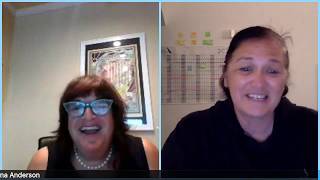
In this candid YouTube interview, host Adrienne Barker (MAS) talks with Anna Anderson, a New Zealand‑born speaker, corporate communications trainer, and entrepreneur, about her life and work. Anna recounts her early marriage, the decision to move to China in 2012, where she spent seven years leading soft‑skill and leadership training for multinational companies and building a reputation as a dynamic, high‑energy speaker. She describes her move to Croatia with her son‑in‑law Nick to run a sailing charter business (45 Degrees) and a local provisioning service (FreshBox). The conversation shifts to the impact of the COVID‑19 pandemic on tourism, prompting a pivot to digital services: online coaching, video and drone production, and website development to help other businesses transition online. Anna also shares her transition coaching work for expats and older adults, cultural observations about senior care and community life in China, Croatia, and New Zealand, and personal aspirations such as potential collaborations with AARP and a dream of living in Cambodia. Throughout, the interview highlights her entrepreneurial adaptability, speaking expertise, family network, and optimistic outlook despite current travel restrictions.
Chapters
before, and I cannot— beautiful woman. Anna is so brilliant. I have never— I'm gonna say this straight out before I say anything— I've never ever seen a better speaker, a better motivator. And I'm sorry to everyone else, but Anna is on the top of when it comes to speaking, the way she handles a room. This— she— if there's like a— if there's a god of speakers, it's Anna Anderson. So, you know, And the fact— I remember you telling me you don't eat all day. You put all of your energy into, into speaking, right?
Into training or speaking or whatever I'm doing. I just like to focus on what I'm doing. So yeah. Wow, you remember that?
I remember everything. I remember every single thing because actually I was told that the name, you know, that you were— you're like the beast because you just, you just put everything into it and then you just deliver, and you deliver like consistently. Like, that's a crazy thing too. You don't stop. But now you're in Croatia, so now everyone has to know. So tell us what you were doing. Just tell us who you are.
You're born—
where were you born? And what did you do in New Zealand?
Okay, yeah. So yes, I'm a Kiwi, originally from New Zealand, as you've said. Um, I— where do I come from? Start my story. I got married early. I went into business early. I had two beautiful daughters early. And then probably, so 2012, we just decided once our kids had left home to just go and have an adventure of our own. So that's where we headed to China. My kids had gone off to explore the world, so we just decided to go and have an adventure of our own, which we did, which is where we met after 7 years. And then a few things with China, we loved, we absolutely loved it, but we sold everything up in New Zealand and just jumped into the fire and we just loved it. We love the people, we love what we did, we just love traveling. We, we just really had to start again though. It was like being just the two of us again. We created the business, we did all sorts of things, and then we left there, um, pretty much a year ago and headed over here to Croatia to join our daughter and son-in-law to create a travel business here, a sailing business around the islands. And so that's where we are now, except with coronavirus, um, we're having to do something a little different because as you can imagine, there's no travel here for 2020.
Really? At the moment it's fun following on 45 Degrees. So your son-in-law— so did you realize when, like, did your— actually, did your daughter realize that her that her boyfriend, fiancé, and husband had all that talent in him? Did she know that he could do video so well? And just, it looks like everything he touches turns to gold.
No, we tease him because he comes from this little old hick town in New Zealand, so we kind of say, you know, we taught him everything he knows. But did you?
Because he's really good.
I think he could be professional.
So bad. You're so bad. I am really impressed. So you, you, it really took a lot. I mean, you're making it sound so easy, but You had to— so when you got to China, did you already have a job, or were you— were you— did you have to find one?
Well, we had, um, a job really, because to get to China you had to have a job to get a visa. And so I took a job in a training center, and then that got us into China. And then slowly we went networking, we made connections, we joined, as you know, Enjoy International to become I became the lead facilitator, the business basic manager of the business, and just grew it from there. And so we did that for 6 years and worked with a lot of multinational corporations on communications training, leadership training, just all the soft skills training. Because over there, it was not that they, they didn't need help with the thinking, they needed help with the communication and maybe the culture of business. Because many of those corporations had Chinese and foreigners, and you could just see the disconnect. And so it was just all about helping them see each other's perspective. And that's what I love to do. I love to create connection between people, especially in business. I love to be able to put people together and just to see that wow moment when you can see that they're like this, then suddenly they just get it, you know, both sides of it. And I just love to see that, whether it's a business or sales or just relationships in the workplace. And it just really, I just really had fun with it. Michael, you met Michael, my husband, and for about 5 years we traveled. One of the companies that contracted us, we traveled to lots of different cities all around China. And it was just great. We just got to meet thousands and thousands of people. And I know my first time speaking in front of an audience of about 300 Chinese, I nearly wet myself. It's like, Talk about not eating. I didn't eat for days because, well, here I am in front of 300 Chinese people who English is totally their second language. I'd never spoken to a foreign audience like this before, and there was no foreigner anywhere but me and Michael. So it was just like, yeah, it was just an experience that I can just see and feel every time I think about it. And that was the start of it. So we started speaking to audiences of 100, 200, 300, just packed out audiences. And it was just amazing to be able to, for 3 hours, talk to them about doing business globally and about communicating with each other, communicating with foreigners. And yeah, we just had a ball the whole time we were there. We just had a ball. And yeah, so we have lots of fond memories from there.
It's amazing. I remember looking at your pictures because then you would actually— because that's a lot of work— and then you would take and you would do all the social media. You really were the business, in all honesty. I mean, there was nobody else but you. And then you would throw it all on, and it was— I, I thought it was really cool.
You created—
back 7 years ago, you had the Flickr account, because I remember I would go through all the pictures and to kind of learn. And everyone was always like just staring and looking and smiling. And then I love the pictures of you because everyone would be around you and you'd have them all smiling. Honestly, the connection was there. I found in China that all you have to do is smile and everyone was nice to you.
So that's— there was a beautiful audience, um, every audience we had, it was just fantastic. They— I think I was very different because I was very animated and I'm not one to stand still. And I remember they would always put a podium out and just sit it in the middle of the stage and was like, you know, can you get rid of this? There's no way I'm going to be using this. And I'd say, get me a whiteboard, get me colored pens. And they kind of look at me as if to say, you know, why? And it's like, because I walk and I talk and I don't stand still. And so, yeah, so that's how I always started my presentations off. This is not a normal presentation. And by the end of it, we had people up talking to each other, and they just don't do that sort of thing. So, yeah, we just had a ball with it. And then on social media, just putting it out there both in global terms, but then also using Chinese social media in different ways to be able to connect the message, whether it was global or internal within China. Yeah, so, yep, no, we had a great time there.
I have to say, the word I would describe is mesmerizing, because you're just watching you and you just get mesmerized. So are you— are you— by the way, you actually— there's so many people out there that are— they want to, oh, I'll teach you how to speak and I'll teach you how to do this and charge all this money. And I have to laugh because I'm like, you're not even like a— like 1/16 of Anna Anderson. Like, anyone should teach, it would be you. Have you ever thought of teaching how to be a speaker? Like, because your tips and everything would be amazing.
Well, my other half is coaching. So like, even in China, I have a coaching business on the side so that I will coach business owners. And a lot of that is around presenting either on videos or as networking events or just different ways of presenting yourself. So I probably am more with regards to presenting one-on-one coaching with people to really get their energy and their passion up and to be able to put that message out there with their authentic voice. And I just, I love doing that. And that's kind of what we're doing even here in Croatia as part of networking events, as part of different places we go and people we meet. Often they will just, you know, I just help people. I don't— here in Croatia is just a little bit different. I don't do a lot for money. I do it more for the remote workers that come here or different organizations. Or with the universities, again, helping them get their message across in English as opposed to their native tongue. So it's, yeah, it's still taking whatever I have. I just like to give it out to people that need it or want it. It's really cool.
You're the real deal. So when you left, when you left New Zealand, did you even— was it in your mind, I'm going to be a speaker, I want to be a coach? Like, I'm trying to figure that out. I really don't know that answer.
Well, before I left New Zealand, I had a coaching business and a soft skills training business, and so that was kind of what I did. Yeah, because I'm— and I'm one that gets a little bit bored. So I did start off coaching one-on-one, and I had some great clients, but then I kind of get bored one-on-one. So then it was like, well, I want to go on stage and do my thing there. And so then it's kind of— was kind of a mixture, but then it was kind of China just— I don't know why China. It was— we actually laughed because we just kind of threw a dart at the wall and that was where we were heading. And so it was my teaching ability and just speaking ability. And I probably think probably everyone said that I, I did a lot of coaching there one-on-one and leadership. And I think it was my ability to make things simple. That was what a lot of people said. And as you say, my energy was infectious and they used to energy. And maybe sometimes I even like overdid it a little, but hey, that's just me.
That's so awesome. So I know you had so many friends. I— did you, did you lose any friends because of, um, COVID-19 in China that you've heard?
No, we haven't. And considering Nanjing was so close to Wuhan, we thought we would, but no, we haven't. Most that we still stay in contact with They got locked in and like, not like we're locked in. They basically had bracelets on their ankles and weren't allowed to leave the buildings and all sorts of things. But no, we haven't lost anyone. A few of them lost their grandparents, but a lot of them, as expected, they were sick anyway. But none of our friends, they've come through it. And a lot of them have online business, doing online business now and different things that we still stay in touch over WeChat and help one another even now.
Wait, did they— they didn't have real bracelets, did they?
Yeah, they did. So they were— they were put— some of them had monitors on their doors so they couldn't leave. So it was like magnetic, it picked up so that if you, you left the building, they— something. I don't, I don't know the details, Adrian.
Wow, that's interesting though. Well, because, you know, I was talking to my girlfriend Dee an hour ago and I'm like— and we had met in Orlando back at the end of January. It was just a discussion about it, and neither of us thought— nobody was thinking that it would come to the United States and that it would be— though I don't know why we didn't. We should have, because Sammy, my son Sam, was there, and Sammy says that walking outside without a mask was like, um, being naked with two machine guns. Everyone would look at you. But the fact that— how did we not know? It's weird to me. And then we didn't know about the monitoring. That's something new. And then So your friends, did they describe it as one of the most painful viruses that they ever had? Because the people that are having it here in the United States are— it's described as very, very painful. Very painful.
Most of them that had grandparents, so— and because of that disconnection, a lot of them just never saw it. So it's kind of happened outside their realm and back in their hometowns. So a lot of them just never saw it. They just lost their grandparents. That's—
and we're— and there's more people under— I think they said 40% under the age of 50 are getting it. So it's not— and like, that's what it was for the, the elderly, but no, now it's not. It's all—
now it's not. Yeah, I think— and as we're getting— as it's spreading globally, it's definitely not an old person's virus. Yeah, it's hitting a lot of people. But no, so still I have— we don't know anyone in China that's actually had it themselves that we've talked to.
I know now I have friends— what about— I wonder if that's the mutation of it then when they say it mutates. I wonder if that's part of that.
No. Yeah, and I just don't know. A lot of them say it depends on the weather.
So, so now you go to Croatia though. So now, so you leave. So I know you got everything in order because I, I saw that, and that's really a lovely thing to do because if you want to travel, you really do have to make sure you've got everything in order so that you could go. So you Oh my God, can I just tell everyone— let me just say this— Anna had a really cool, um, like a, like a hotel apartment condo in Beijing over— what was it, the Olympic Center?
Yeah, yeah, yeah.
Oh my God, I was so stressed, and Anna said, you and Alana just go to the pool, go to the pool. This is like— like, there's no pool like this. I couldn't even describe a pool like you— that it's like Olympic-sized pool. Everyone wears the hairnet the hair mask. The water's like crystal crystal clear. It was really quite the experience. It was beautiful. The spa was really cool. The women were all naked. So Alana, she was like— because everyone, you know, it just didn't matter. Nobody really cared. And, you know, we're like our towels all shy. But it was a really amazing— the grounds. I mean, what a beautiful place you lived in. It didn't start—
that's what I always have to tell everyone. I must send you a photo of our first place when we arrived in Nanjing. I think our— we were put into a hotel where I think our room was probably, I don't know, it had a bed in it and you basically fell out of bed into the toilet or the bathroom and you fell out of bed. And we arrived with 6 boxes and basically they filled the apartment. So we were in there for like 3 weeks and it was freezing. Our first night there, we laughed because we spent the whole night trying to get the room warm. It was so cold. And when we asked them to come up with our broken Chinese and their broken English, we'd had it on cold all night. We didn't have it on hot.
That's really funny. Oh my gosh.
Yeah. So we had so many fun experiences. And yeah, it took 7 years, or it took 5 years to get to when you saw us at Somerset. And Somerset was the amazing accommodation that, yeah, just blew us away and just gave us a great end to 2 years in China after the 7 years we were there. So yeah, and it was great to be able to welcome you there and have you feel safe, because it's a really big deal when you're feeling not safe in a strange country.
Oh, I could—
oh my gosh.
And then, so now where do you live in Croatia?
So we live in, uh, close to Split. Now I have to ask my son-in-law here. What? Where do we live? Cushtown, Cumberland. I still say it wrong.
Who's with you right there?
Who's with you? Is your daughter there? No, but my son-in-law is, if you want to come and check it out.
Oh my God, wait, Nick's a real person? Nick, you're a killer! Nick, first of all, Nick, you got the look going on. You are— on a scale of 1 to 10, you're like a 15. You, you are handsome. Your wife is beautiful. I can't get over— you are so good at what you do. Anna has done a great job training you perfectly.
Thank you.
It's amazing. Wait, so how's your FreshBox going?
Yeah, FreshBox is going like the first year right now. It's because there's no tourists, there's no fresh box.
Yeah.
Oh, you know what, that's funny. I kind of thought it was for your— oh, I thought it was for residents. I actually didn't realize it was, it was tourists. I thought that it was for the people that lived there too.
No, it's mainly for people that— our focus was people that come, that go on boats, because they come and they land here and then they go out on a boat and they'd have to provision. So we provisioned for them.
Yeah.
Yeah. With local— it was a supermarket project.
Okay. That is smart. So if they weren't— if they didn't book 45 Degrees Sailing and if they weren't booking with you, then they would be booking with someone else that didn't provide— whoa.
Yeah.
And no competition. And they then would provision for themselves. And we just saw it when we got here. We just saw basically on a Saturday before they all leave, The supermarkets are packed out, they run out of everything.
And it's all imported stuff, like it's just what you get is just average. You know, I mean, you're in Croatia where all of this fresh food is, so why not get the local stuff, the stuff that's made in Croatia, grown in Croatia.
And because we have so many wonderful contacts around the islands for wines and olive oils and just really cool things that people, if you come over here, you don't see. Then the fresh box was just full of local produce that are coming from the locals that, you know, we just love to put in front of people.
Wow. So, so I thought that was amazing. I love— I really loved every video where you're walking the market and actually showing the kind of like— that was very, very good. I really, really enjoy everything. I mean, it's, it's fun to watch, and I, you know, I was dreaming because I really want to go there. To me, that would be like the perfect— but now, why would people not want to go sailing now as a family when it would allow them to get away and not have to even think of COVID-19?
Right now, because no one can come to Croatia for the travel ban, so there's no one. Yeah, yeah.
So once it lifts, it would be perfect. It's the best isolation.
Yeah, so once it all lifts— right now at the moment, Croatia's closed its borders to everyone but nationals, same as other countries. And I mean, most of our business comes from New Zealand, Australia, and America, and all of them have closed No one's allowed to leave.
How, how did, how did Nick and, and your— what is your daughter's name? She really is like a mini you. Is it weird that you see yourself? Like, you— she is such a mini you.
There's like so many ways.
Oh my God, isn't she? When I see her on video, I'm like, she really— you both— I mean, that's really sweet to have a mini you. But, um, what did you guys pick? Croatia? Was there any other islands that were— that you were thinking of living at?
Um, Croatia. We always say that we couldn't agree after we left Wellington in New Zealand, which we love. We couldn't agree anywhere that where we wanted to live and stay. So we— Mahoney wanted to stay in China. I wanted to go sailing. It was sort of all over the Caribbean, but we can see ourselves all of this, all these places. But when we got to Croatia, got to Split, we kind of went, oh wow, it was really unexpected. And we're like, okay, I think we can live here. So that was kind of settled.
Yeah. And they both agreed, which is really unusual.
How do you even have the money to travel the world? Like, if you don't mind me being so personal to ask, but like, how does that, how does that work? That you have the ability to do that? What do I need to do?
Well, We work.
You do, like—
So we've always worked, and so we work, we make the money, we travel, and we travel for work.
Yeah, a lot of the travel that Mahina and I did was going to different countries for jobs. So we might be doing sailing in Croatia, that's what got us here, uh, then we went to the Caribbean, and that was all because we had 3 months' job over there. So that and getting to know people in other countries and go and stay with them, you know, like it was— I mean, it was amazing.
Well, having the talent to sail— so you, you took up sailing as a young child or as an adult? When did you even take up sailing?
When I was 21. When I was 21.
Wow, that is really— that's really living your dream. And then Anna, so are you sailing too now? Like, what— like, so what is life with you? What do you do exactly?
No, I'm managing the business. They have the fun of going out on boats and I get stuck in the office, as you can see. Yeah, now he's disappeared. That's so funny.
So is it a lot of work behind it?
We go out on the boats, we go out on the islands, but we also help with the business. That's our main purpose in coming here, is help build the business. Yeah, so that's what we're doing, and together as a family we're doing it.
I think that's— you're so blessed to do that. Where's your other daughter? You have two daughters. Where's your other one?
So our other daughter is in Australia at the moment. Yep, so she's in Australia, we're here, and my mom's in New Zealand, and my brother's in London. So our family are kind of, yeah, global.
Wow, wow. It's crazy to think that it was, what, just a few months ago that Australia was on fire, and we were just so worried about that. And I don't know, it feels like we just can't recover. I could really see people needing, needing to talk and needing, needing help because it's, it really is a lot to, to handle.
And in New Zealand, we've had a lot of big things. We had the eruption that took out people from the cruise ship. We had the bombing, which we've never had before, or the shooting, the shooting in Christchurch. We've had the earthquakes. We've had a lot of things in New Zealand. And then, like you said, in Australia, the fires and everything. So yep, it just seems to be coming in on us. And this is— yeah, I wouldn't say the icing on the cake, but it seems to be just topping it off. Yeah, so we love being here in Croatia. We're really happy that many of our friends and family wanted us to go home, and yet we really like it here. And so we're going to stick it out here. As you can see, we have no sailing business right now, and we're not going to give up on that. But it's a, it's a beautiful place here. Michael's planted his potatoes and his silverbeet. Yeah, so we have his— he has his little garden and it's a real community place. So it feels like having gone back to New Zealand when I had my kids, where the kids are free to roam, they can ride their bikes to the neighbors, and the water is only 5 minutes walk away from our home. And then we spend a lot of time in the water with the boat. So it's— yeah, it's an amazing place. I didn't expect to like it quite so much, but Yeah, here we are. So what's the—
is the water temperature warm?
Well, we've been actually swimming. If you've been following us on Facebook, we've actually been swimming every week all over winter, and I didn't think I could do it, but yep. So we have to stay in for 10 seconds, and we've actually swam the whole time over winter until right now when we can't swim. But no, it's, it's cold, but we're from New Zealand, so we're used to swimming in rivers and mountain rivers and lakes. Which are freezing, yeah, and so we don't think this is cold here, although I still think it's cold, but it's not freezing, yeah.
Yeah, I know, I have—
It's beautiful weather here, I think we've got like 20 degrees and we can tell summer's going to be a good one. It's just a shame we won't have people to share it with.
Oh, do you think it'll be over soon, 4 to 6 weeks?
So we don't think so. So basically, the, um, the charter industry here, the boating industry here, has taken a big hit because Croatia, or where we live around Split, the businesses makes money over summer for the whole year, basically. And so with this bad start, many of the charter companies just are having to regroup, repivot their business, but without tourists there's no business. Wow. Yeah.
Oh, I'm so sorry.
And so we're thinking that maybe 2020 is just not going to happen, and so it's just going to be in survival mode. Yeah, which is a shame because a lot of the family businesses here.
So have you thought of other ways that you can monetize Something mixed looks, maybe?
Definitely, we're not ones to sit still. So no, so yeah, so the kids have just done a delivery just before Italy closed. The kids were doing a delivery from France to Croatia on a catamaran, and we kind of figured something was happening. So it was like once they got home, we just brainstormed and put all our skills into a basket to see, right, you know, where is it, what are we going to do? And then because we have got such a good social media reach, we're looking to help businesses pivot online. And we're looking at doing the 3 key areas, putting our skills together as Nick with video is definitely helping people do videos, mine is helping them put together content and as you say, presenting themselves online. And then we're looking at helping people with websites because if you want to go online these days, you need a website. So that's— we're basically pivoting our business and helping other people pivot their business, pivot their message so that they can get through this and still have a great business at the end of it and get us a little bit of money while we got no money through sailing. But that's okay.
I love that. Wait, can you also teach sailing online? Are there things that people can learn sailing before they actually go into the water to, to like try the sailboat?
Well, we're teaching videos and we're teaching drones. So a lot of people have asked us, because Nick does such great drone footage and video footage, people have asked us for learn how to do drones. So actually learning, thinking about how to put that online. We definitely have in our Patreon, so we have a Patreon group on YouTube and in Patreon and Patreon site, we put a lot of our training. So We don't necessarily teach sailing online, but we teach different parts of it to date, and then we will be taking it out once we can get back on the water to teaching sailing online. So we're going to be teaching sailing online, teaching drone, how to take drone footage online, and we're going to be teaching you how to do videos. And in all of those areas, how to use them to build your business and pivot to get through this time when business is a little more difficult than it was a month ago.
And what about, what about, um, what about also teaching how, like, someone like, you're older than 50, so I'm 57, so my age, how do we— I mean, I've always had this goal to live in Cambodia, Sihanoukville.
I just—
there's a little area of some Cambodia, but like, I would, you know, I think that understanding how to make that transition. And you have your— you, is it— do you still specialize in the transition coaching?
Yes, just, yeah, so it's transitioning your life or your business. And so that's pivoting your life or your business to go wherever you want. And yeah, I still, so I still help people, especially probably what I say at our age, how many of the ones I'm helping are older, family's kind of gone or independent. And so it's like, how do we just get out there and do it? And so yes, I do talk to a lot of people to help them through that, what to think of before you do it, especially how they how to manage it when you get there, when you hit that culture shock. But I've also been helping transition people that are having it this time to go home. Because it's a transition to actually go home again when you've actually done this great travel around the world, to actually go back home and settle back home for a lot is a huge transition. China, I helped a lot of expats partners transition into China where their partners had to work within a company. And the partners, whether it's the husband or wife, how to actually transition when you can't get a job because you can't get a visa, and how to actually adapt to the whole situation of just being out of your comfort zone completely. So whatever the transition is, that, yeah, I'm still able to help people online with.
Yeah. That's brilliant. I'm gonna— I wanna— when you put some stuff out, I'll share it. That is really brilliant. And also, I think now people are going to come out of COVID-19, and they may just come out of it thinking, I need to do something better with my life. Like, I'm like— because you almost feel like you could see how close it is and how scary it is. It makes, first of all, people want to leave, you know, many reasons want to leave where you are in the United States. But like, just, you know, you feel like your life could be short right now. So I, I have a feeling that this could be a really good business for you as people get going. You know what, I have, I have a crazy thought, but this could work to get in touch with like AARP because, and, and ask if they, and, and see about joining forces with them on transition. People at this age, there's only a couple of online groups that I saw and they're, they're really not that great. They're not that great because when I was looking to transition to China, I, I really didn't find anything great.
So that could be something theoretical is what I found. Yeah, they give you the same, you know, do this, do that. Whereas I think when you've actually done it, you have a different mindset about it, you have a different way of thinking about things. And, and even like, I think for us, actually transitioning to China was such a huge step. When we came to Croatia, it kind of felt really small. Everything else feels— we kind of got here and thought, oh, okay, this just feels like home. It didn't feel such a big deal, you know, because we'd gone through so many different things in China, and it's not easy to transition into that sort of environment. The transitioning here just felt like a piece of cake. So it's— yeah, I think it's been able to do it through experience and just little things to look for, or that just kind of come from inside you. They don't come from a book. It's just these little things that really make a difference when people transition. So I really love that I've been able to help people through my experience feel more comfortable in a different environment, or even, as we say now, transitioning their business, because that's a huge thing for people too. When they've been doing something for years, to actually have to do it differently, it's a big deal for them. So just all that sort of change, and that's what we're in the middle of.
I love that. I'd like to read people's testimonies. I also think that honestly they're like also helping them to know where their talents are and then what they could actually do for the job. Like, you know, I mean, I love, I love the going to China. I love the idea of going to China first, you know, and that was part of it, like just thinking that I was going to go there. And then when I got there, I really did love everything about it. There was nothing I didn't love except, you know what, but everything else I loved. Loved everything. Alana and I— as a matter of fact, if I was younger, I would go back. So Sammy is still in Shanghai, and I'm jealous of him, and he knows it. So, you know, he's like— he's got such a life. It actually travels too, so he has his business, and so he'll go to Thailand and Vietnam and all these places. And I'm like— and then I think, well, I'm not old, I'm okay, I still want to do that too. I don't want to end without— and that just—
you can do it one time.
What was that?
You can do it anytime. As I said, anybody can do it. Yeah. And it's just—
I want to live on vacation. Like, I don't want to— I want to really go. I really am thinking Cambodia. So I really would like to talk to you about that. And there's this little area, and I think I'm saying it right, Sihanoukville. And Sihanoukville is like Miami's sister city. It's a port city. And what I love about it is there's a lot of growth. So actually, when I look into it, from 4 years to today, they have been growing. So watching the growth and seeing where I could maybe fit in and looking at where my talents would be and getting— oh, by the way, what are the kids like in Croatia? What are, what are teenagers like? Were you saying they ride their bikes? They go— are they outside? Are they on their phone all the time?
They are. So I think they like going back to New Zealand when we were kids. They ride their bikes, they sit on the beach, they go swimming. And the schools are different here. The schooling here, they have either the afternoons off or the mornings off, so kids are out. They have a lot to do with their grandparents, a lot to do with their families. It's a real, yeah, and it could just be where we live, but it feels like a real community here. There's just kids up and down our driveway. They're on roller skates or they're just having a great time. We went to a a concert probably about 6 months ago when we first got here, and it was on the beach. Now in China, if you had a concert, it would have been just like surrounded by policemen. Yeah, and so like we were just looking everywhere because there was a lot of young ones and there was music on the beach, but you just couldn't see anyone being naughty, you know. And the oldies, you could see the oldies were watching the young ones from afar, but there was there was no, no force, yeah, to keep everyone in control because basically the community did it. If someone got out of line, they got a whack over the head from old grandma or someone. But yeah, they kept every— everyone in line and it was just a great family atmosphere. And yet that kind of went on till 12 o'clock at night, 1 o'clock in the morning, and the resort was still happening and it was a great atmosphere. So that's what I really love about it.
Yeah, that's fun. You know what I thought was interesting in China, and there's a few other countries like China, where we put our seniors in assisted living and nursing homes, whereas in China they have the system where, you know, the, the, the children watch their adults. And I think that is so beautiful, although that is changing.
Is it? And yeah, yeah, it definitely is changing. And, and I think, as I say to a lot of my Chinese friends, that there's the whole line between Western and how to, how to have it mixed, and how they want to expand to become more like us and hold on to their own culture. So yeah, I think there's definitely a difference in what they do. And I think probably because I, I come from like a Māori culture, which is native to New Zealand, and We pretty much keep our oldies with us. So I think that's still in different places, and I really like it here that I think I see the same thing here.
Yeah, so you don't have nursing homes, assisted living, and you don't have— there's not a lot of that in Croatia.
I think they probably do have nursing homes. I don't— and they don't stand out. The one of the big things here that they have in winter is that they have to be really careful because a lot of the oldies don't want to leave leave their homes. They've been in them, you know, forever. So when it gets colder, they don't like to leave their homes. They don't want to get help. They want to be very independent. So that's when the family kicks in and has to really look after them. So it's good.
Wow, I hope to go to Croatia. All right, Lana, say— let's hold on. I'm very concerned with Alana and, and her friends and, uh, and social media And I want to say goodbye, Anna. I love talking to you. You look absolutely beautiful. You look so happy and refreshed, and like you, like, lost 10 years of your life. The stress, I think, that you were working with, and, you know, just that— you people you were working with. So you look just so happy. I'm jealous. I'm jealous.
Oh, we can't wait to welcome you over here, you and the family, because, yeah, we can show you a great time on the water and off the water here. When, when all this dies down. And hey, transitioning, I'm going to tell you, you can do it, and you can take your business online so that you don't have to find a job. You can just take your business wherever you want to go in the world, and it's a great way to be.
Promotional products, I really can't— selling logos, actually, I sell masks a lot because right now we don't have enough masks. I just read that California is charging, fining you $1,000 if you don't wear a mask. That was— I know. And so I say to people, I don't sell individually, but like for companies, not for healthcare, but for companies, they go online and it's like Alibaba and all these crazy sites. So I'm like, buy from someone you could trust. I don't make a lot of money, but at least I can help people get masks. Of course, I need to get my own. I need to order my— I love you, Anna. You know, you saved my life. You are someone that I just will You'll probably be the last words when I— if I'm in my bed, I'll be like, tell Anna I love her. And I think you are so special to me. You are— you just don't even know. And I'm glad I'm not crying, but you are so special. Thank you so much. Thank you for talking with me.
Thank you.
And pass it out again. I want to see your friends.
Love to you all.
Thank you.
Bye.
I love you. Well, thank you. Bye-bye.
See ya.










