Candid Conversation with Host Adrienne Barker, MAS
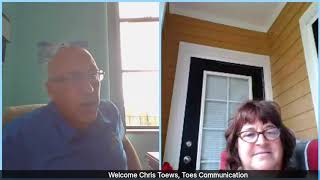
Adrienne Barker talks with Chris Toews, founder of Toast Communications, about unified communications for small businesses. His mother's pancreatic cancer shaped his focus on community work with the American Cancer Society. They compare Zoom, Teams, and Google Hangouts, and discuss why meeting customers on their preferred channels matters.
Chapters
So your name is T-O-E-W-S, but yet you dropped the W for your business name. There's got to be a story.
That is— yeah, that's correct. So, uh, obviously, toes, you know, I mean, I got picked on a lot as a kid, you know, with my name. But, um, you know, it really drew people just to think about it. Um, when I came up with trying to start my business, it was really about walking people into the cloud. Um, you know, I had so many different different pronunciations, you know, there's Jonathan Toews with the Blackhawks, which is spelled the same way. So I really wanted to just, you know, people to think of that mindset of how we get to one place. And it was really that guided walk into cloud services, communications, all of those things. So that was a little play on words and kind of started that out.
Oh, step your toes in.
That's right.
I'm so sorry to ask. I was gonna say. What do they make fun of? What'd they say like, Oh, Chris. Chris got— like, what was— what could they have made fun of with the name Toes?
Uh, I got Chris Fingers, and now you got Big Toes, and how are your feet smelly? Yeah, kids can be terrible.
So, oh my God, I would have been the one— Chris, uh, Toes the Line. That's a good one.
Yeah, there we go, there we go.
So what is behind you? There's a— there looks like— is this a piece of artwork behind you? I see something.
Yeah, so it's kind of my business logo. I had, uh, I worked with a gentleman that's in, uh, some marketing. Uh, he was in my office space, and so we just put some things together. Um, it's kind of similar to what you would use for signs out in your yard. You'll see real estate agents or, you know, new candidates in the government put stuff out in their yard. So He made a couple up for me just to have some ideas. So it found a place on my wall just to kind of be able to have that. And when we see it, you know, it's also good now that we're doing so much video conferencing, people can put those two pieces together.
So you— so with your communication, are you— so I know that you're like, you're with Maria, you are wiring everything to get her the internet and the phone.
Correct. So really, communications isn't just telephone systems, you know, really communications is a transfer of data. Um, so we look into that, but that obviously starts with an internet service. So for new businesses that are opening up, you know, we can look at, you know, your local providers. You know, I help kind of guide people through that. Um, you know, I work with companies like Windstream, CenturyLink, Spectrum, Comcast, AT&T. Um, so we, we set up services based upon what they're really trying to accomplish, you know, obviously keeping price in mind and, um, services that are going to allow you to grow. So we start off a lot of times with those kind of packages. And then we, um, look at, you know, what does the next forms of communication look like? What are your applications on, you know, your desktop that you're using? What are the, uh, you know, how are you communicating with people? Are you doing text messaging? You know, are phone calls allowing you to be remote and answer, uh, you know, be in line with your customers? Um, so we really try and focus on all those. I mean, technology today is just so advanced I mean, the amount of things you can do with a communication, with a phone system is just incredible. I mean, we've got direct team messaging so you can collaborate with people doing wonderful things like these video conferences, file sharing, screen sharing. And really people, they've been around for a long time, but it was really only to the enterprise level kind of businesses and technology and the price of these systems allow it to be available to any small business. So it really just grows how we really, you know, talk with each other. And it's been a wonderful thing. I love helping businesses, you know, kind of just understand where technology can take them. You know, how do we become more proficient? How do we stay in the mainstream? How do we not overwhelm you with technology and allow you to kind of do business and slowly take in those processes? You know, it doesn't— we can put in new phone systems that give you a lot of capability but allow you to do business just as you've been doing business forever. Um, it just over time you can start utilizing some more and more as you see those features become prevalent. Um, they're already there and available to you.
So I actually made— when I opened up the gallery, I made a mistake. That was the one area where I did make a mistake because I didn't, I didn't have the knowledge. And, and so I, I ended up getting a phone system which I didn't even need both of them. I didn't need the line. Like, all of it was like stuff I didn't need, and then it didn't— wasn't helpful. And then the problem was I was getting the Google calls like 15 times a day and I had no way to block it or nothing I could do because I didn't have the right system. So it would have to come in and no matter where I was at the store, I'd have to run and answer it because to me I thought it looked rude if a customer was in and I didn't answer it, like, like just so hard. So I, yeah, I could see. And I love that you do that, the communication, but then you— so we're, we've met because of your love for the nonprofit. So could you Like, 'cause that's amazing 'cause you're so busy doing what you're doing and then how do you handle your nonprofit part of it?
So I, you know, I really enjoy giving back to the community and reaching out. You know, I moved down here about 3 and a half years ago. My mother had been diagnosed with terminal pancreatic cancer and I'd always had, I mean, I got in restaurants so a lot of it was fundraising. You know, I used to do a big program up north trying to help with the PTAs and doing fundraising nights. And, you know, I've always enjoyed kind of giving back to the community, but it took a new role for me when I moved down here. Um, you know, obviously we've met through the American Cancer Society, and, you know, I've got established with them, um, doing that. But, you know, Healthy Souls International— I, I got the ability to go on a kind of disaster recovery, you know. We went down to Puerto Rico and were able to help out after the earthquakes came through, and You know, I just love giving back to people. You know, it really— when I, when I got kind of having to understand what my mom was going through, it really made me reflect on life and what's important. You know, I spent a lot of time running restaurants, working 70 hours a week, and I enjoyed that career path. You know, it was a, it was a lot of fun. It was a lot of work, but it was a lot of fun. But, um, you know, when I got down here, obviously with my mom's health concerns, my values changed a little bit. It was about spending time with people. It was about, you know, the holidays and the weekends and all that stuff. And, um, you know, I tried to align, um, my business and then my outside activities, you know, the, the non-for-profit help and stuff like that, um, to really allow that, you know. I mean, it's great when you can make connections and when you can talk to people. Obviously the American Cancer Society has been a big piece of mine just with, you know, having a family member that went through that. We did, uh, you know, my mom had 52 rounds of chemo at the Mayo Clinic. So she was there about every other week. So, you know, we get to see that. And during that time frame, you know, as much as we don't want to lose anybody, we really had a lot of great times. We were able to spend time together, and she was down at the band shell. And, um, you know, it was just a blessing in my life to really spend that time. And it, it just made me reflect, and I wanted to be part of, you know, other people's process through that and try to give back and just, you know, build those relationships. You know, I can understand what family members are going through and what those friends and children and parents, you know, I've watched my entire family, you know, deal with that process throughout the things. You know, she just passed away at the end of August this past year.
Oh, I read that.
But, you know, as much as, you know, it hurts and, you know, we miss her, but, you know, I get to feel like I'm doing something with her being out with those people, so. It's been a blessing in my life to be part of that committee and part of that group and help that process.
So you're young. What, what part of New York— like, when you say north, what do you mean north? North?
I was originally from the— just south of Chicago, central Illinois, um, Champaign-Urbana, home of the Fighting Illini. So go Big Ten. Um, but yeah, so I moved down from there. I spent my majority of my life there. Like I said, I've been down here in Ormond for Uh, about 3 and a half years. Um, I'd always wanted to get back down to Florida. I lived briefly early on in Tampa Bay. Oh man, big Buccaneers fan. But, um, you know, at that time I ended up— things just didn't work out the way I had anticipated and ended up moving back home and spent a, uh, the rest of my life up there. But I always knew Florida is where I wanted to be back at, you know. And, uh, with the mom's health situation, I got an opportunity to come back down here. And, you know, it's been a blessing. We love the community. Um, there's so much going on, you know. I out with my dad. We go to the, uh, the car shows, and, you know, we volunteered with the bike weeks. And, uh, you know, it's just a great community. There's so much activity in the area, um, and I just love being part of it. I try to help out, you know. I'm involved with, um, all, you know, quite a few of the local chambers, and I always volunteer down at their events. And, you know, it's just great to get out and see such a, such a good community that's so active. And, um, it's really been a blessing to be here.
It's so true. Your mom, actually, just to just say, your mom, that is really devastating news. I mean, one thing is to hear cancer, but pancreatic is just really very, very difficult to hear. And so, so from the time that she was diagnosed to last August when she passed, what was the timeframe?
So she ended up a little over 2 and a half years. Wow. Her original diagnosis was 6 months, a year tops. You know, and I truly believe that, you know, at the time my sister ended up moving down here with my nieces from New Jersey. My mom and dad moved down here, I moved in here, and we moved into a large house just to kind of be able to support each other and really embrace all that family time. We were a close family growing up. And, you know, I truly think that, you know, when they said 6 months to a year, the reason why she lasted 2 and a half years was truly just because of the family. You know, we had, you know, the granddaughters around, and she was smiling, and she was active with the warm weather. It was, you know, it was just a blessing to have her here. And like I said, she never stopped. I mean, whether she, uh, wasn't feeling great or not, you couldn't tell. I mean, she had a smile on her face. And, uh, you know, we, we went out and did quite a bit. We experienced life, you know. And, and, you know, I, I truly believe that's why, you know, it wasn't a 6-month prognosis. She went a little over 2.5 years. Wow. Truly blessed that we've had that opportunity to reconnect as a family and to spend that time together. I mean, it's just— those are memories you'll never take away.
That is really beautiful. All right, I have a question for you. So communication data, that's important, but how would you— what if— how do you describe like the best communication? Because You know, I grew up in the family business and that was my biggest complaint was the communication. It was like just not good at all. How do you— how would you put into like— so it's not data-driven, but just regular leadership and communication and making sure that that is like— what does that look like to you when it's not data?
Yeah. So, I mean, that's a great point. And honestly, where communication really ties in, So we need to be— I mean, everybody's different. We all have different roles in life. Some people are more desk-driven, some people are more, you know, sales and out on the go. And it's really the ability for us to communicate in the forms that are most convenient or easy for us. So some people, that's a lot of text messaging. Some people, that's video calls. Sometimes that's us being able to collaborate and work seamlessly as a team. So a lot of the products that I go through, you know, we talk, you know, hosted phone systems, um, you know, unified communications, UCaaS. I mean, all those things, they're basically all intertwined, and it's really the ability for us to communicate on whatever forms are best. We see that even as when we're business owners. How do we, how do we connect with our clients? You know, how do they want to communicate with us? You know, we've got a lot of millennials that love to communicate via social media platforms. I mean, phone systems can even take them where they can reach out to us through Facebook, and I can be sitting at my desk and answering phone, you know, basically phone calls while they're reaching out on their Twitter or their Instagram or whatever it may be.
I have to try. I got that. Okay, so the weirdest thing, so yesterday I got a phone call and it was quite fast, uh, the voice sounded very, very tinny, and it was another distributor promotional products trying to sell me, which is totally fine. But I thought he's talking way too fast, the sound was horrible. So I called them up to say hello to him and I said, you know, I hope you don't mind, I just want to let you know that you speak very fast and I really didn't understand. But I like, I love the industry and I love that you called me. And so, but I wanted to like let you know that. And he's like, he's like, oh, he goes, I use a service that sends out like thousands of these calls. And I'm like, Oh my God, are you getting any replies back? And he's like, no, not really. And I'm like, I think it's because it was not a very good form of communication. I'm like, again, very fast, very tinny, some of the words I didn't even understand. And so he said to me, would you mind forwarding it to me? So I have a feeling he's probably going to complain to the service that he used, but I had no idea that when I took that call that it was a voice message that went right directly to my voicemail then. And because it would have been a pre-recorded voicemail message, does it go right directly to— so would they actually not go— like, could I have answered that live, or would it have gone right directly to voicemail?
I think it's a lot of what you're setting up. I mean, when those calls are coming in, they're pre-scripted to automatically go through. I mean, a lot of that's how are we trying to reach our people, you know? I mean, call centers give us the ability to really dictate how all that stuff goes. I mean, we can go through where we have a live agent on a phone, and I mean, he's really scripted with Q&As all the way through. I mean, if somebody says this, we're able to, you know, start getting information for them or really engage in their conversation. So, I mean, communications can be as in-depth or as minimal as we want, you know, and it's really how are we trying to do it, you know. I mean, are we trying to reach 200 people in an hour? Are we trying to have more local, personalized conversations? And, um, that's really where the comfort— that's, you know, that's my job, is to really sit down and talk with people. What are you trying to do? What do you want to accomplish? Do you just want to leave messages? You know, I mean, we, we see it in email blasts or, you know, through the use of CRMs. How do I connect with all these people I know and just say, hey, I'm here, I want to connect with you, and I, and I just want to say hey? Um, so sometimes that's the, the communication we're trying to start with. Um, it's just to get some feelers out, to get some people to call back. Other times we want to have those, you know, those in-depth conversations and be able to have these one-on-one conversations. Um, and we do that as well. So a lot of it's just business model and how people really want to connect with one another. Wow. Messenger or what, but You should do—
this is a really interesting topic, actually. So my daughter, um, I have the— I, I have had the Galaxy S Plus 9, and you know what, I've had it. I don't drop my phone, but she, my little 13-year-old, dropped my phone and it cracked. And then yesterday it was weird. Last night she's talking to me and she's like, you need to get the iPhone 11, whatever. And I noticed that my phone had another crack on it and a line, and I'm like, oh my God, I don't have a choice now. My phone is now in a situation where it'll stop working. So I ordered the iPhone Mac Pro, the iPhone 11 Mac Pro. No idea. But my concern is like, oh crap, like if I don't, and I'm not that type of person. I don't wanna be like, oh, you can only communicate with me by email. Please don't send me text messages. Please don't send me Messengers. I'll get confused. I'm like, no, I don't care. Just communicate with me. I'll take any way that you send it to me. And I'll figure it out. So like at the end of the day, I've gotta go back and make sure that I will go through all my text messages. And I'm hoping the Mac Pro will be a good one, the iPhone. But I think that, I think as a salesperson, you should, you know, good etiquette is that you would take a sale no matter how they're gonna give it to you and not dictate to your customer how you wanna be communicated on. But what do you think about that? Do you think that the client should dictate the communication or the person receiving, the salesperson, dictate how they are communicated with?
Well, I, I think honestly, if we want to be successful, I think we need to communicate how the client does, you know. Um, if I, if I just say the only way you're going to talk to me is calling me, I'm selling myself short and I'm losing customers. There are too many options out there today. Um, you know, I mean, it doesn't matter if you're a carpet company. If you're not eligible to receive communication from people on whatever platform they're using, you're missing out on a lot of opportunities. Um, because sometimes it's not even whether I like your carpet or the price, it's that it's the ease for me. You know, we, we've gotten to busier lives and we want to communicate how— what's easiest and most comfortable for me. And if I don't have a business that's able to do that, I'll find another business that does. Um, so as business owners or salespeople, I really got to play on their level, and that's where you know, unified communication, we talk to how to— what's the most important part about communication? It's being able to do that on all platforms. Um, there are some people that just sit in front of their desk and, you know, they don't leave. I mean, phone systems, I can send text messages from my computer. Um, you know, that's not things that we thought of in the past. Um, you know, and it's really how am I reaching those people, you know, because I got to do it on what's comfortable with them.
I really had no idea to do this. And now that I know, I think that I really could, um, could use your help. I think that's great. So I need to like get a package or however you, you do that. Because, and have you seen the new like Google, um, in our industry we have a really cool thing where I could, I could go online and I could go into like a Google Hangout or Google Duo and I could go to the trade show. So next thing I know I'm in their home and they've got the trade show booth and it's like these open trade shows. That are so cool, and I could look at the product and see— I can't feel it or touch it or taste it, but I could like look at it, and it's, it's really cool. But I'm confused, is it Google Hangouts and Google Duo? And then what do you think about the Google phone, like how the Google phone is?
Um, so I, I mean, I think they all serve their purpose, really. You know, I mean, everybody's business is different, and we ultimately, we want to look at, um, what is your main source of communication? What are you, what are you as a business owner trying to accomplish? I mean, I, I'm a G Suite man. I mean, I've got G Suite, and so I use a lot of Google products, Google Hangouts. Those are great secure platforms to be able to do this. And as we see, instead of constantly trying to find the next home show or stuff like that, people are able to have home shows once a week without a show because I can do that through these platforms. So it gives, you know, it just opened up my, my base. And if I sell a product Um, like for example, I mean, most of my products are available internationally. So if I'm just focused on what's here in Ormond Beach, Daytona area, um, what am I doing for the person that's in, uh, Italy that needs some help, you know, and has reached out to me or knows me from a secondary source? Um, we can do that, you know. I mean, I may have a lot of clients— you may have a lot of clients where you're doing a home show and somebody in California is opening up, you know, purchasing a lot of products from you. They like you, they like that. So they, you know, with doing these kind of services and the Hangouts and opening that up, we open up our marketplace. I'm no longer constricted by my physical location because my employees can be anywhere, my customers can be anywhere, you know, and it truly allows me to help the most amount of people that I can.
You know what, I think this is a good presentation. This is a great workshop presentation. I really do believe this. This is, I think that, you know, I think I'm computer savvy and tech savvy, but that's the one thing I'm not savvy about is the other forms. So if you are, you should really talk to Ken about creating a workshop about this. And I could ask Jason from SCORE if there would be an interest, because I think that this is a piece that I don't hear a lot about. And by the way, I just got an email that said, here's your bill for the G Suite. And I'm like, Is this— do I have the G Suite? Like, I'm all confused. What the— and how much should I be paying for the G Suite? And I don't know if that was a scam or not, so I'm like, I don't, I don't remember signing up. So I'm all— I'm very like, I didn't pay it, or I don't know.
Yeah, so, you know, I mean, and it's just like anything else when we're looking at that. There are free products. I mean, Gmail is a free product. Um, G Suite is a business platform that really ties all those applications together. And allows, you know, business— better business continuity.
Like, what application? Because, like, I use a Chromebook, so I already have the— I already have their Google Docs and stuff like that. What else would be included in the G Suite?
So it's, it's the ability for my users to be able to have multiple people in there if I'm creating emails or domains that are coming in, um, to— for my email accounts. Um, you know, for example, mine is at toastcommunications.com, not christoese@gmail.com. So some of those pieces that come into play, um, when I have my entire business. So, um, my father works with me a lot and he does some marketing pieces, so he's got his own email, but it allows us within one platform to be able to communicate together, to be able to file share together, and just, you know, collaboration that goes in. Now a lot of those pieces you can still do OneDrive and share that documentation, but within an organization, I kind of get the ability for people to see what they want, what I want them to see, and us to work on certain, certain pieces together. So I don't think I have that.
I don't know, it was probably maybe a scam that I got that they said. I didn't click anything because I'm like, I don't think I have— I am with the leadership. We have a GroupMe and we use Google, Google.
Yeah, Google Hangouts and stuff like that. So, um, some of that is just your ability to be able to link, you know, am I accessing those things? But, um, we look at— I mean, those— I mean, they're fairly inexpensive. I mean, your normal, just a standard business plan runs you $5 to $6 a month, whether you can find a coupon or not. Um, the business portfolio is anywhere between $10 to $12 a month. Um, but it really just opens up and makes that as a solid business entity with it. Um, Microsoft— I mean, everybody had, you know, when we looked at Microsoft, for example, with some of their products, they've got Office 365. Now we've got Microsoft Teams that are out there.
My daughter uses that. Wait, so Volusia County School has, so they signed a contract with Office, with Microsoft Teams, 'cause that's how they seem to, is that similar to Zoom?
No, I mean, yes it is. I mean, it's a platform. Honestly, when you go into like a Microsoft Teams, we got a lot more security in place than just a standard Zoom meeting. We've had a lot of conversations that have come up with the Zoom bombing and some of that. We've taken all these video conferencing that we use and we took them home. When they were in a school, they had firewalls in place. Now we've got teachers working out of their house that don't have the same security measures. So they've really went to the Microsoft Teams because it keeps those classrooms secure. You know, Microsoft offers those things. Same way when you're looking at, when you were looking at Google Hangouts, similar product, you know. I mean, we're just looking at, you know, Apple versus, you know, you know, a Microsoft product. So, you know, we just look at different avenues to be able to do that. But, um, definitely a lot more security within those when we're using— instead of using an open source free platform, you know. YouTube is changing their security measures. Zoom is changing their security measures.
Um, open source— is this an open source platform, believe be live?
Uh, I don't— I would have to look at it. Um, you know, I haven't— it's the first time I've been on it. I, I'm assuming— I mean, if you have an account, you've got some kind of security measures with it. But anytime we're using free services, I mean, we're on an open internet source, um, we're passing out passwords that are available for people just to type in and join in on meetings. Um, so we really want to keep that information secure. Um, like I said, I didn't see your side of it. I, I haven't used this particular product and I haven't seen your administrative side of it to see what security things they have in place.
I do pay for it. I pay, I pay $29, but I will tell you that, um, they don't have customer support very well. So I noticed that and then I went, I found a Facebook group that, like, you know, the BeLivers, they call them, and most of the time they're complaining about that. I, I'm only using it because it's so so easy. Like, literally, it's like a kindergarten, and they're like little icons, and there's only like 7 of them. And so I'm like, this is so easy. Carmen has her logo on the back of hers. I'm like, that's so cool. But I'm just— I, I'm telling you, Chris, you, you have really good information here. I could talk to you for hours because this is the— this is so interesting. I, um, I will tell you that last night I got bullied badly into getting the iPro Mac. And then I had that feeling like I made a mistake because I don't know anything about Mac. And now I got to learn a new way of communicating using a program because I've been a Samsung girl. But my daughter, she was bullying me. She literally stood and she's like, you need to try something new. You need to do new things. You're like boring because you don't— and I'm like, oh my God, just stop it. I don't— and then I woke up this morning, I'm like, hello, spring. Print, um, and they're like, it's in the warehouse thing. And I'm like, oh crap, I'm not gonna— that's when you get all messed up when you try to change the direction or something. But now I'm thinking, I'm gonna get this phone. I don't know, does iMac and Google get along together?
So, I mean, yeah, I use Google apps on my iPhone all the time. Um, one of the things, Apple is, is not an open source. They're like, when you were using your Samsung phone, you were really able to customize it a lot. For what was important to you. Apple has great functionality and makes it very user-friendly. So just like you were using this program and it had just a couple little icons, Apple does that a lot. So I think you're gonna find the switchover very easy. You know, I've been, I've had Apple phones since they started coming out and I love them just because of the ease of use. You talk to a lot of IT guys and they would prefer having a different phone because it gives them a lot more customability within their, within their phone. I just like the ease of use. Mine's a communication. I can download my apps really easy. It still allows for all my communications and applications to be in the place and do what they're supposed to do.
So why did it offer me different levels of storage? And of course, why wouldn't I pick the highest storage, which is what I did, I think? Uh-oh. Oh no. Is it the higher number or the lower number that's higher?
The higher. Okay. So you were good. Yeah, so I mean, we just, we keep so much more data on our phones. And you know, and it depends, you know, are you putting your information in the cloud? Some people, you know, download regularly. Some people just store everything on their phone. So I've got files that I'm keeping. I've got, you know, 3 different emails that I'm keeping track of. I've got photos, you know, I mean, I'm constantly taking photographs and music. What does that look like? So you want to have more storage available to really not, you know, bog out your phone where you're like, okay, what do I got to erase now to keep going? Uh, I mean, that storage level keeps getting higher and higher and higher. Um, but, you know, and you can also— I mean, you can have a low storage on your phone and download everything to your cloud, and your, your files are safe there, you know.
Charge extra though for the higher storage. Why not? I thought that was weird.
Uh, honestly, that's great to know. I, I don't know. Usually they do. I think you've seen a couple different platforms. I, I think it's just evolving so quickly. I mean, um, you know, I've got the iPhone X and, um, it's outdated. I mean, we're already at the second version of the 11. I've only had my phone for a year. So, um, typically I've seen that there were some different, you know, storage levels, but I'd seen a difference in price with some of those too. So, um, you know, I think it's just keeping up with the marketplace. You know, what do we, what do we have? What are people going to pay for? You know, we want to be able to make some some functionality with them and be able to accomplish what everybody's looking for. I mean, everybody's different, you know. I mean, some people don't take the phone, some people aren't using, you know, as much storage on their phone. I mean, mine, um, you know, I, I need a higher storage level just because of everything that I'm doing on it. Um, but it's like, you know, I mean, do you have a Mac computer? Uh, I actually have an HP, um, for my laptop now. I have, uh a Mac for my home computer. So, um, yeah, you know, and I like— I mean, I love, I love the Apple products, but I went both ways, you know. I mean, they— it's just, it's just the nuances, um, you know, what's that screen look like, some of those things. Um, you, you find, just like when I, I had just switched over from 365 to G Suite, you know, email's email, but how we label those things, how it looks, how we set it up are just a little different. So I mean, when you, when you get into them, just like you, you'll see that everything you had on your old phone will be available on your Apple. It's just how do I get to it? And once you get comfortable with the screen, it's going to be great.
This is— I really— my question then would be like, well, how do you switch over? I think that this should be a Q&A conversation too, so that everyone could like have those questions and then they send it to you, like a, like a communication town hall meetings, really, because how would I switch my Office 365 to the G Suite without losing anything? So there's like so many questions that, um, that's so— oh my God, I, I like learning this stuff though. I find this really interesting. But I want to go back. I don't want to keep you too long, but I want to thank you for your commitment to Healthy Souls. It's Maria's, isn't she?
Yeah, yeah, she's amazing. I, I love all all the work she's doing. I mean, that's sick, you know. I just— it's so hard. I mean, she asked me to do stuff all the time, and I'm like, how do you say no? I just love everything she's doing. Um, you know, even when you look at a company that was helping out internationally and their main focus— when she started off doing, you know, relief in the Bahamas after the hurricanes, and then Puerto Rico with earthquakes— and now she, she hasn't skipped a beat, and she's helping here locally. You know, it's really about giving back to those in need and It's a great cause. You know, I love being part of that stuff with her. We talk on a regular basis just to see what's going on. And like I said, I just tell her, keep going. You're amazing and you're doing wonderful things. So keep it up.
I think that what we should do— maybe you can help do this— is that we create a— maybe Jamie can help too. So some of the people that are always doing everything, but to create a, like, a hometown hero award program for Daytona Beach. And then everyone that has been doing such amazing work that we just honor them, whether it's a luncheon or whatever we could do, because there's so many people that are really going above and beyond, whether they're feeding the, the, the, the children, they're feeding— Maria's taking the most vulnerable, feeding the healthcare, and, and do some kind of our own, because we can't really— I mean, I'd like for Maria to go on CNN Hero because she is to me a hometown hero, but Um, I don't want anyone to know that I did that, but anyways—
oh, oops, too late, too late.
CNN heroes, please put down Maria de Villa because she deserves it, but don't say that I told you. But, um, yeah, I really think that this is something— maybe I'll talk to Chamber, maybe make sure that they include that in something that they do next. And because I just— unbelievable. I mean, I'm not leaving my house, I'm trying to help everything on the back I tried to do the talent show, but we didn't really get any talent. So unfortunately, that's— or maybe I did it wrong with the communication, because I think everything comes down to me, to communication. That is, that is the— that, that can make or break a company easily, how they communicate.
Yeah, um, you know, and I don't know if it was necessarily— I mean, communication is key, um, but honestly, everybody's in information overload right now too. You know, I mean, we're concerned about what's going on with the government and what this looks like and what loans are out there and what is the financial status, you know, I mean, I try and check the news, I don't try and watch the news, you know, I mean, there's a difference, I've just gotta try and minimize that. You know, I've got 170 suppliers I work with, I was probably getting 2 emails a week from every supplier about what we're doing for a remote workforce and how do we, you know, change how we're doing this to all these individual, people that are now going out, you know, because as a company we're maybe not making those long-term changes yet, but individuals are trying to go out and keep things going. So it can really be some information overload for people. And I loved your idea about having dinner, but honestly, I don't know if we could get a big enough space for all the hometown heroes we have.
Oh, that's good.
I have seen just, you know, I mean, despite all the turmoil that's here, I have seen love come from so many people, you know. I mean, whether it's contacting your neighbors down the street that's elderly and see if you can go to the store. And, you know, people raising, you know, raising food drives in the schools. And, you know, just the love that everybody has for everybody else has been incredible. You know, I've been so wowed during this whole quarantine time by, you know, just how everybody's helping out. I mean, I've seen it all over the place. I mean, it just doesn't stop. You see the next person doing stuff, you know. And I, you know, I mean, it's been so much on my newsfeed that I just try and help out what they're doing. I, you know, I haven't even put anything together myself because, um, you just love seeing people buying masks and fundraising to get stuff to the first responders. And, you know, um, all the work they're putting on, you just can't say enough praise, um, for what everybody's doing during this crisis.
You really can't. And we're still preparing for the Stride Walk in October, which I'm excited about. So Chris, thank you. Um, so I, I asked you to do the same thing, hashtag show off your friends, because we all want to meet each other's friends, and especially those that maybe don't live in the area. Maybe some of your, um, homies from Chicago area. That was awesome. But I think that's—
well, yeah, thank you so much. I really do appreciate you taking the time. It's great seeing you, and I appreciate all the work you're doing. It's great to um, see all these conversations and getting to know people that I wasn't aware of. And, um, it just allows us to meet other people, and it has truly been a blessing. I can't thank you enough for all the work you're doing. Please put the—
let's talk, like, get a workshop going. I know that this is great. You have a lot of great ideas, information.
Absolutely. Well, thank you so much, Adrian. And like I said, I look forward to— you have a wonderful day, blessed day, and stay safe out there. We'll talk to you soon.
Bye-bye.
Bye-bye.










