Candid Conversation with Host Adrienne Barker
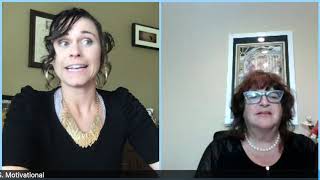
In this informal, diarized interview hosted by Adrienne Barker, MAS, the guest Abby shares her multifaceted professional and personal journey. She begins by describing her creative photography projects that set her apart from typical realtor headshots, then recounts her early career in insurance with New York Life and State Farm, explaining how overwhelming debt and long hours led her to pivot toward life coaching and motivational speaking. Abby outlines her coaching methodology, citing case studies ranging from an 18‑year‑old high‑school student to a 45‑year‑old divorcee, emphasizing self‑reflection, breaking social conditioning, and providing practical coping tools. The conversation shifts to handling negative language and conflict resolution, with Abby offering strategies for responding to condescending remarks. They discuss teen online safety, catfishing, and how parents can monitor and protect children on platforms like Instagram and TikTok. Abby explains her role at AudioEye, a software remediation company that makes websites accessible for people with disabilities, translating technical ARIA issues into client‑friendly language. During the COVID‑19 lockdown she launched a series of three weekly webinars covering topics such as loneliness vs. isolation and family communication, recording them for later distribution and promoting participants’ businesses. Abby recounts a recent speaking engagement at the World Youth Forum in Egypt, where she delivered a 15‑minute talk on gender diversity and economic profitability, navigated cultural challenges, and even met the Egyptian president. She also mentions her upcoming book (in editing), collaboration with Adrienne on editing and promotion, and her broader network of collaborators like Jessica Cox, Emily Aldridge, and Anna Anderson. The dialogue touches on personal trauma, emotional abuse, resilience, and the importance of supportive communities and boards. Throughout, the tone remains conversational, supportive, and occasionally humorous, reflecting both the informal setting and the depth of Abby’s experiences.
Chapters
This is Abby, Alana. Oh, come here. I want you to meet Abby in real life. Just come here. You can't— looking— I know, she's really pretty. I know. And Abby has a series of photos. Can you tell me about your photos? Because they're, they're beautiful to look at and they're fun.
Oh yeah, no. So I have— I, I knew that in motivational speaking and stuff like that, everybody's doing like the realtor headshot. And I wanted, I wanted to be different. I didn't want to have that headshot, so I went to a ton of different national parks. I went out to Bisbee and just contacted some of my local photographer friends and said, hey, let's just go have some fun, and did a whole photograph series of, of Bisbee at like 5 AM. And, um, you know, just all these different places just to get to know my area.
You just, you're so photogenic. Were you a model before?
I tried to get into it and I just, I knew that I wanted to be on stage, but I didn't know if I necessarily wanted to be behind a still camera. So I got into makeup instead, really enjoyed that, and then got into speaking. And now I just love, love what I do.
It's just so lovely to meet you. To like look at you. All right, so I wanna— okay, so we met. Do you remember where we met?
We met at the Tucson Connect. Uh, it was like a breakfast where you were talking about, you know, handshakes and meeting people and networking and LinkedIn and all that great stuff. And it was my first time there. I was brand new to New York life. I didn't really know— I knew generally what I was doing because I, I had worked in other businesses before, but It was all new information. I just felt like our personalities just came together.
And so what I remember is I was asking everyone, somehow it turned to, instead of talking etiquette, we also talked about having everyone give their 30-second elevator speech and then I would kind of comment on it. So, and then you, you were the first to stand up and actually, to be honest with you, I could say this 3 years, I thought yours was the best. And everyone was kind of shocked too because You stood up and then you were able to just deliver it perfectly without a hitch. So actually, I'm going to put you on the spot now to deliver your 30-second with what you're doing now so that I could hear it.
So what I do now is I change people's lives. I create the time to hear them, see them, and make the moment to change them and transform them into the biggest and best person they can be through implemented practices that I've been trained and done and gone through myself. This is something that I personally went through and something that I know can affect everybody in the best way it can.
I love that. I always say, Abby, you know, I, I wrote a book and I talk about like what was going on with me when I was younger and how I didn't really realize the things that were said to me. But honestly, now when I look back, I say if I had a coach, if I had someone that would have helped me, and I think if I had someone that was fairly close to my age too, that I could relate to. Because at certain ages it's hard. I think if I was in my mid-20s, I don't know if I would relate to someone my age. I would relate to someone your age. And I think it would have just changed my whole trajectory in life, like where I was going to go, because I would have been able to have handled it so much better to know what I was really working with. Because when you are working with a different personality, You know, part of it is really like you can't change the other person, so it's all about changing yourself, right? So I really wish— tell me more, tell me more. Can you, um, are you able to share like case studies without sharing people's information?
Oh yeah, definitely. I can give like happenstances. So on that topic of, of like age-related coaching, um, I have— I don't know if it's a special skill or if it's just Something that I've learned through working in insurance with the— I was the youngest person who worked there, but I'm able to coach people from 18 is the youngest I coach just because they're adults and we talk about things that would need parental consent. And I don't say oldest because they're not old, they're 45. But I would say the largest age range would be 45 years old. So I had an 18-year-old who I was coaching who was just stuck in high school. Just, he couldn't get out of it. He was stuck in the, I have to do this, I have to look good, I have to be like— he had all of the roots of, of just social conditioning put into him that for me to ask him, okay, now think outside the box instead of asking for someone to grade your thoughts. Which is a high school idea, grade yourself. What do you think those thoughts mean? And got him to thinking independently because in schools, I think specifically those just out of school, we're trained to think like, I take this test, I do my homework, and I get a grade on whether it's right or wrong. What that's training us to think is somebody else has to give us affirmation on the decisions and actions we make and what we say. So part of that was breaking free of that social conditioning. You don't have to, you don't have to look for other people for affirmation. If you believe that it's right, that's all that really matters. And then on the older side, on the, you know, the 45-year-old clients I had, she was a two-marriage divorce, of which I went through not necessarily a divorce, but enough time spent in a courtroom and enough money lost, I could probably say that. But, you know, she had gone through 2 divorces and was just— she told me, she's like, I'm at the end of my life. I'm 45. I'm at the end of my life. And we had to completely rebuild her from the opportunity she gave herself of I have nowhere to go but up now. Like, this was a woman who didn't even know how to pay electric bills because she'd never been single long enough to do it. Someone had always taken care of her.
And she would continue that, or now, or is the goal that she could, could be on her own?
My goal is to get people completely done by 12 weeks, and that hopefully— I love to hear from them, but hopefully they don't come back. Um, because the process is we're going to get— give you practices you can implement, coping mechanisms you've probably never been taught before, and, um, like a set of questions you can continuously ask yourself in order to treat your anxiety, depression, PTSD. In your way.
I love that. I love that. I don't want to get political. I absolutely don't want— everybody knows me. But I want to, I want to do— I want to approach and talk to you about the words that were used, um, the other day. You ought to be ashamed of yourself. Because, you know, I, I, I've had those words thrown at me, and they're, they're confusing words, aren't they? You know, I made a mistake. I need to turn my phone off. Hold on. I don't like that. And I'm— I I— okay, there we go. Um, could you, could you tell me if someone hears those words, first of all, kind of as a trigger word, because it really affected me to hear that, and then, um, I just need help with that.
So yeah, I would say the first thing I hear from someone saying you ought to be ashamed of yourself is someone telling you what they think is right. So It is their way, like, to think of it from a compassionate standpoint. There is a way of saying, like, I care about you enough to make you feel this way. Now, was it done correctly? No, no, not in the least. Those are words that are very condescending. So, you know, you ought to be ashamed of yourself. Okay, I ought to. Thank you for your opinion on that, but this is why I believe that this is right. And I'm going to ask that if you continue to say those things to me in a very judgmental or condescending way, there's going to be consequences to saying that, and that's going to be we're not going to talk anymore, or you're not going to get this aspect of my life anymore. So it's, it's like basic conflict resolution, like One, I try to find the compassion in what they're doing, because I think people on a rare occasion say things that they truly mean aggressively. Usually comes from a place of concern or a place of fear, which is their concern and fear, not mine. So I also have to realize that, but then also put into the sentence like that. When you said that, it made me feel like you didn't value me. Made me feel like you didn't value my actions and that I was doing the right thing. And if you continue to say those things, you're just not going to be given that aspect of my life anymore. You're going to be relinquished of the privilege. And they'll get defensive, but it's— they'll see it as like, wow, and just repeat it over and over again. And they'll see it and they'll either decide not to be around you, which is their own consequence. Or they'll say, oh, you know what? Maybe it's not my place to say that.
What concerns me is that people are listening to that and hearing that and maybe repeating it to someone else. Does that happen a lot? Would someone hear something, words said on TV, and then turn around and maybe that night be like, oh my God, you should be ashamed of yourself for doing that?
Oh yeah. No, negativity spreads more than corona does. 100%. And people will hear it though. I mean, I'll hear— I like to think of positive phrases and do that. But some people really stick to that negativity of like, they ought to be ashamed, which is such an old phrase too.
Thank you. Yeah, that reminded me of— I have a feeling I had a Jewish mother who was a beautiful woman. But like, you know, I mean, there wasn't— our parents didn't necessarily have a book that they could do like, oh, how best do I talk to my children? So I think our generation so much better. But yeah, my mom would have definitely have used those terms. I just felt it. I don't recall hearing it, but I remember, like, it resonated with me for some reason. Like, oh my gosh, I must have heard that before because you ought to be ashamed of yourself. Just so harsh.
Well, it's so harsh. And it's honestly, by saying like it's such an older phrase, it comes from a background and a communication time where like that was how you disciplined kids. And like, that's how you disciplined people, was you put them down. And now we're in a society where individual thinking is highly important. So I would also look at like the age range of the person who was saying that to you too. Like, I, I, if just from hearing the phrase, I would say they were in late 60s, early 70s, probably female, probably a mother. Uh, probably a widow now, actually, would be my best guess.
Wow. Wow. So, so, okay, so what happened? So you leave New York Life, which is a— I, I thought that was so amazing that you were even— because that is one tough position to, you know, yeah, that's— that has got to be the toughest. And then, and then what have you been doing? So I met you back in about 2017, '18, '17, I think it was. So tell me, catch me up the last 3 years.
So a little backstory on New York Life that I didn't necessarily share with people at New York Life was when I got out of domestic violence in November of 2017, I was in significant debt because of that. So I had started with a life insurance agency that acted more like a multilevel marketing agency. So then I said, well, if I'm going to do this, I want to do this right. So I went to New York Life thinking, this will be better. I was very forward in my interview and I was able to pair up with the top agent and I did pretty well. Um, and then I started running into just more and more concerns. I was working 100 hours a week. I was just working my tail off trying to get this done because the only thing I had in my mind was if I can't make this sale, I'm not going to eat. If I can't do this, I'm not going to survive. Like I had so much debt looming over me. So I did that for a while, and it just— it got to a point where it— I went through my initial market and it just plateaued. No new sales. 4 months went by, no money in my bank account. And I said, you know what, I need to learn this from a different perspective. So I actually went to go and work for a local State Farm agent, and, uh, he was able to pay me a salary, teach me some things, help me kind of grow. And that's when I realized I really didn't want to do insurance. I liked the idea of finance, but I really didn't want to sell insurance anymore. So I got on LinkedIn, I started applying, I looked at what I really wanted to do. And about halfway through my time at State Farm, I started my life coaching and motivational business. That was when I said, you know what, I don't need a lot of capital to start this. I don't need a huge marketing budget, but I need something to help supplement it. So I started my life coaching. I wrote a book. In editing. Um, yeah, I have a book in editing. I'm editing it first, and then I'll send it to somebody who'll cost me an arm and a leg, I'm sure.
And then depending on how many pages, maybe I can help you. I have, uh, my book I edited, I put it on Kindle. If you're, you know, well, we could talk about it outside, but I do have an idea of how that works. I can at least kind of walk you through it or give you a little bit in order for you to do it yourself and not pay someone to do it.
Oh yeah, well, yeah, I've been— I got Grammarly Yeah, me too.
That's a great program.
So I've been using that for all of the small fixes, and then I'll be going through— I'm having, uh, the U of A is looking for help, so I'm sending them my book for their, uh, English classes to focus group and read for free and do editing on and stuff like that.
Nice.
But yeah, so I did that, and then I said, well, I need some supplemental income. I'm not really happy here at State Farm. So I started applying for jobs and now I work for a software remediation company that makes websites accessible to those who have disabilities and make websites compliant with ADA. Really?
Excuse me, Alana, what part of this did I get? That's so fun having a 14-year-old. Alana, I can't help you, you're so cute, but like really? She's like a beautiful figure. Wait, so software?
So I work for a company called AudioEye. Um, so we do website— we call them remediations. Basically, we, um, make JavaScript changes to the source code of a website to make it accessible to assistive technologies and, uh, for people who have multiple disabilities or different disabilities.
That is fantastic. Oh my God, that sounds great. And then what are you— what are you doing for them? Are you doing the coding?
Are you selling I'm customer experience, so I help retain clients, and then I work with a lot of government clients and a couple of big retailers. So I do a lot of the communication from developer to client because the developers speak in a language and then us and the clients speak in a different language. And if I were to tell you there's an ARIA trait attribute that was labeled on an incorrect target, I don't think you'd know what that means.
Say what?
I have to take that and basically translate it into something where I can say this text doesn't read through a screen reader.
And then you're like, oh, got it. It's like making sexy talk sound—
Oh yeah.
I don't even know. That's so awesome. So that's smart. So that helps you so that you're— is that home or are you on the road or are you able to do that from your home?
I'm able to do it from my home. So right now Arizona is on lockdown. So I have my giant desktop right here and then my other laptop with my camera right here. And then I have done some traveling for them. There's a Scottsdale office I go up to and I go to, I do the websites for the state of California. So I go to California occasionally.
Nice. Nice. That's great. That's a great way to do it. I actually, I'm on Upwork. Which is nice. So I love selling the promotional products, but I'm on Upwork, which allows me to do some other things too, and, and editing and proofreading and things that just kind of come naturally. So it's good to keep yourself with different things. So you came out with something. I remember reading the other day you had at 4 o'clock— I don't remember what day it was— that you were announcing something. And then I, I tried to— Facebook is weird. I don't know how to beat the algorithm because you could post something, I'll see someone's post from like April You know, today's April 7th, right? So I'll see it like April 3rd and I'm like, how did I miss that? And so anyway, so what, what was that that you announced?
Um, so my big announcement last week was that, um, I, I was speaking probably about 3 times a week before Arizona got put on lockdown. You know, I just got back from Egypt back in December. Yeah.
Oh, I saw the pictures.
That was—
I want to talk about that after. Okay.
Um, but also I, I just, I missed it. Like, I love not necessarily performing because it's not an act, but just speaking to a grouping of people and just like either how seeing how they emotionally react was just something I very much enjoyed. But then also like being able to network with them after was something that I was missing. I was just missing that human interaction. I mean, I'm a heck of an introvert or extrovert.
I'm not an introvert.
I'm a heck of an extrovert, so being, you know, locked up and I'm with my parents, so I'm not alone, but I'm able— but like, I don't have that extreme like networking and human interaction that I had before. So I'm doing 3 times a week, I'm doing webinars about a different topic each week. Each time is different. So like, it's Monday afternoons, Wednesday mornings, and Friday middays. Smart. And so that's it for people to be able to find a time that best suits them. And then we just talk about something different each week. And it's a way for me to speak to a grouping of people, hear their feedback back. I'm recording all of it, so I'm putting the content online. And then what I've added is I'm actually gonna be promoting their businesses for them. So when we post them, I'm going to be tagging them and their information. So that people can find them and where they work with a headshot in the background.
That's beautiful. It's a lot of work. I kind of want to do the idea of the conversation and then I'm no artist, but I use Canva Pro.
Oh, and I somehow got all of the Adobe products like Photoshop, Lighthouse. I honestly, I don't remember how. I'm pretty sure they may be somebody else's account. I don't know, but they let me use them and I don't change many of the settings. So it's fine.
Um, but I just get better at it too. It's all practice.
Oh yeah, I just, I've been using that, Photoshop, uh, Premiere, Portfolio, Lighthouse, um, getting those things squared away so that we can start. I don't want to put their faces because I, some of them were like, I didn't do my makeup, and I was like, okay, well, right, that's, we won't have to worry about that. Just send me a nice headshot or a picture of you or If you want to promote a business, let me know your business. And that way we can start promoting businesses too within it. And then I'm, you know, it's just, it's about 15, 30 minutes of me talking first about, you know, this week is isolation versus loneliness. So, you know, what's the actual difference between the two? How can we combat it? What does that look like? You know, things like that.
I could see that would be really— I am not— I've worked from home for many, many years, so that's fine. So I get that. And having my daughter here is a little bit weird because she's, you know, like yesterday was funny. So last night when I wanted to see her, she almost felt like she, like she missed me. And because she's here, but yeah, I'm busy. So I'm not giving her the time, but things are, are a little busy because we're selling, you know, masks. That's a healthcare industry, but for businesses to employers to have masks for their employees, which is really important. So, you know, I've been working and then just getting together for conversations and she's like, where have you been? I'm like, I hope it'd be from you, like really?
Oh, I was in front of my computer for, gosh, I know for sure 13 hours, but I lost count after 10 o'clock. Just like I get up, I do my audio, I work, I really try and separate the two best I can. And then at the end I had my first, webinar. I only had one person, but one person is better than none person.
Exactly.
Um, and then his girlfriend's gonna join next week, so that'll be great. Um, and then his friends and then his family, you know, it all grows.
Yep, it does.
And I got like— I did all the legal documents that I'd been putting off, my, my social media releases, my non-disclosure agreements.
I started putting all that Should I be doing that? Wait, what?
No, social media releases.
What does that mean?
So it means that if I record you, I can use your voice, the images you provide, and your first name in my social media release to promote you, to promote my business.
So this is going live on my Facebook page. So am I supposed to be doing that too?
I mean, if it's live, not really. You should be fine. It's— I'm recording these and then posting them later. And they're going on my website and they're going, you know, I could use them in maybe an intro I'm doing when Corona's done and I have a speech somewhere else. So it just means I own the rights to the recordings.
Very smart. All right, so you go to Egypt. So tell me about Egypt and what were you doing there? Oh, and I remember you filming. I remember your flight. I remember the whole thing, but I wasn't, I couldn't put it together. You know, I know you're there. Hold on for one second. Real life is calling. What, Alana? What do you need help with? No, if you could talk— like, if you could talk clear enough. Okay, so what's happening here, Abby, is— is it okay to be— so, all right, so I, I— Alana is 14 and she has not drama. Is this Instagram or what is this? So she's 14. I actually have her Instagram account on my account, so I see everything in real lifetime that she sees it, but she's asked me to see something.
What is dating? Kristen, and then I told Haley, and then Haley—
okay, it's a story. Okay, no, go ahead, go ahead. This is funny. This is like real life.
And then Will— I told Will, and then—
so this is all girly stuff. So girly stuff, all girly stuff. If you want my jam and ask— and ask Abby something, you can, but you have to talk clear.
I just don't know what to say because like Kristen wants me to ask him why he said no, like Are you being bullied to ask something? Are you building— No, I'm saying she like wants me to like say no. It's like he said no, like you don't have to know why. Okay, so like, okay, so confusing because she was like, um, she said Will didn't like Kirsten.
Oh my God.
So, okay, so never liked her.
This is also silly. Alana has a friend come over her house. We have a friend come over where we live. I live with Alana, by the way. So, so Alana has a friend come over Literally, Alana, I can't. We're gonna do it in an hour when we're done. It's not, not really fair because he said that he has his truck in the shop and other stuff. Please, can you ask him to unblock me, um, so we could talk as friends? All this unblocking, can you do— what do you—
oh my gosh, Alana, here would be my response. Here would be my professional response to that, is we can't control what people do and don't do in life. That's just a reality. So the reason that he has blocked this person online is because he needs space. So if you were to respond to her, I would say, I don't feel comfortable reaching out to him in that regard, but I am here for you when you need patience. Because that's all she needs right now is just a little bit of patience, because time will heal. I'm sure he'll unblock her eventually, but she— he just needs his time. So she needs to respect that boundary and give him his time.
Wow, is that good?
Yeah.
Oh my God, Abby, thank you, thank you. Alana has a friend come over, and I'm telling you, the next morning I see her on her phone and I'm like, who are you—
friend, really?
I'm like, who are you talking to? 14 hours she was on. She's sleeping over Alana's house, but she's on the phone with someone out of the Tampa area, with Will, for 14 hours.
Oh my goodness, I don't even talk to my boyfriend that much. Like, I think it's crazy. He didn't walk at all yesterday. I— the only reason I texted him today was because I picked up a couple chairs for him. But like, other than that, we don't— we don't talk that much.
This is Instagram and social media, TikTok, it's all bad. The other day I'm in the car driving and Alana's face, and she goes, oh my God. I go, what? She She goes, some guy just sent me a picture. And I'm like, so then she deleted it. I'm like, Alana, I'm like, we could re— like, I know it sounds weird, but like, don't delete it because let's report them. Because once you— it's harder to report once it was deleted.
But, um, one, keep under— like that, sexual harassment.
I know.
Three, you can report the page, you can report that person to the police. I mean, that's obviously not okay. That is, that is a behavior that needs to be corrected. Now you cannot send that photo to anybody because he can sue you back.
Is that crazy? And it's against the law. So it— yeah, that's why I have her— her account is on my phone for her protection, for my protection, all of us protection. It's unbelievable. We did have an issue where Alana, whatever it was, but I, I noticed her— how did this— right, her friend gave Alana The— a lot— her— oh God, this, this young man supposedly asked Alana, gave her the password so he could go on, and Alana was, was he— oh my God, forget it, it was so confusing. He's texting a girl, okay, and— or Instagramming a girl, and Alana's on it looking and reading it, and she's showing it to me, and it's, it's kind of weird conversation and very young and very like kind of ghetto terms, and then all of a sudden The next day she's like, I haven't heard from you all day. And he writes, well, I had to work and then I had to come home and mow the lawn. And I'm like, that's no 15-year-old kid, no 15-year-old who went from saying all these ghetto words. So I immediately called the mother and I'm like, your daughter is communicating with an adult person who's faking it. There's like no doubt in my mind. And so there was like, oh, okay. So then she talks to the child and then she kind of Removes it, removes him. But yet the daughter, of course she goes to school and she unblocks, and then she comes home and she blocks again, you know what I mean? Like, unless you're really watching your child. And then the daughter still has them on her Instagram page. But I know there's no question, no way would a 15-year-old boy work all day and come home and say, I, I worked all day. And it was like he was out of character and just— yeah, he was. And boom, we caught it.
What 15-year-old boy doesn't go to school, right?
Exactly.
And who works all day. Like, I know, I know I owned a business when I was in high school, but it was a horse business. I worked around my, my, my school schedule. I mean, it was— yeah, social media is, is really just a beast of its own. Like, I see, I see people, especially during this, this period of isolation and incubation, like, people are really relying on social media for human interaction, and it's very scary. Like, like, just watch the TV show Catfish on MTV, and it's just crazy. Only like 1 every 100 episodes is the person actually who they say they are. Other than that— have you heard of the term catfishing?
I kind of heard of the term, but I didn't know there was a TV show about it.
Yeah, so there's this, um, I never see him in anything else. I, I, I know MTV because it's always on my TV, but It's like the term catfishing is like somebody pretending to be somebody else online.
Right, right, right.
So this is a TV show where a guy had it done to him for almost 3 years. He was in this virtual relationship with this person, did a whole documentary on it, and then started receiving emails from people saying, "Oh my gosh, I'm getting catfished. I need you to look into this." And he's able to look into it, and they're on like episode 300 or something like that.
Wow. Yeah, this was a catfish. And then— no, no, we're fine. This is a catfish, and the mother was not as protective as I would have thought. She was more worried about— we kind of had a little fight because she's like, well, I need proof. And I'm like, wow, like, if, if— like, how much proof do you need? I'm another mother telling you something that I know. I'm not sure. And I, I was, you know, I don't get mad too often, but I was like, that's not protecting your child. You are not protecting your child if you need proof of something. So, Alana, no more, honey. Oh my gosh, Alana's killing me. He broke up with me. Just— okay, Alana, you gave her very good advice. You took— oh, Alana took your advice, Abby. That's beautiful. That's nice, Alana. That was really great. I know, I'm glad I'm not 14 again. I don't know if I could really do everything and, and have that ability. It's very hard. These kids, they're hearing things that they shouldn't hear. They're hearing things from leaders in the world that they shouldn't to even acknowledge is so hard. But okay, Egypt, tell me about Egypt.
Yeah, well, on that side note, and then I'll, I'll go to Egypt. Like, I, I don't think it's as much an issue because I speak at schools a lot, especially high schools in Arizona, um, and I— it's not as much the issue of they're not given the information, it's as much that they're not given time to digest it in their own way. So it's like, I can tell somebody You shouldn't have sex until you're married. And they could say, okay, whatever, I don't agree with that, and live their life and be independent thinkers. Or I could give them all of the information that is involved in what having sex at an early age does to your body and what having sex at a later age does to your body and the mental and the emotional side of things. And then they can make that decision for themselves of whether they want to do it or not.
Brilliant. Brilliant.
That is my way of handling people and people under the age of 18 is one, they have to have parental consent before I talk to them about anything. But also just, you know, here's all the information.
Wow.
Now we're going to meditate for about 10 minutes and you're going to come up with 3 more thesis statements of your life based off that information in that topic.
Wow, that really makes a lot of sense.
Because I was super educated as a kid. Like, I was— the only thing I wasn't really allowed to watch was the news when my father was deployed, because it was hard for young children to differentiate, like, dad's not here, dad is there, and this is happening. That, you know, it's hard to differentiate that two different things could be happening. But other than that, I mean, it was very much like, here's the information and make your decisions. Like, I was never told I couldn't date. I was never told, you know, I couldn't do these things. The one thing I was told I had to do was go to church. Oh, wow.
So your parents are young?
Yeah, my parents are very young. They're in the house. Yeah, my— they're 50s, I think. Yeah. I don't know.
I love that. That's awesome. I have my son Rudy lives in Tucson. He's 25.
Oh, that's my age.
I miss him. It's a great age. He's really happy. He's living his dream and he loves it. And he works, works for Earth's Healing, so he works for in the medical marijuana industry. They're quite busy and he's just a great kid. I love that.
I can imagine right now they're super busy.
And if you order online, you get a free roll.
Gotta have the, uh, gotta have the medical card before I can get the medical marijuana.
That'll go hard. So tell me. Yes.
Okay, so I actually got introduced to Egypt on a makeup gig. So I do makeup for another motivational speaker, Jessica Cox, here in Tucson.
Oh my God, I love Jessica.
Yeah, so she's a personal friend of mine. I've been doing her makeup for about 5 years now. Um, and so she said, Abby, I need you to come to Egypt to do my makeup because my husband can't come, and You have always been like a production assistant as well, so I know you'll get things done. So about 2 weeks out, she says, oh, by the way, they need an extra speaker last minute, and I told them you would do it. And I said, oh, and what topics of which did you agree for me on? So she said, well, the 15-minute, you can talk your normal 15-minute speech. It's on the inspired track. It was in mine, and they asked if I knew anybody that could come with as my plus one so they didn't have to pay for an extra flight. And she goes, I have the perfect person. So I got to speak my 15-minute speech on practices and human rights and stuff like that. But then there was another track they needed me to speak on that was like a political track. And I'm like, I know nothing of the politics in any of these countries. It was a world youth forum. I was like, I'll speak on a tech track, like about web accessibility. I'll do that. And they said, nope, we need you to speak on this political track. So if you can find something, that would be great.
Wow.
So I have 2 weeks to prepare for a topic I'm like, I know very little about, but I put together an entire 5 to 10 minute presentation and panel on the effects of diversity within large governments and businesses in order to create profitability and a boost in economic understandability. So I just kind of, I looked at what Canada was like when they had their female Canadian prime minister. And then I looked at the American administration going from the Obama administration to the Trump administration, the diversity within the two and how the two have changed on an economic level and focused really on the economics and not the emotions of things. And it was taken really— it was really appreciated. You know, I had a couple questions asked to me that were like, how do you think that this would evolve in a country like Saudi Arabia or a country like Egypt where women can't even live on their own? Like, in Egypt they can't live on their own. In Saudi Arabia they can't leave the house on their own. Like, how do you suggest that? Because I was focusing on the gender of it, not as much the nationality. And I had said, well, first thing you have to do is kind of lower your ego as a man and accept that a woman can think at the same level that you can bring a different perspective in. I mean, you're sitting here listening to a white woman from America talk about economic profitability. And, you know, if you want to know what the first steps are, it's coming to terms with the fact that women are just as intelligent as men and treat people on an individual basis, not a segregation basis.
And how was that accepted?
I had a couple people leave the room for sure. Yeah, no, I had a couple people leave the room. Um, I had a couple people then ask follow-up questions of, well, how can you break past years of cultural tradition in order to accept this idea? And I asked them, well, do you like money? And they all were kind of silent. And I go, I, I'm sure it's, it's against your religion here to admit that you like money, but we all thrive for some sort of financial compensation. That's why we do what we do. So if you want money and you want to create more money than you have, then perhaps it's time to try something new. And I told them, I'm like, this isn't something that's going to happen overnight. I'm not going to expect to come back next year and see just women all over the place running around telling, you know, that I'm not going to expect a female president by the time I come back. But making those small changes to your government, making those small changes to your cabinets, to your parliaments, to all of that, that's what's going to start to move. And trust me, you're not going to find the right people right off the bat. But you wouldn't do that with a male either. So take the gender out of the scenario. I said, I encourage you to look at resumes without the name.
Oh my God, what? That's brilliant.
Look at resumes without the name.
That is so brilliant.
Who was on the panel with you? Oh gosh, I didn't know anybody on the panel. I knew absolutely nobody. I knew one of the people who was supposed to be on it was the Prime Minister of Uganda, who I ended up meeting in the airport at the end of my trip. But I couldn't even pronounce the names to you.
Most of—
one was an Egyptian delegate who was part of the president's Fattah al-Sisi's cabinet. And then there was one from Italy, I believe. It was either Italy or France. I was— Italy, because they didn't speak French. I thought they did. They did not. One was from Italy. And then they had a couple of like prime ministers. And so they had like presidents. Monarchies and communist socialist political standpoints all together in one area. And I guess I was part of the democracy side of things.
Holy crap. And then what was Jessica, what was Jessica speaking about?
So she did her, she did the opening ceremonies. She was asked to speak opening ceremonies and then she spoke in the Inspire track with me. So she did her 15-minute speech on, you know, motivation is only what you set your mind to. It's, you know, if you don't think you can do it, you're not going to do it. If you think that you can do it, you're going to achieve leaps and bounds more than anybody who believes they can't. Um, you know, she talks about, you know, she talks about all of her stuff, and she opened up a— she does demonstrations, like, that's her thing. She does a ton of demonstrations because she's a, she's a visual learner. I know that she's a visual learner, so she teaches in a visual way.
I, I remember I— so I heard Jessica speak, and then I bought her book, which was amazing. And am I correct, she's a pilot? And she, um, I'm trying to remember where I heard her speak, though. I'm not sure if it was Toastmasters or Rotary. I wish I could pinpoint in my mind where she was, but I was blown away by her. She is incredible. How nice to have a friend, the two of you. That must be fun together.
I, I'll bounce ideas off her. She's read through my book, just the rough draft, and she's like, you've got gold here, all like going like— and she's a friend too. So it's like I can— she knew my abuser actually. My abuser and her knew each other for longer than I had met her. And then I met her. I went through what I call my divorce, but my large separation. And, you know, she was involved in a lot of the healing process of that. And She realized very quick where she said, "You want to be a life coach and you want to be a motivational speaker. Well, that's a great thing because what you're going through right now, most motivational speakers don't know what to do." She's like, "I don't even know what to do right now." She's like, "You're crying in front of me processing through your trauma and I don't know what to do because I'm a motivator. I'm not— I find solutions to people's lack of motivation." I don't find solutions to people's traumas. And she's like, if you can harness that, you've got gold. So that's what I did.
And did you sightsee a little bit? I feel like you were sightseeing a little bit.
Okay, so day one, they lost my bag. It did not even get on the plane from Denver to Frankfurt. So I had no clothes. I was supposed to speak the next day. There was no estimated time of arrival on my bags. And I had a yoga shirt, yoga pants, none of my shampoos, conditioners, none of my makeup. I was, I was, I was livid, to say the least. I was so stressed. And then I was in a country which I didn't speak the language. So the next day, one of my really good friends, she's from Cairo, she lives in Cairo.
Oh wow.
Yeah, her name is Ida. She's awesome. I love her. And she said, okay, so tomorrow we'll get you a driver, we'll take you to a mall. The malls don't open till 11, you speak at 1, so it's gonna have to be real tight. And we went from the hotel to all the way into Sharm, like downtown Sharm, to go get to a mall. They did not have my size. I am too skinny for Egypt. So they had to take a size off a mannequin, pin it, and put it on me and say, you can't change it until we're done, because there's no way we can pin this back together to where it actually doesn't look baggy, like, like crisscross. So, um, so then, um, so then we drove all the way back, and I swear, I know it was kilometers per hour when I was looking at it. But I swear we were going over 100 miles an hour. Mercedes AMGs just booking it. And I asked them, I said, well, are they going to pull us over? I'm like, American, like, they'll pull you over for anything in America. And they're like, no, you're with the forum. It's the only way they make money. They're not going to pull us over.
I was like, oh, okay. Wow, what an experience.
So, yeah, we did that. We rode a camel. We went snorkeling with some fish. Um, we just relaxed. Um, I am like 80% sure I caught corona from Egypt. Uh-huh.
80.
I'm like 80% sure. The timeline adds up, the symptoms add up. But, um, so I would say the highlight of my trip, other than speaking and getting to meet a ton of people, make some great connections, was I got to meet the president of Egypt.
Nice.
That ran us a bit late. When it ran us late, we went to the local— we went to the airport and we were put into the airplane with all of the delegates that had been there to support the president and support the efforts of building the education of the youth in the Middle East. So I got to meet the president of Uganda where he had said, yeah, I showed up a day late so I couldn't be there for the panel. And I was like, well, Nice to meet you. I took your spot, kind of. Um, but we had talked and I was like, I was like fevering. I would get to like 104 and then down to 98 and then 105, which is normal when I fever for my body type. Um, but I was at like the peak of my fever. You couldn't drink the water, so you had to drink tea because it was boiled. Um, and so like all the dysentery was out of it. And he was turning to everybody and going, are you ready to die? And I was— everybody was like, oh, I don't know. And I was just like, yeah, Jesus, take me now.
Oh, it was— were you really— it didn't go in your lungs though? You didn't end up having—
well, once I— so I was having fevers, I was having digestional issues. Came back at the end of December, Christmas, New Year's, everything was fine. About 12 to 14 days after, upper respiratory infection. I was in the hospital twice. I think I got an ear infection with it, stuff like that. Scary. I mean, it was— I overcame it. It was just a bad head cold, honestly. But the reason he was asking everybody, are you ready to die, was because he implements the idea of that once you are fully accepting of your own mortality, you can truly live your life to the highest capability. And so he asked me, he asked me, he's like, I know you're fevering and you're not feeling well, and I'm not going to approach you, but do you understand what I'm saying? And I had responded, I had said, sir, you know, I think I've looked death in the eye more times than most people in my life, and— or most people my age, and I can honestly say that if I— if something were to happen and I were to pass away tomorrow, I would never look back at my life and be like, man, I wish I was less awesome. Like, I've completely lived my life to the highest capability I possibly could through the trauma, through the discourse, through the debt, through having to climb myself back up. I wouldn't— I would relive it every day.
I love that.
It's made me who I am. And now that I can accept that I've already made some of the biggest mistakes in my life and learned from it, I have nowhere to go but up. Let's just keep going.
I love that. I love that. I think that you are really— wow, I'm so glad to talk to you today. That's really—
wow.
You know, I wrote a book myself, Head Down, Shut Up. I, I realized myself I think what we, what we go through when it's emotional abuse, you, you get used to it. So I grew up with a lot of, you know, um, and work— nobody respects you, nobody likes you, nobody can work with you, nobody wants to work with you. Oh, they have to get combat pay to work with you. Sometimes it's mixed with a little jokingness, which is not ever funny. Um, and it all came to light after my father passed away, and, uh, in a conversation where, you know, again, I was like, shut up, can't you put your head down and just work? And it was like, oh my God. And then it was like understanding and trying to come back out to, to, because it does weigh on you. And I, and I really— and you can't, you can't fight those words, by the way, because if someone says, Abby, nobody respects you, it's so weak to go, yeah, they do, right? And then I wouldn't go back to—
I don't think so at all.
I couldn't fight it because it always felt like there was always weird. Well, what do you know? You— of course they do. They're not going to tell you that they don't. So You know, it wasn't just— so I wouldn't go back to someone I was working with and be like, oh, Jackie, um, you know, do you respect me? Because I was— I wasn't just told, I guess, nobody respects you. I was told if I— if I tried to in the beginning, when I would try to say yes, they do, I'd be shot down. No, they don't. They're telling me this. I'm listening to— I'm always defending you, Adrian. I have to defend you all the time. You don't know how many times I have to defend you. They don't like you. They're just telling you something different. It was a consistent consistently. I'm telling you. And you know what? I could have used help, but what I did was I found my help in other committees and boards. That's what I did. So I joined— I was on the board for Operation Respect Connecticut. And weirdly enough, a lot of the boards that I joined were boards that would allow me to, to sit around the room and feel respected and wanted. It was kind of weird because looking back— but then I was interviewed by a man named Brian Hammer Jackson. Uh, he's out of LA, Vlad Talk Radio, and he'll interview you anytime. He's an amazing man. And he said, as he was interviewing me, he started talking about my high school days. And I actually was beaten up and abused by my boyfriend. He held me at gunpoint— and I mean, that gunpoint, knife point, um, 8 hours. So like, I— and it was weird because now I'm talking, I'm supposed to be talking about the book, and next thing you know, he brought up everything. I don't even know how he knew. That crazy.
Those that are very intuitive of that sort of thing, the first thing they look for is a child wound. So that's the first thing I look for within my first 3 weeks. What is your child wound? What makes— what are the shadows that you subconsciously have pushed down and don't even remember that make you afraid of the things you're afraid of?
That's what he did. He's amazing. Wow.
Oh yeah, I know for me it was like, like my childhood was a bit different. Like my dad came and went and it wasn't like my dad went for cigarettes and then came back and things like that. It wasn't any nasty thing. He was defending our country and our reason to have choice. So it's not like I could be angry, but I didn't realize that suppressing all of that grief and that anger and that those feelings made me so scared to be abandoned that even when I was being duct taped to the front of someone's car to be driven around Tucson and being convinced to do things that I never would have wanted to do, that I was stayed with him because I was so scared of being abandoned and so scared of abandoning others and making others feel that way.
Wow. I really look forward to— so if I can help you with your book and doing any proofreading or formatting, I get the formatting.
I've got my, um, the person who did my website is a really good friend of mine, and she did my logos and my all that stuff. And she said she'll be doing my book formatting so that it can look good and put into Kindle, so two separate formats.
Yeah.
Um, and then she's gonna help me with my book cover.
That is fantastic. That is really, really great. And, uh, and if you need help with the promoting of it, I somehow— I was able to get my book on a lot of different, uh, places, so for free. But I'm gonna— so I don't know if you know Emily Aldridge, um, and I'm hoping I'm saying her last name correctly. Emily You should watch it. I'm gonna be talking to Emily. I met Emily in, I can't remember if it was a Starbucks or if it was a coffee shop in Arizona, because Emily, we were talking for American Cancer. We were talking and we met and she is really cool. And she also is a healer. She goes, travels all over the world to speak. You'll learn more about her. She's really lovely. She lives in Tucson and I think New York City too. I have to find out more about what she, where she's going. But I think you would really enjoy the conversation. And it's so great to see you. I really— this is really— this is fabulous. I love what you do. And it's amazing. And your webinars, are they available for anyone or do you have to be part of your group?
Anyone? Nope. They're available to anyone. I'm asking people to send me their emails so I don't have to chase after people on Facebook every week. But I'll be sending out Facebook notifications as well, letting them know what the topic is for that week. Say again.
So can I share it?
Yeah.
Okay, good, good.
So this week the topic is loneliness versus isolation. Next, I love that. It's going to be family communication.
Beautiful. I love that.
Yeah, communicating with your family now that you're around them more often. You know, mothers to children, fathers to children, mothers to fathers, you know, really think about it. We're only around each other like 4 hours a day when we work. Well, now we're around each other 24 hours a day, so there needs to definitely be some communication practice put into place.
I need that myself. I think that's exactly what Alana was trying to say last night is, yeah, I'm in the house. Well, just like, yeah, you're here, mom, but you're not really communicating with me. Does that sound right? Yeah, exactly. She just turned to me and said, yeah, you don't give me any attention.
Oh yeah. And I mean, beyond that, It just, it just comes with like family communication. Like, how can we, how can we communicate as a conglomerate? So at the beginning of each conversation, if you're going to have a conversation, like, where is that conversation going to go? What solution are we attempting to accomplish here? What objective are we going to complete? We're going to complete this objective. Awesome. Let's talk it out.
You are amazing. And then I have another coach coming on, um, Anna Anderson. I— there'll be— I, I can't remember. I think it's tomorrow. I can't remember the days now. But Anna, I want you to meet Anna. Anna's in New Zealand, and Anna saved Ron and I when we were in China. She is an amazing woman. She literally kind of saved us, um, when we were—
I've been wanting to go to New Zealand to— I've been trying to get some speaking gigs in New Zealand. I mean, obviously, it's a Croatian house. Oh my gosh, I have— I have a friend from Croatia. And she's like, we gonna go. And I was like, good, because you're gonna translate for me because I do not know how to speak Croatian.
Oh my God, they travel. They have a 45th sailing. I'll just send it to you. They, they do the big sailings in Croatia.
Oh wow.
Okay, so I've got to run. I, I— you look beautiful too, by the way. I'm sorry to keep saying it, but you're really— I love you. All right, so I will talk to you later. I'm going to, um, I'm going to get on, so I want to go on the, uh, the webinar. So hopefully I don't have anything planned that day, and, uh, I will talk to you later.
I will definitely share I'll send you an email with the information, the 3 separate times, and the recordings will be online as well. So if you miss it, you can always come back and we can always chit-chat about it.
You also said something that was really very cool, so I'm going to put that on a little quote for you because I think that was really beautiful. Whatever it was, I'll remember it. All right, thank you. It was wonderful chatting with you. Bye, Abby. I enjoyed every minute. Bye-bye. Bye. And then you just










