Candid Conversation with Thomas Russo, Jr, Author, There Are No Politics In Heaven.
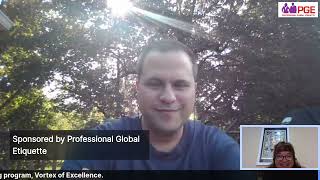
In this unscripted interview, host Adrienne Barker (MAS) talks with Thomas Russo Jr., a lifelong New Jersey public servant, author, educator, and coach. Russo recounts his childhood in Lincoln Park and Parsippany, describing early bullying, weight struggles, and a pattern of seeking external validation that led him into politics at a young age. He explains how a personal crisis six years ago—crying in his office after winning a council seat—prompted him to confront his imposter syndrome, step away from partisan politics, and re‑evaluate his purpose. Russo critiques the career‑oriented nature of modern politics, arguing that true public service is non‑partisan, problem‑solving, and rooted in servant leadership. He shares his philosophy that the most important "customer" in local government is the staff, not taxpayers, and describes how treating employees like family improves service delivery. The conversation moves to his book There Are No Politics in Heaven (also called The Ballad of Life), which frames politics as a personal addiction and uses the metaphor of a "ballot of life" to illustrate choices between fear and faith. Russo details his teaching roles at Seton Hall, Pillar College, Fairleigh Dickinson, Florida State, and Florida International, and his consulting work with municipalities. He introduces his newly‑launched coaching program, the Vortex of Excellence, which uses a scoring system across eight life categories (career, health, wealth, relationships, etc.) to help clients achieve balanced excellence. He also discusses campaign finance realities, the limited value of negative campaigning, and the importance of authenticity, spiritual grounding, and personal boundaries. The interview closes with practical contact information (websites, LinkedIn, phone) and an invitation for a free introductory coaching hour.
Chapters
So this is like you and I meeting, getting a cup of coffee, and boom, and now we're live. So this is exciting. So hi everyone. What does that backyard look like? The trees? See, I could tell right away. I know my trees on the United States. That's New Jersey. So welcome to Thomas Russo Jr. coming live from us, New Jersey. And I'm very excited to talk to you and I can't wait to learn more about the Vortex of Excellence too. So, First of all, thank you for being on my Candid Conversation, No Prep Needed.
No, thank you for the invitation. Some people would say this is heaven, other people would say it's New Jersey, so whichever one works for you is, uh, is fine with me.
Okay, I'm not gonna— I'm not gonna say what I sometimes say, which is when I was younger and I used to like joke around about New Jersey.
I don't do it. Don't do it.
I'm not doing it.
I'm not doing it.
I'm being a good girl. Okay, so So let's talk about your history because it's very interesting and I want to hear it from you. And even though it's no prep needed, of course I had to look you up to learn a little bit and see what's going on. But so, so tell me, so you started in— like, tell us about growing up. You grew up in New Jersey?
Sure. So yeah, lifelong Jersey resident. Um, I kind of break my life down into several chapters. The first, first 7 years of my life I lived in Lincoln Park, New Jersey. It was very, very happy child. We moved to Parsippany, New Jersey in 1979, and that was kind of the second chapter of my childhood, which was the abuse and the bullying and the unhappiness, being judged because I was overweight. And then between sophomore and junior year of high school, I starved myself. Not a great strategy today. They would call it intermittent fasting. Back then I just starved myself and I lost £100, and then everybody was nice to me. And it was kind of this dual-edged sword of you know, trying to get my weight under control and trying to be healthier. And just the fact that I was, I was getting my self-esteem and my sense of place through the affection or adoration or adulation of others. I wasn't, you know, I wasn't happy with myself internally. I was spending too much time focused on what, what everybody had expected from me on the outside. And then, made the mistake or not, depending on your perspective, of going into politics at a very young age. So talk about the wrong arena for a guy with low self-esteem. Oof. But we'll talk about that. So yeah, very interesting childhood, you know, a lot of hits, a lot of misses like most people. But I spent most of my life kind of, you know, holding on to the, to the pain of the past. And it wasn't until I hit rock bottom about 6 years ago that I decided, as one person told me, instead of avoiding the pain, I needed to go to the pain. Because when I went to the pain, I learned from it. I was able to overcome it, and now I get to speak about it. I get to coach about it. I wrote my book about it. So, you know, um, definitely difficult lessons, but if not for those lessons and challenges, I'm not here today speaking to you and to other people.
So did you share what was going on with your parents?
No, because they had their own challenges financially. My dad was a truck driver, my mom was a homemaker, and he had lost his job at some point in the early '80s. And so rather than really articulate emotional challenges or pain, I internalized it and then I externalized it with food. Not uncommon. So, you know, I didn't, I didn't want to add to the burden of, you know, stress in the home or the marriage or stress of finances. I kind of internalized it. And, you know, the internalization led to the dramatic increase in the weight.
So what happened 6 years ago?
So 6 years ago, I made the mistake of going back into politics. You know, when I was in Parsippany, I ran for office. I was the youngest ever elected in Parsippany, served 2 terms on the town council, lost my bid for a 3rd term. And when that happened, I kind of focused more on my career rather than playing politics because politics isn't a career. Fast forward, I get remarried in 2012. I moved to bucolic Basking Ridge, New Jersey, Bernards Township, horse country, beautiful area. Great school system, great parks, you know, great services. And, um, I make the mistake that because I felt a little bit uncomfortable in the community— my wife was already here— um, I started to get involved because I said, look, you know, if I'm going to live here, I want to— you know, I'm a community guy, right? I run a town, I enjoy community. So I got appointed to the library board. Library board became the zoning board. And then the fateful day, the powers that be in town said, hey, 'You ever think about running for office?' And I was like, 'Oh God, like, uh, been there, done that, no interest.' And, you know, the ego and the desire to kind of be a part of the clique and be a part of the group and gain acceptance— it was like reliving high school all over again, including the cliques and the dynamic of the people in politics here in the town. And, you know, I don't mind saying that, it's just the truth. And I ran and I won. And, you know, I tell the story that when I ran it in the, in the primary, there was a screening. It was on St. Patrick's Day that year. And I just remembered, and I won. I came in second. So it was the top two people. And I went to my office the next day in Newton. And I just remember just crying my eyes out because I knew I was a fraud and I knew, I knew I wasn't where I was supposed to be. And that started the spiral. And the spiral led to the point of same office decision point of do I want to live or do I want to die? And I decided I heard a voice and it said, Tom, it's time. And I didn't know what that meant, but I interpreted it as a sign that it was time to grow up and change and really just deal with my demons. And that began a very slow process of traditional counseling, Christian counseling, and just immersing myself in everything but politics, because politics and, you know, my book is interesting. The title is quirky, right? There Are No Politics in Heaven. Everybody loves the title. But the reality is the title is for me more than the audience. The title is me telling myself the thing that I valued the most, which was politics. That's not the thing that's getting me to the promised land. It's not getting me to heaven. And politics was my drug of choice. So when people talk about alcohol or drugs or porn or affairs or all these other things that we do to escape life, my escape was politics. And I was good at it. I was great at it. But you know what? I— it did not bring out the best in me. Politics is a cesspool. Politics is kill or be killed. And I'm much more of a problem solver and a collaborative type of person. And it's just not the environment for me. So I walked away from that. I didn't run for reelection here in town. And when I closed that door, God was very faithful and opened a million other doors that were probably there all along. I just needed to close this chapter so I could— I could write the next one.
So politics, politics is not a career. I love that you're saying that, but there's so many politicians that absolutely do not believe that. It is absolutely—
it's not meant to be a career. It— politics in this country, and you know, we go back to the, you know, not to give a history lesson, put my professor hat on, but the reality was politics was, you know, you're a farmer, you're a business person, you go to Washington, you go to the state capitol you conduct minimum level of business, and then you go back to your life. It's turned into a career because we have people that are in it 30, 40, 50 years. And, you know, both sides. So I'm not picking one party over the other. It wasn't meant to be that. It's not supposed to be that because you don't get— you don't get new ideas, you don't get fresh ideas, you don't get new people, you don't get diversity, you don't get more women, you don't get more minorities. It becomes an old boys' network, which is what it's been for 200 years. And that hasn't been healthy for the country regardless, regardless of party or affiliation. So at its essence, politics, you know, small p, is about people, right? It's about serving others. It's about understanding problems in the community. And it's not about holding on to these problems like they're a pet. You know, whether it's immigration or taxes or all these other issues, we could solve all of these issues, but we choose not to because we'd rather demonize the other side because we can make money off of it, because we can get reelected off. And, you know, I hate to say these things, but And I say these things to my students and I think their heads explode, you know, because they've never had anybody speak honestly about government and politics. Now, having said that, we need good people to run for office. You need a guy like me to actually run a town or a county or state. But you have to do it with a servant's heart and you have to do it without ego and self-gratification because it's not about those things. Because if it's about self-esteem and ego, we're doomed. But if it's about helping people and understanding problems and how to work through things and be collaborative, you can do some really neat things and help a lot of people in the process. So yeah, politics is a very interesting topic that I'm sure, you know, your people listening to this and watching this, I'm sure they have their own opinion. But in the end, the values and morals that you take with you, that you bring into politics, are going to be heightened one way or the other. And you make the decision when you come to that fork in the road, which decision point, which one you're going to choose.
Wow, I just want to clap my hands internally. I'm like, yay, yay, yay, because first of all, I totally agree with you. Though I do feel in Congress that serving, that it takes some years to really get on the right committee, so I can understand that. But I'm in Florida, so you can imagine how I really love what you're saying and how true those words are. And as I was saying before, so as a graduate of the, you know, the Protocol School of Washington and coming out with my corporate etiquette and protocol consult, you know, whatever it is they call it, counsel, whatever. I, I'm really always very careful about politics because it is something that, you know, do not talk about politics over dinner unless you're with your own family talking about it. Um, but there's so much passion on both sides that I found the last few years I would just hashtag our children are watching. That was like Because if there's anything, I just wanted to remind the politicians that our children are watching TV and they're listening, and we all have to model the right behavior. Otherwise they're going to be bullying in school. Can you imagine? I, I'm a Jewish girl growing up in, in a Jewish kind of— Matzah Pizza Hill was the name of our street that we lived on. Matzah Pizza Hill. I was the matzah. And let me tell you, there was a lot of infighting. I had pennies thrown at me all the time. I was dared to even say I was Jewish. I mean, I went through a lot of that. And it's funny, as a child, that you don't really think about as an adult until you realize, wow, how much that really does affect you, right? All the different steps.
So again, as far as the politics goes, one of the things I tell people is— and you know, this blows their mind too— is we spend so much time— not me, but we spend so much time arguing, you know, Republican or Democrat, okay? Then we have the group that, you know, has common sense, and they say, you know, we really need to be finding bipartisan solutions to XYZ. And I take it one step further, especially because I run the town of Newton in Sussex County, New Jersey. I, I get away from the first and the second and I go straight to nonpartisan. Bipartisan isn't the solution because as long as you have people that are on both sides of the aisle and are polar opposite and see it as a kill or be killed, win or lose proposition, we're never going to make progress on these issues. You have to look at it regardless of a party or a label. And that's where the solutions come in. That's why I've had success in Newton, because the form of government— and, you know, I'm a conservative Republican, I am, but that doesn't drive my decision-making about how to fix a pothole, how to fix a water main, how to fix a sewer main, how to build a new park, how to get a grant for XYZ. What drives it is doing right, helping people, solving problems, because in local— and it's funny, in local government, we don't have the luxury of pontificating and BSing people. Because they're going to come to a council meeting and they're going to crucify us and they're going to— the pitchforks are coming out and— or the recall is going through for the elected official. But in Washington, man, you could build a career on it. You could build a career in Trenton or take your— pick your state capital. We don't have that luxury in local government. That's why I don't— I apologize, I don't know his name, but the mayor of Miami actually said something about this recently. I think he's Republican, right? But he said, you know, that we should, you know, elect mayors into these positions of power. Because as a mayor or a town manager, like, you gotta fix these things. You— forget reelection. You'll be lucky if you finish your term if you don't finish— if you don't solve these problems. And that's what I love about government, because government, especially local government, affects everything we do. How you live, where you live, how big your house is, your setbacks, your driveway, your pool, your shed, your fence. Your parks, the water you drink, the sewage you flush. It affects everything.
It does. It does.
We need good people to volunteer. We need good people to run for office. So rather than, you know, because some people might look at my story and be like, oh my God, like, you know, this guy doesn't want anybody to go near politics. Like, no, I want, I want good people to go near politics. I want people that are grounded. For me, it's faith, but it could be grounded maybe in spirituality or other things. I want people that are grounded in something greater than themselves because then they understand what their purpose is serving others. And, you know, somebody asked me what my— how my leadership was different now than back then when I was a little bit more about Tom. And I said, well, my model is more servant leadership. And they asked me what that meant. I said, when you're in politics, it's about what can you do for me? It just is. It's transactional, right?
It is.
Okay. Okay. But when you're a servant leader and for me, having faith is my cornerstone, right? For me, it's Christianity. It could be a different spiritual ideology for somebody else. But for me, it means how can I serve you? How can I help you? And that means everybody from my blue-collar laborer who's working for me in public works to the mayor of my town, to a business owner, to somebody who can't do a damn thing to help me. It's how can I help you? And when you, when you change your mentality and you shift it that way, it takes a lot of pressure off. You're more consistent public, publicly and privately with your integrity, and you don't worry about it being transactional because I'm going to help you because it's the right thing to do, not because you owe me or because you did X, Y, Z for me. And it's a great way to live and it's a great way to serve others because I think in the end, that's why we're here. We're not here for selfish reasons. We're here to serve others.
I absolutely totally agree with you. I love everything you're saying. I didn't know about servant leadership until a couple years ago when something had happened. I realized, you know, innately I just am a servant leader. Must have drove my parents crazy in the family business because I was always more caring about the employee and what they were doing and were we doing a good enough job for them. And they were like, stop with this, Adrienne, go out and sell. Don't worry about everyone else. But I just wanted to make sure that people were in the right position. So I, I, so Dania Beach, Florida is interesting. Dania Beach, and there may be other towns like it, but everyone runs and then the first, like whoever wins first becomes the mayor, whoever wins second becomes the vice mayor, and so forth. So you're really, you, you have no idea, like, so you're voting but you're not really voting for that person. It just depends on what position, you know, if they come in first, second, third. Unusual, right?
Yeah. Sounds different.
Yeah.
And, you know, the town that I run, there's only a couple dozen council-manager forms of government in New Jersey. And in my town in Newton where I work, I'm the CEO, whereas in most towns the mayor would be the CEO. Right. So I like it. Obviously, I enjoy the responsibility and I appreciate it because it focuses more on the professionalism of the person they hire to do my job versus the politics of the people above me. Right. That's— I've served Democrats and I've served Republicans. I couldn't— sometimes I couldn't tell you who was who. But in the end, am I being effective or am I not? Right. I mean, that's why I've been in Newton for 14 years and hopefully still more years to come. So, yeah, but in the end, it comes down to— and, you know, funny you mentioned about the business because, you know, my family has a small business background and I kind of brought that into government. And I tell people, you know, it's about running the town like a business, but treating my employees like family. And most town managers don't think that way. And actually, I'll ask your audience a question, something to mull over. You know, if you're running a town, whether as an elected official or me as an appointed official, if you ask 100 people, 99 of them will answer it this way. Who is my most important customer? 99 out of 100 will say what? They'll say the taxpayer, the resident, the voter. All completely wrong. My most important customer is my staff.
Interesting.
Okay. I don't train my staff if I don't educate them, if I don't empower them, if I don't motivate them, if I don't treat them well, if I don't rebuke them when they do something stupid but doing it in an appropriate way or a thoughtful way, if I don't hire the right people, if I don't fire the right people, promote, etc., if I don't do all those HR-related type things, doesn't matter. We'll never get to the customer because I'm dealing with all the internal stuff. So I fight and, you know, it's much more of a Jack Welch, Starbucks, Google, Facebook, like pick your company. I guarantee Disney, like they, they go out of their way for their employees because they know take good care of the employees, the employees will take good care of the external customer. So I, you know, I know I'm kind of an odd bird in that regard in New Jersey, but I will die knowing that I've always taken good care of my employees because If I take good care of them, they'll take good care of the external customer.
I think that makes sense. I love when cities really create a customer service program within their own staff. So, you know, every department calls are answered correctly and you have, yeah, that makes so much sense because that you're at the end of the day, you're helping the residents.
And it's not, it's not rocket science. Like, you know, have 24 hours to get back to somebody. If somebody emails you, get back to them. If you have, if you're on the phone with somebody and somebody's standing at the counter, you know, help the person that's there. There, give the person a call back. Like, it sounds stupid, but you'd be surprised how many towns don't engage in that kind of thinking about how they interact with the customer. I mean, Newton is a Starbucks without the coffee, right? So somebody comes in to transact business, service with a smile, use their name, help them out, and then get them out because they don't want to live in the municipal building. None of us do. So treat it, treat it in almost like a retail mentality. And you start to conduct business much more quickly and much more thoughtfully, I think.
I totally agree. I remember learning that actually when I was in Greater Hollywood, Florida Leadership Program, and we had, we were talking to everyone at city hall and the city manager, and that's their philosophy too, which made so much sense. And by the way, for anyone looking to go into politics, I do, I know in Florida, I'm a graduate of the Florida Public Leadership Institute and the Florida Public Leadership Candidates program that they have so that you could go in and really understand. And the first thing is, is to look within yourself and to really understand and get to know yourself. So I think that's important. I have aspirations, but not for a few years. So, so the book, the book, the title is so interesting. Tell me— oh, I love pictures. Oh, that's nice and clean. Oh, hold it up again, you were so fast. Okay, There Are No Piles. So I want to know a little bit more of that, and then The Ballad of Life. That's great. So share, share with us how you came up with that.
And yes, so, and, you know, I designed the COVID So there, I mean, I'm a geek. So, you know, There Are No Politics in Heaven, like I said, is me telling myself the thing that I valued the most, it just doesn't exist in the afterlife. It doesn't, it doesn't matter as much as I made it out to be. And, you know, I, the thing I say in the book is I used to have myself on the throne until God kicked me off. It's a great line, but boy is it true. And you know, when God wants to kind of recalibrate, God is more interested in your character than your comfort. So I needed a cosmic kick in the ass and I got it and I needed it. So, um, The Ballot of Life is interesting because obviously I kind of had two, two modes of thinking for the COVID It was either going to be a lawn sign, right? Okay. Or it was going to be a ballot, right? Those are the two things people think of. And the ballot just kept gnawing at me. I'm saying now, because the ballot, right, when you have— you go to— when you vote, you have a choice. And so the ballot of life on the COVID is here's your choice. You is fear, anxiety, despair, and regret. And then here— and for me, Jesus is love, peace, hope, and joy. Right. And, you know, that's the tenets of any major religion, I would say. And then my tagline, which people get a kick out of, is A Recovering Politician's Guide to Christian. I'm a recovering politician. I admit it. Just like a crack addict, drug addict, alcoholic. My drug of choice is politics, and I'm a recovering politician, but that is what it is, you know.
Okay, so then, so because I could just be, you know, it's, it's, it's the show, it's my show, I could just say what I want to say. Is it— I, I have this burning question actually, because I always wonder sometimes when you're looking at politician, no names, and it's almost obvious that you're watching them looking at their career and you question what are they doing now. And then I say to myself Does greed and power come with the position? Like, at what point? Because when I look at some of these politicians that have done, you know, um, embezzlement, and I mean, you name it, all those things that are wrong, right?
Yeah, yeah.
Does it come because all of a sudden, is it like you're getting a little taste of greed? You're getting a little taste of, oh my gosh, if I say yes, I get a new swimming pool. Nobody really knows.
Greed doesn't have to come with it. Power comes with it, but you have to use the power appropriately. I mean, I run, I run a town, so I have a police department, I have a fire department, I have construction department and finance and HR and recreation and water and sewer. Yeah. So, you know, in the traditional textbook sense, do I have power? Absolutely. And I am empowered to manage the town and, you know, manage 150 employees and a $20 million budget. Yeah, I do. The greed is what you bring internally, you know. And the problem with politics is, I hate to say it, but say it, a lot of people run for office that have zero training or they have zero ability to manage. They can't manage their own household budget. And now we just gave them $1 billion. Holy cow. Like, that's a train wreck. But the skills and the ego And the goals that you bring just get magnified in politics. So if you're— and trust me, I've met some really good, you know, Frank Drexler was the mayor of Morris Plains. I always refer to him, boy. And, you know, the man was solid mayor. He was a solid county freeholder or commissioner. He's one of the people I looked up to. My boss, Sheriff Rochford. John Lovell, who was my mentor in Randolph when I was the assistant township manager. Like, my God, these, these men just ran things the right way, did things the right way, treated people the right way. And it wasn't an ego trip. It wasn't. And my God, I know people that to this day— and I'm not going to mention names— but they serve in elected office in New Jersey and probably nationally, too. And you can tell it's an ego trip. You can just tell. And like I said, Republicans and Democrats. And, you know, I said this to— I was speaking at Seton Hall on Monday to a civic engagement boot camp workshop. I blew their mind when I said this. I said, I get along better with Democrats than Republicans. And they're like— they just stared at me. And I was like, I said, Democrats are nicer to me than Republicans. I'm sorry. I said, so if you gave me the choice of working with somebody I liked and didn't agree with or somebody I disliked and agree with, I want to work with the person I like because at least I can have a dialogue and a conversation. And the woman who runs that program is a very liberal Democrat. And she was my professor 25 years ago. And to this day, her and I are close friends. She actually helped me get the teaching gig at Seton Hall. And her and I go round and round. Trump, Biden, Clinton, Bush. Like, we've, we've had some great conversations all these years, but I would take a bullet for the woman. And I know that her heart is gold and she's a brilliant person. I don't have to agree with her. And that, that's the skill that's missing in politics. And that's what I try to drill into my students. Like, you know, as a kid, I had the high IQ. And in a way, that was a good and a bad thing because it was good to be intellectually smart, but It also kind of made me much more introspective and isolated because when I was the fat kid getting made fun of, I kind of hid myself in the library and in books because it was safe. And what I learned over time was I needed to focus more on my EQ than my IQ, because EQ is can you work with people? Can you be collaborative? Can you problem solve? Are you a good listener? Blah, blah, blah. And those are the things I teach my daughters who are college age. Like, yeah, it's good to be the smartest person in the room, but not if you're alone. I'd rather you have some level of skill and intellect but be able to interact with humans, which is the thing we've all lost because of the phones, right? And social media, like, know how to interact with other human beings because that's where the gifts come into play in terms of work and, you know, changing lives and whatever your career is, right? Making your, you know, your passion your profession. So those are the things I instill in my students and that when I talk to people to focus on those, those characteristics and qualities, because you'll, you'll get more with honey than with vinegar. And I think we've lost that. We've lost that ability to communicate and to listen more than we talk.
I'm just thinking my mom would absolutely love you. My parents have both passed, but they actually— their museum was on the Today Show, the third hour. They have a museum in Connecticut on Route 10 called the Barker Cartoon Character and Comic Museum. It's a toy Museum, but my mom would have just loved everything you said. So I know, Mom, he's fantastic. So did you, did you do any negative campaigning when you were campaigning? Did you have any negative radio spots, TV spots, direct mail?
Never really did radio and TV. I would say mailers. I was, I was guilty of, you know, what we would call the contrast pieces. In this town, when I ran a few years ago, there was no opposition, so they just basically handed me the position. So really more in Parsippany, that was much more of a kill or be killed environment where you're going toe to toe and round and round. And it was like, in hindsight, you're like, give me a break. So, um, you know, I give much more respect to candidates that run a positive campaign. Having said that, it's not an easy— it's not an easy thing to do because the barrage is always going to come from the other side. You either have to have the intestinal fortitude and/or the money to withstand what they throw at you. And it's sad. It, it shouldn't be like that, but it is. And that, and that's the sad thing because we, we lose a lot of good people that just, who the heck wants to run for office nowadays?
How do you teach the kids though? So what do you say to the kids? Because a part of me thinks that the way that people are communicating with each other right now on social media and even in real life, this ability to just you know, make names and call people different things and just be so incredibly unkind. And I wonder sometimes if it's, if it's, you know, how do you tell your child that when they're watching something, someone being called Pocahontas or some name, how do, what do you, what do you say to them or do they even care?
Um, yeah, what I teach the students is, and you know, I hate to say it, but money is the great equalizer in politics. So that's number one, like don't run for office and think, wow, I don't have to spend or raise money. Those days are gone. So you have to be realistic about the financial aspect of running for office. You just do. I'm not saying you got to outspend your opponent or you got to be dramatic or you need, you know, four-color lawn signs. You don't. But you need a basic level of financing to manage, you know, running it. Running a campaign is like running a town. There's certain things you need to do. There's certain expenses you have. It is what it is. But you can run— you can run a great campaign for $20,000 and you could— you could run a crappy campaign for $200,000 and lose, right? So it's not— and it's not the total that matters, it's how you allocate those dollars. So I, you know, I'm very honest with people about that. Social media is also a great equalizer because— and yeah, keyboard warriors notwithstanding, I'm not talking about the people with the fake names and all that garbage, but just being able to understand, you know, at a local level, especially door-to-door, lawn signs, going to events, debates, mailers, palm cards, door-to-door, like, you know, and, you know, I mean, I teach, I teach people how to run campaigns. So even just understanding that the 10 to 15 things that every campaign has to have. And, you know, I tell people, we still want good people to run for office or to get involved in community. But just have, have your— be grounded in yourself. And for me, grounded spiritually before you because once you're in the arena, you know, there's no turning back. So you got to be able to handle the barrage of garbage that's going to come your way. I mean, no joke, when I ran in 1997, so that's like 800 years ago, when I first ran, I was, you know, I was 24. I was a young buck. And the rumor that they threw at me— I ran with a female, attractive female, blonde. So the rumor was that she was, she was a pole dancer. And that I was gay. So when we had our fundraiser, the joke that I used in the fundraiser, which I thought was pretty funny, was, you know, I just want to dispel the rumors that float, that are floating around. I've never been nor will I ever be a pole dancer. I flipped it and they laughed and it totally defused the stupid issue. And I, you know, I don't have an issue with somebody if they're gay or if they're a pole dancer or both. I don't care. I don't care. But it was that type of like, oh my God, high school level rumor garbage that you had to deal with. So, man, and you know, that was before cell phones, social media, almost before computers. So, you know, like fast forward to today, you got to be able to withstand it. And that to me is just, are you comfortable in your own skin? Like, because you can't go into politics and think you're going to develop that armor. You need to have that comfort and that armor before you go. And for me, the spirituality is what gives me that comfort now that I didn't have years ago. For other people, it might be something else, but for me, it's, it's my belief in God and my faith that you can say what you want about me. I'm more worried about my character than my reputation. And, you know, that's the old John Wooden quote, right? Right. Reputation is what, you know, what others think you are, and, you know, but character is what you really are. So you got to focus more on your character than your reputation. Your reputation will come and go. Character is what, what you keep, what you keep with you.
I love, love, love everything you're saying. Thank you so much. You know, for years I actually did campaigns too. Uh, I sold the yard signs, the bumper stickers, and the decals. That was the family business. But you know what, I don't recall ever actually having any of my clients ask me if they could do something that was negative or unkind to the other. Was I just so The last few years were more surprising to me than anything else. So, so now you, so you were 24 when you started, you got the book. So are you, so what are your plans? So tell me, I actually, I really want to know this before we go is the coaching. So this is interesting. Are you, are you going to be in the fall? Are you going to be doing the coaching with your, your city manager? Yeah.
So, you know, this is, this is the journey and this is why I said, you know, God opens doors. So, I run for office a few years ago. I go through my spiritual journey. I close the door on politics. When that— when I close that door just by not running for reelection, I didn't quit. I just, you know, did one term. That's when I got the two teaching opportunities, which now is five teaching opportunities. So I started teaching at Pillar College, which is a small Christian school, started teaching at my alma mater, Seton Hall. Recently I started at Fairleigh Dickinson University, and then next year I'm teaching at Florida State and Florida International, your neck of the woods, you know, you know, Florida, right? So, you know, Florida State, where my daughter goes.
Yeah, I love it there.
Yeah. The garnet and gold. And then Florida International, great school in Miami, all online, graduate level. Love it. Love teaching. I love it. The book, which sold very well and still sells very well to this day, became my consulting business. So that became, you know, motivational speaking. I mean, I talk about the book, but I talk about other things. I do life coaching, I do executive coaching, and starting next month, my Vortex of Excellence program, which is pretty, which is pretty interesting because what I realized, the burden that, you know, others had put on me and I put on myself was I had to have this level of perfection. And I realized other than the random score of 10 in the Olympics or whatever, most people will never achieve that level of perfection.
Right?
And, and especially being a stepparent with my two stepdaughters, you know, having that level of expectation for your children or for people at work or whatever, it, it, it's, it's a burden, it's a, it's a challenge, and it's unattainable. Um, so what I started to do the past few years was notice that if I got away from the perfection mentality of the past but I started focusing on excellence in the different categories of career, volunteerism, health, wealth, relationships, intimacy, you know, self-care, mental, you know, whatever. Like, it didn't matter the topic. It's like, and, you know, I coach people on this now, and this is where the program came from, was the common denominator was everybody has something they want to improve. For some people, it's their career sucks and they just want to, like, you know, they don't know what to do, right? Because nobody ever really taught them in school about interviewing resumes, had a network, which is, you know, 90% of the jobs come through schmoozing. Sorry, it just is. And I'm good at it. And I started that as a kid. I, you know, I used to collect baseball cards and business cards when I was a kid. I was a freak, right? And so what I learned was, okay, all these people I'm speaking to, either as a group or individually, they all have something they want to improve. But has anybody ever really sat down with them and said, okay, 0 to 10, we're going to rate you on these different things. So like I came up with, you know, the categories, there's 8 categories, the scoring system so that, and, you know, I'll use a recent example. I won't mention her name, but there's somebody I worked with recently on her career endeavors because when I scored her, it was very obvious that the career was in the tank and yet everything else seems pretty good. So I'm like, all right. I'm going to help you focus on the career. And it was like, who do you know? Do you leverage your LinkedIn profile? Do you go to networking events? Kiwanis, Rotary, Chamber of Commerce. Like, don't think you're going to sit at home and just throw your resume on Indeed and the job offers are coming. That don't work. It might work 1 out of 100 times, but 90% of this is networking. It's not. And I tell my girls, I've told my girls since they were little, it's not what you know, it's who you know. And they never got it until they hit like high school, college age. And they're like, my God, he wasn't just being the goofy stepdad. He was serious.
Like, yeah.
And I'm not saying I agree with it or disagree with it. I'm saying it's the way the universe works, because what does it go back to? It goes back to us being human and we're tribal. We want to connect with people. We like to work with people that are similar. We like to hire people that have our value system. It just— it is what it is. So now I've turned this into the coaching program, and rather than it be kind of an informal catch-as-catch-can, I decided to trademark it, formalize it, launch it, you know, book, you know, ClickFunnels, the whole, you know, the whole coaching package. Because the one thing I learned is, and I don't know if you've done this, but it's very easy to go buy the $20 or the $30 book, you know, this one included, but you kind of get something out of it, but then it kind of dissipates over time.
Right.
Okay. And as much as I'd like to walk on fire with Tony Robbins in Hawaii, I mean, who doesn't? I'm not spending $10,000 to hang out with Tony Robbins. So what I realize is there's a big universe in between the $20 book and the $10,000 coaching package. And that's where I come in, because everybody should invest in some sort of improvement, self-help, motivation, training, education, whatever it is, like continuously. It's not like we don't— it's not like going to school and getting your 4-year degree. Every year you should be doing some sort of self-improvement, right? But what I realized is unless you have an accountability partner, unless you have somebody who's going to kick you in the ass and who's going to keep you on track, eventually over time we just go back to old habits, myself included. Like, I was guilty of it too. So even to this day, I always work with people, sometimes paid, sometimes unpaid. But I want people that are going to give me an outside perspective on who I am, what I'm doing, because they're going to see the pitfalls and the challenges better than I do. And so that's why I enjoy coaching and speaking, because I, as you can tell, I'm unfiltered. I'm going to tell you the good and the bad. I'm not going to sugarcoat this because you got to live every day as if it's your last, because someday it's going to be. So you get to choose every day. Is it a good day or is it a bad day? You just do. And I, and I'm not saying, you know, cancer is going to come. The job loss is going to come. The marriage is going to have its ups and downs. There's going to be some days where you think your kids are rock stars, and then other days you're going to think they have rocks in their heads. Like, it's life. Like, life isn't meant to be perfect. Jesus was perfect. This ain't perfect. I'm not perfect. But what I know is every day we get to make those choices. And that's why I start my day with my Psalm, my Psalm 118:24. This is the day the Lord has made. Let us rejoice and be glad in like set your day, you know, set your day with intention, have an attitude of gratitude. And if you appreciate what you have, God will give you more of what you want. That's just the way the universe works. So you want to call it God, you want to call it law of attraction, you want to call it The Secret, right? Like you can, you can label it Holy Spirit, you can label it whatever you want, but there is— it's almost physics, right? It's kind of like the law of the universe of how it works. So yeah, I'm excited about the coaching program because it's— people get to invest in themselves by working with me directly or in small groups. Because I think, as you can tell, I care about people. I see way too much misery. And God, coming through the pandemic, everybody's a wreck.
I just want to say this. First of all, I really feel like you're the real deal. And I do feel in coaching— and it's funny, so I was on the, you know, I'm on the Clubhouse app.
Yep, me too.
And there's, you know, you have to, you're the real deal. There's a lot of people out there that really don't have the experience and the expertise and they just took a class and want a coach and they're trying to find something. And I see that even in some of the smaller things that are out there that people, um, you know, say that they're an expert at knowing how to do YouTube and all they've done is, you know, watch a video. So you definitely are the real deal. You have the, you have all the background. So I would I'm saying that, everyone, because you know what, we all really need this. Yeah.
And my frustration, I'll be honest, I've worked with some really great coaches, and then I realized, oh my God, there are some coaches that— and you know, not to say it's age thing, but I'm looking at them and they're maybe a little bit younger than I am because I'm old, and I'm sitting there and I'm saying, like, what have you accomplished? Like, on paper, like, what have you actually accomplished, accomplished to change the human condition? And I'm saying, and you know This is, you know, I'll give my plug. I'm saying, all right, well, I have my bachelor's, I have my master's, I'm certified in my career. I'm taking classes at Harvard. I'm getting my public leadership credential. I've run towns. I've been responsible for hundreds of millions of dollars of other people's money. I teach, I coach, and I'm saying, I don't know. And I wrote books. I've edited 3 other books. And I'm sitting here like, you know, on paper, I could— my resume chokes a horse. I mean, like, I got it. I've started nonprofits. I'm involved with nonprofits. I do my other— I do other consulting. And I'm saying, yeah, that's all great. But like, what do I do with that? I can sit here and I can just keep building up me. And then I realize, and you know, the money chapter in the book, like I got to talk about Chapter 13, Lucky 13. People are going to love this. Peace, purpose, and a prism. If people watching this remember nothing, they should remember the prism, right? So the prism. And, you know, old people like me remember Pink Floyd, Dark Side of the Moon. Great album, right? The triangle. The line goes into the triangle, it comes out the other side. It's the rainbow of color, right? I tell people, you're the prism. The line that goes into you or to the prism is the gift that God gave you. I don't care if you're a botanist, a nurse, or a doctor. You're a laborer. I don't care. You're a librarian. I could care less. Like, your passion isn't— that's not for me to determine. But everybody's been given a passion and a gift. But if you've been given a gift, it's only a gift if you give it away. And that's the rainbow and that's the color. And when I use that visual on people and, you know, I'm sorry, I think third grade level, but I do like it's a triangle. There's a line and then there's a rainbow that comes out the other side. We're the triangle. Figure out your gift, figure out your passion. You can make money doing everything. And that's one thing that bothers me is because my girls hear it from other people. And it's like, oh, you know, you want to be— you want to be a blank. You know, you can't make money doing that. And I say, BS, you can make money doing anything if you're good at it, you're passionate about it. You're not sitting here looking at the clock like, oh my God, it's 5:00 and I got to do this. Like, no, if you— if you find something that you really enjoy, like for me, it's running a town. I'm sorry, I'm great. I enjoy public speaking or it's teaching. If you love what you do, the money will come. And I find too many people when I coach them, my God, they're like, I make $50,000. I want to make $60,000. I make $60,000. Well, guess what? I make six figures and I want to make eight figures. I mean, like, join the club. Like, it's all relative. It's all scale, right? It doesn't matter. We all want to make more money because I've never sat back and said to my wife, you know, I don't know what to do with all this money. Like, no, trust me, between the two of us, we can figure it out. And thank you, Penn State and Florida State, too. You know, so and, you know, it's not just about making money and spending money. It's about what are they— what are the organizations you care about? What are the causes? I've never known a poor person to start a nonprofit, but I know a lot of rich people that have changed lives because they've donated to the animal shelter. They donated money to create the cancer wing at the hospital. Like, you know, I hate to say it, on both sides, we've kind of demonized success. And I don't— I don't chastise people for their success. I may chastise them for how they use those resources and that wealth because it's not about— and trust me, I have the cars and the jewelry in the house. Yeah, okay. But at some point, enough is enough with the stuff, and it's about how are you building community and helping others. I love it. And that's what I love coaching people about it because it's like, my God, people, you got to enjoy what you do. You got to love what you do. And when you, when you love what you do, The time just goes by and you just find much more value in this existence because otherwise what's the point of living and what's the point of being here?
So I want, before I let you go, uh, one thing you mentioned about the imposter syndrome and that happened to you.
Yeah.
And that is really a serious issue that is going on. And, and so I look forward to just share with us a little bit about how you like, or it, or if I took the class, if I took your coaching program, how would that help me? Because I do wake up sometimes and really question, am I who I say am I? Am I, you know, am I really me? Like, it's crazy how your brain can really make you feel— you start to question yourself. So how do you help?
So I run for office, I get elected 2014, right? I go to the office the next day and I'm crying my eyes out because I know I'm a fraud. Um, I told people what they wanted to hear because I wanted to get elected. And, you know, it's not easy to admit these things. I don't say them that I'm, I'm joyful that I was a hypocrite. It's painful. But the reality is I couldn't look at myself in the mirror. And that's a very sad, dangerous thing for most people. Like you said, the imposter syndrome. And what I realized is you can't live your life to fulfill the goals, wishes, and dreams of other people. We all do it to some degree because we're kind of trained that way by our parents, right or wrong. They might have expectations for career or education or whatever. Then we get into our cliques, we get into our tribes, we get into our groups, and they too may have certain expectations for us, right? That may be ones we don't agree with. Then we get into relationships— man, woman, doesn't matter, gay, straight, doesn't matter. But we might marry somebody or date somebody. They might have expectations for us. Our children might have expectations for us, people at work. And if you can't look at yourself in the mirror, you got a major problem. And I was guilty of that because I was like, I didn't want to run for office again. I love what I do full time, and the part-time politics took away from my full-time endeavors in Newton. And it wasn't until I closed that door and said, I don't want to be doing this. This isn't who I am anymore. This isn't my value system. I don't like the backstabbing. I don't like the badmouthing. I mean, I'm sorry to be crass and blunt, but that's what it was. And I walked away from it in '17. And, you know, think about it a year later. Book, teaching, consulting. And fast forward to today. More books sold, more teaching, more consulting, getting into different consulting with towns and organizations. I do personal SWOT analysis for people. Now I'm getting into the vortex like, holy crap, am I having stupid fun? It's, it should be against the law. But the reality is I'm not an imposter anymore. I don't do anything that doesn't bring me joy. Okay? Because I know that God has my best interests at heart. So if I'm in a, you know, spiritually speaking, if I'm in alignment and I'm doing the things God expects of me and I do them with integrity and intention, the doors are going to open. And the amount of doors that have opened in the past few years is ridiculous. And it's not because, yeah, I'm a smart guy. Yeah, I know how to network. Yeah, I have a great resume. Yeah, all true. But you know what, I'm sure there's a million other people that have a great resume and can network and do the things I do. It's just I have that drive and determination, but I match that drive and determination with the spiritual alignment that I was missing for all those years. So by putting God first, that recalibrated my marriage, my relationship with my girls, my health, my wealth, and all these other things. Because I used to, like everybody else, oh my God, I'm fat, I gotta lose weight. Oh my God, I don't have enough money. Oh my God, blah, blah, blah. Blah, blah, blah. We all do it. But I, like, I tell people it's okay to get on the pity pot, but at some point you gotta flush and get off, and you got to get your head back in the game. And I teach people how to get their head back in the game. But I, I needed to stop being a hypocrite and started saying, you know what, it's okay to lead a simple life. It's okay to be a man of integrity. It's okay to want to hang out with my dog in the backyard instead of going to political functions. It's okay to not think about wine, women, and song and just think about Okay, how can I help people? Sometimes that you need that elegant simplicity in life and you can get more accomplished. And I think that that's what I teach people through my vortex and through my book is like, you know what, be able to look at yourself in the mirror because in the end we're going to all answer to God for the things we've done, good and bad, in public and private. And I'd much rather live a simpler existence and be more effective in helping people. Than the trappings and the titles.
I really love that. Thank you so much. I know I have a problem with saying I want to help everyone, so, you know, like, I can only do so much of my time, and then I feel really good, but I'll find myself like, I'll actually be like, oh, you know, I'll make the time to help you. And then I'm like, Adrienne, you really stop doing this to yourself. And then I just won't send it. I'll be like— but I thought to myself the other day, boy, if I could have more hours or you know, just be completely retired. There's so many different things, but SCORE keeps me incredibly busy with my, you know, we don't get paid with SCORE. We probably are putting in so many times, so much time. It's crazy.
All right. And, you know, just last thought is people need to prioritize. Sometimes no is the answer, too. I mean, I run a town. I spend hours in the car every day with commuting. I teach at Fairleigh Dickinson right now. I'm taking classes at Harvard right now online. And I'm doing my consulting right now, and I'm talking to you about my book and my coaching program that launches in a few weeks. I'm a pretty busy guy, but sometimes I have to say no to the dinner meeting or function or the consulting gig or the, the next class that somebody wants me to teach. Yeah, sometimes no is a legitimate answer. And because, you know, I, I don't de-emphasize mental health, self-care, exercise, eating properly, sleep, you know. Oh my God, like You have to— you got to balance all those things because if you're— if you— and, you know, years ago I was the politician who was out 6 nights a week, right? So I was, I was skewed in that direction. But if you spend all your time with your spouse and you neglect your friends, or you have great financial health but your bodily health is shot, like, and that— but what does it go back to? It goes back to my vortex of excellence. It's about having excellence in all these different facets because if anything's out of whack or askew, at some point it's going to adversely affect all those other things. So, yeah, sometimes the answer is, I'd love to help you, but I can't. And our most precious commodity isn't dollars, it's time. So sometimes, you know, it's worth, you know, you donate to a charity or a cause. Sometimes it's your time. Like, you know, me speaking to you today, you allowing me the gift of speaking for an hour today to people I've never met, that maybe they get some nugget of wisdom from my 1-hour diatribe today that say, wow, you know, I didn't think of that, or he made me rethink politics or religion or my own personal existence. It's, you know, like, that's all I can ask people is, you know, take a step back and spend some time in the outdoors, meditate, pray, do something different to say, all right, am I really where I need to be? And if not, how do I get to the next place?
I love it. I think also age comes in. So as a baby boomer, you know, growing up in a family business, I was never allowed to I'm busy, by the way, it was very relative. My mom always said, and I agree with her, I hate to say I'm busy because the woman who's home with her baby could be extremely busy and getting no sleep. But I really do appreciate the younger generation and their boundaries. And I love when they tell me about their boundaries because I'm a little jealous. I'm like, oh my gosh, but I can't just, I can't be like them because it's not who I am. But I do have a lot of respect if they say, you know what, don't, don't call me after 5 and blah, blah, blah. And I turn my phone off. I'm like, oh, that's nice. Beautiful. I absolutely— I was talking to another woman my age, we both said we love it, but it isn't who we are. We didn't grow up with that, so I don't have boundaries. So I literally laugh and tell people, I don't care, just call me anyway, or I don't— you know, my phone number is out there. I don't worry about the little things. But all right, so how can people reach you? How do they connect you before we go?
So they can go to my website, nopoliticsinheaven.com. They can learn about me, they can work with me, they can get the book, obviously the buy the books on Amazon. My new website launches next month, thomasrussojr.com. They can go there and give me their email address, learn about the vortex, get some freebies from the book, and then, you know, I'll reach out to them to see if they want to work with me individually. So that— those are the two websites. I'm on Facebook, I'm on Twitter, I have about 26,000 connections on LinkedIn. LinkedIn's my platform of choice. Just because I love the business connections and personal connections that I've made on LinkedIn, yourself included. So, you know, people can reach me. I live in Basking Ridge. My phone number is in my book.
I, you know, I love it.
They can email me and it's like, look, I care about people and I know that I wouldn't be here today. Yeah, my faith is important, but God has brought very cool and interesting people into my life the past 5 or 6 years. Those are people that made me a better person, a better man, better husband. Just a better human being. And to me, that gift, I need to reciprocate and I need to push that out. That, that's my prism and that's my opportunity. So yeah, I want to work with people and I don't care if it's for an hour, I don't care if it's for years. I'm a good resource. And, you know, I'm not the only one. I love John Gordon. I love Darren Hardy. Like, there's a lot of people that, you know, Les Brown. I mean, there are people that I admired, you know, years ago it was Wayne Dyer when he was alive. Like, I thought, yeah, yeah, he was great. And so there's a lot of people. But, you know, I think my value proposition is you get— you, you— I'm very candid and open about my, my successes and failures. And if people want to work with somebody who's actually going to give a you-know-what about their existence and their life and walk with them, I'm your accountability guy. Like I said, I'm your cosmic kick in the ass. And I think if people want to excel in all the things they do, I'm the guy who can help them because I genuinely care about helping other people.
Oh, wow. I fell in love. Oh my gosh. Thank you so much for your time. I am really impressed. I'm so glad that we met. Thank you to Zach, if you're listening, or if I'm not even sure who, but thank you so much. And so I'm going to put all the information in here. You've been a joy. And I can't wait to learn more about the Vortex of Excellence. I think you'll be a perfect coach for me too. So I definitely need help and I don't have a coach right now. All right.
So the first hour for free. So there you go.
Oh, really? Thank you so much. That'll be amazing. What a story I have. All right, so thank you so much. Have a great rest of the day and enjoy. I will see you soon because I'm coming up to New Jersey when I visit my family. If you're in Connecticut, visit the museum. All right, thank you. Bye-bye. Thank you so much. Amazing. Thank you.










