Candid Conversations
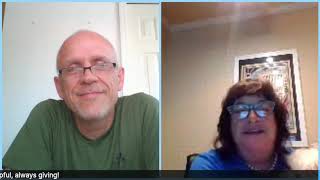
Jamie Barclay, a real-estate veteran, and photographer Johnny McGill share how they're staying connected during the early COVID pandemic. Jamie runs food drives and mask donations with realtor Cydn Reagan. Johnny emphasizes daily discipline for small-business owners and directs adult hockey in Daytona.
Chapters
Considering I love— I have to share the story of how Maria was telling me that there was a private networking group for me to go. And I said, well, what's private? Like, I'm, you know, like, what is it? Like, I don't know, like, if I want to go. And she said Jamie Barkley's running it. And I'm like, I am in like Flynn. So absolutely. And it was so nice. I remember like that whole like seeing you for the first time because I've been following you forever, like since I was 5. Now I'm kidding you, but I've been following you for so long that it was So nice that we connected and we both ended up here in beautiful Daytona. And you are doing so much for the community.
Jamie, we go way back, 20+ years at the Orlando Chamber.
Jamie, I have a question for you. Could you, could you share your story of, of with the, with the kids and you and your beautiful wife Susan and what you decided to do when you lived in Clermont?
Oh, wow.
21 years ago, actually 22 years ago this month we met and actually fell in love instantly with each other. And she had 3 kids from a previous marriage that I inherited gladly because they were just wonderful. And then we tried to get pregnant, couldn't, so we went to adopt a baby, found out he had 4 brothers. I'm giving you the short story. So, but we adopted all 5 and instantly became a father of 8 children. And then at 44, my wife thought she was going through— let's call it what it is— menopause, and she ended up pregnant. So now we have 9 children, 7 boys, 2 girls.
That's amazing. So really, it's so funny where they were doing this whole thing like 10 people, only 10 people. At one point I saw the news, they had to tell people that if you're a family of like more than 10, it's okay for you guys to hang around.
We're one shy of a soccer team, as they say.
I love that. I remember it made the news, so it was that big of a deal. And I don't know if it felt that big of a deal to you, but everyone else, your whole entire community of Orlando, was totally impressed and you were all over the news.
It was, it was definitely big news. I think my mother had more of a heart attack than others did because she had instantly had 5 new grandbabies when we adopted the 5.
You and Sue, you, the 2 of you are really, it's, it's like you're beautiful on the outside and then the inside is just like glorious. It really is. And I wrote that on the bottom and I really could have kept going. Always, always, always, always. You are committed to your family first, obviously, and then it really is the community second.
Well, it's honestly going from a single guy with no children to a wonderful marriage of 21 years now and 9 children, 2 grandbabies. I've got— honestly, I've got to pinch myself because I'm extremely blessed. And very fortunate to have the family that I have. More importantly, the partner in life that I have. I've posted on Facebook a number of times I married up. I definitely married an incredible, incredible woman, and I gotta pinch myself at times because I'm very fortunate to have her in my life, and together we make a great team.
You really do. So now you get to, to, uh, like work together. So you're both with, uh, Reagan Realty. And then, and then, so the owner of Reagan Realty, is her name Cindy or Cynthia? Sydney.
Cydn Reagan. And yes, just an incredible broker doing some amazing things in the community.
But you really— I bet when you were looking for a broker, you were looking for someone that shared the same, uh, community-driven passion that you have too.
You know, we've been fortunate. I started with another brokerage that was just incredibly focused on community also. And then we made a switch and yeah, it's just, I'll tell you, the realtor community in Volusia County is absolutely amazing. I've never seen a tighter-knit group of people that work together work hard. And, um, I'll tell you, it's— it's— we're blessed and honored to be a part of the Realtors Association because, you know, it's— yes, we're all trying to sell houses and do things for people, but when you've got to work together and form those common bonds, it's pretty impressive what's going on.
It really, really is. I'm amazed that— that was a lot of great work that you did packing all that food. So kudos to her. And I just keep seeing she's consistently, consistently out there. Now, I have not seen any posts on any homes. So what is happening in the home market right now?
It's still busy. People are still active. Obviously, mortgage companies are tightening up and things are changing on a daily basis. But the market is very busy still. People are looking. I think they have more time at home now, obviously, and they have an opportunity to look. And so it's— yeah, it's— there's still a lot of activity. So I would encourage people, don't think that it's shut down. We have been deemed— whatever that word is—
essential. Oh, essential staff.
Yeah, we've been deemed essential. So obviously we're not pushing that. We don't want to be out. And about unless we have to. But to answer your question, the market's still very active. People are still buying homes. I just two days ago put somebody under contract on a manufactured home, and they're so excited. So it's— that's the good news. Obviously, we can all— can't wait for the economy to get back to work. But obviously we have to be safe. We have to take precautions and do what's right for everybody. We're all in this together.
We are.
It's so important that we do everything possible. And what Sydney did with the food, with the food drive, was just amazing. We— and actually there was a ton of people that came together and made donations to make that happen. So there was over $5,000 raised to put that all together.
Wow.
Yeah. From a number of people in the community. So it was definitely a team effort, and we had the opportunity to give a lot of people a lot of food that was muchly needed.
Oh my God, and Maria— so Maria went for Healthy Souls International to do the most vulnerable in the community. Little Pickles has a collapsed trachea, so he's like— I try to like rub it out. I think he's more annoyed. He's cute though, isn't he? He's like a little—
loves his mom.
So, um, last night I did my bangs. I was really proud of myself. I cut them, and then I left the, you know, shears on the bathroom. And Alan wakes up this morning and says, why are the dog shears here? And I'm like, what? He goes, why are the dog's, you know, scissors here? And I'm like, because I use them to cut. So I use my dog scissors to cut my bangs. So Next, I'm going to bring him to the— I'm going to bring him to the girl that cuts me next time and say, use my dog's scissors because they work better.
I love your energy, your sense of humor, and working with you, working with you in many different facets is awesome.
I can't wait.
I can't wait for us to get back to the American Cancer Society stuff. I mean, we're still active. The committee's still meeting, and obviously on pause for a little bit, but I'll tell you, they're working hard behind the scenes to make things good for everybody. And obviously cancer doesn't stop, and we got to keep supporting those efforts as much as we possibly can. And the donations that came in to buy the mask and the different things that Rick and Jamie were able to do the other day was just amazing. And I think You had a big part of that because you were able to find them those supplies.
Yes, yes, they ordered them from me. Very— the mask right now for, for all of us selling promotional products, our suppliers are getting them in, but it's not as easy as people think. So first of all, the KN95s have to have all the correct certification paperwork. So Halo, Halo does everything right. Let's, you know, in the reality of things, they just know what they're doing. That's why they're the third largest distributor. So every day I get a list of what suppliers that we can use, who's got the correct paperwork, okay? Because it's got to be— we have to make sure that it's not using— that, you know, they're carefully used, um, correctly. And then we also want to make sure that everything— that the suppliers we use are compliant. So there's just— there's a lot because the different materials, the way they've changed it, and anything coming out of China. Most of our suppliers now are trying to make the products with the shields the cloths. And I really think that like t-shirts, probably in another 2 months pricing will go down on the cloth ones and people will be putting their logos on it and it'll be kind of a normal thing to wear. They're still wearing masks in China because my son Sam is in China and they're still really kind of being careful. But that you— there has been a need for masks. I don't think that China is going to stop and I don't see that we're going to stop for a while.
It was just so awesome to see people come together and I know Rick and Jamie put that together quickly and a A lot of people stepped up and really helped out the cause.
So I was interviewing Alexis Cassidy. So I had my story of that. I heard— I found out my mom passed away October 22nd, 2017, uh, during the Strides walk. And I was told to go in the front and high-five everyone coming in. And it was a beautiful way to remember my mom. But Alexis was on from Tucson and She was mentioning— I forgot about like the— like, so do we have a volunteer coordinator? And then do we also have a survivor table? Do they do a survivor table in, um, in our area for the survivors?
Yeah, all of the above. So I mean, last year we gave medals to the survivors. I'll tell you, the, the making strides against breast cancer is just amazing. As you know, I lost my dad to cancer just a couple months ago. And I'll tell you— How are you? It's just a huge wake-up call. My mother and my sister are both breast cancer survivors, and losing my dad 2 months ago was massive. So as most people can imagine, he was a big factor in my life, not as much as I probably should have made him. But because there was such a distance separation because they live up or they were— they live— my mom still lives in North Carolina. But any time you lose your— any time you lose a loved one, especially Dad, I mean, that's a big deal. And it just allowed me to reflect on a lot of things and inspired me even more with the Cancer Society stuff, making strides against breast cancer. So, gosh, I hope this virus thing ends soon so we can all get back at it. But obviously we're in a different time and we've got— this time at home is just a huge time for all of us to reflect on what's most important. The things that we thought were important before the virus, all that, a huge wake-up call, obviously. And we need to reprioritize a lot of things. And I'll be the first to raise my hand. And so I'm, I'm inspired by what we're doing together and what other people are doing. Our broker, she is just such a giver. She's probably got the biggest heart I've ever seen in this community. So it's not, it's not just about business that comes with it. With that said, it's just she's a, she's her first thing is a giver and it's so proud to be a part of her team.
So I would like to see— actually, and after I say this, I would like to talk about your kids. I would like to see us create a— the community heroes during the pandemic so that we can have Cindy and, and the guy Michael from Heroes of Hope has been doing amazing work. I mean, there's tons of people. Uh, Maria reached out. Maria every day because it's fun following her too. And the Jesus Church has come out and like everything is just You know, it's Maria's time right now. You know, here's a young lady that I met during Elevate last August that was telling me a dream that she had, and in less than 6 months to put that dream together and then have reasons to actually prove herself. One thing is having a dream. One thing is, okay, getting your 501(c)(3), and then boom, Hurricane Dorian. What does Maria do? Immediately gets involved and makes a difference. Christmas night flying over to the Bahamas to deliver toys. Amazing. Then Puerto Rico and the earthquakes, boom. And then the minute this happened, I did actually, I don't want anyone to say anything, but I did write to CNN and say that Maria de Villa is a hero and needs to be recognized. But I'd like to see us put together, maybe the MAD group without Maria, 'cause we want her to be part of it, can do a community hero awards because I think we really do need to. Recognize the amazing people that have taken— Volusia Schools, right? What they're doing with the school system.
We have some incredible people in this community, Maria, our community leaders. I love seeing what Mike Chitwood is doing. I love seeing what our chambers are doing. We've got a lot to be thankful for in Volusia County. A lot of people are stepping up and really doing a lot. So yeah, I'll tell you, it's inspiring. And I just see it as bringing our community tighter together. And when this— I think we'll all be in a better place when this all comes to an end, and we will do well together.
We have to honor everyone that has fallen sick. It's such an insidious disease, and to think that it attacks you when you're the most painful is so awful. That is the hardest thing with that, and then just how people could be, people could give it to someone else without having any symptoms, and that's why wearing that cloth mask is so, you know, I always think that when people are selfish, when I see someone out, and not to like judge because I'm not really a judgy person, but when I see someone out and they're not wearing a mask, I think to myself, okay, so you really, it's not for you, it's for someone else. Why wouldn't we do that for someone else? I don't really get it. But I want to know more about your kids, if you don't mind. See, how many are home right now and how many are in school doing the work?
We have 3 still at home. One is homeschooled, and then the other 2 are at Spruce Creek High School. Obviously not now, but they've been working feverishly online to get their work done now that everything is online. We've got one senior who's in ROTC who's getting ready to graduate. Obviously a little disappointed that he might not— we're still keeping our fingers crossed— might not have a graduation. But, um, obviously things are more important than a graduation. But as a lot of people have put on social media and stuff, a lot of people are sad that they might not be able to have that. But obviously life is more important than that. But, um, he's a senior ROTC, wants to go in the Army. He's already met with recruiters. He's very excited about that. And we have a 10th grader at Spruce Creek who's also ROTC, and he's, he's got aspirations for military once he gets there. And then we have one that homeschools that's currently with us.
That is— wait, the one that homeschools is a 14-year-old?
Yes, his name's Jaden.
It's crazy that I got pregnant at 44 too. So when Susan and I were talking, it's amazing that we both share a 14-year-old, and the fact that, um, and that were both— well, wait, was, was, was Jamie— so she's 57. Susan was— is Susan 57?
Yeah, no, she's turning 59 shortly. She was born in '61. She actually has a birthday on April 26th.
She doesn't even— that's weird. Are you sure? I don't I don't know. I see, I'm not—
59, going on 25.
I know, she's beautiful. I keep saying that because she really is. You could just see it. She— I would be staring at her all day. She's beautiful. And then, and then, so you're all home, the kids are studying, and then the one that's homeschooled, is he like happy that, that now like everyone could see what it's like to really be homeschooled? Because that's a lot of discipline. That is not easy. That's kudos to him.
Yeah, it's not. And yeah, everybody gets a taste now because they're on their computers working feverishly with school. But he does go to school one day a week. He's part of a program called CC in Ormond Beach. And so it's a fantastic program and he's really enjoyed it. They're doing a lot of Zoom meetings. Zoom's been very popular, obviously. So he's getting his work done. Mom cracks the whip. They can't do anything until they get their schoolwork done.
Oh, that's so nice. I need to crack the whip more. Alana's very, you know, 14 and very drama and the girls. And, you know, last night she was having a fight with a friend and I was like, no, I actually have her Instagram. I have all of her accounts on my phone so I could see what's going on right away. And sometimes I'll just intervene for her, you know, I'll like— because she really needs to— because being a friend at that age is not so easy. Like, some, some take it— they really understand how to be a friend, and some people don't really understand. Alana, even when she was a little kid living in Celebration, I had to have a pathologist— speech pathologist for her, not because she couldn't speak, but to really teach her how to be a friend. You don't hit your friends, you don't break their pencils, you don't poke them in the eye. But so I know that she just is that person. She has to understand that people are not always equal, and people make mistakes. And, you know, her and another 14-year-old girl were fighting, but really it's because they really love each other so much. So once she said, I'm sorry, I'm— my insecurities got the hold of me, they're all of a sudden on the phone crying and laughing and loving each other. So I, uh, you know, I— and Alana, because I'm so goofy, when she gets really mad at me, I just turn on the goofiness even worse. And I'll always hear her, she'll say, I can never be mad at you because you're so goofy.
And I'm like, that's right, a goofy There's a lot to be learned by the friendships we had as kids and now the friendships we have as adults. So honestly, as you probably well know, we can't— we can count real friends on one hand, and then you, you've got your social friends. But, um, yeah, this is where friendships go deep and you find out who your real friends are, and there's a lot to be learned by that, a lot to be learned.
I love that. So that is why I really wanted to do this, because I, I feel like there's so many times where I'll be like, oh, oh, real— oh God, you gotta know Jamie Barclay. Jamie is more— he's like bigger than life. So he— and I start describing you, and I'm like, how do I get someone to meet my friend? And in all honesty, if you said, Adrienne, I'm having a party and all my friends are here that you don't know, and I would like you to come, I, I would feel— still, I would feel uncomfortable. It'd be a lot to take me to go to your friends and, and sit there and hope that they would all— I could chat with them because they're all excited to see each other. So this, I thought, show off your friends. Give this— this is a great opportunity. So, and we're all like-minded, you know, the group that I hang around with. And I don't know if you know Debbie Reaney. I had interviewed her yesterday. She's our admin. So Debbie, imagine all of her friends, they're all like artists, so like So the idea is for you to do this and then turn around and show off your friends too, because that's what I would love to see. I would love to like get to meet Cindy through you and all the people that you know and all the parents and Susan's friends. And I feel like it could be a little bit of a movement in the next 4 weeks to show off your friends. And the studio is kind of cool.
That's a, that's a great idea because, you know, it's so important, relationships. It's one thing I've always really focused on, whether it benefited me or not. I always wanted to help people make connections. And because relationships are where it's at, and a lot of times people are so misunderstood, and you just got to drive those relationships deep. And not just business. It's not all about the mighty dollar. It's how can you truly connect people. One thing that we've been, we've been honored to receive is And just, this is a great example. When somebody refers their mom and dad to you to find a new home, uh, that's probably one of the greatest honors we've had. And we've had that happen multiple times in the last few months. So to me, that is the biggest honor of all when somebody refers their mom and dad to you, especially after losing my dad and being close to my mom. It's, it's big. So That's just a testament to relationships. And let me stress, I'm not saying that to toot my horn in the least bit. All I'm saying is think about the friendships and relationships that you have and really fight for them. And don't be so eager to throw people to the curb. Facebook and social media is so tough on people. It's— we've seen it. We've seen, we've seen the hate and we've seen the love. And we just need to encourage more of the support, love, and helping each other instead of tearing each other down.
Beautiful. Oh my gosh, that's beautiful. #BeKindOnline. When I see people start getting nasty to each other, I just go in and throw in #BeKindOnline, and most people kind of do. And I think it's— I think, you know, I learned— I used to teach anti-bullying program, and it was all about building a community. And so— and teachers and the kids, why do they bully each other? 'cause they don't know each other. So that is really what you're saying is once you get to know someone, you feel the heart of them. So I actually have yesterday, I interviewed Fred or maybe the day before, I can't remember now, but Fred Bergeron, so nice 'cause I really didn't know him. And then like, I can't wait to see him again. So it's amazing how you really, once you sit down with someone and that's, those one-on-ones are so important, but I'm like, let's do a one-on-one live. And I think that also any networking groups, you're doing your one-on-ones, do them live so that we all can have a chance to, to learn unless it's really personal. And then anyways, really, you know, I guess I'm the blabber when it comes to personal. But all right, Johnny McGill is up next.
Honestly, all the things we've done in the past, the one-to-one meetings were always the most powerful opportunities to get to know people because you make that connection. You start, you start to like that person in most cases, obviously. And that's where the connections are really made. And that's where those groups were just great facilitators of new relationships. And I've always said that for the people listening in and for the people that know me, it's always been about, hey, make a new relationship, go to an event, schedule a meeting with somebody, just get to know people instead of the judgment that is so prevalent.
You are so right. I really did enjoy all the meetings and the making a difference, which feels like it was decades ago that we were talking about it. But hopefully we can pick it up because I think that even maybe making a difference by just getting to know each other and helping each other with business. That's going to be making a big difference, supporting each other's business. But Jamie, I love you. It's so nice talking to you.
That's what I love about making strides against breast cancer is that we're talking to people that have life-changing events going on, and in some cases they will lose their lives.
So you're really right, and it's so—
I mean, As we close up, I just want to encourage people to support whatever efforts you're passionate about and love on people and just love on people the best way you possibly can.
True. Hey, Johnny's on too. We'll put Johnny on the stream right now. Is that okay?
Oh, perfect. I love Johnny.
Wait, where, um— oh, there he is. Hey, Johnny!
Good morning, everybody. I'm gonna see you. Good to see you, Johnny.
Do you guys, do you guys, um, well, first of all, look at me. I'm a sandwich in between two wonderful, brilliant, community-driven men.
The—
it's like, I don't even know what to call it. Jamie, you're awesome. Jamie, I had just a really great conversation. And Jamie, you're welcome to stay on. Johnny and I are going to talk, whatever you want to do.
I'll watch for a few minutes.
Sounds good.
Now, Johnny So, so actually, so it's interesting with Johnny because first of all, his work is art.
Thank you.
Right. But I want you to tell me that because like the photography that you put out, any one of them could actually go on to a beautiful piece of canvas.
Yeah, I— photography is a huge passion of mine. And when it comes to the art side of it, I think that's one thing that people don't realize. They see me out and about in the community, whether it's charity events or whether it's working with regular clients. And the one thing that they kind of forget about is the fact that I don't just shoot for clients, I shoot for business as well. So it's fine art prints. I had a great showing at Thais's Art Gallery just about a year ago or so and sold quite a few prints there. I donate some of my prints to silent auctions, things like that as well. And I'm currently working on a little bit better way to get the fine art side of my business out there, because best part about that is it's the residual income side of it. It is the side of it that while you're sleeping, you're making money with. So For a photographer, it's kind of nice to have that, that extra revenue stream there. And of course, it gives me the opportunity to show everybody what I'm passionate about. And I only sell the stuff that I shoot for me. So if somebody else finds it enjoyable, not only does it make me feel good because it gives validity to what I thought was art, but at the same time, you know, they're really seeing the way that I see the world through my lens.
Wow. And it's also nice because you could always, you know, I make decisions, but like, you could always donate your art. I know that art, you know, when I, when I When I closed the gallery, my family brought up for me a lot of artwork so that I would have it for donation. So I, so I mean, you have the same thing. You always have something so special, a piece of you that you can use for donation.
Absolutely. I do that quite a bit. Anytime that somebody approaches me in the community and says, hey, we're having this fundraiser, you know, usually it's approaching me about covering the event and things like that. But I'm also very giving with my, with my art, and hopefully people enjoy it and get to take it home. Behind me on the screen, I wish you were be able to see it a little bit better, but I've got kind of scrolling images of some of the stuff I've shot. And of course you'll also see scrolling images of all of the logos from Boys and Girls Clubs to all of the— oh my goodness, I have a million in mind. Obviously Jeep Beach and their whole family of charities that they deal with on a regular basis, the Halifax Health Foundation, all of those logos are always in my office going through. So when I have clients over, they see the screensaver and they can kind of see the, uh, not not only the artwork that I do, but the commitment to those, uh, those charities as well.
Hey, Drake, can I add something real quick? Because I'll, I'll close out and leave you guys. I just wanted to give a shout out for Johnny. That's why I wanted to stay on. Johnny's one of the most amazing photographers, artists, people I've ever had the chance to work with. And I'll tell you, one of the events, Johnny, that you covered was for the, uh, Volusia County Sheriff's Department when they had that funeral. That was the most amazing work I've seen. Obviously, I've seen all your other stuff too. I just, I can't compliment you enough. What you do for our community and what you will continue to do as this thing passes. So I just want to encourage people to take a look at Johnny when you have needs. And I don't say that lightly, because Johnny and I've done some work together before. He was always there. Always stepping up for everybody. So keep up the good work, Johnny.
Thank you so much, Jamie. And again, with you as well, keep up the great work. Keep doing what you're doing. You're a big force in this community for positivity. You're a big force for positive change. And anytime I have the option to work with you, I absolutely love to. So thank you so much. It means the world to me. It really does.
And if you like the good work— and Adrian, thank you for all that you're doing. Love you, sister.
Well, thank you. You look good too.
Thank you.
Thank you. It's amazing.
Thank you.
All right, try to do this too. I'll help you. All right, well, wait, I want to do the scrolling. Wait, Johnny, I want to get the scrolling right. Uh, so, J— so are you— go— I get confused. So Johnny McGill, or is it Johnny— how do I— I want to put it out correctly on the scrolling.
Most people would know me as Johnny Nomad. Um, Johnny McGill is my name, very proudly. Uh, Johnny Nomad is my company. But it's actually sort of taken on its own moniker. And, uh, so anytime I go somewhere, it'd be like, hey, it's Johnny Nomad. And of course on the truck it says, who is Johnny Nomad? It's, it's become its own thing.
I love it. You are smart. You know how to market yourself. That's where it's amazing that— I love that. Wait, I spelled photography wrong because that's what I do. I spell it wrong. Hold on. No, you're right.
You're probably wondering why I'm wearing a bathrobe to our interview.
Oh, I'm sorry, because you just woke up, you took a shower?
No, but you know what, I actually wanted to use this to drive home a point, and I wanted to drive home a point about where we are as a society. And as far as small business owners, I want to drive home a point about attitude, and I want to drive home a point about home officing. So as you can see behind me, this is my office. It is located in my house. It's my office. It's my studio. All of my gear is kept here. This is where I do everything. I chose a long time ago to not have a space outside the house as a brick and mortar because of the fact that I want to be here, want to be engaged in my family life with my wife and our furry, you know, furry family. But at the same time, I really wouldn't have the ability when I feel that creative drive to get in the car, drive to an office, pull out the stuff, do what I do. I need it around me 24/7 because there are times at 3 o'clock in the morning I'll wake up in the middle of a dead sleep and go, oh my God, I got to do this. So that's why I've chosen to have the home office. However, what I wanted to get to about the home office is this, this COVID-19 situation that we're in and your business is going to determine kind of how you move on in the future. And you can do things two ways. You know, I thought about this very early on. There was one morning I woke up and I kind of lounged around and, you know, I had some things to get to and I'm like, I'll get to it. And I sat in my bathrobe and I'm like, all right, whatever. And then another morning I got up, I woke up early, jumped in the shower, got ready as if I was going to meet a client, and then came into my office and got productive. And that's why I'm telling you guys, these things right here are gonna be the death of you. All right, so I'm gonna strip for you. Not get into the bathrobe mentality, okay? Your business is your business 24 hours a day, 7 days a week. Wake up in the morning, make a conscious decision. Even if you're not getting in front of clients, get dressed. Even if you're not going out to a meeting, Make sure that you are ready to start your day and sit down at your desk as if your boss is watching you, because if you're a small business, you are the boss. So again, the bathrobe thing is just a reason. Like I said, I'm just telling everybody, depending on you, your attitude, and what type of positivity and motivation you want to bring into your day. But it starts with the first thing of literally just getting out of that bed, getting in the shower, getting dressed, getting ready to go to work. and you've got to do that.
That is excellent advice. That is beautiful. I'm wearing today my Daytona Leadership shirt.
There you go. Awesome. And I'll tell you, as far as the chamber goes, I've never been involved with a chamber that has been so amazing. And then of course, once this, this situation we're in came about, they have stepped up in ways that I never thought a chamber would and how civically minded they are and civically involved. And not just about the small business, It's about every aspect of the community. So kudos to them. I mean, Nancy and everyone over there has been amazing. And of course, the leadership guys and the ambassadors and everything. I mean, they really are what kind of moves that chamber forward. And I'm a super proud member. I love the chamber and love everybody in it. And honestly, I wouldn't have met you had it not— well, I'm sure we would have come across paths, but luckily our paths crossed a lot earlier because of the chamber. And I'm missing our RBC group meetings. I'm telling you, it's—
can't we do this? I want it. We could do this all together. I am. So I had called the chamber before I even moved up here and talked to Jennifer. I actually joined before I even stepped foot into Daytona and into the gallery. But I'm going to say this without crying, but a couple of weeks ago when this first happened— okay, I'm sorry, it was— I just woke up one day and I just wasn't in a really great place. And it was fairly early though, because I usually could kick it out of me. And Jim Cameron called and it was such a beautiful thing. It was like he He totally changed me around to just call and say, hey, Adrienne, how are you? Talk to me. How are you? And I told him the truth. I was like, I'm not in a great place right now. But then the minute I hung up the phone, it was like, boom, get dressed and come out and do it. I really appreciated him so much. And he is such a— he's amazing. I love the— I'm on the advisory council, and I love that. And I love the politics in town, which is really fun. And I love the leadership class. And the Public Leadership Institute and seeing them and everything. So you're right, I've always loved chambers, but doing this leadership class— so we've only got 3 down, and so excited to come back and get more. But that is kind of the reason why too I want to do this, because like you're someone that I would talk about all the time. So, and then your friends, imagine what your friend— I can't even imagine. I— if you could do this, even just a few of your friends that just mean so much to you. I would love to get to know them.
Sure.
And I think one-on-ones like this— like Anne and I did a one-on-one. I really didn't know Anne. I like, you know what, 37 years in a company, that just speaks to who she is. And so you start talking to everyone. So I really, I do miss our RBCs. And Zoom is, um, Zoom is kind of cool, you know. So even if we could do the 40 minutes free But I would love to have us all meet because I am like missing everyone.
Yep. Well, hold on, I'm going to give you a virtual hug here.
Uh, I love that.
Oh, there you go, social distance hug.
Can we talk about— so Latoya Carey, so, you know, you know what, people have changed my life so much. Latoya Carey, she says to me one day, we're getting ready to meet, and she says, why don't we meet after 1 Million Cups? Maybe you would like it. Okay, I absolutely am addicted to it, and it was fun, like, now seeing you. Thank you for all the lives too. But can you tell me more about what that means to you, 1 Million Cups?
Absolutely. Uh, 1 Million Cups, as they say, is an entrepreneurial group that meets every Wednesday, 180 chapters across the United States, uh, and every one of those chapters meets at 9 o'clock in the morning. The whole point of it is to bring entrepreneurs together, and normally what would happen is you're going to have 2 speakers, they speak for about 6 minutes, they give you kind of their elevator speech about their company, and then they open up the forum to 20 minutes of questioning. So I'll tell you what it means to me. I go every single week that I can. I mean, it's very rare that I miss it. And the amount of amazing minds in that room is unbelievable. It is not a networking meeting. It is not meant for people to make inroads and to get clients and things like that. It is meant to listen to someone that is out there as an entrepreneur that has an idea that is trying to move that idea into the mainstream and how do they get there? The best part about it is there are people in that audience that you don't know that may have experience in the area of expertise that you are missing, or they may know someone who knows somebody that can get you that connection or that in the door that you need. So that's really what I love about 1 Million Cups. And again, the byproduct of it, yes, is clients and things like that, but it's really about developing those relationships But the best part about it is you're not forced to do it. It's not what it's meant for, but it just happens naturally. And that's, to me, that's the best part of it, is seeing everybody every Wednesday morning. And for me also, it helps people get over that midweek hump. I mean, it's Wednesday, it's hump day. So, you know, the first 2 days, sometimes for most people that work a 9 to 5 Monday through Friday, Monday and Tuesday are killers. They're spent, you know, handling all the problems that happened Friday afternoon, Saturday, and Sunday. And now people have it fresh on their mind and they're playing catch-up all week. Wednesday can sometimes be a total drag. Once you become involved with the 1MC community, the 1 Million Cups—
see, yeah, I love that.
Become involved with the 1 Million Cups community, um, you really look forward to Wednesdays every week. Um, you meet some amazing people, as I said, and the best thing about it is there's a question that they ask to every presenter at the end of all those questions. What can the 1 Million Cups community do for you? And that to me is absolutely amazing because they do livestream it. And there have been times where people have watched the stream that haven't been able to attend and sent in questions, advice and things like that to the people that presented and have made these— literally made inroads that these people would not have made or have come up with ideas these people would never have had in the first place. So to me, 1MC is— it's absolutely amazing. I love it. I would recommend anybody that has that entrepreneurial mindset go. Absolutely.
I agree. I, so I miss 2 a month. I miss SCORE. We have our board meetings on a Wednesday, and then I do— I am a member of Bob Davis's Hospitality Lodging Association of Volusia County. So that— so, and then he does Wednesdays too. So I'm always, I'm always sad, but I mean, I love the school, you know, I love SCORE and I love, I love Hospitality and Lodging. So, but the 2 that I get to go to are always just wonderful. So I really—
the best part is the two that you miss, you can always catch later because they're on Facebook.
I do, I watch it all the time. It's amazing. Oh my gosh, and remember with, uh, uh, no, with the dog biscuits? No.
Oh, absolutely.
Oh my God, my dog was shaking. He loved it so much, he literally had like a little shaking thing because you know how when you love someone, he's like, like, whoa, I have to, I have to get more. And Frank Stewart, certain people stand out to me. Wow, I hope to— I haven't been able to get to any of his. That's the only thing sometimes in life, right? There's like, could be like something wonderful and you have a conflict, and it's like so frustrating to me. Yeah, I want to both places at the same time.
I got this little book right here, is a gift that Frank gave me. It's Zig Ziglar's Little Book of Big Quotes, and I keep it right here on my desk. Frank is a very Good, good person. We do some work together on some of his seminars. I do some video work for him also, so we stay in touch quite a bit. By far one of the most positive people that I've ever met, and it's one of those people that is just— it's like yourself. I mean, infectious positivity. It's kind of that, that thing where, you know, he doesn't have an off switch. It is not a, you know what, I'm having a pity party, I feel bad for myself today, that's it. No. He lives, whether it's Think and Grow Rich from Napoleon Hill, whether it is this guy Zig Ziglar that drives him. But he's been able to take these world-famous orators and world-famous speakers and channel that energy and make it his own personal message and really kind of spread it. And he's amazing not only to work with, but he's just genuinely a great person also. So anytime you get a chance to catch one of his seminars, anytime you get a chance to be around him, I would absolutely recommend Frank Stewart. It's Carpe Diem is the name of his company, and his website is called frankrstewart.com. Super, super guy, super guy.
When he smiles, he lights up the room. Okay, I actually have a little bit of a 5-year-old inside me, so I want you to take that book, I want you to open it like blindly, and then like put your finger on it like this and then read whatever quote is right there.
All right, I'm just looking through it here. I don't know if you can see that.
Yeah, and then you're gonna read that, whatever that quote is.
It just says hope. I ended up going to a blank page. It says hope. So let me do that again real quick.
Hope is important though. How one word can make a difference.
Wow. All right, so this quote here, it says, when you choose to be pleasant and positive in the way you treat others, you have— okay, you know what, I apologize. That's how I know all those videos are in focus. That's actually what I use these for. But it says, when you choose to be pleasant and positive in the way you treat others, you have— you have also chosen, in most cases, to how you're going to be treated by others. Essentially, do unto others as you do unto yourself. Amazing little quote. And there's, I mean, so many things as far as the small business thing. One of my favorites in here, you know, if people like you, they'll listen to you. But if they trust you, they'll do business with you.
Wow.
Little, little just gems in here. And, you know, I always tell everybody, you know, if you're thinking about bettering yourself, bettering your life, A lot of people say, "I'm going to go to the gym and I'll become better." It's kind of one of those things that you can do that, but really you have to start with the inside first. Become the best person that you can be, and once you become the best there and you expect nothing less than the best from yourself, that kind of just— it's an air around you. Positivity does absolutely beget and attract positivity. It's one of the reasons why I had a goal years ago to become a Mason, and, and I have. And that's, that's one of our things, is just making great men better. So that's it.
My dad was— so my dad passed away. He was 90, 90 years old. He had just celebrated his 90th birthday with his hero Popeye. They were born the same year, and month. But he did— he was a 33rd degree Mason and was so proud of himself. I have pictures of him when he was 89 and getting it, and, and it's so, so really was very special. And my parents loved the Boys and Girls Club too. They were, uh, what do you— like the godparents or whatever.
They—
actually, my dad went to, uh, before he had a heart attack, like, it was like— we don't even know if it was the same day— he was at the Boys and Girls Club getting a very, very big award, and then 2 days later he was in the hospital with a heart attack. But I wanna— so where were you born? I don't even know anything other, like, personal about you.
Well, here's the funny thing, and people ask me, where does the Nomad name come from? Where does John Nomad come from? Um, so I was born in Florida, in Tampa, but I never lived here. I was adopted when I was 3 days old, and I was brought to New York where I lived in Queens until I was 4 years old, lived on Long Island from that point forward. From the time I was 13 and on, I was playing hockey and living away from the family in different times. Went to prep school in New Hampshire, went to college in Boston. I've lived and played hockey in Canada, in Iowa, in San Diego. Before I moved to Florida, I was in Texas. So needless to say, the nomad thing, that's where that comes from, is I've been all over the place. And I've, uh, you know, I love living where other people vacation. And even though I've been playing hockey my whole life, the warmer climate definitely suits me. The last thing I ever want to shovel would be snow, so I'm happy shoveling sand every once in a while. That's it, you know.
So where do you get to play hockey here? Do you go to the ice rink, the Daytona ice rink?
Yeah, one of the things that I do, um, just kind of as a way to give back in my commitment to not only a sport that I grew up playing and still love to this day. Uh, but I'm actually the adult hockey director also for the ice rink in Daytona, the South Daytona area. It's called the Daytona Ice Arena, and I coach a program called Old Dogs New Sticks. I also play a couple times a week, and I referee, and I'm the head of officials. So, um, needless to say, I've got a full plate, but it's something that, that helps keep me in shape, and that kind of is my sanity. Lets me get out there, get, get rid of any aggressions or anything like that, and just really have fun and share my love of the sport. With people either that are, you know, older that are getting back into it, maybe children that are just getting into it, um, and basically anybody that's really involved in it. And we've got a great, really, really great community of hockey players here. The Daytona Police Department actually has a team there. Uh, so yeah, we're having a lot of fun down at the ice arena and looking forward to when that'll be opened back up, uh, because, you know, most hockey players get a little stir-crazy when they can't play hockey. So it's, you Oh, I love that.
I also— I met the woman, I think, who works for— who's the marketing director there?
Actually, they're owned by DME now, so I'm not exactly sure because I don't really have any dealings with that side of the business. Yeah, I'm, I'm kind of a 1099 guy, and, you know, I, I do stuff separate from corporate side of it, so I don't really do very much with their marketing department because they have a full in-house marketing team over there, and they're very good at what they do. They do a really good job.
I met her and she was very lovely. I was really impressed. She gave me a tour of the facility, and I was like, I'm like, I don't smell anything, like, you know, because I just assumed that there would be a smell of sweat or something. And I'm like, where's the smell? Because any ice cream—
I will tell you, we moved here, uh, it'll be 5 years in, uh, July, I believe. And when we moved here, one of the first things I did when we were deciding that this area was going to be where we were going to be I went to the rink, and I will tell you, the tour that you just had is not at all the rink that I walked into almost 5 years ago. When DME came in and brought, you know, bought the arena and brought an influx of capital into the arena, they have done a lot of upgrades. They have cleaned, and they have gone through and gotten rid of staff and hired in some new staff. They have done a fantastic job turning that place that And jokingly, as hockey players, we call them barns. But they've turned that barn into a really, really nice facility, somewhere where you'd actually be proud. You know, if you have a child and they're taking their lessons, you know, prior you wouldn't want to stay there. You'd be like, I'm gonna go somewhere else. Now you have a place to relax. They have good food over there. It's a really— they've done an amazing job with the facility. And now the best part is, even though it's closed to the public, they're taking this time now to go over the— and redo the ice and redo the boards and repaint things and everything. So they're still working every day over there. Uh, we'll just— we won't be able to see the benefits until after this passes, which is hopefully soon.
Will you let us know when you're playing? I— you know what, I would take my daughter to go and my husband. That would be fun.
Absolutely.
That would be really fun.
Absolutely. Absolutely. Most of the games are usually either on Tuesday nights or Thursday nights, and then on Sundays, which is probably one of my favorite nights, they have the, uh, the, uh, what we call the Old Dogs News program, and then they have the Rookie League Hockey. And the Rookie League is so great to watch because it's all people that are relatively new to the sport or just getting back into it, and they have a lot of fun out there. A lot of collisions and a lot of fun though. It's a lot of fun.
I want to see that. All right, so I don't mean to get personal with you on this, but I happen to notice on your— the cruise that you took— that your wife is strikingly gorgeous.
Like Beautiful.
So where did you meet your beautiful wife?
Um, you know, the funny thing is, I— and for sports terminology, I always say I way outpunted my coverage. Um, she is, uh, she is my everything. She is, uh, unbelievable. And she is as big a part of my business and my future, um, as, as I am. I mean, I may be the creative side, but if I've ever done business with anybody watching You know how involved all of my proposals are, or 7 or 8 pages long. Uh, you get every piece of insurance information, you get my pilot's licenses, you get everything. She is behind that. She is the, the driving force behind the business side of my business. And that's the business side. Personally, um, we're coming up on 15 years actually. Oh my God, it's 15 years this past February. Um, and, uh, really truly my best friend. I know a lot of people are going stir-crazy right now because they're stuck at home with their significant others and they've never spent that much time with them. The thing we hate about vacation is when we come back, we're not together 24/7. But we actually— I'm telling you, we do better when we're together 24/7. And this has been, this has been amazing for us. We're loving it, absolutely. But to answer your question, now that I kind of went around the world with it, we actually met at a little place called Billy Bob's Texas. It's the world's largest honky-tonk. And I actually, when I was living in Texas, I, amongst other things, was working for a custom boot and saddle manufacturer in the Fort Worth Stockyards. And Amanda actually was bartending at that bar at that time, in addition to a regular full-time career. And our paths crossed, and from the first time we met, it's been absolute heaven.
Wow. Oh wow, that is so beautiful. I knew when I saw her, I'm like, there's got to be a story with her. She's just absolutely gorgeous. Could she come to a meeting, please?
Oh yeah. Well, I've been trying to get her to, and so she works for a company called National Office Supply or National Office Furniture. I don't— it's part of the Kimball Group. I apologize, I'm probably not getting it right. But essentially she's a manufacturer's rep. So if someone has an office and they're redoing the office and looking for furniture, credenzas, workstations, you know, whatever the case is, they would go to a design firm, then the design firm would contact Amanda and she would quote out all the furniture and everything and, and help them. And she's also certified to be ergonomically evaluating situations. So if you kind of say, hey, I work all day long and I have pain in my left shoulder, she can come into your office, watch you work for 15-20 minutes, and give you some ergonomic solutions that will alleviate some of those issues. So very, very fantastic what she does. And she will be joining the chamber at some point with her, her company. It just hasn't happened yet.
I am, you know, so, so does she have design experience? Like, does she, um, does she look like your house? Did you ever look like she changes things around? Things? Because, and the reason I'm asking is, so I, when we moved here, my daughter, I put my daughter's room together and it was like, but anyways, the other day Alana comes and she goes, Mom, come here, look at this. I go into her room And the way she set it up was pretty amazing. I noticed that with my daughter, that she has skills like that. And I'm, I'm trying to figure out, I wonder if, if your daughter, if your wife could maybe talk to Alana. And even though Alana's only 14, I still want her to kind of consider that this could be something. It's funny that you say this because she seems to have an eye for being able to take a room and, and put furniture into it. Do you— but I never even thought of it as a career.
Maybe, um, well, there's a few different sides to that career. So Amanda's on the sales side of it, uh, so she basically is, as I said, the manufacturer rep. There are designers, uh, that have design background and have design, uh, degrees, uh, from art schools, colleges, things like that as well, that work in those design firms. However, if I could show you, which unfortunately I can't at the moment, but if I was able to show you the before and after pictures of what she has done in the two homes that we've lived in since we moved here, you would be blown away. She can literally go and on almost no budget whatsoever, between thrift stores and Habitat Restore and things like that, and completely convert a house into a home. I mean, it is absolutely unbelievable. So yeah, I mean, I don't want to speak for her, But I'm sure if there's someone that has that want, that need, that drive, and that desire to kind of look at going down that road, I'd be willing to bet she would absolutely love to talk to her.
Oh my God, thank you. That would be really, really, really wonderful. All right, so let's talk about what I wrote the other day. I saw the— so, so the Daytona Police Department— I only read the headline, I didn't have a chance to read the article. So can you share with me what that is going to be about?
Absolutely. As you can see, I've got a couple of my drones behind me. And the, the UAS, which is unmanned aerial systems— a lot of people just refer to them simply as drones— for the rest of our lives, get used to them because they are going to be around. And what's happening now is that the Daytona Beach Police Department has a drone very similar to this. This is called a Mavic Pro 2. It's a very small drone, actually folds up, but they have a couple of of these that were given to them by the company that makes them called DJI. And what they've been utilizing them for is flying over public areas that are closed, and they have a loudspeaker equipped. And without sending an officer in to go talk to people or anything, they can basically patrol their parks with the drone, let people know, hey guys, this park is closed, we apologize. And, and people are usually looking up in the air and, and just astonished that this is happening and waving and then leaving these areas. So it's become a really good tool for them to be able to not have to necessarily have boots on the ground and that interaction and lose the social distancing to keep those parks and other areas closed. One of the situations we had recently here in Daytona Beach was we had a gentleman that— and I can't remember which hotel it was, I apologize— but had locked himself in a hotel room and had barricaded himself in and said he was going to blow up the place and had a grenade. I don't know if you remember that or or not. But on some sources that I have, I was essentially told that, that there was probably an impending decision that wouldn't have turned out well for this gentleman. Obviously, anytime anybody threatens a, you know, a municipality, there's people in place to take care of that situation very quickly. And was essentially told that by utilization of their drone, of their UAS, they were able to level off that drone at that window and realize that the grenade that this guy was holding in his hand had a hollow bottom and it was fake. Had they not been able to do that, that person would have definitely lost his life to avoid what was about to happen. So they're using UAS in all sorts of amazing ways when it comes to the police department. And not to mention also, they can be fitted with infrared cameras. So anytime you have a missing person, a wooded area where you believe someone's hiding out, daytime or nighttime, they become an invaluable tool. So I would say, you know, get used to them.
But what I will say, in this area though, like, I don't— I haven't never seen one. I mean, would I hear it if I'm outside and talking to me? Would I know?
Well, you might. Certain, certain ones— the, the one that I just showed you is a little bit quieter, the bigger white one. Um, even when it's 400 feet in the air, you could still hear it. It kind of sounds like a leaf blower, basically, is what it is. You've probably heard them and just thought it might be lawn equipment, to be honest with you. Um, but it brings me to something else really important too, and that's privacy. And I want to be really, really clear, there's two things I want to talk about with drones if we have time. One is privacy and the other is licensing. So the privacy aspect, drones are very, very prevalent in the real estate community. Everyone's using them because especially here living by beaches, living by rivers, living by parks, people want to not only show the house but they want to show the close proximity to, to that, and it helps them sell these properties. So chances are if there's a drone flying around your neighborhood, they're usually up there just getting shots or video of specific properties for the most part, or people are getting shots of landscapes. Um, the cameras on these are excellent. For landscape type things. The cameras on these are not excellent for spying on people. So, uh, what I will tell everybody from the privacy standpoint— and this is where it gets tricky because you hear of people trying to shoot them out of the sky, you hear people trying to throw rocks at them— what the FAA that governs all of the airspace in the United States, they determine your property to be from the tops of your blades and grass and below. So anything above the blades of your grass isn't your property, it's a national airspace. Now, as a human being, if someone takes a drone and comes into your property and lowers it down and levels it at your windows, you have a problem. There is somebody that is, that is absolutely out there doing something they shouldn't be doing. And then by all means, call the police department, say someone is flying a drone and leveling it it at my windows trying to see in, whatever. If you're sunbathing in your backyard by your pool and you notice a drone at 400 feet, I wouldn't worry about it. If you notice a drone at 25 feet over your head, then I would definitely worry about it. So those are kind of the privacy things that people need to realize. And when it comes to actually bringing a drone out of the sky, this is where it becomes important. It is a felony, 100%. Whether you try to shoot it down with a gun, whether you throw a rock at it, whether you throw a towel at it. And it doesn't matter if it's 3 feet off the ground. Technically, these are airplanes in their minds. You are basically bringing down an aircraft. So I would strongly suggest to anybody, do the right thing. Call your local police department, call the FAA, the— what they call the Flight Standards District Office, which is in Orlando. Make a complaint about the drones, but do not, do not, do not try to bring it down because not only will you probably face a pretty hefty fine, but there could also be a felony charge as well. So that's really, really important for people to think about.
Oh my gosh, I had no idea. None. This is— that, that is— oh my gosh, I don't even know what to say. Um, does Google Maps or Google Earth use drones?
Um, they use satellites for most of their images, uh, but every once in a while they will throw up drones for something specific. If it is a specific need for a construction site where the only footage that they have is from a couple years ago, they may come in with a drone, uh, but usually everything for Google Earth and, and Google searches are done with satellite.
Okay, and then what about packages? Have companies been using drones for packages? Delivery?
Yes, um, and it's, uh, it's pretty wild. And I want to remind her, get to the licensing here in a minute, but I have a very close friend of mine, uh, that graduated from Embry-Riddle with a degree as a pilot, essentially had his commercial ratings and everything, but just had some issues, um, physically wasn't going to be able to pass physicals, um, and he wanted to stay in the airspace industry. And, um, uh, and he ended up getting his 107 license, which I'll explain in a minute, which is essentially a, a government certificate that allows you to fly drones commercially. And now he actually moved from Florida to Louisville, Kentucky area, and he is heading up a UAS program for UPS. So they are working on autonomous package delivery as we speak. Right now it's already being utilized all across the country for hospitals. If you think about it, in the time it would take for a transplant patient to take an organ out of a transplant and then put it into a cooler cooler, put it into a car, drive it from one hospital to the other when you can take it up to the roof, put it on a drone, put it to the other roof in a matter of 3 or 4 minutes. Drones are really helping save lives. What he's working on is, is combination of that and package delivery. And UPS as a company has actually gone and contracted a separate company to start doing all of the autonomous package delivery. Will you start seeing Amazon drop stuff in your backyard? Not, not lately, not yet, not soon, uh, but I can imagine it's definitely going to come. And part of that is, um, it's got to be autonomous. So even though all the guys flying these package delivery drones have to have their 107 license, the way that this works for this company is once they push the go button, it is already going on a determined, predetermined route there and back. And the only thing you can do is abort the mission, which will deploy a parachute and make it land. Other than that, you cannot control the flight whatsoever, but you have to have the licensing to be able to plan everything. It's amazing. The more I hear about it and the more I see the types of things that they're using for this, the more interested I get. It's pretty wild.
Oh my God, it reminds me my dad was in the pigeon corps. Oh, is that what it's called, right? He was— he had to put the little thing on the pigeon thing and then they would go like a— wow, wow.
And then the light about a modern-day Game of Thrones, you don't send Send a drone.
Oh, I love this. I love talking to you. Is there any other—
it could be Game of Drones.
Oh my God, you just gave that out. Like, immediately patent that and copyright that. That's awesome. I never really got into that. My son loved the Game of Thrones. And so, uh, are your parents— oh, so you're—
oh, so you were—
that's such a beautiful thing that you were adopted. Are your parents alive? Are they—
yes, um, we, we just had a little scare with my dad. Um, he actually went into the hospital last week for a couple of days, um, and, and thank goodness, uh, there were no COVID signs or anything, but, uh, he was having some issues and, um, came out just fine. He's ornery as ever, which is great. He's 89 years old. My mother is a few years behind him, and they live in Boca Raton. Uh, it was one of the driving factors of us moving here is we wanted to be close but not, uh, not knock on the door close. And so that was one of the reasons why we came down here. And they're, they're doing quite well. And also when we moved down here, for the first 43 years of my life, I had no clue about any of my birth family or anything like that. And through old records and things like that, and actually through putting up a profile years ago on an adoption site, I was actually able to find my birth mother. I have a brother, I have two sisters, and now a whole other side of another family that I've started to get to know a little bit. And my birth mother still lives in Tampa. We're actually— we're close, we talk all the time now, and, uh, it's been pretty amazing, been pretty wild.
How is your dad? I, I kind of say that often that I'm kind of— I don't know how my parents would have done with this. My mom would have been a wreck worrying about everyone during the pandemic, and I don't know if my dad would have been able— by the way, my parents worked together from the moment they got married and went on their honeymoon in Cuba, they never ever strayed from each other. My dad never looked at another woman. They never spent a day apart unless it was in the hospital. And in 2012, my mom fell and broke half her body. My dad got himself into the hospital too so they could be in this. But they never ever— they all— they were, they were the reason and the really the glue that held the business together. Amazing amazing husband and wife. So I love to see that, you know. And my dad always, when he spoke about my mom, it was always the same terms that Jamie would say and what you said. And that's so beautiful.
Reverence.
I mean, you really—
it's, it's your partner. It's someone you've choo— you've chosen to spend the rest of your life with, through sickness, through health, for better, for worse. And, and, uh, you know, there's not enough words that, that can be describing it. And in this day and age when there's so many things that can turn a marriage wrong. I mean, people popping up from your past on Facebook and, you know, all this other weird stuff that goes on. Um, you know, I, I think that, um, if people put as much into continuing that relationship and, and continuing to find new ways to show that person that they love them as they do is trying to entertain a new love, um, you know, we wouldn't have half these problems. But I— but to my mom and dad, um, My mom is, uh, I mean, she doesn't drive at all. She depends on my father for everything. And, uh, when my father went into the hospital, luckily my sister, my niece, uh, were able to go down because they live very close, about 15 minutes away. So my niece has been staying with them a little bit, but, uh, it's difficult. They're very vain. They don't like the hospital. They don't like the doctor. And they're, they're very, very, you know, they're, they're hard-headed when it comes accepting help from anybody. And we're at a point now where they don't have a choice. We're gonna have somebody that goes by that helps them clean, that helps them do some things that, you know, I mean, my mom is, you know, 87 years old. She doesn't need to be on her hands and knees, you know, scrubbing, you know, bathrooms and stuff like that. I mean, they're gonna get help whether they like it or not. But it's through this whole COVID thing, they've been very good. They've been smart about, you know, ordering food from Publix and you know, they ordered, you know, TP and stuff online from Amazon to make sure that they, you know, got that stuff. And, and my sister and my niece have been able to go and check on them, but they have not left the house at all. But just— which is— I'm just glad. There's no need for them to, you know. Myself, like, life goes on, business goes on. But, you know, they have no business leaving the house.
But mentally, do they— do they recall back in the past? Do they remember, you know, growing up? Like, I just I just wonder, because they, they, I mean, they would have heard it. They would have, because a pandemic of, of, was that 1918? So it would have been, but it would have been still something that their parents would have talked about, right? They would have.
Yeah. Um, my, my dad is just really frustrated. Um, and, you know, I, I'm, believe me, I'm not going to jump on any political, you know, soapbox by, by no means, nor will I talk about my own, you know, personal feelings on how all this started. And whatever. Um, we're in the situation that we're in, uh, but my dad is really, really frustrated because he thinks a lot of it's just been blown out of proportion. Uh, so that's just the frustration of it. He says, look, you know, I mean, he served in Korea, uh, he's been through— yeah, he's been through everything. And he says, you know what, he says, this isn't going to get me. Uh, he's like, he's just frustrated at the amount that, uh, you know, we talked the other day and one of the things that he talked about was Walter Cronkite and Edward R. Murrow. And I think back to those two names and I think about reporters and I think about media. And reporters at that point were reporters. They reported on the story. They didn't editorialize it. They didn't publicly slant it or, or slant it politically towards anything. They reported. And that's what made them great. And this country didn't go into mass hysterics. Every time one side of the aisle heard something different than the other. So I really wish we could get back to that time, especially in a time like this where, you know, you have MSNBC, CNN, Fox News, all of them reporting, quote unquote, different things and editorializing them. And I think that's his biggest frustration right now is that the information that everyone's getting is coming from so many different sources. And how do you know who to believe and what's correct and what's not? But at the end of the day, he really thinks all of this has been blown way out of proportion, and that yes, safety is fine, but if you're, you know, if you're, you're not showing any signs, symptoms, things like that, the best place you can be is outside. Best place you can be is at the beach soaking up rays, you know. And so, you know, I understand it's frustration. It's hard to be in the golden years of your life and not be able to go and enjoy it, you know.
You know, thank you. That kind of helps me because I keep— what I wonder what my dad would be thinking what, you know, at his age. And he was again 90, so they kind of tend to think alike. It's so nice to talk to you. You're a lovely, beautiful man. I'm so glad. I'm really— you know, it was a decision I had to make actually when I closed the gallery. It was like, are you going to stay in Daytona? Do you want to go back to Tucson where my 25-year-old is? And I do love Tucson. Um, you know, I could go back to Connecticut. My son is in Connecticut. My bestie is in Connecticut. A lot of best estates in Connecticut. So yeah, something was like—
what was that? I said they can also— you—
they do, they do. Actually, Dee was here. The man with a grenade, I think that was the end of January because we were driving down 181 and I was going to take her to something and all of a sudden we had to go around. And that night I said, oh, this is what's going on. It was like— it must have been like, yeah, January at the end of January, maybe even the beginning of February, February 1st, I think.
I don't know.
But anyways, but I really want to stay because I realized once I got out of the gallery and the walls and was able to start going and attending meetings and really getting active with the chamber, I was really impressed with everything. I just like, I was okay, I'm going to stay and, and continue here because the community here are business professionals. Just so wonderful. I mean, really, everyone is— what Jamie said is so true. It's really unusual. Not that there was anything with Orlando or Miami. Every place is great, but I feel comfortable here. I feel at home, and I think that's the most important thing, is I feel at home. I'm across from my daughter's school. I like it.
And you're a big part of it too. It wouldn't be the way it is without you, so you can't leave.
Okay, thank you, thank you. I want to run for city council in 2 years, so we'll see what happens.
And I know you've got my vote, no worries. I live in Ormond Beach, so I don't know if I could vote for you, but you know, if I could, I would. It's beautiful.
I'm on the line, so I am across from Hinson Middle School, so not far from Ormond Beach. So I will take a— I always take a right and go to all my shopping there, everything. I love it. But I'll let you go and have an enjoyable Friday. I was planning on going out today and enjoy— and like walking the beach for a little bit, and of course it's gonna be a rainy day.
Yeah, that's all right. Before we go, can I do one more little thing real quick?
I love it.
I, I just— there's a serious issue that I want to talk about when it comes to these drones that I want to get into very quickly. And, um, essentially what that is is I can find what I'm looking for here. Um, it's this little thing right here. And what this is is essentially what makes people legal to fly drones for a living. This is an FAA Part 107 certificate. And what that means is that I am legally allowed to fly for money. I can fly for companies, I can fly for real estate agents, I can fly for anybody. Um, but that's a small part of the puzzle. The other part of the puzzle is something called airspace authorizations. Um, in Florida, we are so close to so many different airports that just having that 107 or that certificate doesn't entitle me to fly here. Even though I have that, that just means that I can fly anywhere that's not anywhere near an airport, and I don't have to worry about anything. But because we live right near the Daytona International Airport airport, right near the Spruce Creek Fly-In, right near Flagler Beach Airport, right near the Ormond Beach Airport, the New Smyrna Beach Airport. All of them have specific airspaces that outlie their airports by at least 5 miles. And anytime you're going to fly in those areas, even with a 107, you have to have an airspace authorization and you have to have a waiver. And I have all of the waivers, all the airspace operations and I'm even able to fly legally at night near the airports too. So the reason why I'm saying that is because people need to be very careful about who they're hiring for their aerial footage. The FAA has already cracked down on insurance— or excuse me, on real estate agents. So if you are a real estate agent and you hire a non-licensed drone pilot to get footage for you, you are liable for an $11 $11,000 fine. And the pilot gets fined $1,000. You are liable for an $11,000 fine. This is also happening in other parts of businesses, not just real estate, but real estate was the number one that the FAA realized were breaking a lot of these rules and ordinances and legal. Uh, so real estate, they really cracked down on. But I will cite one other thing. There are things in the, the course of what I do, whether it's continuing education, maintenance on my drones, keeping proper logs. Um, there was something that just came up the other day, and, uh, one of our local businesses down in the New Smyrna Beach area had someone that was non-licensed and non-registered actually flying a quote-unquote a mission for them to get some footage, and they experienced what they call a flyaway. And what a flyaway is is when the drone on its own loses connection with the controller and just goes. It just takes off. So those drones, uh, I don't fly anything that has that capability. Everything that I have has an automatic return to home function should there be anything wrong. But drones can fly up to 30 minutes, sometimes up to 40 miles an hour. So if you lose a drone, you don't know where it's going to end up. Up, because once the battery goes dead, it could be 400 feet in the air, the battery goes dead, it dies and just falls like a rock. So you need to have somebody that has experience, that has expertise, that has the proper licensing and the proper equipment to make sure that you're not— I mean, you could— that thing could fly into an airplane, it could fly into a car driving down the road, it could fly into a person on the ground. There's so many things that you need to do to mitigate those those, uh, those risks. It is incredibly risky. And I think because they sell these at Best Buy, people think it's just like a remote control car, you put it up in the air. They are extremely dangerous and really should only be operated in the hands of a professional. So if you are a business, whether you use me or someone else, that's not my point. My point is make sure when you talk to them about aerial footage, not only do they have this, they also have insurance insurance in place that they can have your company named as a certificate of insurance, and they also are able to use drones that have the proper capabilities should something go wrong, and also have the experience in knowing how to handle those situations. So I encourage anybody— the FAA has an actual website that you can go on and check for people's registrations. If somebody doesn't want to show you theirs, you can go on to the FAA search by state and by last name. And if you don't find it, then just don't even hire them. Because I will tell everybody very, very outright, this is what I am, this is what I do, everything like that. Most of the people that are doing it under the radar, they will not be out and out and showing you, oh yeah, I've got this, I've got that. No, they just, oh, it's registered. Whether it's registered or not, you still need to have the Part 107 and proper airspace clearances. So that was just a little bit of caution for any of the business owners out there. And if anyone has questions, they can always call me at any point, whether I'm the guy that you're looking for or whether it's someone else. I don't care. I want to take care of your business. And at some point in the future, I'm going to be doing a lunch and learn on this topic once the chamber reopens. And this way we can kind of put everything out on the table and make sure that everybody's safe and gets the footage that they need properly and legally. Okay.
So now I have a question. So if I heard this correctly, you're saying that If I hire someone that's not actually have all this registration, they get a $1,000 fine and I take the bulk of the fine.
Yes.
As what the FAA has done for realtors specifically, and I know in every other industry, it just kind of, it comes and goes with depending upon the type of, uh, uh, I guess the type of, um, so what I'm looking for, um, the type of violation. Is going to determine how much you're going to get. And now granted, if— so there's a couple of things. Let's say you have a house that's by the airport and you hire— you're hiring somebody and they don't have the license. So you as a realtor, yes, $11,000, you could be levied a fine from the FAA on that property. The pilot could get a $1,000 fine. However, if the pilot was improperly operating in that airspace without approval there's another fine. If he flew over people or over moving vehicles, there's another fine. If he flew, flew over 500 or 400 feet above ground level, there's another fine. I mean, so they will literally throw the book at somebody. And the way people are getting caught is not the FAA coming and going out and checking out who's flying where. There's two big things. Number one, all these realtors are putting them up on their Facebook, YouTube, and their websites. That's how the FAA is finding those. And also, the Daytona Beach Police Department, as well as the, uh, the Speedway and the airport, have a piece of technology called an Aeroscope. And what that is, is that tells them what every drone is in the sky, where it is, how far it's flying, how high it's flying, and they triangulate the signal back to the remote. So if you're flying illegally in Daytona Beach there's a very good chance that a police officer could show up where you are immediately and have you bring the drone down in the sky. And they have actually let the local municipalities start to help them get these, these, these unregistered, unlicensed flights out of the air. We see a lot of it during major events, during Bike Week, during that truck meet. You'll see people literally flying them right over the tops of cars down A1A. And I know for a fact that they've confiscated probably 5 or 6, uh, at the last truck meet. And then during Bike Week also in Daytona Beach, uh, by Main Street, there were several people that, uh, whose drones got confiscated for the same reason. So the technology's there. Wow.
So the police— our, our amazing police officers have to get— wow, they really have to learn. So now they have to take a class on understanding this. All right, 2 more questions. I do want to know about, uh, Jeep Week. Jeep Week, don't say that 10 times. And then, so when President Trump was here during NASCAR, was there— what was the situation with the drones there? Because they got some really nice photos of, um, of them, but I wasn't sure. I was curious myself. Was that a drone, a plane? Like, how are they—
they were using helicopters for that. Um, and okay, those shots came from helicopters. Uh, they had a temporary, what they call a TFR, TFR, which is a temporary flight restriction, in place for 30 miles within Daytona Beach the day of that event. Um, so I actually had to call the FAA and talk to them because I had a real estate, uh, transaction, uh, and a gig down in New Smyrna Beach which fell within that 30-mile loop. And I was able, obviously because of how far I was and my relationship with the FAA, my logbook, everything, I was able to do that job. But within 30 miles of Daytona Beach on that day that Trump was actually at the speedway, um, it was locked down. There were no— I mean, if you tried to launch your drone, a lot of these, uh, drones have what they call geofencing now, which if you buy it at Best Buy and try to put it up in the air, it won't even let you because you're in a no-fly zone. Um, and sometimes they can turn that on and off remotely. Uh, but yeah, they, they literally locked down the skies. No drone Drones at all within 30 miles of Daytona that day. Uh, and they, they absolutely have the ability to do that and enforce it.
So is it like an invisible fence, like what you do with your dog? Like, it's like invisible?
Yeah, that's crazy. I actually had to submit all of my proper documentation to the company that makes the drones to be able to take off from my own house, because technically where I live is within 5 miles of the Ormond Beach Airport. Uh, so If you buy a drone and you take it out and you try to put it up in the air, if you don't have the proper licensing and things, it won't even allow you to unlock it. It's, you know, it's pretty much— I take it to where you're allowed.
Why do they even sell it then at like a Best Buy? Like, why even have it for, for, for regular people? I can't think of the word myself.
Well, because there's still people that are hobbyists that do it, you know. Now granted, if you see somebody that's out over the beach and they're just taking pictures of their family and they're taking, you know, and they're not planning on using it for any sort of a commercial purpose, they're not selling it to a convention visitors bureau, they're not using it for a real estate agent, and they're just capturing it for themselves for posterity, that's called a hobbyist. You don't actually have to have— you don't have to have a 107 license for that. But as a hobbyist, you cannot sell any of those prints. So if you put it on Facebook and say, hey, look at this beautiful shot I did, and someone wants to buy that print, if there's an exchange of goods or services or money for what you did then it has become a commercial flight and legally you can't do it.
Wow, cross the line.
Yeah, people do like to have them, and especially in rural areas, uh, people love to use them. But the interesting thing, you know, you talk about how, how serious the FAA is about this, uh, let's take it even further. Let's say you live and you own a farm and you're, you're 30 miles away from any airport, so airspace is no issue or whatever, and you realize that the back 40 acres of your property are not yielding as much as your front 40, and you decide to go out, you buy a drone, you put it up, and you realize that there is a problem with the, the, uh, sprinklers or the irrigation on the back 40. And then you basically fix that and you yield more crops. Guess what? That's a commercial flight, even though it's your own property, because the end result is you yielding more crops because you use that tool to figure that out. It's a commercial flight. It, it's crazy.
I'm learning about this. Thank you. I, to me, it's really amazing. I do want to know about Jeep Week because, uh, well, first of all, when we went, we were like all eyes. We were like that 5-year-old that just couldn't believe what we were seeing. It was beautiful.
Well, so Jeep Week, I'll tell you, the first thing is it's Jeep Beach, and they call it Jeep Beach. Um, so there, there's a little tidbit. Uh, but it happens every year in April. Obviously this year it did not happen. It would have happened the 20th, uh, through the 26th. We have a tentative reschedule date of September 11th, 12th, and 13th. Uh, normally what happens at Jeep Beach is you have, uh, the speedway is open, you have vendors from all over the place, anybody that has anything to do with Jeep. Uh, Jeep corporate is very much behind it. They come out, but the biggest thing about Jeep Beach that a lot of people don't realize. They think it's just like Bike Week or Truck Week. Jeep Beach is actually a 501(c)(3), and Jeep Beach's sole purpose is to raise money for other 501(c)(3)s. So since their inception in 2013, I believe, or 2014, 2012, they've raised over $1.8 million for local and national charities. Uh, last year alone they gave away over $350,000 to 35 local charities. And that's everybody from the Boys and Girls Club to the Oceans of Hope Foundation to Hope Reigns. Oh gosh, I mean, 35 of them. My Angel with Paws. There's a ton of great agencies and they're doing such amazing things in the community, and Jeep Beach is a big part of their funding. So obviously when an event like this happens where we're not able to hold it down the line, it affects all of the others. Um, yep, there's a few ways people can help though. Number one, registration is still open, so they will still be having an event at the Speedway. It'll be condensed down to, again, 3 days. Uh, the first 2 days will be the Speedway, and then, uh, that night on Saturday night, they'll actually be giving away this year's giveaway Jeep, which is an amazing 20— I think it's a 2019, uh, Jeep Gladiator, which is the new truck. It's a Rubicon, and it started off at about a $50,000 truck. And with all parts and accessories that were donated from companies, and with the help of Daytona Dodge and Daytona's Garage, who does all the labor at no cost for this, uh, they're actually, uh, going to be giving away this Jeep, and tickets are only $50. Uh, so I think they're only selling, uh, 4,500 tickets. Tickets are only $50. You can get them at jeepbeach.com. And somebody's going to walk away with about a $90,000— probably $90,000 to $100,000 Jeep, uh, on the 12th of September, hopefully. And again, all of the money that's raised for that goes directly to all of the local charities. So I, I can't say enough about them. They're a huge part, uh, not only are they friends and, and I consider them family. We have a word for it, we call it Jamily. Um, but, but Curt and Charlene Greer, who are heading this up, have been absolutely fantastic. Uh, the rest of the board, I mean, everybody that spends tireless amounts of time making this event happen— none of the people on the board actually get paid for anything they do, and this is just a multi-million dollar influence and influx of capital to our region, uh, for that entire time. So They're doing amazing things, and I'm very, very humble and proud to do what I do with them.
That is— I had no idea, literally no idea. Okay, so now, because, you know, I love Maria, is there an opportunity for Maria to have Healthy Souls International apply for any part of the— is that like a— what does that look like for her?
Absolutely. And that's— I'm glad you asked that question. So what people would do, if you have a charity, a 501(c)(3), a 501(c)(3) that you're interested in getting funding from Jeep Beach. There is an application process, and then the board actually goes through and decides at what levels they're going to sponsor these specific charities, what intervals, and who the charities that will be, you know, getting that money for that year. And they like to go big. So, you know, again, the reason why instead of, you know, choosing 350 charities, they chose 35, is because they really want to make an impact with those charities. So I would encourage anybody that knows of a charity that is doing good things in our community, you know, the lion's share of that money— there are a few national charities that they deal with, but it's not as big as their commitment to dealing with charities right here in Volusia, Flagler, and St. Johns counties. So I would encourage anybody, go to JeepBeach.com and check out the website, and then go on there and look for, you know, where they talk about charities, and there should be a spot on there where, uh, they can actually, uh, you know, get the information to put themselves on that, uh, possibility list. And if anybody has a problem finding it, talk to me directly. I'll be happy to put you in touch with whoever, uh, at any point, whenever I can. I'm always open. Anything I can do to help Jeep Beach, uh, you know, I'm— and of course I'm a Jeep guy, so it's a, it's a perfect marriage anyway.
Beautiful Jeep.
Always, always here to help.
And you know what, before I end this, I have to say you really are one of the most amazing marketing men. I mean, you took your brand, I love what you've done though, but you really— so if someone's thinking to themselves, well, what, you know, what will John— like, that's part of it too. And you probably don't even discuss that when you're hiring you, is that you're hiring someone that actually understands really how to market. So that's a nice little— it's almost like a gift that you probably give because that's that's not necessarily what you're selling, but you, you prove it by just being your own brand.
And I'm glad you said that too, because I, I have a, um, you know, whenever you're in a business, scaling is the number one, you know, challenge for most people. And for my business, it's even more of a challenge. And this is going to sound, um, it's going to sound pompous, and I'm gonna, I'm gonna put that out there that it's not meant this way at all, but this goes for anybody that's in a business that is kind of the sole proprietor, the talent is not scalable.
Okay?
I can't clone another me. So when I have clients that I book for shoots or for videos or we have recurring things, I don't send out a crew to go and take care of them. It's me. I'm on site. I mean, a lot of people say, well, why don't you have another team and put together, you know, well, it's this price if you want Johnny there. It's this price, and we could just send someone else to fulfill it. I can't put my name on that. So, you know, as a business, there are times I have found a couple of local people that I'd work with on a contract basis that do some editing for me that are fantastic. But it will be me that will be there producing, shooting, directing. And I really take pride in learning absolutely everything I can about someone's business before before we go and shoot. So this way, when we're shooting, if there's something that they missed, I know I can bring it up. I don't just go start a camera and have them go, go, go, go, go. It's really about having a plan in mind of how to best represent them. And I think I got a lot of that training for representing myself.
I love that. I had a man— I quoted someone local, and he said to me, oh, you know, everyone here is overpriced, and you know, you're— what makes you different than anyone else? And I was I'm like, okay, let's talk about that. 35 years in the industry, lifetime MAS. I got my Master's of Advertising Specialty, but really nobody else has my brain when it comes to understanding the industry. So when I'm in a, when I'm in a room, actually I've done this one time before, it was a whole room of all promotional products people, right? And so you could walk around and I really didn't have anything on my table and everybody said, why, why you're here? What are you doing? I said, I sell everything that everyone else has on a table, but they don't have what's going on in my brain.
Yep.
Yeah, you can look at everything and you could talk to them, but you're probably going to find something different from me because of, you know, first of all, just growing up in the industry, and then second of all, the knowledge. So I love that about you. That's so true. I love it.
I'll bring up an old adage that somebody told me, and I'll probably get it wrong, uh, but someone told me once that they said, look, there's an old way to talk about about this. And what it was was there was a ship out in the middle of the ocean, and back when they had boilers on ships, and one of the boilers stopped working. The ship was dead in the ocean. And they said, okay, we're gonna fly somebody in to fix this boiler. And they tried a few people and nobody could fix the boiler. And they're bringing in all these tools and all sophisticated stuff. And finally they said, look, we're gonna offer a million dollars to anybody that can fix this boiler. It's a million bucks. So finally this guy gets helicoptered in comes down and he's got one little tool bag with just a hammer and that's it. Just a hammer, nothing else. He goes, show me to the boiler. They show him to the boiler. He walks around the boiler. He listens to it, thinks and listens and listens. And then he takes his hammer from his bag, feels on the side of it, and hits the boiler once. And the boiler pops back on and they're ready to go. They start going underway. And he goes into the office and says, look, I'm here for my million dollars. And they said, look, you hit the boiler with a hammer. You know, we're not giving you a million dollars. You have to give us an itemized invoice. And he goes, oh, okay, invoice, $1,000 for hitting the boiler with a hammer. Then he writes out $999,000 for knowing where to hit the boiler with the hammer.
I love that. I love it.
It's really exactly what it is, is that, you know, and people say— I get people all the time, especially lately with the drone shoots that I've been putting up of the sunsets in the afternoon going, wow, you must have a great camera. And I'm going, you know, that's almost like, you know, telling a mechanic you have a great wrench. You know, it's not about the tool, it's about what you can do with it. I'm blessed that my business has afforded me the opportunity to have great tools, but I encourage anybody out there, just go out and do it, whether you have thousands of dollars of cameras and or whatever, it doesn't matter. You have to understand basically what shutter speed, what ISO, what aperture is, and what composition is. And if you can master those things, it almost doesn't matter what you're shooting with. It's not the tool, it's the person that's wielding it.
That's what I always thought. It's the eye in my mind, or eyes. But what I see here, I— the only thing I could say is art, because I just see art. I see something beautiful that could go on the wall. I love you, Johnny. I'm so glad that I had the opportunity. Thank you for this. This is so much— really great.
Thank you for giving me the extra time, and I really had no idea of being on this long, but it was an absolute pleasure talking with you. We hadn't had a chance to do a one-on-one anyway, so, you know, the next time that we meet, we're gonna hear a lot more about Adrienne than me. And, you know, I want to go—
but hashtag show off your friends. I want to know who your friends are. I really want to try to make this movement going on. So interview 1 or 2 friends. BeLive, B-E-L-I-V-E, is free and they don't cut you off like Zoom does at 40 seconds, so they make it easy. So thank you so much. Have a great rest of the day.
Love you so much. Thank you very much. And to everybody that was watching, thank you guys for watching. And if you need any promotional products whatsoever, please contact Adrienne because obviously she has a passion for the business that combined with her ability her professionalism, and the choices of products made in the USA that she can get you, there's going to be a fit for anybody. So if you're looking for promotional products, hit up Adrienne, please.
You're awesome. You're awesome. Thank you. Now I just hit this button and we go. You're awesome.










