Carla D. Bass, Colonel, USAF (Ret) is a multiple award-winning author, speaker, and instructor.
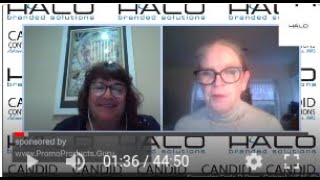
In a conversational interview recorded on December 1, 2020, host Speaker A speaks with retired USAF Colonel Carla D. Bass, a decorated author, speaker, and instructor. Bass recounts her early decision to join Air Force Intelligence, the three core pieces of advice from her father—focus on the job, care for your people, keep a sense of humor—and how those principles guided her 30‑year military career, including being one of the few women to reach colonel rank. A pivotal moment came when, as a squadron commander in Hawaii, she discovered that her unit’s award nominations were failing because supervisors could not write compelling nomination packages. She spent three days developing a concise, high‑impact writing system she calls “Write to Influence,” built around “word sculpting” tools. The interview walks through the four‑part structure of her book: (1) strategic planning of a message, (2) the word‑sculpting toolbox, (3) application of those tools to grants, resumes, emails, presentations, elevator pitches, and fiction, and (4) 200 practice exercises with before‑and‑after analyses. Bass highlights common professional writing pitfalls (the “Dirty Dozen”), emphasizes the importance of audience‑aware, time‑ and space‑constrained communication, and demonstrates a favorite tool—“Verbs Are Your Friends, Rely on Them.” She describes how she delivers training: selling the book to organizations, conducting in‑person or virtual workshops (often tailored to client products), and offering three free e‑books (standout resume, grant, performance‑review) on writetoinfluence.net. The conversation also covers formatting best practices (triage the message, short paragraphs, bullets), the lack of formal writing instruction in schools, and the broader impact of powerful writing on leadership, career advancement, and business success. Throughout, Bass stresses that writing is a lifelong, teachable skill that can change lives, and she shares anecdotes from her work with the US Geological Survey, USGS, and other corporate clients, as well as her fiction workshops.
Chapters
Daytona Beach. Hi everyone, so today is Wednesday, December 1st, and I have an amazing woman. I'm very honored. Colonel Carla DeBass, who's going to share her story with us and what she offers, which I know everyone— ears up, listen, because this is going to be very interesting. And I asked Colonel Bass if I could call her Colonel because You know, when I look at you, Colonel Bass, I think of all of our daughters, and I have one, 14, and what this means just to hear the name Colonel and see a woman and just know the hard work. So, hello, first of all. It's nice to meet you. We literally are meeting right now, so this is lovely.
And hey, you as well. Thank you for the opportunity to share some time with you.
I'm excited. I'm excited. So I guess at first I want to ask, can you tell us about your career, your military career?
Yeah, for sure. Let me, let me take it back a bit, and I'm going to give complete credit to my parents. My mother, when I was a child growing up, told me repeatedly, there is no such word as can't. You can do anything you want to do. Shoot for the stars and go get them. Set your, set your goals high and go get them. My father was career Air Force, so I chose to follow in his footpath. I made that decision when I was in 7th grade. 7th grade, I decided on Air Force Intelligence. Why? Because it was the Vietnam War days and Mom kept telling me, don't ask your father any questions about what he does because he can't tell you. You'll put him in a bad spot. And I decided at that point that if I can't ask him questions, I'll friggin join the Air Force Intelligence myself and find out. And, and that's exactly what I did. So 7th grade, lock on, and, and I never looked back. Whoa.
So, wow.
So when I Yep. My father commissioned me, and when he did, when he commissioned his second lieutenant daughter, he gave me 3 pieces of advice that I follow to this day and I pass on to everyone. The first was, uh, stay focused on the job, you know, put blinders on, don't get caught up in office politics. The second was always take care of your people and they will take care of you. And the third was keep your sense of humor. And with those three simple pieces of advice, I sailed through 30 years like it was only so many days. And I passed that on to everybody. There's no such word as can't. Shoot your— set your goals high and go get them. And then my dad's pieces of advice.
That is so beautiful. How proud was your father when he commissioned you?
Oh, he was busting, and so was I. It was a long wait from 7th grade to be able to swear to say I do.
Were you part of the ROTC?
I was. I came through Purdue University in their 2-year program.
Wow, wow. I'm always curious about that because my daughter has a beautiful friend who has her psych career set, Angela, and she's like the steps of what do you, you know, first of all you have all the teachers that have to tell you what you're doing and then you have the ROTC, which is a great experience. So you recommend that?
I'd do it again in a heartbeat, yes. And I would, if they still have the difference between the 2-year program and the 4-year program, I'd recommend the 2-year program.
Wow.
So the 2-year program is your junior and senior year, the junior and senior year in college.
Well, I have to learn more about the ROTC program. I know we have it where I live in Daytona Beach and Mainland High School. And, you know, I just have an utmost respect for all of the students that are involved in it because you really know that they have aspirations for the future. And that's the best thing you can have is have an idea of what you want to do. So what was it like being a woman? I completely agree. You— but now you're going in, you're a daughter and a woman.
Yeah, I was one of the— I was one of the few women of my generation to make Colonel. So I was commissioned in 1977. There were not many of us at all. So, I was accustomed for 30 years to being the only woman in a room of 75 or 150 or 350 men. But what I did is, remembering my dad's advice, just stay focused on the job. I always approached it— I was an Air Force officer who happened to be a woman. I was not a woman who happened to be an officer. Big difference there.
Interesting. Okay, yes, you're right, you're right. Wait, your dad— so that— what put that in your, like, mind? Did your dad say that to you?
No, I figured that out on my own. You know, Dad said, do your job, do the best you possibly can. And so the fact that I happened to be female was completely irrelevant to, to the tasks that I had at hand.
So tell me about the humor part. Was your dad humorous?
Yeah, my dad, that's a good question. My dad was very quiet, but he never ever got upset. He was even-tempered, even-going, and I think maybe that he loved puns, but he was not a jokester. He was not He was not an extrovert. He was just quiet and calm and patient and never got upset. And I think that's where the sense of humor came in. It's just, you know, just even going. But I'm gonna preempt a question here. How did I start this journey, this whole book, this whole writing thing? When I was a lieutenant colonel, I was a squadron commander in Hawaii, which was— that's a big honor to be selected as squadron commander. It was a unit of 480 super talented young men and women. When I arrived at that assignment, the 324th Intelligence Squadron was the most losing unit in statewide quarterly and annual professional awards. What that meant was some really deserving careers were being handicapped. These young people weren't winning awards that they deserved to to win. So remembering my dad's mantra about take care of your people, I had to fix that. The problem was that these people, it's not that they didn't deserve to win, there's a double negative for you. The problem was the supervisors could not write winning nomination packages. So you, you could be the most talented captain, the most brilliant tech sergeant doing amazing things, But if your boss can't tell your story in a nomination package, you lose. So I took 3 days vacation. I hid myself in a beach cabin and I analyzed my own writing. And that's where I developed the nucleus of what I now call Write to Influence. So I took those 3 days worth of thoughts, turned them into what I call word sculpting, and I, and then I turned that into a 1-hour workshop and I taught my guys how to write. And we started sweeping the awards. We won all of them almost all the time. So, the other units came and said, hey, Colonel Bass, can you teach us too? Well, what, what astonished me is there was such a vacuous need for what I had developed. I ended up teaching that for the next 15 years to thousands of people wherever my subsequent Air Force assignments took me, word sculpting came too, because there was nothing like it being taught anywhere, and there still isn't. So it was a combination of, of taking— it's writing as a gift, it's a God-given gift. So taking this gift and applying it to my unit, turning it into a vehicle where it can be taught and understood and, and implemented. And that's where I learned that battle cry about powerful writing changes lives because it does.
It does. Wow. So people talk about being a speaker and having that as your influence, but you are so right. The writing is so important. So you do, um, so it starts from your bio to— did I read something about grants too? Do you write grants?
Yeah, I, I help people with grants. So let me explain the book and all this stuff comes together. The first part of Write to Influence talks strategies. When I teach this in a workshop or a webinar, I think in terms of an inverted triangle. If you're trying to message, if you're developing a message, you first have to strategize what that storyline is going to be. When you get the draft, you come down to the pointy end of the triangle and that's where you use the word word sculpting tools, which we can talk about, but sentence by sentence, you get rid of the useless words, the wasted words, the redundancies, and you really hone it, so it's a powerful, powerful text. Um, part 2 of the book is the word sculpting tools. Part 3 is where I actually take those tools and I apply it, so there's a chapter on, here's how you take all this stuff and you apply it to writing grants. Here's how you write the essay for a college application. Here's how you write resumes. Here's how you apply this to, to presentations. Here's how you apply it to elevator speeches. All of these various daily applications where you really need to learn, you need to write something that's powerful and influential. That's part 3 of the book, all of the strategies and the word sculpting tools applied specifically to those products. And then the last part, just to finish that up, is—
go ahead. No, no, you finish it up, please, please.
All right, yeah, sure. The fourth part of the book, there's 200 exercises with the before, after, and analysis. So you can actually practice these things, and I show how you go from the horrible example to the improved version, and then I explain how we got from point A to point B. So you can actually watch the transformation of, of the exercises as, as you go through them. So that, that's the book in a nutshell.
All right. So, so I understand like an individual getting the book. Let's just say that we're going to work company. So, and I have in this company, I have 20 salespeople that I need to make sure that their writing is— they're looking at— I love that idea of, of getting a, um, writing about themselves for nominations, for best of the best awards, and also for selling, and also for just general writing to sound professional. What would— like, so if my position— so I'm the president of the company, what, what would I do? Would I get a book for everyone in the company and review it? Is there Like, how do you, how do you do that when you're teaching a group, or do we have you come in and you teach our staff? Is it ongoing? I'm just trying to get an overall view.
Yeah, yeah, the answer is if you have the budget, I would recommend— I'm not in this to sell books. Everybody has to understand this. I'm here to help people. The big, big— that's important to me, but I would recommend that you as the CEO buy a copy of the book for every person because it helps them. And then, and then I come in either webinar or back in the pre-COVID days in person, and I conduct workshops. The workshops can go anywhere from 5 minutes. I had a client that I would give a, I tailored a 2 full-day workshop for them. And I gave it for them in Chicago and then in New York City. The US Geological Survey hired me to come in, you know, USGS, I developed a full one-day class for them and taught it at 4 different locations across the country. And I developed these things based on their products. So they would bring to me their broken products and say, Colonel Bass, can you fix these? And I would, and so using their examples, I would show the before, the after, and then the analysis. So the aha moment is really clear because they saw what they had written, and this is what they could have said if they, if they knew how to apply the right influence. And so that's how I do it, um, either in person when it's safe or, or live webinars now. Oh, and something else, because people Because people are, are in such dire straits now because of these bizarre circumstances we find ourselves in, I completed 3 free ebooks that are on my website now. They're called— the first one is called Write to Win a Standout Resume. The second is Write to Win a Grant, and the third is Write to Win performance reviews. So they're on my website, writetoinfluence.net, and all you have to do is click and they're there for you.
I saw that. That is really impressive. You know, Colonel Carla, I don't tend to— I think I'm normal, right? But I don't like to judge, judge, like when you're looking at something and judge. But if someone's not a good writer, I notice it. It's like I can't not notice that their writing is not that great. And I've had some people tell me I'm a great writer, and then I watch, then they write, then they'll send me something and I'm like, in what world are you a great writer? Like, it's just, you know, I, and I make mistakes. I'm, you know, I'm human. I make a lot of mistakes. I do find comfort in using Grammarly because I want to be able to catch every error that I have. And I learned from it too, but I just, I don't like mistakes. You know, I don't like to write something and have it look, you know, where the sentence is running off, or I know someone who every 10 times they write, everything's dot, dot, dot. And it's like, a lot of people take what's in their mind and they write it like they're talking. And I'm totally guilty of that until I turn myself around and realize that it's absolutely so, it's, so I get, so yeah, I've done the mistakes.
Three thoughts just kind of went screaming by my head. The first is, in the second edition of the book, I have what I call the Dirty Dozen, the 12 most common errors in professional correspondence. The first is the failure to revise, edit, and proofread. Those are three distinct steps, and people don't recognize that. So that's the first one. Another major problem is people don't outline their thoughts. So, um, I'd mentioned it was a 12-minute presentation I had to do with that SCORE conference. 12 precious minutes in front of 225 entrepreneurs. I orchestrated every word, every thought of that. I outlined it, and then I almost talked myself hoarse because downstairs in the garage parking lot, I verbalized it over and over and over and over again, so the words just flowed. So the second, the other mistake people make is they don't outline to leverage the time and the available space. And the third is people write as they speak, and because they don't revise, edit, and proofread, they don't go out and correct and tighten it up, and you simply don't write the way you speak, or you shouldn't anyway.
I always thought it was kind of laziness, to be honest with you, because I remember the day of working where letters had to be typed and they had to look good. And I actually, I grew up in a family business. I think if I remember correctly, um, after college, that my mom maybe had to look at some things before to make sure that I could write, and so that nothing would go out in a letter which someone would physically open and read. And then I remember when emails started coming to the internet and people said, well, you know, excuse my typos. And all of a sudden that became, I can write whatever I want and I'll make a little message that says excuse my typos, or I'm, I'm writing on a phone, or I'm writing fast. And so then it was like, hey, if I send you everything spelled wrong because I'm in a hurry, so just excuse it. And I remember thinking, well, that's still not really good because now people are seeing that you don't care enough to want to write better. So this is a good thing.
I love the detail. It develops sloppy habits for you. Now I have a message for any parents in your listening audience there. What, what I offer is no longer taught in schools. It hasn't been taught in academia, I think, for about 15 years. And so even, even those wonderful high school students that come out with straight A's and AP English, they are not learning it and it's not being taught in college either. And even coming out of grad school, it's not there either. So the result is, um, they're learning how to write fat. And what I mean by that is when you're given a homework assignment, I want a 1,000-word paper on whatever, the instinct is if I give a little bit of meat and a lot of fluff, I can make the 1,000-word limit. And teachers, bless their hearts, this is no ding on teachers, but people are sliding through on that. So, if you use that approach for 8 years and now you're coming out in the work environment, you can't write your way out of a paper bag and the employers are dying. They're looking for people who can write with compelling arguments, precision, focus, direction, you know, seconds count. and the school system is not producing that. So, so parents, be aware of that and, you know, either get the book or come talk to me. But, but, you know, this is no kidding about powerful writing changes lives. And for business owners, powerful writing is the lifeblood of effective organizations because you have to be able to compete for those contracts, uh, and, and retain in-house talent. You have to be able to brief executives. You have to be able to, uh, defend your budgets, you have to justify additional funds if you have this brilliant research program or whatever, but if you can't make your case to persuade those who control the purse strings, you lose.
This is so important, and I have to say, writing matters, even if it's on social media, if it's on Facebook, if it's a text, I don't care what it is, You really, you look at the person, you want to make sure that they know. I didn't even think about that with the amount of words because it's interesting when we as adults have to write something and you have to do two, like it's shorter. So I write 250 words and I'm like, wow, they really want to cut out none of the fluff. So you really have to get, but my daughter is in high school and you're right. Words and they're all fluffy and, or, I mean, I'm like, no, Alana, that doesn't work. But Wow.
Teach her this. So here's another, if I had to distill my philosophy into one point, it's that every writer, whether you're fact or fiction, every writer, every communicator is constrained by two things. You're constrained by the audience's time. Everybody is busy. So every time you email, you telephone call, every time you reach out to somebody, you're interrupting them. And so, time, tick, tick, tick, I'm busy, what do you want? Make your case and get off the stage. And then the other thing that writers are constrained by is space, whether it's the above-the-fold space on a webpage, or if it's a government form where there's actually a demarcated area where you're given this much space and no more, 'cause it's actually blocked out, or if you have to describe your project in a grant, in a limited word, like 250 words, or if you've written an article that's going to be published and they want, they want a one-sentence summary of what the article contains in 140 characters, the person who best leverages that time and that space wins. And that all comes down to knowing how to, to write with concise, you know, precision and so forth. Let me, let me share with you one of the word sculpting tools. This is my favorite one. Is it such fun to explain. It's number 5. I call it Verbs Are Your Friends, Rely on Them. And the way I explain it is imagine a hard-boiled egg. I'm dead serious. Imagine a hard-boiled egg. Got it? Now make that sucker 6-foot tall. Big hard-boiled egg. Okay. The yolk, all right, the yolk is the verb. The white stuff is what sloppy writing suffocates the verb in nowadays, and so your goal is to peel away all that white stuff and get straight to the verb. So, for example, "keep separated" is "separate," "provide notification" is "notify," "provide protection" is "protect," "place an emphasis on" is Emphasize. So, I mean, I can go on and on and on, but the idea is, is as you go through your draft now, every single sentence by sentence, look at the verbs and peel away all that excess white stuff and cut straight to the chase for the hard-hitting verbs. And that's just one of the 10 word sculpting tools.
I love that. So, but let's be real, people have to care. So you have to really understand that words matter. And then you have to care enough that you don't just say, 'cause how many times have you heard this, Colonel Carla? I just, I don't know how to write. I'm just not a good writer. I don't even like it. Nobody's ever complained about my writing before. I get my message across. Sometimes I have a couple of extra stops.
All right, so here's the deal. If you focus on you, So now you are writing the input to your performance review. All of a sudden, you have a vested interest in this. Nobody cares more about your career progression than you do. So when the boss says, "You have 1,000 words. Tell me what you did over this past year," all of a sudden, now you care. Um, if you're a project officer, and, and you're in charge of writing a bid to go get that contract, your promotion hangs on get— on securing that contract. You have to make a persuasive case to win that contract. Now you care.
Touché. I love it.
And if you're a decent leader, again, this goes back to the 3/24th. If you're a decent leader and you care about your people, then you, by God, need to learn how to write so that you can go out and get for them. Those awards and decorations and accolades, if you can't defend them, then, then, you know, powerful writing is a fundamental leadership skill. That's, that's another one of my mantras.
Wow, you know what, you really don't hear that often at all. I, I absolutely love what you are teaching and dedicating your life to. This is a big deal, everyone. This is a big deal. This is A big, big deal. It really is. And I, I, because words do matter and you see it all the time. I'm in the promotional products industry, so logo merchandise. So anything, you know, with a logo on it, like, you know, designs. Oh, by the way, look at this item. It goes on the back of my phone. It's a mirror and I use this. But if we're writing and trying to sell, it's the same thing. I have to make sure that my emails make sense, that someone knows that I'm professional. Because your writing can really look like you're not professional. It really, to me, it comes down to caring. Bad writing looks like you don't care enough to really— and exactly. And especially, I had someone that used to work for me that would— you go, I'll be, I'll be quiet.
No, no, there's a little bit of a lag, so I couldn't tell. Yeah, when, when I wrote The original book in, in, uh, uh, 2017, my friends, uh, several of them are entrepreneurs themselves. They said, Carla, please include a chapter on how to write a powerful email because my employees cannot write an email to save themselves and I have to rewrite all of their emails. So the first edition, and then of course in the second edition has a chapter specifically on here's how you write an email that gets your point across, boom, boom, boom, that ensures that the reader is going to understand your points. You have 3 points, so you number them 1, 2, 3, and if you present the message in a way that it's easy for the recipient to digest, you're more likely to get a response.
Okay, so now you're bringing up another point. Because my son, I have a son Sammy who lives in Shanghai full-time, handsome young man, and he has his own business. He sells what's called a steel mace, so a big tool. So he does his whole website, he writes all, he wrote an ebook, and then he also does all of his own social media, and then he writes articles for other companies too. And he said to me, he goes, Mom, I love what you write, but you format it horribly. He's like, you don't You— it's like one big blob. Like, he's like, you have to format correctly. And then he sat me down and he showed me. And that— you just brought that up. That's another thing that people really need to learn how to do is format. And you're not taught that in school at all. You're just taught paragraphs.
No.
Can you tell— could we talk about formatting? Can you share some formatting tips? Sure.
You want to talk formatting email or formatting what?
Like formatting articles. If you're writing, if you're writing a Facebook post or you're writing for an article for your own website or even an email, I see emails that are just one big blob of no formatting. Okay.
Well, first of all, big blobs don't work because people, again, people are busy. Uh, they, they, uh, the brain, the brain simply cannot look at a big blob of a paragraph without, growing up. It just, it's like a horse pill, it won't go down. So, the first thing you need to do is prioritize your message. It's like, if I'm briefing a general, you know, back in the day, and I originally, I was given, you know, 15 minutes. You have 15 minutes to get this information to the general. But what happens if that general gets pulled away after only 5 minutes? So, you have to prioritize the information that you want to share. If you only had 5 out of the 15 minutes, What do you want to get across if you have 10 of the 15 minutes? So you triage, that's what I call triage your message. So you get the most important stuff up front and then you follow it up with the ancillary or the background information. This is another problem in contemporary business writing, professional writing, is people feel compelled to put up, to put all of this preliminary information at the beginning of a paper, almost justifying why it is that they're coming to you. The problem is they spend paragraph after paragraph of all this preliminary stuff before they get to the point. By the time they get to the point, you've lost me, I'm gone. So, because I'm busy, you're busy, so open up with the information, the important stuff, and then backfill it with the other information. Write small paragraphs, like 2 or 3 sentences max, because the brain can— it's like Pac-Man, you know Pac-Man? The brain can assimilate small, small paragraphs. If it's more than 4 sentences, and I just picked that number, the brain is just, you know, it's not gonna work. Bullets, if you have—
That is such an awesome bullet.
Yeah, so bullets is another really great way to be able to present the information so the brain In a similar way, it's easy to read bulleted statements as opposed to, you know, 6 sentences in one big honking paragraph. So bullets is another really good technique to be able to— it's almost considered predigesting the information for the reader so that it's easy for them to grasp.
That's my problem. I have to study bullets. But I have to do a better job of my bullets when I do it. I have to be more concise. I love that you agreed to do a SCORE workshop. I really appreciate that. And I think that this is, I mean, so what would you, I know we just talked about it, but I'm just thinking that all of this would be really great information to have for the entrepreneur, especially when they're writing down, like the idea. So like, you know, I'm working with someone right now and I said to her, You put everything in writing. You got to write everything down. You have to— when I work for American Cancer Society, and if I wanted to do— I want to do the Western talent show. It's never been done before in Tucson, Arizona. It was a little different. And, you know, I couldn't present the idea unless I had it in writing, and I had to have it. And nobody at American Cancer Society wanted to read words after words, so I had to— so I learned that you have to do very concise and But boy, if I— I mean, I'm not— I'm not— I'm on a scale of 1 to 10, I'm like a 3, 4. So I have a lot to learn. So I look forward to getting the books, and the ebooks are great. And then do you recommend people— have you ever had people read the book and then have you speak? I'm just curious about this, so that you can— is it better to like almost have a little bit of the book, a little bit of the book digest, and then have you explain a little bit more or questions?
Well, I mean, it, it can work either way. I mean, if you have the book at the desk and you haven't cracked it open yet, and I come in and give it a workshop, it's okay because now, now you are intellectually familiar with what's going to be in the book. And so when you, when you encounter it in that medium, you will have already heard and seen, you know, the stuff demonstrated. On the flip side is if you have the book early and you're able to flip through it when I'm presenting it, you think, ah yeah, I know, I saw that in chapter 2. So it works both ways.
That's a great point. When I was younger, my mom used to think it was funny because I would love— I wanted to watch the movie first and then read the book. And my mom was always like, that's so weird, AJ, most people want to, want to read the book and then watch the movie. But I'm like, no, I like to watch the movie and then I want to read the book. I don't know why, I, I, but I like to do it. But I like to— the book gave you a whole nother feeling, so it often felt like two different movies to me when I was done because I had my own version and then I had the what I saw in the book. Because really beautiful words, you— I could see them. They're like, you know, I just love when you're reading just beautiful words. It makes you feel good. Now I understand why your website looks so great. You want— you make sure every word on your website is perfect.
No kidding, I put a hell of a lot of effort on that website. Now talking about books and movies and fictions, everything that I've shared with you actually applies to fiction also. So one of the workshops that I give, in fact I just gave it to the San Fernando Valley branch of the California Writers Club, it is— I call it, uh, Spin That Captivating Tale. So in it, I, I take examples of contemporary published fiction writing, some bad examples, and I apply my, my word sculpting tools to those bad examples. And I show, I show authors of fiction how it is you can write with pizzazz. So for example, You know, I don't have time to read a book very often. When I do, it better be a damn good one or I get irritated. So, my go-to authors are Kuntz, Dean Kuntz, and Daniel Silva's book in particular called The Heist, and then Diana Gabaldon. Those three authors, again, Daniel Silva's book, The Heist, because some of the others weren't so good. But, but Gabaldon and Dean Kuntz, they paint with words like Michelangelo painted with oil. I mean, I mean, they, they— and in The Heist, I mean, he, he can cram so much meaning into one sentence, like, the doorbell sounded like the wail of an angry infant. I mean, think about that?
Who—
what mother out there doesn't know the sound of an angry infant? Enough said. And that's— so all of this applies to, to writing fiction also.
I love you. I am so grateful that we connected because I, I mean, you're talking really my language. Though I'm not like, you know, I don't want anyone to think— I don't think that I'm the greatest writer in the world, but I, I pick up mistakes too. Weirdly enough, I very rarely pick up my own mistakes, but I can look at someone else's letter, whatever they send, and I like immediately find the error. So it really— I just want to repeat what I said before too, that it does feel a little disrespectful if someone sends me an email or a message and it's it's not written very nicely. I almost feel like, oh, maybe they don't like me. You know, maybe, but I understand that not everyone's a good writer, but I love the fact that they can learn. And I think that that is so important. I think your conversation about the teachers, that's sad that we are not teaching our children to be better writers when you're really right. We have two ways to communicate, verbalize and writing. And you just tied them both together, the speech with the writing. Yeah.
Somewhere, somewhere along the line, someone stopped teaching the teachers. So, if the teachers themselves didn't learn how to communicate like this, they cannot be held responsible for failing to pass it on because they never learned. So, that's, that's a flaw in our system. People my age, and I think your age too, did you ever do sentence diagramming in school?
I think so, but I don't really recall what it would be. I don't remember it.
Well, you had— I'm guessing you had a probably a good grammatical foundation. We did, but somewhere along the line that stopped, and, and it's the young people coming out of school and going into the work environment that suffer, and it's also the employers who are eagerly seeking these skills. You know, if, if you can learn how to write like this, it's, it's a free Writing in life, it's a life skill. It will serve you. Learn it once and it will serve you for an entire lifetime. There are so many jobs, job vacancies now for marketing, for outreach, for strategic communicators. They're all over the place, but you have to submit samples of your writing. And if you can't write like this, then you're kind of shot. But if you can learn how to do this, and it's easy, it just takes a little practice. Once you start thinking like this, you know, it starts coming. You can set yourself up to succeed. When I was a, when I was a second lieutenant— no, first lieutenant, that was my, my second assignment— I was, I was given the job of writing and delivering the daily briefings to the director of the National Security Agency. So for, for those of you who don't understand, that's That's a heady, heady responsibility for a first lieutenant. So, when you're briefing the four-star general of the National Security Agency, whose time is no kidding, tick, tick, tick, every word has to be, every word has to count. It needs to be precise with no mistakes, with no sloppy writing because you're talking national security stuff. So, I learned from my earliest days how to write like that. And so for 40 years now, I've been writing for Congress and the White House. I still am. Generals and ambassadors, where you have to be able to get the message across in one page. You have to be able to defend those budgets. You have to explain that if this system is not purchased, then these are the consequences. This is what will happen if the system is purchased. These are the improvements. And you have to make sure that you're speaking in a language that the audience understands. We haven't talked about that yet. So when you're going to Congress, and you're trying to justify an IT, an IT project, you better not talk to them in terms of data storage, or bit rate, or processing times, 'cause they're policymakers, they don't understand it. You need to couch your story in terms that they understand. What's the so what that they can sink their teeth into? So that, that's another one of the strategies is know your audience and speak in their language, because if you don't, you don't even get off home base. So, you know, all of this stuff, it's, it's all in the book. There's so much there.
It's so interesting. So last night, I don't want to get political, but last night I read a letter of resignation that was submitted to a President Trump. And whatever was said in the letter, whether I agreed with it or not, after I read the whole thing, I thought to myself, this is a well-written letter. I mean, it was a very well-written resignation letter that this person probably knew that most people, if they were interested, would read the letter of resignation. Again, no political— do I believe what it— that doesn't matter. But I did say to myself, yep, this is a It was a good letter of resignation. It was a well-written letter, enough that I was thinking I should show my daughter it. Because again, just when you, when you read something that really the words flow so nicely and it's so important, it really— I do believe that we are judged by what we're writing. And so I, you know, I, and we're— I'm a Toastmaster. I was a Toastmaster. I got to rejoin Toastmasters. But even that, if you're— when you're speaking at Toastmasters, you have to write down what you're speaking if you really want to be, you know, good at what you're saying and get your points across. So I don't know, this is so important. It's funny that something so important like writing could be something that could be not anymore in school. It is, it's disappointing. And I just want to make one more point. I actually taught, I actually learned business English because I moved to China. I wanted to teach business English in China. And so I had that opportunity. I was in China, in Nanjing, and I went to Trend Micro and Ericsson. And it was kind of beautifully sad. It was poetic in a weird way because you have these beautiful, brilliant Asian employees that are earning, you know, six figures. They're very, very much on the top of their game, except that they weren't able to really communicate what they really wanted to communicate in English. And they think that we're all writing so beautifully. And so they would sit with me and they would communicate a little bit, but then they would say, well, you know, I don't sound that good. And I'm thinking, you sound better than some of the people I know. Like, their English wasn't so bad, but what they thought was like— they just thought that everything that we wrote was so poetic. They didn't realize that a lot of people don't really take the time. And they, even in the age of 30, knew that it was important enough to— and the companies— to teach them conversational English and business English because that was one skill that they needed. And only a few were lucky enough to have a teacher, an English teacher in China that actually took the time. A lot of them said that they were passed and, you know, they learned nothing and they were just given A's for doing nothing and they were disappointed at that.
Yep, good for you, good for you.
I love English. I wanted to be a journalist when I grew older— when I grew older— when I was younger, I wanted to be a journalist. I really do love words. I do, I do. I'm not the best speaker, I'm not the best writer, but I want to show my respect when I do write to someone to make sure that they know that I took some time to look at it and throw it in Grammarly to make sure it looks good. So thank you for your time today. I really appreciate it.
And so this is your—
so that we have— okay, okay, we're gonna have a store workshop. I look forward to that. I'm gonna send everyone— everyone, you're gonna get all the information from Colonel Carla. And I hope you don't mind my saying this, but you are a beautiful woman too. And is your father— is he alive?
No, I, I lost both of them. They're with me every day.
Me too, me too. I'm an orphan too. I lost both my parents last year, and my mom in 2017, my dad last year, and I really do feel like they're with me. I hear their voices, they direct me every day. So, so very, very happy with that. My dad loved puns too, and he was, he liked, he was very funny in a different kind of funny way, but he was the life of the party. So thank you so much, Colonel. It was really lovely talking to you. I'll send you all the SCORE stuff. Have a great rest of the day. Happy holidays. Bye. Thank you. Thank you. Bye, everyone. We're closing out. Bye.










