Celebrity Stark Ryan shares vital information for anyone in the arts & entertainment business.
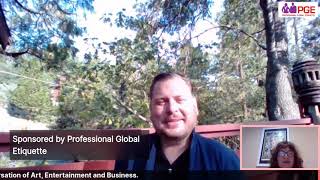
In this candid LinkedIn Live interview, host Adrienne Barker, MAS, chats with multi‑talented artist, magician, and label owner Stark Ryan about the seismic changes COVID‑19 has caused in the arts and entertainment industry and how artists can thrive in a digital‑first world. Stark outlines the history of live performance, the rise of remote work, and the critical role of copyright, publishing, and proper registration for monetizing music. He announces the public launch of Art Tandem (artandem.com) on October 31, a service platform offering artist development, branding, merchandising, website creation, and à‑la‑carte publishing support. The conversation also covers practical advice on video production quality, leveraging product placement, building an email list, and the importance of a solid business plan. Throughout, both speakers stress the value of networking, the need for a supportive team (including legal and insurance advisors), and the long‑term legacy of intellectual property. They field audience questions about talent inheritance, appearance bias, and how parents can nurture a child’s artistic potential, concluding with a call to action to explore Art Tandem’s services.
Chapters
Okay, so everyone joining us, if you're looking and you're like, hey, who's that handsome guy that Adrian's talking to today? Let me explain. It's Stark Ryan.
Hey, what's up guys?
Stark Ryan fan, by the way, because he is an entertainer and a musician. But also he's going to talk about our dandant. And, uh, but before we do, Ryan and I have to do our shout out. We're going to count down to shout out to Shabim. 3, 2, 1.
What's up, Shamim? Yeah, the man.
He is the man. We were saying Shamim, yes, he's so humble and he's so lovely that Shamim is me, and he knows how to stay connected. And that is actually, that is a tip in business, and that is the one thing I've never really been great in, is that, you know, just calling people up for the heck of it. But yet that means so much And I think it's because Shamim is so confident and I don't really have that kind of confidence he has that he will. He just can. He could just talk to anyone. So I just— Shamim, we love you. I mean, I'm new, so he's a connector.
He's the greatest guy. He's easy to talk to. That's exactly why he is a talent scout and an A&R rep for our talent. I mean, he, um, and, and it's— I am so blessed to have met Shameem and to be working together in any way with Shameem. We've been together for, uh, gosh, it's over 5 years going on maybe 7 years now. And, um, when we met, it was like— it was magic. It really was. Even his name sounds like magic, doesn't it?
Shameem!
I love it.
And I got to meet Shameem because he went to— he ordered something from the gallery signed by Frank and Ollie, two of the original Disney, um, animators. And then And he sent me such a sweet message, and then he wrote to me, and of course we just stayed connected. And he started sending me the pictures of what he has. And all I could wish is if my parents were alive, they would have loved Shamim and would have been great.
You know, I thought Shamim might have live— might have come into this interview today, but I don't think he's going to. Um, if he does, that'll be great. But I actually was going to present this to him because if you guys know Shamim, he is a collector of all kinds of art and comic books, and he has autographs for everything. This is a very— I found this just this past couple weeks. It's a very rare original comic book created by Christopher Pennock, the, the, the star from Dark Shadows.
Oh, I love Dark Shadows!
And I actually— this he created— I actually got this because he's passed away now, from his, from his wife, and It's a comic book that he created. And I'm going to present this and give this to Shameem. So Shameem, when you're watching this, I've got this. This is yours, my friend. It's not signed, but it's very rare and original. And it's for you, buddy. That's just a thank you for all you do. Small thank you.
That is so beautiful. So all right, who is Stark Ryan? I hear the questions are coming in. Stark Ryan, introduce yourself. Tell us a little bit about yourself and our attend— and actually, because this is interesting, because the arts and entertainment really have changed so significantly because of COVID that I almost wondered if it was like ever pre-discussed, discussed in a meeting, like, hey guys, what's like one of our, uh, threats could be? Like, what if there was a pandemic called COVID-19? What would happen to our industry, right? Because it's so crazy what's going on. So I'll be quiet. Tell us, tell us about—
Absolutely. So my name is Stark Ryan. I'm an artist and entertainer. I also own Artan, the record label. It's an entertainment label. We don't work in just music. We work in different types of copywriting and entertainment and art and different services for artists and musicians. I have about 20 years of performing experience, composing I also have about 10 years of industry work working with artists and entertainers on the industry side—copyright law, distribution, administration for performing rights organizations, and things of that sort. So as far as that, so that's a little bit about me. I'm also a magician. I consider myself a magician. I like to do magic tricks and things of that sort. So when people ask me what you do now, because I'm not really a singer per se, I work out of this I just say I'm a magician now, so it makes it kind of easy. Um, but, um, as far as where we are, my opinion of where we are in art and entertainment with COVID and why it might seem like maybe it was pre-planned is because artists and musicians are already people who travel around all the time and had a need for remote access, remote work with what they're doing all the time. I believe that musicians and artists and entertainers are usually at the forefront of a lot of the new technologies and things that are coming forth in the world. Like, for example, social media, I believe, was really, really pushed forward through things like MySpace with musicians really trying to promote themselves for free, you know, online. And so we've developed as artists and entertainers with a busy schedule traveling from point A to point B or being in another country, a really good, a really good understanding of the need for remote access. And we've made leaps and bounds, I think, in that, in the music and art and entertainment industry. Okay. So as far as that goes, that's— I think that might be why it feels that way. Now, where it comes in with COVID that really kind of damaged what we had going on is that we really rely heavily in the entertainment industry on live performances. It's, I mean, everybody knows that. How can you, how can you create this energy in this atmosphere without live performances and having people next to each other? That is the biggest hit that we've taken, I think, with COVID and that's everybody across the board. So if you look back into the early 1900s and you look back, uh, during the, the influenza, the swine flu, and the Depression, and the, the, uh, the advent, if you will, or the, the sort of the, this epic, uh, time of vaudeville being created. And vaudeville was this amazing traveling entertainment, uh, idea right now. We can't really have, uh, live entertainment shows like they did in vaudeville per se, but the importance of entertainment right now is huge, just like it was then. We had arts being created at that time. We had, um, the ability for film— was film was being invented and, and was being sort of grown upon and learned and created and was just this amazing moment in history of people experimenting with art on film. That came out of that time. Magic in America was around. Magic, you know, magic tricks, magicians, they were around in America already, but they did not have a sense in a place of the aristocrat. They were more— I'm sorry, in the everyday person, it was more of an aristocratic kind of art that was sort of more drawn into the public during that time. And that was because there was such a need for entertainment because everybody was depressed and it was so down that everybody responded really, really good to it. And everybody needed it, and we need it now, and we have it. So digital has been around, but if you'll notice, these artists on— some of our famous artists right now that we all love, our most favorite artists, are really upping their game with their video quality, their, their costuming that they're wearing. Everything is really becoming a finer sort of art, it seems. And I like that because we're taking music back to its element that it was previously, something very powerful. I think that social media has sort of cheapened music for the past 15 to 20 years because of that change in the industry— streaming, licensing, and how that all changed over. We really started getting spoiled with music as, as consumers, right? We can go online and find anything we want. We don't have to pay a dime, really. And how does that translate to these artists, though? How do they get paid? Where are they getting their money for the time, the effort, the resources they use to create this? Because this is their career in their life, right? Um, I think that there is a new, um, there's a new wave, powerful, powerful wave of entertainment that has already started that we're going to see come even harder than, than we might think it's going to come. Um, and that's my opinion as to where we are in it right now on the timeline of art entertainment. You know what I think?
I, I kind of look at it— you ever go to, you know, especially you're in California and you really see it when you go— where I'm in Daytona Beach, so I'm across the, uh, the country from you. But let's just say when you go to Nashville or you go to Memphis and you, you're sitting in a bar and you're listening to someone playing and you're like, oh my God, they're so good. Like, what are they doing here? They could be anywhere, blah blah blah. And then I think to myself, isn't that similar to like sitting in a sports game and you're watching some kid play basketball? You're like, oh my God, they're so good. Like, the reality is there's a lot of good, but to be that like, like Lady Gaga, or like what makes that artist go from amazing, great, love to listen, you know, I listen all day long to getting on the radio, getting a spot, being on TV, being— doing— like, that's that line. And I'm so curious what that line is. And is it connections? Is it people you know? Is it going to our attendant? Like, how is it? Because I think that— and I'm thinking to myself, it's got to be probably going to a place that can help you, because you could sing beautifully, but unless you're really like picked up, like someone does like, you know, okay, we're gonna go on YouTube and we're gonna find the best singer, we're gonna give them a, you know, what do they give us, contract. Otherwise, what really happens? So is a need more now for something like what you're offering than it was ever in the past?
Okay, so right now, because live shows aren't going on, the focus is for our talent is all digital. We have digital distribution, we are developing our new publishing branch, which we are going to launch with everything on Halloween Day, October 31st. So everybody can just remember, go out, artanent.com that day, and you'll see everything we're launching publicly. Because up till this point, we've been working with artists privately. So what makes the difference between, uh, somebody who's really talented and somebody who's really talented and has a professional music career that they can monetize and sell really has to do with a few different things, and you mentioned all of them. It's sort of a combination of everything that you mentioned, but some of the biggest, most important things is understanding copyright, understanding your, your intellectual rights, and that what you've created is a piece of property, protecting that, registering it so that you can monetize it, and then sell it. And so being able to do that, there's always going to be promotion, there's always going to be advertising, there's always going to be, you know, PR campaigns, and there's always going to be press releases. I think that most businesses understand how all of those things work already, and depending on how much you can put behind that and how much buzz you can get going that's going to generate, you know, more buzz. And, you know, so it works the same across any industry in those respects. But when it comes to the music and entertainment business specifically, we have a very, very strict set, very, very sort of complicated set of copyright laws, companies that work together to make sure that the artists are protected, but also to make sure that that, that the artists are protected, but also to make sure that people aren't getting taken advantage of from outside companies that are trying to do things with licensing that maybe are not general practice and things like that. So what I'm— I guess what I'm trying to say is that there are— there is— there are companies, you know, like if you want to go get your licensing for a cover song. Let's say you want— you're an artist and you want to, you want to perform a cover song from somebody. You're going to go to the Harry Fox Agency and you're going to make sure that you sign up and take care of all your legalities that way. Harry Fox Agency is the most popular one that does this. It's been around forever. Uh, it's very easy. Everybody's registered through there. It's sort of a place that you need to go if you're a perf— if you're looking for a performing rights organization, you're going to probably go to either ASCAP or BMI and register your works there. So I think that really what makes a professional artist who's working, let's say, at a venue that you see, they're super talented. If they do not register their works, they do not make sure that they have their copyrights, you know, and everything registered, their publishing. If they don't have the backend taken care of, then there's really no way Okay, other than just word of mouth and then being popular on YouTube, and it does happen, don't get me wrong, that happens all the time. People go viral and it's beautiful, it's perfect, and then somebody can come in and do all that back work for them to start to try to get that money and, and all the opportunities for them that, that maybe they're missing. But if you don't have that, um, you can be the most talented person in the world Right? And but if you don't have the ability to say, this is my product, this is what I'm selling, then, then you're not really, um, then you're not really able to become the next Lady Gaga. You're not really able to become Michael Jackson. These people work with— these artists not only have really great business minds themselves, have been forced to learn But they are working with people who have amazing business minds, who understand consumer products, who understand, um, who understand the music industry in a business way as opposed to an entertainment way. But the entertainment, the entertainment factor is what we're all pushing for, is what we all want, is what, is what our tandem is here for. Our tenant believes in empowering the artists, showing them how it works. Actually, we like to teach our artists what it is that they can do, what we're doing. Many labels hide it. They don't want them to know how much a percentage is available to them and how much the label might be taking from them. So we like to educate and empower our artists to do as much as they can on their own while providing services for them at the same time. Art Tandem is going to be opening October 31st on Halloween. Uh, online will be artandem.com. It'll be launched and people will be able to submit things there if they'd like. Um, we also have an artist that's— her name's St. Em, uh, that's St. and then Em. St. Em, she's up and coming, uh, so look out for her. She's going to be— she's not actually signed with Art Tandem She's really wonderful. We've been talking with her. She's really great. She's doing all of her own stuff right now. She's amazing. And so on October 31st, you can submit some things and see what we have going on there. And we're actually going to be offering, instead of just signing artists who have tons of followers already, who seem like, hey, this, this is somebody we want to work with, or we're offering also some paid service packages that have the same services that we're giving our signed many of the same services we're giving our signed artists that are available to the general public. What I mean by general public are people that we haven't just met, you know, who aren't necessarily people we've gone out and scouted, or Shamim hasn't said, hey, I found this person. So if those are things that also are going to be kind of new and original, not a lot of labels are offering services like registration and artist development and and, you know, bringing you into a publishing library to pitch your songs for licensing. I mean, there's not, there's not a lot of that going on, although there's some, and that's something that our tenant will be offering. So hopefully that would be helpful for people.
I love this. So, okay, couple of questions. Remember, I'm a newbie, but I'm just thinking to myself, and I'm a mom too, so I'm thinking to myself, okay, so first of all, my first question actually is how do they make sure that their digital quality, like I have, I have seen— I happen to know someone who's amazing guitar player, but because he doesn't really have anyone professional that's taking a photo of him, you know, the videos are kind of just weird and they, you know, they're just not eye-catching. So you love the music, but the quality of what he's putting out, part of me is thinking, is that hurting you or helping you? Because, you know, someone who's so great that you see live is now trying to push a video that's just homemade, like what I'm doing here on BeLive. Is that going to hurt them at the end of it? And how will you offer them— is there anything that you offer to help them to make sure that they have the best digital quality, whether it's the right, you know, question?
Okay, yeah, really good question, because you have a, you know, you have sort of this, uh, dichotomy of do I want to just get something out there right now because I'm inspired and I've got a camera and who cares because it's about the music, Or do I want to take the time and make sure I'm putting out something so high quality that nobody can ever say anything bad about it? You know, but it's going to take some time. I think that if you're inspired to put something out right then, do it. If that— if it is on your heart, I need to get this out to the world right now, do it. And the reason I say that is because I have gone on YouTube and I found Carrie Asher that way. She was sitting in her living room playing an acoustic guitar with just a camera. And she started singing, and it was like heaven. I mean, I had chills going through my body. This was on YouTube. I was watching a video. That rarely happens. And I taught— I, I reached out to her. She ended up, um, she ended up quitting her day job and, and, and going on tour to Colorado. And, um, and she went out there. She was out there for 6 months, and she was She's amazing. She's incredible, you know. Now then it started— then we started talking about, okay, let's do some, you know, professional videos and things of that sort. Now, um, when it comes down to which one is better, I would say if you're a serious artist and you want to do this long term and this is your career and you have you have a goal, and that is to be a musician that is known in the world, that everybody, you know, you know, can come and see and, and check out. I would definitely pre-plan everything that you're doing, at least 6 months. Your releases should have at least 6 months, at least, even if it's a single, 6 months. And that's just for press release alone. It takes about 6 months just to get There's so many people looking for a press release. There's about 6 months you have to wait until you're next in line, you know. So if you're going to put out a single and you want press release for it within, you know, that week, that same day, sorry, you're way too late. So 6 months for just the press releases alone, not to mention the planning for your video and tons of things that go into that. Now, what's great about making a really professional video and standing out that way is that if you do have a lot of, um, followers, like let's say your friend, he may not have a really professional quality video out, but he has lots of followers that like him, right? It's not hard to talk to a company and say, hey, I've got a lot of followers, uh, right now, and I'm about to put out a new music video. Now, I really like your shirt company or your sunglasses company, and is there something we can work out together for some kind of product placement? And maybe you could help with the either maybe we could share the cost of the music video, or you can send me some free stuff. One of the two, you know. And not only does that help with being able to maybe possibly produce a high-quality video that maybe you wouldn't be able to do before, together with somebody, but, um, that's one option. Or it— but it also gives you a company that gets people excited about. Now you're out there talking to people saying, hey, you know what, I've got this, I've got this shirt company in my video. And they're gonna say, We've got this video we're putting our shirt in. So now you have cross-promotion. It brings that many more people into the situation. And so you're really building a team and it's sort of a, you know, you're building a network, like sort of a promotional network, a networking economy kind of, you know, idea. It's really—
it's so important, though, isn't it? Like, I think, by the way, I want everyone to know Stark and I just met 22 minutes ago, or now make it 23 minutes ago. So when I say candid, this is candid. I asked a couple of questions beforehand, but this is— but the reason why I find this so intriguing is, A, as I was saying, as a parent, you know, you want to— if you— when you hear your child sing and you really— everyone's telling you, yeah, let's just say you really know, okay, my child's got talent. Um, you know, if that's the case, just like if you're— if your child is a great model and they Oh, you really should sign up, right? Such as yours, because I love that you said the mindset to go into being a musician is great. But if you're— if you really realize that this is the way you're going to make money with a passion and you're good at it and everything lines up, why wouldn't you?
Why wouldn't you? And lots of people— yeah, lots of people fall into families and friends that don't understand it. They think it's a pipe dream and they think that they'll never make it. They think that, oh, you know, you're selfish for wanting to do something like that, right? What is that? I want people—
someone— oh, because it's all about you.
And so, right, it's all about you. You want the attention, you want to be on stage. Exactly. We wrote— I run— I've run into that quite a bit with different artists, uh, with parents and wives. I experienced it myself as an artist and entertainer growing up. It's, uh, but, but, but certain people have a mindset for that, and they don't see it that— but the people who are doing it, they don't— many of them don't see it that way. They see it as a, a, as, as a, as a mutual exchange of— it's a mutual exchange. I don't see that as something greedy. But now, if you know somebody that has, um, really great talent, they don't know what to do, they don't know what the step— next steps are, Artanin will be offering many of those services for the first step, um, instead of having to wait to be scouted or to send something in and, you know, uh, for submission and see if you're one person that going to get noticed out of, you know, 5,000 people that day. Um, you can come to Art Tandem October 31st, Halloween Day. When you guys remember that day, it's Halloween. You can just go over to artandem.com. Everything will be launched. And, um, pardon me, let me just turn this off.
Call you. Answer, answer.
And, uh, yeah, that was, uh That was Michelle. She's, uh, she's, uh, sales, uh, she's in sales for the, um, uh, the publishing branch that we're launching. She's an amazing sales rep. Yeah, so, um, so you can go over to rtandem.com and we will have those services available. We have, uh, 3 packages and à la carte services. We'll be offering things like artist development, um, things like logo creation, branding, website creation, social media presence, banner creation, merchandising creation, and many of the things that it takes to build a strong foundation for any artist to have a strong digital presence online. Everything after that is all promotion and, you know, talent. You know, and that's across the board with any entertainer. So we want to offer those, we want to offer those services for exactly the people that, that you're talking about, actually.
So it really does make sense when you think about it. By the way, I grew up in the merchandising business, promotional products. So, uh, if you ever have questions, I have 35 years.
Great, I love it. Yeah, we'll probably talk more.
Got that. Okay, right, that, that was happening a lot with Shamim and his dad. All right, so anyway, so I have, I, you know, I, I'm a certified business mentor with SCORE, which I absolutely love. And actually, there are times when we get a question, so I would love to be— sometimes I need a subject matter expert just to answer a question for a client. But I really see this is so important. I mean, growing up in business and loving business, But I've, I've had people say to me, well, Adrian, you know, can't you just help me create, you know, a flyer for me and go out and contact the bars, go to your local bars and ask if they would, you know, have me play for them? That's not so easy. You really, I guess if you're serious, you got to invest the time, the energy, and the money that you have to make sure you're going with someone with 20 years of experience that really understands. So I think it's fantastic that you're offering this service. I think it's, I really think it's important. I think you, you and I Are you on Clubhouse? No. So Clubhouse is interesting. I would— maybe your salesperson— what I find with Clubhouse, there's a lot of— so it's only an audio app. Of course, whoever's singing on Clubhouse also has to deal with the fact that it may not be the best digital quality. On the other hand, I've been to some fundraisers, and Clubhouse is kind of unique because they'll have, uh, they'll also do like a kind of like a a double platform. So actually, so they had like a fundraiser where you spend the money to go on to Zoom so you could actually see the artist perform and have a better quality experience, or you could just listen to them on the room in Clubhouse, and that's okay too. But there's— I just kind of wanted to throw that out there because you do have— there's a lot of, you know, you probably have some clients in that area right there that may be interested. And also our tandem may want to even just create a room and start to talk about what you're doing. And so you could really have some great content and you could create your club, our attendant club. So I know enough about Clubhouse to be, um, to be dangerous, but if you want any help, I can— I'm happy to help you. You don't need an invite anymore, but I definitely think for your sales team it could be a great way to look kind of perfect. Yeah, a little easier than YouTube right now.
That would be wonderful.
Yeah, but I know we all want to think that our child can be the next best NFL player, or I kind of look at it like that.
So, you know, they can. That's the thing. Yes, yes, anybody can. Everybody's a person. We can. It maybe it's a little harder for some others, but there is always hope and there's always the ability to move forward. And one more fan, one more person is still one more person. And if there's one thing to— one piece of advice I can give any artist or entertainer that's out there right now that might be listening, that's, you know, really looking to take things to the, you know, the next level in their career. One of the most simple pieces of advice I can give you right now that sounds so basic and you're probably going to think, why did you even say that? You have to, have to, have to, have to build your email list and save those emails. That is your gold. That is the most important thing you can own. Is your contact list. Don't lose it.
Take care of it. Absolutely great advice. By the way, when we're talking about like starting, so I just have to say, so I kind of was in the same position, like, you know, do I want to— I just wanted to last year in 2020 just show off my friends, Stark. I thought, oh, I've got the coolest friends, and you know, being in the industry, and I could share some industry suppliers and other distributors and So I thought I'll just do— call it, you know, Show Off My Friends, Adrienne Barker Candid Conversations. Uh, but somehow I caught the eye of a couple of PR firms and it's been really wonderful. But I haven't really like upped my game. Like, I don't have like a fancy intro at the end. I don't have a fancy intro at the, at the back of it or the front of it. But I thought I still want to do it. I still want to get it out there and be able— and it's, it seems like, you know, I get some views on the, the different videos, but This is— I can kind of understand it. Could I do it more professional, go into a podcast studio? I really can, but we're having a great conversation.
Do I need— I love this. Look at how I love it. It's called Candid, and I love it because it's real. We're talking. I'm— look at— I've got a forest behind me. I'm not in a, you know, a conference room or anything like that, right? And you— I love it.
This is great. I had to start it Candid because my dog who we had to put to sleep. But my dog at the point was pooping all over the place, so if— and then he would fall in it. So if he like pooped on his pad and then he fell, and I'd be in trouble. So I would be like, I gotta go get poop. Like, so I always said, don't worry about your kids. I never wanted anything to— you have children, keep them in the room. I don't like that whole like, you know, lock your children up. That's just— it wasn't who I am. And I don't necessarily need to ask a bunch of questions. I don't want to watch someone else's interview and To me, it's all about— yeah, like, we have a cup of coffee, we talking right now, and I love it. But I am— I just want you to know, I really believe in what you're doing. I think it's, it's, it's serious enough, um, and if I can help any way in the business sense of it, great, huge help.
Awesome. Considering our candidate and having me on here, um, Shamim told me that, uh, that I can that, that I could meet you and, and possibly come up onto this show. And when we set it up, I was genuinely really excited not only to meet you and talk to you more, but I was genuinely excited because you've had some really great people on this show. So it's an honor, and thank you very much. Thank you very much for considering me.
Thank you. And by the way, I think it's brilliant that you're a magician. I, I, you know, you have to be very smart And you have to be quick, and you have to be creative, and all the things that you need to be. And some of the, the most successful people started off as a magician. So I think that really says a lot about you. If you don't— if you just meet someone, they say— then that makes a difference. And then the fact I'm jealous because I really wish I had a voice. And I love it. There's a, there's a woman in, uh, over in Atlantic City area who I just adore. And she was on, um, oh, it was whatever, it was one of the reality shows with singing. She's a beautiful, beautiful woman. But we walked through Disney World, and I would say to her, can you sing? And she would all of a sudden let her voice go and she would sing. And I'm walking by her and it was crazy, first of all, how many people didn't stop to listen. And then it was crazy how many people thought it was the radio, like they're like looking around for the speakers. And I don't know, I guess music's not for everyone, but for me it really is. Like Peter Yarrow said, you know, music soothes the soul. It's so good for us. It, it could bring the chills. It can make me cry like a baby. Like, I just think that— I don't know what the world would be without music. I think that it would be an awful, awful place. And so, oh yeah, it really would be.
Can you imagine that? What a terrible place.
What a terrible place. I happen to really enjoy like Helen Reddy. I got a chance to speak to Jim Keaton, Helen Reddy's, um, actually he started her, her, her club and amazing history. And I could listen to Helen Reddy really every night, like every day. Like there's certain music that I absolutely love. But I'm very— I also love, you know, rap, and I am a huge, huge, huge, huge, um, Eminem fan. Like, I love Eminem, and I think that that's the thing with all of us is that, like, to find out what it is. But anyways, if you have— if you are a musician, if you've got talent, if you know someone and you really have been trying to help them and you're not good for them— memory— if you try to take on a role as some— as like a manager of a musician and you're not that great or you don't know what you're doing You're not like— there's no favors being done, you know. You're doing it, but there's nothing really going to happen. I know this for a fact. Call us up.
Yeah, send us a message. Yeah. And right now, until, until Halloween, you can go on to our Facebook. It's just @OurTandem, you know, that's our handle. And send us a message. Until then, if there's something really important, if you have a question or something really important, send us a message on there. Um, we don't use it often, but I will after this show, just for the sake of saying it out here for you guys, um, but October 31st will be the launch date. Now, for those of you who may have heard me mention Saint M, this new musician that's coming out, right, um, she's really amazing and she's not signed with anybody. She's had interest with so many different organizations, um, that I'm not gonna name, but if I name them, you would know who they are. She's worked with some great producers already, um, and she has label interest, but she's not signed with anybody yet. And I just want you guys to go out and check her out. It's St. Em, St. and then Em. And if you can find her on YouTube, and, um, and then also if you want to send me a message and let me know what you think of her, or reach out to her, I guess, um, our tenant's going to be trying to, to get her.
So we'll see. That's really exciting. I mean, I think you always, like a realtor, you have to have a home. I think When you look at this business, you have to have a home and you want to have the home. And sometimes it's better to be in a smaller firm and be more important than it is to get to the largest firm and now you're just a number. And I think that, you know, talent really has a lot to kind of like wade through when they're thinking about where they really want to build themselves. Right. You really put that right.
Yeah, you really put that.
I love business. I like, I, I love business so much that like to me, I kind of look at it, you know, if I was a parent and my child had the talent, I would understand. Start saving now if you feel your child has a talent. You, you can't, you can't become a model unless, like, you know, the old— when you have to go to Barbizon and these model things, and you have to pay. You have to pay for the photographer, you have to pay to show, you have to pay for your profile. It's the same thing in any business, and that's so important. And you also, as a business, you really, as a musician, have to look at a business plan for yourself. It'll help you. Who is your niche market? Who are you going after? What makes you a different musician than the next one.
So all of that demographic you're targeting—
yes, I love, love, love that. I'm gonna look for Sam and I will also put her, if that's okay, on the YouTube so that we promote her too. I think that's great. And by the way, I don't pass a YouTube video someone's singing, um, I mean, unless it's like horrible, like, oh, I want to, then I won't. But usually I just— I like to, you know, the easiest thing that we could do for a business for a restaurant, for talent, for whatever it is, is to like a post and give them a thumbs up. Why wouldn't you? Like, to me, like, it's huge.
It's the easiest thing to do and it means so much.
You know, like, rewind. We need to have something like with that saying, like, um, we have to find something that rhymes with like and be like, you know, I don't know. Anyways, but okay, so great talking to you. You're, you're such a nice guy.
You are really lovely, a lovely person, and I'm— thank you so much. Thank you, really.
What about your music? I love your song. Um, so can I put that— can I add your— the link to your music?
If you would like to add that song that I did, that I— I'm— I love it. You like it, you can put it up there.
Yes. Oh, and I want to just share a quick story with you. When I was with American Cancer Society, there was a woman in Tucson— oh my gosh, amazing woman with an amazing history. She— she's played in Carnegie Hall, like Her piano is like— she's magic, okay? And she's in her 90s. Incredible woman with an incredible history. Um, I think she was one of the first women on Broadway, uh, friends with like Liza Minnelli's dad who would help her. But you know what? So she really didn't— and she's down on, you know, the internet, and she— but her, like— so kind of like people that knew her would know her, but like the new people didn't know her. And one day when I was Googling her, I wanted to put together a little gift for her, and that would have been like a PowerPoint presentation of any music that I could find on the internet. So it was interesting. So I went and I kind of scoured and I found a couple things of the music that were released. And I remember I sent it, I gave it to her, I handed it to her, and she said, she said, I, I never gave the authority for them to do this. Like, this was something— so she was like the opposite end, older, didn't really have any— doesn't have really someone like you So now she's dealing with music that she— someone else is making the money off of. So that's another thing too to think about. Do you want— do you want to open up your business? Should I open up a coffee shop and then have people buy the coffee from me and then I'm going to give them back the money? Or do you want to keep the money so that you can deliver better service and better coffee and add donuts to it? And for this woman, I felt the same way. Like, she— poor woman. Can you imagine? So now what she's got to do, get an attorney and try to fight it. And I'm sure she wasn't going to. But that's another thing too. You have to have everything from straight, otherwise— because this could be a legacy that you leave to your children. And then, oh my gosh, we could do a whole thing on— I'm not gonna say many artists, but there's some artists out there that popular, famous, that did not take care of things correctly. That may be another thing you want to talk about.
Like, well, you said, you said a word, legacy. That's a really important word. And the reason that— the reason I say that is because the rights that you own with a piece of of music, the composition rights that you own, last your whole life plus 70— gosh, what is it, 72 or 70, just over 70 years after that as well. So that piece of intellectual property, that piece of property is, is— it really is a legacy, can be a legacy for you and your family. And, um, and so that's, that's, that's really important to make sure that you're, that you're taking care of of, of that, of that side of it, building that foundation. Like you said, a business. If I'm going to build a business to sell coffee, I'm going to make sure I have the storefront, the brick-and-mortar storefront, everything's available, the restrooms, the cash register to take the money, right? Yeah. And now, and that's what a lot of musicians don't have. And, and really, in a way, it's what sets apart the, the, you know, the garage musician from the professional musician is, is the ability to monetize and to take the money in from what they're doing. Yeah, is to monetize it, you know. And that's really all it is. We, we need to get cash registers into musicians' hands, so to speak. I love this.
It sounds like to me too you're building that collaboration team. You know what would be good on that team is someone who sells insurance, because I think that if you are— I do not sell insurance, by the way— but I think that if you are a musician, that you need to also look at the value. And maybe you're not there yet, but in 5 years you could And what does that look like for your family that you would leave behind? Because, you know, that kind of— so there— so I love that you're building a whole collection of people around the table. So I almost like, okay, so I'm, I'm a musician. I walk in and it's almost like, okay, all my board of directors are around me and I'm getting that through your company. I think that that makes sense too. I am so on board. I definitely, if it was me, I would be signing up in a minute. All right, October 31st. We're all going to check out Artanit.
I can't wait. Halloween day, just go to artanit.com. You'll see what we have, what we're offering, and all that good stuff. I'd like to say we have something really special to do with Halloween that day, you know, that's gonna make it super fun and spooky. I'm sure we'll make it fun. There's not necessarily anything special for Halloween going on that day, but it's a very special day because we're opening our doors publicly for the first time. We've been doing it privately up until this point.
I think that is so exciting. I'm excited for everyone out there. Everyone out there, don't— do not, do not say don't share your dream or don't tell your child you're not that good. You know, if you're concerned about it, then go to, um, Artanda and, and ask them. But sometimes as parents, we really— or you may just have a bad ear, or you may not like music, and so that may not be your thing. So before I let you go, one other question. Is it true that, like, so Do musicians run in the family? And then if that's the case, then is having a talent hereditary?
You know, I don't know the answer to that. It's interesting that you say that because you do find that most musicians and singers and artists say, oh, I have an uncle or a cousin or somebody here that was really, you know, great and really popular. Um, but what I, I don't know that as far as genetics go, but what I do know is there are some people who innately have these God-given talents that are nearly unexplainable. You know, it's just something that's been given to them that is just beyond what other people have. And doesn't mean, though, that you can't learn. Doesn't mean that you can't build skills. But there are some people, I think, that are just a little more special in that, in that realm than others, for sure. So I don't know, Adrian, you're, you know, just as much as I do about that. But I do, you did mention something. I do have a quote and I do put it on many things that I say and it's always live your dream. Always live your dream.
I love that. All right, one last, I promise, swear to God, this is the last question. This is a little tougher of a question. I think that this is a question that we all maybe want to know. Is it, does having the whole package and by saying this, and I don't necessarily want to say this out loud, but I feel like I want to say it out loud. I don't even know. See, I'm just like— so is having the good-looking face, is that helpful? Is that something that sets someone aside? Because I'm not sure if I believe that. I love music the way it is. Um, and what's the one where they turn around? I love that, that they're listening to the music and they're not trying to prejudge the person, and then they, they— the reality show, they turn around. Um, I do love Kelly Clarkson, though, I'm just gonna say. But anyways, what if someone came to you and said, my child is so great, but they're, you know, Is that silly, right? Because you could always make someone look beautiful. That shouldn't be someone's concern that they don't have a face for music, right?
Faces are for photos and television. Music is for our ears. They've been combined at some point through things like MTV, right? Um, back in, you know, in, in, in the '80s, or, you know, when MTV came out, I think it was, uh, you know, late '70s, early '80s. My opinion is that talent, raw talent, can never be matched no matter what somebody looks like. Where the looks start to come in is with demographic and sales and marketing and promotional advertising psychologies. These are all things that come in that are used in businesses across the board, from alcohol companies to car commercials to now I've seen, you know, or even fast food commercials using looks and sex appeal and things of that sort to sell hamburgers. Okay, I don't think it's any different in the art and entertainment industries. It's, it's the same idea. Some people put more importance on it than others. Some companies put more importance on it than others. Does it sell better? To a certain demographic, yes. But what is your demographic and who you're selling to is what's most important. And I think that a very talented person, no matter what they look like, is always going to get the response that they deserve through their talent. I love that.
I do believe that we make too much of a— actually, I did the show, I didn't even look at myself in the mirror. I have zero makeup on. I, I I didn't even brush my hair this morning, to be honest with you. I just— I've had like one of those crazy mornings, but I'm like, you know what, who cares? It is who we are. We're not always, always going to be made up and be— it's really what's inside of our hearts. So I love that you're bringing that out. I really like you, Mr. Ryan. I'm so glad.
Thank you so much. I love you. Thank you so much for having me here.
All right, so when I tour my RV, I will come to California to visit you. Yes, you should. I would love to. I would love to, after I visit, um, Shamim. So thank you so, so much. And I think this is a fantastic conversation and I love it because it's really a business conversation. So I'm glad that we did put it on LinkedIn Live. Thank you, everyone, for watching and listening. And thank you so much, everybody.
Yeah, October 31st, Artandant.com. And I hope that any information I shared, you know, if it helped anybody, that would be great. You know, that's wonderful. And just thanks for listening, guys. Thank you so much.
Perfect. Yay! Thank you, thank you, thank you. I'm gonna end it here. We'll just stop the screen.










