Father (Jubin Dana) and Son (Shamim Dana) have a wonderful conversation with Adrienne Barker, MAS.
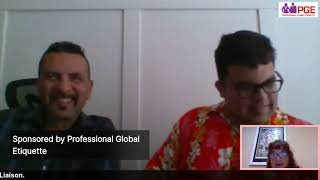
In a live, informal YouTube conversation hosted by Adrienne Barker (MAS), patent attorney Jubin Dana and his son Shamim Dana discuss the fundamentals of the U.S. patent system, including how a patent application is prepared, filed, examined, and issued, the central role of claims in defining patent scope, and the costs involved (attorney fees and USPTO filing fees across three tiers). They compare DIY filing versus professional representation, emphasizing the risks of inadequate prior‑art searches and procedural errors. The dialogue expands to alternative IP protections—trade secrets for long‑lasting formulas and trademarks for brand identification—explaining the separate USPTO trademark office and the importance of early registration. Jubin also describes his work with a minority‑focused legal incubator and SCORE workshops, and his willingness to present on patents. The conversation shifts to personal topics: Shamim’s enthusiasm for comics, Star Wars, and numerous Comic‑Con appearances; anecdotes about meeting Stan Lee, Jack Kirby, and other pop‑culture figures; and family stories about Adrienne’s Barker Animation legacy, art donations, and community involvement (Special Olympics, Best Buddies). Technical glitches and casual banter punctuate the session, but the core content provides practical IP guidance and showcases the intergenerational blend of professional expertise and creative passions.
Chapters
We are live. We should be live on Facebook and LinkedIn. I am Adrienne Barker, Professional Global Etiquette Chapter Chair for SCORE Volusia Flagler, which I absolutely love, and a freelancer, a network marketer, and creative writer. I want to share right now, you are all looking at father and son. Now, Shamim is just busy right now. We got a little echo back. I'll have you put that on mute right now. You are all looking at father and son, so you just gotta either put it on mute or quiet it. Yeah, all right, awesome, Shamim, you're the best. All right, so this is, this is my first father and son, and I'm loving this. So I'm very excited to introduce Jubin Deyda, a patent attorney. Let me see your show of hands, how many people have questions for a patent attorney? Because I can imagine all of us. And my favorite, my new friend who has been helping me set up some amazing, amazing, amazing guests, Shamim Dana. Both of them really are celebrities, and I'm so excited to learn more. So let's start with the father because, you know, seniors, we go first, right, Shamim? So hi, Jubin, nice to meet you. We haven't met before, by the way. This is definitely, you you know, candid, no prep, obviously. I'm so glad you're here. So, so I'm curious, when— so did you, did you study law and knew that you were going into patent to become a patent attorney? Or tell me a little bit about your history and becoming a patent attorney.
Yeah, so I knew going into law school I was going to come out as a patent attorney because one of the requirements for becoming a patent attorney is you got to have a hard science background, otherwise you can't sit for the patent bar. So I knew going in— my background's electrical engineering— so I knew going in, um, I was going to become a patent attorney. And, uh, it was one of those decisions I made based on some of the things I saw around me and some of the needs I saw around me.
So there's so many inventors out there and they all want to like patent what they're making. So how does it work?
Uh, the patent process is simple yet complex. Um, so basically what you do is you prepare a patent application, you file it with the Patent Office. Then after some time passes by, one of the patent examiners at the Patent Office picks up your application and reads through it. It could be as few as 30 pages, as many as 500 pages. and then they respond to what they read to tell you whether you can get a patent or if they have any objections, in which case they'll issue an official action. And then you review the official action and respond back to them. And hopefully through the back and forth process, at the end of it, you'll have an issued patent.
So this is interesting. So when I think of a patent, I think of, you know, growing up in the promotional products industry, and many people have come and they said, I have this new product, and It was kind of, you look at something and you say to yourself, okay, can someone make a simple change? And then that kind of will hurt the patent. And I think I never knew if that was real or if that's kind of what people are saying. So I'm curious about that. Will you say if someone goes to you for a patent and you are looking at it and you're like, oh, this is way too easy for someone to change, can you— then what do you recommend?
So I think the thing to understand is that the patent rights are defined by the claims. And so if anyone's going to go make a change, they would have to do something so that they are not infringing or doing what's in the claim. That's the big thing. So you could have, say, a claim that says A, B, and C. In order for someone not to infringe or get around it, they would have to not do one of those three things. So they would do A and B but not C, you see. So it's, it's all about what's written in the claim.
Wow. So you really— I don't, I don't see how someone could really do it themselves unless— so if you go to do it yourself, is it actually going to end up costing you more time and more money at the end of it?
I, I would definitely say yes. So imagine yourself, uh, having a car and the car breaks down and it's the first time the car broke down. How long would it take you to fix it yourself? Would you even know what to do, as opposed to taking it to someone who fixes cars for a living every day? So that's kind of the thing, you know, you could possibly write your own patent application, but you'll probably make a lot of mistakes, things you shouldn't have done, you'll do, as opposed to giving it to someone who does it on a daily basis, and they know what to do and what the consequences are for making certain decisions along the way.
But also the research. I probably wouldn't be able to research it really fully, so I could be putting in a patent and spending all that time and energy and it already exists somewhere else. Could that be?
Yeah, yeah, that could happen. And that happens to people. They file for a patent and then the patent office examines it, like I said earlier, and then sends you an official action that says, oh, here's someone else's patent or someone else's written document that describes what you're doing. And that's where the patent attorney will come in and really be able to argue what the differences are. For example, if I say I'm going to secure a piece of wood to the wall, well, how do you secure something? You can glue it, you can nail it, you can screw it, you can staple it. So there's all these different ways of doing it, and they're not the same. They're all very different. That's where the patent attorney can come in and present arguments to the Patent Office to distinguish your invention from what the Patent Office is citing.
So how, how much time? So first of all, when do you pay? Are you paying? Are you sending your patent idea with a check?
Well, do you mean when does the inventor pay the patent attorney?
Or sorry, when does the inventor? Yes, exactly. When do you pay the patent attorney?
Yeah, so usually the patent attorneys will estimate how long it takes them to do it time-wise, and then they'll give you their billing rate. So if I tell you it takes me 10 hours to do something and my billing rate is $1 an hour, you know the cost is going to be $10. And then you basically pay that money up front, and then they do the work and send you the product and finalize it with you. Typically, you pay the patent attorney in advance as opposed to after the work is done.
Is there a cost to when I send it in to the Patent Office? Is there a cost for that?
Yes, you also have to pay a filing fee to the Patent Office, and there are 3 tiers, 3 tiers of filing fees. One is for really big corporations, one is for smaller to mid-sized corporation, and one is for individuals. Who have a certain income or below a certain income.
Oh, I like that.
The bigger you are, the more you pay. So it could be as much as $1,800 or $900 or $450, for example.
Wow. So I had— so, okay, so this is interesting. Now let's just say you spend that money. I don't work with an attorney. I'm stubborn. I say I'm going to do it myself. They say they reject it. Are they sending me back my money?
No. Oh, the money— the money you paid was for them to do the search and the examination. So you pay that money up front to the Patent Office so that they can search and examine. If you don't pay the fee, they'll never look at your patent. It'll go— it'll go abandoned.
It just seems to me it doesn't make sense to try to do it yourself. If you spent the time to create something unique, you really should make sure you go to an attorney. And then here's a question everyone asks, and I always get confused with the answer on this one. How long does a patent last?
A patent lasts 20 years from the day you file it, not from the day it becomes a patent, but from the day you file it. So if it takes you 3 years to get it to become a patent, which sometimes it can, You have 17 years left.
Wow. Okay, so what if I love this product and it's called the Sling Grip and it allows you to— goes on your phone and allows you to grip your phone. I happen to love it, right? So if I found this item in the patent office, because it had to be patented, and I look at it and I realize, oh my gosh, next June their patent is going to, I don't know, be closed, would I then kind of keep an eye on that date, kind of like what you do with a URL you wanted to have? And you filed it, you know, like, want to keep that date and then like the next day try to— try to— what do you— what would you do, buy the patent or resubmit a patent under your name?
That's one of the things about a patent. Once your patent expires, the information in the patent becomes public domain, so anyone can go make it. That's really a good example to demonstrate that is in the pharmaceutical industry. You have brand name drugs and then suddenly you have generic drugs that are selling the same thing because the patents expire. Once the drug patent expires, then anyone can go make the patent— the drug that was disclosed in the patent. They can't do anything about it. So it goes from being only owned by one company to all of a sudden becoming public domain.
I— thank you. I'm so sorry, I'm having a little computer issue. I don't know, I mean, if you see it's clicking off, but for some reason I'm clicking off. I apologize for that. It's really not my fault. Spectrum, can you get your act together please as a cable company? So, so this is so interesting because so, so really you only have 20 years to protect your patent and then, and then it's open.
So you only, you only get protection of your idea for 20 years. It takes a year and a half to 3 years to get your patent, but once you get it, it lasts for 20 years from the day you filed it. So who else—
so who's thinking like me, like Kentucky Fried Chicken secret recipe? So maybe it's better not to put it in a patent, because if it really is something that you never wanted to get out, are you better off not having it have a patent?
Yeah, so in that case, what you do is instead of getting a patent, you pursue trade secrets. Oh, you keep the information secret and you protect it. And typically, that's useful for things that you think are going to last for a long time, like the formula for Coca-Cola or the formula for Pepsi. Those are trade secrets, and they've been around for decades. If they had patented the formula, they would have lost the right to do it after the fact.
Got it. I think this may work. I, I will double-check afterwards to see if the, uh, if the live keeps it all. I don't— I'm so sorry that it's doing this. I don't know why. We've had awful internet lately, as Shamim knows, because I couldn't even get on with him.
So do you, do you take care of the trade secrets too?
Is that part of the patent attorney?
Yeah, we can, we can definitely— yeah, we can definitely help people because trade secrets are controlled through contracts and obligations you put on your employees and things like that. That's how you protect trade secrets, by keeping it a secret.
I really cannot understand why someone would try to do it themselves. I understand the saving money, but if— frozen.
Yeah, it's the, uh— oh, here, here you are.
I don't know what is going on. Let me look at my internet.
It's got to be all the weather, the bad weather they've had in your area and all the internet.
Everything. And you know what? I had to get a new phone because T-Mobile— there is a bird, osprey, one of our very special birds that we have here that you cannot touch, is on the, like, sitting on the satellite. So I can't even really use my phone. I had to get a new phone. But anyway, so I love— thank you for sharing this information with me. I know we could go on. And Juben, I asked Juben to to help us with SCORE and to be a workshop presenter on patents, because I think that's really important. Do you also— are trademarks under the patent too? Do you do anything with trademarks, copyright?
Yeah, we do.
We do a lot of things with trademarks, and trademarks are actually in a different space, but it's with the US Trademark Office, and people often refer to it as the US Patent and Trademark Office, but the Trademark Office is different. Trademarks are really designed to help consumers know the origin of goods. So it's basically branding and labeling that trademarks protect. That is something that everybody should do, and it's something that most businesses fail to do until they get a notice from somebody else saying, hey, you're using my mark, stop using it.
Sorry, again, most businesses are not doing or should be doing.
They should be doing it, but they're not. They're not, especially if they're going to sell products under a name.
Yeah, I see that all the time. You know what else I see a lot is, uh, people using programs, and I use Canva too, so people using programs like that, but they're not making sure of the item. So someone's like spends $1,000, buys a logo, and guess what? That's someone else's logo. And they, oh, like, yeah, the internet really has made it difficult. All right, one last question before we get to Shamim. Are you seeing a lot— are people coming to you with their patents and using a 3D printer to kind of show what they're doing? Where—
uh, no, a lot of what we get are hand drawings or drawings on paper because that's still— have to— you have to do it with the patent office.
Oh, so they would send it?
Yeah, you still have to send paper, you have to still have to send drawings to the patent office. They don't take 3D models per se.
Oh, they don't. Okay, very cool. Are you doing a lot of work in your local incubator?
Yeah, we have a, we have an incubator where we are bringing in, uh, you know, newer, younger attorneys and teaching them how to run and have their own law firm as part of our efforts to support minorities. So yeah, we are, uh, doing our own incubator where we're teaching people how to do things.
I think that's fantastic. I love that. We have, uh, our SCORE office is located at the UCF incubator for University of Central Florida. In the, by the airport here in Daytona Beach. It's lovely. So thank you for sure.
Welcome back.
This is crazy. You know what's funny is that I have done this for, oh, I don't even know, almost 18 months. And granted, once in a while I'll get booted out, but I've never had this. I got rid of all my extensions. I've made sure everything is closed down. I don't even know. I, I Crazy. All right, so, so tell us about Shamim. So first of all, Shamim, your only son, child?
Uh, no, he is one of two. Um, I have a younger daughter as well. He has a younger sister.
Yeah.
Oh, you were saying that she does a video. Oh, how sweet. So, so Shamim, tell us about you. When did you, when did you start to— I, you do so many things. So when did Shamim start to like, um, like celebrities and Comic-Cons for as long as I can remember.
That's—
sorry, sorry, Shamim, I don't know how to fix this. Let me see, I don't have— let me make sure I don't have anything else going on. Sorry. Okay, so Shamim, it's okay. Share with us your love. When did you— when would that— when did you find the love for galaxy, Star Wars? Darth Vader.
Star Wars is in 1997, right? Um, and then after that, um, Marvel came in in 2002 with Spider-Man. And then sports Uh, when, when is sports?
Oh, even before Star Wars. I remember you, uh, Michael Jordan when you were little and you were playing basketball.
And actually, I think when, when did the whole Babe Ruth start? It was on—
oh, I wish I could remember.
2005.
I wish I could remember.
From Sandlot.
Love, love, love that movie Sandlot and saw some of the things in there.
And then that's how know about Babe Ruth from that movie, right? And then welcome back again.
Sorry, Shamim. Does it— what does it do on the screen? Does it just block it out on the screen?
No, it just says host is rejoined.
Oh, funny, funny.
Yeah, and then Dad is a huge Yankee fan.
Oh my God, Mom in heaven, did you hear that? My mom came from the Coney Island area. I was born in Connecticut, so Go Yankees! By the way, Jerry Cornell wrote, love the Star Wars franchise. All right, so Jerry and Shamim, I, I never— so very excited. Shamim has us interviewing, um, in another week or so, maybe 2 weeks, C. Andrew Nelson, who played Darth Vader. I have to be honest with you.
Yeah, yeah, yeah, Andrew.
Yeah.
Yeah, Jerry will be— oh, you're back again.
I don't know what's going on. So, Shamim, I'm gonna tell you something. I, I really think that you have to be very intelligent to watch Star Wars, and I actually don't think I'm smart enough to watch Star Wars. I don't know what it is. I don't— I, I've tried. What do you think if, like, for someone like myself? Because you, you're so cute. I love that you wrote to me. You're like, did you see that, Adrian? And I'm like No, I haven't. Shamim, is it all about good and evil? What attracted you to the Star Wars galaxy?
Um, what was that about, the Star Wars galaxy?
Yeah, what did— what did— what made you first like Star Wars?
What were you interested in? The, the, um, good versus evil, the sword fighting, and the— yeah, um, and oh, and cheery— Cornell is another good person for you to have on. He is a— he's a— he does the Theme Parkology Disney documentary series, like Pirates of the Caribbean. Yeah, yeah, the documentary series of all the attractions. And he and Andrew Nelson is going to have a new series coming out called Heroes of Extinction about— it's all about Andrew Nelson is the narrator of that series. It's pretty fun. It's going to be— they're going to be coming out, coming to MouseCon and for a panel, and they're going to be there promoting it.
That— okay, that sounds amazing. Hey, Shamim, how many Comic-Cons have you gone to?
Oh God, um, started with, um, Steve Wyatt's.
How many do you think you went to total, like if you add them all up?
Uh, about 7.
Way more than 7. You've done 7 in 1 year.
Um, Super Con, um, once Big Wow 2010, 11.
Oh my God, I would say what, in the past 10 years you've been to at least 2 a year?
San Diego Comic-Con, Phoenix Comic-Con about 3 times, um, MouseCon 3 times, um, and, uh So easily 20.
All right, wait, do you have all your badges? Do you have all your— okay, you have to show me your lanyards. You have all your lanyards? All right, send me a picture of your lanyard.
But do you have a picture of it?
Oh, you don't have to go now, Shamim. Don't leave now, it's okay. It has the best clothing ever. I mean, Shamim, what is up with your shirts? You are so wonderful looking. I just love them all. Tell me, you have a love for Hawaiian shirts?
Yeah, that was because of Weird Al Yankovic and Robin Williams and Bill Morrison.
And what's your favorite Hawaiian shirt you got? What's the coolest?
This one and the Pixar one from Pixar Fest at Disneyland.
Oh yeah, he has one that has all the Pixar type of animated characters. It's awesome.
Makes you feel good, by the way, when you see it. I don't know if you realize that. So when you're walking around and people see that, you're like literally giving them a little bit of like a sunshiny special day. It's really a gift wearing something like that. I am so drab. I got to take after you. You are so colorful and bright with your personality. I love you, Shameem. I'm so glad we met. Oh wait, does your dad know how we met?
No, actually, her father and her late mother created this, um, uh, art gallery in Connecticut, and, uh, her father owns the Barker Animation, um, cartoon, uh, gallery and Barker Family Museum. They have almost 80,000 different, um, toy collectors. Do you, do you have a Batmobile from 1966?
I, you know, I can't say for sure. I would probably say yes. My dad made sure every— all 80,000 of those toys have been documented and up in Connecticut. I don't know the answer to that one. I would assume, but I'm not sure. But I think, Juben, that you have to take your son and your daughter-in-law and your grandchild and your daughter to Connecticut to go back to a Yankees game.
I think, uh, I think that's a great plan. I, I just want to wait for all this virus stuff to settle down, but that's a great plan. It's a good vacation plan.
Yes. So, and, and there's, um, yeah, the art gallery, um, is— I think your— is, um, your dad's company all are trademarked and everything, Andrea?
Yes, yes, the logo is definitely Barker Animation. My— yes, yes, my dad was very careful with that.
So how long— he's been in business for longer than I've been alive.
Yes, my dad. So my parents passed. My dad worked till the day he passed. He was 90 years old. He started the business in 1955 and actually showed me My dad would love you. I think you share a lot of the same things. My dad loved products, so he loved anything with a logo on it. And back in the day, he was known for having the key to the state of Connecticut. So if you went to Hartford, it was called the Whale of a State. You would get items with the whale. So he would literally go to like the city, you know, centers and say, we've got products for you to sell, to sell souvenirs or to give away. And that's how my father started it. Trophies and awards, political buttons, all of that. So, but my parents have passed and I miss them terribly. They would have got a kick out of my doing the show, uh, or doing this because it's so much fun. And they would have enjoyed meeting you. My mom would have loved meeting your, um, your dad too, and, and learning about the patents because I think that's so cool. And so I want to hear a little bit about, uh, Special Olympics because that's a lot of work. What What was your— what do you call it? What, what was— what did you excel in? I don't— I'm not even sure how to ask you the right question.
I started Special Olympics in 2005 in middle school. I did track and field, softball throw, 50-meter dash. And then I played Special Olympics basketball, uh, soccer, um, soccer.
And did you do swimming?
Uh, swimming, bowling. Um, Dad's also was a soccer coach too, Andrea.
You know what, I look at your dad and I see all the years that he put in, all the time working and then making sure he could be there for all of your events. I mean, we forget, right? But Juben, it's a lot of work, right? You were really—
I mean, oh yeah, being a parent to someone that likes to be active and do all these things, it's a lot of work.
Yeah. And, um, and Dad was with me when we met Stan Lee for the first time, actually.
Oh, Stan Lee!
You were Phoenix Comic-Con 2019.
2014, um, was it 19?
No, no, 24— 2014 at Phoenix Comic-Con. That line, Dad was, I believe, how many in line?
15? We were, yeah, we were 15th in line, front of the line.
And you— and there were like swarms of people taking photos and all that stuff, and we had to wait about— the signing was at— what was that? 11 o'clock signing? I don't remember. 9 o'clock signing. So we had to wait a while, about 3 hours, 3 or 3 hours wait. And, and on how Andrea's dad did it is whenever a celebrity passed away, she lowers the price and now hires it to honor the celebrity, right, Andrea?
Exactly. My dad always said, what, you know, when an artist passes, you lower the price to give everyone an opportunity. You don't just try to raise the price. Don't make money off the death of, of an artist. Or really anyone. And back in— yeah, that made my dad— that was probably the difference. That's why my dad, my dad really cared. He wanted to get art on everyone's walls. And September 11th was, you know, it was hard for all of us coming from Connecticut, but my dad really felt like he would, you know, for him, because art was his joy— the world is a dull place without art is what my dad would say— he felt like all these children, all these homes were missing artwork, like everything. So He worked very hard to donate artwork. And then actually, my dad took a beautiful piece of artwork from Melanie Taylor Kent, who's actually— she's behind me. She did the Statue of Liberty, and it was the 1986 rededication, uh, with the Ayatollah. And my dad— beautiful piece of artwork valued at $1,000. My dad framed them all, did a plate, and gave them to most of, like, as many fire departments and public areas that he could in the state of New York and Connecticut and Florida, uh, to show his appreciation to all of the first responders for September 11th. And throughout, they continue to do so much work for us. I always love to share that story of my dad always thinking about other people and loving art. So Stan Lee really was signing very well. It's interesting, you could see Shameem, and correct me if I'm wrong, but from what I could tell, you could really see as Stan Lee was getting older, his signature was getting less defined.
You saw that when he signed your book? Yeah, uh, Dad has a book signed by Jack Kirby and now Stan Lee as well.
Uh, who's Jack Kirby?
Jack Kirby is the co-writer of, um, the Thor— it's like the first issue where Thor was introduced, signed by Jack and Stan. Now that, um, that's— that's one thing signed by Stan Lee. That, that got graded at a 7.0.
Wow.
Wow.
You know who I got to meet? Alan Bellman. Did you ever hear of Alan Bellman?
No.
There's so many hidden treasures out there, so many different people that have been involved. And Alan Bellman is very interesting. He did pass, sorry for the family. He was known for Captain America, and so he has a very interesting story. I'll send you, um, his information, Shamim. And when he— that's okay.
That's okay.
I love Shabim. When he— when Alan Bellman— so Alan Bellman, when he left, and his story is so interesting, and he moved to Florida with his beautiful wife, a young man approached him and, and had kept everything. He had everything of Alan Bellman. Alan Bellman had left and never took any of his work. And so it took this young dentist actually, who had been a fan, to approach him and say, I have all of this. And Alan's like, oh my God, I don't have any of this. And so a book was written. It was a great book and great story, but it's, um, I'm not, you know, again, I, you know, I gotta learn how to really, uh, like the, the franchise. Like, I'm not— I shouldn't say it that way. Of course I love the one, um, the with Ryan. What are those, the, the movies with Ryan? Um, oh my gosh, I can't even think. Ryan— oh, forget it. There Like, I just never been a huge, huge fan of watching Marvel. If I have to sit down and watch something, I probably wouldn't, but I need to learn how to. So are you— so let's see what we— what do we have here?
Oh, Gary was asking about his medals from Special Olympics.
Oh, this one's very lovely. This one is, uh, one gold What, where is it? Yeah, one gold, um, one, two gold, beautiful, two gold, uh, one and one bronze.
Oh, who do you have a favorite Olympic Olympian?
Um, and here's the one that me and Dad and, and my family actually went to, which is the, the Best Buddies organization, um, uh, the Best Buddies Challenge in 2013. Dad was there, mom was there, and Sasha was there. It's like, um, it was for my work, so we, um, we went, um, to— what was that?
Let me see.
It was Huskasser in California. And can't— yeah, and, and then so what they do was, um, we volunteered there and we did the, um, the cycling. Yeah, uh, and, and we were like, um, we, we were like doing, um, they did like, um, best buddy and celebrity team up, so I happened to get, um, Marsha Brady.
Wait, what?
Marsha Brady, um, Maureen McCormick.
Oh my God, I love, love her.
Yeah, she was my, um, a buddy for the, the walk, for the challenge. And then there I met, um, Phony Taylor, uh, Mini Me, uh The Eagles, the band The Eagles, Don Felder and John Hanley. And then after that, so that was like the evening, the Eagles played and I got to sit with the head of Fox table at the Fox Studios. And, um, and then, yeah, and when Dad worked at Visa, he, um, um, Michael Phelps came. Oh, for some kind of, um, event. What was that thing?
He just came to meet people at Visa, and we— yeah, so signed autographs and things like that.
So I just want to say, I mean I want to clear this up. It's not that you got to meet them, they got to meet you. They all got the pleasure of meeting you. They're the lucky ones. You— they— that— like, so when I hear you say that, I think, but they're so lucky they had a chance. You're just as wonderful as any of them are, so just remember that.
Yeah. And, um, and also Dad has met Arnold Schwarzenegger, uh, when he was governor.
Yeah. Oh, let's hear your dad's best Arnold Schwarzenegger. Come on, Drew, but I know you've practiced it. Let's hear it.
No, no, I can't do it.
The only thing I can do is from the movie Terminator.
No, no, I mean, no, how— no, no, she wants to know how you—
no, she wants me to do an impersonation.
Of course I want you to do it. Come on. I don't even know what he said in the—
what did he say? The all be back.
There we go.
Actually, um, actually, um, Dad Owner's not that tall.
Wait, what?
He's not tall at all.
Oh, he's not?
No, he's, uh, he's like 5'8".
Oh, oh, taller than Tom Cruise?
A little bit taller than Tom Cruise, but he's not that tall.
Oh, I love it, I love it. Yep, TV, you never know.
Yeah, from the movies it looks like, you know, he's really tall, but it's, uh, a lot of the scenes he's wearing elevated shoes so that it makes him taller.
And then, um, Dad and I and my family went to the last Blockbuster, uh, on my 26th birthday. Um, we met the, the general manager, the— her son.
Oh, the last Blockbuster on Earth, because you remember the franchise Blockbuster movies?
Of course I do. I watched the video, the documentary. It's amazing.
There's now only one left in the world, and it's, uh, we went to it only 3 hours Where?
I'm embarrassed to say that I actually owed a lot. I was very bad. I never could return on time. My children never— I, I— how many times did I go up there and open it up and there was never a video, or the video wasn't rewound? And I remember thinking, even, even back then, I remember thinking, how can you charge $100 for like a tape? Like, it didn't make sense to me. But you know what, I think it's a good story about business and how they were buying it and, you know, the cost of doing business. And so There is a true cost of doing business, and we all have to know that. I wish they taught us a little bit more, but I really— they probably had a picture of me like, do not let her in the doors anymore, she doesn't know how to return tapes.
Oh, um, and Joy, Dad has a story about that same thing with Blockbuster.
Let me hear. He—
oh, it's—
never mind.
This was back in '02. August of 2002, I had just purchased a pocket knife. In fact, it's, it's this pocket knife right here. It's, it's my pocket knife that I carry in my pocket. And I went into the store and I was telling them that, you know, I had returned the movies, look on your shelf, it wasn't checked in. And while I was talking to them, I had my knife out and I was just playing with it like this. I was just opening it and closing it because it was a new toy. And apparently the workers in Blockbuster felt threatened. So they called the police and said some guy came in here and pulled a knife on us. And, and, and then I went to the other Blockbuster and the manager at the other Blockbuster knew me and he goes, guess what happened at our other Blockbuster?
So what?
Someone just went in and pulled a knife on the employee. Threatening them if they didn't take off the late fees. And I said, that is absurd. Why would someone do that over $2, $3 late fee?
What was that?
It ended up being me. And then, you know, it all was defused that, you know, I was just playing with my pocket knife that I just purchased. I wasn't—
So what movie was that anyway? Like, I don't remember. Like, Point Blank, right?
I have no idea. Yeah.
That's some story from Blockbuster. And then, um, Dad is normally the one who goes to conventions with me as like a congoer. Yeah, the first con you went to was Phoenix, um, Big Wow Steve Weiss Con. Yeah, that was, um, favorite person I met.
Um, yeah, I, I don't remember the first con I went to, but I enjoy










