Guest Elizabeth Pampalone
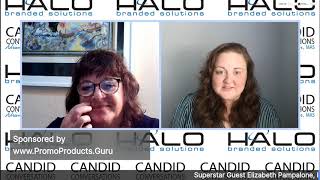
In this candid interview, host Adrienne Barker, MAS, speaks with Elizabeth Pampalone, founder of Absolute Marketing, about her extensive work with SCORE, where she teaches marketing classes and volunteers on the administrative side. Elizabeth clarifies the often‑confused distinction between branding (the soul and consistent visual identity of a business) and marketing (the collection of tactics such as website, social media, email, and blogging). She emphasizes the power of consistent brand photography, using a signature green color and personal style to make her brand instantly recognizable. The conversation moves to the strategic use of promotional products for client retention, highlighting a creative COVID‑era gift box that included green tea, soap, and a novelty toilet‑paper wipe. Elizabeth shares her approach to niche marketing—identifying the ideal client, speaking directly to that audience, and maintaining a focused message—while noting that niche work does not limit growth. She discusses the decision to place a faith statement on her website, describing how it builds trust and filters potential clients. The interview also covers how prospects can engage with her services via her website’s free community, e‑books, e‑courses, and 15‑minute discovery calls, and mentions her upcoming book, co‑written with her husband, slated for release in January. Throughout, Elizabeth stresses the importance of business owners knowing enough to evaluate outsourced work and maintain oversight, using analogies from personal experience and well‑known figures like Steve Jobs. The dialogue ends with mutual appreciation and a reminder to check out her online community.
Chapters
Okay, here we go. Oh, and we are, we are now live. Who does Adrian have in the studio? Okay, so Elizabeth, and your last name, I'm gonna try it if you don't mind. Pamplone.
That's it.
I got it right.
Yeah, that's it.
So I was telling Elizabeth as I was going through Elizabeth with Absolute Marketing, so I want to make sure I got the website correctly. International speaker. So successful entrepreneur and expert marketer, which is exciting because I love marketing, getabsolutemarketing.com. But we share a past— a passion, and I saw it on your Facebook page and I love it. I mean, on your website, and it is SCORE.
Yeah, yeah, I've been a volunteer SCORE for going on a decade now.
Tell me what you do for SCORE.
So I've taught a lot of their classes, I teach a lot of on marketing for them, I've done volunteering with the organization just through the behind the scenes, the administrative side of things, marketing SCORE themselves, working on, you know, large events, things like that. But mostly I do the teaching. I'm actually in the middle of a 6-week series right now on marketing with them.
Ooh, and then, okay, so are you, are you with your local SCORE or the national?
I do work with the local chapter and then a lot of my courses get taken to other chapters. So, you know, they'll, like right now we're all doing everything virtually. So I'm teaching in Jacksonville, you know, at my local location, but it's being broadcast to a bunch of other chapters throughout the state. So that's really exciting.
And guess what other state? So I am in Daytona Beach. Oh my gosh, let me take a sip of water. Candidly. So I am in Daytona Beach. I'm the vice president for SCORE and Volusia Flagler. And so we have Bill, who is with us and we promote you and the SCORE workshop. So how funny is that? I never really put the two and two together, but this is fantastic. And so now we're really even more excited to promote you. But we love promoting from, you know, out of the Jacksonville area. Actually, I had Barbara Trapp Lydia came and spoke and she is an amazing organizer.
Yeah, so actually my class this time. So that's awesome.
Oh, it is such a small world. My mom used to say the reputation is all you have, Adrian, because you just— it's a small world. And that was before the internet and what they really would have considered small.
I know, right?
Crazy. So I grew up in the promotional products business. So I love marketing and I love also with SCORE. So I also do the workshops, by the way. That's why I, you know, I help to find speakers to do our workshops. Or we hook on and make sure that we can promote the ones that are done in the local market area.
Yeah.
I love marketing. People get confused. Let's, let's, let's answer that question between marketing and branding. Cause even the more you say it, the more people still get confused. So let's hear your, your definition.
So I believe that marketing is a component, like a lot of components together as one piece. And that's what makes up marketing. So I believe that marketing is brand, website, social media, email marketing, and blogging. And that all together is marketing. A lot of people say, oh well, I've got a website, that's good, or I got a logo, I'm good, or I just use social media, I don't have any of that other stuff, that's my marketing. And really, they're not marketing, they're just throwing stuff out there, spaghetti at the wall, hoping it sticks. Um, but branding to me is really the the soul of a business. It's the essence of a business. So if we can get that right first off the bat, then all the marketing just falls into place.
Okay, that makes really good sense. And a brand— so, you know, I, I like to think of the old-fashioned— they had the cow, they had to brand the cow, and that's how the farmers knew whose cow is who. And then they could say, hey, that sexy cow over there that's brown and white, that has brown milk, that's my cow. Look at the brand. Yeah. But these people really do get confused with that whole thing with marketing. And my parents years ago, they— when internet came out, uh, first there was a conversation like, well, internet, you know, social media doesn't work. But then I was like, well, can you just call Kylie Jenner and tell her that social media doesn't work? It really does work, doesn't it?
It does, and I— but I think you do have to look at it in context. So a lot of people will say, well, social media is the only thing, it's the way, right? But I believe that social media is a piece of a whole, it's a part of a whole. And so if you use it as a part of your strategy, it'll do really well for you. Because Kylie doesn't just do social media, she does a lot of other things too. She's on the TV show, she's, you know, she's got all these other pieces that she's using, um, that, that are incorporated with social media. So we have to also look at it and say, okay, well, we don't have a million dollars to have a TV show, we don't have a billion dollars to put, you know, our face on Revlon or whatever. So we're gonna have to do it with other things. And we can do that with social, with, um, email marketing, blogging. Those are— blogging is free most of the time, email marketing is free, um, and then you've got your website, which you might pay a little bit for, and then your brand. So if you've got all 5 of those pieces, I feel like you can have an absolutely awesome marketing strategy and get yourself out there and get clients, you know, just because they'll come to you because they'll understand what you do.
So tell me about your brand. So you've got some special things going on, your beautiful hair. So tell me about how you, how you brand everything, because I see your— and your pictures are a lot of fun.
Yeah, so thank you. Um, I actually love brand photography. I think it's one of the most important pieces, especially if you have a personal brand like mine is. Um, it's very much about— not about me, but I'm, I'm the face, right? I'm the brand. I am the, the logo, if you will. Um, and so with my brand, I try make sure it's cohesive and coherent and consistent. Consistency is my main thing. Like, oh my gosh, consistency. You'll hear me say that a million times. Because when I go and speak, I'm wearing green earrings, I'm wearing a green shirt right now. I'm on video, I know I'm going to be on video. So I am speaking to you as a podcast, if I'm speaking, you know, on a Zoom webinar, if I'm speaking in person, I'm wearing green because when I did my photos, I wore that green dress. It just happened to be amazing. It just, I have a bunch of other photos too. I don't use them very often because I'm not wearing green. And so if I, when I saw that, I was like, this is my brand. Like this is what's resonating, not only with me, but also I know with my clients. And when I started putting those photos out, it just became the thing. Like I know this is my brand. And so once I started using that as the main piece, then I started making sure that everything else was consistently following that. All my social posts have that green in them. All of my, my whole website is using that green. I have accent colors too, but focusing on that brand and really making sure that when you see something out there about me, when you see me on a podcast, when you see a picture of me somewhere, you know, promotional piece, then you're going to know that it's me because I'm wearing green, red hair, and I've got the same message. So I've gone on a lot of podcasts. I'm actually— this isn't— I'm in the 90s right now. So this is 90-something. I'm going for 100 this year. And so I'm almost there, I'm quite close, but when I've done that, I've gotten bored with myself a little because I say the same thing over and over, but that's my message and I'm supposed to get bored with it. I'm the one who's supposed to say, "Okay, Elizabeth, I've heard you say this enough times," but what it's going to do for everyone else is to help them to understand I don't change. I have the same message no matter what you ask me, no matter what we're talking about. I was on a podcast where The guy talked about, you know, movies and I related it to marketing. I brought it back around to marketing and he was so happy about that. He was like, oh my gosh, that's so true. So, you know, having that same message, having that brand, which is like, I believe it's the brand, it's the logo, it's the colors, it's the message that you're giving, that mission vision, the why, who you're serving, all of that stuff is part of the brand. And if you can keep that really tight, really close and not let it get wily and, you know, hairy. Then you can really create yourself a great solid piece that you now can use in all those other pieces of marketing, including your website, social, email marketing, and blogging.
So really, Absolutely, that's how you came up with the name Absolute?
Yes, and I, I believe that it's like the final piece. It's all you need. It's the absolute piece. It's not relative, it's not, you know, this or that. It's absolutely what you need. That's it. You don't need anything else. I know a lot of people say, well, you need this thing, you need that thing. For me and the clients that I work with, that's what you need. That's it. You need those 5 pieces. And if you got those 5 pieces right, then everything else is just gravy on top of that.
I love it.
I love it.
So I don't know if you know this. So I actually work for Halo Branded Solutions as an account executive. So senior brand marketing. I have 35 years in the industry and achieved my lifetime Advertising Specialist designation, which I use proudly because it was a lot of hours and a lot of time and a lot of energy and a commitment. So tell me, have you used promotional products before in your clients' marketing campaigns?
I have, and I just did something this summer, which was right at the beginning of COVID actually. So I was guessing the spring, and I wanted to make sure that my clients knew that I was still thinking about them even though everything just kind of stopped, right? Like, we just— I wasn't doing events, they weren't coming to the events, everyone didn't really know what to do at that point. And I worked with a promotional products group in Orlando, and I said, I want to send a client gift out. I need to send something unique, different, interesting. Um, and we did some pens, so that was the first piece. But the second thing we did was I went and sourced, and I sourced a couple things. So they kind of pulled some of the pieces together But I sourced a green tea thing. She— the girl helped me source some green soap. So now we're pulling together like this relaxation, like, okay, you just, just chillax. And then I found— and this was something I told her, I was like, I don't care what else we put in this box for these clients, they have to have this piece in it. I found a green package that had one little personal wipe in it, like a piece of toilet paper essentially. So it was like one of those little personal things you put in your purse or something, you know, in case you need it and you don't have like toilet paper or wherever you might happen to be. So it's just this one little tiny package of moistened toilet paper in a little green package. And I thought, I have to send this because no one can find toilet paper. No one, you know, everything is running out. And so I sent that out to everybody. I got so many responses just from clients that I already had. And I feel like using promotional products for your clients that you already have is so important. You know, a lot of people say, oh, well, I gotta buy 1,000 of something so that I can give it away like candy. I don't believe that at all. I think if you find something so unique and so interesting, then you can use that to basically do— um, one of my colleagues, she's amazing, she has a whole program on this, so she's, she's in promotional products. And I totally agree with her. She talks about like re— kind of like retargeting your own audience that you already have. Like you've already got them, but like keeping them like engaged, you know, like just keep going back to them and saying, hey, I want to, I want to share this with you. I want to give you this, this thing that I found and it has your logo on it and your colors and all that stuff. But I think that that's so important. And she has a whole program on it. Um, she calls it, uh, what does she call it? It's on her website. Reach to Retention. And I thought that was amazing because she reaches them and then she helps you retain them. And I think that's awesome. So I believe in those kind of, those kind of programs and that kind of stuff because, you know, you want to utilize promotional products not only to get the word out there, but also to help, you know, help those clients that are already clients know that, hey, I care about you. Like, I'm thinking about you and your needs and what I can do to help you along the way.
I love that. We do love our self-promotions and, and putting our logo on merchandise. We also love just getting gifts and hearing about it. But I think so And the thing with marketing, and we'll just take like being a promotional products distributor, you know, some people don't really have a lot of experience, so they kind of become an order taker. So you're working with someone, you tell them what you want and they provide that. I love that you kind of knew already what you were looking for. And then did the distributor kit it for you, put it all together?
Yes. Yeah, they did, which was awesome. And I know that when, when I've worked with Tracy here, the one who has the program, Her program is a little different, so it's still about your, your current clients, but she talks about top 20%, you know, this, they get this, and top 10% gets this, and top like 3% gets this. So it's really, really more in depth. But this was kind of just an initial, hey, I want to do something while everything's in, in chaos, you know, and just throw out something really cool. And they, they really helped me bring all the pieces together, um, because I knew, I knew I needed that, that little square toilet paper in there. That's so funny. Make it fun, you know. And that's something too. Like, I feel like a lot of times we get talked about marketing or even promotional products, it gets like, okay, now it's serious. Like, what kind of pen do you want? You know, like, it's just kind of that blah, we got to be serious about this, we're spending money. But I feel like it should be definitely fun, and you should use your personality or things you would normally do in that. Like, I sent out toilet paper to all my clients. They thought it was a riot, but I also sent them some tea to calm them down. And some soap because everybody was washing their hands a million times a day. So, you know, it's just little things like that that you're thinking about, not only current things that are happening with your clients, but also, you know, them as people too.
I love that. Can we talk about niche marketing? 'Cause I really think that that's important too. And I know for myself, you know, I started out, so with, so actually being home and having COVID, I started Candid Conversations just 'cause I wanted to show off my friends, like literally. And I felt people needed conversations and wanting people to feel like they were the fly on the wall, not the fly on the forehead. But like, so I, I started Barker Hotel Products and I thought, okay, I'll niche to hotels or Barker Healthcare Products and I'll niche to healthcare and the PPE and all of that. Tell me about like, what, what is your advice on niche marketing to your clients when you're talking about marketing?
Well, I really look at— I want you to think of the most favorite, like the best client you've ever had in your life. Like that client that was just so easy to work with. They were— their, their industry was amazing. It was very— you knew enough about it to like just really get in there and really help them. So I talk about that first because if you've already worked with a client like that, we've all had like the bad clients that were like, no, I'm not taking them again. Not doing that, not going there. But then we've had those clients who were like, these people, like this group, right, this industry, this type of person, um, this demographic, whatever it was, those are my people. And so once you find that, then it's just about speaking to them. And so really fixing down, you know, what your message is to them, not your message to them and then some other people. Oh, and then those people too. But your message to them. And I believe that your website, your messaging, your branding, your, your social media should be speaking to a person. It should be like we're having a conversation right now. That's what everything you market, all of your marketing should be speaking to a person because other people will find you from that. My marketing is very geared towards women. It's very feminine. You know, it has that flair to it. A lot of women do come to me. I have a lot of women clients and also I get male clients. And I had a client the other day, he's, um, he's a car parts manufacturer. And I was like, okay, we can certainly work together. I'm not going to turn you away. But it was just surprising to me that he found me through a class or through social media posts, something I don't remember. But it was something where he was like, I get what you're doing. I understand this. It makes sense to me. And so even though my marketing is to women mostly, my target market is women over like 45 and over who are starting businesses or have businesses. That's my target. Those are the people that just seem to gravitate towards me, which is great. Um, and I love working with them, but somehow these male clients find me and I've had a lot of male clients over the years and it's because your message will resonate with people that you're not even thinking about. But the niche marketing really just helps you to focus and say, okay, I am going to talk to this person. And yeah, other people might hear me talking and go, oh, hey, I'm interested in that too. But you're really just giving yourself enough to focus. And also, when you tell other people about what you do, you say, I work with coaches and, you know, practitioners, mental health practitioners or whatever, right? So you're saying these are the people I work with, this is my little small space. There's so many of them out there, you're never going to run out of clients. And it'll help you get in front of them easier because now you know exactly who you're trying to get in front of. So you'll go into the right groups, you'll speak to the right organizations and things like that. Then when people hear about you, they'll say, oh, Elizabeth does this, right? Or Elizabeth works with these people. And that just gives them an easy, quick thing to tell other people for that word of mouth marketing as well. So as long as, if you're niching down, don't feel like it's limiting you. I always, this is one of my, one of my slides. Don't feel like it's limiting you. Focusing everyone else and you're not limiting anything.
So, oh, red hat, Elizabeth. I love it. I love it. So I have a— okay, so first of all, I have a couple questions, like a million and a half. I don't want to forget this one though. I love that you put your faith on your website, and I love that you wrote that people— so tell me, what would that was like? Did you— were you concerned and then you really did have some friends or people say you shouldn't do that, and then your response to that.
I did. I had a lot of people tell me I shouldn't put my faith statement on my website. I had people tell me that when it was up there that I should take it down. And that was something for me that I kind of was forced into a little bit, and I wasn't really prepared at the time. This was several years ago, and I've rewritten since then, you know, and adjusted it. But this was probably going on maybe 10 years ago. And I was working with an organization, I was writing blogs for them and I was writing about— I've actually been— went through a divorce at the age of 20 and it was very devastating divorce for me, it was, you know, I was very naive at the time, I didn't really know what was happening and it was just very interesting and I lost everything, I had to move back in with my parents, it was insane. That's what brought me to this point, it's what helped me build my business eventually and so I was writing about this, you know, 4 or 5 years after the fact, I'm writing up, you know, for other women to help encourage them And when I was writing for the blog, they said, "Oh, you have to have a faith statement on your website." And now all the other bloggers, they did not have businesses. They were not— they were just mommy blogger type people, you know, they were just doing it for fun, doing it on the side, or their businesses were faith-based, you know, they were doing coaching or therapy or whatever. So I said, "I don't know if I can do that, guys." Like, my business at the time was a computer repair company and My clients were not, you know, not necessarily Christians, but they weren't necessarily not Christians, right? So there wasn't like— they were just kind of, you know, just everyday people, normal people. And we didn't really talk about that. We didn't talk about politics. I tried to leave all that out. And they said, well, you have to have this on there if you're going to be on our site. And I knew I wanted to write for the blog, and so I said, fine, I'll write something. And I just kind of whipped it up, wrote a couple sentences, and put it up there. And since then, and I, like I said, I've adjusted it since then, I've rewritten it, but since that time, and I've never taken it down since then, even though I stopped writing for the blog only after like a couple months, like it didn't last very long, I left it because I had people come to me in that time period and say, I read your face statement and I'm working with you because of it. I've never had anybody say, I read your face statement, I'm not going to work with you because of it. They just don't even bother, right? They just walk away and I'll never even know they were there, which is fine because that means I'm not the right person for them. But for having it on there, I've had so many people come to me and say, you were brave enough to put that out there, I'm gonna put one on my site now. Or you were brave enough to put that out there, I now feel more connected to you. I was on the fence between you and this person, or you and something else, and now I'm going to work with you because I know a little more about you. And it makes And I feel like when people know you, you have to know, like, and trust you, right? Those are the 3 things. And if they know you, they, they might read your bio, they might see a video of you. Now they have to like you. Okay, good personality, she's all right. And then they have to trust you. And I think that this gives a little bit more of that element of trust. Not that there aren't good and bad Christians out there, and people can lie and say whatever they want, but it does say something to— when you put your faith out there and you say, this is who I am, then you're really marketing, you know, niche in a way. You're saying, if you're cool with this, then that's great. If you're not cool with it, that's okay too. You know, like, we can work together or not. It's up to you.
I like that. I, I actually think that's great. And I'm chairwoman of Healthy Souls International, a disaster relief organization. And, you know, part of the whole love of it— our founder, Maria Davila, is, uh, is, uh, faith-based. And so We've had that discussion, and I personally want to just do whatever makes her happy. So I— okay, are you a one-woman team?
No, no, and yes. Um, I— when I work with clients one-on-one, then it's just me. Um, but I do have a small team that I've built over the years. We have 2 people and we have a copywriter. Um, and so I have 2 people that work with me on the implementation of some of the stuff and creating, you know, graphics and things like that. And then I have a person that does copywriting with me as well. So, so we got 2 to 3 people depending on the project. But yeah, mostly it's me. Um, and this is my 13th year, so, so far so good.
Okay, so here, okay, so I want to ask this question like outright because I see it when I belong to different women's group and I've noticed that there are a lot of people out there that say they're marketing And they're getting clients saying they're marketing because they either watched a YouTube video or taken a course. So they paid $99 on how to be in marketing, and then they'll take that course. And then every step of the way, they're really like YouTube videoing it. They really don't know how to do a website or really how to market, or even for themselves, they'll put something else or create like a store. An e-commerce store, but the pictures are awful and nothing's really exciting about it. And then they complain that they don't have any business. And then women are out there going, we could help you, and they're like, on top. And so, like, how do people separate when they're looking for someone like you? They want a really great marketer, but maybe they're not in the business world. There's someone that wants to market whatever it is that they have that they're doing, but maybe they're not like a corporate company. How do they make sure that they actually have someone that knows what they're doing? And is that a crazy question, or you see it too?
I see this all the time. It's not a crazy question at all. And I think that, you know, I heard from a woman today actually, which just took me aback completely because I was not prepared for her answer. Um, I was giving her some information, I was proposing some stuff to her, and she goes, I'm done. And I was like, okay, okay. Did something happen? Did I say something wrong? And she goes, I'm just done with this whole thing. I don't want to touch it. I don't want to deal with it. And I said, well, you know, whether you work with me or anybody, you're gonna have to tell them like what you need, what you want. It's going to be the same either way. And she goes, I'm just done. I can't work with you. And she just hung up. Like, basically that was it. And I was just taken such aback because she wanted to hand it off to somebody. And I totally understand outsourcing. I, I agree with outsourcing. I outsource in some cases. But then at the same time, she wanted someone to do it exactly the way she wanted it, which I totally agree with as well. You need to have, you know, somebody who's going to understand what you need and help you to get from point A to point B. But she didn't want to deal with it. She didn't want to focus on it and, and do the work, right? And she owned an organization. That's even harder, you know, when you have like business and an organization, you're trying to do both. But when you, when it's your business, when it's your organization, you have to know a little bit, right? You have to be a little bit knowledgeable. So I recommend people to take SCORE classes, to find some free resources. It doesn't mean that they're going to have to build their own website, but they should know a little bit about how to build a website, a little bit about what that means so that when they, when someone does talk to them and say, oh, flashy, flashy, this and this, I can do these things. And then they can say to them, so you're going to get me on the first page of Google? And the person's like, yes, yes, of course, of course. You know, like, look over there, don't look at the man behind the curtain. And, and then the person says, okay, but getting on the first page of Google is not my priority. Well, we can do it in 10 days, you know, I don't know, whatever. They make up something, and that person can now question the person they're interviewing or talking with because it doesn't sound right because they've heard the right information from other people. So I think that's part of it is you need to put in a little bit of work as a business owner, as an organization owner, and say, I kind of know a little bit enough. I'm not going to be able to like sit there and build your whole website, right, as a, you know, regular person, as a person running a business, but I can at least understand that when you're speaking to me, it makes normal sense, right? It doesn't have to be the technical stuff, but it makes normal sense that, oh yeah, that makes sense, I would do that, or we should do that. And I also think that people try and find too many opinions. So if you come to my classes, I'm going to say these things, right? I'm going to talk about my 5 steps. I'm going to talk about the 5 days that I work with, tell you how to do that. Then if you talk to somebody else or you go to Marie Forleo's B-School or you go to Gary Vee's website, or you, you're going to find that they're going to disagree with me on certain things. Doesn't mean that it's wrong. Doesn't mean that they're wrong or I'm right or they're right and I'm wrong. Doesn't matter. That's not what we're going for here. It matters if it's right for your business. So I feel like when you find somebody that you resonate with, that you say, this makes sense to me, I'm going to take this and I'm going to try and implement it, or I'm going to work with this person, like you need to find that person that is going to give you the biggest bang for your buck. And it's not going to be cheap. It's not going to be free usually. Um, but what you can do is, like I said, find a good person. And, and then find their recommendations and then look at what they've done for themselves. You know, a lot of times our websites are— marketers' websites are the worst. We don't have time to get to that. We're working with other clients, and that can be a good thing that we're working with other clients, but at the same time, if we're not even taking the time to implement our own strategies, our own, you know, uh, you know, I tell you you should have a great website and mine looks awful and doesn't have any information on it, that's not really helpful, you know. Um, and so I try to practice what I preach. I use all of my 5-day system on myself. So I do, I, I do it too. I'm, I feel like the Hair Club for Men guy, like I'm also a client, you know. Um, and so I try to make sure that I'm following my own steps and not just saying, hey, you should do this and you should do that. Like I'm doing it too. And that shows through in my marketing. You know, I have all my social posts. If you go into my social media right now, I haven't actually physically posted anything since January.
Oh, so this is all what you've had scheduled?
It's all my automated stuff. No way!
All of that, girl.
Yep. So my, my system works. I know it does because I use it myself. So, you know, it's one of those things that if you're gonna— like, if you're gonna pick somebody, research them, get testimonials, talk to people you know that know them. And then, like I said, pick a person and follow them. Don't try and piecemeal from 10 different people. It's not— nothing's ever going to work that way. Once you find a system that you like or that makes sense to you, pick it and stick with it. But don't try and piece it together. It's not going to work.
I love what you said. I have to say a couple of things. One is that my hair looks really funny. I have like a hair problem. But the other thing is, when you first told me the story about her, I thought, well, her embers have died. She lost her passion. But then you started. But That makes sense. So growing up, my parents, they— and I don't, I don't know if my parents even knew what they were doing, but I noticed with my mom and dad, if they were to get a roof done, they would learn enough about the roof. If they wanted to go into social media, when social media came out, and I remember they had this really cool guy came in and he was talking about spiders, and it was even over my head. And at the time, my parents would have been like in their 80s, and they were listening, and my dad was getting excited. And then he was able to jump from there because he, he always knew enough to talk to people and kind of like suck their information out of them. But he did it because he wanted to know enough. And I was sharing that with his secretary a couple of years ago because I'm like, she's like, well, I don't know. And I'm like, you have to know enough. Even if you have someone else in your company be, be in charge of doing social media. Yeah. To know enough to know if they're even doing a good job. So you have to, as a business owner, know enough. And I love, because I've never really heard someone say what I say. So you kind of said, okay, Adrian, you're right. In my mind, I'm like, oh, yay, because often I'm not really sure sometimes, you know, if I'm right in my thinking. And I just— it's important for me to know, like, because doesn't that just make sense? How would I have someone come in here and do something for me if I just didn't know enough? So I love that you said that.
And I think We do. We know this about so many different things. You know, if someone comes in, if someone's fixing my car, I know that when I leave I should have a hood on it, right? It shouldn't be missing a hood or missing a wheel, right? Like, I know enough about it to know that. Now, I'm not going to know every technical thing. I'm not going to know how to fix it. Or if I bring it in, it's making a horrible noise, and I leave, it's not making the horrible noise, then they probably fixed it. I know enough to say good job, I think. And we'll tell in a few days, right? So I think that that's just where we are with a lot of things. And some people think of themselves as like a big business. They think of themselves, or they've been told to think of themselves as multi-million dollar company, got to outsource everything, don't do anything yourself. You know, you're getting in the weeds, you need to pass this off, outsource it. That's not true initially, you know. And, and you think of these CEOs, like, um, you think of Steve Jobs He knew enough about everything in order to run Apple. You know, he, he started in a garage with 5 guys. Did he know how to build a computer? No, he didn't know the first technical thing about it, but he knew enough about it to know what it could do, to know that Woz actually knew what he was doing to build the thing and solder the thing together, and he knew enough to sell it. And so he knew enough about the little pieces and the components He couldn't build it himself, he couldn't solder it himself. That's why he needed Woz, that's why he needed the other guys. But he knew enough to say, here's how it works. I know if you're gonna do a good job or not. I know if you're doing a good job or not. I know if you're doing what I asked you to do or not. And now we can sell this thing and make some money. And, and he did that through his whole career. I mean, he would go on the Apple conferences and he would speak about everything they were doing and all the things that were happening and and the design and the technical components. And yeah, it was a pre-written speech, but he knew it. You could tell he understood what he was saying. He wasn't just up there reading a speech from a teleprompter. He understood it and he believed in it. Even though he couldn't make the, you know, A4 chip or whatever himself, he knew what it could do and he knew if it was right or not. So I think that's just a business thing that people kind of get in their heads, that they have to outsource everything, they shouldn't be doing this themselves. I believe in outsourcing things like cleaning my house, mowing my lawn. Like, those are the things I believe in outsourcing because I'm not— that is not a good use of my time. But knowing about my marketing, but knowing about my business, understanding how my team is doing— I can't just outsource something to my— I have Lucy and Mary and Joe. I can't just outsource stuff to them and go, hope you do a good job, my clients are going to be real mad if you do— if you don't. You know, I can't say that and then go to my clients and go, yeah, Lucy did a horrible— like, she was bad, I don't know what she was doing, I don't know what she was thinking. That's, that's on me, right? That's not her pro— her fault. I have to know enough if it's correct when she hands it back to me. 90%, 99% of the time she's correct. But, you know, I need to know that before I even hire her. And then if you think of hiring people, you're not just hiring a person for a few minutes, you know. This might be an outsourced person you're hiring that's separate from your company. Now, what if you need to hire a person in-house? What if you need to hire that first salesperson or that first employee? If you can't even think about how you would hire an outside, an outside person correctly and know enough about what their job would be, how could you possibly hire an inside employee? So it goes into so many different things, but, and I'm all about the psychology of stuff, so I could go on all day. I love it.
I love it. So how, okay, so now I found your website. So tell me, so is it, so you have, you have, so following you on like social media, is it your name? Is it the Absolute Marker? Tell us how, and how do people work with you? How does it, how do I get out of my voice right now and like ask you, how do I work with you? How can I work with you?
So you can go to getabsolutemarketing.com. That's the first thing. And I have a free community that I've built there as well. So you can join the community. I have free eBooks that I give away. I have free e-courses and I have this whole community that I've built outside of Facebook. I'm not super a Facebook groups fan, so I built it outside of that so you can kind of have this safe little space to like get all my information, get all my notes and everything I put in there. And then you can also, if you can find me on social media, I'm kind of out there, you know, I'm doing different things with that. But, but mostly go to my website, which is getabsolutemarketing.com. And if you're interested in working with me specifically and learning about how I can help, maybe help you or someone that you know, then you could go and book a call on my website as well. And I'm always happy to talk with people. I do free 15-minute calls. And even if it's not the right fit, hopefully I have a resource I can give you or something in that nature that we could kind of work and get you moving in the right direction.
That's great. And what are you writing your book?
My, my book, my husband is actually, he is a writer and he's an editor. And so he is actually working with me on my book right now and it should be coming out in January. He has a 90-day process that he does, and I'm in the middle of doing that right now. So by the end of December, it will be ready to publish, and then in January it will be coming out on Kindle, um, and hopefully also on, you know, that you can purchase like a physical copy. So yeah, stay tuned for that because that's coming soon.
And does your husband have red hair?
He does not, no. Um, he's Italian, so we're quite, quite opposite in that regard. Um, But yeah, his company is Excelsior Editing and Consulting, and he's really awesome. So yeah, he's been working on that, and he's got a couple of clients he's working with in addition to myself on publishing their books by the end of the year as well. So I'm excited for him.
Oh, that's awesome. It's really nice to meet you, and I'm glad you're very close too in Jacksonville, which is nice. And I'm glad we share SCORE together. So I think that's fantastic. I'm going to follow you and I'm going to check out the group that you were saying. It kind of sounds cool because you're not using FB. So yeah, thank you for being part of Candid Conversations. It's just, I don't even, I think I'm up to like maybe my 90th, so I'll have to have a 100th celebration, but I'm enjoying each time. It really, I learned so much. It's like therapy for me.
Well, thank you so much for having me on, and I've enjoyed the conversation as well, and hopefully The listeners, the viewers were able to get some tidbits out of our conversation today as well.
Thank you so much. Have a great rest of the day and I'll send you the link.
Thank you. Bye.
Goodbye. That was great. Wow, you're awesome, Elizabeth.










