Guest Star Kathleen Pickrel with host Adrienne Barker Speaks
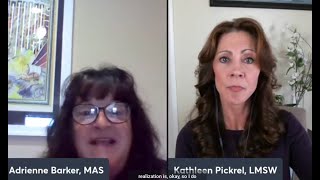
In this episode of Adrienne Barker Speaks, host Adrienne Barker interviews mindset and life coach Kathleen Pickrel. Kathleen shares her personal journey from a 14‑year social work career to becoming a widow at 48, the challenges of grieving, and how she rebuilt her life through intentional mindset work. She explains the meaning behind her business name "Choose Congruency," describing the alignment of thoughts, words, and actions. Kathleen introduces her new "Dating After Decades" program for women re‑entering the dating world after long‑term relationships, and discusses practical advice such as the importance of life insurance, navigating social‑media etiquette after a death, and handling memories online. The conversation also covers her coaching philosophy, how to assess if a coach is a good fit, the choice between one‑on‑one and group coaching, and future plans for a dating‑focused podcast. Throughout, the tone remains conversational, empathetic, and instructional, offering concrete tips for grief support, later‑life dating, and personal growth.
Chapters
And sometimes we may even be live and don't know it because StreamYard is never really a perfect match.
I've used StreamYard too, so.
Right, so sometimes it's just giving me the twirl around. Oh, I just— I think I made another word. Twirl around. Okay, good. Looks like we're live. We may have been live before, so if you heard anything you shouldn't have been listening to, that's on you.
No, I'm kidding you.
Welcome to Adrienne Barker Speaks, and I'm really excited. This is No prep needed. So Kathleen and I did speak last week, but not about this, so I just know a very little bit. But Kathleen is— Kathleen lives in Tucson, Arizona. I take a second, Kathleen, because first of all, my heart is in Tucson. My son Rudy, uh, is, uh, he's 27. He just asked his girlfriend to engage, and she said yes to become—
they're—
so they're engaged, gonna get married.
So congratulations.
I hope you get to meet him one day. He's one of the most He's one of the loveliest people, human beings on this planet, always has been, and he's just a great young man and I'm proud he's my son. So I left him in Tucson so he can make Tucson even better than it is.
So I'll have to meet him. Yes, thank you.
So the name of your business is so interesting, Choose Congruency. So I want to understand the meaning of that, but first tell us about who you are, where you are, what you do, and why.
Oh my goodness, well Okay. The, uh, the elevator pitch, uh, version, right? So yes, I am a mindset and life coach, and I am currently working with people who are— they've transitioned out of, um, or into something new, like they've gotten divorced or they've become a widow. And so I have this new program called Dating After Decades, which is now also part of my, my coaching business. And I'm so excited to have just launched that recently and it's going really well. And I came to, I came to this little niche down in my business because I am a widow. I became a widow at the age of 48, 20 days short of my 25th wedding anniversary. And it was hard, as you can imagine. And, and eventually, you know, you have to start creating a new life. And so I did, and I was successful in that. I did the dating thing. Oh my gosh, things have changed. You know, back then, last time I dated, there weren't even cell phones or computers. So this was a whole new thing. So I thought I would love to have other women not have to go through the pain of doing this alone. And walking them through it. So I just kind of reverse engineered what I did to be successful. I've been in a 6-year relationship now with my wonderful partner. So it worked. So I'd love to share that with other people. And before that, I was a social worker for 14 years working with cancer patients. Loved it, loved social work. I wanted to transition to coaching though, because, you know, social work is you're dealing with life and death issues. You know, people are becoming homeless, they don't have food, and it's such a worthwhile endeavor. But, you know, sometimes you want to— you don't want to work on the life-threatening parts of things. But I still wanted to help people, and so that's why I transitioned into coaching.
Well, so first of all, I just think everyone needs to take a second to process what you just said because that is That's really sad. Was it— was your husband not well, or was this an unexpected passing?
Well, yes and no. So he did have heart issues. He had a couple heart attacks. He'd had some stents placed in, but he had had an episode. And so he went to his cardiologist. They did a stress test. They said, now you're about baseline where you were 3 years ago, but let's do an angiogram just to make sure. And this was nothing new to us. He'd had several before. This is kind of like our normal, right, at this point. But this time he went in for the angiogram and he didn't come out. And so even though he had heart issues, it was a shock that that happened.
So you were in the waiting room waiting for the news, and then you heard the news.
I was waiting for just a routine you know, the doctor to come out and say, yep, we found something, we didn't find something. Instead, it was the case manager walking over to me, like, when he should have been out of the procedure saying, we're trying to revive him, we're going to see what we can do. I'll let you know. She went back in, she came back in out like 15 minutes later and said, we're still working on him. I'll let you know. They worked on him for over an hour. And he didn't come back.
Was anyone in the waiting room with you?
My mom was with me, and it was, you know, I'm— it was such a norm for us for him to do this that he was like, go to work that day, you know, it'll be fine. But I didn't, so I was so glad that I was there.
I mean, when I think of this, and it's so heartbreaking, And I have a million and a half questions, but who better to really know how to help another widow besides someone who's really gone through it? So after you had to go through all the paperwork and go through the burial and telling everyone— and do you have children?
I do, I do. And they were both, um, just barely college age at that time.
Okay, so still young, very young. I mean, that's still— yeah, I don't know if there's any age, to be honest with you.
No.
But so after you go through all of that and family's over, and, and then what happened? Like, you're alone now. So like, like, so maybe it's a month later and you're finally— everyone leaves, and that's a day that— what, so what's going on in your mind?
Yeah, it is really hard, uh, for me. I mean, it's hard for everybody, obviously, but I had never lived alone, period. I went from living with my parents to being married. So now I have never lived on my own and now I'm like all alone. And that was so weird and different and everything changes. You know, people think, oh, well, you, you miss your spouse and you grieve and you do. But on top of that, absolutely every aspect of your day changes, your life changes, how you sleep in the bed is different. I mean, Who you talk to, who you don't talk to, your whole routine. Absolutely everything changes. And I think that's the hugest part that people don't really grasp.
I know you help those that are going through it, but I'd like to ask you actually the opposite, like the other question, like what, what was said to you that you thought to yourself, oh my gosh, I would definitely never say this to someone. And then what were the words that were said to you that you thought That's exactly what needs to be said to someone that just lost a loved one.
Yes, there are so many things, and people, you know, they mean well. You know, we're not trained on what to say, so we don't know what to say, and we say things, you know, like, oh, they're in a better place. Well, you know, and these things that are said may be true, you know, or, you know, you'll find somebody else, or all of those things. They may be true, but they are not helpful in the time because You know, they're in a better place. Well, yeah, but I'm stuck here all by myself. So that's not really helpful to me. So I have found the most helpful thing for me, and also working all those years with cancer patients, because they get told all sorts of crazy things as well, is, you know, I'm so sorry for what you're going through. I don't have the words. There are no words that are going to make things better, but I'm here for you. That's it. That's all you got to say.
I think that is so important. You know, you and I didn't discuss this before. I don't ask questions before, but to me, that is, that is probably the golden nugget that you could give to someone. Because even myself, I'm like, you know what, I don't like to say things that to me seem not very meaningful and, and, and also can, can seem dismissive. Like, you know, oh, they're in a better place. It kind of means like, you know, oh, just, you know, get out there and do whatever, you know. Did you hear a lot of like, you know, you should start dating soon?
And, and well, and, uh, my own life, and then also having worked with, with many widows now, is, is you hear all sorts of things. You hear, you know, um, you know, you should get out there again, or how can you get out there again? Everyone's got their own opinion, and they feel just kind of free to share it with you for some reason, like they, you know, like they could ever understand. And so what people who are going through that just really need to understand is whatever anybody else says or thinks does not matter. This is the key point. You tune into yourself. What do you need? What do you want at this time of your life? And you go with that because everyone's got an opinion. There's a saying that I can't really repeat on the show about saying that everyone's got another thing in their body that, you know, we don't need to hear these things. We don't care what your opinion is because you're not living in my shoes, basically.
No, I think that's good. I think that's really important advice. Fred Bergeron, who is a distinguished Toastmaster, by the way, and a lovely friend of mine, had just wrote that his sister-in-law became a widow December of '09 after losing— oh, after losing Fred, after your brother suddenly to a heart attack. Oh, that's very sweet of Fred for recognizing the love of his sister-in-law. Fred, if you have any questions, put it in the chat box and we'll have Kathleen see if she can help you. Yeah. So, so what is the meaning of congruency?
Okay, so yes, my company is called Choose Congruency, and if you ever look at my my logo or my symbol, it's 3 interlocking circles with the, the math congruency symbol in the middle. So congruency is an alignment. So the 3 circles are, if you are congruent or in alignment with your thoughts, your words, and your actions towards your goal, that is how you get what you want.
Wow, I love it. Okay, I'm going to ask you a question I bet nobody asked you, so you tell me.
Okay.
Can you say congruency 3 times really fast? Okay.
Let's give it a shot. Congruency, congruency, congruency.
Ooh, I did it.
Do I get a gold star?
I don't think I can do it. Thank you. I appreciate that. So I love that. So, so then how, so do, like, how do you promote yourself? I think, so you, let's forget the promotion. I'm kind of curious about the dating. So can we talk about your dating and like, like when you felt that it was, so how long did, like, what was your mourning process? Like? And how long was it? Or is it always, right? There's no like, it didn't end on June 5th, it just— you're still in mourning, right?
Right, right. Grieving, um, grieving is a process that, that continues through life. You're, you, you know, the person is gone and they will always be gone at this point, so you will always have some part of you that, that misses them. It's, it's, um, to what degree you're able to integrate that grief and have it be a part of you, but not all of you. Right? So, and that's definitely a process and it's different for everyone because they have different coping skills that they come to it with. They have different, you know, everyone's relationship is different, the length, the intensity, what the meaning of the relationship is. So it's so different for everyone. For me, and I think because I was in the middle of grieving and I have, you know, I have a training, I have a, you know, a degree in psychology, I have a master's degree in social work. I've worked for many years with people who were going through this kind of process. So I have a different, I have a different tool set and perspective than like the average person. So I, I was in the middle of like, you know, being miserable. You know, my friends feel different, the couples feel different, all of the things. I felt alone. I just kind of remember one day standing, no, I was in the car at a stop sign and I was there and the world was just going. It just was moving and going and I was like in a standstill. It was like I was out of sync with the universe in a way. And I just remember that, so that feeling so much. So I was going through a lot of that, but, um, I had an epiphany one day. I woke up and I thought, oh my gosh, I can live another 10, 20, 30 years. I don't want to live like this. So from that moment on, I took my training and my skills and my background and I applied them to myself. And I decided that I wanted to create, that I was going to be intentional in deciding what I want now.
That makes sense. So you're helping people reach their epiphany.
Yeah. I mean, you have to— you're in a gap, right? You have the past and then you have the future and you're like in the middle, right? The past is gone, the future hasn't happened yet, but we tend to gravitate to what we know, so we hold on to the past. And so part of the process is really kind of not letting go of the past, but bringing it with us as we shift that focus into, okay, I'm here now, this is the reality, what do I want this to look like going forward? You know, future-focused, clarifying, visualizing, you know, really thinking about What do I want now?
And Fred has a great question, but before I ask that question, I— so I hear, I hear a lot when, when, uh, someone, a married couple loses their other half, that often the other couples will, you know, invite you, and then it slowly starts to stop because you almost, you know, either you feel like you're the third wheel, or maybe they forget about inviting you, or it's just a couple's event. Did that happen to you?
My friends were great and a lot of our friends were couples and actually a lot of the people we hung out with were people I met through my husband. So they were his friends first, but I still consider them my friends. But, but yeah, over time, first of all, yeah, it felt weird, you know, but, you know, we can live with weird if I'm willing to work through it. You know, okay, I feel kind of weird now hanging out with all of you, but I get to decide whether I want to work through that weirdness and continue that or not. But a lot of those relationships have faded away for me. But I don't think— I think it's mostly because I have shifted and I have changed and what I do, what my goals are, what my life looks like now. So it's really no reflection on the relationship that I had with them. It's more like I've moved to a different space, and so it's just not in sync anymore.
Kathleen, first of all, I wanted to say thank you for being so open and transparent. And I mean, because we did not discuss any of this. Fred has a great question, so I would like to ask you this. Fred shares that his brother was only 38 and didn't leave his wife and kids in a financial burden. So was— were you prepared financially outside of a will? And did you and your husband discuss it before his passing?
Okay. This is so important. Have life insurance, have life insurance, because I fortunately, we had life insurance. My husband through his work had life insurance. We had separate life insurance. And so yes, I was left in a, in a, you know, decent financial shape where I didn't have to have that worry on top of everything else, but I have met So many, mostly women who there was no life insurance and their way of living on top of grieving, having to create a new life, have to deal with the whole financial burden. And so, and that can be so easily taken care of if you can get life insurance and speak to somebody about the right level for you. And I, I cannot stress that enough because my life would be so different today if I didn't have that, that security.
So Fred, thank you for bringing that up. That really is very important. So now, Fred, maybe you're— this will be interesting, the next conversation for your sister-in-law, because tell me about— so do you have a podcast on dating after 50? Are you working on one?
I'm working on one. I haven't started that yet, but I do have a podcast on mindset. And so if you look for Choose Congruency on the, you know, Apple Spotify, iHeart does, it'll come up. And you know, it's all about mindset regardless whether you're, whether you're dating, it's career, or other things you want to do in your life. It all actually comes down to mindset. But yes, I, I am working on creating a specific dating one here in the near future.
I can't wait. I think that's so, that's so interesting. Uh, and also you're right, dating is so different now. Actually, I do want to go back to talk about the passing of a loved one and, and, and social media. So I, you know, I lost my, my mom in 2017 and my dad in 2019, but I really do carry them in my heart. Like, I really, like, literally, I, I talk to them. I feel like they're there. I love when the memories pop up on Facebook. And then both my parents had— I'm sorry to laugh, but my dad was so funny. He— my mom had Facebook like in her like late 80s, and I never— I always thought she was scammed. So she would, she would message me and I'd be like, what's the name of your, your sister's mother's dog? Like whatever, I would ask crazy questions. And my mom one time was like, why do you ask these questions? I'm like, I can't believe you're using Facebook.
That's hilarious.
But then my dad got on Facebook, LinkedIn, Twitter. He loved it all. I really— my biggest regret is that I wish that I had known about like Zoom and live, because he left a museum of 80,000 toys. My parents had a museum, and so I would have loved to have like really captured that. But in the meantime, every time a memory does come up, I will post it and share it to their Facebook page because I feel like I could keep them alive too for all of their followers and people. So it feels important to me and it makes me feel good, but I know that could be the opposite. So what do you suggest when people say to you that memories are too difficult for them?
Yes, and, and that's so interesting because I, I I think it maybe just depends on where you are in your journey because for me, I remember being on Facebook and then the first time, like a memory popped up with a picture of, my husband's name was Terry, of Terry and oh my gosh, it like, oh, in my heart and it just created a lot of sadness. But now they pop up and I like it and it's like, oh, it's such a nice memory and if it's, you know, if the kids are in it, I will message them, you know, the picture of, you know, something on vacation or what we did and so it's a really nice way to keep his memory alive and have that connection with the kids. So I really think you just have to tune into yourself, and if that is not— if it's hurting you or making you feel bad and you're not ready for that, then pass it by.
Then don't look at the memories. And can I just add something? Because this happened to me, and I find that it seems to happen a lot, is that when someone passes that friends want to immediately let everyone know, oh my God, I just lost— so that's what happened. So actually, when my father passed away, someone immediately found out, and, and like, the only thought that they had is they wanted to share that they were friends with my dad and how, you know, and so I lost Mr. Barker, and, and my son who's in Tucson 'cause my dad's in Florida, woke up 3 hours later when it was time for him to wake up, looked at Facebook, and that's the first thing that he saw. And that's how he found out. And I just, so I always wanna take a second, we're talking about passing of someone, is do not post anything until the family has posted it. And even then you should really find out if it's okay to post. Because, but to, I see people post and I'm like, you should not ever. And that's what happened to the 14-year-old boy that fell off. They— I mean, I'm not, you know, when I read the news, I always say I don't know 100%, but I had read that the father actually had found out from a video that was posted. We have to have more empathy and understanding. And, you know, if you lose a loved one that's a friend, no matter how great a friend it is, let the family make that decision. And I think that is so important and it could really save a lot of heartache.
Exactly. I mean, that's what they do well, or they're supposed to mostly do on, you know, the news. They don't release names. Names until the police have notified the family that, you know, exactly. And so why not just wait for the family or whoever the spokesperson is to post something, and then you can then share that and make a comment. Exactly.
That is empathy, because that shows that you actually— because when I saw it, I thought, well, this person doesn't have a lot of empathy, do they? Because the only thought that they had was to want to share everyone how they were feeling. So have empathy. When it comes to something like this. And Kathleen, I think it really— I'm glad that you mentioned— thank you. Thanks, Fred. And oh, and your brother had his birthday on the 26th. Yeah, that's— it's hard losing a family member. I, I do like to ask the question, but tell me if I'm wrong. Sometimes I will ask, not all the time, but when I do ask, the answer is always interesting. I will ask the question, Kathleen, has your husband given you any signs? Is there anything? Do you feel sometimes that he's with you? Do you Is it like, is there anything that kind of surrounds you?
I've had a couple of things, and one will take me a few minutes to explain if we have that time.
Yes, please. I like the story.
Sorry. So this is the big one. I, um, I decided at some point, about 3 years I think it was after he passed, that the house I was in that I had just fully remodeled was too big for me, and I, you know, didn't want to clean the yard or the pool anymore, and I, I wanted to change. And, you know, there's a lot of feelings around that that people have, like, you know, um, what are the kids going to think? They, they grew up in this house, and I'm thinking about moving. It's like, this is where we had our time. Am I moving on too much by giving it up? And all, all the feelings that come around those things. And I I decided I wanted to live in a townhouse, but I'd never been in a townhouse, so I thought I should go look at a townhouse before I decide I want to live in one. And so I'm like, my house is not ready for sale, period, yet. Like, there's still popcorn on the ceiling, there's still all the things that need to be changed before I sell the house. Well, so I'm like just on an investigation, right? Like, I, I go to look at one open house and I'm like, Oh my gosh. Well, I looked at one and it was okay, but then there was this one I walked in and the minute I walked in, I thought, this is my home. This is my home. I want to live here. And then I went back for the second day for the open house. And I'm thinking, I really want this house. And I talked to my realtor friend. I said, I really, I really want this house, but my house isn't ready for sale yet. And no one's going to sell me a house when my house isn't even on the market yet. And, um, she said, well, let's explore this. And, um, long story short is, um, I wrote the owner a letter saying, I love your home. I will take care of your home. Oh, he had another offer, which I'm assuming was for more. Um, and so there were some rules and restrictions, like I had to get my house on the market in a certain number of days and, and, I sold my house in 2 days. But so that was lucky. But here's the cool part that where Terry ties into it. So you probably know here in Tucson, we have the Day of the Dead processional, right? So I was at the Day of the Dead processional. It actually happened to be the day, the anniversary day of Terry's passing. I'm at this and I get the phone call. That you get the house. So it was like this blessing that it was good.
Wow.
So I'm like, it doesn't get more of a sign than that to me, you know.
And what a beautiful lesson actually in that too, is, is to reach out and to, to reach out to your realtor to, to— it's okay to give a letter and to show that you have a heart and, and your feelings to it.
Yeah. And my realtor friend, she's been in this business for decades, she says I have never seen that happen where they sold you a house when yours wasn't even on the market yet. Never seen it. So that was so cool.
Oh, so you look so beautiful and you look happy and you're now dating again. You shared some really great information on what not to do. So how— I can't wait. Do you have an idea of when your podcast show will be aired? Is it summer?
Yeah, probably by summer it'll be— it should be up and running. I have to You know, life is busy, but I really want to fit this in because I think it would be really helpful. And, um, you know, I, I do have at the moment a Facebook group. If, uh, for— it's for women at this point, um, because I know other websites that kind of mingle men and women, it gets into some issues that I don't want to get into. But, um, I have a Facebook group for people who are interested in, you know, getting into dating again. And it's called Dating After Decades. So if you're interested and need that support, it's free. That part's free.
Yeah, I think it's great. I can actually see you teaming up with a counterpart that does what you do similar to with men and actually having like an event where you're both really speaking and then it could be separated out. But I don't know if you find someone.
I actually have someone in mind. I haven't reached out to him yet, but he actually has a YouTube channel as well. And I think maybe we would be good teaming So who knows?
Yeah, I like that idea. I think that makes sense. And then I think mindset is so important. You know, it's funny, yesterday— so I was— I had a woman yesterday, Elka. She does— she's a social worker and she includes the arts therapy. She's one of very few that has this specialized program that she does. So it's very, very interesting. But when we were talking, my realization is, okay, so I do have my mindset. My mindset is good right now at 59 years old, going to be 60 June 28th. All right, but that does that. But so I was asking her about like the ages of like the mindset, because I, I don't— I wouldn't have said that in my like 20s and 30s and 40s and 50s. But I think now, and I belong to a lot of women's group, Women's Prosperity Network, and a lot, you know, women helping women. And, you know, there's so much pushing out of mindset, mindset, mindset, mindset for money abundance, mindset for all, you know, help everything. And yesterday something made me just write I just posted like, like, like that. Like, I know where my mind is. Like, I am in such a good spot. I'm able to— like, I have a daughter that has, um, social anxiety like crazy. But like, I have learned from— and actually from 2 years of doing this show, Candid Conversations. So thank you for all the therapy that you and everyone else has given to me, because it really worked. I'm really, I'm really at a great place. And I'm like, you know what, I'm gonna post that. Because everyone's always like talking about their mindset, but nobody ever says like, you know what, my mindset right now couldn't be any better. Like, I honestly am at— and, and I want to just shout that to the world. My head is on strong. I'm feeling good, you know, not just, you know, I like to lose weight, of course, but I really can understand and look, and I have empathy. And, you know, everything that's happening on the news and the war, and, you know, even what Will Smith the other night with Chris Rock, And you know, first of all, I don't— you know, everyone has an opinion and decision, but the truth is none of us really know what's going on. And even that, I'm able to compartmentalize, say, you know what, you don't get— you know, I can't get passionate about things that I really don't know. I don't know what's happening behind the scenes of so many different things. So I stick with what I can know, and then I do things as good and as well and as kind and thoughtful as I can. So I'm feeling good about myself. I just want to say that because so many people aren't this day and age, but I think it's okay to say when you are too, right?
Right. I love that because it's well-earned, right? It didn't happen overnight. It's a process. And so, yeah, you should do a little bit of this and shouting it out to the world because, yeah, we need that positivity and to know that, hey, this is possible. This is definitely possible.
So on the other hand, on the other hand, in my 30s and 40s, when I felt like I was drowning and I felt like I wasn't heard and I had words tossed at me that that were just demeaning. And the only reason why— I wrote a book, by the way— but the only thing that, that was said to me were words just to hurt me and to bring me down. And what I would have given, I don't even know. I know there were social workers back then, but I never knew, like, coaching. Life coaching is fairly new. So I do want to just say, if when you're younger and you are— sometimes you can't really talk to your friends because they're going to give you— they're not going to give you really great advice unless they're a social worker. And you know what, I'm just going to say this: if you have a friend that's a life coach you should still pay her because what the knowledge of a life coach has and what they're giving you is not something that should be done for free. I think that we have this expectation, well, you're not providing a product. It's still, it is a product. And so you better pay for it. And when you are a little younger, until you could get to where I am at going to be almost 60, you know what, you really have to look. So look at Kathleen to see if this is the right coach. So what are some of the questions before you go? What if I was 30 and I'm like, oh, I am drowning and I need help and I need someone to talk to. What would be some of the questions or what am I looking at to make sure that you are a right fit?
Really, you know, to be a right fit for coaching in general, you know, general life coaching, mindset coaching is number one, you've identified that you're not where you want to be. You're not happy. I mean, because Sometimes people are plugging along and they don't, they're not even aware, they're just on that hamster wheel. So number one is, you know, just being aware that I'm not happy where I'm at. And then being willing to say that getting to where I want to be is important and put, putting a priority on yourself, because we put priorities on everybody else. It's like, oh yeah, I wish I could fix this. I wish things could be better. But I'm so busy doing, you know, for everybody else, taking care of the kids, the husband, the spouse, the wife, whoever, that I'm putting myself last. And so many women especially do this, and then they get into, like, the kids grow up and then they're like, I didn't do any of this work ahead of time. And so, yeah, know that you want to change and being willing to actually take the time to work on yourself. And then, yeah, connect. Change is hard. Change is hard. And so having someone to work with you that fits, that's going to be your accountability partner to help you achieve what you say you want to achieve, which is going to help you strategize, to create routines, patterns, methods to help you do that. And just to kind of help you talk through really bolstering what is working. Sometimes we forget what is working in our life so that we can have balance while we're working on the things that, that we need to work on. So does that answer your question?
Yeah, I mean, I think it wasn't really for me because I think that I, I don't want to change the direction. So I really try to encourage people to really understand that, but also they have to be ready and be coachable and not, you know, do the work too that has to be put into it and listen to your life coach.
It's an actual decision that you make. It's a decision you make for your life, for yourself. Um, and the more clear you are that this is the decision you're making and that you're willing, that you really want it, and that you're willing to put the time and effort in, that's when you're going to make the change in your life. I love that.
Do you offer group coaching or just one-on-one?
Right now it's just one-on-one. I am, since my, my Dating After Decades course is relatively new, I'm kind of figuring out if I want to keep doing the one-on-one with that, or I am really thinking I'm going to expand. People can do the course and then we'll do group sessions together. So if people are interested, you know, you can just shoot me a message and let me know what you would like to see. Sorry about the doorbell and the dog. UPS delivery or one of those.
I love hearing dogs bark, babies cry. I'm always happy. That's what makes me happy. Kathleen, are you— so yeah, I'll have all the information and actually send me, send me every tag that you want and I'll tag on everything.
Thank you.
All right, last question, one last question.
Do you—
what interests me a lot of times is when life coaches all of a sudden decide to stop doing life coaching and teach other life coaches how to do courses or like, and I'm always confused by that. Like, should you stick with a career or is there more money to be made in trying to turn people into coaches? So do you see that that's something you're gonna do one day is you're going to stop what you're doing to just helping the individual to help the coach?
Um, I don't see that happening for me because, you know, that's not where my, where my passion is. There, there definitely is a lot of money to be made in coaching coaches. And, and I believe that coaches should have coaches. You know, I do have coaches and I have people I work with in a group that are my accountability partners. I do all the things that I tell other people that might be helpful to them. But you also have to be careful because there's a lot of different programs that you can pay for as a coach to get coaching training, and they're not all equal. But for me, I just like the idea of helping people live their best lives. And so I have this personal mission statement. I was on Facebook one day and there was this post like, businesses have mission statements. You should have your own mission statement. I'm like, Yes, I should. And it came right to me. And my motto or my mission statement is simply continually learning, continually sharing. That's my goal in life.
I, I love that mission statement. And then also your vision statement, which actually could be too, is that. So that's excellent. Yeah. Though that people do forget to have that. That's really important. I actually have— we have a score coming up in the end of April. Is Mitchell Levy, and he's going to be doing his credibility, his CPAP, which is really going to be interesting. And so he really— but he would love yours, so that's great. He really works with people to come up with 5 to 7 words that it should be just like yours, enough where someone would say, oh wait, you're learning what? Or you're— so a question. So very, very good.
I love learning all the things and sharing all the things.
I love that. I love that. So you love opportunities too?
I do, I do. I love learning about— if you could see how many different podcasts I listen to, everything from the woo-woo to the supernatural to the, to the coaching to the mindset to the astronomy. I mean, it's all fascinating.
I love that. That's how you grow. Well, I think that you're amazing, and I, you know, definitely would recommend you 100%. And so if you need a coach, you should really be looking at Kathleen. So I'm going to get all the everything together so that we could do that. If you have a blog, Kathleen, I think an actual article on, you know, some of the thoughts on choosing congruency and also choosing a life coach and what are some of the things— I think that's important. And also how to speak to someone after the passing, what to say and what not to say. I think we need more of that in this. Yeah, I used to work for Muscular Dystrophy Association and I loved MDA. And yes, I met Jerry Lewis so many times.
He was awesome.
We had many conversations together. I never told him though that when I was younger, I used to like really— I remember he was playing tennis one time and I would keep picking up the balls and he finally said, he finally yelled at me to stop. So he never knew that I was the same one that was like bothering him at Cape Cod, Massachusetts. I love Muscular Dystrophy Association. I raised a lot of money for MDA too. But one of the things I loved about MDA through everything that I did in 11 years was learning how to actually have a conversation with someone who's in a wheelchair and how to speak to someone that is— they have a program called Everyone's Different, Nobody's Perfect. And I was like, that should be shared by the world. But we all need to know how to approach, how to say the right words, because words hurt. Words matter.
They do. They do. Oh my gosh. It just made me think. Do we have time for one little short story?
Yes, please.
Of course. So when my daughter was little, she was probably like 5 or 6, we're at the grocery store, we're walking down the aisle, and a man with only one arm was walking towards us. And of course my daughter was like, mom, that man has no arm. I'm like, oh my gosh, cringe, cringe, cringe. We go down to the next aisle and there he is again. She's like, oh my gosh, mom, that guy has no arm. And finally I said, you know, why don't you just say hi to him? And he's just a person. She just, you know, at that little age it was so shocking. And so yes, we tried to have a conversation about Everyone's different and, and we all have things, and, and it doesn't make him any different from any one of us. But I just, I just still feel that cringe in my heart when I think about that, that event that happened.
And yeah, exactly. I always think of, um, so I was actually— another thing I did was I was trained on the anti-bullying program for— with, uh, Peter Yarrow from Peter, Paul and Mary, who told me many times that Puff the Magic Dragon had nothing to do with marijuana. So just FYI. Okay, that's good to know.
Everyone thinks it does, but yeah.
He's like, it doesn't. He was amazing, amazing. And he was part of a program called Operation Respect. It was— anyways, he has a program, Don't Laugh at Me. And the words to the song Don't Laugh at Me, don't laugh at me, don't call me names, don't get your pleasure from my pain. And then it goes, I'm the beggar on the corner, you pass me on the street, and I wouldn't be out here begging if I had enough to eat, and don't think I don't notice that our eyes never meet. And I share that with all my children, and I think sometimes just looking at someone and acknowledging them with a hello is what you really— what we want to teach our children. And so think of that song, it's Don't Laugh at Me by Peter Yarrow with Peter Paul.
I have heard that, I'm sure I have. That sounds so familiar. Yes, beautiful sentiment. It's so true. We're all just, we're all just souls in a body, and when we can connect our souls, especially through our eyes, it's just a beautiful thing.
Thank you so much, Kathleen. You're an amazing guest, and I can't wait to— where I can't wait to be like dating after decades. I'm excited about that, so I think that's gonna be fantastic. No, honey, I'm not looking to— I know, honey, I have a husband, Alan, so when he watches this, no, it's not— I'm not going to go dead, okay?
Now, and I've been in with my, my, my partner for 6 years now, so we, you know, I You know, it works.
Are you living together?
We are doing that, that thing called living apart together for various reasons. My mom lives with me. When we got together, his daughter was still living with him. And we actually just had a conversation last night about, you know, at some point, what does combining that look like? So we will at some point live together. But, but for now, which has been a real journey for me real quick, because like I had told you before, I had never lived alone. So I've grown so much by being able to do that, even though I wasn't real happy about it in the beginning. But it was actually, I think, what I needed. So sometimes we don't get what we want, but we get what we need. And now it's going to come together and we will live together. But I will have grown in the meantime in a way that I wouldn't have otherwise. So it turned out great.
You are so likable, Kathleen.
Wow.
I think I really honestly have fallen in love with you. So glad. Oh, uh, could we just do a shout out to Mark Bishop, please? Shout out, please.
Thank you, Mark.
Mark has the—
Mark Bishop, Mark Bishop Media, and, um, he hosts a few podcasts of his own. He's got a whole podcast platform, so if you are interested in podcasts, learning about things, he does a podcast with a few different nonprofits He, he does it all. My podcast Choose Congruency is on his platform, so go to markbishopmedia.com.
Follow him on LinkedIn, and he has Tucson Means Business, right?
Right, he's got Tucson Means Business and The Mark Bishop Show and a variety of different podcasts, so check him out.
Yeah, check him out, he's a great guy. All right, thank you so much, and I'm going to end the broadcast. It was lovely having you, and I will get this on YouTube too, so thank you so, so much.










