Jonathan Taylor
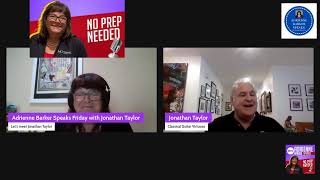
Classical guitarist Jonathan Taylor learned music from his grandmother, a silent-film organist who performed with Charlie Chaplin and Harry Houdini. He studied under Christopher Parkening and Pepe Romero, recorded 300 solo-guitar tracks, and has toured everywhere from concert halls to the Amazon and Romania. He believes in the 10,000-hour rule and personal growth over perfection.
Chapters
Hey, it's a— Florida is a beautiful state. It really is.
Yeah, it's so much country.
And the further north you go, the more south it is, meaning your Georgia seeps in. So you have all of those weeping willows, you know, a lot of bacteria on it too. You have all those weeping willows the further north you go. And yeah, and when you go— and I remember one afternoon in South Carolina in the Francis Marion Hotel Swamp Fox. And I was talking to my mother when she was alive, and one could talk to their mother when they're not alive. And, and I was— she used to— my father used to romance her at that hotel. And I was looking out and the wind blowing the willows, having lunch. And it was a very beautiful romantic time.
I love it. So we're live. Hi everyone, we're just enjoying— this is Jonathan Taylor. I'm so excited because he is bright, bold, good-looking. I wish I had his hair. Is that your back? Is that your real background or is that a like, um, yeah, I love all the artwork on the wall. Don't it— doesn't everyone want a tour? But anyways, let's get down to business. So Jonathan, thank you for saying yes for this live. And we were— we started talking about trees. I will tell you, I am a crazy tree person. Not a tree hugger, but I just— I love the feeling of trees. Makes me happy. So who is Jonathan Taylor? I would know, but this is no prep needed, so I didn't have to do any homework. So Jonathan, throwing it to you to tell us who you are.
I thought I had sent you links.
I thought I had sent you links and probably did, but this is no prep needed. Look at the logo.
Uh, I'm— if you want to know who I am, type Jonathan Taylor Guitar into Google. I'm a solo classical guitarist with 3 albums. I'm a Hit Lab and Warner Brothers recording artist, and I've toured all over the world, had lots of adventures, uh, and studied at, you know, many years ago in my youth with the many notables of the century for my instrument, and, and some of them are still alive. So that's a brief description. I've studied literature, religion, physics. I have those interests. Been a lot of strange places in the world. You would think a concert artist would play in North America and Europe and that, but I've also played in India, the Amazon, the Philippines, you know, all sorts of of, um, off-the-beaten-path concert halls.
Okay, so now I have questions.
Sure.
I want to first ask you, because this is so interesting to me, how old were you when you first started playing? 4. Who gave you the guitar? Was it a guitar?
Well, at 10, my aunt bought me a guitar. At 4, I was trying to pick out tunes on the ukulele because my grandmother who was a silent film organist and played with all the notables of that era, uh, would be playing, you know, piano, of course. So I always say I got it kind of infused in me since a very young age. She played with people like, uh, Charlie Chaplin, Lon Chaney Sr., Man of a Thousand Faces, Keystone Cops, Harold Lloyd. She did many gigs with Harry Houdini. And because you imagine when I say silent film organist, that's part of the job. Another part of the job is in that time it's vaudeville and the Orpheum Circuit, which Fox owned before he started his 20th Century Film Studios, as people know about later, uh, that almost went bankrupt and Star Wars saved it. Many companies always almost go bankrupt, uh, so, um, That is the beginnings of my musical lexicon, so to speak. My aunt bought me a guitar at 10. I started to become extremely serious. I took an oath at 14, which I say is the day I became a man, even though I had sex before that, that I knew I wanted to to become prominent, to become a meaningful figure in musical, in solo classical guitar, which is very different than being like a pop person or a country person. That's a simple idea. So I, as time went on, I studied with Christopher Parkening in a master class with private lessons with Pepe Romero. At his home in Del Mar, and Frederick Node, who at that time was a famous Englishman that got a contract with PBS here in America and put on a public— they called it public service back then— uh, show that was playing guitar. So though that's kind of a cursory view of my background.
I love that because I'm thinking to myself that, you know, we as parents, it does— does it or does it not make sense to put an instrument, a musical instrument in your child's hands? And how would you recommend that they start? Like, what if they gave the child a guitar, but the child really is a better violinist? What does that look like for a parent trying to make a decision?
Right. So in all honesty, the parents, my mother and grandmother, who I was raised by, did not, what should we say, influence or push me in a direction. My mom didn't give a damn what I became. I mean, I could have, you know, a doctor, it could have been anything. And so I think the person has to be attracted. Segovia originally played the cello and then that, he didn't want the cello. That's where some of his fingerings come from, by the way. And he wanted the classical guitar, which at that time was disreputable, kind of a folk instrument, kind of a, you know, not a serious instrument of the orchestra. And so I don't believe— I believe you can present to a child, but then they have to make a connection. I mean, it's kind of mystical. What is it that somebody in the audience of 16 Herzegovina at the Dorothy Chandler Pavilion downtown LA, what is it that that person sitting there wants to become that, sees the polyphony, sees the beauty, sees that it doesn't need 4 people in a rock group, but everything is contained right there inside. What is it that one person is a listener, is enjoying, likes the concert, and another person wants to become that? I mean, that is a question. I guess you can— people can trace it and have their theories about it. But, you know, I think that's a very individual thing.
I— okay, so, okay, I want to really talk about this part of it so that we can help some parents that are trying to figure out, you know, do they spend the money on their child or not?
And the money on the child— well, certainly the school isn't going to do it. I mean, the school is just like, you know, that, that will never work. Uh, so, uh, now they've taken most of the music programs or, you know, arift. They're gone. And so the kid— that's how rap came about, you know, or the kids wanted to create something and they weren't getting, you know, the violin, the oboe, uh, the cello. And so they, you know, kind of went and did their own thing. They only got as far as rhythm and speaking in rhythm. But I go, there's melody and harmony as well. You left out two-thirds. But, um, You know, yes, I would say present it to the child, but if they don't want to do violin, you know, and they want to do, you know, clarinet, whatever, you know, that's very important, I think. So they have the freedom to choose.
Yeah, I know a lot of people may have a piano in your house and you say, oh, let me— my child will play piano, and then We really need to listen to our children if they say, no, this is not for me.
Well, my grandmother was playing piano constantly all the time, and I had no attraction in the sense of being a performer on it, you know, and being a virtuoso on it. I use the piano as a sound source in composition because one doesn't want to write— there are exceptions to this statement, Chopin is one— one doesn't want to write on the instrument they're a virtuoso on. You want the music— orchestration is a secondary matter. And so I do that because of my incompetency, and I want that incompetency for composition, but for as a sound source, right? So, but to— nobody could have forced me to play the piano if I didn't want to. You know, I had a will anyway. So I think also as a musician, You have a center very early in life that many people are wandering and searching for, you know, maybe till death. And I think that's true because you become that thing. I'm— it's amazing to me that the kids now are anxious and, you know, they have mental problems and all that. And I go, well, What lies before us and what lies behind us is of little consequence compared to what lies within us.
I love that.
And so, I mean, those ideas that it's on drugs, you know, and things like that, I go, well, why? Why are they anxious? I go, well, because they're not anything. Ever heard like a little Japanese kid and he plays piano and the notes are perfect, but it's the most dry interpretation. Why? Because there's no experience there. There's nothing communicating from that. Yeah, he's got all the notes right. But music is emotional. It is a kind of a symbolic representation of the spirit. It has a form an abstract form that's different from the other arts than painting or writing. So, you know, you have to have experiences in life to communicate that and to be anxious or to be that you have to— you build yourself. There's no such thing as finding yourself. You're always yourself. I love that. Yeah, you're, you're a 10-year-old. You have that back there. You're still, you're a 10-year-old and you're whatever age you are now and, you know, 20 or whatever. And, but you build yourself and you have to have a foundation, uh, to come from. Mark Twain used to say, oh, you don't have to have a good memory if you tell the truth.
I love that.
I, I have a—
okay, I want to switch gears a little bit. I want to switch gears because, you know, I think as an average, like, human being that walks into, like, different places, or let's just say Nashville, go into Nashville and I'm like, oh my God, that this person is a superstar. Look at them playing the guitar, look at the drums, look at their singing. We were just on a cruise ship and the, the little 3-people band, it was amazing. But then I say to myself, wow, Adrian, there's so many people. That is such a competitive field. It reminds me a little bit about like the child that wants to be a basketball star or a football star, how difficult it really is. So how difficult is it when you have musical talent to really make it to like where you are, to make it to the— and I'm not even sure if you are happy where you are, but to make it to the point that would make you happy.
Could you share a little bit about that? Being above ground is happiness. I mean, I intend any— I intend to, uh, live every moment. You should go into life, as Hunter S. Thompson says, sliding in saying, woo, what a ride! That's how your death should be. Uh, I like that. So, so talking about how, uh, competitive— so probably 80% of all guitarists in the world are at a first to third year level, but they don't know it. And the reason—
what does that mean? What does that mean, first?
What it means is a skill level. For instance, you know, I cannot write out in physics, Maxwell's four electromagnetic equations. I have a vague kind of a cursory understanding of the fields that are generated from Gauss's law and from, from, uh, from Ampère's law and that number four, but my understanding is primitive. It's, it's, it's cursory, it's slight. I, I am not that. I am not understanding that incredible, uh, coherence that he put to all electricity. Every device, the one you're using now, that our computers, the phone, the, uh, the electric motor, uh, the internal combustion engine, you know, literally thousands of things generated by, uh, that understanding. So And maybe getting far afield from your question. So the competition, well, what do you do? You practice 6 hours a day when you're young. I don't need that now. I play like 40 minutes an hour a day. But when you're beginning, that's the discipline you learn. And that crosses over into other things in life. So if you don't have that discipline, whether, you know, a great athlete like Larry Bird or whoever the athletes are that people like, Those people are doing the basketball shots every day. 10,000 hours, right? Isn't that what's his name, Malcolm Gladwell's thing? That 10,000 hours it takes to gain a great skill. 40 hours a week, that's probably about 5 years to gain a skill worth gaining. And so I never thought about competition. I don't believe in competition. I've had— I've been in competition. Like, I was playing in Barbados, um, and there were like all the big guitarists in the world, and I pretty much won. And people say, well, were you in competition? I go, I don't even think about crap like that. I go, I want to be the best of me. I want to play the best for me. It's improving me. People say, well, you've improved the piece. I go, I never improved a piece in my life, and neither did anybody else in this world. Go, here are the notes. I'm improving and refining myself, and as a result of that, the interpretation is more erudite and more refined. So the idea that I'm in competition, I never felt that way, and I never had those kind of like, I want to beat somebody or I want to win or that. Those things never occurred to me. And you have to also discipline. Like, I liked playing basketball as a, like, a 16, 17-year-old. But then I jammed my finger, right? Like, they always see him with a tape on all the time, right? And then I like tennis, and then I screw my elbow. So I had to give up doing those things. I enjoyed those things because they go, well, I can't do that because now I'm out for a month. Right. I can't play. So, yeah.
Well, I love what you said. There's best. I want to just be the best of me. I want to let that breathe for a minute because that is a fantastic thing. And I think at all ages, thinking of that in that way is fantastic. So, so you didn't really answer my question, but I don't even know if there is a real answer to that. So what would you recommend to you? You meet a young child and they say to you, I want to be— what is that? What do you say?
In other words, my mother would put, like, you know, when kids are kids, games in front of you. Scrabble, Parcheesi, Monopoly, whatever those games are of the era. And I maybe were as interested in one and maybe not another. And so I say present. And if they're just lazying out and doing nothing, then I would say you should do something because you're not growing. And I have always hated the idea, oh, that was perfect, and that was perfectly played. I go, I hope not. I don't want to be perfect because that means I don't grow. If I'm perfect or I'm, quote, equal, okay, then how do I grow? I mean, it just doesn't make any sense. I want to constantly grow. There is a great instrumentist. I won't say his name. All right. He's a great prominent musician, classical musician, real musician. And here he is. He's in his 60s or 70s, something like that. And he's from the Asian culture, which is a great culture. And it emphasizes that perfection. And he said, after all these years, he said, I would try to get the pieces perfect. And he realized that it was the most boring thing he ever did and that the audience was bored, he was bored. And he says it's really about a human experience. Exactly. I go, you should have known that when you were 10. And that doesn't mean he didn't play accurately and all that, but if the audience isn't feeling something, what have you given them? A computer can play more accurately and faster than a human being.
Interesting. I, I love what you're saying. Can you explain the difference between when someone can just look at a piece of music and they play by ear, or someone that actually, like me, had to, you know, have piano lessons and I still just, I don't remember anything. I can't really pick it up. I never understood about playing by ear. So I think that a lot of people really, really want to try to understand what that means.
Musicians usually learn initially by ear. It is true that some cultures, you know, get their kids and have them read music. I didn't read music until I was like, what, 10 or something. So I didn't do that. And, and with 10, I didn't read, you know, I didn't. Know that this was a piece written by Schoenberg and it's dodecaphonic and the other one is quartal and this uses the main or minor system and this one's Ionian mode. And at those ages I didn't know that stuff. So I would pick— I just play records and pick out things by ear. Or like I said, my grandmother was in the background. So I think harmonically and melodically that those things you burnish it in, right, to the child because he's around that environment. So, uh, I don't— so what's the difference? You're translating. Unfortunately, and unfortunately, I have perfect pitch. Now, what is that? Perfect pitch is kind of a mutation of the cilia in your ears where you can hear more accurately. So I know that's a G. All right. It's not an F. It's not an A. It's a G. Now, that's a blessing and a curse. And here's why. Because now if I— somebody's telling me you have to play G and it's an F, well, that will drive me crazy. Right? Because it's a conflict. I'll tell you a story. I was examined in my college years by the great nuclear physicist, Nobel Prize-winning physicist Harold Rames, who discovered the neutrino. Why? Because he wanted to know the limits of human hearing. What are the sound ranges that human beings can hear? Because a dog can hear a lot better than you and me, right? A dog can hear frequencies that our ears are not— the mechanism isn't equipped to hear. So they set up a little control lab, right, and tried to trick me, which is what they were supposed to do, right? And so, and I'm telling you this for a reason. So he said, okay, Jonathan, um, he got a musician in there and he says, okay, is this F sharp or F? And I go, it's neither. I go, it's, it's in between it. In guitar, that would be in between the frets, which you can't do. Uh, but that was about the limit. Quartal tones, quarter tones was about the limit of what I could hear. And you don't need to hear any more than that, dude. I mean, it's— there's— it's not purposeful. It won't help you in any way. So when you talk about playing by ear, I guess that probably had some influence when I was a child because I had that, you know, physical mutation. Do I think there's talent? About 1%. So what I mean by that, when people say, oh, you're on these scholarships, you're so talented, I go, what does that mean? I go, it just means a way for, you know, to get money or, you know, follow the money. I go, I, I go, I have a little bit of talent. I guess that's true. On the other hand, I said 99% work, 99% perspiration, 1% inspiration, right? As Edison says. So I think that people, yes, they may have a proclivity towards something, but it was mostly labor.
Interesting. Now, before, when you were speaking, you had said something about like, you know, you were— your parent, your mother and grandmother's influence on you, because I've always questioned, you know, is it hereditary? How is it that you have all the Osmonds sing so beautiful, or the Jackson 5. But now I'm like wondering, is it, is it talent that is actually hereditary, or is it the, the, that you're with your family and you're, they're all, you know?
And isn't that, isn't that a question? And who knows? My mother didn't have any musical talent whatsoever, but my grandmother was a brilliant virtuoso. At 100, I threw a birthday Party for her at 100. She died at 100 about 6 months later after that party. And my mother passed away at 97. And so she was at 100 with those crooked arthritic fingers playing arpeggios that were, you know, glorious. And so her talent— think about in the night in the '20s or the teens, 1920, 19— 1930, 1910, and in that era. And think about being in those theaters and the Orpheum Circuit and playing for Houdini, and he's in the tank, right? And he's all got his chains on, and of course he's gonna die, right? He's gonna drown. And, um, you know that. And so that was part of her. Do I think I got some genetic? 1%. Mostly it's work and it's mostly keeping at something. I will say this. Most people do not realize their childhood dream. I did. Most people will give up on that dream. They'll get married, have kids, something. They'll go off in a profession. Why? Because it makes money. And those things, there's a sacrifice there. You have to make a choice. And if you want to realize and become and live out that dream, there's going to be choices and sacrifices to be made. And a lot of people are not willing to do that, which is fine. That's fine for them. Each person has their own individual, individual path. Each person is unique. Once they die, there'll never be anything like them again. Ever, the combination of what they are. There'll never be another Chopin, there'll never be another Beethoven, Bach, whatever. And that's true with every single individual that's ever lived in history.
You're like a motivational classical guitar virtuoso.
That's my new title.
I love that. You're amazing. I am double-checking something. I want to make sure I heard this right. Grandmother lived to the ripe old age of 100 and your mom lived to 97.
That's correct.
Wow. And do you think that part of, like, your grandmother living so long is that she could really love what she was doing? She loved life?
Well, yes. And I think she was a natural person. She did not have the fetters that many people adopt in society, the social roles Uh, she— I'll give you how— when I say natural, I would see her in the backyard, standing out in the backyard, and birds would alight upon her shoulder. It's true. Now it sounds like a bunch of BS, right? But it's absolutely true. Birds would alight upon her. That means they weren't threatened by her. That means she was safe and also attracted them in some manner. So she was a part of nature and a natural person. Remember, she went through the Depression. She went through many, many trials and tribulations. When Roosevelt took all the gold from the people, remember when he had the order to— you had to give your gold because our gold supply was going— and she did that. And I go, oh my God, that's theft, right? It's just theft. And so she went through a time period that was very different than this time period. Very different. Very different influences.
Wow. When was she born? What was the year she was born?
1889.
Oh my God. I don't remember Roosevelt and the gold. You know I'm going to be going down that rabbit hole pretty soon.
They don't want you to. They don't want you to remember those things. She was born and grew up in the Midwest. Then she got married when she was 18. Her husband had a tragic bobsledding accident and died, and she was so heartbroken she left her area there, went to the Pacific Northwest, was very prominent. She made wonderful money for her time period, and being a woman and being in that era, I go, oh, my grandmother was a very successful human being. And she was very private and closed-mouthed too. I always tell people I was raised by a Victorian and nobody knows what that is anymore because that's what you are. And she's— I'll give you an example of her unusual experiences. And when as a child she lived, you know, the Dakota Indians, people call them the Sioux. They don't like that name. They're called the Dakota Indians. She had a girlfriend in the neighboring reservation from where she lived, and I think Sioux Falls, South Dakota, and then later moved to Sioux City. And so she had this girlfriend. The tribe literally would sit outside her mud home. What's it called? That mud-type home. And she would play concerts at 16 for them. And they gave her— I buried her with this Dakota necklace because they had honored her with that. And so she had that experience and she moved to Pacific Northwest, became very well-to-do at that time period, lost all that later, as people do. It's abnormal to retain your wealth. It's only a very small amount of people that retain that. And she as I said, played with Harry Houdini and all these people that you know of that time period, right? So people say, well, how did she do that? And I go, well, she's playing the Orpheum circuit and Houdini, they're renting a theater and they're putting on the show. Houdini moved down to LA for a year to do 3 films. He hated it because he couldn't make any money. They paid him peanuts. And so he said, forget this, and then went on with his, you know, because he could fill those auditoriums.
I— okay, I, I could— I feel like I could talk about your grandmother and want to know more about your mother, but let's talk about Jonathan Taylor, who's in front of us. So thank you for the stories, they're beautiful. I just— I— if there's any information, or—
and they have— and they have the virtue of being true.
I, I just love it. I— yeah, I don't think you're saying anything that wouldn't be. But I want to talk about Jonathan Taylor before we go. So can you share with us Well, share with us your highlight and your lowlight, because, you know, like, so what was like your— in your mind, like, something that you just love, the best concert, or, you know, where you were, what made it so great? And then what was the challenge that you had? Any technical difficulties? Did your fingers fall off during a concert? Like, what happened that would make it the lowlight, right?
Well, um, I think one of the highlights was I played in the Palace of Culture in Târgu Mureș, Romania, and it's a great auditorium and 6 encores at night. And it was a wonderful tour and had— it was playing perfectly. I won't say perfectly. Well, that was, that was hypocrisy right there. I was playing well. And I'll say a low time in terms— it's not low, but I know what you're getting at. You're thinking of the Peregrine and the Apogee, the— so the, the Alpha and the Omega. That, um, I was playing in the Amazon in Belém, which is the Portuguese name for Bethlehem, on one of the cities there that is on the mouth of the Amazonian River. The Amazonian River extends all the way up into Bolivia. And of course, there are towns that, you know, the history, as far as we know, is many cities and towns develop along rivers. The Seine in Paris, right, in France, uh, the Moldau in Europe. And so I was, uh, there were, there was an opera house they had made for Enrico Caruso, the great tenor, and, uh, I was playing a concert, there were a few tickets left to sell, and so the promoters, uh, the next, uh, had me go to this festival where 10,000 people were outside about noon, and there's a stage, and we're kind of like, Tom Tevis is going to be in concert tonight, blah blah blah, last 20 tickets, whatever. And so all the big glitterati is there, the mayor of the city and all the people puffing with their feathers, their many feathers. And so they wanted me to have the national drink. They're welcoming me to the city, a key to the city idea. And there's every culture, adobo is the national dish in the Philippines or Hungarian goulash in Hungary, you know. Whatever it is, you know, um, uh, and, uh, borscht for the Russians. So, um, they're offering me this national dish, and it's kind of like a soup, like a goulash. And my reptile brain, my amygdala, my survival part of me said, don't eat that, right? Because I knew, one part of me knew that every monkey has its tree, and I'm out of my tree. And so I, of course, have the other side of my brain saying, that's like calling this guy's wife a prostitute, right? In other words, it's an insult, right? And, you know, your mother is So, so that civilized side of me overrode my good sense, as it often does with people. And it overrode that. I took the sip. And, you know, yes, haha, welcome. And about, you know, 11 o'clock that evening, I didn't know who I was. I had cholera. I had contracted cholera. From that soup, which is a very deadly thing. You become dehydrated, you, you know, throw up and all those things. So that I probably should have died. And but I didn't. Spent like 7 days on the— fortunately, it was the last concert of the tour. I don't know why it just happened to be. And I spent like 7 days on the floor of the hotel room, you know, not hallucinating and not really Knowing what you are, there comes a point in, in life where the, those social roles and civilized functions that you have are meaningless compared to survival. That, I mean, you may use them to survive, but they're meaningless in terms of animal survival, right? You need to eat, right? You need to breathe. So that maybe was a low point.
That is a really interesting story. Oh my God, anyone else get sick?
Pardon me?
Anyone else get sick? Like, what happened to the other people that I know?
Not that I know of. Probably, maybe they did, and, and I was too out of it to understand.
That's a crazy story. Oh, thank you for sharing that. So Jonathan Taylor, what are you doing now? Like, so what is— what, what is an average day for Jonathan Taylor look like?
Sure, I'm, uh, filming performance videos. If you go to my app— I have an app that's in Google Play and it's also in the Apple Store. Google Play for Android users, um, Apple Store for iPhone users. And type just Jonathan Taylor, no break in the name, and it's free, by the way. It's totally free. And there's performance videos on it, audio files, of course, uh, there's posts, there's videos of a series I call Adventures in Touring, and which is many of the stories. You know, I have tons of stories.
Yeah, this is an amazing— wow, wow. Are you, are you out? Do people still book you for events?
Like, sure.
Are you doing concert halls?
Sure. Yeah, you know, you're— I'm just getting back into, uh, live performance because of COVID right? And, and, you know, now people are doing that, but for a few years, of course, nobody was touring. And, uh, the Rolling Stones weren't touring, I say, you know. I mean, the biggest pop acts in the world weren't. So, uh, yeah, but now I'm filming. Right now I'm in Laguna filming performance videos. That's what I'm— to answer your question, what does it mean though, filming performance?
Oh, for your app, you mean?
For— okay, sitting in front of a microphone and a camera and playing, that's what it means. And, and, uh, so, uh, I'm doing that. I'm dealing with, um, uh, I'm— there are different— I'm with Warner Brothers is just distributing, uh, and Hit Lab for the label for a few of my albums, but I also have like a 300 track catalog, which is the largest in the world for solo classical guitar, which I recorded over 30 years. And so, uh, that's what I'm doing.
That is fantastic.
And is—
where's your guitar? Is it right next to you?
Yeah, it's in the other room.
And do you like when people come over, they say, hey Jonathan, can you play a song for me?
Like, no, usually say no.
Do you say no?
Well, you know, I'm always filming, so I'm, I'm playing, but I mean, I play like concerts, right? So, and I don't have that much, you know, uh, so that's not a common thing with me, uh, so you wouldn't ask Yasha Heifetz to play, play the chicane.
Can you just play right now for me for a minute? I, I love— I'm so glad we got your app. Looks amazing. I can't wait to, to get down because I know you sent me all the links, but you know, no prep needed.
I—
and you look so good. They look great too. They're very professional looking. Is that— are those real or you have fake backdrops?
Like, everything is real. I've never used a face fake backdrop. I probably wouldn't know how to do that.
Your app, the whole app concept is so cool. All right, so everyone go Google Jonathan Taylor Official App. Very easy to find, took me literally a second while Jonathan was telling me. Go find his website. I'll have all the links that Jonathan did give me before in the show notes a little later. This is going live right now, but it will be also edited and going on Spotify And the other syndicated platforms, just all of them. And Jonathan, any question that I should have asked you that I didn't ask you?
No. Um, we're having a conversation.
No, I, you're a great guy. I, you, I am so glad and grateful. And you know, and if you have a podcast, ask Jonathan to be on your guest, cause you know what, you probably have different questions that I'm asking. And I know that you could talk for hours cause I'm finding it fascinating. So Jonathan, thank you so much today.
Thank you.
You really are. You're, you're, you're very smart. I can tell how intelligent you are. Oh, I have another question. So, so what, what side of the brain, or is there a side of the brain when it comes to music and talent?
Well, they think that, you know, the, the right hemisphere, of course, you know, the corpus callosum connects both sides. Uh, autistic, there's that one guy that just passed away, not just passed away, like 6, 7 years ago. The guy that Dustin Hoffman modeled Rain Man on. I go, well, he was born without a corpus callosum and his brain found a way to make connections. And he's, he can, he remembers, there's nothing that he can't recall. It's like since he was 3 years old, he can recall at 12:25 in New York City at this location, you know, this happened. So the right hemisphere, and it is known. That exposing children when they're very young to music develops a part of their brain that really is the higher abstractions, and that's what you want. I mean, if you learn something by rote, that's great. You need to maybe do that, right? Learn notes or something in sequence. But what you're trying to do is to learn how to think, not what to think.
That's got to breathe too. That— wow, you have a lot of singers. Okay, okay, you know that's going to go in the quote notes. All right, thank you. So I, I just blown away by you. I, I have to process a lot of what you're saying because it's so good. You're a juicy— Jonathan Taylor, what a great guest. Thank you so much for today. Thank you for taking the time. I appreciate it.
All right.
Thank you.
Bye.
So good. Bye, Jonathan. That was— I don't want to say goodbye. Don't make me say goodbye.










