Let;s talk: Customer Service is DEAD, Conversation with Mitche Graf, author, serial entrepreneur
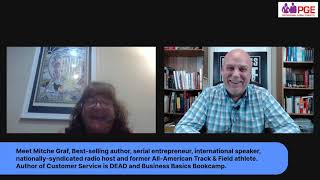
In this YouTube interview, host Adrienne Barker (MAS) talks with serial entrepreneur and author Mitch Graham about the current state of customer service, which he declares "dead" in its traditional form. Graham explains how the internet and COVID‑19 have forced businesses, especially restaurants and hospitality venues, into a binary world of either six‑star or one‑star experiences. He outlines his Six‑Star Service Manifesto—six concrete promises that businesses should adopt to exceed expectations, treat customers like gold, correct mistakes quickly, build a culture of excellence, foster mutual respect, and remember that customers fund the business. The conversation covers Graham’s 24/7 mentality of working 24 hours a week for 7 months a year, his systematic approach to entrepreneurship, and his 3‑5‑year exit‑strategy mindset. They discuss the staffing crisis in hospitality, the importance of empowering frontline employees through trust and training, and the role of reviews and social media in shaping reputation. Graham shares practical ideas for small businesses, chambers of commerce, and SCORE mentors, including workshops, certification ideas, and a vision for a six‑star rating platform. The interview also touches on Graham’s other books, lifestyle‑first entrepreneurship, and anecdotes such as the Nordstrom tire refund story, illustrating how turning mistakes into fan‑for‑life moments can drive growth.
Chapters
And the internet has kind of forced a lot of businesses to either step up their game or their game goes in the gutter. And there's like, there's, there's no middle ground anymore. Either people are doing 6-star service or they're doing 1-star service. And it's just the world that we've lived in now for about 16 months. And I think it's going to get better, but it might get worse before it gets better, especially for small businesses. So we just got to kind of deal with it, roll the punches, right?
I love this. Hi everyone. So everyone knows who I am, Adrienne Barker. This is Mitch Graham. So customer service is dead. Just so you know, I also teach customer service under my Professional Global Etiquette umbrella business that I have because I also am a graduate of the Protocol School of Washington with my International Protocol and Corporate Etiquette certification. But to me, not only do I love the whole customer service, but I, when I get, receive customer service, I immediately will ask how I can thank them via social media because I feel like that's one way because there's so many people out there that are really being so negative. So tell me about your experience. And also, you have an interesting background in all your businesses. Wow.
I get bored very, very easy. Whenever I have an idea for a new business or a new product or something, I tell my wife and she just does this. She shakes her head. It's like, oh, here we go again. But yeah, my entire 35-year entrepreneurial career, uh, I love creating things. I like building things. And then I like offloading things and then going on to whatever the new idea is. I currently own 4 companies. I have 2 nationally syndicated radio shows. We're on about 110 radio stations. I like to write books. I've written 9 business books, including the recent one called Customer Service Is Dead. But most importantly, in my bio, and if you look anywhere, the first thing listed is daddy of 3. And being 59 years old and I have a 16, 14, and a 7-year-old daughter. It forces me to kind of slow down, enjoy this moment right now. Like right now, Adrian, you and I are having a moment. Well, then when it's gone, we go on to the next moment. I want to make sure I'm present for my kids, and so I have what I call the 24/7 mentality— 24 hours a week, 7 months a year. And I know that sounds weird considering everything that I do. I just have to make sure I am uber efficient and that I have systems in place throughout all my companies and throughout everything, whether it's shipping whether it's answering a phone, whether it's replying to an email, all the people that are in my universe, they follow systems. In that way, we're efficient. We free up our time to do the things in life that are most important. And to me, it's my kids.
I love that. I'm 59 with a 15-year-old with, and then 3 older boys.
Okay, so we're like in the same boat right there. But I have a 7-year-old. I'm going to be 71 when she graduates high school. You don't think that way.
Yeah, I know, don't think that way.
I know, I don't.
So I'm very active with SCORE and I am teaching the, with Alex and Ed, we're teaching the Fast Track program. And the other, last week it was talking about when you start a business, what is your exit strategy? And so I'm just thinking with all the businesses that you've started, like what is your exit strategy when you're starting a business?
I really think 3 to 5 years. That's just how I've always thought because if I'm involved with anything longer than that, except my marriage. I do get bored. I need to get my creative juices flowing. And so I've started several manufacturing companies and I've sold all but two, and I still own two. I have Barbecue Nation. We manufacture spices and we're in thousands of stores across the country. And I also founded Party Dips about 10 years ago. And again, thousands of stores. We have distributors and we have retailers and online and all that. My goal for both of those is to be absorbed by one of the big multinational companies. So that's kind of my thought process there. I've sold limousine companies, I've sold consulting companies, I've sold photography businesses, all with the intention of starting it, building it, creating value, and then finding somebody that wants to carry on the dream so I can move on to whatever's next in my life. In 2019, I got bored with my companies, and at the time I had 5 companies and I got bored, believe it or not. So I promoted my wife to CEO. She was vice president of everything anyway. And I went and became the president of a professional sports team. There was a minor league affiliate of the world champion San Francisco Giants here in my area, and they were looking for a president. It's like, well, that's going to be easy. It's branding, right? It's sales, it's marketing, it's leadership. It's all those things that I've been doing 35 years. So I put my stuff on hiatus for a year, promoted a bunch of smart people that were in my universe and let them take over. And I went and played baseball, so to speak, for a year and absolutely had the joy of my life. It's now just a line in my bio, but it was one of the biggest honors and most challenging things I've ever done in my life. And then after COVID hit, the team got shut down, baseball got shut down. I came back to run my companies and homeschool my kids and move on to whatever was next on my path. And right now I have lots of things going on, but I do believe and it sounds weird, the 24/7 mentality. Everything I do is how can I work 24 hours a week, 7 months a year, and have the rest of the time off to not work? And that's what kind of drives me. That's my shiny beacon on the hill.
I love it. By the way, thank you for— you know what, that is— I know for a community, we are lucky enough to have here in Daytona Beach the, uh, oh my God, the Tortugas, which is the Tortugas, and they are such a great thing for our community. So thank you if that you are doing that. That's It's just a beautiful gift for the community. So I just want to say that, that is huge. So let's talk about my big juicy topic, which I love, which is customer service. And because right now I know where we are. So I'm in Daytona Beach and where are you located?
We're over in Oregon, up in the Pacific Northwest.
Oh, beautiful area. So the reality is the restaurants are having trouble with the staff, yada, yada, yada. And it's easy to blame customer service. So share with us, share with us the customer service is dead and any advice you have.
It's a really tough time right now for hospitality, restaurants in particular. I own, one of my companies is a catering company. And it's funny, last year we got voted Pacific Northwest Caterer of the Year and we went from half a million dollars down to like $28,000 from last year. We had no business. But what I'm finding, and I talk to a lot of business owners that have restaurants and bistros and bars, they can't get the staff. And the staff they do have is feeling overworked, overwhelmed, underappreciated. And what happens is you and I as consumers, we spent so much time not being able to go to restaurants, and now most states we can go out, maybe with a mask, it doesn't matter, but we get to go out and eat and drink out in public again at our favorite dives or restaurants. And what's happened is because we now can't just walk in and get a table, we have to wait because of the short staffing. So our blood pressure goes up a little bit. We sit down, we don't get the water refilled like we're used to or that we expect. And all of a sudden, that customer experience, which is where everything lies, that's where success lies in those details. Our experience starts to go down. It doesn't matter if it's the best steak in the world. It doesn't matter. That CX, customer experience, is going from a 10 to a 9 to an 8 to a 7. And we walk out of there. And again, it may be the best food that has ever been created on the face of the earth, we don't feel like it was. And we are more than happy to go on social media, to go to the review sites and post 1 and 2-star reviews. I went to college with a guy that's one of the vice presidents of Yelp. He says there's more 1-star reviews right now being posted than in the history of Yelp, which is absolutely amazing because we are frustrated that we're not getting the— we're not getting our needs and our expectations met. And I just say, guys, think of a way that you can go above and beyond. What can you do as a business person? I don't care if you're a consultant, you sell bricks, you're a plumber, you're a car dealership. It doesn't matter. What can you do to go above and beyond? And I call it that 6-star experience. What can you do to give a little bit extra? And I think that's kind of going to be the defining mantra of a lot of small businesses in the United States and around the world. Is how can they provide service that is impeccable and better than their competition. Therein lies the success right there.
That makes sense. So to me, I really think that for restaurants, it's the person that is right at the front. That person at the front almost has to be given the— like everything falls on their shoulder. They are so responsible. This just happened about 2 weeks ago. I walk into a restaurant And the girl, not very nice, not very pleasant, but she sits us down and says, oh, use your phone to get the menu. She didn't ask me if I had a phone. She didn't ask me if my phone worked here. She didn't give me a chance to see if the internet was going to open the QR code. And she leaves. 20 minutes go by, and I know she forgot about me. So I was a little irritated, so I called the restaurant and I said, hey, Hey, I'm at table like H2 in the back.
Did she answer the phone? That same girl?
Yeah, she answered the phone. I go, hey, I'm H2 in the back, I think you forgot about me. And I kind of made a joke about it, but she wasn't very happy. I said, you know, nobody stopped by, I can't access the phone. So with that, I was kind of laughing and making a joke out about it. You know what she didn't do? She didn't come over. So I waited another 10 minutes and I thought, oh my God, like, what'd she miss? She should have come over and said, oh, I'm so sorry, that's funny that you called. So when I went over, so we had to say goodbye, but the reason why I left was because I felt that I knew I was never— I don't give bad reviews. Like, you could go to my Google, I'm always giving positive reviews, and I'm always trying to make sure that the server gets that good review. But what I did with her is I said, you know, I'm going to leave because what you have done is you have ruined the experience. And so just in case if the meal comes in and it's, you know, everything else now, you've already like made it so bad, I'm better off leaving here. Not talking to anyone, I won't make any poor review, and leave and walk out the door. But this is a story of what happens for servers that have the best meal, but people are writing the 1-star review, how I was greeted at the door. I even saw reviews where it was a great meal, the restaurant was amazing, everything was great, I walked out the door and I was approached by someone who was homeless and asked me for my money, and then they give a 1-star review because people don't understand. So there really is first how to teach someone how to do a proper review. So, so what should you look for when you're going into a restaurant?
Well, you know, we're talking about restaurant, but you know, it does apply to just about every single industry, doesn't it? What's happened— this is pre-COVID— the internet was starting to take over the world. This thing here, we spend way too much time doing this, and I, that's— I have whole programs and courses that I teach people to resist the urge of going down the rabbit hole with their devices because it's easy to do. But because the internet has kind of automated so much of our lives and then COVID comes along and makes it even worse. So companies that had in-person sales, they had to force themselves to build an online strategy, whether it be to sell products and services through their website or through distributors or however it was, they had to pivot and reinvent and innovate the way that they were doing their sales and marketing. Well, the problem is that all of a sudden the human element has been taken out of it. The frontline employees, the gas station attendant, the server in your favorite restaurant, the teller at the bank, the cashier at the grocery store. Those people are holding multibillion-dollar brands in their hands. And what do we pay those people? Minimum wage, maybe a little bit above that. Right. But they are holding multibillion-dollar brands, whether it be US Bank, Chase Bank, Safeway, Albertsons, those people are holding that brand. And if they are not given those tools, like you said, given the training, given the tools, and given the empowerment— you go to Ritz-Carlton, every single employee has the discrepancy to spend up to $2,000 a day to make a guest happy. If there's some kind of an issue, they don't have to say, let me check with my boss, hold on just a minute, see if I can do that. They don't have to ask permission. They just, they know what the protocols are. They know what they're expected to do. And they are able to make a decision right then and there how to service the needs of that customer to give them that 6-star experience. And I think if a lot of companies were to do that, trust their employees, give them the training tools necessary to serve that need. You know, if you were the customer, how would you expect to be treated? You hear that all the time. It's overused. But when you're in a moment, Don't say, let me check with my boss, let me make a phone call. Make the decision based on that customer that's right in front of you that second, and then tell your boss about it later. And hopefully your boss trusts you and has given you that support to know that they're not gonna ridicule you and say, that was a bad decision. No, it's a good decision because you're taking care of that customer. If it costs you $10, it costs you $10. But if you save the customer, you know, they're gonna bring you 10 referrals over the lifetime of their, relationship with you, man, spend the $10. I'd spend $100 if I could to take care of one customer.
I love that. One of the other issues you mentioned is that they're tired. So when I was teaching customer service, it's really about the energy and, and bringing that energy into it, uh, because that's, you know, like what Disney says, right? When you walk out on stage, you're in character, whatever that character is, you want to have the energy for it. And so we're also seeing that, that just not being able to hold up the energy when you're tired So how, so what should they do? Is it shorter hours or more breaks or energy bars or Red Bull?
Energy drinks. Well, it's probably a combination of all those things. But, you know, what I found is the small and medium-sized businesses that have staff that really do step it up and do go above and beyond and work the extra hours and do it happily, they're the ones that are given the support by ownership. You know, I call it the inverse hierarchy of management. The employees work for the customers. And you and I, as the bosses, as employers, we work for our employees and we should support them and tell them thank you. And it's not just about how much compensation we give them, which that is important, but it's more about, you know what, thank you so much for a great job today. I really appreciate you and we'll see you tomorrow. You know, what can I do for you mentality. And the companies that I see that are doing very well and thriving are the ones that have that inverse hierarchy where the bosses are out there in the trenches, just like the employees are, supporting the employees, supporting the customers, having those interactions, solving problems quickly and efficiently. You know, and, you know, the Six-Star Service Manifesto, the way I came up with that is there are six— most stars have five, right? Boom, boom, boom, boom, boom. The ones we learned when we were in kindergarten, there's five, there's five points. Well, there's a way that you can draw a star that has 6 points. And so the way I look at it is each point of the star is a promise that I feel we should make our customers. And I'm going to read real quick to you because they are very short. Star number 1, or the promise number 1, is to do your best to exceed expectations. Promise number 2, treat customers like gold with every interaction. Promise number 3, correct our mistakes quickly and efficiently, which sometimes we just don't do. Promise number 4, to create an unparalleled culture of customer service excellence, kind of like that Ritz-Carlton example. Promise number 5, to build a relationship with you based on mutual respect. You have to respect the customer. And then promise number 6, never forget that the customer is the most important part of the business and they basically write your paycheck. So, you know, take a deep breath and say, what can I do right now to make my customers' lives better? And that's the answer. That's how you move forward regardless of the industry that you're in.
I love that. So I grew up in a family business, the promotional products business. My parents had— they had a— I remember when my dad bought a limousine business. I thought it was very smart. It was right— it was— if I saw that, it was right in front of his art gallery, and it was at the casino. So he really— so because my dad was very customer service driven and understood that people would want a limousine when they were getting, you know, leaving the casino and or going to the casino and having it available right there. And He was so smart. But one of the things that I see with customer service, first of all, teaching your employees that also your coworkers are your customers too, and also the top modeling correct behavior, I think is really important. But I think it's also important to take like the extra step. So like the other day I got an email saying where we live, the pool, the pool, you know, per county, the pool is shut down. Per county. And I'm like, why did they go the extra step? Why? So I wrote per county, like, question mark. And then I got another, like, short answer. And then later in the day, she sent me back, like, an answer. But when I send an email out, I always make sure that I've answered the question. So I think ahead, what is a customer reading? Have I answered as much as I can? Am I making sense? And the other thing too is, like, you know, I send a calendar out to do— but I— when I send a calendar out to a customer I always say, do you— first I said, do you mind if I send my calendar out? Do you have a calendar that I could go on? Do you mind? I don't want to be so forward, right? Is thinking that I'm going to send you out my calendar and you're supposed to go on it. So I'm always like really careful. So I just want to say that. So, you know, I feel like I model correct customer service behavior because it's really what I expect. But the other thing is that's interesting to me. Oh my God, I feel like I'm losing my brain cells though today.
Is, um, well, you're like me. There's all kinds of ideas in your brain. We're both fast talkers, right? The ideas are ready to explode out onto the page.
Exactly, thank you, thank you. So with customer service too, is making sure that when you're— so making sure you have everything as a whole so you have all that information available. I think that really is very, very important. I'll skip my other thought because I can't think of it right now. But so I also— so I'm also SCORE certified mentor and our chapter chair for SCORE. So I love business. Have you ever spoken to SCORE? Are you familiar with SCORE?
Yeah, I am. I've spoken to chapters before, like I've been a monthly speaker and went and did programs for them, but no, I've not done anything with SCORE.
I'd love to do a workshop with you.
Oh, that'd be a lot of fun.
We could do a workshop and it gets shared by our local area, or it could get shared in your local area too. But it would be nice to actually, for the business owners to really understand, because I think business owners just feel like, okay, they're gonna read a book and they're gonna go down and say be nice to— Exactly. They really don't get it all.
So let me ask you this. If you were to go into your favorite restaurant— I don't know if you can see that.
I could see a word.
If you were to walk into a business, your insurance agent, a restaurant, a real estate broker, and you saw something that said, we are 6-star certified, what would you think and how would that make you feel?
Well, first of all, I would love that they have an award because I sold awards. That's the business I grew up in.
Exactly. So what would that tell you about this business? Tell me that they earned the award.
So like for me, I actually delivered for the New journal here in town just for fun, the, the best of the best awards, so that people can have them. And when I went into— I was like, congratulations, this is like a big deal. So to me, receiving an award is a big deal. That's why I would think, yay, they are doing something right. And I would expect that the service would mimic whatever is on that.
We have— we would have a higher expectation from that business, but we also would feel like we've made a good choice by patronizing that business and giving them some more money because obviously they do something right. And then to me, 6-star, everyone understands because we live in a 5-star world, right? 1 to 5 stars. That's just how we live. Well, 6-star, that tells even a basic consumer that has limited amount of education, that tells them this company does something extra. They do something special. And hopefully I'm going to be the recipient of some of that customer service and that customer experience. You know, it's kind of my mission lately. I've written everything from business boot camp books to branding books and sales and marketing books, but my latest one, Delivering Six-Star Service in a One-Star World, I feel that this one has the ability to change more people's lives and more, more people's businesses. And I think in 5 years from now, I think there will be a website where people can go to and share their experiences on companies that have done 6 stars that have done above and beyond. And I think this is going to be something that Chamber of Commerce can then buy into, and we train their employees on how you as a business person, as a chamber member, can deliver 6-star service to your customers. And it's based on those 6 promises. Very simple and straightforward, common sense. But I think a lot of times in the business world, common sense has kind of went by the wayside with the internet and now with COVID People are just going crazy trying to scramble. How are you going to monetize? How am I going to keep my sales going? You got to remember, man, that frontline contact, whether it be an email, whether it be a video chat, whether it be a chat. I have a printing company. We do about $30,000 a year in printing. You upload a file. They don't have anyone that looks at the file. So if it's the wrong file, guess what? They print it and ship it to you that way. To me, that doesn't make sense. But you, you click on a chat bar, it'll take you 2.5 hours. And the reason I know this is my assistant recently had to wait 2.5 hours before a chat person came on and said, here I am. Well, that doesn't seem like very good service, does it? 3 years ago, that problem didn't exist with this company. So they have the challenges of not having the right people in the right places. The workers they do have, kind of like your example with the restaurant, They're overworked. They don't have the energy. They don't have the patience anymore. And what's happening is that foundation of good customer service is slowly crumbling. But I think there's enough businesses out there that get it, that understand they need to figure out a way to do just a little bit extra. There's enough people out there that are doing that that I think that, you know, the old saying, rising tide floats all ships. I think that's what's going to happen in the world of small business. I really do.
I love it. So here's what my recommendation for you, because the Greater Fort Lauderdale Convention Center and Miami Beach Convention Center, they— I know when I say I should really actually say the convention center, the Convention and Visitors Bureau, the CVB, actually did about 6 years ago, because I went through both of them. My parents had art gallery in the Hallandale area. So what they did was they certified any business, you know, in the CVB. Of course, it's important if you're in a tourism area. So Fort Lauderdale, Miami, number one. And then you could show that you were certified, but their goal was really the same. The minute you're picked up from the airport, you know, people were being picked up from the airport in Fort Lauderdale. This is before Uber, and they were picked up in a taxi that maybe smelled of urine. The person couldn't really communicate well and all these things. So the first impression, and then that impression kind of came through at the end when they did their surveys. So, you know, I don't know if you thought about it, but connect with your local convention and visitors bureau because they really need programs like this and they usually outsource it because A lot of companies think, well, I could do this, I know how to put this together, but they can, but they're probably not putting it together correctly. And holding the classes, so I took the class, I had to go in person, and then you get certified, and then it's very proud to say it, and then the whole idea is that I now go back and I teach the people in my business so that you really have an outstanding reach. So I love what you're doing.
And the hard part, too, Adrienne, is we spend 95% of our time doing things that bring us 5% of our results. You know, in the olden days, it was called the 80/20 rule. 80/20 principle, Pareto's principle, 80% of results come from 20% of our efforts. I believe that today it's a 95/5 split. 5% of the things that we do during the day brings us most of the results that we get in our lives and in our business. The challenge is what is the 5%? What are the activities that bring us the biggest ROI? And then do that. Figure out ways to delegate, automate, get rid of the other 95%. Small business and medium business owners, they have kind of fallen trap to doing everything because they can. And that's another reason why you said they can do it themselves. A lot of this is common sense, but they don't because they are doing everything. They're answering the phones, they're back there in the shipping department, they're out there making delivery. Whatever it is that they do, they are doing those $15 to $20 an hour jobs, which are vital to any business. But you should not be doing that yourself if you are the head of the of the pyramid, you should be doing $500 an hour stuff, which is that 5%. So identify what is the 5% that brings you the biggest ROI and then figure out ways that you can isolate yourself to do more of that. And then the other 95%, delegate, automate, eliminate, push it down the road, whatever you got to do. I always believe that you hire people around you that are smarter than you.
Love that.
And then let them do their job, right? This is one of those cases.
Absolutely. Now, you know what? So I'm going to say this out loud.
Yeah, because I really do believe it's true.
That traditionalists, those that are a little older that are running their business, that have had their business for many, many, many years, don't really understand customer service. I see it in the promotional products industry, you know, usually the ones that are like, what, your customer gave me 8 weeks, like they're not happy with the product, like, that's what I thought we should have done, like, you know, and immediately want to throw it on the customer and I think to myself, oh, you're just a little older, you really just don't understand how it works. Am I wrong in my thinking? Do you think I'm wrong?
No, I don't. I do see that. I do see that. However, there's the other side of the coin that when you used to go to Sears or go into JCPenney's, the people that were there were educated on the products and they're usually a little bit older, right? They a little bit more mature in their 20s, 30s, 40s. You go in now and it's run by people in their late teens or early 20s. Without that same product knowledge, without that same education. You walk into, let's say, a Target now, you ask somebody in the, in the women's clothing where the batteries are, they're not going to know an answer to that because they haven't had that training. Training today is more refined. We're going to train you in this small niche, and this is what you do. In the olden days, people were trained on everything, but customer service was not really one of the things that was at the forefront. It was more about product knowledge. But yeah, I do, I do see that in a lot of different industries where the older people don't get customer service is king.
So, and then I'm curious about this too. So in your book, did you, because I didn't have a chance to read it, but this show is no prep needed. So we just literally, we haven't met each other before. So what are, what are the employees saying when, when they are, like, if I could have asked that employee what was going on in her head, Do they feel like, hey, you should just be lucky that we're open for you right now and that we're serving, so sit down and be quiet? Or do they think, oh my God, I wish I knew how to handle things better. So what's happening in the employee's mind?
B, what you just said. I wish I would have been— I wish I had more training. I wish I knew how to deal with this situation better. You calling the girl on the phone, she should have known, okay, the boss has given me the freedom to take care of customers. He's given me the training. I know that in this situation, I should go and admit my mistakes humbly and apologize for it. And you do it quickly. That's a problem that a lot of companies have. We don't admit our mistakes. And that's one of those 6 promises I was talking about, the 6 points of the STAR. Admit our mistakes quickly and efficiently, figure out a solution, solve it, and then move on with the experience that you're providing for that customer. And so I think in that situation that you explained, if she would have had different training, more training, and then support of management, support of ownership, that whatever you decide to do for this customer, I support you. I'm going to stand behind you 100% because I trust you. I pay you a living and I trust you. That's a big, big thing these days. Like you go here in Oregon, we're one of two states that you cannot pump your own gas. It's us and New Jersey.
Jersey.
Yes. So you, if you try to pump your own gas, they'll say, no, no, no, no, no, no, no. So we have people because it's like 6,500 jobs that we create in the state of Oregon because we have people pumping the gas. If you go to try to pump the gas yourself, it's— I think it's a $100 fine. But there's so few people now, they're trying to fill jobs with, with gas attendants that they're letting people pump their own gas. I forget what the point was because I had 3— like you were earlier, you got— you want to say something, then you jumped on a 4th topics and I forgot what I was going to say. But, but those people need to be given the ability to take cash. Here's $20. I'm going to prepay for $20 in gas. You can't do that in Oregon because they don't trust the workers.
Oh, wow.
So you have to go prepay. They have to go in, prepay with the cashier and come back out and then they can pump the gas. You cannot just say, here's $20 or I'll pay you $20 when it's done being pumped. Cannot do that. Because those frontline people, the ones that are holding those billion-dollar brands, are not trusted. And I think that's a missing element in a lot of training for frontline employees is, I trust you wholeheartedly and here's all the tools you need to be successful.
Exactly, exactly. I think to me, it's, it's so important if you're missing that part of it. So I'll give you a little tip of how I make sure that I do get customer service once they actually come over and talk to me. And I don't do this, I mean, I don't do this all the time. But if I'm sitting in a restaurant, and first of all, the ambience is like amazing, and just the place looks great, I'll already start my review loving the place, you know, sat down, love the booth. And then I'll say— I always say this— what is your name? Oh, and how do you spell it? Always ask people how to spell their name because everyone, you never know.
That's a good trick, especially Mitch.
And that is really a good key to customer service too, because who would have— you'd say Mitch, and I'd be like Mitch, M-I-T-C-H, and you say, no, with an E. Yeah, exactly.
Using first names is huge in just basic 101 customer service. You use their name, you make a personal connection with them, and you got to do it right off the bat. Plus, it helps you remember their name instead of having to go up to them again.
Hey waiter, you don't do that. Hey garçon. But, and then I say, and then I say, you know what, everything looks great, you seem so sweet, I look forward to get— you know, I'm writing your 5-star review right now. And so here am I being a little— so right away, of course, they're giving me a great a great time, but I'm giving them the gift. And you know what, by the way, a lot of restaurants and a lot of places, they do put emphasis on that, so they'll have like once a month they may recognize who's got great social media. I'll also ask, do your employers look at Facebook, are they on Yelp, TripAdvisor, where would you like me to post, what is best for you? Because it's, you know what, it's free, I can do it, I like, I'm a people pleaser, I love business, so why wouldn't I want, I know one review can help that business be successful. One bad review can shut down a business. Oh yeah, so stop doing that too.
What I love— what you're doing is you are forcing that 6-star experience upon the person that is providing that service, because all of a sudden they go, she expects a lot from me, I better deliver. And all of a sudden, the way she treats you, the way that she solves problems, is differently because of how you set the table, so to speak. I love that technique. I really do.
You can use it.
Only 7% of people will actually post a review online. That means 93% of us do not post reviews, which is a really strange thing. The world, we make decisions based on reviews that we find online. 80% of us will make a decision, we'll look at reviews of a company before we decide to make a big-ticket purchase, anything over $1,000. 80 out of 100 people will look online and read reviews, actually read the reviews. And like you say, one bad review, if it's mixed in with a bunch of 5 stars, it's kind of discounted, right? And it's kind of discounted. But if you see a consistency of 1, 2, 3, 4s and 5s are fine, even 4s are fine. 3s, yeah. The 1s and 2s, man, here's, here's a tip. If you get a 1 or 2, even a 3-star review, go on immediately and, and deal with the issue head-on. Find out what the customer's issues are. Apologize. Figure out how to fix it. Not just fix it, go above and beyond to fix it so that you can create a fan for life. Because if you treat this properly and do it correctly, you really can get one of the most diehard fans you could ever imagine. Only because it started out as a problem, you fixed it, and you went above and beyond. And now they're going to go praise your praises on the highest mountaintops. About how great you are, and they'll bring you more referrals than you can handle.
You made such a great point. You're making such a great point. So businesses really should invest a little bit. If you're going to have a Facebook page, invest in someone that goes in and says thank you, or I'm sorry, you know, sorry I can't help you, whatever that may be.
Right now.
Yeah, because otherwise it really is a problem. And don't have it be all the same. You know, I was reading the other day, I think it was a bank, and every single message that they were saying from the bank was the same. So it was like an automated—
right, right.
It didn't really— don't do that. The other thing too, I just want to remind people, I don't like peas. I really cannot stand peas. I don't like carrots either. Peas and carrots.
Okay. All right.
Yeah. So if I ordered something, pea soup, obviously I'm not going to like it. So some people, when they're making the review, it's on their taste buds. So just because you ordered a meal and you don't like it, I would never write a poor review on that because John right next to me be like, that's so delicious, because we all have different flavors. So to me, it's not necessarily— I mean, if you love it, then that's great. But, you know, nobody— if I say, oh, that was awful, it had peas in it, then that's just not fair to the restaurant. So think about, is your review fair? Does it make sense to post something when you really don't like that? Or some people have— they're really picky. My daughter's like really, really picky at 15, but she likes trying something new.
And it's almost like everybody feels they have the right to post their opinion online. A lot of people's opinions really don't matter, and I think intelligent people can screen that kind of stuff out. But social media is available right this second. If something happens bad in the restaurant that you go to or into the insurance agency that you, you get your insurance from, within 10 seconds your world, your universe can know about that. Good and bad. Typically, we don't share the great stuff. We share the not great stuff, the terrible stuff. The example I think of is Nordstrom's. A guy bought a set of tires from a tire company. This is way back in the day. And 6, 7 weeks later, he went back because he finally got to putting the tires on. They were the wrong size. He went back. Tire store was gone. There's a Nordstrom's in its place. He went in and said, hey, I bought, I bought these tires here and I'd like my money back. And, uh, over a period of a little bit of time, they, they talked to the guy, they refunded his money. To this day, Nordstrom's has never sold tires in their history. But it was one of those situations where a customer had a problem, he made that connection with Nordstrom's bad service, not giving my money, didn't accept the fact that they didn't sell the tires to him, uh, they gave him a refund. Because that employee had the discretion, that manager had the discretion to say, you know what, I have a problem. And guess what? That customer became a customer for life because of that action. I think he realized later that, well, that was kind of crazy on my part. They didn't even sell tires, but they took care of the customer. Use that, use that as an example of how we should treat our customers.
I love that. You know, Nordstrom, after my mom passed away in 2017, I— my dad's like, raid mom, grandma's closet, which I did. And my mom had so many clothes from Nordstrom still with the tags on it. I went, I Googled Nordstrom and I saw they have a full refund policy. And I went in, some of them were from 2000, they were like 4 or 5 years old and they were just so beautiful. So something like that, you'll have the reputation. But let's just go back to the book before we end because who really would buy your book? Thank you, I love looking at the book. So is this book for the business owner to share with their employees? Tell me how a company can share this or how a chamber can buy a few of them and have them to share with their, their members. Tell me, tell me, tell me.
This book really is for anyone that has any sort of customer contact, whether it be in person, on the phone, via email, even someone that works in a shipping department that is in charge of putting things in the box for people to see when they open that box. All those are touch points of that customer experience. So this really is not just for the, the customer service agent, it's also for the managers, it's for ownership, yes, it's for chamber members. I mean, anyone that has a customer contact, anyone that's in the business world, uh, can gain information from the Six Star Service Manifesto, is what I call it. If you just go to the number 6-star.org, you can get a free paperback. You just pay a little bit of shipping and handling. Or you can just go to Amazon. We've sold about 60,000 copies in the first 6 months via our website and via bookstores. You can get it at a local bookstore or you just go to Amazon and have it in a couple of days. It's available in Kindle and in paperback. But I really think it's going to change the mindset and change your perspective on what it truly means to, to take care of your customer/guest/client, whatever you call people that give you money. In exchange for product and service. I really hope this changes that mindset of what excellent customer service really means. And so far, the feedback we're getting, it's, it's on its way to becoming one of those mainstay resources for people to, you know, give it a quick read. It's only like 170 pages. It's not very long at all. But I really think it will revolutionize the way you take care of your customers.
What I would recommend, too, is so if you're a business, I would recommend ordering, if you're small you can't afford it, order enough for everyone. But then don't just leave it at that. Have, during your weekly sales meeting, have a customer service champion that will have a discussion about like one of the chapters, right? Talk about it, share examples of good customer service. And you know, you said something about admitting a mistake, and I will admit that, you know, I grew up in a family business, but in other businesses there are groups of people that just can never say they're sorry or never admit that they made, they just, I don't know why. Maybe I was like that because I actually don't even remember. But all I know is that at one point I realized, you know what, when you admit your mistake, it is— first of all, making a mistake feels good. Second of all, you're only gonna fix it. So I'm happy to admit a mistake because hopefully only doing it once. And if I do it twice, then I admit that too. We're all human and we make errors. But don't be that person that is not wanting to admit it, because I think that that just holds everyone back.
Oh, and if I have a someone that gives me some kind of a complaint, or there's an issue with one of my products, one of my companies, whatever it is, I get excited. My staff gets excited because it's an opportunity for us to not just fix it but to get a customer for life, to make a fan, to turn a customer into a fan for life if we do it correctly. So we actually get fired up when something happens. It's like, uh-oh, it was a mistake, it was an accident, didn't mean to. 'But let's fix it and let's have fun doing so.' So the customer goes, 'Yay, thank you. I made the right decision doing business with you.' And you know who else should get this book?
Everyone that— if you are the mayor or the city manager, you should get the book because we forget that that town hall and everything that you do in city hall, whether it's a water bill or paying your business or registering for business, that's customer service too. And really, many cities, and large and small, have really have had people moving out, a lot of different things because of that. So don't forget your city hall. Get a book because I think it's really important for everyone. So I love it.
Back, back years ago when Disney was looking for a new CEO and they were parading people through, through the Disneyland, and the guy they were interviewing was going around picking up trash, picking up bubble gum wrappers and an empty cup and a napkin, and and he's just walking along with the board of directors and he's picking up trash. Well, at the end he has all this trash. He says, where do I put all this stuff? Well, come to find out later, the board of directors had a guy, an employee, a cast member, going in front and putting garbage on the ground. Because one of Disney's things is you're never going to see trash, because if you see one piece of trash, it becomes noticed because it's the only piece of trash. So to not draw attention they make sure there's no trash. There's at any given time, there's dozens of people. All they do is go around and pick up anything that is trash, a leaf, a bubblegum wrapper. It doesn't matter. And so if it's— if you see one piece of trash, it's noticeable. So they had to make sure that he had the right philosophy. He had that right mindset, and he got off of the job and, you know, made a lot of money because he already was kind of Disney-fied. He already had that understanding of, you know, perceptions, you know, customer perceptions and how we view the businesses we do business with. Yeah, it's an exciting time in our, in small business world right now. Really excited. We're all dealing with headaches of the COVID and our kids and the schools and the masks and all those things. That stuff doesn't matter. What matters is being present in the moment, doing the best that we can for our kids, for our employees, for our customers, making a difference in the world. So we wake up in the morning with a smile on our face, knowing that we're gonna make a difference in the world.
I love that. And it is okay for you to test your employees too. You know, that was a little bit of a test and that's okay too. And one last thing, what cracks me up is when someone says this, please, I'll call you back at my earliest convenience. Oh yeah. Like, wait a second. I would like you to, like, you don't have to say that. You don't have to let someone know that you're gonna call them back when it's good for you. So I, you know, I always say, I'll call you, you know, I'll call you as quick as I can. Like, you have to think about everything you say and how that sounds, because often it could just be a line or two that really just shows that you've kind of lost your way in the customer service maze. So it's been wonderful talking to you.
Great, it's been a lot of fun.
Thank you so much. I'll send you the information on a score because I would love to do a workshop on this. And thank you, I will also share that when you are— when you start a business, it's important to know what your exit strategy is. And if it's just 3 to 5 years, that's brilliant, but just know it, you know, so that it's not a question.
Oh, that's a book I wrote last year. It's called The Business Basics Boot Camp: The Ultimate Crash Course. It's everything from lifestyle design, which is number one— I believe that you build your lifestyle first and then you reverse engineer to figure out what your business blueprint needs to be like— but it's got lifestyle design, effective time management, Branding, marketing, sales, pricing, and mastering social media. So all the different tentacles of success for any business owner. If you're looking to start a business, even if you have a business, again, it's an Amazon thing. Love it. But it's just kind of opens your mind to not getting that 80 hours a week and being committed 80, 90 hours a week to your business. Build your lifestyle first. Figure out what your priorities are first. And then you figure out how you have to build your business after that. And I think that's counterintuitive to a lot of entrepreneurs today. They think they have to forsake everything in order to be successful. And I've been a lifestyle entrepreneur since before that word was a term. Back 25, 30 years ago, I was living that life, that 24/7 mentality. And now it's like everyone wants to be a lifestyle entrepreneur. Like, okay, well, I'm an old hat at that. I've been doing it for decades.
I love that. That's what my parents would have been considered. Exactly.
But they didn't have that term back in those days, did they? No. Yeah.
I love that. I love what you said. And actually, we teach the Kauffman Fast Track program, and that's one of the things. The first thing is, what's your personal vision? And, you know, your missions. Know that before you— you're amazing. I look forward to another conversation with you. I hope you will do the SCORE workshop for us. Thank you so much. Everyone get the book.
It's been an honor. Have a good day, everybody. You too.
Bye-bye. Thank you. Bye-bye. Fantastic.










