Let's Meet Becky Sampson
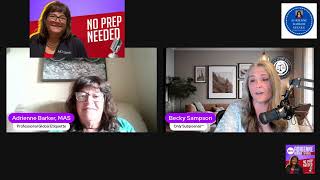
Becky Sampson founded Only Subpoenas after two divorces taught her how critical subpoenas are for uncovering hidden assets. Her company prepares and serves subpoenas for divorce attorneys and self-representing clients, and also offers coaching and education. She shares why rejected subpoenas are common and how to work with attorneys strategically.
Chapters
We live, we're live. Okay, today I definitely got the triple Bs. No, it's actually the quadruple Bs. Okay, so meet Becky Sampson. Brave, beautiful. I mean, beautiful. I think I've told Becky about 150 times. We did meet before over the phone, and then did I go on your LinkedIn and help you? Did we do a little?
Oh, we did. We, we played in there. Like, you were like, all right, let's go, let's go, let's go. I'm like, yes, that's how she works. I love it. I love it. That's how I work too.
So brave, bold, beautiful, and brilliant. So, all right, everyone, I'm so excited for you to meet Becky because what she does is so unique. So give us the whole story. Tell us who you are, what you do, and why. Like, I just, I'm just so fascinated with you.
I'm going to sit back, relax, and enjoy.
You take over the show. Tell us what, tell us all about it.
So I'm Becky Sampson. And I am the founder and owner, CEO of a company called Only Subpoenas. So there's a backstory of why I do subpoenas for attorneys. I do them for attorneys. However, I really specialize in doing them for divorce attorneys. So I got married back in 2018, ended up going to Hawaii on my honeymoon for a month. This is my second marriage, by the way. And, and while we were there, my former husband now ended up getting a job. And so we ended up moving to Hawaii. Well, during the process of moving to Hawaii, within 4 months, he had threatened divorce. And I had moved all of my life there. I packed everything up, went to an island where I only knew 2 people, and started a TV show. And then, like I said, 4 months later, he wanted me to sign a false or fraudulent tax return. And I said, I don't do that. And 10 minutes later, he told me that he wanted a divorce and he wanted a divorce fast. And then the very next day, I kind of sat down with him and I'm like, okay, tell me what is really so wrong in this relationship that it needs to go to divorce so quickly? And he's turned to me with all seriousness, in his voice and said the best thing he could have ever said to me, which was, I'm having a really hard time seeing the value that you bring to my life. And I was like, wow. So here's the good news. I know the value that I bring to your life. Whether you choose to see it or not is none of my business. And that started a journey. 7 months later, I served him divorce papers. At the airport on the way off the island on April 1st, which I did not mean to do it that day. It just so happened that the whole world was shutting down and the airport was about to shut down. So on April Fool's Day, I served him divorce papers. And 3 and a half years later, through a court system which I had no clue how to navigate, I represented myself for most of it, up against 5 attorneys, 21 subpoenas, 21 hearings. Um, and I was successful. So I, you know, I've always had this real soft spot in my heart for people who are going through divorce, especially now, because my first divorce was nothing. Like, it was, it was like we signed the papers, we didn't even see the judge, everything was agreed upon, and we left. Whereas this one, I had to learn from nothing to where I am now, which my nickname is Becky Brockovich, if that tells you anything. Like, um, I've just— I'm just a researcher, and I learned everything I possibly could about the legal system. And I am not an attorney. I don't act like an attorney on podcasts. So however, I do— I'm really about empowering people With the right information as you're going through a divorce, most people don't take educational classes on how to get divorced and how to get divorced strong. So I call it Divorce Strong, or the Strong Method, on how to navigate that so you can have a fair and equitable division. Because 44% of women coming out of divorce end up in poverty, and I get it. I totally, I fought for everything that I possibly could. I'm not for fighting for more than what's yours. But you've got to know what your rights are so that you can make an educated decision out of a divorce and really end up financially strong, emotionally strong, spiritually strong. Because that's really how I personally, it was a journey. It was a journey. Um, but I feel like I came through that, and I am happily now married for the third time and last. So, um, and he's the one that's really encouraging me to do this business because he's just like, Becky, you've got to help people. You just got to help people.
All right, so I have a bunch of questions for you, but I can't help but— like, my burning question is, um, is what TV show? Like, what? So you got a job? Like, what?
How did I do that?
Yeah, what kind of TV show? Because I mean, you're so beautiful. I'm thinking actress, actor, delivering the news.
Oh no, you're, you're so cute. So I have always been a networker my whole entire life. So when I— so 15 years ago, I ended up losing 130 pounds. And I think I discussed this with you the other day that I was like, I never thought it was beautiful, ever. Like, I came from a very attractive family, but I I was not the beautiful one. And so when I lost all that weight towards the last part of my first marriage, I was like, "Oh my gosh, like, wow." And the world related to me differently now. Men treated me differently. And in that process of being treated differently, I would sit in front of the mirror just going, "Okay, what's— like, who am I now? Where's my identity?" I'm still the same person, I just have a different body. I carry myself differently. So I have a different response from other people. So at that point, when I hit my goal weight, got divorced, and quit my job all in the same month of July 2010, I didn't know what I was going to do. So I reached out to this one gal that I saw was on TV, and I reached out to her. I'm like, "Hey, would you be interested in my story at all?" And she's like, "Well, I don't know if I have a lot of influence TV-wise, but I can put you on radio." So I ended up running her radio show for 2.5 years, and this was was actually go into a studio, into a little box in a room with a window. And there was a lady that was running the show. And I would talk to a microphone for 2 hours. Like, I, I literally cried the first show because I'm like, what am I going to talk about?
No.
And anyway, that went on to me doing a lot of different podcasts, internet radio before podcasts was even a thing. And then when I went to Hawaii, I I knew nobody. I literally knew 2 people on the island. That's it. And so within a week, I looked up all these networking things and I went out and I went to one networking event and this guy's like, hey, you'd be great for TV. Why don't you start this? It's a community TV show. And I thought, well, that's great. That will give me— that will force me to get out into the community and start meeting people and start interviewing them. So yeah, I did, I think, 12 episodes. Of that, all while I was still— I was a full-time student actually in college too. I enrolled for peacebuilding and mediation and all of that conflict resolution stuff. So, uh, yeah, I loved it.
Oh my gosh, so what you— what you went to school for literally ties into what you're doing now.
Okay, well, for that story, yes, because so the, the TV show happened first, and then one of the things that my former husband had was free education with his job. And so he's like, well, Becky, might as well finish your Well, I started in business. And then when I was going through this divorce and I was doing so much work in the legal system for myself, I was representing myself, I switched it to peacebuilding. And because that was more— I've been a life coach for many, many years and I'm like, I'm all about creating peace. But I found myself in one of the highest conflict issues and relationships of my life. And it was interesting because there was times where I was going to court and I was going to have to, you know, represent myself or send an email to the lawyer. And next thing I know, I'm going to class going, okay, you have to be peaceful. You have to like, your language matters. And I was like, oh, okay. So even one time I was walking down Honolulu, giving some papers to the attorney. And I was listening to this book. Called— it's called Anatomy of Peace. And it was talking about having a heart of war or a heart of peace. And I was just like, okay, my heart was definitely a heart of war at that point. And so I walked myself down to the ABC store. And I got a big bag of chocolates. And I delivered it with my papers to that attorney. That attorney ended up emailing me and going, was that you, Becky? Did you believe those? And, and I truly believe that that was a turning point in my case with my former husband's attorney, where I had to soften my heart because I knew I wasn't going to win the war with that kind of heart. And so that's— even though, um, we use subpoenas to uncover— for me personally, I help people uncover hidden assets so that they can have a fair and equitable division in a but you can still be peaceful. It really, that's just something that's so important to me, to be able to teach people to do it in a peaceful way and to keep your heart soft towards that person that you may be in high conflict with. Because that, that's a challenge.
Amazing. Okay. First of all, for your LinkedIn, I see this. So if you go on to like Canva with quote, I had to soften my heart in order to win the war. I'm Becky Sampson. That is a great quote. Yeah, it's really a beautiful quote. Okay, so I don't recall ever— I, yeah, I don't think I ever was served a subpoena. So for my friends out there that have never been served a subpoena, and, and maybe like I used to watch like Bounty Hunter and, you know, like the, you know, the TV shows where you've been served and then they run away, it's like, what the heck? So for anyone who doesn't really understand what a subpoena is and the importance of it, like 'Oh, it's just a subpoena. Like, what difference? It's just telling me that I'm being subpoenaed, that I have to go to court or a deposition or whatever that looks like. So what?' But I would love for you to really explain what a subpoena is and then the importance of it and what you do, how that matters.
Well, so here's the thing is, when you're going through— when you get married, it's a financial transaction. Most people don't even think about that, right? And I'm actually not for divorce. I'm telling you, I love marriage. I believe in the sanction of marriage. However, when you're put in a situation where you know that it's inevitable and you're getting divorced, there's all kinds of stuff that happens. One of the things that's very, very common is one or the other person will hide assets, or they'll, you know, they'll pull money out of the bank, they'll put it into another bank account. There's all kinds of shenanigans that go on. And one of the reasons I honestly that my husband now is encouraging me to do this. He was left with 21 cents after a 27-and-a-half-year marriage. His wife left him with 21 cents in the bank. And I know that because I've seen it and I've done the forensics, the financial forensics, to know what was going on. But so when I'm, you know, I'm also a divorce strategist. And during that, I use the subpoenas as a strategy. Okay. It's a strategy to be able to uncover um, uncover the assets that are trying to be hidden from the courts. And so it's not something like to go after someone, but a subpoena is basically a court order. I'm not an attorney, by the way. It is a court order ordering whatever organization, bank, school, counselor, whatever information that you need, it's a signed thing from the court order or from an attorney saying, hey, within 2 weeks or whatever, you need to be able to produce that kind of paperwork or that statement, or I need you to come to court to represent me. And yes, there's a process with that, subpoenas. However, because I'm not a licensed attorney, I don't do them for pro se people. I do them for attorneys. So it's all done through attorneys. And some people come to me that have an attorney and will end up hiring me to do the subpoenas through their attorney, um, or I can direct them to resources and all kinds of things throughout the United States to be able to, to figure it out on their own, because I had to figure it out on my own. And actually, it was because I was working with a, um, pro— well, he was in a— he was with Legal Aid. But he didn't have time to take my case, so he just mentored me. And the only reason why I learned how to do this subpoena was because they had subpoenaed me once. And he goes, well, there you go, there's your template, you know what to do. So I— and I, I wasted 8 months in my case, um, asking for discovery because, you know, you do a discovery that they don't provide the information, then you have to go back with a motion to compel in the court system. And then they go, well, you need to give her that information, and they don't give it to you. I'm like, stop asking for permission and go subpoena it. But, you know, if I talk to somebody, if they come to me and they're, they're just barely getting the— starting the process before they even get divorced, there's things that they can do to alleviate having to do the subpoena. Which really will help them gather the information so that they can have, you know, even ground to be able to go, okay, this is what I'm negotiating. Because if you don't know the information, then how do you negotiate? And oftentimes the court systems will push them to mediation. Well, you need all the information in mediation. So that was my problem is that we couldn't mediate because I'm like, where's the financials? Where's all the information? And I truly, truly believe and know that the reason why the settlement— I was offered the settlement that I was, was because all the information was on the table. I had discovered and put all the information out there.
I just want to process this for a second because I got to get this in my head. I was thinking you subpoena a person to show up like you said, but it's also subpoena to get information. So then, so then that subpoena— so is it like you, you want to have like one subpoena that has all that information?
No. So like, it doesn't matter. A bank account, that's one subpoena. Then another bank account would be another subpoena. And oftentimes people also don't know that you don't have to have the account number to subpoena. So it's, uh, there's—
you know, the bank or the person who's getting—
you can subpoena just about anybody but the IRS.
Why can't you? That's funny.
So yeah, so if there's information that's being withheld or that's not being given to you during your divorce case, you can subpoena and you don't have to have an attorney to subpoena. That's another thing that people don't know.
Say that again. That's crazy.
Yeah, you don't have to. I did all 21 subpoenas in my case without an attorney. So once I learned how to do it, then I did that for myself. And I remember when I finally turned my case over to the attorney that, that I had for a while, he's like, Becky, how in the world With you not being an attorney, did you get all these people to respond? And I'm like, well, I couldn't afford not to get them to respond. So that's one of the things too that I've also recognized and the reason why I even started this business is because attorneys don't have the time to do the due diligence to make sure that those subpoenas are done correctly. I mean, some do and the paralegal, you know, we recently, I'll tell you a story real quick. We recently had a court case last year and we were getting ready for a trial. And my husband comes to me and he says, you know what, we need to subpoena this person. And we called the attorney. This attorney has been like 35-year attorney. He's, you know, he'd been around the block a while. And I said, so my husband wants to subpoena these people. And he's like, no, I don't want to do that. And I was like, no, no, no, you don't understand. My husband wants to subpoena this because this is going to show this. Right, to the judge, because that's basically what you're doing is you're getting information for the judge. And then finally, our attorney was like, okay, well, fine, I'll charge you $500. And I was like, for what? You know? And my husband's like, I don't care, we need to do that. So we went ahead and did that. And within 45 minutes, I get off the phone with them, go do my due diligence, like I always do with subpoenas, because I'm very, very thorough. I call her back and talk to I talked to the paralegal and she's like, she's been 18 years paralegal. And she goes, no, no, Becky, no problem. I already sent the subpoena off to the bank. It's been rejected. And I was like, did you do this, this, this, and this? And she goes, how do you know? I said, honey, this is what I do. And, uh, so sure enough, I sent her the instructions and I, with all the stuff that needs to be done, and she sent it off and it went right through. So it's important. Subpoenas are just very specific. Um, and that is my specialty. That's my superpower. And, uh, so I support people going through divorce as well as, um, the attorneys. But here's the other thing that came to me a couple of weeks ago is that if 44% of women— now this happens to men too. 44% of women end up in poverty. Um, I was left with nothing on an island in the middle of nowhere, um, financially, and I had to fight like crazy to be able to, um, to— I applied for 45 different jobs and didn't get a job other than a college that I was going to was willing to pay me $10 to $12 an hour to do their podcasting. And, um, that's all I could get. And so I also am providing with the Only Subpoenas company, I'm providing opportunity for employment for people coming out of divorce.
Oh, that— I want to hear more about that. I want to understand something though. So, so the old idea that you've been served, but obviously the subpoena can also go via email.
Like, it totally depends on how— it totally depends. Every single organization, every single bank— this is the reason why it's tough for attorneys, because you have to get it correctly for that organization. So it— one organization may say, hey, just email it. Now, that's not normal. It's not a normal way of doing it, but they may take it through email, or they may take it through certified mail. They may take it through being served, like actually paying somebody to serve. Um, that is a totally different That's a totally different way of being served. So it's just that it's a little tedious, and that's the reason why you've got to do it correctly, or else you waste a lot of time and a lot of money. And those subpoenas may come back and you may have to do it all over again, which is more costly.
Bring me the dog.
You've got the dog. So yeah, so there's a lot of different ways. And again, it's a strategy. It's literally helping the disadvantaged because one of the things my husband— I love what he keeps saying to me is, is that, Becky, your business helps the disadvantaged, the people who are— that don't even know what they don't know. They don't know that they can get the information. Um, they don't know that they can, um, stand up for what their rights are. But what, like I always say, is that if you don't know your rights, then you don't have any rights. And so super important. And that's, that's really what I teach is I help, you know, navigate and direct people to where they can find out where their rights are for each state because it is different. The jurisdictions are different.
Sorry, the dog is barking.
That's okay.
Pest control is here. Okay, so, okay, thank you. Just give me the dog. Sorry guys, it is live, so Stay here, Fuzz.
I love this live stuff. Imperfectly perfect. That's how I do it.
Perfect. All of a sudden, the guy's like, lost control. Fuzz, knock it off. Okay, I'm sorry. He's a bad boy. He's a good boy, but he just— Okay, so hopefully that is not bothering— It's not going to bother anyone. Okay, that was a lot of information to process. So what would have happened? What would have happened if you didn't ask her those questions? And it's me, and I don't know, she comes back to me and she tells me, Oh, it has been rejected. Then what would happen?
You mean with the subpoena? If you've— well, the reasons why it's been— it's— it is rejected, whether it was done incorrectly, the verbiage, it was too— there's— that's the thing is, is that instead of trying to figure out how the subpoenas work, um, I happened to do it because it was— there was no other choice that I had. I didn't have the money to pay someone to do it, and I didn't know, um, I, I didn't know what I didn't know at the time. Um, and so it gets a little complicated because the penis— that's the reason why I do it for the attorneys. I just got off the phone with an attorney today that's been another 36 years, and she's like, oh, Becky, this and that. I said, no, that's the reason why I do it. Like, just, you know, so we're gonna start working with together hopefully, and and she won't have to worry about that.
I think I asked the question wrong, Becky. I definitely asked it wrong. What would have happened if you're not Becky, it's Adrian Barker, I'm doing this, the paralegal says, oh, I'm sorry, the information you want, the bank rejected it. Then what? Then, like, what am I— because I think I can hear myself going, oh, that's— oh, okay, that's too bad. Or how's that going to affect my case? I don't know if I would fight to say, wait a second, What did you— like, I wouldn't know what to do. So for all our friends out there, the three of them, what— how can they actually make sure that their subpoena is getting— like, like, what if that happens to them? They're told, oh no, it got rejected. Is it just let's move on to the next thing?
Okay, you bring up a really, really good point. If somebody is working with an attorney and an attorney— so attorneys, especially divorce attorneys, are very, very busy. And they're dealing with the high conflict, typically high conflict divorces. And so, um, or they can be, I should say. There are some people that specialize in, you know, no conflict divorce, whatever. So they're under a lot of pressure and they have a lot of things on their plate. Um, and so however, they do work for you, right? When you hire an attorney, one of the things— I'm about to write an article called Don't Marry the First Attorney. you meet.
Isn't that great? Oh, wait, don't mirror.
Don't marry the first divorce attorney you meet. Because it is a. It's. This is one of the most important relationships that you're going to have, especially when you're dealing with a high comp. I can't even tell you how many people come to me and say, I can't stand my attorney. They're not doing the right thing. They're not, You know, and so just gently remind them, hey, you know, they work for you, you do not work for them. So let's say that that situation comes up and they come back and said, hey, it's been rejected. Well, what are our options? What do we need to do? You know, um, because very few times would they be rejected. And the problem is, is that then they have to start all over again and do it again, and they usually don't have the time. Or is there something that I can help you with? So that we can make sure it gets through because we need that information in order to go to trial or to go to a mediation or to whatever it is. Don't just say no, just take no for no. You know, that just means, hey, that may mean I'm too busy and I don't want to do it. I don't want to mess with it. And my experience of attorneys is that they're very busy and And subpoenas are kind of one of those things that you have to be careful, and sometimes they don't have the attention and the time to it. Um, and that's the reason why, you know, my company is going to be, you know, taking that pressure off of them so they can win more cases and have the information that they need, and they don't have to mess with it. Amazing. But advocate for yourself.
I wouldn't even know to advocate for myself on a subpoena.
No, that's—
listen to this podcast.
Most people would— and this is, this applies to any case through the court system. I mean, I didn't know that I had half of the rights that I did, right? Like, I had a gal come to me the other day. She did not have an attorney. And when— so talk about strategy— she was— somebody had referred her to me, and we had a conversation, and she was trying to look for an attorney, but she didn't have one yet. And I said, that's fine, you know, here's some things that you may want to consider before you go. And then I called back later, and she got an attorney. And she goes, oh yeah, Becky, I got this attorney. And it's great news because this attorney is best friends with my husband's attorney. I think they're gonna be able to work it out and everything. And, and, and she said to me that I needed to choose between alimony and alimony and half of the business. So I have to choose from one of them instead of both of them. And I said to her, I said, look, I'm not an attorney. I can't give you legal advice. Here's a, here's a resource that you may want to go and resource, I mean research. But I know that those two issues are completely dealt with separately in the court system. So it's not an or, it's an and. And her attorney didn't have the time, nor put her best interest at hand to be able to explain to her that she's entitled to both. So I had— at that point I thought, oh my gosh, like, this is what happens in the legal system, is that when we hire an attorney, we think that our job's over. I mean, we're done advocating for ourselves. But no, that's not true. That's just— that's— yes, can they go fight for you in the court, and can they— but, but you still need to advocate and go find out what your rights are. And an attorney an ex-attorney, I should say, I had a conversation with yesterday. She's, she's having the same experience. She's like, she helps people with pro se divorces, and she's like, Becky, they just don't know what they don't know. Like, I know, and it will cost them a lot of money. It will cost you a lot of money.
I love what you're doing. I think this is so important, the, uh, the subpoenas. So wait, so is your business ready to take business?
Yeah, yep, so you're ready. So yeah, I have two different types. I mean, one of them is the Only Sopinas, which is awesome because the Only Sopinas is gonna— we're gonna be, um, hiring stay-at-home moms because I really believe it's an important place for moms to be, and I want to be able to empower them financially. So they will be working since it's a virtual, you can be anywhere in the country. Um, also people coming out of divorce that need an income, like me, like I could not get an income, like, um, but they can work for my The Only Subpoenas. But then on the other side is my coaching where I do strategy and support groups. And I'm starting divorce camps, which is because I grew up at camps my whole life. So I'm like, bring them to nature, help them heal, help them strategize, and just come through. I just— my biggest thing is to be able to tell people there is hope after divorce. You're going to be okay. This is just temporary. It doesn't feel like it right now, but yeah, I love that.
Okay, so, um, so first of all, the website is onlysubpoenas—
onlysubpoenas.com.
Okay, so we got that on the thing. All right, so, so are you, are you okay to like pitch? So if there is an attorney watching, or I will definitely have a focus to get this in front of attorneys. What does the pitch look like? How are you selling yourself to an attorney?
Honestly, it— my job is to make it easier for the attorney, not only with their clients that are going through divorce, because I'll help them on the emotional side in preparing them, all their documents and things like that, for the attorney, because I realize the attorneys again are way overworked. Right? So if I can get them doing more subpoenas and make it a really easy and seamless, you know, takes 10, 15 minutes of their, of their time to fill all the information into the website, and we're going to do all the prep work, all the serving work, all the compliance work on that. It makes it super easy for them. Plus it's a free fee for them because it goes, they just pass that fee on to their client. and my fees are fairly, fairly low. So, um, because of my situation, I want to be able to make it easy for other people. So yeah, that's my pitch for the attorneys. For the attorneys also, if they want me to work with their clients on the coaching side of it, I'm, I'm happy to do that as well because that's going to take some pressure off of them. I know the first time I met with an attorney during my divorce, I cried for an hour and a half and he sent me a bill for $365. And I, I just realized, I'm like, that's the last time I'm going to do that because attorneys will charge you whether or not they do anything for you or not. And that's just not— they just don't want the emotion to come. They want the facts, they want the figures, and they want to be able to be able to quickly help you navigate through that. So taking all your emotions and stuff, that's what I also have support for too. So it, it really both businesses Um, feed each other.
I love it. I, I think you're gonna have a very successful business. I think it's fun.
This is—
it's gonna be rolling in. Yeah, why attorneys out there, seriously, and why wouldn't you want to—
why would you—
on your team? I mean, I would want Becky on my team. Becky is— so you're on their team, but which was a tagline I used, not on their payroll, right?
I love that.
You can use it. I stopped using it because someone said it sounded too much like I was selling payroll services. And I'm like, no.
No, but the thing is, is that if you can outsource the subpoena, which is the one thing that I see a lot of attorneys underutilizing, I'm like, why would you not outsource it when you can trust that it's going to be done correctly? And by the way, if for some reason, and I don't anticipate this happening, for some reason if the subpoena doesn't go through, they don't pay. So it's a no-brainer.
And also I don't see, you know, people, well, ChatGPT. No, because you have to know the knowledge in your head. In order to— maybe it could make things pretty, but you still have to understand those steps that need to be taken. I, even though we talked before, I learned so much. I'm, I, I am like blown away by your business because I think the business model is, is really thoughtful and incredible. And, uh, oh yeah, and I want to help you. So I want to come back to you with on LinkedIn to show you how you could do the campaign to reach the attorneys.
So that I know, and I, so first of all, let me put a plug in for you because I really, I mean, we were on the phone, what, 5 minutes? And you were like, and I, and I said to you, I'm like, this is so much like me when people call me about divorce. I'm like, okay, do you have a pen and paper? That's it. Let's go to work. And I don't ask them for any money. You know what I mean? It's just like, look, it's just, I have such a passion and you can tell that you have a passion for this too. Because you, you see things that other people don't see. You know what other people don't know. And so you're able to quickly— and, and it creates movement when you talk fast like that. You're like, I'm like, okay, I— and you create such value, um, in that relationship that when— and, and I truly believe this because I'm a business person, I'm also an entrepreneur and a marketer— it builds that relationship of trust that when they're like, oh yeah, she's my girl. Like, when I come back, we got to do this. Like, so I really, really appreciate because—
thank you so much.
You don't find them very often.
Your marketing should have your photo on everything. Um, I think that, that— no, seriously, I— because, and, and you're also very— you're beautiful, but you're very wholesome too. Like, there's like, like the— it's just like a comfortable feeling. Um, so And I think that's what it is. I was a SCORE for 8 years, so I heard a lot about different businesses. And SCORE is an amazing— I love being a certified mentor and chair here in our community. But when you really hear a business that you're like, okay, this business is only going to be successful, it's got every single thing to make it successful. I mean, I just am so— I love doing SWOTs and I'm like, gosh, Really, the only threat I could see would be an attorney rushing and not caring or thinking that they hire someone that could just say, I'll do it on AI, and then the rejection.
No, it doesn't.
It doesn't work like that, right?
No. And the wonderful thing is, is I've always believed in business, you have to have a win-win-win-win. Like, I, it's not just a win-win. Like, this is a win for the people who work for me. The Only Subpoenas, because they're— they have income, you know, as much as or little as they want. It's a win for The Only Subpoenas and growing the brand and getting out there. It's a win for the attorneys because they don't have to deal with all the hassle of the compliance and making sure that it's going to go through and all this other garbage. And then it's a win for the people going through the divorce or that's in the, in the court case because they get the information that they need. And I'm like, okay, this is It's it. Like, I love it.
Okay, one last thing, one last thing, because I'm thinking to myself, yeah, you said don't marry your first attorney. So if I was going to talk to attorney, I feel now I have like, may I ask you how many subpoenas you actually have approved? Because they must have a percentage, right? Like, how— because that would— what if so, they said to me, well, you know, not every— if they said to me, if they answered, not every subpoena goes through, I would be like, okay, wait a second, that to me is a little bit of a red flag now that I've learned. What do you mean? Like, why is it not going through? I would ask. And I want— like, I'm not saying that that's the only reason why I would or would not work with an attorney, but I think it's an important one, especially if there is a lot of, um, information that's needed for the case. Am I—
well, hopefully you don't need subpoenas. Let me just start off with that, right? Like, hopefully you don't need them. Okay, I wouldn't be— that would— that wouldn't be my first, um, thing going in hiring an attorney. I really would Interview the attorney to see how they feel, how you feel with them. How do you communicate? How do you ask them questions like, how often do you communicate with your clients? Do you have any kind of an educational, you know, how do you educate me on the system? And they said, no, we don't do that. You know, if they're really stickler on their money, like they're charging you every 6 seconds and every 6 minutes, I probably wouldn't For me personally, that was— that wouldn't work with me because I'm a communicator. And so I ended up having an attorney that did a flat fee, which was great because he was available to me at all times. But the relationship, like, if it's already strained from the very beginning, there are signs, then it's probably going to be strained through your divorce. And then you're going to get to the point where you're going to end up having to fire them and start all over the process. And that you do not want to You do— that's like going through a whole nother divorce again. So I, you know, there's very specific questions, but it is a relationship. And realize that you're, you're, you're trying to— many years ago, I hired and fired a lot of people in my industry. Like, I, I was a property manager for a large apartment complex and actually worked for an attorney. But I, when I first started hiring people, I just didn't ask the right question. And now, after I've talked to so many attorneys over the years, You've just— you, you've got to spend the time enough to interview them. What's your retainer? How often do you, you know, want to get paid? Or what's, you know, what's the process of communication? And what's the, um, you know, how do we get documents back and forth? Is it just through email, or do you have a system? Or do you have a paralegal that I can work with more often? Do I pay the paralegal the lower rate versus the higher rate to you? Or would you prefer How can I help and assist you in the thing that I'm not a bother, but I'm, you know, and how they respond to all those things matters.
Wow. You know what's weird is I just realized that I was divorced before. Sorry, Steve Colbert. I, it's so funny. I'm like, I'm like thinking to myself, oh, I never went through this. And then I'm like, Adrian, it's been almost 30 years. So it's like another part of my life. And I remember it was like one of those things like, oh, the attorney's a killer. You know, she wins every case. Like those are the things that you go in. And that's all you know. So you're thinking, okay, this person's coming so highly recommended, not even sure who. I think my mom helped me. But, um, but at the end of the day, I mean, I guess, I guess it was, it was all ended, um, great. But, but, oh, I— this, this was really one of my top interviews because I learned so much. I really didn't realize all of, all of everything that's going on. And you have so many quotes in here, and I love what you said It's a financial— a marriage is a financial transaction.
Yeah, and I hate to say that because my mom, when things got tough, my mom said, Becky, it's just business now. Pull your big girl panties up and get to work. And I wasn't left with a choice. And so I would have loved to work on it. I told them, I said, like, look, I never in a million years thought I'd be divorced once. Let alone twice. And, but he was not willing to give me an option. So yeah, at some point I had to just pull my big girl panties up and get to work. And every day I had to wake up and just go, okay, just for today, and mentally, emotionally, spiritually prepare myself to go to all those hearings. And self-care became my number one priority. I had to take care of my mindset because my greatest weapon— and I hate to use a weapon, but my greatest tool, so to speak— was keeping my heart soft towards him.
Oh, oh my gosh. Okay, so this was an amazing, amazing interview. You're just joining us, go back and listen. And Becky, with only subpoenas, is there anything that you wish I would have asked you that I didn't ask ask you.
Oh, you're— I, I've done so many podcasts and radio and TV. I always believe that whatever came out was supposed to be whatever it was supposed to be. I never edit any of my things. I mean, obviously, if, if people want to work with me, uh, beckysampson.com is also my personal professional website that goes through all my coaching and stuff like that. But I just, I just— my heart goes out to so many people who are suffering in this space Um, however, it is temporary, and, um, and I have all the love in my heart and support to, to this community. Um, yeah, I love it so much for giving me this opportunity to come and just be the shining light that you are too. I just— I know we just had a little bit the other day, but I, I got off the phone and I'm like, oh my gosh, this lady's amazing.
Did you tell Nico we said hello?
Yes, I did. I did. She was so happy.
She was really excited. I love it. All right, this will be turned into a podcast. Thank you so much for your time.
Thank you, everyone.
So wonderful. Have a great, great rest of the week and weekend. And wait, what state are you in?
I'm in Utah now. It was in Hawaii, so aloha I will still say. But I'm now in Utah, so—
Oh my gosh, it's gorgeous there. Wow, you see the mountains?
I do. And, and we're raising some cows. We're about to have a cow in a month. I told my husband, I said, can I domesticate this cow? Harness on it and bring it inside?
Yeah, I love that. That's so— Oh my gosh. Okay, that is awesome. Thank you so much. Have a great rest of the day. I love it. I'm gonna end the stream. You have been an incredible










