Let's Meet Jake Setterlun
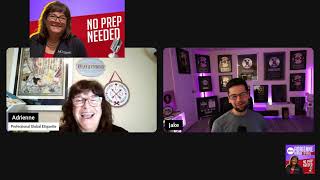
In this live, unstructured interview hosted by Adrienne Barker, MAS, Jake Sutherland (also referred to as Jake Sutherland) shares his journey from a mechanical engineering student who built prototype products to a digital architect running multiple niche‑focused marketing agencies. He explains how his agencies use GoHighLevel’s white‑label platform to deliver a repeatable, done‑with‑you system across real‑estate, insurance, home services, and health & wellness. Jake stresses the importance of deep industry knowledge when crafting marketing messages, warns against generic "boosted post" tactics, and outlines a data‑driven ad‑spend ROI framework. He discusses the structure of his business (the "octopus" model), lessons from rapid scaling and failed outsourcing, and offers practical advice for newcomers— from doing free work to building credibility. Adrienne interjects with her promotional‑products background, challenges Jake on funnel ethics, and explores potential collaboration, while both discuss emerging platforms (Clubhouse, AI/ChatGPT) and the value of unreasonable hospitality in client relationships.
Chapters
I'm, I'm all for that.
All for that. Yay. Okay everyone, it's another live. This time we're a little late because of, uh, that what I'm using. I'm not going to say StreamYard, but StreamYard, really, you could do a little better. Okay, so anyways, who is Jake? So Jake is in front of me. Jake, your last name is Sutherland. Sutherland. I love it. Okay, so let me just say Jake is brave because he has no idea the questions I'm going to ask. On the other end. I don't know either. He's, he's handsome as can be, so I won't use the word beautiful. And he is bold because he's going to share his story with me while I get ready. I'm going to sit back. And Jake, because this is no prep needed, which means literally I did no prep at all— I had to ask you how to spell your last name— seriously, no prep. You knew that coming in here. So let's have you introduce yourself. I'm so excited. Maybe he's a mortician.
I am not a mortician. I'm sorry to burst that bubble, but no, I've, I've been in the online space, um, you know, kind of owning online businesses for about 10 years now. I started in college, I was 19 years old in school for engineering, and long story short, realized the corporate world isn't for me and got into trying to do my own thing. I started a little prototyping business. I learned very quickly that you can start a business and people don't just flock to you wanting to give you money. So I learned marketing, and then learning marketing kind of shot me into the whole online marketing scene with doing it for other people. And that's what I do now. I own a few different marketing agencies. I got a lot of other stuff going on too, but marketing is kind of my main gig.
So behind you, I see it looks like Plaques, maybe?
Yes.
What is behind you?
I am— I'm not a music producer, I promise. Um, everybody says because they look like, um, the, the plaques that you get for, you know, lots of music views and everything. But, um, so I don't know if you're familiar with ClickFunnels or GoHighLevel, but basically they give out different awards for doing so much business with them. I know that sounds kind of crazy, but each one of the awards represents a specific milestone that we've gotten. So The gold ones are for generating 7 figures in revenue. The, uh, silver platinum ones are for 8 figures in revenue. And then the, the other black ones, you can't really see them too much, but, uh, those are for having, uh, X amount of users on GoHighLevel. So just some like a little awards that I've gotten over the years.
So Jake, I grew up in the promotional products and awards business. My parents started the business over 50, 75 years ago, 1955. Do I know awards? And it's not a little award. And those awards are— they look expensive. They probably— they weren't, you know, $10. And so I just— everyone tell Jake he should not be like downplaying the fact that you got these awards. That is huge, huge, huge, huge. And they do look great. I remember years ago we used to do for American Idol when they were at Disney and we would do the American Idol. It was really cool. Those are beautiful. Congratulations.
Thank you.
That's huge.
I appreciate it.
I know a little bit about HighLevel, but I think for my listeners, the 3 of them out there, maybe you should share about HighLevel.
I can do that. Yeah. So HighLevel is an all-in-one marketing tool. But what's unique about HighLevel is that they allow you to white label, which basically means we can put our logo, our branding, our domain. And make it look like our own software, I guess you want to call it, that we can give to our clients. So part of us doing marketing is obviously advertising, and with advertising you generate a lot of leads and appointments. And thankfully, GoHighLevel has a really good system to manage leads and book appointments. So we're able to use GoHighLevel to give to our clients as kind of like a home base to manage everything that we do in terms of marketing for them.
Oh my God, that is awesome. Okay, so I had no idea actually about the blind labeling of HighLevel, so I find that fascinating. So, okay, so 10 years ago, you're— this makes so much sense. You're in college, you're studying engineering, you said?
I was studying engineering, correct? Mechanical engineering.
Okay, that makes sense. And then you kind of gravitate towards digital marketing.
Is that what that's Yep. The stepping stone was prototyping and then digital marketing. But yeah, I mean, it was pretty quick into marketing and the marketing world.
Prototyping. Like when I think of a prototype, I think of like a product, an actual like, yeah, 3D product.
Yeah, that's, that's exactly what it was. Because I was in the School of Engineering, like a lot of what we were doing was hands-on work. So I was doing prototyping for individuals. So one of them, we prototyped a rescue drone for firefighters. Now this is drones back in the day. When they weren't, you know, little pocket-sized things, that they were these big, uh, vehicles or aircrafts, whatever you want to call them. I mean, like, almost like, you know, a, a model plane. So I did that. I prototyped a little bear that you could give to kids with a button in them that would call 911. Um, a lot of weird stuff. Chopstick holders that you could sell to restaurants as, um, you know, their logo, that you could hold chopsticks. And so, like, a lot of weird little stuff I found myself getting into.
But with what, like, were 3D printers available back then?
Yeah, they were, they were, they were these big things too. So again, it was just the, the start of all that, like, 3D printing and laser engraving and all that kind of stuff.
Oh, it's got— because in the pro— the promo business, same thing, like, we, like, but we wouldn't do it, we would farm it out and get like a custom product. And so that—
wow. Yep.
I didn't even— I actually just, I haven't even really seen a 3D printer spit something out. So I, and I heard, I think there may be one, there's like working labs and libraries.
Okay. Yep.
Libraries may have the 3D printers. Okay. So you, you're doing that. And then at what point do you say, I think I can make this my business?
Yeah. So it was really, so I started, you know, that, that turning point where it was like, I can make this my business. I had that before I got into all those prototyping projects. Um, but all those projects were through school, through networking, and I wasn't getting paid for them because I was like, I gotta build my portfolio. So eventually I was like, I can't keep doing free work, I need to get paid. I learned marketing because I was like, I could try to get some customers. I had a little bit of a portfolio, and I realized like this marketing stuff is great. I don't have to leave my house. I can do it all from home. I can just sit by my computer and talk to people and work with clients. So that was like, okay, like I'm done meeting with people. I'm done doing free work. I'm going to start this marketing agency and get into that whole realm of things. And it was really just a decision that I was like, hey, like I could do this from everywhere. That nomad life or remote lifestyle where you could work from home. I always say that I was a trailblazer because I was doing that way before that was just a thing everybody does now. But yeah, that's kind of the pathway into marketing.
So you have a few businesses. So you mentioned that you have a few different businesses. So is each one focused on a different section or sector of marketing?
Yeah, so it's a couple different products and then a couple different sectors. So our main— I call like my main gig, but like our big company is HighLevel. And then the same product just taken into different industries. So we're in real estate, insurance, home services, health and wellness. That's, that's kind of our big, big gig, big company. And then we have a couple other agencies that offer different services, completely different from, um, the big company, which those are more like different unique things like SEO and stuff that we don't offer with the big agency.
Okay, I love this. All right, so I've been talking about this, uh, for the last couple days, and I want you to like totally be honest, say, Adrian, you're wrong, or you're right. So what I find— so I'm the LinkedIn whisperer, I love LinkedIn, and I'm really good at LinkedIn, and I do lead generation for my clients that I, in essence, show the juice, and then I do that. What I, and I have a lot of niche markets, but not that this is about me, but I do, you know, being 35 years in the promotional products business, I had an opportunity to work with pretty much every business, including celebrities and their fan clubs and creating their company stores. Then I spent 8 years with SCORE as a certified mentor volunteer. So 400 hours a year. So when a company comes to me and says, hey, Adrienne, this is what I want you to do. I accept that if I understand the business or I'm willing to learn the business. So this week alone, I had one client that said, wow, you're, you're giving me more time than someone who was doing it last year and did it a year ago and wasn't even interested in my business. And then I had another person say to me, well, I don't know that business. So there's not really much I could do. But yet you took the job. And you took this role. And so I really, I actually started writing an article about this. The importance, I would like for you to talk about this, the importance of really knowing. So it sounds like you have niches, so that makes sense. So hey, I know the real estate market. What is it like for a social media person? And make me understand why you would, as a social media marketer, take— and not just social media, digital marketing— why you would take on a business if you're not willing to really learn and understand that business. And maybe that means, you know, really going deep and to understand it and how successful can you be if you don't understand it.
That's, that's a really good, good point. And I think it really comes down to how big do you want to grow? And, and I'll kind of clarify on that because there's like those big, big, big agencies that work with Coke and Pepsi and like nationwide agencies and Um, we've never been one to try to get into that space. It's always been small businesses and focused down. And really the biggest thing I think is the market of, you know, just marketing, marketing umbrella. Everybody does marketing, their neighbor does marketing, you know. I could find somebody on the street that does Facebook ads. Like, it's just, that's how it is. And to be able to stand out, and I, I think, you know, it's flip side, like to make money, number one, but then also to really produce a good result for your customer, you need to be honed in on like specifically how am I going to market that customer? How am I going to market to the customer? And when that messaging just clicks on both sides, it's a win-win. Um, you know, on the front end in terms of your offer, if I was just saying like, hey, you know, real estate agents, we can post on social media for you as an example, I'm not speaking to that agent. Again, everybody's saying that they could go to any place and get social media posting. But what I'm able to say, you know, Mr. Real Estate Agent, I'm able to reduce the amount of time you have to spend calling leads. I can get you qualified buyers on your calendar, and the end result is 5 closings in the next 90 days. It speaks to their pain points and, and what they actually want, which is closings. So on the front end, it helps you sell more people and work with more clients, but then on the back end if I don't know anything about real estate— again, real estate is an example— it's going to be really hard for me to get over that hump of actually learning about that industry and then having to produce different marketing messages for them. Because I feel like marketing's been simplified where it's like, I'll just run an ad and we'll just post some stuff and whatever happens happens. But if I really want to get a good result for that real estate agent or for that client, I need to reverse engineer how is the end consumer gonna actually, like, think about the message that I'm giving them. And if you have to do that for every client, I mean, you're gonna either have to charge a lot of money or you're just not gonna, you know, you're gonna spend a lot of time working with that individual. Um, so that, that's really on the customer side, that we're able to get them better results by really understanding their market and what drives somebody to reach out to them through our Okay, so let's have you share.
So you're going to speak to those that are thinking of going into social media or thinking of going into work with AI when you really don't have a lot of business knowledge, you haven't really been in business, or maybe you're an influencer that is very good looking and you've been able to influence people to buy my pretty scarf and here's how I decorate it. So hold on for a second, my assistant. Alexa, stop. I love Alexa. Okay, so you— so I want you to talk to that person that says, Jake, listen, you know what, I need to make some money. I know how to use ChatGPT. Why can't I just take the job with the dentist office? All I have to do is go to ChatGPT and ask questions, and I'll do some campaign and reach out to Oh, I don't know, people that everyone needs their teeth cleaned. So my client, their clients will be everyone, every single person I can market to. What would you say to that person that wants to use ChatGPT and really has zero knowledge and thinks everyone's going to buy?
So I definitely think you could, you could make that work, right? Like you could, you could definitely wing that and make it work. But to really, again, I know a little bit about that industry, but then really just businesses in general for you to really make an impact. If they just hire you for social media, that's fine, but that client's only going to be a couple hundred dollar client to you because the value of you just posting on social media or doing their, their emails or something like that, it's not something that's, you know, like a super like big lever that you can pull to get them a big result. Getting a dentist specifically a big result is running direct ads to get, you know, Invisalign clients or, you know, people to come in for checkups and then helping the dentist ascend that person from the cleaning and checkup into, you know, a recurring client or, you know, other upsells that they might have, uh, teeth whitening, something like that. You're able to make that dentist a lot more money by really understanding, you know, what's that client value ladder for the dentist and how can I bring in people on this lower level and then ascend them and help the client, the dentist, ascend them into that higher paying customer. But then, you know, also digging into that, it's okay, I can run ads, I can get leads, but that dentist doesn't know how to convert leads. So now you have to put something in place to convert those leads into appointments, and then those appointments don't show up. So now you have to put something in place to get those appointments to show up so that they're actually paying the dentist. So it's like that whole spectrum If you don't understand that for that specific industry, again, you could, you could do a little job, but you become replaceable and you're not really getting the client the best result as possible.
Okay.
Yeah.
I hope you're all listening to that because, you know, people are experts at what they do and Jake has given some really great information, not just for the social media, but for the buyer, the person that's like, I'm looking for someone. Oh, I'm over here. And I'm like, I could do that for you for nothing. You know, a couple dollars, I'm okay. Or the cookie cutters, like people searching out there, I need dentist templates and all of that. Okay, next question, because I am absolutely loving this.
Yes.
Is, um, but Jake, I, I, all I need to do is I'm just going to follow— my client's going to give me $500, I'll take $250 of it, and I'm going to boost their posts. And I think I know the audience, I think I could do this. What do you say, Jake?
I think unless that client— like boosting posts, you're gonna get views and, and maybe some clicks, but it's not something that's predictable and trackable. And if it's not predictable, it's, you know, I guess reverse that. If it's not trackable, it's not predictable. And if it's not predictable, it's not scalable. So the biggest thing is you want to be able to say, Mr. Dentist, let's spend $1,000 this month on ads. Again, not boosting posts. We're talking going in the back end of Facebook and, and setting up a real campaign to get leads. I can tell that client, you know, based off our track record, with that $1,000, we're gonna see 50 leads come in. And then we're gonna start to track how many of those leads book an appointment, and then how many of those appointments show up, so that then you can go back to the dentist and say, okay, one client is worth $500 to you. Out of those 50 leads, we were able to get 25 of those to book, and out of the 25, we had 80% show up. So now we had 20%, if I'm doing that math right, we had 20% come into the office and pay you that, you know, or excuse me, we had 20, which is 80%, come into the office and pay you that. 20 times $400 is worth $8,000 to you. You're paying me not $500 now, you're paying me $2,000. You're still making money and, you know, go ahead, upsell that client into something else that's, you know, more expensive. So it's, it's all, I mean, unfortunately at the end of the day, it's like time is one of those things that if somebody wants to save time, they're going to hire somebody in-house and you don't want to be that person. And that, you know, as a freelancer, agency owner, consultant, whatever you want to call that position, you're not in that position to save somebody time. You're in the position to make them money. And if you're not making them money, they're gonna find somebody else that, that can do your job that is gonna make them money.
Hey Jake, I wonder how many thousands of dollars goes in the toilet that people spend. Because when someone says to me, can you do Facebook ads? My answer is always like, you are better off taking your money and throwing it into the toilet bowl because I don't know what I'm doing and you have to hire an expert, or you're in a committee and you're in a board and that. So I, I could do the Facebook ads, you don't have to hire someone. I'm like, oh Oh, what are you gonna do? And then they get all nervous, and then it turns out they're boosting. And I'm like, I'll say to the president, you might as well just take your money and throw it in the toilet. Yeah, right. It's— it becomes toilet water because if you don't know what you're doing— so, and people just think that they do. So I want you to just really, really make it clear why and the importance of hiring someone that really is an expert and what that means. Please We need to just get this out there now.
Yes, absolutely. So hiring an expert is going to be more expensive. Like, it just at the end of the day is. But when we're talking about spending more than $100 a month on advertising, you want to work with the expert because that expert knows how to get results. They don't know how to get views, they don't know how to get clicks or likes on a post. They know how to actually get people coming to your business. And it's worth it in the long run to pay somebody more to get you real results than it is to, you know, cheap out, pay somebody that can just, you know, maybe do it. And again, they've never actually, you know, they don't have a track record. They've never actually gotten those results before. So it really comes down to like actually getting a result on the work that you're paying somebody, or on the, the money that you're paying somebody. You want to get a result for that.
I think it's valuable information for those that have a small business and are saying to themselves, I need someone on social media. Should I hire Joe's daughter who's 16 and said she could do it? No, you don't do that. Okay, let's switch gears for a second. Funnels. Now, first of all, I like my funnel that I could put my little magnesium in and my little, you know, whatever. But funnel funnels, I will tell you, I am not loving funnels. I'm not a funnel lover. I personally don't want to do a funnel, and I had a situation with the funnel. So going to a big event was booking, and all of a sudden it had the price, right? So I said, okay, I'll do the silver price at $49.99. I don't need to do the gold. Then I got— I went to go pay it, clicked it, and got into another one, and it said, do you want to add, like, you want to upgrade for $50? Learn more. Guess what? When I click, click learn more, guess what happened?
You got charged.
I'm like, this has to be against the law. That I did not charge. I did not say I want to be charged. Why are you charging me? And I'm like, that is crazy. And the worst of it, it's not even like a good deal. So first of all, it was like, oh, you can now get the next ticket for your friend for $34. And we were both doing it at the same time, so I was like, oh man. But then I— she didn't click the learn more, I clicked the learn more, I got the charge. And yes, they're going to refund me in 10 days, but I was like, this is why I don't like funnels. And then like going and now I'm getting more emails and I do sometimes, I don't know what to liken it to. I wanna say used cars, but I know it's not there, but I just don't, I get, so explain to me, talk to me like with me say this. I don't wanna do a funnel because I just think that it's just constantly trying to get them to buy something and sometimes they're buying things that they don't even want because they click this, this happens a lot. I try to support a business, so I'll go, okay, I'll go for the $9, that's fine whether I use it or not, I'm happy to support that person. Next thing you know, I'm like, $200 later, I didn't— what the heck happened? So help me, Jake. Help everyone out there.
Yeah, absolutely. So first of all, I will challenge you on your idea of funnels because that is definitely a funnel. But what you do on LinkedIn is also a funnel because it starts with engagement and then it goes into, you know, some kind of conversation and then you're funneling them down into a lead and then, you know, wherever they go from there. So you could really look at everything as a funnel. Me and my business partner joke that, uh, Tinder or Bumble dating swiping app is a funnel because it's like, how many people do I have to swipe to get them in my inbox? And then how many people do I have to talk to to actually go on a date? And then, you know, so everything's a funnel. Now with what you're referring to though is definitely where marketers get a bad name for those shady tactics of, you know, charging people and making it too easy to be able to charge somebody. So I'm right with you there. I think there is, you know, unfortunately some bad actors, but what I will say is even though you don't like that, there is definitely a place for those funnels and upsells and upgrades. Um, as long as they're done properly, having just, you know, a button that says learn more and you get charged is absolutely wild. But we actually do that with our company. Not again, not to that extent. It's very clear, like, hey, you're going to get charged. But somebody comes into our, our service and is like, hey, I want to, you know, transact with you guys, I want to buy your product. And we actually send them a checkout. So it's like, put in your credit card, this is how much you're going to get charged. And then after they submit that, we have two different upsells. That one of them's, do you want a priority support and like a dedicated account manager? And then the other one is a marketing program that we have that we upsell them just a couple hundred dollars. And In the grand scheme of things, it definitely does help just overall get more money and increase LTV from customers. So I can't hate on it too much, but there are some bad actors in the, in the industry for sure.
In the funnel business, I'm surprised that they— well, I know that the Attorney General in October has made a new ruling that you have to make it as easy to unsubscribe as it is to subscribe. So I wrote, I wrote very nicely, oh no, I understand. Um, because she's like, oh, you were in charge. And I'm like, yes, I was. So I sent the picture. Now I'm on text, so email to text. And then all of a sudden there was like no response for a couple hours. I said, hey, no problem, I'll just do a chargeback.
That'll get you good. That'll get it.
But that gets the eyes on it, right? Because I, I like— you just have to do things right. And so, um, but I agree with you. And my, my friend partner Sheila always says, when done right, Adrian, it does work. But I, I purposely don't have it on my website. I have what I do. And because, you know, I figure when you're passionate about something and you believe in it, then you should promote it. And as I said, I never mind— I, I kind of like after a couple weeks getting an email saying, okay, now are you ready for the next step all at once is a little bit like too much. Um, but, but I love how you explained it, and I totally, I totally get it. And it is like, okay, you're gonna buy a car, now do you want your oil change? Or, oh, you're going to the restaurant, you're getting lobster, do you want the garlic-infused drawn butter or just the regular butter? Garlic infused, of course. Do you want, do you want a salad with or without tomatoes? Tomatoes. So I totally understand that. I love it. So, all right, so how many, like, so like like what is the business that you actually run day to day? Or are you the CEO of all the companies? Like what does that look like?
Yeah, so I am, I'm a 33% partner. So I have two other partners in the agencies. We have our parent company, kind of, we call it the octopus, probably not the best visual, but basically you have this, the center of the octopus, which is our management company. And then we have different tentacles, and each one of those tentacles is a different industry. So like I mentioned, real estate, insurance, home services, health and wellness, and they all funnel into the funnel. They all, they all go into the head, which is the GoHighLevel account, which is our, the, the white label software that we send our clients into. And our product offering across the board is the same in each industry. Um, Obviously the deliverable is different because it's a different industry, but the actual, you know, what we do for the client is almost identical throughout them all, which is we set them up with advertising and then we set them up a qualification application. So the ads run into the application, which, you know, leads are filling out saying, I'm at this stage in the buying process, I have this budget, name, phone, email. And then with that, we give them voice AI. So the voice AI will call up the lead, book them into an appointment, and then the client's managing that all inside the software. So we're doing that for all the, the different industries. Uh, ads are different, qualification application is different, but that's, that's our offering. And it's actually positioned like a done-with-you type of system, not done-for-you. So for us, we like to sell hamburgers, we, we don't like to sell steaks. So what I mean by that is we want to be able to serve everybody. And for us to do that, we have to have a, you know, pretty affordable pricing. And with affordable pricing, it means we can't unfortunately just do absolutely everything for them. So it's done with you in terms of we're going to set you up the system, it is going to be functioning, you can take it, you can run with it, it's going to be a driving car. But after that, we're not going to tell you where to go with it. And that's kind of how we positioned our offer to be able to help as many people as possible is we're going to set you this up, you're going to take the system and you're going to use it how you want.
I love that. Okay, so I'm going to ask you something. So almost you per— you help to personalize it and then you can tailor more as they go on. Okay, so let's talk for a second. I want to talk a little business here. If you're on now, it's a time to turn it off. Turn this off. Now I'm kidding you. But you're gonna listen to my asking Jake a question. So Jake, I don't know how much you know of the promotional products company, but I love that you have enough to know and awards and that you're making prototypes. What if we work together? What if I said to you, hey Jake, I know the industry like the back of my hand, 35, well, ageism sucks. So really at my age, which I'm not gonna say 62, 'cause nobody needs to know I'm 62. I have over 40 years experience. My parents took me right out of college. So my question to you is, what if we work together because I have all the background to actually work with the industry because so many people in the industry, there's one guy doing social media. If you're watching or listening to this, don't take it personally, sir, but cookie cutter. So everyone gets the same like cell phone cover artwork and then maybe they don't know the same people, but they may. And so it's easy to see and it's not really exciting or motivating. I don't know if people are even buying, to, you know, really kind of creating something that would make sense, like doing ads for them. Would that be something that we could talk about off mic?
That is absolutely something that we can talk about. You know, we have kind of a little carved out section in our business that is for anybody because we have people that'll come in as a real estate agent. It's like, hey, I have a cleaning business on the side, or I have this random thing. Um, trying to think of just some of the, the most random stuff. We— dog food company is one of those. So absolutely, that is something that, you know, we have it set up. That— the only thing is that does become a little bit more personal, like we talked about before. We have to go in and we have to learn that industry. And there's a lot less warranties, guarantees, whatever you want to call it, where we're very transparent, like, hey, we can help you set this up. We can't guarantee anything. We don't know what the results are going to look like. We can work with you and give us— give you our expertise, um, but it's a little bit less on the ad side because again, you know, we're not experts in advertising for award companies. We are experts in setting up the software, so we can set up the systems, we can do that. We're going to work with you on the ads, but you know, it's very transparent in terms of, you know, We don't 100% know if you're going to get any results.
I could be your EOD though, your expert on demand. And then that way you've got the knowledge, you can help me to help the industry because I see an industry that really has an issue with trying to, you know, do these cookie cutter and templated, you know. So I concentrate on LinkedIn because that's my jam and I'm really good at it, which by the way is so weird to me. I get so many emails like, Adrian, would you like 161 leads? What would I do with 161 leads? And the other thing too is I'm in people's LinkedIn. Like, I actually am in their LinkedIn doing the work for them. So I'm not gonna give their LinkedIn to someone else to do. So by my own virtue and ethics, I have put myself in there, but there's other things and other programs and other ways. And a lot of them love Facebook, which is great. I have a Facebook, but it's like, you know, just more like, look at me, I'm eating lobster today. You know, or Instagram, right? Or TikTok. It's really, you know, funny. I'll sing out loud in a restaurant just to get kicked out. Like, you know, the funny things that we do. Oh, by the way, I don't know, I have to mention this. Chatter— have you heard of Clubhouse?
I have. I've never used it. I do know what Clubhouse is, though.
So I'm on Clubhouse Thursday morning, 7:30 to 8:30. There's about 200,000 people in Breakfast with Champions, but there's so many other groups. And then Nelson Apega, who has a great story himself, he started Chatter Social, which is a real experience. It's audio and video, so you could be like this on the phone. And then people— then, um, there's a podcast called Debate the News, which is now number 5, where you have real live people on camera with an amazing— Jerry Malcolm is an amazing, like, DJ and moderator. And they have the right and the left coming together to talk politics, arguing. Grant Cardone comes on almost nightly. He came on last night even though he's like losing his voice. He looked like he was exhausted. This could be Cindy Stumpo from Stumpo Developers. Cindy's like a most amazing woman developer. So you've got some great people. John Ledger comes on. There's a lot of great people. Um, singers come on. Uh, so anyways, but it's a fun app. And I always say, if you know social media, get to know Chatter Social because V2 is coming and it's pretty incredible. Right now it's by invite only. It's public beta, so I can get you the invite, but it is something that's so unusual. I was working with a client today who has beautiful crystal bowls, and I'm like, you could literally be selling on Chatter and have, and, you know, have your video and you're sharing things. Kate Stoser soap. So there's a lot of things that you could do. A lot of realtors on Chatter Social. As a matter of fact, mortgage syndication. There's a lot of people that's doing amazing things. Many of them are now in Las Vegas with Grant Cardone and his TEDx. So there's a lot going on. Anyways, just to say that I had a chance to talk to Grant Cardone. I mean, who wouldn't like that? A lot of people love that. You can either go on and be a crazy person and like call them names and stuff like that, you know, in a nice way, as you're very— or you could be nice to him. But I love this. So, so what I just— because I know that there's a lot of questions about challenges and the struggles. Sure. And just share some of the challenges and struggles or advice you give someone who is new, you know, how much should they offer for free? How much time? What do you, how much do you have to really put in before you can start seeing paying clients?
Yeah, so that's a really good question because that's something that I'm super passionate about and I know everybody has their own opinion on doing free work and honing your skills. I didn't make a dollar for probably 3 to 4 years when I got started. Now obviously part of that was doing the prototyping, but even in marketing, I was building funnels, running ads, reaching out to people saying, hey, can I run some ads for you? Can I, you know, do X, Y, and Z? I had a drone, uh, now a little pocket one that could take pictures, and we would go out to golf courses and take free photos for them and give them like, hey, here's some promotional photos. And really just building up this network of referrals, but then also building skills because didn't know how to run ads, didn't know how to build funnels. And I didn't really start capitalizing on it until I was like, okay, like I can do this and, you know, in my sleep, like I'm, you know, that good at it. I know what's going on. I could talk about it. And I'm not a salesperson by any means. Like, you know, I'm not that traditional, you know, look good, good words. Like I'm just not that person, but I could get on sales calls and really be like, you know, what are you currently doing? Oh, that's not right? Like, you need to do this, this, this. And when you have that level of knowledge, people are, you know, they don't care that you're not a salesperson. They care that they're hiring an expert. And when you can get on and talk about what you're selling, people start paying you and the money starts coming in. It also led me into my first partnership, that it's the same individual I'm partnered with now that we have all those companies. And I wouldn't have been partnered with him if I didn't know the back end, because he was the salesperson and he was looking for somebody that knew what they were doing. And if I didn't have those skills, I mean, he would be working with somebody else. So I think it's huge. I think honing your skills up front first, unless you're just gifted as, you know, good looking, good with words, you know, hone your skills and get good at something.
I love that. All right. So tell me, just let me know if you think I'm doing this right. So what I love to do is give the juice. So I do a workshop I give everything. I show you exactly what to use. I show you the software that I'm using, how I'm using it. And then inevitably there's, you know, someone that says, I love it, I love it, I want it, but I can't— I don't have time to do it. And Adrienne swoops in, says that I'm here, but I want you to see what I'm doing and understand it. Because at one point in your life, you may just say, you know what, Adrienne, let me take it over. I've got the time now, or I lost a couple clients and I, I need to concentrate on, you know, make whatever it may be that they— their reason. But I find that that works really well, so I give all the juice away. I don't do the workshop where, you know, come on to my workshop, I'm going to teach you 3 strategic blah, blah, blah, and then next thing you know, you're like, well, I didn't even— okay, but I don't know how to put this in. I really make sure that they know everything, and then I do the work. And I'm actually very different too, is that I invoice 2 weeks after I do the work so that there's really no risk. Nobody's ever burnt me. Except for that one guy in New York. Do you remember me? Do you remember me?
He paid me $100.
This is what he did. He pays me— it was like $200. He pays me $100. I fired him because I, I just— I could— I was— there's no pleasure working for him. I hire— or, you know, working with him. I, I fired him, and then he was like, I'm only going to give you $100, and I'll give you the under— other $100 if you have me come back, if you let— accept me again. And I'm like, dude, I, I'll pay you not to— like Yeah, I'll pay you to go away and find someone else because I don't want to work with you, right? Like, that's the thing for— as a business owner, we're not here to like listen to your meanness because whatever reason you're, you're being mean today. So, uh, that— but other than that, that really has worked for me. And what would you say?
Love it. I, I— there's a lot of good lessons out there about leading with education, and you're going to get it back, reciprocation, and You're playing the long game too. You're, you're somebody that people are going to look at as an authority. And, you know, again, down the road, the business is eventually going to come back. But that's so funny that you do that, because it's a big piece of our business has always been going against the grain. Everybody's charging through $2,000 a month. We're gonna, we're gonna charge $2,000 once, and you're gonna get our system for life and a little bit of support fees. Like, we've always been against doing what everybody else is doing and you do just that because everybody's like, hey, pay me and then I'll start working. And you're like, you know, I'll get in there, I'm going to start working and then, you know, I'll invoice you, you know, once, once we're going. And it's so funny, that's the traditional way of doing things. But now everybody is, you know, I want to get paid upfront. I love it. I'm all— I'm here for it. I love it. Yeah.
I also do unreasonable hospitality if I'm working with my client and I'm like, okay, leads are going but not as great. I'll like, hey, I'm gonna throw in a newsletter for you, and I'll start like doing their newsletter, and I'll just give them more value if the lead gen is not necessarily working as well. Or hey, let me just do posting, or I'll get you booked on podcasts. So I put the other, you know, what I do when I see, but I am unreasonable hospitality. You could reach me. I also let them know I don't have like you, Jake, call me between the hours of 2 to 4. I don't, otherwise I don't check my emails, and I'm like, no, I, and everyone Dora Maria, I know you're listening going, Adrienne, but I don't have boundaries. I get my cell phone out, I shout it out to the world because I want people to reach me. And I can tell you how many people on LinkedIn, I'll do their LinkedIn for them, first thing I do. And it's not, you know, there's another woman who does LinkedIn, but not like me. And she said, first thing I do is find out what their intent is. And that's true, but I like to find out who their client is and if their client is actually able to be found. You can't find a chunky 62-year-old woman who wants to lose a little weight. Well, I'm losing like 40 pounds, but like you can't really find that. So the first thing I do is if your client is not there, then let's just get you to look good and you don't have to use it as lead generation. But if your client is not there, then I wanna go strategic with you. But so many people, but I go to their contact information first and it is crazy. The other day it was, I love this guy, but he said, oh my God, that hasn't been my phone number or email for 5 years. And I'm like, imagine how many people were trying to reach you. And guess what? They moved on, right? Like, I know how I am. If I don't have a phone number and I can't reach you and there's no number on your site and you have an email and you don't even have your email, you have a submit and your submit's not working, right? Because all of a sudden you drop that program and now you don't have anything to submit and it's dead air. Bye. I don't care how good you are. I just moved to someone else. So come on, people, you've got to— people, it's always like the last, right? The cobbler's daughter didn't have shoes. No, you need to have shoes if you're selling shoes. That's really important. Absolutely. It's crazy. All right. What did I miss telling you? What did I miss asking you that you wish I asked you?
Nothing. We talked about a lot. Those are all really good points. I mean, we talked about offer and I mean, you want a crazy story? We tried to, you know, We, we, when we first got started and we were scaling up, we scaled up very fast to a lot of money a month and all of our backend was outsourced and it was a relationship that was really good in the beginning. As we scaled, it fell apart. We heard from clients like, hey, this isn't working. Like, you know, we're complaining and we ended up started to transition that in-house and we thought it was a good idea to open up an office in the Dominican Republic. That we had never been to, and we had about 20 people there, and that didn't turn out very well. Um, you know, long story short, everybody's remote now, but in-house, we're not outsourced or anything like that. But that's probably one of the just weirdest stories that I always tell everybody because they're like, that's wild.
So I love stories of failures. Who don't? We learn from that so much. I absolutely love that. Jake, I am so glad that I didn't prep for you. By the way, I don't prep on purpose because I just love when someone says, that's a great question, because I'm like, yeah, because I thought about it top of my head. I don't have notes, paperwork, there's nothing on me. I don't have anything because this is good for me too. I get to, I get to introduce you and meet you and help to support your business. Where are you located?
I am in Milwaukee in the Midwest.
Oh, are you getting warm?
It hit and miss. It's that time of year where it was snowing yesterday and today it's about 55, so it's—
oh my God, Daytona Beach! So sorry, be jealous. No, so okay, so I absolutely love this. So by the way, so this went live and then I turn it into a podcast. So I have a producer, by the way. I'm a podcast producer myself of two shows that I absolutely love. I just do it because I really, really enjoy it, uh, it just makes me happy. But I do love booking people into podcasts. If you want to add that, I can show you how to do that too. I love helping businesses grow, so I love this. I love someone like you that is marketing that's smart that I could refer you. And let's just hear— I know you started off, but let's just end this because on Clubhouse we've been talking about like, you know, being credible with your, uh, tagline and who you are. So, um, I— and you are on LinkedIn, so I will reach out and make sure that I put the LinkedIn. But let's just say I'm meeting you now, I meet you in that elevator Hey Jake, where are you going? Jake says, in the 20th floor. And I'm like, oh, we have time. Can you tell me about what you do for work?
Yeah, um, I like to tell people I'm a digital architect is what I tell people. Um, I don't like saying entrepreneur. I think it's just cheesy. So I say digital architect. I build stuff online. That's, that's really what I do.
That is beautiful because if you said digital architect, you're going to ask, well, what, what does that mean? What does that look like for you? So you're starting the conversation Glenn would love that, right, Glenn? Okay, so you are fantastic, Jake. Thank you so much for your time and for understanding the StreamYard issue with— I don't even know what happened, but it worked. And so, yay! All right, thank you so much. Oh my God, it was so nice meeting you. I really, I really enjoyed this










