Let's Meet Mitch Carson
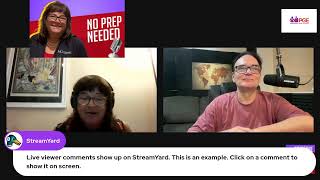
Mitch Carson, a veteran speaker and former promotional-products entrepreneur, shares three decades of speaking experience and practical advice for aspiring speakers. He discusses transitioning from one-to-one sales to speaking, building his own events with a small team, and traveling internationally to Southeast Asia. Carson covers stagecraft, choosing a niche, writing books, and why political commentary can be risky for thought leaders.
Chapters
You know, Mitch, they say there's a lot of introverts out there, but I'll tell you, those that are guests on my show, they're not. They're bold, they're brave, they're beautiful, creative, willing to come on live not even knowing me. I don't know you, but you don't even know me. Amazing. So let's meet Mitch Carlson, which you don't have to meet him because you are.
I think so. I think I've been impersonating somebody else. I don't know.
So we're— first of all, where are you?
Las Vegas.
Oh, that's right, you called me from Las Vegas. Like, like, I'm like Hendrix Las Vegas, or like the heart of Las Vegas?
I am a stone's throw away from Henderson, which is the next city over. I'm in Las Vegas proper, so that's the largest area, but Henderson in itself is a very large city.
So, you know, I kind of wonder if it'll be like living in Orlando. Like, I'm an hour from Orlando. I used to live in Celebration. I didn't go all the time, but if I wanted to, there was a million and a half things I could do. Is it kind of the same for you?
Very much so. Las Vegas is the number one event center in the world, seconded by Orlando, a very close second, I might add. And there's a lot to do here. I mean, the sporting capital of the world upcoming, because, you know, it's got women's basketball, men's basketball's coming. It's got football, it's got hockey. It's got minor league baseball and growing. So it's a great city for, for growth.
Wait, before we get into you, are you saying that Las Vegas is getting their own basketball team?
Yes.
Is there a name?
I, from what I'm told now, don't hold me to this. I could be mistaken. I heard the Seattle Supersonics are coming here.
Wow. And then the Sphere. Have you been to the Sphere? Have you had—
not yet. Not yet.
Are you waiting for a great concert?
I am. I just haven't felt— I mean, I see it. A lot of my friends have gone. They said it's fantastic. It's worth seeing. I do want to go to a concert there at least, you know, at least once. I just recently attended a WNBA game where I saw the Las Vegas Sparks play, or Aces. That was great. That was fun. And a very different environment. So I haven't gone to a football game. I will at some point go see the Raiders play. And I want to enjoy the city while I'm here.
So much fun. I go to Las Vegas every year for the promotional products industry. But the problem is, is that every time I'm there, the actual, like, like Lady Gaga, it's like the blackout for most of the great entertainers that I would love to see. So unfortunately I won't be able to see that, but enough about Las Vegas, which is like the coolest town. Who is Mitch Carson? I still don't know. You need to tell me.
Well, I'm, I've been a professional speaker for a little better than 3 decades. I'm a former owner of an ad specialty company myself. I wrote the book on, hold on a second. I didn't know you had that background till I read your bio recently, but I wrote this book, which was published by John Wiley and Sons called The Silent Salesman. And it's all about my journey in the promotional products industry. And I, I sold my business shortly after the publication of this book, uh, to Halo Branded Solutions out of Chicago. So I was in the business and this book also got translated into German, as you see right here. So it was also translated and I sold 11,000 copies domestically and then 4,000 copies in the German language.
Is it still on, um, Amazon? Can I still buy the book?
Yeah.
Oh, I want to go back. I— yes. Oh my God, that's— we have to go back to that. Tell me what you're doing now.
I was in the promo products business. I first started out in it while attending college at university— at the University of Southern California, selling t-shirts, cups, and fraternity paddles on fraternity and sorority row, and did that. Then I sold it to UCLA students And I started my business that way while in college, part-time, helping to pay for my tuition and living expenses. And problem with doing that kind of work is the social chairperson changed every semester. So it was a new person. So relationships couldn't be forged. It was transactional, not relational. So then I flipped into the music business in the '80s where we had clients like Capitol Records, Virgin Records. EMI, you know, records. And then we, then we got into handling— I was out of LA. Then we got into handling a lot of the New York labels because of our work in LA. And the, the entertainment industry was our next target. And then that was relationship-based, and that's where I grew the business to a reasonable size. Then sold it in 1988 to my number one salesman. I walked away from the business and got into Uh, Wall Street. I was selling. I worked for a company called Merrill Lynch, sold stocks on Wall Street, stocks and bonds, was, you know, licensed, Series 7 license. Did that for a couple years. Loved the idea of selling. And when I found out that I could sell one-to-many, my life changed. I used to sell one-to-one like most people do when they start out in selling. When I found out about the speaking business and selling one-to-many, my income reflected that change. It went up manyfold because when you're speaking to a room full of potential buyers, not only are you positioned higher than a salesperson that is knocking on the door begging for business, they came to me and I was able to charge higher margins than anyone else. And get away with it because they wanted to do business with me. And I was at that time a published author of a smaller book, which then led to the bigger books. And subsequently, I've written many books, and that is a great tool to stand out in a sea of sameness. How do you differentiate? Books, media, speaking, you know, the list can go on, but it's about the person that takes the bigger action than his competitor.
So now you are, so it is now, am I correct in saying that now you speak on the big stages and help other people understand how to sell to many and not one? I love that. So how do you get speaking gigs?
I, it's all been referral for me over the years. I've been on platforms now over 30 years and it's where I'm speaking in one environment. I spoke one time for PPAI, a long time ago, how to use direct mail, you know, lumpy mail pieces, dimensional mail. And I used some of the suppliers that had the bottles. I used to do bottle mailers, things, sipping, sending things in zippered coconuts, all different ideas that came from the promotional products industry, scratch-off cards to create the interaction. I'm still in love with the uniqueness of all these products. And I did that for a while, but then I had to, uh, exit the business when I sold it to Halo Branded Solutions. For obvious reasons, I couldn't compete with, with them for a period of time. And then I just went into another direction. But the speaking side of the business took off and I built it through referrals. And then if you become an author, it makes you much more credible and easier to get booked on stages. Then when you are in front of cameras in network television, in front of network television, the logos are real. You can show the footage. They want to book you even more. And it just rolled from there.
Oh, I love that. So a lot of the conventions that you're speaking at or conferences or, you know, sales meetings, all of that, are they a lot of them right there in Las Vegas? Are you doing a lot of traveling?
Uh, some of them are in Vegas. I lived in Asia for 13 years, so I repatriated to the US 1 year ago full-time. Most of the events I speak at are my own today. I produce my own events. So I, yeah, I create my own crowds based on my own list or use Facebook ads to create a crowd of people, or I might piggyback on others, but I rarely speak on other people's platforms today. I do occasionally, like I'm off to Singapore in 2 weeks. I'll be producing 1 live event, 2 webinars to a crowd, and then producing 2 different speaking mastery programs, how to speak and sell from the stage, either virtual or live in person to a group of people while in Singapore.
How many people on your team?
Uh, right now, small, just 5.
Wow. And all 5 are going to travel with you to Singapore?
No, no, no, no. I have students there that will assist me.
Oh, that—
no, I don't need to bring them.
Yeah, you're cool. This is really, really cool with all the experience that you have. And so, okay, so you have a website, or do you need a website?
I do have what— I have a website. I have a landing page depending on the event. I'll create something specific to that. My, my website is MitchCarson.com. Yeah.
Okay, I want to add that, MitchCarson.com. So Mitch, so like, I'm just trying— I want to pull this all together for a lot of people because so many people want to be a speaker. That's like their big dream.
Sure.
They feel like, you know, I've got a story, I've got information, I'm going to go on the stream, I'm going to do it myself, and they start applying for gigs. How would you recommend, like in simple steps, how someone can kind of mimic what you're doing if they were seasoned as much as you are? And as a 62-year-old, I could say I'm seasoned too, so we're filled with a lot of wisdom that we know from years of being in, whether it's an industry or doing what you're doing. But let's just say they're not as seasoned and they're thinking, you know, I want to get on the stage tomorrow because I'm 22 and that's what I think is going to happen. I'm going to speak it into existence and tomorrow I'll be on the big stage. Now, just kidding around. Don't be mad at me, people. I'm just kidding around. So how do you help to— or do they— are you a coach, a consultant? Like, Is there anything that you could share for people to—
Yeah, I can share for, so the, for the 22-year-old, for the 22-year-old who has speaking experience or no speaking experience, those are no speaking experience.
I just want to see their mom and dad said you're a good speaker. Get on the stage.
All right. It's a process. If you, all right, let me give you a couple definitions. So we're clear. A public speaker is someone that speaks publicly. A professional speaker is someone who gets paid. To speak or sells from the stage and earns money doing it. That's my category. If you are a public speaker, you might go to a place called Toastmasters and learn how to speak for 7 minutes. They help you with the ums, the you knows, the ahs. They obliterate that from your verbiage, which is great. They do not, however, train you to be a professional speaker. That's a completely different track. And people get that confused. Well, I'm a Toastmaster champion. And I say, great. Tell your grandma. She'll maybe be impressed. I'm not impressed. That won't earn you a spot to speak on one of my stages because you're a Toastmaster champion. That just means you're confined. You, you've gotten over the basics. You've now graduated middle school. You are not even in high school yet. That's a completely different track. I have to emphasize that if there are Toastmasters listening to this, if you hate me, you can email me. That's fine. I'll take your— I've shared the stage with 3 world champion Toastmaster speakers. I'm not going to mention their names. They were all excellent speakers for 7 minutes. Extending them beyond that was a challenge for them. Because they were programmed to do that. And it's good. They're good. They know how to engage an audience. They were good people, nice people. They don't know the skill of selling from the stage. That's a completely different track. It's not the same. Baseball is not the same as cricket. They both have bats or swinging something, completely different sports. Netball is not NBA basketball. As they play in Austria, you know, they're, they look the same, but they're not completely different skill sets in the same genre because you're opening your mouth and moving your lips. That, okay. That might be where the similarities begin and end. Uh, so totally different. And if you are a good speaker, just like you described from your mom who said, okay, you ought to go speak. Hire a professional who's been where you want to go. Who's been where you want to go. Not someone like your granny. I'm going to call granny who says, you're a good speaker, Jimmy. You ought to do that and make some money or go make some money. Well, okay, granny. How do I do that? Go to Toastmasters. No, that's not sound advice. No. You need to hire a professional or go get training from someone who's done it. There are a lot of speaker trainers out there. Lots of them. Find the one that fits the bill and has provable assets to show that they have been where you want to go. I've spoken on stages in 63 countries. I've made hundreds of thousands of dollars selling in one 90-minute spot. It's all provable. I've been on media all over the world. My credentials are as solid as anyone on the planet. So this is my, my domain. So I hear about people who are speaker coaches and they've never traveled, they've never made a nickel, and they help people get over the ums and ahs. Great. That's a Toastmaster audience. Or for corporate, maybe he has to do a year-end presentation of here's where we were at the beginning of the quarter to the second quarter. There are coaches for that. I'm not one of them. That isn't my bailiwick. My bailiwick is how to turn your passion into profits and extract money from a crowd so they are running to the back of the room with their credit cards. That's the focus. Completely different.
I love it.
Different.
I understand. As a matter of fact, because I won the, you know, topic table topics, I am a Toastmaster, but I, but I get it. I totally understand what you're saying. I— so what— but when it comes to speaking and those ahs and ums, I have a question for you. I am always fascinated by Elon Musk. Okay, what's up with all of his ahs and ums?
He's a billionaire, he can say whatever he wants. He's a—
I know, I know, but he really is like— it's just so hard to listen to him. And I'm like, can you just like— so even if he was— let's just say, forget like he thought, I'm a billionaire, everyone's gonna deal with my ahs and ums. Is there really a chance for someone like him that he could learn and practice how to remove them like we do on tape and Toastmasters and actually come out and speak without all those asinums?
I could fix him in 2 hours. Elon, listen, I could fix him. Here's the issue with a man like him. His ego doesn't fit on planet Earth. That's why he wants to go to Mars. Okay. He needs to expand his ego over there. He has to be willing to be teachable. And he probably suffers from, I don't give a, and because of that, I don't give a, he doesn't need the feedback. He doesn't want it. There's no pain associated with him talking that way. For people who've gone, I've been to a, I went to a Toastmaster, I went and spoke at their international conference about the business of speaking. So I, I understand where Toastmasters, and they're a great organization. They've helped a lot of people develop confidence. Speaking properly, but it's not business. It's a completely different track. You know this as a, I, yeah, I went and did a Table Topic one night. It was fun. I came as a guest of a friend who was a Toastmaster in Singapore. I went to his event and I was there, participated. It was fun, but it's not pro. It's a, you know, different game. And wow, these people suffered the pain of getting feedback. Can you imagine giving feedback to Elon and living to the next day? He's probably got a, you know, a hustle, a huddle of hitmen. Like, I mean, he's a, he's the richest man on earth. He's not gonna pay attention to somebody correcting his ums and ahs. I would, I would bet he would turn beet red and you'd see from his native Africa, a bunch of lions coming after you, tearing you apart. I, there's no way he's gonna accept criticism. Do you think we're the only ones that notice that? Oh, he's one of the most visible faces in the world. Somebody had enough. Guts to tell him, hey, you might want to eliminate ums. Can you imagine how many F words he dropped to that person? He does, right?
Right. I mean, I just think of other speakers that are thinking to themselves, well, if Elon could do it, I could do it. It's like, no, don't do it.
No matter what, you're not Elon Musk. You're not the richest man on the planet. He is. He gets away with it and he doesn't give a F.
About what people think of him, but it's very distracting. So if you do have an issue with that, talk to Mitch. So Mitch, I, I love what you're doing. So first of all, you said 13 years in Southeast Asia, so would I be guessing correctly that was Singapore, or is that another—
I lived in Thailand, I lived in Bali, and I lived in Manila, Philippines.
Wow. And your— what was your drive to move? Why?
Uh, full disclosure, I wanted— I got invited to go speak over at an event in Thailand back in 2009, and I loved it. I loved how I felt. The people were so nice, and I thought, I've always envisioned traveling the world a little more. And I'd sold my company. I had some flexibility. I thought how it would be nice to, to come back. And then somebody invited me to speak at another event the following week in Thailand. So I stayed longer and then I realized, okay. And they said, well, you gotta go check out Chiang Mai, Thailand. It's really cool up there. It's so nice. And I went up there and I said, I'm moving. I went back and sold everything. Then I, I left driving a convertible BMW to driving a motorbike. And living in a simple apartment versus a larger residence before that in LA and adjusted my life. I wore t-shirts, flip-flops, and shorts every day, completely changed my life and retired for a bit. I enjoyed doing very little until I got bored outta my mind, and then I went and I haven't stopped working since. So, but I enjoyed let's say semi-retirement for a couple years. And it, the people, the culture, the food, everything resonated with me in a positive way. And that's why I stuck around so long. The only reason I'm back in the US was due to the pandemic. And I could, I had to come back here through the, the efforts and the directives of the State Department saying, come back, get vaccinated. And as a traveling speaker, I needed to be vaccinated. And then I got stuck here. Then the borders were closed, both in and out. So I couldn't go back to Thailand for a while. And then I realized, you know what? I kind of like being an American again. So I'm torn. I don't know which one.
I love it. Yeah, I totally can understand that. My son lived in Shanghai for over 10 years, and I had the opportunity to move to Nanjing and teach business English. And I did. I, I loved everything. I love, like, the— I love getting ready for it, like, just the idea of looking it up and going, what's going to happen? What's my apartment going to look like? And then I love getting there and I love shopping. And I— you're right, I have a— I love this memory of my daughter went with me and we were both on the, you know, the subway, which, by the way, it's so clean. Like, I don't think people realize that you could be— you could eat off the floor. It's cleaner than people's homes. It's crazy. And the people are so nice. But she was sitting next to a young girl. They did not speak the same language, but they both were laughing and making fun of me. And I was totally fine with it. And I thought, like, that's all you need. We were able to communicate just fine with a smile and a couple of words. And if I really needed, my phone was there to, to do it. And I, I, I know exactly what you're saying. I loved every minute of it. My son, I could understand why he loves Shanghai. I was there for about 6 weeks, and I just, oh, I, I literally could go back. And you know what I found? I love that there's, there's work for everyone. So in the morning when it's bustling, there's people out there that are cleaning, and they clean all the ATM glass, and they get everything together. And, and then people— you don't see nursing homes, you don't see assisted living centers, because they take care of their own. And they have such a great philosophy. They do, right? It's amazing. The only thing is, is I was like 58, and I knew, and I didn't get my work visa. I was promised it, and I didn't have it. And then someone said, you're in Trend Micro and Ericsson, you better get it. And I got like, oh my God, I got scared. But other than that, I, and they, and of course, I think it's very difficult to work after 60 anyways. They won't give out work visas because we're old or considered old, but I understand. I can't wait one day to get to Singapore. So you must be excited about your trip. You have friends that you just like, do you have like, do you stay with someone?
I have students. I stay in hotels. I like to have my privacy, but I have many friends and students in Singapore and in Thailand, pretty much throughout Southeast Asia. I mean, I've run events in Dubai all the way through Japan. I have had a good career and that, uh, I attribute to the speaking industry.
Oh, I love that. And how brilliant are you that you actually create your own events around your own speaking so you don't have to apply for yourself? Do you have, so what do other people do? Like, how do you, how do you find other speakers to join you? What does that look like?
Sometimes I'll invite other speakers if they have a congruent product or, or, or service, which will augment what my efforts are. If I'm speaking about public speaking and then about how to get on the media and somebody has a software solution, this is just made up topic that adds to the value for my audience. They might be invited in, might be. If, so, if I'm speaking at a conference on AI, which I produced many events on AI in 2023. 3, uh, we invited people who would add to that effort, somebody who had an AI solution that wasn't something that we were covering. So it's a matter of where can you fit in? Can you parasite onto somebody else's efforts? That's a great way to start as well. That's what I did in the early years. I didn't produce my own events. I didn't know the business until I learned the business. Once I learned the business, then I could architect my own events.
I love that. So, okay, going back to the 21-year-old where grandma's saying, oh honey, you should be on the stage, you sound— you always speak so well. So for like, I, I like it almost, and tell me if I'm wrong, I kind of like it at like, you know, there's a lot of great female basketball players, but very few are going to make it in the WNBA. And you know, you may be a great football player and you may even be the best in your high school and you may be great at college, but to get National NFL, that's, that's tough. And I, the same thing, am I wrong in thinking, you know, you can have these goals, but you've gotta be the best of the best to be in a position where you're like world-renowned speaker?
Yeah, there, there are some steps you have to take. Number one, if you want to be recognized as a speaker, pick a niche, own it. And I mean own it. Be the number one person in that niche. How do you do that? You write a book, you write a column, you, uh, aggressively give value through your LinkedIn profile. You get on platforms that are related to that niche, other people's platforms as well as your own, and you write multiple books. You therefore cannot be anything other than the irrefutable expert in the category.
That is, that is really advice that people need to have. That is really great advice to, to, to get yourself. Well, I did a TED Talk, so yeah, there you go. Big stage. Well, no, I haven't, but is that like, TED Talk can help you?
TEDx Talk can help. I've done one TEDx. I'll never do another because it was unpaid. It was just so I could scratch that itch or tick the box of, yes, I'm a TEDx speaker. I have no desire to do another one. Because it was a lot of work and preparation to not get paid. And I'm, once you're in the paid arena, it's like, why am I doing this for free? I only did it for the personal branding. Only did it to show, yes, I'm a TEDx speaker as well. So I am covered in my personal branding completely. And it was a, it was a fun experience. I did it in Kuala Lumpur. I spoke at an international medical university and some of the speakers were okay. Most were not. They were first-timers. This was their first exposure and they had an interesting idea. An idea worth presenting, I think, was their theme. And it was a good experience. Would I do it again? No. Do I regret it? No, I do. I did enjoy the experience.
I love that. All right. So I'm getting ready to publish an article that I wrote and it's, you know, I'm on a, I'm on some social audio apps like Clubhouse. I don't know if you're familiar with it.
Sure. I remember Clubhouse.
Yep. Clubhouse. Forbes Riley is on Clubhouse a lot. Like, I know that she at one point was running a ton of rooms. And there's a new app called Chatter Social, which actually adds video content. So you could actually— same thing. So very, very fun. But my question really with all of that is kind of a branding question. Should someone who's considered a thought leader and on the big stage ever talk political, like their political viewpoints? And start to not only just share what it is, but maybe even participate in sharing untruths, things that really are not necessarily the truth and factual, but just sharing because they're hoping that out of, you know, 500 people, 450 will repeat it and won't look it up, and 50 are going to dig deep and go, wait a second, there's something wrong with this information. But what, but what does that look like for the Speaker, like, could that harm you?
Absolutely yes and absolutely no. Uh, that, and I'll, I'll explain. If you are a controversial person and you're willing to lose half your audience, whether you are in Trump's camp or Kamala Harris's camp, you need to pick one if you want to go down that lane, because what you're going to do is create polarity. If you are a Trump person, and you start talking about Kamala Harris's issues of whatever, how she handled the border or whether she's Black or not or Indian, all of those things that Trump brought up, you're going to completely lose the people that support her. This is the most divisive presidential election that I can recall in my 64 years on this planet. Okay. I don't know if you would agree, but it's, it's incredibly emotional and people react like I've never seen before. There was nothing like this I've seen in my brief history on this planet where people are all upset. So you will lose half your audience if we're at a 50-50 between the two. And that being said, it may be a great tactic if most of your audience is leaning right already. Anybody that might not have liked you is going to fall in love with you. Because you were willing to take a stand and say, I Trump support, or I support Trump no matter what. I don't care that he was wrongly convicted. And I'm just using this position. I'm not claiming where I stand on this. I don't take that. I'm neutral when it comes. I don't talk about politics or religion because that only can create problems in my world because I like to be Swiss when it comes to politics. But if you're to take the position of Trump is great, all this, you might get all those swing votes of people following you and loving you. And it's, it runs a risk. Don't you think?
Oh, I do. If you've read my, if you saw my video, I just say there's two things I don't talk about, politics and religion. And I, cause I'm a corporate etiquette educator. So that would not fit into what I do anyways. Uh, but I know, but I'm just curious because I'm, as I'm writing this article, you know, I've heard some very well-known people on these social audio apps and I'm like, whoa, like that's so risky. But maybe at one point you just don't care either, or you're hoping just to get swayed.
Taylor Swift ran into that recently because I think a week or two ago she threw her support behind Kamala Harris. That cost her a great number of fans. She was willing to do that for her particular reason. And I, that you got to give her an A for courage because she lost a lot of fans, probably sponsorships by stating that position. If you are a high profile person, obviously she's the biggest entertainer in the world right now. But if you're at that level or near that level, if you're a Nicki Minaj or some of the other, and you start spouting politics, you're running the risk of losing the people who, A, don't talk about it and may have a private opinion about it. My suggestion for those people is zip it. You share it, you're going to lose some. Why do that unless you are incredibly passionate and you're willing to lose and you believe you're going to gain more strength out of the people that do agree with you and your like-minded method of delivering that sharing.
Okay, thank you. I really appreciate that. Okay, let's switch gears now. I would like for you to share how to be a good audience listener. What do you expect? So you're going to speak and you've got the audience in front of you. What would you like to see from everyone that's coming into the arena or wherever you're speaking?
Turn off your cell phones big time. Cell phones are off. I tell people when I go through that, and so guys, by the way, photos are fine. If you need to text Tina, please leave the room. This, this, this presentation is not for you because I am easily distracted. And if your head is down and you're texting and smiling, I'm going to think you're talking about me, and I'm also going to believe that this isn't the presentation for you. So you can certainly leave now, and we'll give you your money back at the back of the room. Oh yeah, I don't talk.
I like that. I like— I want to go a little bit more on these. So I have been to meetings before where, you know, the speaker's like, you know what, if you want to use your phone, just go ahead, use your phone, it's okay. And I'm thinking, no, no, no, it's not, because the person next to me is going to use their phone, and you're going to distract me, and my phone phone is in my bag where it should be because I don't need to have it out. I'm not that important that, oh my gosh, like, I have to show I'm so important, look, I'm on my phone. But I don't understand why some speakers have that because you're ruining the experience for some people in the room.
Correct, correct. It's rude. And let's say people of our generation, we grew up with no cell phones that are not necessary. So I have a real issue with people using their cell phones and I tell 'em and I'll just ask 'em to leave. I'm that bold.
I like that.
Yeah.
I like that.
They don't like it too bad. They're distracting for me as a speaker. And I'm there to—
that's really the key. All right. And you go ahead. Yeah.
I was just gonna say I'm there to perform. That's my job. I'm a performer. Speakers are performers.
They really are. But I don't know if a lot of, like some, like I, you know, I'm like, some women are really beautiful, but then they're so distracting. They'll have the high, high heel, and all of a sudden I'm not listening to what they're saying. I'm wondering if they're going to trip when they go down. And, you know, or they're— the earrings are dangling and you kind of can hear it. And so I'm gonna— we're gonna flip around a little bit now. The advice for how to make sure that you're not distracting when you are on the stage.
Oh, I love your, your observation. If you are a female Let me give you some sound advice. This is not about catfishing. You are, if you are, and you know who you are, if you are a buxom, curvy woman, you need to downplay that. Because if you're there to extract, you're there to focus on your head, not your chest, not your buttocks, not your sexy shoes that are open-toed. No, no. Black closed-toe, very sex appeal at a minimum. A suit that covers everything up, the blouse is up to here. Cover it. If you are large busted, wonderful. Sometimes you can't hide it fully, but there's no reason to have a low cut so everybody is peeking in. They're going to be distracted. Women as much as the men are going to be distracted by this. Cover it up, ladies. And you mentioned the dangling earrings. No, a real simple pearl or diamond stud in the earring is fine, but dangling like you're right out of Spanish Harlem with these long earrings that are dangling and distracting and you want people to see— no, negative, negative. Don't come into the arena chewing gum with your mouth open. Negative. Look conservative. If you've got fancy nail polish, minimize it. The focus is your face. Be elegantly dressed. Can you wear high heels? Sure. I'd recommend mid to low heel so the focus is on you and your message. And if you are a pretty woman and you know it, great, save it for your husband or your boyfriend. This isn't about that. You're not here to showcase your curves. You're here to showcase your, your smarts. Impress people through who you are, not your outward appearance. And no closed, no open-toe shoes, nothing too spiky and high and conforming. I mean, I had to tell one of my clients at an event I produced called Speak in Manila, where she was going on CNN. I guaranteed everybody to get on CNN in the Philippines. And she had this tight-fitting— she was a beautiful, sexy woman, but I sent her back to her room. I said, this is distracting. This will hurt you. This isn't for me. I know you like to showcase your skills as a speaker. You're a smart lady. I don't need to see your sexy curves. She was married and she knew I wasn't, I wasn't coming on to her by observing this. I was letting her know what attention she would gather from the audience based on these tight— she had a tight, very curvy body, voluptuous. Downplay it. That's fine. That's fine. What the creator gave you. Keep it to yourself for this purpose. If you— what you want to do in your bikini at the pool, that's a different question. I'm not the person to ask for that answer. But in the speaking arena, keep it conservative.
I love that. I think that's— and I'm surprised how often that, like, someone's not listening to that advice. Also, I, I love when the speaker— now, granted, there may be two doors that people are filing into, but if you get everyone to file in one door where the speaker greets you at the door and tells you that it's going to be a great meeting or a great conference, or it's going to be a great speech. And they already set the stage. Maybe even if it's a little quiet, they say, hey, what's your name? And a nice handshake. What do you think about that?
I love it because before I take the stage, many times before I'm actually introduced, I'll come out and shake the hands of people, several people in the front row. I've just made friends beforehand and I'll make chit-chat with them because I'll say, I was just talking to Judy before the today, and we were discussing XYZ. So who am I having the conversation with? The whole audience. They now feel connected to me through Judy because she's in the audience. And I've gotten off the stage to come down and say hello to Judy once again in front of the whole group. And that connects me to everyone else because Judy's there. She's one of them.
But so often Speakers don't do that. They want to be introduced and then running out and I'm here. And I'm like, oh, but you really should be at the door because that gives you a whole different, whole experience is completely different. So you can do both.
You can do both. And I certainly love to greet people as much as I can. And hey, I'm going to be sharing with you today. What's your name? Good. Meet, meet, meet, meet, meet. Absolutely great technique. If you're I mean, in a large audience, I've had some large audiences, that's not possible. In some cases, you could be there all day, but in, in a smaller, if it's a meeting of 50 or less people, you certainly can do that. I think it's a good tactic, good strategy.
So I, as an audience member now, I would like to proudly let you know that I could sit for 8 hours and pay attention, but I had to work up to it. And then I'd practice it, would go into like, you know, meetings, whatever. It was a full day, and I would say, off the phone, only during break time, take my notes, and not have conversations with people around me. Really stay focused. And how do you— like, my, my goal was just to be able to do it. So I just kept making sure if I'm sitting next to someone and they're really distracting me, if I can, I will move, um, or I really have to like block them out and just make sure that they— I just like, they don't exist anymore to me. I have to kind of get that out. But What do you recommend for someone that's going to a conference and maybe doesn't have that ability to do it, but yet they should be staying focused so that they get all the information?
Absolutely stay focused. Get, get as much information as possible. You've got to do what you're comfortable doing. So yes.
So just learn, learn. I think it's a learned habit. If I learn how to do it, then I would think anyone could really Learn how to do it.
Yeah, just turn your phone off.
Turn your phone. The other thing is I feel like there's a generation of people that don't turn their phone off because they want people to think, I'm so busy, I'm so like, oh my God, I can't be without my phone. I'm busier than the President of the United States because I'm more important. Like, like, I, I think that's so crazy that people will just— I mean, I get when you're waiting for the speaker, or often I may take a picture and want to let people know that I'm here if that'll help the speaker, or Or during break, I may say, this is the most amazing speech I've ever heard. I'm so happy to be here. But I just want to make sure that we give enough tips for listeners in the audience. So for example, I do like sitting in the front row. You know, I do like that. For people that, you know, when you're coming in, I think you have to kind of figure out what's the best place to sit. Do I sit in the front row? Are you going to talk to me in the front row? So what do people normally do? And what kind of advice can you give to someone that's coming in, wants to learn and listen, but not sure where to sit.
Oh gosh, you got to sit where you're comfortable sitting. If you have to go to the restroom and you've got diabetes, sit on the end seat or towards the back so you don't disturb the audience. If you're all in, sit as close as you can to the front. It's not the front row.
Can we just tell people, when you're in like Disney, move all the way to the front because people don't actually want to like have to go over you. So if I was the end seat, I probably would wait for that row to fill and then go to the end. And sit at the end and let people go around you. All right, so I just like to have this information because I do think that it's really important. I am in the front row, but all of a sudden my bestie that I haven't seen in like 3 years, it's just— she's got the same thing. She's right next to me now. And what do you do? You're on the stage and you can hear like the little whispering. And actually you can hear it coming from me because my friend has that really voice that you like— you say whisper, they're like I'm whispering, Adrian. So what do you do? Do you say anything to them?
I don't say anything to them. I'll get off the stage, which I usually do. And if I hear people that are loud and talking to themselves, I'll just go and stand right next to them and say nothing. They'll get it. I'll just continue talking, standing in between them. I'll even move closer. I might even bump one on their shoulder. Hi, or I'll touch one on the shoulder, let them know I'm right there. That usually stops their talking without saying a word.
Oh, I love that. I love that. I'm the guy that's on the stage. That's really funny. Oh my gosh. Okay. And I have another question. I keep losing it in my head. I got to get this question back. Hold on for a second. I'll be right back. Let me get my brain together. Oh my God, we had this question. This is what happens when you get to be 62, by the way. It goes in and out. Oh my gosh, I can't remember my question. And that was an important question. Darn it. Okay, so we got— we kind of talked about the speaker, the, um, the speaker, how to be a great audience member. Yep. Also, also now, like, drinks and all of that. Be careful of, like, where you are too. A lot of people will bring drinks and then they spill it all over the carpet. And that could be a problem. What, how about someone waiting for you? So you, you, you're like, after this, I'll be out back. I'll actually be out in the back of the room signing my books. Come on and speak with me. And you've got that one person that's just talking to you, Mitch, blah, blah, blah, Mitch, blah, blah, blah. There's a whole line and they don't care about the line behind them. There's no interest. They want you to answer a couple questions. And how do you handle that situation?
If someone is bending my ear and there's a line of people, I'll say, let's talk further. Why don't you set up a time with my staff member over here and we'll talk at a later date. I need to answer some of the other questions here of people that are so patiently waiting. It's nice to meet you.
These things happen, right? Yeah.
And I'll shake all the time and I'll put my hand out like we're closing. It was really nice talking to you. Let's get continue this later after I address the concerns of the rest of the people.
You know what's crazy is that I actually like care about the person behind, so I get really nervous. So like, I would be like, Mitch, sign my book, please, and hurry up because there's people behind me. Like, I, I really think about the people behind me.
I have a lot of people that don't care.
No, they don't care at all. It's like they're— that's their thing. So it's crazy. I really enjoyed speaking with you. Is there anything I didn't ask you that you would like to share?
Uh, how tall am I? Or no, I'm I think we've had a very good, good engagement and interaction today. Thank you.
Oh my gosh. Thank you. Thank you for being bold enough to go on No Prep Needed, which was because, you know, I do the colonoscopy in the box, so there's no prep needed. So I got that idea for the name. It's not really a poopy name though. So I'm just kidding around. I like to tease. I like a little fun. Oh, I know what my question is. You ask if there's any questions in the audience and someone in the back of the room stands up and you say, hold on, we're gonna bring someone with a microphone. And they say, I don't need a microphone. I've got a big booming voice, but they really don't. And people don't hear them even though they just said. So do you say to them like, no, wait, we need to get you the microphone. How, what do you do?
Give them the microphone, right?
You have to give them the microphone.
Give them the microphone.
See everyone, listen to this advice. It's really important. I can't tell you how many times I don't need a microphone and I'm like, I don't have great ears. So your big booming voice is just not coming into me. People need a microphone. They have to hear. So good, good. You're answering all my questions. I love it.
Glad I could help.
So much. No, you're great. I really appreciate it. I look forward to following you and just like supporting you and supporting all your efforts. And the book, I'm going to get the book. I love that you were in the promo product industry. It's, uh, it's huge now. Halo is now number 1 in the industry, beating 4 Imprint, which is pretty amazing. They're a great group of people. Yeah, it's, it's, I still, I, I consult in that industry a lot, so it's just still a fun industry. So I'll be in Las Vegas in January.
Okay, good. Mark Simon is still probably the CEO of Halo.
So Mark, You know, it's so funny, Paul Bellatone was the president of PPAI and he went to be VP of Halo. And, and Dale Denham now is, I think, the president of PPAI. And Mark, I think, is still with Halo. I'm pretty sure Richard Rick Green is still with Halo, um, if you had him as your VP. Amazing guy.
He was out on the West Coast. Yes.
So he wrote a few books. He's really cool. He's got—
is he still in LA working?
He is still in California and he still is writing these Oh, you can find him on Facebook. He's got these great books that he's writing. One was on Jerry Lewis.
So yeah, no, Mark, I knew, I knew Rick Green and he was part of the takeover when I sold the business to him. Yes.
Amazing.
Rick is a smart guy. He's still with Halo then.
He's still with Halo. Okay.
Good for him.
Yeah. It's, it's great. My family's business was out of Cheshire, Connecticut. So we were across the country, but my parents knew enough in 1955 to start the business. They loved it. So, all right, well, thank you so much for your time. Have a great rest of the day and weekend. And I— this will be syndicated, uh, once it's live now and then we actually produce it. So thank you so much.
Thank you so much for having me. Have a good weekend.
You're awesome. Bye-bye.










