Let's Meet Roger Pearson
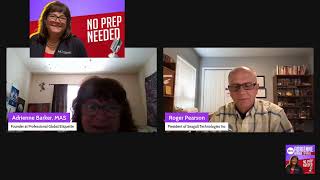
Roger Pearson, a tax professional with 50 years in business, built his practice around three things: legal entity selection, organized paperwork, and tax strategy. He says U.S. business education leaves entrepreneurs unprepared, and he's writing a workbook to fill the gap.
Chapters
Like, that's kind of like the hot new thing. Hi everyone, we're live! Roger, Roger Pearson. I just have to say the last name I love because This Is Us, they were the Pearsons, and that was really fabulous, popular show. So everyone, I want you to meet Roger Pearson as I meet him too, because I have no clue who he is. He's brave, he's never done a live before, and I do no prep. So Roger Pearson, guess what? You have to introduce yourself. Give us your best intro.
Wow. Well, I'm a serial entrepreneur, probably more than anything, because for the last 50 years I've been either managing businesses for other people or starting them for myself and finding out a lot of the things I don't like to do, which is just as important as finding out what you do sometimes. But in all of that struggle, I found out that there's a couple of things that that I like to do. I love teaching people, you know. I majored in education in, in, um, at a college, you know. And, um, then after about a year of that, I started student teaching and says, these people are nuts. I could not teach in the public school systems. I'm sorry, I just— this, this was when they had— they threw out phonics and they— then that didn't work. And then they had the new math where 2 2 5, and that That didn't work too well. So, um, I said, I can't do this. So I, I've been teaching in the corporate world ever since, you know. The other thing I find that, uh, I gravitated to, and it didn't dawn on me until a few years ago, is I love anything creative, you know, uh, creating businesses, uh, creating websites. Uh, when I look back at all the things I've done, the things that I've really, really enjoyed are basically the things where I was creating something. you know, and I've gotten into creating animations now, and with all my websites and everything else, and I'm creating online courses. It's just creation is the thing. But, um, in, in that entire struggle about, oh, 22 years ago, I guess, I, uh, I had just been downsized during the '90s out of 3 corporations and 3 nice management jobs. Because I, I don't know if anybody's old enough to remember it, but the '90s were the decade of downsizing. All the corporations were just eliminating eliminating positions just for the hell of it, just to decrease the bottom line, you know. And after having that done to me 3 times in 10 years, I'm going, I don't know if I want to go back in the corporate world or not. This is insane. I mean, I was very successful at it, but, uh, this is insane, you know. You work and work and work, and 3 years later, oh, your position's eliminated. You don't have a job more. And it's just that— just so I, I have my sister-in-law says, well, why don't you go take this tax course? You know, you know, I've been doing it part-time for a while, and it'll give you something to do, some little income coming in until you decide what you want to do. And what I found out is I really liked doing it, you know, doing other people's taxes. So the last 22 years I've done that. And because my background is in business, I've kind of got a specialty where, uh, I, I work with a lot of small business people and partnerships, uh, because those are people that really need the help. They really, really do, because most of them don't know a clue what they're doing starting out. I found out because we— our educational system, uh, doesn't do a good job. They don't teach— they don't teach business. I mean, business, small business is the backbone of this country. You know, and you would think it would be one of the major, major things that people should be able to study, but they don't. I mean, for several years I even taught— I was an instructor for tax classes, and I would have people that were business majors that would enroll in my classes, and they would come up to me afterward and they said, you know, we've, we've gone up and asked our professors about this type of stuff, and they told us, oh, we don't teach that here, you have to go find that someplace else. And that just blew me away. But that's the, the state of our educational system in this country. And there, there's a few high schools that are starting to, to now have small business education, but very, very few. Very, very, very few. And it is something I think is sorely needed. So that's what I've tried to remedy, is that I've put together support systems, consulting systems and educational systems to actually teach people the foundational principles of business so that they, they don't lose money and they increase their chances of success.
Thank you so much. I'm so sorry, my dog is going crazy. So, Fez, please stop. Please stop. Anything can happen and no prep needed.
Oh, absolutely.
Let me get my dog here. Come here. Come here, stop. Come here, get over here, get over here. Okay, here he is. Fez, stop. Say something about the cereal. When you said cereal entrepreneur, I always think, oh, he's— he sells cereal. So Roger, really what you're saying is that we— I agree that you have a lot of wisdom.
A little bit, yeah. That, that comes from being in my 70s now. I've learned a few things along the way.
So we have to— that is so important. I'm 62, just turned it, but we do have a lot of wisdom. And you're right, the younger generation, they're not coming out to learn how to run a business. I teach soft skills. They're not coming out to learn corporate etiquette, how to answer the phone, um, that you don't get in touch with everyone by text, that you actually can pick up the phone and talk to people, how to send out a proper email. But With all that aside, there is this new app that I think you would do great with, and it's on beta testing right now. We'll be going to public beta. So if you're interested, all I could describe it, it's called Chatter, and it was developed by a very young CEO, but 28-year-old young man that had been on some other social audio apps and realized that they were missing something really important. And so what the greatest thing about Chatter is, and if you send me an email or just send me back you're interested, I will send you how to sign up for it. But it will allow you to develop a community. And a lot of the people on there are young and they really are looking for the wise wisdom from us elders that have been there and have been doing it because many of them are just 3 to 5 years and we teach way more than— there's a lot of educators and like Instagram and Pinterest and all of that and they're young. and they know how to do that. But the real business, how to start a business, and all your knowledge would be excellent. You develop your own community, and it's all video too. So if you ever— have you seen a LinkedIn audio event?
I've, I've seen them advertised. I haven't really been to one.
So it's like, it's like an audio event, and then you could go on video. He'll actually have streaming services. It'll be like Zoom. It will not be expensive, and it's very cool. So send it to me, and I'll get you on there because I think you would be a great addition to really learning and then building your community. So I love what you're doing. So what, like right now, it sounds to me like you are definitely someone, a content creator, a creator of the courses. Like that was a word you used a lot. So that's a big change from like, so you have your own business. So your business is Seagull Technologies. Are you by the ocean?
I'm actually, uh, right side outside of Tampa.
Oh, you're close to me. Oh, apart where? Hmm, where are you located?
In Lutz.
Oh, I don't even know.
It's just— it's— Lutz is a, uh, a community north of Tampa. Of course, it's all grown together now. Yeah, together.
So, um, so I'm in Daytona Beach.
Oh yeah, yeah, I was on I was on the East Coast earlier this week.
I very like— I love the East Coast. I am so sorry about my dog. Hold on for one second.
Let me see what's—
Hello, I'm back. Okay, sorry about that. Serviceman decided to come in and do something right now. So, and I've been gone for the month traveling and doing house sitting for people's pets for free. So I don't know where my ring light is. So that's why I'm a little bit of a mess, but it's lovely talking to you. So how can our audience, how can they work with you? What would that look like?
Well, I do it a variety. You know, I found that different people learn different ways. Some people are auditory. They like to listen to things. Some people are visual, you know, and they love to watch like videos and things like that. Other people learn by reading. So what I've tried to do is to incorporate all three of those into everything I do. First of all, I do consulting service. I have—
yes, I have a question. I have a question. I— those three ways don't work for me. I learn by having to do. So like, I have to like watch it on one screen and then do it at the same time. What is that called?
That's interesting. That's something else I'm working on this year. I'm actually writing a book. It's more of a workbook, but I'm taking all of this information, and, uh, what I'm doing is I'm going to write a manual, uh, on starting a small business, all the things you know, and then it's going to go into where it's going to have spaces for you to answer questions. Where you actually have to write down and you have to make determinations about certain things to determine how you want to go forward in your business. It, um, it's probably the biggest challenge I've ever given myself. It's not easy writing a book, much, much less an interactive one, you know.
Oh, I love that. I, I think that I teach the Kauffman Fast Track program, so That is an interesting program, and at the end of it, they would have their business plan together. So are you going to incorporate some of like what they will need for their business plan?
Absolutely. I mean, the, the three pillars is what I teach. I call it the three pillars of business because there's number one, these three things affect everything in your business, everything. Number one, all the various different legal formats that you can put together in this country and the pros and the cons of each one and when, what one to start out with, what, what's the right time to switch to a different one, what are the implications, what are the legal implications, so forth and so on. The second thing that people need to know, and that is sorely, sorely missing in this country, is how to organize your paperwork. Because, uh, a good person, a good businessman knows what their net profit is at any time and place. Any time and place. And they can't do that, uh, unless they know how to organize their paperwork. And that also affects the third pillar, which is tax obligations, because most people starting out in business, the biggest shock that they get the first time somebody sits down with me and we go through their tax structures is that, uh, it's the— it's probably the largest single bill they're going to write a check for, you know, because, uh, at a minimum, uh, if you're a sole proprietor, at a minimum, uh, you're probably going to pay a 25 to 27% of your net profit. Boom, there it goes to the federal government. And if you're in a good old state like California, which charges a fortune, uh, you could pay in some states up to 50% of your net profits just in all of the payroll taxes, income taxes, and state taxes. And that's a shocker. And most people do not take that into consideration when they're doing all of their planning and everything. And so that's one thing that I include. Those 3 things, what you, what decisions you make on any one of those things is gonna affect the other things. Therefore, you have to have a good basic knowledge of them. What I have found is that these are the things people don't wanna study. They flat out don't want to study them. They say, well, I'll just go hire somebody, you know, I'll go hire a CPA, I'll go hire a tax professional, and they can just take care of all this stuff for me, and I'll just hand them all my receipts and they can sort it out. And I've never seen a faster way to lose money than that, you know. Now, I agree that at some point in your business you should hire an accountant and you should hire a tax professional And I don't even recommend they are the same person, and there's reasons why for that. But my question to them is, when I talk to people, is, well, how do you know you're hiring the right one for your business? You know, if you owned a plumbing business, for instance, and you were to hire a plumber for your business, would you sit down and interview them? Absolutely, absolutely. You want to know if they knew anything about plumbing or not. Well, if you're going to hire an accountant, wouldn't you want to sit down and interview them to see if they knew what they were talking about? And how are you going to do that unless you know the basic information of accounting or record-keeping or how to keep your, uh, your receipts or the tax implications of what all this is going to be. How do you know? How do you, how do you hire a good tax professional? You know, you don't. You need to learn this stuff if you're really, really serious about your business. And the problem is that the education system does not teach these things. And my mission in life, for the rest of my life anyway, is, is to go out there and put this information out there and try to get it to the people. You know, whether I, you know, I have no plans of being a millionaire doing it or anything like that. That's, that's, I'm beyond that. I mean, my, my vision of the world is that at the end of my days, I want to be able to look back and say, how many people's lives have I improved? You know, because that's what's really important, not whether you're a millionaire or not. I mean, if you concentrate on those, you'll get old and you'll have probably miserable. I know a lot of miserable rich people. And, but, uh, so, you know, that's where I'm at right now. And I do that through a variety of different ways. Um, you know, I, at tax time, I have like 500 different clients around that. Wait, what?
Wait, yeah, I heard 5-0-0. I, I don't know.
Yeah, how?
Wait, 500 divided by—
I work, I work 50 to 60 hours a week during the tax season.
When do they start? Right after the end of January?
It starts in about January 15th. Yeah.
Wow. That's crazy. What do you, what do you suggest for lifestyle businesses?
Lifestyle, it doesn't matter what kind of business you're in. It's the, the difference, the differences in the different businesses is in how you organize your paperwork, because a person that is in a production type business is going to have a whole different structure, you know, they're going to have to keep track of depreciation and a lot of the other things like that. Whereas if you're in a service business, uh, that doesn't buy equipment or anything, that's just a help, help business, you know, uh, you're not going to have that. So you're going to have a different way of looking at your P&Ls than, than other businesses. So the person that you should, you know, whether you do it yourself or whether you hire somebody to do it Uh, you need to learn the basics for your business, and the basics are basically the same for all businesses. And then you just narrow it down and get rid of the stuff that you don't need for your own business, you know. So, so, you know, it's just like when I work business people in the, in the tax field, is that, uh, I have to learn that person's business, you know. If I'm going to do taxes for a plumber, I need to know the plumbing business. I need to know the painting business. I need to know the electrical physical business. I need to know the landscape business for me to do a good job for those people. And this is the type of person you're looking for. I tell people that if you're going to hire an accountant and they say, well, drop it off, I'll call you when it's done, run the other way. They don't care about you. They don't. They don't. Um, you know, if you're hiring a tax professional, you know, they should be— you should be meeting with them at least twice a year. And they should be showing it, you know, sit down and actually have conversations because they need to know for them to do a good job. Uh, you know, if I'm going to do a good job for something, I have to know what their 5-year plan is. You know, if you're buying a bunch of somebody that, for instance, if it's somebody that has a lot of, uh, equipment and things they have to buy during the year, um, then I have to ask, okay, do we use the depreciation laws? To where we could write it off all this year if you need it more this year, or if you're going to be making more money next year because you got some nice contracts coming up, then we need to push some of those expenses into next year when you can use it more. And the, you know, this is what the big corporations do. You always hear about this big thing, all those big corporations, they don't pay anything in taxes. Well, the reason is because they have friends in Congress that passed a bunch of laws that allows them to manipulate how they do deductions on their income. And small businesses can use those same things, except small businesses don't usually have a whole team of tax accountants sitting in the corporate headquarters figuring all this out on a 5-year basis, a 5-year rolling basis. But we can do the same thing in a microcosm, in small businesses, and a good tax professional is going to be able to do that for you. The other thing that So number one, you want to look for somebody that wants to actually sit down with you and explain things to you and teach you. You know, I teach a lot at the tax desk. The other thing I find that a lot of people that hire a CPA and, uh, and have the CPA do their taxes also, and they assume— there's this assumption in the world, and I don't know why, that CPAs are an expert at taxes. And I'll probably— and some are, and congratulations to them. I couldn't think of anything more boring in my life than being a CPA, uh, and, and just doing, you know, accounting day after day, you know. But a lot of people say, you know, well, tax— isn't that what taxes are, just a bunch of accounting? I says, no. A good tax preparer is somebody that's going to figure out how to use the tax laws to their client's advantage to save them money. That's a good tax professional. But a lot of people assume that CPAs are also— and I tell you, unless the laws have changed just recently, uh, to become a certified public accountant, you have to take some basic tax courses. And of course, you have to take continuing education hours every year, uh, just like an IRS enrolled agent does. But none of them have to be in taxes. So if you're going to have somebody doing your taxes, uh, your accountant also doing your taxes, you better be asking how many, how many, uh, continuing education hours do you take each year in tax updates? Because if they don't take any, you don't want them doing your taxes because they haven't kept up. And I know this because I have to fix the mistakes that they make. Um, I fixed a lot of mistakes that way. And that's how I learned that, um, that fact. So it's, again, it goes back to interviewing, and, and when it's interviewing, goes back to educating yourself. It all works together.
See, that's what I mean by wisdom. I grew up in the promotional products industry, and if I was selling to a realtor, I had to learn about the real estate business. So exactly what you said. And so I have 40 years in that industry, so my wisdom when it comes to how different businesses run is pretty strong. And my father used to say that all the time. If you're going to get a roof put on your— a roof put on your roof on your house or your building, you should know enough to ask the right questions. Don't go in blind. And so I totally agree with you, Roger. And my dad up in heaven says, yo, Roger, he's right. That's exactly how you do it. So, so two questions for you. One is, What is— I'm thinking, is it the tax? But what is the biggest challenge that you're seeing right now with your clients? And then what's the biggest challenge you have in your own business?
Well, the biggest challenge as far as clients is just teaching them how to do their paperwork, how to organize the data, because I can only do as good a job as the data that they give me. And anybody you hire is only going to be doing as good a job as the data you give them. That's the biggest problem. And oftentimes it takes me 3 years of working with somebody before they finally give me the data that I need to do the best job for them. And then there's others that are right, right that year we could just solve their problems and I can save them a lot of money, right? Going, you know, it's just like And this is what I love doing. It's just like I had a couple years ago, I had a lady, she had started a home chef business, and she must have been a very good chef because the first year out she made $100,000 of profit. And she hadn't done any, you know, she'd never run a business before. She'd worked for businesses but never run one. And so she was, uh, legal formats and everything. Luckily she had the data that I needed to do what I needed to do. And instead, and before we started, when I first put the numbers in, she was going to owe $6,000 in taxes, which, uh, is a chunk of money. And so, but she came to me enough early in the year I could use some of the existing laws, and, uh, that we got her restructured. And, um, she ended up getting a two— her and her husband, that he ended up with a $2,000 refund. Instead that year. And then going forward, it saves her thousands of dollars a year for the restructuring that we did. But that's how everything works together. On the other hand, oh, probably about 12 years ago, I had a gentleman come to me. He had a friend that says, well, how would you like to sell energy contracts? And I didn't know there was such a thing, but there's energy contracts between different energy companies. Where they sell electricity back and forth. And, uh, he was very successful. He sold enough the first year to make a quarter million dollars.
Wow.
And he came to me, had no bookkeeping. He, uh, commingled the funds. Everything, his business and personal, was out of his personal. His personal, uh, state bank statements was his bookkeeping system. He traveled 3 states but kept no mileage logs. And I said, well, we'll reconstruct as much as you can, um, you know, but you're going to be audited. You don't run a quarter million dollars through a Schedule C. You just don't do it. And, um, this is what you need to do. This is how you need to restructure. This is what you need to do here, here, here, here, here. I give them the whole list. He came back to me the second year. The only thing he'd done is open a business checking account. Still no mileage log, still no— and I says, all right, We'll do the best we can, but you're probably going to be audited. And sure enough, that summer he got the first audit letter, and, uh, the next year he got the second audit letter, and it cost him thousands of dollars in penalties, but he wouldn't listen to me. Well, the third year he came to see me, he had started to listen to me, and he went into his restructurings and things. So, but you know, that's, that's extremes, one extreme and the other. And, um, you can only do as good as the people want to help you want to do also, that they want to learn, that they want to educate themselves, that they want to listen. You know, I really believe everybody should be a— should have a mentor of some sort of type, you know. And I do some of that also, is that, uh, in some of my consulting, I, I usually— somebody that's never run a business before, and they'll, they'll, uh, they'll hire me for a consulting session. And I go through all of this stuff with them and all of the things that they need to know. Just the basic stuff, just the basic stuff takes at least a half hour, 40 minutes. And at the end, they're just, you know, their, their head is usually swimming around because they, they were amazed that you have to know all of this stuff just to run a business. They're just amazed.
Your, your local SCORE would really love to have you on board. I was a SCORE mentor for 8 years and the chair of SCORE Volusia Flagler and co-chair with a good friend of mine. And it's hard to give your time and donate a lot of it, but you could always do a workshop for them so that you can just deliver your information, go as a subject matter expert and not maybe as a volunteer. Just an idea if you're not familiar with SCORE. Score.org.
I am familiar with SCORE.
Yes, they're nice people in your area. What county are you in?
Hillsborough.
Yep. Yep. So Hillsborough, very, very nice. So, so this is very interesting to me because, you know, when I, when I moved to Daytona Beach, I opened up our fifth art gallery and I found that was so easy. I mean, I could take all the receipts, I could invoice, I could, you know, staple them together with the sales from QuickBooks and give it to the accountant. But I will say myself running my own business now, it is a little harder to kind of keep as organized as I would like to be. So just as a thought, going from the retail where you, it kind of is given to you, it makes it easier. It's just, it's not easy. So what's the challenge that you're having in your business, Roger?
My business, you know, I'm good at all the structural parts of business. I'm a lousy marketer.
I knew you were gonna say that, but you knew enough to come on. And so how did you find me?
Uh, I use— I don't know if it was PodMatch or Matchmaker.
Yeah, so my Matchmaker. So very smart. So, so I don't know, I think you should reel that back in. Like, you're not a—
you— because this is the number one way to market to me, is, you know, and this is the, this is the most enjoyable way to market that I've ever found, you know. Uh, you know, going out and doing social media and all of that, uh, the other stuff, you know. I post blog posts all the time to the major social medias. But what I really enjoy, just sitting and talking to people, you know, this is the type of, you know, I talk conversations like this at the tax desk and, and, uh, I enjoy it. That's what I enjoy, you know. I enjoy getting out there and letting people know and educating people, uh, that what they need to know, you know. I, I'm trying to make a difference in the world because of that. I love that.
I think you'll like chatter. I think you could go on LinkedIn for your social audio app. And do a, and, you know, just start doing rooms. Just start, even if you only have 2 people in the room, just start doing it and you'll build that other community outside of the, you know, whatever community you have now. It's a great way to do it. So like, I definitely think, and are you using a CRM program? How do you keep track of your 500 clients?
Oh, I have, I've built all that myself.
Wow.
Because I'm a web— I'm also a web developer. I did that commercially for a while, um, decided I didn't like doing it for other people, but I love doing it for myself. So I spend way too much time on my websites, but, um, I enjoy doing it.
I think that's great. You're a good mix of everything with everything and wisdom, um, and someone who loves cereal. Now I'm just kidding. You, you're a serial entrepreneur. I just think that's the funniest term. I love it. So thank you so much for coming on. Will you send me all of your contact information so that everyone can have it? And you are— are you Roger Pearson on LinkedIn?
Yes, it's Roger. Roger Pearson is on LinkedIn. Yeah.
I'm going to look at your LinkedIn right now.
And I have— I also have— so you— I also have YouTube channels and things like that. I have everything that I'm doing linked from my corporate website, seagulltechnologies.com.
Oh, I like that.
I have links to that. I have links to the consulting services. I have links to the online thing. I have links to my, my, I have all the podcasts that I've done. I have links to there and have links to the YouTube channel also. So you've had a lot of free courses there also.
I'm looking right now, I'm trying to find you. So it's Seagull. Do you have your company page on LinkedIn?
I have. It's all under my personal, but it mentioned it shows the company and everything, but it's, I only have the one LinkedIn. But it shows that the company is there and everything.
Yeah, I'll try to find you just to see how— if I can give you any free tips while I have you. But Roger T. Pearson, you said?
Roger Dash Pearson. I put the Roger in the middle. There's a dash between the first and last name.
Let me see. You're not in Houston. It's really funny when you go to look someone up. No, that's not— oh yeah, here you are, Roger. Okay. Oh wait, your picture, you had a little hair back then.
I did. I've not gotten an updated profile picture.
So I like the seagull technology. Uh, yes, yes, this is great. Oh, so if you want to ever do an outreach like a lead generation campaign, I will show you, uh, some ideas on how to do that. Otherwise, very good. And I— let me see— really nice job, looks good. Okay, I'm actually going to follow you, and then I'm just going to send you a connect if you don't mind, without a message.
No, not at all.
All right everyone, so you can find Roger Pearson. He is out of Lutz, Florida. L-U-T-Z. You'll have all the information underneath. I will put it in later. And Roger, thank you so much for, for being on live, and I love that this is your first live, so I love that you were bold enough to do it. And thank you. Oh, and let me know if you're interested in chatter. I don't I— have you ever heard of Clubhouse, the app Clubhouse?
Uh, years ago, I think I remember something about that.
It came out.
I never did anything with it though.
Yeah, it came out hot and heavy, and then they made some weird changes, and pretty much after COVID, um, after we cleared out around 2021, '22, everyone kind of left the app. There's a few people on. So I— if you're interested in this and if you feel like you have time, because it is beta testing, so You know, they definitely want you on at least an hour a day just to like test it, create the rooms, create your channel. So you create a channel, then a room, and then you invite people in. You know, you take a week or two to go into each room to start meeting your connections. They are all business owners, a really good group of people, amazing, totally diversified. But you've got from realtors on up, like just, or down, like just a ton of people. So let me know. And if you want to just send me an email and say, Adrian, send me the, um, information so I could download it. And then it is by invite only, so that I have to get the invite. So I have to work on that. That could even take a week or two. But if you're interested, you would be perfect for it. And thank you, thank you everyone if you were listening. If not, I know you'll listen to the replay. And Roger, great to meet you. Have a great rest of the weekend.
Thank you very much.
Bye, Roger. Thank you. Bye-bye. Thank you so much. That was










