Let's Meet Shaun Whynacht
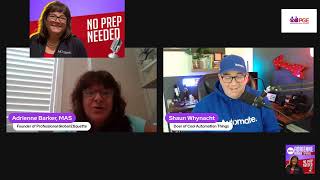
In this informal live interview, host Adrian (Speaker A) chats with Shaun Whynacht, founder of Blue Cow Marketing, a Nova Scotia‑based marketing automation and CRM consultancy. Shaun shares his personal journey—from growing up in Nova Scotia, moving to northern British Columbia for love, experiencing harsh oil‑and‑gas country winters, and eventually returning home to start his own business. He explains how Blue Cow Marketing evolved from a creative agency to a specialist in automating small‑business processes using platforms such as Keap (Infusionsoft), HubSpot, ActiveCampaign, and GoHighLevel. Shaun details his certification path, the importance of choosing the right software, and his signature three‑bucket framework (revenue‑generating, revenue‑potential, non‑revenue) for auditing business tasks. He offers practical advice on building a task inventory in spreadsheets (or via ChatGPT) and prioritising automation or delegation. The conversation also touches on the value of systems for business valuation, the role of automation in exit planning, and a brief promotion of the new social‑audio/video app Chatter Social. Throughout, Shaun emphasizes delivering value to listeners, giving “aha” moments, and encouraging entrepreneurs to take small, actionable steps toward automation.
Chapters
I'm excited. Hi everyone, we're back again on the Liveathon this Friday. Oh my gosh, it's September 20th, so I just remembered that. Okay, so why not go live? That's right, I have some of the best guests. Why not say we're gonna go live? I don't know who you are, I've done no studying of you, and why not come on and enjoy? So with all that said, let me introduce— no, I can't because I don't know who he is. Let Sean Why Not introduce himself. Hi, Sean Why Not, tell us who you are, where you are from.
Yeah, so, uh, like you said, my name is Sean Why Not. I am the founder of a company called Blue Cow Marketing, and I'm in Nova Scotia, Canada.
What do you do in Nova Scotia? I mean, that's a tourist spot.
It is, it is. Yeah.
Oh my gosh. Wow, I want to hear your story. So share your story. First of all, are you born and raised?
Yes, yes I am.
Okay. Oh, and you didn't want to leave because it's the prettiest place in the world?
Well, I left, but then I came back. You did?
Where'd you go?
Uh, I went to the West Coast. So I went to, to British Columbia and then Alberta and then came back east.
Oh my gosh, that's— so did you go to the West Coast to work or to enjoy the scenery? And, and the—
there's a funny story behind that.
I want to hear.
So, um, at the time I was about 22, 23, uh, and my girlfriend at the time took a job there. So I had been running my own video production company, and, uh, she went out to, to Northern BC, and I was like, well, I'm gonna come with. So we sold the house, I shut down everything, and I went under this false pretense that, you know, BC has mountains and everything like this, that I could walk out my backyard when I got there and climb a mountain. Which is weird, but that's what I thought it was going to be like. But it wasn't. It was oil and gas country. It was very farm, flat, dirty, that type of stuff. And it wasn't home. It wasn't East Coast. It wasn't the ocean. It wasn't all that kind of stuff. So I lasted 4 years out there. I also worked for the Canadian Cancer Society when I was there, and then started my, my company, Blue Cow Marketing, while I was there and then moved home 4 years later, and, and I've been here for 13 years.
Wait, so, so when you decided you were going to make the move, were you Googling? Like, like, where were you getting your information, and why was it so different from what you thought?
Uh, well, I didn't do the research. Um, like, we were— uh, we moved to Northern BC, which was like a 22-hour drive north And when you say north, I wasn't prepared for -60°C winters. So much so that in that oil and gas country, when you turn your diesel trucks on, the people that work there in October, they don't turn them off until March. Like they are sleeping in their house at night while their trucks are running outside. And to me, that was mind-blowing. I was not prepared for this.
You didn't watch Ice Road Truckers?
No, not until I came back, and then I fully understand.
Oh my God, that is a great story. That is crazy. Are you still with your girlfriend?
Uh, no, no.
Was it the— was it the climate outside or the climate inside?
No, this was very early on. I've, I, I've progressed since then. So I love it.
I'm on the East Coast too, by the way. I was— well, I was born, born in Connecticut. Okay, and then in Florida, but I have never had the opportunity, though I want to do this, is take the New England cruise to Nova Scotia. Oh yes, so some of my friends have done that. I loved seeing the pictures.
Yeah, yeah, that, uh, that ferry is about 2, 2 and a half hours from here, uh, of where it comes in. And, you know, I, I've, I've had the privilege of traveling across our country 3 times driving all moving, pulling a U-Haul, which is not that fun. And then before I moved back, we drove from Northern BC all the way to San Francisco, down the West Coast, camped along the way. And then last year, drove— we drove here down to New York and back, which was amazing.
Oh, I love that. Last year I did 4-month road trip with my daughter, blogged about it on mydaughtermyfriend.com, the website, every day. And but the glory of it wasn't that it was just her and I. She was 17 at the time. I was driving my 2005 Honda Civic.
Nice.
And it was like I had one flat tire that I literally was leaving a hotel and I thought to myself, I don't know, a lot of the tires don't seem right. And right next to the hotel was a tire place. That like, like, other than that was such a smooth trip. No issues, no problems, nothing, nothing. So I love that you did that too. It's fun. And I did it with Trusted House Sitters. So I sit for people's pets. For free. So we had like 90 nights of, of, um, of sleeps at people's houses. Then we did the hotels and motels. So, Sean, why not? So tell me about your marketing company and the name again. It's— what is it?
Blue Cow Marketing.
And I like that, the blue cow. Does that have anything to do with the cow being branded back in the day?
No, it was, uh, Back when I was coming up with the, with names for it, uh, blue was the color that I always resonated with, but I wanted something that was creative. The company used to be called Blue Cow Creative, um, and, you know, cows are, in my opinion, they're, they're fun, uh, and if I ever was to get like a, a mascot or anything like that, I thought a cow would be a good character. And then all the domains and everything were available at the time, so it worked out well for me. It was, it was memorable and people remember it.
Yeah, I love it. The last time I was hanging out with a cow, it actually told me to move over.
Boom.
That's a bad one. So share your services. What do you offer?
Yeah, so I basically— you can tell on the shirt says automate, the hat says automate. So for 13 years, I've been helping business owners automate tasks in their business, in their life, to give them back the time that they're otherwise being you know, used up by repeat stuff that they don't really either like doing or shouldn't have to be doing. Um, so, you know, follow-ups after meetings, um, you know, making sure that things don't fall through the cracks when, you know, they're getting leads and stuff like that. And that's, that's what we do. And the reason for that was I wanted a business— when my son was born, he's now 9— I wanted to be that business owner that could take him to school in the morning, that could go to, you know, his after-school events and be that. Um, and I've built my business to be that way, and I know there's a lot of people that, that don't have that luxury because they are the only person in their business and they have to do all this stuff when a lot of these tasks are just eating 5 minutes here, 10 minutes there, that we could automate that and give them back that time.
I love it. I love it. I love the idea that you, that you knew enough to say, you know what, I'm going to— and you probably did some research beforehand, right, to like decide what you were going to do, and then you probably did some research on what partner you're using? Are you using, um, you know, do you— is there a program that you're using?
As with everything, there's a story behind this.
I want to hear, I want to hear.
So, um, when I moved back home, I was doing web design and things like that, uh, and I was running the business out of my basement of my house. And I opted in for something online, I don't know what it was, it must have been a free resource, and a salesperson called me and they were trying to sell me a software. And they said, you know, it's an all-in-one solution for small business. And I was very reluctant and hesitant, and I blew him off a couple times. And he was very persistent. And I think about the 8th time he's called me back, I'm like, okay, I'll give you some time to show me this. So he did, and I was like, okay, maybe I'll give it a try. So there was a unique thing that they did that no other software company did, was in order to sign up, they required that you did 8 weeks of one-on-one coaching with their success coach, and that was to make sure that you understand how to use the software, you actually built something and launched it, and all that kind of stuff. So we did it. At that time, Facebook was new to our area. Most businesses weren't even using it for business. So I created 10 simple videos about 10 different topics about Facebook over 10 days and made one series and put it out there, and people were opting in. It was simple, like how do you create a Facebook account, out. How do you upload your profile video was one, and you know, how do you do this? How do you do that? So the idea by the end of it was they were more comfortable with the platform. And I had one email that went out last and it said, could you see using Facebook for your business? That was it. That's all it said. And about 78% of those people that got it replied back to me and said, thank you so much. I'd love to actually talk to you about how we could use this. So in that first year, I was able to double my business as just a solopreneur working in my basement, um, with that one sequence that was there because I was getting leads from people automatically. I mean, they were opting in for this thing. I taught them, I gave them 10 days of value and had one simple ask. So I then was like, I, I need to do this for my clients. Like, I want to offer this. So they offered a certification program. I flew down to Arizona, spent an entire week there in class for 6 hours a day for an entire week, wrote a 6-hour exam, got certified as a marketing automation expert. And that was with a company at the time called Infusionsoft, now they're called Keap. Still certified 13 years later with them, but I've also learned other softwares like HubSpot, ActiveCampaign, GoHighLevel, which is what we're using now with a lot of clients. And that's where the automation comes into play in the work that I do is I find the solution that matches what the client needs versus trying to fit everybody that comes into one software.
OK, so that really makes a lot of sense to me. I, I also, I don't remember now, actually, about a year, maybe about a year I went and I, my, like, business, you know, friend partner, not legally, but like friend partner, she, she turned me on to Keep. So she's a Keep partner. So, but I know that there's other programs. So it's really important, if I'm correct to say it this way, as you're looking to automate, it's also important to, uh, to make sure that you're connected with someone who will understand, because maybe Keep's not the right one for you, and maybe it's HighLevel. So I think it's all about like what the service is, right?
So I mean, just like anything, I mean, if you like, you think of vehicles, there's like, you know, I drive a truck, and people that like, there are diehard Ford people, there's diehard Dodge people, right? And if you ask them what truck is best, they're gonna say, oh, whatever one they they like. Same thing happens with software. It's like, you need this is what you'll get from people. But you need to find someone that's going to ask you the right questions first versus, oh, I need to go find somebody to, to sell and implement Keep for me or ActiveCampaign or whatever. Um, and that's kind of unique because you need to have someone that has experience in, in multiple systems out there and also is willing to say, okay, of the 5 or 6 that I have experience with, I don't think any of them are really a fit for this unique case that you're doing. Um, let's try to find somebody that, you know, has more experience on other things. Like Salesforce, I don't touch it, right? I never have. Probably a great system, a lot of people use it, but I just never went down that road. Um, so when you're starting out, especially if you don't have experience in thinking through the strategy and the, the logistics of automating things, having somebody to help you along the way is absolutely crucial.
Yeah, I really, um, I have to say, the other day I was talking to, um, to a lovely, lovely woman, and she only has 20 clients, so she really doesn't need the Keep. But I was showing her how, like, how I was able to send her from mine, um, a request for the Google reviews, the template. And then, uh, because a lot of people don't realize that, you know, when you talk to someone, they, they're always looking for new clients, but they forget to ask for referrals. So like, or any of these software programs are a great way to, you know, have it automated. So I absolutely think it's brilliant. I also think that podcast hosts should use it. I'm using mine, but I think it's a little screwy. So if you get a like a weird email, just copy it to me and say you need help, Adrian. But if someone cancels, it kind of like that's the hard part. I'm not sure. Everything is a learning stage, so I totally get that. But Sean, I have seen I, last year I had a client and she was talking, she had, you know, like some clients, but I was like, well, what are you planning on doing? You know, if you're, are you looking to retire? Like she did not have an automation system. So I was so confused. Like how, if you sell your business, how do you transfer all that knowledge that you have? And so she held up a binder, a binder. And I'm like, so you're going to give your binder? I go, that's not even sellable. Like, so hopefully I got my point across that, you know, as you're starting your business, consider your exit plan too. And if you are looking to possibly exit your business to give to someone else, sell it, you know, you, you need the system, right? Well, yeah, like, what would happen if you don't have a system?
Yeah, like, I mean, you make a great point. I do a lot of work with financial advisors, and one of my clients does has a program where they help people increase the value of their business before they sell it because they're looking to sell within, you know, 10 years. And one of the key things is the valuation of a business is significantly higher if there is systems there that the new owner can come into and start to operate. You know, it would be as strange as, hey, I'm going to buy a McDonald's franchise, and you show up and there's a cow and a meat cleaver and they're like, go at it, right? Like, no, you don't want to do that. You need the systems in place that, that are already there. So that binder, probably not going to cut it, uh, for somebody that's coming down the road, right?
Yeah. So when you seek your attorney or M&A or whatever you're going to do to sell your business, um, tell them you got a binder. I got a Rolodex of all my clients. A Rolodex. I know you don't know what that is.
I know what that is.
Oh, I'm talking to listeners because I'm sure they don't know. You're old. Hey, not that old, but you're old. Come on. Now, what— because I don't even know when it's pretty much with the internet, right? And, uh, so I— have you heard of Chatter Social? I'm doing a little chatterthon too.
Um, I have not. No.
Have you heard of Clubhouse? Yes. Okay. And have you been on Clubhouse?
Early on. I haven't recently, but—
okay. So I— so that'll give you an idea. So that's a social audio app, right? So, so Chatter was created by Nelson Apega. Who was running one of the largest rooms on Clubhouse, and he knew exactly what was missing. And he had asked a few times, you know, these, you know, recommended these changes. But at the end of the day, when you know there's a problem as a young entrepreneur, you solve it. So we created Chatter Social. Chatter Social is similar to Clubhouse, has a whole video feature. So we could be live doing this on Chatter, or I could even be streaming it live, you know, like I could kind of do this and people would go in the room and then they would ask you correct questions directly. So how it works is you have the stage and the audience, so same kind of thing, but on the stage I could— you can like just talk about yourself, you could show people where you are and your views, or you could do the streaming live, so you could do workshops and all kinds of things. Or there's just rooms that are fun, there's contests, uh, there was like The Voice challenge which was amazing, um, I've run rooms and, and chatter, so there's really a lot of things to do. But you're talking to real people, it's real-time conversations So you get to really know someone. It's an amazing experience. And there's people, a lot of people from Canada. So you'll also meet your peeps. So if you're interested, Chatter Social with 3 bubbles available on iPhone and on Android. If anyone else is interested, I make no money on this, but it's so cool. And it right now it's in public beta. So we started private beta. Now it's public beta. And then, um, and then it'll be open, so probably another 6 months. And, and so get a head start on making your channels and getting people. Um, and then so once you have your, your username, let me know and I'll send you the invite.
Excellent.
You are gonna be— it's, it's really fun. It's really fun. Like, and like, there's, there's something for everyone, and there's always like thought-provoking, you know, conversation. And you will be surprised how many amazing business professionals there are. And then there's amazing people that are actors and singers, and you have that whole line. They hop on too. Some of them are explicit, and you're not— you know, you go in the room, it may be a little dirty, but not dirty dirty, but maybe language dirty. So, but anyways, I'm glad. So is there anything like— oh, first of all, what is your goal for being on podcasts?
My goal on being on podcasts is to help somebody that's watching or listening you know, get that aha moment before they even, you know, decide to want to contact me if they do. So, um, this is, this is me giving back, um, and, and that's what I want to do. Most of the podcasts that I look to be on are ones where I can give value and, and teach or educate on a certain topic, because what I find is a lot of people, they're stuck on something, um, and it's just, it just takes that one little thought that comes from someone else that will unstick them and they can move, keep moving forward.
Will you send me all of your information so we can get people, you know, have your information? Are you on LinkedIn too?
Yes. Yeah.
So, so why not? What, like, like I'm trying to understand, first of all, like, why not tell me? I want to go with the why not thing. Can you share like what's it like the number one kind of question that you get and if you have the tip for that so that we make sure that this podcast interview has a golden gem that you just dropped.
Yeah, absolutely. So because I do a lot with automation CRM implementation for people, I meet businesses that are running off of spreadsheets, right? Or notebooks, if you will. Right. Um, and they, they say, well, I, I know I need a CRM, I know I need to get my data organized and all this kind of stuff, but I, I don't even know where to start, right? And that's usually the first thing is where to start. So, and I do this with every client, even ones that's like, I'm ready to do it, is you need to take an inventory of all the things that you do, right? And we try to bucket all the different tasks into 3 different categories. One being, is it revenue generating? Meaning, is it you meeting with a client? Is it you doing sales calls? Is it you actually like doing something that you're getting directly paid for? Two, is it revenue potential generating? So is that creating content, doing podcasts where you can't really say when I create this episode it's going to make me $10,000, but getting it out there to the, the, the world could potentially expand your reach. And then lastly is the ones that we hate doing, which is the bookkeeping, all that kind of stuff. No, no offense to people who love that, but I don't like it. Um, those are the non-revenue generating tasks. So once we do that, we look at, can we automate or delegate those non-revenue generating tasks? So can you hire somebody to do your bookkeeping and do this kind of stuff, um, at a cheaper rate than what you have a value of your time, right? So you, you need to understand how much is every hour of your time worth to you. Um, and that's how you can validate that. The second one, the potential ones, is, is what can we use in automation or AI to streamline it, make you more efficient, make you faster at it, um, or automate some of it. But the revenue generating ones is like, we're not gonna automate that, right? You are the, the asset that, that needs to be there. Um, or you need to hire somebody to come in with you beside you in real time and be just as great as you. And we do a lot of work in that solo or 1 to 3 business world. So once we, once we've identified that, and a lot of people when they go through and start to audit that, they really are like, wow, I had no idea all these things that I'm actually doing. Because you take it for granted, you just do it. But when you, you start to tally up, well, that takes me 5 minutes, that takes me 10 minutes, like suddenly, you know, it's lunchtime and you're like, I didn't get anything done because I've been doing all these little things. Um, and then we— what we do with that is, is start to then organize it and build those systems in place. So, um, don't look at it as, hey, I got to automate my entire business at once. It's like, what's that one thing that's really bugging you right now? You know, it's maybe that people are coming to my website and filling out a contact form that's emailed to me, and I don't know if I'm getting them, right? They come to my inbox, or— okay, well, let's fix that problem. Right? Let's put in that— so when they submit it, it goes into a CRM system so you know it's going somewhere, right? And then let's, let's nurture them. So the moment they book a consult or a guest on your podcast, let's start to, to build that relationship. Let's send them some information, set the tone, make them feel good when they would get on that call with you. Um, that's really what we start to do. We never take the entire elephant at once. We just bite it one at a time, right? That's the idea.
Oh, we can't leave our guests, our listeners with elephant biting because yeah. But I do have one question for you, or I have a suggestion that I think will work. And then we will have to close for today because I haven't— I somehow I got back to backs. But like, so for this, for the, like, the, look at the homework, like to put it all together. I was using ChatGPT to kind of say, here's what I did because it was messy, right? Here's what I do. Here's how much time. I just use ChatGPT. But then when I said, okay, clean it up so I can, you know, get more information from my consultant, then it would be in a position where, okay, Sean, this is exactly what's taking place. So I just wanted to take a minute or two. How can someone out here listening can actually do like do the first exercise before they reach out to you and what that would look like? So you've got 2 minutes to answer that question using like a ChatGPT.
Using ChatGPT or just using any tool?
Using any tool that would help you to kind of brain dump and then hand it to you in a clean format?
Yeah, so the easiest one would be to open up Excel or Google, whatever one you're comfortable with, um, and create 3 different sheets. One of them is marketing, one of them is sales, and one of them is operations for the tabs. And just start to list. So on my marketing side, what do I, what do I do? So maybe I do a podcast, and then in that Column underneath that, what are all the steps? You know, if I, if I write blogs, what are all the things I have to do? Sales, what's my sales cycle? So is it— do I base it off of consults? So people book a consult, we do that, we send them a proposal, whatever that looks like. Every little detail that you do in there. Um, and then the last one, operations, that's, that's a bigger bucket because it's everything that you have to do in your business. But at least getting it out in that format where You got those 3 tabs because the reason I do it 3 tabs and not all one is you cannot tackle all 3 of those at once. So if you're going to work with someone, which one is more important? If you have no problem getting leads but you can't close them, then you got to focus on sales. Or you can sell stuff, you can get people, but you're backlogged because you can't fulfill— that's an operations thing. So the reason I separate them is because you're going to then work with somebody to figure out one of those 3 tabs, then the next one, then the next one.
Excellent advice. The only thing is that you could— I asked ChatGPT to create the Excel file for me, then I put it all in and then actually creates it. So if that's something that, you know, they're confused how to do that, this way they don't have to open up an Excel, you know, 3— like, I actually think that's easier. But because I'm not great with Excel, actually, I don't like Excel. We fight all the time. Okay, so Thank you so much, Sean Wynott from Blue Cow Marketing.
Cow, not cat.
They have a cat here too. I love it. All right, Sean, thank you. I'm so glad that you said yes and you didn't say no because you're the yes guy. I could tell. And you jump at opportunity. You're smart, you know what you're doing, and you live in a beautiful place. So become his client and maybe he'll invite you over for a little coffee.
Okay, I'll come to you. I'll come to you.
My gosh, Daytona Beach, watch out. Okay, I love it. Oh, you do speaking engagements too? Send me your speakers. I'll go back on and look at your speaker sheet because I truly don't like prep. You're awesome. Thank you so much for being brave. You're so brave and bold. I really appreciate it. Have a great rest of the day.
Thank you.










