Let's meet Steve Smith
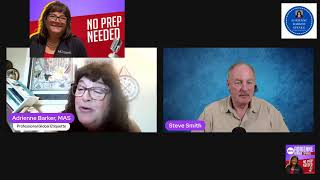
Steve Smith, a business coach at GrowthSource Coaching, works with industrial, manufacturing, and B2B firms. He uses diagnostic workflows to identify bottlenecks, then coaches clients through behavioral change by asking questions rather than doing the work himself. His authority-marketing approach relies on a website, videos, and email to attract leads instead of cold outreach.
Chapters
like behind the scenes, and then it's gonna tell me when we go live. I'm wearing, um, lip shiny stuff for you. We are go live. Let me see here. Hold on, Steve. There we go. Go live.
Go live.
Don't be messing me up, StreamYard.
It says live on my end.
Oh, are we live? Yeah, thanks.
34 seconds into live.
So, but I have to get my editors— I have to get my editors to edit that. Oh wait, I don't have editors. Okay, welcome everyone. Adrian Barker, no prep needed. That means I do zero prep. I did peek a little bit at Steve's website because I was really interested. Now I got the live, but Steve got the live first. So Steve, everyone that comes on to No Prep Needed has to be brave. They have to be bold. Yes, they have to be brilliant. And they do not have to be bald. So that's a good thing. So you're good. Now, here's the thing. I didn't ask you questions beforehand. So this is all off the cuff. And the only thing I know about you is you're a business coach and you live in Orange County, LA. So introduce yourself.
All right. As you just said, my name is Steve Smith. My company is GrowthSource Coaching. For the last 16 years, I've been coaching business owners and company executives. And I only have one mission: to allow them to become the best that they can be so they can live their true potential.
Ooh, that's easy. That sounds easy. But what does that really mean? Because I think, you know, right now we've got on Chatter. I'm going to just show everyone because I have it. So we're going live on LinkedIn, Facebook, YouTube, and Chatter Social.
Nice.
And I've got some amazing women in the room. So I've got Dora Maria, I've got Kate. Now Kate has an amazing business, uh, Nolan's Nest. I absolutely love it. She does candles and soaps and natural fragrances. So we'll use Kate as an example. So Kate's got this beautiful business. She works hard with her son Nolan. Nolansnest.com, and you guys go on the site because it's amazing. Okay, so now she— like, what would, what would Kate be looking for, for as a business coach?
If she was going to hire one, what would she be looking for?
Right, she was going to hire one, or, you know, or somebody— like, if you met Kate and she tells you what you— what she does, well, how does a business coach— is it like particular businesses? Can you help a, a small, like, family-owned business?
Yeah, look, any really good business coach can work with any business owner professional regardless of the model that they have. Now, there might be some exceptions to industries. So as an example, I am very, very broad in my industry scope. But there are a few industries that I don't really work with. One happens to be restaurants. So, you know, and I'll tell people that upfront. But other than that, if you have any other type of either virtual or entity-based business. It's really more about how the business is structured, what the model is like, and what are you doing as the owner to affect it. Because 90% of a business success is what the owner does to either grow it or get in the way.
Yeah, that's very true. I love that, Steve. I, I could tell your level because I did peek at your website. Don't tell anyone. Little prep. Was needed. But I did, I did look at your website and I mean, it is fantastic. I actually think if I was better, I could share your screen. So, oh, let me put it in the notes actually. Oh no, I do have it in the notes. So when you go to the website, I could see right away, great, handsome, full picture of yourself. You're a speaker. So let, like, like business coaches seem to be speakers, they're out there. How, And I love the fact that you don't do restaurants because I think that's really like a strong niche. So what is your niche? Let me— we'll start with that. What's your niche?
All right. My niche, I basically have 3 industry segments that I work in. I work in industrial, so they could be manufacturing, logistics, warehousing, things of that nature. I work in a commercial sector, which could— that's what I consider B2B. So those are businesses that serve other businesses on more of a local scale. And then my third one is the professional sector. So I work with law firms, I work with CPA firms, I work with engineering companies. Those are people that have, you know, they've gone after a lot of education and certification to be able to practice what they offer. So that's the pro— so one of those three, I'm good to go.
Oh, it makes me want to rub my hands together because that is exciting. So do you reach out to all the, like, manufacturing associations?
No, actually, I do a completely different approach to my outbound marketing. I went to school on a practice many, many years ago called authority marketing. And the reason I did that was because the coaching field is very, very populated and it's littered with large-scale companies, franchise-based companies, and also a lot of small solopreneurs. I am a solopreneur. It's just me. But in that field, there are so many people out there that you have to be able to say, what makes you different? And so, I started very early on talking about the things that I excel in, my background, what I can offer to the small business entity. And over time of, you know, doing videos and being on social media, people come to my website. And if they like what they see, they sign up on the little box. And that sends their email on their phone. I reach out to them. I just had a call this morning with a guy who really needs a lot of help. But that's what it is, because it doesn't make any sense for me to just pelt people in their email. If you're not ready to make a change, it doesn't mean anything to you. So I let people see everything that I do and who I've done it with. And when it's the right time for them, they reach out.
I love that. Okay. So, so that makes so much sense because I do have some clients and as they're looking, you know, they're like, people don't respond. They don't call me back. They're not, you know, it's not working. And I I totally get that. And I could see, you know, I do LinkedIn, uh, generations. I could see which ones really work out. But you're right, there's certain niches myself that I say no, I really can't work with, uh, because there, there's no communication. Like, just notice that with like the bus, the superintendent of schools that manage the buses, right? That they're just, maybe they're on LinkedIn because they need to be, but they're not like literally answering or responding.
There's a massive amount of professional profiles on LinkedIn that are just abandoned, or they're They're what I call like billboards. It lets them know, people know they're there, but they really aren't interested in updating it, providing anything valuable, or creating a community environment. They're just there. And so, when you have that, I can't be concerned with that because I could be plying them with emails every other day and I'll never get a response.
So, when you speak, when you're speaking, and actually, so funny enough, my bestie does, runs the the New England Manufacturers Association. But so, but that would be a good group for you to go out and speak to.
Associations are great audiences because they're there for a purpose. You know, they want to learn something, they want to take something away that will hopefully make their life or their business better from that point on.
I love that you're doing manufacturing because I could feel it in my bones that we're bringing it back. And I grew up in the promotional products, logo merchandise business. So I, I, you know, there's— I do believe it's going to come back, and I'm excited for that. So, you know, tool and die is also another kind of lost art that we need to bring back. So I love that you do that. Okay, so then you're taking a business owner— because I'm in Volusia County, and I know that even our own manufacturing association, the VMA, that you have— that they, they need help too. And they— some of them have worked with the local college to bring on a business coach to give them an entrepreneurial mindset. Some of them may just be working in there and they don't have that kind of mindset. So give us a little, a little juicy juice on what you, how you help someone. What is it that you do? What are your process and steps?
Well, when I sign someone on, the very first thing I do is I put them through a very extensive diagnostic and it's designed to download all aspects of them and their business to me quickly. Because I don't believe in taking 3 or 4 sessions with a client just to learn what they already know. So this way, I'm kind of on the same page as them right from the get-go. And 9 times out of 10, and you just mentioned it, most of the things that hold people back, that put them in a kind of treading water and I'm not sure where to go next, is because they haven't really developed a clear enough mindset about what they're there for, what they're trying to do, and what they need from everybody around them to get there. And until you change up how you think, how you perceive things, you will literally be in the worst pit of hell, so to speak. Because what you're going to find yourself doing is everything you've hired everybody else to do because you're unwilling to give things up. You're unwilling to set expectations, hold people accountable, make sure everybody's doing the same work that will get you down the road in the right direction. If you're not thinking and doing in that manner, it's no wonder we have so many people that perpetually fail at trying to run their own business.
Do you hold your clients accountable?
Oh, I have to. If I don't, there's no reason for me being in business. That's what they come to me for because they've tried it elsewhere. They've tried to do it themselves and they can't. And so they want somebody from the outside. That's important. You know, I can't be their spouse. Because that would never work. But if I'm on the outside and I'm saying, look, this is what you've told me. This is what you know to be true. This is what you agreed to do. Tell me what was more important that made you decide not to do that. And so, when you have conversations like that, it's not oppressive. It doesn't make people feel bad. It just makes them think about what am I doing? You know, I'm paying this guy to help me and I'm not following his direction. And you have, sometimes you have to go through a couple of those cycles before people actually wake up. And recognize that there's bad habits they need to get rid of.
I love that. I noticed that I do belong to a master group, but I haven't attended. I attended like once, and then like every day there's a reason for me not to attend. And I signed up to support, but there's no real accountability for me. So nobody's saying, hey, where were you? Why are you not there? So I'm just not there. And it makes me think that that's like, that's the case. I, I feel at 62, you know, and with a strong background, I grew up in a very large family business and still running parts of the business. I just, I really do see that, that people need that accountability. And I don't know why. So why would someone say no? Besides money, obviously. Why does someone— what scares them away from having a business coach?
Well, I can tell you in my situation, a lot of times what it does, I will always start out by talking to people on the phone because I really want to understand their story. You know, where are they now? How did they get there? Did they start it? What do they want in the future? And then when I turn around and kind of say, okay, here's what I'm hearing. Here's what I'm observing based on what, you know, I've been doing this for 16 years. Here's what I see happening if you don't make certain changes. Sometimes the magnitude scares them off. Sometimes they've waited so long that the business is literally in peril. And if they don't make some massive, massive changes that they're probably not going to be liking to do, the business is probably not going to survive. One of the things I always ask customers, if you and I start working tomorrow, how much time do you have to turn this around? 'Cause a lot of times they don't think about that. Gee, I've been losing $10,000 a month. How much more time can you lose that before you're just, you bleed out? Because if they tell me, gee, I've got 3 months worth of runway before I go, then I'm going to send them right to the government website where they can find the paperwork on how to file for bankruptcy. 'Cause I can't help anybody make a massive course correction like that in 3 months. Just, it doesn't work. It's not sustainable.
That would be a wake-up call.
Well, it would.
It would.
But that's the whole problem. And look, here's one thing I get more than anything else when I've worked with clients for some period of time. Sometimes just absent-mindedly, I'll say, you know, they'll say, you know what, I should have done this 2 years ago. I get that with people who finally let people go in their organizations that they've liked. Maybe it was a family member, but they finally decided they had to fire them because it just, it was toxic. It wasn't working. And the pat answer after that is, I should have done this 18 months ago. So what that tells me is we're all prone as humans to wait way, way, way longer, thinking everything around us will change and things will be fine and we won't have to participate. And that's almost universally incorrect.
Yeah, I, I'm, yes, I mean, I've seen it in real life with my own family business. So I totally understand that, especially back in when I first joined the business in the '80s, where my mom was, you know, HR, she would hug everyone. Everyone would tell her their secrets. I used to be like, Mom, you know too much stuff, you know, until we got to the point where we did have to hire someone to come in because we had to take ourselves out. Once you slowly start to get that comfortable feeling, I totally get it. So, Steve, what are some of the topics when you are speaking? So you're asked to speak. What are some of those topics? I'm curious.
Well, the one— and first, I just have to let you know that when I do these speaking engagements, I spend a fair amount of time with the organization up front trying to learn what they have introduced to their audience in the past and what they think is most beneficial. I detest going to association conventions and listening to people who are talking about things that nobody has any interest in. So, I'm always saying, "Okay, what is it these people want to hear?" And one of the things I get quite a bit is, discussions on professionalism and what do you have to become to show up in your place of work, the community, the industry that you're operating in, where people just see you as top-notch, you know, first in class in whatever it is you're doing. So many people don't. They either don't know, they don't care, they're just completely unaware of how they show up and how they interact. And as a result, lots of times, business just walks right by them. Because other people see that and say, I don't know if I really want to deal with anybody who presents themselves that way. So that's a really good topic because anybody can benefit from that.
I love that. Can we play a game, you and I, right now? Let's play. Let's play. Okay, so what we're going to do is we're going to play what you need to be professional. So, um, so we'll, and we'll go back and forth on some of the things that we'll have. So kind of like a role-playing game with a little fun. Okay, so I'll go first. I'll go first because I, I'm female.
I want to go first.
Okay, so I'm gonna go first. Ladies, let's not show our boobies. First one. When you go to speak, professionalism-wise.
Yes. Is that a question?
No, that's, that's my, that's my advice. We're gonna give tips and advice right now in a fast, fun way.
So that's your advice. My advice, my advice, know why you're doing what you're doing before you stand on stage.
When you're on stage, make believe that Disney told you you're part of the cast members. Everyone's watching you from the minute you get out of your car, maybe while you're driving too, to the minute you hit the stage.
Right. Yes. And I would say when you're talking to the group, just remember nobody knows what you're about to say. So if you happen to make a mistake, don't recoil and apologize and melt down because nobody cares.
Oh, I love that one. So you're introduced on stage. Okay, here she comes, Adrian Barker. Should I say, hi everyone, I'm Adrian Barker? Do I start my speaking that way?
No, in fact, I will, and I'm gonna give appropriate credit for those of your viewers that know this gentleman. His name is Simon Sinek. He's a business leadership guru, wonderful guy, great message. He just published an article on LinkedIn that I read, and it was how to completely change your intro when you're making a speech. And his idea is just to what you talked about— do not do that. Just jump right into the action of the story and let people know exactly what's going to happen. But, you know, gee, I'm here to talk to you about this, and here's what you're going to learn— nobody cares about that. Half of it is entertainment until they realize the value of it. I love it.
This is fun for me. Okay, here's another one. Don't yell at the audience. Like, don't get out there screaming because you feel like that's how I'm going to motivate everyone. Oh, everyone.
Yes.
Screaming is no fun for the listeners.
Well, the problem with screaming is if you go back to your days as a child and your mother would scream at you after she told you 4 or 5, 6 times, It's because we all go mentally numb over that. So, if you're going to scream as a professional speaker, you're going to get about 6 minutes worth of attention and then people are going to be going to the bathroom, looking at their phones because that constant drumbeat just numbs your head. So, I'm saying figure out ways to engage the audience. Adjust your fluctuation, move around a little bit, have the kind of facial expressions that match up with what you're about to say. Just be human.
I love that. Good speakers meet and greet at the door, maybe even remember some names and will say, "Welcome. I'm so excited that you're here. It's going to be a great conversation." All right.
So I have a different way of looking at that. And to me, if you're going to speak and they're going to invite you to lunch, make that the time where you go around and introduce yourself and just learn about what a few people are doing. But when it's getting ready to go, you're not at the front door. You're behind the set waiting to come on. People, you know, it's like the Wizard of Oz, you know, who's behind the green curtain. People expect a little bit of mystique. So if you're going to do the schmoozing, either do it the night before, do it the day of. But before it's your time to be on, be where you need to be so that when you come out there, you can make the entrance that you want to make.
Okay, you convinced me. I'm good. I like that, though we could have a whole debate on that. That would be fun. But I do like that. Okay, you know what? Make sure you're comfortable in what you're wearing because sometimes your high heels may just be a little high, or maybe as a man, your suit is not comfortable. You keep buttoning and unbuttoning the jacket. So when you're comfortable, you'll be able to speak comfortably.
Yes, comfort is a big thing. But the caveat I put on there is dress one notch above the audience you're talking to. So if you're talking to some trades folks and they're showing up casual, you want to be business casual. If you're talking to a bunch of bankers who are all dressed there, you know, you want to match that. So because you want relatability, if you show up in a dress style that seems to be off-putting or something that people can't connect with, now you've just thrown another hurdle in front of your ability to connect with the audience.
So, you know, as a listener in the audience, I really try to, you know, sit where I'm not going to be distracted. Sometimes I'll even move if the person next to me is on their phone and it's distracting me so I can kind of pay attention because I want to get as much. And, you know, I don't think I'm so important that I have to have my phone in my hands. Like, you know, it's not like the president's going to try to call me, so I'm okay putting it, taking it off and not using it. But I don't necessarily like when a speaker says, turn your phones off, and, you know, starts looking at people or pointing to them or kicking them out of the room. I have seen some speakers get kind of, you know, really upset when people are on their phones. And I can understand that, but as an audience member, I don't really want to be— I'm not a child. What are your thoughts?
Well, no, I mean, look, if you've been invited in to speak to an audience and the first thing you do is insult them, you know, you got a pretty high hill to climb from that point on out. So don't worry about giving them, you know, gee, the restroom's down the hall and this and that. That's what the person who's introducing you as kind of the host of the program should be doing. When you get on there, your job is to immediately connect, show relevance, and give them enough information and stories and relevant ideas that keep them glued to you. So now you become a better choice than the cell phone in their pocket or purse.
I love that. And of course, tell a great story. We all love to hear stories. That's weave it right into whatever you are teaching and sharing. What about PowerPoints, Steve? Aren't they wonderful? They're so delicious.
Okay. Yeah, PowerPoints. You know, you've heard that thing, death by PowerPoint. Okay. PowerPoint has been around a long time. It's used by a lot of people. I find a lot of times people use it improperly. And if you're on stage and you have a big PowerPoint behind you, that's fine. But it should be as few words as possible. Pictures are the best. Something that just visually depicts what you're talking about gets so much more mileage than a whole sentence or a paragraph. So nobody's got time to read that. And if you turn around and read it, that's sin number one. You never look at your own screen, but you might be forced to if you've got a paragraph with 8 sentences in it. So if you're going to use PowerPoint, I do. I make sure there's tons of pictures on there that reflect what I'm talking about because the image is worth a thousand words.
I love that. Also making it interactive. You know, I love that, getting feedback from the listening audience. But, but make sure you have a microphone because if I'm in a room and the speaker asks a question and someone stands up and they don't have a microphone, someone's not running to them with a microphone. It's okay.
I don't need a microphone.
I have a large enough voice. No, your voice actually Is it like I have ears that aren't that— like, people don't understand. Just because you think you have a voice that bellows out, you may not. Or someone may have some hearing disabilities or just unable to hear me with my wax in my ear. So I really do think that's important. And also distractions. To me, if I see a PowerPoint, my mind may go, and next thing you know, I'm thinking about my dog at home and if he's fed.
Well, that's why if you're going to use PowerPoint, you have to start off with something that engages attention. And it doesn't mean that the people looking at it have to understand what it is. It just needs to be something that's attractive or inquisitive or something that might not make sense. Whatever it is, as long as it feeds into what you're talking about and it gets people's attention, then it's done its job. PowerPoint is just a tool. It's not the presenter. It's not the speaker.
No, no, I totally agree with you. So I just want to take a second to say that we are live on Chatter. And Steve, I wish you could see everyone. Dora Maria, by the way, I just joined Toastmasters that she's putting together.
Wonderful organization.
Yeah. And are you a Toastmaster or were you at one point?
At one point I was, yes, early on. And I just found the feedback was invaluable. That was really the biggest part of it because you can study books, you can watch videos, you can do all this kind of academic time. But until you stand up and give a 5-minute speech and then get the feedback— what people heard, what they saw, what they thought they saw. That's really how you develop as a speaker.
Oh, I love that. Isn't that great, Dora Maria? I love, love, love that. And you know, Dora Maria is actually like, she's an amazing tech. She's very, very smart. And I know that she has incredible processes. How do you like, what is your knowledge and processes to help your client because maybe that's where their issue is. What does that look like, Steve, for you?
For me, it's all about getting the client. And believe me, something I should tell you right off the bat, I consider my entire business practice high-touch, low-tech. So tech is important, but I don't, I don't rely on tech to do everything. I find out what tech tools serve their purpose for the specific area, and that's what we stay with. So your question, a lot of times I'll have a client get in front of a giant whiteboard and I'll tell them, draw out your entire workflow process from the time you get a call or an order from a customer all the way through to delivery and collecting on the bill. What does that look like? What channels does everything go through? Who's involved along the way? You know, what kind of blockages or screw-ups routinely happen because you haven't thought about that particular handoff? Once you have that picture there and you can see it from start to end, then you can figure out what needs to be automated, what needs to be a procedure that everybody needs to be trained on and use on a regular basis, because all you're interested in is having the most efficient workflow from start to finish, because that's where the money is.
Yeah, that makes sense. So, so like, do you have a steady flow of clients or is there a point in time where you are looking for clients? What does that look like for you? Because I think a lot of us that are, you know, business consultants or business coaches. We want to know from each other what's going on.
I've been either full or close to full for the last 5 years. And I consider myself extraordinarily gracious for having gotten to that point. But I will tell you the reason it's there is because about 10 years ago, I went to school on internet marketing. And not all the extraneous lead gen. Just what do you have to put out on the internet that will draw people's attention and attract them enough to come back to your website and figure out if they want to do business with you or not? So after doing that over and over and over again for 10 years, you know, the payback started to show up.
You know, Steve, your website is really wonderful. I have to say that that makes sense to me.
Thank you.
Yeah, really. And you're just— you're answering everything. It's hard sometimes to get everything together. So what Advice would you have for a business coach or consultant? Let's just say they have 20 years in business, so they, they have enough behind them. Because I mean, can you be a business coach with 5 years? Like, what does that look like? Because I'm always curious. I have— I don't want to age myself that I'm 62, so nobody, you know, say anything about my age. But at 62, growing up in a family business, I have over 40 years of business experience. Does that even matter?
I would think if you're a business coach, you should have some relevant experience because here's what's going to happen. At some point during the engagement, the client is going to be in such uncharted territory about what they need to do. They're going to have to draw on you to help them figure out what the next step is. So if you've never worked in a complex business or run a large-scale company or had your own successful small business, you're not really going to be of much value to them. And so having some business experience is important. But here's the other thing. If you're really going to be good as a coach, you have to understand the coaching process. The coaching process is not telling people every step of the way what to do next and how to do it. A big part of it is talking with them and using the question and answer technique to draw the answers out of them. Because 90% of the people I work with, these people are not stupid. They're very, very sharp, but their heads have gotten cloudy over time, and they don't see things as clearly as they used to. Most of them have the answers. They just have never actually had a conversation about it and have never been encouraged to actually try them. The answers just kind of roll around in their head and they go away and they come back and they take a shower and all of a sudden it pops up. But they never actually act on them. They just continually think about them. So coaching is help you get it to the surface, and then figure out what it's going to take for you to step out of your box and actually do it.
It's almost like if you're, if you're in a business and you need help and you decide, well, I'm going to ask my mom, which I could have because she was really brilliant, or my dad. But, you know, you start asking family members and then they're giving you the wrong advice, or all of a sudden they're making suggestions that, you know, they don't really know what that— that I see can really cause issues. I was with SCORE for 8 years. So what I did was I decided I could write smart because that's one way of doing it. You're coaching and mentoring, not a coach, but you're mentoring for free, but you're learning all different kinds of, of different, you know, businesses. But I do see that a lot where someone is giving advice and it's not the smartest advice. As a matter of fact, the advice half the time doesn't even make sense. I don't take that advice.
All right. So, all right, look, that's a, that's a great topic. Here's a tip for everybody listening today, because I tell my clients this all the time. Look at who's in your inner circle. Everybody has between 3 and 5 people that are really close to them that they draw on, or these people, you know, inject things into their environment about what they should do, what they should be scared about doing, all number of things. Look at who's in your inner circle and upgrade the people. So rule number 1, if anybody in your inner circle that is a direct descendant of you, toss them out. Not because you don't love them, but because they're never going to give you unbiased feedback that you can actually do something with. They're going to be too close to the situation. Find people, they don't have to be in your business, they don't even have to be in your industry, people you respect who when you sit down and you ask them a question, they will give you unfiltered advice. That you can actually do something with, as opposed to telling you what you want to hear or what's going to make you feel good.
I just love those words. I think that makes so much sense. I want to go to Chatter. So we are live on Chatter. And I'll just give you really quickly, Dora Maria. Dora Maria, you are in California? Oh, okay. Same time zone. Um, because Steve is, I think, in, uh, in Orange County. What about the fire, Steve?
Well, the fires were 50-plus miles north of us, but it was devastating. I mean, this state has never had anything like that happen before, and it's going to be a long, long time before they get out of it.
So I just want to show everyone, because we are live on Chatter, and I want to see if anyone has any questions. We have Kate, who is a business owner with, uh, Nolan's Nest. And also she helps people's heart. I think she's a cardiogram.
I think. Okay.
Um, and then we have C. Marie, who is very, very smart, a speaker, mental health, self-care advocate, just absolutely lovely, uh, helping parents. I think that's amazing. Momo, who sings and is absolutely beautiful and has just so many talents. Momo is also in Cali. Momo, where in Cali? Oh, let me— I'm gonna turn a little louder, see if that— what was that again?
Los Angeles area here in Los Feliz.
Oh, okay, LA area. We have Nula is on here. Nula is really cool, she's a journalist. I think Nula, 29 books. Oh, just to— but you're amazing. I've, I've read a lot. Nula is very well produced. She's really, really well known. And then we have this, this young man named Caleb who lives in Costa Rica, and every time I see him, I just see a big heart because he has such a big heart. He's like a soul, beautiful human that just wants the world to— everyone to get together. And so I want to ask you guys What advice or what questions would you have that I could ask Steve while I have him?
Uh, can you hear me okay, Steve?
Oh yes.
Okay, let me see.
Hey, I mean, I'm new to this space. I have no idea who Mr. Steve Smith is. Do you mind just giving me just a quick little recap of, of everything, or whatever you feel to share?
Sure, absolutely, absolutely. I've been in business all of my adult life. I was in the consumer products manufacturing field for 30 years, worked with some top-end U.S.-based businesses. 16 years ago, I started professional coaching. I figured out that was the absolute best use of my time and talent that I could ever come up with. And it has been an absolute joy ever since. And to date, I've been fortunate enough to serve just a few, a little over 1,000 professional business clients. And, uh, I'm very happy. I, I couldn't be happier with what I'm doing or who I'm doing it for.
Wait, hold on, hold on, Caleb. I have to— I just— I don't— I know that there's a— okay, go ahead.
Thank you so much. Uh, it's a pleasure to meet you, uh, even if it's virtually, right? Uh, bridging past space and time. So thank you for sharing yourself, and awesome to see you over here being bridged over to Chatter. And lots of love from Maine, the northeast part of the United States, and I, I hope everything's well.
Oh, I thought you were in Costa Rica. Now I'm all confused. We have to do catch-up. Nula has a question. Go ahead, beautiful.
I do have a question. Can you hear me okay?
Yes, yes.
Um, yeah, I— my background is 30 years in journalism, um, and also Having had a couple of books published by Random House, I help people to put together proposals, the irresistible proposal, and I'm fine with that. And when it comes to— I've only been coaching in terms of publicity, how to get free publicity, for like, well, about a year. My question is, how do you stop yourself? Because it can be quite frustrating when you're telling people what to— what they need to do, or the things that they can do in order to get free publicity, and they don't do it. And so I'm tempted to— although that would cost— I'm tempted to actually say let me do it for you. But I really don't want to do that. What I want to do is coach them how to do it so they've got the skills in the back pocket. How do you, how do you keep yourself from the temptation of just wanting to do it for them?
That's a great question.
Yeah, it is a good question. Um, I think the thing that you have to keep in mind is you are the catalyst for their success. Meaning they have to own the success they want. You're a big part of helping them get there. But your job is not to do it for them. So when you and your client come up with a strategy that makes sense for them and they're really committed to getting what they're telling you you're getting, then you've got to be able to ask them questions. Okay, you understand the strategy. Tell me why this is the best choice for you. Get them to internalize the reasons why. Because when people are really clear about why they need to do something, they tend to do it a lot of times ahead of schedule. But when people are unclear, or it's a nice idea, but I don't know if it fits me, they'll go along with the program if they think somebody else is going to do it for them. Even if the results aren't there, because that means they don't have to do anything. And the hardest part about coaching is getting people to mentally and behaviorally change what they're doing to something that's more successful. So all I would suggest for you is resist, even if you have to take a piece of paper and write on it and stick it in front of your computer, you know, how— write on it in big giant words, do not do it for them. Keep that mantra in your head because the minute you do it for them, you've actually set them up for failure. Because your job as a coach is to get them to take the initiative and be accountable for their own success. So, don't do it for them. Continue to go back to the well. You said you were going to do this. Tell me what was better off than you doing this. Why did you not do this? Don't let them off that hook. Sometimes it's an uncomfortable conversation. But guess what? That's what they're actually paying you for.
Oh, my heart is racing. I love that. Nola, they're not your children. That's like doing the homework for your kids. You know, really?
No.
I love that. Go ahead, Nola. I'm just going to turn it up louder because I still need to figure out the echo part. Go ahead, Nola.
No, thank you. Yeah, there is a problem. Absolutely. Thanks very much. I do have to have my knuckles in my mouth sometimes saying, I'll just do it for you. No, I won't. And by the way, I'll cost a lot more. So, you know, this is the value you're getting. It's almost like trying to cure people of their own procrastination, stagnation, which is not my job.
Thank you so much for that.
It's your job to reveal to them what's causing that problem and what they are missing out on their own because they're acting that way. And at some point, through their own discussion with you, the real reasons why they're doing this will become apparent to both of you. And that's what you want, because when they start to see what you've been seeing, that's when change takes place.
That makes so much sense. That is fantastic. OK, is there anything that I didn't ask you that you were hoping, like, oh, I hope Adrian asked this question, even though there's no prep needed?
No, I think you actually— I think you did a great job of just, you know, off the cuff, you know, kind of walking through it. And look, I'll be honest with you. People don't want to know the extremities of everything that I'm involved in because it's boring stuff. You know, I tell folks that I talk to in some of these, you know, association meetings that everybody, every one of your clients listens to this radio station called WIFFM. It's W-I-F-I-I-F-M. What's in it for me? That's all they care about. They don't care about anything else until they know what they're going to benefit from. And once they are clear about that, then all of a sudden, they'll take a personal interest in you. And some of the stuff you do on a daily basis. But prior to that, nobody really cares. And I'm OK with that because I'm not here to talk about myself. I'm here to figure out what I can do to be the catalyst for the success you want.
Oh, I love it. I'm so glad. Thank you so much. I know we had a little glitch. I think that we had a date and then I'm sure it was me messing up, which, by the way, you know that— no, but the point, actually, I just said that I noticed that And I don't have a problem with it, but I notice a lot of people have a problem admitting that they made a mistake, my husband included. God, he's like, yeah, like, I'll like do it, I'm seeing it, and I'm like, he won't, won't say it. But, you know, I, I just, I see that a lot, whereas I enjoy, like, I made a mistake, so like, I want to tell the world I made a mistake.
When you make mistakes, you, you learn from them. So, you know, for some people, that's their greatest source of learning. So If that's what it is, then yeah, don't, don't fear it.
I love it. I love it. Thank you so much for being brave enough to go live, and thank you for telling me all my questions were really amazing and what a great job I did. I think you said that, maybe not. Can I hear it again?
You— it just— it's— it all goes with the package, you know. It showed up well, the stream, StreamYard worked, so hey, I'm happy.
And we're on Chatter, so if you're not on Chatter, let me know. I could send you Steve, if you're interested, I could send you the invite. It's Chattersocial.io, an amazing app. Right now you can't see we're streaming live. And if we were going to— hey, Caleb, can you go on camera? Are you able to? So I could just show what that looks like if you're dressed, or anyone want to go on camera real quick?
As long as she's decent.
Yeah. You know, Caleb sometimes doesn't wear clothes. We're like, what the heck? Now, anyone want to go on camera, or can you? Let me see. Anyone? No, maybe not. I don't know, I don't know. But normally you go on camera so you could actually see the person, and at nighttime there's something called Debate the News, and they go live on Chatter, and then they turn it into a podcast. And I will tell you— oh, there, Kate! Thank you.
Oh, there you go. I see her.
Yep.
Kate has the most incredible blonde hair, and I am getting her shampoo and conditioner because I feel like I want my hair to be as it looks. It's just beautiful.
Will it make it blonde too?
No, but just— it's so soft. She's— and Kate is— oh, this is such a great family of people. I'm meeting some of them actually this weekend in Chicago at CreativeCon, but all really stemming from— and Nelson Apega is 30 now, and this is his, like, invention. He was on another app for years and loved it. And so it's fun to help him grow, and we're all like wanting to support each other. So it's really been a great experience. So if you're interested, or just to know about it, it's fantastic. And, uh, thank you, Steve, for your time and energy today. I love it.
Thank you for— thanks for having me on.
You are welcome having you on. I'm gonna end the stream right now, and that was fantastic. Thank you for letting me play on Chatter too.
Sure.
Oh, I gotta go out of the StreamYard studio. Okay, next time I'll learn










