Let's Meet Steve Smith!
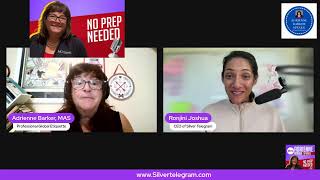
Ronjini Joshua, CEO of Silver Telegram PR in Maui, talks about how PR has shifted from press releases to digital content and thought leadership over her 20-year career. She covers targeting trade media first, crafting client stories, crisis management in cannabis, and why startups need communication-focused hires, not just marketers.
Chapters
All right, we are live. Welcome to No Prep Needed. And what does that mean? It means I have no idea who this beautiful, very, very beautiful woman is, like, in front of me. Ronjini Joshua. And she said my name is pronounced as it's spelled, which I love. R-O-N-J-I-N-I. I, I don't even know. Ronjini could be coming from, like, I don't know, Alaska. So, Rajina, thank you for coming to the show. You are brave, bold, and beautiful. We'd love to know who you are, so you take it away and introduce yourself.
Okay, well, I'm not, I'm not in Alaska, but I am in Hawaii. Uh, I'm based in Maui actually, so I am coming from the beautiful skies of Maui here. Um, but I am the CEO and founder of Silver Telegram, which is a PR agency. Um, my background is I've been doing public relations for the last 20 years in the technology industry. I live in Hawaii with my husband and 3 children and 2 dogs. So lots of kids to take care of. And yeah, I work specifically working with media and building strategies for technology companies that are in the startup space. We do a lot of communications and writing. And so My major in college was journalism, so I'm a writer. And that's kind of my last 20 years in a nutshell, very small nutshell. I'm an avid fitness enthusiast, so I try to keep doing different events and trying to make new milestones. So I do a lot of that stuff too.
I love that. Okay. First of all, you're a Maui, so I'm jealous, but are you okay with what happened last year with, was it the fires? I'm getting myself confused.
Yeah, I'm in, I'm in upcountry Maui, which is a little bit different and on the different side. I'm in the north side and Lahaina is the area that was affected. And also some of the, some of the areas in, in where we are up above us was a little bit affected as well. But I mean, they're on the road to recovery. It's a very, very long road and I think unnecessarily long But that's too political for me to get into. Me too.
I don't do politics, as you know, my rule.
But I—
but okay, so can I get a day in the life of Rangini and her beautiful children and your two dogs and your hubby on a Saturday or Sunday? What do you do? Is it like, let's go to the beach today?
Well, I'm very Type A, so being in PR marketing, you'll, you'll meet any kind of PR marketing person has to be like scheduled and they have things going on. I even schedule being spontaneous. So, you know, there's, there's a method to my madness, but typically, um, here in Maui, our like morning Saturday morning is we go to the farmer's market, grab some fresh produce. Um, right now we're in an egg shortage. So this Saturday I'm going to be going to Costco at waiting in line, but, uh, but that's a, that's a temporary problem. Uh, island life issues. Um, but then typically also we're having egg shortages too. I mean, it's, it's kind of crazy. The line is so long, so I just grab breakfast for my kids and we sit there in the cafeteria in Costco and wait for it to open.
Well, so what— wait, what is the price of a dozen eggs?
The price isn't bad. The price hasn't gone up. It's just the availability.
It's just— yeah, because I shop at Aldi's and it's, uh, $4.79, which used to be like 99 cents. And a limit of 2.
Yeah, our eggs are already expensive because we're on an island, um, so that's pretty typical. We usually pay about $5.69 for 18 eggs, so not that— not the dozen, but the 18, um, about $5 for that, uh, but now it's, it's the price hasn't— they actually haven't raised the price. It's just the— you have to get in line, you know, and be there when it's available. Um, and then if you get organic eggs, then that's even, you know, more. So that's—
yeah, that is, um, but I—
go ahead. Oh, I was gonna say the great thing here is that there's a lot of ranchers and farms upcountry, and so people have fresh eggs. I mean, we have chickens everywhere, so, uh, a lot of people have fresh eggs, and so they've been sharing and, and things like that. So that's nice.
I was gonna say that I would tell my kids, hey kids, wake up, we're gonna have an egg special day today. It'll be egg-tra.
We're going on an egg hunt for sure. For sure.
We have a lot of yolks. And, uh, yes, yes, I love that. Yeah, let's talk about PR because I always find it's a fascinating subject, public relations. And it's also— what's fascinating to me is how it's changed over the course of the years and what that really looks like. So I'd love to know how long you've been in business, What does it look like? You know, what do you, what do you see the big differences from, like, the before the days of PR, like, oh, PR is a press release, to now? What does that look like with all the different, like, avenues you have? And then, of course, just so I can put this in the back of your mind, I'd like to learn about how you handle PR crisis because I like my Lifetime Movie Network and I like drama. So you gotta tell me some drama too. So, but tell us, tell us about PR?
So yeah, PR has changed quite a bit. I've been doing this for 20 years, so I've seen a lot of things. I have owned the agency for 14 years. So even since then, I mean, it's changed. You're right. A lot of people, I mean, there's a lot of things that have changed, not just what we do, but how we do it. Obviously everything's digital. When I started, I have the luxury of being in the middle age group where I do remember some of the old school methods that we used. We had big, huge Encyclopedias of phone numbers and not even email addresses, phone numbers and addresses. They used to be called Cision books. They were actual manuals, books. So I did PR, I started PR in that day and age. And then it quickly from there, I was kind of on that cusp and we moved to digital pretty quickly after that. And so a lot of things have been digitized. And the methodology of PR used to be, like you said, a press release here or there and going to some events. But now it's a lot about thought leadership and building reputation and online reputation and how difficult it's become with how digital everything is. People, especially even with COVID people don't want to talk on the phone anymore. So it's like a lot of things are done via email, even I've been texting a lot more, which is odd for me. I feel like it's odd. I think it's the weirdest thing to be texting clients and media and things like that. But I mean, that's just the way it works now. So it's just becoming more and more digitized. And then now you have to have more and more content in the PR space. Usually traditionally that was a little bit more on the marketing side, but now it's building thought leadership, reputation, expertise. Expertise through driving and, and writing content. And so we do a lot of content creation. We still get to work with the media mostly at events when, where people are face to face or when people have like big news, like product launches or they raise some funding or they got acquired by another business or they've acquired somebody. So there's still press releases. They're still pretty vital to the PR landscape. It's just how they're used is changing and everything is changing. And if you don't change with it, you're just caught dead in the water. So go ahead.
I love that. So I'm thinking to myself, okay, so as a PR and let's just say like the press releases, but I love actually what I would call back in the day advertorials where you're writing for Forbes or Entrepreneurs or any of the— like, what does that really look like? So that they could have an article about them, which is almost like an advertorial, but yeah, it's not really. It's a paid, but it's still like a fantastic thing to have that like every— who wouldn't want it?
Yeah, and I think that's— that really depends on who's making it, because some people, it's, it's all about the writer. If the person's just writing an advertisement, it comes out more like an ad. An advertorial could come out like an advertisement. But if you're trying to be really authentic and reach the audience, you want it to be more like an article. And that's where that whole idea of advertorial comes in. Now they don't call it that anymore. Now they call it sponsored content. So it's called sponsored content. So they're changing the verbiage, but that's basically what it is. And the more educational, the more for the people it could be, the better people respond to it. Right? You want to create content that Someone actually wants to read. You don't want it to be all about you, you, you. So I think that's like a nuance that people have to do. It's really moved a lot away. There's still a lot of advertising and digital marketing and advertising has its space and you have to do it a little bit differently because there's social media now and you have to capitalize on and maximize on the way that works, which is totally different than how earned media and sponsored content and things like that work. So When you're doing advertorials, you definitely have to write for the audience and make it as educational as possible, I always say. And if you feel like you're giving things away for free, but you're really not, you're really not. You're educating them. They feel like they trust you. You have some credibility and then they'll come back to you when they need you.
I love that. So I actually book people on podcasts. So I call myself a PR booking agent.
Is that perfect? Yeah, absolutely.
And I was with Toastmasters. I was VP PR, Vice President of Public Relations. But I know the fact is, is that this is something that, like, you want someone like— if it's a bit, you know, you need a little bit of something, people could do it themselves. They could go to a service. But when you want Ranjini, you want the expert, then you want to go to Ranjini, which I love the silver telegram. Tell me the silver. What does that mean? The silver is—
You know, this was just a— I used to work for a video game company back in the day and I met this guy. He was in the marketing team and he had such a great blog. He had a blog. I love the name of the blog. It was so cool. He called it Raised by Pixels. And this was like, you know, 15, 16, actually it was 18 years ago. No, 17 years ago, something like that. And I just thought it was so cool. I'm like, ooh, I wanna write a blog about PR. And I want a cool name like that. So him and I worked together to brainstorm. And what I wanted to represent was bringing something like old school with the new. So like something like a telegram, some kind of communications like a telegram. And then we just put the color silver because it sounds shiny and new. And it was actually a blog at the beginning. And then when I ended up starting my company, I was like, oh, I'm just going to use that name and we'll just rebrand it as a PR agency. So that's kind of how that came about.
Ragini, it's so funny. When I think of silver, I actually think of not shiny and new. I think of an older person, like silver, silver alert.
Oh yeah, yeah, yeah, yeah. Like, yeah, that's so funny.
Oh my gosh, I think that's really crazy that, like, I'm like, is this for older people? Telegram? Okay, now I, I have, I have like so many questions to ask you.
Yeah.
All right, so do you want me to hit that crisis question you had? Yes, but in a minute. So I, I want to understand more. When we talk technology, is that like SaaS? Is that, um, uh, is that like the, the blockchain? Like, who— what does that look like when you say I'm technology-based?
Technology. So I stay away from blockchain. I do not do anything crypto or blockchain. But yeah, we work with SaaS companies, um, people who are developing new softwares with AI. We actually do a lot of, we actually do 50% of B2B companies that are doing enterprise work. And then some people that are doing consumer goods. So that's like headphones. And I'm actually at a sitting, a standing desk right now that goes up and down. We do that, products, speakers, things like that. Fun stuff, toys, kids' toys, STEM, STEM kits, things like that. And then we also have that enterprise side where we work with a company that's a global cybersecurity nonprofit. We actually work with a couple of those that help secure the internet. So we do stuff like that. I like to try to stick with companies that are doing something sustainable and good for the planet. We work with companies that are doing marketing technologies. Or, and these are SaaS companies as well, or, you know, we worked quite a bit with an autonomous robot who's driven by AI. So things like that that are in the tech space that are kind of new and innovative and leveraging technology in brand new ways.
So, so as you're speaking, I'm thinking PR is another part of the marketing channels. So if you're right, if you're looking to market your business, you have to add in that PR piece, and then how important is it to really go after your own industry so that, you know, when you're going to send out press releases, is that like the first place you'd go is, okay, let me see our industry magazines, our industry podcasts. Okay.
Yeah. I always tell people, start with your trades and then expand out after that. Right. Because you have to establish a reputation within your colleagues first before you can establish a reputation outside. Most people don't want to do that. They want to jump the gun and they just want to flip over. They just want to go straight into the New York Times. Uh, but, but it doesn't always work that way. And sometimes it does. Sometimes if your news is big enough, yeah, we can definitely go to the New York Times. But, um, yeah, we do a little bit of everything. We usually include, you know, the technology trade publications. A lot of people work in like retail or banking or things like that, so we'll hit those guys. And then Obviously, if we have a larger story to tell, we try to hit the business publications as well.
What promises can you make and keep in PR?
It's challenging. I mean, I think your PR is only going to be as good as the collaboration between you and the PR person, because I think one of the common misconceptions is that you sign a PR agreement and then that PR person goes out and makes this like magic happen out of nowhere, out of their pocket. But the truth is, is that the client is the expert in their field. And if they don't relay their expertise to the PR agent, then they can't do their job properly. So it's very important to have that syncing, the collaboration. But based on that, typically the promises that I give to people is that we can definitely get you seen. So we can get you seen in certain type of publications, whether they're specifically your trade and then expand out, like I said, to business after that. We can definitely get you in podcasts. It's just a matter of how we can craft the story and what we can tell them. And so it's not, it's usually we can do something pretty consistently, every month or whatever, whatever the case may be, however the, um, project is laid out. But, um, but I think also I also ask them for ammunition, like, what is it that you have to tell so that I can tell you, okay, I think I can deliver 3 stories a month, 2 podcasts a month, and then we can draft like a really cool, uh, submitted story, like a contributed article every month. But If you don't have ammunition, it's really hard to make stuff up. Not saying I haven't made a lot of stuff up in my past. I've made a lot of stories that you can definitely do scrape the barrel, but it's really just about positioning and storytelling and how much they have to work with. And then also how much they're willing to say. I've worked with CEOs that are very hesitant to say anything forward-thinking because if I think they feel maybe like they're making a promise, um, instead of doing— instead of becoming an expert or like guiding industry trends. And so they hesitate to do that. Um, for that cybersecurity company, you know, there's some of them they don't want to talk about politics. Some of them we kind of have to talk about politics because cybersecurity is right now a political issue. So it's, it's a, it's a comfort level, the, the promises and the, the guarantees that people people can give you is based on your collaboration, your comfort level, and, and really their capability to create a really good story. And then last but not least is targeting the right media, right? You have to have the right contacts to make sure that you're targeting the right person. Because one of the biggest, one of the biggest things that media people say that annoys them is that, hey, I don't even, I'm not even the right person. You're not even targeting me. You don't even know my name. Or, you know, they're misguided pitches. And so you want to make sure that that person is the person that covers your space. And then you, you reach out to them in their language. Maybe you check their Twitter or X or open a Bluesky or whatever, whatever you have to check, you know, do your research. So I, I tell people that I've become an expert at sleuthing at this point. I, I am always digging into things and trying to find out like who these people are so I can you know, appeal to their person, their like personal interests as well.
So how closely, what is your hand in hand together with social media? So it, or their team, or do you do social media? What does that look like?
Yeah, I mean, I do social media, but that's not my forte. I wouldn't prefer to do it. I have people doing it for me. So I wouldn't, I wouldn't say that that's our thing. Um, but I think it's important. Whatever media wins that you do get to also convey that on social media. So using those wins to boost it out more. My train of thought is that you can use one piece of content and do like 10 things with it. So if you can maximize that one piece of content as much as possible, you can use it for PR, marketing, social, email, all of those things. And so I always say if we get an article, let's say we get an article in USA Today, then you want to cut it in pieces and create 5 or 6 social media posts where you can post it once a week for the next month. Or you can turn that piece of coverage into an audio bite or something like that. So you could do a lot of things with the PR that you earn. And then of course, when people have their email newsletters and lists, their customer lists, then they should be sending those PRs out because really what it is, is that again, establishing credibility, building reputation, and then for potential customers, it may just tip them over the edge and say, okay, these people are talking about them. They're, they're the company we want to go with. So it's definitely using it in a variety of ways to strengthen your case and strengthen your reputation.
So what if, so what if I hire you and I open my business, it's successful, but I have 2 followers on every social media channel. I never, I never really concentrate on it. We didn't start at any point and we're really behind and we want to have you help us with our PR. But I'm telling you, I don't, I don't have anything. I don't even have a website. No, I have a website.
No, you have to have a website.
I have a website. I have a website. Are you sure? I don't need to say I have a website. It's my Facebook page.
No, no. Oh, then the first direction would be we need to get a website up. If you need help with it, we can help you build the content for it. For social media, we need to build a consistent strategy and plan of how many times can we post a week and what are we going to say. So there's always strategies to each one of these things. You're fine. And so, sorry, my screen just went away from you. So there's always strategies to each one of these things and you kind of have to build them out step by step. Typically what I do is I talk to someone, find out where they are at, and then give them some guidance. And there has been times where I'm like, okay, well, you're not quite ready for PR. You have to build all these other things first. But so you could be ready because once a really good story hits about you, if you're a product, you need to be ready for the things that come with it. Right? And the things I've seen mostly, people get really good PR stories is once they've posted on LinkedIn, they get tons of messages. Oh, this is great. Congratulations. Things like that. If it's a product, it's usually sales. So you need to be ready for sales. So there's just a lot of things you have to have in preparation. So you really have to have even your message down before you start PR. You shouldn't start it too early. That is, I wouldn't say it's the last thing you should think about, but I also don't think you should just kick off with a PR plan because it doesn't make sense until you have a lot of other things in place. I love it, I love it.
Okay, so before we get to the juicy fruit topic, I, I want to have on my— I, I want, I want a scene on Forbes and a scene on CNN and CBS and ABC. What does that even mean? What, what is it? Because it just means—
yeah, no, those are— hopefully not, hopefully not. And I think some people just maybe put it there without even being seen on those things. Um, but yeah, I mean, it just means that you've appeared, you've got an article, maybe Maybe somebody wrote about the company or the brand or the product or whatever. And then I usually make sure that to link, if I get one of my clients on one of those things and they're building like that little reel that you see, then I usually say, hey, make sure that logo is clickable straight to the article so they can read it from there. Because a lot of times I've seen people have the logos and then I click on it because I know and it doesn't do anything. And I'm like, hmm. And then you have to Google search it and you'd be like CNN and this company. And then I'm like, wait a minute, they were never in CNN.
So some people do.
Yeah, some people fake it till they make it. Yeah, uh, I think it's, you know, they've seen other people put it on their website, so they, they do it too, and they don't realize what that means. But, um, yeah, it's, it's typically, um, just showing that people are interested in your story and that there's more information out there. Somebody, a third-party person has either validated your story or recognized you or talked to you and they've created a story around the brand. And so it gives somebody something else to look at other than just you saying, oh, I'm just the greatest thing in the world. Everybody can say that, I'm the best or I'm the only. I hear that a lot. We're the only company that does what we do. Of course you are. Yes, there's no competition. So it's just a validation of those things. And I think it is great to be able to showcase that on your I love—
I should really stop saying, because I get a lot of like, oh, you look familiar. And I'm like, oh, Cosmopolitan, 1982.
I bet they're probably—
they're probably like going home going, Adrienne Barker, 1982.
1982.
No, I'm kidding around, everyone. I was never on Cosmopolitan. I was never on Vogue. I was not on Gentleman's Quarterly. So no, I'm just a little girl in Daytona Beach. Okay, so here's the thing, Ron Jady. Let's get to the juicy fruit. Because I do love this. I am seeing a— I don't even know what— a rapper, I guess, saying some crazy things on X. I mean, like, really crazy things on X. And I'm thinking, so this is when I see someone saying something and then I'd like to apologize to all my people because I said this and I shouldn't have said it, but I did say it. So I'm sorry I said it, but I won't say it again. Really, dude? Or do that. Why did you say it in the first place? How can people, celebrities, business people, why do they not realize that what they say could become a big deal and like bite them in the, in the butt ski?
Well, one, we're emotional. We're humans and we're emotional. And two, it could be because they just have a really not a very attentive PR team. That could be possible. Um, And typically, I mean, I guess it really depends on person to person when it comes to celebrities and figures and things like that, of who manages their, you know, X account or who manages that stuff. But I think— I don't know, I think people have lost their minds, gonna be— if I'm gonna be honest, I think social media, I think half of the camp is like, oh, I'm gonna be myself, I'm gonna be free, I don't care what anybody says. And then the other half of the camp is like, oh well, everything has to be planned and sorted and communicated. And then you've got some of the— I'm not a huge social media— I don't do social media myself as a person, as a human. I'll post every once in a while on Instagram. I can't even log into Facebook anymore. There's just so many things. But I think there's some of us also that are— cannot bridge the gap between the old school. I didn't grow up with social media, so for me it's not as big of a deal. But the people who've grown up with social media today, that's the way they've lived their life. And I think it's hard for a lot of people to like just compartmentalize those things. They don't realize how damning it could be to your reputation What you say 5 years ago could come to haunt you because they don't think long-term like that. So, I mean, I think thankfully maybe you and I, we didn't grow up with that. So thankfully, right? Like we probably made mistakes, but in secret, right? So we could do that. We could do that. Wow. Private mistakes. But now I think it's really critical. And I think a lot of people are now becoming a little bit more aware. I don't know. Um, I think sometimes it's a PR stunt if they say something crazy just to get the attention. Um, I mean, you'd be surprised the lengths people go to to, to get what they need to fuel the next stage.
Is that no news is good news? So, oh well, it may be that yes, I was caught and I was shoplifting and I shoplifted that watch, but it was time for me to get some coverage. So look at me, Time watch.
Yeah, who cares?
I don't like— right, what's that saying?
I don't know.
I have any good news?
Yeah, I think, I think that that's, um, the new way people are operating, and I'm not a fan of it, but I mean, if that— if you think that's gonna get the job done, great. I think, I think it's nice to be a little bit conservative, um, or at least, you know, like, don't have your phone when you're drinking too much.
I don't know.
I don't know what it is. Um, I, I do—
that's for Roseanne Barr, I think it was, or Roxanne, someone that— yeah, like, I'm so sorry, I was taking my Ambien and, and another something else, and I was like—
right, like, but we're human. I think as long as you have that human element in anything, um, and then there's just the prevalence of social media and everybody's like day to day, um, I mean, I'm not even really— I don't really post, but I even have to check Instagram a few times for work. So then I get roped into other stuff, you know. So it's like everybody has to deal with it, and I think, um, they're just not as cognizant these days as they used to be. I can't believe they say some of the things they say though. That's, that's beyond me. I'm not sure what that— I— that's why I don't work in entertainment.
It is crazy. By the way, if you're watching this, you would see— or if you're just listening, go back to my YouTube because I can't take my eyes off Ron Genie. I'm glad I don't have notes because I'd have to look down. I don't want to look down. I just— I'm like fascinated. Your smile. And you said that we were kind of in the same age and I'm like, ooh, okay, I'm not even going to ask now. Okay. So I— couple of things that I really think should be talked about. One is let's just say you have a Facebook or LinkedIn company page.
Sure. If—
what if you're not checking who has said that they work for you? And I've seen this happen. And so someone's out there, they're making some horrible posts. Saying such awful things. And then you go back. I have totally seen this. And then someone will write to the company and say, your employee blah, blah, blah has said blah, blah, blah. But the worst is when they're like, well, that's not my employee, or I don't know who they are. So how can companies protect themselves from that issue? Yeah, besides going through and seeing who is saying that they're an employee of your company, I don't know what that looks like.
That's really difficult. That's a lot of, like, reputation damage control. Um, that's really hard. Um, and so I think this really doesn't— I don't think it affects small businesses as much because they're a little bit more cognizant of what's happening on their social media. But larger companies might lose track. And I think that's an HR kind of thing where they have to really make sure. I think also in a lot of new contracts, there's a lot of social media, um, right, restrictions. So when you're looking at your employment contract, I mean, people should read it. There are a lot of restrictions and people do get sued for stuff like that if they are employees, right? If they're not employees, if they're just like some trolling bots or social media weirdos that are just causing bad reputation, I mean, social media is a legal form of communication. So I don't know if you've watched this thing about Blake Lively and Justin Baldoni. Yeah. So there's like that thing going on. But in court, I saw something. And in court, they used all the text messages, all the voicemails, all the written communications between the two people. And this is text message, social media posts, things like that to show that, you know, to build their case. And so this can be used for anybody. So if you're going to go out there and do some damage, you better beware that someone's going to come after you if it's, if it's big enough. You know, I mean, I wouldn't take that chance. But also, again, I'm a conservative person. I wouldn't, I wouldn't do a lot of things.
Yeah.
Good.
No, this is a really great point. The other good point. The other thing I was thinking of is let's just say I have my professional global etiquette and I create all these shirts, right? Um, you know, keep etiquette in your everyday life, whatever I have on that shirt. And then someone is wearing that shirt in a crime, whether they're doing something— well, you know what, but that happened, that happened a couple years back with a lot of the riots that were going on. And there was someone wearing a Verizon golf shirt. I grew up in the promo products business, so like, I think about this. Golf shirt and hat. And it turned out that they— I think that they did not work for the company, but still.
But it looked like they did.
They did. Yeah, because a lot of times I always think companies got to be careful that if you have something with a misprint or overs, there's nothing— what can you do? I have my item, I worked for you for 10 years, I, I donate it, and now it's at Goodwill, and Joe bought it for 50 cents, and now he's wearing it. But these things happen.
I mean, yeah, that's a series of unfortunate events. I imagine that people would— I mean, yeah, if I saw someone wearing a hat and shirt, I would definitely think they worked for Verizon. But I don't— these are, these are like little funky gray areas where it's like you have to separate the person from the brand. Unless that guy is the CEO of Verizon, I don't think what he says can represent or what he does can represent what they're doing as a brand. You know what I mean?
That— no, I do. That's a great point. Because the other thing is, like, what people are doing, like, behind the scenes at McDonald's, and all of a sudden you're finding out that they drank half your shake and then filled it up a little bit and giving it to you. Or, you know, they— I know, like, but I'm like, oh, but you're right. Okay, you're making— I love this right now. This conversation is so good because you're right. It's, it's probably in some— so when you HR people, you should have a conversation with a PR company while you're writing your, um, HR manual.
Yeah, your contracts and your plans.
Yeah, absolutely. That goes— I never even thought of that.
And not only that, you'd have to verbalize it because a lot of people don't read their contracts completely. So you really have to verbalize it in a meeting. And, you know, I've gone to the practice of recording everything at this point. So I record my conversations with almost everybody, um, because it's just you never know what people are going to do with your words. And, and words are so powerful, uh, they could be twisted in so many ways.
And young generation out there, if you're listening, um, if one of you are at least listening, one of you, just stop, stop. Nobody needs to know behind the scenes because you could actually be— it could be slander. And there you go. And well, they will never find me because I'm at Silly Goose. No, at Silly Goose there's, there's a trail and your name's attached to it. Crazy. Give us your— give us the story. Give us that one story. You don't have to give the client name, but give us that one where it was like, wow, this is, this is a tough one. You're calling in the crisis PR team to come in and give life to this horrible situation.
Yeah. So we actually do have a pretty good story. It's been very industry specific in the cannabis industry. And so this company was under fire for some practices that people thought they were doing, um, bad practices, um, in, in this cannabis industry. Um, but that wasn't the crisis itself. That was a long on, on-standing reputation problem that they weren't managing their communications properly, they weren't conveying the right messages. But part of that problem was the CEO who was saying whatever he wanted whenever. He's that, he's that loose cannon, right, on social media, probably smoking too much. Yes, he's that loose cannon social media, very emotional. Um, anytime anybody resp— like posted something negative—
oh no, I can't hear you.
Wait, he would respond anytime he posted something negative. He would respond like just trigger response, you know, he was triggered. And so, but it wasn't, it wasn't in a professional way, okay? It was, it was in a social way, as if like you met someone outside and they like accosted you and you wanted to beat them up. It was like that kind of interaction, but on social media. And so, um, you know, eventually he was asked to step down, but then he was still a member of the board. So one thing happened where, um, an old partner of theirs said something negative on social media, baiting the CEO— the ex-CEO— to come in and say something. And of course, out of nowhere, after I was promised that he would no longer post on social media He came and just went off. He flew off the handle. And we had to, one, I mean, we had a crisis plan in place because we thought it might happen. It actually, we actually just built and finished the crisis plan like maybe a couple of weeks before this incident. And so the incident happened and we had a plan in place. And so that's, that's the key is what do you do with that plan? Yes. There's a, people say apologies immediately because that is a, that is the standard PR protocol is As soon as you can come up with a proper response, you need to apologize. Apologize for your behavior and say what you're going to do to redeem yourself. And then not only say it, but then of course follow it up with do the thing that you're saying. But this guy, I mean, he went off the handle. He was banned from social media. Obviously, we had to take him off because he wasn't following the rules that we had already set forth. That comment was deleted. And then the other person kept posting. And so the protocol at that point was don't respond because we already know this is going nowhere. And I think at one point we just turned off the comments because we were like, okay, this is not going to end well for anyone. So let's just nip it in the bud and then come up with our statement. How are we going to follow up and say, hey, what's happening next? We actually didn't even address the CEO's comments because at that point he wasn't the CEO. He was like the ex-CEO. And so what we did was we drafted commentary from a very new perspective. Like, they were already trying to turn a new leaf, um, so, um, we basically came up with some narrative and, and the story of like, this is how we're moving forward with our business, um, and, and not even touching that, that commentary. Because if we had touched it, then people are going to start responding and saying other things, and people were already going to do that anyway. They're already going to mad mouth the company anyway. So we just basically turned a new leaf, and then any PR we did after that supported that comment that we made. And so it was— I mean, the day that it happened, it was kind of crisis. Every hands on deck, red alarms everywhere. Everyone's like, what do we do? But I think once everybody kind of calmed down, we walked through it verbally, we talked it out, and we said, okay, look, actually We can't immediately address this. We can't respond immediately because doing that is just like one of the biggest mistakes you can do because sometimes you again respond with emotion. You just go off the cuff. It usually doesn't come out right. You know, I mean, think about when you're in an argument with someone, you don't always get to say the right thing when you're in an argument. And I am victim of that as well. So it's really, taking a beat and making sure you gather your thoughts. Like, what direction do we really want to go in? And then once we took that pause, they realized like, oh, actually we don't want to talk about this at all. We want to talk about what we are doing, like our new direction, our like new, um, you know, brand vision, our new mission. And we want to talk about that. We don't want to reinforce the bad behaviors of these other people. And so that's what it is.
And so you had to weed out all the crap. I love that you had to weed it all out. It's really—
and it's hard to do sometimes in the moment, right?
I, I, I just like when I hear it, I can't help but say to myself, if you had to say it in the first place, then you probably do mean it.
Yeah, that's your apology.
Doesn't mean much. But okay, let's move on from there because I absolutely love this. I like— okay, if you're a business, you really need Rongini. Also, I am a believer. I want to help businesses. I, you know, I grew up in a family business. I started my own business. I was a SCORE mentor for over 8 years helping businesses. And how I help businesses is I don't leave a negative review. If I'm not happy with something, I'll talk to the manager. Why would I want to hurt a business with a negative review? Now I'm 62, so I am 62. But obviously when I was in my 30s and 40s and like that, my 50s, I knew better. But my 30s, I, you know, when internet— maybe it didn't even start in my 30s, I don't even know. But when internet first came out, maybe I felt like, well, I gotta be honest because blah blah blah. But I just want to say, leaving a negative, leaving a negative review, or just in the moment of being angry and saying something— I had a man who was actually a PR company. Oh, you won't believe this one.
Okay.
He said he was so mad at me for no real reason that he wished me dead. He didn't say he was going to. He just said, I hope you die. And then I said, what? Because my brain couldn't even calculate it. I was like, did he just say that to me? And then his next question was, are you heavy? And because I'm kind of a funny person, I said, well, some people may think I am. But the guy was scaring me. He really— I was like, oh my God, he like— and then you know what happened though?
This is scary.
Yeah, yeah, he was a PR, a booking agent. We had one of his clients for a show to be a guest that his son never communicated correctly with our host. So this beautiful guest was waiting on the Zoom and she reached out to me and I'm like, oh my gosh. And the host was like, Oh, I didn't know. He never got back to me. So a great interview, beautiful episode. I wrote back and I said, hey, it'd be great if we could talk about this because there's a couple things that we want to address. That's when the father called me freaking out, say, being so mean. And then when we looked and looked at him, there's a website about him with his name and how negative he is, and, and it like the horrible reviews. I have to say, if you have a website that was put like your name that someone's been paying for 12 years and keeps— yeah, like, and, and it's telling you that he's belligerent, he's mean, he'll yell and scream and all the things that I experience. I'm like, now that is— so I don't even know how you come back from that PR.
Wow. Yeah, I mean, that's pretty hard. I mean, you should be— I mean, if you're worried about your reputation at all, you should be checking that stuff. But maybe he wasn't worried about it. Maybe he was just living his life.
No, I really don't think so. But I do feel like— and then even the other day, some, someone was a little harsh to me, and as they probably shouldn't be, then they had to apologize for being harsh. And you know, when he said I was a little harsh, I'm like, you really were, because you know, you have to own it too, right? If you do make a mistake, I do believe in owning it. But I think this is— so after talking to you, I realize now businesses really should have an arm. So you have your marketing, you have your CPA, you have your your accountant, all, you know, I said the CPA, and then have your public relations, whether— so how do people hire you? Is it—
I would even say, I would even say apart from that, because not everybody can hire every little part of that, I would say hire someone who's in communication versus marketing or PR. I mean, if you're, if you're gonna have to pick something, you know, I'm gonna be very honest, I think having a communications person who's done both of those things is better. PR gives you a lot of interesting skills that you don't pick up in marketing and other places, sales and other places, because you do have that crisis mind, you have that communication mind, you have a way of, um, writing and speaking that might be a little more clearly than someone who's like promoting products or selling something. And so if you're gonna pick one, I would say hire like a well-rounded communications person. They don't have to be an expert in PR, but at least some kind of background in, in PR and marketing. And that way you can cover both bases. Now, if you have the budget for both, yes, do both completely. But I think if you, if you have to pick one, um, I would say don't hire a marketing person expecting them to know PR, because I've met a lot of marketing people who only know marketing, you know.
So I think it's amazing. I thank you for correcting me and actually making that make sense. What about I am a restaurant and I have a new fruit coming in, or, oh, I just taught— oh my God, I had the greatest guy last Friday with Millie's Sipping Broth.
Oh, I've heard of this. I've heard of this new broth.
Oh my God. Delicious. Millie's. It's amazing. But let's just say he was going to hire PR. Is his best bet to hire a PR agent that would understand the food industry?
Yes.
So their connections— so stick with your industry. So PR person that's in that business.
Yeah. If you can stick with your industry, do that. Or if you're hiring a freelancer, which a lot of people do, make sure they have some kind of experience in that food space, right? The food space is going to be so much different than me selling a gadget. You know, I'm working with speakers. I can probably, I mean, I've been doing this for a long time, so I could probably do a food item, but that's not my best space, right? So you really do want to hire someone who's done other food-like products before, that knows some of the restaurant people or some of the food retail folks. Or some of the food and beverage reporters and journalists at different publications that love to try new food and beverages. So yeah, you want to hire someone specific to your industry for sure.
I love that. 45 minutes talking to Ranjini, it went by like that. I love this conversation. Oh God. I'm so glad that we communicated and so that we can have you on the show. This will be turned into a podcast.
Awesome.
And you're the CEO of Silver Telegram. The website is silvertelegram.com. If you can go watch the video, you will not be disappointed. I cannot stop staring, right? I'm just like, I just— you have— you're just beautiful, and, uh, and I just— I love what you're doing. So, and you're in Maui? Yes, I'm gonna go to the beach today and take a picture.
I think we're playing this weekend. Yes, yes, I'll send you a, uh, probably— it's, it's winter, so we get a lot of rain in wintertime, and so The beautiful thing— the second thing about winter is a little bit colder, and I mean relatively colder, uh, but the great thing about winter is we get lots of rainbows. Lots of rainbows.
You do. I did get a chance to do 2 weeks in Maui, and I will tell you, I was like the coral reef, uh, king. I was like, excuse me, sir, get off the coral reef! I could tell you were standing at it. That was mostly my husband. I'm like, dude, get off! I was so mad. You know, right? And then you swim with the turtles. But respect the nature because it's so beautiful. And stay off the corals. That's really the coral. Yes, one little foot touching it, boom, you've just—
I know, right?
It's awful. Okay, I will let you go. Thank you so much for joining me. I really— I learned a lot, so I know everyone else will. We'll do the show notes to perfectly represent how wonderful you are. And look how brave, bold, and beautiful. So you are not afraid of being live, and I love that about you too. So I'd be happy to support everything. Are you on LinkedIn?
Of course. Of course. Yes. See?
Of course. Of course. Of course.
I'm the only— I'll— you'll probably find me really easily. Ronjini Joshua goes straight to me. So I love it.
Okay. If I see that you need any help with LinkedIn, I'm going to give you some tips because I'm the tip queen. I love to like—
please. I love tips.
I love— do you have your Silver Telegram as a company page?
Of course. Of course. Good.
I know, but some people don't.
I know.
I know. All right. I love it. I love it. And then also, well, I don't know if I have any Oh, I'll send you a form that maybe so that for if you have guests that we could book on our podcast, because I do work with Market Domination LLC, Seth Green, who runs the Sharkpreneur podcast with Kevin Harrington. Brilliant, brilliant, brilliant. And so he has a variety of podcasts and we're always looking for guests. So thank you for letting me do that little spiel. I hope, Seth, I hope you don't mind. And everyone have a great rest of the day. Thank you so much, Rajini. I love you. Thank you. Oh, yes. Aloha, Salemi. All right, I'm gonna end it now. Amazing.










