Live with Favour Obasi-ike, MBA, MS - SEO Specialist
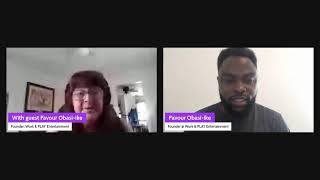
In this YouTube live interview hosted by Adrienne Barker, MAS, Favour Obasi‑Ike (MBA, MS) shares his journey from meeting Adrienne on the Chatter platform to building a multifaceted digital business. They discuss Chatter’s community‑building features, the concept of "Work and Play" that blends merchandise, music, and podcasting, and how Favour leverages Pinterest, SEO, and website management to grow client brands. A detailed case study of CW Hair Care illustrates how a strategic Pinterest and SEO campaign boosted the brand’s followers, YouTube subscribers, and retail presence (Amazon, Target, Walmart). Favour explains technical aspects of domain authority, website security, and the importance of regular updates, using analogies (domains as land, SEO as a car). He also outlines his service offerings—Pinterest strategy, podcast growth academy, SEO audits and roadmaps, and website audits—plus a forthcoming course on budgeting for SEO. The conversation is informal, instructional, and peppered with personal anecdotes about drumming, merchandise swag bags, and birthday celebrations.
Chapters
Facebook page. It's my birthday.
Happy—
I don't even know if Faber knows that. So everyone, I'm so excited. Okay, so Faber and I have not— well, maybe a little bit on video. Faber, will you share before we start how we met and a little bit about Chatter?
Yeah, so we met on Chatter, uh, about 2, 3 weeks ago, and it's amazing because, you know, Adrian was having rooms and I was like just jumping in. I was like, okay, let me see what she's talking about. I love that she has her trophy emoji. I was like, okay, let me check her on LinkedIn. So I saw on LinkedIn, we connected. I was like, okay, let me jump up on stage. Before you know it, we just started connecting. We like the same things. We just love each other's company. There's so much that we can talk about that you guys have not even heard, but we just connected right there. And from chatter, we said, you know what, we have to connect even further. And then we connected on LinkedIn and here we are. So it's all about connections because you never know who you meet in the the daytime.
Oh my God, that was so beautifully said. You're a beautiful human. I, I am just so grateful. So Nelson Apega, can you share a little bit about Nelson? Just, we'll give him a nice little, um, um, what do you call it? Just take it away.
Yeah, Nelson, shout out to you. Nelson Apega, amazing guy, amazing genius. Like, this guy literally took an idea and turned it into a system. And that is a community that has been built with a product. So he's built something that a lot of people are going to enjoy because I feel like we're getting more closer. You know, they say it's a big world, but it's also a small world, but it's essentially a big world. But what he's done is he's created in a way that it's made our world so small that we can be anywhere in the world and we can still connect like this, like we're looking at each other, but now intimately at the same time. So, so good. So shout out to you, Nelson and Becca.
It really is. I love, I love— he's a true entrepreneur. Found, saw that there was a problem, and then decided he was going to fix it and come up with a solution, and then started the business. And the risk he's taking is like no other risk I can imagine. So creating an app with people— what's the order, 1,000 people are on it right now, or more?
Yeah, about 1,000 people are on it. You know, we're still, you know, trying to tread the waters and see how it's looking, but it's so good because we've connected so much in such a short time that we're so interconnected now. It's like, it's like we know each other for years. That's how it's been happening for the last few weeks now.
But you really have favor. So you, you were on Clubhouse. So I know a lot of people say, oh, favor, I knew about Clubhouse. So you, you were on Clubhouse, right?
Yeah, I was on Clubhouse. I've been on Clubhouse since November 24th, 2020. So I joined Clubhouse, and that was an extension of my podcast, We Don't Play. And I decided, okay, let me join Clubhouse as an extension of my podcast because my podcast was solo. I would do interviews without having to record or go live. And I said, let me just come outside and show people what I've been doing. And then joined Clubhouse in 2020, kicked off rooms on Pinterest, on SEO, Started helping people with their own podcasts and then started letting businesses know that I actually open up for clients and we actually can do business. So now we've turned that into a whole thing and now people connect with us from LinkedIn, from Clubhouse, from Chatter, and the rest is history now.
I know it really is. I hope that a lot of people listening are probably like, what are they talking about? It's like, are they in another world? We are not. We're here in the United States. But, but my point is, is that it is really unique. It's on your phone. The fact that we could talk and really Once the beta is over, at one point we're going to be able to use chatter like we do on StreamYard or Zoom where we can now send it out. So, and it's video too. So it's amazing and a lot of education. So favor, I do want to share with you at 3:00 PM today, I'm doing a room about being credible because there's a lot of people on this app and some people decided, hey, I'm going to have my username be I love TV. And then they don't have their name. And so it's like, well, who is I Love TV? Because I love TV too, but I don't know you. So we're going to have a talk about how to be credible. So I would love for you to come in if you're available at 3:00 PM Eastern time to just kind of give some ideas and tips on how to make sure that you're credible because some people are already selling, which is fine. I bought Dylan's delicious nutrition for my dogs. I'm thrilled with that. But he was credible. I could see right away that he's been doing it for 16 years. He's got a lot of social proof. So that's our discussion. So will you join us? Do you have time?
Yeah, definitely. I'll check, and if I do, I'll jump right in and make sure I'm on there.
Definitely want all the tips. We want to share with everyone. So, all right, so Favor, I want to hear— so work and play, what, what are we talking about? What is work and play entertainment?
Work and Play Entertainment stems from the concept of actually a biblical scripture, Ecclesiastes 3, which is there's a time for everything. There's a time to work, there's a time to play. So I came up first with play before work came in because play was— it was Play Incorporated, you know, and that's where we started off with doing merchandise, t-shirts, hoodies, you know, letting people, hey, you know, we don't play. That was a mission that we were saying on t-shirts. So the We Don't Play didn't come from a podcast name, it came from a merchant merchandise name. So that way we were able to make a statement because I wanted to build community and I was like, what's the best way to build community? Through building a product people can engage with. So that's how Work and Play came to play, you know, play on words. And we were able to now build it from just being focusing on t-shirts, focusing on hoodies, and also incorporating that with music, which is what I also do as a background. I'm a self-taught drummer, and I'm left-handed. I've been playing the drums for, you know, over 25 years. So I've been doing this, you know, playing with bands. I'm very good on ears. And, you know, copywriting business, that's how I started before even getting into business. So I started doing copywriting for music, you know, for musical notes. So that allowed me to say, okay, let me put a play on words and see how I can connect people to get the actual business goals certified. And that's when I now more from just having t-shirts and music to actually having a business that we can now actually help businesses with their websites, help them scale using search engine optimization, moreover using Pinterest and podcasts to help them scale intellectual property.
Now, I love that. When I think of play and work, I always feel bad for all of the— those that go to work and feel like, uh, I gotta go to work today, oh, I gotta see that person, I got like— no, like, you, you need to then find a job that you're passionate about that does feel like play. Like, I do feel like I play all day because I just love what I do, and I hope everyone can love what they do.
Oh yeah, exactly. And people love what they see you doing. They'll actually believe you. Because when people hear me talk about SEO, like, this guy is just happy about SEO, but somebody feels like SEO is stressful. But I'm like, this is the fun part because I love research. So if you love gardening, if you love shopping, if you love being an influencer, if you love being on stage, own it so that, that way when people see you, they're like, okay, this person is actually owning the stage.
Wow, wow, that, that, that— those are great words. Like, that's going to come out in the quote in the show notes because that is so good. I love it, I love it. Favor, so I have a question for you. So you start your business and, and actually forget that, I really want to ask you, you said I'm a self-taught drummer. Are, are other drummers go to drummer school? Like, I've always thought in my mind that you would kind of teach yourself, or at a young age that you start. Like, so I love watching of the videos of like a 4-year-old playing drums and then like watching them progress. So when did you start? When did you even know, okay, I may have a talent in this? What did that look like for you?
So for me, it started off at my parents' church because they're both pastors and When I was 6, I was like, huh, let me play a few drum notes here. And then I was just hitting the drums, you know, making noise. So eventually I said, oh, this actually sounds nice to my ears. So let me make a sound melody out of it. And that's how I was able to now know what a snare was, a hi-hat was, a kick, what to kick. And nobody taught me. It's like I just picked the drums and you have to coordinate. So it's not easy to just teach yourself. So I have to be patient with myself. So that's what I had to go through from 6 through 13. I was just playing in the background. That was about 7 years. And then when I was 13, my dad said, now you can play for the big church. And I was like, 13? So I kicked it off from 13 and then started playing on big stages. And that's how I was able to gain that confidence. And the rest is history.
Are your parents still alive?
Yes, they are.
Oh, do you live close to them?
I live close to them, but not, not physically, because they're not here. Um, they're always all around the world, you know. So they're in Kenya, and my brother's in Canada, you know. I'm here in the U.S., you know. I have family all over the world, so we're just everywhere.
I love that though. They must be so proud of you.
Yes, they are. They are.
That's amazing. All right, so a question before we start talking about your business: have you been to Babyland Hospital?
Babyland Hospital?
No, it's where the Cabbage Patch Babies are born. Huh, little birth going on there every day. New Cabbage Patch are popped out. There's actually a place called Babyland in Cleveland.
What? I have to check that out. Yes.
Yeah, have you been to Mount Helen?
No, I have not.
Oh my God, I love Mount Helen. It was the most amazing time of my life, except going river rafting because my fat ass Excuse me, everyone. I got stuck on a rock all the time and it was really getting annoying that I had to— and then people were taking pictures of me being stuck. So somewhere on Pinterest, I'm probably like, don't be this lady and your butt hitting the rock and not being able to move. But Mount Helen is like really cool place. All right. So let's go back. So how, like, when I try to learn SEO and honestly, when I tried to learn Pinterest, I think I'm smart and savvy and I'm good on LinkedIn. But Pinterest is way over my head. Why?
Pinterest can be way over people's head because it looks like a machine that can't be learned. It looks like this whole big red dot that's like, I don't understand it. But if you take off the word P, it stands for interest. So you drop the P because the P is big. So everybody's confused, that big old pin. But just drop the pin and just wonder, what are people interested in? Are they interested in yellow couches? And are they interested in glass houses? Are they interested in furniture, modern furniture, minimalistic? Are they interested in, you know, tabletops? Are they interested in financial tips for beginners? What is their goal? And then whatever that goal is, go on Pinterest, see what people are looking at. Count up the colors, look at the fonts, look at the blogs, look at the videos. Is there anything that is missing? If there is, fill it in. If it's not, you know, create that as well. So it's a good way for you to still stay on top of everything by using Pinterest as a way to know what are people interested in, and then you search about those interests and then you can find it. So I use this 4-frame cycle. I create a 4-frame cycle: search, find, click, save. If you can do those 4 things on a daily cycle and people can search you online, they can find you online, they can click through to your content, they can save information and save your contact or save your website or bookmark your content, then you're one step closer to them connecting with you. But most times we think, oh, impressions count. Yes, they count, but what counts is Can those impressions turn into sales? Can they turn into leads? Can they turn into community? Can it turn into impact? If you can do that consistently 365, I'm sure you'll definitely get a couple of wins.
Can you share like a story, like a case study on how it helped a company? Because I still, I hear everything you're saying. I'm still like confused for like, and like for instance, with your, your wearables that you have with your printed apparel. Is that on Pinterest? Do people buy it from you?
So what I do on Pinterest, because I got into Pinterest with the angle of business services, and we now use our merchandise as swag bags for the podcast. So, and the academy, because we do have a Podcast Growth Academy now where we're able to help people, you know, that have their businesses to scale their podcast, to monetize it, to start it from scratch. Get them on the right source files, get them on the right hosting distribution platforms, just get them ready for jetpacking, and then they can take off, you know, wherever they need to go. So what we've done with Pinterest is that we've used it as a way to channel business, and that has allowed us to connect with different companies and different industries. So sometimes they come to us and say, hey, uh, we do SEO, but do you do it for this industry? We do it for all industries because we found out the fundamental key. So one company called CW Hair Care an amazing company. It's a family Black-owned company. And this was like back in 2019, 2020 when we got to connect with them. I got to connect with the daughter. She's an amazing basketballer. I think she's going pro now and she does so well. And the reason why her mom decided to create this product called CW Haircare is because— and that CW is her initial name as well. So the reason why she wanted to do that is because she was losing hair on her edges. She was losing her edges, her— it was scalping off and she was losing that, you know, due to alopecia. And that's a problem some people have and she wanted to solve that problem. So she decided to create her own product, her own formula, and then that formula turned into, you know, a hair product. Now she was selling that hair product, you know, on her website, giving people connections, helping them really understand how to do it. They were getting results, but she wasn't on Pinterest. She was barely on YouTube. She was stuck at 250 followers or subscribers on YouTube, and she had a bit of less than about 12,000 on her email list. So she was doing well with her business. She's doing well, you know, with email marketing, but she was not seen on local directories. She wasn't seen on actual search. So we said, okay, let's go on Pinterest. Let's put you on Pinterest. Let's put you on YouTube properly. Let's claim your website, let's write articles on your website that discuss the problems people have about alopecia, the before and after, do, you know, weekly series. She used to go on YouTube Live every Saturday without fail. We did that for a whole summer. Right now, as I'm speaking to you, because we put on Pinterest, we were consistent on Pinterest and YouTube for her podcast, which I also was able to help her through, you know, as a guest. What happened after that is right now, last time we spoke was— this is June, I think we spoke like early in the year just to know how you're doing. Because after we work with clients, sometimes they may just fly away because now they can work on their own, you know, we've given them all the tools they need, or they stay with us, you know, for a year in, year out, depending on how you want to work with us. We have a retainer plan. So I always like to check in on our clients. How are you doing? How's business? And when I called her, she was like, hey, we have over 35,000 followers. Subscribers on our, you know, I'm sure it's way over that now. And then she has, she had over 200, probably like 3K subscribers on YouTube now. And on her Pinterest, she was able to shoot up to, you know, to get like close to hundreds of thousands of monthly visitors. And even if you check her Pinterest, she probably hasn't made one pin since February 2021, and she's still gaining hundreds of thousands of, yeah, till today. So just to tell you, we planted good seed on good soil. We made sure we understand the formula because it's rinse and repeat. You know, it's the same product over and over. So how are we going to say the same product? You don't want to be redundant, but we made sure that people understand the concept. She can still send articles to her community. People still learn about alopecia, how they can get rid of their hair, and that way they're able to expand. So they've expanded their business. Now they're on Amazon, then Target, then Walmart. So they're doing so well now. And yeah, and it's just a blessing to see see a business start from just emails to actual search. So that's what Pinterest can do for your business.
So you're really helping her with her— so she was able to prove her, her social worth and, uh, and increase her, her social so that like a Target would look at her, like, because that's the first thing, right? They want someone with a, a large amount. I am— excuse me for one second, it's my birthday, so I need Al. Can I have some water, please?
Happy birthday!
Happy birthday! You get water. Okay, so with Facebook, we— I know a lot of people that have been getting hacked on Facebook and losing everything. People that have worked on having very large groups are— oh, there he is in the background, you can see him. Move a little faster. I'm kidding you. So this, this is the problem, but I've never heard someone getting hacked on Pinterest or losing Pinterest or having any issues. Does that happen?
That rarely happens because Pinterest prides on privacy. That's number one. Pinterest also has a creator code. As a business, you have to follow the creator code, and that code is simply just saying that you have to abide by the rules where you don't say any false information, you don't falsify information, you don't say vulgar words, you don't, you know, have profanity. So it's very positive. So Pinterest is a positive platform, and the more positive you are with your content, the more sentimental value you're able to get. So that also gives you value over time. So as you're building out your business, you're building out your structure, you're using Pinterest. During the pandemic, during COVID time, there was no advertisement on Pinterest about the pandemic. It was all positive. If you ever tried that, they'll just ding you and they'll throw you down. So you won't be able to do anything negatively. Pinterest is a place where people go to purchase, they go there to plan, they go there to process, and that's why they have boards. So if you're using it as a business, you can benefit from that because if you look at Instagram, for example, if somebody saves your content, you know, people say, yeah, saves are very important, right? If somebody saves your content on Instagram, you know that, okay, I have 5 saves, but you don't know what the names of those 5 people saved those boards. On Pinterest, you know what the names of those boards are. So you have an insight on your audience intelligence. You have insight on what people are searching for. You have insight on how people name their boards. So if you name your content or rename your content based on how people save your content, then you're able to create that connection. That's the beauty of Pinterest, but people don't really see that because they don't see the below the surface or beyond the surface. That's why we are able to help you manage your account, help you get situated, show you what we're doing. And then I have a Pinterest course as well for those who are not sure what's going on. I'm able to guide them through. So it's not hard, it just takes time. But if you're able to use that time you're spending on Facebook, on Instagram to be on Pinterest, you'll never lose your account. You'll never get your account dinged because they want to make sure that you have that 100%. And there are two checks on Pinterest. There's a blue check and there's a red check. The blue check mark says that you're a verified merchant. So let's say you sell products, you know, you do digital products, that's what makes you a verified merchant because you're following the guidelines. So when you get that blue check mark, you're verified, you don't have to pay for it, it's all, you earn it. And then with the red one, the red one means you're a creator. Let's say you're an influencer. So that means you're a creator, you're able to use that red one to influence people and you get some different types of settings there. So even if you're a business, you're able to get your business claimed. And then if you have your business on Pinterest, you're going to have your business with a tag on there. So that's how people are able to find you. You know, Pinterest prides on comments, on saves. So if you comment a lot on people's pins as a business, you're putting in good seed because one day someone is going to read your comment and they'll be like, who's this business? And then they'll read your content and they'll find you. Then they want to work with you because you left your good two cents. It's like LinkedIn. You leave two cents, you have information, someone likes what you said, they connect with you. That's the same thing with Pinterest. But imagine that in the ether, like you're just putting that in the abyss of the internet.
Wow. So I have to check. We have a Barker Animation Art Gallery, and I wonder if we are on Pinterest. Maybe. You know, the thing with Pinterest, it's so confusing for me and the way I learn. I'm kind of curious about your course because I learn by either doing. So like, for me to really learn, it would be like being somewhere where I had like step by step and I'm listening. With video, it's a little harder because then I gotta like take a step and then watch it, rewind it, watch it. And then I, you know, watching videos are a little harder for me with my brain. So, um, if I would like pay for a course to just understand it where we're all in with— I don't know if the screen share with chatter would be the answer, but we're all kind of on our own Pinterest and then guiding us through like what to do and the reasons why. Is— so with your business, your like specialties are Pinterest, and then what else?
So specialties are Pinterest, podcast, websites.
Beautiful, beautiful. Yeah, I noticed I was on TikTok the other day and it was like completely different to me. I, I guess I haven't been on in a couple of— since Chatter, because Chatter— I'm going to start Chatter Anonymous because I am already addicted and it's a problem. So I need to— I know I need to, like, at nighttime I haven't watched any TV except for the debate. And of course I was watching it on like the CNN, but I was in the room too because I had to, um, put my information. Last night I really thought I would love it if the whole entire children were just watching South Park because it was not— it was not like— forget everything else because I don't talk really the politics, but our children are watching and we have to remember that. And so I'm like, if I think South Park is actually better for them, which it's obviously not, then that just shows that, you know, it was, um, was tough to watch. And I'm thinking of kids. But so, so I love that you was just sticking with like the Pinterest, and then you said, um, did you say, uh, your website? So what do you do for websites? Is that with the SEO?
Yeah. So a lot of things that we realize when we build websites for clients is that most businesses do not prioritize SEO for their websites because they think about the aesthetics and not the technical. So we've been able to understand that out of 1.9 billion websites in the world that are available to the market, only— I won't even say only, it's quite shocking— 82% of those 1.9 billion websites have not been updated in the last 6 months. So that's alarming because that also tells Google that people are not thinking about their businesses or their websites or even thinking about the technology that's advancing. So we are coming to help you build your website, scale your website. If you have a website, we'll audit your website. We'll make sure that you're compliant with what's happening right now in 2024, especially we're going toward the AI tech world. So you don't want to miss out on what's going on. And also make sure that you also update it. So we manage your website, we make sure that you're compliant, your emails are going to the inbox and not going to the spam, because when you have a bad domain, you have a bad email center. So we're able to make sure we clean out all the junk. So when you now show up on Pinterest, on Reddit, on Facebook, on Instagram, anywhere you want to be, we'll make sure that you're there and you're showing up strong because you have a backing of your website that's supported by SEO.
So that's really interesting to me. So last year when my dog bit another dog. I thought he took the nose off. I was really scared. I was so worried that day that they were going to come in and take Fez away that I put— I like took my website into pieces, used ChatGPT and said, make this all SEO rich. I have no idea. Like, I literally am SEO stupid. So I asked, and then I used that. Is that even a thing? Like, if— like, is that one like silly way of trying to get SEO for your, for your website. I'm being honest, everyone, so like give me credit for that.
No, I love, no, I love the honesty because SEO can sound really hard, you know. I'm actually even going to be doing, um, some content. I think it's going to be today or tomorrow, just this weekend before the second half of the year comes in, to help people know how to budget for SEO. Because I've realized people talk about SEO, they want SEO, but they don't want to pay for SEO, or they pay for SEO and they don't know what they're paying for. So it's stressful because you don't know what to get, you don't know what to expect. So we've been able to create something called an SEO audit plus a roadmap strategy. So it's two sides of the coin. One side of the coin, you're able to get that SEO audit complimentary if you want to, but the implementation with the strategy is where you're now able to now make that payment. So we can help you with that either for 3 months, for 6 months, for 12 months, or we're able to make sure that you are connected. And what we've realized is When people see SEO, the search engine optimization, they think it's this whole big old machine. You know, when people think of the algorithm, they're like, this is like a monster, you know, but it's really not. It's just based on my focus is, hey, I want to talk about ABC. Okay, where can I connect people to talk about ABCDEF? That's literally what SEO is. It's just to make sure that what you're saying is responsive to who is receiving it and they're able to relate to it so they can connect with you. That's how simple SEO is.
So, so what about like, I have one site that's GoDaddy. Don't say anything, just like, you know, don't, don't embarrass me, GoDaddy. But the other one is WordPress, so I think I'm a little better. It's kind of like more mature with WordPress. But WordPress, like, I put it in there, or they like help with the SEO. So is that not enough that I pay for WordPress and SiteGround and expect that my SEO words would fly?
Great, great question.
You can tell I don't know what I'm talking about.
No, this is great. This is so great. I love this question because it also will clarify it for a lot of people too. When you buy a domain, you're not really buying SEO, you're just buying authority. You're buying property. It's like when you buy, when you buy a house, you know, if there's no house, there's land. If there's no land, this property, you know, that's property, that's a title deed. So you can decide to build on the house or sell the house. So it's like your domain. Your domain is the land, it's a title deed. You can either sell that domain or you can buy the domain and acquire it by building on it with a website. So when you build from SiteGround, from GoDaddy, from WordPress, from Wix, from Squarespace, all these platforms— there's a website called tilde.cc, that's a website you can build. There's one called Duda you can be able to build it out from there. There's Gamma, there are so many new AI websites too you can build with and fast technology you can do. But all these websites are great. The problem is SEO doesn't start there. SEO doesn't even stop there. SEO is a channel that begins from that motion and then you're able to build from there. So when you have your SiteGround or your Namecheap or your GoDaddy, those are places that you're hosting your domain. Those are like places that you're parking. It's like when you park your car in the garage, you know where your garage is, you know where your car is. So that's where you're parking your garage. Now, when it's time for you to take that car out of the garage, you're taking that car out of the garage from your parking, which is your GoDaddy, to Google Search Console or to Bing or Microsoft, which is where the engine is. So now I'm taking my car to the engine spot. So if I have to take it there, then I'm going to move my car to that engine so that I don't have to be driving everywhere. The engine is just going to drive itself like a self-automated machine because all I put in that car is all the information that people are looking for when they're searching. So it's like working with, you know, media networks or working with people. Instead of you looking for Yellow Pages, you just put yourself on a local directory and everybody shows up. So instead of you doing the door knocking, you've already put yourself out there. That's the same thing with SEO. Don't leave your car in the garage. Bring your car outside. People can see it in the showroom, and then if anybody wants it, they can click on it and open the door.
I love— I need analogies like that, so thank you so much. Hey everyone, just want to remind you, I'm talking to Favor. We met on Chatter, and this is great. I did not do any research, so even though we've been talking, it's still no prep needed because I don't need any prep. But, Favor, I want to switch gears for a little bit. So you can own your website, you can sell your website, the authority part about it. Do a lot of people have this issue where they forget to renew their website and then they lose it?
You can— if you, if you don't renew your website, it ends up being parked. They say your domain has been parked, meaning that people can't find you. So imagine being parked, you can't find the car unless you open the garage. So if people don't renew their websites and more importantly update their websites on a frequent basis, then they're losing material, they're losing potential. Because just by hitting publish or indexing it again is a good thing. Because why Pinterest is so good is that Pinterest has clickable images, clickable videos. So the links within those clickable images and videos have source files. So if I want to generate the source file, let's say you have power, you know how everyone has power in their house, you go to the power supply, if I turn the power off on the power supply, you don't have power. So that's the same thing with, with SEO. If you have power, then your website has to stay on if when you keep touching the publish button. So every time you connect, that's current, you're creating content, that's current, that's current. So before you know it, your current is so loud, it's so wide that you've built such a spider web of content that anybody's looking for you, your lights are always on because somebody's finding your website. Now, your lights are off when nobody's looking for your content and you're just parked there with a domain that nobody's coming to because I'm coming to this house, it's dark, I can't see anything, why am I here? As opposed to a house that has a chandelier, it has a poster, it has a garden. You're like, okay, let me go read more about the garden. Let me know about how to do this, and let me know, okay, this versus that. So you'll think about your house, your domain, like a grocery store. You know, think about everything in the grocery store. If you're going for bread and you go for cookies, then you go for flowers, then you go for meat, and you go for produce, whatever it is that you're doing, make sure that every section of your website has something for someone to stay in a little longer. Add a video, add a TikTok clip, add a, you know, a testimonial, add an FAQ, add a glossary. Add, you know, a privacy policy. Add things that people can read, that they can consume. The more they stay, the more Google sees that somebody actually values your site. And then before you know it, if you open up a can of worms and then everybody's coming to your website, but no one can come to your website if you don't have something for people to come to.
Oh my gosh, I love these. And I love that you're helping me understand it. It's so amazing. So people run the risk of having— like, does the average person run the risk of having their website hacked or cyber attacked?
It could happen, but it only happens if you don't have a connection, secure domain. That's why it's very important to do that foundation first. Yeah. So once you have a good site, the GoDaddy, you know, when people are paying for domains, they tell you private or public. It's like, you know, when you leave your house, if someone says, do you want your address public or private? You want to say private, because if it's public everyone's going to call you for your house and everyone's going to ask for details. When you keep it private, you're locking it away from the public database. So when you do that and you lock it and you're paying for that lock every year because you're paying for a domain and you're also paying for the lock, it's like paying for the house and you're paying for the keys. So when you pay for the lock, that lock will always keep you secured. That's why when you have a padlock on your website, no one can hack it because it's encrypted. But when it doesn't have that padlock, anybody can creep in and creep out, take your financial information, take your stuff and you realize you've been hacked. You didn't realize it because you didn't look at your domain a year ago. So those are some things. That's why we work with you to maintain your site, because you may not know. Or it's even good to just go to your domain, know when you bought it, put it on your calendar and put a date on it and say, I'm going to renew my domain on this date so that you don't forget a year later or 2 years later.
That is such great advice. So, so why, why wouldn't the companies just protect us? Why even give an option? Why not just make it all private?
They make it— I mean, the great question, I think it's because people make mistakes. I make mistakes, you know. So they, they kind of get you there, but it's also conveniencing in a way, because if you want to protect your domain, you have to pay a little bit more, like $9.99 maybe extra. If you don't want to pay for your domain, then you're gonna have zero. So when you pay for your domain, let's say your domain is $20 and you add $10 to protect it, but you don't want to pay that $10, then yours is going to suffer because they gave you the option to choose to protect. So I don't think it's something that they're giving you to choose. I think it's more of convenience because they're also dealing with systems. They have to do maintenance, they have to do security, cybersecurity. So I'm sure that money that you're paying for is going to security of your domain, not because they just want to charge you, but you have the option to choose if you want to do that or not.
Okay, another question. We have two more questions for you. One is, um, so authority of the website— I remember my son was just telling me this about last year, about, you know, like the thought of buying older domains because they have authority. Can you share more why someone would want to buy a website that maybe someone else has it for sale and what that really means?
Yeah, another analogy I can give you is credit. So if, if you go to the bank and your business, and you just started your business a month ago, and you're looking for, let's say, $100,000 loan, they're not really going to give that to you. But if, but if somebody else goes to the bank and they have 15 years of credit history and they're asking for $100,000 loan, they might consider giving that to you because you have something to show. So when you have a domain, it's like credit. So when you renew your domain every year, you're adding a new domain to your year. Like today is your birthday, you know, it's a new year. So the, the more years you have, the more experience you have on the web. So if you acquire somebody's domain that's 30 years old, then you're starting at 30, you're not starting at zero. That's why when sometimes when you're sharing credit and you want to add credit, someone to your credit history, you're not giving them a— you're giving them a head start. So that's the same thing with domain, because I trust you well enough that if I want to lend money to you, I can go back in time to know what you've been doing. That's why domains are expensive. That's why, you know, antiques, you know, vintage, those things are expensive because they have time, you know, on it. So that's the same thing with your domain. The earlier you start, the better. Some people say, I don't want to start, but I'm like, hey, why not start now than later? But it's up to them because sometimes money's in the way. But guess what? Imagine how much money you're leaving on the table.
Favor, when you share, you have a way about you. No wonder you're so popular on Chatter. You explain things so that the average person who, you know, has no clue— me— in such a way that I could really understand it. And your style is unbelievable. I really, really want to say thank you because this is such great information, and I'm actually able to nibble on it and kind of absorb it and then understand that I need more because I will never be an expert in it. But you know how some people are and they like— I could learn from you. So I love it. You're sharing the stories. So there's one thing I didn't tell you and I love. So I grew up in the promotional products industry, branding and apparel, logo merchandise. So a lot of my connections are suppliers in the industry and other distributors in the industry. So we love to hear stories about people using printed, uh, in logo merchandise or swag. That's so fun. I have 40 years in the industry. I know I only look 30, and so it's like kind of like weird, but yeah, I started at night in 1982 out of college. My parents had me filing for 6 months and learning the business. So share with us what, like, how you're doing it with your merchandise, and, uh, and if you want to shout out your, your distributor or the screen printer, go ahead and tell us a little bit more about the use of promotional products in your business so that all of us can hear.
Yeah, thank you so much. I believe that, you know, one thing for me with music and with fashion, it brings a sense of belonging. And that's what we decided to do, because even now with music, with podcasts, like even before getting onto the podcast, I created two jingles for two podcasts and original compositions, and they love it. One of them said it's like a movie She's like, I'm feeling like I'm in a movie here. The other one said, oh my goodness, this is so cool. I feel like I'm in a Royal Rumble. So all of them have their own styles to it. So that's how I've been doing it myself, and I've been building it from scratch just to give people an insight on how to start from just having nothing to using your idea to form something out of that, and then you're able to build it from there. So for me personally, how I've been able to see this and build is by creating consistent content online and using a guerrilla marketing style to advertise that. That's why the t-shirts came around. So when the t-shirts come around and people see that, people still wear them till today. I've not made any sale on the, the, the merchandise because this happened pre-COVID, and I was supposed to do a fashion show in 2020, around April 2020, but that didn't happen. So after that, I said, I'm going to switch gears and I'm going to use that for my swag bag. So anytime someone comes to my guest, to my podcast as a guest, they get a swag bag. Now, if you come as an academy, you get a swag bag. So those are things that we've been implementing because we're going to be 5 years this year for the We Don't Play podcast show. So I'm excited that, you know, now that we have an academy, we have a swag bag, we can actually use it for community. And we're also using it for charity, too. So we can help, you know, people who don't have clothes. We can be able to, you know, give them clothes and, you know, support, you know, where we can. So the merchandise is not— it's not like a product, like, oh, we have t-shirts. It's more like, let's connect the dots and let's build community.
I love it. I love it. I know that, that, that, like, my 2 followers that follow me will love that. So are you open to giving us a jingle that you may have done before? Like, when you say a jingle, are you singing it? Are you drumming it?
No, I—
what is— or using electronic?
I produced the— I produced the song. I produced the instrumental.
Wow. Oh my God, you have to show me one. That would be really fun to be in a room with all the jingles.
Yeah, I can play one for you if you want.
Um, yes please.
It's on—
yes please.
It's unreleased, so I'll play the one that sounded like a movie. So here we go. I'm gonna play it over here, so let me know if you can hear it. So I'm about to switch it, and then— all right, here we go. I'm gonna put in the loudest volume.
All right, here we go. I love it. All right, question, question. Yeah, actually, one of my favorite podcasts is Serial Ouncie with Annie Eastley. Annie, if you're listening, which I doubt she is, She's amazing. I love that music. So can you also sell that music to Shutterstock?
So Shutterstock, I would love to. If they, if they have openings, I would love to submit it, uh, because what I do now with my jingles is we have 3 licenses. We have a non-exclusive license agreement, we have an exclusive license agreement, and then we have a buyout license. So it depends on what you'd want it to— what do you want to use it for? And then we have our different prices. But when you now work with us, you don't have to pay for that because we make that for you.
Wow. So on Chatter, I'm gonna— when we— like, this— when they don't have the, like, reverse screen when they show— because Chatter has video, um, I would love to see your setup, like, set up behind the scenes with Favour.
Yeah, I would definitely—
that'd be amazing.
I've actually been thinking about doing music like that and also doing drum sessions on Chatter. So I'm planning to do like live drum, you know, presentations. So it would be exciting to see.
Are you married? Kids? Employees? Dogs? Cats? Rabbits?
I don't know. It's just me now. It's just me now.
You are amazing. You're so— oh my God. I— but I knew it though. I knew it. I knew it. Like, I could tell even just our voices together. I'm like, oh my God, there's something about favor. Oh my gosh. All right, so we're not gonna take you any longer. The— I will do the show notes and I'll syndicate it, which I am having trouble. If I could tell you, everyone please block out your ears. RSS feed, the heck? Like, I think I need help because when I go to put my own personal, you know, No Prep Needed on RSS feeds, it really is the worst. It's like so annoying. So I don't— I'm having troubles with them.
That's another topic I'd definitely love to bring, you know, maybe some other time, but, you know, to talk about it at length because it's very techie, but it's a very important thing to have because if you don't have an RSS feed, you're kind of like shooting at the stars without really figuring out what's going on because RSS feed equals to success. Because if you submit your RSS feed and they reject it, it means there's a problem. and there's something called a validation that you have to be validated for. So that's what we help you to do. Audit, make sure your website is audited correctly, your podcast is audited correctly, because you might be doing something small that could be wrong that's just limiting you from tipping over. So yeah, so that's how we're able to help you decode it. You know, we have our, you know, we have, we call a small business jetpack where you're able to connect with us for 2 weeks to 4 weeks if you just want to get things taken care of, Or if you want to just launch with us, then we can start off for the month to 3 months plus. So anything you need, we have that available for you.
I love it. Everyone, listen. Bold, beautiful, brave, brilliant, incredibly handsome. That's Favor, my guest today. Favor, you are awesome. Thank you so much. I just— oh my God, I don't even know.
Heart.
But no things are coming out, so that's weird. On Chatter, it's like, oh, so cool when you do different things, it comes out. Anyways, thank you so much. I just can't even thank you enough. I learned so much, and hopefully people watching learned so much, and they will contact you and call you. Connect with Favor on LinkedIn, guys. And thank you so much. Now, my favorite podcast, Annie Easley, she ends every podcast with, "Don't kill anyone," which I think is so cute, but I could never say that. So I want to end each podcast now with just saying thank you for showing your brilliance, and everyone have a great day. On my birthday, I'm having buffalo wings. Tonight.
Go Buffalo!
They have homemade blue cheese though. I really— I'm like, like, I feel like, do I call the restaurant and say, hi, do you have homemade blue cheese for my buffalo wings?
Oh, that's my favorite. Don't worry, I'll get you some too.
I'll have to come to Atlanta and visit. I'll have to house sit in Atlanta. That is like really the fun, so I could go back and go up to Mount Helen. All right, thank you so much. I'll see you on chat or a little later today.
See you










