Making Strides of Volusia-Flagler
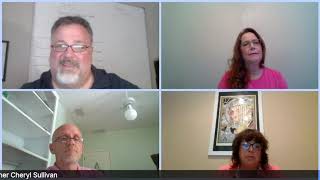
The virtual panel hosted by Cheryl Sullivan, staff partner for Making Strides Against Breast Cancer of Volusia‑Flagler and Real Men Wear Pink, brings together the event’s leadership team—Jamie Barkley (sponsorship chair), Adrienne Barker (sponsorship recruitment lead and owner of Professional Global Etiquette), and Rick Nurgan (event co‑chair and cancer survivor). The discussion opens with introductions and gratitude for volunteers, then shifts to National Survivor Week, during which Rick shares his personal battle with simultaneous lymphoma and renal carcinoma, detailing his symptoms, diagnosis, treatment (R‑CHOP chemotherapy, surgery at Mayo Clinic, pacemaker placement), and recovery. He reflects on the emotional impact on his family, the supportive environment at Florida Cancer Specialists, and the broader services offered by the American Cancer Society (24/7 helpline, counseling, Hope Lodge, cancer.org resources). Rick also explains how he managed work during treatment, emphasizing a “don’t let cancer dictate your life” mindset. The panel then moves to practical ways the community can support the cause: sponsorship opportunities (various monetary tiers, in‑kind donations, team participation, Real Men Wear Pink), volunteer roles on the committee, and upcoming event details (October 31 Halloween walk, virtual kickoff on August 4, virtual event adaptations due to COVID‑19). Throughout, the speakers stress transparency, community solidarity, and the emotional power of survivor stories, urging listeners to donate, sponsor, volunteer, or simply spread awareness.
Chapters
Good evening, Strides family, and thank you for joining us again tonight. And let's talk about Making Strides of Volusia Flagler. For those who don't know me, I am Cheryl Sullivan. I am the staff partner for Making Strides Against Breast Cancer of Volusia Flagler and Real Men Wear Pink. And tonight I'm gonna be joined by some of our leadership team. Let me introduce them to you now. First of all, we have Jamie Barkley, who is a realtor with Reagan Realty, and he is our sponsorship chair this year. Giveaway, Jamie.
Thank you, Cheryl. It's great to be here and supporting a great cause.
All right. And next we have Adrian Barker, and Adrian is the sponsorship recruitment lead. And Adrienne is the owner of Professional Global Etiquette, and she's actually been with ACS in the past too. So say hello, Adrienne.
Thank you. And also PromoProducts.guru.
Thank you.
Great. And then also joining us tonight is our event co-chair for Making Strides and Real Men Wear Pink, Mr. Rick Nurgan. With Ocuia Home Solutions. And say hello, Rick.
Hey guys, hello.
Hi. So this week, first of all, our leadership team, these are all volunteers who've come together, volunteers from our community. And really there would be no ACS without our great committee and our great leadership team. They're the ones who make all the planning and bring the event to you. And especially during these tough times through COVID, we're having to make a lot of adjustments and they are right there. We go to them and they are our right arm. So please, when you see any of our team, thank them because they put in a lot of their personal time to make Making Strides and Real Men Wear Pink a huge success. And so this week is actually National Survivor Week. And I know hopefully you all saw the great video that we had with our survivors on Sunday, but we just wanted to continue on through the week, and we thought what better than to talk to one of our survivors. And it just happens that Rick, our event co-chair, is a cancer survivor. And Rick, we would like to wonder if you would just share your story with our Strides family this evening.
Yeah, um, so, you know, I've survived actually two different kinds of cancer, and, um, you know, it wasn't breast cancer. So there are other kinds of cancer that are out there, and that we support obviously all kinds of cancer, even though we highlight breast cancer with Making Strides. But my story was a little bit different. Um, it wasn't breast cancer, but it was lymphoma and renal carcinoma. So, um, and it was very odd to have both of those at the exact same time. So I had developed a cough over a period of time. And like everybody tells everybody, get these things checked out. Well, early detection is really important, especially even for breast cancer, any kind of cancer, but breast cancer especially. And I didn't, I didn't heed those warnings. So over a period of time, I developed a cough and some shortness of breath. And then I went down, as we all do, on the Keys a lot in Florida. And I was out snorkeling, which I do quite a bit of. I did quite a bit of at the time. And I couldn't breathe underwater and kind of panicked. So at that point I decided, okay, you know, with the support of my family, we need to go to the hospital, get this checked out. So we went to the doctor and apparently I must not have looked very good because when I walked into the doctor's office, he, he right away said I didn't look good and wanted to bring me by ambulance, ended up forcing me to go down to the hospital right away and check in and get admitted to run some tests. And a good thing he did. I had some, some, some issues at the hospital that evening. Um, I ended up having a— actually, I ended up actually having a problem with my heart as well that evening. So that was another problem. But when they came back with the test for the, uh, what was going on with my shortness of breath, they had thought it was a blood clot at the beginning. But when they came back, they had come back with a lot of masses in the chest, in the neck. So right away you hear masses first thing you obviously think of is cancer, which my thoughts were correct. And then over a period of time, they did a lot of tests on me and biopsies. And basically at that point, during the testing process, I did a biopsy on my kidney spot first because they had some hopes that it was the same thing as in my chest. And that came back and they came back with renal carcinoma, which is a very deadly form of cancer. At that point, they said, "Okay, if that is what is in your chest and neck, that is spread and that is unrecoverable." I was given a good possibility I would not make it 24 months. They still had to do further tests to confirm that, but it was a very unlikely scenario that I would have 2 cancers at one time. That is not a very common thing. At that point, they Over a period of a week or so, they did some more tests and went in for the results on a Friday afternoon. I'll never forget that. That was the day you decide whether or not— or find out whether or not you're going to live or die, right? And a lot of cancer patients go through that, and they, they have them emotions, and their families do too. It's not just them. It's actually probably worse for their families, believe it or not. I noticed that throughout the whole process. I was kind of handling it pretty well. The family wasn't. Um, so when we went in for the results We got lucky, and, um, it was the best case scenario possible. It was, it was two forms of cancer at the same exact time, and it was a lymphoma in my chest and neck, which can be treated with what they— a treatment called R-CHOP. And 6, 6 months into it, um, that was recoverable, and basically, um, I was cured of— put in remission from cancer. in March of 2015. I was diagnosed in September of 2014. So in March of 2015, I was in remission for the lymphoma. So that R-CHOP worked. It's a very strong form of chemotherapy. Um, it can only be done 6 times in your lifetime. After that, if it does not work, you have to do other forms of treatment. And then they had to tackle the second part of this, which was renal carcinoma. So the only way to do that is to cut it out. If kidney cancer, renal carcinoma, it spreads in your body passes the kidneys, it is unrecoverable. You cannot survive that. So we made a plan with Mayo Clinic. We were referred to Mayo Clinic, and we went up there, and we had a really good surgeon, and he was a world-renowned surgeon, actually. And he, um, he tried to do a partial nephrectomy, ended up having to remove the whole kidney. But with that, you know, in November— that happened in September of 2015— by November of 2015, I was given a clean bill of health for cancer-free. So it was a really good story for me. And not everybody goes through that same, that same exact scenario, and some, some are given much worse news, and some go through a lot longer treatment periods. I've seen, you know, when I was doing treatment, I didn't go to a facility where you did private treatments. I went to a facility, Florida Cancer Specialists, which is one of our sponsors, by the way. Um, they, they— I went through their treatment program, and they have a big open chemo room. So their treatment room is a big open room where you meet people And at first I thought that was kind of odd. You know, I was like, okay, this is gonna be kind of weird. I'm getting treatment right here with this person I never met before. But you know, I found out right away that they all become kind of family. You start meeting people, you start seeing them, you see them regularly. And in my case, my treatment was such a strong treatment, I was there from 8 in the morning till 5 at night. So a lot of these people came in for an hour treatments, 2 hours, 3 hours. There was a lot of people turning over all day long and I was there all day. So I was there every 3 weeks, I met these people. Got to know them. And what I did realize is that the, the, the tenacity, the perseverance of some of these people was unbelievable. Um, I was sitting next to people who were terminal. They knew they were terminal. They were very clear. They understood their path. I even asked one of them, I said, you know, if you're going— because I, you know, when I went through this chemo, I had to make decisions. Do I want to do it? You know, is the treatment worth the reward? You know, 'Cause there is downsides to treatments, obviously. And in my case it was, but these people were terminal. I was saying in my head, you know, I was really confused by it. I was like, you know, why would they take treatment? Well, it makes them— that's a therapeutic thing. A lot of these people are getting therapy when they get these treatments. I wasn't, I was getting a curative, but some of them are therapeutic. So this, you learn so many different things. I saw so many things that I didn't attribute to ACS when I was there. But then as I learned more about ACS, and we'll talk about in a second, I realized it was ACS doing these things. So I saw people picking out their wigs. I saw people get rides from other people. I saw, I saw the counseling. I saw them talking about the counseling sessions. I actually saw my doctors talking to them with the counselors. I never understood because I was there. You got to sense that I was there after they closed the doors. I was there the longest of anybody that every day. So I was there when they were making those family decisions with the doctor outside the door about whether they were going to a facility or going home. And I saw those conversations with the advocates from ACS at the time. I didn't realize that. And I also saw some other things going on behind the scenes with insurance, because when you're there, you get to know all the nurses and the admin people at the facility. And I saw them trying to help them get coverage and help with, help with financial situation. So, um, I saw all these things happening, and lo and behold, I get cured. And I don't go there that often, just for regular follow-ups. I go say hi to everybody. I usually go in— I usually go in that room and say hi to everybody. Um, usually it's different people, but the nurses are the same. Um, they all know who I am. I was a pain in the butt, so they all say hi to me, and, um, we have a good time. But at the same token, it's, it's, it's surreal going in there. Over the period of time, I met my fiancée Jamie, who's now our co-chair of this event. Along with her and some push with Cheryl and one of her peers, they came to a Chamber of Commerce event, actually a weekly group, and they actually had a presentation about ACS and about Making Strides. During that presentation, I had never really got involved in ACS or Making Strides because I just really didn't know much about it, I guess. I'd seen those things, but I didn't know what they were coming from. So I just thought it was national research. That's all I thought it was. I just, I didn't think it was. I mean, and that's, that's a great thing. You need to have that. But I, you know, I'm more about the local things as well. And, um, I just didn't know. So again, I guess if you're uneducated, you should educate yourself. And, um, I didn't do the right education on it. So they educated me that day. They did their presentation, and during their presentation, they were talking about things I saw. I personally saw those things. I saw the people picking out the wigs. I saw everything, the rides, the talking about the, the, the counseling. And actually, when I was at Mayo Clinic, I actually was experiencing— they offered us the Hope Lodge. I didn't even know what that even meant at the time. I just knew that they had a hotel that we could stay at, my family could stay at. I had no idea what that meant. So all these things started coming up. Oh my God, this is really— I've seen how it affects people locally as well as nationally, and At that point, you know, me and Jamie became engaged and started dating, and she was heavily involved in a lot of different things, and Making Stripes was one of them. She used to do the walk every year, so she ended up getting me involved in the walk. And with Cheryl's coercion and probably a little volunteer telling, we did Railman Wear Pink that first year. Actually, was it the first year or the second year? But it's actually the first year. I've done Railman Wear Pink 2 years now. So this is my third year. So I was involved in Real Men Wear Pink and I was involved in the walk and I'm going, wow, this is exciting, you know, this is different. I didn't expect the sea of pink going across a bridge I saw. I didn't expect the camaraderie and the, just really everybody getting together. So, you know, it got me more involved. You know, in the first year I didn't know anything. I didn't know anything was going on. I was like, Cheryl, what am I doing here? How do I do this? How do I do that? What's happening? Second year, I was telling her, I know better, I know better. In the third year, now we're all doing it together, right? And, um, but anyways, you know, that's my story. And, and my story came out, came out on the, on the good end. But again, once you've been— once you've had cancer, I believe you're all in the same family all the time. And I don't know, it doesn't ever go away, especially in your mind. So, um, you know, everybody has to realize that It's not just you, by the way, I wanna make that clear. It's your family and friends that get affected by this. I actually, and I'm gonna be honest with you, I really saw more of that than myself. As most of those of you who know me in this video and in the area and in the community, they know I'm a pretty realistic person. I can handle pretty much anything and I'll pretty much take it head on and whatever it is, it is. I'm very matter of fact about things. Not everybody handles and filters things through like that. And I noticed that when I was getting ready and I'm making my plans for— you gotta go through your insurance and your future and your finances and all that with your family members. And they were having a real tough time with that and I wasn't. 'Cause I just was like, hey, to me, I look at that thing on the wall at the Florida Cancer Specialists wall that says 1 in 3 people are gonna get cancer. That's what I looked at. That first visit there, I saw that. and I said, oh my God, well, it's better me than my kids. So I always took that thought process to everything I did. If it's going to be one of three, let's be me instead of them, you know. And, uh, that's just, that's just how I went. Another thing I want to say is get the right doctor. I got lucky. I had Dr. Alexander, who I will recommend to anybody. But I'll tell you, it just, it was luck of the draw. They have people on call on the weekends, you know, you don't know who you're gonna get. Make sure that that doctor and yourself are on the same page. You know, I told him off the bat, hey, I'm a straightforward guy. I want the answers. I want them factual. I don't want, you know, sugarcoating. And he goes, good, we're gonna go on great because I don't do that. And, uh, and we did. He's a great guy, very straightforward, and he tells you how it is. He's very optimistic, but he's realistic. And that's, that's the message I would tell everybody: be realistic. Be realistic in what's going on and make smart decisions. That's my story. Hope it was at least entertaining.
Rick, I know Adrian's got another question for you. So Adrian, go ahead.
Rick, thank you for sharing your story. And a question that I have is, is first of all, working during all of this. So I love that you were so concerned about everyone else. but actually working while you're doing this at that point and then coming back to work. So how is it, how are you handling at that point and how are you handling it now?
Okay, so that's a very, very easy question. I didn't miss one day of work besides my treatments. So I literally, and I, I was a, that was my biggest thing. I was, and I, and listen, I went to besides the hospital stay. So the hospital stay was a little different. I had I ended up having— at the hospital, when I had my, um, the first time I was admitted, I actually had an episode. And I mentioned my heart. I actually had a— I passed out with a vasovagal, and I actually flatlined. I had a heart problem. I actually, I actually stopped breathing for 33 seconds. And when I came to, they— that was one of the things they had a problem with. They had to deal with that before they could deal with cancer. And they ended up putting a pacemaker in me. So that, that surgery was a pretty big surgery. And that— I got there on a Friday night. On Monday, they did the surgery for the, for the pacemaker. Um, they did a couple biopsies and a couple tests for cancer as well that week. And then I was let go on Thursday. I tried to go back to work Friday, didn't work, but I tried, um, against orders. And then the following Monday, I was at work. Um, and it certainly wasn't fun, but I, I made it a a point, actually a very big point, that cancer was not going to dictate my life. I was going to dictate what I did, not cancer. So now that's not everybody, and then, you know, some people are different, and you can't— everybody has to handle it their way. It can't be— it's not a one-size-fits-all glove or a shirt. It has to be how you feel. Some people can just— can't— they I was, I was a bigger person. I'm a bigger guy. I was able to take that chemo, which is really poison, and because of my size, I think I handled it a little bit better. Don't get me wrong, got me sick. I didn't feel good a lot. But, um, but the other thing is I only got treatment every 3 weeks, so that was all day. So every 3 weeks on Friday, I went in very early in the morning, 7:30, started treatment at 8. Um, I got a couple surgeries. I got a port put in because you want a port if you get a lot of treatments. And, um, so I go in and I'd stay the whole day until actually they closed. I was the last person. I was walking out with the staff, and, um, you know, I was done. I had the whole weekend to recover. So I took that every Friday, every third Friday off. But I also made up for it by— I do work on my computer at home. I tried to work during the treatments. I actually brought my laptop to the treatment center, and I got yelled at by everybody at work, everybody at the treatment center, the nurses. And besides that, they also give you Benadryl, and I didn't realize that Benadryl puts me to sleep. So I was out for 2 or 3 hours. I learned how to bring my tablets and watch my movies and do all the fun stuff. But I did try to work at the thing, and I got so much trouble for that. Um, but when I got back, I go back to work on Monday, and I— and the people at work were very supportive. They were— my staff was extremely supportive. My upper management was pretty supportive. They would have preferred me probably not to work, but I mean, they tried to get me to FMLA like 20 times. I just wouldn't accept that. So I made sure I used my vacation time, or I used for that one day of treatment or any surgeries, and I'd make them up by working weekends and things like that. I just didn't want to make it dictate me. I wanted to be— I was very proud of that. I never really missed work at all. I was fortunate enough to have a job I didn't have to do I was running a company, I was an executive in a company, so it was a little bit different. Um, but I had a full staff that did a lot of things for me. But not everybody's that fortunate. And I'll tell you another thing, some of these people are getting treatment every day, every day. And I would have conversations with them, and, you know, like he said, they were therapeutic. They were, they were feeling better with it. Where I was feeling worse, they were feeling better. Um, and I also looked at people and they were telling me stories. I had one young lady, I forgot her name. God, I forget her name. But she was a nice lady, and I met her so many times with her husband. And, um, she was like 28 years old, and she was terminal. And it was very, very heartbreaking. And, um, that family— excuse me— that family persevered a lot. And, um, I'll never forget that. So I didn't miss any work, to say the least.
Um, Amazing.
Can I have one more question, Sheryl? I would like to ask, you had mentioned something about how other people are feeling and families are feeling and the frustration that they, you know, they're scared. And if I'm correct, Sheryl, the 1-800 number that American Cancer Society offers is really also for the family to call at 2 o'clock in the morning if they have a question about a family member. Can you share that information? 'Cause so many, that is so gold to me what the American Cancer Society offers as far as just One phone number.
It is. And that 800 is 800-227-2345. And we can post that in remarks as well. And it can be found at cancer.org as well. But the 800 number is manned 24/7. I mean, it's year-round and it is not just for that patient. It is for caregivers. It's for anybody who just wants information and not just cancer information, but there's nutritional facts. Out there. There is a lot of information just on staying— your health and well-being. But interestingly enough, that 800 number, a lot of times people hear me say 24/7 and they think, yeah, but nobody calls that. The highest— the peak calling— call-in time is between 2 and 4 AM.
Wow. Yeah, I actually— I'm going to tell you something about that. That's actually I don't know what it was, but I was going through cancer, I didn't sleep. I was literally sleeping like 2 or 3 hours a night. I— that is actually true. I didn't equate that to you just said that, but I remember, God, getting— I was the most efficient person I've ever been in my life during that time. I mean, I'd get up at 2 or 3 in the morning, I'd be doing my paperwork, I'd have everything done by the time people got up. I was like, I'm caught up with everything, you know. That is, that is a really strange thing that, that I guess that's probably common with everybody.
Rick, can I—
As being a caregiver in the past, that was the time where I had my mother taken care of. She was in bed. That was my time to try to read up on things, get answers myself. So as a caregiver, that was my downtime. So I'm sorry, Jamie.
Yeah, no, that's okay. I just wanted to ask Rick a question, more of a statement and a question, but Obviously, Rick, you're one of the most transparent and honest guys I've ever met when it comes to integrity and all that. But as far as the transparency piece, did you find that that helped you through your whole situation? Because obviously, I think you're— you obviously are more willing to talk about things, and sometimes a lot of people hold so many things in that it'd be—
I would imagine it becomes harder Yeah, you know, I, I, I don't know if it helped me or not. I, I, I've been like this my whole life. I kind of just say what I have to say and I confront things head-on. So I don't know if that— I guess it probably did help. I will tell you another thing about that though, Jamie. I did notice one thing. I, you know, when you first get this, you get calls. I'm in the hospital, I'm getting calls from people I haven't talked to in 15, 20 years that are like, what be— I mean, I have a lot of good friends out there, a lot of good family, and they were calling me telling me We'll be down in 2 hours. You know, we're on a plane. You know, I'm like, calm down, guys. I'm in a hospital. I have no idea what's going on. Just— and, um, and you get all these calls. Everybody wants to know what's going on. And so what I started doing is— and again, you're up, like Cheryl said, late at night. So you're thinking, you're Googling, you're Dr. Google, you're trying to decipher what you think is going to happen next before the doctor does, tells you what's going to happen. And I actually— I was pretty effective at that, by the way. I usually knew what was going to happen before him. But I will tell you one thing, Jamie, being open about it—
Huh?
Yeah, yeah. But here's the thing is, you know, I went on Facebook a lot. I figured it was the easiest way to update people. So I would, after treatment, I would update people and say, okay guys, instead of having 20, 40, whatever phone calls, I just update people one time. And I would say, okay, doing great, not feeling so hot, feeling hot, feeling great, whatever. And I realized about halfway through my treatment that was not going to work for me because what I did feel like— I'm not, Jamie, you know this as well as most people do, I don't want sympathy and I'm not a big guy about being in the spotlight too much, so I, I don't need to be that. And what I noticed was everybody started— it was a simp— I get 400 comments on it about, I'm sorry you're feeling that way, feel better. I didn't really want that. I wanted support in a different way. So I actually stopped doing that, and then I got yelled at for doing that. So I mean, but, um, but you know, it was— to me it was like a little— I guess it was good to talk about it. Yeah, I guess the answer to Claudia's question, it probably did help me. I do think that you're right, people do shut down. I had a gentleman, another gentleman in treatment, and again, I hate to refer back to my treatments, but this is when I met a lot of people. And you know, Jamie, this one gentleman was very ornery. He was very— actually, I thought he was— at first I was like, wow, what a mean guy this is, right? He was mean to the nurses, he was mean to this. The nurses loved him though. And I was like, well, why do they love him? He's mean, mean, mean. But once you get to know the guy, he just didn't want to talk. He didn't— he was angry. He was angry about a lot of things. Not so much about the people, just angry in general. And what he's mostly angry about? He couldn't help himself. When he wanted that donut that was sitting up on the counter that the nice people at the donut shop delivered, he couldn't get it. And he was so mad that he couldn't get up and get that. He was so mad he couldn't do— he couldn't go to the bathroom without help, that he was just an angry person that way. And he didn't want to talk. But then once you start talking to him and getting to know him, he starts talking. So I guess it does help people to talk. And, um, sometimes maybe people have to force that the way I did with him. Um, yeah, I guess it does help, to answer your question.
I mean, the more I think about it, I've got to imagine everybody's journey is obviously different. When the big C word, when the big C word comes into the picture. I know what we experienced as a family when we lost our dad a few months ago, or my father a few months ago.
It's scary to hear that.
Anytime that comes up, people obviously, they're going to handle it differently.
So yeah, we, you know, we've all had people in our lives, our family members and friends that have all passed away from cancer. We've all, we all know people. I don't know too many people who don't know anybody who's passed away from cancer or had cancer. And, um, they all do. You're right, they all handle it differently. But the family— and Jamie, you know this being a family member— it hits you guys hard, probably harder than him, honestly. Um, you know, he's going through it, he doesn't have time to feel bad and feel sorry. Everybody else does, you know what I mean? He's trying to— he's trying to attack it. So yeah, the family members. And Cheryl, I didn't know that that 800 number actually was for— for families and and, um, and support groups. That's, that's huge because I'll tell you, I'm a harsh guy. I walked out of the bedroom after doing Dr. Google before, in between my biopsies and where this renal carcinoma can move to, and me and my cousin Michael, who is very factual like me, we're like, hey, you're gonna die in 2 years or less. Yeah, what are you saying?
You know, and I'm glad you brought that up, Rick, because that's one of the very, very important things that any doctor, your nurses, and ACS, first thing they're going to tell you is don't start to Google. You will find anything and everything. But if you go to our 800 number, the people on that line are trained to help you or to at least refer you to the proper person. And anything on cancer.org, I mean, we have a team of researchers and doctors. Everything is very vetted before it goes on to our site. So We are considered one of the experts in the cancer field, so we are a viable resource, but just be very, very careful going out and doing the Google searches. But I do want to add, and thank you for sharing and thank you for the questions, but so a lot of people have been through this, and usually what we find is after you've been through that, very much like yourself, Rick, and everybody else on this call, You want to find out how can you help, how can you make a difference, how can you give back. So, Jamie, why don't you start? You know, I know you're under our sponsorship team, and so give us a little bit of information on what you do and how somebody could become involved as sponsorship.
Well, thank you, Cheryl. As a sponsorship chair, we're just looking for people that really want to help and to help us fight this thing called cancer. But as we all have seen, that doesn't stop, won't stop, and we got to continue to fight, fight that battle. And making strides against breast cancer is an excellent way for people to get involved for all the right reasons. And then obviously, if they want to bring some exposure to their companies, They can do it through sponsorship. We've got the lowest sponsorship up to the highest sponsorships available. And honestly, you know, we're looking for time, talent, and treasure. It's not always about money. A lot of people at this point, we know people have struggled, they don't have the money to get involved as far as the dollars are concerned, but they do have their time and talent. So we'd encourage you just to reach out to me, reach out to Cheryl, reach out to Rick. Or Adrian, and we'll plug you in. And honestly, that's what I'm most passionate about. Uh, again, I lost my dad, I lost my mother-in-law, my father-in-law in the last 4 or 5 years, all to cancer. And it's something we're incredibly passionate about in the Barkley household, and we won't stop. And again, I don't care about the dollar. Obviously they help, I care about getting more people involved. That's why I'm here. So thanks for asking.
Yeah. Adrian, do you have anything you'd like to add to that?
Absolutely. It's a very easy site to go on. So you can even Google Volusia Flagler Making Strides. It'll pop up. It's going to be really a lot of fun on October 31st. And you heard that right, Halloween. So we're your—
a lot of fun.
And you know, if you, if you want to join a team, if you want to go with just a walker, join as a walker. You join as a team, put in a sponsorship if you'd like. There's so many things. Or you may just want to donate a raffle prize or a gift, so that's great too. So if you're a business, think of different ways that you can help. I'm really excited, Cheryl, and I appreciate the opportunity to be able to do Sensible Sunday your digital sponsorship, where my donation allows me to give you a little bit of Sensible Sunday ideas. And so thank you. So there's so many different ways that we all want to get to, um, not only help ACS and making strides, but it's nice to get a little recognition for it too. And I just want to say one more thing. I have to say this. The website is so unbelievable, cancer.org. And my friend Tracelyn out of Tucson calls it like this, Cheryl. She calls it an onion, and there's so many layers. So if you and I just want to go on and just look at something really quickly, Rick, about what you had, but then if a nurse wants to go on, she wants to dig a little deeper, she can get more information. Then if a doctor wants to go on, they peel off a couple more layers and they get more information. And then even a researcher could go on. So when you think about it, there's so much information, it's all layered. So it's easy for someone who's just doesn't know anything and you find out someone you love has cancer that lives in California, we're on the East Coast and we want to know more before we call them, to a researcher actually going and using the same site. Sorry, I just want to say that because it's just amazing what cancer.org, American Cancer Society does for all of us.
Absolutely.
It is great. And, uh, Rick, I'm sure you know other ways too that information—
it's all later, so it's easy for someone who's just Sorry about that, guys.
We're having some technical difficulties over here. My partner's on the other side of the desk and she keeps on piping in.
One thing I'd like to add, guys, something real quick.
Sure.
Just the last week we've had 8 to 10 new companies get involved, and we're so proud of that fact. We've had over $5,000+ of new sponsorships come in in just the last week, so there's plenty of opportunities to I know, Rick, you're gonna, you're gonna close this up. We're gonna finish up here in a few minutes, but one thing I'd like you to add, Rick, as you talk, is just based on your experiences, where would you encourage people to really jump in and get involved when it comes to making strides?
Well, here's the thing, guys. So first of all, it's very hard to go after Adrienne. She's the most enthusiastic person I've ever met in my life, so It's a very tough thing. Her and my partner Jamie are about— I mean, it's hard to go after them. So you should have made me go first, Cheryl. I'm the mellow guy. But, you know, honestly, Jamie and Adrian have definitely touched base on a lot of things. Really, there's so many different ways to get involved, and we'd like as many people as possible to get involved with making strides in American Cancer Society in different facets. So let me just go over a few of them. Obviously you have sponsorships, um, and I think it's a, it's a shame to any business, local business, to not be part of the one of the biggest community events in the area. I think it really honestly, um, is a great partnership for all local businesses to come together and be part of it, be seen as a community partner. And, you know, not just about marketing their company, that's part of it, it's about being a community partner and being there. And the cancer, you know, society, the, the, the family of cancer survivors and their families, they really do stick together, and they actually stick by people who stick by them. So I think sponsorship's a big thing for the community partners to get involved in. But that's not the only way, and there's so many different ways. There's levels from, from, you know, large sponsorships down to a $250 sponsorship. You can be at any level you want and we can tailor it to what you desire to have happen for you. We'll help you get there. So sponsorship's the first way. The second way is getting a team. Just being part of it, being part of the walk. You know, sign up for the walk. If you can't get a team, sign up yourself and walk. Then the next year, maybe sign up a team. You know, learn how to do it, get with people. That's a fun time too. It's not just about— obviously we wanna generate dollars to help out with the local events, the local things that we provide. In the research, but it's also to get exposure and get out there and have fun with it. And especially like Adrian said, it's Halloween this year. How can you not have more fun than Halloween? I mean, God, you're— with your, your, your peers and who can have the best costumes. Um, but if you put a team together, teams are numbers and, and the strength in numbers, and it helped— will help generate more and more enthusiasm, more and more revenue, more and more um, just involvement and exposure for the cause, financially and just, just exposure. Um, so putting a team together, walking in the walk, just getting involved, being there. If you've known anybody that's been— had cancer, either had it and survived or passed away, there is no reason why you shouldn't be part of a 3 or 4 hour event once a year. The largest event in the area, one of the biggest events in the area that the area has. In addition to that, um, the, the satisfaction you're going to receive. When I first went to my first one, and I— guys, I was a survivor. I didn't even— I never went to one, but I saw that sea of green going across that bridge. You don't see anything like that. That's unusual. I mean, I go to Bike Week, I go to race weeks, I do all kinds— I've never seen something like that. Um, so that's a powerful message. But I'll tell you what's even more powerful: when you watch the survivors go up on stage to get those medals and you watch each one of them walk up there, some of them proud, some of them going through treatment with their hair shaved and their wigs on, and they're so proud to be up there doing that. That's a powerful moment. And if you don't shed a tear on that, you're probably not human. Um, you know, so all these different things. And then the other way you can get involved is, is just basically being part of the committee. I mean, we, we need committee members. We have a great committee. We can always use more, um, more help making phone calls, reaching out. Volunteers to help the committee. If you can't be on the committee full-time, just volunteer at the day of the event. There's so many different ways to get involved that we can keep on talking about it. But if you really want to get involved, contact one of us four, Jamie Gallegos, my co-chair, or anybody on that committee, and I guarantee you we'll find a way for you to get involved. You know, this is a different year for us. Pandemic hit. Nobody expected that. Um, that doesn't mean the cancer stopped, and we certainly can't— like Jamie said earlier— and, you know, now we probably need that help more than ever and that exposure more than ever. I also think the people out there need that help as well. I think that they've been sitting at home and they want to be part of something, and I think if you just reach out to them and if other people reach out, I think that's going to be a big thing. Um, people are cooped up. They've been cooped up. Um, the elderly people especially, because they've been so at risk for this. So anything we can do to bring some kind of involvement to them and some kind of— they're part of something— I think is going to be good for them as well. Not, not just for cancer and cancer survivors, for everybody. It's a great community way to get involved and a great way to be part of something that is— really makes you feel good.
Rick, I just want to say thank you for sharing your story because obviously it's personal. Sometimes it's hard to share, and obviously the emotion that you showed during part of it shows it still touches you in great ways and always will touch you in great ways, obviously. But before we close up too, I just want to reference Cheryl. Cheryl has been an incredible leader for all of us. Cheryl, we just, we can't thank you enough for all that you do for us as a committee, making strides. There's so much that you do day in and day out, and you live it. I mean, you work it, and it's just, you're so passionate about it. Before we close, I just want to ask you if you would just talk about kickoff a little bit, because this is going to be a different year, and we'd love to get your thoughts.
Alright, well, thank you, Jamie, and first of all, it's such a pleasure. I love what I do. It's great to have a job I can enjoy so much and touches me, but I get to work with this great group of people and volunteers, and you really enrich my life as well. And, but this year things are going to be a little bit different. So right now, tentatively, save this date, August 4th. We are looking at a virtual kickoff this year. Health and safety, it will always come first. So there was just so much up in the air that— and we wanted to move ahead with our plans. So we will have a virtual, but we are looking at having smaller watch parties. We're still— this team here is still making decisions. We're forming that. I can guarantee you there's gonna be a lot of pink involved still. There'll still be a lot of fun involved. And if you tune in, you'll learn a lot more about what we do, what American Cancer Society is all about, because we are, we do enjoy the walk, but ultimately our goal is to fight cancer. So, and that's what we are going to do. We're gonna keep going, we're gonna keep doing it. We'll have more information closer to October 2nd on the walk. It may have a different look this year, but we will do everything we can to keep it as traditional as possible. But we still have a long way to go, and we just want everybody to join us. Join us now in whatever way you're comfortable.
We have all been touched by cancer in some way. Some shape, some form. And we need everybody to step up. We've lost some beautiful people in our community recently. I mean, Carla Braga was one that was just a beautiful soul in this community, and unfortunately we lost her. And it's been tough. It's been tough on our community, what we've gone through. So guys, I can't thank you enough. I'm very proud to be part of the committee. Rick, thank you for what you and Jamie are doing. Two of you stepped up this year and are taking it to the next level. So I think we can all be proud of the work that's going— that's being done and will be done as we go forward.
So it can only be done with a great team, and I think we have a great team, including our staff partners as well as the committee and all our volunteers. So I mean, ultimately, great leadership. It reflects the, uh, and then the team that they have.
And Leslie's not in here, but thank you, Leslie, for being the great leader that you are in this community. We appreciate it.
Absolutely. So before we close out, we just want to thank everybody again. Thank you for being part of our Strides family. We hope to do more of these one-on-ones. We want to keep you informed. We want to be transparent about what's going on. We have a great— our June challenge is going on right now, but better than just the challenge, tune in every day. You're going to find some great tips. For how to, how to manage the event in this virtual environment. So tune in every day on our Making Strides Facebook page. And again, that was Volusia Flagler Making Strides Against Breast Cancer. And thank you for joining us tonight, and we'll see you soon.
Thank you.
Bye-bye, guys. Thank you very much for having me. Thank you.
And that was awesome.










