Meet Adam Goldman
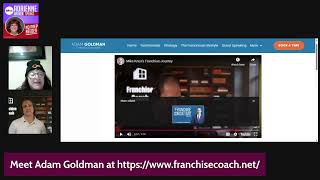
In this live interview hosted by Adrienne Barker, MAS, franchise coach Adam Goldman shares his personal journey from a restless entrepreneur to a seasoned franchising consultant. He explains why he gravitated toward franchising fifteen years ago after struggling to buy single‑family homes, and how his knack for following processes led him to help others succeed. The conversation covers the fundamental differences between starting an independent business and buying a franchise, emphasizing the value of proven systems, SOPs, and the E‑Myth principle. Adam walks through a typical coaching workflow: a free 5‑10‑minute survey, a deep‑dive interview, a personalized two‑page match report, and ongoing quarterly roundtables, all funded by franchise brand commissions. He discusses financial mechanics such as upfront fees, royalty structures (ranging from flat monthly fees to 20% of sales), and the importance of understanding net cash flow rather than just royalty percentages. The dialogue explores the classic passion‑versus‑profit dilemma, the role of community among franchisees, and the spectrum of ownership models from owner‑operator to semi‑absentee. Adam lists traits franchisors typically reject (over‑entrepreneurial, lacking business skills, poor people skills, low integrity). He shares market insights (about 10% of the U.S. economy is franchise‑based) and highlights the brand consistency advantage for consumers. Unique franchise examples—such as a goose‑chasing service for golf courses and a tech‑forward laundromat—illustrate the breadth of opportunities. The interview also promotes Adam’s book “Franchising Lifestyle,” his podcast, and related platforms (PodMatch, Pod2Book), and includes a testimonial from franchisee Mike Knox of RestoPros, underscoring the value of personalized coaching.
Chapters
Hello, hello, we are back. I'm so excited. Let's talk franchise with Adam Goldman. Adam, there's 3 things that my guests are that I know. They are brave because you got to be brave to come on live, especially with me as the host. I mean, you're taking the risk. You are bold because you got to be bold to do this. Brilliant. Oh, that's the name of my book. And this is, uh, 16 of my guests just published, and it's a narrative, not a, uh, like transcript. It's really a great book. So I just want to share that with you because maybe you'll be in the next book, and that is exciting. Okay, I'm wearing my CreativeCon hat. I will be at CreativeCon February. So if you don't know, go to CreativeCon, C-R-E, the letter, the number 8, T-I-V-E, Con. Okay, talk to Julie Loken. So Adam, tell us a little bit about yourself and what made you the franchise coach. Like, I want to hear your beginning. Start at the age of 5.
All right, age of 5. Wow. Okay, so look, just kind of age of 5, I was the guy that, um, even as a kid, just very outgoing, right? And, um, won the— even though I didn't have the best costume, this was at the age of 2, Actually, we'll start that. I actually, I was, I was the one that shook all the hands of all the judges as Uncle Sam. That allowed me to win the bicentennial contest. Fast forward to being a preteen where I had a, just an entrepreneurial, had my own paper route when people actually read papers. And then kind of going forward to that, I'm just kind of the guy that never really fit into corporate America. So just did everything in my power to avoid a 9-to-5 job. Even went all the way halfway around the world. When I graduated from college, I went to Poland and to Hungary. I had an internship there. I didn't really want to work for someone else. And what happened also after business school, when all my classmates were getting jobs with McKinsey or other consulting companies, I was more excited. I had, I had an existing business in Eastern Europe that I went back to, so just doing everything in my power. And I, what I found, um, Adrian, is that I'm really good at following process, right? But I'm not as good at creating that process from scratch. And so I stumbled into the franchising world 15 years ago. I had a, some, a portfolio of single-family residences, and I found that it was getting harder and harder to buy new inventory, and my friend connected with a few different options, and I decided to invest in an office cleaning master franchise. That went really, really well. My goal as a coach is to make sure that people have the same sort of success that I had, and I've been coaching and consulting over the past 8 and a half years, and it's been a really, really good journey.
I love that, Adam. Okay, so let's make believe. Let's have me— I'm coming to you And I'm like, Adam, I'm 45 years old. I have a couple hundred thousand dollars in the bank. Yeah, I'm leaving my corporate job. I don't want to work that hard, but I do want to work. And I have some children and they're like, Mom, do something and then get out of it. Leave us like, leave us a little legacy. We want something and we all love food. So maybe you want to look at like opening up a food restaurant. And so I'm like, oh, okay, let me do that. So now I have a choice, right? Do I look at a franchise and go with a franchise, or do I open up my French bistro, which I have absolutely no clue how to even open up a restaurant? I don't even have a chef. I have nothing. I don't even know what I would be doing. But I have ChatGPT, so I don't know, I could probably get by by using ChatGPT and use that for my business. So what do you think, Coach Adam?
I think that ChatGPT is a very poor way to find the right business. It's so nuanced to find the fit. What I would say is I don't know exactly what's a fit for you if you came to me, right? What I would say is if you were to follow the process that's proven, then together we could explore 3 options. It's a free service, and then I'd give you my top 3 that are different. And you mentioned food. There really is a common misconception in my industry, Adrian, that when people think franchise and they think fast food and flipping burgers, I have 75 different industries, not just food.
Wow.
But here's the thing, I have a real strong passion and I'm thinking I should go with my passion. So my favorite shape is the shape of my body. It's round. It's because I love donuts. So do I— what, like, shouldn't I go with my passion and what I love if I'm going to look at a franchise? Or do I go with like where I can start and make money right away? Passion versus profit.
So the analogy is this, that passion is part of the exploration. It might be the X factor. Like you have two brands, they might be 98% the same and the other 2% might get you over the hump, right? But if it's only about passion, I have a friend who's a baker. It's a non-brick-and-mortar business. He's very passionate about baking. And but the challenge is he's not passionate about being up at 2 o'clock in the morning and baking 5,000 loaves of bread, it becomes old very quickly, right? So it's just, it's a question of, it might be the most amazing business in the world, but it's not making any money and you're officially passionate about it. I'm more focused on characteristics of ideal brands, things that are cultural fits, et cetera.
I don't understand though, he'd be rolling in the dough.
There you go.
I'm just kidding. Okay, so no, a franchise has always fascinated me. Even as a young girl, my parents— not that they had a franchise, but they had a restaurant called Golden Skillet, which I think was a franchise actually. I don't— it was, it was like the, like a Kentucky Fried Chicken in Connecticut, and I absolutely loved it. I was so mad when the doctor said that we all had to stop eating fried chicken, so my parents sold it. Well, no, so there's no more fried chicken for us. But, you know, explain. So if you're really looking at like Kentucky Fried Chicken, or if I wanted to open up a house cleaning, or if I wanted to have one of the 75 industries, what, what is the difference between my buying the business and doing it myself or going through a franchise?
So you mean buying it on your— like having a business on your own, starting?
Yeah, I have a business on my own, but I don't know anything about it. But I'm like, yeah, I'm thinking I don't want a franchise, I want to do my own business. I don't want someone to— let's say I don't want someone to tell me what to do, I don't want to have to give someone money, blah blah blah.
So I truly believe that people tend to underestimate how hard it is to start a business from scratch. A guy by the name of Gerber came up with something really wonderful called the E-Myth back in the day, and his whole premise is that if you start something on your own, then without any process or SOPs or systems you have to play the role of the CEO, the secretary, the CFO, everything at once, and you're just kind of scattered. Whereas if you have a strong system, think Chick-fil-A or McDonald's, a well-oiled machine, then you're able to be more successful than you otherwise would, would have been.
I love that. What I love about franchise is that they're so community-driven. I mean, they are really caring about the community. There is something, especially when it comes down— thinking locally of Fast Signs and just how amazing what they do and the amount of time, but it doesn't— it's local, but then it also a lot of times is, uh, right from the corporate. So can you, can you explain that, like the community that comes with a franchise?
So you're talking about community of other franchise owners?
That is definitely community, and the community in your own neighborhood community.
So look, I mean, certain franchises have more community aspects than others. One that really comes to mind for me is anything related to seniors is a big subsection of the franchising world. And it's, it's a unique business in that you can help others that are in need in your local community and make good money at it as well. So I can't— it would say, I mean, I think the businesses in senior care have a social impact that they're helping people out with.
I love that. I know at one point in time I was looking at franchises and really enjoying it. Uh, but I can understand the need for a coach because it gets overwhelming. Because, and especially if you kind of go like, okay, I have $75,000 and I want to buy a franchise, but you're not really understanding how much more you may need or what that looks like. Uh, SOPs, all of that you don't know. So share what you do as a franchise coach because that is where the juicy juice is.
Absolutely.
So look, my role is I'm a connector, right? I work with brands that are pre-screened that are in 75 industries. It's a free service, as I mentioned, and I'm here to make a connection. I almost think of myself as being a yenta, right? Or just kind of connecting people, making perfect matches. It's almost like dating. And so the way the process works is I first have people fill out a survey that takes 5 to 10 minutes. I go ahead and have a conversation. I have people call me all the time. They tell me, hey, Adam, give me your top 3 now. And that's, it's a personalized service. It's really getting to know people deeply through that more in-depth conversation, then writing a 2-page letter or model where I'm not even worried about brand, but more focused on business characteristics that are ideal for them. And then making that perfect match, these 3 brands. And after I introduce these 3 brands, I'm very proud, Adrian, of my process because I actually go into secrets of the franchising world that they won't hear from other places, right? And we have different steps when we talk to our candidates. And the things we talk about are things like the franchise disclosure document or things such as going through investigations with existing franchisees and validations and meet the team days. And we kind of go step by step. And even after my candidates go ahead and decide to invest in something, it's something where we have roundtables on a quarterly basis and one-on-one coaching calls. So it's, it's the whole package. And the best thing about it, which is kind of crazy, is it's a free service. It's the franchise brand that pays for, uh, that pays us a commission if we make a successful match.
I love that. And you just brought up the community. That to me is worth the gold. I mean, you have like a built-in mastermind of others that have gone through and walked that path before you and are walking behind you. So I love— I was a SCORE mentor for years, and so I absolutely love that. I— well, but like, what are some of the unique franchises that we wouldn't think of? So I'm thinking of the chicken and all the ones and all the donut ones, but what are the ones that I wouldn't even think to myself?
It's not in my inventory, Adrian, but there actually exists one of the most unique franchises. It's called Goose Chasers. You literally go to a golf course— you know a lot about golf by being in Florida— and with your car, um, you are taking dogs and chasing geese.
Okay, I, I'm frozen in, in, in a quest of like, what the heck? I don't even— oh, okay.
So literally the franchise model is You literally take dogs, go to golf courses, and chase the geese away from the, from the green.
Okay. Okay.
That's a unique franchise you probably haven't heard of before. It's not in my inventory. Right. But that's just an idea about how unique certain things are. I mean, look, I think that I get excited about businesses that aren't very glamorous. So I have this business. We can kind of market it as being about sanitary and healthy. But I actually think there's a huge market for this. They literally are in the business of picking up poop of dogs. And I just think it's a recurring revenue thing. Anything that no one else wants to do is the kind of business you want to be in.
I love that. So have you watched a Shark Tank episode that had a franchise that you like, were like, that was one of my favorite franchise?
You know, I watch Shark Tank every once in a while. I haven't seen any specific franchise-related Shark Tanks.
Unfortunately, I was thinking they're so interesting to really understand. Let's check out your really nice looking website just so that we have— everyone can get a feeling for it and understand. I love— okay, let me ask this question. In your— with your clients.
Yeah.
What is the age of your youngest franchisor? No, franchisee. And what is the age of your oldest franchisee?
I have— I've placed people as young— this is such a great question. No one's asked me this before. Um, as young as 27 or 28 and as old as 74.
Wow, just at that retirement age.
Yes, even post-retirement. And I have a lot of respect for people like that.
Oh, I love that. And if you're going into a franchise that already has all your SOPs and everything set up, and you are in an— and, and I'm thinking, Adam, that you have a good reputation, you know, you're known to to, you know, possibly you've been an employer before, but, you know, finding employees is, is good, or you have a good family base and friends that are going to work for you, that you really could at that age start the business and, you know, not be in it full-time, like enjoy the travels and your life.
So I'm so glad that you mentioned that because everything franchise-related, let's talk about there's a spectrum just like anything else in life of how much time you need to put in. Right. So I have brands that require you not to have a day job and to be an owner-operator. That's one side of the spectrum. I have others that are semi-absentee. I don't have anything that's totally absentee, meaning you just kind of get mailbox money. That's not my industry. But I do have things where you could potentially hire people and run it part-time with managers.
So interesting. All right. So let's say I want to ask this question. What— and thank you for saying it's a good question, because when you do a show like this and there's zero prep needed, you know, the It's always like, that's like one of the best things to ever tell someone like myself. Like nobody's ever asked that question. So let me just pat myself on the back if I could reach it. Okay. There we go. All right. So the question is, tell me 5. So I want a handful of traits that a franchisor would say, no way, I don't want you in my franchisee.
Oh my gosh. Well, let's talk about this. Number 1, too entrepreneurial. And what I mean by that is I have some people, there are different types of entrepreneurs, right? If you're the kind of person that— I'm aging myself, right? But coming to America, right? If you're going to buy into McDonald's and you want— I don't even remember the name of it, right? Where they go and it's this other thing and the guy calls them golden instead of golden arches, something else. If you don't see the value in a process and you want to do everything your way, then you shouldn't buy a franchise. That's one thing. The other trait of someone that's not a good franchisee is, let's call it someone that has no business skills, right? So you get— there's so many different business skills you could have. It could be sales, it could be operations, it could be people skills, right? You could potentially be trained in that. But if you have absolutely no business acumen at all and can't be coached in business acumen in any of these things at all, let's say you're an art student. Student, right? You don't like talking to people. You have no idea about how to do any business. So you're probably not a fit for franchising as well. Second trait. Third trait, I would say, and this is not for everyone, but look, I think that it's really important to be a people person in general. I have some brands where you could potentially hang out behind a computer, right, if you're really good at accounting. But it's really tough in business if you're not a people person and you're not able to connect and you just don't have integrity and, and whatever that might be, then they probably don't want you as a franchisee. Those are my top 3.
I love that. You know, it's funny, so, so I grew up in the promotional products in this industry, the promo industry, and, and there's often, you know, if you watch CNN, you'll see, you know, oh, come into the industry, and usually they have like a dollar amount, and it may be— I'm not saying this is that 100% accurate, guys, but maybe it's like $10,000. You could come into this industry But there's really— it's really very difficult to come into the industry. So like the insiders look at it and go, what the heck? But it's almost like using a franchise as like a loss leader. Like you could do this at $10,000, but then when you go really look into it, yeah, $10,000, but the amount of knowledge you need, like there are some things where the— like it takes people 10 years to learn an industry. Just curious.
Yeah, I mean, look, so what I would say is this, that, um, I think what you're saying, what you're asking, is things related to royalty payments and what you're really getting from that system. What I can tell you is that different franchise brands have royalty systems where sometimes they ask you to pay a very low upfront fee, but their royalties might be really high, like 20%, right, or more. I have other brands that, that have lower royalty fees, maybe about 4% of whatever your sales. I have some that actually have capped it, that you have to pay X percent or X dollars per month, whatever that might be. It might be a flat fee of $1,000 per month or $300 per month, no matter how big your franchise is. A lot of my candidates tend to spend too much time on what that percentage is and not enough time on just understanding how much money is in their pocket. And, um, that— I hope I answered your question there.
You did. Now, that was good. That was good.
How many—
what are some numbers? I'm just curious. So when you look at businesses, what is the number of franchise compared to, uh, you know, self-owned businesses?
My understanding is about 10% of the U.S. economy is franchise-related. And for my candidates and just me in general, I'm just walking around, you see a coffee shop that's franchised, a fitness place that's franchised, It's almost like when you drive a car, you realize how many other people are driving that same car. If you literally are in the industry like me, it's not only looking at fast food, but just kind of understanding how many places that are franchise-related that are out there that you didn't realize otherwise.
Yeah, I really want to do a deep dive on like other countries too and what that number looks like. I'm just really, really curious about that. And then I also noticed that when I lived in Tucson, Arizona, I thought it was interesting, their downtown area was strictly no franchises.
Well, they say keep Austin weird, right? Um, so I— it's interesting. I— look, I don't see that as being very common, uh, where people— you can't really ban a business because it's a franchise business. That's not fair, right? That's not cool for— um, I, I don't see that very often, but sometimes people— there is some advantage in certain places of having a, a business that is local and doesn't have there's a case for both. I think there's plenty of room in a market for both types of companies.
I know when I first moved, I moved from Connecticut, that's where I was born, to Celebration, Florida, the town that Disney built. And so now I'm in like the Disney and I'm thinking, look at all these restaurants and Disney's restaurants. But what I found was the international travel, they wanted the franchises. They wanted to go where they knew that they were going to get a meal. They knew what to order. They knew that it was going to be the standard that they want. And so I guess that's really one of the great perks about a franchise, right, is that the, the consumer knows when I walk in what exactly I'm going to be met. Whereas if I'm walking into a local business, I may not know. I may have to rely more on, you know, reviews and, and finding out what other people think. Am I—
that's the power of the brand, right? I mean, when I go to McDonald's in Eastern Europe, I know what I'm gonna get. When I go into Crumble Cookie in Houston or somewhere else, I know what I'm going to get as well. That's powerful. And if the system's done well, that's great.
I'm mad at Crumble Cookie though, because they ran out of their Dubai— they did like one week of the Dubai chocolate cookie.
That was wrong. I'm obsessed with Dubai chocolate. My mouth is watering right now.
You know what's so funny? I walked into a local store and we were at the counter. I was putting my stuff on the little cart and I'm like, Oh, do you have any to buy chocolate? And she looked at me so puzzled and she's like, you don't have to buy chocolate, honey, to check out. I'm like, no, to buy chocolate. She didn't get it, so I thought that was—
I get it, I got it.
Okay, so working with you, so I want to go through. So this is the website, it's franchisecoach.net. Love that you could get a 15-minute consultation. Let me tell you, a lot can be done in 15 minutes. So absolutely, you know, right? People think, oh, it's not that long. Okay, what do we have here? We've got some videos. Franchising 101 webinar. Adam, that, that photo, I just, I love. Unique franchise. Oh, I'm sorry, I have to go.
Oh, oh, oh, oh, hello aspiring entrepreneurs. Today I'm thrilled to present a unique franchise opportunity that's revolutionized the traditional laundromat industry. This is not your average laundromat, it's an innovative tech forward venture that's entirely transforming customer experiences and setting new standards in the sector. Imagine owning a business that requires just a handful of hours each week and boasts a business model that thrives in any economic climate.
Sounds intriguing.
Yes, this franchise opportunity demonstrates healthy financials with a quick return on investment. They equip their stores with state-of-the-art washers and dryers and modern amenities like free Wi-Fi, by smartphone payment options and a customer loyalty program. But they don't stop there. The franchise provides comprehensive support and training to their franchisees because they firmly believe in—
I'm gonna watch this, you guys. It's a nice, very nice, really well done. This is fabulous. And then wait, you have another video here. Oh, I love it. Nice, nice marketing. That is beautiful. You gotta, um, is that your book too?
Yeah, it is called Franchising Lifestyle. Here's a copy right here.
Let me see.
You can get it on Amazon, right? And the idea behind this is there's a misconception which we spoke about briefly before, and that misconception, Adrian, is that people think that franchises is full-time and flipping burgers. This has real-world case studies and interviews with people that are franchisees. And the one overarching thing that I found with my candidates, my successful candidates that decide to invest, is they're looking for freedom. It's not like I don't want to work at all, but I want to be able to work on my own terms. And that's what we call it, a lifestyle, uh, for investing in franchises.
I love that. But you still have a legacy with a lifestyle. A lot of people—
absolutely.
There's also like— it's funny because I, I can't— I have to call what I do really more like kind of like a hobby, right? Even though like I can't sell my brain, so my business is my brain. So that makes it difficult. So for a lot of us that are coaches and consultants or you know, these small business where it's all running from us, we're kind of stuck. That's why I really love the idea of franchises. I just— and I've just— everyone I've met has always been great. All right, why working with Adam? So a lot of great testimonies here. So you want to go through that, you guys, and see. I love this. Oh, looks like some really great—
click on Mike Knox. Click on Mike Knox.
Oh, okay, I would love to. Oh, can we watch it?
Does it work?
Let's see. Yeah, I'm down.
Did it work or no? The click— the, the, uh, the link didn't work.
Oh, oh, sorry, sorry.
By Adam Goldman. Adam has over 10 years of franchising experience and he's worked hard to realize his dreams by being his own boss. His experience will help you to become a better business owner and franchisee so that you can live your best life and control your destiny. This is the Franchise Consultant Podcast, and this is Adam Goldman.
Hi, welcome to another edition of the Franchise Coach Podcast. I'm here with my good friend Mike Knox. Who's actually located in Amarillo, Texas, correct?
That's correct, yes.
Yes. And so, uh, Micah, um, tell us more about your business and how you found it.
All right, well, my business is called RestoPros. We're a restoration water mitigation franchise, um, and I found this— I never would have found this on my own, but Adam actually, through the— his business with the franchise coach helped me find this when we were looking to make a change in my career just a couple months ago.
And how are things going for you?
Well, you can see I'm in my truck because I'm on a job site today. Let's just say when we, when we got started, corporate set some goals for us, and we, we were 4 times that volume in our very first month. And so it's been fantastic. And actually, probably the only thing I can say to describe it is I wish I had done it 10 or 15 years ago.
Oh my gosh. And what would you say to someone that, that you referring to Franchise Coach about why they should work with us?
Sure. Well, of course, everybody's situation is different, but I think most people are very aware of what a franchise is and, you know, We see them all around us. But when it comes to figuring out which one is a fit, when our lives are busy and we don't necessarily know the nitty-gritty of everything, I think it's really important to find somebody that knows the business, knows the landscape, understands the models that are out there. And then also, I think what, you know, working with you, Adam, that was so valuable is that you took the time to get to know me and my wife, Erica, We did several interviews where you asked lots of really good questions to get to know our values and what was important to us. And you honed us down to just a couple of really good fits for us to investigate. And that was something I could never have accomplished on my own.
And what about working with us surprised you the most?
Yeah, you know, I think it's probably that it was the level of personal attention that you gave us. And really understanding what our needs were, what our situation was, what things we would like to do and wouldn't do. And you gave us 3 things to investigate, and all 3 of them were very interesting, and I could have seen any of them working out. So, you know, just kind of— I think, you know, that is— and again, that's probably the most value we got was because I could have spent a long, long time looking at lots and lots of different opportunities, many of them which never would have been a fit. And you were able to get us down to 3 really good options really quickly.
Why would you say it's important, uh, for someone like yourself, right, to work with a coach like me in searching for a franchise to invest in?
Yeah, well, if you don't come from this world, and, um, you know, I, I've— I don't even come from the business world. I was in education, so, um, I, I didn't know the first thing about running a business. And I didn't know the first thing about how to investigate an opportunity, how to look at an opportunity and evaluate if it made sense for us. And so working with you gave me really a great deal of confidence in, you know, understanding what I was getting myself into, looking at, you know, everything from upside to potential risk, all of that. And it made me feel much more comfortable, I think, pulling the trigger and saying yes to the opportunity. I'll add one more thing. You told me this, uh, probably our first or second conversation. You said people either drag their feet forever and probably never buy, or they, they do this really quickly and in just a matter of a week or weeks or months are in a new franchise. And I was like, I don't think that's me. I can't see that happening. And that's exactly what happened. So you were right, and that was certainly a big surprise.
Oh my gosh. Well, listen, Mike, it's been a pleasure working with you and Erica. Here's to continued success for both of you, and Wow, wow.
Okay, first of all, shout out Mike. Mike, I'm just gonna talk to Mike for a second. Mike, you're very pleasant looking. You— like, that video with your smile, and that was one of the most authentic, real videos. Like, you were talking from your heart. I— that was gold. I'm so glad that you said to play that because I loved every second of it. What is Mike's business again?
He's in water restoration. Think of like something to the effect of a competitor to ServPro. And he has 8 kids and he lives in Amarillo, Texas.
Oh, Mike, you, you are amazing. I wish you the best and success. And just, and, and yeah, now you've just been— what now? What did you do, Mike? You made Adam Goldman so popular. Nobody else gonna have an opportunity. Clear your schedule. You're gonna get a lot of calls after this. No, that was, that was, that was quite lovely. I have to say, I love that. So you guys, it is an investment strategy. So I would love— I know we're kind of going towards the end, but if you could just bring this up about like the idea of, do I put my money under my mattress, right? Which is fine. Not really. I could put it in the bank because, you know, just leave it there. Or I could open up a franchise and it's an investment strategy. Really? Let me know.
Yeah, yeah. What I can tell you is this: I really always believe to invest in yourself, right? You can even take your 401k and instead— and sell some overpriced Nvidia stock or Amazon stock and invest it— or Apple stock— and invest in yourself instead with no penalty.
I love it. Wait, I have to do this. The COVID proof Oh, that's— oh, you guys, that's really— so, so for the— for something else, so you really look at kind of like the, the different things. This is really cool, the franchise lifestyle. You know what I love about franchises is that you have those meetings and everyone gets together once a year, and, and that's such a great place. And I love competition, so I'd want to be like on the stage getting every single award, right? That's, that's so beautiful. That just makes business, and then the families all come and support you. I definitely am a believer in franchise. And who knows, I'm only 63, so the way I look at it, I got like another 11 years.
There you go.
There you go.
I mean, look, oldest client of yours, so that I can wait till I'm like 76.
Well, Mark Cuban said that, uh, he loves the great game of business, and business is just fun. It's competitive and it's great.
Um, so is there anything that I didn't ask you that I should have asked you that you would like?
No, it was a fantastic interview.
Oh, I appreciate that. You're a fantastic guy. This is really— I, I'm just so fascinated. So thank you so much. And by the way, I'm loving your podcast. Is that— is there— are they about 5, 6 minutes and you kind of just like target?
Yeah, I mean, there, there are some— there, there are some— they're pretty quick podcasts now. The podcasts are pretty much only testimonials at the moment.
Oh, so that— you know, it didn't feel like a testimonial, I would have to say.
I got any podcast Yeah, no, it was a mini podcast.
It was, it was fantastic. I loved it. Adam, you're awesome. Thank you so much. You know, I'm going to do a shout out right now. Thank you to PodMatch because Alex, what he's created is pretty amazing. And I'm fairly new to the system, but I absolutely love it. And we'll be at Podcast Fest in Orlando in January. Oh, by we, I mean I'm the chief marketing officer for Pod2Book. We take podcasts. We're the only company, the only one that will take a podcast and you put in your RSS feed, you pick out your episodes and it turns it into a book. There's one company that tried to do it 3 years ago. It's still on a waiting list. So we beat them and we're killing it in the market. So I love podcasts. So thank you so, so much, Adam. I just really enjoyed it. And thank you to PodMatch for having Adam. We matched up. We were like a swipe. We matched and We're— but we're not dating, so husband and wives do not be upset with us. All right, Adam, you're a nice guy. I really love this. Thank you so much. This will be turned into a podcast, but for now everyone can enjoy watching you live and learning about Mike. So I love it. I'm gonna go find Mike actually. Well, how do you spell his business?
It's called Resto Pros.
Okay, rest— okay, I'm gonna find him and, uh, give him a little shout out with that. I love that. Okay, thank you so much. Have a great rest of the day. Have a great weekend, and thank you to CreativeCon. I really appreciate it. Thank you so much, Adrienne.
Have you two










