Meet Antwon Person
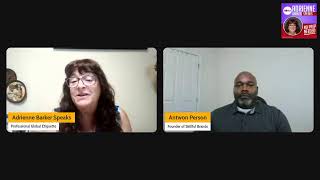
Antoine Person, retired Army officer and founder of Skillful Brands, walks through his 9-week mastermind program that teaches entrepreneurs mindset, systems, and growth. One client went from zero to $50K a month as a wealth-management attorney. The program caps at 25 people per cycle and includes business credit education and AI tools.
Chapters
Okay, let's go live. Okay, almost. We are live. And okay, I did peek, I did peek, I have to admit, at who Antoine is. And I am wowed because we have in the house a hero. And I have to say it, Antoine, because even though I don't know who my guests are— by the way, welcome to Adrienne Barker Speaks, No Prep Needed. I don't do any prep. But Antoine is a retired US Army senior officer with a demonstrated history of high performance leading various organizations to the Department of Defense and the corporate sector, recognized as a cohesive team builder, founder of Skillful Brands, an organization dedicated to changing the status quo for business development and growth. His company aims to eliminate the complexities of starting and operating a successful business. And thank you for, thank you for fighting for our freedom.
Yes, ma'am. I'm really glad to be here. Hey, I just really want to thank you for having me on your platform. I know running a podcast is not easy, and then the value that you provide to your audience is amazing. So again, I just want to thank you for having me here.
I am, and I'm so like, I want to say thank you. We're going to have a thankful, like, love fest right now. Thank you so much, Antoine. No, I mean, and thank you for your sacrifice. And I do feel that you, you know, you fought for our freedom, and I want you to know that we all appreciate it. Thank you so much. So let's get into Skillful Brands. So I kind of read, you know, blah blah blah about Skillful Brands, but let's hear from your voice. What is Skillful Brands and how do you—
I would say that, you know, my journey into entrepreneurship started, you know, I spent 22 years in the United States Army leading different organizations. And when I transitioned out of uniform, I kind of brought those principles with me to Skillful Brands. So my focus for Skillful Brands is to eliminate the complexities of starting and operating a successful business. And kind of like, what does that look like? Um, so I kind of like understand what it feels like to be stuck in your business, how to wear multiple hats, um, how to just try something to get your business going. Um, and so my shift, you know, into entrepreneurship, uh, began when I realized that just being busy in your business does not actually build your business. Um, so that's kind of what Skillful Brands is. My goal is to help entrepreneurs start and scale their, their business or organization.
I love that. Are you, are you working right now, like, with your local chamber? What does that look like?
So I am. I work with local chambers. I support a lot of veterans that are transitioning out. But usually a lot of my individuals come from other referrals, from business coaches, from franchise brokers, people that may not be at the level of that business coach. They refer them to me. And we kind of get them going.
I love that. I'm just— I'm sorry, my eyes, you may see. So we're live on Chatter Social. I was trying to bring Leah up. Oh, Leah, hello. So I was saying, so you could download the app on your iPhone. Antoine is cool and does have an iPhone, just out of, you know, just to let him know he's not a Droid user. But so we have Bobby in the room and Leah. Leah is actually the community manager of Chatter Social. I've been doing my podcast live so that my guests get to experience other voices and questions besides my own. And so, um, Leah, do you want to pop off, um, and say hello? And Bobby, after Leah, do you have a second?
I would love to say hello. I don't have any questions yet, but I was, I was married to a soldier for 24 years, so I just know all that, uh, kind of that life. And I, I thank you for your service. I appreciate you and and your family and everything like that. I'm super glad that you're here and to get to know you a little bit better.
Yes, thank you.
So lovely. Bobby, do you have a minute? Yeah, yeah, sure. I'm just right in the middle of lunch right now, but, uh, Anton, nice to meet you, and, uh, ditto what Leah said— make it easier for myself.
Yes, I appreciate it.
I love that. I'm a mother of, um, A mother of— sorry, he's fine. I just, I just, I just, I— my heart for all the soldiers out there. Um, I'm a mother of— my son is 42 and he served 10 years in Afghanistan, um, infantry. So it was very tough years. So I— when I think about it, I think of the wives, I think about the, you know, the spouses, and then of course I think about the, the parents and how it's, it's not so easy, right? But I will say what I understand is even my son Alex is in a managerial position, and the skills that you learn really make sense in coaching. So when we're looking at, and especially in this day and age when we have a lot of people that, you know, maybe a— how do I say this— maybe an expert because they've used ChatGPT, I always say, you know, know who's coaching you, know where you're getting that information from. To me, it's like there's two things. If they were an Eagle Scout or if they served and sacrificed for us. So tell us about Skillful Brands so we can understand more about Skillful Brands.
Okay, so Skillful Brands, I have a family of Skillful products. So Skillful Brands is the parent company. My main offer is I have a mastermind program under Skillful Advisor. Where it's a 9-week program where individuals come into our program to actually get going. So I work with a lot of individuals that are either solopreneurs or just really getting into business. And I want to kind of like show them the steps that they need to follow to actually get into entrepreneurship.
Wait, you know what? Hold on for one second. I just realized, silly me, I'm not— I don't have you on. I got to share the screen.
I am.
I could use some. Hold on, I just looked down at my— I realized that they— see, now let me just show you so you understand. So we could hear your voice, you came out great. You were— but I want to, um, I just want to show you. Hold on, let me show you. So here we are. Ah, my computer. Okay, so see, before you were on— see yourself on the— so you are now live on ChatterSocial with— okay, I feel better because I don't want— I People can't miss your handsome face. I mean, we got to make sure that they see that. Okay, so, so with what you do in a mastermind program— and masterminds look different for different programs— so what does your mastermind look like? And I'd love to know first, like, what is the limit? How many people are you actually accepting in your mastermind?
Uh, so my mastermind is based on a cohort, and we only accept, uh, 25 individuals into our program every cohort. And then it's for 9 weeks, and then we start another one. You know, we want— we run a mastermind program every 3 months, but it's only 25 individuals. And what we kind of do is we focus on different stages. So as you know, I was in the military, and we plan operations in different phases. So I have 3 different phases. I kind of speak to the business owner when I'm initially making contact with them to see what phase they're in, in their business. So what we have is Phase 1 is for the individuals that need more like a proof and validation. So I focus on mindset and motivation and formation and structure. If they're a little more advanced, they may be in the building and up the optimizing. So we focus on systems and processes and establishing business credit and capital. And then there in the advanced, which is phase 3, we focus more on growth and expansion. So that consists of marketing, branding, and team building. So just depending on what phase the entrepreneur is in is where they kind of start in our program.
Have you ever had anyone that started from the beginning straight through and have attended all 3?
I have. So we have probably maybe like 10 or 15 people that have been all the way through each phase because they were, they were starting, they really didn't know what they were doing when they first got started. So it was just continue with building on all 3 phases of it.
So, you know, I recognize the value of masterminds, but I'm not sure if everyone does. And so can you explain the benefit of a mastermind even Because I'm thinking you also do individual coaching or do you just do masterminds?
So the best— so for me, it's a little bit of both because in the mastermind program, there is a group of people that are entrepreneurs from around the country that you get to meet and get feedback about what you're currently working on. But then also every other week you get to sit down with myself and we kind of drill down into your business to kind of get an idea of the additional things you personally need for your business. So our setup is every week we have a subject matter expert coming in to talk on a certain topic that correlates to the phase that you're in. And then on the off weeks, you know, you also get to sit down with me where we dig into the challenges that you may be facing.
I love that. All right, so go into the benefits of the mastermind because I know I have a few that I, I know that make sense. What, what do you feel, um, if someone's listening and they're like, I, I hear masterminds but I don't know what that will do for me? Can you share what it does when you are in a room with 20, 25 other people?
So one is the networking with other entrepreneurs. Um, I think for me I've seen the power of just being able to network with other people, like-minded people like yourself, just sharing those ideas. You always can pull multiple nuggets out of the meetings that you have. You get to bounce your ideas off of other individuals. And what we try to do is we will not accept more than 1 or 2 people that are in the same industry. So you get to hear a variety of different ideas and perspectives. And then if you have a challenge that you're currently working on, you can share that in the mastermind group to get feedback from other people on how they would tackle it or how they would, you know, overcome it.
I, you know, I say that because we, I, you know, I've taught the Fast Track program, a program from the Kauffman Foundation, and whose, by the way, granddaughter is part of Chatter social Brilliant Women. But what I found is it was— it's incredible that sometimes someone will have a question and they don't feel comfortable asking, but when you're in a mastermind, someone else may ask that same question, right? And you're like— so I would— I think I learned more from the people that were just asking those questions that were like on the top of their head. So there's such value with a mastermind, and I just— I mean, oh, I'm jealous of everyone that's going through your program. I just want to say that right away. So they go through your— they go through your program and then they, they then is there any like follow-up or continuation? Like what does that look like after they graduate?
So a lot of the, I would say, I would tell you that a lot of the individuals that are in my mastermind, they then follow on to industry training. So for example, I get a lot of individuals that may be interested in starting a franchise or some type of other business. but they may not qualify right now to actually join that franchise. So a lot of times the franchise brokers will refer them to me, or business coaches will refer them to me so I can actually get them to the point where they can qualify for the franchise or they can transition into another program.
How many people have you graduated? How many business professionals?
So right now we're probably at about 500.
I, I, I, if you're watching this, you're like, my, my mouth is dropped. Not many people could say that they've graduated 500. That is incredible. So have you done a conference? Have you brought all these, all the 500 together at any chance?
No, we have—
how many years?
We, we haven't done it yet, uh, conference, but we're looking at maybe, uh, having a conference next year. Um, We're still planning through that right now.
Oh my God. I could take your speakers. We could turn it into a book after your conference. Okay. When did you start?
So we originally started in 2000, the actual mastermind. So I've been in, I've been in business now since 2007. So I've started and sold multiple businesses. So when I was looking at transitioning from the military, I kind of knew that I wanted to help entrepreneurs, so I got a lot of questions from people. So we just— I just decided to, you know, start a consulting business just to help entrepreneurs out.
Okay, so I, I like— I'm a very positive person, but tell me the failures. I want to hear— I want to hear the challenges, what, like, some of the things that you have really, like, witnessed, and then those that have had failures and challenges and have had to shut down. And that's okay. There's nothing wrong with that. That actually could be a very good business decision to say, I quit. And those that have been able to accomplish what they wanted to, overcoming those challenges. So can we hear some stories? Can we have story time by Anton, please? Yeah.
So I would say just like many other business owners, for myself, when I started, I had a full-time job. I also, you know, had the responsibilities of being a husband and a father, and I was trying to run this part-time business like so many others. But before you know it, that part-time business came with full-time requirements. So some of the lessons that, you know, changed everything is I recognize that entrepreneurs don't fail because of their ideas, but they fail because they don't have the proper proper business structure. So just from, you know, over the years, some of the things that I've seen— entrepreneurs have the passion, but that passion quickly changes because the passion can't book the calendars, it can't close the sales, it doesn't onboard. And I see a lot of individuals, especially in today, um, the challenges that they have are really based on following social media. So there's so many gurus out there that have a course, have a program, and it looks really good, and their program may be good, but it may not be in the phase of your business that you need it to happen in. So if, so, for example, if you see someone that talks about generating leads on LinkedIn and social media, that may be a good program, but it just may not fit the framework of where you're at in your business. And I think a lot of people start different programs, see different programs, but they haven't designed their framework out to know where it actually fits in their business journey. So that's one of the main things that we teach, like develop your framework. Your framework may not support marketing, growing your team at this point because you may be just starting your phase 1. So you kind of got to realize where you're at in your business before you actually jump into another program.
That is like huge, huge, huge advice. That was a really good mic drop because that is absolutely correct. I used to go into people's LinkedIn and I would do their LinkedIn for their lead generation and then they do no follow-up. And so I, so I would just be like, well, there's no reason to have me if the goal is to, you know, you have to have the framework. I love that you just said that. That is, that is so true. And it just seems like something that could— why isn't it easy enough is it enough for people to have a framework?
Because it's the mindset. So, you know, what we kind of teach is when you first get into business, you really have to change the mindset and motivation of why you're even doing it. And I kind of teach the 3 S's, which is structure, systems, and strategy. So you got to have a structure, which is the right mindset. I use an acronym for systems, which is you need to develop something to save your yourself time, energy, and money. And then you need to have a strategy. And the strategy is the framework. And those together really will propel your business to new heights. You just got to follow your framework that you develop.
You know, I started by saying it's amazing, like the leadership and the skills that you learned in the military and then having it come to civilian life. What do you think? There's so many people that say, and some of them are pretty young, that say that they're a counselor or coach and offering these services because they feel they got the backing of an AI or ChatGPT, something like that. And I'm always curious how people can vet you. Now, they don't need to vet you, but what does that look like? Because I have heard and seen, I'm sure you have too, you know, the poor, you know, you don't have money when you're starting a business. Every penny makes something. And so How do they make sure when they're vetting who they're going to have to be their coach or their mastermind leader? And what does that look like? What do you suggest to people?
Well, really, you have to do the research. You have to kind of connect with different people that are out there to ask questions. Have they ever heard of this person? What are their experiences when they were in that program? A lot of times when people leave reviews, you can actually reach out to Some of the individuals that have previously been in the program, they kind of solicit some advice. You can kind of tell when you're— when a person comes on a podcast, if they're able to explain some of the questions or, uh, you know, they're providing valuable tips. So all of that plays a big part when you're actually selecting a coach, plus the price, right? Um, uh, the price as well. Uh, so yeah, I, I just think you got to do your own research. Um, because, you know, like I said, a lot of programs are out there, um, that are really good. You just gotta kind of figure out where they fit in your program. And I would say—
you can see my face. Alan, could you stop please? Offer it to Alana. Husband that doesn't listen. He needs to go to a husband mastermind, Alan, so that you listen. Okay. So now my daughter's like, what do you want? Okay. So I just had it in my head too. So bear with me for a second. I was just getting distracted.
So I was gonna say another topic on what you just asked. Um, so when I first got started, I, I kind of ran into something like that. So when I first started, um, in 2007, I was actually a real estate investor. So I took different courses to kind of learn how to invest in, you know, real estate. And after I had started, I had kind of conducted two courses, I realized that a lot of the gurus were all teaching the same information, but they put their own twist on it, or they changed a step and called it something else. But when you got to the foundation of it, it was all the same. So that was one of the things that I quickly learned, that a lot of the programs and courses out there are really truly the same. And it may be something that someone that has never actually even conducted any of the things that they're teaching on. So if you can find a coach that's actually been through it, has been through the grind, I think they're the most valuable people to connect with.
So are they coming to you after they've already ideated their, their whatever their, their business is? They already have their business plan. They maybe even started it and now they're coming to you. Like, what level does— is that again where they are?
Some, some, some individuals haven't started yet. They have the idea, but then some individuals may have started their business and, you know, been there for a year or two and they're still stuck. They just don't have the, the confidence or the knowledge to be able to move forward.
So, so important.
Okay.
Where are you located?
I am located in Virginia.
I'm in Daytona Beach. Virginia's for lovers. I love that. Okay, so you mentioned the chamber. So are you a member of a chamber?
I am. And then also, so what's so funny is I just relocated from Florida, uh, recently. I was in, uh, Tampa.
Oh, Tampa's so pretty. Are you in the beach area of Virginia?
Uh, yes, the Tallahassee area.
Oh, how beautiful. Okay. Oh, you have mountains too?
Say that again.
Do you have mountains?
No, not in Virginia Beach. That's in another part of, uh, Virginia.
Okay, sorry that my husband thinks that he can speak now that I'm on a podcast. No prep needed. I planted myself by mistake in the kitchen and should be in the other room. And, um, yeah, nope. That's nice, Al. Thank you for letting us know. So you didn't hear him, but you didn't need to hear him anyways. Okay, so, so this is interesting. So now the, the, you know, I'm a chamber baby too. I love chambers. I think they like play a big role. Was that important to you? Because that's where the business members are. How are you, like, working with the chamber? What does that look like? Because I am curious.
So, um, I, I act as a business coach for the chamber, and I— for me, um, it wasn't as big as some other people because when I was in the military and I was transitioning out, and then also a lot of veterans, they have access to something called Boots to Business. So that's a different program that you can get when you're transitioning out. And I think that has been a little bit more helpful for me. And then also, I think a lot of people are in like BNI. You have to just— there's so many different products and, you know, programs out there. You kind of have to be selective because you end up focusing more on that program than actually working on your business.
Let that breathe for a second. That is great advice. Is Boots to Business part of SCORE?
No, Boots to Business is a part of the Department of Defense. So for individuals that are transitioning out of the military, they have different tracks that you can follow. So if you know that you're going to be an entrepreneur when you're transitioning out of the military, you can take the Boots to Business track. Which kind of prepares you for entrepreneurship when you, when you retire.
I love that. Is your chamber office like, you know, close to your SCORE office as far as, as far as business goes?
They are. And especially, you know, what's so strange is that the one that, that I, I was associated with in Tampa was a really good one as well. They actually had two offices. They had one at South Florida and then the city of Tampa had one as well, and they were both almost co-located. They did a lot of joint trainings and courses together, so it really worked out really well.
Antoine, someone that I admire very much who is also a former veteran, Gilead. I see Gilead just walked in the room. Amazing woman, Gilead. Are you able to unmute?
I can. I didn't know you were doing a room till just now, so I'm not really— how late am I?
You're not late at all. You're not late at all. Okay, so if you introduce yourself, we'll have Antoine introduce himself again too. And that way, because I— the respect I have for, for our service members and our veterans. I can't even explain it. So I want to take a second so that you guys can meet each other. So, Gilead.
Antwane, it's nice to meet you. My chatter name is Gilead, and I am a Desert Storm veteran deployed to Saudi Arabia in 1990, 1991. And I was in medical logistics in the largest hospital unit in the theater at the time. And I work in healthcare, long-term care and healthcare finance, billing, collections, AR, revenue management now. Since I got— I did 5 years in the Army. Okay, that's me.
It's nice to meet you. So again, my name is Antoine Person. I'm the founder of Skillful Brands. I most recently retired from the United States Army after 22 years. My career field was logistics and supply chain. So I worked at, you know, all different levels from, you know, company to brigade. And then I most recently retired in '24 as a lieutenant colonel.
Oh, congratulations on your retirement. I only made it to captain before I, before I left. But that is an accomplishment. And I was in medical logistics. As well, so we have something in common. Yay!
Yes, I'm very familiar with medical logistics and medical logistics officers as well.
So Antoine has a business, so now he's a business consultant with a great plan, a great model of masterminds in Virginia. We were talking about the chamber and I was asking about SCORE. We talked about vetting, we talked a little bit. I really want to hear, like, like if you had to look 500 just, it wasn't just a crazy number that 500 people have gone through his programs, his mastermind. I mean, I like, I hope that you pass by a mirror and go, 500, I masterminded 500 people. Like, whoa, whoa, as the kids say, dude, that's crazy. Or no, I guess they say bro, bro, that's amazing. That is intense. Okay, so give us, because this is a tough one, you don't have to give any names. What was the most successful story that you could share with us that you're like just so proud of?
Um, so I would say, uh, one of my previous, uh, students, they were into, uh, wealth management. So they are— they're an attorney and they're doing, uh, trust and foundations, and they also online. So right now I know they're making about $50K a month, uh, on just referrals that they're getting online. So I think that's one of my, my really good, you know, feel-good stories that I was able to help them get to $50K a month in revenue based on, you know, being online and then also providing great service.
That's a beautiful story. Okay, let's go the other side. Okay. Someone that went through the program and again, there's like, this is fine. And then said, you know what, this is— I'm not— this is not for me, this business, or I'm just having trouble, or they were just in the wrong style business for them.
Yeah.
So I would say failure.
I'm not going to say they made it all the way through the program, but it was one individual that made it to the pretty much credit and capital phase of the business, but they couldn't, they couldn't grasp the understanding of, you know, keeping your cash and maybe using credit. At certain times. So they, they pretty much spent all their cash and then when they needed it to keep their business going, they didn't have it. They didn't have the cash and then they couldn't qualify for the credit. So that was a challenge there.
Wow, that actually is fabulous advice. I have to say, I'm so glad I asked you because that in a nutshell really A lot of business people don't think that, and especially if, if they are second or third generation and their parents didn't use the credit like that, I could see where, well, my parents never got credit, they paid cash. So you know what that would look like. You had mentioned about funding, and I was curious about that. When you get to that funding and credit part of that mastermind, are you bringing in outside people to come in and talk about funding? What does that look like? You have relationship with those that offer funds so that they've already been pre-vetted by you? I'm really curious.
Yep. So we have an expert that comes in and talks about, you know, the importance of credit, the different techniques. And then we have a business credit program that we put them through, which walks them through everything that they need, which is really— that's why it's in the second phase, because in phase one, you have to get your business together, get it in place, get the structure. And then in phase 2, you can start building this. So we showed them how to apply for Net 10. We showed them about some of the credit companies and bureaus that they can apply to. And then we have relationships with different bankers that we can link them into to actually get funding.
Wait, I love this. So you said Net 10, which is what they— the amount of time that they have to pay when they're— when they send out the invoice. Oh, so that is— that's— so you're really teaching all the, like, it sounds like a whole system because like Net 10, that really makes, because a lot of people miss that. They start their business, but they haven't developed the relationship with suppliers and their vendors that they're going to use, right?
So the program is, so we take them through, hey, you need to get a Dun Bradstreet number, you need to make sure you got an EIN number. You know, these are companies that you can apply that offer Net 10 credit. So they, you know, they apply for those. And then we go to the next net 20. So we show individual companies that, you know, report to the business credit bureaus and who you can apply for in preparation for you to be able to get business loans and lines of credit as well.
You know, I look at you and I have to admit, I feel bad for, I feel bad for the Tampa market that they lost you, but I feel happy for the Virginia market that they got you because I can't imagine you walking through the door and say, hey, I'm new here in Virginia. And like, you know, I'm assuming you may have reached out to the chamber before you actually got there, but, oh, like, they open the doors to you because you are like a gift to any, any business chamber.
Well, I would say that one of the things is with any new person, you really still have to get to know that individual. So even now, you know, I do walk into some rooms and people where people don't know me, and I feel like It's an advantage for me because I get to actually sit back and see who the real players are and see what type of information that they're sharing. And then I can pretty much, you know, tell if that person is just jiving or not, or not, you know, really knowing what they're talking about. So I just use that as my advantage when I, you know, go into new rooms.
And by the way, Gilead, Bobby, Leah, if you have any questions— Amanda, thank you for being there. If you have a question, pop up. I know you have a business. It's beautiful. So tell me about AI and when did you start? Have you like incorporated in the conversation? What does that look like? Have you had to do a lot of like digging so that you can kind of add it in there? Because it's got to fit somewhere when people are, you know, with their business.
Yeah. So, you know, I know, I think once one of the really weird things and a lot of people don't think about this. So, you know, people have been using automations and things for a long time. So, you know, now that AI is out, it's the new topic, right? But you may not need AI right now. It just depends on where you're at in your business. So I tell a lot of people it's fine to use AI for research because you can research a lot of great things. But for me and my clients, I think personal relationships are still better. I wouldn't suggest that people really transition to having AI make phone calls for you and actually answer your phone calls because that can be a challenge and also a legal thing, right? So I really suggest people integrate AI using for research. And as you know, as it continues to evolve, maybe something later. But the business clients that I have, they just really use it for research. Now, they do set up automations to, like, automatic responders for emails and things like that. But that's not really considered AI.
Interesting. So last year I did— and if you guys have a question, please let us know. Last year I did a 2-day event, live, multi-stream like we're doing now, and live on ChatterSocial where there are voices. And I did it around something that I love, and I want to hear your thoughts on it and if you also incorporate it, uh, the old-fashioned— I feel like old— the old-fashioned SWOT. And I call this SWOT in order, but, um, what do you think about SWOTs?
The SWOT analysis, is that what you're saying?
Yes.
I mean, that's fine. Uh, I use something a little different just because I bought a tool from, you know, the military of the way we do our planning, but it's very similar to SWOT. And I think that's really good I see a lot. I have taken something similar to that from the military and a mastermind program that I was in where we kind of like plan out our projects and things like that using the SWOT analysis.
I love it. I have to ask you to be a speaker next year because I am bringing it back, Leah. SWOT and Order next October coming back to Chatter Social. I'm doing a live right now, so I would love to have you on the— to be a speaker. You're amazing. Is there anything that I haven't asked you that I should have asked you?
Um, no, I think, um, hey, I think if anybody wants to reach me again, you can find me on LinkedIn. I think I'm the only Antwon Person on there. So that's A-N-T-W-O-N, last name Person, P-E-R-S-O-N. And then you can find more about my mastermind program at skillfuladvisor.com.
I love that. Okay, so skillfuladvisor.com, but your business is called Skillful Brands. I just want to hear about how you named your business.
Yeah, so, you know, um, so Skillful Brands has a skillful, uh, family of Skillful products. So Skillful Brand, uh, Skillful CRM, Skillful Advisor. We have something called Skillful Projects, um, which is very similar to a a couple of the other, uh, task managers out there. So, you know, Skillful Brands is the parent company of, um, a lot of the other products that we have.
I wanna show your website. Uh, before I do though, I have to ask you a question about your website.
Okay.
Anton, are you, do you like your website or do you, is it— I'm not for sure which one you're working on because sometimes people are like, don't show my website, I'm not loving it.
No, a lot of our websites are good, so A lot of them.
You have like a lot of websites. I want to have a lot of websites. Okay, so we should see— yep, making entrepreneurship less confusing and more rewarding. I like the colors. Okay, wait, okay, that's a little— okay, something a little bit glitchy there, but that's okay. So you have the Skillful Serums. You just said— so you— so that is smart of you. And then someone could actually take that whole idea of how you've taken your business and you have different branches of it. Am I correct?
Yes, correct. So the, the way it works is while you're in our mastermind program, which is Skillful Advisor, we're also showing you how to set up, you know, uh, Skillful CRM to actually help manage your business. So your website, um, how to do task management through our Skillful Projects tool, um, and, and all of that.
Oh my gosh. So that is brilliant. I love that. I love, I love the creativity with this. So, so you have more, more than one advisor, you're saying?
Right. So all of the advisors— so it's Skillful Advisors because all of the experts that work for us that come in and speak, um, that specialize in a different actual industry.
So they're all small business experts. That is awesome. I love this. Oh my gosh, I love this. But wait, I'm confused. So you started in Seattle, Washington?
Yes. So that's where I was initially stationed.
Oh, oh, I love that. Okay, got it. I said to, um, Antoine, when I was going in, I'm like, where's a— you have a photo of you on your website? And you said no, and I think you should. I'm just going to say that out loud. Um, but I love what you're doing here. And then wait, so if I click each of them, I want to click the Skillful CRM, then do I go into here?
No, it just tells you about it because this is the parent company, but if you click on the link there, it'll take you to, to the actual Skillful CRM.
Okay, my mouth— I gotta pick up my jaw. You guys can't see me, but I'm like, what the— this— wow, you created your own like whole system under the Skillful brand. I like your color, I like the way it's all lowercase, and then your— is it my eyes? The two— the one L is— the, the second L is longer than the first L. Yes. Yeah. I love that. And interrupt me guys, if you have any questions. I love this. It's nice and colorful, generates it. Wow. And are you helping them with the CRM or is this like do it yourself or, or, or, you know, I'll do it for you or DIY?
Yeah. So, um, the way we have it set up is once we, the clients are, you know, in the course and they're going through the program, we actually have designers and also coders that help them out with their actual the tools. So if they have, if they're building a website and they need some help, we'll actually help them actually, you know, design what they're, what they need.
I love this. And you have the AI agents, so they're already created by you. Because let me tell you, I'm gonna tell, I'm gonna break the fourth wall for a second. Let me just break the fourth wall. Hold on, because I have to look right in the camera. If you think it's easy, uh, you know, creating your own AI agent, think again. You really want to know what you're doing and you want to have the right person. I've been trying to, uh, create an AI agent on Manus for podcast production. And it should be simple. And, you know, it would probably be simple, but they all like take lunch at the same time. They're all like drinking at 2 PM. I'm like, these are like— I need someone to train my AI agents. But I'm really laughing about it. But seriously, it is not easy to do. And to create AI agents that you can like sell, that is not easy. So to me, it's really worth it to buy it from someone who really understands? Is it a subscription program? Like, you know, I'm like, I'm like renting your AI agent. Do I have to take it out to dinner? And what, what do I need to do with it?
So it's part of our CRM. So, uh, depending on what, uh, package that you get in our CRM, um, it comes with an agent, um, voice or text. Um, but that's secondary. That's secondary to our Mastermind And our mastermind program is, is our primary focus, the way we kind of developed the other ones. So when we first started, we were actually paying $600 or $700 for all these different subscriptions. So instead of continuing to do that, I decided to start building our own tools for internal use. And we realized that they were good because our students were using them. So we started offering it to other people, friends, colleagues, and it just took off.
I'm impressed. I am really impressed. By the way, I just want to say thank you for joining us. If you're listening, Adrian Barker Speaks, no prep needed. I didn't prep for this at all. I'm proud of it. But anyways, this is really raw and authentic conversations. We're live on Chatter Social and you can come into the app, download it. It's got little bubbles on it, C-H-A-T-T-E-R Social. I just want to open up if Leah, Bobby, or Gillian have any questions for Antoine. If not, totally cool.
I just love that you're bringing these interviews and showing them over here. I can't wait to see the whole thing whenever you post it. Thanks for coming, Antoine.
Yes, thank you.
I think I've had about 35 interviews already. No, maybe not, maybe not. I'm about 25 interviews on Chatter Social. And you know, in all honesty, Antoine, we're all doing— we're all growing an app together, and this is a feature that I absolutely love. And, you know, people can come on here and I could run my LinkedIn and I could show them a few things. And it's a great program to teach, but it's also great for a gamer that wants to stream live and have people watching them. So it's really a lovely machine. And we all love the CEO, Nelson Apenga. So we all support him, you know. But I find that's the thing, right? The whole support, finding a community, the loyalty of the community, building it up. Do you have any advice for a business that is looking to kind of create a community for themselves?
Yeah, I think you have one. You have to find the right platform. There's a lot of different platforms out there to create communities. You know, a lot of people on schools, you know, and other things. So you have to find the right community for your business and your industry.
Yeah, I love that. I love that. And what other— just give me 3 pieces of advice and then I'll let you go. Otherwise you're like stuck here. I won't let you go. I already told StreamYard not to let you leave. We'll be here all night.
So I would say one piece of advice, hey, you can't, you can't do it all alone. You have to, you know, get a team. Two, you might want to look at hiring VAs if that's, you know, would be beneficial to you. And then the third thing is if you do hire a VA, I would suggest that you hire a VA or someone that has a zone of excellence. So sometimes when people hire an individual that may be a generalist and have them doing multiple things, you know, I would suggest hiring someone that has a zone of excellence where they focus on, you know, one thing instead of multiple, and you will benefit better that way.
So, Antoine, I— when people ask me when I'm a guest on a podcast, I give my phone number out because I'm not afraid to. And I think that's how businesses run. Have you ever looked at your— like, have you had Have you ever noticed that with some of the businesses that they're not easy to reach?
Are you saying the owner? Are you saying the business?
No, like the business, like, like if it's a salesperson or if it's the— yeah, maybe the business owner. Like, how, how reachable should you be? Because yeah, I'm a small business owner, but I don't want to lose any business and I can't trust that you send me an email. I'm going to get it right. It could get in my junk box. Maybe I won't even get it. Maybe you spell my name wrong. Adrian is easy to spell wrong. So I say, I always give my phone number. Watch, 386-631-4577. It's my real phone number. I'm not afraid to give it out. And I always thought one day someone would actually call me when I'm on this, like, is that really your number? But what, what advice would you give?
Am I wrong?
I want to hear from you.
No. So I would say, you know, a lot of times people wrestle with should their business stand alone or should they be the face of their business? And what I tell a lot of people is it depends on what phase you're in. So if you're in phase 1, for example, in my program, you want to kind of promote both because people buy from people that they feel comfortable with. So as you're as a new business, you have to promote your business. You have to be out there. So a lot— you will get more customers and clients from your, you know, you being generous and you being out there versus you just promoting your business. So yeah, I think you have to be, you know, out there. For us, we have a general number that is always, you know, someone can reach during the certain hours. And then I think for me, I do give my business telephone number out to individuals that are in my program, but I don't give my business number out to everyone.
Um, okay, so I love that answer.
I—
you have to be, you have to, you have to be smart, right, with who you're handing it out.
Yeah, because I truly believe that, uh, at some certain point in your business journey, you may want to transition and, you know, to be something for legacy and freedom. Um, and then you won't be part of that business, but it's, it's part of the phasing It's part of the structuring. So, you know, at the beginning you are present, you are visible, and as you continue to grow and expand your business, you kind of like pull back and it's based on your product. But that's just part of your framework and planning.
I love that. You know, when we started this, Gilead and Bobby and Leah and anyone who's listening, my two followers, thank you, Joe and Sally. But You started off with a mindset, and that is not something— so I'm 63, even though I look like I'm 22. So, but the thing is, is that, and I wish that when I was in my 30s, I had a coach and a consultant, someone who I could really work with growing up in a family business too. That would have been an amazing thing for me to have. But for those now, I, I think that it's so important to, to understand how someone can help you, right? Like what that really looks looks like. And, uh, so do you— it was like, what can you give, like, 3 pieces of advice to someone that has their business and maybe they feel like, I don't want people to know that I'm struggling right now, maybe it's going to hurt my business if I join this and other people are going to see that I'm not where they think I should be, or my website looks like I'm bigger than I am, like, whatever that looks like. What advice would you have for them?
I mean, I think being honest and transparent is very, very helpful. You have to be honest and transparent. I mean, you don't have to go out and tell everyone, but you have to solicit help from someone that has already done what you're doing. So when you're looking for a coach, I mean, look for a coach that's already been on the ground doing what— where you're trying to go. And you have to be honest, because if you're not honest with them, they can't really help you truly, you know, in that sense.
I love that. Do you have a quote that you love from someone that you follow, a speaker, an author?
Not right now. Not— I can't pull one out right now.
Yeah, not the greatest at doing it. I just came back from CreativeCon, an event in Chicago. So I think of David Meltzer saying, be more interested than interesting, which I love, love that quote. Okay, so before we go, let me just brag for a minute. As our CEO Nelson Apega from ChatterSocial says, stick your chest out. But if I do, I hit a lot of walls. But here's the thing. So this is the PodMatch Edition book. Did you know that I put this together?
I didn't.
No. So Alex, the founder of PodMatch, did the foreword and the first chapter. And then Sheila's in a chapter, who is Pod to Book, who puts the book together. And yeah, this is the PodMatch Edition. And then coming up, Leah, who's in the room you spoke to, is in this book. And then the next book is going to be The Chatter Social Edition. So very excited about that. So you are an amazing guest. Is there anything that I didn't ask that you would like to share before I say goodbye to you? Sadly, no.
I think, I think I've, I think we've covered quite a bit.
You are so likable. See, that's the thing. Like, I, you just have something about you that, you know, you're like that person you want to cozy up to with a notebook and say, just tell me everything, like right now, like dump your brain on this paper.
I think that's so funny because it's all about being genuine. And when I really knew that this was for me is when people would just come up to me and ask questions about something. And before you know it, I was sharing like the kitchen sink, right? So I decided that like, hey, I probably would do really well doing business coaching. and just sharing the information that I've experienced and learned.
That's interesting. So really kind of taking the feedback from others sometimes could help to propel you. And you're never too young and you're never too old, right?
Right.
What was the youngest that you had that took the course?
I would say 18.
Sorry, I get so excited.
I would say 18. But my daughter, she has been around the the course for a while. My daughter's 15, so, um, you know, she pretty much, pretty much knows. She's an entrepreneur, um, so—
oh my gosh, I love it. The oldest?
I only have one.
No, no, no, but you're okay.
Um, I would say 50, 55.
Wow, I thought—
wow.
I mentored a woman at 88 years old. Never forget, out of Tucson, she was doing, she was doing a beautiful thing. She was raising money. She had a nonprofit to raise money for the canine dogs after they left the police officers because they, you know, they've done so much work. And so she was helping them so that if the police officer wanted to take that canine, that would help them. Well, we worked together for a few years, but I was like, wow, you're never really too— my dad worked while he was like straight up in the hospital. He died working, like, literally. And he was 91, I think. So. So. Oh, wow. Because there's a whole big thing, right? Like, you're, you know, the, the new generation or the 50-year-olds that finally left the corporate job or want to retire, but then they're like, no, I'm going to be bored. So start a business. So that's really interesting, right?
Well, you know, the individuals that, you know, 50 or 60 that may be transitioning from entrepreneurship You know, being that I have a nice network of, you know, past clients, for example, the one that was in wealth and foundations and trusts, you know, I'm really a referral partner for them now. So if someone comes to me that, you know, that I can't help, I can refer them to some of my past students.
Oh my, I love this. All right, I think you are amazing. Thank you, Gilead. Bobby and Leah, any final words? Thoughts, comments?
This has been amazing.
Thank you, Leah. It's so different. Have you ever been on a podcast where you have live other people besides the host?
Um, I've been on lives, but not, you know, in the podcast format like this.
No. See, Leah, we're so different, bringing it to Chatter Social. Thank you. Let's go. I love it. Thank you so, so much. I loved having you as a guest. So we're live now, and then we will have this turned into a podcast. I'm so glad. I'm honored to meet you. Thank you so much. So I will say goodbye. I'll end the room because it's all connected together. But, um, and today, Antoine, I just want to share with you my bangs look good. Don't they look good?
Yes, yes, yes.
I have like— that makes like— sometimes they look like this, or like they're all weirded out, and I'm like like, what the heck? So, oh, see, I just messed them up. I, I'm as real as they come. That's why we probably like each other, because we know that being authentic is one of the most important things, and it's the best way to build trust and credibility and your authority. So you are the real deal. Thank you so much again. Have a great rest of the day.
You too. Thank you.
Thank you. Bye-bye. Thank you, guys. I'll end it right now. Thank you. Thank you. That was awesome. Let me end the stream. Oh, thank you, Antoine. Thank you for your patience in the beginning.










