Meet Carol Tice
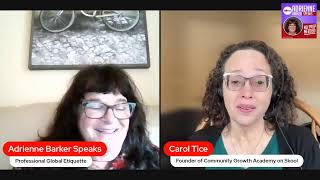
Carol Tice built the Freelance Writers Den into a $175K-a-year paid community, then sold it. She now teaches others to launch and scale communities on Skool, covering audience-building tactics, pricing tiers from $9 to $97 monthly, and why engagement matters more than size.
Chapters
You have a beautiful smile.
Thanks.
We're live, and you probably caught me saying, come on the YouTube and look, Carol's got a beautiful smile. She's got one of those smiles that light up the StreamYard link. So, oh, it's— you're lucky. I wish I had a beautiful smile like that. So welcome to Carol Tice. She's brave, bold, brilliant, beautiful, 100%. I have no idea. I like literally don't know. I just said to Carol, well, I'm going to sign up on ChatterSocial, so we're streaming live. On 3 platforms, plus we're live on ChatterSocial right now. And I'm gonna blow you up a little bit so that we have you right here. So Carol, introduce yourself.
I'm Carol Tice, and I built and sold a paid community, and now I am helping other coaches, experts, and passionate hobbyists to follow in my footsteps at Community Growth Academy on Skool. And I do it all from my RV, though I am actually house-sitting at the moment. Oh, I love that.
Wait, so, so sorry, the sun is coming in. Can you share? So what city are you in or state?
I'm still in my home base of Seattle, but we are actually leaving next week to go down south and then we'll be down in Arizona and California and all around the Southwest. Um, till April, basically.
Are you a snowbird?
Yeah, we, we are RV snowbirds now, or I've heard it called chasing the 70s, you know. I—
wait, staying warm, like, oh, going back to the 1970s?
No, no, the 70 degrees.
Oh, oh, because I'm like, wait, you don't— you're not 70.
I do remember the '70s, but, uh, I mean the 70 degrees.
That is so funny. I, I know a little bit about what you do because my daughter and I 2 years ago did a 5-month road trip. And so we, in my 2005 Honda Civic, and we did, um, we sat for people's pets for free under Trusted House Sitters. But, um, so I love what you're doing. Now let's go into this because honestly, I don't know, Carol, if a year ago I understood what a community means. So I don't it's, it's not something common for businesses like business owners. You may be a business owner, be like, what are you talking about?
A community?
Is that how many LinkedIn connections I have? And honestly, I only started learning about it. So it's funny. So Chatter Social is all about community. It's a social audio streaming app. And my first book that I have, Leah, who is the community manager, is in the book. So As I've been on this app for a year, I'm understanding, oh, a community. But I don't think that most of my community even understands. They probably don't even know what school is. Like, wait, I have to go back to school? S-K-O-O-L. So can you really share what a community is and kind of give it to us as we're like all 13-year-olds living in the business world?
Absolutely. For many of us, paid community is our business. That is the form our business takes. So it's like if you're a coach and you're coaching one-on-one with people, maybe then you do some small group coaching and maybe all get on a Slack together or something. And the ultimate expression of coaching one-to-many or sharing your expertise or your passion for something one-to-many is paid community where many, many hundreds of people can join. And you are all learning together and supporting each other. If you've ever just sort of taken a course on Teachable or Udemy by yourself, it may not have worked out that great because you were just all by yourself. But if you had someone else, if you had hundreds of other people also going through that at the same time that you could talk to who are in a similar situation, you tend to stick with it and get better results That's kind of the magic of community. I think the best way to explain it is to kind of talk about my journey to how I ended up in this business model and ended up sort of an evangelist for this business model, 'cause I do think it's the best business model in online business. I started a blog in 2008 for freelance writers. Content mills had been created and people were getting ripped off for, you know, writing for $5. And I wanted writers to be well paid. I was being well paid. I was freelancing successfully, but a lot of people seemed like they needed some hands on how to do that. And my original thought was just, I'll do this blog and I'll like write a book, a book about this, and then I'll be rich. The end. Like, I didn't have a a big idea about how to do this. And I did some live webinars, I tried affiliate selling, I put an ad or two on my blog, pretty quickly saw I didn't like that model of having ads on everything. And then I joined a community for how to be a good blogger called A-List Blogger Club. And it had hundreds of people in it, I think it was like $10 a month or something. The minute I got in, I was just like, "Wow." I was like, "This is amazing. Look at all these trainings. I'm learning so much from hearing the other people talking about their blogging issues." There's nothing like this for freelance writers and there should be where they all would get together. Freelancing is one of those things where a lot of people feel like no one in their life gets them. They're like, "Oh, my parents wanna know when I'm gonna get a job. None of my friends get what I'm doing." And so this is, to me, the good of the internet is that you're able to find your tribe online that doesn't exist in your town, in your community, in the real world, and connect with people all over the world who are also striving to do something you're doing. And, you know, get the support you need. And I had done some one-on-one coaching later in my blog, and then I did the small group coaching, and the results were better. And I could just see that paid community was where it needed to go, but I knew it was technically complicated. This is like 2010, um, before the foundation of platforms like Skool and Circle and Kajabi that people may know. That are designed to make all the features of paid community work easily. So I was just kind of continuing to muse on it and wonder how I could put it together because I'm a very non-technical person. I'm not a techie person at all. Then I went to a conference put on by the late Liz Strauss of the Successful Online Business blog. It was a limit 100 event, very inspiring speakers, and I met a lot of people I really admired in the blogging world. And I just kind of came home going, I need to stop just sort of going, it'd be great if there was a community for freelance writers, and I need to just make it like really fast before I get too freaked out. I, you know, I need to just do it. And I basically did a 90-day launch. From that, and it launched in July 2011. And I built it by, as, by surveying my blog audience about what they would want. Like, hey, if there was a community like this, what would you want in it? How often do you want live events, text-based lessons? You know, what do you want out of me? And I just built it out of that data and deliver it. It opened with very minimal, very minimum viable product type launch. Some of my best evergreen blog posts were in there and a few live events I had done, and then we just started creating more training as we went.
And okay, very fascinating. Let— hold on, let me just say hello. Thank you, Candace and April. Hi, Roy, nice to have you here. This is really interesting because I actually am not so familiar. So I mentioned I've been on school, I did join a community It was overwhelming to me. I was like lost in this big hallway of all these rooms to go into. And Candace, April, Roy, if you want to ask a question, just unmute. Carol can hear you. But what I really want to know is how long does it take? Like, what is the process, the reality? Because like you started with blogging, but the average person like myself, how do I get people to even want to be part of my community and what can I teach them? Like, I, I can't— I mean, I know what I could teach them. I do etiquette, so I do all of that. Are you, um, are you coaching people on how to create communities on School for Success? Like, what, what is—
that's what I'm doing now, is that, um, I've taken everything I learned from building, launching, growing, selling, uh, Freelance Writers Den and coursified all of that. Here's the step-by-step of what you should do when and what you should do before you launch and what you should do on launch week and what you should do in your first month and year. And so that's all in there as course materials that my members are working their way through. And we've had quite a few launches already. And, you know, we hold live trainings on things they tell me they want to know. I actually just got off one this morning on Websites that promote your community, how to do them, how to do a long sales page. And we do office hours. We do a monthly brainstorm where we just all get together on topics of interest and kind of tap the power of the community to get ideas and solve problems for members. And I guess people can just ask questions all day long, you know.
I, okay, I could understand all that because, I mean, we're a community here on Chatter Social, so I get that. But what I don't understand is how do you convert something like— let me ask these questions, they're going to be disjointed a little bit, but like Substack and Medium, I know that when people start, they also have like their own community on there, right? So that you can also— you don't have to move someone outside of Medium or Substack into that program. You can find you could look for community in there if I'm correct. Is it the same thing? Are you pulling your community inside a school or you're bringing them to school?
I'm bringing my community to school. So everyone needs a way to build a list of people who are interested in whatever their expertise is that they got to share. I did it the slow way with blogging with my first one. This one I'm doing with podcasting and a YouTube channel and DM marketing to my network on LinkedIn. Those are sort of the 3 strategies I'm using right now to connect with members. I have people who are hosting podcasts, people who are running Substacks, and, you know, however you, whatever you do, but people who go to live events or hold live events, some way you need to connect with the people who would be prospects. I have people who have done Facebook ads. You know, you pick your strategy for convening your community. People put on live trainings. You know, you need to pick a lane and a way. A lot of the people, some of the people I work with have been coaches for years and have a list of all their past clients. Or our first launch was a financial manager and he had a couple Facebook groups he was in, free Facebook groups. He had all his past clients and he just let them all know what he was doing and went to almost 600 members now in the first year. And yeah, just created a like $175K a year income for himself out of that.
Wow.
So wait, the income— so the income could be membership and then also like the coaching, the courses that— so all of that is wrapped in school. And then another question for you. So, so we have a program, um, I'm the CMO, Sheila is the founder of Pod to Book, where we take your podcast. I mentioned to you that we're doing the podcast, we're doing a book, right? So she actually has it where it creates the manuscript. I then took her idea and created Podium to Page, where I did a 22, 22 speakers, 2-day event live on 8 platforms plus ChatterSocial, and that's going to be turned into a book. We would like to build a community on taking events and putting them to books, or taking your podcast and, and creating your manuscript out of it. What would that— would it be— is that a place for us?
Maybe. I, you know, if you look at this, at the, at the Discover Communities tool on Skool, you will see some of the craziest topics that are really successful and popular. It can be really unexpected. One of the most popular ones on there is how to do calligraphy. And there's one of like men who like scent and wanna talk about cologne. I have a son who could join this. He's totally into it. The range of topics is so wide of what people are basing communities around. Inside my community, One woman has launched We're Moving to Europe. She did that and is sharing her expertise and many other experts' knowledge on how to navigate those decisions. I have someone who's doing like clean eating and food freedom and grow your own food and one who's doing one for introverts who need to, you know, put themselves out there more in their lives and it can really, It's so varied, and then that's really fun for me because of my first community was just freelance writing, freelance writing, nothing but freelance writing, and this one's really diverse and interesting to me. How so?
So first of all, how long does it take to build a community? What do you need for an average, like, budget to— and again, Candice, April, and Rory, if you have any questions, because this is so new to me, what do you What would I need? So looking at this, if I was to say, okay, I think this may be a direction I wanna go, I wanna build this AKA community, is it like, what would I need for my budget? What would that look like?
So we have actually a budget sheet in my community that we have people run through. It depends on how technical you are. There's sort of not stock answers. You know, it depends on like how big of a list have you already built or do you need to invest in some marketing? To build your list. What assets do you have already that you could put inside the community? Maybe you could do a case study on the one thing you are doing right now and that would sort of turn into kind of a course and a how-to of how that works. You know, it depends on what, you know, how elaborate you want your community to be. Yeah, so this is my, my long sales page that you—
let's see, Roy. Roy, I met Roy in April a year ago. Roy is one of the smartest guys I know. I'm so excited because I have a feeling Roy is gonna like kill it with the question. Roy, I would love to hear your question. Please take the mic.
Yeah, go share with Carol.
Yeah, hey Adrienne, um, Carol, nice to meet you. I, uh, you're, you're going to be one of my new best friends because, uh, the word school has, uh, probably come out of your mouth at least once a day for the last few, uh, days, weeks, maybe even months. I'm, uh, I came late, so I don't know how long you've been on school. So let me start there. Um, I, I do have some questions, and then I have a statement to make to see if you agree with it or not. But, uh, okay, I and my wife are totally into school and totally into Alex and what's happening there and Sam Ovens and the team. And we have been a part of one of the schools there, School of Mentors, run by James Dumoulin and his brother and his lifelong friend, School of Hard Knocks. So do you know about them? And yeah, I don't think I've run across them.
I am in about a dozen other schools outside of ones that my members are in. This is the other thing that's amazing. When I ran my old community, you hand-built everything out of WordPress plugins and there was no discoverability and there was no networking of community owners between each other. Now on Skool, all of us can talk to each other about how are you getting members, how are you doing this, how are you launching a course. What are your priorities right now? What are you doing? There's also a great community called Schoolers that's all of the people who run school and all of us in there saying, can we get this feature? I can't get this to work. Does anyone know how to do this? How are you doing your Zapier integration to do this? There's this whole resource for you. So it's sort of like the meta community of community founders all making their communities better together. So I love that. But so what are you, what are your questions?
So have you been—
I'm sorry, what are your questions?
Ask your questions.
Yeah, how long have you been there? Uh, more than a year, longer than a year?
Just, uh, just about a year. And I've really considered this kind of a— I launched this in a completely different way than I did Freelance Writers Sim where I had a really large pre-built audience for it and we went to 500 members pretty quickly. Um, and this has been more of a beta test year of me kind of learning about how to teach paid community and what people need from me. What, you know, I had a basic course I put together of everything I knew, but I learned there was more pieces they needed, particularly on the audience building marketing side, and we're building that for them. And yeah, so we're kind of ready to, ready to roll now, I think. But what I, what I want, I wanted to go back to Adrian's question and just say, here's the range to me of launching paid community. So the member I talked to you about who's a finance manager, Steve, yeah, there's our About page on there, and you can see Steve in that second little video on the left. So he had been a longtime finance manager. He— I actually met him because I ghostwrote his book, and then his book came out, and then I saw him selling all these different products, coaching and consulting and different physical products. He has some stock investing universes he gives people. And he was just selling, selling, selling all day on free Facebook groups, giving free advice to people. And I was like, Steve, you could just put all of these offers inside your community and tell everybody it's all in there. It's $30 a month, go get it. And at first he was like, I don't wanna do a new thing. He's like 80. And he finally kind of tired of selling all his different asks and decided to go for it. He hired a marketer who built his whole community and did all the marketing around the launch. He did not do a single thing. And they were like a 30-day, 45-day launch and they were up and going. So I would say, you know, that is, That's what I thought all of my people would be, is people who kind of brought an audience, had an expertise, and could just kind of boom, go. But I've learned that that's not everybody. To me, if you are starting from scratch, you're just kind of having the kernel of an idea, you haven't been chatting constantly and making a big social audience or blogging or whatever about your topic and you're going from zero. Maybe you have 6 months to launch of building your audience because the secret of doing a great launch is to build in public, is to be constantly talking to people about what you are thinking about doing and getting them kind of involved in it and sort of pregnant with the idea that it's their community. It's gonna be for them. You know, you're talking about, what do you think of my brand colors? What do you think of this? I'm thinking about this course or this course. Which one is good for you? And you're just involving them in everything you're prepping for your launch. You survey them like I did my audience. You take a survey, what would you like in this, you know, and you make them a discount offer for joining or whatever goodies you wanna give them. And bring them along. So maybe you need some months to do that. Some people are just opening the doors, you know, and that's, that's kind of what I did on this round. The other thing that's really big on school these days is free communities, that it's just no barrier to entry, free, and then you just upsell them. You either have a paid membership level above that, or you have courses and other, you know, things you sell. Inside of it, because obviously free is a great price that attracts many people. And you can— some people I think are just doing their audience building just by doing a free level on Skool and promoting it.
So I had no idea, Carol. Yeah, welcome Curtis. I really loved talking to you last week, Curtis. Hi Dawn, how are you? Uh, this is so interesting to me because I am actually— and I feel like Roy had another— I feel like Roy, if you have another question, you have another question, go ahead.
Yeah, I have several, but, um, I'll, I'll just throw them out one at a time. So I just wanted to know how long you were there so you could see the progression over there. So one of the things, uh, we just recently within the last 3 months, April and I, uh, put our school together. We don't have it functional just yet because we're learning. And as you probably know, uh, they just released tiers. And, um, the school group that you're talking about, uh, the schoolers group is for just us who have a community there. And, um, there's almost 200,000 of us. So, uh, we know that's going fairly well. And Alex, um, bought into the, uh, he invested, let's just say that. And he could have invested in all the other platforms out there, but he did Skool. So the thing I love about Skool, it's simplistic. And if you remember the old days of Blab back in 2016, they had on the homepage a discoverability or findability of the people and all of that. That's something that Facebook doesn't really have too well. I mean, they do sort of, kind of, here's some other groups that are the same, but who pays attention to that? We pay attention to what's going on in the schoolers. We can even search for them. And see how well they're doing. So that's my big take right here, the discoverability, and we can see how well other, you know, schoolers are doing with their community and how long they've been around. So do you find also, and I'm sure you've put a group or two together on Facebook, Carol, do you find too that now Facebook is completely out of the picture for you? You'll never go over there again, or School is the place to be. How would you advise someone?
Well, I have never done a Facebook group and I would never do a Facebook group. Facebook randomly bans people. I have a friend who just lost everything. Facebook is a terrible, terrible place to try and run paid community. And I have a friend, I'm in a group that does it on Facebook and I'm like, please let me help you get off. Actually, I just joined another one for coaches that is Facebook-based and I'm just like, no. It's not only dangerous because you're on a really capricious platform that increasingly people dislike also and don't want to be on, but yeah, they could just decide, oh, we're not doing that group format anymore. We're going to invent something else instead and that's the end of all the groups. It is totally not a place. I actually know people in similar businesses to mine who have niched their business entirely on getting people off of Facebook and onto Skool because it's just like not safe to be basing your entire business model around a social media channel that could go out of favor, could ban you. This is just not a good idea for how to run a business, you know. And I mean, I've participated in Facebook groups and stuff, but the thing about school or running typical paid community forum software anywhere is that you're able to have different topics of interest and you can look up old ones fairly easily. And on Facebook, it's just this endless stream of blah blah blah blah blah, you know. Who knows what happened to something that was 3 weeks ago? It's gone. Where, and when you talk about creating a community as a saleable asset, which is my big focus, you, you, it's hard to demonstrate the value of the asset you've built if the forums are not organized in any way. We had thousands and thousands and thousands of conversations about basic topics in writing that people could just search up. And school is that way too. It's really easy to search up old conversations and look in on old topics and ignore things you don't wanna pay attention to. And yeah, Facebook just doesn't offer any of the functionality that I want in my paid community. What's incredible to me and why everyone should be thinking about Skool, and I hope you'll come take the 1-week free trial and go take a look around at the launch steps that I have for you so that you can have a successful launch. I would want that for you. And, oh, I lost my train of thought. Ah!
Why people would wanna be on Skool over Facebook.
Oh, yeah, so when I did my original community, thank you, I was spending often $10,000 a month on backend tech help. Not kidding. Just getting the forum software, affiliate software, all the different things to stay updated and talk to each other and the money to be collected properly and to accept credit cards and blah, blah, blah, blah, blah. And now I pay $97 a month to school and everything just works. And I never have to worry about anything. This is a golden age of paid community, people. And Skool just started a $9 a month level where you can pop up a community for literally latte money. Just if you have a heart for helping a lot of people, want to make a big impact, I don't know what is stopping people from thinking about paid community. It's just its time has come. And I gather a lot of investor money has poured into school, and that's because they do think that this is just early days of this format for doing business.
I have a question. I have a question. Welcome, Steph Marie. Oh, it's Steph Marie. I'll take the question.
Hello. Thank you, Adrianne, for this room, and thank you, Carol.
Hello.
I'm so excited because I've been considering, um, doing school. So I do have some questions. I'm so excited I can ask these questions. My first question is, I'm gonna try to kind of lump it together, as I'm assuming that school automatically has a CRM where the people that join your community, you have like their emails, like you can send out maybe like a message if you're doing a class.
Yeah, you can email the whole group and for things that are on the calendar, you, when you set up the event, you just automatically say, yeah, please remind everybody, you know.
Okay, gotcha. And then, um, now is it possible to join Skool and grow your community on Skool along with bringing people, or do you have to bring like, um, your own community first to get started? Like, how does that work?
I'm not sure I understand the question.
So let's say, because I don't know too, like When I, when I went to log in to do the trial, it's not like they give you a preview to see the setup, how it works, how it looks. So I'm just trying to understand the platform. Could I start a school and build a community on that app itself, or do I have to bring my community?
Oh, no, no, no, you're going to set it up on school. Yeah, you're going to. Upload your courses and, you know, set up the forum topics you want. And it's all, it's all gonna just be set up inside of Skool.
So I love Steph Marie's question because I actually had the same question. Steph Marie, are you, do you have to bring people in or is there like, and I thought that Steph Marie, like Medium or Substack, they already have people sometimes that will connect. But when I look at this, I'm thinking to myself, oh, Hold on, let me put it— I'll make it a little larger. So here is school. Oh, sorry, guys, I have to move it.
Yeah, I was doing the urge to screen share myself to kind of try and show you. So, Steph—
so I guess our question is this. Steph is an amazing woman who also is an amazing speaker and poet, and she does a lot. And she definitely has what she could teach. Like, Steph Marie could definitely do it. But are people that are already on Skool, would they also be looking for what Steph Marie teaches?
Maybe. And this is the other reason you join a lot of other people's groups is to promote what you're doing, to expose people to what you're doing and meet others, learn what they're doing. Maybe they have something that could help you. Steph, if you know you're setting it up, just grab the 1-week free trial and come into my thing then you could browse around, come into Community Growth Academy, you could browse around, see how it's all set up, you know, look at my about page, it was just like the sales page on school, and you know, just talk to members, and a lot of my members have started communities, so you'd be at kind of a nexus where you could learn some interesting things. And you know, I don't know how to, but I wanted to answer Adrian's question about discovery. And people finding you. So the big guys on Skool, I recently saw a whole slideshow presentation where one of them said that he gets 30 to 40% of his members from people browsing in Skool. To do that, you've got to rank in their discovery categories. It's sort of like moving up the Amazon rankings as a book author, and you know how you wanna appear kind of on the first page. The amazing thing about Skool that I'm loving is that you do not have to be a big community. It's not based on community size. It is based on community engagement. So if you have a highly engaged and growing small community, you can get up there. When I started, I think people say there's like 10,000 communities on there or something. When I started, I was at like 4,000 in the money category and now I'm ready to go under 2,000, just because like my people are talking and asking questions and I'm asking them things and, you know, it's just an active community.
Is this a, um, this is so interesting.
You're getting muted. I can't tell what you're saying. I can't hear you.
Oh, I'm muted now.
Now you're on. That, that I heard. Now I can't hear you.
There we go. Can you— I have— I just want— can you hear me now?
Yeah. And now I can't. I don't know what's going on.
I just wanted to show you that I have you. Huh. All right, I have your link at the top of the page. Steph, do you want to ask you a question?
Yeah, I just had one other question about the $9. The $9. So I know that there's different tiers, right? I think like $9 and I can't remember.
And $97. So don't get confused. We're, we're talking about two things. One is what it costs you as a founder to set up a community and keep your community on school. That's, there's a $9 level they just introduced and the regular one is $97 a month. The tiers they just introduced are that you could have a $25 a month membership and a $97 a month membership that have, and inside of school you can give them access to different things. So like the $25 people, they don't, a bunch of the stuff is blocked off for them. They gotta upgrade if they want all the stuff. So, to kind of two different things, I believe that you can start on $9 and you can upgrade to the $97 anytime. And there's a list on school of the different features, you know, of what you don't get in the $9 version. I don't know if you can get Found in Discovery on the $9 version, for instance.
Oh, okay, but I can still have people join my— like, people can still become members of my school and pay. On the $9?
Oh yeah, oh yeah, yeah, absolutely. Oh wow, as far as I know. Yeah, yeah, I'll tell you this.
I'll tell you the difference is in the processing fees for what—
yeah, you pay more in fees. There's just a few differences, but, um, I just think that's very enticing, especially for anyone who's like sort of in the passionate hobbyist category and they feel like, well gee, I don't know if I'm an expert in this, I just love to play pickleball or whatever it is and they just sort of wanna test the waters on it, like do the $9 level and if it starts to blow up, you know, get all the features and pay $100 a month. Beats $10 grand a month, I'll tell you. It is amazing to me how affordable it is now. It's crazy.
So I have a question. This, I am so excited to be here. So nice to see you, Danielle. Thank you for being here. Okay, so with this community, okay, let me ask this question. How much time would someone really need? What are you recommending when someone says, I'm doing a lot, this would be something I think would be great, but I literally think I can only squeeze out like 30 minutes a day. Is that enough time?
Remember my friend I talked about, my one guy who launched and he outsourced the whole thing. He goes on long trips. He's constantly traveling. He's taking a picture of himself next to the Taj Mahal every time you turn around. He has other people run the community. People are always asking me, "How much time will I be spending in the community?" The answer is the amount you want to. You'll delegate whatever you don't want to. He just went on a big trip and had 3 people create his physical products that he gives out for the month, and he wasn't answering any questions. He doesn't do like the phone, and he's off. And then when he's in town, he's often very active and answering questions and stuff because he does like to talk about investing with people. But it's really up to you. This is the beauty of it versus sort of a straight coaching situation where My heart breaks for most coaches. Every time I go to a coaching site and it's named your name dot com, I'm just like, because you have an unsaleable business. You are the business and you have to work. If you go on vacation for a week and you don't work, you don't get paid anything. Paid community is your solution because those monthly memberships just keep rolling in and you can delegate people to do things. Or you can be more active. It's really up to you how much time you spend on your community. Eventually I had 10 people working for me in my first community. I had a blog editor and a job board manager and 2 moderators who answered questions in forums and so on. And a lot of backend people. A lot of people making tech work. But I want to just call out my favorite new school features. So they introduce new features like weekly. There's a video of we have this new feature. The thing they didn't have the minute I got on was the ability for members to refer other members and earn affiliate commissions. And they got it. And it's beautiful. So when I used to do this myself, we had to do all the tax reporting, collect tax forms from all of our affiliates. You send them tax forms. I was sitting on a little tax form site filling out forms, you know, and the way school does it, they split the payment as it comes in. It is never yours. You don't have any tax obligation. It's all on them. School handles the whole thing. This is like the heavens opened and angels started singing for me. Um, this is such a headache to do yourself. And to have a platform manage it this well. The other thing is I'm in a state where I pay tax on gross income. So I was forever paying tax on income that was basically pass-through income that I was sending out tens of thousands of dollars to affiliates. And I had to pay tax on all that money and then send the gross to them. So now that's over. So just, there's so many advantages of being on a platform like Skool that's really just focused on making community. Easy to operate. It's, it's a, it's a beautiful thing. That's all I can say. It is lovely.
Stephanie, Stephanie, if you do it, we'll have to make each other accountable for, uh, 2026 thinking for next year. We're starting now to look at it because I, I think this is interesting. I was on it and it was overwhelming, but the more I think about it, You're breaking up, Adrian.
Yeah, you're breaking up a lot, Adrian. I'm getting every third word. Yeah, I don't know what's up with— move near the router, or you're so excited that it's like it's making it go off. Now I can't hear anything. Anyway, if other people have questions, ask them while Adrian is teching.
Uh, there was just an update, so I see. Okay, thank you. Okay, I probably sound better now. Thank you.
Yes, yes, you are sounding better.
If you're— if you're doing it, I would love to be, um, accountable, have a little accountability partner. And then, but how is this scalable? How, like, what happens if something happens to school? Like, how is there a guarantee too that that community is going to movement with me? I just, that part I'm not sure about.
With the amount of investor money backing that school has, I'm spending zero minutes worrying that school is gonna go poof. I mean, this is a massive, massive business platform that it's like, is Zoom gonna go bust? You know, I don't think so. I'm not worried about it at all. But you know, you own those members. I mean, you could always reset it up somewhere else if you had to. You have your things you uploaded. I mean, you could recreate it. I just don't think you'll ever have to. What I think will be next is that they'll set up school so that you can port it to your website and the school channel will be like kind of in your website. You know what I mean? It'll be your embedded. Yeah, you'll be able to get the URL of your website and that's it and take the school out of the front. I, I, that's more where I see it going. It'll only get more robust. And more useful.
What's the forum like? Like when you get everyone on, is it a chat forum? Is it, is it a voice forum? Is it a video forum?
Um, it's chat forums. I mean, you can set up video. You're— and they have lives now as well.
Oh, they do?
Live on there? Yeah, they just— that— I think that's the most recent feature besides tiers that they just put in. So it's kind of a wonderland of features over there.
I'm ready to go off and hear you like this.
Can you say again?
Repeat stuff?
No, I was saying, um, can people talk to you like this in real time, or is it mainly chat?
Um, you, you can do lives now. They just actually introduced that, so you can—
No, I mean, can other people like how we're talking right now, or is it just the teacher who's live? Like, can other people—
no, we are all live. We can all be live together. Oh, I believe that's a good question. I guess, I guess I should find out, but I think you can just be live with your people.
And let me tell you, Carol has convinced me. I am totally in, and let me tell you why. Um, so I've already been seeing so much about school, and I've seen some of the most successful people— I'm talking about millionaires who utilize school. Some of the people that I follow on YouTube, the first thing that they talk about is school, and I'm like, this must be an amazing platform. But I just, you know, wanted to— I wasn't sure, like, the setup and how everything worked. And when I went to the store—
come take a tour and check it out. Yeah, um, many, many— I want to say building a YouTube channel is one of the most popular Marketing methods of school communities. There are a lot of big guys on there are like, just build a school. You know, I took, I took a week-long training on, you know, how to do the SEO and all of the details of running a YouTube channel as a means of getting people to learn about your, uh, your community. Though I have to say, podcasting has been rocking for me, but I love it. Um, I have a long broadcast and podcast backgrounds. So to me, this is really fun. And but I think this is one of my— I've only maybe been on one other one that was live, but it didn't have where people could ask questions. So this is kind of fun and awesome.
I love, Steph, that you asked that question about a live. Or I see your hands, one second. I love that Steph asked that because it is so funny that people will say yes to a live thinking, well, I'm talking live, and not that people can communicate back to them. So, you know, and we do have a lovely community right here on ChatterSocial. Actually, Carol, even though I look like a nice sweet, you know, I teach corporate etiquette. I am actually— we do Debate the News true crime podcast. We go live on ChatterSocial. Yes. And I'm keen for Ed Gein. Got to watch that episode, guys.
I know, I know some true crime people who might want to check that out. I, my, my husband and They like to watch all kind of stuff. I, I go do something else during this lecture.
So they come in live.
So we're—
we bought— we— our show is live, and then with the discussion part, which is the juicy part, everyone can contribute. We often have about 20 people in the room. So that may be something to actually talk about. And, and, you know, because to me a podcast is dull, you know, like, oh, just two people talking. If I could bring in the live, um, And which is so exciting. And I'm excited to have you in the book because this is one, one chapter to me, school, that I've heard of, joined a group, but never really took it seriously. But yet I feel like it's been burning up inside me. But let's go to Roy. Roy, take the mic.
Yes. Hi, Steph Marie. I just wanted to address what you just said because April and I have been there about 3 months now and just voraciously absorbing everything like I hear that Carol's been doing over the last year. So as far as speaking like this, yes, they call that live streaming where everybody that joins is automatically on stage and they can participate. And then they have another feature called webinar where it's just you speaking and no one else can speak and take the mic. So they have both features. And, uh, you mentioned, um, some, you know, famous people that we know joining the platform. Um, Tony Robbins and Dean Graziosi just joined because I just signed up for their upcoming 3-day summit which starts tomorrow, and they have a school community that April and I are so excited to join, and they've already got something like, I don't know, 4,000 people in 3 or 4 days.
So yeah, it just makes it easy, yeah, you know, if you, if you're running a course but you want your students to be able to talk to each other, or, you know, if there is— I think what I think is happening is that we went through this 'you just need a course online and you'll be rich' era And people put up courses and they were not very successful because it's so lonely doing a class that way. And really, I mean, what we all know is missing from our lives and from our culture is more human connections. And, you know, community offers that opportunity. You talked a little while back about, oh, be my accountability buddy. Yes, that's something I make my people do is have accountability buddies. And in spring this year, I went to Europe and actually got to meet 3 of my original members. And some of them said they were still talking to the accountability buddy that they got through my group. And you know, when you help someone meet their person who's going to support them, it's like, it's hard to describe how much they love you, are on your socials all the time, liking and commenting and promoting the things you're doing and you like have that raving fan base who really get to know you really well. And you know, like 14,000 people came through Freelance Writers Den. And to this day, they're like in-mailing me on LinkedIn, like, thank you so much for creating this. The other thing is, if you think about leaving a legacy, I sold that first business in 2021 and people are still calling me about it. "Oh, I just took your course about this and that." So it's like all of that knowledge lives on for them and I don't have to be there holding the hands of neurotic writers anymore because I did that for 12 years and that was enough for me to do in a daily hands-on kind of way. But everything I know is still in there helping everyone and I just love that. I love, you know, I wanna build things that are durable, that last. I feel like sustainable business is like a really big topic these days. And so for coaches and stuff, like to me, this having this one-to-many option where the community supports each other and adds that element. Also those of us who actually like our people to get a result, who aren't those like coaches who are like, I don't care if you do it or not, I'm just picking up my big check. You know, if you actually are hoping to transform lives, that's your drive, This is— it just gets better results. You just get more wins. And that's really, really important to me, that, you know, the transformation actually occurs for people. So it's one of the reasons I love, love paid community.
I just have to say welcome to Hillary. First of all, Hillary— Hillary is so talented as an artist, you know, actress, just an amazing woman. Hillary, I, I don't know how much you're familiar with Squared but I actually see you doing some classes on school. Carol has the Growth Academy. I pinned it up there. She has a free week if you haven't been on school. But are you on school? And then Steph, I see you for the next question.
I am not.
And April, Roy, I can't believe you haven't told me about it yet because this sounds really cool.
It really is.
I blame you, Roy.
Now we will, Hillary. Now we will.
I just see coaches out there. I see people trying to be Amazon resellers and, you know, shop, they're on Shopify and they're dealing with physical products or they're trying to sell a course or— and the thing is, you know, if you're in the coaching and consulting space, the whole mantra out there is you need a $10,000 offer, you need to find $10,000 clients, and if you give me $10,000, I'll teach you how to get $10,000 clients. You know, I mean, can people raise their hands in this? Like, does this sound familiar to people? You keep hearing about selling high ticket, oh, it's so important. I made so much money on $25 a month, no obligation, leave anytime, and I was able to help so many more people. And I want to say, who in here loves marketing, marketing all the time? 'Cause I don't. I came out of journalism and not marketing. And you have to do a lot of marketing to sell a $10,000 thing. And you don't have to do a lot of marketing to sell a $25 thing. It's just that simple. You know, to me, I get to spend so much more time actually helping people instead of the marketing, marketing side, which I'm not into.
Wow.
That's big for me.
Hi, Anna Lee. Hi, um, Stephanie, take the mic. I know we're coming into 52 minutes, so Carol is spending a lot of time. I really appreciate it. Steph, take the mic. And then I see Hillary, you have your hands up. Welcome, DJ, Danielle, and Annalee. Got a house here, Carol.
Yeah.
Hello.
Um, I was gonna ask you, let me see if I can remember, because I'm getting older and I forget. Um, oh, what do you recommend when you're starting?
Do—
should it be— I was going to say, should it be free first? But I just saw on your link that you do trials. Which kind of gives it to them for free.
You can do a one, yeah, you can do a one-week trial. We also do a two-week refund. Like, hey, if you come here, this isn't for you, you're like, it sucks, let me give you your money back. You know, as I used to say in the Den, like, we only want people who wanna be here. You know, you don't want to try to cling to members who are unhappy with you, who think you don't have a good offer, you know. I'm looking to catalyze the people who are excited about launching their communities and doing it with a shortcut from somebody who's like a dinosaur of paid community and has been doing it forever and can steer you around a lot of potholes. So, you know, if that's not you, then let me know, right?
And then, um, I saw like I had asked a question in the chat about can you, can you download the recordings of the classes? And someone responded yes, but I'm assuming that's on the higher ticket, that's on the 99.
That's up to you. I don't— oh, I don't know. I don't know if it's that, you know. Yeah, I don't— I haven't even looked at whether people can download all my stuff in this community. We did make it so everyone could download it in Freelance Writers Den, and I know a lot of experts are really paranoid about this, about— they're like, everyone's just going to come in and download everything and then leave. And the reason they don't is the community. They cannot download and walk away with the community and the support, the love, the care, the concern, the ability to get a question answered at 10 o'clock at night when they are feeling lonely and sad and freaked out about their thing. Yeah, I mean, I had people stay for years and years and years, so—
but I guess, I guess I'm asking more so Because you can, if you can download the recordings, of course you want to let your community know, but you can repurpose it into a podcast or your YouTube channel or whatever, where you can have it set up for just the host to download versus the, your entire community.
My sense is that you can set your parameters in Skool how you want them. You can give people access to things, they can download things or not, or You say what goes in your community. You know what, this cheap, the free level people, what do they get access to? Not this, not this, not this, not this. You know, you, you set it up. So interesting.
I see, um, Hillary, and then if Curtis is off the phone, we'll go to Curtis afterwards. Thanks, Steph Marie, great questions. I, I really enjoyed your questions because you were asking them for me too, so thank you. Um, Hillary.
So, all right, I've tried, um, doing courses before and it's so all-consuming and like literally like it has got to be more than a 9-to-5 job. Um, I'm looking for something to help. So I'm a casting director.
Um, okay.
And I'm looking for something that would be good to A, do announcements for casting, but also for movies and things that I'm not casting for to do courses or classes teaching you how to audition for these for different movies, how to audition for things, um, and how to make your demo reels and stuff like that. And it's something that I've been wanting to do on here for a while. It's just getting people over here, getting everything at the right time. It's just, it's difficult, um, with this app. And, and I need to do this. It's something I need to do. I don't have a whole lot of startup fund to be able to put like a whole, you know, pay a year up front or anything like that. So what, what options would I be able to use on this, and would it be a viable um, you know, an outlet for me to be able to do this, to be able to bring my people from different apps over here— not here, excuse me, over to school to do the auditions and to be able to meet with everyone, to be able to help coach, to be able to help guide them in some of these auditions. Is that a viable platform for that, or is it not really set up that way?
I think it totally is. And I'm like, I, I was a secretary at MGM and, and the William Morris Agency in a past life, and my husband's degree—
hello, new friend!
I— it's been a long time since I lived in there and in that world, but, um, those are like the— some basic trainings that so many budding actors would be interested in. And to be able to support each other, it's such a tough life, you know. That sounds like such a great idea for a community to me. And yeah, I mean, $9 a month, set— get the basics set up and and put it together. If you have a list already, you've already got different audiences, different places, I think that would be fascinating. I'd love to help you on that. Yeah, you know, help you get that ready to launch and organize it and get everybody excited about it.
And sorry, I said we can exchange numbers later and, uh, we'll jump on a call sometime this week.
And so yeah, I think Adrian is, uh, hopefully sending you guys links to, yeah, the link is on the top where I live.
Yep, I have the link on the top. Thank you, Hillary. Great questions too. And we'll end the last question with Curtis.
Hi, Curtis.
Curtis is cool.
Hello, hello, hello. Greetings, everyone. Hey, Carol, that's good information. Now I have some questions. I have some questions. You don't have to answer if you don't have to. If you don't want to. How long you— how long you been on the platform?
Almost a year or so. I mean, I was on— usually you're on for a few months before you're like launching. You're just building it and organizing it, you know.
Okay, cool. Uh, so what, what, what, what services or product are you, uh, promoting on Skool?
I'm here to teach people how to launch paid communities. That's what I do.
Okay. Got it. Okay.
So I have, I spent 12 years in my first community and I've corsetized everything I know, how to get rid of annoying members who need to be dismissed. You know, every little thing that you need to deal with in running a paid community, how to establish community rules the right way and just all the things. That's, that's what my training stuff is that I have in there, and we just keep making more if someone points something out. I thought I had done a lot on testimonials, and when we looked today during this training on websites, I thought, yeah, I'm gonna do more. There isn't enough there, you know. I'm always, I'm always adding to the resources.
Is this the only The avenue, the only platform you own, uh, school. Do you promote anywhere else other than school?
Um, my— the place you pay and access my materials is school. I have a YouTube channel that promotes the school. I'm doing podcasts that promote this, and, uh, I'm talking to my network on LinkedIn about it. Those are sort of my 3 marketing angles I'm doing.
Yeah. Got it. So is it safe to say, uh, what, what, where, what percentage, uh, you say you get your, your biggest, your business from off of school from the totality of all those platforms?
Um, well, the surprising thing for me has been that a lot of the members I have in Community Growth Academy were members of my freelance writing community, and it turns out they have other things they do and coach about and passion projects. I really did not expect any of the audience to come from that. I thought there would be no crossover. These are the people who know me and know what I deliver in community. Some of them put their hands up right away and were like, "Oh my God, I want to do a community about this." They've watched what I've done and they know how lucrative it was. I think a lot of people who are creatives these days as they watch AI replacing a lot of what they do, are starting to think, what's next for me? What is the next level of how can I earn in a new way that delivers value for people and that isn't what I'm doing now that may be taken by a robot? So that's, yeah, talking to people in my network who already know me and my LinkedIn DMs. I mean, people who know and love you already are always, kind of the easiest people to get excited about what your new thing is. This has been a big pivot for me, which has been really interesting because I spent years building the other audience, and this one I'm just kind of cold starting it and going with it because I love paid community and I love helping other people make money is, is kind of what I've learned is really a core value for me. I It's exciting to me. I know there's a lot of people who are like, I just wanna make a million bucks. I don't care about you. I don't wanna teach you anything. I don't wanna show you what I'm doing. I'll keep it to myself. And that's just not how I am. And I think that's a trait of community founders, that you have a big heart for helping a lot of other people succeed. And I, I love it. I say it's better than butter. It's more fun than if I succeeded myself.
So, so when you look at your whole infrastructure or your business unit, your, your operational, uh, infrastructure, would you say 30% of your business come from school or 80%?
No, my— I am not getting leads too much through school yet because I'm just still getting up the Discovery rankings. And that's— yeah, that's more once you start to be a really high-profile, uh, player on there. You do, you do get people through school itself.
Gad, okay, okay, okay.
I need to network more and show up on more on other people's groups and talk more. And you know, only so many hours in the day.
So to get up that network is the algorithm. I think I heard you say if you, uh, engage in more some kind of way, if you, I guess, own the platform more, you, the, the, you, you up higher on the ranking of that search engine or something.
That's how you get to know their, their discovery rankings, but also you can participate in other people's groups, share useful info, you know, just sort of do networking among other marketing groups, groups about how to be successful on Skool. And, you know, there are so many communities on Skool that are all, you know, brainstorming together. I'm in one I love called Undeterred. It's by a founder, is an American guy who's living in Budapest. And, uh, he does some work for Skool, I think, as well. And, uh, I just think it's an interesting group of people who are all— many of whom are launching on Skool and asking a lot of interesting questions. And I don't know, I'm just liking the conversations, you know, hanging out. That's— I'm on a free level. Speaking of, I'm on a free level and he has another level. Yeah.
My last— I'm gonna try to close it out, Adrian. I'm sorry for being so chatty here. But so we wrapping up the end of the year. So when you do your review and you look at your footprint, what you just done, do you feel like you hit your goals on school as far as revenue or whatever that goal was, like the amount of people you was, you know, planning to get? As far as numbers, I think I heard you say something earlier. You, you went up, you, you, I think you 2x or 3x your number, your count. So it sounds like you hit your goal by the time the end of the year.
I don't know. Um, the big journey for me this year has been coming to think that I only want 100 people in this community, that I may not want to scale this up and up to thousands like I had before. That I'm really liking working really closely with people and maybe just the rates will just go up and I may just keep it to about 100. I like, I like limit 100 groups and you know, I already had a successful exit. I don't need to like scale to millions and I kind of did that. This one is kind of my give back, you know, of everything paid community has given to my family and to me We had a 5-bedroom house on Lake Washington in Seattle. Now I'm just investing my money in traveling in my RV. And it's just given us so much freedom and so much just, I wanna say, personal fulfillment. It's just been really gratifying to help so many people. And I kind of think I may wanna keep this one compact, but I feel like someone asked about scaling it up. And what I wanna say is it like doesn't take more staff to serve a 1,000-person community than 100. It's really interesting, but the community kind of becomes a self-sustaining engine to some extent. When we scaled from 1,000 members to 1,500 members, I did not hire one new person. It's a very efficient and scalable model if you want to go there. I'm not where I wanted to be. I think I underestimated how hard the pivot would be to a totally different audience, to be really honest. But I'm really enjoying all the people like Adrian that I'm meeting, getting out and spreading the word about it. And being on shows like this reminds— is great for me because it reminds me how much I love community. And I'm really enjoying just kind of spreading the gospel of the paid community model because I think it's the answer. I think it's It's just such a good way to be. And, you know, once it's up and running, if you feel like, oh, I'm kind of broke, well, maybe I should raise my rates or do a flash sale or put a new course up. Or, you know, it's like you just have all these levers you can operate to generate more income once you have it.
Wow. Oh, Stephanie, one more question. Sorry, Carol, if that's okay.
Thanks, Curtis.
Okay.
Yeah, I just wanted to know, um, you know how like when, when you do events, people have like a Discord or Telegram, uh, for school? Do they have like a built-in community where people can communicate even when you're not doing a class? Like, is there—
yeah, yeah, there's forums that are going 24/7. Ask your question. Yeah, all the time. Nice. To me, that's the core of the community, is, is just the forum chat of everybody talking about whatever they need.
You know what, you guys?
This is good.
This is gonna sound funny, but I almost wish I could retire and, like, do school full-time. Like, I feel like, I feel like that's something I would love to do, but I, I just wish that I could be. But this is a goal. All right, so then my goal is to 2026 and then see where I go with it. And I have a good idea what I'm going to teach. So, um, Carol, I, I, I am— I didn't even— well, I didn't know who you were anyways because I don't know, it's no prep needed, so how am I gonna know? Um, I just know when last week I wasn't feeling good, um, and so I had to, uh, to cancel on you. So I so apologize. But we've got— I guess at the end of the day, April's in the room, Curtis, Steph Marie, Candace. Thank you, Candace, always supporting. Roy, which I love seeing Roy and April. Dawn. Dawn is an amazing woman too. Amazing. Filmmaker, I think, Dawn, if I'm correct. But you would have a lot of things you could teach. And DJ, who is new, you guys— DJ Sessions, nice to see you, DJ. Anna Lee, who, by the way, during this event that we had, SWAT and Order, Anna Lee put together the most amazing room accessibility panel. Anna Lee, that could be a really cool program. Oh my gosh, Nuala is in here. Nuala and Carol, you have both a lot alike because Nuala was a journalist for many years, right, Nuala? Say hi, Nuala. Yes, more than 30 years, absolutely.
Yeah, I meet a lot of mature career stage journalists who are like, I need a new thing to do.
Yeah, it's, um, we never did—
we're like actors, we don't actually retire. But yeah, I did. Yes, well, that's the other reason I love paid community, is it, it actually you can have an exit and have money, you know, to retire on.
I love it. But that's the funny thing, because I, I joined, um, I don't have my own community on Skool, but I joined Skool as to be a part of another community, and then I realized I already had an account from years ago.
I don't know. Oh wow. Yeah. Um, but didn't do anything with it, obviously.
So, but, um, yeah, so I'm thinking about creating my own community, and I'm just not sure how much extra work it is with all the other stuff that I'm doing.
Um, almost everyone in my community is, is juggling launching their community on top of whatever it is they're doing now, so you'd get lots of support for how to make that happen. I, and I built my first community the same way. I was freelance writing all day and building my blog and the community from 8 to midnight for quite a while until I was able to stop freelancing. So, you know, I'm, I'm all about ways to make that happen. That should be a brainstorm we do actually. That's, I love that.
By the way, if you're, if you just came in the pinned link on the top, Community Growth Academy, Carol has a free week so you could go in and then Actually, I'm thinking of taking, like, joining her academy because then this is exactly what I want to do, so I might as well learn. And I do better when someone, like, actually holds my hand and shows me how to do something, even if it's in video. So I think we all do. So glad you're here. We all do, right?
This has been really fun.
You have a really interesting group here of people with a lot of different expertise that could probably make rockin' communities. So come on down, shoot me a message, email me, whatever, you know, if you have questions. Or just grab the 1-week free trial, come in, look around, see what's going on.
I love that. Let me just say thank you to Executive. Your PTR now is better. I could see it, it was like kind of crooked the other time. And Danielle and Austin and JP, thank you guys so much. I'm going to close out the room and close out. Once I shut down chatter, I won't be able to speak, so I am going to end the stream. This was great. I, I normally don't go an hour and 12 minutes. Carol, thank you so much for your time. I really appreciate it. I can't wait to see this a chapter, and you'll get a chance to look at it. So I'm very excited. Okay, I'm gonna end it all. Thank you guys for joining.










