Meet Chase Friedman
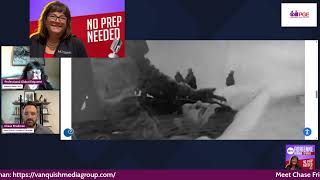
Adrienne Barker interviews Chase Friedman, founder of Vanquish Media Group, about his branding and film services. They walk through case studies and explain offerings like brand discovery, digital campaigns, micro-influencer marketing, and film festival support. Chase also describes his consulting program Profit with Purpose.
Chapters
We're live once again, and I didn't have to chase Chase, so thank you, Chase, for being right on time. And we are actually— Chase, give me one second— we are streaming live on Chatter Social, so I'm very excited about this. So who's this handsome guy that I got in front of me? I don't know. It's Adrienne Barker Speaks, no prep needed, Chase. So the thing we know about you is brave, you're bold, You're handsome and we both wear glasses. So Chase, introduce yourself. I love it.
Just keep going. You're doing a great job so far. So I'm Chase Friedman. I'm a brand coach and founder of Vanquish Media Group, which is an impact marketing agency. I like to start with my why. My why is I believe in the ability for all people and businesses to do good and do well. So profit with purpose. And so that's kind of the mission I'm on in life. I've helped everyone from lean startups to VCs to nonprofits to entertainment companies develop, scale, grow with intention and impact. So that's the mission I'm on. And yeah, it's—
and you are in LA?
I'm based in LA. Yeah. Got 2 young kids. I've been out here for about 20 years. My career actually started in media and entertainment. So I was a film and TV director, writer, producer for many, many years. And then got a little burnt out of the entertainment industry, but still kind of carry that love for storytelling into the branding side. That's kind of like what I like to think about what we do is help brands tell better stories with more heart and intention and connect with their tribe.
I love that. I love that. Okay, so I'm in Daytona Beach, by the way.
Oh nice, I grew up in South Florida, so I know exactly where that is.
Oh, you did? Oh, I love that. I lived in Aventura for a while, so—
Oh yeah, I lived there for years.
Yeah, yep, fun, fun, fun. Aventura, beautiful place. Okay, so I've been enjoying going on to people's websites, so if you're on YouTube, you're good, you're watching this, you can enjoy it too. But I feel like I learned so much more and I can ask better questions considering I did no prep. But not that I'm cheating, I just find that since I have the ability to do it Why not do it is how I look at it. So now we have two. So we're gonna— I'm gonna go to this one and see, because we were talking and you have two. So here we go. So let's talk about your website. So first of all, where'd the name Vanquish come from?
Um, there's a— there's a great, actually, Abraham Lincoln quote. It goes, I vanquish my enemies when I make them my friends. Um, And I just loved the significance of that. And it doesn't really apply to marketing or branding or what we do, but I just love the sound of it and I love the intent of it. We're kind of in a world where it's very competitive, very cutthroat. And instead of sort of taking that adversary sort of mindset, I like being able to instead win people's hearts and minds and kind of kill them with kindness, if you will. But I think of that as a testament to how we need to win in the marketplace in marketing. It's not with kind of hard sell, hard push tactics. It's winning people over with a true and intentional sort of purpose and a deeper emotional value level.
It really does make a difference having a relationship or not. So wait, what is your experience? What did little Chase do to become big Chase?
Yeah, I mean, like I said, it started, it started, moved out here. No job, no experience, with a dream to work in the movie industry, which I did for about 10 years. Worked my way up from as a lowly PA all the way to writing and directing and producing independent film and music videos and commercials. And yeah, that was kind of school of the hard knocks, if you will. Didn't go to film school. And I think that kind of, that trend parlayed into what I do now. I kind of started getting hired by brands to help them create better content, more compelling storytelling. And that snowballed into the agency that is Vanquish 10 years later. But again, same deal, didn't come from an agency background or marketing background, very much sort of bootstrap mindset mentality. But again, following that sort of passion and purpose in my life hasn't always been easy or clear. But, you know, when you follow what kind of gives you life and gives you inspiration, and you end up working with the right people in the right ways.
Yeah, that makes a lot of sense. Oh, I hear— here's where— okay, so now I got it. Okay, so let's go through the website because I think this is so interesting, and it can be a little confusing on what you do, in all honesty, because, um, because you offer a lot. So can we go over a couple case studies?
Sure.
Okay, so let's do, um, these are really beautiful. So, so are these— what exactly are we looking at? The fighting spirit?
We do, yeah, I mean, we do a comp. We work with a variety of different types of clients. Um, we work with B2B brands and we work with a lot of media and entertainment and filmmakers. Um, you know, the goal is, is helping them tell their stories and share with the world, right? So when it comes to films, we still work with a lot of great filmmakers, producers, distributors. And we come on from a digital marketing perspective, helping create the strategy, running social media, paid media, grassroots influencer marketing, kind of the whole gamut, right? So when they're, you know, whether it's in the festival run or about to release in theaters or on VOD, we help them identify and engage and activate those audiences. So that's kind of what we do from a film perspective. And for From a brand perspective, it can be, you know, we kind of really go through 3 main phases: discovery, identity, and growth, right? So discovery, think of it in terms of you're building the foundation of the home, discovering who you are as a business and a brand, your messaging, your identity, your positioning, your customers, your competitors. We create what's called a brand blueprint for that. And then from there, we're starting to kind of build, you know, the exterior, the scaffolding. So identity is all about how do we start to showcase that to the world? Website, content, you know, apps, etc. The kind of the creative, visual creative elements that help you share your brand with the world. And then the final stage is growth, right? Now it's kind of pouring fuel in that fire, reaching people and connecting and converting leads through social media, paid media, influencer marketing. So kind of, I like, we like to work in that sort of sequence. Not everyone goes in that order, but you know, fundamentally I do believe you've got to have a strong foundation in which to grow. You can't just push the magic button and expect more leads to flow or your campaigns to kind of perform better unless you really have a deep understanding of who you are and how you're positioning yourself in the marketplace.
I love that. So actually looking at this, you— so ChatterSocial would actually be very cool for you because there are a lot of filmmakers, but there's also a lot of companies. And I've noticed this trend where companies that are looking to promote nonprofits that they're going to a filmmaker to actually create a video, which is so compelling. So, and actually, I didn't realize this just a couple months ago when I was looking at— there was a film that was done by a New York film artist, and he created a celebration, uh, in Disney, the town that Disney built, and it's called The Bubble. And I found it on Amazon, and I'm like, oh, Amazon has like a KDP for books, but they have something similar for films that you could upload and sell?
Um, they— well, they do. Yeah, Amazon, you know, from a— Amazon Video, right? It's kind of like, uh, Apple TV or Google Play. Um, yeah, there is a marketplace, if you will, or platform. You have to go through an aggregator or a distributor, right? It's not necessarily a self-serve platform because you have to kind of, okay, you know, have the right codec and formatting. But yeah, many of our films, we help them self-distribute or just kind of on their distribution journey. And Amazon is a big platform, Apple TV, Google Play. So yeah, there's, in the film industry, in the film world, it's kind of a great, I think, a necessary shift that's underway. You know, you're going from the traditional sort of big studios and independent distributors, powers that be, that are kind of gatekeepers to getting your film out into the world. And there's now a lot more channels and ways for people to get their film out there. You know, self-distribution, hybrid distribution, taking kind of their film's fate in their own hands, right? Which I think is excellent. And, you know, I grew up in the indie film world, so I kind of have that sort of rebel mindset, and we kind of help some of our clients take that journey as well.
I love it. So once you have the, the film done, then do you offer those extra services of knowing what to do with it? Is it like a complete package from the create, the film, the script, the art, the actors, all of that? To getting it actually published?
Yeah, yeah, exactly. So, I mean, I think it's, we don't produce the film. We don't, we're not, I'm not producing films anymore, but they come to us once the film is usually complete. We can help guide them through everything from their festival strategy and festival run all the way through kind of what their distribution strategy is, where the film's gonna go, how it's gonna be screened. And, you know, we provide a lot of different support on, on that capacity.
Wow, really, really interesting. How long is this preview? What is it? This is coming in theaters?
No, this one was last November. So this one came out last year in theaters. It hit VOD a couple months back, but we're usually doing anywhere between, I would say, gosh, I mean, 20 to 30 films a year.
Wow. Okay, so wait, so since we are live and so this will, will live on live, what is your favorite one? Can we, can we watch one of the, um, trailers? And which one would you pick? The End Jew Hatred. Oh my God, I'm Jewish, so that sounds interesting. What— can we do that one? Is that okay?
Uh, that's not a film, it's a nonprofit that we—
okay, uh, is there a film here that we're looking for a trailer? Yeah.
Um, Go back up. Let's see.
Wow, you have seen more.
Living in the— actually, you can go down. Living in the Future's Past is great. We did that with Jeff Bridges a couple of times. Um, that's a beautiful film.
Oh my God, let's look at the trailer. I mean, I have to say, this is beautiful. I love this. Wow, wow, this— oh wow. So this is— you guys, this is a cool— you're the coolest person that I've ever had on that's doing this. I find this— okay, custom branded assets. Digital campaign strategy and planning, grassroots and influencer collaborations, paid media management, social activation toolkits, and social media and community management. Wow, wow, wow. Okay, so I'm going to play the trailer. I'm not sure if I just missed it. Was that it?
Is that it? Is that playing?
I don't think so. I don't see anything in here, but it's beautiful. Oh, I hope there is one. Oh, did you get me all excited?
And maybe, maybe it's a teaser. You can go back, you can find another trailer if you want.
I would like that very much, actually. All right, give us another one, or we can go to the one that I just had picked. I mean, that looked good.
Let's go back, see what else we have. Go to the top, something recent. Actually, you know what would be great? Scroll down for a moment, um, scroll down to the bottom. So I'll give you an example of— keep going, um, okay, Generation Impact, right there on the right. The next row up right there.
Oh, right here.
So this is an example of where brand and storytelling meet, right? So this is kind of an intersection that we like to play in. We love being able to bring elevated storytelling to brands and vice versa. You know, we're kind of in this world where brand storytelling is— brands are leaning into a more intentional way of telling just kind of authentic and inspiring stories that speak to their stakeholders as a way of just generating brand awareness, brand trust, brand equity, right? So you're getting away from that sort of interruptive commercial advertising and more into the vein of how brands can be creative and speak to people on a deeper emotional level. So this is kind of a film campaign, mini documentary series we worked on for HP called Generation Impact, and they profiled various different sort of Gen Z innovators, trailblazers, inventors, pioneers, right? As a way to kind of enliven sort of this next generation of what is possible in this emerging world. And obviously it ties into what HP is and does as a brand, right? It enables people through technology, right?
We're talking about Hewlett-Packard. Exactly.
So we worked with a variety of different, you know, young Gen Z Innovators and Trailblazers and, and worked on the marketing and helping get these little microfilms out. Uh, let's scroll down and see this.
I would love to. This is— oh, she's so beautiful too. I love her face. Okay, sorry. All right, the challenge—
there's not going to be a check.
So good. Oh, oh, there's no truth. It's not a privilege for our kids to talk to their parents. It is a right. Oh wow, I love that. Oh, this looks so interesting. You're killing me. Let's see, but it looks— I loved hearing about this.
Yeah, sorry, we have all the trailers linked in there. I gotta get home, but you get a sense of kind of what, uh, what these, you know, especially—
well, can we do this one? Should we do this one? Fighting Spirit? Was that the one?
Yeah, sure. Yeah, this is a documentary we did.
This is Memories for Life.
That's also another doc. We like to work with a lot of documentary storytellers, right? So as I shared with you, you know, brands and storytellers of impact, trying to create some sort of industry, societal, global impact and change. And, you know, documentaries are a great vehicle for that.
You guys, what the heck? Narrated by Michael Bublé? Really?
Yeah. So this is a 30-second one. You could probably play that trailer if you want.
Oh, it looks so good.
This is about a groundbreaking doctor scientist who's developing treatments to help either sort of, you know, reduce or reverse Alzheimer's.
Oh my gosh, I'm playing it, I'm playing it, I'm playing it. All right, you guys, ready? Boom. They told me I only had 20% of what my memory should be. I don't think we've ever seen a scientific failure. On this massive a scale.
People are dying when they do not have to. We're targeting things that you can fix.
It's pretty crazy how much she's improved. Dementia is not a death sentence. There's so many things that we can do. It really does work.
That's like a little mini teaser trailer, I think. Wow.
Wow. Okay. Let's move on. But I have to tell you that if you don't go to the website, guys, unless you have time, cause you're going to want to like deep dive into the case studies cause it's so cool to see. So, oh wow. I am loving this whole concept and how you're doing it. I, I know of it, but I never really talked to anyone that's actually putting it together to really create impact. You're right. Impact and purpose. Okay, so let's go back over your services because that's the coolest part. Is, is it all together or can someone just go to you for a brand design? What, what normally—
yeah, it's, you know, we work in sort of, you know, ad hoc ways, right? So you can kind of see this sort of little tiered ladder, right? We, you know, whether it's, hey, we're trying to start a brand, we need, you know, messaging and identity and logo design, all the way through a full complete strategic blueprint um, creating the website, creating the collateral and the assets, and then of course, um, you know, when we get there, the actual marketing campaign, managing the marketing campaigns to help them grow.
Okay, so that makes sense to me. So brand strategy, I can understand. I'm not sure I'm really understanding the grassroots and influencer. Would you mind going into a little more of a deep dive into that?
Yeah, so, you know, Yeah, I mean, influencer marketing has been around for a while. Obviously, this is kind of tapping into the creator community and creator culture as sort of spokespersons and ambassadors for your brand, right? You know, you see this a lot with consumer products, right? CPG products, beauty, makeup, you know, health, fitness, etc. But they can be really powerful ambassadors for B2B brands as well, right? So it's not just kind of what you say as a business and a brand, it's what other people are saying about you. That's kind of what brand is. And so when we say influencers, we, you know, this can mean a lot of different things. We tend to like to work with sort of micro-influencers that have a pretty clear niche and community in what they focus on. You know, whether that be in technology, whether that can be education, that can be health, that can be entertainment. And partnering with them to create and distribute content that sort of authentically integrates the brand that we're speaking with, right? So it's kind of, think of it as a brand ambassador. We like to kind of use the term grassroots because it's basically digital word of mouth, right? We do this a lot for films as well. You know, more and more people are, especially kind of, you know, Gen Z and even younger, are looking towards alternative sort of sources of truth or storytellers for where they get their information. And that a lot of the times those are thought leaders and influencers, right? That could be a blogger, a podcaster, someone on Instagram or TikTok. It could be, it could mean a variety of different things, but going to those sort of third-party trusted voices, communities, organizations as sort of tastemakers, right? So our job is to go and research and seek those out and create meaningful partnerships the brands that we represent so that you build this community and this, this kind of digital word of mouth, this digital buzz through brand ambassadors. That's kind of what this, this strategy is and does.
So you find them though, so I don't have to look for them. So you're, you're saying we'll get you the right grassroots influencer micro, which I'd like to know what really micro means, but we'll— so you take care of all of that. You go to the the web of influencers to find them.
Correct. Yeah. Yeah. We kind of go and understand what you are and what you're looking for as a brand and where you think, where we think your audience is consuming content and what, where's their water cooler. And so then identifying the right spokespeople and influencers in those spaces. And then of course, you know, trying to tie in some sort of engaging and authentic content. that, you know, helps bring your project, your brand, your business into kind of greater awareness in those communities.
So I have a question to ask you. Like, in my mind, all influencers are pretty or handsome. They have a great look. Is that, is that just my own myth or is that truth?
Uh, I think that's a generalization. I don't think that's necessarily the case. I mean, you know, I think we're seeing a much more diverse array of what influencer means, right? This can be young and old. You have grandmothers that are influencers. You have, you know, we're working with a Holocaust survivor who's 92 who's blown up on TikTok. You know, young, young children. I don't think, I think, I think you got to get past sort of the vanity of it, of what they look like, and more about who they are and what they're saying and what they're speaking to, right? And is, is this a message that is coming from a place of passion and purpose and what they love, or is it coming from a place of, you know, a little bit more superficial vanity, right? You know, pay me to say something nice about your product. So I think you got to just, you got to be, you got to kind of dig a little bit, but finding those right partnerships are essential to making this whole thing work.
Yeah, I love that. I love that. I love, love, love. Thank you for answering that because I needed that to be answered in my mind. And then what is a micro-influencer?
Micro-influencers are basically, you know, you tend to think of influencers as, hey, they've got millions upon millions of followers. And a lot of times, you know, followers, follower count is great, but it can also be a vanity metric if people really aren't engaging with the content. So micro-influencers technically are anywhere between, you know, let's say 50,000 to maybe 500,000 in followers, still pretty considerate. but they're not mega, mega, right? And the reason we like to work with them is they still have a big yet tight enough following that they still have a tight and close resonance with their audience, right? Their followers convert and engage at a very high level and a very high frequency. It's almost like they haven't sold out yet in a way, right? They're not too big to be just these sort of amorphous entities. Micro-influencers still have a sort of close niche and tribe that, that follow them and will convert into an activation much higher most of the time than someone who's got millions of followers. So whether that engagement is, you know, going to an affiliate link for a website, going to check out a trailer for a movie, buying a product, we like to kind of work with that mid-tier, because they tend to be a little bit more agile and nimble. And, you know, when we work with kind of brands or even indie budgets, you know, we're not spending exorbitant amounts of money on one or two deals. We're trying to spread it and diversify it out across a multitude of different influencers.
I am loving this because I love what you do, and I also love the opportunities that you bring to the table. So it's not only the ability to amplify and market whatever your client's needs are, But then there's the, the, the small thing of being able to give someone that, the joy of being on film. Or like, I, I didn't understand about the whole YouTube, and I watched a documentary with the kids and what that looked like, and it made me realize, oh, if you, you don't have to necessarily go to LA to become an actor or actress or serve a purpose or get a story out. You can do this, and you could, and you could find something that's passionate with you and then sign up to do the film. I don't know, that's how my brain is working, but I think that it's really cool opportunity all around for everyone. Yep.
Yep, exactly. Um, yeah, it works great. Yeah. So there's a variety of different ways that we like to kind of get creative with these brands and, um, find meaningful partnerships that, uh, that don't go out and sort of hunt and poach people to kind of sell a product to, but invite them in, invite them into a story and an experience. In a little bit more of an authentic way.
I— and you're right, when I'm looking right now, I see everyone of just different, different faces. So how funny that my first thought— I am loving what you do. Okay. But then you have the other side of you. So which is your consulting side and which is the business side?
So my consulting that I do, I call it— my program is called Profit with Purpose, right? And this has kind of been built over years of doing this for a variety of different brands. This is a way for me to work a little bit more in the trenches and more directly and intimately coaching, consulting for whether it's a solo, an entrepreneur, or whether it's sort of a small to medium-sized business, getting in the trenches with them and helping sort of advise, create a strategy and advise and coach them at every stage of their journey, no matter where they're at, just starting out or mid-life cycle of a business, but needing a, a clear and cohesive strategy to position themselves in the marketplace, to grow, to scale the operation. And that usually touches on everything from marketing to branding to biz dev to operations. It allows me to sort of, you know, like I said, get in the trenches with, with founders and leaders in the pursuit of growing their business.
I love it, love it, love it. I'm curious if you maybe should look at ChatterSocial because it's It's interesting. I think there's a lot of collaborators on here. Okay. You're on Instagram and you are on LinkedIn. So the consulting—
mainly LinkedIn. Yeah. It's kind of where to find me.
I love this. Okay. You can book a discovery call, guys. So really nice. And hopefully it's on Zoom so you can see his handsome face. And this— I am really loving what you do. I think that definitely for all of us out there to know about your company, know, yes, you can. Take something. So you got to have a good budget, I would imagine, right? And, and like, that's probably the number one thing you probably have to have. I mean, it doesn't look like something that would be inexpensive, nor should it be inexpensive. So a strong budget is important because that way you get your story out. Yeah, you're not wasting money because you're not going to the right company to do it. Like, I think that's important.
Yeah, exactly. Yeah, I mean, look, I try to meet people where they are. At the end of the day, I want to work with good people that are trying to do good for themselves and the world. And so, you know, where there's a will, there's a way. And if there's value alignment, you know, would be happy to have a conversation and see how we can work together.
I love it. Do you— is there anything that you would like to share that I maybe didn't ask you?
No, I mean, I think, I think again, you know, My mantra, my belief is that more businesses, more people need to pay a little bit more attention to how purpose is serving them, not just kind of in giving them joy in what they do for their work and their businesses, but how it's really a strategic positioning tool in today's marketplace. We live in sort of this lookalike sea of sameness competitor landscape where only a finite few can win on price or product or features. And consumers are demanding something more, something deeper, right? Buying on emotion first. And so being able to sort of clearly identify what that purpose is and what you stand for as a business and allowing that to kind of be the leader that attracts your desired customer, your tribe. I think those, the people that lean into that approach and strategy and philosophy are gonna be the brands that we're gonna continue to see win in the future, right? This is not a trend, it's kind of a movement. So something that I want to let everybody know that there is a will and a way to have both, right? To do good and do well, to profit with purpose.
I love that. So Lisa is actually here. Lisa, I'm going to hold on for one second. I'm going to mute the site for a minute. Lisa? Hey, did you want us to ask Chase anything? Okay, you're for supporting. I love you. Thank you, thank you. All right, let me unmute the site. Okay, that's just— okay, beautiful. All right, so we have Lisa, but it's amazing. Okay, I know you have to leave, and you can, um, let me just test your mic for a second. Chase, you're still there? Okay, beautiful, beautiful. All right, so, and I know we only have a second, and so I just want to see— I, I'm— I want to see it. I want to show This one right here, this one, I think I'd like to see this one. Sure. Or the armadillo one. What do you think? We only have 2 minutes.
Armadillo was kind of a brand redesign that we did. So if you want to see— you're looking for a trailer?
Yeah.
Oh, there should be a trailer on this one.
I think this one had one. I just want a 2-minute trailer to show off your work again because it's so impressive. And I thought I saw this one. All right, can I do this one? It is—
Go ahead, Jen.
OK, thank you. And then we'll close right out. It's 2 minutes, so that'll put you at 12:43.
For over 200 years, combat chaplains have provided the bedrock of care for every branch of the military.
Our chaplains are non-combatants. They go into a battle space without a weapon. You have to be fearless to do that.
That's me comforting the injured soldier when I was a chaplain. But after I left the military, I struggled to make sense of my experiences when I got home.
Justin was definitely a different person when he got back.
And then something completely unexpected happened.
Long-lost Army chaplain has finally been identified 70 years after his death.
Chaplain Emil Kapaun was one of the most famous, most heroic combat chaplains in history. As I had been there for so many others on the battlefield, field, I knew that I should be there when Chaplain Kapaun was laid to rest, and maybe it would help me sort through why I was feeling so lost. As I set off, I felt I was being led by the inspiring stories of combat chaplains of all faiths who came before me.
Chaplain Liedtke carried over 20 men for evacuation. The 4 chaplains from the Dorchester, that is one of the greatest examples of chaplaincy. I came to this moment where I realized it's time for you to stop preparing warriors to meet the enemy and start preparing them to meet eternity.
Being a chaplain is a quiet profession of service, and chaplains rarely make headlines. So I was shocked when I realized that people from all over the United States came together in the spirit of Emil Kapaun to honor him. And to honor the service of every one of us who has ever accepted this calling.
This is the valor we honor today. An American soldier who wielded love for his brothers so pure that he was willing to die so that they might live.
If you look at any war at any given time, a chaplain was there equipped with a fighting spirit that provides a refuge in the fight.
Okay, we're gonna end it now. That was so beautiful. That was really— Chase, that was so— I've always thought about that. I really look forward to seeing that movie. Oh, so it's out, so I can find it somewhere. I'll look for it. Wow, that was really beautiful. I'm so glad that you're— they are heroes. Okay everyone, this was a great interview. I'm not crying, just the word was This is exactly what you want, right? It's a work of humanity that would bring tears.
This makes it all worthwhile. This is wonderful.
It really is special. Okay everyone, sorry, but this is worth the watch. So I hopefully take a minute to watch it.
And, um, I'm going to, uh, yeah, you can watch it on Apple, Amazon, Google Play. Yeah.
Oh, I'm gonna watch it.
Oh my gosh, thank you. It's a great filmmaker.
And my, um, my son served So it really does mean a lot. He had served in Afghanistan. But you have to go. Thank you so much for your time, Chase. You're brilliant, you're bold, you're handsome, and you touched my heart today.
So thank you for everything that you do. Talk soon.
Give Chase some business. All right, thank you.
Bye-bye.
Amazing. Bye-bye.










