Meet Doug Kotz - Co Founder of Nulu Knives
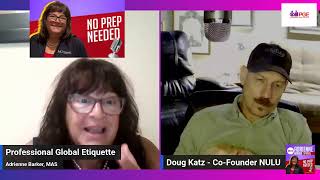
In this live‑stream interview turned podcast, host Adrienne Barker, MAS, chats with Doug Katz, co‑founder of Nulu Knives. Doug shares his personal journey from a West Point‑trained Army artillery officer and disabled veteran to a knife‑making entrepreneur. He explains the origin of the Nulu – a modern reinterpretation of the Inuit "Ulu" – and the engineering philosophy behind its circular, tip‑less design that maximizes force transfer and reduces strain for users with upper‑body limitations. The conversation introduces the "Ability Curve," a model that visualizes a person’s functional capabilities over a lifetime, framing the Nulu as a universal‑design tool for people with disabilities, vision impairment, or anyone seeking safer kitchen ergonomics. Product details are covered: a one‑hand‑open clamshell sheath, unique sharpening system, upcoming dual‑sided cutting board and dock made from sustainable wood, and plans for cutting‑glove accessories. Doug discusses market opportunities in the promotional‑products industry, affiliate programs, and the importance of accessibility‑focused branding. The dialogue also touches on broader themes of disability awareness, caregiving, veteran support, and the role of community in entrepreneurial success. The interview ends with calls to action for listeners to consider Nulu knives as raffle prizes, gifts, or tools for inclusive design, and a reminder of Disability Awareness Month.
Chapters
Who's with me? Who is with me? Adrienne Barker Speaks, no prep needed. This guy Doug Katz is in the house. I don't know if he's bald, but I don't know. I know he's bold, I know he's brave. Not sure if you're bald because you're wearing a hat. You got—
well, you know, I gotta rep the brand. I gotta rep the brand.
Oh, that brand is so cool. I'm so excited, you guys. So meet Doug Katz, co-founder of— do we say Nulu?
Nulu. Yeah.
Okay. Now I just want to say, for those of you that are coming in that are in the promotional products industry, we want to also hear your ideas and thoughts. Doug, I have like friends that are suppliers and friends that are distributors. So the distributors would be selling your brand and the suppliers would be jealous that you have such a great product. That's how it works. I can't wait. So I'm so excited to have Doug Katz in the house. Doug, who are you? What the heck is Nulu? And that's a great looking hat.
Thank you. So, um, who, who I am, um, you know, I'm just kind of a guy I think who found the path that's right for me, really. Um, grew up in Michigan, Cleveland originally. Um, went into the Army via West Point after graduation. Um, which was a great— things ended up much better than they would have been at other schools. So then served my 5 years in Colorado as a field artillery officer where I met my wife and she was from Iowa. So we moved back to Chicago, kind of put us in between everything. And I did sort of the traditional go from the military into the civilian corporate world. And did everything from telecom to mortgages and never, you know, did well enough, right? Like, did a job. But in 2020 or 2021, my wife got me a class on knifecrafting. After buying this one, I haven't said this, this was a gift that she got for me from the gentleman who taught me how to make knives, an amazing guy. I can't use his name, Steve Marni. He's retired now, so none of you guys get the chance to learn from him, but taught me really, really good basic knife making skills. And so I continued to do it. And I relocated to where I live now a little bit after that. And part of the deal was that I got a shop to work in a forge, but have some issues as well. I'm a disabled vet. Uh, most of my issues are lower body and cranial, but I do have upper body issues that aren't— that, you know, more or less the way the military works is they may know, they may say, yeah, you probably messed up your upper body as a military, you know, a person, but there's no record of it, so it's not recognized as service disability. So, but it doesn't make me any less disabled, but I was out in my shop one day before I got my shoulder rebuilt a couple of years ago, and, um, I couldn't swing a hammer. I also love to cook. I couldn't do any of the stuff that I like to do, so I was just kind of sitting out there. And the circular shape of some of the scrap steel I had sitting around— I use sometimes, use like circular saw blades or anything to kind of prototype because I don't want to waste good steel. And I created the Nulu, which was the second half of your question. And the Nulu, the name— you asked about the name when we were preparing to go live. And it means the new Ulu. And the Ulu is an Inuit knife, Alaska, Northwest Canada. And it was everything. The women had the Ulu, the men would have a typical field knife, right? Men hunted, Women cut hair, dressed animals, did all kinds of things, and it was a very utilitarian knife. So, um, I hadn't made one of those before. I'd made like a pizza cutter, um, but because of the issues that I was having, it put me in a situation to say, well, how can I do what I like to do again? And so I made it. We had no— like, I made it and it worked, and I brought it to a friend's a friend's son's graduation party, and my now partner was there, and he was like, that's super cool, we have to do it. I'd forgotten he was an industrial designer. So the rest is kind of history. We've been in business about 3 years total, just selling since last— since June, really. But the interesting part of the journey has been we knew it worked. We kind of did it backwards how you should really do it. Validating commercial viability of a product should be done by saying, why is it better? We didn't do that. We said, hey, it works. Then I went through an accelerator through the, through the veterans organization. And we started to think, why? What is the reason that it works? Because people want to know why they're spending that amount of money for a knife. So we started to understand and think about sort of the geometry of design. And in the meantime, we're also trying to figure out how do you, how do you quantify disability? So it's been a very interesting, a very interesting journey, I guess you would say.
All right, I have a question for you. So your wife decides to get you a knifecmithing, which I love the term, I never heard that word before, so I, I just, I, I'm thinking it's how to learn how to make knives, but how did she know that you even wanted a knifecmithing?
Like, well, that's a great question. You know, it was right smack dab when Forged in Fire was probably one of the most popular shows on TV. And, and, um, you know, it's, it's nice. There's a real visceral connection, uh, and I found that I, I like working in physical medium. I like— what really drew me to blade making was I think it's functional art. I think it's something where you can pour some of yourself into it. I give most of the other knives I make away as gifts. But it's something where you can make really interesting knives, you can ideate, but at the end of the day, someone can use it. And it's funny, I was talking to some— one of my kids the other day, actually. And I said, it's a really interesting phenomenon for me because I've given them as gifts and everybody loves them as gifts. I don't know if people would pay for my other knives, but they love them. And I say it's really interesting when you think about mortality and like gravestones and, you know, how will a legacy live on, right? Is it about what's on that headstone, and— or is it like having something that you made for somebody that maybe becomes an heirloom and is passed down in their generations because it's a unique handmade thing? And I think that just drew me to it. Um, but That said, kind of looking at— I kind of make— I think I really focus on a little bit of a weirder, non-traditional style. I'll be like, what if you put this kind of blade on this kind of handle? And how will that change the dynamics? Or how can you make something cut better or work better for its intended purpose? And I think that's kind of maybe an arrogant thought, but I think it's more the engineer in me than the knife smith, and I think my brain works more that way, more in an engineering process than an artisanal process, where the outcome might still be a knife, but how I got there was a little bit different.
Oh, wow, wow, wow. You know, I love knives, but I'm afraid of them. Look what happened to my hand. I lost all my fingers.
Right, right.
If you're listening, I'm just kind of making a joke. I have my fingers off. Okay, let's look at the knives. All right, ready? I'm excited. I— and who doesn't use knives? I mean, well, you know what, can I answer that question? Yeah, yes, I would love that.
Who doesn't use knives are people that can't, or people for whom using them has become difficult enough that it's easier to go on Instacart or or wherever you might decide then to get your food. And, you know, we were talking in the beginning, how did I perceive this? Well, I couldn't cook. So I was one of those people who couldn't use a knife for that period of time. And that's the path that we've really gone on now is what does disability look like if you can't use a knife? And the interesting answer has been we all will get there. One of my tattoos— I have a lot of tattoos— one of them is Mother Nature and Father Time. And I got that, I think I got that one on my 25th wedding anniversary for the reason of, you know, kind of immutable things. Um, but it's interesting how those same two things have played a part in this business and The reality is people look at disability as an identity as opposed to a state of being or an overlay onto a particular set of tasks. And where we're trying to bring the dialogue— and as a team, we've invented this model called the Ability Curve, which takes the approach that from the time you're born to the time that you die, you're on a curve that tracks your capabilities. On a myriad of tasks. And if you look at your ability to do them on a scale of 1 to 10, you can graph it. You may be, you know, 10 being the best, you may be a 3 at some point because you get your shoulder rebuilt, but then you go back up to a higher level. But the reality is it's an upward slope as you gain strength, dexterity, coordination, and the ability to do those tasks, and it kind of levels off and then it goes back. It's like the old We crawl, we walk, you know, the old thing, you know, is it the— and we end up kind of in the same boat we were as kids. And guess what? That's disabled. So we're really trying to bring the dialogue about universal design and that a little bit more to, you know, in the startup space or, you know, wherever, because I think it's a good dialogue because As people live longer, lifespan and the quality of life are two different things, right? My, my wife and I have been caretakers for so far three different parents. My parents are divorced, so we get bonus parents, but my dad, her mom, who have both passed, and then her dad we're taking care of now. And then my mom and her husband are on deck headed up to Illinois, probably in the next a year. So I saw front row seat, you know, courtside, the inevitable degradation and thought about it doesn't have to be that way necessarily. There are tools and aging in place is a big thing, right? It's a big thing now. So we're trying to kind of bring that dialogue to— we shouldn't look at individual disabilities, we should be figuring out where do the Venn diagrams meet? And let's start developing that way and then have the development branch out if there need to be more specialized things for particular maladies.
I love that, Doug. But I also want to say that as a mother of 4 children, and I wasn't so worried, weirdly enough, of the— I don't think my boys were in the kitchen, so I had to worry about them. But my daughter, I remember when she started expressing an interest and cooking. And still now she's 19, when she's got a knife in her hands, I don't know where to go with that. I am— I get scared. I can't help it, right? Accidents happen.
Well, you know what, it's interesting you say that because a lot of our design—
so if you look at it, let's show it. Hold on for one second.
Hold on. This is one that, that my mentor made. It's beautiful. And I like this one because I don't believe—
wait, the one— what, the one that you're showing for First of all, let's just, let's go a little slower because I love this and I want to show the line. But what I don't know is what you're showing us is the item.
First of all, if it is, it in the line that they can buy this one.
I got it.
Got it. Given to me by my wife and it was made by Steve, who was my mentor. But I like using this one for the explanation of the point that you were talking about, the tip, because it's a very primitive knife. It's a primitive design that he made. And he makes some in primitive and made some of the other ones. But I don't like plucking out traditional knife design. But with this, you can see it's got a tip, and this one has a double blade. But why do you need a tip? Hunting or self-defense. That's the only reasons that you would need that, because it would be to either get food or not die. But, and if you look, this is how— and I know I'm off frame. But you can see how this aligns with my body. The most important thing when this was created was eating and not dying, so cutting was a lot less important. So this is a secondary functionality. But you can see, even me not at a counter, my hand tightens up, my knuckles go white, and all my grip, all my strength grows here. And if I was at a countertop my shoulder goes up, I have to create leverage with the transfer of force because this is a linear design. But if you think, what if you don't need the tip, which we don't in the kitchen, and you brought that up very, very cogently about when your daughter's in the kitchen. Well, we don't have a tip on this, right? We removed the tip because there is— what was cool, this is where I say my partner is a genius. It still has like that cool knife design. But this, I can do this all day. I'm not going to get cut because this is about cutting, not about stabbing.
Wait a second, so I don't have to worry? How could she cut herself with that?
Well, you could. It's super sharp. And the issue with this is now you can see how my body is aligned. It's aligned this way and this way. The force transfer versus the linear design is circular. It means that I can find anywhere I want, and I actually usually cut like this because I only have to grip it this lightly, and the blade is completely aligned. I gotta line up— there we go— with my muscular skeletal structure. So the vision-impaired community has shown interest because when you're cutting, you know exactly where the blade is. Now, when you talk about when your daughter's in the kitchen Any knife is dangerous. We don't recommend this for, you know, we don't say to parents, yes, give this knife to your kid. What I do say is anybody using steel knife, and when a parent or anybody makes the decision that their child is old enough to use a steel knife in the kitchen, then they're entering a risk profile in an activity tends to be safer because of the control. That said, because we also work heavily in the disabled community, uh, and me being one too, I always recommend wearing a cutting glove. Um, there— we're going to be selling them in the near future, but they're very inexpensive and it will save you money on Band-Aids. Any money you're going to spend on a cutting glove— because now, but what I will say is when people talk about chopping, you know, if you're— if let's say this is, you know, and they're chopping you know, it's going to move a little bit, you know, when you're chopping. With ours, it stays exactly aligned with your body. There's no moment arm. So while no knife is safe, I do feel that it is a little bit more controllable, which makes it safer. Now that said, sometimes I'll get stupid and I'll, I'll clean it like just with a, with a, and what we, what we tell people is we do not recommend being as stupid as I have been in the past. Is to clean it in a way where you're keeping your hand away from the blade. Because the other part is this does impart a lot of force. And if you're, if you're just kind of cleaning it, then you can cut yourself. So, you know, there are safety concerns.
That's the next product to make, a way to clean it without— say, a safe way to clean it.
Well, yeah, absolutely. And it's, you know, this is me being stupid. The good way to clean it is always have your hands away from the sharp part. But I think, you know, you see knife smiths, many of them wear Band-Aids because, you know, it's like electricians who get a little too comfortable and don't flip the breaker, right? Like, a little too comfortable. But I think people forget that knives are dangerous things.
So, Doug, so, so when you held up the first one with the tip, my heart, I started racing. I had the same feeling as if you were showing me a gun, right? Like, it scared me. Okay, let's go talk. Let's get— let's look at the Nulu together from your website, guys. So I'm going to show this because I didn't feel that way with this. So, okay, so you're offering 15% off. How is this packaged?
It comes with a sheath. It's a, it's a clamshell type sheath that we designed for one-handed opening. It comes a little bit stiff, but you know, you can, you can flip this little latch here. So it comes with the sheath. Currently, we also have sharpeners that we recommend. It's a little bit of a unique sharpening. And then I would say within 3 weeks to a month, we're going to have cutting boards and a dock. If you go back, it might be on there, but we're not yet. Backspace one. Okay, to show the product line, you can see coming soon the dock and the cutting board. The cutting board we designed is two-sided, so that bowl allows you to cut things because this does have a lot of strength. You cut a carrot, it goes across the room. That keeps it where it's supposed to go. The dock is amazing. Both of them come in acacia and bamboo, really sustainable, durable wood. And the reason we designed the dock that way is it keeps you— it's interesting. We designed it originally to kind of sit like this in the cutting board. It left a blade, a blade exposed. One of my partners brought that up, which was a good point. So we're trying to do it. And you had talked about the promotional industry. We're really looking at this because you could laser engrave it, and it's meant to sit on the counter. This isn't a knife.
I mean, all of them, they— well, I— this product is perfect. This product is perfect. One side could have your logo, the other side can have the clients. I am loving it. Okay, I want to go back though. I want to go back to the knife because This is really interesting. I, I've never thought of this and how— look at the different ways you could grip it. So you have the foregrip.
That—
what is the foregrip? What would you use that for? Is that—
this is what we kind of call the foregrip or the main grip, because with this you have 162 degrees of cutting edge. With this, a regular knife, you have 1 degree. It's this, it's a line. When you bring a circle, and my kids love this because, you know, I get to talk to them about geometry, which every kid loves. This is 162 degrees now. So you can find what works for you for that task. And you're in a, you're in a neutral position. So you can chop this way. So this is the foregrip, because you get the most usage. This we're caught, we call the axe grip. Now it's more of a cleaver. And if you look at my body, now the alignment is with a different part of the blade. So this is really good. And actually, I almost kind of punch when I cleave, and you can see it doesn't put strain on me. And then what I love is this is your precision blade. This is where you can cut garlic, you can do all the cutting, and then you can always use it as a mincing knife. And then this is one— you can hang it like in an industrial kitchen, commercial kitchen, to avoid contamination. But This is TBD. We're going to be doing some development on expansion for people to be able to secure the knife and hold on to it who may not have grip, right? A couple of my affiliates have either spinal injuries or cerebral palsy. I love that they're my target market. They use it and they get it and they, they're like, oh, I get it. You don't have to gorilla grip this thing. You can just kind of hold on to it and, and just use it. What I tell people is, if you were going to design a machine that cut, this would not look like what you would do. It would likely be a circular blade that works on a piston or an up-down movement, but something that would maximize— and if it was up-down, the pistons would come from above, because you're spending money on electricity and other things, and you want to maximize the efficiency of the cutting. With this, your body is the machine. However the piston goes in the way that you would want to use it, you're getting that good force transfer. So when you talk about— we have general grip description, but I did an Abilities Expo in June, right? We literally just got an inventory and I did this expo and it really threw me for a whirl because we designed this around upper body issues. And I sold a couple to people who had had strokes or had some pretty severe things, but we sold a ton to people who sit in wheelchairs either because they have to part of the time or fully. And many of them had comorbidities with upper extremity stuff. And what we learned was seated, this is great because you can— it's hard to see, I can't really put on camera. But if you're seated, you can, you can use your core and you can cut toward yourself. And if you're, again, as we talked, if you're vision impaired, you know where, where you're cutting is. So, and all these things, the really cool thing is, and what we're hoping is it goes away, is the really cool thing is if it works this well, and this is where universal design comes in, if it works this well for me with upper extremity issues, If you have no issues, it still works better. I don't know how many times people say, I see what you're saying, but that I can solve that with a sharper knife. And my answer is, well, this knife is sharp, but no amount of being sharp will overcome bad design or inefficient design. Now what I will show you is this is, this is a knife that I made, but it's good for orchestra or showing this. It's not a kitchen knife, but a chef will hold a knife like this, right? Someone who goes to chef school. And why do they do that? They're choking up on the blade and holding the spine to get better force transfer. So what I asked that chef that day, who said to me, I wouldn't use it because I know how to use a knife, and you're showing wrong on a chef's knife. Here's the knife technique. I said, what's the handle for? He said the handle's for balance. My answer to that is, if you have to use the handle of a tool to balance it because you're holding it in the middle, it's not the right tool for the job. Nothing bad, nothing wrong with a traditional knife in any way, but it's the right tool for the right job. I mean, I don't take two knives and put them together as scissors. A scissors are a very, very specifically designed thing to transfer force in a certain way. I could cut paper that, but it's not the best way to do it. We feel that's kind of a similar argument with the Nulu.
I, I love it. I think that I, you know, I, I'm so glad that there's like so a variety of different people that would use it. But for me, as someone scared of it, it feels like a comfortable knife that I could use and not be worried that I'm cutting off my fingers or someone, my daughter. So I, for that reason alone, I'm in. I love it. I love it. I love your mustache too.
By the way, when we had a, a vision-impaired influencer reach out and say, well, we, we got introduced and wanted to evaluate it. We're like, well, wait a minute here, you know, vision-impaired, right? You talk about safety and all that. We were really worried about that. And then, but then we stopped and it was interesting. And there was, when I was at the Billy's Expo, I was recounting the same story. And a woman there, another exhibitor who actually bought a knife, was like, we still have to cut. It's not your responsibility to protect us. If you make a product that is better suited for us, then we'll use it, and you don't have to worry about liability. Like, that's the one thing I really like working in the space I'm in is it's, it's not about someone getting ready to, to sue you or whatever. There's so little degree of innovation, capital, and other things that go to this. There's a lot on the high-tech side. There's a lot with apps and things that help with that, and that's great. But there's very little on the physical product side. And I think that's a shortcoming that eventually will change, right? The degree that because of the way our society is put together, that people, more people will be caretakers than ever before. They're going to start saying, well, why isn't there a product to help me do this? And this could be something as small as why isn't there a product that will help mom or dad more able to prepare their own meals because they could do it in the past and that takes some of the pressure off me. So I do think that there's, there's a little bit, right? The doors open a little bit. I think it will grow over time.
I love it. I love, you know, it's a Chatter Social accessibility is a very important conversation. Actually, we are having a big event called SWAT and Order, and we are closing the first night with an accessibility panel, which reminds me to make sure I say to you that your website should, you know, make sure that it's also accessible for those that have trouble seeing, right? So that they can use a reader and how important that is. I didn't know it until Dylan and a variety of people said, hey, Adrian, this is, you know, this is where we're coming.
You know what's so funny about that? Is when you would bring that to someone who doesn't have a familiarity with the market, they would be looking at it as, okay, I have to be compliant, as opposed to just being, you know, having some humanity and saying, hey, somebody who's vision impaired might want to look at my website, and, you know, it should be as inclusive as our design. So I do think it's, it's just very interesting the degree that people are disassociated and disconnected from disability until it's them. And I actually just wrote an article, usually posted, I have a Medium and a Substack and all that about the phenomenon of people who really don't give a crap until it's them. And then they're like, wait a minute, why are curbs the way they are? This building doesn't have a ramp, right? All of a sudden, the world is not accessible to them. So it's a problem. And, you know, I find that really interesting. And, you know, truth be told, I probably was one of those people until things started to break down. But I see more, and I hope that there will be more people starting to talk about the relevance of we will all Disability and ability is a continuum. It's not an identity. It's not a different tribe. And you, in the instant, you know, again, one of my, one of my, I was just on a podcast and now he's one of our affiliates. He had a spinal injury at 19. I'm sure at 18, he wasn't thinking he was going to be in a wheelchair. And part of the dialogue was about that and about people understanding that Life is short, but there's also a high degree of— as strong as we are, we're fragile. And any day, anybody could have their own challenges to overcome. And I think understanding that makes us better as a community and a society to work together.
I love that. I love that. I'm proud that I spent over 12 years with Muscular Dystrophy Association, was the district director for Southern Connecticut. Because yeah, everyone's different. Nobody's perfect.
And what, you know, understanding muscle dystrophy, like, it's like the real interesting thing, and it's a good, bad, good news, bad news story. I think that to some degree what's driving some of this is disabled veterans and the amount of time we were at war and the degree that the on-the-spot medical procedures and processes were such that more people survived with life-changing injuries. And we've been doing the right thing as a society. There's everything from obviously, you know, the government and VA to organizations that create accessible houses for veterans. And their motivation is patriotic, paying back somebody who served for their country. And I love that. But I do think that's bringing some of this stuff to the forefront. Where there's a patriotism that's connected with it. And that's the good news. The bad news is that it took that long. And if you were to look at, you know, our country as a whole and population as a whole, what percentage served, it's a very small percentage. In the same way that the disabled space reflects a percentage of our total population, what we're seeing is a small percentage And there's people who have dealt with this from the day they're born, right? There's people who have conditions that were congenital. There's people that have things. And I think there's got to be more focus on that being, okay, great, we can take what we learned from the veterans. And we've got to be more engaging with all of this.
Doug, thank you, first of all, for your service and your sacrifice. You're bringing up so many good points. I hope we do get you on chat or social. Oh, let me just put that in the thing so you have it.
Yeah, make sure you guys—
people will love it. You know, you have a nice group, ChatterSocial.io. Boom, right there. So thank you. Is there anything that you haven't been able to share that you'd like to share before we close out?
Uh, not really. What I always say though is, um, and I like to end with this, is I've been fortunate. I've been fortunate with people helping me. And, you know, good luck along this way. And I would be a bad person if I didn't say anybody who I can ever help in your, in your, in your listening population, please feel free to reach out to me because I have tried businesses in the past and failed. And I think I failed when I tried to do it myself. And I really found, and it shouldn't have been this big, oh my gosh, like I figured this out because in the military there was always that community mission-driven aspect. Everybody's for, you know, this mission. As a result, I don't mind going asking someone for help because we're all trying to do the same thing. It's important. A lot of times, you know, I forgot that when I went corporate America. And I think people work under this assumption that entrepreneurialism or doing something is all about the, um, uh-oh, what just happened there? Hold on. I lost you for a minute.
Oh no, no, you're fine.
I'm sorry. Um, people think they have to do it themselves. And, uh, this was the first time that I really had reached out and gotten help. And even, you know, one guy became my CEO. You asked like when I was, where I was going to make it and when I decided to make it and all that. And I mentioned Forged in Fire. One of the people I reached out to was one of the judges who, when I was forging, before I made Nulu, I was really, you know, I got a little bit down. Like, I'm like, I'm not— my knives look like crap. Like, it's— and he made a great video that just happened to hit at that point. It was like, keep going, you'll get over the hump, and all this. And I used to watch a lot of his videos, and I'm like, I'm just gonna reach out to him. So, so many people helped me. If I can ever help anybody, please reach out to me, let me know. And if anyone is interested, we do have an affiliate program, uh, you could get to the affiliate app through the site. Let me know, uh, and I would love to, to grow with you.
I love that. I definitely see you in the promotional products market. My husband's using a knife, so I'm like, oh, there you go, I have to keep an eye on them. Okay, just kidding around. I love your mustache too. I love your founder's story.
You know, there's— there is a story behind this.
Wait, the story of why it's so perfect?
I used to do lending. Well, you know what, this has been trained a little bit. Like, I don't wax it. I kind of like the more natural up curve. But I used to be in lending, and lending is very hard to stand out. So I used to wear a bow tie and have this because— and one guy, it was funny, I worked for a bank at one point, he was going through all these, like, you know, I was scrolling through all these people in ties or dresses Uh, and like, then there's this guy with, with like an 1800s mustache and a bow tie, and like, I was like, all right. So, um, but it's fun. I think it is a little, you know, my wife's been, you know, are you ever gonna— but I'm like, you know what, it's become sort of a trademark.
So, well, I, I really think you should switch out your photo on the About Us and go with— because you don't—
oh, there you go. You know what, I am a big TR fan, so I do wear these, but these It kind of worked out, right? Like, it kind of worked out because it's got the whole look. But I usually wear hearing aids. I don't wear them when I go on a podcast, but I wear hearing aids, compliments of the VA, and regular glasses. Are there buttons on the top? And if you put the glasses on, it'll hang up phone calls, turn the volume down, because the arms of the glasses do that. So I was like, I wonder if they make nose pinch glasses. And I've actually really— I kind of like them. And they work really well.
I'm surprised you're not solving that problem, how to wear the glasses with the earpiece.
Well, you know, frankly, the problem I'm trying to solve, and I haven't done it yet, is not losing my glasses. I think I have 8,000 pair of reading glasses in my house somewhere. They're like, they're somewhere with the other sock from the dryer, right? So yeah.
I love that. Oh my gosh, you're— you're— I, I really can't wait to like talk with you again. All right, so for everyone, we've got the website, we've got— we've met Doug Katz with the best mustache in town. Forever.
Can I say one more thing?
Yes.
Everybody else, I do want to stress it is Disability Awareness and Disability Employment Awareness Month for the month of October. Um, we may be doing some stuff for that, so if people want to know what we're doing, they could check out our site. But it is a good time to— if people have interest, it's when there's a lot of information being shared about the nature of disability and how it's not really what people think. So I would encourage people to use this as a time to understand it a little better, especially in a time when there's a lot more of this than of this, and we need a little more of this than this.
So I love that. And Doug, one other thing, let me just say this. I think if you're listening and you are a company and you're looking for raffle prizes, 'cause now it's the holiday season, why not buy a couple? The value is obviously over $100. So, or buy the set with the sharpener and the— right? Because I think that that's one thing, one thing, yes, to buy it for your employees, that's great. But when people are looking for a raffle prize, what a— I would absolutely love to get this. It's unique, it's different. I am in that older generation, but as I said, My daughter at 19, that actually would be a gift to give my daughter for like, you know, your child when they get off their own place. I mean, there's so many, we can talk for days. I love it.
I agree. I think sometimes, sometimes someone said to me, I get the design, but I want to feel like a chef. And I look at it and say, cutting is like the most thankless task. Like, I want to get onto the meal and enjoying it with people who I'm making it for or myself. And I think that, that the more that people can disassociate from that traditional design, the more they might like cooking. I think a lot of times there is a, there is an intimidation factor of using a knife because you see, I mean, there's like an Amazon commercial where someone's, you know, chopping like this and doing all that. And well, that's great. But it's the end result you're after, you're cutting for a reason. And I think us looking at it and saying, hey, enjoy the journey, but enjoy what's at the end. Enjoy that meal. And that, that, that's what it's all about.
I agree, Doug, but I also like to have all my 10 fingers, so I'm going to do anything. Thank you so much. I love talking to you. We'll be back. We'll be back in touch. We're live. And then this will be turned into a podcast. You and I will be talking before that. I love this episode. Thank you so much. Thank you for listening. And, uh, so again, Doug is brave. He came on, but he knew he likes a challenge. He's bold, he's brilliant, and he's not bald. He does that.
Brilliant. You can stop there. Oh no, you know what, I actually love your format. I, I used to have my own podcast, and I think a lot of times less preparation is better. Um, you know, you got to know the guest and all that, and, you know, but I do like it when it's a conversation. I do like it where, where, you know, there's always a different way to look at things and a different way to reach people.
I love it, Doug. Oh my gosh. All right, 5 stars to you. Thank you so much. Excuse me, everyone, and I'm gonna end the stream right now.










