Meet Elke Scholz, MA, RP, REACE,
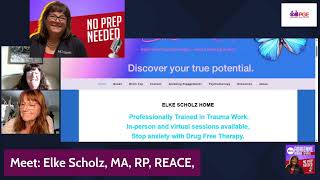
In this YouTube interview recorded on August 14, 2025, registered psychotherapist and EMDR practitioner Elke Scholz discusses her recent professional activities, mental‑health concepts, and community‑building ideas. She announces new German translations of her books Loving Your Life and Anxiety Warrior, an audio version of Anxiety Warrior on Spotify, and ten guided meditations on a brain‑fitness app. Scholz explains her view of anxiety and depression as spectra measured on a 0‑10 scale, emphasizing that anxiety is a signal rather than something to suppress. She introduces a one‑page checklist that helps clients identify physiological and situational triggers (e.g., hydration, nutrition, belief systems) and encourages small, actionable steps, journaling, and personal “calm‑lists.” The conversation covers how to choose a therapist—looking for someone who personally understands anxiety and is open to feedback—and the importance of asking permission before offering help. Scholz describes anger as arising from unmet needs, recommends Non‑Violent Communication to uncover those needs, and stresses listening, curiosity, and giving grace. She promotes online community platforms such as ChatterSocial and BlueSky as safe spaces for sharing, learning, and support, and outlines how her “gifts page” offers free resources (posters, podcasts, YouTube videos). The interview also touches on parenting strategies for teens, the role of journaling, and the broader mission of empowering people to thrive through neuroscience‑informed practices.
Chapters
Maybe. Yeah, I was going through and I just thought, you know, I want to reconnect. And I thought we had a really good connection and we had a lot of fun. We did a few, we just didn't do one. So yeah, and, and as I was saying earlier, I'm a creator, so there's always something new on my plate and what I've created.
So I love it. Everyone, everyone, this is no real prep needed, but still, we met Elke Schultz Elka is out of Ontario, Canada. I'm very jealous. And we were just talking about Chatter Social and getting Elka on that. But Elka, yeah, so it's been, it's been a couple years and you have come on. And because you talk about something that to me is really important, and, and what you do being a registered psychotherapist— I love that you are with the CRPO, College of Registered Psychotherapists of Ontario. Then you are an EMDR therapist, which is like all the rage right now. So let's go. Let's get caught up. I will put the show notes in the last episode so everyone can see that and go back. What have you been doing? Where are you now? Give us an update.
Well, since I've seen you, I've translated Loving Your Life into German. So it has a German edition now, and it is on, of course, Kindle and ebook and all those platforms. And then I also translated translated, um, Anxiety Warrior. And then it is available, uh, Anxiety Warrior is available as an audio, so that, um, that's available on any platform, and it's also free on Spotify. So if you have Spotify, you can access— so I'm really excited about that. And then I created 10 meditations on a brain fitness app And then they're also— because it's, um, now they did their magic with it— the very basic meditation is also on Spotify. So you can go in and listen to those. So I'm really excited about that, and I've got some more ideas. And I've been diving more into neuroscience, the healthy brain, and empowering people, because I think That's what we really need, and that's my passion. And that, you know, as we empower ourselves and keep coming back to center and to love, we're going to make the changes we need to make.
You know, it's so interesting. When you and I first met, I bought Anxiety Warriors. And so growing up, I only knew— I knew my mom had, like, anxiety and that, you know, she would say she suffered from depression, but, like, I never really understood that because she always seemed pleasant and happy and just maybe certain times of the day. But I always thought maybe my mom was tired. But then when you and I started speaking, that was when my daughter's anxiety started appearing. And she was right at the age— it was COVID, and it was like a perfect storm of that 13 going into 14. And it's actually 19 now. She's 19. And a lot of her anxiety, she still works on it every day, so she has to. But so she's read your book, she works on it, she's made scribbles in it to like, you know, she writes, I'm the scribbler. But yeah, it is not something because the other day we're talking about this. So I'd like to just— it's surprising to me how for those that have anxiety, how they actually face it and fight it daily without even probably thinking. Right. And what does that look like? And how can people actually maybe realize, hey, I just went to the pool and yesterday I was so nervous, but today I actually just made it. Or, you know, I went to this event even though I was feeling like I was— I really was not going to go, but I closed the door and I headed to my car and I put my keys in and I got myself there. Like, what does that look like? Where some people can't do that and they just are trapped.
Well, I remember, and I do remember talking about you with your daughter, and I do remember when I first realized that I had anxiety, and for me, I mean, I was immobilized the first half of the day. So, you know, the most I could do is walk in the woods, or I would use singing. I mean, I felt sick to my stomach. It was pretty— I would call pretty severe. And so it's small steps, it's discovery, and for people that are feeling really badly, one of the things that I work with, because as you probably already said, I'm a registered psychotherapist. So the fascination is for myself and for my clients, of course. And just to fast forward to today is I rarely have anxiety. And when I do, and this is the same thing, I was working with a woman yesterday and I said, we get angry when we get so anxious and we feel so terrible. What we need to learn is to bring it in. And what that means is anxiety is trying to tell us something. So, and it's a little bit, it has a list because it comes from different things. It could come from stimulation, whether it's substance or your life. It could come from lack of water, it could come from a belief system, it could come just from being afraid of the world, which I'm seeing a lot of in our young people, that there's this sense of hopelessness. And so we've just got to unpack some of that. And so it isn't about making it go away because that makes it worse, it makes it louder because anxiety is inside trying to get your attention And if we just go, "Oh, let's put it away. This is terrible," or "Let's take some medication," or "Let's do something happy. Let's do distraction." No, anxiety is going to just get really, really loud, and that's when it gets so severe. So, it's really trying to give us a message, and if we can sit down with that and start figuring it out, and that's— I love that your daughter used the book. I'm just going to pull that out. It's got the strategies and a checklist checklist. So you can go through and go, oh, did it come here? This— and the checklist is just on one page. It's not like, you know, the book is explaining it, but the checklist, you, you can start realizing yourself. And I do that myself. The rare time I have anxiety, I just start going through the checklist. What did I eat? I always go with, you know, is it something I ate that gave me anxiety? What's on my plate right now? Right. And then usually, and also drinking water because we do sweat, especially with these heat waves that we're having. We're sweating so much and that creates anxiety too.
Wow. Okay, so if we had a room of 30 people and I said, okay, who's feeling anxiety? Every single person may raise their hand and each one is going to have a different feeling, like, I'm just anxious. I just had a little bit too many calories because I ate the whole dessert, and I'm a little worried about that too. I can hardly move. I'm at this table. I can't say a word. I can't talk to anyone. I'm scared. So how does that work when you have something like this? And even the term depression, because it's so relative to the individual person. So can you give us some examples so we kind of have an idea? Like, we're— what it looks like.
What do you mean? Which example?
If someone— if you're having a conversation, someone said, oh, I'm— yeah, I've got a lot of anxiety over the interview coming up. That's kind of like, okay, that's normal. Most of us would have anxiety over an interview, especially if it's something you really want, compared to, I don't know if I could get out of bed that morning. I don't know, like, so, like, like, stronger So what does that look like when you do have like the variants of anxiety? So if a doctor says you have general anxiety disorder, I understand that piece of it, but what does that really look like to different people? Can you like— what would be the most— like you said you couldn't get out of bed and you were like physically sick. Is that like the worst case? Like what is anxiety from the lowest, like, you know, just nervous I ate too many calories. All right.
Yeah, that's okay. That's, that's a good—
okay.
So I, in the book, I talk about a scale. So 0 to 10. So 0 is calm, no disturbance. So it doesn't necessarily mean you're jumping for joy, just means that you're okay. Right. So, so 0 to 10. So if we're looking at that disturbance, so 10, and when you asked about the worst, some people say I'm a 15. So 10 is when we're dysregulated. We're not thinking very well. We're, you know, we're maybe on a hamster wheel of catastrophic thinking. So that's hard to get out of. But one of the things that's really good, and especially, you know, listeners right now, one of the things I encourage people to do is when you're feeling okay, start writing, noticing and writing a little list. And it can be small, it doesn't have to be big, and you can put it on your phone or whatever is easy. Of things that feel good, so help calm you. So it could be a cup of tea, it could be calling a friend, it could be going for a walk. So once you could do this list for yourself, and this is, Adrienne, it's so interesting because 30 people will have 30 different lists. And that's so what I, what I like to present is what is working for you. What we want to do is make that Longer and we want to move in that direction, right? What's our passion? What's our— and you and I can probably have a few shows on passion and, you know, different things. So, so this depression, which is very interesting, does go along with anxiety. So that, that's kind of a bad rap. So if you're anxious, you tend to be depressed. If you're depressed, you're going to have anxiety. So that does happen. However, we can get out of it with small steps. And that little list, believe it or not, it is a huge asset. And so, I remember when I first started on this journey, I had put it on little recipe cards, those little cue cards, and I had one by my bedside. I had one in my office. I had one in my purse, one in my car. So, when I got anxious to a place I couldn't think, so that higher number, right, we have enough wherewithal to go to that list. So I could go to the list and go, oh, I can phone a friend. I couldn't think of it because I was dysregulated, right? This is when you're by yourself, and if you are in a family that's supportive, is they can even bring that list to you and say, hey, you know, have you, have you had enough water today? Do you need to eat? So they can help with that. Is that kind of answering the question?
It is, it is. So it gave me a couple more questions now. So what happens, so, so you mentioned the word, you know, if you're in a supportive family, they can help you with the list. But what about the, the family or the people every day that are like, and kind of like me, let's say, I've never, I don't really um, you know, have the anxiety. I mean, I feel like I do a little bit, but, but like, my anxiety I found when it got really to the top was going to like, um, after-hours events and bars. I just like all of a sudden one day realized, oh my God, I'm not comfortable doing it. I don't want to be here. I don't want to make small talk in a bar. I'm not going to do it again. And so I don't do it again unless I really am like planning it and, you know, have people I'm going with and stuff like that. So I'm not putting myself in a weird situation. So I'm going to take myself out of the anxiety. So I have two questions and I'm just going to give them both to you so that I don't forget. One is, if I'm going to seek help, would I want someone that actually understands anxiety or just someone that studies it? That's one question. Then the second question, I think I already forgot now. Wait, the second. Okay, let's do that question first. Then I'll get to the second one.
Okay. And interrupt me when you think of it. So I'm making a note. So, well, you know, we all have anxiety because we're human and anxiety comes in different forms. So I've done a lot of talks and, um, you know, sometimes it's stress. So if you feel uncomfortable or unpleasant, it doesn't matter if we call it anxiety. It doesn't matter if we call it stress, it's unpleasant. And that, and if it's stopping us, from doing something, so like social anxiety. And if it's just discomfort, you know, I don't have to go to that bar, right? That's— it's not so big. But if it's stopping you from leaving the house, then yes, you want to. It's— and it's— if it's stopping you from living, so getting a job or even socializing, then yeah, you want to get some help. And so I encourage people to interview their coach, their therapist, whoever they're working with. Interview them, look at their bio and see if you relate. And you know, it's so interesting, some people think, oh, you know, I go to a therapist and they feel uncomfortable. Well, I want that person to feel comfortable and I'm not offended if we don't click. So I always tell people, you've got to give me feedback. So you You want a therapist that's going to be open and create with you, right? If a technique doesn't work, I just say, well, throw it out the door. It's not about me. My heart is to help. So if the technique is— we'll get rid of it. Or if maybe— I'm not perfect. If I've used a word that's triggering, say so, so I can change my language, right? So you want a therapist that's going to work with you. We all have anxiety. So if that therapist says they don't have anxiety, then you, maybe you do want a different therapist for sure, because we all have it in some form. So you want somebody that understands it, right?
So in some form, that's, that's the interesting part. Okay. Yes. So thank you for that, answering that question for me. All right. Another burning question. So there's always this thing when, you know, oh, she's depressed, she's sleeping, and that depression and sleeping go together. And I'm like, is that because that person that's having anxiety is just totally worn out and actually tired and that's why they're sleeping? Or is it because they're just lying down and, like, our thoughts are going through their head and they're not necessarily sleeping, but they're just lying there because that's the easiest thing to do? So can I get more information Sure, and that's a—
that is actually a really great question, and you actually reminded me something. So, a lot of people will go to a doctor, a GP, general practitioner, and the doctor will say, well, you have anxiety, and they get a prescription. Doctors are not trained to assess anxiety or depression. Now, some doctors, if they've taken courses and they have, they have the assessment sheets. If you've done that with your doctor, that's a bit different. Okay, so, and a good doctor is going to recommend therapy because they're medical doctors and they're not trained in psychological ailments. So I just wanted to put that in because I know you mentioned it earlier. So with depression, It's more than just not being able to get out of bed. Like, if you're sleepy or tired, it could be that you're just tired. Emotional development and growth is tiring. Teenagers actually need 14 hours to 15 hours sleep a day. They need a lot of sleep. Yeah, they do. They just do. It's, it's part of their growth.
What's that age when you say teenagers?
Well, I guess 12 to 19, 20. They need the sleep. They just need the sleep. And so, you know, I know as parents sometimes we worry about that. Now, if they get up and they're still lethargic and not feeling like they're feeling hopeless, so you want to listen to their language. You also— part of depression is not taking care of yourself, so not showering, not changing clothes, not eating well. So depression is a bigger thing. Now, do we feel depressed on occasion? Sure we do. Are we sad about— maybe some people are pretty upset with the world situation. Can that be depressing? Do you see how I'm changing the language? So we gotta just— so depression isn't like clinical depression. So I want to call it clinical depression is more than just sleeping. So I hope that answers the question and maybe another question comes out.
No, you did. So, so I, you know, Alana, she's, she's amazing that she actually will give herself like what she's going to do and then she rewards herself afterwards and she sticks to a plan, even self-care, because she is smart enough now at her age to realize, okay, this is what it looks like. But the interesting thing is, I'm going to go back to ChatterSocial, which, you know, I love, and I showed you a little bit about it. So you have thousands of people on an app and they're most— they have to be real, right? Like they're going to go on camera, they're going to show you, you'll have socials so you can make sure, okay, this person really does exist. They're real people. So that all part is cool. What I've noticed is that it's also a mecca of all of the anxiety and the anger And I'm questioning if some people, they get triggered very quickly, or if someone says something, or some people talk to each other very condescending. You know, I remember when I was in my 30s, I was very condescending, and I was told often by my family, stop being condescending. And it was always something that, like, it stopped me in my tracks from being condescending, because when you're told, you know, that's condescending, that's like all I knew. I had to like, well, how do I say it without being it? But I hear other people doing it. So I guess I'm trying to say on ChatterSocial, which interests me the most, is that they are all different personalities. If you're going on ChatterSocial and think, oh, everyone's going to be empathetic and kind, that would be crazy because the world's not. But when I hear people get angry, or it could be because someone's viewpoint isn't what they have, or this need, like, I need you to hear me and I need you to do this, and you're not a good parent unless you do this. What is it? Is that become— what makes triggers people to be so angry? And I'm like, is it their own anxiety? What is it that will make someone who can be kind and sweet, oh, Elka, you look so great today, I love your hair color, to saying some of the most hurtful things that you can imagine to someone else?
Yeah, so that's a great question and thank you. I think what happens, there's a few things. So what we need to realize is that anger is not about us. So when that person, you can have, you know, you mentioned 30 people in a room, you could have a situation and 30 people in the room and whatever that situation, it might trigger 3 of them, but the rest are going, meh, right? Because we're all different. And so it comes down to our needs being challenged. So that person, whoever's angry, And what are they angry about? And NVC, Nonviolent Communication, Marshall Rosenberg, people can look that up, is brilliant because it helps us look at what's underneath anger, what are needs that are not being met. So, when someone is angry, let's say at you or me, I've triggered them, but not me. What I've done has triggered them. I'm not a mean person. You're not a mean person. But It's triggered that person. So if they don't have the psych— I'm going to use psychological maturity. If they don't have the psychological maturity to understand that's their trigger, then they may lash out at us, but we can sit back. I can sit back. Is it hard to take? Sure it is. However, I can step back and go, this isn't about me. And so I, once they calm down or if there's a position we can calm down and I don't know, I'd love to check out the chatter social. What you want to do is listen and then ask questions. Be curious. You know, what made you so angry? What is it that I said? You know, it's a word. So what? That's not my heart. You know, what is it that has upset you?
Oh, repeat what you just said. Listen. I love what you said.
Ask questions.
Listen and ask. I got to write this down. Sorry. I got to put this here.
I wrote it down. That's why I could repeat it.
I love it. Listen and ask questions. So important.
Yeah. And be curious.
Conversations, 100%.
And you know what? One of my new favorite— curiosity has been a favorite word. Grace is another of my favorite words.
I love that.
Yeah. I just—
giving people grace, you mean? Giving others grace?
Giving myself grace, giving others grace. And, you know, that's all. Just give me grace. I walk, I'm human, and, and I believe that 95% of us are kind, that we want love, we want peace. And that's, that's all of us, Americans and Canadians, you know, that's all we want. We want peace. Um, so what happens though is, uh, fear gets in the way, beliefs situations, all that stuff, right? So that's not about you or I, that's about that person, and we don't know what they've been through, right?
Elka, really need you to come on Chatter Social. These are great rooms to have because I, you know, I, you know, because when people are getting so angry, they're also— I, I think of it, oh, you're ruining your brand. Like, that's who you are, if that's how you make money, and you've just went off. And these apps, you know, people are, are recording, so you can't just you know, just be like, oh, nobody will know. It's like the same thing if you are saying something crazy on, um, on social. I remember when— was it— I can't remember, an actress who said— who had taken Ambien and then wrote some things and then had to apologize for doing it. And I'm like, why didn't you just not do it in the first place? Wouldn't that have been easier, right? Like, I get so confused, but I think people don't— you know, I I guess if I was to lose control, which I haven't, and I don't think I will because I'm already like ready to like know not to do that. But for those that don't, what is the answer for them? Should they go back and find someone to talk to about why they're losing control and maybe listen to how people talk about them? There's like chats and people, you know, like listen to what other people are saying. So how do you listen to what other people are saying and reflect it on yourself? Or do I just say, oh, they're calling me angry, so I'm not even going to listen to that?
Yeah. And you know what? We could do a whole show on that. And part of it is to slow down. Now, I'm just saying, it's not like if someone starts yelling in my direction, not so much even at me, I find that really difficult because I'm highly sensitive. And even though I protect myself, even though I know that this isn't about me, it's still hard to take. So I imagine with the screen, you know, being on this social platform, it's a bit easier. We need to slow down, and that's something you can do with that other person. If they're yelling at you, just say, you know, can you slow down? Yeah. And the other reason people yell is because they think people aren't listening. So people get repetitive and then their volume goes up because they feel they're not being heard, so they're reacting. So what we want to do is say, you know what, I'm listening. Can you just— I can listen better if you're not so loud and you talk slower. I do want to hear what you have to say.
Oh my gosh, that reminds me of— you know what that reminds me of? That reminds me of anti-bullying. If you see kids bullying, one way to stop it is just ask them, do you know where you are? And then they have to think, oh, I'm here. And then you say, we don't do that here. It's kind of the same thing, like so obvious, but yet that will just take them. Because if you go on to Chatter Social, that's kind of like the glory of it too, is in certain rooms where people are debating and their passion is showing, you can hear it. On the other hand, the arguments get so loud that sometimes it ruins the listening also. But I could see myself now, if I feel like someone's yelling at me. Now you just gave me a way to control it. Hey, would you mind just slowing down instead of coming back and trying to hit them? That would be smart. I want to hear you, but you're talking too fast for me. Like, whoa, that is brilliant.
And that we can use that anywhere, right? Whether it's with our children, our family, a contractor, at the grocery store. We do have to slow down and listen. And yeah, it is a skill and it takes practice. Yeah, it takes practice.
So I'm telling my daughter, I think, feel like she should— she's no expert, obviously, of anxiety, but she's gone through it. And to start some sort of videos and just kind of sharing. She's got a journal. Journaling really helps her. And again, like having plans, like, okay, I'm going to get my driver's license and I'm going to do this, and then I'm going to do this, and then I'm going— like, everything needs to be in steps. And I think as a parent, understanding that too. So I would never— so learning, like, I had a friend here that had, um, he suffers from, uh, paranoia, schizophrenia. So there I am going until his family told me, I'm like, did you make your calls today? Did you do this? You need to wake up every morning and hit your computer and write, like, I'm like, what am I doing there, right? Like causing more stress. And then I saw it and then I was like, something's up. And then I realized, and then I like investigated because I'm like, oh my gosh. So like, I think that there has to be some way to teach. Like, so with my daughter, I don't try to tell her what she's thinking is wrong, but I do give her examples of like, you know, Alana, I just kind of went through something. I felt really like nervous and just sharing, like, you know, that even though she may see me all happy all the time, that doesn't necessarily mean— so just giving her real life. And then she's on Chatter Social too, so she can see and learn, um, about different people and, you know, and take the good and the glory and the learning and the education to those that are kind of just on there to, you know, be part of a show or trolling, which is totally fine. But, um, I think it's good that she can share with people her age. I'm always like Someone your age wants to hear from you. Am I right, wrong? What's my thinking look like with all of this and what parents can say and friends too? Right.
Wow. It sounds, yeah. So slowing down, I think, is big.
That's for all of us.
It's good for us to slow down and reflect and understand.
I remember my girlfriend when she had her first panic attack. Well, not her first, first in front of me. We were on a cruise ship. We were getting ready to have like a really fun night, and she even recognized it herself. She's like, I can't believe I'm going through this right now when I am like having the best time. So I didn't tell her like, oh my God, just slap out of it and stop it, or shake her. I just said, oh, I'm so sorry. Like, you know, then I— but then I didn't know, like, do you ask, like, share how you're feeling? Like, where's those boundaries? Is there, um, is there anything that you would recommend in just like a couple minutes? And well, then we'll end the show. But I would like—
yeah, that's a great question. Uh, that's a question is ask permission. And so what we want to do at any time that we want to be helpful, we want to ask permission. So in that situation with your friend, you may have done it. You may have said, you know what, is there anything I can do to help? You know, what do you need right now? And because— yeah, so ask permission. I have some ideas, is that okay? Can I share those? Because sometimes people just want to be alone. Or they don't want to talk about it or whatever. But if we can just be there and just say, what, what do you need right now?
Oh, I just love that, Elka. This is going to be really good. I look forward to doing the show notes. And, um, and because there's so much good information here, and I think with COVID it just didn't go away. We learned more about it, and it's every day we just— you could see Alka Anxiety Warriors is out. You've got, uh, one more time with the books so that we know. And oh, oh, let me just show really quickly, Alka. Hold on, let me share the screen. I want you guys to see the beautiful website right here so you can welcome it.
Nice, thank you.
Okay, and then you got— there's some courses here. So here's the books. So if you can see this, we've got the books here.
Yeah, and you can get them on any popular, um, platform. So whatever your platform is.
This is nice, the whole talk. And oh, Loving My Life Journal. Oh, oh, a lot of— will like this. Okay, so I could buy that now, and then where am I— do I buy it from you or do I buy it from the journal company?
Yeah, yeah, yeah. And I'm, I'm just reproducing them too. I'm going to make it a thicker.
Oh nice, is it on Amazon you said, or just order from you?
The, uh, journal is the only thing that is through me because Amazon does a print on demand and the journal just has, um, it's just the way I've designed it and it's a hardcover as well. So yeah, and you know what, email me your, um, mailing information and I'll, I'll get you one.
Oh no, no, no, that's not going to work for me. I'm going to order it. I definitely want to order. I'll just take— I'll just— I'm going to order it. So that's— no, I'm going to order for her. She'll love it. BrainTap. Interesting.
That's another topic. Yeah, it's very fascinating.
Oh, okay.
That's interesting.
Courses. Yeah, you could do the courses on chatter too.
These are actually— that was another thing I developed since you and I spoke is on how to raise your vitality. Because people are getting burnt out and exhausted. So I did a whole webinar, and, um, yeah, it's working very well.
I love that. That is great. Speaking engagements get you out there. Beautiful.
So we'll be on there. I love it.
Look at— oh, I love this.
Wait, these are just some past ones I've got.
Oh, Peter Jennings. Wow.
Yeah. And so on top Uh, so I'll put our link in the website so people can, and then I'll promote it as well because I think you, you have a Spotify link. So I do. I will, once we have the link, and, um, then I will share it.
I love everything you go— yeah, you've come up with a therapy and then the, uh, the grief and trauma recovery. You really need that. Uh, last night on Debate the News True Crime, Joseph and I do it, uh, Debate the News. We had a lovely woman who is a cult survivor, survived a cult at a very young age, and we talked how that grief and trauma just doesn't go away. The resource is beautiful. What are the gifts?
The gifts are just different resources.
I—
my— they're posters, podcasts, YouTube, because my thing is, you know what, is I want to give and serve, so when we have anxiety or we're not feeling well, I want people to be able to go and just take what they need. And hopefully it'll get them to the next step, whatever, to make— to feel better. So I have that gifts page. They don't— you don't have to sign up for it. I know that's not technically good marketing, but I know that when, you know, you're struggling, you don't want to be punching in a whole bunch of things. You just want to look and go, oh, I could listen to that, or I could maybe download that. Um, that's the gifts page.
I love it. Okay, so then, um, yeah, so I'm gonna go get— thank you, I'm so excited that you're here. I just want to look at one other thing so I could show Alana. Um, socials. I don't see any socials on here. Are you, um, are you—
you mean like, uh, Facebook? Um, LinkedIn. Yeah, I have that. And I— you know what, I'll make a note because my website guy and I, we are working at sprucing this up. So I am on Facebook, um, Instagram. I've got to connect those two. Um, LinkedIn, I'm on that. Uh, what else is there out there that I'm on too? Oh, uh, Twitter. I don't use that so much. It's X, I guess they call it X now. Um, so those are the socials right now.
So beautiful. That's okay.
Oh, and then yeah, the podcast. So, um, Spotify. So I'll have to— you know what, I'm going to make— look at making a note right now.
Yes, yes, yes. Have all your socials. Yeah, it does. I'm glad you're doing it. Yeah. All right, so I, I'm going to say that I've learned a lot. This was a great update. We do have more to do. If you come on to Chatter Social, we'll walk you around. There's a group of people that I know immediately would love to meet you. It's still early, so I think that it's really important to, uh, to come on now before, because nobody else has a platform like this. Um, so I, you know, the— you would have a group and then you would call your group whatever you want to call it, and people can come in. You can have the subscriber base, you can have— you could have, um, you know, some workshops are open, some can be open just to your members and your subscribers. So Uh, and also the terms and safety are watched very carefully so you can feel comfortable. And the founder Nelson Apega is on and he's just amazing. And Leah, who is a community manager, um, they're hands-on. So it really is a fun experience to get on. It is integrated with BlueSky. BlueSky is amazing platform because with BlueSky, it does not have your information. You could actually take take your information with you when you leave. It is decentralized, so it's a great platform. So thousands of people, I mean hundreds of thousands of people are on Bluesky too. So you want me, want to get your account set up on Bluesky too. ChatterSocial is free, it's on the App Store. You know, I don't receive any money. I am just someone that has been part of the private beta, absolutely love the program. And you know what, I see the benefits of it and I know that there's some amazing people for you to meet and for them to meet you that will need your services. So thank you so much for letting me blab about Chatter. And I'm so glad that you were persistent, Elka. Thank you for, for just being persistent because, you know, I really appreciate that. So we actually did kind of get this time together to talk. I can't thank you enough. Amazeballs. And how do you look better after 4 years is annoying to me, but I will— I'll let that go. I'll let that go. So is there anything I should have asked you? Is there anything you would like for me to ask you?
I think, you know what, I just want to serve and I really think we all deserve to thrive. We're walking miracles and that's my passion. And I've realized that I love doing that and I'm just gonna keep sharing. So I'm happy to chat again. I'm really excited about this Chatter Social. So I will get in touch with you on that.
I love it. The other day I woke up and I'm like, you know what, we really, it's crazy when you go like depth, you know, in deep into yourself and I'm like, we really just had— like, this is it. We don't know what's going to happen before or after. We don't know if we're coming back again. Like, when you really wake up and realize this is it, we— there's nothing else, and what matters is today and prepping for the future. Like, I do say, you know, say yes to opportunity and figure it out later. But I think what has also helped is having a positive attitude. That's another conversation, because I'm just naturally positive, but I wonder I could talk to some people that say they're naturally positive, but then their conversation, how they speak, is not, which is so interesting. And sometimes I could be like, oh, I'm so stupid, or certain things that don't even sound positive to myself. So I think that would be a great conversation, and that would fall under living your life, which is really kind of like trending right now on the whole idea that we have to love it. Otherwise, what, what else is there? So yes, come on Chatter Social, let's do another one. Have me on your podcast. I just can't thank you enough, Elka. Thank you for being here.
All right, will do. We'll be in touch, and let's set another, um, one of these.
I would love that. I would absolutely love that. Amazing. And if I can help you anything with your— whatever you need with your podcast, I can, you know, give you some ideas. All right, I'm going to end the stream now. Thank you so much. Amazing.










