Meet Faris Aranki
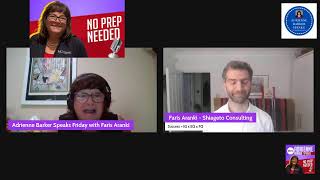
Faris Aranki, founder of Shiageto, explains his IQ × EQ × FQ framework for business success: great ideas need buy-in from people and disciplined execution. He shares how better communication between introverted analysts and extroverted sales teams saved a company tens of millions of dollars in a forecasting operation.
Chapters
Yes, Ferris or Ferris. Yeah, I love it. Love the name. Okay, we're gonna go live. Adrian. Yes, Adrian. Uh, like the movie Rocky. Yo, Adrian!
I was gonna say Adrian.
Oh, I love that Rocky. She was so olive oil-ish, like from Popeye. She— I think she was this— I don't know, she reminded me of olive oil. My parents loved olive oil. Okay, let's go. Okay, here we go. Okay, it says we're live, so we very well could be. Hi everyone, I am so excited. Okay, I have to be fully transparent that I did look at Ferris. I, I had to. First of all, handsome guy, had to go on his LinkedIn. I'm like, oh, we're talking emotional intelligence. Just watch a little snippet, but that's all I know of him. Like, that's it. I did no prep. Okay. So with that said, because I don't do prep, because this is the Lazy Girls Podcast, I would like for you to introduce yourself to us and where are you coming from in the world. Where in the world are you?
Yeah, well, welcome to the Lazy Girl Podcast. I'm happy because I'm a lazy guy, right? I am here. My name is Faris Ranke. I'm here in London, UK, live with you this afternoon for me is probably a bit earlier in the day for you guys, but it doesn't matter where you are in the world. You're gonna be in for a great conversation. Yeah, yeah, so that's great.
What do you speak about? What do you do? So like I was reading your headline on LinkedIn.
Yes, and my headline on LinkedIn says strategy and emotional intelligence because what I do is I go into companies, help them with their strategy, but not coming up with the ideas, getting their teams to work better, right? So that's where the emotional intelligence comes in because so much of strategy is, If your team aren't bought in, if your company aren't bought in, you ain't going nowhere, right? And so to get them to really buy into it, you need more emotional intelligence. You need to be able to give them what they want, and then great things will happen. So that's what I do. I go into companies, I either facilitate or I do training, but it's all about people. It's all about reading people, understanding people. You know, what is that person in that room thinking right now? How are they feeling about this? And let's help them through that journey. So yeah, I do lots of interesting stuff.
I love that. I want to talk about emotional intelligence, and I wanted to also talk about, uh, so I've changed— I've been trained in the ELI, um, mindset. So the entrepreneurial mindset and how important that is. And I, you know, when I think of emotional intelligence, or you're going into a business and you're talking to all of them, you have a strategy put forward Where does having the mindset of an entrepreneur come in? Like, how does that work for you? And do you kind of assess that right away? Do you see the difference when someone thinks like they're the owner of the business or not?
100%. Yeah. I mean, what is an entrepreneur, right? It's— it can be lots of different things. But the thing about entrepreneurs is, is they are, they are quite, quite different, right? They've got skin in the game. They're willing to take risks. They're willing to. To move fast and break things, right? And that's all great, but are others following behind them? Do other people have the same levels of risk? Are they just as excited to move at that pace? And that's where the emotional intelligence comes, you know, you need as an entrepreneur, because it's all good and well you running fast. It's the old saying, if you wanna go fast, go alone, but if you wanna go far, go together, right? And so you can't speed off at the front, right? You need to think, Well, damn it, what's John feeling right now? Yeah, why is he not following me? What can I do to help him just go a bit quicker and join me? All right, even if it means I have to slow down a little bit. So it's— I always tell my people I work with, herd of buffalo can only run as fast as the slowest buffalo. So, uh, you, you know, if you're the leader, drop back, help that final buffalo.
So, so I really— I find it fascinating because having that entrepreneurial mindset, even if you're just in business. I grew up in a family business, so you could always tell those that actually felt like they had ownership. So even if you have ownership in your, your job, but is that something you could teach? Is that something you can emulate so that other people follow, uh, others that are doing that? Or do some people just say no?
Some people will say no, right? Some people are like, I just want— it's 5 o'clock, I want to go home, right? Uh, you know, my biggest priority is not your business, is not making money, is not— and that's totally fine, right? You know, if we're honest, and these, these, yeah, only about 10% of people want to learn, want to have this what they call a growth mindset, want to get better day in, day out. And that's absolutely fine, right? It'd be tiring if everyone in the world had that. But, but when I talk about the buffalo, the other 90% still need to come with you, right? And they still need to move. So often the stuff I'm doing with companies is not about inspiring somebody to change, it's changing the things around them so that they change anyway without them realizing. Because we all have drivers, things that make us more excited. We all have resistors, things that we're like, oh, I don't want to go anywhere near that. So as long as you can give another human being more of their drivers and avoid their resistors, they will change their behaviors. They will pick up and they might not realize they're doing it.
Okay, so let's go. I mean, obviously I have about a million followers, so let's Let's address all of them. And I'd love to hear a success story. And then of course, the opposite. So would you share? I think we all want to know what it feels like to, you know, with what you're doing, and then what that success looks like.
Yeah, I mean, I can tell you loads of great stories, right? Let's talk about, let's talk about a story with a client of mine. So big consumer goods company. Right. And they make you know, all kinds of consumer products. Let's say they make shampoo, right? Every month they need to estimate how much shampoo they're going to sell in the US this year, this month. So how much should we make? Because they don't want to make too much because then they've got to put it in warehouses, it's going to cost them lots of money. And they don't want to make too little because then they're going to miss out on sales, right? So what was happening with this company is they were always making too much. They were always making too much, and they had to buy extra warehouses, they had to put this shampoo in and the other products. And then some of the Products would go off, so they'd throw them away and lose money on them. And we're talking like tens of millions of dollars, like even hundreds of millions of dollars. Now, they thought initially it was a problem with, hey, do we know how to forecast? Do we have good prediction of how much we need? So they fixed that. They spent millions of dollars on that, didn't fix it. They then thought maybe it's our processes, so they spent millions of dollars on that, didn't fix it. And then I came along, I was chatting to one of their senior guys, and I said, Do you know what I think the problem is? The communication between two teams, right? Lack of emotional intelligence, right? And what was clear is every month these two different departments would meet to decide on the amount of shampoo they would make. Now, one team was full of introverts, very technical people, right? And they would sit behind a computer, work out the number, right? And then they'd present it to the other team who are the sales guys, extroverts. And the sales guys would listen to the number and they go, "100? I can sell 1,000. Let's make 1,000 because I'm such a great salesperson. I'm such a great person." So they'd make 1,000, but they'd only sell 100 because the introverts were right, right? So I said, "Look, we can fix that. That is just right. What I'm going to do is teach those introverts how to talk with more emotional intelligence to an extrovert, right? So how they can have a better conversation." So we train them for a couple of months. What happens? They manage to convince those extroverts, the, you know, the correct number. So it eliminates the problem overnight by fixing the conversation, not by building a bigger model, not by getting more IT in place. Fix how human beings talk to each other and you can eliminate tens of millions of dollars of cost.
Okay, brilliant, brilliant. I don't even know how you could like know that right away, but you're right, the communication between departments can absolutely— so that is, that is real. I like want to process that story. I love it. I love it. I love the change of it. And just the whole idea that when we think about our life, I'm not in that line of work with shampoo or any product that is made, but in a way I am because I grew up in the promotional products industry. So that's always been an issue with products that maybe have a shelf life. So I love that. OK, give us one that's just such a challenge because that sounds like a challenge with success.
That was a challenge with success. I mean, hey, look, I can tell you lots of— I've had situations where literally teams are toxic, right? People are at each other's throats, but pretending to be civil. I actually prefer the teams where they are openly hostile to each other because at least they're acknowledging it. It's the ones who are passive-aggressive, talking behind each other's backs. And you know, what it does is it grinds down the business, right? It comes to a halt in one form or another. They miss sales targets, people get blamed, you know. And despite sometimes, you know, I've been in those situations and there's very little I can do 'cause it's quite late in the day. You know, if you're brought in only when this is at the complete straining point, pretty much, you know, you're not gonna change behaviors. You're not really even gonna be given any time or respect. And I've had that situation where people have just turned and, insulted me in my face and said, you know, buddy, butt out. Right. This isn't, you know, without acknowledging that. And I'm not a counselor. I'm there to fix the strategy. I just do it through people.
I love that.
Yeah.
Let's go into your emotional intelligence. I'm sorry, I didn't mean to cut you off, but I want to go back because we didn't really get an explanation what that is. And I think that there's a lot of, you know, for EQ, but for your business, what does it mean? Because I feel like it's a little different.
So I think the way to explain this is we have an equation that you probably see at the bottom of my name, right? Success equals IQ IQ times EQ times FQ. Now let me just explain that and where the EQ sits in that. So if you want to be successful in life with your strategy, any strategy, right, first of all, have a goal, right? It doesn't matter if you run a company or you're just personally like, I want to get fitter, right? I want to learn a language. So have an objective, have a goal, right? To get there, you need IQ. That is the best idea of how to get there, right? If you don't have the best idea, then that's where we come in and help companies, right? Because too many people lazily pick the first idea. Oh, I gotta get fitter, right? I'm just gonna go on a diet. Oh, hey buddy, there's 100 ways you can get fitter, right? Don't just take the first one. So often improving your IQ is about coming up with more ideas, stress testing it, being better, right? So that's the IQ side. Then comes the EQ. If you have a great idea, you need to take others with you. It's that herd of buffalo, right? There's no point, you know, if you don't take others with you, then it's just a piece of paper, right? If you're not selling the idea, if you're not getting people excited by it, that's where emotional intelligence comes in, right? I used to be a schoolteacher, Adrian, right? And I remember my first year, the kids walked all over me. I tried teaching them by just shouting at them. And my boss came in one day and said, what are you doing? They're 10 years old. They are not going to flex. You need to flex. Stop being an idiot. Right. And that's the same I say to leaders. Do not expect your team to come and meet you halfway. You have to bridge the gap if you really want to take them with you. Right. But too many leaders just stand there and go, well, I told them, why are they not listening? Have you tried telling them in a different way? Have you tried changing your approach? So that's what EQ is about. Read the room, see your impact, flex, flex again, keep flexing. And then the final bit, the FQ, that's focus quotient. You can have a great idea, you can have everyone on board, but if you are not focused on delivering it, then you're not going to be successful. And that can mean you're doing too many things. So rationalize. And this happens in companies all the time. They do 100 strategic projects, 150. And you're like, that's crazy. You wouldn't do 150 things in your life. You wouldn't move house, learn a language, change jobs, get married all at the same time. You do like 2 or 3. So it's the same in business. Have more focus, remove distractions. So IQ, EQ, FQ.
I love it. FQ is not a swear, everyone, just in case you think that.
It's not a swear.
It's very important. So don't go around going FQ. To your clients or to people, your worker, like, fuck you. Okay, so I am curious about, like, the generations and so the difference in the age gap. So, like, you know, I'm 61. Not that I like talking about my age, but look how young I look at 61.
You look very young.
I feel young. So I feel like a 5-year-old. But anyways, so, but I, you know, if we had this conversation when I was 20 or 30, you came in. That's going to be a different story. I feel at 61, I can see the difference with my clients and when I'm working with them if they're a little younger. So I have to kind of manage myself with the people around me. How are you doing that? And you probably have— there's like 5 generations now in the workplace in the United States. Not sure about the UK. But so how are you handling that when you actually— or does generation not play a role?
No, generation does play a role, but it's— generation plays a role in in the same way that different cultures play a role, right?
If you—
the more you can understand the point of view that somebody else is coming from and walk in their shoes and understand it, then the better you will be on that emotional intelligence, right? So what does the generations mean is you just need to spend more time listening and asking questions, right? It'd be the same as you or I going and meeting a Japanese person or someone from India, yeah. If we lazily used our way, approach of life, and I can tell you loads of stories about this where I've got it wrong, right, then we're going to have bad results, right? But if we take the time to say, oh, this is what you do in your culture, this is what your generation value over, uh, you know, over, and then say, okay, I'll give you that, right, um, then, then you'll be a lot more impactful. But a lot of us just lazily go, hey, do you know what, I like this, so I'm just gonna, I'm just gonna force it on you.
Sorry about that. I remember— He's pretty— he talks to me. So actually, I remember my dad. So my father had— he started a big business, but then he had art galleries. And one day he called me up and he's— this is the conversation— Adrian blah blah name wants to leave to go to a concert but then will come back. It's his birthday. They want to celebrate the birthday. Like, what's going on with this younger generation? And I said, Dad, wish him a happy birthday. Let him go. Let him come back and be grateful and happy that he's willing to come back to work and give him this. Like, you just have to give it this. He's like, I don't understand. Like, my generation, we never took our birthdays off. And I'm like, I know I work for my dad. So I was like, you never let me take my birthday off. I totally get that. But for this particular person, you have to weigh like the balance. And, you know, if you really want like this employee, then you have to say, okay, right? Like, not everyone's going to be able to give you all the time. My dad used to— I felt my father would, as a family-owned business, would pick up the phone and he never looked at the time. So I'm like, Dad, it's 10:00 PM. Why are you calling her? Like, that's not really— I call all the time. It's okay. I pay well, so they should answer the phone all the time. But that's what makes me think, okay, there's that generation that, you know, I'm a boomer, so we work really hard and we tend to just have a kind of a mindset of entrepreneurial. But the younger ones, they would— someone young would go up to you and go, I don't want to hear from you. Or their lack of respect, just the respect for someone that's a little older than them. Seems to be at play too in the workplace. Are you seeing that?
Yeah, I see that. And again, it's a bit of differences. I think I could put it down as more miscommunication than lack of respect per se. But yeah, generation change and sort of priorities and understandings. And a key component I do with teams is having that dialogue, right? What's important to me? How do I like to work? So going back to your dad's example, I want to take my birthday off. I expect no phone calls after 8:00 PM. And it's having the team agree the set of rules that they're all gonna play to. And often a common thing I'll do is say, right, you each get one wish, something that you can protect that nobody else in this team can attack. It might be you pick up your kids from school and that's non-contested, or you go to the gym every Wednesday to do this class, or, you know, yeah. And I said, and everyone gets their one thing, but you only get one thing, right? And you can't look at somebody else's and say, I disagree with their thing, because it's their thing, right? And a team is always fascinated what the one thing each member picks, because they'll look at it, go, I would never pick, you know, to protect doing, you know, yoga or whatever, that just seems very— but to that person, it's the most important thing. So yeah, yeah, as long as you've got the equality of you all get one thing, it doesn't really matter on the detail.
I love that. So you're inside bigger companies, like you're not like— so are you— is it 100 employees?
We work at all ends. So, you know, like Amazon is one of our clients. So that kind of scale, right? But we also work with 4-person businesses and little charities and little things. So because there's, you know, people are people and there is a different challenge in each company. Some it's quite hierarchical and there's some culture problems and there's generational problems. And in the smaller firms, even if they all get really, you know, get on well with each other. The challenge they generally have is saying no to stuff. Because they get on so well, they tend to be too nice and they say, oh, well, we'll do that and we'll do that. And actually, you have to teach them to be a bit tougher and say, nope, we're not going to do this. It's actually, you know, it's great you've got such a nice vibe, but for your company, you just don't have the bandwidth. So start saying no.
Oh, that I'm already like, I feel stressed. I'm like just hearing that because That is a problem I have is I want to do, you know, I, I want to just do as much as I can and more. And I've had to like pull back to make sure, you know, okay, Adrian, you can't do that. No. And it's, it is very hard when you have. But then I would say when you have an entrepreneurial mindset, but reality, I don't even know if that really is an entrepreneurial mindset because most of the time you'd want to not do any more and you want the profit. So what kind of mind do I have? What's going on in my head?
You have an abundant mindset. You know, and maybe, yeah, we all have problems sometimes putting boundaries up, but actually that's what really good entrepreneurs do. You know, they say strategy, and this is the world I operate in, is just as much about what you won't do as what you will do.
Oh my gosh.
Too many people find it easy to pick the things they will do, but actually create a list saying we're not doing this. We are not doing this. We're not entering. We're not launching this product. We're not entering this market. You know, give everyone that surety.
Oh, that quote is intense. Wow. Can I write that down? I want to put that in the comments.
So strategy is as much about what you won't do as what you will do.
Wow. Wow. Oh, Angie just wrote, I used to say if my plate is full, I'll get a second plate. It's not always a profitable mindset.
Angie probably hasn't heard of— there's something called Parkinson's Law, Adrian and Angie, right? Parkinson's Law says that work expands to fill the time that we give it. I call this the suitcase phenomenon. Have you ever been on holiday and taken a suitcase? Yeah. Now what happens if you take a large suitcase? You fill it.
Yeah.
If you take a small suitcase, you fill it. Now what happens when you take a large suitcase? I don't know about you, I get— come back from my holiday, I haven't worn half the clothes.
Exactly right.
But I still was like, but I filled the suitcase, right? That's the thing. It's like the second plate. If you get a second plate, you'll fill it. You don't necessarily need that food or will eat it all. So always, always, if given the choice, take the smaller bag, take the smaller plate, fill it well, enjoy all the food on it, All right, and you won't miss the other second plate.
Oh, I love it, Angie. Is that awesome? Angie said the strategy comment is brilliant. It really is, Angie. I, I want to go to bed tonight and just take the comment with me and, and really—
Wow, okay, well, you know, get a room.
I'm gonna get a room with a comment. That's what I'm gonna do. So with emotional intelligence, what about, what about if you are— and I, I think I am but nobody's ever diagnosed me that I am the 10th man. So, and, and I'm a very positive person, as you probably could tell, because I like everything. I love everything. That's a problem too, when you are very positive. That's not a great thing. But I found if I was in a boardroom and everyone hears an idea and everyone says yes to the idea and everyone kind of says— I'm always the one that's like, wait a second, let's— and then I'm thinking I'm the 10th man. I come in, I'm like, You know, maybe not. Maybe that's not the best solution. What if? And then that's always seen as like, Adrian's so negative because look at her. And I'm like, so what happens to someone like me? The 10th man.
I love the 10th man. I love people like you, Adrian, because there's a— but there's a time and a place. Yeah. So one of my favorite activities I do with companies and teams and it's called a pre-mortem. Have you ever heard of a pre-mortem?
No.
Okay. A pre-mortem is take whatever idea you have. Whatever plan, right? And tell your team or tell yourself, I'm now going to spend 15 minutes destroying this plan. I'm going to be so negative about it. I'm going to find all the reasons it is a terrible plan, and I'm going to write them down. So do it as a team, right? Make it a fun team building and say, I want all the ideas. So this allows the people who are very negative to have the pedestal, right? And they will usually punch themselves out. At some point they've run out of— that's it. Those are all the bad ideas. And you go, brilliant, right? Which are the ones we're most worried about? Now let's turn it around and let's all think, how do we make sure these things never happen?
Right?
So thank you, Adrian, for giving us that input. Now we're going to be all positive. How do we make sure this never happens?
Oh, I love that. That would be really good if you're doing like a SWOT assessment to get people to— I think that's really important. I share the story often that I was on a first-degree murder trial in Kissimmee, Florida. It was crazy.
Oh, wow.
And we were mistrial because we were split. But when we went to the judge and said we're split, the judge came back and said, if you believe he's guilty, I want you to argue that he's innocent. And if you think he's innocent, I want you to argue that he's guilty. And that was like a really mind change for me. And I did it. Some people were like, no, I can't. No, nope, nope, nope. I'm not going to think another way. And, you know, poo-poo on the judge. And I'm like, the judge told me what to do, so I'm going to do it. But that's another thing. There's people like me that— so I'm going to share this. Everyone close your ears. My daughter may hear. So my daughter said to me the other day that someone said that I was a sheeple, that I follow people, that I follow the rules. And I'm like, oh my God, that's such a nice thing to say. Because isn't there two kinds of people? One that follows the rules and one that doesn't follow the rules. I'm much happier if I follow the rules. But the funny thing is that that doesn't actually make you a sheeple if you follow the rules. It doesn't mean I'm following the rules and doing everything that everyone says. I'm just doing the things that are right. So we have an interesting— you know, well, we're in the United States, so you're, you know, you're not dealing— well, you are actually. You have a lot of the political craziness that we have.
And I was in the US 2 weeks ago. I was down in Miami, you know, so I know the craziness.
Miami's so different.
Yeah, yeah. But anyway, yeah, yeah, well, you know, I think you— the difference between you and your daughter's viewpoint is, is fascinating. It's that old saying, you know, one, one person's treasure is another person's trash, or the, the old saying, you know, I had a great story the other day where Nike in the, in the sort of '80s sent, uh, two, um, two analysts to Africa to assess the market, and, and one guy came back, said 'Hey, we're never going to sell any shoes because nobody wears shoes out there.' Right. You know, and the other person came back and said, 'Hey, it's the best market in the world ever because nobody wears shoes out there.' Right. So two people can look at the same thing and have a completely different interpretation. So never forget that.
I love that. You know, it's one of those things that like we know, but then hearing it again, I find that that's what's so important with someone like you that you can bring in. So it's when you're in the room, you can say, you know what, I knew that, but I forgot about that. Do you, do you start with a test? Like, is there anything like the DiSC or any of those programs to kind of find out where people are?
I keep those in my back pocket, but I keep them in my back pocket and they are useful. But to be honest, observation, talking to people, when you see a team working together, you can spot a lot of things. And, and, and if you want to find out about your team or get your team working better together, you don't need a DiSC. You don't need anything. Just pick 10 questions, get everyone in your team stand up. Say, right, I'm going to read out a statement. If you are option A, go to the left of the room. If you're option B, go to the right of the room, right? Are you a morning or a night person? Are you a big picture or a detail person? You know, are you an introvert or an extrovert, right? And the team, just by looking physically at the other group, will see, look, oh, see, I, okay, I get it, you like evenings, right? Okay, now I understand why you get annoyed when I ring you, or why you ring me. And yeah, and, and it's always eye-opening because no two people will be in exactly the same whatever 10 questions you pick. So hopefully you'll appreciate that we all need to flex a little bit to get more out of working together.
You're amazing. So I mean, just you dropped so many bombs, I was going to say, so many gems in this conversation. I'm blown away. OK, so you are on LinkedIn with a great profile.
Thank you. Yes, I am. I post every day. You'll find me. I spend probably a bit too much time there, but I post every day. I write a weekly blog. I do events like this, like several podcasts a week. I just love chatting to people, meeting people, sharing ideas. Obviously, I also run a company and have a job, but these are the added bonus bits.
Do you have a course that you teach others how to go in their company and do this? Because you're only one person. We can't have you in every company.
No, I've got a team who do what I do. So yeah, that's how we maximize. We do courses for companies. Yeah, we do teach the skills that we bring into a room. So if people are interested, more than happy to talk. And actually, that's why I was in Miami. I was training sort of 50, 50 leaders in these sort of skills and how to be better leaders. So I do a lot of this and I do it around the world and I very much enjoy it.
Let me just take a second to talk to my promotional products industry friends, because that makes up a lot of my LinkedIn and the people I know. And I just want to say, you know, and I'm talking to suppliers that have large companies. And what I find the problem is, is that the customer service people aren't really communicating with the warehouse, that's not communicating with the accounting department, and the distributor is always left kind of just agitated and upset because they're not getting the right information. And so, and what's like one of the most important— not the most important as far as a company, look at a company, that customer service is the most important— but it's the one that's most important to the person placing the order, that they want to get that information correctly. And so How do you— how would you suggest getting all— or what would you do? I just— before we let you go, I want to get an idea. So company flies you in, you go into this company and they make pens, and all you know is that they have— they are not able to get the pens out at the right time. And there's a lot of mistakes and errors.
Okay. Well, as with anything, you know, I love that challenge, but it all starts with what's the specific problem we're trying to solve, right? So spend— you know, there's a great quote by Albert Einstein. I say it all the time. Albert Einstein once said, if I only had an hour to save the world, right, I would spend at least 55 minutes working out what the problem is, because then it's easy. But too many people spend 55 minutes just doing stuff, you know, going and making another pen, going and blaming— so yeah, right, take some time. Why are we not selling pens? Is it because— and I break it down into each part of the pro— is it we, we don't make enough pens? Is it we can't transfer the pens? Is it We don't know how to talk to clients. Is it— so have a look. And then once you work out, oh, that's the problem, it's really easy. You go, well, now we get to the favorite bit. We can just generate ideas on how to solve this. Pick the best idea. We can all go home.
I love that. So companies really just need to bring you in and fix the problem. There's no reason that you— because I feel like I could see the owner going, there's nothing I could do. It is what it is. They're not going to listen to me. I've tried. So no, you haven't tried unless you've talked to Ferris.
No, you haven't tried. And probably a problem that people face is too many of us try and solve problems in a room on our own. Right. Get the team involved. They will then own the problem. Right. It's, it's, it's the same reason. Yeah. If back in the day in the Apple Store, do you have you ever been to an Apple Store, Adrian?
Oh, yeah. I'm an Apple girl.
Yeah. Okay, you're an Apple girl. So back in the day in the Apple stores, they used to put the iPads when they first came out, they put them 10 degrees askew, right? So they weren't straight, right? Do you know why they used to do that?
No.
Because when a human being walks in, what's the first thing they're going to do when they see an iPad askew?
Grab it.
They're going to grab it and fix it because human beings like things straight. And as soon as you touch an item, you are twice as likely to buy it. Right? So it's psychological hacking. But anyway, they're not allowed to do that anymore. But I say do the same thing to leaders. I say if you give a peer person a problem that's 10 degrees askew and say, let them touch it and fix it, they are twice as likely to feel like they own it. Right? Don't you fix it on your own because they'll go, well, the boss always fixes it. Right? I'm not going to get involved. So they won't follow through and do all the bits that you need them to do. So it's a common mistake that I find in leaders. They think they have to be the hero, but they're not thinking smart of how do they engage their team.
Oh, I love that. I love that. My favorite saying is, hey everyone, leave your ego at the door. Nobody's a hero here. So it really is lovely talking to you. You are just as true. Let me just tell everyone, you'll have the link and just take his name down because I just— it took me like literally 5.5 seconds to type it, write it in, and find it. Find your— I mean, it's very simple because you do have a really great LinkedIn, 16,000 followers. I, I actually rang his bell, so I get everything. The content is great. It's so nice that you provide it, um, so that— because we do, we need to hear it more often. And there's a lot of smaller companies that maybe can't afford to bring you in, but at the end of the day If you can't, like, when you have that problem, you're actually going to save money. So you can't think of it like we can't afford the company. How do you pronounce your company too? Shiageto.
Shiageto. It's the Japanese word for a sharpening stone.
Oh, I love that. Shiageto. So everyone has to sharpen their stone.
That's right.
And it may cost a little money, but you're going to go through the prime steaks like butter. And at the end of the day, you're going to have a great cut. You're going to have great food and you're going to have a great business. So with changes that are needed. So I love it. Thank you so much. Is there anything else that I missed that I didn't?
No, it's been absolutely amazing. I've really enjoyed it. So thank you very much, Adrian, and thanks to Angie and everyone else out there. I don't know all your names. I don't know any of your names, but it's been amazing and I look forward to chatting to you some more.
Oh, you have a great personality. Thank you. Thank you everyone for watching. Have a great rest of the day. You're awesome. I am— I will support your post. I'll repost everything I could do. Thank you. All right, thank you. Bye-bye.










