Meet Gwen Bortner 📱
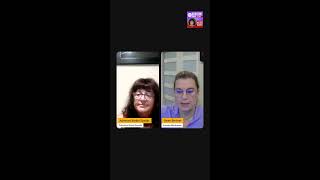
Gwen Bortner runs Everyday Effectiveness, a consultancy for women entrepreneurs making six to seven figures. She's spent four decades advising across 47 industries, from freelance programming in the 1980s to knitting instruction to her current practice. She uses a three-question framework to help clients vet advisors and charges month-to-month with no guarantees.
Chapters
We're, we're, we're live. Okay. Gwen is very patient because I have to set up. We're live on Chatter Social, Facebook, YouTube, and LinkedIn. So, and I was just telling Gwen, I'm, I'm hot because I'm in Daytona Beach, Florida, and we are actually having a little bit of a heat wave. Okay. So I'm really excited. You know, the show, all my list, all my guests are brave, bold, brilliant. Gwen is obviously beautiful, so we're going to add the quadruple Bs. But I don't know my guess because when I say no fluff, Gwen, your people think, oh, you must— I don't, I don't do any research. Just now I got the bio. I didn't even read it. So I'm like just as excited as everyone else. Who is Gwen Bortner? So Gwen, introduce yourself. So thank you for having me.
I love this format because I also love off the cuff. And so this is, this is very fun for me. I, my name is Gwen Bortner. I own a business called Everyday Effectiveness. We, we are a business advisory firm. And so we're focused on helping primarily women entrepreneurs in their 6 to 7 figures. We are really focused on accountability. And so that's our, our primary focus when we're working with our clients. We also have a new product that's called Performance Accelerator that is an accountability training program that people can use with their, with their own, with their own teams. My background is 4 decades of being a professional in the business world, and I have worked in 47 different industries over time. And so part of that allows me to come into an environment and bring ideas that may not be traditional in a particular environment, but have actually a lot of proof from another environment. And so that's where I am providing my business advisory services. My, my goal is to provide accountability, to ask some really hard questions, and to provide some insights that they might have not gotten otherwise. My mouth—
I literally, I'm like, my mouth dropped. 47. So let's just go over that. So tell us how And like, what's your history so that where you got today with Everyday Effectiveness?
So, so I started working professionally while I was still in college, and I was working basically as a freelance programmer way back in the '80s when programming was not a typical, you know, activity. And PCs were brand, you know, were brand new back then. And but because of what I was doing as a programmer, I was going in and I was having to really understand and learn the industry that I was, that I was doing whatever programming for because I was needing to understand what's going on in the business that they now want solved with some, you know, reporting, computer data tracking, you know, whatever, whatever was going on. And so I did versions of that in, you know, either working for a company or working as a freelancer or, you know, working as an independent contractor for a lot of my career. And a number of years ago, I was working with a coach and he asked me, he said, so you've, you've worked with a lot of industries, not just businesses, but industries. And I'm like, yeah, yeah. And he says like more than 10. I'm like, oh yeah, way more than 10. And he's like more than 20. And I'm like, maybe, I don't know. I think so. He's like, okay, your homework is to list out all the industries. So that's why I know that it's 47. And, and so I sat down and started listing out all of the various industries that I I spent time in working for them as an independent contractor, you know, programmer. Um, and that's where I got to 47. And so some of that was done through programming, some of it was doing project management. I worked for one of the big consulting firms for part of my career, and then part of it has been my work at Everyday Effectiveness, working with lots of different types of, uh, businesses and business owners.
Can I steal all of this? Because I grew up in the promotional products industry. My parents started logo merchandise, and I myself have worked with so many different industries. And I, like, I feel like this— his homework to you, I want to take his homework on because it's so true. Like, when I worked with a realtor to talk about their logo merchandise and branding, I learned everything I could about that industry. So if you don't mind, I'm gonna steal that because— and I was with SCORE for 8 years. So, oh my God, I never thought of it. But when you said it, Mm-hmm. Like delicious, glorious. I love it. I love it. Okay, so this is fun. So at what point of your life did you realize, I might as well just— is this your own business? This is your business, right?
Everything. This is my business. Yeah.
Yep. Okay.
Yeah. So, so, so I, I, I took, I took a, um, my last like employee employment, you know, type job was, um, running the IT department for a phone company. And, um, it was a, a startup business and we had an initial public offering, so an IPO scheduled for a Thursday. And on Tuesday was the dot-com crash in 2000. And so that completely killed our IPO, um, which meant the whole— our, our funding, everything, all of a sudden the whole business just had to collapse way, way, way down. And so I ended up laying myself off as part of a major layoff that we had to do with, with, with this failing of the, of the IPO going through. And, um, I took a very hard, uh, left turn. Um, I was also a knitter all of my life and I became a professional knitting instructor for a period of time. And so, um, I started teaching knitting and, and ultimately taught knitting all over the world. And, uh, while I was doing that, I realized that most people that owned yarn shops didn't actually know much about business. Um, you know, they got into it because they loved yarn and they loved knitting and they loved the people who, you know, I mean, it all makes sense, you know, from a kind of, you know, a sequential state. But I understood that they really didn't understand the business side of the business that they were running. And so I started doing consulting while I was also being a knitting instructor. And what caught me was like, oh, I really miss the business side of this. And, and as I was doing it, I realized because of all the other, you know, experiences and programming and whatnot, I actually have a very broad understanding of business. And I've done a lot of startups and other things. So I don't just know about one area of a business. I understand about, you know, HR, and I understand about accounting, and I understand about systems and processes, and I understand about change management, and I understand about computers. And so that was when it was like, oh, I can actually do this much broader consulting. And so it occurred to me, it's like, well, if I can do it for them, I bet you I can do it for others. So I just started like working with a few, you know, other people that would come up and would like, oh yeah, no, I could help you. And, and that was it. So it kind of evolved, um, and as it did, it was like, oh, I really— I mean, I loved doing knitting instruction, but it was like, oh, I really, really miss being in the world and doing this. And so that was how the business evolved. So for a while, I was running both, you know, kind of parallel. And then I went exclusively into, into my, into my advisory business. Oh, I can't hear you. Thank you.
Sorry, my dog was barking, so I muted it. Your story resonates so well because, like, I am absolutely loving this because This is something that, that we actually see a lot, right? Where you, you, you have all this knowledge and then you realize you, you go to do something like the knitting, which sounds like it would've been fun. And then you see like, wait a second, there's a need. And so what, what were some of the struggles and challenges that you saw that these businesses needed?
Well, the thing was, is first off, most of them had not been on the accounting side of a business before. And so when you're owning a business, you need to understand what all of those accounting reports are and what they mean and what the numbers mean and, and all of those things. And the problem is most the time they would count on their, you know, like their tax accountant, whoever was doing their taxes for them. And typically, you know, not everybody, but typically they're not really great about helping you understand the numbers because it's so intuitive for them. They love it, they're in it all the time, it makes so much sense. And so what I— one of my specialties was being able to actually explain all of those detailed accounting reports in a way that made sense so that they could say, oh, I now know what this number means. I know why this number is important. I know what I need to be paying attention to about it and to be able to look at, look at those numbers and have it actually make sense. And so that was the biggest piece was that the numbers were— it wasn't just a number because a lot of folks, when you're doing Retail sales say, oh, I'm worried about, you know, I sold $1 million this year. Well, selling $1 million is not a problem. Selling $1 million at a profit is the problem. And so, so that, that was really the piece that we were focused on is like, how do we actually track the numbers so that we really understand what the business is doing?
So is that primarily your focus? Is there other part of the consulting that you offer?
So I actually now look at the entire business. So a lot of times it's about personnel and making sure that you've got the right people doing the right job. A lot of times it's about systems, that we actually have consistent, repeatable systems. Sometimes there are, you know, elements of accounting. But I stay at a very, very high strategic level. I'm not down into the weeds with, with folks. I will help them figure out, you know, who they need to be working with. And sometimes, you know, if they're working, for instance, with their tax accountants, like, okay, these are the 3 questions you need to be asking them. And, you know, and let's, let's talk about what those, what those answers are. But I'm more of a thought partner and accountability partner to say, you say you're wanting to go here and these are the steps you need to take. Let's talk about why you are or are not taking those steps. And are those the right steps to be taking?
Oh, I love it. So you work with C-suite executives?
Yes. Yeah. And primarily I'm working with the business owner. I typically am working with, um, entrepreneurial-based businesses that are still, um, being run by the initial founder.
That's really interesting. And then are you, uh, let's talk a little bit about family business. Do you have any clients that are family businesses?
I, I have several that are family businesses and I've, uh, and I've had many in, in the past as well, both you know, way early in my career we were talking about earlier and on through. So I've got, I've had a, several businesses that are husband and wife, you know, running businesses. And I've also had a couple where it was a parent-child scenario. So we've got, you know, a parent that founded the business and a child that's coming into the business, you know, and taking, taking over some responsibilities. And so family businesses add a whole nother layer of dynamic. Into the conversation.
I want to hear— so, so I'm always a positive person, but now I'm like different. I want to hear the struggles. So what are some of the challenges besides the understanding the numbers part of it that you find in family businesses?
Well, because there's always this other dynamic, whatever it happens to be, right? There is a husband and wife dynamic that, that is always present. That may or may not, given a particular situation, be helpful or not. And in some cases that dynamic is super helpful and in some cases it is super unhelpful. And being able to say, you know, what we're dealing with here is not this business issue, we're actually dealing with this family dynamic. And when we're dealing with, you know, parent-child situation, a parent is always the parent and the child is always the child. Even if they're 50 years old, they're still the child, right? I mean, there's, there's always a bit of that dynamic going on and all of the history that goes along with that.
Right.
So being able to say, yeah, what you're actually upset about has nothing to do with this. This is about, you know, what happened when you were 10.
This is so needed. Excuse me. This is so needed because I can really understand this. So first of all, are you getting the buy-in from both? Whoever that parties are with the family business? I mean, that one is not bringing you in and the other one's like, wait, who is she? Both buy into working with you?
There usually is one that brings me in, but part of it is I won't work with you unless both— it's obvious that both are okay with it because there's no winning. And it's like, that's going to end up being a waste of my time, a waste of your money. And, you know, it's not going to be a good result. So Um, and, and there's been at least once or twice where someone wanted to try it. They didn't. Um, they could see that it wasn't working and eventually they, uh, they came back and said, okay, well now we're ready. We get it. Now we're ready.
You know, it's, it's funny because I, I, growing up, I always thought, well, like HR handled all that, but it's, I could see the need in a family business having someone, A, who understands business. It's not just your human resource person to kind of, you know, help to put out fires and try to figure something out. So you're offering strategic and, and, and smart processes and you're offering being effective, but you're also able to— so you should say you're a social worker too. Psychology.
Well, so I've had clients say you're my business therapist.
I could understand that because there is so much, so much of the dynamics. I love that. What about— I have another question. Oh, hey, Alana, will you get me a glass of— oh, a bottle of water? And yes, I'm doing an interview, and yes, I'm asking you. So if you're listening, I'm on, you know, Spotify or Apple. I need water after it. I'm like, I need it. Okay, so what is the youngest entrepreneur that you worked with?
What is the youngest age? Um, the youngest has probably been in their late 20s or early 30s. So, um, so I've had a few that are, that are relatively young, but I will say most of my market ultimately is in there, um, usually around their mid-40s into their early 50s.
I feel like we're going to see more younger entrepreneurs. And if you are a young entrepreneur, you need a Gwen Bortner. So like, just like make believe I'm talking to you right now over the phone. You really do. And it's nice to have someone that has wisdom because that's not something that you could buy and or drink in a bottle.
Well, and there's a gentleman, Dr. Jeff Spencer, who describes it as being a corner, a corner man. As someone who can see around the corner because we've been around the block many, many, many, many times. And, and his, his, his reality is like, you've got to have someone who's at least 60 to be able to be, you know, to be a corner man. Because the life works in cycles. And it works generally in about 20-year cycles. And the first, the first 20, we aren't paying attention. And so actually see the cycles and the repeats, you need a couple of them. So that's really where that 60 kind of number comes in.
Okay, so I don't know where you fit in. You're 40?
No, I'm 62.
No. All right, I'm 63. Look at us. See, this is the— this is 6 with another number. Um, I absolutely love that. I thank you for that. That is a great share. I really love that, that you— that is a great way to understand the wisdom of it. All right, so I want to know a little bit more about how you work with someone. So And actually, I'm going to back it up for a second. Where are you finding your clients? Is this all word of mouth? What does that look like for you?
It's generally what I'm going to call relationship marketing. So my primary social media that I'm on is LinkedIn. And so I will sometimes develop relationships via LinkedIn where I see someone and I comment on them and they see mine and comment back and forth. I've got several groups that I participate in, both virtually and live, networking events, those kind of things. And of course, referrals from, from clients who are like, yeah, everything you're saying is the same thing I had. You need to work with Gwen. Call Gwen.
I love that. Okay, so that is really great. And Bobby, raise your hand if you want to come up. We are live on Chatter Social. So, and thank you, Bobby, for, for being here. Okay, so I love this because, you know, first of all, the whole entire idea of business consulting to me is, is fabulous. And I, Years ago, a business consultant was hard to find, extremely— could be very expensive depending on how they worked. And I remember having, you know, they like months where they just would sit with each person and biggest— if you want to come up, okay. I was just trying to say hello and chatter. I remember someone that came in as a business consultant and spent like almost a month just sitting with each staff member. And then quit, which is crazy. So really understanding someone like Gwen and how she can help your business. So you're on social media, but you are really showing the trust, right? Because this is going to be the year of know, like, and trust. And with that idea, how do you, how do you help your clients to those that are actually have something to sell to, to get to the point where you are, where you don't have to sell anymore, that people are asking for you or want the referrals?
Well, so, you know, and, you know, everyone's business is different. One of our, one of our core values at Everyday Effectiveness is your context matters. And so, um, you know, people are often like, well, so what's your framework? What's your this? What's your— and it's like, I do not have a set framework where, you know, when people say, well, what are you going to do? It's like, I can tell you the first 2 or 3 steps, and after that it is completely unknown because those first 2 or 3 steps are going to define steps 4, 5, and 6. And I have a number of businesses that are on the outside, you would say these are identical businesses and I am working on completely different things with them, right? Because their context, what they're working on, what they're struggling with, what the challenges are, what's happening in their personal lives, you know, all of those things is completely different. And so that means different focus, right, for each of them. And so, you know, to me, that's, that's really the key, the key piece of building trust in, you know, in the work that I do is you need to know I am not going to tell you what you need to do. I am going to help you uncover what you need to do for you. Right? One of my other big things is you need to go for your own unique definition of success. Not society's definition of success. One of the first questions I always ask is, you know, what does success look like? And almost always it comes back with a number. You know, I want to have an X, X size business, right? I want to do X amount of sales this year. And I always say, well, that's not a real— that's not your actual goal. They're like, but, but yes, it is. And it's like, no, because the number doesn't actually mean anything. It's what What do you think that number gets you?
Right?
And as we start getting there, then often they can't tell me why they need that number. And I had, I had a client, gosh, it was a number of years ago now, who said, yeah, I really need to get to $1 million. And it's like, why? Why do you need to get to $1 million? What, what does $1 million get you? And she's like, well, because, you know, it's supposed to be this and this and that. And I'm like, yeah, I'm not actually hearing you care about this, right? And so, so we, so we were, you know, digging into it. And what she got to was like, she actually was real— she really had a strong, successful business where she was at with very little overhead because she was a very, very few people, very, you know, and it was super, super effective. And she was making way more money than she probably would make if she grew the business to $1 million because she would have had to hire more people, would have had more expenses. And it was like, And she's like, yeah, see, that's been my thought. But everyone says I'm supposed to have a million-dollar business. And it's like, yeah, everyone lies. They don't know. You need to know what's right for you.
Oh my gosh. So Gwen, who is the reality business consultant— so Gwen, I have a question for you then. What does success look like for Gwen Bortner?
So success for me changes over time. And for a long time, success was having a practice that I really loved, which meant working with people one-on-one and, and in small groups and things like that that wasn't scalable. You know, that's one of the other things you see on social media all the time. Oh, your business needs to be scalable. You need to do something that's scalable. And it was like, yeah, I don't think so, because I enjoyed what I did. I was making, you know, a good salary for what, what I was doing. And I also knew I wouldn't be able to sell it when I was done. That was fine. Okay. Because I was the juju that was coming into the business, and when I left, it was gone. That was okay. That is not typical, you know, advice that's out there. But recently, mid-year last— this past year, I discovered the accountability system that I've been using with my clients very, very successfully for the last several years. I can actually train other people to use within their own environments, with their own teams, into large corporations, etc. And so what I— what success right now for me is getting that training out to as many people as possible, which is now not building a practice but is actually building a business that will have trainers and, you know, all, all sorts of others. And so It changes over time. So right now, that's what success means to me.
I love it. I love it. The pivots. You know, I want to address sometimes what I think is like the elephant in the room. And you mentioned it. You mentioned like social media and everyone giving you the advice and what that looks like. And, and I love— I want to go back to— I want you to repeat what you said just in case someone is just coming in right now. Oh, it's 333. I love numbers. So someone's coming in right now. Repeat what you said about wisdom.
So wisdom really comes from experience and time. And, um, Dr. Jeff Spencer talks about a corner man, which is about someone who's been around the block so many times they see around the corner, right? And, uh, and, and the, the life cycle is 20 years for most things, like, you know, like, there's a lot of things that repeat every 20 years if you, if you look back. And so being at least 60 allows you to bring a lot of wisdom because that first 20 years, we're not paying that much attention. Yes, exactly. Those of us who are 60 plus, that first 20 years, we aren't paying that close of attention. Some of it we're not paying any attention for. And so the next 20 years, we're actually paying attention, but the third set of 20 years is where we start seeing the patterns and seeing the repeats and seeing the places that we can actually say, yeah, I know it feels like this, but what's actually probably going to happen is that because we've seen it again and again.
Okay, so this is good because I want to address the elephant in the room, but I just want to say, Saeed, if you want to come up, Bobby, just raise your hand. I'll bring you up. So long as you can hear, you're, you're great. But you're welcome to come up and you're welcome to ask any questions of Gwen. We are live on Chatter Social and on Facebook. LinkedIn and YouTube. Gwen, I just, I can't tell you how much I love what you're saying about that. And so I'm always curious when I see someone young, you know, maybe graduate from college, or I see a lot of social media people and they're, they call themselves a business consultant, but their one niche is really marketing, and yet they themselves don't, may, they may not have the experience to understand how a business works and I think that it's— you can't be as effective. And I want you guys, if you're mad at me, that's good. And if you want to like put comments in or email me or call me at 386-631-4577, but don't text me and not put your name. You got to say, hey, Adrian, heard you. This is Sally. I disagree with you. You're a beep beep beep beep beep. That's fine. Because I think— but I'm really thinking to myself, like, you're, you know, it's good to go in and be a social media marketing manager. I love all of that. But if you're going in and you're coming and you're saying you're a business consultant and you don't have all those corners, you don't have the wisdom and the experience, you only know TikTok, Instagram, and Facebook, maybe Pinterest. Are you really a business consultant? Can we just get that air cleared? Are they or are they not?
I would say no. I think that there is a place for niche understanding and, and I value it. You know, having someone who really understands accounting in a deep way is super valuable. Someone who really understands all the ins and outs of HR is super valuable. Someone who understands all the ins and outs of marketing and social media and, you know, what's happening with the algorithms and all of these things are super valuable. And that, that niche place is an important place to be. But when you're talking business consulting, you should have someone who can talk to some reasonable depth across all of the departments of a business. And most folks don't have that experience because we get trained in something like, you know, I'm just going to pick on accounting because it's an easy one for people to, you know, to process. You get trained as an accountant and you start, you know, at a job as a bookkeeper. Then you be, you know, you work and you become a comptroller and a controller and a CFO. And, you know, But you've got some vision for the rest of the business, but mostly you're focused on your area of expertise. When you get up to CFO, at that point, maybe you're starting to see more of the other business pieces because you're in more of those high-level discussions. But, you know, as a bookkeeper, you're not a business consultant. You're not. You don't understand all the pieces. You're seeing everything through the view of the numbers. And so when you're a marketing expert, you're seeing everything through the lens of marketing. And so part of that being a business consultant is having enough experiences in enough different areas and departments. And most of the time that takes time to be, you know, to be a really, truly valuable business consultant unless you've had some unique opportunities, which some people have. You know, I know of a young person who was able to actually spend big chunks of time in a whole bunch of different departments in a relatively short time. And by the time, by the time they were in their early, like mid to late 20s, they had a ton of experience. And yeah, they were a business consultant because they had seen it all. They had, they had lived it all.
So I, I would like to ask you to do me a favor and share with business owners and C-suite executives, how do you vet a business consultant? What would you look for to make sure that you really are getting someone that can help you? Because I don't think companies can afford to not just waste the money, but the time, you know, because it— right, because it takes time to share with you, work with you. And then all of a sudden, if you're like, That's really way over my head. That is so unfair. So how do you vet? What does that look like?
Well, so one of the things I have, I have kind of 3 questions that you need to be asking yourself before you hire someone in any sort of a consulting role. Right. And so the first, the first question is, are you looking for an expert Or are you looking for someone who can teach you? Okay. And so, um, because there's people, there's a lot of people who's like, oh, so-and-so made $10 million. So I'm going to hire them to have teach me how to make $10 million. Well, the thing is, is like them making $10 million for themselves is not the same as being able to help you make $10 million. The question is, so how many people have they actually helped make $10 million? Right. Because that's a— it's a different skill set. You know, the whole thing about those who can do and those who can't teach, you know, sounds like a negative thing, but it's actually a positive thing because there's a lot of people who are, you know, really good at something, but they couldn't coach anyone else to get better. They only know how to do it for themselves. Right. So that's the first question of are you looking for someone to just do it or are you looking for someone who can help you do it in the way that you want to have done? So that's the first question. The second question is what I call generalist versus specialist. Okay. Because the generalist is someone who's going to be looking at the whole business. But is it a whole business problem or do you actually know where you need to be focusing on? On, right? If you're needing to focus in an area, hire a specialist because that's really what you need. But if you're really like not sure where the problems are, you probably need a generalist. And a good generalist will help you figure out who is the specialist that, that you need to bring in, right? Because that's, that's absolutely a, you know, a key piece of it is to say, Do I need a generalist or do I need a specialist? And if I need a specialist, who is that specialist? Right. And going through, you know, all, all of those, all of those pieces are, is really key. And then the third question is how much is, are they bringing in their system that you're going to have to adapt to versus are they bringing— are they adapting to your environment? Now, and none of these are about a right answer or wrong answer. They're about a right answer, wrong answer to your particular situation. Right. So sometimes what you need is someone to bring in the system and say, this is a way that it works and this is the way you're going to need to do it. Right. But that means that your environment is going to have to go through a lot of changes. And is your environment such that will allow for that to happen? Other times they're like, we will customize the thing for you, but that usually takes longer and it has other ramifications like will their process still be as effective once they've made all the, you know, customizations to your system, right? So those are the first 3 questions that I encourage people to answer first because that helps narrow and, and see, you know, to be thinking about Oh yeah, I actually need this or this and that. And then that starts getting you into the right framework that you're looking for. I love this.
You know, by the way, I wanted to tell you, I love that you in essence personalize what you're going to offer. So you don't have like, come to my page, here's my price, here's the month, like cost. Like, you're— I think that makes sense. I, you know, I almost sometimes don't understand why other, other business consultants wouldn't do that because if you just have like one structure, it just, it just never made sense to me. So I love that you said that you personalize. So I think that is great. So what if I hired you and then I said, Gwen, here I said, Gwen, I need to have some— something is going on. Money is draining somewhere. You got 2 months to figure it out.
So What I, what I will first say is usually it's not that easy because if it was that easy, you would have already figured it out. Right. And I will say I will, I will help you figure— I can help you figure that out. But you may not like the answer because a lot of times that's, that's the other piece of it is like, I can tell you what the answer is. You don't, you don't want to hear this answer. That's okay. Right? Because, you know, you don't have to like my answer, but I will tell you what my answer is. But, but the way I work, one of the things I have is what I, what I've always joked about. I call my no guarantee guarantee, which is you pay me month to month. And if at any point you're not happy with the results, you stop paying me. I, and I'm totally okay with it. You don't, we don't have a big contract in place. We don't have a long-term agreement. We don't. So if you aren't getting the results that you think that you need, Then you say, I need to be done and, and, and we're done. You know, easy peasy. When I first started sharing that with some, with some other service providers, they're like, well, but then people leave really early, right? And it's like, no, because they're getting the results that they need. And if they're not, they do. But, you know, on the whole, no. And they're like, well, how long do people stay? And it says, because you don't have any sort of— I said, no, I have no minimum contract. I have a 30-day minimum contract. One month. That's, that's my minimum contract. And they said, well, how long do people stay? And I was like, well, on the average, it's about 3 to 4 years that they work with me. And they're like, how can— it's like, because they, they keep getting value out of it. And I said, I have some that work with me 2 or 3 months and then they're good. And that, and that's also okay. I have, I have some that work with me, you know, 9 months and they're good. That's also okay. But it's about we work for as long as it works.
Yeah, I love that. You said something about, you know, this is the problem with business coaches and consultants and, you know, the word kind of can be— I always said when I was a SCORE for 8 years, I was always like, I'm a certified business mentor. I am not a coach and I'm not a consultant. I always made that very clear with what we did with SCORE. But one of the things that I wanted to address with you, and it just kind of slipped my mind for a second. So excuse me, everyone, hold on for a second because I got to pull it back in. I forgot my piece. Getting old now. So yes, sometimes memory kind of goes a little bit. So would you call what we have a lifestyle business? Because it isn't something that you could pass on unless they could take your brain and, you know, put it in a robot. And but like, what does that look like? What do you call it? Because I love that you mentioned that. You said, you know, this is a business that Once I go, I go.
Yeah. So I call that a practice. So, um, it's a, it's a practice, and you could think of it like a, a doctor's practice or a legal practice. Um, you're actually hiring the person, right? You're not, you're not hiring any other thing. You're hiring the person. Now, legal practices often have lots of lawyers, and so, you know, they come and go and whatnot, so it's not quite the same. But when you're an individual Um, I call it a practice because it's not truly sellable to somebody else. But like I said, I, I'm in the process of developing a business that is sellable, um, because it's going to have a whole set of training materials and, you know, all sorts of things, and there'll be people and, and whatnot, and it won't require me as part of it. Now, I'm going to maintain my practice as well until I decide not to, but Um, but so there, you know, there's kind of two things now going on in my world. There's a practice thing going on in my world and a business thing going on in my world. But that's how I've always distinguished them is if you sold it, does it matter that you're no longer there?
Right.
To me, that if you're, if you really need to be in it, then it's a practice. Um, but practices can be highly profitable, often more profitable than businesses. Quite honestly. And the difference is you just need to not count on selling it to get your money out of it. You need to be allocating funds from your practice every month, every year, every whatever into your retirement because there isn't really anything to sell.
Gwen, I have had over 250 interviews, asked this question many times. Had this conversation with many business owners, and you were the first to explain it so eloquently, and I love it, and I'm gonna steal that from you. I'm a thief, and I am stealing.
No problem. I'm all about the thieving.
Oh my God, the practice. I absolutely love it. Oh, hi Rebecca. Hi Kim. If you want to come up, um, just to raise your hand. Oh my gosh, the practice. I absolutely love this. Okay, so I want— I'm curious about You're going back. So you had a client, you had a client for a year and they're like, everything is great, we're doing good. Do you go back? Do you like have a little tickler file and be like, I'm going to call them in a year and see how they're doing? Do you do it?
Yeah, I'm always checking in with my clients and, you know, and just because I'm curious to know how they're doing, you know, I mean, I've invested my energy into their business as well. And, you know, I want to know that they're, they're successful. And I've had I've had a number of clients come back at some, at some point later in time and say things have changed for, you know, whatever. You know, there's always lots of different reasons why things have changed. It's like, and I realize I need help again. It's like, great, let's start again. No, you know, no harm, no foul. No, you know, no, like, oh, well, if you would have stayed with it, you know, because that's not necessarily true. It's about letting them run their path the way they need to run their path. But like I said, I've had it happen multiple times, and sometimes they work with me for a much shorter time a second time, and other times they work with me for a much longer time the second time. It's completely up to them.
Gwen, you are really an example of a business owner that is coming on a podcast sharing your thoughts just so naturally and building trust, likability, credibility in like 40 minutes. I just want to sell you. I like everyone out there. Seriously, feel free. But I think about it because I'm like the visibility coach, right? So I like, I always talk about getting this kind of visibility, but you're the example because there's a lot of flooding, right, of business consultants and running their own practices. I love that. But then I think, but how do we know? I mean, like, this is not for you, Gwen. For all of you that are using LinkedIn and you connect with me and then you immediately want to ask me if I want your services and if I want your coaching, you have done nothing to build any kind of trust.
There's—
I don't even know you to like you, and I have no idea why you're trying to sell me something if you think that I wouldn't know someone else. But my reason for saying this Stop doing it and do what Gwen is doing. Get on. Well, we're using PodMatch, which I love, which, by the way, my book Unscripted Brilliance, the PodMatch edition, is out right now. It'll be free next week. The ebook will be free during Podfest. Alex has a chapter in the book. I had him on the show and actually we walked through his— we walked through like the backend because I was so confused. So a little confused. Sorry, Alex, but the workflow is a little confusing to me. But and then he wrote the foreword to the book. And all 16 of the chapters are with PodMatch, um, community members. But that's the thing, right, is that you know enough. So if you want— you need to be a community member. Gwen has an affiliate link. Get the affiliate link because— and I'm on there too as a host. But I absolutely have to say how, like, of all the podcast interviews I've done, I feel like, wow, you are really the example of getting to know someone. You're not just spilling words out like, you know, like you just read it and you're like, no, I'm telling you, your shares, you could see working with you what it would be like. And that is so needed. So first of all, can I ask what state you're in?
So I'm in California. I live in the very, very center part of California.
Nice. Okay. So on the West Coast. But that doesn't matter, right? You probably work your time around.
I've had clients in Germany and in Dubai. So I work with clients everywhere.
Amazing. Amazing. So I think that's incredible. So you're showing them how the— how we do things in the United States. Is that something that— because I'm always curious about that. If you're working with a business in Germany, what does that look like as far as the information they need?
Yeah. So, so because I stay at a very high strategic level, the information is consistent. So, you know, when it comes down, like when we get down into some details and finances or taxes, it's like, okay, so this is how it is in the US. It's probably not the same. And they're like, yeah, but it's kind of this way. And it's like, okay, you know, and so we're able to get there, you know, knowing that it's not ever going to be exactly the same. But functionally, when we're talking about business and, you know, the general operations and behaviors of business, it's universal at that strategic level.
You know, on October 14th and 15th, I did a 2-day, 21-speaker, and actually Rebecca is in the audience. And Rebecca, you're— she did an inclusion panel that was really amazing. But the reason I'm telling you this is the event was called SWOT in Order. And I'm thinking now that's an old term, right? The old strengths, weaknesses, opportunities, and threats. But I have a feeling that you use some sort of function with that with your clients? Are you kind of overall looking at that to see where they are? Does that play into effect?
Not using the same wording, but so when I start with clients, we actually do a process I call a 5-3-1, which is helping get vision for where they're wanting to go. And then, um, from there, one of the tools that we use, which is what my training is based on, is an accountability process that allows us to make sure that we're staying in alignment with where they want to be going on an ongoing basis, which has elements of what you would think of in a, in a traditional SWOT kind of analysis. It's not done as a SWOT analysis or anything. It doesn't use any of those same terms. But, but it's a similar kind of you know, there's some questions that think in that same way. And then my ongoing clients, I just finished yesterday, we do what we call the quarterly tune-up. And so we have a 2-day in-person, you know, virtual but in-person event where we look, we do some review of the previous quarter and some planning for the next quarter. And that's a really, really valuable part of the process. Because that's also where we end up doing some of this SWOT. We don't actually use a SWOT analysis tool, but similar kinds of things, right?
I definitely understand that. Do you have a book?
I do not have a book in this career. I have a knitting book that I wrote 15 years ago now. But I have not at this this point published a book. I've got— I'm, I'm kind of working on one in the very, very early stages. There will be a book at some point, but I'm not sure when that's going to come out yet.
What were you doing? The— were you doing it in person, your knitting classes, or online?
Yeah, at that point it was almost all in person. I did, I did do some online, um, classes, but most of it was, was in person. I had planned on fully retiring from the knitting in 2021, and then COVID happened, which just moved it up a year, you know, because I love it.
I think that it's amazing for anxiety and for people like, you know, just being able to do one thing. So, and it's fascinating to watch. Gwen, is there anything that I did not ask you that you would like to share?
There's probably 1,000 things you didn't ask me, but there were 1,000 really interesting things that you did ask me. So I don't have anything on my list that I can think of.
You are so likable. Oh my gosh. I just have to say that. Not that my other guests weren't, but there's something about you that's very, very likable. Wow. I'm telling you, when it comes to like, trust, you're hitting all of that. That is awesome. All right, guys. So it's Gwen Bortner. Oh, Gwen, I hope you don't—
bone broth.
I'm saying I had a 4-week cough. I used bone broth. I made my own bone broth. I became a bone broth queen. Anyway, so thank you. We are live on Chatter Social. Thank you, Bobbi, for being in the room. Gwen, thank you. I don't know, I'm sorry, 47 minutes went by so fast and I just, I'm sorry that it— well, I took a little time. No, this was an interview because we didn't start live. Sorry for the few minutes it took to get on Chatter, but I really, really enjoyed you. Thank you so much. I look forward to— so now what you gained, is a stalker. Her name is Adrienne Barker.
I love my stalkers.
I am going to stalk you. I am not just a stalker. I really like doing the reviews. I like, you know, doing your post. And once we connect on LinkedIn, send me a message if you want me to share something. I'm happy to share and I will comment. And, and just, I love that because I'm a LinkedIn girl. That's my jam. So I think that's great. But you, I could see where you are so needed. You are so needed. Is there, before I let you go, is there a niche, is there a market that you really like? Like, you know, like, oh, I like the cannabis industry, or I like the logo merchandise industry.
No, you know, I, everyone asks me that, and I just love whatever industry I happen to be working with at the time, because if I already have experience, it allows me to see how it's changed and, you know, moved forward with time. And if I don't, it's my— I love digging into it and learning about it and seeing where it aligns with other industries historically that I have experience with.
My God, you're my business idol. You really are. American Business Idol. Wouldn't that be a great show? I love business shows. Anyways, thank you so much for your time. I really appreciate it, Bobbi.
Thank you for having me. It's so fun. You ask such great questions.
That's the key, right, though? Because I do know I really don't research. Like, a lot of people will say, oh, I, I— but they, they do the research. I really don't look, and it is what it is. You would make a great host. You know, you would— you could have your own podcast. You would really be good.
I do have my own podcast, but, but I just co-host it with, um, with my marketing person, and, um, so we don't have guests. So, so we go back and forth, but she— part of it is She loves to interview me and ask me lots of questions, which I, which I really enjoy. So my, my podcast is, is thebusinessyoureallywant.com.
Oh, I love that. The business— oh, I love that. Love, love, love, love, love. All right, so, and I just want to remind my, my listeners that tonight, uh, sweet Adrian here is the co-host of Debate the News True Crime. And so let's talk of murder, beating up, and like all the kind of crap. My whole algorithm is business, daughters, and sons and true crime. So, but 7 PM, we podcast, we just, we go live on Chatter Social, Joseph Lobosco and myself. And then, oh, excuse me guys, Alexa, stop. Meet Alexa, she's my— I, yeah, I pay her well. So we go live. So if you're, if you're interested in true crime and want to be part— Alexa, stop— and be part of the conversation, then we want to invite you to the room. So, and, uh, yep. So I love it. I love podcasting. I love everything. Oh, I'm going to Podfest week. I'm really excited. Oh, so I'll share some tips too. I'm going to record everything and just really be all ears like I have been with you. I've been loving it. All right, have a great rest of the day and Happy New Year.
Happy New Year to you. Thanks again for having me. It was, it was so—
You are welcome. 2026, I'm so excited. All right, I will stop the stream and let me come over here. Oh, you are fantastic.










