Meet Gwendolyn Young
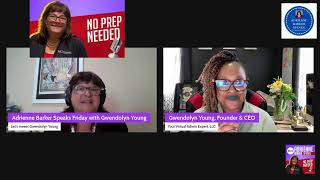
Gwendolyn Young runs a VA agency that gets clients mostly through referrals and structures work around milestones and weekly check-ins. She manages a team of seven, sets clear boundaries after a lupus diagnosis, and uses WhatsApp for real-time communication instead of email chains.
Chapters
All right. I am excited. And I know that this conversation will be not old, but young because we've got Gwendolyn Young. So this is what this conversation is going to be like. First of all, Gwendolyn is going to sell me her services. So we are doing a live interview because I'm looking for a virtual assistant, just like many of you are. And Gwendolyn, I'm going to be honest with you. I have 3, but they don't listen really great. Alexa. Alexa doesn't really listen to me, but she'll remind me sometimes and she'll interrupt me a lot. Siri, who's worse than Alexa. Sorry, iPhone, Apple, don't be mad at me. Okay, Alexa, fine, thank you. And then Siri. Alexa, it's all good. Alexa, stop. See, and now Siri's mad at me. And then I have Barrybot. Who many people know Barry as ChatGPT, but I call him Barry Bot. So I thank him a lot and he seems to be nice and does a lot and he could do an Excel file for me, but they really can't do the work that I need. So Gwendolyn, oh my God, do you make like what? Okay, so how do you normally call out? Do you make cold calls? How do you normally start to like find your clients?
Oh, that is a great question. And this is going to be fun because I had absolutely no idea this is what we were doing today.
No prep needed.
So typically, believe it or not, Adrienne, we've been like 80 to 90% referral-based. So people are telling people about us. Um, the other ways that we find clients is going to networking events and just having conversations with amazing people and hearing about their problems. And they're like, oh, I'm so frustrated with this, or oh, I'm so overwhelmed with this. And I'm like, oh well, you know, we have a small team, we can help you. With all the things, help you get your time freedom back, help you be a little bit more productive, help you streamline some of those systems that you have from that shiny object syndrome, all the things. And then of course, social media, right? So we're constantly posting tips on social media. We write a blog every month on the website. We're constantly showing up where we think our clients that we want to work with are. And then we actually ask. So we send out quarterly emails to our current clients, say, hey, is there anybody that you know that you think could use some really great support, we'd love for you to make an introduction or send them our way because we're looking to work with them. And then we get a lot of people that will send people to us that way as well.
Okay. All right. So, ring, ring, ring. I'm calling you.
Hi, this is Gwendolyn from Your Virtual Admin Expert. How can I help you?
Wait, did you just say your name was Gwendolyn? Yes, I love that name. Hi Gwendolyn, I'm Adrienne Barker, Professional Global Etiquette. I heard about you through my friend Sheila, and I've been going back and forth thinking, do I need a virtual admin, do I not? So I'm kind of calling you, but I'm not really sure what I want to do. What do you do?
How do you—
how can you help me?
Oh my gosh, well, first of all, Adrienne, thank you for taking the leap and calling us. I know that can always be scary, especially in the virtual space. You're like, I don't know these people. Um, and secondly, I to reach out to Sheila and tell her thank you, thank you, thank you for sending you our way and for mentioning us. I really, really appreciate that. We don't take that lightly at all. So now my first question for you would be, what are you struggling with? Because I know that you don't really know where you need the support, so tell me where you're feeling the most pain.
Okay, so what I'm looking for— my daughter and I took a 4-month road trip last year And we blogged about it on My Daughter, My Friend. And we have a website, My Daughter, My Friend. We met a lot of people. And a lot of, a lot of mothers were like, holy guacamole, you must be nuts. I couldn't stand being with my daughter for 4 months straight without a break. Many were like, oh my God, that's amazing. I would love to do that with my daughter. We do think we're friends. Some said, I don't believe that I could be friends with my daughter. Some daughters were like, I would rather bite my arm off than be friends with my mother. So we heard the whole gamut. So what I want to do is— and this is serious— I want to write a book, um, and, and the book's going to be the stories of— and to answer that question, can you be friends? Maybe, maybe you can't when they're younger, but you can when they're older. Maybe there's— I want to hear parents' stories. So I'm looking for someone to help me to find stories. It'd be great to have a, you know, two 12 mothers and 12 daughters. They're already written out the Google Drive. The blog is written, the, like, the page is written. Now I need someone to— because people say yes, but then they don't do it, right? So I need someone to go back to everyone that said yes, encourage them. I also— they may need to dictate, like, maybe the person wants to do an interview and answer the questions. Okay. And so I need someone to help me with this project.
Okay, so you're looking for project-based versus just some kind of ongoing long-term support. Do I understand that correctly?
I think in this case, yes, I am. Project.
Okay, perfect. Absolutely. We have someone on the team that I think would be absolutely perfect to support you with that. One of the first things that we do, how we work with each other, is I'm gonna send you an actual quote and proposal around what I think you want based on what I heard, right? Some research and data entry, compiling information, organizing it together, and doing, doing the outreach part, right? And keeping it all together, sort of like project managing that you've got all the people that you want, your 12 mothers, your 12 women, how they want to be interviewed, all of those things. So we'll build a nice little spreadsheet or some sort of database for you to put all that information in, because you may want to use it in the future for a project, right? Maybe now you want to do a YouTube series on them and you want to have that turn into something on TV about mothers and daughters, right? That can turn into a whole thing. I'm super excited. But the way that we work, I'll send you a proposal, give you a couple different options on how we can work together. You'll be able to look at those options right from your email. If you're ready to get started, you can click the button and it's going to walk you through the process. This, everything from signing your contract to scheduling your call. You're going to get your welcome email. It's all going to happen in one shebang because we love systems and processes and we like organization as well. You're going to book that initial call. We call it the kickoff call. We come together on a kickoff call and then we say, Adrian, what is the goal? What is the ultimate goal and outcome of this project that you want to see and how can we support you in getting there? And we're going to talk through what it is that you want. We're going to develop the milestones out of that, right? Typically, we're working with clients across 90 days, and so we'll talk about how long we think this project is going to take, what those milestones are going to be, and then our project manager is going to put those into our system. We're going to get the access to all of the tools that we need from your side, so access to your email, access to your Google Drive, access to all the files. We're going to get all of that. We're going to do all of this in that initial kickoff call, and then we're going to set our weekly meeting because there, there has to be a cadence of connection. So we're going to schedule our weekly meetings. This is going to be the time where we come together for 30 to 60 minutes every single week, and we're going to talk about progress. Here's what we've done. Has any of your priorities changed? Are we still on track with this project? And then we're just going to dive into working every single day. You'll communicate with us via email on your domain. We like to come into our client's business so everything looks seamless. Nobody from your side will ever know that we don't work within your business because we're emailing from an email on your domain. We have a WhatsApp channel for our clients so that you can reach out to us in real time at any time during business hours, and you can connect with your support person. And then our leadership team is in there looking from a high-level view as well, and they're going to be working with you until we hit those milestones and we get all of these things done, or until we come to the end of our agreed amount term for the project. And then we come together at the end of that project and we say, hey, Here's the things that we were able to accomplish with you. Our project manager is going to do a one-on-one with you to find out about your experience. You can give her some feedback. And then we're going to say, do you have more projects, Adrian, that we can help you with? Do you want ongoing support? Are there things within your business that we can support you with? How are you scheduling these people now? Because this is going to turn into a big thing. So do you need someone to help you with your calendar? Do you need someone to help you with the customer service emails? And if you say no, then we're going to say, Wonderful. Let's get you scheduled for your offboarding call, and then we're going to make sure you have all the pieces to your project. We're going to wrap it up really nicely. We're going to ask you for a testimonial, and then we're going to part ways. And then we'll probably follow up with you in a couple months just to check in. If you say, yes, I need somebody that's going to be there with me step and step every day, then we're going to say, wonderful. How long do you want to work together? You want to work together for 6 months? You want to worked together for 12 months, you're going to tell us, we're going to get your renewal out, get that signed, and we're going to just keep right on trucking and working together.
Holy guacamole. Now this is why you have so many great reviews. I can understand this, Gwendolyn. I am totally impressed. And as you're speaking, I'm wondering to myself, do you have someone that understands WordPress? Because I have a podcast and hopefully one day you'll be on it. But But I'm wondering, I'd like to have the podcast. I need to make some changes. Do you have someone that knows and works with WordPress?
So my question for you would be, when you say someone that works with WordPress, are you looking at just like uploading the content, or are you talking about design?
Okay, so the— no, so the WordPress is my professionalglobalediquette.com. It looks good, it's professionally done, but I need just some things that I just need done, like creating, um, creating a page for all the podcasts and also creating a page for the ones that I've been on. And then also creating, um, uh, putting some— I have like, I'm like that wacko person. I have adrianbarker.com that talks more about what I do, and then I have Professional Global Etiquette. But the Professional Global Etiquette page doesn't really have anything but a blog on it, my book that I wrote, and, um, that's really it. It doesn't have as much. So I'd like to get my streaming on there. So I, I have some work to do. So you could provide me with something?
Yeah, absolutely. So we can provide support in that way. And that's why we ask those clarifying questions, because we don't ever want to mislead our clients down, right? Because if you would have said, no, I need somebody that can code and design, I would have said, Adrian, we are not your person because we do not code, we do not design. That is not our skill set, and we do not want you to be disappointed.
I, I mean, you know, I've only taught, so, so, okay. Thank you. Thank you. That was a little role-playing, everyone, but I'm actually serious with my needs. I am totally impressed by how you handled that. And I, first of all, I think you're brilliant that what you're doing, getting on podcasts to get your word out, like, how smart is that? Right there is just the smartest thing ever to do that. Do you book your clients too? Is that part of your package?
Yeah, because it's about research, right? So like, we have a client right now and it's like, okay, we employed this strategy for me, right, of our company. We could employ the same strategy for our clients. And so if they have a goal of increasing visibility, it's like, oh, I've got this great platform that I find people where I can be guests on their podcast. We can get you an account set up and then we can have the VA start researching opportunities, right? So we'll sit with you and say What is your criteria? What are the kinds of podcasts that you're looking to be on, right? What is the audience that you want to get in front of? And then they'll give us some specifics around that. And it's like, okay, she's an accountant, she only works with nonprofits. Let's go out and find all of the people who are talking about finance or talking about accounting, accounting for nonprofits. And then we're going to help you get your pitch together, and then we can just literally start sending out your pitches.
I'm impressed. So what were you doing before you founded your company?
That is a wonderful question because, can you believe it, I had no desire to be an entrepreneur.
No, wait. I had no desire to change. Change of life. You're young, so I can't like—
Yeah, change of life. So before starting my company, I actually worked in corporate America. I worked for a very large healthcare firm and I was an administrative supervisor. So I oversaw two ambulatory care centers with physicians and a team of 20. And I absolutely, absolutely loved it. Um, that's where my love for operations and administration came from, because I quickly realized as I was hearing patient complaints, I'm like, this all stems because the back end doesn't work seamless together, right? If the front desk doesn't register the patient properly, then the medical records department can't pull the right chart. If medical records doesn't pull the right chart and clean the chart properly, making sure all the notes, all the reports, all the specialty reports have come in and they're there, then the physician physician can't fully take care of the patient. If the physician can't fully take care of the patient, or they take care of the patient but they bill or code wrong, then the patient gets a bill for something that they didn't even get treatment for. And now they're trying to figure out why do they have this massive bill. So all the pieces work together, and it's like, huh, okay, if we make sure that we get this flow together right, then we can make sure that the patient's experience at the end is so much better. So that's where my love for this whole ops admin pieces, um, came together. So I did that for about 15+ years in corporate America, working with the chief nursing executive to start our echocardiograph lab, just all kind of stuff. It was so amazing, absolutely loved it. And then in 2013, I got a diagnosis of systemic lupus, and that altered my world. And so I had to come off of my corporate job and really just kind of focus on recovery. So I was on short-term disability that turned into long-term disability. And then during recovery, I just said, I don't want to go back. I told my husband, I don't want to go back because I do not want to have to choose between doing the work that I love and taking care of myself. I believe that there is a way I can do both. And he's like, okay, well, don't go back. And I'm like, okay. So then I'm like, God, what am I supposed to do? Because I still want to contribute to my family, because I've always been a self-sufficient person that's had something to do. And I'm like, what am I supposed to do? And I just heard, it's in your hands. And I'm like, what does that mean? So I just started to research online, like, do people work from home helping people with admin stuff? And then I found this whole industry that has been in—
what year was this? Like, what year? What year are you talking about?
2014. This is in 2014. Wow. And I found the virtual assistant industry, and I'm like, people have been doing this from home for decades and no one ever told me? How is that possible? And so the same way, I didn't even know 2014 it was a— I didn't. And so I put up a makeshift website that I created myself that I thought was amazing at the time until I got a real website design, um, and then I threw up, you know, job profiles everywhere. So I was on the Upwork and the LinkedIn, and like, I was just putting up profiles everywhere. And I just started telling people, like, this is what I do. Um, and then I'll never forget, my mom was my first paying client, but I tell her she can't count because my mom supports everything that I do. So my first non-family member paying client took about 6 months, actually. And she was a lady in Florida. I'll never forget, she's a psychotherapist, and we met online over the internet, and we talked, and she hired me, and I just started working for her. And I just like went heads down working for her, and I looked up, and then one day she's like, do you travel? And I'm like, do you pay to travel? And she's like, yeah. I'm like, well then I travel. So then I told my husband, I'm like, you're gonna have to take the weekend off because I have to travel to Florida, meet a client that I don't know, that I met on the internet, and I don't know if she's kidnap me, um, so you're gonna have to go with me. But it turned out to be amazing, and it was the first time that I had ever seen somebody make multiple thousands of dollars in like a matter of 30 minutes. And I was just like, what just happened? And then I said, was she selling something or just her—
just—
she was selling a program. Yeah, she had a program where she was teaching other psychotherapists how to launch their business.
Practices. So she was doing like a master class in 2014?
Yes. Yes.
I didn't know that existed before. Okay.
In person. Like, we had a little hotel room set up, and like, it was like 30 people in there, all psychotherapists who had private practices. And she was showing them how she got her practice over 6 figures. And I was just in the back of the room, like, supporting administratively. And like, when she made the launch, like, people were just coming up to me with their credit cards, and I was just like, What just happened?
Like, what just happened here?
That was the day I said, oh, what I am doing can be a thing. Like, if I get super serious about this, this can be a thing. And I like just went heads down working on my business. And then she started to refer people, and then they started to refer people, and they were referring people. And I was like, okay, I can't do it myself now. So then I hired somebody to help me, and I hired my daughter to support me as my assistant. And then I was like, okay, now we, we have more work than the three of us can handle. I have to get another person. And then I was like, okay, I have to figure this thing out. So in 2019, I went the agency route. I signed up for a course. I believe it was in like 20— yeah, 2019 with Tasha Booth. Love her to pieces. And she taught me how to build my agency model. Business. And literally within a year, I doubled income for the business.
Okay, this is intense. And I, I, my mind is like, go thinking all the things you have to do. But I'm going to go back to your daughter. So how old was your daughter when you hired her?
My daughter was— so she's been with us, this is her 6th year, and she's going to be 32. So 32 minus 6 is 26.
So she was—
I'm not very good at math, so I have to work backwards.
So no, that's okay. But though, so she said, yeah, so she was doing something she wasn't really thrilled with, so she came in Still with you because, okay, so I guess my next question really has to be in my mind, like, like the challenges that you've had. So like, name me, name me a couple things that went spectacularly brilliantly, like just flowed perfectly. And then where did you find the challenges in building your business?
Oh my gosh. So things that went spectacular and super easy for me was setting the foundation. Right? Because I came from a corporate background, so I was used to creating standing operating procedures. I was used to creating budgets, and I was used to all of the things that you needed foundationally-wise to manage a department or business. And so I said, oh well, we did that in corporate, I'm going to do that for my business. That went flawless, right? And because I love systems and I love organizations, processes were easy for me. It was like, okay, here's how I want my client onboarding process to be. Now let me go find the system that's going to do exactly what I want it to do. So that piece was easy. The difficult piece for me was learning how to manage my health and manage what I needed to do and deliver for clients, right? Because there were days where I had hospital visits. I was in the hospital every single year for at least 5 days. So there were hospital visits that I had to do. There were days where lupus was so like it's just so unexpected. You don't know. I can be fine talking to you now, tomorrow could be something completely different. And so not knowing when that would happen, so I had to learn how to manage what was happening to my body. So paying attention to, oh, if I eat that, it's going to make me feel like this, right? If I, if I'm in the sun for too long, I'm going to be out of commission for 3 days because it just drains my energy. So I had to learn those kinds of things. While also not disappointing clients? Because my health issues are not their issue, right? Like, they're very empathetic. I have the most amazing clients in the world who get it. But again, my issue— like, I can't be late on your deadline because of my issue. So I really had to say, how do I keep serving my clients in the highest way possible and still take care of myself. So for me, building a team was crucial to doing that, and that was a really big challenge. One, because I was a control freak. There's a certain way that I like things to be done, and I'm like, you got to meet the standard. So relinquishing the fact that I had built these relationships and I built this, this business to someone else was frightening. So that was a huge challenge, but I had to learn how to trust and work through that. So training became super critical. It was like, okay, now I have to think about how do I onboard team members into my business, right? Not just clients, but how do I onboard them and train them without my clients feeling the pain of it? That was very difficult.
First of all, I'd like to go in the ring with you. I'm going to put my— my dukes are up. My dukes are up, Wendell. My clients are better than yours. My clients are way better than yours. That's it. I know that mine are too.
I don't believe it. I don't believe it. I don't believe it. I don't believe it.
I have to say, I love— you know, I was thinking about this just this morning, how this, this need, and it sounds like you too, this need to make sure that the clients are number one and that they come first and that each of my clients don't even know about any other clients. I never complain. I'm busy. I never— right? Like, these are the secrets. We're giving you secret tips now, everyone.
We are.
You have to make sure. Yeah, because I, I did, I was, I was very active with SCORE for about 8 years, donated 800 hours, was the, was the chair and co-chair here in, in town in Volusia County. Love that. But one of the things is that, is that the importance of having an entrepreneur mindset. So we were given the ability to do who owns the ice house and go to the ELI mindset, right? And the difference is really so true. And the fact that, like, you know, when you have an entrepreneur mindset— and yes, my business is Professional Global Etiquette, which I need to put somewhere on my— yes, but, but like, to me, I was never allowed to growing up in a family business that I could say I'm busy. A lot of people hear me say this, but we're never allowed to say I'm busy. Why would I tell a client I'm busy? That's so silly. Don't tell your client. Don't tell people you're busy, even if you're not talking to your client. Right. I'm talking to everyone out there. I hear it all the time. So busy. I'm slammed. You know what you're doing? You're literally saying it maybe because you want everyone to— I don't know why you'd say it— feel sorry for you. Everyone's busy in life. The mom with 2 babies.
Everybody's busy.
But you say that, you don't even know. One person could hear that and say, Oh man, I was going to give you a little business, but you're too busy. Like, you— a business owner should never tell anyone that they're busy. As a matter of fact, you should say, oh my God, I'm so glad you called. I'm happy to drop everything and work with you, right? Like, we have the same— Gwendolyn and I are like sisters from another mother.
We are.
But like this— so let's go, let's do a couple of, um, let's go back and forth a little bit with some of the things that we should say to make sure that your clients, like, The things that we look at, like, let's talk about disappointment. What does disappointing a client look like to you and how does that affect you?
It is when they don't feel heard. That cuts me to my core. So if they feel as if they're not being responded to, or if they feel as if their work in their account does not matter, that's like a That's like a dagger. Yeah, that's huge for me. That's probably top of the list. How about you?
Mistakes. I catch everyone else's mistakes, but I'm so— I suck at catching my own mistakes. It's so hard and difficult. And so when I make a mistake, I— it bothers me more than maybe someone else who made a mistake because A, they're my client, and B, I just feel so awful. But I what my strategy for, you know, because it makes me nauseous. I definitely feel like the emotion is, is, is physical, right?
Yeah.
I feel it. I immediately go up to the mistake. I don't even care if it's their mistake. I'm going to own up to the mistake anyways, right? You know, I own up for the mistake. I fix the mistake because there's always a solution. So I come up with a solution, which I kind of like, always coming up with solutions and, and make sure that my client has, you know, it's addressed. And, you know, is there anything else I could do? What else can I do to help you? Because I messed up. So that is the scariest thing for me. And, or I've never lost a client. Like, I've never had anyone say, you're horrible. As a matter of fact, I tried to fire a client once. He— I didn't enjoy working with him. He was not nice. And I'm like, I'm in my own business. I really should enjoy my clients. And so I— so he owed me like $200. And I'm like, dude, just pay me the $200. I did the work already, right? You're happy with the work. And you know what? He held up $100. He said, I'll only pay you the $100 if you continue working with me.
Oh my gosh.
You're like, literally, like, you're like, right now. So I said, you know what? I'd rather lose that $100 than ever work with you.
I was going to say, I hope you walked away because you know what I would do? I would be like, keep the $100. I don't even care.
I was like, wow, that's a weird story. Yeah. So we all hit that. I think— okay, here's another one. How do you make sure that your clients respond quickly to you when you send them an email?
Oh, that's a good one. Um, I will typically, if it's something I really need them to respond back to me, I will put something in the subject line that grabs their attention. So I'll say like, please respond. 'Action required today,' or 'Action required from you,' so that they know, like, it's not just something that I need done, like, I need it done from you. Um, or I'll say, 'Call me,' right? Like, 'Text me.' But there's something attention-grabbing in that subject line so that they know I need some sort of response. Because a lot of times, what I've learned from entrepreneurs, they're super busy. And sometimes they're just glancing and scrolling through the inbox. They're not actually opening up the messages. They're looking to see if there's something that is capturing their attention that's super urgent that they absolutely must look at right then and there. So that's what I want. I want to give you something where you don't even have to open it, but it tells you that I need something from you.
Okay, that's brilliant. I love that. That's a good— that is worth its weight in gold because I didn't even think that way. I always believe that if I respond quickly to my clients, they will respond quickly to me. Absolutely not.
No, absolutely not.
Oh, oh, oh. So they're not— because they do. Really? So you've worked that out and you find that's okay. It seems to work for me, but maybe I'm wrong. Or maybe I also switch my subject line. So a lot of people don't switch subject lines. So all of a sudden, like, so what you're saying is so brilliant because I switch it so I make sure that the subject line makes sense. But a lot of people won't. And then I think people will not read something if they think, well, maybe I already read. They get confused. Like, wait, this is a conversation we had last month.
Why?
What are you looking for from me?
Or if it doesn't seem important, right? Like, if you send me a super generic subject line that's just like, update. Okay, well, update on what? Like, I don't know if, if I need the capacity when I open this email to work through something, or if it's something I need to put my hands on really quickly. So guess what? If I don't have the capacity at that moment, I'm not opening it. I'm moving on because I don't know what to expect when I open your email.
I love that. I, I think this is such a great conversation here. Now But I want to go back. But wait, I still believe that the reason why my clients respond quickly to me is because I respond quickly to them. I want to fight this. I'm debating.
So I like that, right? However, I have worked with enough entrepreneurs to know that that does not always happen because sometimes it's temperament, right? Sometimes it's just personality. Sometimes it's just I responded in my head and I forgot to type it out to her, right? And they're amazing people. Like, they responded to me, they just didn't respond in a way that I could receive it because it wasn't written or sent to me in some form that I could read it, right? And it's not that they're bad people, and it's not that they don't want to respond to me, but I've had entrepreneurs who have been in meetings for 12 hours a day. Right? When they get to the end of the day, they're exhausted, and now maybe they just want to spend time with their family. So they may not get to that email tomorrow, and then tomorrow comes and something more urgent popped up to the top of the email, right? But this is why having great support is important, because that doesn't bother me. Because what I'm gonna do is I'm gonna tap you on the shoulder and I'm gonna say, hey, just putting this back at the top of your inbox. Text so you can look at it. Or I might send you a message in our chat that says, hey, sent you an email, can you take 10 seconds to look at it? So they know it does— it's not going to require a bunch of your time. I just need something really fast from you, right? So it's like, hey, and then acknowledging that they're, they're busy because they are. Hey, I know you had 12 hours of meetings yesterday. I just need you to look at this one email for me, and then I promise I'll leave you alone the rest of the Right? That's what great support does.
Gentle reminders and being empathetic to what their needs are. I love that.
Think about it. They are trying to build a business, manage a team, and then you don't know, like, from the other side— and I can speak to this because I, I sit— I can sit in both seats, right? I'm, I'm the CEO, but I've also been the support. And so you don't know the other things that they might be battling. This could be a month where they're trying to make sure they meet payroll. right? And that's really heavy on their mind, right? You don't know if this is a month where they're trying to close a super large deal and that's taking a lot of their time. You just don't know the other elements. And then they're also human, so you don't know what life battles they might be fighting.
So true.
So I'm never going to assume that you didn't respond to me because you didn't want to or because you're unresponsive. I'm just going to gently remind you that I need you to respond.
I love that. I also think sometimes I've had someone say to me, blah, blah, blah, didn't respond to me. What should I do? And I said, well, let me take a look at your email. But the email's call to action wasn't very clear. So I'm like, respond for what? You have to make it very clear at the bottom of your email too, along the subject line, I would like a response. So a lot of times these emails are Tend to become generic. And you're right. Yeah, I think that that's great. All right, we're going to switch gears.
Okay.
To our lovely phone.
Okay.
So now I'm on the side. Okay, I'm on the side. I'm going to take your phone call. If I'm in a meeting, I'm not taking a call, obviously. And if scams are— calls are crazy. But if in my office, I'm going to take the call. Because in my mind, I'd rather take the call, handle it, or have to get back to the person. But I'd rather take care of it at that point than not taking the call. Now I got to listen to the voicemail. Now I got to call you back. That seems longer to me than just handling at the time. And then at least I could say to the person, okay, I will be working on this and I'll have something to you tomorrow. But what do you do? Do you take the time or do you block off your times?
I was going to say, this is where we're going to battle it out again, Adrienne. Because it's going to depend. For me, you have to know the person on the other side of the call. I have clients who will say, I just need 5 minutes, and I know that it's not going to be 5 minutes because every time you say that it's 5 minutes, it's actually 30 minutes, and I don't have the capacity in that moment for 30 minutes. Right? So I'm gonna have to let you go to voicemail, finish what I'm working on, and then I can get back to you. So it's going to depend. If I know that it's something that we can take care of right in the minute, absolutely. Sorry, no, it happens. We're, we're in the, the virtual—
this is interesting. So really, the message then would be to someone that actually says, I'm only gonna take 5 minutes, like 30, to reconsider. Yeah, yeah. Which is respect for someone's time.
Yeah.
Even if it is, you know, the company that you're working for time. I think that makes good sense.
Absolutely. The other, the other side to that too is that one of the things that I have learned in doing this work is that you also have to make sure that you enforce whatever the boundaries are that you've put in place, right? So if for me I know that I'm taking calls between this time and this time, and that has been communicated, and you call outside of that time, if I answer, your expectation is going to be that I always answer now whenever you call, even if it is outside of the time that I said I would be taking calls. So I recently had to call an insurance agent, and I got his voicemail, and here's what it said, and I absolutely loved it. I think I'm going to adapt something similar. And he said, you know, he gave his introduction, his spiel about who he was, and then he said, I am the best person to take care of your claim. If you feel that, you know, I've done something or I'm not, here's my supervisor's information. You can reach out to X, Y, and Z. If you— please know that if you leave your message before 3 PM, you will receive a callback the same day. If it is after 3:00 PM, you will receive a call back on the next day. I thought that was brilliant because the expectation was set very early.
I love that. Bear with me for a second. I have to tell my dog, Fez, to stop. My God, he's just barking up a storm. I love that. That is really great advice. Very clear. I've been told, oh, Adrienne, you should really try to get more boundaries. The problem is, I, I maybe I just don't want to. Maybe I really don't mind being there for my clients. I really want to take the calls. I don't want— like, I also have a bad habit with an email. So let's talk about emails. When email comes in, I don't like— I want at least let the person know I got the email because to me that's the hardest thing, right? Like, did they get it? So I will say, oh, I just got your email, but I'm going to— I have to work on something, or, you know, absolutely search it. So, but when people don't take their emails or the, you know, I check my emails Tuesday and Thursdays, 2 to 3. I, when I read that, I say they can't have their own business.
I don't know. Now that I don't understand, but I do know that it happens. I could never do that because that's just, that doesn't fall within my definition of responsiveness.
Thank you. Okay. Does it? Oh, wow. We're, my God, we really are a lot alike. But this is nowadays in business, and I love the fact that you started your business. Even before COVID and before all of this. And you could obviously, Gwendolyn, you know, you could do a masterclass yourself now. So like what, what comes around, right? Like, so yes, your first client, but you now could do the masterclass and bring someone else on. But I, this, this, yeah, for being entrepreneurs like we are, I think that is the success. My business is growing great. I'm taking care of my family and I'm the only one that works because my husband has a TBI and leukemia. And so But we're able to do it. But I do think that I always say it's my secret sauce as I give away my phone number, 386-631-4577. I don't have a problem. I literally—
but I'm not as bold as Adrian, but I think I want to match our energy today. So you can call me at 224-202-0037.
I love it. I'm not really happy with my energy. I was listening to a podcast I was on last night, and I'm like, I sound like I have a squirrel that got tucked in my brain, and I sound like I have high blood pressure. Like, if you could hear high blood pressure, you would hear me because I get really excited. And when I do workshops, I really— I'm like, I sound like I'm like, oh, yeah. And I'm 61.
Oh, your energy is so amazing, though. It's so high.
But I don't even understand it. I mean, I haven't had anything to eat today. I've never had a cup of coffee. I'm 61 years old. I'm like, scared. That's why. That's not having anything to eat. I absolutely love you. How many employees do you have?
So there are currently 7 of us.
Wow.
Yeah, we're a small but mighty, very close-knit team.
But you also have a lot of partners. So if you needed a couple more, you have the plate, you know where to get the time.
Oh, yeah, absolutely. It's one of the things that I think we do really well is because we're not going to tell you that we can do something that we can't. And so people always come and they're like, I need somebody for social media, and I'm like, that's amazing, let me connect you with Kalia because that is not what we do. They're like, oh, we need somebody for brand strategy. Absolutely, I built my brand, but I'm going to connect you with Sheila or, you know, Alicia, and they're going to help you build your brand strategy because that is not what I do, right? But if you're looking for support, if you want operation support, if you want administrative support, we are your girls.
Right?
We can help you, but we're not going to tell you we can do something that we cannot.
I love that you love processes. It's funny, I was— I, you know, I have Keep now. So, um, actually Sheila is a Keep partner. So I, I have— I don't know what I would do without Keep, but I was talking to someone in the promotional products industry and I— she said, oh, I don't have any processes. And I said, oh well, let me see, like, how are you doing business? And she showed me a folder and I said That is really interesting. I'm like, how are you ever planning on retiring or selling your business? She's like, oh yeah, I probably only have a few years. Maybe one of my kids would like it. I'm like, you're just going to hand them over the folder? It's my business and here's my folder. Bye. So I'm like, I'm out of here. And then she's like, oh my God, I never thought about that, that I really should have a— I'm like, you have— it's not really a business if you don't have a process. No, no, no. But I use an Excel file.
One of my favorite things that Michael Gerber said, that's one of my favorite books too, just in case anybody's ever interested, The E-Myth Revisited by Michael Gerber. One of my favorite books. And that's one of the things he says. He's like, if you don't have systems and processes, you don't have a business. You just created a job for yourself.
Yes, I love that. The E-Myth. Okay, I'm going to put that in the notes. You're right. You're right. You just created a job for yourself. Not that there's anything wrong. With, you know, creating your own job.
There's nothing wrong with it, but if you're trying to build something that gives you more freedom and that can essentially operate without you, you've got to build a business. You're going to need systems and processes.
I love this. Oh, I could talk to you forever. You are so amazing. Oh my gosh, where are you anyways?
So I am in a south suburb of Chicago, Illinois. Yes.
Nice, nice. Okay. Oh my gosh, I love what you do. All right, I, I feel bad because it's already 47 minutes. Oh my God, we've been talking. I want to tell you, yes, and I love that you're bold, beautiful, brave. Like, not everyone wants to go on a live, so the fact that you did this is really like amazing to me. But I want to support your business, so I definitely want all the information that I am looking to, to— I want to get the book. I'm in the middle of writing another book There's Danger in Everything: A Mom's Obstacle to Fear. And this is like their story, like a novel. But I have live experts. I have real experts that have contributed to 6 different chapters because I am a fraidy cat, and I really am. And so I would never kind of— oh my God. And I love women with tattoos and ride motorcycles. I'm just impressed.
And I just get love because I don't Look, now I'm going to get really bold on here. Oh, see, it says that it's okay to be imperfect.
Oh, I love that.
It's a reminder that I don't have to be perfect. I just have to be me.
I just wish I was a little more braver, but I, you know, I can't. I like, I just, I was found out that I'm not the only one, that there's like, there's real fears out there.
Oh, very.
And I'm getting free coaching while I'm writing the book. Book. So there's that. Oh my God, thank you for showing your tattoo. I love that. You are beautiful. Amazing. All right, so let's— well, so we're gonna stay in touch. I want to support your posts, whatever I can do to help you and promote you. That's what I want to do. Likewise.
Yeah, you're a great speaker.
You should reach out to Chicago SCORE, okay, their office, and offer to do a workshop. I will do that because the business owners need something. So this would be a fantastic workshop and, uh, and we'll help you to continue just helping you build your business because you can't rest on your laurels, right, when you're, when you're a business owner. And that's why I teach LinkedIn. So I will tell you, so I'm a LinkedIn— I teach LinkedIn, and 18 years ago I started with LinkedIn. And there's 3 things we should all be doing, business owners should do.
I'm taking notes.
Past clients, you know, make sure they're all set. You're pro— you got to work on what's present. But if you're not working on your future business, if you think You got to have all those eggs because they constantly flip out and you really have to make sure that you have plenty of eggs in your basket so that every day, past, present, and future. LinkedIn is really great for the future. If you need any help with LinkedIn, Gwendolyn, I'm here for you. Won't charge you. Happy to give you— like, happy to take a look or help you search whatever you need. I use some apps that are great. I would love to. I would love to. Everyone else, I'm charging you. Gwendolyn is not getting charged. But you, you over there, you're getting charged.
And you, you're getting charged.
Oh, I really want to be a stand-up comic, but that's it. What did you want when you were a little girl? What did you want to do? Like, what was the dream?
A lawyer.
Wow.
Yes, I wanted to be a lawyer. I wanted to be in the courtroom. Yeah.
So in September, I stepped off the score because I did the 4-month road trip to my daughter. And in September she said to me, what do you want to do? And I said, I really would like to be a lawyer, but you should go to school. And I'm like, Alana, 61. But then it hit me, Gwendolyn, like, like, like a brick, like a train just ran over me. Guardian ad litem. And I'm like, Alana, I've always wanted to be a guardian ad litem. I go, now is the time. You're older. I don't— like, I don't have to worry about you. So that night, I— we were in Texas in the small little Bear Hug Town. And I got online and I filled out the app. I filled out the information, got a call the next night. By— we came home in November. By the second week of November, I took my course, met the people here, and now I am a guardian ad litem for Volusia County. And I can't wait. Like, I'm just getting my feet wet. So I have one case now, but I look forward to having more and being able to—
you know, you gotta send me that info.
Oh, it's a— I don't know how it works over there though. Some guardian ad litems, it's all different. But here you don't have to be an attorney, but the whole goal is to help the child. So I got a little bit of that. So you never know. So do you believe that everyone should have a passion project?
Absolutely. Absolutely. I always say that one of the best things that has been in my life has been building the nonprofit with my mom. So we have a nonprofit called See the Hope Foundation where we do leadership and life skill development for teenage girls. Here in Chicago, and we've had the chance to work with elementary schools, high schools, churches, group homes. And it is one of the best, most fulfilling parts of my life. When you see that girl, like, make the connection that there is another human in the world that cares deeply about her and her success and when you hear their stories, it's just, oh my God, it's just, it's like, okay, this is why I get up every day so that I can have and create opportunities like this. It— I absolutely think you should. Absolutely.
That's a very important— Seeds of Hope.
Yes.
Oh, I love that. If you ever need, um, any etiquette training or just want like an etiquette, you know, I have some workshops and all that. Happy to give to you so you teach it, that would be great. That— and then, so you're encouraging all of them to find where their passion is.
So you have your passion for your work and a passion for the community. Yeah, absolutely. And they can coexist. Like, we don't have to choose one or the other, you know. A lot of times, um, and it's interesting that you asked that question because I remember when we were first launching, we were teaching them entrepreneurship. And as we were going through the process I'm like, they're like, it's not connecting. And it was because one— I remember one girl saying, she's like, you're trying to get me to think about the future and I'm trying to survive today. And I was like, whoa, okay, we got to take a step back. We need to deal with the emotional life stuff that they have first because they can't even see the future until they can get through that. And that's when we revamped the curriculum to focus more on leadership and life skills and social-emotional learning. Um, and that was pivotal for us. And now, you know, they're graduating high school and some of them are in college, and one is even coaching a volleyball team right now at a university. It's like so amazing to watch them grow into these amazing, beautiful women. It is. Yes.
And I feel like, I feel like I've lived in some different communities and I'm so grateful that there feels like local communities, that there is, they guess, like someone creating a program like that. So if you don't have one in your community and you want to, call Gwendolyn and she can help you to get the steps. And then you've got SCORE. Always SCORE offers free mentors. So that's an amazing way to do it.
I have my sticky note. I'm calling SCORE.
I love that. Thank you so much, Barb. So I, I, I— and then I feel like you're like born on my birthday or something. Like, I feel like you— we have the same sign.
I feel like it. What's your birthday?
June 28th.
Oh, mine's March 12th.
Oh, but you're Pisces. Okay, well, that's my son, my daughter, my mom. Yes. Oh my goodness, we're the water sign. We're the water signs. I don't even— I don't even believe in this stuff, but there's something when I meet someone. Uh, you're amazing. All right, I'm gonna let you go. We're gonna stay friends. We're gonna support each other. Thank you so much.
Gwendolyn, thank you so much for having me.
Thank you for asking to be on. I— oh, there was a connection. Something made you ask me.
Yes.
And I said yes right away. Oh, that's another thing— opportunity. I say yes to opportunity and figure it out later.
That part, right? I had no idea what was happening today, but I just— I knew I had to show up.
I love— yeah, it's so interesting. So it's funny. So as a podcast producer, a lot of times I'll get, oh, I'm so busy. And I'm thinking, 30 minutes of your time for, like, to be on a podcast for all the content? Like, that scares me.
I don't have that for probably forever.
But is that scary though? Like, not to have 30 minutes of your own time? Because, like, to me, here's another thing, another battle. I believe that I'm responsible for my time. So if I tell someone I don't have 30 minutes of time, I do— there's something wrong with me. Like, how can I— I don't understand it.
Like, so yes, and if you can't find 30 minutes, you really need to call me, right?
Yes, that's awesome. Yes, you're right, you're right. Thank you. Oh my God, okay, we're gonna go, guys. Sorry. Thank you everyone for being with us today. This was great. I'm— I'm motivated. Good thing we're doing this during the day. I never would be able to go to sleep after speaking with you. Gwendolyn! Gwendolyn! Oh my gosh, I'm gonna become— I'm coming to Chicago. Bye!
You gotta let me know when.
Oh, I will, I will. I— bye!
Bye!
What amazing—
uh,










